Year: 2019

26 Jul 2019

Emergence’s Jason Green joins TC Sessions: Enterprise this September

Picking winners from the herd of early-stage enterprise startups is challenging — so much competition, so many disruptive technologies, including mobile, cloud and AI. One investor who has consistently identified winners is Jason Green, founder and general partner at Emergence, and TechCrunch is very pleased to announce that he will join the investor panel at TC Sessions: Enterprise, on Sept. 5 at the Yerba Buena Center in San Francisco. He will join two other highly accomplished VCs, Maha Ibrahim, general partner at Canaan Partners and Rebecca Lynn, co-founder and general partner at Canvas Ventures. They will join TechCrunch’s Connie Loizos to discuss important trends in early-stage enterprise investments as well as the sectors and companies that have their attention. Green will also join us for the investor Q&A in a separate session.

Jason Green founded Emergence in 2003 with the aim of “looking around the corner, identifying themes, and aiming to win big in the long run.” The firm has made 162 investments, led 64 rounds, and seen 29 exits to date. Among the firm’s wins are Zoom, Box, SageIntacct, ServiceMax, Box, and SuccessFactors. Emergence has raised $1.4 billion over six funds.

Green is also the founding chairman of the Kauffman Fellow Program and a founding member of Endeavor. He serves on the board of BetterWorks, Drishti, GroundTruth, Lotame, Replicon, and SalesLoft.

Come hear from Green at these other amazing investors at TC Sessions: Enterprise by booking your tickets today. $249 early bird tickets are still on sale for the next two weeks before prices go up by $100. Book your tickets here.

Startups, get noticed with a demo table at the conference. Demo tables come with four tickets to the show and prime exhibition spot for you to showcase your latest enterprise technology to some of the most influential people in the business. Book your $2000 demo table right here.

26 Jul 2019

Using the same tactics as ‘Big Tobacco’, Juul may have intentionally targeted teens

After a hearing this week, members of the U.S. House Committee on Oversight and Reform said that Juul, the ultra-popular e-cigarette brand, may have intentionally targeted teens in schools and online.

Based on 55,000 non-public documents out of Juul Labs, the subcommittee said that Juul’s Youth Prevention Plan recruited schools into a program that put Juul representatives and students in the same room. Schools received payment for participating in the program.

According to the release, one testimony put before the Subcommittee on Economic and Consumer Policy described a Juul representative telling students that vaping was “totally safe,” and recommended that one already nicotine-addicted student use Juul.

The subcommittee also reported that Juul spent $134,000 to set up a five-week summer camp for 80 children through a charter school, according to documents obtained for the hearing. The camp was meant to be a “holistic health education program.”

Dr. Robert Jackler, Stanford University School of Medicine, testified about his conversations with JUUL co-founder James Monsees, who said the use of Stanford’s tobacco advertising database was “very helpful as they designed JUUL’s advertising,” according to information provided by the subcommittee.

Screen Shot 2019 07 26 at 10.24.14 AM

“The Subcommittee found that: JUUL deployed a sophisticated program to enter schools and convey its messaging directly to teenage children; JUUL also targeted teenagers and children, as young as eight years old, in summer camps and public out-of-school programs; and JUUL recruited thousands of online “influencers” to market to teens,” the memo states.

The company also turned to more modern methods. Using an influencer marketing program to “curate and identify 280 influencers in LA/NY to seed JUUL product” and find social media “buzzmakers” with “a minimum of 30,000 followers” to attend launch events for the company’s products.

JUUL shut down its social media marketing program in November of last year. While it closed its Facebook and Instagram accounts, the company’s products still circulate on social media through hashtags from users themselves.

Documents delivered to the Subcommittee show that JUUL was aware that its prevention programs were “eerily similar” to those used by the big tobacco companies (which were ultimately forced to pay states and the U.S. government  $27.5 billion in a master settlement agreement over their marketing and sales practices).

JUUL also took steps to stop selling flavored products in response to FDA criticism.

As we reported:

Juul currently sells eight different flavors of pods. Pods that don’t come in existing tobacco flavors — Virginia Tobacco, Classic Tobacco, Mint and Menthol — will only be available online effective immediately. In other words, the only place to buy Creme, Fruit, Cucumber and Mango (Juul’s most popular flavor) is on the Juul website.

There, the company verifies that customers are 21+ by either cross-referencing information, such as DOB and the last four digits of a Social Security number, with publicly available data, or asking users to upload a scan of their driver’s license.

Responding to pressure from the Food and Drug Administration, JUUL has taken other steps to limit access and curb underage use of its products.

JUUL also targeted Native American populations, where smoking rates are higher than the general population. Rae O’Leary, of the Cheyenne River Sioux Tribe, testified that JUUL targeted Native American tribes to use as “guinea pigs.” According to O’Leary’s testimony, in exchange for a $600,000 investment, JUUL solicited tribal medical professionals to provide their devices to tribal members for free and collect information on the tribal members.

JUUL declined to comment at the time of publication.

26 Jul 2019

Marcus Hutchins, malware researcher and ‘WannaCry hero’, sentenced to supervised release

MILWAUKEE, WI. — Marcus Hutchins, the malware researcher who became known as an “accidental hero” for stopping the WannaCry ransomware attack in 2017, has been sentenced to supervised release on charges of making and selling the Kronos banking malware.

Presiding Judge J. P. Stadmueller described Hutchins, 25, as a “talented” but “youthful offender” in remarks in court Friday.

The judge said Hutchins will face no time in jail.

“It’s going to take the people like [Hutchins] with your skills to come up with solutions because that’s the only way we’re going to eliminate this entire subject of the woefully inadequate security protocols,” said Stadmueller.

The judge said he look into account Hutchins’ age at the time of the offenses, and gave him credit for “turning a corner” in his life before charges were brought.

Stadmueller said his sentence is likely, however, to bar him from re-entering the United States.

In a statement, Hutchins said he made some “bad decisions” as a teenager. “I deeply regret my conduct and the harm that was caused,” he said.

“I have no desire to go back to that life,” he said, and apologized to the victims of the malware he created.

Hutchins, a British citizen who goes by the online handle @MalwareTech, was arrested in Las Vegas by federal marshals in August 2017 while boarding a flight back to the U.K. following the Def Con security security conference. The government alleged in an indictment that he developed Kronos, a malware that steals banking credentials from the browsers of infected computers. The indictment also accused him of developing another malware known as the UPAS Kit. Hutchins was bailed on a $30,000 bond.

Since his indictment, he had been living in Los Angeles.

Hutchins initially denied creating the malware. But after prosecutors filed a superseding indictment, he later pleaded guilty to the two primary counts of creating and selling the malware. Eight remaining charges were dropped following his change in plea.

Prosecutors said Hutchins faced up to 10 years in prison and a maximum $500,000 fine.

In a statement following his guilty plea, he said he regretted his actions and accepted “full responsibility for my mistakes.”

Prosecutors said although Hutchins and an accomplice had generated only a few thousand dollars from selling the malware, Kronos allowed others to financially benefit from using the malware.

Hutchins’ indictment came four months after he was hailed as a hero for registering a domain name that stopped the spread of the WannCry cyberattack, which knocked tens of thousands of computers offline with ransomware in a few hours.

The ransomware attack, later blamed on North Korean hackers, spread across Ukraine, Europe and the U.K., encrypting systems and knocking businesses and government departments offline. The U.K.’s National Health Service NHS was one of the biggest organizations hit, forcing doctors to turn patients away and emergency rooms to close. Hutchins, who at the time of the attack worked for Los Angeles-based Kryptos Logic from his home in the south of England, registered the domain in an effort to understand why the ransomware was spreading. It later transpired the domain acts as a “kill switch” and stopped it dead in its tracks.

In the week after, the kill switch became the target of powerful botnets hoping to knock the domain offline and spark another outbreak.

Hutchins told TechCrunch last month that the WannaCry attack was one of the most stressful and exhausting moments in his life.

Since the attack, however, Hutchins received additional acclaim for his malware research on new infections and botnet activities. He has been praised for live-streaming his work so others can learn how to reverse engineer malware. Many in the security community — and further afield — have called on the court to grant Hutchins clemency for his recent concerted efforts to protect users from security threats.

Prosecutors acknowledged Hutchins’ reformed character in a sentencing memo filed this week, saying Hutchins has “since made a good decision to turn his talents toward more positive ends.”

When reached, a Justice Department spokesperson deferred comment to the U.S. Attorney’s Office for the Eastern District of Wisconsin, which did not immediately comment.

26 Jul 2019

T-Mobile and Sprint get DOJ approval for $26 billion merger deal

The U.S. Department of Justice this morning gave the green light to T-Mobile US and Sprint for their proposed $26 billion merger. The deal, which would combine the nation’s third and fourth largest carriers (by subscriber number) has been greenlit on the condition that T-Mobile sell its prepaid assets (including Boost Mobile) to Dish Network.

The proposed merger has been under regulatory scrutiny for some time now, as the deal will leave three major wireless carriers accounting for more than 95 percent of U.S. mobile phone customers.

Proponents of the deal, meanwhile, have argued that the merger will actually make a combine T-Mobile/Sprint more competitive with category leaders Verizon and AT&T.

“With this merger and accompanying divestiture, we are expanding output significantly by ensuring large amounts of currently unused or underused spectrum are made available to American consumers in the form of high quality 5G networks,” DOJ antitrust chief Makan Delrahim told The Wall Street Journal.

Developing…

26 Jul 2019

Trump threatens Apple with tariffs, Google with investigation on Twitter

The president of the United States called out two of the nation’s largest tech firms in a pair of tweets this morning. Google was the first target. The statement follows weeks of suggested investigations of the tech giant over a supposed relationship with China.

“There may or may not be National Security concerns with regard to Google and their relationship with China,” Trump tweeted at two minutes after 10AM ET. “If there is a problem, we will find out about it. I sincerely hope there is not!!!”

The ambiguous suggestion appears to be a direct response to statements earlier this month from entrepreneur and Trump advisor Peter Thiel, who suggested that the company may have been infiltrated by Chinese government agents.

“A great and brilliant guy who knows this subject better than anyone!” The president tweeted on July 16, addressing a suggestion that it “should be investigated for treason.” He added, “The Trump Administration will take a look!”

Google firmly denied the claim, telling the press at the time, “As we have said before, we do not work with the Chinese military.”

Six minutes after taking on Google this morning, it was Apple’s turn. This time, Trump addressed ongoing concerns around the averse impact his tariffs would have on U.S. tech companies.

“Apple will not be given Tariff wavers, or relief, for Mac Pro parts that are made in China,” he tweeted. “Make them in the USA, no Tariffs!”

The statement appears to be a response to reports from late-June that Apple would be moving production of the long-awaited high-end desktop overseas. It had reportedly targeted a plant outside of Shanghai for production after using a Texas plant to help produce earlier models.

“We’re proud to support manufacturing facilities in 30 US states and last year we spent $60 billion with over 9,000 suppliers across the US,” Apple responded to that report. “Our investment and innovation supports 2 million American jobs. Final assembly is only one part of the manufacturing process.”

Tim Cook met with Trump to argue his case when tariffs were first announced. Since then, the president has taken to Twitter in an attempt to clarify his position with exclamation marks and hashtags. “Apple prices may increase because of the massive Tariffs we may be imposing on China – but there is an easy solution where there would be ZERO tax, and indeed a tax incentive,” he wrote in September. “Make your products in the United States instead of China. Start building new plants now. Exciting! #MAGA”

26 Jul 2019

FeaturePeek wants put an end to last-minute front-end design reviews

FeaturePeek, a member of the Y Combinator Summer 2019 cohort, wants to change the way companies review front end interfaces. Instead of kludging together reviews with screen shots or involving product managers and marketing people at the last minute, they want to make it easy to carry out reviews throughout the development cycle.

“FeaturePeek allows product teams and designers to give feedback on new front end work as the developers are working on it, and as a pull request is open. So that while it is still top of mind for the engineer, you can make critical changes, and then really focus on actual QA during your QA cycle,” co-founder Eric Silverman told TechCrunch

Like so many startups, the two co-founders, Silverman and long-time friend and former college roommate Jason Barry, started the company after experiencing the pain of last-minute reviews first-hand.

“We both started our careers at Apple, and then we were both at a SaaS, startup a few years ago, and noticed that every night or two before the release, the product team and designers start chiming in on our staging environments, saying, ‘Oh, this isn’t really what I meant,'” Silverman explained. This created frustration and a lot of last-minute changes just as the site was supposed to go live.

They understood that this system was fundamentally flawed through nobody’s fault. It’s just the way the process had developed over time, but they also knew everyone would benefit if they could get the product and marketing teams involved much sooner in the design cycle. “There wasn’t really good tooling to do these kind of reviews earlier in the cycle. Engineers have code review tools. [Others] have their own QA and staging environment, but those don’t really solve the right time to review new front-end implementations,” he said.

Being engineers, the founders built the tool right into GitHub. Once installed, after engineers commit their front end code to GitHub, FeaturePeek automatically spins up a review environment in the background. Once complete, any stakeholders can go in and comment on the design as the design is happening, and is still front of mind for the engineers, instead of at the last minute.

Silverman and Barry began developing the product in January after the company they had been working at shut down. They were encouraged by some Y Combinator alum to apply to YC and were pleasantly surprised to get an interview. They were even happier to be invited to join the Summer 2019 class.

As engineers, they are used to spending their days coding, but that’s not always the case anymore. As startup founders, they have to worry about sales, marketing and networking, and so many more responsibilities beyond the coding side of things. They say YC has really helped them understand those new roles.

They have been thinking about this project for over a year, and they say being in Y Combinator has helped them move beyond their own ideas and start to put together a viable business.

26 Jul 2019

Google giving away 100,000 Home Minis to people living with paralysis

Google announced this morning via blog post that it has partnered with the Christopher and Dana Reeve Foundation to give away 100,000 Home Mini units to people living with paralysis. The news is designed to mark the 29th anniversary of the Americans with Disabilities Act (ADA), which was signed into law on this day in 1990.

There’s a form on Google’s site for people who qualify and their caregivers. Interested parties must live in the United States to receive a unit.

The giveaway is a nice reminder of one of the under recognized aspects of the current push toward voice-control devices. The ability to check the news and turn on connected smart home devices is a nice luxury for able bodied users, but could be a game changer for others.

The company marked the news with the story of Garrison Redd, a Foundation ambassador who notes the benefit the $50 device has had on his life. “I’m training for the 2020 Paralympic Games as a powerlifter for Team USA, so I use my Mini to set alarms, manage my training schedule, and even make grocery lists,” he writes in the post. “Music is a huge motivator for me, and with Mini, I listen to Spotify playlists and get pumped up before a workout.”

26 Jul 2019

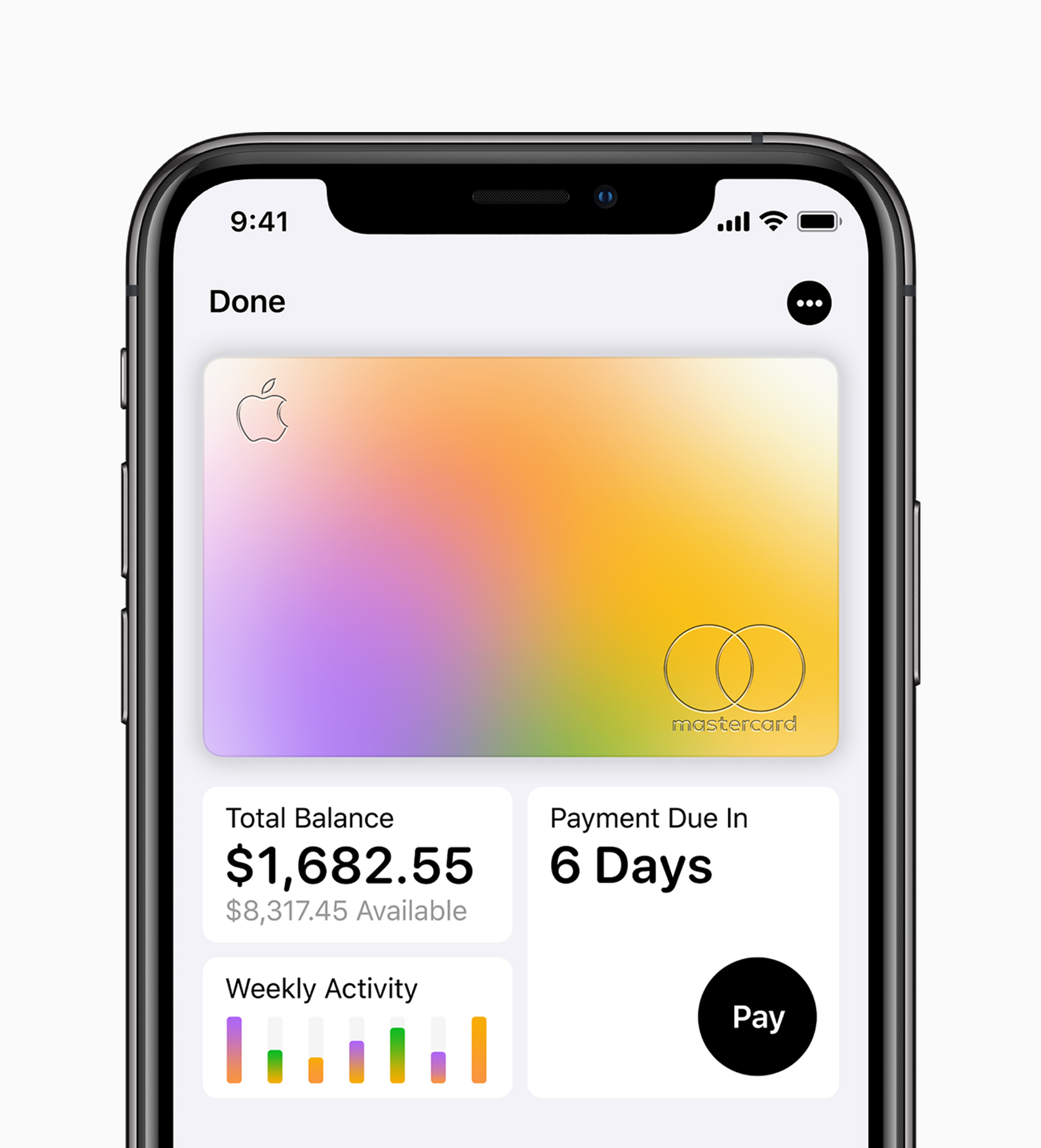
Apple could release the Apple Card during the first half of August

According to a new report from Bloomberg, the launch of the Apple Card is imminent. Customers based in the U.S. should be able to order the new credit card at some point during the first half of August.

Rumor has it that the most recent update of iOS contains everything needed for the Apple Card. The company can flip a server-side switch in order to launch the card.

Bloomberg also reported a few weeks ago that Apple’s retail employees have been able to sign up to the Apple Card and test it before the official release date.

As a reminder, Apple has partnered with Goldman Sachs on a credit card for U.S. customers. Goldman Sachs manages the banking infrastructure while Apple controls the user experience. You’ll be able to sign up directly from the Wallet app on your iPhone. You can then use your Apple Card with Apple Pay, but you also receive a plastic card that works on the Mastercard network.

In addition to a list of your most recent transactions, you can see a breakdown of your purchases by category. There’s no monthly fee and no foreign transaction fee with the Apple Card. And you get 1% back when you pay with your card, 2% if you pay using Apple Pay and 3% if it’s an Apple purchase.

Cash back is credited directly on your Apple Cash card. You can pay for things using this balance through Apple Pay, make a payment on your Apple Card or transfer it to your bank account.

When it comes to security, you won’t find any credit card number on the card. Instead, when you want to pay for something on a website that doesn’t support Apple Pay, you get a virtual card number in the Wallet app.

The Apple Card was originally announced back in March. At the time, the company said that it would be available this summer.

26 Jul 2019

Muzmatch adds $7M to swipe right on Muslim majority markets

Muzmatch, a matchmaking app for Muslims, has just swiped a $7 million Series A on the back of continued momentum for its community sensitive approach to soulmate searching for people of the Islamic faith.

It now has more than 1.5M users of its apps, across 210 countries, swiping, matching and chatting online as they try to find ‘the one’.

The funding, which Muzmatch says will help fuel growth in key international markets, is jointly led by US hedge fund Luxor Capital, and Silicon Valley accelerator Y Combinator — the latter having previously selected Muzmatch for its summer 2017 batch of startups. 

Last year the team also took in a $1.75M seed, led by Fabrice Grinda’s FJ Labs, YC and others.

We first covered the startup two years ago when its founders were just graduating from YC. At that time there were two of them building the business: Shahzad Younas and Ryan Brodie — a perhaps unlikely pairing in this context, given Brodie’s lack of a Muslim background. He joined after meeting Younas, who had earlier quit his job as an investment banker to launch Muzmatch. Brodie got excited by the idea and early traction for the MVP. The pair went on to ship a relaunch of the app in mid 2016 which helped snag them a place at YC.

So why did Younas and Brodie unmatch? All the remaining founder can say publicly is that its investors are buying Brodie’s stake. (While, in a note on LinkedIn — celebrating what he dubs the “bittersweet” news of Muzmatch’s Series A — Brodie writes: “Separate to this raise I decided to sell my stake in the company. This is not from a lack of faith — on the contrary — it’s simply the right time for me to move on to startup number 4 now with the capital to take big risks.”)

Asked what’s harder, finding a steady co-founder or finding a life partner, Younas responds with a laugh. “With myself and Ryan, full credit, when we first joined together we did commit to each other, I guess, a period of time of really going for it,” he ventures, reaching for the phrase “conscious uncoupling” to sum up how things went down. “We both literally put blood sweat and tears into the app, into growing what it is. And for sure without him we wouldn’t be as far as we are now, that’s definitely true.”

“For me it’s a fantastic outcome for him. I’m genuinely super happy for him. For someone of his age and at that time of his life — now he’s got the ability to start another startup and back himself, which is amazing. Not many people have that opportunity,” he adds.

Younas says he isn’t looking for another co-founder at this stage of the business. Though he notes they have just hired a CTO — “purely because there’s so much to do that I want to make sure I’ve got a few people in certain areas”.

The team has grown from just four people seven months ago to 17 now. With the Series A the plan is to further expand headcount to almost 30.

“In terms of a co-founder, I don’t think, necessarily, at this point it’s needed,” Younas tells TechCrunch. “I obviously understand this community a lot. I’ve equally grown in terms of my role in the company and understanding various parts of the company. You get this experience by doing — so now I think definitely it helps having the simplicity of a single founder and really guiding it along.”

Despite the co-founders parting ways that’s no doubting Muzmatch’s momentum. Aside from solid growth of its user base (it was reporting ~200k two years ago), its press release touts 30,000+ “successes” worldwide — which Younas says translates to people who have left the app and told it they did so because they met someone on Muzmatch.

He reckons at least half of those left in order to get married — and for a matchmaking app that is the ultimate measure of success.

“Everywhere I go I’m meeting people who have met on Muzmatch. It has been really transformative for the Muslim community where we’ve taken off — and it is amazing to see, genuinely,” he says, suggesting the real success metric is “much higher because so many people don’t tell us”.

Nor is he worried about being too successful, despite 100 people a day leaving because they met someone on the app. “For us that’s literally the best thing that can happen because we’ve grown mostly by word of mouth — people telling their friends I met someone on your app. Muslim weddings are quite big, a lot of people attend and word does spread,” he says.

Muzmatch was already profitable two years ago (and still is, for “some” months, though that’s not been a focus), which has given it leverage to focus on growing at a pace it’s comfortable with as a young startup. But the plan with the Series A cash is to accelerate growth by focusing attention internationally on Muslim majority markets vs an early focus on markets, including the UK and the US, with Muslim minority populations.

This suggests potential pitfalls lie ahead for the team to manage growth in a sustainable way — ensuring scaling usage doesn’t outstrip their ability to maintain the ‘safe space’ feel the target users need, while at the same time catering to the needs of an increasingly diverse community of Muslim singles.

“We’re going to be focusing on Muslim majority countries where we feel that they would be more receptive to technology. There’s slightly less of a taboo around finding someone online. There’s culture changes already happening, etc.,” he says, declining to name the specific markets they’ll be fixing on. “That’s definitely what we’re looking for initially. That will obviously allow us to scale in a big way going forward.

“We’ve always done [marketing] in a very data-driven way,” he adds, discussing his approach to growth. “Up til now I’ve led on that. Pretty much everything in this company I’ve self taught. So I learnt, essentially, how to build a growth engine, how to scale an optimize campaigns, digital spend, and these big guys have seen our data and they’re impressed with the progress we’ve made, and the customer acquisition costs that we’ve achieved — considering we really are targeting quite a niche market… Up til now we closed our Series A with more than half our seed round in our accounts.”

Muzmatch has also laid the groundwork for the planned international push, having already fully localized the app — which is live in 14 languages, including right to left languages like Arabic.

“We’re localized and we get a lot of organic users everywhere but obviously once you focus on a particular area — in terms of content, in terms of your brand etc — then it really does start to take off,” adds Younas.

The team’s careful catering to the needs of its target community — via things like manual moderation of every profile and offering an optional chaperoning feature for in-app chats — i.e. rather than just ripping out a ‘Tinder for Muslims’ clone, can surely take some credit for helping to grow the market for Muslim matchmaking apps overall.

“Shahzad has clearly made something that people want. He is a resourceful founder who has been listening to his users and in the process has developed an invaluable service for the Muslim community, in a way that mainstream companies have failed to do,” says YC partner Tim Brady in a supporting statement. 

But the flip side of attracting attention and spotlighting a commercial opportunity means Muzmatch now faces increased competition — such as from the likes of Dubai-based Veil: A rival matchmaking app which has recently turned heads with a ‘digital veil’ feature that applies an opaque filter to all profile photos, male and female, until a mutual match is made.

Muzmatch also lets users hide their photos, if they choose. But it has resisted imposing a one-size-fits-all template on the user experience — exactly in order that it can appeal more broadly, regardless of the user’s level of religious adherence (it has even attracted non-Muslim users with a genuine interest in meeting a life partner).

Younas says he’s not worried about fresh faces entering the same matchmaking app space — couching it as a validation of the market.

He’s also dismissive of gimmicky startups that can often pass through the dating space, usually on a fast burn to nowhere. Though he is expecting more competition from major players, such as Tinder-owner Match, which he notes has been eyeing up some of the same geographical markets.

“We know there’s going to be attention in this area,” he says. “Our goal is to basically continue to be the dominant player but for us to race ahead in terms of the quality of our product offering and obviously our size. That’s the goal. Having this investment definitely gives us that ammo to really go for it. But by the same token I’d never want us to be that silly startup that just burns a tonne of money and ends up nowhere.”

“It’s a very complex population, it’s very diverse in terms of culture, in terms of tradition,” he adds of the target market. “We so far have successfully been able to navigate that — of creating a product that does, to the user, marries technology with respecting the faith.”

Feature development is now front of mind for Muzmatch as it moves into the next phase of growth, and as — Younas hopes — it has more time to focus on finessing what its product offers, having bagged investment by proving product market fit and showing traction.

“The first thing that we’re going to be doing is an actual refreshing of our brand,” he says. “A bit of a rebrand, keeping the same name, a bit of a refresh of our brand, tidying that up. Actually refreshing the app, top to bottom. Part of that is looking at changes that have happened in the — call it — ‘dating space’. Because what we’ve always tried to do is look at the good that’s happening, get rid of the bad stuff, and try and package it and make it applicable to a Muslim audience.

“I think that’s what we’ve done really well. And I always wanted to innovate on that — so we’ve got a bunch of ideas around a complete refresh of the app.”

Video is one area they’re experimenting with for future features. TechCrunch’s interview with Younas takes place via a video chat using what looks to be its own videoconferencing platform, though there’s not currently a feature in Muzmatch that lets users chat remotely via video.

Its challenge on this front will be implementing richer comms features in a way that a diverse community of religious users can accept.

“I want to — and we have this firmly on our roadmap, and I hope that it’s within six months — be introducing or bringing ways to connect people on our platform that they’ve never been able to do before. That’s going to be key. Elements of video is going to be really interesting,” says Younas teasing their thinking around video.

“The key for us is how do we do [videochat] in a way that is sensible and equally gives both sides control. That’s the key.”

Nor will it just be “simple video”. He says they’re also looking at how they can use profile data more creatively, especially for helping more private users connect around shared personality traits.

“There’s a lot of things we want to do within the app of really showing the richness of our profiles. One thing that we have that other apps don’t have are profiles that are really rich. So we have about 22 different data points on the profile. There’s a lot that people do and want to share. So the goal for us is how do we really try and show that off?

“We have a segment of profiles where the photos are private, right, people want that anonymity… so the goal for us is then saying how can we really show your personality, what you’re about in a really good way. And right now I would argue we don’t quite do it well enough. We’ve got a tonne of ideas and part of the rebrand and the refresh will be really emphasizing and helping that segment of society who do want to be private but equally want people to understand what they’re about.”

Where does he want the business to be in 12 months’ time? With a more polished product and “a lot of key features in the way of connecting the community around marriage — or just community in general”.

In terms of growth the aim is at least 4x where they are now.

“These are ambitious targets. Especially given the amount that we want to re-engineer and rebuild but now is the time,” he adds. “Now we have the fortune of having a big team, of having the investment. And really focusing and finessing our product… Really give it a lot of love and really give it a lot of the things we’ve always wanted to do and never quite had the time to do. That’s the key.

“I’m personally super excited about some of the stuff coming up because it’s a big enabler — growing the team and having the ability to really execute on this a lot faster.”


26 Jul 2019

Why the hell is Robinhood worth $7.6B?

Hello and welcome back to Equity, TechCrunch’s venture capital-focused podcast, where we unpack the numbers behind the headlines.

This was a special week for us because Danny was back in the office, which meant we cornered him into coming on the show. Danny, of course, is an Equity regular. Also aboard this week were our regular hosts, Kate and Alex.

We were relieved to have three hosts because there was a lot of news to get through, from IPOs to late-stage financings to little seed fundings, and we shit you not, camping!

Up first was the rapidly-approaching WeWork IPO. WeWork, also known as The We Company, filed to go public some time ago. So we weren’t terribly surprised to learn the company is plotting a September listing. Though that’s earlier than we’d been expecting, we’re not complaining. If the sooner-than-anticipated IPO is due to market timing, or the company simply being ready we don’t know yet. But we will when we see the numbers. Bring on the S-1 filing.

Next Alex took us through a few recent and upcoming IPOs. He promised to be brief, so we’ll mirror the feat here. Last week Phreesia, Medallia, and DouYu went public (notes here), Livongo got out this week (S-1 review here), and 9F and CloudMinds have filed. Expect more IPO news in time whether you want it or not.

Leaving the public markets, Kate had words concerning the forthcoming Bird round that has yet to close. The company is raising its Series D led by Sequoia at a $2.5 billion valuation. Listen to the episode for your weekly scooter rant.

Next, Danny took us through the Robinhood round, which brought us to a discussion point. Alex wanted to compare Robinhood to Slack, when the latter company was worth about the same amount as Robinhood is now. Kate objected to the comparison, one’s an enterprise software business and the other a fintech giant. Still, Alex had lots of great points.

We then turned to HipCamp. The company, known as Airbnb for camping, raised a nice round of funding at a $127 million valuation. Andreessen Horowitz was involved via new general partner Andrew Chen, who recently announced another deal in the email subscription platform Substack. We’re betting Airbnb gobbles up HipCamp at some point.

We also touched on Gusto’s $200 million raise (and its constituent new valuation), before closing with the now-very-probable Vision Fund 2.0 and its Microsoft connection.

All that and we left even more material on the floor due to time. Make sure to check Equity out on Spotify if you haven’t seen us over there before. Click here to find the show.

Equity drops every Friday at 6:00 am PT, so subscribe to us on Apple PodcastsOvercast, Spotify, Pocket Casts, Downcast and all the casts.