Could this be just the beginning of a much bigger Cambridge Analytica scandal for Facebook? The answer rides on how transparent Facebook is actually being right now. CEO Mark Zuckerberg just put forth a statement and plan to improve data privacy, but omitted some of the most grievous inquiries — and stopped short of apologizing.
Exactly how Facebook handled the multi-year fiasco could be core to whether the public forgets and goes back to scrolling their News Feed, or whether users leave en masse while government regulators swoop in. With journalists around the world digging in and government officials calling for Zuckerberg to testify, the truth is likely to trickle out. Here’s what we want to know:
To what extent did Facebook vigorously investigate whether Cambridge Analytica had actually deleted all its Facebook user data back in 2015 when it made it promise to do so, and why didn’t it inform the public of the situation? (When did Zuckerberg find out? Was Facebook concerned about appearing liberal and for investigating a conservative political organization?)
How could Facebook not know Cambridge Analytica was using ill-gotten Facebook data when Facebook employees worked directly with the Donald Trump campaign? (Facebook employees worked side by side with Cambridge Analytica in Trump’s San Antonio campaign office, so did they look the other way about suspicious data?)
Did Cambridge Analytica attain illicit Facebook data from any other sources besides Aleksandr Kogan’s app, such as from other apps it operated, scraping Facebook group membership or buying data from other developers? (Was the Trump campaign’s masterful use of Facebook and other social media powered by more than just this one data set, perhaps even from other social networks?)
Is there any evidence that data from Russian hackers or the government was used by Cambridge Analytica to inform Trump’s campaign marketing? (If so, could Facebook be the smoking gun of potential collusion between Russia and Trump’s campaign?)
Is Facebook retaining data, ads or posts connected to Cambridge Analytica for further investigation? (If Cambridge Analytica did misuse data, what content was powered by that misuse, and who else pitched in?)
Why did Facebook try to suppress the stories about Cambridge Analytica from news outlets like The Observer with legal threats if it’s so serious about atoning for the scandal? (Who authorized or conducted those threats, and what’s happened to them since?)
How will Facebook ensure the security of user data attained by apps given that there could be tons of developers storing multiple separate copies of the data, beyond the big or suspicious ones Facebook plans to audit? (Should the public expect more news of app data misuse by other developers?)
Uber appeared set to hire Assaf Ronen, the former vice president of Amazon’s voice and natural user interface shopping, to lead its products — but it looks like that isn’t going to happen due to a discrepancy in his working history, according to Recode.
Uber discovered a discrepancy related to his tenure at Amazon, where the company appeared to be under the assumption he was working at Amazon at the time of offering him the job, and rescinded its offer, according to Recode. Ronen had actually left Amazon at the very end of 2017 and was not actually working at Amazon at the time, according to Recode, which posted a memo of new CEO Dara Khosrowshahi’s explanation of what happened. Ronen was brought in to take over the lead product role following the departure of former Twitter product lead and Google Maps exec Daniel Graf.
Since taking over, Khosrowshahi has tried to distance himself from the Uber under former CEO Travis Kalanick . Often times, CEOs will tell you that their number-one job is recruiting. Twitter CEO Jack Dorsey has mentioned it on a quarterly earnings call at least once a year for the past three years, for example, usually something to the extent of “my primary focus is on recruiting.” That’s obviously going to be a big tenet that will determine Khosrowshahi’s vision for the company and, ultimately, his legacy.
Current product VP Manik Gupta will be running the company’s product operations in the mean time, according to the memo obtained by Recode. Ronen would have been a marquee hire for Uber, but as the company has gone through a myriad of blunders under Kalanick, in addition to one of its autonomous vehicles being involved in an accident with a pedestrian on Monday, it looks like Uber is facing another hiccup in its turnaround at the top.
We reached out to Uber for additional comment and will update the story when we hear back.
This case is sprawling — the Justice Department intends to present 519 exhibits already — and much of the case will hinge on technical legal minutia. However, at its heart is a critical question on whether a combination of AT&T and Time Warner would help or hurt competition and thus ultimately consumer welfare.
This is a very important case to understand, because the court will have to reach a nuanced understanding of antitrust law in the complex and deeply interconnected world of video services. The decision rendered here could drastically affect consumer choice as well as the business practices of companies across the tech industry.
A framework to understand antitrust
Before getting into the specifics of AT&T-Time Warner though, we need to understand how antitrust works — which is quite a bit more nuanced than the media generally describes.
The essential goal of antitrust regulations is to protect consumers from predatory business practices driven by companies who hold outsized market power. While companies can grow market power over time (think a fast-growing startup eating more and more marketshare), the reality is that the U.S. government by and large avoids using antitrust to target a company in the normal operation of its business (Microsoft back in the 1990s being a notable exception).
Instead, the Federal Trade Commission and the Department of Justice directs its attention to mergers and acquisitions as key decision points where it can review a transaction and determine whether the combined company helps or hurts competition. Companies conducting transactions must submit documentation to antitrust bodies as part of what is known as the HSR process.
Mergers are generally divided into two categories. The first is a horizontal merger, which is when two direct competitors join forces and merge — think Uber and Lyft hypothetically. The other form is a vertical merger, which is when two companies with related businesses come together in order to offer a more comprehensive and synergistic set of services in their product market.
In reviewing these transactions, the FTC’s goal is to increase competition and improve consumer welfare in all industries. Horizontal mergers are generally placed under strong scrutiny, since by definition, removing a competitor from a marketplace reduces competition (although there are exceptions).
Here is where the nuance starts to become more pronounced. The FTC generally views vertical mergers more positively, since combining related companies can reduce costs, which ultimately improves consumer welfare.
Bruce Hoffman, the acting director of the Bureau of Competition at the FTC, explained vertical merger theory and why the FTC generally looks more favorably on the practice in a speech earlier this year:
As compared to arms-length contracting, a vertically integrated firm can more readily realize efficiencies in the form of lower costs or improved quality, conditions that greatly benefit customers of the firm. In addition, vertical mergers can eliminate the problem of “double markup,” which occurs when two firms, each with market power over a complementary product, set prices independently. Due to the problem of double markup, separate price setting leads to a higher prices and lower levels of output. A vertical merger of these two firms allows for joint price setting over the two products, which leads to higher profits but also increased output. These built-in effects, while not necessarily large or dispositive in all cases, render the starting point for our analysis of vertical mergers more challenging than horizontal mergers.
The FTC may look more favorably upon vertical mergers, but that doesn’t mean it always supports them. Hoffman noted in his speech that the FTC has fought 22 vertical mergers since 2000. He indicates three typical concerns: that the merged companies can block new competitors, that they can foreclose competitors from customers or key inputs, and that they may have confidential information that allows them to compete with competitors unfairly. Each of these may be a reason to either block a transaction, or to demand changes or on-going monitoring of a merger.
So to review, the FTC doesn’t care about size per se — it isn’t against consolidation, and in fact, may favor consolidation in cases where the newly merged company can be a more effective competitor in the marketplace and therefore increase consumer welfare.
Antitrust and AT&T-Time Warner
With that framework in mind, AT&T-Time Warner becomes much more complicated. The video production and distribution industry is oligopolistic — there are a handful of major studios, channels, distributors, and platforms in the industry that drive most of the value here. Balancing those competing interests against each other is the best route toward maximizing competition and therefore consumer welfare.
The players in this space are some of the largest companies in the world. Through DirecTV, AT&T is the largest multichannel video programming distributor (MVPD) in the U.S. with 25 million subscribers, and of course, it is the largest telecom company in the world. Time Warner is one of the most powerful content producers in the U.S., owning channels like TBS and TNT, premium subscription services like HBO, as well as Warner Bros, which is one of the largest and most profitable movie studios.
The two companies may be powerful, and combining them will only heighten those powers. However, they are facing incredible headwinds from the technology industry, namely the so-called FAANG group of internet giants: Facebook, Apple, Amazon, Netflix, and Google (and by extension, YouTube). Every single one of these companies has made video a top priority, and their war chests and valuations are similarly powerful.
As the counsel for AT&T-Time Warner pointed out in trial according to CNNMoney, “Petrocelli told Judge Leon that their estimates show FAANG is worth $3 trillion collectively, while an AT&T-Time Warner entity post-merger would be worth $300 billion. ‘We’re chasing their tail lights,’ Petrocelli said.”
Given that industry context, the critical question then is whether combining AT&T and Time Warner would help consumer choice in the video industry by allowing the two companies to more effectively compete as equals with the internet giants, or whether it would use its assets to leverage additional fees from competitors, and ultimately suck its competitors dry by forcing more customers on to its platforms, thereby limiting consumer choice.
The Department of Justice is clearly arguing the latter. There are a couple of considerations. In the government’s favor, Time Warner owns the assets to several critical live sports and news organizations including the NBA, MLB, NCAA men’s basketball tournament (i.e. March Madness), and the PGA, along with CNN and associated networks. This live programming is increasingly valuable for distirbutors, because viewers watch ads and also perceive the content to have scarcity.
Therefore, such programming is considered “must have” for distributors, so Time Warner is able to charge a premium for access. If AT&T and Time Warner merged, the fear is that they would raise prices on this sort of critical content, forcing its competitors to increase prices to retain carriage rights. AT&T could keep the prices of its own distribution level (they own the content after all), which would make its services more attractive to consumers. Ultimately, that limits consumer choice.
Another factor in favor of the government, particularly since December when the FCC repealed net neutrality, is that AT&T, as a major mobile telecom provider, will have significant power to control the quality of service that customers of the internet giants will experience. AT&T could throttle Netflix, for instance, unless Netflix buys Turner-produced content. A merger gives the company more market power, and that would likely cause price increases in the industry.
The government doesn’t have a simple case to make though. A factor in favor of AT&T-Time Warner is that its content costs are increasingly being dwarfed by the internet giants. Time Warner’s HBO segment spent $2.2 billion in 2017 according to the company’s 10-K form, compared to more than $6 billion dollars by Netflix in the same time period. Turner, the segment that includes TBS and TNT, spent $4.46 billion.
In other words, Netflix is spending almost as much money as Time Warner as a whole does, and also owns its customers through its streaming subscription model. Add in large original content budgets from Google, Apple, and Amazon, and suddenly Time Warner looks like a (relatively) small fish in a very large pond.
Another point in favor of the merger is that the government allowed Comcast’s acquisition of NBC to go through, albeit with restrictions on the deal and active monitoring. As Hoffman of the FTC said in January though, “…we prefer structural remedies—they eliminate both the incentive and the ability to engage in harmful conduct, which eliminates the need for ongoing intervention.” Structural remedies here means divestitures or an outright block, as opposed to active monitoring requiring the DoJ to continually work with a company to ensure compliance.
These are just some of the points that both sides are going to argue over the next six to eight weeks in district court. The court will have to decide how consumers are going to fare in a merger scenario and whether they are better off with or without it.
In my view, the merger is unlikely to be favorable to consumers, given the history of similar mergers in the past, AT&T’s business actions in recent years, and the generally positive business models of Netflix and other online streaming services with their convenience and efficiency for consumers.
The caveat is that the internet giants are just that — giants, and their continued growth means that fewer and fewer companies can compete with them in these markets. Allowing AT&T-Time Warner to go through may limit competition today, but that may already happen in the future if Time Warner falls behind its content competitors.
Unfortunately, markets are dynamic, while the conclusion of tomorrow’s case is a static decision in a point of time. While the future may be hard to predict, it seems unlikely that FAANG’s aspirations are going to diminish, and their consolidation may limit what little competition exists in this space. On balance, the court should probably say no, but that decision may well have been different a year or two from now.
As Judge Leon, who is overseeing the case, said this week quoted by CNNMoney, ”I always tell people at parties, I don’t have a crystal ball. In this case I have to get a crystal ball! Maybe at one of those second-hand stores somewhere!” Let’s hope that crystal ball is very good indeed.
“I started Facebook, and at the end of the day I’m responsible for what happens on our platform” Facebook CEO Mark Zuckerberg posted after days of the public and government officials waiting for him to speak up about the Cambridge Analytica scandal since it broke Friday. “We have a responsibility to protect your data, and if we can’t then we don’t deserve to serve you.”
Zuckerberg laid out a slate of changes Facebook will make to prevent past and future abuses of user data by app developers. Those include:
Blocking data access of apps you haven’t used for three months or more
Auditing old apps that collected a lot of personal data
Reducing the amount of data apps can pull using Facebook Login without an additional permissions screen to just your name, profile photo, and email address
Requiring a signed contract from developers that want to pull your posts or private information
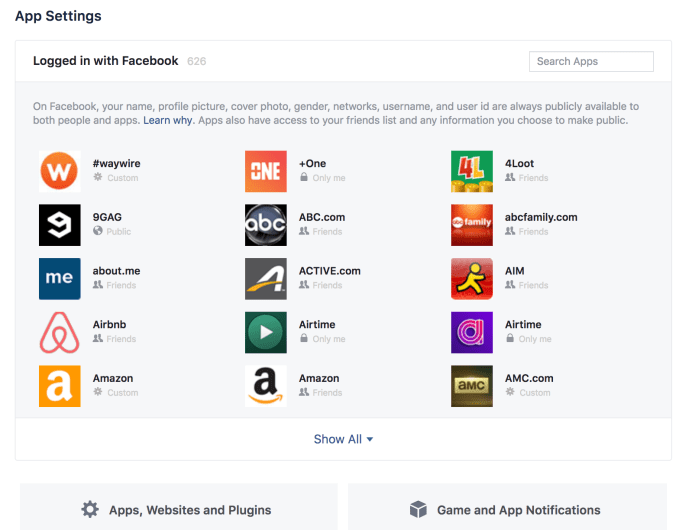
Surfacing Facebook’s privacy third-party app privacy settings tool atop the News Feed to help people repeal access to apps
Telling people if their data was misued by the app associated with Cambridge Analytica, or apps Facebook bans for misue in the future.
What’s missing from this response is any indication why Facebook didn’t do more to enforce its policy prohibiting apps from sharing user data, or why it took Cambridge Analytica at their word when they said they deleted the data without proper investigation.
Facebook was hit with one of its biggest scandals ever when multiple outlets reported that a researcher’s app pulled personal information about 270,000 users and 50 million of their friends, then passed that data to Cambridge Analytica. The political strategy firm then used that data to power messaging, targeting, and more for Donald Trump’s presidential campaign and the Brexit Leave movement.
The proposed solutions should help users take better control of their data while putting sensible friction and documentation in place for app developers that want people’s personal info or content. The audits of developers who pulled lots of friends’ data before the 2014 change that restricted that ability could root out some more bad actors.
But overall, the plan doesn’t address the fact that tons of developers pulled and may still be in possession of illicit Facebook data. Now off of Facebook’s servers, it has little control over it. Finding and deleting every copy of these data sets may be impossible. That could lead to future data scandals that may make people take Zuckerberg up on his assertion that if Facebook can’t keep people’s data safe, they shouldn’t use it.
You can read Zuckerberg’s full post below:
I want to share an update on the Cambridge Analytica situation — including the steps we've already taken and our next…
It might be a snow day in Washington, but the Senate Intelligence Committee hearing on election system security continued as planned. During Wednesday’s hearing, Homeland Security Secretary Kirstjen Nielsen and her predecessor Jeh Johnson appeared with a panel of state election officials to hash out the recommendations issued by the committee on Tuesday.
“This issue is urgent,” said Senate Intel Chairman Richard Burr in his opening statements. “If we start to fix these problems tomorrow, we still might not be in time to save the system for [2018] and 2020.”
The hearing often turned to what broke down during the 2016 election, describing the kind of measures and policies that need to be put in place to allow federal and state officials to communicate smoothly around future threats, including the established threat from Russia. We learned last year that Russia targeted election systems in at least 21 states. Many members of the committee expect other U.S. adversaries to adopt that same model around known vulnerabilities.
“Despite evidence of interference, the federal government and the states had barely communicated about strengthening our defenses,” said Senate Intel Vice Chair Mark Warner. “It was not until the fall of 2017 that DHS even fully notified the states they had been potential targets.”
So what’s changing?
For one, Homeland Security won’t let coordinating the security clearances for as many as 150 relevant state election officials get in the way of handing down important election system intelligence. Only 20 officials out of that 150 number have that clearance now.
“We’ve worked out the processes whereby if we have actionable information we will provide it to the state and local officials on a day read-in so we are not letting the lack of clearance hold us back,” Nielsen said. “If we have information to share with them in respect to a real threat, we will do so.”
According to Amy Cohen, executive director of the National Association of State Election Directors, an organization that brings together election officials in all 50 states, states have made “great strides” since the former DHS secretary designated all election systems as critical infrastructure in January of 2017.
States that may have been nervous about federal overreach after the critical infrastructure designation (which applied to all aspects of federal state and local elections including polling places, storage facilities, voter registration databases and the voting machines themselves) seem to be warming up to and opting into the “technical resources” that Homeland Security has on offer. As of today, more than half of the states have signed up for Homeland Security’s optional cybersecurity audits. That program helps states identify potential system vulnerabilities and makes recommendations based on its findings.
“To be clear, there has been a learning curve on the sharing of information,” Nielsen said. One challenge is understanding how states vary in operating and organizing their elections. For example, an election that would be run by a county in one state might be the domain of the governor or the secretary of state’s office in another.
“Today I can say with confidence that we know whom to contact in every state to share threat information,” Nielsen said. “That did not exist in 2016.”
While Homeland Security and the states have made progress since the 2016 election, those improvements are incremental and uneven. State budgets vary and some rely more heavily on federal funds for required steps for securing their elections, like purging insecure election machines and purchasing new machines that leave an auditable paper trail. Many states are currently undertaking the steps necessary to get their election systems up to Homeland Security’s recommended standards, even as U.S. adversaries likely continue to probe existing systems for cyber weaknesses.
“The threat of interference remains,” Nielsen admitted. “We recognize that the 2018 midterm and future elections are clearly potential targets for Russian hacking attempts.”
It’s moved beyond tradition and into the realm of meme that Apple manages to dominate the news cycle around major industry events all while not actually participating in said events. CES rolls around and every story is about HomeKit or its competitors, another tech giant has a conference and the news is that Apple updated some random subsystem of its ever-larger ecosystem of devices and software .
This is, undoubtedly planned by Apple in many instances. And why not? Why shouldn’t it own the cycle when it can, it’s only strategically sound.
This week, the 2018 Game Developer’s Conference is going on and there’s a bunch of news coverage about various aspects of the show. There are all of the pre-written embargo bits about big titles and high-profile indies, there are the trend pieces and, of course, there’s the traditional ennui-laden ‘who is this event even for’ post that accompanies any industry event that achieves critical mass.
But the absolute biggest story of the event wasn’t even at the event. It was the launch of Fortnite and, shortly thereafter, PlayerUnknown’s Battlegrounds on mobile devices. Specifically, both were launched on iOS and PUBG hit Android simultaneously.
The launch of Fortnite, especially, resonates across the larger gaming spectrum in several unique ways. It’s the full and complete game as present on consoles, it’s iOS-first and it supports cross-platform play with console and PC players.
This has, essentially, never happened before. There have been stabs at one or more of those conditions on experimental levels but it really marks a watershed in the games industry that could serve to change the psychology around the platform discussion in major ways.
For one, though the shape of GDC has changed over the years as it relates to mobile gaming – it’s only recently that the conference has become dominated by indie titles that are mobile centric. The big players and triple-A console titles still take up a lot of air, but the long tail is very long and mobile is not synonymous with “casual gamers” as it once was.
“I remember the GDC before we launched Monument Valley,” says Dan Gray of Monument Valley 2 studio ustwo. “We were fortunate enough that Unity offered us a place on their stand. Nobody had heard of us or our game and we were begging journalists to come say hello, it’s crazy how things have changed in four years. We’ve now got three speakers at the conference this year, people stop you in the street (within a two block radius) and we’re asked to be part of interviews like this about the future of mobile.”
Zach Gage, the creator of SpellTower, and my wife’s favorite game of all time, Flip Flip Solitaire, says that things feel like they have calmed down a bit. “It seems like that might be boring, but actually I think it’s quite exciting, because a consequence of it is that playing games has become just a normal thing that everyone does… which frankly, is wild. Games have never had the cultural reach that they do now, and it’s largely because of the App Store and these magical devices that are in everyones pockets.”
Alto’s Odyssey is the followup to Snowman’s 2015 endless boarder Alto’s Adventure. If you look at these two titles, three years apart, you can see the encapsulation of the growth and maturity of gaming on iOS. The original game was fun, but the newer title is beyond fun and into a realm where you can see the form being elevated into art. And it’s happening blazingly fast.
“There’s a real and continually growing sense that mobile is a platform to launch compelling, artful experiences,” says Snowman’s Ryan Cash. “This has always been the sentiment among the really amazing community of developers we’ve been lucky enough to meet. What’s most exciting to me, now, though, is hearing this acknowledged by representatives of major console platforms. Having conversations with people about their favorite games from the past year, and seeing that many of them are titles tailor-made for mobile platforms, is really gratifying. I definitely don’t want to paint the picture that mobile gaming has ever been some sort of pariah, but there’s a definite sense that more people are realizing how unique an experience it is to play games on these deeply personal devices.”
Mobile gaming as a whole has fought since the beginning against the depiction that it was for wasting time only, not making ‘true art’, which was reserved for consoles or dedicated gaming platforms. Aside from the ‘casual’ vs. ‘hardcore’ debate, which is more about mechanics, there was a general stigma that mobile gaming was a sidecar bet to the main functions of these devices, and that their depth would always reflect that. But the narratives and themes being tackled on the platform beyond just clever mechanics are really incredible.
Playing Monument Valley 2 together with my daughter really just blew my doors off, and I think it changed a lot of people’s minds in this regard. The interplay between the characters and environment and a surprisingly emotional undercurrent for a puzzle game made it a breakout that was also a breakthrough of sorts.
“There’s so many things about games that are so awesome that the average person on the street doesn’t even know about,” says Gray. “As small developers right now we have the chance to make somebody feel a range of emotions about a video game for the first time, it’s not often you’re in the right place at the right time for this and to do it with the most personal device that sits in your pocket is the perfect opportunity.”
The fact that so many of the highest profile titles are launching on iOS first is a constant source of consternation for Android users, but it’s largely a function of addressable audience.
I spoke to Apple VP Greg Joswiak about Apple’s place in the industry. “Gaming has always been one of the most popular categories on the App Store,” he says. A recent relaunch of the App Store put gaming into its own section and introduced a Today tab that tells stories about the games and about their developers.
That redesign, he says, has been effective. “Traffic to the App Store is up significantly, and with higher traffic, of course, comes higher sales.”
“One thing I think smaller developers appreciate from this is the ability to show the people behind the games,” says ustwo’s Gray about the new gaming and Today sections in the App Store. “Previously customers would just see an icon and assume a corporation of 200 made the game, but now it’s great we can show this really is a labour of love for a small group of people who’re trying to make something special. Hopefully this leads to players seeing the value in paying up front for games in the future once they can see the craft that goes into something.”
Snowman’s Cash agrees. “It’s often hard to communicate the why behind the games you’re making — not just what your game is and does, but how much went into making it, and what it could mean to your players. The stories that now sit on the Today tab are a really exciting way to do this; as an example, when Alto’s Odyssey released for pre-order, we saw a really positive player response to the discussion of the game’s development. I think the variety that the new App Store encourages as well, through rotational stories and regularly refreshed sections, infuses a sense of variety that’s great for both players and developers. There’s a real sense I’m hearing that this setup is equipped to help apps and games surface, and stayed surfaced, in a longer term and more sustainable way.”
In addition, there are some technical advantages that keep Apple ahead of Android in this arena. Plenty of Android devices are very performant and capable in individual ways, but Apple has a deep holistic grasp of its hardware that allow it to push platform advantages in introducing new frameworks like ARKit. Google’s efforts in the area with AR Core are just getting started with the first batch of 1.0 apps coming online now, but Google will always be hamstrung by the platform fragmentation that forces developers to target a huge array of possible software and hardware limitations that their apps and games will run up against.
This makes shipping technically ambitious projects like Fortnite on Android as well as iOS a daunting task. “There’s a very wide range of Android devices that we want to support,” Epic Games’ Nick Chester told Forbes. “We want to make sure Android players have a great experience, so we’re taking more time to get it right.“
That wide range of devices includes an insane differential in GPU capability, processing power, Android version and update status.
“We bring a very homogenous customer base to developers where 90% of [devices] are on the current versions of iOS,” says Joswiak. Apple’s customers embrace those changes and updates quickly, he says, and this allows developers to target new features and the full capabilities of the devices more quickly.
Ryan Cash sees these launches on iOS of ‘full games’ as they exist elsewhere as a touchstone of sorts that could legitimize the idea of mobile as a parity platform.
“We have a few die-hard Fortnite players on the team, and the mobile version has them extremely excited,” says Cash. “I think more than the completeness of these games (which is in of itself a technical feat worth celebrating!), things like Epic’s dedication to cross-platform play are massive. Creating these linked ecosystems where players who prefer gaming on their iPhones can enjoy huge cultural touchstone titles like Fortnite alongside console players is massive. That brings us one step closer to an industry attitude which focuses more on accessibility, and less on siloing off experiences and separating them into tiers of perceived quality.”
“I think what is happening is people are starting to recognize that ios devices are everywhere, and they are the primary computers of many people,” says Zach Gage. “When people watch a game on Twitch, they take their iPhone out of their pocket and download it. Not because they want to know if there’s a mobile version, but because they just want the game. It’s natural to assume that these games available for a computer or a playstation, and it’s now natural to assume that it would be available for your phone.”
Ustwo’s Gray says that it’s great that the big games are transitioning, but also cautions that there needs to be a sustainable environment for mid-priced games on iOS that specifically use the new capabilities of these devices.
“It’s great that such huge games are transitioning this way, but for me I’d really like to see more $30+ titles designed and developed specifically for iPhone and iPad as new IP, really taking advantage of of how these devices are used,” he says. “It’s definitely going to benefit the AppStore as a whole, but It does need to be acknowledged however that the way players interact with console/PC platforms and mobile are inherently different and should be designed accordingly. Session lengths and the interaction vocabulary of players are two of the main things to consider, but if a game manages to somehow satisfy the benefits of all those platforms then great, but I think it’s hard.”
Apple may not be an official sponsor of GDC, but it is hosting two sessions at the show including an introduction to Metal 2, its rendering pipeline, and ARKit, its hope for the future of gaming on mobile. This presence is exciting for a number of reasons, as it shows a greater willingness by Apple to engage the community that has grown around its platforms, but also that the industry is becoming truly integrated, with mobile taking its rightful place alongside console and portable gaming as a viable target for the industry’s most capable and interesting talent.
“They’re bringing the current generation of console games to iOS,” Joswiak says, of launches like Fortnite and PUBG and notes that he believes we’re at a tipping point when it comes to mobile gaming, because mobile platforms like the iPhone and iOS offer completely unique combinations of hardware and software features that are iterated on quickly.
“Every year we are able to amp up the tech that we bring to developers,” he says, comparing it to the 4-5 year cycle in console gaming hardware. “Before the industry knew it, we were blowing people away [with the tech]. The full gameplay of these titles has woken a lot of people up.”
Some of us have been on Facebook for more than a decade, but all good things come to an end. Over the past eighteen months, Facebook has been in a downward spiral. The social network is in the eye of a controversy storm, with fake news, Russia’s meddling in the 2016 Presidential election, and misuse of personal data by Cambridge Analytica swirling around Menlo Park.
Meanwhile, the company has lost billions in value, all coming down to the fact that the public’s trust in Facebook has been eroded, perhaps beyond repair.
If you’re ready to jump ship, the process isn’t all that difficult.
The first step is to make sure you have a copy of all your Facebook information. Facebook makes it relatively simple to download an archive of your account, which includes your Timeline info, posts you have shared, messages, photos, as well as more hidden information like ads you have clicked on, the IP addresses that are logged when you log into or out of Facebook, and more.
You can learn all about Downloading your Archive here.
To go ahead and download, just go to the Settings page once you’re logged in to Facebook and click “Download a copy of your Facebook data.”
Remember, you can’t go back and download your archive once you’ve deleted your account, so if you want that info at your fingertips, make sure to download the archive first.
Before you delete your account, know this: once your account is deleted, it can’t be recovered. If ever you want to rejoin Facebook, you’ll be starting from scratch.
Oddly, finding the button to delete your Facebook account isn’t available in the settings or menu. It lives on an outside page, which you can find by clicking right here.
Important note: It takes a few days from the time you click the Delete button to the time that your account is actually terminated. If you sign on during that period, the account will no longer be marked for termination and you’ll have to start over. It will take up to 90 days for your account to be fully deleted.
Moreover, some information like log records are stored in Facebook’s database after the account is fully deleted, but the company says that information is not personally identifiable. Information like messages you’ve sent to friends will still be accessible to them.
Keep in mind, Facebook still likely has access to a good deal of your data long after you’ve deleted your account. Plus, Facebook owns WhatsApp and Instagram . So if you really want to stop feeding data into the Facebook machine, you likely need to go ahead and delete those apps as well.
Last August, we told you about Laura Deming, a New Zealand native who was home schooled before moving halfway around the world as a 12-year-old to work alongside Cynthia Kenyon,a renowned molecular biologist who specializes in the genetics of aging.
She didn’t stay long. At age 14, Deming began her college career at MIT. When she turned 16, she dropped out to join Peter Thiel’s two-year-old Thiel Fellowship program, which gives $100,000 to young people “who want to build new things.” By last August, when we profiled Deming, she had closed on $22 million in commitments for her second venture fund, which supports aging-related startups. She was 23.
Because Deming has always had an intriguing relationship with time, we weren’t all that surprised when she reached out to us late last week to let us know her San Francisco-based venture firm, The Longevity Fund, has now established a new accelerator program — one with backing from famed investor Marc Andreessen, the early-stage venture firm Felicis Ventures and other, unnamed investors.
Deming isn’t disclosing how much money will be invested through the accelerator, called Age 1, but she does say the pool of capital is distinct from the money she’s investing with Longevity Fund. She also says that Andreessen, Felicis and her other backers will serve as mentors to the companies that pass through the program.
Other notable details about Age 1: Deming says that she and her advisors — including serial entrepreneur Elad Gil, who most recently co-founded the genomics testing company Color Genomics — will be “quite flexible” when it comes to the stage of applicants. She says the bigger idea is to help them get to a significant “value inflection point” within four months, which is how long the program runs.
Instead of accepting startups serially, Age 1 will work with small batches of startups — between three and five at a time — and it’s accepting them right now on a rolling basis, with plans to present them to an invite-only group of investors on October 5 in the Bay Area. (Startups can apply here.)
Though there’s not necessarily a headquarters for the program, Age 1 will provide co-working space for companies that need it and, even more notably, it will invest $500,000 per startup — more than most accelerators are willing or able to plug into the startups with which they work.
What we don’t know: at what cost. Asked about the ownership stake that Age 1 expects in exchange for its checks and mentorship, Deming, over email, declines to say.
As for what Deming and company are looking for, she suggests the program is particularly interested in working with startups that are committed to addressing late-onset medical conditions relating to Alzheimer’s, heart disease, diabetes and more. Though they’re casting a wide net, she adds that “one of hundreds of things we’d be interested in seeing is more work on the role of the circadian or other developmental clocks in longevity.”
Whether Deming’s ability to nurture startups is as promising as her prodigious understanding of biology remains to be seen, but her venture record to date is encouraging. Though Longevity has a fairly limited number of portfolio companies thus far, one of them, the genome editing technology company Precision BioSciences, secured a partnership last month with food giant Cargill; the two are now working together on a new product to reduce saturated fat in canola oil.
Another portfolio company — UNITY Biotechnology, a company that’s trying to reverse aging through therapeutics — meanwhile closed on $55 million in Series C funding on Monday. It has raised more than $200 million at this point, including from Thiel’s Founders Fund, Jeff Bezos, Fidelity and ARCH Venture Partners.
To learn more about Deming, you might check out this TED talk she gave back in 2013.
YouTube just became the Top Grossing iPhone app in the U.S. for the first time on Tuesday, after flirting with the top spot a number of times over the years, but never reaching higher than No. 3. The milestone was first spotted by the app store intelligence firm Sensor Tower, which notes that the U.S. is the only country where YouTube’s iPhone app has ever hit No. 1.
The app has been climbing up the Top Grossing charts for years, however, thanks to the launch of YouTube Red in-app subscriptions in fall 2015. In fact, YouTube Red’s arrival almost immediately pushed the app into the Top Grossing charts. The month after Red’s launch, the YouTube iPhone app jumped all the way up to No. 6, we noted at the time. It was then estimated to be bringing in more than $100,000 per day — and perhaps as high as $300,000, excluding iPad.
YouTube’s iOS revenue has grown remarkably since then, of course, as YouTube Red itself grew in popularity, combined with other trends, like the rise of cord-cutting, YouTube’s youngest users finally getting their own phones, streaming plans from mobile carriers that don’t count YouTube’s data or those offering cheap unlimited data, the growth of live streaming and the launch of other features to engage YouTube viewers — like messaging, Community, Reels and more.
It’s unclear what may have pushed YouTube to No. 1, though. And it may have not been anything remarkable, just a steady climb upwards finally being rewarded, or maybe even a small tweak to Apple’s ranking algorithm.
According to Sensor Tower, gross user spending to date is more than $200 million worldwide on iOS since the start of YouTube’s in-app monetization in 2015. Last month it grossed approximately $14 million, a 133 percent year-over-year increase from February 2017. Though this month has not yet ended, YouTube’s worldwide iOS revenue is up 150 percent year-over-year, to more than $12 million.
YouTube’s revenue comes largely from YouTube Red subscriptions, but it now includes Super Chat purchases, as well — YouTube’s virtual tipping mechanism.
Although it’s obvious, we should point out that this revenue figure doesn’t include other sources, like YouTube Music or YouTube Gaming, which both also include in-app purchases. It also doesn’t include Google Play, nor does it take into account the money YouTube makes in other ways, like rentals, purchases and, of course, advertising.
French startup Molotov has built the best TV streaming service in its home country. Unfortunately, if you tried using the service in other European countries, Molotov would simply stop working. The startup now lets you stream your content when you’re traveling across the European Union.
The European Union has been working hard on creating a digital single market across Europe. And the Council recently adopted a regulation to ban geoblocking across the European Union. European countries and online services have nine months to comply with the regulation.
And it looks like Molotov is complying as quickly as possible. You can expect a bunch of similar announcements in the coming months.
Molotov now has 5 million users. You can watch up to 80 different channels live, and on most channels, you can start over at the beginning of a program. Molotov also lets you search and watch content on catchup platforms. And finally, there’s a cloud recorder to store all your favorite shows. The service works on phones, tablets, laptops, smart TVs, Apple TV, Android TV and more.
The startup now wants to expand beyond France and partner with local TV channels in other European countries. Today’s news is just step one of a much bigger European play.