20 Mar 2018

Rachio announces a new smart sprinkler controller, raises $10M

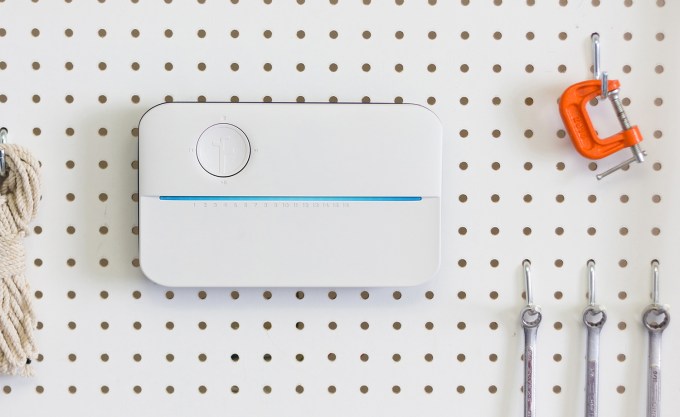
Rachio, the company that builds WiFi controllers for your garden sprinklers (think Nest Thermostat, but for watering your plants instead of heating your house), is back with a new one. They’ve also raised $10M in a Series B round.

So what’s new in this Gen 3 version?

  • A new hardware design, which the company tells me is meant to feel “sort of like an MP3 player”
  • 5ghz WiFi support (in addition to the existing 2.4ghz support)
  • Support for a new Flow Meter that the company says will ship in May, allowing the Rachio to know exactly how much water it’s putting out and do things like detect leaks in your sprinkler system. If a leak is detected, the Rachio knows to shut off the water.
  • Expanded support for more types of sprinkler systems
  • Support for a new version of Rachios “Weather Intelligence” system that uses data from satellites and weather stations to help auto-determine your garden’s watering schedule. The company says this version is more accurate, promising weather accuracy to within 36 feet of the controller.

This next version goes up for pre-order today, with units shipping sometime in April. They’re shipping two slightly different variants: one that supports 8 different zones (read: places you want to water at varying times or schedules) for $249, or one with 16-zones for $299. Bundled with their new flow meter, those prices get bumped up to $279/$329 respectively.

The company declined to disclose how many Rachios had been sold to date thus far, but did tell me that it was somewhere in the six-figure range.

According to Crunchbase, Rachio had raised ~$10.5M prior to this, so this round effectively doubles their funding to date. Investors in this round included Eastside Partners, Bonaventure Capital, and Amazon’s Alexa Fund.

20 Mar 2018

Japan’s government is providing nearly $1B to boost homegrown space startups

Japan wants to formally encourage domestic startups to pursue the growing opportunities in commercial space. The Japanese government has earmarked around $1 billion in public funds to startups working on space solutions. At the same time, the government revealed that it’s working on a legal path towards establishing commercial development on the moon.

This is a big injection in the private space race, and the funds will be allocated both as investments and as loans, spanning five years and beginning during this fiscal year. The goal is to boost the Japanese space business, hoping to help amplify its growth and propel it to a 2.4 trillion yen ($22.5 billion) market by the beginning of the 2030s, per the Nikkei.

Startups that qualify will be able to receive aid of up to 10 million yen per company, or around $100,000 U.S., for things like research costs and the price of applying for patents.

Japanese space startup ispace applauded the move in a statement provided to TechCrunch.

“Not only will this move improve the competitiveness of the Japanese private space sector, but it will have positive implications for the sector globally. We believe this will be remembered as a turning point for our burgeoning industry,” wrote ispace founder and CEO Takeshi Hakamada. “Further, investments in the space industry ultimately benefit society on Earth through the vast number of innovations that develop as a result.”

20 Mar 2018

Ford’s new SmartLink connected upgrade for older vehicles will be available mid-2018

Ford is finally detailing availability of its FordPass SmartLink accessory, an OBD II plug-in device with Verizon 4G LTE on board which can add connected car features to model year 2010 to 2017 Ford vehicles that don’t already have native connectivity built in.

The FordPass accessory will be available across the U.S. sometime in the middle of this year, with dealer enrolment now open. Dealers will provide the device to end users, providing installation for the add-on hardware, which will then cost users $16.99 per month for 24 months to get telematics services including remote key fob (via smartphone), car location and vehicle health alerts. The Verizon 4G LTE hotspot feature is an additional cost, but users will get a free trial for 30 days or until they reach 1GB of data usage.

This is a way for Ford to build up its data business even on existing vehicles out in the market, even while it also aims to have 100 percent of its new car lineup shipping with connectivity built-in by next year. Data is the new oil, so to speak, when it comes to the automaker value chain, and having as many customers as possible feeding that funnel is the best way for car companies and anyone in transportation to prepare for the future.

On the consumer side, the value proposition is a bit more questionable. Owners of older vehicles are probably less likely to value connected features, and the ones that are included with the base $17 per month subscription fee over the course of two years (so $408 in total) include nice-to-have, but definitely not essential benefits. The Wi-Fi hotspot is the real carrot, but it’s an additional cost in monthly data service over and above the base fee.


20 Mar 2018

Waze Carpool expands to the entire state of Washington

Google -owned Waze is growing the footprint of its Waze Carpool product with a market expansion today to cover all of Washington state. That means Carpool is now available in California, Texas, Isreal and Washington following today’s launch. Waze also recently revamped its Carpool experience, which now includes new options for choosing what rides to tag along with, driver gender filters and other convenience tools that are designed to make the experience feel safer and more comfortable overall.

Waze says this expansion shows that it’s increasing its commitment to the Carpool side of its project offering, since it’ll now reach an additional 375,000 commuters in Seattle alone. The company also has the support of local government in Seattle, with officials expressing their support for new solutions hoping to mitigate traffic in a press release announcing the launch.

The Waze Carpool app is different from other offerings including Uber Pool, mainly because it doesn’t pay out all that much to drivers. In fact, the maximum earning a driver can make on any ride is $15 and that’s for longer commutes, as the fee structure is designed to help the driver pay for gas but not use it as a source of income. Waze’s aim is to link up multiple people commuting to work going in the same direction via its platform, per the company. This also means lower costs for riders.

Anyone interested in driving Waze Carpool in Seattle can pick up the standard Waze app now to gain access, and on the rider side you can download the dedicated Waze Rider app on either iOS or Android to get started.

20 Mar 2018

Mythic nets $40M to create a new breed of efficient AI-focused hardware

Another huge financing round is coming in for an AI company today, this time for a startup called Mythic getting a fresh $40 million as it appears massive deals are closing left and right in the sector.

Mythic particularly focuses on the inference side of AI operations — basically making the calculation on the spot for something based off an extensively-trained model. The chips are designed to be low power, small, and achieve the same kind of performance you’d expect from a GPU in terms of the lightning-fast operations that algorithms need to perform to figure out whether or not that thing your car is about to run into is a cat or just some text on the road. SoftBank Ventures led this most-recent round of funding, with a strategic investment also coming from Lockheed Martin Ventures. ARM executive Rene Haas will also be joining the company’s board of directors.

“The key to getting really high performance and really good energy efficiency is to keep everything on the chip,” Henry said. “The minute you have to go outside the chip to memory, you lose all performance and energy. It just goes out the window. Knowing that, we found that you can actually leverage flash memory in a very special way. The limit there is, it’s for inference only, but we’re only going after the inference market — it’s gonna be huge. On top of that, the challenge is getting the processors and memory as close together as possible so you don’t have to move around the data on the chip.”

Mythic, like other startups, is looking to ease the back-and-forth trips to memory on the processors in order to speed things up and lower the power consumption, and CEO Michael Henry says the company has figured out how to essentially do the operations — based in a field of mathematics called linear algebra — on flash memory itself.

Mythic’s approach is designed to be what Henry calls more analog. To visualize how it might work, imagine a set-up in Minecraft, with a number of different strings of blocks leading to an end gate. If you flipped a switch to turn 50 of those strings on with some unit value, leaving the rest off, and joined them at the end and saw the combined final result of the power, you would have completed something similar to an addition operation leading to a sum of 50 units. Mythic’s chips are designed to do something not so dissimilar, finding ways to complete those kinds of analog operations for addition and multiplication in order to handle the computational requirements for an inference operation. The end result, Henry says, consumes less power and dissipates less heat while still getting just enough accuracy to get the right solution (more technically: the calculations are 8-bit results).

After that, the challenge is sticking a layer on top of that to make it look and behave like a normal chip to a developer. The goal is to, like other players in the AI hardware space, just plug into frameworks like TensorFlow. Those frameworks abstract out all the complicated tooling and tuning required for such a specific piece of hardware and make it very approachable and easy for developers to start building machine learning projects. Andrew Feldman, CEO of another AI hardware startup called Cerebras Systems, said at the Goldman Sachs Technology and Internet conference last month that frameworks like TensorFlow had  most of the value Nvidia had building up an ecosystem for developers on its own system.

Henry, too, is a big TensorFlow fan. And for good reason: it’s because of frameworks like TensorFlow that allow next-generation chip ideas to even get off the ground in the first place. These kinds of frameworks, which have become increasingly popular with developers, have abstracted out the complexity of working with specific low-level hardware like a field programmable gate array (FPGA) or a GPU. That’s made building machine learning-based operations much easier for developers and led to an explosion of activity when it comes to machine learning, whether it’s speech or image recognition among a number of other use cases.

“Things like TensorFlow make our lives so much easier,” Henry said. “Once you have a neural network described on TensorFlow, it’s on us to take that and translate that onto our chip. We can abstract that difficulty by having an automatic compiler.”

While many of these companies are talking about getting massive performance gains over a GPU — and, to be sure, Henry hopes that’ll be the case — the near term goal for Mythic is to match the performance of a $1,000 GPU while showing it can take up less space and consume less power. There’s a market for the card that customers can hot swap in right away. Henry says the company is focused on using a PCI-E interface, a very common plug-and-play system, and that’s it.

The challenge for Mythic, however, is going to get into the actual design of some of the hardware that comes out. It’s one thing to sell a bunch of cards that companies can stick into their existing hardware, but it’s another to get embedded into the actual pieces of hardware themselves — which is what’s going to need to happen if it wants to be a true workhorse for devices on the edge, like security cameras or things handling speech recognition. That makes the buying cycle a little more difficult, but at the same time, there will be billions of devices out there that need advanced hardware to power their inference operations.

“If we can sell a PCI card, you buy it and drop it in right away, but those are usually for low-volume, high-selling price products,” Henry said. “The other customers we serve design you into the hardware products. That’s a longer cycle, that can take upwards of a year. For that, typically the volumes are much higher. The nice thing is that you’re really really sticky. If they design you into a product you’re really sticky. We can go after both, we can go after board sales, and then go after design.”

There are probably going to be two big walls to Mythic, much less any of the other players out there. The first is that none of these companies have shipped a product. While Mythic, or other companies, might have a proof-of-concept chip that can drop on the table, getting a production-ready piece of next-generation silicon is a dramatic undertaking. Then there’s the process of not only getting people to buy the hardware, but actually convincing them that they’ll have the systems in place to ensure that developers will build on that hardware. Mythic says it plans to have a sample for customers by the end of the year, with a production product by 2019.

That also explains why Mythic, along with those other startups, are able to raise enormous rounds of money — which means there’s going to be a lot of competition amongst all of them. Here’s a quick list of what fundraising has happened so far: SambaNova Systems raised $56 million last week; Graphcore raised $50 million in November last year; Cerebras Systems’s first round was $25 million in December 2016; and this isn’t even counting an increasing amount of activity happening among companies in China. There’s still definitely a segment of investors that consider the space way too hot (and there is, indeed, a ton of funding) or potentially unnecessary if you don’t need the bleeding edge efficiency or power of these products.

And there are, of course, the elephants in the room in the form of Nvidia and to a lesser extent Intel. The latter is betting big on FPGA and other products, while Nvidia has snapped up most of the market thanks to GPUs being much more efficient at the kind of math needed for AI. The play for all these startups is they can be faster, more efficient, or in the case of Mythic, cheaper than all those other options. It remains to be seen whether they’ll unseat Nvidia, but nonetheless there’s an enormous amount of funding flowing in.

“The question is, is someone going to be able to beat Nvidia when they have the valuation and cash reserves,” Henry said. “But the thing, is we’re in a different market. We’re going after the edge, we’re going after things embedded inside phones and cars and drones and robotics, for applications like AR and VR, and it’s just really a different market. When investors analyze us they have to think of us differently. They don’t think, is this the one that wins Nvidia, they think, are one or more of these powder keg markets explode. It’s a different conversation for us because we’re an edge company.”


20 Mar 2018

Lydia launches Lydia Premium

Lydia launches Lydia Premium

French startup Lydia announces two new things today. First, the company is launching a financial hub with multiple new products. Second, Lydia is announcing a new premium subscription to access those new features.

“Today, we’re lucky enough to have you here to announce you the biggest thing we’ve done since Lydia’s launch,” co-founder and CEO Cyril Chiche said in a press conference. “We’ve been working on this for a while — and it’s not a challenger bank.”

Lydia is no longer just a peer-to-peer payment app with a few other features. The company says it is now building a meta-banking app, sitting above other financial products. So you’ll find and control a handful of financial products in the Lydia app.

“We didn’t want to stop at aggregating services,” Chiche said. “But we tried to think about people-centric, exclusive features that you can’t find anywhere else.”

The only banking app you need

Let’s go through the new features. There’s a new IBAN menu where you can add new recipients using a good old IBAN account. Lydia also asks you if you want to add specific IBANs to your own bank accounts. This way, instead of opening BNP Paribas’ app to copy and paste an IBAN into Société Générale’s app, you can add recipients from Lydia.

And of course, you can also send money to your recipient. You can use money from your Lydia e-wallet or from one of your own bank account. You don’t have to open your banking app anymore. Lydia leverages Budget Insight for this feature.

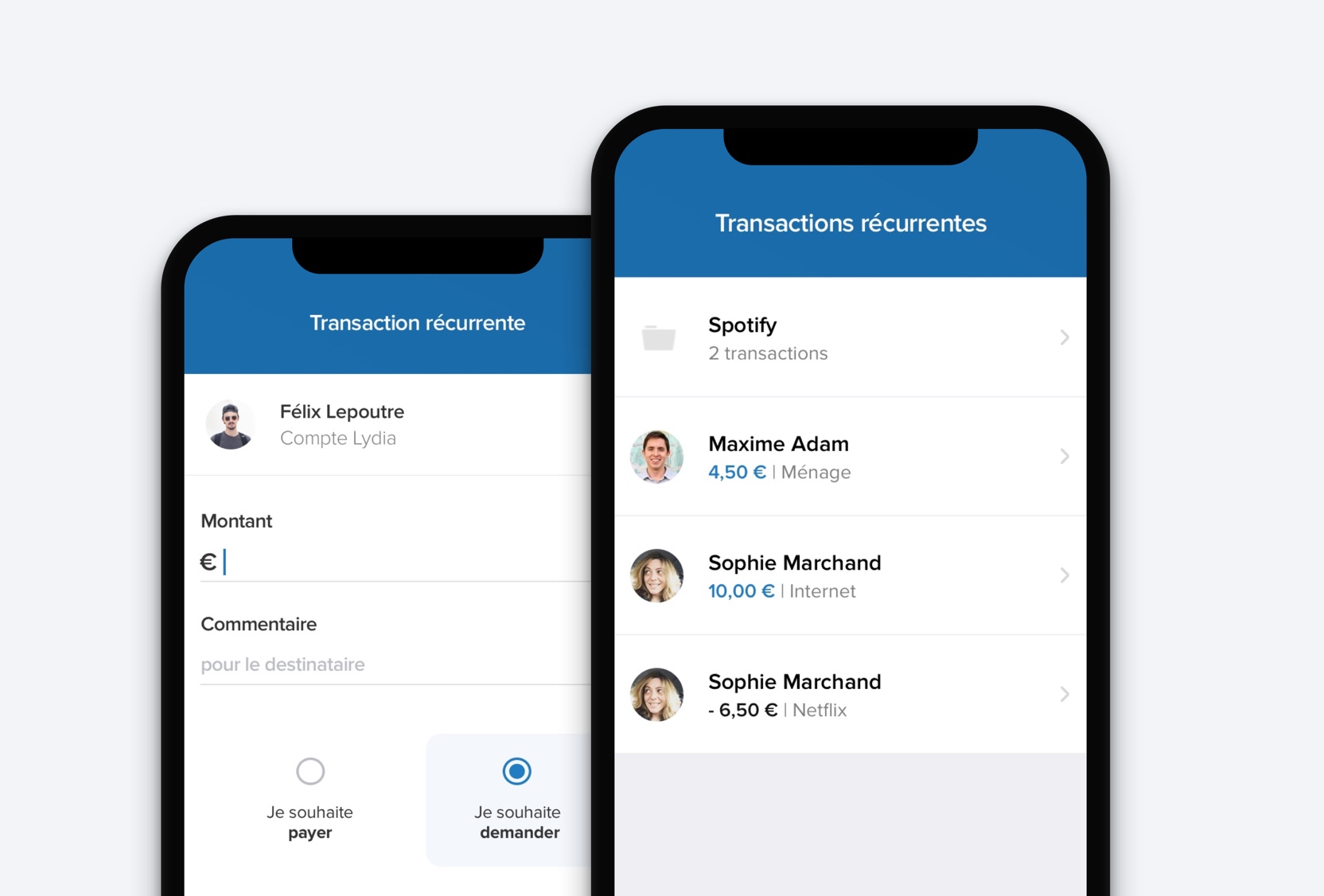
Lydia also supports recurring transactions. “It’s been the most requested features for multiple years,” co-founder and CTO Antoine Porte said. For instance, you can pay for your share of the internet bill every month using Lydia. The app sends you a notification every month to confirm the transaction.

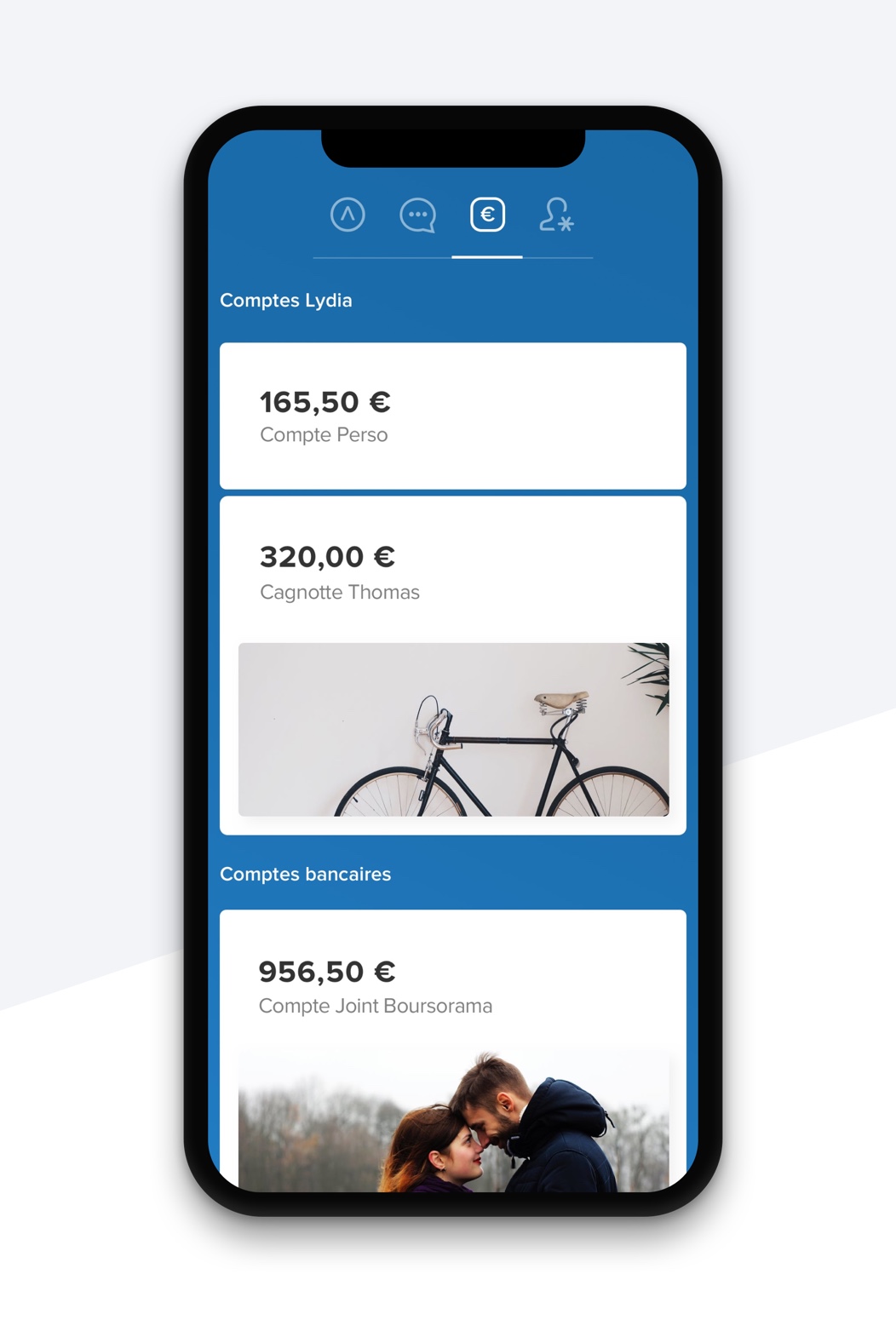
Finally, there’s a brand new tab to get an overview of multiple accounts. You can see your bank account and Lydia sub-accounts. For instance, if you’re going on vacation with a few friends, you can create a Lydia sub-account and manage all your expenses from Lydia without any fee.

Interestingly, you can create a URL and send it to friends who are not using Lydia. Other users can then pay using your debit card. It feels like a streamlined version of Lydia’s existing money pot feature.

This is a big step for the company as Lydia is launching Lydia Premium for those new features. You can connect to your bank accounts, create recurring payments and sub-accounts for a monthly post. It’ll cost €2.99 per month ($3.69).

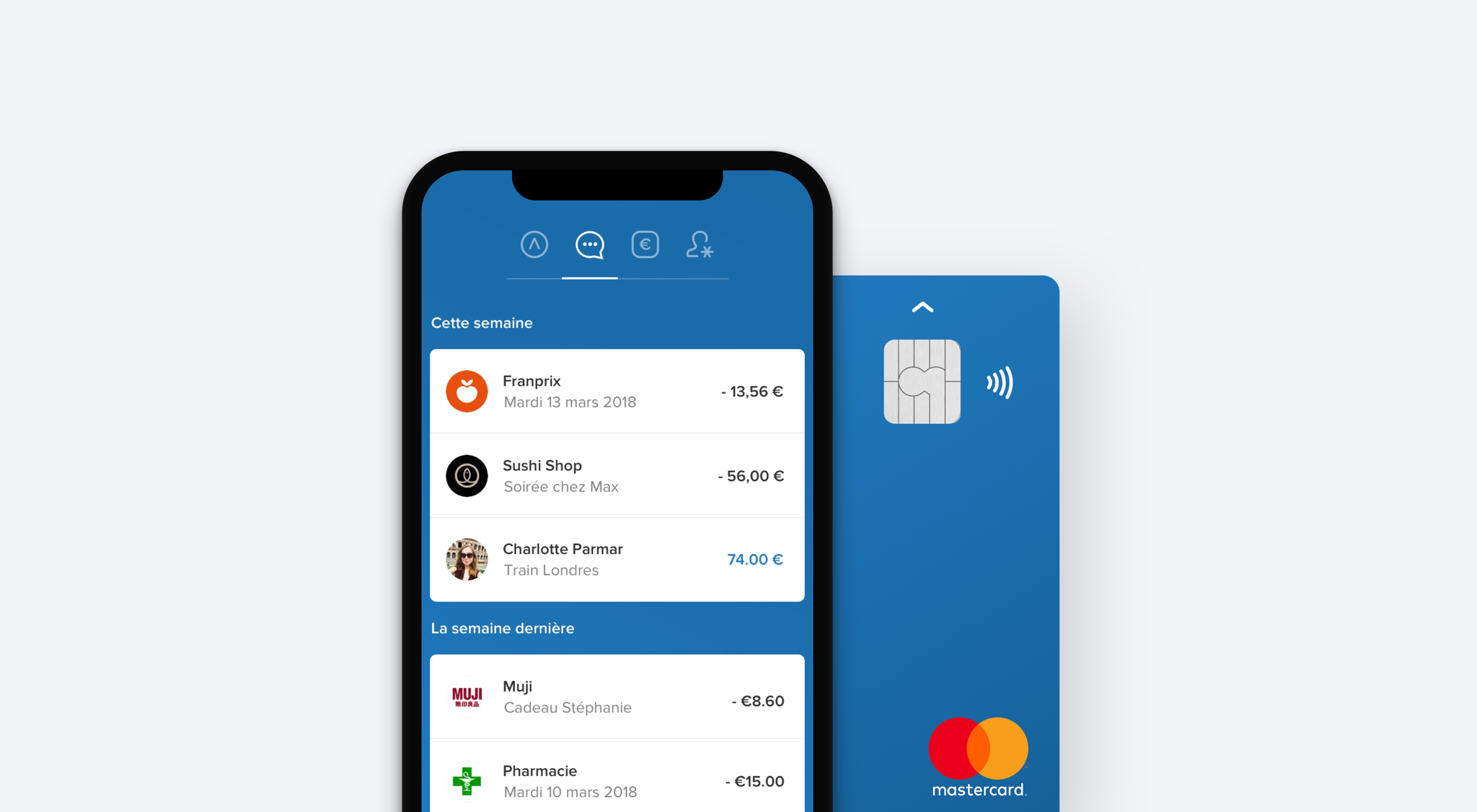
Existing features are still free. You can send and receive money in a just a few seconds with a Lydia transaction. You can pay in Franprix stores or on Cdiscount with your Lydia account.

You can try some of the new features with a free account. For instance, you can link one bank account, you can create one recurring payment, you can generate one virtual card, you can create money pots with some fees, etc.

Just like before, you can generate a virtual card for free so that you can pay on the internet or use Apple Pay with it. But if you’re a Lydia Premium subscriber, you’ll be able to generate multiple virtual cards to manage your online subscriptions. For instance, you can stop a subscription by deleting a virtual card or change the payment source for this card.

A Lydia MasterCard and IBAN for all your transactions

If you want to get a good old plastic card, you can pay an extra euro. For €3.99 per month ($4.92), you get everything I just described and a MasterCard. When you pay, the card uses your Lydia e-wallet and sends you a notification. You can open the app and choose one of your bank accounts to debit your bank account instantly.

Personal IBAN numbers and direct debits are no longer available for now — you could generate one for free. They’ll be back as part of Lydia Premium with new features as well as shared accounts. You’ll be able to pick a bank account for each transaction. For instance, you can say that you use LCL for your electricity bill and Fortuneo for your taxes. Lydia partners with Treezor for IBANs, virtual and physical cards.

Lydia currently has a little bit over a million registered users. And the startup is currently attracting around 2,000 new users every day. Over 80 percent of this user base has less than 30 years.

Lydia is currently available in France, Ireland, the U.K., Spain and Portugal. The startup also recently raised $16.1 million (€13 million) from CNP Assurances and others.

It’s interesting to see that Lydia isn’t competing head-to-head with challenger banks, such as N26 or Revolut (soon). The company thinks you can provide more value by partnering with multiple companies and building the interface that makes everything work together.

20 Mar 2018

Bumble responds to Match’s patent lawsuit

Yesterday we reported that Match, the parent company of Tinder, was suing Bumble for patent infringement and misuse of intellectual property.

Specifically, Match alleged that Bumble “copied Tinder’s world-changing, card-swipe-based, mutual opt-in premise” for which a patent was filed in 2013 (before Bumble was founded) but just granted a few months ago.

Today Bumble has responded to Match’s lawsuit with a letter published on their own blog and other news outlets. The full letter is linked here and we’ll also include it in full at the bottom of this post.

Interestingly, Bumble’s letter focuses less on the actual litigation and instead attempts to fill in readers about the context in which Match has decided to sue over this patent claim.

Specifically, the letter notes that this lawsuit comes after Match has made repeated attempts to buy Bumble as well as launch a copy cat “lady’s first” feature. While Bumble or Match have never publicly acknowledged negotiations between the two companies, sources close to the situation have confirmed in the past to TechCrunch that there were multiple back and forth offers from Match which fell short of Bumble’s desired valuation.

With sources close to the two companies telling TechCrunch that this is the first time Match has ever mentioned possible patent infringements by Bumble, it’s very possible that Match feels that discussions have stalled and this is their way of either forcing the deal forward or making Bumble an unattractive target for other bidders that may be scared off by this potential legal liability.

The letter shows that Bumble essentially agrees with this analysis, as they openly call out the lawsuit as an intimidation tactic by saying “we swipe left on your attempted scare tactics, and on these endless games. We swipe left on your assumption that a baseless lawsuit would intimidate us.”

While anything is possible (especially in the world of M&A), the letter also strongly suggests that as of now any chance of a deal between the two companies are seriously off the table, as Bumble says “we’ll never be yours, no matter the price tag”.

When asked if any company besides Match has made a competing offer, Bumble founder Whitney Wolfe Herd told TechCrunch that “Bumble is very excited about other potential opportunities that are still very much in discussion, and none of the recent news has affected these conversations.”

In regards to the lawsuit itself, Bumble does say (in a footnote) that they “vigorously dispute this lawsuit’s baseless claims and look forward to telling their story in court”.

It’s going to be interesting to see what happens next. If Bumble has truly swiped left on Match for good, than the dating conglomerate may feel like they have nothing to lose by pursuing their lawsuit against Bumble for as long as possible. Or, maybe it is all one big negotiating technique and they’ll end up dropping it before coming back to Bumble with a larger offer.

Either way, we’ll keep you updated as soon as we find out more. Here’s the full letter from Bumble to Match below:

Dear Match Group,

We swipe left on you. We swipe left on your multiple attempts to buy us, copy us, and, now, to intimidate us.

We’ll never be yours. No matter the price tag, we’ll never compromise our values.

We swipe left on your attempted scare tactics, and on these endless games. We swipe left on your assumption that a baseless lawsuit would intimidate us. Given your enduring interest in our company, we expected you to know us a bit better by now.

We — a woman-founded, women-led company — aren’t scared of aggressive corporate culture. That’s what we call bullying, and we swipe left on bullies. Ask the thousands of users we’ve blocked from our platform for bad behavior.

In fact, that behavior? It only fuels us. It motivates us to push our mission further — to work harder each day to build a platform, community, and brand that promotes kindness, respect, and equality. That’s the thing about us. We’re more than a feature where women make the first move. Empowerment is in our DNA. You can’t copy that.

So when you announced recently, in another attempt to intimidate us, that you were going to try to replicate our core, women-first offering and plug it in to Tinder, we applauded you for the attempt to make that subsidiary safer.

We strive every day to protect our nearly 30 million users, and to engineer a more accountable environment. Instead of swinging back and forth between trying to buy us, copy us, and sue us, why don’t you spend that time taking care of bad behavior on your platforms?

We remain focused on improving our users’ experience, and taking our mission worldwide, until every woman knows she has the power to make the first move, to go after what she wants, and to say “no” without fear.

We as a company will always swipe right for empowered moves, and left on attempts to disempower us. We encourage every user to do the same. As one of our mottos goes, “bee kind or leave.”

We wish you the best, but consider yourselves blocked.

Bumble

20 Mar 2018

YC alum Dahmakan, a Kuala Lumpur-based food delivery startup, acquires Polpa to expand into Thailand

Dahmakan, a vertically-integrated Malaysian meal delivery startup, announced today that it has acquired Polpa to enter Bangkok. Dahmakan was the first Malaysian startup to participate in Y Combinator and recently received a $2.6 million round of funding earmarked for its expansion into new markets.

The company, which was launched in 2015 by former Rocket Internet executives, says it now delivers tens of thousands of meals each month in Kuala Lumpur, where it is based, and Bangkok. Co-founder and chief executive officer Jonathan Weins told TechCrunch that Dahmakan plans to venture into other Southeast Asian markets first, including Jakarta, Singapore, Hong Kong and Manila, before tackling East Asian countries like Japan and Korea.

Polpa was founded in 2014 by Julian Timings and Prongfa Uennatornaranggoon, who will join Dahmakan’s team. Polpa will continue to operate under its own brand in Bangkok.

“Polpa has incredible founders and we have been in touch with them for over a year. We shared the same excitement and wanted to do something much bigger together, so when it came to an acquisition, it made sense because they are complementary to us,” says Weins.

Polpa shares a similar business model to Dahmakan that helps them differentiate from “traditional” food delivery startups like Foodpanda (which was formerly owned by Rocket Internet) and Uber Eats. Self-described “full-stack food delivery” companies, they handle almost all parts of their business operation, including food preparation and logistics, in-house.

In order to make that possible, Dahmakan pre-plans menus a week in advance, offering a choice of several meals each day that customers can order a la carte or with discounted package deals. To make large-scale meal production and delivery efficient and affordable, the startup relies on its proprietary machine-learning routing technology. The system allows it to produce and began delivery of more than 1,200 fresh meals in an hour, or a “four times higher efficiency than the industry benchmark set by Chipotle,” Dahmakan claims. The company also says its delivery cost is five times lower than traditional food delivery companies.

As it expands, Dahmakan will need to compete with other vertically-integrated food delivery services, the most notable of which is probably Grain in Singapore. Weins says Dahmakan’s AI-based technology will be its key differentiator, because it keeps costs down while ensuring quick deliveries. Dahmakan will also be up against Foodpanda, Uber Eats and other services that offer food from a wide range of restaurants, but Weins says the benefit of choosing from Dahmakan’s pre-planned menus is quality control. Many of its chefs formerly worked in luxury hotels, including Shangri-La Kuala Lumpur, and create meals that the company says would be 30% to 50% more expensive when ordered from restaurants that aren’t able to utilize its economies of scale.

20 Mar 2018

Only 48 hours left to apply for Startup Battlefield Europe

Sacrê merde sur un bardeau! You have only 48 hours left to apply for TechCrunch Startup Battlefield Europe. The Battlefield takes place at VivaTech at the Paris Expo Porte de Versailles on May 24th -25. The deadline — March 22, at 9 a.m. PST — is fast upon us, but you still have time. So, hop to it and apply today.

We’re not sure if it’s possible to be part of the startup world and not be familiar with Startup Battlefield and all the benefits you reap by participating. But hey, there could be true newbies in the house, so we’ll sketch out the details. Here’s how it works.

Out of all the applications TechCrunch receives, the editors select between 15 and 20 early-stage startups to compete. Each team receives expert pitch coaching from TechCrunch editors, and you’ll be thoroughly prepped and ready by the time you take the Startup Battlefield stage.

You’ll have six minutes to pitch and demo your product in front of both a large, live audience and a panel of notable judges — and to answer their questions. Five teams move on as finalists for a second round of pitching to a fresh set of equally qualified and esteemed judges.

One team will emerge victorious, claim the title of Startup Battlefield Europe winner and take home €25,000 in no-equity cash — and bragging rights, ‘natch. The winning team also receives an all-expense paid trip for two to San Francisco where they will compete in the Startup Battlefield at TechCrunch’s flagship event, Disrupt SF 2018 (assuming they still qualify at that time).

In addition to those valuable in-the-moment rewards, the resulting (and extensive) media exposure can truly launch your startup to the world. And to investors seeking to fund the next best-and-brightest tech startup. The entire event will be streamed live on TechCrunch.com, YouTube, Facebook and Twitter, and it will be available later on-demand.

Every competing team, regardless of the overall outcome, joins the ranks of the Startup Battlefield alumni community. This community number nearly 750 companies, that have collectively raised more than $8 billion and created more than 100 exits. Notable names include Mint, Dropbox, Yammer, TripIt, Getaround and Cloudflare. That’s a valuable networking community right there.

If you’re detail-minded, read our Startup Battlefield Europe FAQ it has everything you need to know about applying and competing in Startup Battlefield.

One last reminder: TechCrunch does not take any equity, nor does it charge any fees to apply or to participate in Startup Battlefield. It’s no risk with a big reward potential.

TechCrunch Startup Battlefield Europe takes place at the Paris Expo Porte de Versailles on May 24th  and 25th. You have 48 hours let to take your shot. Apply right here.

20 Mar 2018

DocuSign has filed confidentially for IPO

DocuSign is gearing up to go public in the next six months, sources tell TechCrunch.

The company, which pioneered the e-signature, has now filed confidentially, we are hearing. Utilizing a commonly used provision of the JOBS Act, DocuSign submitted its IPO filing behind closed doors and will reveal it weeks before its public debut.

Like Dropbox, which is finally going public this week, San Francisco-based DocuSign has been an anticipated IPO for several years now. It’s raised over $500 million since it was founded in 2003 and has been valued at $3 billion. Kleiner Perkins, Bain Capital, Intel Capital, GV (Google Ventures) and Dell are amongst the many well-known names which have invested in DocuSign.

But like many “unicorns” these days, the company took its time, spending 15 years as a private company. The DocuSign team decided that 2018 is the year for its debut and is targeting an IPO in either the second or third quarter.

DocuSign, which competes with HelloSign and Adobe Sign, amongst others, has been on a mission to get the world’s businesses to sign documents online. The team has worked with large enterprises like T-Mobile, Salesforce, Morgan Stanley and Bank of America. Real estate, financial services, insurance and healthcare are amongst its key industries.

The company has a tiered business model, with corporations paying more for added services. Public investors will be evaluating DocuSign both on its revenue growth and customer retention.

North America is its largest market, but it’s also been focused on expanding throughout the world, including the U.K., France, Australia, Brazil, Singapore and Japan.

Since its inception, DocuSign has undergone several management changes. Early last year, Dan Springer took the helm. He was formerly CEO of Responsys, which went public and then was bought by Oracle for $1.5 billion.

Keith Krach, who is now chairman, had been running the company since 2011. Krach was previously CEO of Ariba, which was acquired by SAP for $4.3 billion.

DocuSign declined to comment.

The past few years have been slow for tech IPOs, which is a disappointment for Silicon Valley venture capitalists who can make a lot of money this way. But for the most part, enterprise tech companies have fared better than consumer tech companies, because strong customer retention makes it easier to predict growth.

Dropbox will debut this week and Spotify is slated to go public in April through a different process known as a “direct listing.” Zuora also recently revealed its IPO filing, implying that the company is expecting to debut in the coming weeks.