Blog

20 Mar 2018

Color rolls out a test to try to search for hereditary risk for heart conditions like arrhythmia

Color is looking to add a new test to its line of genetic testing, this time focusing on hereditary factors that may affect a person’s chance for being prone to cardiovascular complications like arrhythmia and cardiomyopathy.

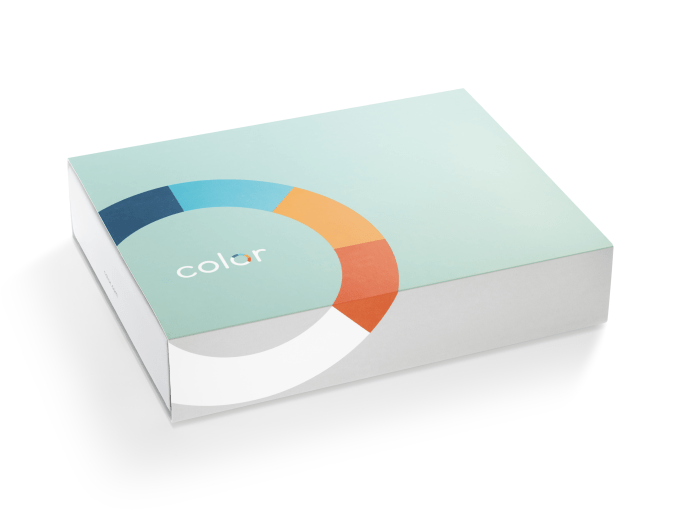
Called the heart health test, Color’s new test looks to isolate the genes that can be partially responsible for heart-related conditions that may have a hereditary component. Color says the test analyzes 30 genes that contribute to the structure and rhythm of a healthy heart to determine if there may be any hereditary factors that could lead to heart complications down the line. VP of clinical operations Scott Topper acknowledged that hereditary factors certainly aren’t the only factors that might play into cardiovascular complications like arrhythmia, but there has been enough research to show that the potential hereditary genetic components that lead to those conditions is impactful enough to warrant building a test for those markers.

“Some of these conditions are relatively rare, and for most of them we expect the actual incidence to be about 1 in 200,” Topper said. “But what that means is, if we handle 1,000 people this week, we expect 5 of them to be affected by this. For those 5, the consequences of it going undetected, can be as extreme as sudden death. While though they’re rare, they incredibly impactful. It’s not a 100% predictive — For BRCA for example, we know that a woman who has a BRCA mutation has about an 80% chance of getting breast cancer in their lifetime and getting again and again. It’s not 100%, but it’s a profound enough likelihood that many people decide to take action.”

Color looks to target genes that the American College of Medical Genetics and Genomics identified as high-impact and actionable. The end product is to see, if there is a mutation in one of those genes, there may be a possibility that the person is at higher risk for cardiovascular problems like cardiomyopathy or arrhythmia. There isn’t full penetrance — just like there isn’t in the BRCA test — so it’s more of a ‘heads up, go get it checked out just in case’ situation.

Color, previously Color Genomics, is one of a few well-funded genetic testing startups that aim to make it easier for consumers to get tested for potential complications down the line where they can take some preventative steps. In the case of this test, the goal is to flag any potential risk and then have them follow up with clinicians to determine if there are any lifestyle changes that need to happen. Consumers take a swab of saliva and send off the test — either for a few hundred bucks, or through a program that some employers are putting in place. Color raised $80 million in a financing round in August last year.

The latter part of that, employers getting into issuing these tests for their employees, is going to be increasingly important for Color. Catching diseases early helps reduce the overall cost to employers before more problems occur. While Color has largely focused on the cancer space with tests for detecting genes that are associated with higher risk of breast cancer, it started branching into tests for potential cardiovascular problems like Hypercholesterolemia. That test, launched in August last year, costs $249 for a direct purchase for a consumer.
To be sure, the average customer is giving up their genetic data in order to get tested for these potential hereditary conditions, a password that you’ll (probably) never be able to change. As more and more of these tests become available, there’s a good chance it’ll attract a new segment of customers — those that are looking to head off complications based on what’s happened to family members, or even those who are just curious about whether or not they have risk. Topper said many at Color come from a tech-native background from companies like Google, Twitter, and Dropbox, and it’s something that’s perpetually top-of-mind. (Though, to be sure, it’s a very tall order.)

“We’ve put a good deal of effort on the back-end informatics side to make sure our systems are very developed and robust,” Topper said. “It’s not something that comes easy, I think a lot of health companies back into this and realize after the fact that there’s a substantial computer engineering aspect to being able to do this responsibly”

There is still a lot of activity in this space, including at the actual financing level. 23andMe, another genetic testing startup, raised $250 million in new financing last year. And as the research matures, it’s always possible that other companies may want to branch into a similar area — finding spots that might represent some risk for heart conditions. Topper said the company still expects to continue to look for examples where the condition affects a lot of people and that some portion is driven by genetics, and that a lot of players in the space is generally going to be a good thing simply because it will help further the progress on that front.

“We are living in good times for genetics, primarily because of a number of really important consensus-driven efforts around looking at the clinical validity and clinical utility of genetic information,” he said. “None of this happens in a silo. Being able to both move the field forward in terms of making information available and gleaning knowledge, as well as being a good citizen in a space that’s moving quickly, are both very important to us. I feel like there’s a cultural change in terms of where genetics fits into our society. As long as other companies are doing it responsibly, it’s also good.”

20 Mar 2018

Color rolls out a test to try to search for hereditary risk for heart conditions like arrhythmia

Color is looking to add a new test to its line of genetic testing, this time focusing on hereditary factors that may affect a person’s chance for being prone to cardiovascular complications like arrhythmia and cardiomyopathy.

Called the heart health test, Color’s new test looks to isolate the genes that can be partially responsible for heart-related conditions that may have a hereditary component. Color says the test analyzes 30 genes that contribute to the structure and rhythm of a healthy heart to determine if there may be any hereditary factors that could lead to heart complications down the line. VP of clinical operations Scott Topper acknowledged that hereditary factors certainly aren’t the only factors that might play into cardiovascular complications like arrhythmia, but there has been enough research to show that the potential hereditary genetic components that lead to those conditions is impactful enough to warrant building a test for those markers.

“Some of these conditions are relatively rare, and for most of them we expect the actual incidence to be about 1 in 200,” Topper said. “But what that means is, if we handle 1,000 people this week, we expect 5 of them to be affected by this. For those 5, the consequences of it going undetected, can be as extreme as sudden death. While though they’re rare, they incredibly impactful. It’s not a 100% predictive — For BRCA for example, we know that a woman who has a BRCA mutation has about an 80% chance of getting breast cancer in their lifetime and getting again and again. It’s not 100%, but it’s a profound enough likelihood that many people decide to take action.”

Color looks to target genes that the American College of Medical Genetics and Genomics identified as high-impact and actionable. The end product is to see, if there is a mutation in one of those genes, there may be a possibility that the person is at higher risk for cardiovascular problems like cardiomyopathy or arrhythmia. There isn’t full penetrance — just like there isn’t in the BRCA test — so it’s more of a ‘heads up, go get it checked out just in case’ situation.

Color, previously Color Genomics, is one of a few well-funded genetic testing startups that aim to make it easier for consumers to get tested for potential complications down the line where they can take some preventative steps. In the case of this test, the goal is to flag any potential risk and then have them follow up with clinicians to determine if there are any lifestyle changes that need to happen. Consumers take a swab of saliva and send off the test — either for a few hundred bucks, or through a program that some employers are putting in place. Color raised $80 million in a financing round in August last year.

The latter part of that, employers getting into issuing these tests for their employees, is going to be increasingly important for Color. Catching diseases early helps reduce the overall cost to employers before more problems occur. While Color has largely focused on the cancer space with tests for detecting genes that are associated with higher risk of breast cancer, it started branching into tests for potential cardiovascular problems like Hypercholesterolemia. That test, launched in August last year, costs $249 for a direct purchase for a consumer.

To be sure, the average customer is giving up their genetic data in order to get tested for these potential hereditary conditions, a password that you’ll (probably) never be able to change. As more and more of these tests become available, there’s a good chance it’ll attract a new segment of customers — those that are looking to head off complications based on what’s happened to family members, or even those who are just curious about whether or not they have risk. Topper said many at Color come from a tech-native background from companies like Google, Twitter, and Dropbox, and it’s something that’s perpetually top-of-mind. (Though, to be sure, it’s a very tall order.)

“We’ve put a good deal of effort on the back-end informatics side to make sure our systems are very developed and robust,” Topper said. “It’s not something that comes easy, I think a lot of health companies back into this and realize after the fact that there’s a substantial computer engineering aspect to being able to do this responsibly”

There is still a lot of activity in this space, including at the actual financing level. 23andMe, another genetic testing startup, raised $250 million in new financing last year. And as the research matures, it’s always possible that other companies may want to branch into a similar area — finding spots that might represent some risk for heart conditions. Topper said the company still expects to continue to look for examples where the condition affects a lot of people and that some portion is driven by genetics, and that a lot of players in the space is generally going to be a good thing simply because it will help further the progress on that front.

“We are living in good times for genetics, primarily because of a number of really important consensus-driven efforts around looking at the clinical validity and clinical utility of genetic information,” he said. “None of this happens in a silo. Being able to both move the field forward in terms of making information available and gleaning knowledge, as well as being a good citizen in a space that’s moving quickly, are both very important to us. I feel like there’s a cultural change in terms of where genetics fits into our society. As long as other companies are doing it responsibly, it’s also good.”

19 Mar 2018

The Podcast App aims to be the simplest way to listen to podcasts

While it sometimes feels like everyone has a podcast nowadays, the truth is that most Americans still don’t listen to podcasts regularly. The Y Combinator-backed team behind The Podcast App is planning to change that.

And yes, that’s the app’s real name. Co-founder and CEO Martín Siniawski argued that most existing podcast apps were built years ago, “when it was a really different medium.” They’re designed for people who already understand what a podcast is, already know which podcasts they’re looking for and already understand what it means to subscribe.

In contrast, Siniawski said The Podcast App is designed to be “extremely fast, extremely easy and extremely reliable and stable.”

How easy? Well, the website boasts that it’s “so simple even your grandma could use it.”

“We’ve invested heavily on making sure that we can onboard people and take them step-by-step in a way that doesn’t overwhelm them,” Siniawski said.

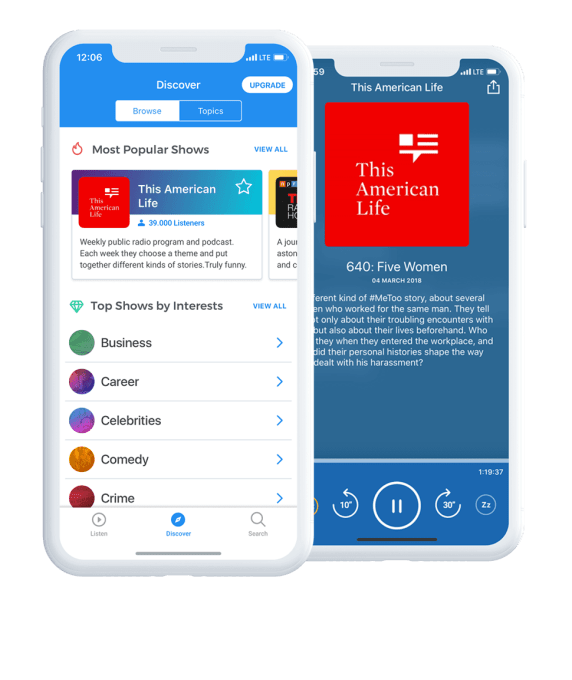
So when you first open up the app, you’re asked to identify your interests, and then you get a list of podcast recommendations. Once you’re looking at a specific podcast, you can browse all episodes or just the “Best Of” (curated based on The Podcast App’s engagement data), then hit buttons to favorite the show and download individual episodes.

The Podcast App

Beyond making the app easy to understand, Siniawski said he’s also focused on helping people find the right podcast for them. Creating good app-wide and podcast-specific search features helps, and so do the Best Of lists, but he said that’s just the beginning.

For one thing, there’s more to be done in search, like indexing the full content of the episodes, not just the titles and descriptions. For another, Siniawski is hoping to take more of a Netflix-style approach to “leverage more and more of that data to provide recommendations.”

The Podcast App has built up a library of 30 million episodes, and includes most of the big names in podcasting. (It also includes TechCrunch podcasts like Original Content and CTRL+T. Just saying.) In the future, Siniawski said he’s hoping to work with podcasters to work on original programming, and to incorporate more types of advertising and subscriptions (the startup currently limits its own monetization to display ads that run in the app).

Oh, and if you’re wondering how Siniawski was able to get such a straightforward (and search-friendly) name for his app, the answer is simple: No one claimed it first.

19 Mar 2018

The Podcast App aims to be the simplest way to listen to podcasts

While it sometimes feels like everyone has a podcast nowadays, the truth is that most Americans still don’t listen to podcasts regularly. The Y Combinator-backed team behind The Podcast App is planning to change that.

And yes, that’s the app’s real name. Co-founder and CEO Martín Siniawski argued that most existing podcast apps were built years ago, “when it was a really different medium.” They’re designed for people who already understand what a podcast is, already know which podcasts they’re looking for and already understand what it means to subscribe.

In contrast, Siniawski said The Podcast App is designed to be “extremely fast, extremely easy and extremely reliable and stable.”

How easy? Well, the website boasts that it’s “so simple even your grandma could use it.”

“We’ve invested heavily on making sure that we can onboard people and take them step-by-step in a way that doesn’t overwhelm them,” Siniawski said.

So when you first open up the app, you’re asked to identify your interests, and then you get a list of podcast recommendations. Once you’re looking at a specific podcast, you can browse all episodes or just the “Best Of” (curated based on The Podcast App’s engagement data), then hit buttons to favorite the show and download individual episodes.

The Podcast App

Beyond making the app easy to understand, Siniawski said he’s also focused on helping people find the right podcast for them. Creating good app-wide and podcast-specific search features helps, and so do the Best Of lists, but he said that’s just the beginning.

For one thing, there’s more to be done in search, like indexing the full content of the episodes, not just the titles and descriptions. For another, Siniawski is hoping to take more of a Netflix-style approach to “leverage more and more of that data to provide recommendations.”

The Podcast App has built up a library of 30 million episodes, and includes most of the big names in podcasting. (It also includes TechCrunch podcasts like Original Content and CTRL+T. Just saying.) In the future, Siniawski said he’s hoping to work with podcasters to work on original programming, and to incorporate more types of advertising and subscriptions (the startup currently limits its own monetization to display ads that run in the app).

Oh, and if you’re wondering how Siniawski was able to get such a straightforward (and search-friendly) name for his app, the answer is simple: No one claimed it first.

19 Mar 2018

Chief Security Officer Alex Stamos is leaving Facebook over disinformation drama

Facebook’s latest public controversy appears to have claimed its first major casualty. According to reporting from the New York Times, the social media giant is poised to part ways with its high profile chief security officer, Alex Stamos. That story suggests that Stamos created friction within Facebook by pushing for an aggressive approach to exploring and disclosing to the public the platform’s role in disseminating Russian state-sponsored disinformation to users. Stamos apparently initiated his exit in December 2017 but was convinced to stay on through August to avoid the hit to public perception, the New York Times reports.

Stamos weighed in over the weekend, arguing that Facebook’s revelations around the Trump campaign-linked data analytics firm did not qualify as a “breach” in the technical sense. The term that generally connotes hacking or a technical compromise of some kind, though the Cambridge Analytica situation involves a since deprecated lax API and a business model that revolves around collecting massive troves of personal data and doling it out in ways often far from transparent to the average user.

Stamos, who joined the company in June of 2015 after spending nearly year and a half time wrestling with privacy woes at Yahoo, is generally well respected within the security community. According to a story from Reuters in 2016, Stamos reportedly left his position at the top security officer at Yahoo after the company complied with a secret U.S. intelligence directive that allowed the government to search Yahoo user emails via  purpose-built software.

Stamos’s presence at Facebook — and his at times candid explanations of the internal workings and reasoning of the often opaque social network — projected the sense that the company was taking user privacy seriously. Depending on what happens next, the security officer’s absence at Facebook is likely to speak volumes too.

19 Mar 2018

Internet Archive adds trove of cheap LCD handhelds to its emulation collection

During CES, the single piece of electronics I spent the most time with, apart from my laptop and camera, was a Mattel Dungeons & Dragons Computer Fantasy Game handheld. This decades-old device held the attention of John Biggs and myself through quite a few drinks as we navigated its arcane interface (eventually slaying the dragon, thank you). These cheap handhelds, sold as impulse buys at drug stores and Toys ‘R Us (RIP), are the latest thing to be collected and emulated in full by MAME and the Internet Archive.

At first when I heard this, I was happy but not particularly impressed. They’re great little devices — mostly terrible games, albeit a nostalgic kind of terrible — but how complicated can they be?

Oh, quite complicated, it turns out.

Unlike, say, an NES ROM, these little gadgets don’t have their graphics palettized, their logic isolated, etc. No, each one of these things is a strange and unique little machine. They must be carefully taken apart and their logic teased out by experts.

For one thing, the graphics aren’t pixels accounted for digitally. They’re etched into the liquid crystal system, to be activated when a charge runs through them. In other words, all the graphics are right there on the same screen, arranged like puzzle pieces.

So you may remember Space Jam looking like this:

But the LCD layer looks like this:


All that is hard-wired into the electronic part, where the logic resides telling which pieces to light up and when.

I won’t go into the details — read the interesting Internet Archive post if you’re curious. Basically it was a ton of hard work by a bunch of dedicated folks on the MAME crew. Incidentally, thanks to them and everyone else who’s kept that project going for years and years.

The only thing that’s missing is the interface — that is, the plastic. These things were great not because they were actually great games, but because they cost like $10 and would keep your kid occupied on a road trip for a few hours while they got beaten over and over again by the first three enemies. The cheap plastic enclosures and gaudy decorations are part of the fun.

No one wants to play this:

But this?

I’d definitely bug my mom to get me that. In fact, I think I did.


You can check out the scores of games the teams have already digitized at the Handheld History page, and if you’re in an emulatin’ mood, check out the other gazillion systems you can play in the browser in Archive’s Internet Arcade and Console Living Room.

19 Mar 2018

Marijuana soda startup California Dreamin’ wants to replace booze

“Enjoy a light, social high,” says the funky bottle of California Dreamin’ cannabis -infused sparkling pomegranate juice. Launching today at Y Combinator Demo Day, California Dreamin’ is serving up an alcohol alternative that still gets you lit, but without the same hangover or health issues.

Each bottle contains 10 milligrams of THC — an industry-standard dose of the psychoactive chemical in marijuana. The company only uses sativa, the more energizing, euphoric type of pot, compared to the more body-relaxing indica variety. That’s compared to some competing marijuana beverages with as much as 100mg — enough that a single sip will get you high and a bottle will lay out all but the hardiest stoners. “We want it to be a light, head high feel,” says Seven Cities Beverage Company aka California Dreamin’ co-founder Amy Ludlum. “We don’t want to give anyone couch lock. We want it to be social.”

Meanwhile, the taste marries fruity sweetness with a hint of earthy plant life complexity that will titillate long-time cannabis fans. Bottles come in other flavors, like tangerine, grapefruit and cranberry apple, and will retail for about $8 to $10 each. Cases are rolling out to recreational dispensaries in San Francisco, like The Barbary Coast, over the next week.

California Dreamin’ has succeeded in creating a beverage with the light-hearted brand, logical dosage and agreeable taste to be something you can drink casually and socially, not just when you want to get ridiculously high. That makes it a better alternative or complement to drinking alcohol. It’s certainly not for everyone. Paranoia, anxiety and post-high grogginess are all common side-effects of sativa, and you shouldn’t drive while blazed. But there are plenty of people who want an option to unwind that doesn’t involve a literal poison, or smoking a burning plant that can hurt your lungs.

The only problem is that California and other states with legal recreational marijuana ban the sale of anything cannabis related anywhere that serves alcohol. That means you aren’t likely to see California Dreamin’ in a bar any time soon, but you could throw a pretty fun backyard barbecue. But with 1 million medical marijuana users out of 28 million California adults, and with over half of the voting population supporting cannabis legalization, there’s plenty of room to build a brand in this space.

Inebriation is America’s true national pastime. You could see it as people just seeking an escape from daily troubles, but it’s also a way to shift our thinking to get a new perspective on the world. Considering how much we pay for entertainment that’s merely stimulus we filter through our perception, $10 to pleasantly alter that perception is not a half-baked idea.

19 Mar 2018

Government agencies react to Uber’s fatal self-driving car accident

Earlier today, news broke of a fatal crash involving one of Uber’s self-driving cars in Tempe, Arizona. In response, Uber halted its self-driving car programs where it currently operates, including in Pittsburgh, Toronto, San Francisco and Phoenix. Tempe Mayor Mark Mitchell and others have since released statements about the crash.

“The City of Tempe has been supportive of autonomous vehicle testing because of the innovation and promise the technology may offer in many areas, including transportation options for disabled residents and seniors,” Mayor Mitchell said in a statement. “All indications we have had in the past show that traffic laws are being obeyed by the companies testing here.”

Moving forward, the city of Tempe and its police department will look into the accident to try to figure out what happened, Mitchell said. In the meantime, Mitchell said he supports the step Uber has taken to temporarily suspend its self-driving tests.

Over in California, where Uber has also suspended its self-driving car tests, the DMV says it “takes the safe operation of our autonomous vehicle permit holders very seriously,” a DMV spokesperson said in a statement to TechCrunch.

“The California DMV has many requirements in place for testing permit holders and requires collision reports and annual disengagement reports,” the spokesperson said. “We are aware of the Uber crash in Arizona, but we have not been briefed on the details of the crash at this time. We plan to follow up with Uber to get more information.”

Assemblymember Jim Frazier (D-Discovery Bay), who is also chairman of the Assembly Transportation Committee, also chimed in, saying his “heart goes out to the family of the victim.”

He added,

Unlike Arizona, California has taken a safety driven approach when developing autonomous vehicle regulations. Autonomous vehicles have the potential to save thousands of lives a year, but they have to be tested properly to protect the public. My Committee plans on having a hearing in May that will focus on the safety of these vehicles.

Earlier today, the National Safety Transportation Board announced it would conduct its own field investigation. That came after Uber’s statement, in which the company expressed its condolences and said the company is working with local authorities in their investigation.

I’ve reached out to the National Highway Traffic Safety Administration, the Arizona DMV and others. I’ll update this story as I learn more.

19 Mar 2018

Government agencies react to Uber’s fatal self-driving car accident

Earlier today, news broke of a fatal crash involving one of Uber’s self-driving cars in Tempe, Arizona. In response, Uber halted its self-driving car programs where it currently operates, including in Pittsburgh, Toronto, San Francisco and Phoenix. Tempe Mayor Mark Mitchell and others have since released statements about the crash.

“The City of Tempe has been supportive of autonomous vehicle testing because of the innovation and promise the technology may offer in many areas, including transportation options for disabled residents and seniors,” Mayor Mitchell said in a statement. “All indications we have had in the past show that traffic laws are being obeyed by the companies testing here.”

Moving forward, the city of Tempe and its police department will look into the accident to try to figure out what happened, Mitchell said. In the meantime, Mitchell said he supports the step Uber has taken to temporarily suspend its self-driving tests.

Over in California, where Uber has also suspended its self-driving car tests, the DMV says it “takes the safe operation of our autonomous vehicle permit holders very seriously,” a DMV spokesperson said in a statement to TechCrunch.

“The California DMV has many requirements in place for testing permit holders and requires collision reports and annual disengagement reports,” the spokesperson said. “We are aware of the Uber crash in Arizona, but we have not been briefed on the details of the crash at this time. We plan to follow up with Uber to get more information.”

Assemblymember Jim Frazier (D-Discovery Bay), who is also chairman of the Assembly Transportation Committee, also chimed in, saying his “heart goes out to the family of the victim.”

He added,

Unlike Arizona, California has taken a safety driven approach when developing autonomous vehicle regulations. Autonomous vehicles have the potential to save thousands of lives a year, but they have to be tested properly to protect the public. My Committee plans on having a hearing in May that will focus on the safety of these vehicles.

Earlier today, the National Safety Transportation Board announced it would conduct its own field investigation. That came after Uber’s statement, in which the company expressed its condolences and said the company is working with local authorities in their investigation.

I’ve reached out to the National Highway Traffic Safety Administration, the Arizona DMV and others. I’ll update this story as I learn more.

19 Mar 2018

Facebook hired a forensics firm to investigate Cambridge Analytica as stock falls 7%

Hoping to tamp down the furor that erupted over reports that its user data was improperly acquired by Cambridge Analytica, Facebook has hired the digital forensics firm, Stroz Friedberg, to perform an audit on the political consulting and marketing firm.

In a statement, Facebook said that Cambridge Analytica has agreed to comply and give Stroz Friedberg access to their servers and systems.

Facebook has also reached out to the whistleblower Christopher Wylie and Aleksandr Kogan, the Cambridge University professor who developed an application which collected data that he then sold to Cambridge Analytica.

Kogan has consented to the audit, but Wylie, who has positioned himself as one of the architects for the data collection scheme before becoming a whistleblower, declined, according to Facebook.

The move comes after a brutal day for Facebook’s stock on the Nasdaq stock exchange. Facebook shares plummeted 7%, erasing roughly $40 billion in market capitalization amid fears that the growing scandal could lead to greater regulation of the social media juggernaut.

Indeed both the Dow Jones Industrial Average and the Nasdaq fell sharply as worries over increased regulations for technology companies ricocheted around trading floors, forcing a sell-off.

“This is part of a comprehensive internal and external review that we are conducting to determine the accuracy of the claims that the Facebook data in question still exists. This is data Cambridge Analytica, SCL, Mr. Wylie, and Mr. Kogan certified to Facebook had been destroyed. If this data still exists, it would be a grave violation of Facebook’s policies and an unacceptable violation of trust and the commitments these groups made,” Facebook said in a statement.

However, as more than one Twitter user noted, this is an instance where they’re trying to close Pandora’s Box but the only thing that the company has left inside is… hope.

The bigger issue is that Facebook had known about the data leak early as two years ago, but did nothing to inform its users — because the violation was not a “breach” of Facebook’s security protocols.

Facebook’s own argument for the protections it now has in place is a sign of its too-little, too-late response to a problem it created for itself with its initial policies.

“We are moving aggressively to determine the accuracy of these claims. We remain committed to vigorously enforcing our policies to protect people’s information. We also want to be clear that today when developers create apps that ask for certain information from people, we conduct a robust review to identify potential policy violations and to assess whether the app has a legitimate use for the data,” the company said in a statement. “We actually reject a significant number of apps through this process. Kogan’s app would not be permitted access to detailed friends’ data today.”

It doesn’t take a billionaire Harvard dropout genius to know that allowing third parties to access personal data without an individual’s consent is shady. And that’s what Facebook’s policies used to allow by letting Facebook “friends” basically authorize the use of a user’s personal data for them.

As we noted when the API changes first took effect in 2015:

Apps don’t have to delete data they’ve already pulled. If someone gave your data to an app, it could go on using it. However, if you request that a developer delete your data, it has to. However, how you submit those requests could be through a form, via email, or in other ways that vary app to app. You can also always go to your App Privacy Settings and remove permissions for an app to pull more data about you in the future.