19 Mar 2018

YouTube is testing a picture-in-picture mode on the desktop

Some YouTube users on the web have been opted in to a test of a new picture-in-picture mode, which allows you to continue watching a YouTube video in a small window even as you navigate elsewhere on YouTube’s website. A similar feature already exists today on YouTube’s app for both iOS and Android.

The site 9to5Google was the first to spot the feature in testing, nothing that the video will continue playing in the bottom right of the screen you click elsewhere on the YouTube site. The minimized player also includes controls like play/pause, repeat and watch next, as well as a button for accessing playlists. The name of the video and channel are displayed, too.

There was some speculation that the feature was only appearing for YouTube Red subscribers, but that doesn’t appear to be the case – some users without YouTube’s subscription service have also been added to the test group. It’s unclear at this time how many people are seeing this picture-in-picture mode, but the test is not limited to the U.S., according to reports.
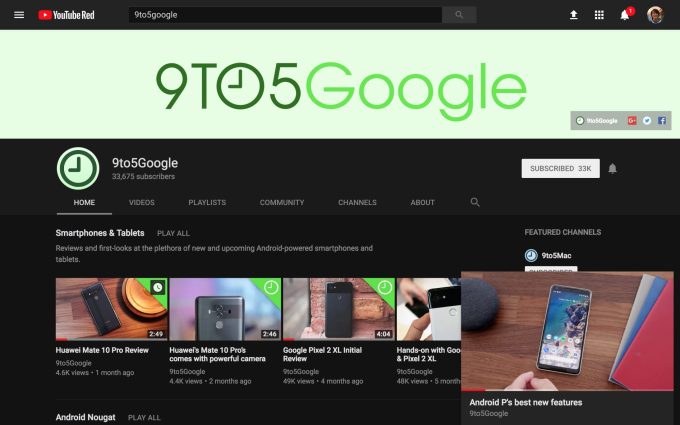
Above: Picture-in-picture mode, credit 9to5Google

It’s common for YouTube to try out new features on a smaller scale, before rolling them out to a wider audience. For example, YouTube tested its dark theme for its mobile app before launching it publicly earlier this month. Presumably, picture-in-picture will become more broadly available in time, as well.

Picture-in-picture mode is commonly found across streaming video services today, aided in part by the introduction of picture-in-picture support on iOS devices with the release of iOS 9. However, it’s not as common on desktop sites. Netflix two years ago added picture-in-picture mode to its iPad app, for example, and YouTube TV’s app added picture-in-picture support in November. Meanwhile, Hulu has been testing picture-in-picture on its beta website as of December, but it hasn’t made its way to its main site yet.

At some point, however, users will come to expect a picture-in-picture mode across any streaming service, on web or mobile. And with YouTube’s continued investment in original programming and a new premium music service, it needs to offer a feature set that’s at least on par with rivals.

A YouTube spokesperson declined to comment on the reports.
 

19 Mar 2018

Uber self-driving test car involved in accident resulting in pedestrian death

An autonomous Uber test SUV driving in Tempe, Arizona was involved in a fatal collision last night, and the Uber vehicle was in autonomous mode at the time the accident occurred, according to Tempe Police (via Daisuke Wakabayashi).

The Uber SUV was driving northbound, and a woman crossed in its path outside of a crosswalk, at which point she was struck by the vehicle. She was later taken to hospital, as first reported by local Arizona ABC news affiliate ABC 15, where she died as a result of her injuries.

As is required for Uber’s autonomous test vehicles operating on public roads, the AV had a safety driver at the wheel. Safety drivers are in place in order to be able to take control of the autonomous test vehicle in case the self-driving system should fail or appear to be at risk of endangering others on the road. No other passengers were in the vehicle at the time of this accident.

Uber has paused all of its AV testing operations as a result of this accident, across all cities where it operates, including Pittsburgh, Toronto, San Francisco and Phoenix.

Uber provided the following statement regarding the incident to TechCrunch:

Our hearts go out to the victim’s family. We are fully cooperating with local authorities in their investigation of this incident.

This is the first time an autonomous vehicle operating in self-driving mode has resulted in a human death, and that has huge implications for the future of AVs and their use on roads. It’s possible the safety driver involved could be held legally responsible, as their role is to ensure safe operation of the vehicle, but in many ways the outcome of this incident will define the path forward for AV regulation.

Uber CEO Dara Khosrowshahi expressed sympathy for the victim’s family on Twitter, and reiterated that Uber is working with local authorities to determine what exactly occurred.

19 Mar 2018

Original Content podcast: We take a drink with season two of ‘Jessica Jones’

Netflix recently released the second season of Marvel’s Jessica Jones, which finds the titular private detective dealing with unwanted fame and investigating the mysterious organization that gave her superpowers.

Despite successfully confronting her nemesis Kilgrave at the end of season one, Jessica (played by Krysten Ritter) remains as prickly as ever — and just as fond of whiskey. On the latest episode of the Original Content podcast, we catch up with her latest misadventures and wrestle with the show’s bigger themes.

We also catch up on some of the latest streaming and entertainment news, including Hulu’s successful bid for a series based on Little Fires Everywhere and Ava DuVernay signing on to direct a movie based on DC Comics’ New Gods. And we get the latest on co-host Jordan Crook’s belated marathon to catch up on the Star Wars movies. (Don’t tell anyone, but she liked the prequels.)

You can listen in the player below, subscribe using Apple Podcasts or find us in your podcast player of choice. If you like the show, please let us know by leaving a review on Apple. You also can send us feedback directly.

19 Mar 2018

Magic Leap opens up its ‘Creator Portal’ with SDK and design guidelines for devs

After maintaining a quiet presence for quite a while, Magic Leap is finally feeling a bit more chatty, at least when it comes to what they’re sharing with developers.

As the Game Developers Conference kicks off in San Francisco this week, Magic Leap is opening up their “Creator Portal” to developers sharing their SDK, tutorials, design guidelines and forums.

The Lumin SDK is designed for Magic Leap’s operating system Lumin OS which we’re now learning is a custome OS built from open source and Linux-based components. Developers building in Unity and Unreal will have access to build for Lumin OS.

It appears as thought the company’s App Store will be called Magic Leap World, there’s not a ton to go off of, but the site says that using it, developer can “create and manage your development team, then give them access to all of the tools they need to successfully share your creations with the world.”

What Magic Leap is trying to do is still very much a new concept for game and app design in general so a decent amount of space is put into walking through basic design guidelines that it sees as useful for spatial computing. The company breaks down the basics as well as audio and animation tips, the stuff there isn’t too technical, it’s more about making sure people are going into the design process realizing that this isn’t just a mobile app in front of your eyes.

On the guidelines front, it appears the company will be giving developers access to tutorials that provide more details on how to get going with building for the hardware. Right now, there is only a tutorial showcasing more details on the positionally tracked Controller.

There isn’t anything super mind-blowing here that I’ve seen yet, but I’ll keep scouring just to be sure. Developing

19 Mar 2018

Facebook builds Patreon, Niche clones to lure creators with cash

Facebook is eager to displace YouTube and Patreon in order to become the home of online content creators, so it’s testing a bunch of new ways for them to earn money and connect with fans. Facebook’s dedicated Creator app that launched in November on iOS will come to Android soon, and it’s also starting a closed beta program where social media stars can work with it to build new features. It’s already cooked up new ones like a leaderboard for each creator’s most engaged fans who earn a special badge next to their comments, as well as a version of its Rights Manager tool for removing or taking over monetization of unofficial copies of their videos.

But most interesting are the new monetization options Facebook is trying out. It will let some users sign-up for a monthly subsciption patronage payment to their favorite creators in exchange for exclusive content and a fan badge just like on Patreon. This will bring Facebook into the world of in-app purchases. Fans will be able to sign up for a $4.99 per month subscription, with Facebook forgoing a cut for now, though the App Store and Google Play will get their 30 percent cut. That means creators will get $3.50 per month per subscriber.

It seems that rather than letting creators set their own price points including a cheap $1 per month option like on Patreon where the average subscription is $12 and the startup takes a 5 percent cut, Facebook is aiming for simplicity of pricing at mid-tier point. Not adding its own rake shows how much Facebook is prioritizing getting creators onto its platform.

Meanwhile, Facebook has created a tool that lets creators show off a portfolio of their contnet expertise and audience, and get connected to businesses to hammer out branded content and sponsorship deals. It’s effectively Facebook’s version of Niche, the creator-sponsor deal broker that Twitter acquired in 2015 for around $50 million. [Disclosure: My cousin Darren Lachtman co-founded Niche]

Creators who want access to the new product and monetization tests can sign-up here. “Creators are vibrant, diverse, and wonderful at building community, bringing people from across the world together around shared passions – and that’s why Facebook is a natural home for them” says Facebook’s VP of product for video Fidji Simo.

Facebook already lets creators use ad breaks and self-brokered sponsored content deals to monetize, but the digital arts economy still doesn’t let them earn enough to survive on this long-tail audience model. Facebook is taking a hint from its work with game developers, where it found that a tiny percentage of “whales” spend most of the money that games earn. Similarly, Faebook is now trying to equip creators with ways to earn the most possible from their biggest, most passionate fans who might pay way more in a tip or monthly subscription than a creator could ever earn through ads.

19 Mar 2018

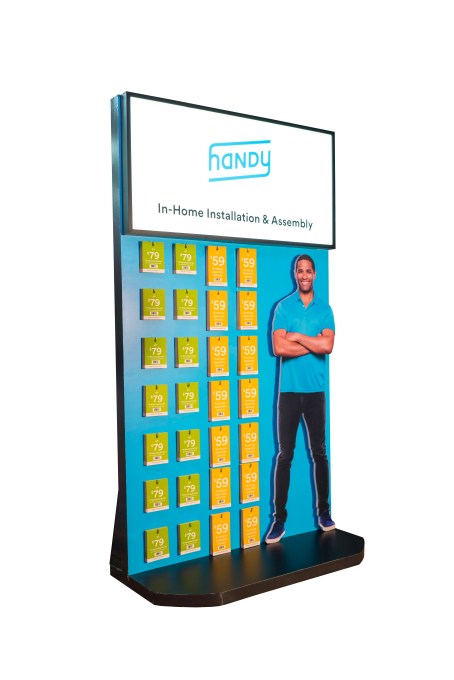
Walmart to sell Handy’s in-home installation and assembly services in over 2,000 stores

Walmart this morning announced a partnership with home services provider Handy, which will allow customers to purchase in-home installation and assembly assistance in over 2,000 of Walmart’s stores. News of the deal follows IKEA’s recent launch of its own in-home assembly service through TaskRabbit. It will also challenge Amazon’s growing Home Services business, which includes assembly and installations, among other things.

Founded in 2012, New York-based Handy has raised over $110 million, according to Crunchbase, for its app that lets anyone book household service providers, like cleaners, plumbers, handymen, and more. Today it has grown to over 80,000 service professionals on its platform, and has served over half a million customers to date across over a million bookings.

Now Handy will be able to sell its services directly to Walmart shoppers who need help with the installation or assembly of a large purchase like a couch or a new TV, for example. The service is priced similarly to IKEA’s TaskRabbit, which charges a flat rate per type of item, starting at $36 and going up for more complicated assemblies.

However, Handy will charge a flat rate of $59 for furniture assembly across the board, or $79 for TV mounting and installation.

To buy the service, Walmart customers can pick up a card from Handy’s in-store display then bring it to the register to pay. They will then receive a unique code to enter on Handy.com/walmart. On the website, they can book a local service pro as they would normally, by scheduling an appointment from 7 am to 11 pm. The Handy professionals’ work is also guaranteed and insured through Handy’s Happiness Guarantee.

“At Walmart, we are tirelessly searching for new and creative ways to improve the everyday lives of our customers by providing great experiences that extend from our stores into their homes,” said Daniel Eckert, senior vice president, Walmart Services and Digital Acceleration, in a statement. “Our program with Handy enables us to eliminate the friction of installation and assembly, and offer customers a convenient, delightful experience from start to finish. We know Handy’s services are going to be a big help to our busy customers.”

In addition to competing with Amazon, IKEA, and other retailers offering home installation through various partners, Handy also competes with other home services providers, like Thumbtack or HomeAdvisor. The introduction of its service to Walmart’s heavily trafficked retailed stores will now give it a leg up in acquiring new customers, and may then see those customers return for other work in the future after becoming aware that Handy exists.

Handy has a similar deal with Wayfair to help online shoppers book assembly at checkout.

Meanwhile, Walmart benefits by being able to offer customers another means of booking home assembly and installation help, in addition to its existing partnership with Porch.com for online purchases.

Handy is not yet available in 2,000 Walmart stores as of today. Instead, it started off with a test in Atlanta that’s now grown to 25 stores. It will expand to reach 2,000 additional stores by next month, the retailer says. Walmart has 5,000 U.S. stores in total, so this is not a full rollout across the U.S., but will serve customers in 45 states where Handy is available.

19 Mar 2018

Facebook lets all PC games Live stream and reward viewers

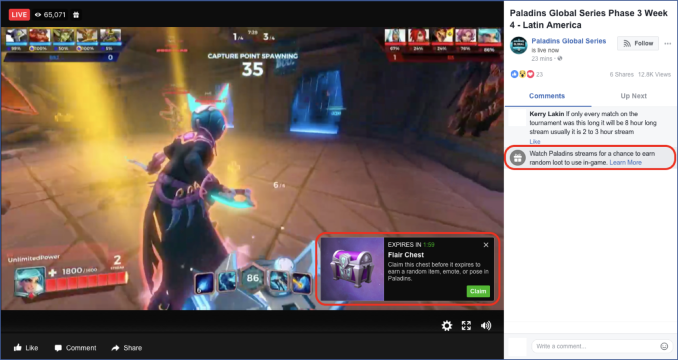
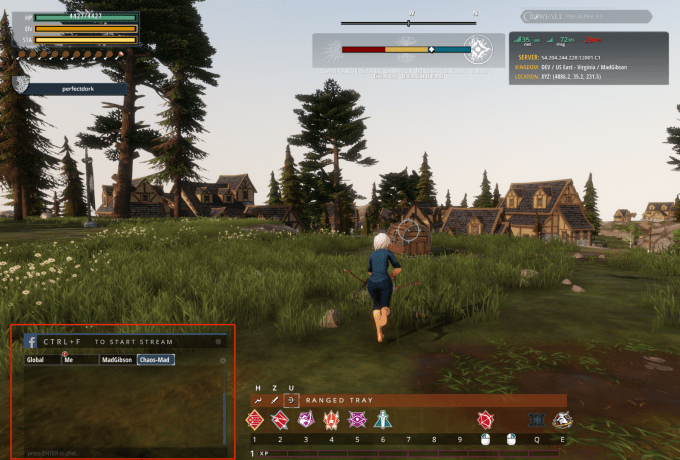
Facebook is challenging Twitch and YouTube for video game live streaming supremacy with the release of its new Games SDK for PC. After testing Live streaming from games like Overwatch from developers like Blizzard since 2016, today Live broadcasting from PC games to the News Feed opens to all developers. And Facebook will let them reward fans who watch by providing in-game items or bonuses. For example, beneath the comments reel, users might see a promotion like “Watch Paladins streams for a chance to earn random loot to use in-game.”

The potential for viral growth and sales could convince tons of game developers to bake in Facebook’s new SDK, while players could use the simple broadcasting feature to reach a big audience — though one not as dedicated to gaming as on other platforms. Viewers might choose to watch on Facebook because they get rewarded there. Facebook meanwhile benefits because game streams create compelling niche content that can drive long viewing sessions, helping Facebook monetize viewers in the moment with ads while locking them deeper into the platform long-term.

Facebook is also hooking up developers with deeper analytics through custom “app events” that are now available on PC as well as web and mobile. Game developers can also integrate Facebook’s enhanced Friend Finder feature that lets them play with friends and now see “Key Player Stats” about other people they want to join up with to keep playing together. Developers who want access to the SDK can sign up here.

Facebook got a late start in the game streaming world but has been rapidly developing features and signing deals to grow its viewer base and content catalogue. It inked a deal with esports league leader ESL last year, and just added streaming from tournaments of top games like Counter-Strike and DOTA. It’s brought Live streaming to Messenger games. Facebook also recently started testing a way for viewers to tip cash to their favorite streaming stars, and has even hired some of them for its games team.

The question will be if a catch-all mainstream social network can succeed in such a niche content space. 800 million people play Facebook-connected games each month. But not everyone’s real-world friends care about video games or want to watch their buddies play, so broadcasts could fall flat if they don’t find the particular subset who love gaming. On networks like Twitch or corners of YouTube, people are there specifically to watch game stream. So Facebook will have to use rapid feature development, and it’s size and potential for audience growth to attracts streamers, viewers, and developers. Otherwise gamers might stay where they never feel embarrassed about their passion.

19 Mar 2018

Rylo’s shoot first, frame later camera is ideal for casual adventure-seekers

Action cameras are a gadget that mostly cater to a person’s wish to see themselves in a certain way: Most people aren’t skiing off mountains or cliff diving most of the time, but they aspire to. The issue with most action cameras, though, is that even when you actually do something cool, you still have to shoot the right angle to capture the moment, which is itself a skill. That’s the beauty of Rylo, a tiny 360 camera that minimizes the skill required and makes it easy to get the shots you want.

Rylo is compact enough to have roughly the footprint of a GoPro, but with dual lenses for 4K, 360-degree video capture. It has a removable battery pack good for an hour of continuous video recording, and a micro USB port for charging. In the box, you’ll get either a micro USB to Lightning, or micro USB to micro USB and USB C cables, depending on whether you pick up the Android or the iOS version, and you handle all editing on the mobile device you already have with you always.

The device itself feels solid, and has stood up to a lot of travel and various conditions over the course of my usage. The anodized aluminum exterior can take some lumps, and the OLED screen on the device provides just enough info when you’re shooting, without overwhelming. There’s no viewfinder, but the point of the Rylo is that you don’t need one – it’s capturing a full 360-degree image all the time, and you position your shot after the fact in editing.

Rylo includes a 16GB microSD card in the box, too, but you can use up to 256GB versions for more storage. A single button on top controls both power functions and recording, and the simplicity is nice when you’re in the moment and just want to start shooting without worrying about settings.

The basic functionality of Rylo is more than most people will need out of a device like this: Using the app, you can select out an HD, flat frame of video to export, and easily trim the length plus make adjustments to picture, including basic edits like highlights, color and contrast. Rylo’s built-in stabilization keeps things surprisingly smooth, even when you’re driving very fast along a bumpy road with what amounts to nearly race-tuned tires and suspension.

Then, if you want to get really fancy, you can do things like add motion to your clips, including being able to make dead-simple smooth pans from one focus point to another. The end result looks like you’re using a gimbal or other stabilized film camera, but all the equipment you need is the Rylo itself, plus any mount, including the handle/tripod mount that comes in the box, or anything that works with a GoPro.

You can even set a specific follow point, allowing you to track a specific object or person throughout the clip. This works well, though sometimes it’ll lose track of the person or thing if there’s low light or the thing it’s following gets blocked. The app will let you know it’s lost its target, however, and in practice it works well enough to create good-looking videos for things like bicycling and riding ATVs, for instance.

Other companies are trying to do similar things with their own hardware, including GoPro with the Fusion and Insta360 with its Insta360 One. But Rylo’s solution has the advantage of being dead simple to use, with easily portable hardware that’s durable and compatible with existing GoPro mount accessories. The included micro USB to Lightning cable isn’t easily replaced, except for from Rylo itself, and it’s also small and easy to lose, so that’s my main complaint when it comes to the system as a whole.

In the end, the Rylo does what it’s designed to do: Takes the sting out of creating cool action clips and compelling short movies for people working mostly from their mobile devices. It’s not as flexible for pros looking for a way to integrated more interesting camera angles into their desktop workflow because of how tied content captured on the Rylo is to the Rylo app itself, but it seems clearly designed for a consumer enthusiast market anyway.

At $499, the Rylo isn’t all that much more expensive than the GoPro Hero 6. It’s still a significant investment, and the image quality isn’t up to the 4K video output by the GoPro, but for users who just want to make cool videos to share among friends using social tools, Rylo’s ease of use and incredibly low bar in terms of filming expertise required is hard to beat.

19 Mar 2018

LinkedIn now lets job seekers ask for referrals with a click of a button

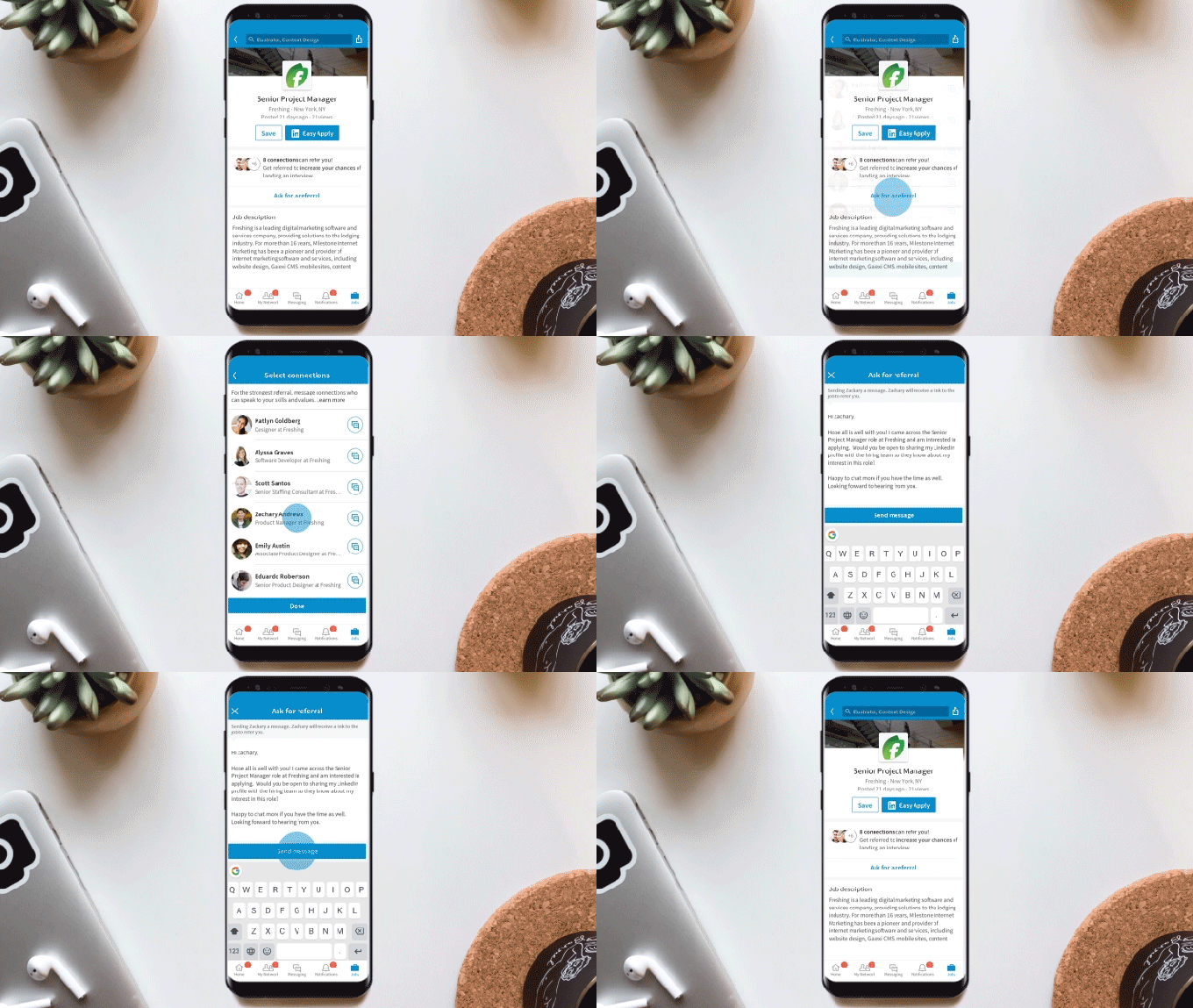
LinkedIn this morning is rolling out a new feature for job searchers that allows them to better leverage their network of connections when looking for a new job. The company is introducing “Ask for a Referral,” which places a button next to the jobs where you know people who work at the company advertising open positions. You can then send your connections a message through LinkedIn, asking them to recommend you for the job in question.

As with many things, getting a job – or at least getting that interview – is about who you know. Referrals greatly help job seekers get a call back compared to an application sent on its own, LinkedIn says. If fact, you’re four times more likely to hear back from a recruiter at the company if you’ve been referred, and nearly half of recruiters say that referrals are the leading source of quality hires.

To get started, LinkedIn has made it easier for you to see just those jobs where you know someone who works at the company. On the desktop, you can click on the new job search filter to look for those jobs “in your network.” This can be combined with other filters, like location, industry, and more, to help you narrow down the positions you may want to apply for.

You can then tap the “Ask for a referral” button at the top of the job listing, and choose the person you want to reach out to. LinkedIn will prompt you to write a message, offering pre-populated text that you can personalize to your inquiry. The company recommends you remind them of how you know each other, or what you have in common, like going to the same school, before explaining why you’re interested and think you’d be a good fit.

The recipient can then choose to follow up on your message by referring you to the job through whatever methods their company supports.

The business networking platform has rolled out a number of new features focused on jobs and hiring in recent months, including a Career Advice program to help users find mentors who can help them figure out how to take their next steps; new data analytics tools for recruiters; and even a resumé-building assistant in Microsoft Word that’s powered by LinkedIn data.

While LinkedIn has largely cornered the market on professional networking, Facebook recently took steps to challenge LinkedIn with the expansion of its Jobs dashboard to 40 more countries worldwide. While many of its jobs are more entry-level, blue-collar, or low-skilled, it could move more heavily into professional jobs in the future, and leverage its own network of connections along the way, if it chose. That potential threat to LinkedIn’s business, which earned Microsoft over a billion in revenue in Q4 2017, shouldn’t be overlooked. LinkedIn will need to find a number of ways to cater to job seekers and recruiters alike through tools and services that help the right people get connected to the right jobs.

The new Ask for a Referral feature is live now across LinkedIn. 

19 Mar 2018

Pinterest is slowly rolling out its automated shopping ads to more marketers

Pinterest is looking to continue to increase its portfolio of ads, though sometimes that can take a little while to see the light of day — and that includes a new-ish tool called Shopping Ads that’s slowly getting opened to more developers.

Getting new ad formats is important for a smaller company looking to build out an advertising business, as it has to show potential advertisers it can offer an array of tools to play with as they experiment with that service. The company said today that it’s expanding those shopping ad tools to hundreds of additional advertisers after launching a pilot program last year as it looks to continue to ramp up that tool. Pinterest has to be able to convince marketers that it should be a mainstay advertising purchase alongside Facebook and Google, which are able to routinely show returns in value for their advertising spend.

Shopping ads automatically create promoted pins from an existing product feed for a retailer. That means it’s basically one less thing for retailers to worry about as they add more and more content to the service. Most of Pinterest’s content online is business content as users share products they might be interested in one day buying or already own. As Pinterest gets more and more data on this, they’ll have a better handle on what ads work best, and hope that businesses will hand off the process in full to something more automated.

Pinterest hopes to capture that routine user behavior of planning what they want to do next, whether that’s an outfit to wear that day or some kind of major event or purchase down the line. Getting a hold of those users in the moment they might be interested in a new product is key to the company’s pitch to advertisers. You can more or less consider this a continued test as the company starts to slowly give the tool to the advertisers it works with before it becomes generally available. If it works, it could probably end up down the line in the hands of all advertisers, which could help for small- to medium-sized businesses without a lot of experience build out their early marketing campaigns.