19 Mar 2018

#deletefacebook

Facebook is using us. It is actively giving away our information. It is creating an echo chamber in the name of connection. It surfaces the divisive and destroys the real reason we began using social media in the first place – human connection.

It is a cancer.

I’ve begun the slow process of weaning myself off of the platform by methodically running a script that will delete my old content. And there’s a lot. There are likes and shares. There are long posts I wrote to impress my friends. There are thousands of WordPress notifications that tell the world what I’m doing. In fact, I would wager I use Facebook more to broadcast my ego than interact with real humans. And I suspect that most of us are in a similar situation.

There is a method to my madness. I like Facebook Messenger and I like that Facebook is now a glorified version of OAuth. It’s a useful tool when it is stripped of its power. However, when it is larded with my personal details it is a weapon and a liability.

Think about it: any posts older than about a week are fodder for bots and bad actors. Posts from 2016? 2017? Why keep them? No one will read them, no one cares about them. Those “You and Joe have known each other for five years” auto-posts are fun but does anyone care? Ultimately you’ve created the largest dossier on yourself and you’ve done it freely, even gleefully. This dossier reflects your likes, your dislikes, your feelings, and political leanings. It includes clear pictures of your face from all angles, images of your pets and family, and details your travels. You are giving the world unfettered access to your life. It’s wonderful to imagine that this data will be used by a potential suitor who will fall in love with your street style. It’s wonderful to imagine you will scroll through Facebook at 80 and marvel at how you looked at the turn of the century. It’s wonderful to imagine that Facebook is a place to share ideas, dreams, and hopes, a human-to-human connection engine that gives more than it takes.

None of that will happen.

Facebook is a data collection service for those who want to sell you products. It is the definitive channel to target you based on age, sex, geographic location, political leanings, interests, and marital status. It’s an advertiser’s dream and it is wildly expensive in terms of privacy lost and cash spent to steal that privacy. It is the perfect tool for marketers, a user-generated paradise that is now run by devils.

Will you delete Facebook? Probably not. Will I? I’m working on it. I’ve already been deleting old tweets after realizing that border police and potential employers may use what I write publicly against me. I’m clearing out old social media accounts and, as I mentioned before, deleting old Facebook posts, thus ensuring that I will no longer be a target for companies like Cambridge Analytica. But we love our social media, don’t we? The power it affords. The feeling of connection. In the absence of human interaction we cling to whatever dark simulacrum is available. In the absence of the Town Square we talk to ourselves. In the absence of love and understanding we join the slow riot of online indifference.

When Travis Kalanick led his ride-sharing company down the dark path to paranoia, bro culture, and classist rantings we reacted by deleting the app. We didn’t want to do business with that particular brand of company. Yet we sit idly by while Facebook sells us out and its management pummels and destroys all competition.

I wish it didn’t have to be this way. There is plenty of good in these platforms but the dangers far outweigh the benefits. Try to recall the last time you were thankful for social media. I can. It happened twice. First, it happened when I posted on my “wall” a eulogy for my father who died in January. The outpouring of support was heartening in a dark time. It was wonderful to see friends and acquaintances tell me their own stories, thereby taking the sting out of my own. But months later that good feeling is gone, replaced by ads for fancy shoes and political rants. Out of the Facebook swamp sometimes surfaces a pearl. But it sinks just as quickly.

One more sad example: I found out, accidentally, that my friend’s wife died. It appeared on my feed as if placed there by some divine hand and I was thankful it surfaced. It beat out videos of Mister Rogers saying inspiring things and goofy pictures of Trump. It beat out ads and rants and questions about the best sushi restaurant in Scranton. The stark announcement left me crying and breathless. There it was in black and blue, splashed across her page: she was gone. There was the smiling photo of her two little children and there was the outpouring of grief under these once innocuous photos. Gone, it said. She was gone. I found out from her wall where her memorial service would be held and I finally reached back out to my old friend to try to comfort him in his grief. Facebook, in those two instances, worked.

But Facebook isn’t the only thing that can give us that feeling of connectedness. We’ve had it for centuries.

Facebook simply replaced the tools we once used to tell the world of our joys and sorrows and it replaced them with cheap knock-offs that make us less connected, not more. Decades ago, on one coal-fogged winter morning in Krakow, Poland where I was living, I passed Kościół św. Wojciecha with its collection of nekrologi – necrologies – posted on a board in front of the church. There you saw the names of the dead – and sometimes the names of the newly born – and it was there you discovered what was happening in your little corner of the world. The church wasn’t far from the central square – the Rynek – and I walked there thinking about the endless parade of humanity that had walked across those cobbles, stopping for a moment in their hustle at the church yard to see who had died. I stood in the crisp air, flanked by centuries old brickwork, and imagined who once populated this place. This was the place you met your friends and your future partners. It was there you celebrated your successes and mourned your failures. It was there, among other humans, you told the world the story of your life, but told it slant. You witnessed kindnesses and cruelties, you built a world entire based on the happenings in a few square miles.

No more. Or, at least, those places are no longer available to most of us.

We’ve moved past the superstitions and mythologies of the past. Tools like Facebook were designed to connect us to the world, giving us an almost angelic view of daily happenstance. We replaced the churchyard with the “timeline.” But our efforts failed. We are still as closed, still full of superstition, as we were a hundred years ago. We traded a market square for the Internet but all of the closed-mindedness and cynicism came with it. We still disparage the outsider, we still rant against invisible enemies, and we still keep our friends close and fear what lies beyond our door. Only now we have the whole world on which to reflect our terror.

It doesn’t have to be this way. Maybe some day we’ll get the tools we need to interact with the world. Maybe they’re already here and we just don’t want to use them.

Until we find them, however, it’s probably better for us to delete the ones we use today.

19 Mar 2018

Bear Flag Robotics wants to sell an autonomous tractor for farms

Autonomous vehicles are increasingly becoming the shiny object in Silicon Valley. But the opportunity doesn’t just extend to cars driving around the streets of a major metropolitan area, and Igino Cafiero and Aubrey Donnellan hope to take it somewhere a little less obvious: the middle of an orchard.

Cafiero and Donnellan are building an autonomously-driven tractor as part of a startup called Bear Flag Robotics. The pair argue that there’s increasingly a struggle to find enough labor to work on farms, and even then, the costs are continuing to rise over time — leading to a need to increase those efficiencies on the actual field in addition to a lot of new technology like satellite imagery and computer vision to analyze the health of plants. The first product for Bear Flag Robotics is a self-driving tractor, and the company is coming out of Y Combinator’s winter class this year.

“We got a tour of an orchard and just how pronounced the labor problem is,” Donnellan said. “They’re struggling to fill seats on tractors. We talked to other growers in California. We kept hearing the same thing over and over: labor is one of the most significant pain points. It’s really hard to find quality labor. The workforce is aging out. They’re leaving the country and going into other industries.”

There are certainly a lot of technical challenges that go into it, and not just pertaining from having the right computer vision products in place in order to create an autonomous tractor. For example, the tractors have to be able to operate without a GPS signal, Donnellan said, simply because operating a tractor in an orchard may mean driving around with a ton of canopy cover — which could block the signal. It might be a little simpler to just drive down a path in an orchard, but there’s still quite a lot to consider, she said.

“We have this platform that we’ve plugged a ton of sensors into it,” Cafiero said. “That includes cameras. When you look forward, once we’ve automated the driving part, the sky’s the limit in terms of utilizing some of this technology once it’s out there. When we’re out there we can use these cameras, and be able to make recommendations and spot treatment in the field.”

When it comes to testing, Cafiero and Donnellan just go out to an orchard over in Sunnyvale a few times a week to see what some of the challenges growers face.

While finding labor has been a challenge, Cafiero acknowledges that there are still questions around undocumented labor when it comes to labor on those farms. He said, in the end, Bear Flag Robotics’ aim is to augment the workforce by taking away some of the more mundane tasks required on the fields. Cafiero also said that there’s a lot of reverse immigration happening from the U.S., leading to more of a labor shortage.

“The work itself is really tough work,” Donnellan said. “You’re in the field all day long, sometimes in inclement conditions. One of the tasks we’re automating is spraying, fungicides, herbicides, and these people out there, they’re wearing hazmat suits. It’s not good for their health to be doing these tasks in general. When you’re presented in higher paying jobs in other fields, there’s less of a case to go into that job, and there’s demand in a lot of other industries like construction [and other industries] where it’s easier work and better pay.”

Selling the actual tractor can also be a challenge, simply because potential customers will be buying their equipment down the road at sellers they know. If something breaks down, they need someone to come over, in person, as soon as possible to fix it or risk losing yield. And the major equipment providers may too see the need to start working on autonomous tools. Cafiero’s hope is that the startup will be able to work with local sellers and get into those channels, and that’s the only logical place to start. There might be some aim to scale up over time, but the company hopes to just get started with local dealerships for now.

19 Mar 2018

Biomedical startup AesculaTech is creating a new, more patient-friendly drug delivery system

“Reverse chocolate” — that’s how AesculaTech co-founder and chief science officer Niki Bayat describes the material created by its proprietary technology. Chocolate is solid until heated, when it melts deliciously into liquid. AesculaTech’s material, on the other hand, is a liquid at low temperatures, turns into a gel when heated and then reaches its final, solid state at body temperature. (If you are having a hard time visualizing the process or are distracted by thoughts of dessert, there’s a gif below that shows it being injected into a 37 degree Celsius water bath).

By changing the composition of the material, AesculaTech is able to control the temperature at which it transitions into different states. While the liquid is transforming into a gel, different compounds, including medications, can be added to it. Bayat and co-founder Andrew Bartynski, who are in Y Combinator’s latest startup batch, say it has a wide range of potential applications, including pharmaceuticals, medical devices, cosmetics and textiles.

First, the material is being used in a treatment for dry eye syndrome. AesculaTech’s founders say the condition affects more than 20 million people in America, who collectively spend $3.5 billion a year treating symptoms that can include a burning, scratchy sensation, discharge and impaired vision. Prescription treatments like Restasis and Xiidra can take weeks or even months to reach full effectiveness, while over-the-counter eye drops bring only minutes of relief and need to be reapplied constantly. AesculaTech’s treatment, however, is designed to be administered by a doctor during a quick, in-office procedure and last for about a year. It is slated to be commercially available by 2019.

Bayat and Bartynski, AesculaTech’s chief executive officer, met in 2012 while doing graduate work in chemical engineering at the University of Southern California and discovered a shared interest in unique classes of materials. As graduation drew closer, they began to think of what they wanted to do next.

“One day I was talking to my dad and I heard from him that he’d been diagnosed with glaucoma, but because he’d had heart surgery, he couldn’t have another one,” says Bayat. “I kept thinking there should be a better way to treat glaucoma and so I started working on this project with Andrew and a few other people.”

The team decided to focus on dry eye syndrome first because it is easier to treat, but they plan to work on glaucoma medication in the future. The treatment starts off as an injectable liquid that is inserted into the patient’s tear duct by a doctor. It turns into a solid after raising to body temperature, forming a tiny plug that keeps tears from draining away from the surface of the eye.

AesculaTech has already performed pre-clinical animal trials that show its dry eye treatment creates statistically significant increases in tears on eyes and are preparing for human trials to bring it closer to approval from the Food and Drug Administration.

Because it only needs to be applied once a year, the treatment addresses another important health issue: medication compliance. Many patients don’t stick to drug regimens for chronic conditions as directed by their physicians even though it reduces the efficacy of their medicines. In the case of antibiotics, patient non-compliance can also impact public health by increasing bacterial resistance. As it branches out beyond ophthalmic treatments, Bayat and Bartynski hope their technology will form the foundation of a new way of taking medication that is more realistic for patients to follow.

“To allow people to get the treatment they need without having to interact with medication on a daily basis is hugely valuable because you deliver the treatment to them continuously so they don’t have to interrupt their daily life or be bound to an eye drop or pill pack,” says Bartynski.

“It’s not only about the treatment of dry eye or glaucoma,” adds Bayat. “We are thinking of a platform for drug delivery technology.”

AesculaTech’s founders say the technology can also be used to create materials for a wide range of products, like cosmetics and smart textiles that are temperature responsive. The startup’s plan is to form partnerships with companies, license their technology and help them bring new products to market. The material hasn’t been tested for food products yet, but Bayat and Bartynski say they haven’t seen any indications that it isn’t edible, so reverse chocolate may one day be more than just a simile.

19 Mar 2018

Google introduces ‘Shopping Actions’ to help retailers in their battle with Amazon

Google announced this morning a new plan to help retailers take on Amazon – and give Google a cut of their sales in the process. The search giant will allow retailers to list their products across Google Search, in its Google Express shopping service, and in the Google Assistant app for smartphones and on smart speakers, like the Google Home.

The program offers online shoppers a universal cart whether they’re shopping on mobile, desktop or via a voice-powered device. That latter item is especially important to retailers, given that Amazon has tied voice shopping to its Echo devices, and has claimed the majority of market share in smart speakers for the time being. And you aren’t able to shop Walmart from an Echo, of course.

Google is working with a range of top retailers on the new effort, including Target, Walmart, Ulta Beauty, Costco, and Home Depot. Some of these were detailed in the company’s official announcement of Shopping Actions, as the program is called. A report from Reuters noted the others.

Walmart and Target were both already partnered with Google on voice-based shopping, which includes integrations with Google Express and Google Assistant. This allows customers to shop their site through the Google Express app or by saying things like “buy peanut butter from Walmart,” to place a quick voice order with Google Assistant’s help.

Those partnerships, and the new program being introduced today, also allows retailers to increase shopper loyalty by supporting things like 1-click re-ordering, personalized recommendations, and basket-building, says Google. For example, if a customer integrates their Ultamate Rewards account (Ulta’s loyalty program) with Google, it will know what other products to recommend based on past order history when the shopper is searching for a particular item.

Google says it will use a pay-per-sale model, which means it’s only taking a cut of the sale when a shopper makes a purchase. That’s different from Google’s pay-per-click ads, where businesses pay when a web searcher engages with an ad by visiting the website or calling the business.

According to Google, retail partners saw the average size of a customer’s shopping basket increase by 30 percent after joining the program, and Ulta saw average order values increase 35 percent. Target, which has been live for 6 months, says its Google Express shopping baskets increased nearly 20 percent, on average.

The program is live now in the U.S. and open to any retailer.

19 Mar 2018

Players Lounge lets gamers make money off their eSports skills

Online gamers love to talk a big game, but how willing are they to put their money with their mouth is? Players Lounge is a home for gamers looking to make friendly wagers with strangers and friends in head-to-head matches.

When we first covered the startup back in 2015, the team was getting people together at bars in New York for one-off FIFA tournaments on slow nights. Since then, Players Lounge has moved towards greater scalability, though their niche has still centered heavily on sports titles like FIFA and Madden. The company is launching out of Y Combinator’s latest class with some new funding and some new plans to capture gamers’ attention.

The company is already expanding beyond its console sports roots, and has added support for titles like Fortnite and Call of Duty, though there’s still a lot of room for the company to flex on PC which hosts some of the most devoted gamers.

After connecting their gaming accounts, users load cash onto the platform via credit card, PayPal or Bitcoin and can use the funds to enter into head-to-head wagers. The company takes 10 percent of wagers. Bets can range from $2.50 to $500. When it comes to legality, because eSports are considered a game of skill in most states, Players Lounge can operate without a hitch. A few states still don’t allow it though, so if players are in Arizona, Iowa, Louisiana or North Dakota, they won’t be able to make wagers on the site.

One of the biggest issues with online gameplay is matching users of similar skillsets to each other. No one wants to get thrown into a match with a professional eSports player when they barely know what they’re doing. Players Lounge has its own rating system to independently determine someone’s skills as a gamer on a 100-point scale so that users can match themselves up for head-to-head battles accordingly before they pony up a wager.

When money comes into play, gaming can understandably turn ugly. Add in the largely anonymous quality that comes from just knowing someone by their user name and you’re left with a platform ripe for abuse. Players Lounge hasn’t been shy about bringing down the ban hammer on users trying to game the system. In the future, it’s looking to mandate the use of anti-cheating software for anyone on the platform.

The company is looking to add support for larger groups to go at it against each other rather than the current 1v1 wagers. As the company has added support to new titles, its revenues have grown 100 percent month-over-month for the past four months on an annualized run rate of $2 million, the company says. Users are also sticking around, the company says that 30 percent of users play another match within 12 weeks of playing their first game on the service.

19 Mar 2018

Facebook shares drop 4.4 percent following Cambridge Analytica debacle

Facebook has been at the center of a hectic debate about Cambridge Analytica and the company’s improper use of Facebook data. As a result, Facebook shares (NASDAQ:FB) opened at $177.01, down 4.4 percent compared to Friday’s closing price of $185.09.

Share prices are still going down after the opening bell. NASDAQ as a whole is more or less flat — the stock market opened down 0.1 percent. It’s worth noting that Facebook shares have been doing well recently:

On Thursday, Facebook suspended Cambridge Analytica from its platform. The political data analytics used Facebook data to help Donald Trump’s presidential campaign.

The main issue is that the company developed an app called an app called “thisisyourdigitallife” to harvest user data. While many people thought they were downloading a fairly harmless personality quiz app, Cambridge Analytica was using Facebook’s API to gather data about the users of this app, but also the friends of the users.

While Facebook shut down the API that gave friends’ data to apps last year, it’s already too late. Developers have improperly used Facebook’s API to influence elections.

That’s why many people think regulation on tech companies is now inevitable, which could hurt Facebook’s bottom line.

19 Mar 2018

Volkswagen’s I.D. R Pikes Peak all-electric race car will tackle the iconic climb

Volkswagen wants to make sure people are aware of just how versatile their forthcoming MEB platform, which will prove the base for all of its all-electric I.D. vehicles, really is. The MEB-based I.D. R Pikes Pace, a prototype all-electric race car, will take on the famous Pikes Peak hillclimb in June in Colorado to help make the point.

The race car has four-wheel drive, powered by its fully electric powertrain, and it’s part of a collaboration between Volkswagen’s R tuning brand and their Motorsport division, along with the I.D. team driving the automaker’s electro mobility efforts.

The I.D. R Pikes Peak will take on its namesake track, a 12.4 meter run that starts at elevation of 9,000 feet, and climbs to a final height of 14,115 by race end. VW’s last attempt at the race was in 1987 using a dual-engine Golf, which actually didn’t complete the route.

Pikes Peak happens June 24 just outside of Colorado Springs, and should prove an interesting demonstration of Volkswagen’s electric platform.

19 Mar 2018

Pockit Loqbox promises to help the UK’s ‘unbanked’ improve their credit score

Building up your credit history or improving your credit score often presents somewhat of a catch-22 situation. You’ll need to take out some form of credit to do so, such as a loan or credit card, but if your score is too low or your history too chequered, you’ll typically be offered a very bad deal, or no credit at all. In financial services, the cash-poor are always asked to pay the most.

Enter: Pockit, the mobile banking app that provides current account functionality for the U.K.’s “underbanked”. The company has teamed up with financial inclusion fintech Nooli to launch ‘Pockit Loqbox,’ a potentially clever way for people with a poor credit rating to improve their score without taking further credit.

The new credit builder product enables Pockit customers to build their credit history through their Pockit current account by simply setting aside a fixed recurring contribution each month. These contributions are then reported to credit reference agencies as proof of an individual’s ability to maintain a consistent credit commitment over a period of time, sans overpriced credit card or high interest loan. In that sense, this is more akin to regularly saving but in a way that is recorded in your credit file.

Here’s how it works: You first decide how much you want to contribute each month, and purchase a Pockit Loqbox voucher worth 12 times your monthly contribution. There’s also a one-off set-up cost of £9.99. The startup then collects the monthly contributions automatically each month and you effectively pay off your Loqbox. Crucially, payments are reported as loan repayments to the three main U.K. credit reference agencies, and when the year is up, the full amount is returned. If for any reason these payments become unmanageable, you can exit early with no penalties.

In an email exchange, I put it to Pockit founder Virraj Jatania that the product would serve its target customer even better if the fintech startup had found a way to offer it for free, since you are still having to pay to improve your score, albeit not via interest on a loan or other form of credit. Pockit also charges 99p per transaction, so you have to factor in these too. He said that wasn’t possible because there are fixed costs, including involving multiple partners, that can’t be got around completely. However, Jatania makes a strong argument that the product is still good value for those who will benefit from it the most.

“The poverty premium of being unbanked or financially underserved is c.£1,300 per year, and a great deal of this comes from not being able to pay utility bills by direct debit or getting sucked into predatory loans (doorstep lenders, etc.),” he told me. “We believe by providing this product, it will help them save in a huge way on the poverty premium. In fact, we will use the data from the credit builder to help them get fairly priced loans”.

One other issue with a credit builder product like this is that credit scores are a black box: it’s not always clear what will or won’t affect your rating and by how much. This makes it hard to assess if the total cost of taking out a Pockit Loqbox will be worth it once the 12 months is up. “We feel the pricing we are offering is fair and will have a meaningful impact,” counters Jatania. “So much so that we are going to offer customers a money back guarantee if they have not seen their score improve as long as they haven’t defaulted on a loan elsewhere out of our control”.

19 Mar 2018

HTC’s Vive Pro headset will retail for a steep $799, and that doesn’t even include controllers

The top widely-available VR headset that money can buy is… gonna take a lot of money to buy.

HTC has released pricing info for its Vive Pro headset that the company showed off at CES and it ain’t cheap. The company had previously detailed that they would begin selling the system as a headset-only package for customers looking to upgrade. The price for that headset is going to be a very steep $799, a price that might have made sense in 2016, but sits far above what other comparable headsets on the market are retailing for now.

Pre-orders for the headset start today and will begin shipping out on April 5. Vive Pro headsets ordered before June 3 will come with 6 months of HTC’s Viveport VR subscription service.

More positively, the company is knocking another $100 off of the price of the regular non-Pro Vive, which will now retail for $499 will all the fixings. This is much more competitive price to meet Oculus’s aggressive $399 price point for the Rift. While the Vive may not be $200 better than the Rift, for people with the available space to take full advantage of SteamVR tracking, I’d say it definitely could be worth an extra $100.

HTC is clearly in a rough position as a company, and it’s going to have to be pretty aggressive in order to stay competitive in the VR space. This really just doesn’t seem to do it in my opinion. It’s likely that when the full package (w/ sensors and controllers) comes out later this year, HTC could likely be charging at least $999 for it, a price that might be fine for enterprise customers, but doubles the price of the most comparable complete VR system, the Samsung Odyssey.

While Samsung’s headset sports the same dual 1440×1600 OLED screens as the Vive Pro, the HTC headset will utilize Valve’s latest SteamVR tracking system while the Odyssey uses Microsoft’s wireless tracking. Based on my limited demos with both, the Vive Pro certainly seems to be a more sturdy build quality, but that alone is not worth several hundred dollars more, especially when the setup process is so much simpler for Windows Mixed Reality headsets thanks to their inside-out tracking.

HTC fancies itself VR’s premium brand, and while this headset does seem to be the best headset that money can buy on paper. it doesn’t seem to justify this high of a price point when stacked up against the competition already on the market.

19 Mar 2018

Jay-Z’s Roc Nation and First Round Capital invest $3 million in bail reform startup Promise

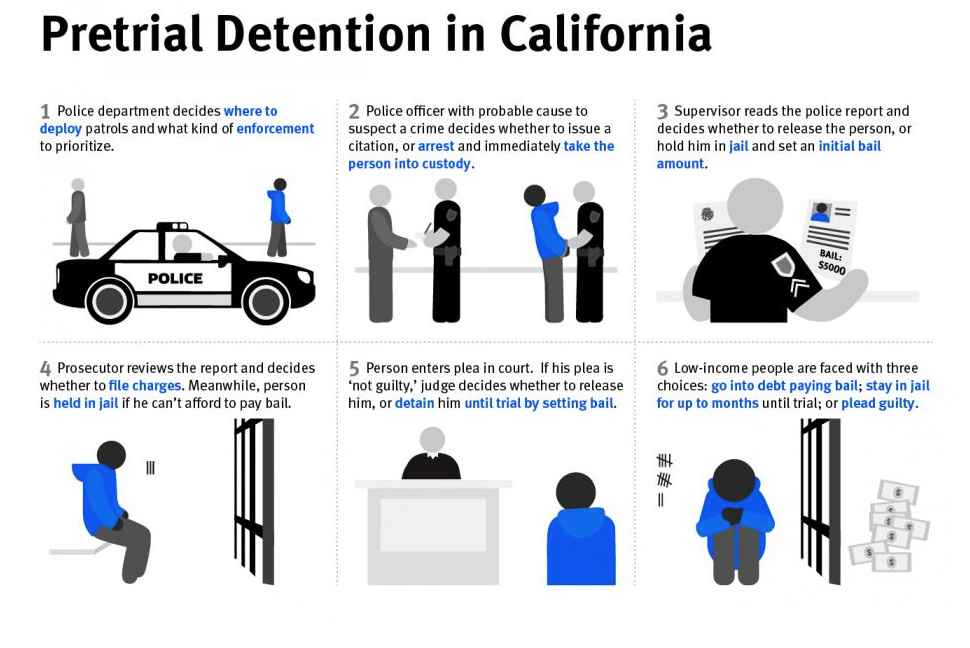
Nationwide, 62 percent of the jail population accounts for people who can’t afford bail, according to the Vera Institute of Justice. A lot of these incarcerated individuals are behind bars because they committed crimes at the misdemeanor level or lower. This is a significant statistic from a human rights perspective, as well as an economic one. It costs about $38 million a day to keep these largely nonviolent people behind bars, according to the Pretrial Justice Institute.

This is where Promise, a de-carceration startup that just raised a $3 million round led by First Round Capital with participation from Jay-Z’s Roc Nation, 8VC and Kapor Capital, comes in. Last Father’s Day, Jay-Z penned an op-ed about the bail industry and pre-trial incarceration. He noted how every year, $9 billion is wasted incarcerating people who have not been convicted of crimes.

“We are increasingly alarmed by the injustice in our criminal justice system,” Jay-Z said in a statement. “Money, time and lives are wasted with the current policies. It’s time for an innovative and progressive technology that offers sustainable solutions to tough problems. Promise’s team, led by co-founder and CEO Phaedra Ellis-Lamkins, is building an app that can help provide ‘liberty and justice for all’ to millions.”

Promise, which is part of Y Combinator’s current batch of startups, offers counties and local governments an alternative to holding low-risk people behind bars simply because they can’t afford bail.

For each participant, Promise provides counties with a comprehensive intake procedure and then sets up each participant with a care plan specific to them. Promise will then monitor and support participants by helping them ensure they know when they’re supposed to appear in court, and remind them of obligations like drug testing or substance abuse treatment needed. The app also provides participants with job training, housing, counseling and referrals.

“People are going to jail because they look at a piece of paper and misread it, or are going to jail because they can’t afford a class because they’re instead paying child support,” Ellis-Lamkins told TechCrunch.

And many of these people are brown or black. Last year, when Senators Kamala Harris and Rand Paul introduced a bail reform bill, the Pretrial Integrity and Safety Act, they wrote in an op-ed how black and Latinx people are more likely to be detained before trial and less likely able to pay for bail. Senators Harris and Paul pointed to how black and Latino men pay 35 percent and 19 percent higher bail, respectively, than white men.

“If we’re putting people in jail because they’re poor, brown or black, we’re spending money the wrong way,” Ellis-Lamkins said.

With Promise, Ellis-Lamkins and her team are using technology to try to create a system that works better for everyone, she said. Instead of a county paying to incarcerate someone simply because they can’t afford to post bail, they can use Promise to monitor compliance with court orders and better keep tabs on people via the app and, if needed, GPS monitoring devices. Counties, courts, case managers and other stakeholders can also access progress reports of individuals to monitor compliance.

Already, Promise is onboarding one county this week and is in talks with another three counties. Instead of a county jail paying $190 per day per person, Ellis-Lamkins said, Promise charges counties just $17 per person per day.

“Our system is built on reducing recidivism,” Ellis-Lamkins said. “Our ideal outcome is the person gets a job, does not reoffend and does not continue in the system.”