16 Mar 2018

Small businesses love free stuff, so Gusto is giving them free HR Basics

Gusto, formerly ZenPayroll, is the rare startup unicorn that has stayed relatively mum on its product and growth — its last press release, for instance, was more than a year ago. The company’s core offering remains payroll for small businesses, and it has been working to expand its customer base across the nation, including having its CEO, Joshua Reeves, go on a tour of the country to visit SMBs in an RV.

Now the company is opening up a bit on its recent progress. Gusto has just hit 60,000 customers nationwide, or roughly 1% of all employers in the United States, according to the company.

The company is also working on new products. One challenge small businesses face is getting access to high-quality, yet affordable, software, particularly in HR. “Small businesses actually get that people are the core more than large companies,” Reeves explained to me. “In a 10-person company, you know everyone, your customers are your neighbors, but they never really had access to high-quality software.”

Gusto is hoping to fill that gap, announcing the beta launch of a new product it’s calling HR Basics. The product offers a suite of tools for small businesses to handle the quotidian tasks of HR, including managing vacation time, compiling employee directories and improving the onboarding of new hires. Most importantly, the product is free, and doesn’t require a credit card or a bank account to sign up.

Reeves believes that Gusto has two purposes: to offer “peace of mind” to small business owners around areas like compliance that can lead to negative enforcement actions, and to provide software that can help companies become “great places to work” that are more focused on community. Reeves is particularly passionate about the latter point. “Even the terminology ‘human capital management’ — humans are not capital, humans are not resources, they are people, thank you very much.”

One particular area of focus for HR Basics is around onboarding. Gusto is hoping it can move all HR paperwork online, so that everything required to officially onboard an employee can be done even before the employee walks into work the first day. With that out of the way, Gusto can then focus on helping companies create the right corporate culture. For instance, the product offers a “Welcome Wall” where other employees can write cheerful and encouraging notes for a new employee to make them feel like they belong at the company from day one.
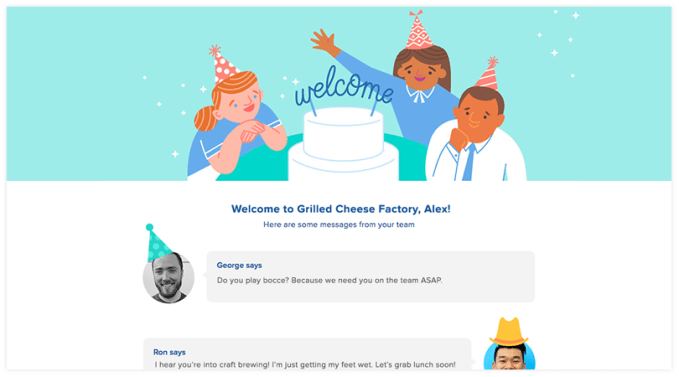
The Welcome Wall is designed to encourage new employees joining a company

This new product is free for businesses, and Gusto obviously hopes that it creates a funnel of potential customers who will eventually sign up for its payroll service and full HR platform, which charge around $6-12 a month per employee based on the specific plan that a business chooses.

One interesting commitment Gusto is making according to Reeves is that an employee’s profile on the platform will be a lifetime account. If an employee moves from one company to the next and both use Gusto, all of the preferences and other data required to administer HR should work immediately.

That portability mattered less in a world where employees spent decades at a single company, but now that employees often switch employers as often as every year, the repeated savings of time in the transition can be quite significant. Longer term, Gusto sees that sort of portability as critical for facilitating the changing nature of work in the 21st century.

Gusto, which was founded in 2011, is now entering middle age, and the company has 530 employees across its San Francisco and Denver offices, according to Reeves.

Update: Added the number of customers Gusto currently has.
16 Mar 2018

Zoosk relaunches dating app Lively as a way to meet new people while playing trivia games

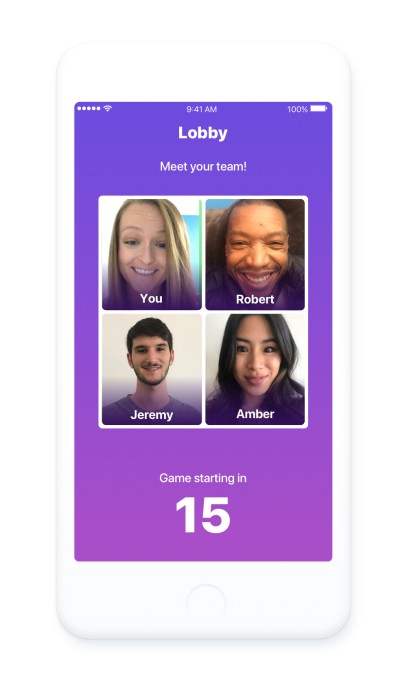
Hoping to capitalize on the popularity of trivia applications like HQ Trivia, dating app maker Zoosk has just released an experimental app that combines trivia with the potential for meeting someone new. The app is a relaunch and complete makeover of Zoosk’s Lively, which first debuted in July 2016 as a dating app that used video to tell stories, instead of static profile images.

The new version of Lively is nothing like its former namesake.

As Zoosk explains, the previous version of Lively’s group video chat app was fun, but people didn’t know how to connect and relate to one another using the video format. It felt awkward to start conversations, with no reason to be there besides wanting to date.

The company went back to the drawing board, so to speak, to think about what sort of experiences could bring people together. Trivia, naturally, came to mind.

Lively aims to reproduce the feeling that comes with competing at a bar trivia night. When you join, you’re placed in a group video chat team of two to four people. Together, the team works to answer a series of 12 questions while discussing the answers over video in real-time. When they finish the questions, they’ll be able to see how their scores compared with other teams.

The “dating” component to the app isn’t quite what you would expect. In fact, it’s less of a way to find a date for a night out, than it is to just make new friends. After the game wraps, you’ll have the option to continue chatting with the other players, if you choose. You can also add people as a friend, if you hit it off.

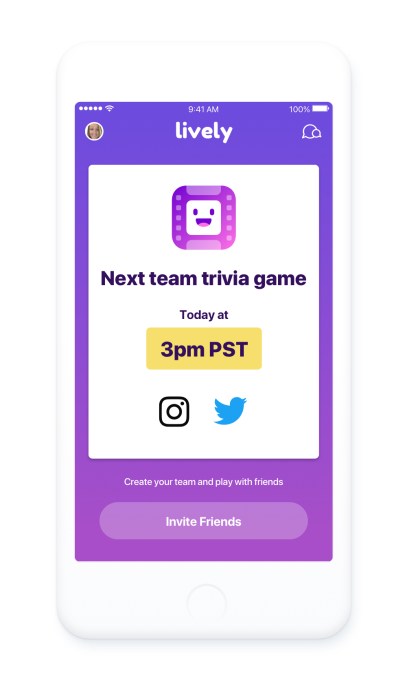
And when trivia isn’t in session – the games run twice daily at 3 PM and 7 PM PST – you can group video chat with others on Lively.

Because you’re not added to a team with nearby players, your ability to make friends who are also possible real-life dating prospects is decidedly limited. That’s something that Lively could change to support in time, if it’s able to grow its user base. But for now, it needs to match users with any live players in order to fill out its teams.

It’s understandable why it went this route, but it doesn’t lend itself well to meeting someone special – unless you’re open to meeting people anywhere (which some are), or are fine with just making new friends and seeing where that leads.

Unlike HQ Trivia, which features live streams with a host, Lively is just group video chat with a trivia component. That means it won’t be as challenging for Zoosk to operate, as it doesn’t have to worry with bandwidth issues and other costs of putting on a live game show. Also, because there are no prizes or payouts, you can join anytime during the 30-minute gaming session to be placed into a team and play along.

Lively is not the first app to support a group video chat interface where gameplay is an option. A number of video chat apps over the years have integrated games into their experience, including older apps like Tango or Google+ Hangouts, Line, and more recently, Facebook Messenger. But none have integrated games for the purpose of facilitating new relationships.

Zoosk today has 38 million members, but wanted to find a way to reach a younger demographic, which is why it originally launched Lively. The app was the first product to emerge from Zoosk’s in-house incubator, Zoosk Labs, where the company experiments with new ideas to expand its core business.

Whether or not Zoosk can turn trivia players into love connections remains to be seen, but it’s interesting how HQ Trivia’s success has led to this wider market full of knock-offs (e.g. Genius, Joyride, Cash Show, The Q, TopBuzz, Live Quiz, Live.me, Halftime Live!, Jam Music, etc.) and other tweaks that follow its idea of live trivia games.

Lively is available on iOS only for now.

16 Mar 2018

Tokyoflash has created a radar watch that scans the skies (or your wrist)

Tokyoflashis one of my favorite watchmakers. Unabashedly analog, the watches pay homage giant robots and old tech, looking like a cross between something that you could find in the hatch in Lost and a Shinjuku fever dream.

Now the company has launched the Radar LED watch, a clever piece that shows the time with sweeping beams of light that flash across the watch face. The watch features a USB-rechargable movement and a mineral crystal with silk-screen cross hairs and markers. Behind the glass are a set of LEDs that either blink when you raise the watch to look at the time or tap a side button.

No step counters or notifications mar the stark simplicity of this strange watch. The time flashes up on the face and disappears just as quickly.

Like most Tokyoflash watches this thing is hard to read at first I suspect it becomes an acquired skill. While you won’t be able to scan for bogeys for real on this decidedly unsmart watch, it makes for an interesting – if bold – conversation starter. It’s shipping now for $189.

[gallery ids="1607585,1607584,1607583,1607582"]
16 Mar 2018

Cloud security startup Zscaler opens at $27.50, a pop of 72% on Nasdaq, raising $192M in its IPO

The first big tech IPO of the year has opened with a bang. Zscaler, a security startup that confidentially filed for an IPO last year, started trading this morning as ZS on Nasdaq at a price of $27.50/share. This was a pop of 71.9  percent on its opening price of $16, and speaks to a bullish moment for security startups and potentially public listings for tech companies in general.

That could bode well for Dropbox, Spotify and others that are planning or considering public listings in the coming weeks and months.

We’ll continue to monitor the price as the day continues to see how the stock does, and also hear from the company itself.

Initially, Zscaler had expected to sell 10 million shares at a range between $10 and $12 per share, but interest led the company to expand that to 12 million shares at a $13-15 range, which then moved up to $16 and Zscaler last night raising $192 million giving it a valuation of over $1.9 billion — a sign of strong interest in the investor community that it’s now hoping will follow through in its debut and beyond.

Zscaler is a specialist in an area called software-defined perimeter (SDP) services, which allow enterprises and other organizations to better control how they allow employees to access apps and specific services within their IT networks: the idea is that rather than giving access to the full network, employees are authenticated just for the apps that they specifically need for their work.

SDP architectures have become increasingly popular in recent years as a way of better mitigating security threats in networks where employees are using a variety of devices, including their own private mobile phones, to access data and apps in corporate networks and in the cloud — both of which have become routes for malicious hackers to breach systems.

SDP services are being adopted by the likes of Google, and are being built by a number of other tech companies, both those that are looking to provide more value-added services around existing cloud or other IT offerings, and those that are already playing in the area of security, including Cisco, Check Point Software, EMC, Fortinet, Intel, Juniper Networks, Palo Alto Networks, Symantec (which has been involved in IP lawsuits with Zscaler) and more — which speaks both of the opportunity and challenge in the market for Zscaler. Estimates of the value of the market range from $7.8 billion to $11 billion by 2023.

16 Mar 2018

Google Lens arrives on iOS

On the heels of last week’s rollout on Android, Google’s new AI-powered technology, Google Lens, is now arriving on iOS. The feature is available within the Google Photos iOS application, where it can do things like identify objects, buildings, and landmarks, and tell you more information about them, including helpful details like their phone number, address, or open hours. It can also identify things like books, paintings in museums, plants, and animals. In the case of some objects, it can also take actions.

For example, you can add an event to your calendar from a photo of a flyer or event billboard, or you can snap a photo of a business card to store the person’s phone number or address to your Contacts. (Turning photos into Contacts is something that Microsoft just added to its Pix app, too, with the option of also locating the person on LinkedIn.)

Google Lens was first announced last year at Google’s I/O developer conference, and is made possible by the recent advancements in machine learning and image recognition technologies. The eventual goal is to allow smartphone cameras to understand what it is they’re seeing across any type of photo, then helping you take action on that information, if need be – whether that’s calling a business, saving contact information, or just learning about the world on the other side of the camera.

During the demo at I/O, Google showed off how Google Lens could do other things, too. It could be used to help you configure your Wi-Fi, for instance. That is, if you took a photo of the sticker on your router, it could help you to paste that information in your Wi-Fi settings to get you connected. The company also demonstrated a translation feature that converted signs in a foreign language to English.

It doesn’t seem we’re quite there yet with all these promised features, but they could become possible in the future as Google Lens matures.

According to a tweet from the Google Photos’ Twitter account, Google Lens in Google Photos on iOS began rolling out on Thursday to those who have the latest version (3.15) of the app installed.

The rollout will complete over the course of the week ahead.

16 Mar 2018

Ava DuVernay will direct a ‘New Gods’ movie for DC

A Wrinkle in Time director Ava DuVernay is closing a deal with Warner Brothers to direct a movie based DC’s New Gods comics.

The news was first reported in Deadline, and DuVernay seemed to confirm it by subsequently tweeting a tribute to New Gods creator Jack Kirby.

While beloved by many comics fans, The New Gods aren’t as well-known as DC or Marvel’s biggest superheroes. They were part of an interconnected series of 1970s titles known as Kirby’s Fourth World, which told the story of the cosmic war between the planets Apokolips and New Genesis.

The Fourth World included some of Kirby’s most compelling heroes, including the brooding soldier Orion and the escape artist Mister Miracle (true story: my first tattoo is drawn from Mister Miracle), but the most memorable character was Darkseid, ruler of Apokolips and master of the Anti-Life Equation.

Darkseid’s relationship with Orion provided a clear model for the Star Wars movies (it almost seems too on-the-nose that his name is pronounced “dark side”), and DC often brings him back as one of its most reliable bad guys.

Batman v. Superman and Justice League seemed to be setting Darkseid up as the ultimate villain of the DC Cinematic Universe. However, those plans may be changing due to the disappointing performance of Justice League.

In fact, Deadline suggests that DuVernay’s New Gods film (to be scripted by Chasing Mavericks screenwriter Kario Salem) will be unconnected to the other DC movies. DC is supposedly working on a slate of standalone, creator-driven titles including Todd Phillips’ Joker origin story — a strategy that should result in some interesting films, even if it’s confusing for casual moviegoers.

Back in December, DuVernay tweeted that one of the New Gods characters, Big Barda, was her favorite superhero. DuVernay had previously said she passed on directing Marvel’s Black Panther because she and Marvel had “different ideas about what the story would be.”

16 Mar 2018

Watch Thanos explain his simple plan in new ‘Avengers: Infinity War’ trailer

The new trailer for Avengers: Infinity War is here, and it gives us a look at Thanos with a helmet on, and provides some signet into what he hopes to accomplish by invading Earth (kill half the people on it).

Also, there are still a ton of characters in this movie, and it looks like we’ll get some backstory on how Gamora came to be in the dark god’s service, plus some power showdowns between Cap, Thor and James Brolin’s terrifying bad guy.

The movie is in theatres officially starting April 27, with early showings starting April 26. I’m mostly going to see it to figure out how Marvel puts this many scene-stealing characters in a single movie.

16 Mar 2018

Alexa’s new ‘Brief Mode’ replaces verbal confirmations with chimes

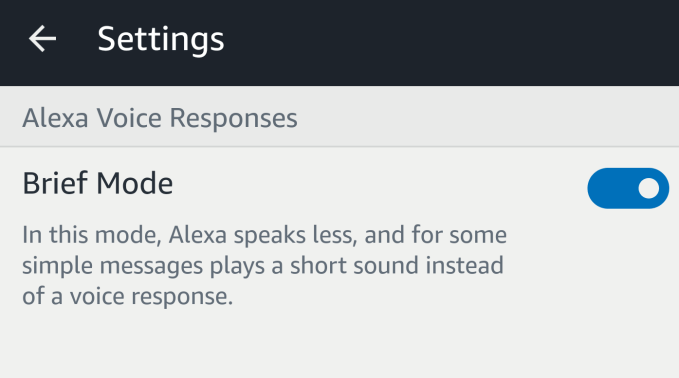
Alexa is rolling out an optional “Brief Mode” that lets users configure their Echo devices to use chimes and sounds for confirmations, instead of having Alexa respond with her voice. For example, if you ask Alexa to turn on your lights today, she will respond “okay” as she does so. But with Brief Mode enabled, Alexa will instead emit a small chime as she performs the task.

The mode would be beneficial to someone who appreciates being able to control their smart home via voice, but doesn’t necessarily need to have Alexa verbally confirming that she took action with each command. This is especially helpful for those who have voice-enabled a range of smart home accessories, and have gotten a little tired of hearing Alexa answer back.

The addition of Brief Mode comes at a time when voice assistants are finding their way into ever more smart home devices, beyond the doorbells, camera, lightbulbs, thermostats, and others we’ve grown used to. At CES 2018 this January, for example, Alexa was found in a number of new devices, like smart faucets, light switches, car dashboard cameras, projectors, and several more home appliances like dishwashers, washers, dryers, and fridges.

The launch of Brief Mode was first spotted by users on Reddit (via AFTVNews), with many saying they had received the option just a few days ago. Others in the thread noted they had it as well, but then it went away – something that seems to indicate a test on Amazon’s part, or perhaps bugs with a phased rollout. In some cases, users also noticed a new toggle switch in the Alexa app, which allows you to turn Brief Mode on or off.

The explanation provided here doesn’t seem like Brief Mode would be limited to smart home commands, but anytime when Alexa could play a sound instead of a verbal confirmation. It also seems like it may cut down on Alexa’s overall chattiness in other ways, though we haven’t yet noticed any changes on other fronts.

I received the option to enable Brief Mode yesterday. When giving Alexa a command to turn off the bedroom light, she responded by explaining what Brief Mode does and giving me the option to enable it. (I said yes.)

Now when Alexa is commanded to do things with smart home devices, she just chimes.

We asked Amazon yesterday to confirm if Brief Mode is rolling out to all users, or if it’s still considered a limited test. We’ll update if the company chooses to respond.

16 Mar 2018

Apple is holding an education event March 27

Apple has a long legacy of providing services to schools and teachers, but the industry has changed in recent years as the Chromebook has completely changed the way classrooms work. The company is no doubt looking to take back some of that mindshare. This morning, it sent out invites for an event, asking attendees to “take a field trip.”

The event, which is slated for Chicago-area March 27, promises to offer “creative new ideas.” Is it a hardware launch? Perhaps something akin to the event Microsoft held roughly this time last year where it launched Windows 10 S and the new Surface Laptop?

The iPad has long been the centerpiece of Apple’s education strategy, so it seems like a safe bet that we’ll be seeing something related to that line.


16 Mar 2018

Reverie Labs uses new machine learning algorithms to fix drug development bottlenecks

Developing new medicines can take years of research and cost millions of dollars before they are even ready for clinical trials. Several biotech startups are using machine learning to revolutionize the process and get drugs into pharmacies more quickly. One of the newest is called Reverie Labs, which is part of Y Combinator’s latest batch. The Boston-based company wants to fix a critical bottleneck in the drug development process by speeding up the process of identifying promising molecules using recently published machine learning algorithms.

Reverie Labs’ founders Connor Duffy, Ankit Gupta and Jonah Kallenbach, who named their company after a pivotal detail in the HBO series “Westworld,” explain that its tech analyzes early ideas for molecules from pharmaceutical scientists and suggests possible improvements to shorten the amount of time it takes to reach clinical trials. Duffy says Reverie Labs’ ambition is to “become a full service molecule-as-a-service company.” It’s already partnered with several biotech companies and academic institutes working on treatments for diseases including influenza and cancer.

Reverie Labs specializes in the lead development stage, which is when researchers focus on prioritizing and optimizing molecules so they can go to animal and human clinical trials more quickly. Pharmaceutical scientists need to first identify the proteins that cause a disease and then find molecular compounds that can bind to those proteins. Then it becomes a process of elimination as they narrow down those molecules to ones that not only create the results they want, but are also suitable for animal and human studies.

Before clinical trials can start, however, they need to evaluate molecules very carefully in order to understand things like how they are metabolized by the body and their potential toxicity.

“I’ve heard it compared to juggling eight balls at once or playing whack-a-mole,” says Duffy. “You want your compound to be very safe before you put it in people, you want to be efficacious and go where you want it to go in your body and you don’t want side effects. There are a lot of problems drug companies need to think about before putting a molecule in a human, and when you fix one problem, you often come up with another problem. We want to alleviate that by looking at all problems at the same time.”

Lead development is very labor intensive and requires the work of many medicinal chemists. Reverie Labs’ founders say it often takes more than $100 million and two years per drug before a final selection of molecules are ready for clinical trials. Reverie Labs wants to set itself apart from other startups focused on solving the same problem by taking recently-discovered machine learning techniques, and applying them to drug development.

“The machine learning algorithms we implemented are some of the most promising advances that have been published in the past couple of years,” says Kallenbach.

First, molecules are “featurized,” or turned into representations that work with machine learning algorithms. Reverie Labs’s tech creates proprietary featurizations based on quantum chemical calculations, then uses them to analyze the molecules’ properties and how they may act in the body. Afterwards, it selects molecules that have the potential to do well in clinical trials or suggests new molecules based on what properties scientists need.

In addition to the machine learning algorithms it uses, Reverie Labs founders say one of the startup’s key differentiators is that it trains its models on customers’ proprietary in-house datasets, which means the tech can integrate more smoothly into existing drug development workflows. Reverie Labs’ software also runs on customers’ virtual private clouds, giving them more security.

While using artificial intelligence to develop new drugs seemed almost like science fiction just a few years ago, the space is developing quickly. Last month, BenevolentAI, one of the first companies to apply deep learning to drug discovery, bought biotech company Promixagen’s operations in the United Kingdom, which it says will make it the first artificial intelligence company to cover the entire drug research and development process. Atomwise, another AI-based drug discovery startup, announced at the beginning of this month that it has raised a $45 million Series A. Other notable startups include Nimbus Therapeutics and Recursion Pharmaceuticals.

The process of creating new drugs is currently very complicated, slow and extremely expensive. With so much room for improvement, the work done by various AI-based startups to improve the process don’t necessarily overlap.

“The space doesn’t seem like a zero sum game at all,” says Gupta. “Many players can be involved and the fact that other startups are interested shows that there is legitimacy to the technology.”

“The end result is trying to delivery life-saving cures faster and more cheaply,” adds Duffy. “We don’t really feel any competitiveness. We want everyone to succeed.”