16 Mar 2018

Equity podcast: Theranos’s reckoning, BroadQualm’s stunning conclusion and Lyft’s platform ambitions

Hello and welcome back to Equity, TechCrunch’s venture capital-focused podcast where we unpack the numbers behind the headlines.

This week Katie Roof and I were joined by Mayfield Fund’s Navin Chaddha, an investor with early connections with Lyft to talk about, well, Lyft — as well as two bombshell news events in the form of an SEC fine for Theranos and Broadcom’s hostile takeover efforts for Qualcomm hitting the brakes. Alex Wilhelm was not present this week but will join us again soon (we assume he was tending to his Slayer shirt collection).

Starting off with Lyft, there was quite a bit of activity for Uber’s biggest competitor in North America. The ride-sharing startup (can we still call it a startup?) said it would be partnering with Magna to “co-develop” an autonomous driving system. Chaddha talks a bit about how Lyft’s ambitions aren’t to be a vertical business like Uber, but serve as a platform for anyone to plug into. We’ve definitely seen this play out before — just look at what happened with Apple (the closed platform) and Android (the open platform). We dive in to see if Lyft’s ambitions are actually going to pan out as planned. Also, it got $200 million out of the deal.

Next up is Theranos, where the SEC investigation finally came to a head with founder Elizabeth Holmes and former president Ramesh “Sunny” Balwani were formally charged by the SEC for fraud. The SEC says the two raised more than $700 million from investors through an “elaborate, years-long fraud in which they exaggerated or made false statements about the company’s technology, business, and financial performance.” You can find the full story by TechCrunch’s Connie Loizos here, and we got a chance to dig into the implications of what it might mean for how investors scope out potential founders going forward. (Hint: Chaddha says they need to be more careful.)

Finally, BroadQualm is over. After months of hand-wringing over whether or not Broadcom would buy — and then commit a hostile takeover — of the U.S. semiconductor giant, the Trump administration blocked the deal. A cascading series of events associated with the CFIUS, a government body, got it to the point where Broadcom’s aggressive dealmaker Hock Tan dropped plans to go after Qualcomm altogether. The largest deal of all time in tech will, indeed, not be happening (for now), and it has potentially pretty big implications for M&A going forward.

That’s all for this week, we’ll catch you guys next week. Happy March Madness, and may fortune favor* your brackets.

Equity drops every Friday at 6:00 am PT, so subscribe to us on Apple PodcastsOvercast, Pocketcast, Downcast and all the casts.

assuming you have Duke losing before the elite 8.
16 Mar 2018

With great tech success, comes even greater responsibly

As we watch major tech platforms evolve over time, it’s clear that companies like Facebook, Apple, Google and Amazon (among others) have created businesses that are having a huge impact on humanity — sometimes positive and other times not so much.

That suggests that these platforms have to understand how people are using them and when they are trying to manipulate them or use them for nefarious purposes — or the companies themselves are. We can apply that same responsibility filter to individual technologies like artificial intelligence and indeed any advanced technologies and the impact they could possibly have on society over time.

This was a running theme this week at the South by Southwest conference in Austin, Texas.

The AI debate rages on

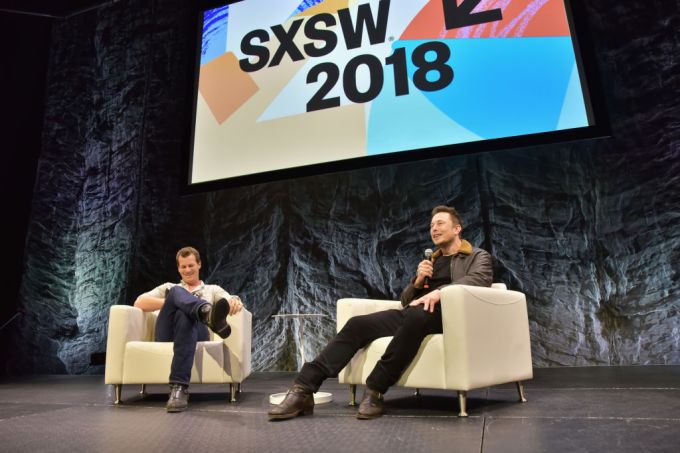
While the platform plays are clearly on the front lines of this discussion, tech icon Elon Musk repeated his concerns about AI running amok in a Q&A at South by Southwest. He worries that it won’t be long before we graduate from the narrow (and not terribly smart) AI we have today to a more generalized AI. He is particularly concerned that a strong AI could develop and evolve over time to the point it eventually matches the intellectual capabilities of humans. Of course, as TechCrunch’s Jon Shieber wrote, Musk sees his stable of companies as a kind of hedge against such a possible apocalypse.

Elon Musk with Jonathan Nolan at South by Southwest 2018. Photo: Getty Images/Chris Saucedo

“Narrow AI is not a species-level risk. It will result in dislocation… lost jobs… better weaponry and that sort of thing. It is not a fundamental, species-level risk, but digital super-intelligence is,” he told the South by Southwest audience.

He went so far as to suggest it could be more of a threat than nuclear warheads in terms of the kind of impact it could have on humanity.

Taking responsibility

Whether you agree with that assessment or not, or even if you think he is being somewhat self-serving with his warnings to promote his companies, he could be touching upon something important about corporate responsibility around the technology that startups and established companies alike are should heed.

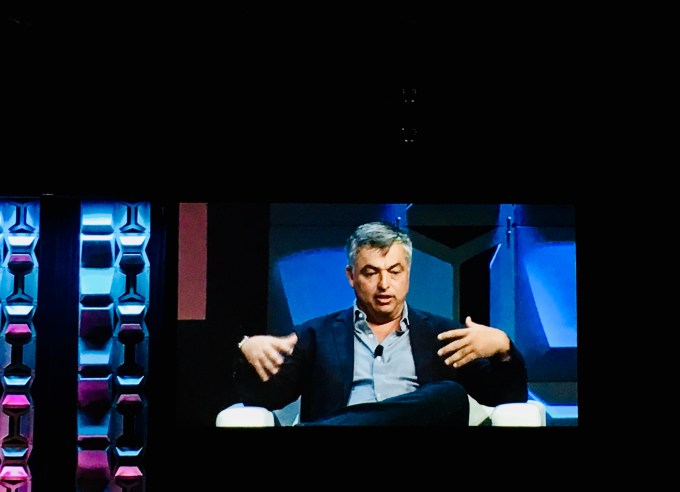
It was certainly on the mind of Apple’s Eddy Cue, who was interviewed on stage at SXSW by CNN’s Dylan Byers this week. “Tech is a great thing and makes humans more capable, but in of itself is not for good. People who make it, have to make it for good,” Cue said.

We can be sure that Twitter’s creators never imagined a world where bots would be launched to influence an election when they created the company more than a decade ago. Over time though, it becomes crystal clear that Twitter, and indeed all large platforms, can be used for a variety of motivations, and the platforms have to react when they think there are certain parties who are using their networks to manipulate parts of the populace.

Apple’s Eddie Cue speaking at South by Southwest 2018. Photo: Ron Miller

Cue dodged any of Byers’ questions about competing platforms, saying he could only speak to what Apple was doing because he didn’t have an inside view of companies like Facebook and Google (which he didn’t ever actually mention by name). “I think our company is different than what you’re talking about. Our customers’ privacy is of utmost importance to us,” he said. That includes, he said, limiting the amount of data they collect because they are not worrying about having enough to serve more meaningful ads. “We don’t care where you shop or what you buy,” he added.

Andy O’Connell from Facebook’s Global Policy Development team, speaking on a panel on the challenges of using AI to filter “fake news” said, that Facebook recognizes it can and should play a role if it sees people manipulating the platform. “This is a whole society issue, but there are technical things we are doing and things we can invest in [to help lessen the impact of fake news],” he said. He added that Facebook co-founder and CEO Mark Zuckerberg has expressed it as challenge to the company to make the platform more secure and that includes reducing the amount of false or misleading news that makes it onto the platform.

Recognizing tech’s limitations

As O’Connell put forth, this is not just a Facebook problem or a general technology problem. It’s a social problem and society as a whole needs to address it. Sometimes tech can help, but, we can’t always look to tech to solve every problem. The trouble is that we can never really anticipate how a given piece of technology will behave or how people use it once we put it out there.

Photo: Ron Miller

All of this suggests that none of these problems, some of which we never could have never have even imagined, are easy to solve. For every action and reaction, there can be another set of unintended consequences, even with the best of intentions.

But it’s up to the companies who are developing the tech to recognize the responsibility that comes with great economic success or simply the impact of whatever they are creating could have on society. “Everyone has a responsibility [to draw clear lines]. It is something we do and how we want to run our company. In today’s world people have to take responsibility and we intend to do that,” Cue said.

It’s got to be more than lip service though. It requires thought and care and reacting when things do run amok, while continually assessing the impact of every decision.

16 Mar 2018

Li Ka-Shing to step down as chairman of CK Hutchison, owner of 3 and other tech holdings

A significant changing of the guard is underway in the world of telecoms and tech out of Asia. CK Hutchison, a Hong Kong conglomerate that owns the European mobile carrier 3 among other mobile and tech holdings, has announced that Li Ka-Shing is stepping down as the company’s chairman and executive director, after 46 years at the helm and 68 years since founding Cheung Kong (CK), effective May 10. He will be succeeded by Li Tzar Kuoi, known as Victor Li, his son and the brother of businessman Richard Li.

Li Ka-Shing is Hong Kong’s richest man, and he also controls Horizons Ventures, one of the bigger and more influential VC firms not just in Asia but globally.

Horizons told TechCrunch in a statement that it would not be affected by the move.

“Horizons manages Mr. Li’s private interest in tech and disrupt[ive] investment opportunities,” the company said in a statement. “Mr. Li shoulders the venture risks himself but the foundation will enjoy the capital and proceeds, to support its philanthropic initiatives. Horizons operations will remain unchanged.”

Li (pictured here) stepping down marks the end of an era of Hutchison building up a conglomerate that includes shipping and port services, energy, retail and more alongside telecoms. The departure was announced at the same time that the company reported its earnings, with revenues of 414,837 million Hong Kong dollars ($52.8 billion) and profits of HK$35,100 ($4.5 billion) for the fiscal year. The company has some 123.1 million subscribers to its mobile services across various markets in Asia and Europe.
“Looking back at the past 68 years since the founding of my business in 1950 and the listing of Cheung Kong (Holdings) Limited in 1972, I have led the Group on a steady path of diversification and globalisation through organic growth, mergers and acquisitions, and timely strategic reviews and reorganisations at appropriate junctures to maximise value and returns for shareholders,” said Li in a statement in the earnings. “I would like to express my heart-felt appreciation to our shareholders for their unfailing confidence and support in the past years.”

Hutchison made a big play to acquire O2 in the UK from Telefonica for $14 billion some years ago, to step up its presence in the region, where it has traditionally trailed behind incumbent carriers, but ultimately European regulators blocked the deal.

More recently, the company partnered with Alibaba’s Ant Financial to develop an Alipay payment service in Hong Kong.

16 Mar 2018

Detectify raises €5M for its crowdsourced website vulnerability scanner

Sweden-based Detectify, which offers a website vulnerability scanner that is in part powered by the crowd, has raised €5 million in new funding. The round was led by New York-based venture capital and private equity firm, Insight Venture Partners. Existing investors, Paua Ventures and Inventure, also participated.

Founded in late 2013 by a self-described group of “white-hat hackers” from Sweden, the now 20-person strong company offers a website security tool that uses automation to scan websites for vulnerabilities to help customers (including developers) stay on top of security. The more unique part of the service, however, is that it is in part maintained — or, rather, kept up to date — via the crowd in the form of Detectify’s ethical hacker network.

This sees top-ranked security researchers submit vulnerabilities that are then built into the Detectify scanner and used in customers’ security tests. The really clever part is that researchers get paid every time their submitted module identifies a vulnerability on a customer’s website. In other words, incentives are always kept aligned, giving Detectify a potential advantage and greater scale compared to similar website security automation tools.

“Companies are building applications and users happily enter their data into these applications, but the applications are built from mix of technologies that are changing rapidly (open source, plugins, funky js-frameworks), without a clear vendor “responsible” for the security,” says Detectify co-founder and CEO Rickard Carlsson, explaining the problem the startup set out to solve.

“As no clear vendor is responsible for communicating about security [as compared to a Windows patch, for example], the knowledge sits in the community. We wanted to build a platform that takes the knowledge from white-hat and supercharges it with automation”.

Put more simply, developers typically have a long backlog of things to do and security testing often “falls between the cracks” because of limited time. It’s also near-impossible for any single developer to manually security test their code while keeping up with the latest vulnerabilities. By using automation, the wisdom of the crowd, and via integrations with popular developer tools, Detectify aims to help catch security issues before every new release and as part of a developer’s normal workflow.

To that end, Detectify already counts customers spanning a range of industries and company sizes, including Trello, Le Monde, and King. “It might have been easier to target a specific segment but we have a land and expand strategy. We also aim to make the internet a safer place, hence we want to offer our solution to organisations of all sizes,” says Carlsson.

Meanwhile, he does concede that automated vulnerability scanning tools aren’t new, but says one key difference is that the Detectify team comes from the world of ethical hacking instead of the world of compliance. “Our tool offers a great UI/UX, high-quality results and the latest security tests thanks to our crowdsourcing,” he adds.

16 Mar 2018

Samsung’s Galaxy S9 gets Disney AR Emojis at launch

I wasn’t alone in suggesting that Samsung’s Animoji competitors were, well, creepy. AR Emojis sit firmly in the uncanny valley between face scans and cartoon characters — generally lacking the adorableness of Apple’s offering. They have, however, had one saving grace: Disney, the entertainment company that essentially owns all of your best childhood memories. 

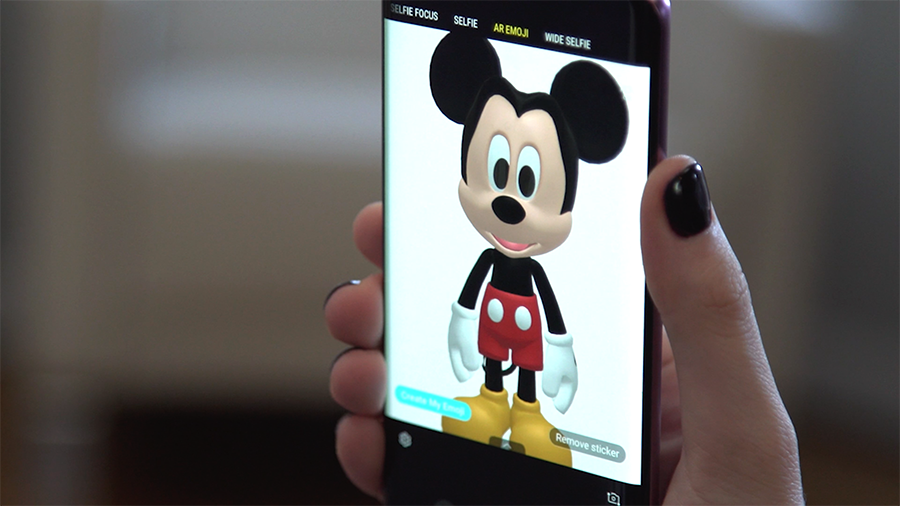
Samsung teased the partnership this month at Mobile World Congress, during the big Galaxy S9 launch, but didn’t offer much in the way of specifics. There is, however, some good news on the front. Disney’s AR Emojis will be available at launch for the S9 and S9+ — which, as it so happens, is today.

Right now, only Mickey and Minnie are available, accessible to phone buyers as a free download.  More character offerings from such blockbuster films as The Incredibles, Zootopia and Frozen will be made available before the end of the year.

The decision to go with Samsung is no doubt a sore spot for Apple, which has had a tight partnership with Disney for decades, including numerous product crossovers and shared board members. But the entertainment giant is no doubt looking to spread the love. The company also recently licensed Star Wars characters for some very Porg-y Pixel 2 AR stickers.

“By extending our characters and stories to new digital platforms,” Disney VP John Love said in a release tied to the announcement, “we are creating daily Disney experiences everywhere our audience goes, and we are able to draw in new generations of fans.”

The S9 hits the market today, priced starting at $720.

16 Mar 2018

AirAsia, Southeast Asia’s low-cost airline, is considering an ICO

AirAsia, the low-cost airline in Southeast Asia, is considering an initial coin offering (ICO) as part of a push into financial services.

Tony Fernandes, CEO of the $3 billion Malaysia-based company, told TechCrunch that he is analyzing the potential to hold an ICO that would raise money by introducing its own cryptocurrency.

“We have two things that are very interesting which will have relevance to ICOs, one is our loyalty card where we have [loyalty program] BIG Points, and I think those BigPoints can be easily transferred to the blockchain,” Fernandes said on the sidelines of Money2020 in Singapore.

“We have a product that can be a currency in Big Loyalty, [and] we’re building a payment platform so the two can marry quite nicely. We have an ecosystem that enables you to use that currency, there’s no point having a currency that can’t be used,” he added.

Fernandes has built a reputation as a businessman who is prepared to take risks and chase new ideas. AirAsia pioneered the low-cost airline model in Southeast Asia, where it claims some 65 million registered customers, and Fernandes himself owns English football club QPR and once founded a Formula One team.

ICOs generated more than $6 billion for startups last year, with Southeast Asia, and Singapore in particular, emerging as a particular hub. To date, however, most ICO have been undertaken by young companies, if it did opt for an ICO, AirAsia would be the most established — and highest-valued — consumer business to take that route.

Messaging app Telegram is a notable example, however. Earlier this month, the company closed an initial $850 million in funding as part of an ICO that could bring in as much as $2 billion in total.

At this point, it is not clear how much AirAsia might raise in an ICO.

Fernandes’ newest strategy for AirAsia is to move into financial services as it aims to grow to 100 million customers. Beyond a proposed payment platform that would make its cabins ‘cash-less,’ the Fernandes announced this week that it will look into offering loans and insurance services to its users with the aim of helping SMEs and entrepreneurs.

“The world is changing so fast but I think we have the ability to innovate and think quickly on these things but the ideas are based on our data and based on our ecosystem,” Fernandes told TechCrunch.

“I like [the idea of an ICO] because it just takes cost out of my system. So I’m driven, not by trying to take over the world, but in the first instance, everyone buys in my ICO and I take out a lot of exchange risk, I take out a lot of settlement risk, etc etc. So there are many ways of how we are looking at it,”

The legalities of ICOs are still being figured out by governments across the world, with the U.S. SEC in particular reportedly investigating ICO companies and hedge funds that invest in them and other crypto.

So far, in Southeast Asia, governments haven’t introduced regulation. In Singapore, the Bank of Singapore and Monetary Authority of Singapore (MAS) have engaged with the community while also warning investors of the risks of buying into ICOs.

Fernandes maintained that AirAsia is in a strong position with government connections and general airline regulation.

“We’re in the most regulated industry in the world, so we know how to deal with regulators and regulations,” he said.

Note: The author owns a small amount of cryptocurrency.

15 Mar 2018

Lyft is testing monthly subscriptions for riders

Lyft is testing a monthly subscription plan for people who tend to take a lot of rides, The Verge first reported. This is no surprise, given Lyft CEO and co-founder Logan Green said earlier this week Lyft would like to achieve in transportation what Netflix achieved in streaming media with subscriptions.

There seems to be a couple of plans Lyft is testing out. One costs $199 up front to get 30 free rides worth up to $15 per ride. Another plan costs $399 a month for seemingly the same number of rides. So, it appears as if Lyft is A/B testing to try to figure out just how much people are willing to pay.

“We’re always testing new ways to provide passengers the most affordable and flexible transportation options,” a Lyft spokesperson told TechCrunch. “For the past few months, we’ve been testing a variety of All-Access Plans for Lyft passengers.

If you already spend $450 a month on Lyft rides, both plans would likely be worth the money. Uber has previously offered a subscription service, Uber Plus Pass that guaranteed prices on rides for an upfront fee.

15 Mar 2018

Stock trade app Robinhood raising at $5B+, up 4X in a year

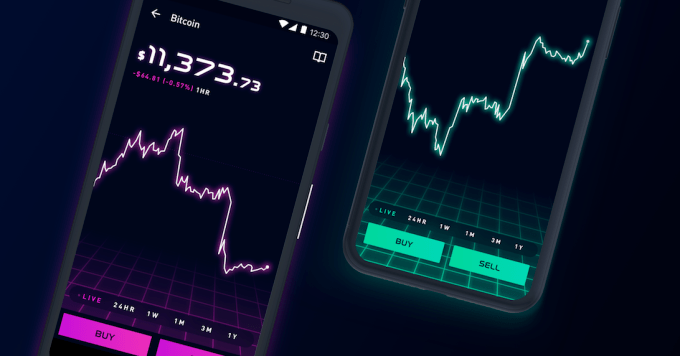
By adding a cryptocurrency exchange, a web version and stock option trading, Robinhood has managed to quadruple its valuation in a year, according to a source familiar with a new round the startup is raising. Robinhood is closing in on around $350 million in Series D funding led by Russian firm DST Global, the source says. That’s just 11 months after Robinhood confirmed TechCrunch’s scoop that the zero-fee stock trading app had raised a $110 million Series C at a $1.3 billion valuation. The new raise would bring Robinhood to $526 million in funding.

Details of the Series D were first reported by The Wall Street Journal.

The astronomical value growth shows that investors see Robinhood as a core part of the mobile finance tools upon which the next generation will rely. The startup also just proved its ability to nimbly adapt to trends by building its cryptocurrency trading feature in less than two months to make sure it wouldn’t miss the next big economic shift. One million users waitlisted for access in just the five days after Robinhood Crypto was announced.

The launch completed a trio of product debuts. The mobile app finally launched a website version for tracking and trading stocks without a commission in November. In December it opened options trading, making it a more robust alternative to brokers like E*Trade and Scottrade. They often charge $7 or more per stock trade compared to zero with Robinhood, but also give away features that are reserved for Robinhood’s premium Gold subscription tier.

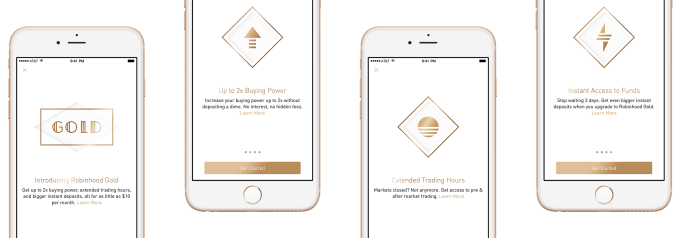
Robinhood won’t say how many people have signed up for its $6 to $200 per month Gold service that lets people trade on margin, with higher prices netting them more borrowing power. That and earning interest on money stored in Robinhood accounts are the startup’s primary revenue sources.

Rapid product iteration and skyrocketing value surely helped recruit Josh Elman, who Robinhood announced yesterday has joined as VP of product as he transitions to a part-time roll at Greylock Partners. He could help the company build a platform business as a backbone for other fintech apps, they way he helped Facebook build its identity platform.

In effect, Robinhood has figured out how to make stock trading freemium. Rather than charge per trade with bonus features included, Robinhood gives away the bare-bones trades and charges for everything else. That could give it a steady, scalable business model akin to Dropbox, which grew by offering small amounts of free storage and then charging for extras and enterprise accounts. From a start with free trades, Robinhood could blossom into a hub for your mobile finance life.

15 Mar 2018

Google adds a wheelchair-accessible option for transit maps

Google Maps has a pretty solid set of data for taking transit from here to there, but anyone with a physical disability knows it isn’t quite that simple. Some stations may be wheelchair-unfriendly, have out-of-service elevators, that kind of thing. A new update to the service adds an option for you to specify a wheelchair-accessible route — though that’s just a start on what’s really needed.

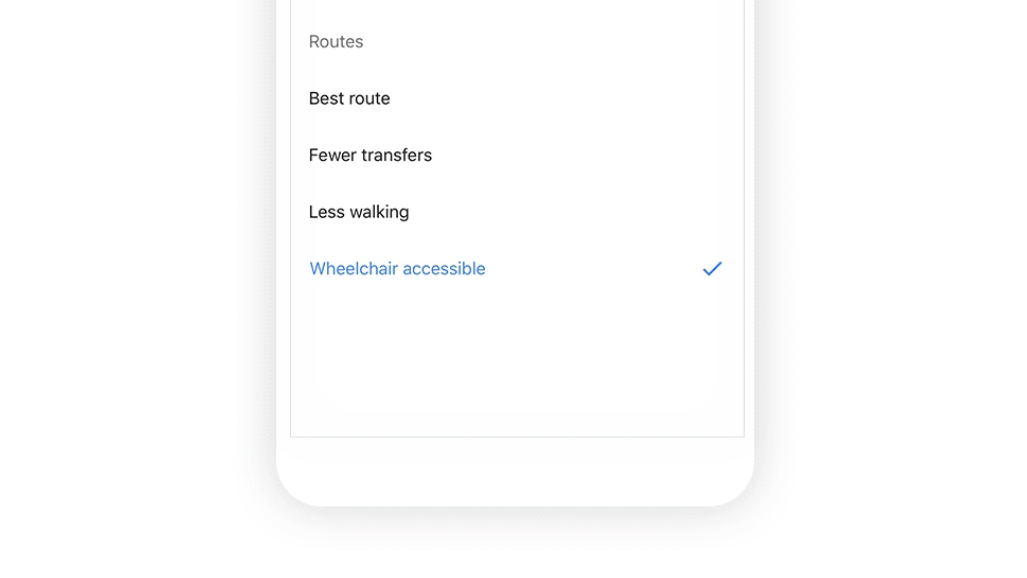
Transit riders in London, New York, Tokyo, Mexico City, Boston, and Sydney will now have the option to select “wheelchair accessible” in their route options in the same way they might opt to have fewer transfers or minimal walking. More are on the way.

No doubt this will make life easier for disabled folks, people with strollers, or even anyone lugging something heavy around.

But maps, even Google’s extremely detailed ones, are still extremely short on information critical to anyone with a physical disability. Walking routes that take into account sidewalk condition and grade, curb cuts, pedestrian crossing zones or buttons, wheelchair-accessible entrances to buildings, and much more could be better integrated into the world’s most popular mapping platform.

We know it can be done because a handful of students did it on their own for a summer project. AccessMap uses a combination of manually generated and publicly available data to label sidewalks as safe or risky for people who have trouble getting around. It’s limited to Seattle at present (can’t expect undergrads to map the country) but the concept is more than sound.
Here’s hoping Google dedicates a bit more of its considerable resources to improving this aspect of the product. Millions will thank them.

15 Mar 2018

Intel announces hardware fixes for Spectre and Meltdown on upcoming chips

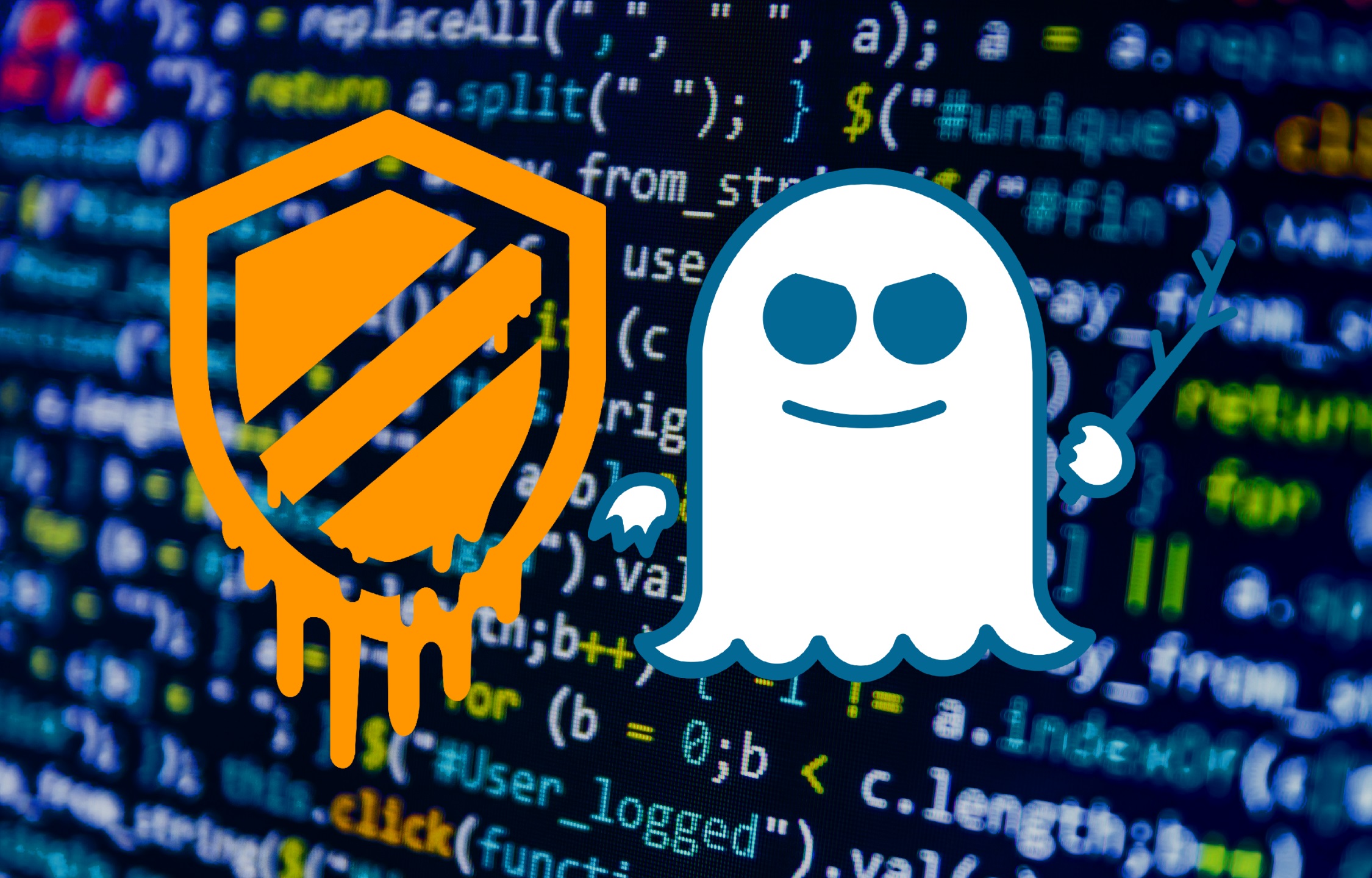
When the Spectre and Meltdown bugs hit, it became clear that they wouldn’t be fixed with a few quick patches — the problem runs deeper than that. Fortunately, Intel has had plenty of time to work on it, and new chips coming out later this year will include improvements at the hardware/architecture level that protect against the flaws. Well, two out of three, anyway.

CEO Brian Krzanich announced the news in a company blog post. After thanking a few partners, he notes that all affected products from the last 5 years have received software updates to protect them from the bugs. Of course, the efficacy of those updates is debatable, as well as their performance hits — and that’s if your hardware vendor even gets a patch out. But at any rate, the fixes are available.

There are actually 3 semi-related bugs here: Spectre is variants 1 and 2; then there’s variant 3, which researchers dubbed Meltdown. Variant 1 is arguably the most difficult of them all to fix, and as such Intel doesn’t have a hardware solution for it yet — but variants 2 and 3 it has in the bag.

“We have redesigned parts of the processor to introduce new levels of protection through partitioning that will protect against both Variants 2 and 3,” Krzanich writes. Cascade Lake Xeon and 8th-gen Core processors should include these changes when they ship in the second half of 2018. Although that’s a bit vague, we can be certain that Intel will prominently advertise what new chips include the mitigations as we get closer to release.

Lastly, even older hardware will be getting the microcode updates — back to the 1st-gen Core processors. Remember Nehalem and Penryn? Those will be patched in time as well. Anyone surprised that a Nehalem system is still in use anywhere probably hasn’t worked in IT at a big company or government agency. I bet there are 98SE systems running on Pentiums somewhere in the Department of Energy.

This announcement doesn’t require anything from users, but keep your computer up to date if you know how, and ask customer service for your device provider if you’re not sure.