15 Mar 2018

Teacher in Ghana who used blackboard to explain computers gets some Microsoft love

Teaching kids how to use a computer is hard enough already, since they’re kids, but just try doing it without any computers. That was the task undertaken by Richard Appiah Akoto in Ghana, and his innovative (and labor-intensive) solution was to draw the computer or application on the blackboard in great detail. His hard work went viral and now Microsoft has stepped in to help out.

Akoto teaches at Betenase Municipal Assembly Junior High in the small town of Sekyedomase. He had posted pictures of his magnum opus, a stunning rendition of a complete Microsoft Word window, to Facebook. “I love ma students so have to do what will make them understand wat am teaching,” he wrote. He looks harried in the last image of the sequence.

The post blew up (9.3K reactions at this point), and Microsoft, which has for years been rather quietly promoting early access to computing and engineering education, took notice. It happened to be just before the company’s Education Exchange in Singapore, and they flew him out.

Akoto in Singapore.

It was Akoto’s first time outside of Ghana, and at the conference, a gathering of education leaders from around the world, he described his all-too-common dilemma: The only computers available — one belonging to the school and Akoto’s personal laptop — were broken.

“I wanted to teach them how to launch Microsoft Word. But I had no computer to show them,” he said in an interview with Microsoft at the event. “I had to do my best. So, I decided to draw what the screen looks like on the blackboard with chalk.”

“I have been doing this every time the lesson I’m teaching demands it,” he continued. “I’ve drawn monitors, system units, keyboards, a mouse, a formatting toolbar, a drawing toolbar, and so on. The students were okay with that. They are used to me doing everything on the board for them.”

Pursuing such a difficult method instead of giving up under such circumstances is more than a little admirable, and the kids are certainly better off for having a teacher dedicated to his class and subject. A little computer literacy can make a big difference.

“They have some knowledge about computers, but they don’t know how to actually operate one,” Akoto said. So Microsoft has offered to provide “device and software support” for the school (I’ve asked for specifics, though they may depend on the school’s needs), and Akoto will get a chance to go through Microsoft’s educator certification program (which has other benefits).

Obviously if this school is having this issue, countless more are as well, and could use similar support. And as Akoto himself eloquently pointed out to NPR when his post first went viral, “They are lacking more than just equipment.”

But at least in this case there are a couple of hundred students who will be getting an opportunity they didn’t have before. That’s a start.

15 Mar 2018

Google spent about $270K to close pay gaps across race and gender

Google says there are currently no “statistically significant” pay gaps at the company across race and gender. This is based on the company’s most recent pay analysis, where it looked at unexplained pay discrepancies based on gender and race and then made adjustments where necessary, Google wrote in a blog post today.

In total, Google found statistically significant pay differences for 228 employees across six job groups. So, Google increased the compensation for each of those employees, which came out to about $270,000 in total before finalizing compensation planning. That group of 228 employees included women and men from several countries, including the U.S., as well as black and Latinx employees in the U.S.

In its analysis, Google says it looked at every job group with at least 30 employees and at least five people for every demographic group for which Google has data, like race and gender. You can read more about Google’s methodology on its blog.

Earlier this year, Google was hit with a revised gender-pay class-action lawsuit that alleges Google underpaid women in comparison with their male counterparts and asked new hires about their prior salaries.

The revised lawsuit added a fourth complainant, Heidi Lamar, who was a teacher at Google’s Children Center in Palo Alto for four years. The original suit was dismissed in December due to the fact the plaintiffs defined the class of affected workers too broadly. Now, the revised lawsuit focuses on those who hold engineer, manager, sales or early childhood education positions.

Prior to the class-action lawsuit, the Department of Labor looked into Google’s pay practices. Last January, the DoL filed a lawsuit against Google in an attempt to gain compensation data, as part of a routine compliance evaluation. In April, the DoL testified in court that pay inequities at Google are “systemic.”

Google, however, denied the DoL’s claims that the pay inequities at the company were systemic. In June, an administrative law judge sided with Google, ruling that it did not need to hand over all of the data the DoL requested.

15 Mar 2018

Rihanna calls out Snapchat for tone-deaf ad that made light of domestic violence

Rihanna is not happy with Snap for the tone-deaf ad the company let run on Snapchat. A couple of days ago, an advertisement on Snap appeared that alluded to Chris Brown’s violent assault on Rihanna back in 2009.

The advertisement, which was for a game called “Would You Rather,” asked if people would “rather slap Rihanna or punch Chris Brown.” Snap has since removed the advertisement, but Rihanna today said she’s concerned about the message it sends to other survivors of domestic violence.

Here’s what she said in an Instagram story:

Now SNAPCHAT I know you already know you ain’t my fav app out there! But I’m just trying to figure out what the point was with this mess! I’d love to call it ignorance, but I know you ain’t that dumb! You spent money to animate something that would intentionally bring shame to DV victims and made a joke of it!!!! This isn’t about my personal feelings, cause I don’t have much of them…but all the women, children, and men that have been victims of DV in the past and especially the ones who haven’t made it out yet….you let us down! Shame on you. Throw the whole app-oligy away.

In a statement to TechCrunch, Snap apologized for the ad ever going up in the first place. When directly asked about Rihanna’s message, Snap said called the advertisement “disgusting.”

“We are so sorry we made the terrible mistake of allowing it through our review process,” a Snap spokesperson said. “We are investigating how that happened so that we can make sure it never happens again.”

Snap has also since blocked the maker of “Would You Rather” from advertising on its platform. On Monday, when people first noticed the ad, Snap said it was reviewed but approved in error.

“We immediately removed the ad last weekend, once we became aware,” Snap said earlier this week.

This massive fail by Snap comes shortly after both Snapchat and Instagram had to remove their Giphy GIF sticker features after a racist GIF appeared as an option.

To be clear, this ad never should’ve been approved in the first place, according to the company’s advertising policies. Here’s Rihanna’s Instagram post about it:

15 Mar 2018

Facebook launches Express Wi-Fi app for its local-operated hotspots

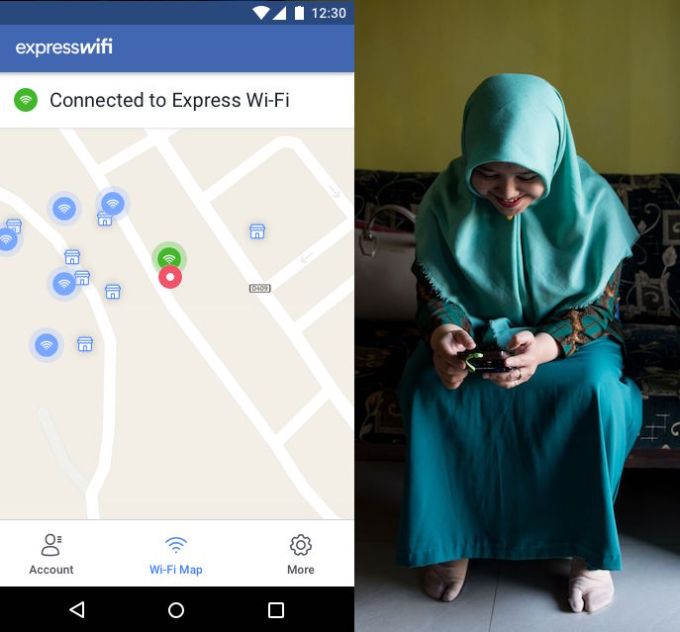
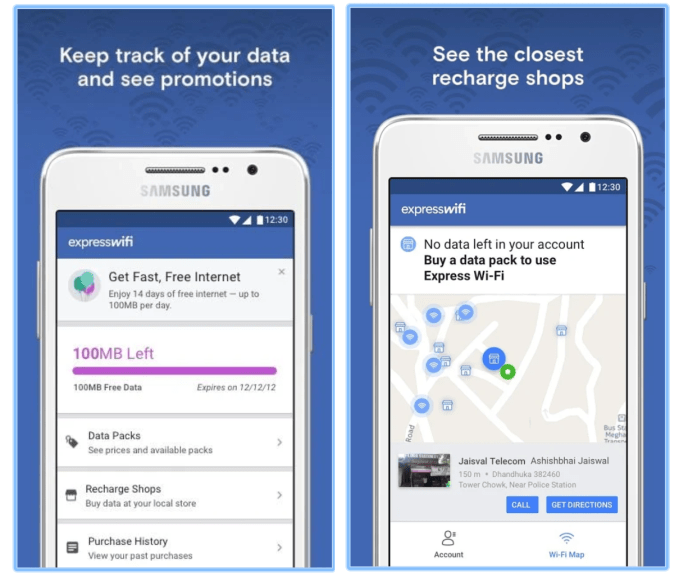
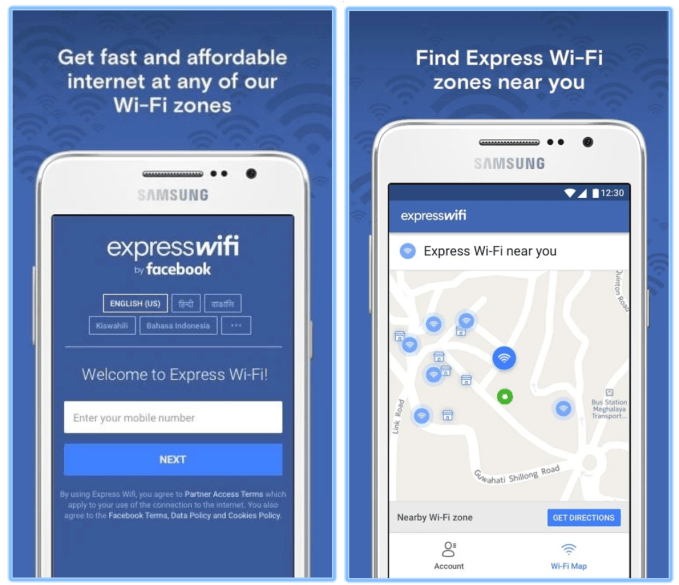
Facebook wants you to pay for internet. This week TechCrunch was tipped off that Facebook had quietly launched an Express Wi-Fi Android app in the Google Play store that lets users buy data packs and find nearby hotspots as part of Facebook’s distributed Wi-Fi network. The company’s Express Wi-Fi program is live in five developing countries that see local business owners operating Wi-Fi hotspots where people can pay to access higher-speed bandwidth via local telecoms instead of paying steep prices for slow cellular data connections.

Previously, Express Wi-Fi users had to dig out a mobile website, or directly download an app from a telecom that required reconfiguring a phone’s settings. There wasn’t any way to look up where hotspots were located. The new Google Play app can be downloaded the normal way. It’s now live in Indonesia with bandwidth from telecom partner D-Net, and in Kenya through Surf. The app can also tell if a user’s Wi-Fi is turned on to help with set up, and they can file reports to Facebook about connectivity or retailer issues.

The launch signals Facebook expanding its pursuit of developing world audiences that first need internet access before they can become lucrative Facebook users. Unlike its much-criticized zero-rating program called Free Basics (formerly Internet.org), Express Wi-Fi offers a full, unrestricted version of the web for a price instead of only low-bandwidth services approved by Facebook. This strategy could help it achieve its mission of getting more disconnected people in the developing world online without the net neutrality concerns. Making Express Wi-Fi an actual business might save Facebook from backlash about it masking a user growth driver inside a philanthropic initiative.

Facebook confirmed the launch to TechCrunch, with a spokesperson telling us, “Facebook is releasing the Express Wi-Fi app in the Google Play store to give people another simple and secure way to access fast, affordable internet through their local Express Wi-Fi hotspots.” Sensor Tower first tipped us off to the app.

Weak or expensive connectivity is a huge barrier to Facebook deepening its popularity in the developing world at a time when it’s reaching saturation or even shrinking in some developed world nations. Facebook saw its first user loss ever in the U.S. and Canada region in Q4, with daily active users decreasing by 700,000 in part because of News Feed changes that reduced the presence of engagement-drawing viral videos.

Facebook needs user growth more than ever, and the developing world is where it can find it. That’s why it’s developing advanced technologies like the Aquila solar drone and satellites that can beam down connectivity. It’s also working with telecoms that use microwave towers to beam backhaul bandwidth to its Express Wi-Fi units.

Monetizing the international market has been a big focus for the company. It’s launched new region-specific and low-bandwidth ad units like click-to-missed-call and slideshows. It’s paid off. From 2012 to 2016, average revenue per user grew 4X in the Rest of World region. And that revenue grows even faster when people can load Facebook quickly and cheaply thanks to strong Wi-Fi access. The more accessible Facebook makes this program, the more it could see those internet users turn into social networkers.

15 Mar 2018

Facebook launches Express Wi-Fi app for its local-operated hotspots

Facebook wants you to pay for internet. This week TechCrunch was tipped off that Facebook had quietly launched an Express Wi-Fi Android app in the Google Play store that lets users buy data packs and find nearby hotspots as part of Facebook’s distributed Wi-Fi network. The company’s Express Wi-Fi program is live in five developing countries that see local business owners operating Wi-Fi hotspots where people can pay to access higher-speed bandwidth via local telecoms instead of paying steep prices for slow cellular data connections.

Previously, Express Wi-Fi users had to dig out a mobile website, or directly download an app from a telecom that required reconfiguring a phone’s settings. There wasn’t any way to look up where hotspots were located. The new Google Play app can be downloaded the normal way. It’s now live in Indonesia with bandwidth from telecom partner D-Net, and in Kenya through Surf. The app can also tell if a user’s Wi-Fi is turned on to help with set up, and they can file reports to Facebook about connectivity or retailer issues.

The launch signals Facebook expanding its pursuit of developing world audiences that first need internet access before they can become lucrative Facebook users. Unlike its much-criticized zero-rating program called Free Basics (formerly Internet.org), Express Wi-Fi offers a full, unrestricted version of the web for a price instead of only low-bandwidth services approved by Facebook. This strategy could help it achieve its mission of getting more disconnected people in the developing world online without the net neutrality concerns. Making Express Wi-Fi an actual business might save Facebook from backlash about it masking a user growth driver inside a philanthropic initiative.

Facebook confirmed the launch to TechCrunch, with a spokesperson telling us, “Facebook is releasing the Express Wi-Fi app in the Google Play store to give people another simple and secure way to access fast, affordable internet through their local Express Wi-Fi hotspots.” Sensor Tower first tipped us off to the app.

Weak or expensive connectivity is a huge barrier to Facebook deepening its popularity in the developing world at a time when it’s reaching saturation or even shrinking in some developed world nations. Facebook saw its first user loss ever in the U.S. and Canada region in Q4, with daily active users decreasing by 700,000 in part because of News Feed changes that reduced the presence of engagement-drawing viral videos.

Facebook needs user growth more than ever, and the developing world is where it can find it. That’s why it’s developing advanced technologies like the Aquila solar drone and satellites that can beam down connectivity. It’s also working with telecoms that use microwave towers to beam backhaul bandwidth to its Express Wi-Fi units.

Monetizing the international market has been a big focus for the company. It’s launched new region-specific and low-bandwidth ad units like click-to-missed-call and slideshows. It’s paid off. From 2012 to 2016, average revenue per user grew 4X in the Rest of World region. And that revenue grows even faster when people can load Facebook quickly and cheaply thanks to strong Wi-Fi access. The more accessible Facebook makes this program, the more it could see those internet users turn into social networkers.

15 Mar 2018

Ford is changing the way it builds vehicles

Ford is a 115-year-old company and has changed much over the years. The car maker seems ready to change again.

Today, Ford gathered several hundred journalists in a theater deep in its Dearborn, MI development center. The building is surrounded by engineering labs and test facilities. A Ford proving ground is across the street, the HQ is down the road and the parking lot overlooks The Henry Ford Museum. We were in Ford country.

During the briefing, half of which was on the record and half of which was off, the company laid out its product strategy, including revealing never-before-seen concepts (that was the off-the-record part). CEO Jim Hackett sat in front of the journalists and laid out the company’s evolving plan since he took over for Mark Fields, which includes embracing a shorter development cycle to partnerships with foreign auto makers.

Ford is moving away from talking about vehicle platforms. Traditionally, automakers build vehicle platforms, which can support several different models. Some platforms underpin everything from small sedans to SUVs. By talking about platforms, automakers can show their flexibility by building more than one model on top of similar parts. Going forward, Ford intends on building off different vehicle architectures.

This is a small, but important change in language and methodology, which Ford says will cut development time from sketch to showroom by 20 percent.

There will be five flexible vehicle architectures: body-on-frame, front-wheel-drive unibody, rear-wheel-
drive unibody, commercial van unibody and BEV. These will be paired with electric or internal combustion packages to complete the configurations.

Ford said today it’s aiming to deliver $4 billion in engineering efficiencies and this approach will go a long way in achieving that goal. Auto makers have always shared parts and engines and structures across vehicles, but this approach seems to set up Ford with more flexibility, which should result in more unique models, including the Ford Explorer ST shown above.

15 Mar 2018

Ford says its electric SUV will be famous without having to shoot it into space

Ford is committed to electric vehicles and today revealed more details about its upcoming performance electric SUV. Jim Farley, President of Ford Global Markets, speaking a media event today, called the upcoming vehicle low-slung like a Mustang. The company is targeting 2020 release and Farley promised that it will be famous without having to shoot it into space — clearly taking a shot at Elon Musk’s recent stunt.

It’s likely this upcoming SUV will be a Mustang in more than just performance numbers.

The Mustang is halo car. The two-seater is not for everyone, but it represents the Ford brand of practical, affordable performance. A Mustang can bring people into a showroom. That’s part of its job and this upcoming performance EV SUV will likely be tasked with the same role: bring people into dealerships and leave with a Ford even if it’s not the swanky new EV SUV.

This vehicle will be the first of six electric vehicles Ford plans on producing by 2022 as part of the company’s plan to invest $11 billion into electric vehicles. A performance EV SUV sits nicely in Ford’s overall line up. The automaker said today that SUVs are driving Ford Performance sales, which are on track to grow another 71% by 2020.

Ford promised more details about the upcoming model at a later time. Expect the auto maker to expect to get a lot of publicity mileage out of this EV.

15 Mar 2018

Ford says its electric SUV will be famous without having to shoot it into space

Ford is committed to electric vehicles and today revealed more details about its upcoming performance electric SUV. Jim Farley, President of Ford Global Markets, speaking a media event today, called the upcoming vehicle low-slung like a Mustang. The company is targeting 2020 release and Farley promised that it will be famous without having to shoot it into space — clearly taking a shot at Elon Musk’s recent stunt.

It’s likely this upcoming SUV will be a Mustang in more than just performance numbers.

The Mustang is halo car. The two-seater is not for everyone, but it represents the Ford brand of practical, affordable performance. A Mustang can bring people into a showroom. That’s part of its job and this upcoming performance EV SUV will likely be tasked with the same role: bring people into dealerships and leave with a Ford even if it’s not the swanky new EV SUV.

This vehicle will be the first of six electric vehicles Ford plans on producing by 2022 as part of the company’s plan to invest $11 billion into electric vehicles. A performance EV SUV sits nicely in Ford’s overall line up. The automaker said today that SUVs are driving Ford Performance sales, which are on track to grow another 71% by 2020.

Ford promised more details about the upcoming model at a later time. Expect the auto maker to expect to get a lot of publicity mileage out of this EV.

15 Mar 2018

Ford takes aim at Toyota’s hybrid market lead with its new SUV lineup

Ford detailed a bunch of its roadmap for the next few years at a special media event today, and one of the key takeaways is that it’s going all-in on hybrids with its SUV lineup. Ford estimates that SUVs could make up as much as half the entire U.S. industry retail market by 2020, and that’s why it’s shifting $7 billion in investment capital from its cars business over to the SUV segment. By 2020, Ford also aims to have high performance SUVs in market, including five with hybrid powertrains and one fully battery electric model.

These will include brand new versions of the Ford Escape and Ford Explorer that are coming next year, and two entirely new off-road SUVs including a new Bronco, and a small SUV that has yet to be named. There’s also that “performance battery electric utility” that will make up part of its overall SUV lineup, which is set for a 2020 release and will spearhead a plan to release six electric vehicle models by 2022.

With this big hybrid push on the SUV side, Ford expects to go from second to first-place in the U.S. hybrid vehicles market by sales, surpassing current leader Toyota by 2021 thanks also to the forthcoming hybrid Mustang and F-150.

15 Mar 2018

Ford takes aim at Toyota’s hybrid market lead with its new SUV lineup

Ford detailed a bunch of its roadmap for the next few years at a special media event today, and one of the key takeaways is that it’s going all-in on hybrids with its SUV lineup. Ford estimates that SUVs could make up as much as half the entire U.S. industry retail market by 2020, and that’s why it’s shifting $7 billion in investment capital from its cars business over to the SUV segment. By 2020, Ford also aims to have high performance SUVs in market, including five with hybrid powertrains and one fully battery electric model.

These will include brand new versions of the Ford Escape and Ford Explorer that are coming next year, and two entirely new off-road SUVs including a new Bronco, and a small SUV that has yet to be named. There’s also that “performance battery electric utility” that will make up part of its overall SUV lineup, which is set for a 2020 release and will spearhead a plan to release six electric vehicle models by 2022.

With this big hybrid push on the SUV side, Ford expects to go from second to first-place in the U.S. hybrid vehicles market by sales, surpassing current leader Toyota by 2021 thanks also to the forthcoming hybrid Mustang and F-150.