15 Mar 2018

Airbnb makes service more accessible to people with disabilities

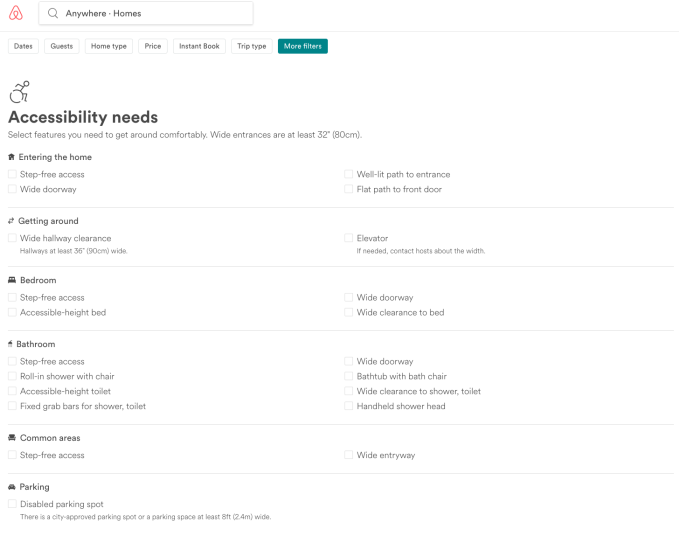
Airbnb has made some changes to its platform in order to make it easier for people with disabilities to find accommodations that suit their needs. The 21 new accessibility filters Airbnb has added enable people to find homes and apartments that have step-free entry to rooms, entryways wide enough to accommodate a wheelchair, elevators, roll-in showers with a chair and more.

Airbnb guests were previously able to search for wheelchair accessible listings, but that was it. In order to determine the appropriate filters, Airbnb worked with the California Council of the Blind, California Foundation for Independent Living Centers and the National Council on Independent Living.

Airbnb’s willingness to be inclusive of people with disabilities comes in light of Lyft and Uber facing lawsuits over the lack of options available for people who use wheelchairs. Moving forward, Airbnb says it will work with its hosts and guests to ensure the filters are useful and accurate.

“The introduction of the new accessibility features and filters to all hosts and guests is just the first stage in our journey to improve accessibility at Airbnb,” Airbnb Accessibility Product and Program Manager Srin Madipalli said in a blog post. “We encourage everyone to use them and send through their feedback.”

15 Mar 2018

Airbnb makes service more accessible to people with disabilities

Airbnb has made some changes to its platform in order to make it easier for people with disabilities to find accommodations that suit their needs. The 21 new accessibility filters Airbnb has added enable people to find homes and apartments that have step-free entry to rooms, entryways wide enough to accommodate a wheelchair, elevators, roll-in showers with a chair and more.

Airbnb guests were previously able to search for wheelchair accessible listings, but that was it. In order to determine the appropriate filters, Airbnb worked with the California Council of the Blind, California Foundation for Independent Living Centers and the National Council on Independent Living.

Airbnb’s willingness to be inclusive of people with disabilities comes in light of Lyft and Uber facing lawsuits over the lack of options available for people who use wheelchairs. Moving forward, Airbnb says it will work with its hosts and guests to ensure the filters are useful and accurate.

“The introduction of the new accessibility features and filters to all hosts and guests is just the first stage in our journey to improve accessibility at Airbnb,” Airbnb Accessibility Product and Program Manager Srin Madipalli said in a blog post. “We encourage everyone to use them and send through their feedback.”

15 Mar 2018

U.S. issues broad Russian sanctions citing NotPetya attack and Internet Research Agency meddling

In a surprisingly robust reprimand for the Trump administration, the U.S. Treasury Department issued a set of sanctions Thursday citing interference in the 2016 election as part of a broader pattern of hostile actions undertaken by the Russian government against U.S. interests. The sanctions followed U.S. joint statements denouncing the Russian government’s suspected attack on former Russian double agent Sergei Skripal and his daughter Yulia Skripal using a chemical nerve agent known as Novichok in Salisbury, England.

In a wide-ranging statement addressing “the ongoing nefarious attacks emanating from Russia” the U.S. Treasury condemned not only the recent poisoning attempt but also “malign Russian cyber activity, including their attempted interference in U.S. elections, destructive cyber-attacks, and intrusions targeting critical infrastructure,” according to a statement from Treasury Secretary Steven Mnuchin that accompanied the sanctions.

“These targeted sanctions are a part of a broader effort to address the ongoing nefarious attacks emanating from Russia,” Mnuchin said. “Treasury intends to impose additional CAATSA sanctions, informed by our intelligence community, to hold Russian government officials and oligarchs accountable for their destabilizing activities by severing their access to the U.S. financial system.”

The sanctions also address Russia’s role in 2017’s NotPetya cyberattack, a massively destructive global malware effort that first appeared to be ransomware. Security researchers determined that NotPetya’s true aims were sowing mass chaos in target countries by disrupting airports, banks and industrial targets including radiation monitoring systems. “The Russian military, of which the GRU is a part, was also directly responsible for the NotPetya cyber-attack in 2017,” the Treasury Department stated decisively.

The sanctions also cite other Russian efforts to penetrate U.S. critical infrastructure systems — a threat that the federal government has made efforts to bolster its resources to defend against. In 2017, the Department of Homeland Security expanded that critical infrastructure designation to include election databases and voting machines.

Remarkably, the new U.S. sanctions target many of the same organizations and individuals named in recent indictments by Special Counsel Robert Mueller, including the Internet Research Agency which “tampered with, altered, or caused a misappropriation of information with the purpose or effect of interfering with or undermining election processes and institutions.” To date, the Trump administration has been largely dismissive of Mueller, who continues to lead a far-reaching investigation into meddling in the 2016 U.S. presidential election.

15 Mar 2018

U.S. issues broad Russian sanctions citing NotPetya attack and Internet Research Agency meddling

In a surprisingly robust reprimand for the Trump administration, the U.S. Treasury Department issued a set of sanctions Thursday citing interference in the 2016 election as part of a broader pattern of hostile actions undertaken by the Russian government against U.S. interests. The sanctions followed U.S. joint statements denouncing the Russian government’s suspected attack on former Russian double agent Sergei Skripal and his daughter Yulia Skripal using a chemical nerve agent known as Novichok in Salisbury, England.

In a wide-ranging statement addressing “the ongoing nefarious attacks emanating from Russia” the U.S. Treasury condemned not only the recent poisoning attempt but also “malign Russian cyber activity, including their attempted interference in U.S. elections, destructive cyber-attacks, and intrusions targeting critical infrastructure,” according to a statement from Treasury Secretary Steven Mnuchin that accompanied the sanctions.

“These targeted sanctions are a part of a broader effort to address the ongoing nefarious attacks emanating from Russia,” Mnuchin said. “Treasury intends to impose additional CAATSA sanctions, informed by our intelligence community, to hold Russian government officials and oligarchs accountable for their destabilizing activities by severing their access to the U.S. financial system.”

The sanctions also address Russia’s role in 2017’s NotPetya cyberattack, a massively destructive global malware effort that first appeared to be ransomware. Security researchers determined that NotPetya’s true aims were sowing mass chaos in target countries by disrupting airports, banks and industrial targets including radiation monitoring systems. “The Russian military, of which the GRU is a part, was also directly responsible for the NotPetya cyber-attack in 2017,” the Treasury Department stated decisively.

The sanctions also cite other Russian efforts to penetrate U.S. critical infrastructure systems — a threat that the federal government has made efforts to bolster its resources to defend against. In 2017, the Department of Homeland Security expanded that critical infrastructure designation to include election databases and voting machines.

Remarkably, the new U.S. sanctions target many of the same organizations and individuals named in recent indictments by Special Counsel Robert Mueller, including the Internet Research Agency which “tampered with, altered, or caused a misappropriation of information with the purpose or effect of interfering with or undermining election processes and institutions.” To date, the Trump administration has been largely dismissive of Mueller, who continues to lead a far-reaching investigation into meddling in the 2016 U.S. presidential election.

15 Mar 2018

PUBG soft-launches on mobile in Canada with Android release

Player Unknown’s Battlegrounds, the ‘battle royale’ style game where everyone tries to be the last player standing while scrounging for supplies to keep them alive, has launched on Android in Canada MobileSyrup reports, which could presage a future release in the U.S.

The arrival of the mobile version of the game more generally known as PUBG coincides with it reaching the 5 million player milestone on Xbox, where it’s been available since late last year after debuting on the PC in early access earlier in 2017. It’s not cross-play compatible, unlike Fortnite, however, so if you’re playing the Android version you’ll be matched up against others with the app, which is published by Chinese Internet giant Tencent.

This Android port wasn’t developed by original PUBG studio Bluehole, but they say they oversaw the creation of this mobile version. Based on early testing with a Pixel 2 XL, it looks and feels a lot like the original.

PUBG doesn’t have quite the hype of Fortnite right now, since that’s begun a cross-platform play mobile beta and also Drake just played a session with one of the most popular professional esports players in the world. But a mobile version close at hand (and available now, if you’re Canadian) is reason to get excited.

15 Mar 2018

Here’s why Spotify will go public via direct listing on April 3rd

Spotify explained why it’s ditching the traditional IPO for a direct listing on the NYSE on April 3rd today during its Investor Day presentation.

Spotify described the rationale for using a direct listing to go public with five points:

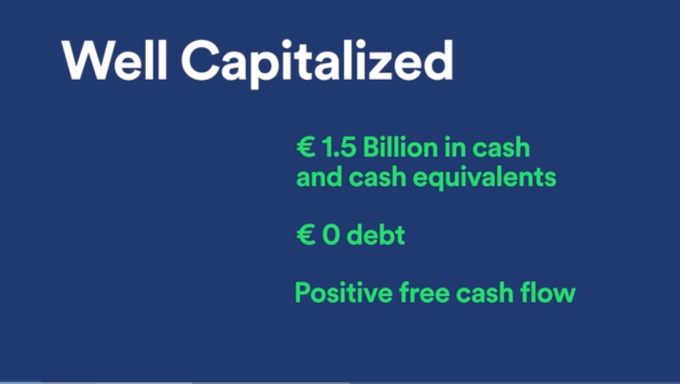
  • List Without Selling Shares  – Spotify has plent of money with $1.3 billion in cash and securities, has no debt, and has positive free cash flow
  • Liquidity – Investors and employees can sell on public market and sell at time of their choosing, while new investors can join in
  • Equal Access – Bankers won’t get preferred access. Instead, the whole world will get access at the same time
  • Transparency – Spotify wants to show the facts about its business to everyone, rather than giving more info to bankers
  • Market-Driven Price Discovery – Rather than setting a specific price with bankers, Spotify will let the public decide what it’s worth

It’s unclear exactly what Spotify will be valued at on April 3rd, but during 2018 its shares have traded on the private markets for between $90 and $132.50, valuing the company at $23.4 billion at the top of the range. The music streaming service now has 159 million monthly active users (up 29 percent in 2017) and 71 million paying subscribers (up 46 percent in 2017.

During CEO Daniel Ek’s presentation, he explained that Spotify emerged as an alternative to piracy by convenience to make paying or ad-supported access easier than stealing. Now he sees the company as the sole leading music streaming service that’s a dedicated music company, subtly throwing shade at Apple, Google, and Amazon.

You can follow along with the presentation here.

15 Mar 2018

CrunchMatch Connects Investors and Founders at Disrupt SF 2018

Disrupt San Francisco 2018 promises to be our biggest Disrupt event ever — with three times the convention floor space and more than 10,000 attendees. That’s incredibly exciting, and it also presents a challenge for startup founders and tech investors eager to network and connect. Who wants to waste valuable time talking to the wrong people? Enter CrunchMatch for the win.

CrunchMatch — a free, business match-making service — efficiently connects founders and investors with similar business interests and profiles. Founders who register for Disrupt provide information on their company – category, stage, location, funding status. Investors fill out their profiles with investment categories, preferred funding stage and geographic locations. Our partner, Brella, works its algorithmic magic to match founders and investors based on the suitability of their profiles.

The CrunchMatch service suggests meetings and sends out invitations (which recipients can easily accept or decline). The service also lets you reserve dedicated, private meeting spaces in the CrunchMatch Lounge where you can network in comfort.

CrunchMatch debuted last year at Disrupt SF 17 and met with resounding success. The service facilitated more than 1,300 meetings, and we expect to triple that number at Disrupt SF 2018. Consider what Michael Kocan, an early-stage investor at Trend Discovery, had to say about his experience using CrunchMatch.

“I get the most value from Disrupt at the intersection of CrunchMatch and Startup Battlefield. I can quickly schedule a meeting for later that day. I had over 35 meetings with startups that I pre-vetted using CrunchMatch, and I made a significant investment in one.”

What’s more, 97 percent of participants reported that they would use CrunchMatch again.

And why not make the most efficient use of your networking time? You’ll need every minute you can get to take in the sheer breadth of Disrupt SF 18’s three programming-packed days, which include four different stages, Startup Battlefield, the Virtual Hackathon, Startup Alley, interactive workshops, Q & A Sessions and 12 tech category tracks: Artificial Intelligence, Augmented/Virtual Reality, Blockchain, BioTech, FinTech, HealthTech, Investor Topics, Justice/Diversity, Mobility, Privacy/Security, Robotics and Space (as in “outer”).

Disrupt SF 2018 takes place in San Francisco on Sept. 5-7 at Moscone Center West. Early-stage startup founders will introduce their game-changing innovations to the world, and investors will look to finance them. CrunchMatch simplifies the connection process, and the only way to access the service is to purchase Founder, Investor or Insider Passes. Don’t miss out. Buy your passes today at super early bird prices.


15 Mar 2018

Blue Apron will start selling its meal kits in stores

Blue Apron announced today it will bring its meal kits to stores. The news arrives at a time when the meal kit subscription company is struggling to grow and retain its users, who are often put off by the expense of the direct-shipped meal kits and the need to commit to an ongoing subscription. In recent months, Blue Apron has also laid off hundreds, lost its CEO, and has continued to post disappointing earnings.

In February, the company reported its subscriber base had fallen to 746,000, down from 856,000 the prior quarter, and down from its peak of one million last year.

Earlier this month, its stock took another hit as Weight Watchers announced its own plans to sell meal kits in stores. Walmart had also said the same, adding that its meal kits would be available via its online grocery service for curbside pickup or delivery. Other grocers, like Albertsons and Kroger, are now selling meal kits, too. Plus, Amazon has been testing out meal kits on its site for some time, too.

That means Blue Apron, which has already ceded some portion of its users to rival services like HelloFresh, the second-biggest meal kit company in the U.S., is now not only facing threats from competitors with similar offerings, but has to take on a plethora of meal kit alternatives sold in stores and from the two largest retailers, Amazon and Walmart. And many competitors’ kits would cost less and not require ongoing subscription payments.

In an emailed statement, a Blue Apron spokesperson says the new in-store meal kit offering will make its brand “more accessible to homes across the country,” and “will provide the unique and consistent product experience that our customers have come to know and expect from us, including high-quality ingredients and chef-driven recipes.”

The in-store kits could also serve as a user acquisition strategy for Blue Apron’s subscription business, as they’d offer consumers a way to sample the recipes ahead of signing up for shipments.

The company didn’t say which grocery stores would sell its kits, but did say that some of the retailers it’s talking to already sell their own kits, according to The WSJ’s interview with new CEO Brad Dickerson. Blue Apron also didn’t say what the in-store kits would cost, but noted it expects them to arrive on shelves before year-end.

Meal kits aren’t the only way Blue Apron is attempting to grow its business in the wake of increased competition. It also in January began selling a Whole30 meal plan, focused on wholesome foods that align with partner Whole30’s nutrition guidelines. And it launched Mediterranean Diet recipes to cater to those looking for other ways of healthy eating.

Blue Apron’s stock is up 8 percent on the news, as the time of writing.

15 Mar 2018

Android Wear is becoming ‘Wear OS by Google’

Android Wear hasn’t exactly been the rocket ship of success Google was no doubt banking on when it was launched four years ago this week.

After a slow start, the company issued a 2.0 refresh of the wearable operating system in early 2017 — but the update was fairly minimal and didn’t appear to move the needle. A few months after the new version was announced, Tizen overtook Wear in global market share, courtesy of Samsung’s adoption of the open operating system.

Perhaps Wear needs a new coat of paint — or at the very least, a new name. It’s getting the latter today. Google announced via blog post that Android Wear is now Wear OS. Or, more accurately, Wear OS  by Google.

“We’re announcing a new name that better reflects our technology, vision, and most important of all—the people who wear our watches,” Wear OS Director of Product, Dennis Troper said in the post. “We’re now Wear OS by Google, a wearables operating system for everyone.”

Watch making conglomerate Fossil Group appears to be behind the spirit of the rebrand.

In 2017, Fossil Group nearly doubled its wearables business to more than $300 million, including 20 percent of watch sales in Q4,” the company’s Chief Strategy and Digital Officer, Greg McKelvey said in a statement provided to TechCrunch. “And we expect to see continued growth in the category. Many of our smartwatch customers are iOS users, so we are confident in and eager to see the added benefits that both Android and iOS phone users globally will experience as Wear OS by Google rolls out in 2018.”

The news comes ahead of BaselWorld, next week’s big watch and jewelry show in Switzerland. For now, the change doesn’t appear to involve much more than the rename, though the company may be saving additional details for the big show. Android Wear hasn’t been much of a focus at Google in recent years. The company added iOS compatibility back in 2015, casting the net wider than Apple’s offering. And while more than 50 watches have been released for the operating system, it has yet to take the wearables world by storm.

Perhaps the rebrand marks a new-found focus at the company, as it looks toward smartwatches as rare bright light in the stagnating wearables category. Then again, perhaps a name change is just a name change. The Wear OS name will be rolling out to the app and watch over the course of the next few weeks, according to the company.

15 Mar 2018

GM will build its production autonomous Cruise cars at Michigan assembly plant

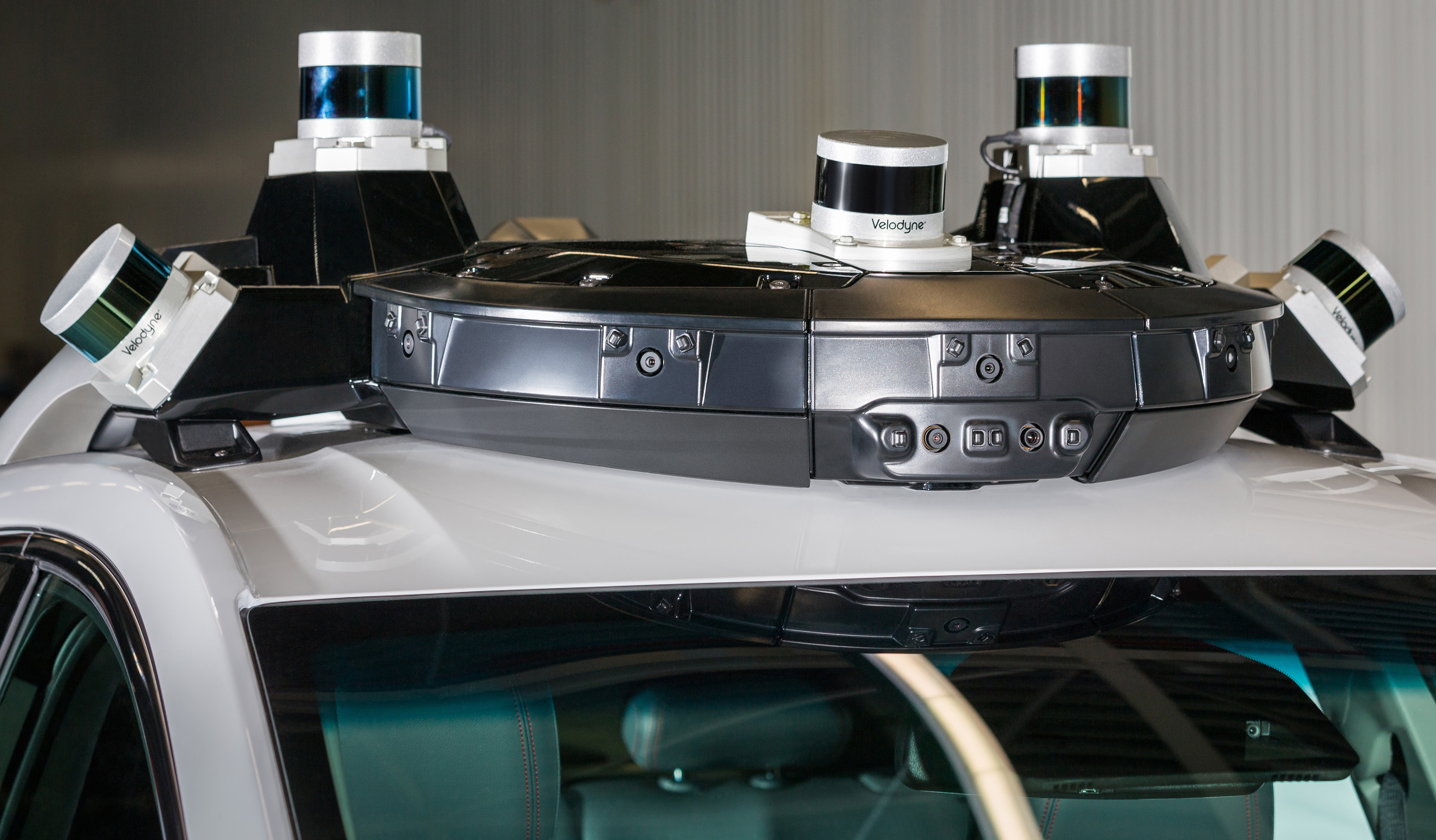
GM revealed today that it’s going to be starting proper production of its Cruise autonomous vehicle at its Orion township assembly plant in Michigan, with the roof modules for the vehicles assembled nearby at its Brownstowne battery assembly plant. Alongside the Cruise AV, Orion will also continue to build the Bolt EV, as well as the Chevrolet Sonic .

Alongside the announcement, GM reiterated its intent to commercialize the autonomous vehicle work it’s been doing through its self-driving subsidiary Cruise along with its own self-driving engineering and manufacturing resources. The production version of the Cruise AV, revealed earlier this year, doesn’t have any steering wheel or brake or gas pedals.

To get the facilities ready for Cruise AV production, GM is investing more than $100 million in both Orion and Brownstone, and production of the roof modules for the vehicles has already started, according to the automaker, with actual vehicle production expected to begin in 2019. Cruise’s test vehicles, which are now three generations old, have also been assembled at the Orion facility.

This news comes on the heels of a report from The Information that claims Cruise’s path to production self-driving has not been as smooth as GM would like you to believe.