14 Mar 2018

Wikipedia wasn’t aware of YouTube’s conspiracy video plan

YouTube has a plan to combat the abundant conspiracy theories that feature in credulous videos on its platform; not a very good plan, but a plan just the same. It’s using information drawn from Wikipedia relevant to some of the more popular conspiracy theories, and putting that info front and center on videos that dabble in… creative historical re-imaginings.

The plan is being criticized from a number of quarters (including this one) for essentially sloughing responsibility about this harmful content on to another, volunteer-based organization. But it turns out that’s not even a responsibility that Wikipedia even know it was taking on.

Wikimedia Foundation exec director Katherine Maher notes that YouTube did this whole thing “independent” of their organization, and an official statement from Wikimedia says that it was “not given advance notice of this announcement.”

Everyone on the Wikimedia side is taking this pretty much in stride, however, expressing happiness at seeing their content used to drive the sharing of “free knowledge,” but it does seem like something that YouTube could’ve flagged in advance before announcing the new feature on stage at SXSW.

Maybe YouTube couldn’t say anything because the Illuminati bound them to secrecy… because of the chemtrails.

14 Mar 2018

Voicery makes synthesized voices sound more like humans

Advancements in A.I. technology has paved the way for breakthroughs in speech recognition, natural language processing, and machine translation. A new startup called Voicery now wants to leverage those same advancements to improve speech synthesis, too. The result is a fast, flexible speech engine that sounds more human – and less like a robot. Its machine voices can then be used anywhere a synthesized voice is needed – including in new applications, like automatically generated audiobooks or podcasts, voiceovers, TV dubs, and elsewhere.

Before starting Voicery, co-founder Andrew Gibiansky had worked at Baidu Research, where he led the deep learning speech synthesis team.

While there, the team developed state of the art techniques in the field of machine learning, published papers on speech constructed from deep neural networks and artificial speech generation, and commercialized its technology in production-quality systems for Baidu.

Now, Gibiansky is bringing that same skill set to Voicery, where he’s joined by co-founder Bobby Ullman, who previously worked at Palantir on databases and scalable systems.

“In the time that I was at Baidu, what became very evident is that the revolution in deep learning and machine learning was about to happen to speech synthesis,” explains Gibiansky. “In the past five years, we’ve seen that these new techniques have brought an amazing gains in computer vision, speech recognition, and in other industries – but it hasn’t yet happened with synthesizing human speech. We saw that if we could use this new technology to build speech synthesis engines, we could do it so much better than everything that currently exists.” 

Specifically, the company is leveraging newer deep learning technologies to create better synthesized voices more quickly than before.

In fact, the founders built Voicery’s speech synthesis engine in just two-and-half months.

Unlike traditional voice synthesizing solutions, where a single person records hours upon hours of speech that’s then used to create the new voice, Voicery trains its system on hundreds of voices at once.

It can also use varying amounts of speech input from any one person. Because of how much data it takes in, the system sounds more human as it learns the correct pronunciations, inflections and accents from a wider variety of source voices.

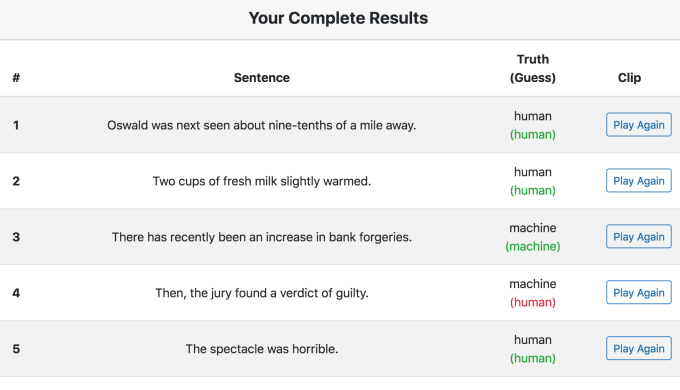
The company claims its voices are nearly indistinguishable from humans – it even published a quiz on its website that asks visitors to see if they can identify which ones are synthesized and which are real. I found that you’re still able to identify the voices as machines, but they’re much better than the machine reader voices you may be used to.
Of course, given the rapid pace of technology development in this field – not to mention the fact that the team built their system in a matter of months – one has to wonder why the major players in voice computing couldn’t just do something similar with their own in-house engineering teams.

However, Gibiansky says that Voicery has the advantage of being the first out of the gate with its technology that capitalizes on the machine learning advancements.

“None of the currently published research is quite good enough for what we wanted to do, so we had to extend that a fair bit,” he notes. “Now we have several voices that are ready, and we’re starting to find customers to partner with.”

Voicery already has a few customers piloting the technology, but nothing to announce at this time as those talks are in various stages.

The company is charging customers an upfront fee to develop a new voice for a customer, and then charges a per usage fee.

The technology can be used where voice systems exist today, like in translation apps, GPS navigation apps, voice assistant apps, or screen readers, for example. But the team also sees the potential for it to open up new markets, given the ease of creating synthesized voices that really sound like people. This includes things like synthesizing podcasts, reading the news (think: Alexa’s “Flash Briefing”), TV dub-ins, voices for characters in video games, and more.

“We can move into spaces that fundamentally haven’t been using the technology because it hasn’t been high enough quality. And we have some interest from companies that are looking to do this,” says Gibiansky.

Voicery, based in San Francisco, is bootstrapped save for the funding it has received by participating in Y Combinator’s Winter 2018 class. It’s looking to raise additional funds after YC’s Demo Day.


14 Mar 2018

Reddit set to begin rolling out promoted post ads in their native apps

For how massive Reddit is in terms of user base, it’s really gotten by for a long time having a product that advanced about as quickly as Drudge Report. That’s been changing lately, as the company has looked to mature their platform with user-centric features that make surfing content easier and keep everything a bit more connected.

The company didn’t raise $200 million from top investors just because they thought the company could deliver memes more beautifully. The company has — in fact — barely touched advertising, and few entities know more about its users interests than Reddit .

Next week, the company will launch native promoted post ads on its Reddit iOS app with an Android following soon after. The company informed advertisers of this in an email, MarketingLand reports.  The apps have had rocky starts but have proven to offer a vastly improved user experience over what came before it. There are still some blind spots here and there, but for how slowly the company moved previously, the apps are fairly impressive.

Few user bases are more vocal or hesitant to change than the hundreds of million of monthly active Redditors, and advertisers are likely similarly hesitant to get involved with a platform that has churned out controversy at a steady pace over the past few years. Nevertheless, Reddit has already set its course towards building out a better ads product and native promoted ads represent a big step towards that.

14 Mar 2018

Equifax exec charged with insider trading, selling shares ahead of hack news

Former Equifax exec Jun Ying has been charged with insider trading, according to the Securities and Exchange Commission. Ying is accused of knowing that Equifax had been hacked and selling company shares before the public was notified.

Ying, who was “next in line to the be company’s global CIO, allegedly used confidential information entrusted to him by the company to conclude that Equifax had suffered a serious breach,” says the SEC release. He sold $1 million in shares and avoided a potential loss of $117,000.

Following the revelation of a widespread hack at the credit reporting agency, Equifax shares took a tumble on the stock market. Shares were above $142 and quickly fell to beneath $93 in the subsequent days.

Ying wasn’t the only employee who sold shares, resulting in several execs getting accused of insider trading. TechCrunch wrote something at the time about different executives, and received this defense from Equifax, particularly with regards to the CFO.

“As announced in the press release, Equifax discovered the cybersecurity incident on Saturday, July 29. The company acted immediately to stop the intrusion.

The three executives who sold a small percentage of their Equifax shares on Tuesday, August 1, and Wednesday, August 2, had no knowledge that an intrusion had occurred at the time they sold their shares.”

14 Mar 2018

Google explores how light fields shape VR environments in new free app

Lighting can make or break the right photo — when it comes to static environments inside virtual reality that users can move around in, this becomes exponentially more true.

Today, Google released a new app for VR devices focused on helping users make sense of “light fields.” They’ve also got a blog post running down some of the research work they’re doing.

Light fields — in a practical sense — are basically different perspectives of a point in space based on how that lighting looks from that angle. If you look at something like your phone screen, part of what makes it look realistic are how images reflect off of it. Most physical objects don’t offer so clear a mirror of the world around it, but even things like your own skin can have a dramatically different looking texture based on where your eyes are.

In a game engine-rendered world, if you have enough compute power you can reflect the hell out of everything to varying levels of success. When it comes to light fields based on real-world camera capture, companies like Google are using multiple cameras to capture multiple perspectives of objects and infer the perspectives between the lenses. With this you can get perspective of objects that move with you with lighting that changes as you move your head.

It’s a complicated way of saying that real-world scenarios look a lot more realistic and just… better. That’s just my take on it, but if you want to read more on how the Google sees Google’s new app, “Welcome to Light Fields” seeks to educate users on what exactly light fields are and how important the technology could be to unlocking more pleasant-feeling virtual reality experiences. The app seems to consist of a number of fairly simple scenarios where users can walk around and observe how light changes these environments.

The app is available for the HTC Vive, Oculus Rift and Windows Mixed Reality platforms. If you’re wondering why the company left out its own Daydream platform, it’s because you really need positional tracking in order to see what’s happening with light fields. Daydream will be gaining that tracking soon with the launch of Lenovo’s standalone 6DoF headset, but we’re still waiting on that one to go on sale.

Light fields present a number of technical issues for developers that go beyond just capturing them; chief among the issues is bandwidth. Light fields turn every file into a potentially massive endeavor to ship easily. For the photo environments Google seems to be playing with here, it’s still difficult enough, but video files that are just a few minutes long can stretch into the terabytes quite quickly, so there are clearly still some things to figure out here.

14 Mar 2018

Circle launches a Coinbase competitor in the U.S.

Circle is launching Circle Invest in the U.S. except in NY, MN, HI and WY. The app is now available in the App Store and Play Store and lets you instantly trade the most popular cryptocurrencies without any fee.

Circle Invest isn’t exactly an exchange as the app hides most of the complexities that you can find on full-fledged exchanges. You can’t submit limit orders or look at the order book. You can only deposit and withdraw money, buy and sell cryptocurrencies at market prices.

Circle Invest currently supports Bitcoin, Bitcoin Cash, Ethereum, Ethereum Classic and Litecoin. The company will need to overcome some regulatory challenges to roll out its product in the last four states.

In other words, Circle Invest is more like Coinbase — a simple service that lets you buy cryptocurrencies without any complex option. But the main difference with Circle Invest is that the new service doesn’t have any fee.

ACH transfers from your bank account to your Coinbase are free, but exchanging USD on your Coinbase account into a cryptocurrency costs 1.49 percent.

On Circle, ACH transfers are also free, and you can start buying cryptocurrencies instantly for transfers below $10,000. If you transfer more than that, you’ll have to wait a few days. After that, exchanging USD on your Circle account into cryptocurrencies is free.

But what about spread? Yes, the price is different if you buy or sell bitcoin (for instance). Circle doesn’t try to hide that and says that you can expect a 1.5 to 2 percent spread between buy and sell price.

Just like on every stock market, nothing is free even if there isn’t any fee. Coinbase also says that you can expect a spread of 0 to 2 percent.

While most people already know Circle for its consumer-facing Circle Pay app, the company operates a trading desk called Circle Trade. This product connects to multiple exchanges and provides liquidity to those exchanges and large cryptocurrency investors.

According to a recent Fortune report, Circle Trade manages $2 billion a month in transactions and recently generated $60 million in revenue in just three months.

And this is key to understanding Circle’s strategy. The company also acquired Poloniex and will launch its own full-fledged exchange soon. All of those products are powered by the company’s own over-the-counter trading desk.

While companies like Robinhood or Revolut also promise zero-fee cryptocurrency trading, they don’t have their own exchange. They only act as a broker with other exchanges. Circle is slowly building a full-stack blockchain company, from the trading desk to the peer-to-peer payment app in fiat currencies.

Disclosure: I own small amounts of various cryptocurrencies.

14 Mar 2018

Robinhood hires Josh Elman as VP of product, who’ll stay at Greylock

Zero-fee stock trading app Robinhood is getting some product firepower as it dives into cryptocurrency and weighs platform aspirations. Investor Josh Elman will join Robinhood as its VP of product while remaining a partner at Greylock.

With 4 million registered users, $176 million raised and a $1.3 billion valuation, the five-year-old fintech startup is shifting from a period of finding product-market fit to building a serious business. Elman’s experience with rapidly rising companies like Facebook, Twitter and LinkedIn could help guide Robinhood toward maturity.

“In January, I started talking with a few of my partners about how I want to spend the next decade of my professional life. What gets me the most energized is when I can dig in on product with a hyper-growth company. To that end, I’m joining Robinhood to lead product, where we will continue building powerful tools to give everyone broader access to our financial system,” Elman tells TechCrunch. “I am going to continue my role at Greylock as a venture partner, and will continue to represent Greylock on the boards in my portfolio. I am grateful to my partners for their support, and excited for what is next.”

Greylock has always been known as a fund run by veteran operators like Reid Hoffman, who joined as a partner while still the CEO of LinkedIn . A Greylock spokesperson tells me, “Josh is a sharp product-thinker who has backed excellent entrepreneurs and innovative companies that we are proud to have as part of the Greylock portfolio. We are supportive of Josh as he takes on this new operating role, and look forward to continuing our work with him as a venture partner.”

The new role could create some conflicts, though. Greylock recently invested in cryptocurrency exchange Coinbase’s August Series D. But Robinhood just launched its own cryptocurrency trading platform in December, undercutting Coinbase’s 1.5 percent to 4 percent fee on trades in the U.S. by charging zero commission. Coinbase might worry that plans it shares with Greylock could make it back to Robinhood.

Read our post on the roll-out of Robinhood Crypto

Elman has dealt with this before, having hyped text fiction app Hooked whose seed round Greylock funded before it backed competing app Yarn’s parent company Mammoth Media with Elman joining its board.

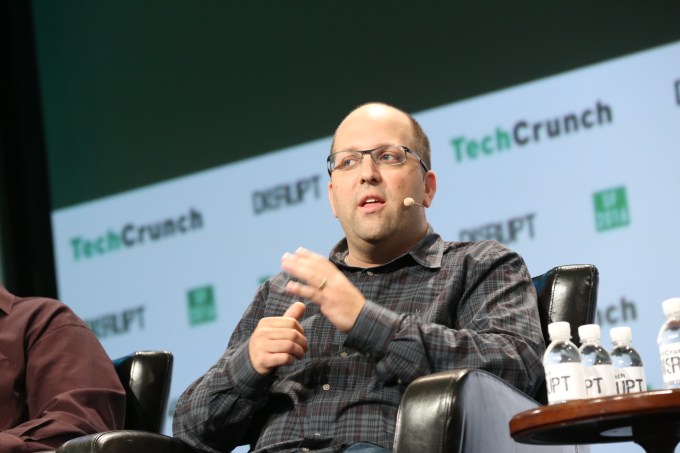
Josh Elman at TechCrunch Disrupt SF

An eye for interfaces

Elman began his career after a bachelor’s degree in symbolic systems with a focus on human computer interaction at Stanford in 1997. Elman worked on product for music company RealNetworks, and growth and job boards for LinkedIn before joining custom merchandise startup Zazzle . His big break came working on the launch of the Facebook Connect platform. He was then a PM at Twitter until joining Greylock as a partner in 2011.

In my experience, Elman is one of the best investors at spotting emerging social trends and helping companies find winning product strategies. Despite being in his 40s, he’s quick to dive into teen-focused social apps, understanding and funding them before they blow up. He was on the boards of Musically (sold to Toutiao) and SmartThings (sold to Samsung), plus was one of the few investors in honest feedback app tbh, which sold to Facebook. He’s currently on the boards of Medium, Houseparty and Discord — which are redefining blogging, video chat and video game communities.

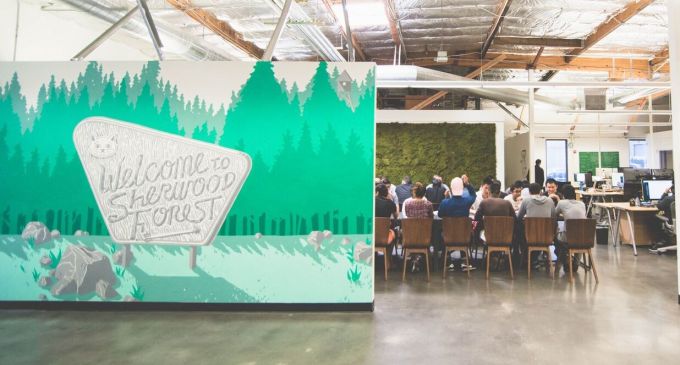
Robinhood’s Bay Area HQ

Robinhood could use Elman’s skills as it tries to unite the traditional stock and cryptocurrency worlds using free trades up front while monetizing with subscription bonus features. The way Facebook and Twitter turned friends and thought leaders into a feeds of content to consume, Elman could assist as Robinhood does the same to financial markets.

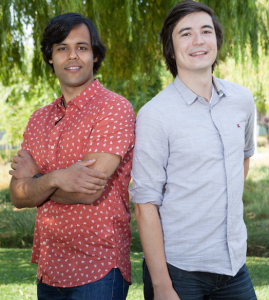
Robinhood founders Baiju Bhatt (left) and Vladamir Tenev (right)

“I’ve known Josh for a couple years now and he’s always struck me as one of the most thoughtful product builders,” says Robinhood co-founder and co-CEO Baiju Bhatt. (Disclosure: I know Bhatt and his co-founder Vlad Tenev from

college). “We’re lucky to have him lead our product initiatives and join our leadership team as we take Robinhood to the next level.” Robinhood now has 170 team members across the Bay Area and Orlando, Florida. It’s planning to hire a VP for engineering and for customer support while scaling those teams, as well as legal and biz dev.

Having jumped the regulatory and engineering hurdles to offer cost-efficient stock trading, Robinhood has a huge opportunity to become the backbone of a new generation of fintech apps. The company declined to comment, but the startup could one day build APIs so other products could interact with your Robinhood balance and bank account. Elman worked with Facebook to let partners piggyback on your identity, and he might have ideas for turning Robinhood into a fintech platform.

14 Mar 2018

Cryptocurrency ad bans are a step in the right direction

Google just banned cryptocurrency and ICO ads, a move that follows Facebook decision to do the same. The language is stark: you are no longer allowed to advertise “Cryptocurrencies and related content (including but not limited to initial coin offerings, cryptocurrency exchanges, cryptocurrency wallets, and cryptocurrency trading advice).”

This is good news.

In the Wild West of crypto things can head in one of two ways. First, the industry can ignore rationality and decorum and pump and dump ICOs all day long until the SEC, the FBI, and European authorities shut down every single one. Or, if the industry takes the slow and steady route, builds self-regulatory bodies, and avoids scammy pump-and-dump tactics then perhaps the industry can grow into maturity.

Currently the methods for token sale marketing are ridiculous. Most recently I spotted a token advertisement that featured a scantily clad young lady in a compromising position – all in an effort to see financial instruments. Further, “crypto geniuses” like James Altucher have polluted all of our feeds for the past few months with strange claims and spurious product offerings. Enough is enough.

The sad part is that cryptocurrencies have to become boring before they can work. I always go back to the early days of Linux. There were flame wars, screeds, and practitioners of dark FUD. No one could agree if KDE or Gnome was a better desktop environment and woe were you if you picked the wrong one. The world was full of angry, aggressive, and passionate people.

Fast forward a few decades and now those same people are typing softly in cubicles making while making millions of dollars. Their early zeal, while seemingly silly, paid off. And now Linux is completely boring, a tool programmers use to spin up and down servers in a heartbeat.

Cryptocurrency has to head in this same direction.

Until it is hidden, until it is unclear where the blockchain stops and the rest of the world starts, and until we rid ourselves of the get-rich-quickers and the outright scams, the industry will not rise to the rank it deserves. Fools and their money are soon parted. Google and Facebook is right to do something to protect them.

14 Mar 2018

Elon Musk’s ‘media empire’ staffed by ex-Onion writers might be called ‘Thud!’

If you can believe anything Elon Musk tweets, then ‘Thud!’ is the name of the media venture that the multi-CEO and space person is starting up, staffed by former Onion writers he’s poached and doing something with comedy.

Musk apparently wanted to buy The Onion initially, but I guess that fell through and instead he went about assembling a team of funny people with access to keyboards to do whatever he’s doing on his own. ‘Thud(!),’ I guess.

I say this all with a degree of uncertainty (including the ‘might be’ in the headline to this article) because it’s very hard to tell when Musk is joking, trolling or otherwise playing with the media since we breathlessly report almost everything he does on social media (yes I do this, too).

We’ve reached out to Elon to find out if “Thud!” is something legit or if he was just being impish on Twitter as he is wont to do on occasion and will update this post in case he provides any cryptic hints either way.

Regardless of what it’s called, the project and the Onion staff hires seem real enough, so expect something involving jokes and media from Musk, I guess when he’s not busy building a Hyperloop, establishing a colony on Mars or making electric cars a mass-market reality.

14 Mar 2018

Samsung partners with uBreakiFix for same-day repairs

Apple’s retail footprint gives the company all sorts of advantages when it comes to consumer outreach. As frustrating as the Genius Bar experience can be, quick repairs are pretty high on that list. Without the same kind of brick and mortar presence, Samsung’s looking to outside partners to offer up quick turnaround for users with battered devices.

In addition to offering up the service with certain Best Buy locations, the world’s biggest smartphone maker announced today that it’s struck deal with uBreakiFix, to bring the offering to 300+ of the repair chain’s locations.

The deal covers a number Samsung’s flagships, starting with the Note 5 and Galaxy S6, all the way up to the new S9 (which hit retail later this week). The Samsung Care locations can replace screens and batteries and fix ports and cameras — with most repairs getting turned around in under two hours, according tot he company. You can find the list of locations and book an appointment over at uBreakiFix.

The deal should cover most of the major cities in the US, and the companies plan to roll the offering out to 200 additional locations by the beginning of next year.