Month: July 2018

27 Jul 2018

Russian hackers already targeted a Missouri senator up for reelection in 2018

A Democratic senator seeking reelection this fall appears to be the first identifiable target of Russian hacking in the 2018 midterm race. In a new story on the Daily Beast, Andrew Desiderio and Kevin Poulsen reported that Democratic Missouri Senator Claire McCaskill was targeted in a campaign-related phishing attack. That clears up one unspecified target from last week’s statement by Microsoft’s Tom Burt that three midterm election candidates had been targeted by Russian phishing campaigns.

The report cites its own forensic research in determining the attacker is likely Fancy Bear, a hacking group believed to be affiliated with Russian military intelligence.

“We did discover that a fake Microsoft domain had been established as the landing page for phishing attacks, and we saw metadata that suggested those phishing attacks were being directed at three candidates who are all standing for elections in the midterm elections,” Burt said during the Aspen Security Forum forum. Microsoft removed the domain and noted that the attack was unsuccessful.

Sen. McCaskill confirmed that she was targeted by the attack, which appears to have taken place in August 2017, in a press release:

“Russia continues to engage in cyber warfare against our democracy. I will continue to speak out and press to hold them accountable. While this attack was not successful, it is outrageous that they think they can get away with this. I will not be intimidated. I’ve said it before and I will say it again, Putin is a thug and a bully.”

TechCrunch has reached out to Sen. McCaskill’s office for additional details on the incident. McCaskill, a vocal Russia critic, will likely face Republican frontrunner and Trump pick Josh Hawley this fall.

27 Jul 2018

Russian hackers already targeted a Missouri senator up for reelection in 2018

A Democratic senator seeking reelection this fall appears to be the first identifiable target of Russian hacking in the 2018 midterm race. In a new story on the Daily Beast, Andrew Desiderio and Kevin Poulsen reported that Democratic Missouri Senator Claire McCaskill was targeted in a campaign-related phishing attack. That clears up one unspecified target from last week’s statement by Microsoft’s Tom Burt that three midterm election candidates had been targeted by Russian phishing campaigns.

The report cites its own forensic research in determining the attacker is likely Fancy Bear, a hacking group believed to be affiliated with Russian military intelligence.

“We did discover that a fake Microsoft domain had been established as the landing page for phishing attacks, and we saw metadata that suggested those phishing attacks were being directed at three candidates who are all standing for elections in the midterm elections,” Burt said during the Aspen Security Forum forum. Microsoft removed the domain and noted that the attack was unsuccessful.

Sen. McCaskill confirmed that she was targeted by the attack, which appears to have taken place in August 2017, in a press release:

“Russia continues to engage in cyber warfare against our democracy. I will continue to speak out and press to hold them accountable. While this attack was not successful, it is outrageous that they think they can get away with this. I will not be intimidated. I’ve said it before and I will say it again, Putin is a thug and a bully.”

TechCrunch has reached out to Sen. McCaskill’s office for additional details on the incident. McCaskill, a vocal Russia critic, will likely face Republican frontrunner and Trump pick Josh Hawley this fall.

27 Jul 2018

Amazon may soon let you collaborate with others on Wish Lists

Amazon may soon be adding a feature consumers have wanted for years: collaborative wish lists. A number of people using Amazon.com and its mobile app recently spotted the option to “invite others” to their wish lists. This offers a URL that can be shared via text messages, email, social apps and more. Once clicked, the invitees can then both add and remove wish list items, alongside the wish list’s original owner.

The feature, while relatively minor, is something Amazon shoppers have been clamoring for. Parents want to be able to co-manage wish lists for their kids, while others – like friends, couples, party planners, family and friends – have also wanted to team up on lists of gift ideas for special occasions, such as birthdays, holidays, and various celebrations.

But there’s been some confusion over whether the feature was something Amazon was only testing, or if it was in the early stages of a rollout to all users.

Amazon declined to comment on its plans specifically, but did tell us this is a test with a “small number of customers.”

As one report from MacRumors noted, there are some Wish List features not everyone has, even if they’ve been opted in to the new collaborative lists test. For instance, some people will also see a conversation icon on the right side of the list’s page that allows list members to discuss items on the list with one another. Another ellipsis icon lets the original list creator manage the list’s membership.

So far, the feature has been spotted on the Amazon.com desktop and mobile website, and on iOS but not Android. It’s common for Amazon to launch new features on iOS first, however. That’s the case with the recent debut of Part Finder, which has launched publicly, but only on iOS to start.

Image credit: MacRumors

27 Jul 2018

Amazon may soon let you collaborate with others on Wish Lists

Amazon may soon be adding a feature consumers have wanted for years: collaborative wish lists. A number of people using Amazon.com and its mobile app recently spotted the option to “invite others” to their wish lists. This offers a URL that can be shared via text messages, email, social apps and more. Once clicked, the invitees can then both add and remove wish list items, alongside the wish list’s original owner.

The feature, while relatively minor, is something Amazon shoppers have been clamoring for. Parents want to be able to co-manage wish lists for their kids, while others – like friends, couples, party planners, family and friends – have also wanted to team up on lists of gift ideas for special occasions, such as birthdays, holidays, and various celebrations.

But there’s been some confusion over whether the feature was something Amazon was only testing, or if it was in the early stages of a rollout to all users.

Amazon declined to comment on its plans specifically, but did tell us this is a test with a “small number of customers.”

As one report from MacRumors noted, there are some Wish List features not everyone has, even if they’ve been opted in to the new collaborative lists test. For instance, some people will also see a conversation icon on the right side of the list’s page that allows list members to discuss items on the list with one another. Another ellipsis icon lets the original list creator manage the list’s membership.

So far, the feature has been spotted on the Amazon.com desktop and mobile website, and on iOS but not Android. It’s common for Amazon to launch new features on iOS first, however. That’s the case with the recent debut of Part Finder, which has launched publicly, but only on iOS to start.

Image credit: MacRumors

27 Jul 2018

Magic Leap details what its mixed reality OS will look like

Magic Leap just updated its developer documentation with a host of new details and imagery, sharing more specifics on how the company’s Lumin OS will look like on their upcoming Magic Leap One device.

It’s mostly a large heaping of nitty-gritty details, but we also get a more prescient view into how Magic Leap sees interactions with their product looking and the directions that developers are being encouraged to move in. Worth noting off the bat that these gifs/images appear to be mock-ups or screenshots rather than images shot directly through Magic Leap tech.

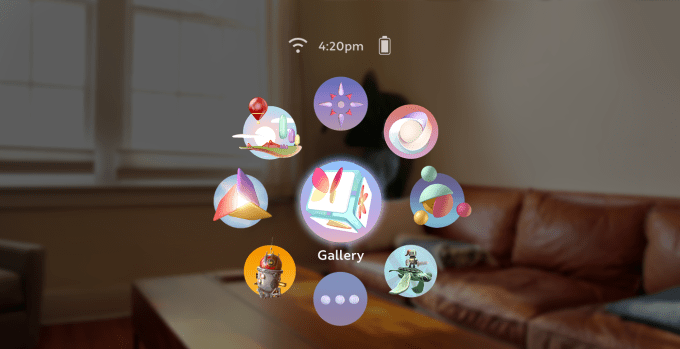
Alright, first, this is what the Magic Leap One home screen will apparently look like, it’s worth noting that it appears that Magic Leap will have some of its own stock apps on the device, which was completely expected but they haven’t discussed much about.

Also worth noting is that Magic Leap’s operating system by and large looks like most other operating systems, they seem to be well aware that flat interfaces are way easier to navigate so you’re not going to be engaging with 3D assets just for the sake of doing so.

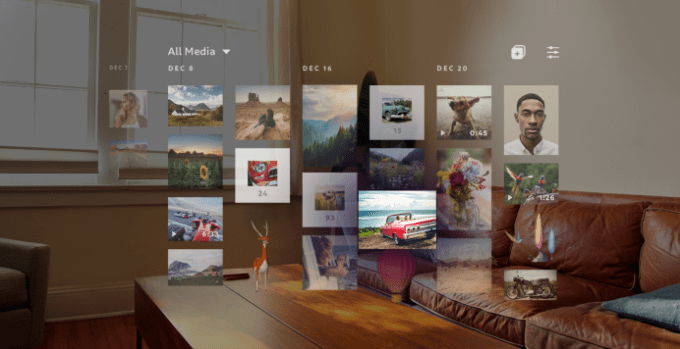
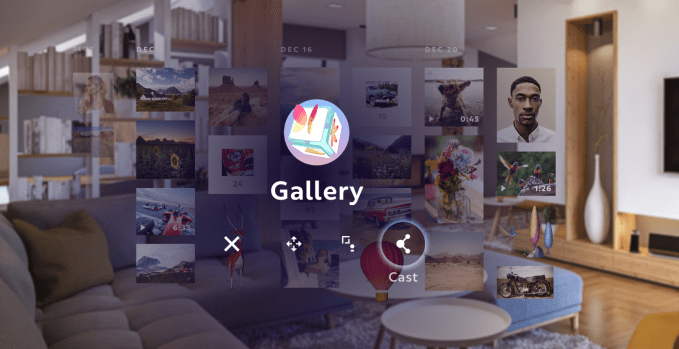
Here’s a look at a media gallery app on Magic Leap One.

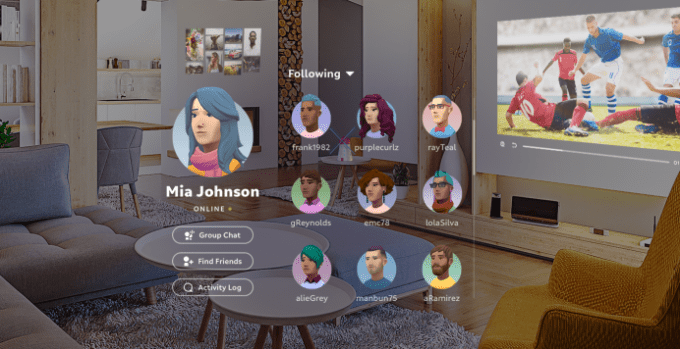
Here’s a look at an avatar system.

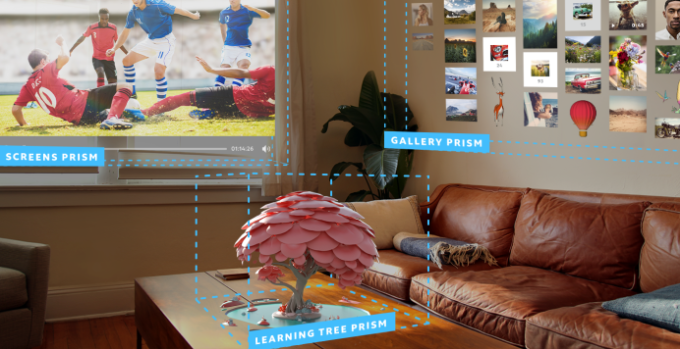
The company seems to be distinguishing between two basic app types for developers: immersive apps and landscape apps. Landscape apps like what you see in the image above, appear to be Magic Leap’s version of 2D where interfaces are mostly flat but have some depth and live inside a box called a prism that fits spatially into your environment. It seems that you’ll be able to have several of these running simultaneously.

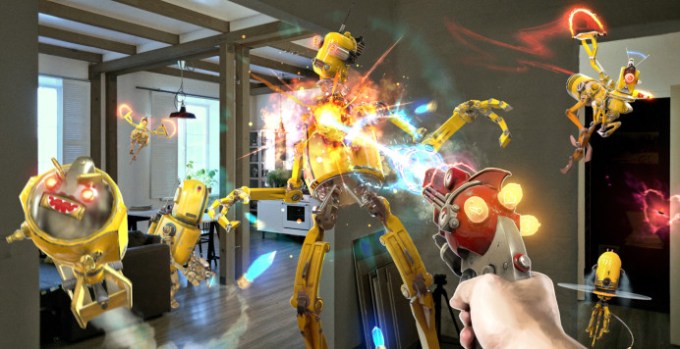
Immersive apps, on the other hand, like this game title, DrGrordbort— which Magic Leap has been teasing for years — respond to the geometry of the space that you are in and is thus called an immersive app.

Here’s a video of an immersive experience in action.

Moving beyond apps, the company also had a good deal to share about how you interact with what’s happening in the headset.

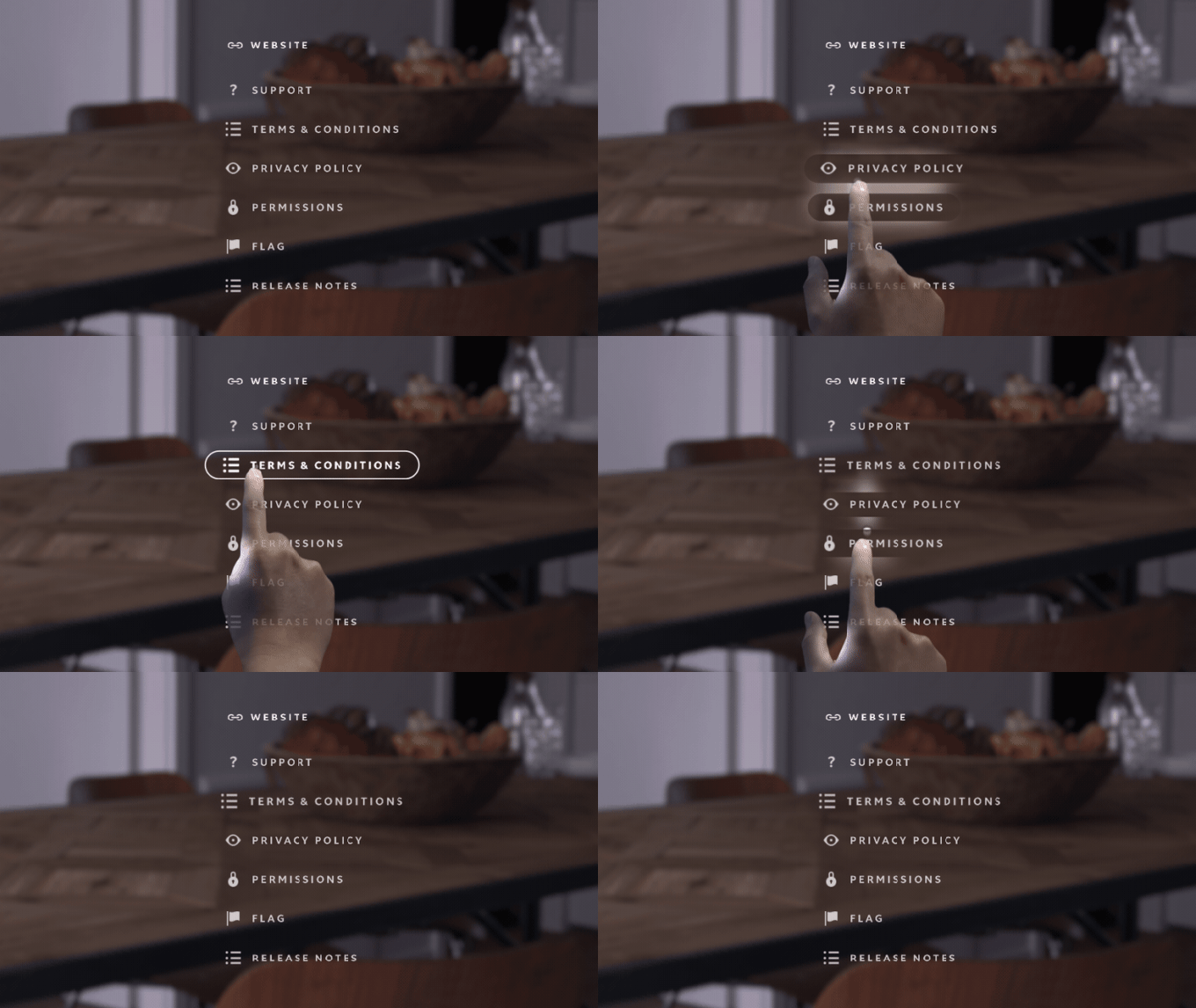
We got a look at some hand controls and what that may look like.

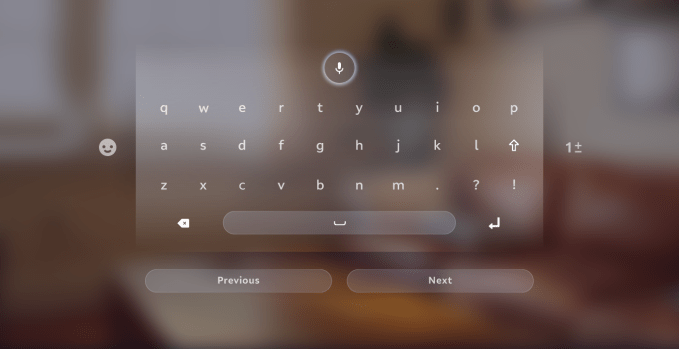
When it comes to text input, an area where AR/VR systems have had some struggles, it looks like you’ll have an appropriate amount of options. Magic Leap will have a companion smartphone app that you can type into, you can connect a bluetooth keyboard and there will also be an onscreen keyboard with dictation capabilities.

One of the big highlights of Magic Leap tech is that you’ll be able to share perspectives of these apps in a multi-player experience which we now know is called “casting,” apps that utilize these feature will just have a button that you can press to share an experience with a contact. No details on what the setup process for this looks like beyond that though.

Those are probably the most interesting insights, although there’s plenty of other stuff in the Creator Portal, but also here are a few other images to keep you going.

[gallery ids="1681679,1681678,1681680,1681705"]

It really seems like the startup is finally getting ready to showcase something. The company says that its device will begin shipping this summer and is already in developer hands. Based on what Magic Leap has shown here, the interface looks like it’ll feel very familiar as opposed to some other AR interfaces that have adopted a pretty heavy-handed futuristic look.

27 Jul 2018

Magic Leap details what its mixed reality OS will look like

Magic Leap just updated its developer documentation with a host of new details and imagery, sharing more specifics on how the company’s Lumin OS will look like on their upcoming Magic Leap One device.

It’s mostly a large heaping of nitty-gritty details, but we also get a more prescient view into how Magic Leap sees interactions with their product looking and the directions that developers are being encouraged to move in. Worth noting off the bat that these gifs/images appear to be mock-ups or screenshots rather than images shot directly through Magic Leap tech.

Alright, first, this is what the Magic Leap One home screen will apparently look like, it’s worth noting that it appears that Magic Leap will have some of its own stock apps on the device, which was completely expected but they haven’t discussed much about.

Also worth noting is that Magic Leap’s operating system by and large looks like most other operating systems, they seem to be well aware that flat interfaces are way easier to navigate so you’re not going to be engaging with 3D assets just for the sake of doing so.

Here’s a look at a media gallery app on Magic Leap One.

Here’s a look at an avatar system.

The company seems to be distinguishing between two basic app types for developers: immersive apps and landscape apps. Landscape apps like what you see in the image above, appear to be Magic Leap’s version of 2D where interfaces are mostly flat but have some depth and live inside a box called a prism that fits spatially into your environment. It seems that you’ll be able to have several of these running simultaneously.

Immersive apps, on the other hand, like this game title, DrGrordbort— which Magic Leap has been teasing for years — respond to the geometry of the space that you are in and is thus called an immersive app.

Here’s a video of an immersive experience in action.

Moving beyond apps, the company also had a good deal to share about how you interact with what’s happening in the headset.

We got a look at some hand controls and what that may look like.

When it comes to text input, an area where AR/VR systems have had some struggles, it looks like you’ll have an appropriate amount of options. Magic Leap will have a companion smartphone app that you can type into, you can connect a bluetooth keyboard and there will also be an onscreen keyboard with dictation capabilities.

One of the big highlights of Magic Leap tech is that you’ll be able to share perspectives of these apps in a multi-player experience which we now know is called “casting,” apps that utilize these feature will just have a button that you can press to share an experience with a contact. No details on what the setup process for this looks like beyond that though.

Those are probably the most interesting insights, although there’s plenty of other stuff in the Creator Portal, but also here are a few other images to keep you going.

[gallery ids="1681679,1681678,1681680,1681705"]

It really seems like the startup is finally getting ready to showcase something. The company says that its device will begin shipping this summer and is already in developer hands. Based on what Magic Leap has shown here, the interface looks like it’ll feel very familiar as opposed to some other AR interfaces that have adopted a pretty heavy-handed futuristic look.

27 Jul 2018

Anchor opens a Manhattan studio where people can podcast for free

One of the best things about podcasting is the low barrier of entry. Anyone with a computer, internet connection and a little know-how can launch one. It’s a wonderfully democratized medium. The downside, of course, is that most of them sound terrible. Just really, really awful. Apps are overrun with tinny, Skype recordings.

Anchor, the New York based start up behind the podcast editing app of the same name, is helping change that, one small show at a time. The company is opening up its Manhattan-based studio to a handful of podcasters later this summer through an online form. The startup says it originally developed the studio for in-house shows, but “After recording a few episodes and hearing the results, we realized that this space might be useful for others, too. So we decided to open the space up to members of the local podcasting community, too, and the Anchor Podcast Lab was born.”

Hosts will get access to a small studio with three mics and an iPad. Once finished, recorded files will be uploaded to their Anchor account for editing. Anchor is offering that all up for free, and it seems that users will still own their content. For now, at least, it appears to mostly be a clever little promotional tool for the company’s app.

Anchor says it’s also looking to expand into more cities at some point. Before they do, however, someone can probably make a pretty penny offering up a WeWork-style studio to podcasters looking to step up their game. Strike while the podcasting iron is hot. 

You can sign up to use the studio here.

27 Jul 2018

1 week until the deadline for Disrupt SF 2018’s Hackathon + new sponsor prizes

Are you a hacking speed demon of incomparable skill? Then we want you to submit your best hack to the Virtual Hackathon going down at TechCrunch Disrupt San Francisco 2018 on September 5-7. But you need to chug Red Bull like never before, because this is the last week you can submit your hack. The deadline is August 2, so no matter where you are in the world, get coding and submit your hack right here. C’mon, show us your mad skills.

Here’s how the Virtual Hackathon works. We’ve recruited some awesome judges — including a few from Pinterest and Slack — and they’ll scrutinize and score all submitted hacks. Based on the quality of the idea, technical implementation of the idea and the product’s potential impact, the judges will score each hack on a scale of 1-5.

The 100 top-scoring teams win up to five Innovator Passes to Disrupt SF 2018 for the members of their team. The top 30 teams move forward to the semi-finals and demo their hacks at Disrupt SF 2018. The top 10 semi-finalists will step onto The Next Stage to demo their product to the world. The “Best in Show” team will win a grand prize of $10,000 and be crowned TC Disrupt Virtual Hackathon’s first champion.

Of course, our Hackathon is famous for interesting hack contests from our sponsors, and the Virtual Hackathon has many additional thousands of dollars in cash and prizes on the line. Not to mention some wicked cool challenges from Sony Pictures and United Airlines, BYTON, TomTom, Viond, Visa, HERE Mobility and Amazon. Check them out and jump on in!

You have no time to waste if you want to participate in our first Virtual Hackathon and have a shot at free passes to TechCrunch Disrupt San Francisco 2018 on September 5-7 — and a whole lot more. The deadline for submitting your hack is August 2. That’s just one week away, so sign up today.

Now we’re thrilled to tell you about this contest sponsored by Novartis .

Novartis

The challenge: Help us empower heart failure patients and save lives!

Heart failure is a chronic debilitating and potentially life-threatening disease affecting 26 million people worldwide. It is one of the most difficult and chronic heart diseases to manage and the biggest cause of hospital admissions in adults aged over 65 in the Western world (Source: Heart Failure). As a result, treatment costs, including hospitalizations, are estimated at $108 billion a year worldwide. About 25 percent of patients die within a year of diagnosis and 50 percent within five years (Source: CDC and WHO).

What Novartis is looking for is a digital solution to help better monitor, manage and even predict worsening symptoms of heart failure. After a patient is diagnosed with heart failure, there are very few resources available to easily and unobtrusively monitor their heart health over time. Adherence to therapy and lack of health interventions are major reasons why patients’ health often deteriorates rapidly after a diagnosis. This solution should therefore drastically reduce the number of hospital re-admissions and deaths following an initial diagnosis.

Our challenge to you

Help us reimagine medicine by using your creativity and tech skills to develop a tool that easily captures important cardiovascular vitals and monitors symptom progression, empowering patients to detect potential problems earlier and seek treatment sooner. Novartis is looking for accessible, affordable and easy to use technologies that can seamlessly integrate into the life of a patient who has recently been diagnosed with heart failure. Use of personal digital devices (smartphones, smartwatches, etc.), telemedicine and innovative patient engagement are encouraged.

Novartis is not looking for diagnostic devices that (a) is not a standard consumer device (e.g. a non-commercial wearable) and (b) increases the burden and involvement of a patient in monitoring their disease.

What to submit?

  • An elevator pitch (50 words or less)
  • An awesome pitch deck (max 10 Slides)

Consider including the following:

  • Vision and value proposition
  • Problem being solved
  • Description of solution
  • The product (description of the technology)
  • Business model
  • Traction to date and roadmap to scale
  • The team
  • How will winning the Novartis TechCrunch Hackathon help you?
  • Link to your website (optional)
  • Additional information (optional)
  • Demo of product
  • Logo and other marketing materials

Things to think about:

  • Passive data collection
  • Ease of use; noninvasive
  • Software/tool that integrates with diffusive devices
  • Measuring health status and change-over-time, specifically health deterioration
  • Capturing shortness of breath (dyspnea) and respiratory rate
  • Capturing body fluid retention (edema)
  • Capturing physical activity, changes in energy and fatigue
  • Capturing heart vitals (bpm, arrhythmia, EKG)
  • Affordable for the general population
  • Not a diagnostic tool

Prizes:

  • First place: $15,000
  • Second place: $8,000
  • Third place: $3,500
  • Fourth place $2,500
  • Fifth place: $1,000

All five finalists will receive passes to TechCrunch and up to $500 of travel reimbursement. First prize includes access to a validation study (where appropriate), dedicated Novartis mentors, access to Novartis data lakes, free space and use of fabrication equipment, frequent encounters with industry leaders and investors through events, office hours and networking opportunities.

To contact our challenge administrators at HITLAB send an email to: challengeadmin@hitlab.org.

27 Jul 2018

MoviePass borrowed $5M to end yesterday’s outage

More bad news for subscription movie ticket service MoviePass, which acknowledged yesterday that there was an unidentified issue preventing people from using their MoviePass credit cards to get tickets.

A regulatory filing from parent company Helios & Matheson offers more insight about what happened. The filing (first spotted by Business Insider) announces a “demand note” of $6.2 million, including $5 million in cash that the company borrowed. It goes on to explain:

The $5.0 million cash proceeds received from the Demand Note will be used by the Company to pay the Company’s merchant and fulfillment processors. If the Company is unable to make required payments to its merchant and fulfillment processors, the merchant and fulfillment processors may cease processing payments for MoviePass, Inc. (“MoviePass”), which would cause a MoviePass service interruption. Such a service interruption occurred on July 26, 2018.

In other words, it looks like MoviePass wasn’t able to pay one of its service providers, which led to the outage. In order to make those payments, it borrowed $5 million.

This doesn’t exactly inspire confidence in MoviePass’ finances. A Helios & Matheson filing from earlier this month suggested that the company was looking to raise up to $1.2 billion in equity and debt financing to fund MoviePass’ operations and growth.

Meanwhile, although the service is best-known for offering access to unlimited movie tickets for $9.95 per month, the specifics of the pricing model have been changing pretty frequently.

27 Jul 2018

Disney and Fox shareholders give acquisition the green light

With Comcast officially out of the way, Disney’s buyout of 21st Century Fox assets just took another major step toward reality. Shareholders from both mega media companies have approved the $71.3 billion deal.

In a lovely bit of classic media performance art, shareholders from both boards took separate meetings at the New York Hilton this morning to vote on the deal.

In an interview with Variety, Fox general counsel called the deal a “transformative transaction that will enable us to unlock significant value for our stockholders.” It also means yet another major bit of major media consolidation among a withering major movie studio system, but at least the X-Men will get to fight the Avengers, I guess.

Some fun bits from these meetings, per Variety again: one shareholder at Disney said the company was overpaying for Fox, while another at Fox apparently walked up to the mic to say, “Nobody does it like Rupert Murdoch. I love Rupert Murdoch.”

I don’t know. We love who we love, I guess.

The deal has been brewing for more than half a year. Back in December, Disney offered up $52.4 billion for assets, including the 20th Century Fox movie studio, the FX network and more. Comcast helped hike up the price with a $65 billion offer back in June, but ultimately pulled out of the race a week or so back.

According to the companies, the deal is expected to close in early 2019, pending all of the standard regulatory approval.