Month: October 2018

29 Oct 2018

Eaze co-founder Keith McCarty raises $5M for his new B2B cannabis startup

Keith McCarty couldn’t stay out of the booming weed business for long.

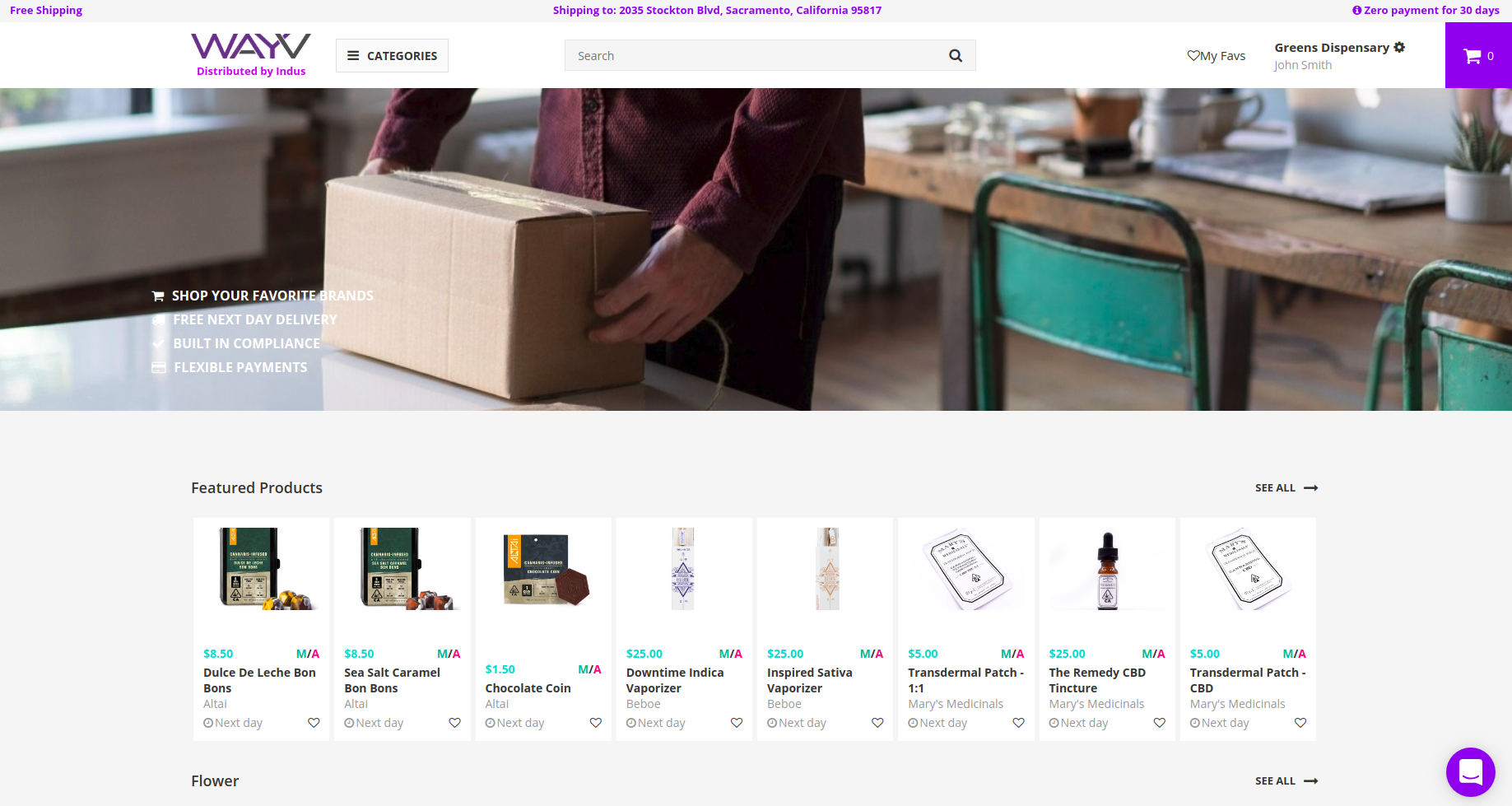
The co-founder and former chief executive officer of the well-funded marijuana delivery startup Eaze has launched WAYV, a B2B cannabis logistics and compliance platform that delivers inventory to cannabis retailers. Today, the company is announcing its first round of funding, a $5 million seed round led by David Sacks at Craft Ventures. The round represents the former PayPal executive’s first investment in the cannabis technology sector.

Other investors in the round declined to be named.

McCarty and Sacks previously worked together at Yammer, a private social networking tool used by businesses created by Sacks in 2008. The company sold to Microsoft in 2012 for $1.2 billion, giving McCarty and several others enough cash to experiment. For McCarty, that meant exploring the hazy and uncharted territory that was marijuana delivery.

McCarty, however, mysteriously left Eaze right as the company gained significant traction. Neither the company nor McCarty ever explained the shake-up; McCarty was quickly replaced by another former Yammer employee, Jim Patterson, the founder and former CEO of Zinc. In a conversation with TechCrunch, McCarty didn’t clarify the nature of his exit.

He did say that the idea for WAYV came from observing the difficulties of cannabis supply chain logistics during his time at Eaze .

Headquartered in Los Angeles, WAYV connects licensed cannabis companies to licensed brands and provides next-day delivery of cannabis products — it’s essentially Eaze for the cannabis enterprise not the average cannabis consumer. The startup was founded last year and has so far delivered to retailers in California only.

As a second-time cannabis founder, McCarty said building WAYV has been a lot different than launching Eaze, which was one of the first big-name marijuana tech companies.

“Back in 2014, [Eaze was] one of the first to raise venture capital, it was kind of unheard of,” McCarty told TechCrunch. “Now, the majority of Americans favor legalization. For medical, it’s 90 percent and for adult recreational, it’s more than 60 percent. As we Americans continue to favor legalization and that stigma is removed, not just medical but also adult use, it’s going to draw attention and also investment.”

Venture capital investment in cannabis startups has continued to climb, most notably after the state of California voted to legalize recreational marijuana use in 2016. According to Crunchbase, $700 million has been funneled into the space since 2014.

“The industry is moving at such a fast cadence, it’s really exciting to be a part of,” McCarty added.

29 Oct 2018

Eaze co-founder Keith McCarty raises $5M for his new B2B cannabis startup

Keith McCarty couldn’t stay out of the booming weed business for long.

The co-founder and former chief executive officer of the well-funded marijuana delivery startup Eaze has launched WAYV, a B2B cannabis logistics and compliance platform that delivers inventory to cannabis retailers. Today, the company is announcing its first round of funding, a $5 million seed round led by David Sacks at Craft Ventures. The round represents the former PayPal executive’s first investment in the cannabis technology sector.

Other investors in the round declined to be named.

McCarty and Sacks previously worked together at Yammer, a private social networking tool used by businesses created by Sacks in 2008. The company sold to Microsoft in 2012 for $1.2 billion, giving McCarty and several others enough cash to experiment. For McCarty, that meant exploring the hazy and uncharted territory that was marijuana delivery.

McCarty, however, mysteriously left Eaze right as the company gained significant traction. Neither the company nor McCarty ever explained the shake-up; McCarty was quickly replaced by another former Yammer employee, Jim Patterson, the founder and former CEO of Zinc. In a conversation with TechCrunch, McCarty didn’t clarify the nature of his exit.

He did say that the idea for WAYV came from observing the difficulties of cannabis supply chain logistics during his time at Eaze .

Headquartered in Los Angeles, WAYV connects licensed cannabis companies to licensed brands and provides next-day delivery of cannabis products — it’s essentially Eaze for the cannabis enterprise not the average cannabis consumer. The startup was founded last year and has so far delivered to retailers in California only.

As a second-time cannabis founder, McCarty said building WAYV has been a lot different than launching Eaze, which was one of the first big-name marijuana tech companies.

“Back in 2014, [Eaze was] one of the first to raise venture capital, it was kind of unheard of,” McCarty told TechCrunch. “Now, the majority of Americans favor legalization. For medical, it’s 90 percent and for adult recreational, it’s more than 60 percent. As we Americans continue to favor legalization and that stigma is removed, not just medical but also adult use, it’s going to draw attention and also investment.”

Venture capital investment in cannabis startups has continued to climb, most notably after the state of California voted to legalize recreational marijuana use in 2016. According to Crunchbase, $700 million has been funneled into the space since 2014.

“The industry is moving at such a fast cadence, it’s really exciting to be a part of,” McCarty added.

29 Oct 2018

Signal rolls out a new privacy feature making it tougher to know a sender’s identity

Signal, regarded as the gold standard of end-to-end encrypted messaging apps, is rolling out a new feature that will further protect the identities of message senders.

“While the service always needs to know where a message should be delivered, ideally it shouldn’t need to know who the sender is,” Signal revealed in a blog post Monday.

Dubbed “sealed sender,” the messaging app will soon hide a sender’s information inside the envelope of an encrypted message. The sender’s “from” information will be removed from outside the message’s envelope and will instead be replaced with a short-term certificate — containing the sender’s phone number, public identity key and an expiry time — which can be used to prove a sender’s identity. The whole envelope is encrypted again. Once it’s delivered, the recipient’s device will validate that certificate and decrypts the message as it normally would — without exposing the sender’s identity at any point.

Sounds fancy, but in reality nothing changes at the surface level — the app will send your messages securely over an end-to-end encrypted connection. But behind the scenes at the service level, the new hand-off mechanism makes the service more resistant to metadata.

The new feature will be enabled by default when it rolls out in a future stable release.

Since its inception, Signal hasn’t collected or stored data. By engineering the service so that it can deliver messages while cutting itself out of the loop, the app maker can’t turn over data to governments when they come knocking with a warrant. That point was proven two years ago when the FBI demanded that Signal turn over all the data it had on one particular user.

Signal responded with all the data it had — a timestamp of when the account was created and its last connection date. The information was effectively useless to prosecutors.

“These protocol changes are an incremental step, and we are continuing to work on improvements to Signal’s metadata resistance,” the blog post said. “In particular, additional resistance to traffic correlation via timing attacks and IP addresses are areas of ongoing development.”

In other words, your data was never stored — but now it can’t be.

The new feature will be enabled by default in a future version of Signal. It’s heading into beta in the next few days.

29 Oct 2018

Signal rolls out a new privacy feature making it tougher to know a sender’s identity

Signal, regarded as the gold standard of end-to-end encrypted messaging apps, is rolling out a new feature that will further protect the identities of message senders.

“While the service always needs to know where a message should be delivered, ideally it shouldn’t need to know who the sender is,” Signal revealed in a blog post Monday.

Dubbed “sealed sender,” the messaging app will soon hide a sender’s information inside the envelope of an encrypted message. The sender’s “from” information will be removed from outside the message’s envelope and will instead be replaced with a short-term certificate — containing the sender’s phone number, public identity key and an expiry time — which can be used to prove a sender’s identity. The whole envelope is encrypted again. Once it’s delivered, the recipient’s device will validate that certificate and decrypts the message as it normally would — without exposing the sender’s identity at any point.

Sounds fancy, but in reality nothing changes at the surface level — the app will send your messages securely over an end-to-end encrypted connection. But behind the scenes at the service level, the new hand-off mechanism makes the service more resistant to metadata.

The new feature will be enabled by default when it rolls out in a future stable release.

Since its inception, Signal hasn’t collected or stored data. By engineering the service so that it can deliver messages while cutting itself out of the loop, the app maker can’t turn over data to governments when they come knocking with a warrant. That point was proven two years ago when the FBI demanded that Signal turn over all the data it had on one particular user.

Signal responded with all the data it had — a timestamp of when the account was created and its last connection date. The information was effectively useless to prosecutors.

“These protocol changes are an incremental step, and we are continuing to work on improvements to Signal’s metadata resistance,” the blog post said. “In particular, additional resistance to traffic correlation via timing attacks and IP addresses are areas of ongoing development.”

In other words, your data was never stored — but now it can’t be.

The new feature will be enabled by default in a future version of Signal. It’s heading into beta in the next few days.

29 Oct 2018

Naspers announces $300 million initiative to support startups and tech in South Africa

Naspers announced a $100 million Naspers Foundry fund to support South African tech startups. This is part of a $300 million (1.4 billion rand) commitment by the South African media and investment company to support South Africa’s tech sector overall. Naspers Foundry will launch in 2019.

The initiatives lend more weight to Naspers’ venture activities in Africa as the company has received greater attention for investments off the continent (namely Europe, India and China).

“Naspers Foundry will help talented and ambitious South African technology entrepreneurs to develop and grow their businesses,” said a company release.

“Technology innovation is transforming the world,” said Naspers chief executive Bob van Dijk. “The Naspers Foundry aims to both encourage and back South African entrepreneurs to create businesses which ensure South Africa benefits from this technology innovation.”

After the $100 million earmarked for the Foundry, Naspers will invest ≈ $200 million over the next three years to “the development of its existing technology businesses, including OLX, Takealot, and Mr D Food…” according to a release.

In context, the scale of this announcement is fairly massive for Africa. According to Crunchbase data recently summarized in this TechCrunch feature, the $100 million Naspers Foundry commitment dwarfs any known African corporate venture activity by roughly 95x, when compared to Safaricom’s Spark Venture Fund, Interswitch’s E-Growth Fund, and Standard Bank’s several million dollar commitment to Founder Factory.

Naspers is one of the largest companies in the world—85th by its $108 billion market cap, just after Nike—and one of the world’s largest tech investors.

Aside from operating notable internet, video, and entertainment platforms, the company has made significant investments in the Europe, India, Asia, and South America. In 2018 Naspers invested $775 million in Germany’s Delivery Hero, $124 million in Brazilian e-commerce company Movile, and added $100 million to its funding to Indian food delivery site Swiggy.

Naspers was also an early investor in Chinese tech group Tencent, selling $10 billion in shares this year after a $32 million investment in 2001.

The South African media group has invested less in (and been less successful) in Africa, though that comparison comes largely by contrast to Naspers’ robust global activities.

One of Naspers early Africa investments, Nigerian e-commerce startup Konga, was sold in a distressed acquisition earlier this year.

The company recently added to around $70 million to its commitment to South African e-commerce site Takealot. And in perhaps a preview the company was shifting some focus back to Africa, Naspers made one of the largest acquisitions in Africa this September, buying South Africa’s Webuycars for $94 million.

The $300 million commitment to South Africa’s tech ecosystem signals a strong commitment by Naspers to its home market. Naspers wasn’t ready to comment on if or when it could extend this commitment outside of South Africa (TechCrunch did inquire).

If Naspers does increase its startup and ecosystem funding to wider Africa— given its size compared to others—that would be a primo development for the continent’s tech sector.

29 Oct 2018

Google and Disney launch interactive Little Golden Books that work with Google Home

Today’s kids are too young to remember Disney’s read-along books and records, which combined narration and sounds with physical books to make reading more entertaining. But they may have laid their hands on more modern sound books that have buttons you press at various parts of the story to punctuate the action. Now, Google is launching the 2018 version of this “storytime + sounds” experience. In partnership with Disney, the company is introducing an interactive storytelling feature for Google Home devices which combines real world books with voice recognition technology.

The new storytime experiences will work with a selection of Little Golden Books, as they’re read out loud, explains Google.

Currently, Google supports titles like Moana, Toy Story 3, Coco, Jack Jack Attack, along with classics like Peter Pan, Cinderella, Alice in Wonderland, The Three Little Pigs, Mickey Mouse and his Spaceship, and Mickey’s Christmas Carol. 

These new Little Golden Books will be on sale this week alongside Google Home Mini devices in stores like Walmart, Target and Barnes & Noble, the company says.

To get started, you say, “Hey Google, let’s read along with Disney.”

As the child – or parent – reads the book out loud, Google Home will play relevant sound effects and music to bring the story to life.

But unlike those spinning records kids played in past decades, Google Assistant is much smarter about knowing when to chime in. It knows, for example, if you’ve skipped ahead in the book, or if you’ve taken a break from reading because of an interruption – like when the child asks a question or inserts their own commentary.

At this point, the assistant will play ambient music in the background until you begin reading again.

At launch, the feature is available on Google Home / Home Mini devices, but the company says it will come to other smart speakers and Smart Displays that have Google Assistant built-in by the end of the year.

The new storytelling feature isn’t Disney’s first foray into voice assistant-based entertainment on smart speakers. It also offers a variety of other Disney games on Google Home. And Disney works with Amazon on its Echo devices, too.

It has launched publicly available Alexa skills for kids, and it partnered with Amazon on the Echo Dot Kids edition for specialized content, including exclusive skills like “Disney Plot Twist,” and “Disney Stories,” among other things. However, the Amazon version of “Disney’s Stories” is just a skill where kids can listen to audible stories – it’s not designed to work with accompanying physical books.

The initial titles are on sale starting this week at local stores, but Google says more will be released before year-end.

29 Oct 2018

LoopMe closes $17M growth investment led by BGF to expand further into the US

In 2013 LoopMe was a start-up which started out trying to solve the problem of intrusive ads on a mobile screen by consolidating them into an “ad inbox”. In 2014 they dumped that idea to become a mobile video ad business, using AI to retarget ad campaigns instead of ad teams. The pivot worked and in 2015 they raised $7M to expand.

They’ve now expanded again to become a business offering AI-driven brand advertising solutions using mobile data to optimize ad campaigns to things like purchase intent, store visits or sales. Today they’ve closed a new $17M investment led by BGF, a UK growth investor, alongside existing VC investors. The funding will be used to boost the platform and focus on the US market. The investment was led for BGF by Sarah Ledwidge, Tom McDonnell and Tim Rea.

The new investment takes the company’s total to $32M funding from global investors including HV Holtzbrinck Ventures, Harbert European Growth Capital, Open Ocean and Impulse VC.

LoopMe’s analytics suite is aimed at brands delving into customer audiences and planning across the marketing mix.

CEO Stephen Upstone said in a statement that: “Brands need marketing solutions which deliver a business impact – sales, customers in stores and strong brand sentiment. This additional funding will allow us to bring our award-winning technology, which is proven to move the needle on these KPIs, to brands and agencies worldwide”.

LoopMe’s technology has been used by brands including Norwegian Air, Jockey, Ben & Jerry’s, Microsoft and Audi, who use it to run mobile ad campaigns in the US, Europe and Asia.

29 Oct 2018

UK chancellor announces 2% ‘digital services tax’ on tech giants’ revenues starting in April 2020

The UK government has announced a new “digital services” tax of two percent that it plans to start levying on the UK revenues of tech giants like Amazon, Google and Apple based on the money they make on digital services like advertising and streaming entertainment (but not online sales).

Announced as part of the 2018 Budget by UK Chancellor of the Exchequer Philip Hammond, the tax is due to come into effect in April 2020. Hammond said that the government expects to raise more than £400 million ($512 million) annually based on current revenues.

“The rules of the game must evolve now if they are to keep up with the digital economy,” Hammond said in Parliament today. “Digital platforms delivering search engines, social media and online marketplaces have changed our lives, our society and our economy, mostly for the better. [But] they also pose a real challenge for the sustainability and fairness for our tax system… the rules have not kept pace.

“The UK has been leading attempts for international corporate tax reform.. but progress is painfully slow,” he continued. “We cannot talk forever so we will now introduce a UK digital services tax.” You can see an excerpt of the speech here.

He went on to say that the tax is “narrowly targeted” on specific models. “This is not an online sales tax on goods ordered over the internet,” he said, saying that such a tax would end up getting passed down to users. The digital services tax will be paid by companies that are profitable, he said, and making at least £500 million ($640 million) per year in global revenues.

To be clear, the UK government expects large companies, and not startups, to “shoulder the burden” of the tax, the Treasury noted.

The tax would represent a shift in how these companies are taxed today: up to now, taxes have been calculated on profits, but that is problematic because of how companies report profits, and in many cases they are not recorded in the UK, even if the purchases of digital services are in the UK.

At the same time, companies like Amazon and Apple are some of the biggest in the world and have grown tremendously in recent years, as people rush to purchasing products from them online.

It also lays out an interesting landscape for how the UK plans to raise money in a post-Brexit country after it leaves the European Union and the wider tax code that exists around it. However, Hammond also noted that the UK is currently working with the G20 and the OECD also to consider how best to tax digital companies, and if those talks reach an agreement, the UK might consider that instead of its own plans. “This shows we are serious about this reform,” he said. “It is only right that these global giants pay their fair share.”

However, many are already already criticising the tax as too low, describing only £400 million and two percent as almost nothing to these companies, which are some of the most profitable and wealthiest in the world, with Amazon and Apple the first two companies to ever reach trillion dollar market caps.

More pragmatically, a UK tax has been talked about for years already, so this is just the start of how this might develop.

29 Oct 2018

Red Dead Redemption 2: Five tips for being the best outlaw you can be

Red Dead Redemption 2 has set a high bar for the next generation of open world games, and as much as we’ve already discussed it, we’ll be addressing the deeper themes of the story as we continue to work through the game. However, there are a few points that I got hung up on in the game, and would love to advise you on the best way to avoid those mistakes yourself.

So without any further ado, here are a few tips and tricks to help you make decisions in the Wild West.

Money is easy to come by, if you know where to look

Unlike Red Dead Redemption or Grand Auto V, money is relatively easy to come by in RDR2. Story missions and side missions often result in sizable fiscal rewards for Arthur, although some story missions do require upfront investments and sometimes result in a bounty on Arthur’s head. That said, there’s no reason to live frugally. Use your money to upgrade your horse or your guns as a priority, and then feel free to go shopping at the tailor or play a few rounds of high-stakes poker.

For the most part, selling wares will also net you a good amount. The easiest way to cushion the game’s already generous income is to loot as much as you can stand it. Bad guys often have pocket watches, belt buckles, or even jewelry on them that can be sold for a pretty penny. If shootouts go down near or inside buildings, search those buildings for provisions, cash and other valuable items. Offload these items at a local Fence to keep plenty of space in your satchel and generate some extra dough.

And don’t pass up bounty hunting. It’s easy cash.

Use your unique gifts

Eagle Eye and Dead Eye are blessings. There is no obvious time limit to Eagle Eye use, so there’s no reason not to use it constantly while hunting or searching for herbs, plants, etc. Paired with some Scent Blocking Lotion and bait, you’re sure to see success in your hunting endeavors.

Dead Eye does have a time limit, but there’s no shortage of tonics or provisions that can replenish your Dead Eye core in a jam. So use it. It makes shootouts far more manageable, but it also makes them way more fun. I particularly enjoy using R1 to mark several targets in a single go.

Dead Eye also helps immensely with hunting.

The best stuff is earned, not bought

Hunting has been prioritized in RDR2. There are legendary animals across the map that can be skinned to craft some of the best clothes and items in the game, which are not available for purchase without the pelt. Perfect pelts can also be used to craft badass clothing. But it’s not entirely obvious how to obtain a perfect pelt in the game.

There are a number of factors that play into obtaining a perfect pelt. The first is the size of the animal. This will determine which weapon and ammunition you should use. The second is the quality of the animal. You can press R1 to study the animal, which will also display its condition: poor, good, or pristine. Only pristine animals will result in a perfect pelt. Large animals like bears and elk require a rifle, preferably with high velocity or split point ammo, whereas it’s nearly impossible to yield a perfect pelt on a small critter without using the Varmint Rifle. Midrange animals like foxes and beavers require a Repeater or bow and arrow with improved arrows.

This guide proved incredibly helpful for me.

Also important: even a pristine animal hunted with the right weapon can drop from perfect pelt to good pelt if you shoot it more than once. Use Dead Eye to locate the vulnerable parts of the animal and deliver a fatal blow.

You can take these pelts to Pearson at camp to craft cosmetic upgrades to the furniture, but it’s probably best to prioritize taking perfect and legendary pelts to the trapper where you can craft clothes, saddles, etc. It’s worth noting that you must first sell the pelts to the trapper before you can purchase the items he crafts with them.

Camp donations are dumb, but upgrades aren’t

RDR2’s is very different from Red Dead Redemption’s in one core way: John Marsten was a lone wolf, whereas Arthur Morgan is very much a player in an ensemble cast. That doesn’t mean you can’t fly solo and head to another part of the map for a few game days. But many of the story missions involve other members of the Dutch Van Der Linde gang, and home base for Arthur is the gang’s camp, where many of those characters are hanging around.

Because of this shift, RDR2 introduces the idea of camp donations. You can donate money, food, or items that can be sold for camp funds. These donations are more or less useless. They are money or food that you won’t see again. However, alongside the box for donations is a ledger that allows you to check out how the rest of the gang is donating and also make purchases to upgrade the camp.

Provisions, ammunition, medicine, and lodging are all upgrades worth purchasing, in my opinion. Upgrading them ensures that the best food and ammunition are simply sitting around camp. It’s a way to turn camp into a convenience store carrying most of the equipment you’d otherwise need to purchase by bopping around a town. Upgrading lodging unlocks the fast travel map, which becomes more and more necessary as the map opens up.
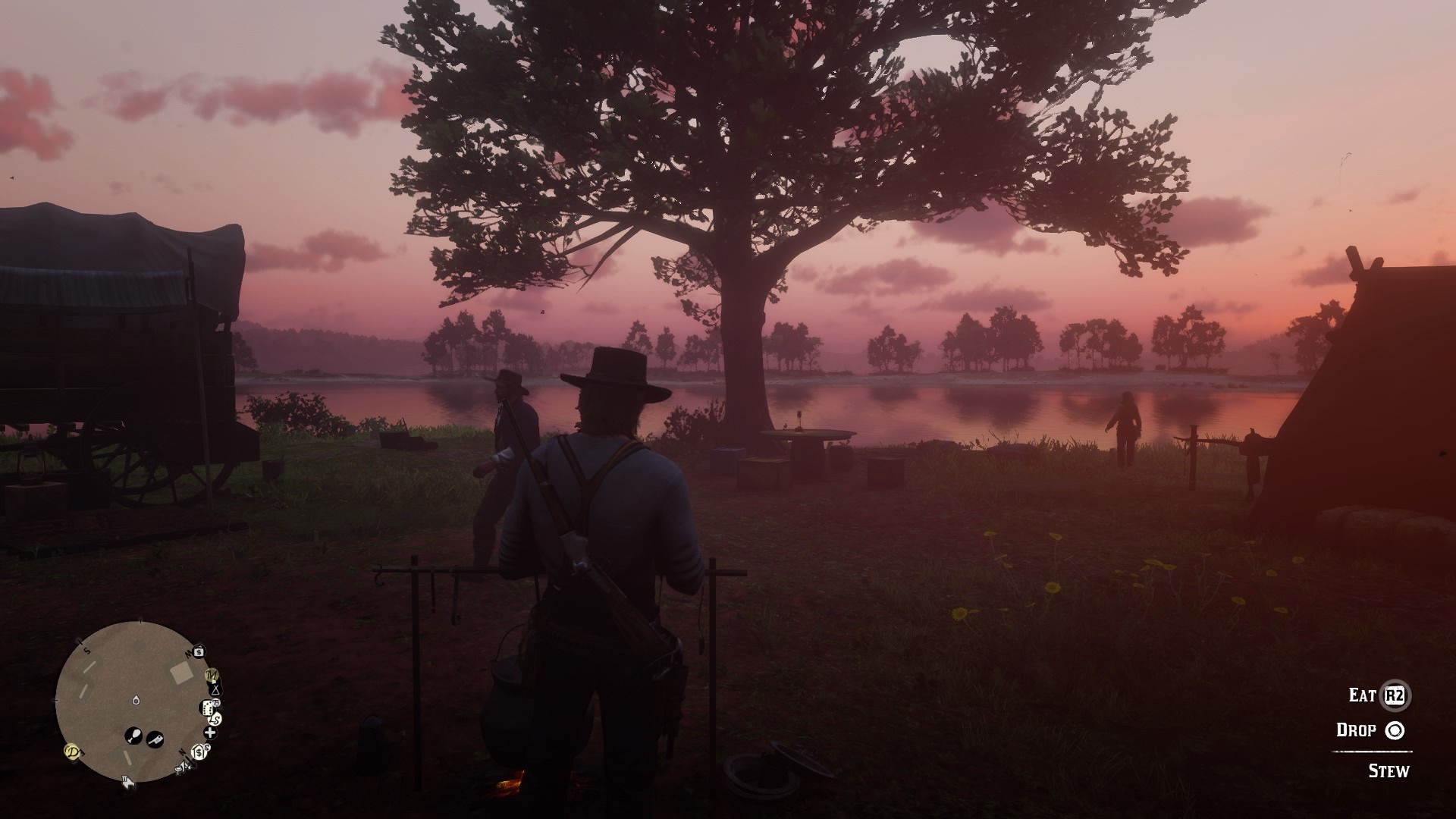
Eating stew with a beautiful view

Given that there are usually missions that originate from camp, I visit it often as a way to reset. I donate anything of lesser value to camp to clear out space in my satchel, restock on provisions, tonics, and ammo, and help myself to a free bowl of stew to replenish my health cores. Camp also features a poker table, which happens to be one of my favorite pastimes in this game.

Timing is everything

Just assume that if you’re doing a Dutch story mission, you’ll end up with a bounty on your head. Sometimes these are cheap, and sometimes the bounty is upwards of $100. The game more than makes up for the money it asks from you, doling it out in myriad ways, but dealing with a bounty in a bigger city or town can make side missions and other tasks incredibly annoying. If you’re not into constant shootouts and running from the police, do your side missions and mundane errands in a town before firing up the Story Mission.


29 Oct 2018

The OnePlus 6T is launching on T-Mobile

This year marks an interesting turning point for OnePlus. In December, it will hit the five year mark. The Oppo-backed company has managed to grow significantly in that relatively short window. Back in June, it noted that it had sold one million units of its latest smartphone in the first 22 days.

Continued growth will require some strategic partnerships. In the States, that means partnering with a carrier — after all, most smartphone users still purchase devices through those channels here. Fittingly, along today’s launch of the 6T, OnePlus is announcing its first U.S. carrier partner, T-Mobile.

Why choose the third largest carrier? Here’s what CEO Pete Lau says of the deal, “T-Mobile is the perfect wireless partner for us in the US. The OnePlus 6T clocks some serious speed, and we wanted our customers to unleash it on the fastest network in the nation.”

T-Mobile’s foul mouthed CEO John Legere also notes that somewhere in the neighborhood of 200k OnePlus owners are using their unlocked handsets with the carrier. In addition to whatever sort of deals were worked out between the two companies, T-Mobile’s size offers a good opportunity to help OnePlus grow at a manageable rate. That kind of modest expansion has long been a key to the company’s success.

While other smartphone manufacturers are falling over themselves to one up the competition, OnePlus has focused on offering a solid handset at a decent price. But even $549 looks intimidating to users accustom to purchasing phones at carrier subsidized rates.

The 6T will be available from T-Mobile on November 1 — though folks in New York City can pick one up starting tonight at the T-Mobile store in Times Square.