Month: October 2018

29 Oct 2018

Blue Apron gets a much-needed boost with Jet.com partnership

The enemy of my enemy is my friend. That explains a coming-together between two startups today after Jet.com announced it will give beleaguered Blue Apron a leg-up by introducing its meal kits for customers in New York.

The deal will an initially rotating selection of four meal kits from Blue Apron made available as part of Jet’s ‘City Grocery’ experience. The kits — which will rotate every six weeks — will be available for same-day or next-day order in Manhattan, Brooklyn, Queens, the Bronx, as well as Jersey City and Hoboken.

Jet — which is the first e-tailer partner for Blue Apron — said the kits are designed specifically for its customers based on “extensive feedback” based around what they want to eat, how they want to make it, etc. As a part of that focus, all of the kits take less than 30 minutes to prepare.

The initial selection includes the following:

  • Seared Steaks & Peperonata with Fregola Sarda Pasta & Grana Padano Cheese (2 servings, 28 oz) – $22.99
  • Dukkah-Spiced Beef & Couscous with Tahini-Dressed Broccoli (2 servings, 41 oz.) – $20.99
  • Togarashi Popcorn Chicken with Sweet Chili Slaw & Jasmine Rice (2 servings, 32 oz.) – $18.99
  • Italian Farro Bowl with Roasted Vegetables & Mozzarella (2 servings, 32 oz.) – $16.99

“We are delighted to be the first e-retailer to offer the Blue Apron on-demand kits, kicking off in NYC,” said Jet President Simon Belsham in a statement. “Adding the on-demand kits to our newly launched City Grocery experience provides another layer of convenient services and products that helps make people’s lives easier, and it’s a great example of how Jet will continue to differentiate itself.”

That was echoed by Brad Dickerson, who become CEO late last year. Dickerson hinted that the company has more planned for its “channel expansion strategy.”

Despite going public in June, 2017 was a tough year for Blue Apron.

The company listed at $10 per share after originally hoping to go public between $15 and $17. But, more significantly, Amazon threw a spanner in the works when it purchased Whole Foods just days before Blue Apron’s debut, giving investors concerned the alliance would negatively impact the company, piling on more doubt that had surfaced around the viability of its customer retention strategy.

Things have only gotten worse for Blue Apron since then, with its shares currently valued at just $1.14 as of the close of market on Friday. But there is some positive sentiment around the Jet deal with the share price up nearly 22 percent in pre-trading, according to Yahoo Finance.

29 Oct 2018

Blue Apron gets a much-needed boost with Jet.com partnership

The enemy of my enemy is my friend. That explains a coming-together between two startups today after Jet.com announced it will give beleaguered Blue Apron a leg-up by introducing its meal kits for customers in New York.

The deal will an initially rotating selection of four meal kits from Blue Apron made available as part of Jet’s ‘City Grocery’ experience. The kits — which will rotate every six weeks — will be available for same-day or next-day order in Manhattan, Brooklyn, Queens, the Bronx, as well as Jersey City and Hoboken.

Jet — which is the first e-tailer partner for Blue Apron — said the kits are designed specifically for its customers based on “extensive feedback” based around what they want to eat, how they want to make it, etc. As a part of that focus, all of the kits take less than 30 minutes to prepare.

The initial selection includes the following:

  • Seared Steaks & Peperonata with Fregola Sarda Pasta & Grana Padano Cheese (2 servings, 28 oz) – $22.99
  • Dukkah-Spiced Beef & Couscous with Tahini-Dressed Broccoli (2 servings, 41 oz.) – $20.99
  • Togarashi Popcorn Chicken with Sweet Chili Slaw & Jasmine Rice (2 servings, 32 oz.) – $18.99
  • Italian Farro Bowl with Roasted Vegetables & Mozzarella (2 servings, 32 oz.) – $16.99

“We are delighted to be the first e-retailer to offer the Blue Apron on-demand kits, kicking off in NYC,” said Jet President Simon Belsham in a statement. “Adding the on-demand kits to our newly launched City Grocery experience provides another layer of convenient services and products that helps make people’s lives easier, and it’s a great example of how Jet will continue to differentiate itself.”

That was echoed by Brad Dickerson, who become CEO late last year. Dickerson hinted that the company has more planned for its “channel expansion strategy.”

Despite going public in June, 2017 was a tough year for Blue Apron.

The company listed at $10 per share after originally hoping to go public between $15 and $17. But, more significantly, Amazon threw a spanner in the works when it purchased Whole Foods just days before Blue Apron’s debut, giving investors concerned the alliance would negatively impact the company, piling on more doubt that had surfaced around the viability of its customer retention strategy.

Things have only gotten worse for Blue Apron since then, with its shares currently valued at just $1.14 as of the close of market on Friday. But there is some positive sentiment around the Jet deal with the share price up nearly 22 percent in pre-trading, according to Yahoo Finance.

29 Oct 2018

IBM is betting the farm on Red Hat — and it better not mess up

Who expects a $34 billion deal involving two enterprise powerhouses to drop on a Sunday afternoon, but IBM and Red Hat surprised us yesterday when they pulled the trigger on a historically large deal.

IBM has been a poster child for a company moving through a painful transformation. As Box CEO (and IBM business partner) Aaron Levie put it on Twitter, sometimes a company has to make a bold move to push that kind of initiative forward:

They believe they can take their complex mix of infrastructure/software/platform services and emerging technologies like artificial intelligence, blockchain and analytics, and blend all of that with Red Hat’s profitable fusion of enterprise open source tools, cloud native, hybrid cloud and a keen understanding of the enterprise.

As Jon Shieber pointed out yesterday, it was a tacit acknowledgement that company was not going to get the results it was hoping for with emerging technologies like Watson artificial intelligence. It needed something that translated more directly into sales.

Red Hat can be that enterprise sales engine. It already is a company on a $3 billion revenue run rate, and it has a goal of hitting $5 billion. While that’s somewhat small potatoes for a company like IBM that generates $19 billion a quarter, it represents a crucial addition.

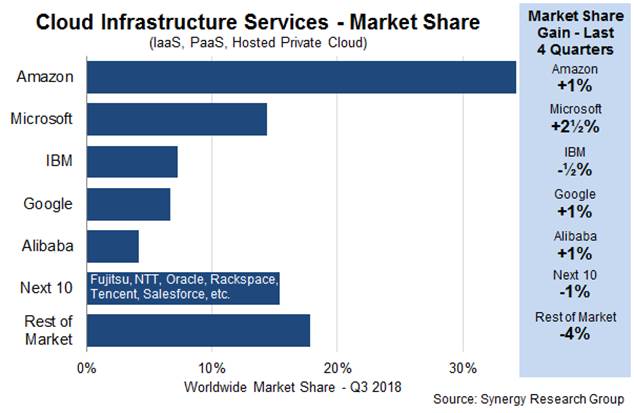
That’s because in spite of its iffy earnings reports over the last five years, Synergy Research reported that IBM had 7 percent of the cloud infrastructure market in its most recent report, which it defines as Infrastructure as a Service, Platform as a Service and hosted private cloud. It is the latter that IBM is particularly good at.

The company has the pieces in place now and a decent amount of marketshare, but Red Hat gives it a much more solid hybrid cloud story to tell. They can potentially bridge that hosted private cloud business with their own public cloud (and presumably even those of their competitors) and use Red Hat as a cloud native and open source springboard, giving their sales teams a solid story to tell.

IBM already has a lot of enterprise credibility on its own, of course. It sells on top of many of the same open source tools as Red Hat, but it hasn’t been getting the sales and revenue momentum that Red Hat has enjoyed. If you combine the enormous IBM sales engine and their services business with that of Red Hat, you have the potential to crank this into a huge business.

Photo: Ron Mller

It’s worth noting that the deal needs to pass shareholder muster and clear global regulatory hurdles before they can combine the two organizations. IBM has predicted that it will take at least until the second half of next year to close this deal and it could take even longer.

IBM has to use that time wisely and well to make sure when they pull the trigger, these two companies blend as smoothly as possible across technology and culture. It’s never easy to make these mega deals work with so much money and pressure involved, but it is imperative that Big Blue not screw this up. This could very well represent its last best chance to right the ship once and for all.

29 Oct 2018

China’s Didi Chuxing is poised to expand into hotel bookings

China’s largest ride-hailing app Didi Chuxing is entering the hotel-booking business as it strives to recover from two highly publicized murders of female passengers by drivers on its platform.

That’s according to Chinese business magazine Caijing and tech news site 36kr (links in Chinese). R-Lab, the unit in charge of Didi’s new venture, is aptly named to signify the company’s effort to “rebuild” its boundaries beyond on-demand car services. The lab has also been responsible for hatching Didi’s food delivery business, according to Caijing.

A Didi representative told TechCrunch that the company has “no plans to launch new businesses in the near future” and that it’s currently focusing its resources on “safety and operational upgrades.”

Nonetheless, the $56 billion startup has already shown interest in the hospitality industry – mainly through fostering partnerships. In July, Didi nabbed $500 million in strategic investment from Booking Holdings. The deal allows Didi users to reserve hotels on Booking services and, in turn, offer its on-demand car services to Booking users.

In September, Times of India reported that the transportation startup may be backing India’s hotel booking platform Oyo Rooms. The rumor has yet to receive any official confirmation.

Diversification appears to be a logical move given the Chinese ride-hailing giant has yet to turn a profit and its core car services are under regulatory pressure and public scrutiny following the passenger safety crisis. The company has already spun off its asset-heavy premium car unit ahead of a likely IPO.

But the hotel space isn’t an easy target either, with Baidu -backed online travel agency Ctrip being one of the dominant forces.

When contacted by TechCrunch to comment on Didi’s new endeavor, Ctrip’s vice president of corporate affairs Victor Tseng pointed to the industry’s challenges. “The hotel business is fragmented and unstandaridized.”

That means Didi would have to work on consolidating its services into the traveller’s planning journey, which spans booking hotels, transportation, experiences, and so on, as well as invest heavily in service keeping capacities.

Ctrip isn’t Didi’s only potential rival. Meituan Dianping, the Tencent-backed neighborhood services behemoth that went public in Hong Kong last month, has thrived on budget-hotel booking and outraced Ctrip (link in Chinese) in terms of the number of hotel nights booked, according to data analytics firm Trustdata.

29 Oct 2018

Southeast Asia’s Grab pulls in $200M from travel giant Booking

Fresh from a strategic investment from Microsoft, Southeast Asia’s ride-hailing leader Grab is back in the money again after it closed $200 million in fresh capital from Booking Holdings, the travel firm formerly known as Priceline.

The investment is part of an ongoing round of funding that Grab said is on course to reach $3 billion before the end of the year. Grab raised $2 billion for the round — including a $1 billion check from Totoya — but it continues to add strategic partners, like Microsoft and Booking. Grab — which bought Uber’s regional business in March and is present in eight countries — is valued at $11 billion and we understand that hasn’t changed with this round.

The deal — which mimics Booking’s recent $500 million investment in China’s Didi — will lead to the two companies team up to offer reciprocal services. That’ll see Grab’s transportation services integrated into Booking’s apps and services with support for Grab Pay. On the other side, Grab said that Booking’s travel accommodation services will come to its app sometime in 2019, although Grab customers in “multiple markets” will get rewards and offers in the app before the end of this year.

Besides Booking.com and Agoda, Booking also operates Kayak, Priceline.com, Rentacars.com and OpenTable. The firm rebranded from Priceline in February 2018.

The tie-in makes sense on both sides. Ride-hailing services are a prime channel for travel companies — Didi and Grab both dominate their respective markets, Grab claims over 110 million downloads — while the idea of pre-ordering a Grab to meet you after a flight has landed, or having one take you to your hotel will be logical for many.

Grab started out offering taxis, but it has since expanded to private car vehicles, motorbikes and a range of non-transportation services that include payments and food delivery. In addition, the company opened its platform to third-parties this summer in an effort to develop a ‘super app’ for Southeast Asia’s rapidly growing internet population, which is already larger than the entire U.S. population.

It hasn’t all been plain-sailing for Grab in its post-Uber world. Both Uber and Grab were fined a collective $9.5 million by Singapore’s watchdog for the merger — they got a lighter rap on the knuckles in the Philippines — while some users have complained about a bloated app, inferior service quality and higher fees in recent months. Grab disputes the latter claim that it has increased prices, but it has pledged to do better by its customers.

Grab’s chief rival is Indonesia Go-Jek, which is said to be raising $2 billion more to support a regional expansion plan. Go-Jek has already moved into Vietnam and Thailand, while this week it opened sign-ups for drivers in Singapore.

29 Oct 2018

The Red Hydrogen One phone exists — but should it?

The Red Hydrogen One is real. I’ve held it in my hands. It’s sitting face down on my desk right now as I type these words.

None of this is to say, of course, that it needs to or even should exist. The Hydrogen One is less a phone than an idea that manifested its way into existence through sheer force of will. It’s a testament to the fact that just because a concept is potentially disruptive doesn’t necessarily make it good. Not with a starting price of $1,299 (and $1,599 for the titanium version), at least.

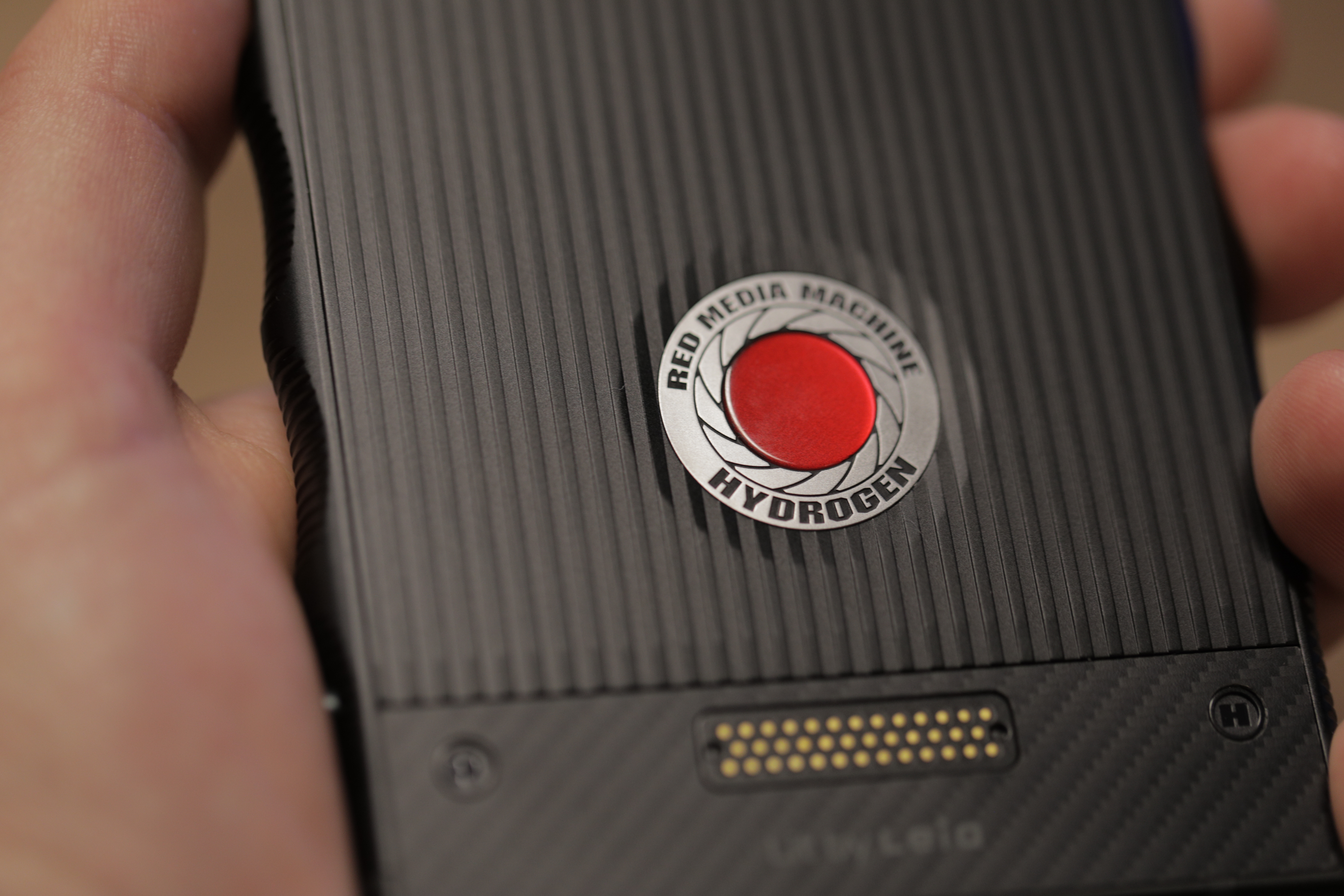
The handset functions best as a conversation piece. It’s big and it’s bold and it’s bizarre, sporting a massive footprint that dwarfs even the Pixel 3 XL, flanked by serrated edges that bring nothing to mind more than John Rambo’s hunting knife. And certainly the size, weight and build of the product should leave little question that the thing could double as a weapon, should you find yourself in a tight spot.

Of course, in this crowded smartphone market, getting noticed is half the battle. And the Hydrogen One has no problem on that front. I got a lot of “what’s that?” when I took the handset for a spin, capturing friends and food in 3D courtesy of the dual stereo rear-facing 12-megapixel cameras.

The next question is usually something in the area of “why?” That one is a bit more difficult to answer. After a few days with the phone, I’m still struggling with a justification for the front-facing Holographic 4-View display that doesn’t lean heavily on novelty. There’s no denying that it’s neat — or at the very least interesting. But I’m struggling to imagine a future in which most or even some of my picture or video viewing is done on this sort of device.

Red has leveraged a new take on the sort of 3D displays we’ve seen on products like Nintendo’s bygone 3DS. Created in partnership with a company called Leia, the technology works thusly:

Leia leverages recent breakthroughs in Nano-Photonic design and manufacturing to provide a complete lightfield “holographic” display solution for mobile devices, through proprietary hardware and software. The Silicon Valley firm commercializes LCD-based mobile screens able to synthesize lightfield holographic content while preserving the normal operation of the display.

All of that results in an image that provides a sense of depth to the viewer, without the sort of eyestrain found in similar tech. On the face of it, however, it looks pretty similar to those old holographic baseball cards they made back in the day. It also means that, in spite of the 515ppi 5.7-inch display, images can sometimes feel fuzzy. Another interesting side effect is a fair amount of light bleed from the top and bottom of the screen while in four-view mode.

Content will certainly be an issue going forward. That’s always an issue with these sorts of formats. Right now, the phone offers a slew of short nature photos, along with free access to a pair of movies (“Fantastic Beasts and Where to Find Them” and “Ready Player One”) available as an exclusive to AT&T subscribers.

Then there’s the content you capture yourself. I will say I was surprised at some of what the rear-facing cameras could do. Turns out they handled low light fairly well. That said, my amateur photography skills ended up with my capturing some pretty wonky shots with uneven depths. But even if I were a better photographer, I can’t really imagine looking at my own images in 3D is a compelling enough use case to make the considerable investment required.

I realize I’ve been pretty harsh on this $1,300 phone. And there are, indeed, things to like here. The build quality is at the top of the list. It’s certainly not to everyone’s taste — the Hydrogen One is big and garish and won’t fit in the pockets of your yoga pants. But it’s definitely solid. Red’s always had that going for it. The thing is built like a goddamn tank.
And while, again, I can’t imagine the technology having a lot of stickiness (we can meet back here in five years and you can make fun of me when every phone has some version of the tech), it’s utterly fascinating. It’s probably even more so when, let’s be honest, you’ve got a little bit of that sticky icky in your system. Also, shout out to the company for not cutting other corners here, including battery — 4,500 mAh is downright absurd.

Another little-discussed feature (because we’ve gotten plenty of other things to focus on) is its modularity. Like an SLR, the rear camera can be swapped out. Of course, those modules aren’t coming until next year, so it’s not exactly a selling point at launch. When it does arrive, it will include things like an extended battery. It does look like the company’s painted itself into a bit of a corner with regards to module size, similar to what Motorola did with its Z line.

The Hydrogen One is available November 2. It’s easily one of the most ambitious, bold and fascinating smartphones I’ve ever seen. If the device does, indeed, flop, it will have done so with the sort of audacity rarely seen in a space full of me-too devices. If you’re going to fail, fail big. At least that way you won’t be forgotten.


29 Oct 2018

Google beefs up Firebase platform for the enterprise

Today at the Firebase Summit in Prague, Google announced a number of updates to its Firebase app development platform designed to help it shift from an environment for individuals or small teams into a full-blown enterprise development tool.

Google acquired Firebase 4 years ago to help developers connect to key cloud tools like a database or storage via a set of software development kits (SDKs). Over time, it has layered on sophisticated functionality like monitoring to fix performance issues and access to analytics to see how users are engaging with the app, among other things. But the toolkit hasn’t necessarily been geared towards larger organizations until now.

“[Today’s announcements] are going to be around a set of features and updates that are catered more towards enterprises and sophisticated app teams that are looking to build and grow their mobile apps,” Francis Ma, head of product at Firebase told TechCrunch.

Perhaps the biggest piece of news was that they were adding corporate support. While the company boasts 1.5 million apps per month running on Firebase, in order to move deeper into the enterprise, it needed to have a place corporate IT could call when they run into issues. That is coming with the company expected to announce various support packages in Beta by the end of the year. These will be tied to broader Google Cloud Platform support.

“With this launch, if you already have a paid GCP Support package, you will be able to get your Firebase questions answered through the Google Cloud Platform (GCP) Support Console. Once the change is fully launched, Firebase support will be included at no additional charge with paid GCP Support packages, which includes target response times, a dedicated technical account manager (if you are enrolled in Enterprise Support) and more,” Ma explained in a blog post.

In addition, larger teams and organizations need more management tools and the company announced the Firebase Management API. This allows programmatic access to manage project workflows from IDE to Firebase. Ma says this includes direct integration with StackBlitz and Glitch, two web-based IDEs. “Their platforms will now automatically detect when you are creating a Firebase app and allow you to deploy to Firebase Hosting with the click of a button, without ever leaving their platforms,” Ma wrote.

There were a bushel of other announcements including access to better facial recognition tools in the Google ML kit announced last spring. There were also improvements to Crashlytics performance monitoring, which includes integration with PagerDuty now, and Firebase Predictions, its analytics tool, which is now generally available after graduating from Beta.

All of these announcements and more, are part of a maturation of the Firebase platform as Google aims to move it from a tool aimed directly at developers to one that can be integrated at the enterprise level.

29 Oct 2018

Five days left to reap big early-bird savings for Disrupt Berlin 2018

This is it, startup fans. We’re in the homestretch for big savings on tickets to Disrupt Berlin 2018. That means you have just five days left to save up to €500 on two action- and opportunity-packed days with some of the best and brightest minds in the tech startup world. The early-bird price becomes extinct on Friday, 2 November. Haven’t you waited long enough? Buy your ticket today.

We’ve recruited a killer line-up of Main Stage speakers — tech luminaries, business legends and game-changing investors — to share their perspective, experience and insight. Here’s a quick peek at what we have in store for you — and be sure to take a gander at the Disrupt Berlin agenda:

  • Kaidi Ruusalepp, founder and CEO of Funderbeam, will discuss how her company’s shaking up the traditional startup funding model by using a marketplace approach, a modern syndication system and a blockchain-based platform.
  • Pieter van der Does, CEO of payments company Adyen, will share how the startup quietly built its empire and took a profitable company public.
  • Denys Zhadanov, VP at Readdle, will talk about the mobile app company’s bootstrapped success — 100 million downloads and counting.

Opportunity at Disrupt Berlin abounds at every turn, but it shifts into overdrive once you enter Startup Alley, our exhibition floor. You’ll find more than 400 early-stage startups showcasing the latest technology products, platforms and services. Collaborate, recruit, invest, connect — it all happens in Startup Alley.

While you’re in the Alley, be sure to check out this year’s TC Top Picks — our curated cohort of exceptional startups spanning these categories: AI/Machine Learning, Blockchain, CRM/Enterprise, E-commerce, Education, Fintech, Healthtech/Biotech, Hardware, Robotics, IoT, Mobility and Gaming. Here are just a few fine examples:

  • Nuzzera: Your Spotify for news — the first two-sided market for professional journalism.
  • MakerBrane: A digital and physical platform that lets anyone design, build and trade their own play worlds.
  • FinMarie: Germany’s first online financial platform for women.

And, of course, you don’t want to miss Startup Battlefield — the crown jewel of Disrupt. Watch up to 15 outstanding early-stage startups go head-to-head to win $50,000 cash, hoist the coveted Disrupt Cup, earn invaluable investor and media attention and launch their companies on a global stage.

Disrupt Berlin 2018 takes place on 29-30 November, and the finish line for saving up to €500 is Friday 2 November — just five days left. Buy your pass today, and join us in Berlin at the best possible price.

29 Oct 2018

Robby Stein to talk about Instagram beyond Systrom at Disrupt Berlin

Last month, Instagram co-founders CEO Kevin Systrom and CTO Mike Krieger announced that they would be leaving Instagram and Facebook. All eyes are now on Instagram to figure out what’s going to happen to the photo and video app. That’s why I’m excited to announce that Instagram Product Director Robby Stein is joining us at TechCrunch Disrupt Berlin.

Instagram is Facebook’s next big bet. Facebook’s growth has slowed down, which puts even more pressure on Instagram. Compared to Facebook, Instagram is still a relatively young platform. More and more people are joining Instagram and stories are boosting engagement.

Facebook currently has 2.23 billion monthly users while Instagram has 1 billion users. Many people have an active account on both platforms. But does Instagram have what it takes to reach Facebook’s scale?

When it comes to product, Instagram has relentlessly released new features over the past few years. Stories have become a creative playground, stars can share longer videos on IGTV and you can now start group video chats from the app.

It’s impressive to see that such a big platform keeps releasing radical changes that will affect over a billion users. Instagram has been moving incredibly fast. And it’s been key when it comes to fostering growth.

Stein will tell us more about Instagram’s product design strategy and what’s coming up. It’s always interesting to hear the perspective of an insider to analyze product decisions and discuss them.

Before joining Instagram, he was the co-founder and CEO of Stamped, which was acquired by Yahoo back in 2012. Stein started his career at Google. In a short period of time, he managed to work for Google, Facebook and Yahoo, and he also founded his own startup. Quite an impressive resume.

And if you want to hear what it feels like to work for Instagram at a pivotal moment, you should come to Disrupt Berlin. The conference will take place on November 29-30 and you can buy your ticket right now.

In addition to fireside chats and panels, like this one, new startups will participate in the Startup Battlefield Europe to win the highly coveted Battlefield cup.

Robby Stein

Product Director, Instagram

Robby Stein is Product Director at Instagram, where he leads the consumer product team for sharing, which includes Stories, Feed, Live and Direct Messaging. Previously he was the Co-Founder and CEO of Stamped, which was acquired by Yahoo in 2012. At Yahoo, Robby led mobile video products focused around recommended content. He started his career at Google, where he worked to bring new features to market for Gmail and Ad Exchange. He has been recognized on the Forbes 30 under 30 and graduated summa cum laude from Northwestern University.

29 Oct 2018

AnyMind, which uses AI for advertising, marketing and HR, raises $13.4M

AnyMind Group, a Singapore-based company that uses AI in online advertising, HR and marketing, has pulled in a strategic $13.4 million investment to go after growth in Japan and other Asian markets.

This Series B round was led by Line, the Japanese messaging app firm, and Mirai Creation Fund, which is backed by Toyota among others. Previous backers JAFCO and Dream Incubator also took part.

AnyMind Group is a holding group formed this year to manage its initial venture AdAsia — which uses AI to offer ad solutions to publishers and advertisers — and its newer businesses TalentMind (HR) and CastingAsia, influencer marketing. AdAsia previously raised $12 million last year before it added a strategic investment from Japanese news app Gunosy three months later.

The business was founded in April 2016 by Japanese duo CEO Kosuke Sogo, the former managing director of Japan’s MicroAd in APAC, and COO Otohiko Kozutsumi, who had been with MicroAd Vietnam — and both men are ambitious with their plans to grow.

Indeed, despite being less than three years old, AnyMind says it has been profitable since early 2017. It said total revenue for 2017 was $26 million, up from $12.9 million one year previous.

Today, the company has 12 offices — including a product development center in Vietnam — and its services are present in 11 markets across Asia. It has some 330 staff, up from 90 just 18 months ago.

AnyMind founders Kosuke Sogo (left) and Otohiko Koztusumi (right)

While it doesn’t appear to need the money, AnyMind said it is keen on the connections that this investment can bring. That will include working with Line — which is Japan’s largest messaging app and popular across Southeast Asia — on digital advertising opportunities, and tapping into the Mirai fund’s portfolio companies to offer advertising and marketing programs.

“We have experienced great growth in the past 2.5 years, and are now looking to enter our next phase of progress — expanding market share in the geographies and industries we’re in. As we’ve been operating at a profit since January 2017, our focus for this round was to select investors that could take us to that next level,” Sogo, AnyMind’s CEO, said in a statement.