Month: October 2018

26 Oct 2018

Twitter suspends accounts linked to mail bomb suspect

At least two Twitter accounts linked to the man suspected of sending explosive devices to more than a dozen prominent Democrats were suspended on Friday afternoon.

Cesar Sayoc Jr., 56, was apprehended by federal law enforcement officers in Florida on Friday morning. “Though we’re still analyzing the devices in our Laboratory, these are not hoax devices,” FBI Director Christopher Wray said during a press briefing.

Facebook moved fairly quickly to suspend Sayoc’s account on the platform, though two Twitter accounts that appeared to belong to Sayoc remained online and accessible until around 2:30 p.m. Pacific. Both accounts featured numerous tweets, many of which contained far right political conspiracy theories, graphic images and specific threats.

TechCrunch was able to review the accounts extensively before they were removed. Both known accounts, @hardrockintlet and @hardrock2016, contained many tweets that appeared to threaten violence against perceived political enemies, including Keith Ellison and Joe Biden, an intended recipient of an explosive device.

In one case, those threats had been previously reported to Twitter. Democratic commentator Rochelle Ritchie tweeted that she reported a tweet from @hardrock2016 following her appearance on Fox News. According to a screenshot, Twitter received the report and on October 11 responded that it found “no violation of the Twitter rules against abusive behavior.”

The tweet stated “We will see u 4 sure. Hug your loved ones real close every time you leave home” accompanied by a photo of Ritchie, a screenshot of a news story about a body found in the everglades and the tarot card representing death.

Between the two accounts linked to Sayoc, many of the threats were depicted with graphic images in sequence. In one tweet on September 18 to former Vice President Joe Biden, the account tweeted images of an air boat, a symbol depicting an hourglass with a scythe and graphic images of a decapitated goat.

Threatening messages that emerge out of a sequence of images would likely be more difficult for machine learning moderation tools to parse, though any human content moderator would have no trouble extracting their meaning. In most cases the threatening images were paired with a verbal threat. At least one archive of a Twitter account linked to Sayoc remains online.

In a statement to TechCrunch, Twitter stated only that “This is an ongoing law enforcement investigation. We do not have a comment.” The company indicated that the accounts were suspended for violating Twitter’s rules though did not specify which.

26 Oct 2018

Expedia acquires Pillow and ApartmentJet to conquer the short-term rental market

To keep up with the rising demand for short-term rentals in U.S. cities and compete with the home-sharing giant Airbnb, travel booking site Expedia has picked up a pair of venture-backed hospitality startups, Pillow and ApartmentJet.

Employees of both companies will join Expedia . The company declined to disclose the financial terms of the deals.

“Acquiring Pillow and ApartmentJet will help unlock urban growth opportunities that, over time, will contribute to HomeAway’s ability to add an even broader selection of accommodations to its marketplace and marketplaces across Expedia Group brands, ensuring travelers always find the perfect place to stay,” the company explained in a statement.

Expedia paid $3.9 billion for HomeAway and its portfolio of travel brands in 2015. The deal was its first major move in the alternative accommodations space, as well as the beginning of a series of efforts to outdo VC darling Airbnb. Its latest targets provide software tools for property managers to easily manage short-term rentals on Airbnb competitors like HomeAway and VRBO.

Located in San Francisco, Pillow helps residents list their apartments as short-term rentals without violating their leases. It’s raised a total of $16.5 million in VC backing since 2013, including a $13.5 million round last year led by Mayfield, with participation from Sterling.VC, Peak Capital Partners, Expansion VC, Chris Anderson, Gary Vaynerchuk, Dennis Phelps and Veritas Investments.

ApartmentJet helps property owners earn money off vacancies. Founded in 2016, the Chicago-headquartered startup had raised a reported $1.2 million in capital from Network Ventures and BlueTree.

Bellevue-based Expedia Group owns several travel brands, including HomeAway, VRBO, Travelocity, trivago, Orbitz and Hotels.com. The company is both an active investor in and acquirer of startups.

Expedia’s shares rose 9.4 percent Thursday after its third-quarter earnings beat analyst expectations. The company posted $3.28 billion in revenue, a notable increase from last year’s $2.97 billion.

26 Oct 2018

Expedia acquires Pillow and ApartmentJet to conquer the short-term rental market

To keep up with the rising demand for short-term rentals in U.S. cities and compete with the home-sharing giant Airbnb, travel booking site Expedia has picked up a pair of venture-backed hospitality startups, Pillow and ApartmentJet.

Employees of both companies will join Expedia . The company declined to disclose the financial terms of the deals.

“Acquiring Pillow and ApartmentJet will help unlock urban growth opportunities that, over time, will contribute to HomeAway’s ability to add an even broader selection of accommodations to its marketplace and marketplaces across Expedia Group brands, ensuring travelers always find the perfect place to stay,” the company explained in a statement.

Expedia paid $3.9 billion for HomeAway and its portfolio of travel brands in 2015. The deal was its first major move in the alternative accommodations space, as well as the beginning of a series of efforts to outdo VC darling Airbnb. Its latest targets provide software tools for property managers to easily manage short-term rentals on Airbnb competitors like HomeAway and VRBO.

Located in San Francisco, Pillow helps residents list their apartments as short-term rentals without violating their leases. It’s raised a total of $16.5 million in VC backing since 2013, including a $13.5 million round last year led by Mayfield, with participation from Sterling.VC, Peak Capital Partners, Expansion VC, Chris Anderson, Gary Vaynerchuk, Dennis Phelps and Veritas Investments.

ApartmentJet helps property owners earn money off vacancies. Founded in 2016, the Chicago-headquartered startup had raised a reported $1.2 million in capital from Network Ventures and BlueTree.

Bellevue-based Expedia Group owns several travel brands, including HomeAway, VRBO, Travelocity, trivago, Orbitz and Hotels.com. The company is both an active investor in and acquirer of startups.

Expedia’s shares rose 9.4 percent Thursday after its third-quarter earnings beat analyst expectations. The company posted $3.28 billion in revenue, a notable increase from last year’s $2.97 billion.

26 Oct 2018

Eerie AI-generated portrait fetches $432,500 at auction

The question of whether a machine can create art, or anything at all, is at the heart of many a philosophical debate and has been for decades. But whether it’s worth something on the market? That point has been settled definitively today as a portrait-like image issuing from an AI sold for nearly half a million dollars at auction.

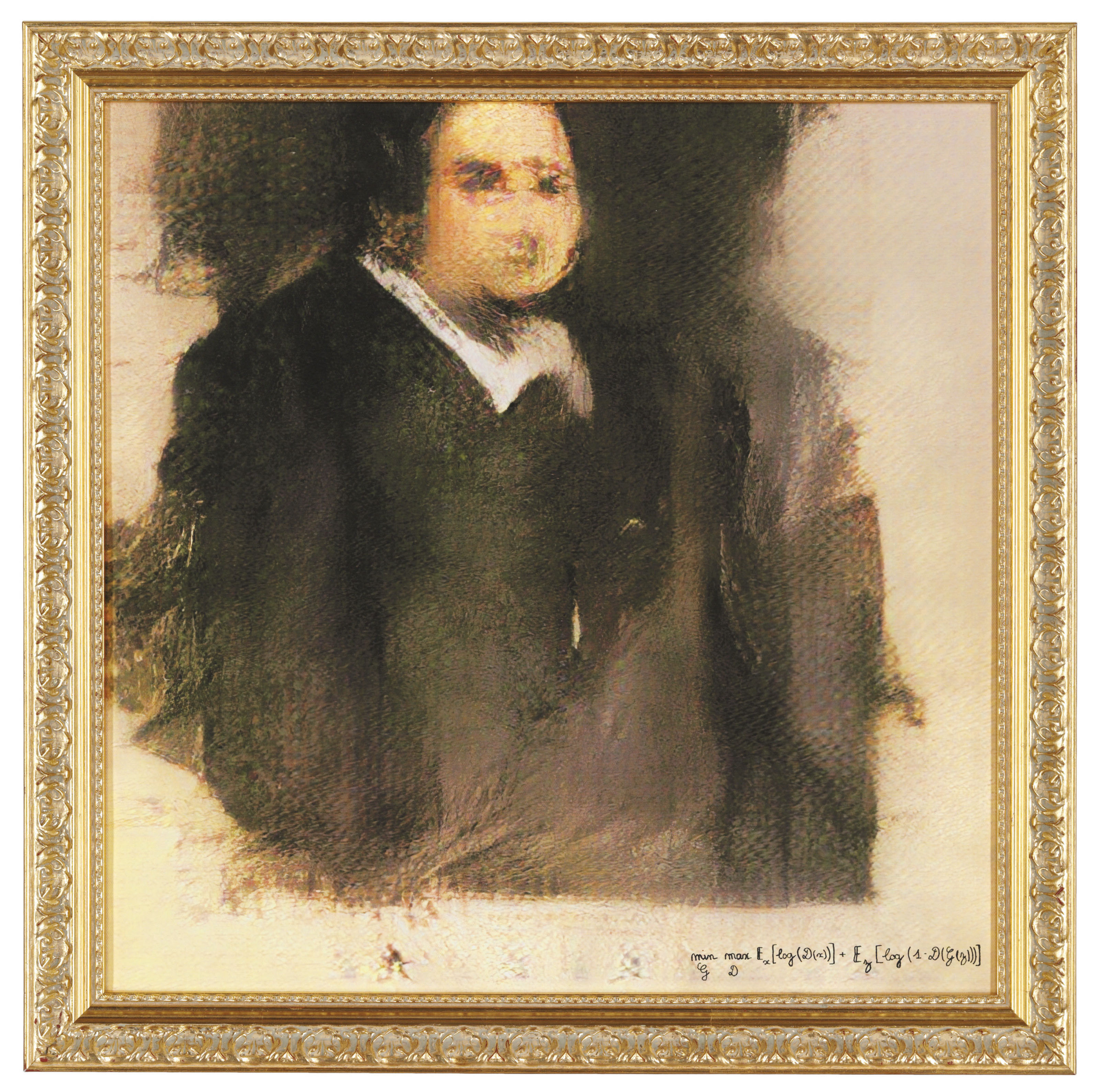
“Edmond de Belamy,” whom you see above, such as he is, is one of several members of a fictitious family created by a “generative adversarial network,” in turn created by French AI engineers and artists Obvious.

GANs comprise two parts, for which terminology differs but Obvious calls the “generator” and the “discriminator.” Both visual recognition models are given a set of data to ingest, in this case 15,000 portraits from the last 600 years or so. Based on this data, the generator attempts to create new portraits, and the discriminator tries to identify those portraits as either authentic or artificial. The less sure the discriminator is that an image is artificial, the closer it tends to be to the authentic portraits.

The Belamy family is the result of this process playing out many times, producing the strange, distorted faces that have a dreamlike, and also nightmarish, quality to them.

They’re also unmistakably computer-generated. The patriarch and Count of the family, for instance, though the colors and gross figure are interesting and in broad strokes painterly, the pattern of stippling (or whatever you want to tall it) is a telltale mark of a computer attempting to create consistent texture. His wife, the Countess, has a psychedelic oil-slick quality to her hair and dress that’s quite unnatural, and what appears to be craquelure on closer inspection is revealed to be an intricate warping structure reminiscent of Photoshop effects.

“It is an attribute of the model that there is distortion,” explained Hugo Caselles-Dupré, from Obvious, to Christies. “The Discriminator is looking for the features of the image — a face, shoulders — and for now it is more easily fooled than a human eye.”

Obviously it doesn’t quite match the old masters. But as you can see from the variety evinced by the Belamy clan, the system has a remarkable range and one can intuitively grasp the type of painting this is — perhaps each even reminds you of a real one.

The full Edmond.

Certainly someone thought that Edmond at least was worth having; Obvious estimated that the painting (though surely a print) would fetch perhaps €10,000 on the block. Imagine the group’s surprise when the bidding escalated to $432,500 — obviously $500 too much for one of the bidders. The new owner remains anonymous, though we may learn more later. For all we know it is Obvious itself (unlikely) or some art holdings company speculating that this early AI piece may become an historic one.

As for the signature, a rather tongue-in-cheek solution was lit on by the team: At the bottom right of Edmond’s canvas is part of the algorithm that created him (though far from all the code required to do so).

The work page is a bit more specific: “generative Adversarial Network print, on canvas, 2018, signed with GAN model loss function in ink by the publisher, from a series of eleven unique images, published by Obvious Art, Paris, with original gilded wood frame.”

We’re no closer to getting at the heart of art, deciding whether these generated constructs count as art, and if so, by whom, but it’s interesting nevertheless. Even if these aren’t exactly the kind of thing you’d want to hang on your wall. That’s true of most art anyway.

26 Oct 2018

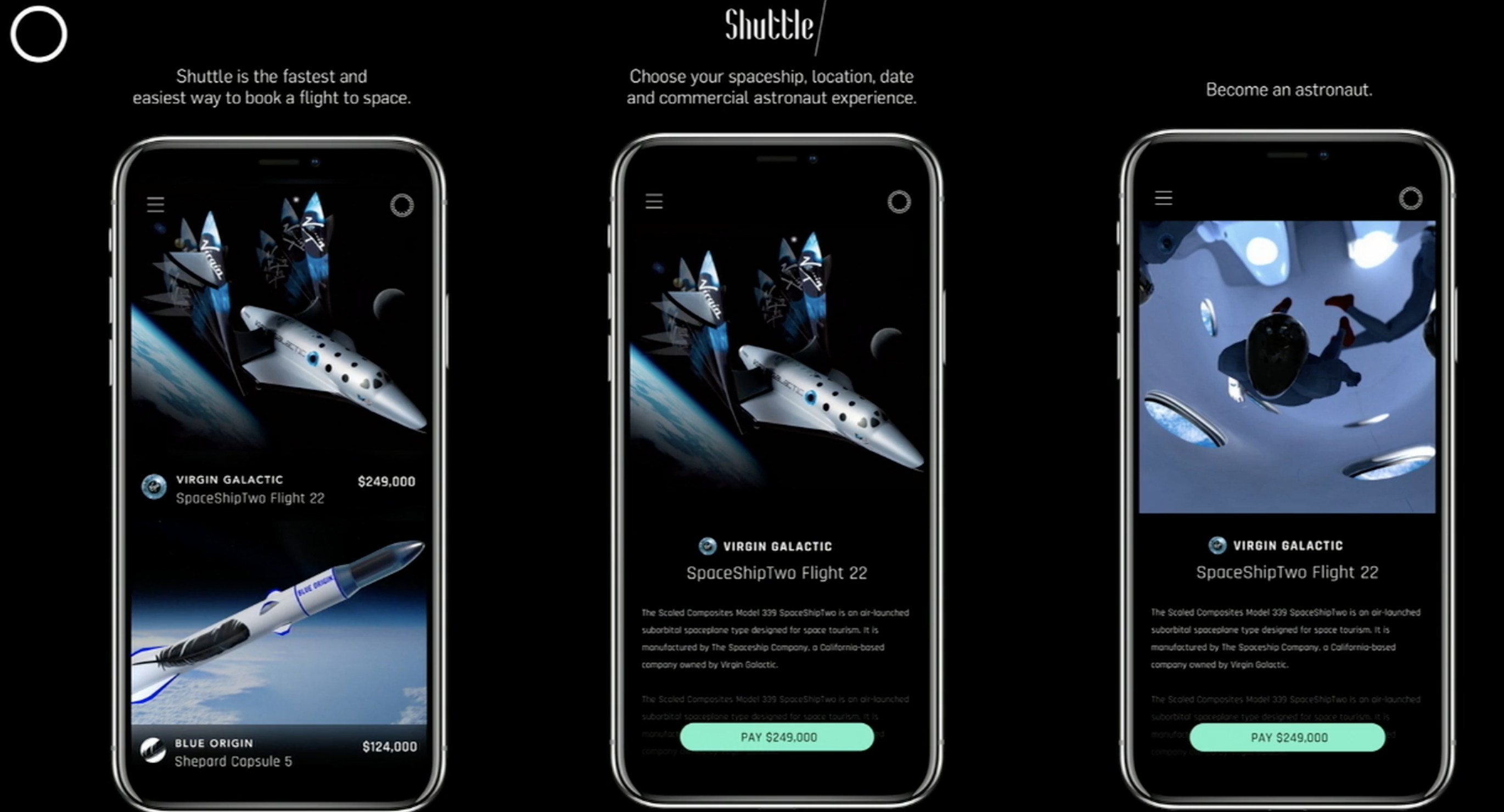
Meet Shuttle, the company that’s building a booking agent for spaceflight

Avery Haskell says he first knew he wanted to be an astronaut ever since he was a boy growing up in Houston near NASA’s Johnson Space Center.

The 24 year-old Stanford graduate who counts Stephen Hawking and Carl Sagan as his heroes, grew up in an entrepreneurial family. In the early days of the Internet his mother, an accountant in the oil and gas industry, and father, an information technology technician for a railroad, had launched their own startup called “Neighbornet” — an early version of Zillow (which never got off the ground).

Haskell, himself has bounced around the startup industry with forays into launching a crowdfunding startup, and stints at a few mobile technology companies, before landing on his current venture, Shuttle.

Launched earlier this year out of the Alchemist Accelerator and co-founded with cybersecurity expert and Wickr co-founder, Nico Sell, Shuttle is aiming to be the web and mobile-based booking agent for spaceflight.

“Space is my first love,” said Haskell, who helped found the Stanford Space Initiative at his alma mater. “I’ve always wanted to be an astronaut and help more people become astronauts. I thought it would  be cool to get more people to go to space and get more people interested in space travel.”

Haskell met Sell at the Alchemist Accelerator where she first worked as a mentor to the young entrepreneur. But she quickly became enamored with the idea of working at the edge of a new kind of frontier market. The day that Sell agreed to be the chair of Shuttle was the day Elon Musk’s SpaceX landed two booster rockets back on earth nearly simultaneously.

“I’m following Elon into space,” said Sell. “When I first started working with Avery I had asked ‘Are we really ready for that now?’ And after working with him I’m convinced that we are.”

Purchasing tickets on a flight listed on Shuttle isn’t the same as buying a plane ticket on Kayak, primarily because the price points are higher to the point of near-absurdity if you’re not a member of the super rich.

Offerings will range from trips on Virgin Galactic trips that will cost upwards of $250,000 in the near term to low-end packages that will include a zero-gravity flight aboard a tricked out Boeing 747 for the low-low price of just under $5,000 per-seat.

The company is actually taking orders for its first zero gravity flight, which it expects to launch from San Francisco in March 2019. That’ll give roughly 34 people the opportunity to experience weightlessness for around 8 minutes.

“Our mission is to open space up to everyone,” says Haskell. “We want to get more people to space so that the price goes down and so that more people can see earth from space and become private astronauts.”

Eventually, as more space tourism offerings become available, the company expects to sell additional packages. “There’s a luxury space hotel that’s being built right now,” says Sell. “It’s a million dollars a night and a 12 night minimum and every 90 minutes you see a sunset and a sunrise. Pretty soon there’s going to be a moon walk and a space walk that are available too.”

Shuttle is hoping to be the hub that aggregates all of these offers into a single one-stop shopping and media experience for consumers interested in seeking out existing planets and boldly going where only few men (and women) have gone before. And the company will offer virtual space tours and tickets to launches for the plebes who can’t afford an actual ride.

Initially, expect the ultra-rich or the ultra-subsidized to be the only folks that will be able to take these trips. Sell sees a lot of opportunities in corporate packages for business customers — likening it to a trip to Kelly Slater’s Surf Ranch for an executive retreat.

Sell believes that there will be upwards of 100,000 people in the next ten years who’ll be willing to plunk down the $50,000 to $250,000 that it will cost to go space.

Already, the company has $1.66 million in bookings off of 8 customers on four Virgin Galactic flights and four Zero Gravity Charters with commission rates of 5% to 10% on flights that average $250,000 per ticket.

As for what comes next, Haskell has some speculations. “We will probably be able to build a base on the moon very soon.. By 2030 that’s a possibility. Within my lifetime it will be pretty common for people to travel to and from other planets in space,” he said. 

For him, the importance of Shuttle is getting Earth’s human residents to realize the fragility of our existence on the tiny blue ball we all share. Haskell said his favorite quote from Carl Sagan was “We are a way for the cosmos to know itself.” And if that’s true, Haskell believes that the experience of traveling through the cosmos may be a way for humans to come to a better understanding of themselves as well. 

26 Oct 2018

Study: Latinx women-led startups have raised 0.4% of VC since 2009

In recent years, many have pushed to level the playing field for women in tech through new initiatives, funds, companies, support networks and more. White women, however, have emerged as the key beneficiaries.

Less has been done to bolster black and Latinx female founders specifically. Enter digitalundivided. The organization, which encourages black and Latinx women to pursue entrepreneurship, has been working to highlight just how extensive the disparity in funding is for black and Latinx female founders.

Today the company published its first-ever report on venture capital funding, or lack thereof, for Latinx female founders via its proprietary research arm, called ProjectDiane, in partnership with JPMorgan Chase.

The key takeaways: Latinx women make up 17.1 percent of the U.S. women’s population but less than 2 percent of women-led startups have Latinx women founders. Of the 107 Latinx women-led startups in digitalundivided’s database, 58 of them have raised more than $1 million in funding. Overall, Latinx women have raised only .4 percent of the more than $400 billion VC dollars invested in startups since 2009. 

“We are proud to be continuing the push toward a world where all women own their work through entrepreneurship, because that’s the path to real power and economic stability for black and Latinx communities,” said Kathryn Finney, digitalundivided’s chief executive officer, in a statement. “digitalundivided understands the impact of data on policy and startup ecosystems which is why we’re committed to using ProjectDiane to further develop data-driven programs for black and Latinx women founders and shape the narrative about women of color in startups.”

The company has released several reports on VC funding for black women founders. Their latest showed a slight increase in the number of black women to raise significant funding rounds. Still, black women have raised just .0006 percent of all VC since 2009.

In 2017, U.S. female-founded companies raised 2.2 percent of all VC, an abysmal and highly cited statistic. That number looks to be increasing ever-so-slightly in 2018, but the industry has a long way to go before capital is equally distributed.

26 Oct 2018

Microsoft has no problem taking the $10B JEDI cloud contract if it wins

The Pentagon’s $10 billion JEDI cloud contract bidding process has drawn a lot of attention. Earlier this month, Google withdrew, claiming ethical considerations. Amazon’s Jeff Bezos responded in an interview at Wired25 that he thinks that it’s a mistake for big tech companies to turn their back on the US military. Microsoft president Brad Smith agrees.

In a blog post today, he made clear that Microsoft intends to be a bidder in government/military contracts, even if some Microsoft employees have a problem with it. While acknowledging the ethical considerations of today’s most advanced technologies like artificial intelligence, and the ways they could be abused, he explicitly stated that Microsoft will continue to work with the government and the military.

“First, we believe in the strong defense of the United States and we want the people who defend it to have access to the nation’s best technology, including from Microsoft,” Smith wrote in the blog post.

To that end, the company wants to win that JEDI cloud contract, something it has acknowledged from the start, even while criticizing the winner-take-all nature of the deal. In the blog post, Smith cited the JEDI contract as an example of the company’s desire to work closely with the U.S. government.

“Recently Microsoft bid on an important defense project. It’s the DOD’s Joint Enterprise Defense Infrastructure cloud project – or “JEDI” – which will re-engineer the Defense Department’s end-to-end IT infrastructure, from the Pentagon to field-level support of the country’s servicemen and women. The contract has not been awarded but it’s an example of the kind of work we are committed to doing,” he wrote.

He went on, much like Bezos, to wrap his company’s philosophy in patriotic rhetoric, rather than about winning lucrative contracts. “We want the people of this country and especially the people who serve this country to know that we at Microsoft have their backs. They will have access to the best technology that we create,” Smith wrote.

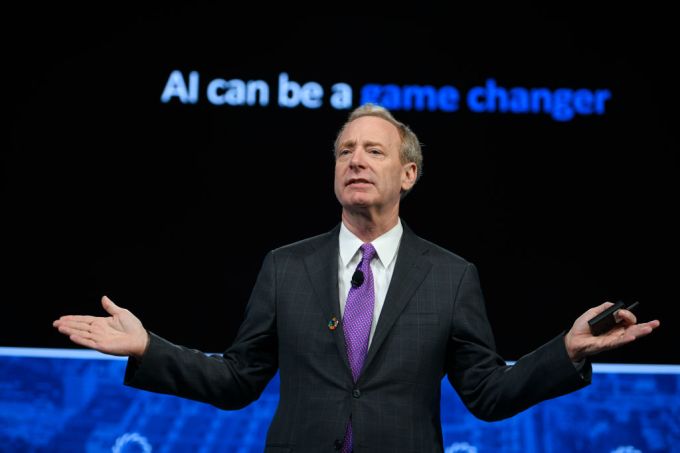
Microsoft president Brad Smith. Photo: Riccardo Savi/Getty Images

Throughout the piece, Smith continued to walk a fine line between patriotic duty to support the US military, while carefully conceding that there will be different opinions in a large and diverse company population (some of whom aren’t US citizens). Ultimately, he believes that it’s critical that tech companies be included in the conversation when the government uses advanced technologies.

“But we can’t expect these new developments to be addressed wisely if the people in the tech sector who know the most about technology withdraw from the conversation,” Smith wrote.

Like Bezos, he made it clear that the company leadership is going to continue to pursue contracts like JEDI, whether it’s out of a sense of duty or economic practicality or a little of both — whether employees agree or not.

26 Oct 2018

Google rolls out ‘.new’ links for instantly creating new Docs, Slides, Sheets and Forms

Google Docs just rolled out a time-saving trick that’s sure to be welcomed by heavy users of Docs, or any of Google’s other productivity tools like Sheets, Slides, Sites, or Forms. The company this week introduced its  “.new” domain, which can be used to instantly create a new file across any of these services, it says.

For example, instead of going to Google Drive, clicking the “new” button, then the service you want to use, you can just type “doc.new” to get started in a new Google Doc.

Google helpfully registered many variations on this domain, as well, so docs.new and documents.new also work.

And the same format applies across Google’s productivity apps, meaning you can also type in things like sheet.new, sheets.new, spreadsheet.new, site.new, sites.new, website.new, slide.new, slides.new, deck.new, presentation.new, form.new, or forms.new.

(Don’t type in the “www” – just the domain.)

If you tend to work with Google Docs on a regular basis, this little hack can end up saving a ton of time throughout your day. You can even bookmark the domains to use as shortcuts, so you can get to the same blank document with just a click.

This is all possible because Google owns the .new domain, which allows it to create whatever subdomains it wants on the site.

After Google tweeted the news on Thursday, users were so thrilled about the trick they started requesting other domains, too. “Do drawings pretty please,” asked one Twitter user. “Please also add email.new,” said another.

Google didn’t respond to those requests, but it wouldn’t be surprising if the domain was used in other ways across its apps in the future.


26 Oct 2018

Electric scooter startup Grin merges with Brazil-based Ride

Grin, the Mexico City-based electric scooter company backed by Y Combinator, is merging with Sao Paulo-based Ride to further the company’s expansion across Latin America. This comes shortly after Grin raised a ~$45 million Series A round.

Currently, Grin only operates in Mexico City, but it has plans to expand to other cities throughout Latin America. The merger with Ride, which already operates in Sao Paulo, will enable Grin to do this as early as next week, Grin co-founder Sergio Romo told TechCrunch.

As part of the merger, Ride will operate under the Grin brand in Brazil and the Ride team will be in charge of all of Grin’s operations in Brazil. Ride is currently the only shared electric scooter operator in all of Brazil, but that will soon change when Yellow deploys its scooters. Last month, Yellow raised a $63 million Series A round for its bike- and scooter-share company.

Grin has also partnered with Colombia-based Rappi, an on-demand delivery startup that raised $200 million back in August. This partnership, which will enable Rappi customers to unlock Grin scooters through the Rappi app, will help boost Grin’s expansion across Latin America, Romo said.

While LATAM is a huge market, Grin ultimately envisions operating its pick-up and drop-off scooter model worldwide.

“We definitely want to be global,” Romo said. “I don’t think you can become a ten-billion-dollar company if you don’t go global. I think LATAM might actually be the best market — there’s huge density and a huge market combined with Europe. And who knows, we might pop up in an American city soon if we do a good job. But this is definitely in our heads. This is engineered to be a global play.”

26 Oct 2018

California delays its net neutrality law while FCC’s new rules are challenged

California’s much-anticipated net neutrality rules, which were signed into law last month, are being put on ice until a challenge to the FCC’s own rules at the federal level is resolved. It’s unfortunate, but logical — if the FCC rules are undone or modified, the necessity and legality of California’s will also be affected.

As you likely remember, the FCC repealed 2015’s net neutrality rules at the end of 2017 and implemented a new, much weaker set that more or less puts broadband providers on the honor system when it comes to indiscriminate handling of your data in transit.

California responded by writing its own law establishing similar (and in some ways expanded) consumer protections. FCC Chairman Ajit Pai, who spearheaded the federal effort to overturn the old rules, was not amused; he called California’s rules “radical,” “anti-consumer,” “illegal” and “burdensome.”

So it was no surprise when, just hours after California governor Jerry Brown signed the bill into law, the FCC filed a lawsuit challenging it.

But the FCC is dealing with a challenge of its own: a lawsuit from a dozen or so internet advocacy companies including Mozilla, Vimeo, Public Knowledge, Etsy and others, alleging all manner of procedural and factual problems with the new federal rules.

If this suit succeeds and the FCC’s new net neutrality rules are rolled back or substantially altered (for instance, the court may find that some section or another is illegal or unenforceable), this could bear on the basis for the agency’s own lawsuit against California. Yes, it’s a bit confusing, and that’s why the state’s attorney general, Xavier Becerra, decided it might be best to wait and not litigate a suit that may be mooted a few months from now.

Senator Scott Wiener (D-CA) explained in a statement that he regrets but understands the necessity of this measure.

“Of course, I very much want to see California’s net neutrality law go into effect immediately, in order to protect access to the internet,” he said. “Yet, I also understand and support the Attorney General’s rationale for allowing the DC Circuit appeal to be resolved before we move forward to defend our net neutrality law in court. After the DC Circuit appeal is resolved, the litigation relating to California’s net neutrality law will then move forward.”

Ajit Pai also issued a statement on the matter, saying he was pleased California was staying implementation of “its onerous Internet regulations.”

“This substantial concession reflects the strength of the case made by the United States earlier this month,” he continued. “It also demonstrates, contrary to the claims of the law’s supporters, that there is no urgent problem that these regulations are needed to address.”

Although the rationale for this delay is understandable, it’s unfortunate that California residents will have to wait months or longer for the protections they supported while this case plays out. I’ve asked the AG’s office for more information and will update this post when I hear back.