Month: October 2018

25 Oct 2018

Snapchat loses 2M more users, shares sink to new low despite business growth

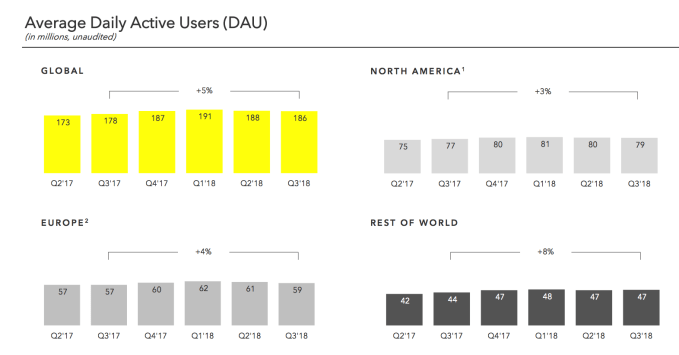
Snapchat continued to shrink in Q3 2018 but its business is steadily improving. Snapchat’s daily active user count dropped again, this time by 1 percent to 186 million, down from 188M and a negative 1.5 percent growth rate in Q2. User count is still up 5 percent year-over-year, though. Snapchat earned $298 million in revenue with an EPS loss of $0.12, beating Wall Street’s expectations of $283 million in revenue and EPS loss of $0.14, plus a loss of a half a million users.

Snap entered earnings with a $6.99 share price, close to its $6.46 all-time low and way down from its $24 IPO opening price. Snap lost $325 million this quarter compared to $353 million in Q2, so it’s making some progress with its cost cutting. That briefly emboldened Wall Street, which pushed the share price up 8.3 percent to around $7.57 right after earnings were announced.

But then Snap’s share price came crashing down to -9.3 percent to $6.31 in after-hours trading. The stock had been so heavily shorted by investors that it only needed modest growth in its business for shares to perk up, but the fear that Snap might shrink into nothing has investors weary. Projections that Snap will lose users again next quarter further scared off investors.

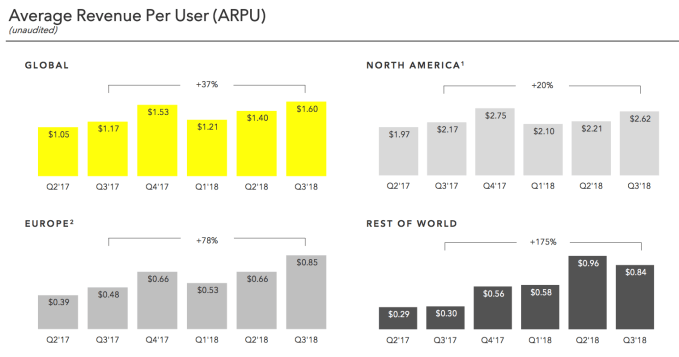
Worringly, Snapchat’s average revenue per user dropped 12.5 percent in the developing world this quarter. But strong gains in the US and Europe markets grew global ARPU by 14 percent. Snap projects $355 million to $380 million in holiday Q4 revenue, in line with analyst estimates.

In his prepared remarks, CEO Evan Spiegel admitted that “While we have incredible reach among our core demographic of 13- to 34-year-olds in the US and Europe, there are billions of people worldwide who do not yet use Snapchat.” He explained that the 2 million user loss was mostly on Android where Snapchat doesn’t run as well as on iOS. Noticibly absent was an update on monthly active users in the US and Canada. Snap said that was over 100 million monthly users last quarter, probably in an effort to distract from the daily user shrinkage. The company didn’t update that stat, but did say the “over 100 million” stat was still accurate.

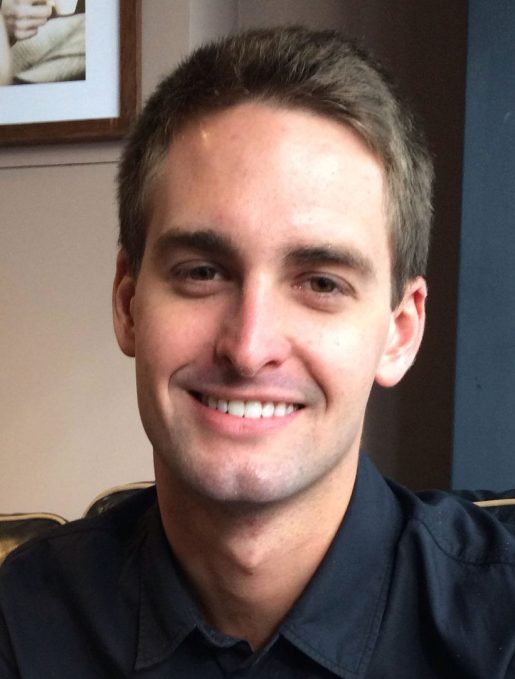
Snap CEO Evan Spiegel

Spiegel had said in a memo that his stretch goal was break-even this year and full-year profitability in 2019. But CFO Tim Stone said that “Looking forward to 2019, our internal stretch output goal will be an acceleration of revenue growth and full year free cash flow and profitability. Bear in mind that an internal stretch goal is not a forecast, and it’s not guidance.”

During the call, Spiegel responded to questions about the Android overhaul’s schedule saying, “Quality takes time. We’re going wait until we get it right”. But analysts piled on with inquiries about how Snap would turn things around in 2019. Spiegel said that expanding beyond the 13 to 34-year-old age group in the US and Europe, plus scoring more users in the developing world via the improved Android app. He admitted Snaps created per day had dropped from 3.5 billion to 3 billion per day, but tried to reassure investors by saying over 60% of our users are still creating snaps every day.

Now down to $1.4 billion in cash and securities, Snap will need to start reaching more of those international users or improving monetization of those it still has to keep afloat without outside capital.

An Uphill Battle

Q3 saw Snapchat’s launch its first in-house augmented reality Snappable games, while plans for an third-party gaming platform leak.  The Snappable Tic-Tac-Toe game saw 80 million unique users, suggesting gaming could be the right direction for Snap to move towards.

It launched Lens Explorer to draw more attention to developer and creator-built augmented reality experiences, plus its Storyteller program to connect social media stars to brands to earn sponsorship money. It also shut down its Venmo-like Snapcash feature. But the biggest news came from its Q2 earnings report where it announced it’d lost 3 million users. That scored it a short-lived stock price pop, but competition and user shrinkage has pushed Snap’s shares to new lows.

Snapchat is depending on the Project Mushroom engineering overhaul of its Android app to speed up performance, and thereby accelerate user growth and retention. Snap neglected the developing world’s Android market for years as it focused on iPhone-toting US teens. Given Snapchat is all about quick videos, slow load times made it nearly unusable, especially in markets with slower network connections and older phones.

Looking at the competitive landscape, WhatsApp’s Snapchat Stories clone Status has grown to 450 million daily users while Instagram Stories has reached 400 million dailies — much of that coming in the developing world, thereby blocking Snap’s growth abroad as I predicted when Insta Stories launched.. Snap Map hasn’t become ubiquitous, Snap’s Original Shows still aren’t premium enough to drag in tons of new users, Discover is a clickbait-overloaded mess, and Instagram has already copied the best parts of its ephemeral messaging. Snap could be vulnerable in the developing world if WhatsApp similarly copies its disappearing chats.

At this rate, Snap will run out of money before it’s projected to become profitable in 2020 or 2021. That means the company will likely need to sell new shares in exchange for outside investment or get acquired to survive.

25 Oct 2018

Snapchat loses 2M more users, shares sink to new low despite business growth

Snapchat continued to shrink in Q3 2018 but its business is steadily improving. Snapchat’s daily active user count dropped again, this time by 1 percent to 186 million, down from 188M and a negative 1.5 percent growth rate in Q2. User count is still up 5 percent year-over-year, though. Snapchat earned $298 million in revenue with an EPS loss of $0.12, beating Wall Street’s expectations of $283 million in revenue and EPS loss of $0.14, plus a loss of a half a million users.

Snap entered earnings with a $6.99 share price, close to its $6.46 all-time low and way down from its $24 IPO opening price. Snap lost $325 million this quarter compared to $353 million in Q2, so it’s making some progress with its cost cutting. That briefly emboldened Wall Street, which pushed the share price up 8.3 percent to around $7.57 right after earnings were announced.

But then Snap’s share price came crashing down to -9.3 percent to $6.31 in after-hours trading. The stock had been so heavily shorted by investors that it only needed modest growth in its business for shares to perk up, but the fear that Snap might shrink into nothing has investors weary. Projections that Snap will lose users again next quarter further scared off investors.

Worringly, Snapchat’s average revenue per user dropped 12.5 percent in the developing world this quarter. But strong gains in the US and Europe markets grew global ARPU by 14 percent. Snap projects $355 million to $380 million in holiday Q4 revenue, in line with analyst estimates.

In his prepared remarks, CEO Evan Spiegel admitted that “While we have incredible reach among our core demographic of 13- to 34-year-olds in the US and Europe, there are billions of people worldwide who do not yet use Snapchat.” He explained that the 2 million user loss was mostly on Android where Snapchat doesn’t run as well as on iOS. Noticibly absent was an update on monthly active users in the US and Canada. Snap said that was over 100 million monthly users last quarter, probably in an effort to distract from the daily user shrinkage. The company didn’t update that stat, but did say the “over 100 million” stat was still accurate.

Snap CEO Evan Spiegel

Spiegel had said in a memo that his stretch goal was break-even this year and full-year profitability in 2019. But CFO Tim Stone said that “Looking forward to 2019, our internal stretch output goal will be an acceleration of revenue growth and full year free cash flow and profitability. Bear in mind that an internal stretch goal is not a forecast, and it’s not guidance.”

During the call, Spiegel responded to questions about the Android overhaul’s schedule saying, “Quality takes time. We’re going wait until we get it right”. But analysts piled on with inquiries about how Snap would turn things around in 2019. Spiegel said that expanding beyond the 13 to 34-year-old age group in the US and Europe, plus scoring more users in the developing world via the improved Android app. He admitted Snaps created per day had dropped from 3.5 billion to 3 billion per day, but tried to reassure investors by saying over 60% of our users are still creating snaps every day.

Now down to $1.4 billion in cash and securities, Snap will need to start reaching more of those international users or improving monetization of those it still has to keep afloat without outside capital.

An Uphill Battle

Q3 saw Snapchat’s launch its first in-house augmented reality Snappable games, while plans for an third-party gaming platform leak.  The Snappable Tic-Tac-Toe game saw 80 million unique users, suggesting gaming could be the right direction for Snap to move towards.

It launched Lens Explorer to draw more attention to developer and creator-built augmented reality experiences, plus its Storyteller program to connect social media stars to brands to earn sponsorship money. It also shut down its Venmo-like Snapcash feature. But the biggest news came from its Q2 earnings report where it announced it’d lost 3 million users. That scored it a short-lived stock price pop, but competition and user shrinkage has pushed Snap’s shares to new lows.

Snapchat is depending on the Project Mushroom engineering overhaul of its Android app to speed up performance, and thereby accelerate user growth and retention. Snap neglected the developing world’s Android market for years as it focused on iPhone-toting US teens. Given Snapchat is all about quick videos, slow load times made it nearly unusable, especially in markets with slower network connections and older phones.

Looking at the competitive landscape, WhatsApp’s Snapchat Stories clone Status has grown to 450 million daily users while Instagram Stories has reached 400 million dailies — much of that coming in the developing world, thereby blocking Snap’s growth abroad as I predicted when Insta Stories launched.. Snap Map hasn’t become ubiquitous, Snap’s Original Shows still aren’t premium enough to drag in tons of new users, Discover is a clickbait-overloaded mess, and Instagram has already copied the best parts of its ephemeral messaging. Snap could be vulnerable in the developing world if WhatsApp similarly copies its disappearing chats.

At this rate, Snap will run out of money before it’s projected to become profitable in 2020 or 2021. That means the company will likely need to sell new shares in exchange for outside investment or get acquired to survive.

25 Oct 2018

What’s next for podcasting?

The podcast market will discover the answer to a foundational question about its future in the next few years. Will it continue along the path of music streaming, where all podcasts are available everywhere on free, ad-supported tiers? Or, will it follow the path of streaming TV into paid subscription services with exclusive content?

Today, effectively all of the industry’s revenue is from advertising — at least in the United States. However, we’re seeing the first steps being taken toward paid subscriptions and exclusive content. Based on numerous discussions I’ve had with top figures in podcasting over the last month, it’s clear that popular shows are getting large offers for exclusivity on podcasting platforms, major Hollywood players are entering the market, and some top VCs are willing to back new streaming platforms taking a Netflix approach to podcasts (like Luminary Media which raised a $40 million seed round).

Many in the industry are deeply skeptical of that business model and for good reason: we don’t have concrete evidence that consumers in the US will pay for podcasts and ad revenue is becoming quite lucrative for the top shows as the format gains popularity. But that precedent has hardly been entrenched, as the sector is only just now gaining mainstream consumer interest and getting attention from Hollywood.

And, there’s a macro problem with betting on ads. The dominance of Facebook and Google over all digital ad spending has already driven a shift to subscriptions across music, video, and publishing. Even with dramatic market growth, podcasting doesn’t have a comparative advantage in competing against the scale and ad-targeting of the duopoly.

Subscription tiers and exclusive shows (akin to Netflix Originals) can, on the other hand, provide a virtuous cycle of quality content and stable revenue, generating recurring revenue directly from consumers who might ultimately pay for multiple streaming subscriptions to access different shows.
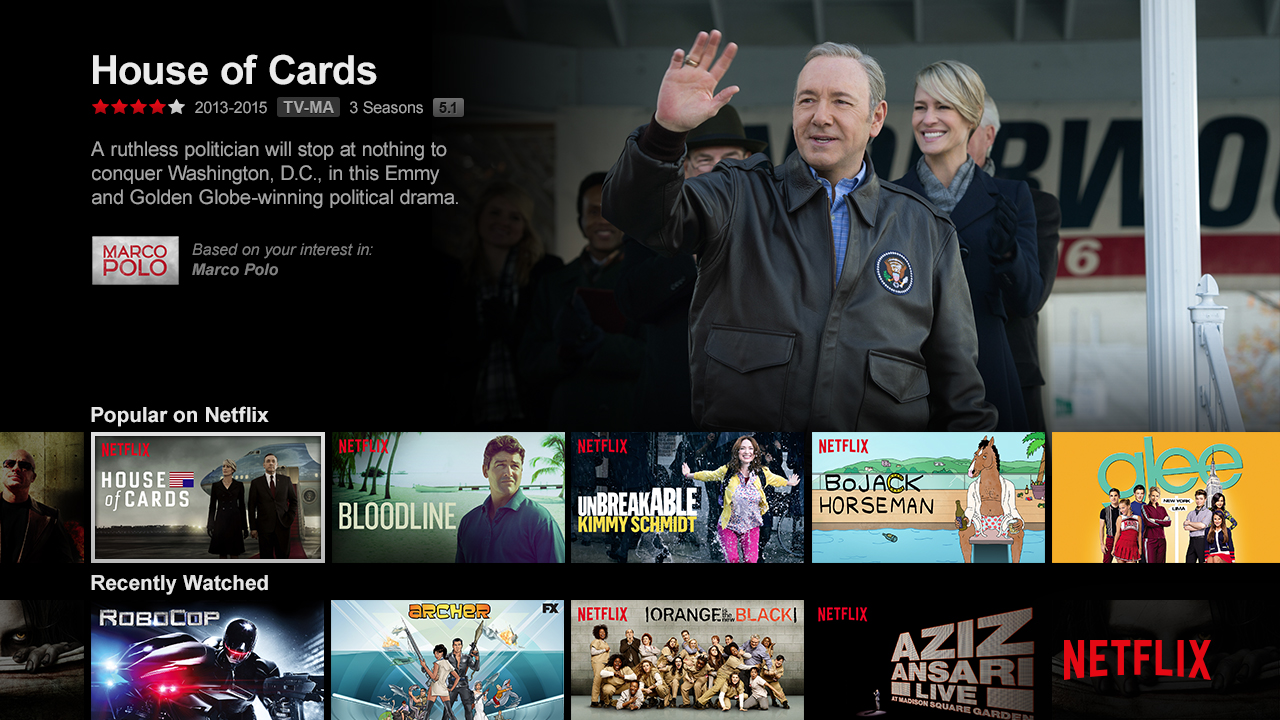
Could podcasting go the direction of streaming TV, with subscription tiers and original series? The breakout success of House of Cardsthe first Netflix Original—set the stage for Netflix’s dominance in streaming TV.

Podcasting’s future looks more like Hollywood than like NPR radio

The annual Infinite Dial survey by Edison Research tracked that the percent of Americans over age 12 who listen to a podcast in a given month grew steadily from 9% in 2008 to 26% (or 72 million people) in 2018. Fifty-four million Americans, or 17% of those over 12, are weekly podcast listeners with a mean weekly listening time over 6.5 hours.

The popularity of podcasts still exists primarily within a demographic niche, however. Roughly half of podcast listeners make $75,000 or more in annual income and a clear majority have a college degree (in fact, one-third have a master’s degree). This highlights how much potential for audience growth there still is. Podcasts are still mainly formatted like NPR radio shows, with hosts discussing politics, business, or society and a particular audience demographic tuning in as a result.

But podcasting is just a content medium and should be filled with shows that appeal to all different types of people, just like music, TV, film, publishing sites, and YouTube each have a vast range of content for everyone. Tom Webster, the SVP of Edison Research who co-authors that big annual survey on podcasting, highlighted in a recent blog post the discrepancy between the format and topics of the most popular podcasts and those of the most popular TV shows.

Addressing this gap in diverse show types is the thesis behind large new podcast production companies like Gimlet Media, Wondery, and Endeavor Audio. Endeavor Audio launched on September 13 as the podcast division of entertainment conglomerate Endeavor, dedicated to financing, developing, and marketing podcasts made for as diverse a set of topics and styles as there are in TV: scripted dramas, competition shows, documentaries, etc. that appeal to different audiences. Endeavor also owns WME, the world’s largest talent agency, giving it distinct advantage in creating new shows that draw on the skills of top creative talent in Hollywood. The upcoming wave of podcasts crafted to be more like TV shows than radio shows is what could bring tens of millions new listeners into the podcast market.

That will only be accelerated through music streaming services’ entry into the market and the rapid consumer adoption of smart speakers. Spotify, Pandora, iHeartRadio, and others have made podcasts a priority over the last year, promoting shows to millions of users who aren’t already into podcasting. Smart speakers like the Amazon Echo and Google Home make it easier for people who hear about a podcast to try it (just ask Alexa to play it) and will likely increase podcast listening among those in age groups that have lower smartphone penetration (children and people over 55).

Advertising isn’t the best path forward

Last year the US market size for podcast ad revenue was only $314M and this year it will still be around $400M (according to the IAB). That’s extraordinary annual growth for an industry but it’s still tiny in absolute value. Justine and Olivia Moore at VC firm CRV crunched the numbers to show that podcasting makes 10x less money per hours consumed than any other major content medium. There’s a lack of monetization on the vast majority of podcasts: the minimum number of downloads per podcast needed to enroll in the industry’s ad marketplaces or start discussions with most advertisers is 50,000. As they noted, this is attributable to a range of issues like lack of programmatic advertising, lack of analytics, and lack of consistent measurement standards.

Life is admittedly getting good for the most downloaded shows now that the podcasting market is getting serious attention. One executive I discussed this with (who represents several top podcast creators) says there are a handful of podcasts generating eight-figures in ad revenue per year, a rapidly growing tier making seven-figures, and a large “middle-class” making six-figures. That’s before income from touring, merchandise, and book/film/TV deals. The going rate for ad spots is anywhere from $20-50+ CPMs and podcast ads tend to have a higher conversion rate than video ads.
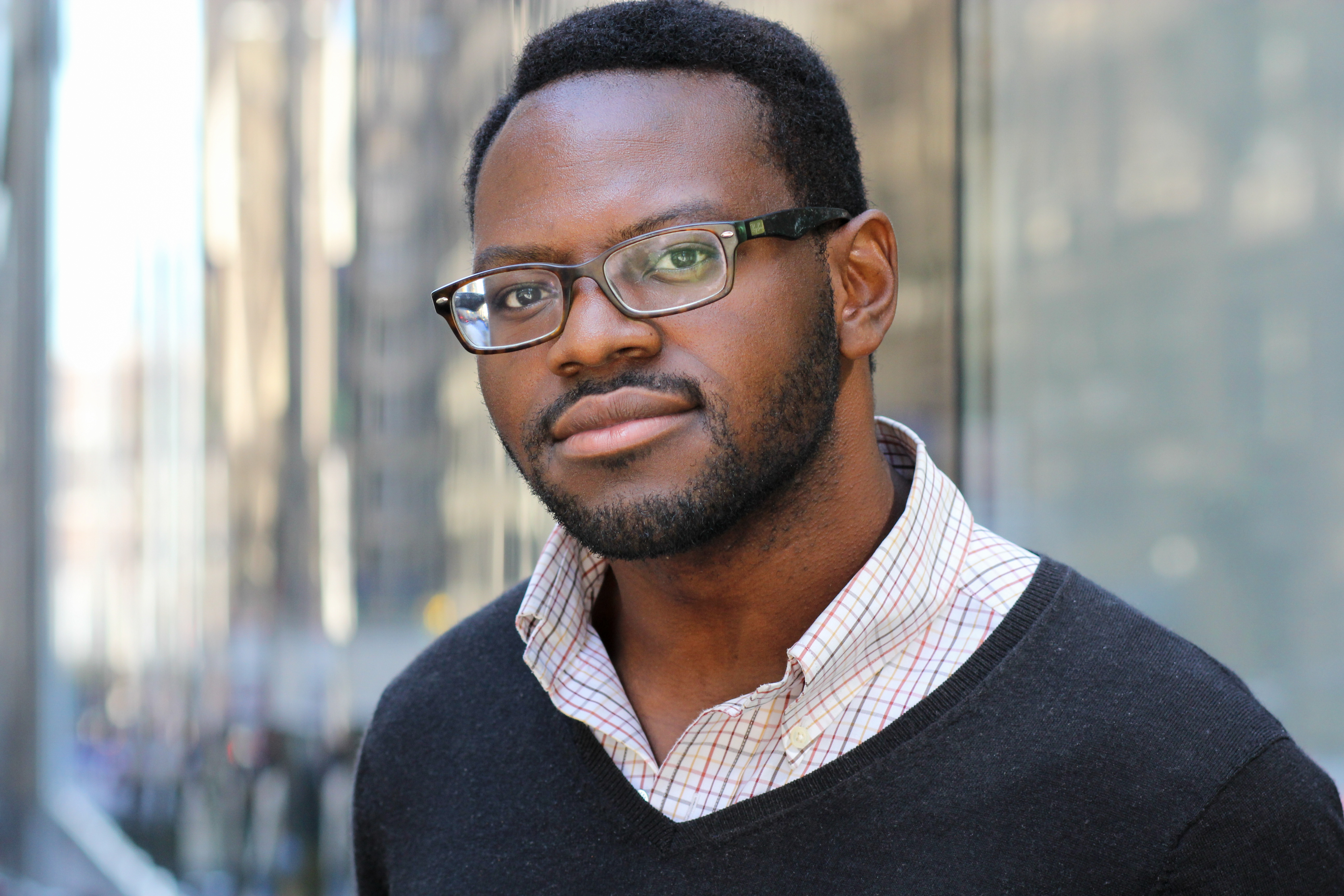
As General Manager of Endeavor Audio – the new podcasting division of entertainment conglomerate Endeavor – Moses Soyoola is overseeing a group that’s bringing top Hollywood talent into the podcast space and financing new types of shows.

But near-term financial gains are not the primary reason that big names in Hollywood are getting interested in producing podcasts, according to Endeavor Audio general manager Moses Soyoola. When we spoke recently, he explained that while the income can reach into the seven figures on successful shows, that’s still less than what they can make in other creative projects. They see podcasting as a brand-building mechanism, however, and as an opportunity to understand a new storytelling format that could become even more lucrative in the future.

As with all ad-dependent content, the losers right now are those with passionate niche audiences and those producing big-budget shows that advertisers treat the same even if audiences find much deeper value in. A creator with a devoted fan base of 30,000 listeners cannot currently tap into advertising nor easily turn to subscriptions as an alternative. Listening to an hour’s worth of news discussion that the hosts record over a couple hours day-of generates roughly the same ad revenue as listening to an hour installment of a show that takes months to produce.

With the growing number of narrative podcasts being created by Endeavor Audio and others, the need to include numerous ad spots throughout them is disruptive, pulling audiences out of the story. It constrains the format and limits content within the boundaries of family friendliness that major advertisers are comfortable with. This is like the historic difference between network TV shows and HBO shows, which — freed from ad breaks and advertiser concerns — became the crown jewel of TV dramas and went on to consistently top the Emmy Awards winner list.

Would people pay for podcasts?

China is the inverse of the Western podcast market. The Chinese “podcast” market dwarfs that of the US because it is the norm to have paid subscriptions for shows rather than rely on advertising. To my understanding, the definition of podcast here may be broader than the scope in the US — by including audio courses — but the Chinese government estimated the market for paid podcasts alone as $7.3 billion in 2017.
We know consumers in the West are willing to pay subscriptions for film/TV and for ad-free streaming music, so why not for podcast streaming? New content formats often start free, have lagging monetization, then as the audience grows enough and creators experiment enough, premium content rises up that people are willing to pay for. Podcasts have been around for two decades but are just now going mainstream and seeing serious investment from Hollywood.

We saw with music streaming and satellite radio that many consumers are willing to pay in order to eliminate audio ads from music that’s otherwise free to listen to. Spotify has made a big push into podcasts over the last few months; it creates branded podcasts in collaboration with advertisers but can’t remove ads that are within podcasts it distributes. As podcasts turn to programmatic advertising — and large streaming services like Spotify push them there in order to serve up the ads — it would be surprising if Spotify didn’t make podcasts ad-free for its Premium tier subscribers and encourage podcast listeners to go Premium.

Most podcasts aren’t worth paying for, just like most articles on the internet aren’t worth paying for. Paywalled content has to be exceptional to stand out from the noise and get consumers to open their wallets. The freemium model is most likely to become the norm in podcasting, with most podcasts available free and ad-supported but some particularly high-quality shows restricted to a paid subscription tier that’s ad-free.

Streaming competition will drive exclusivity

If we’re being honest, the existing podcast streaming services — and there are many — are all the same. They are simple utilities for searching for and playing a show. No one has cracked the nut of discoverability in a differentiated way: making podcasts easy to discover based on topic and style and having a personalized recommendation tool that works as well as Pandora and Spotify music recommendations do.

Streaming services of any content format struggle to differentiate on user interface alone. Users are there for the content — that’s the product they’re after. So ultimately, the way to differentiate is via exclusive content that audiences eagerly want. That’s true whether the service has a paid subscription or not, but maintaining a profitable subscription tier is nearly impossible if one’s competitors are able to offer all the same content for cheaper. Differentiation requires differentiated content available in the subscription that can’t be gained elsewhere: high-quality original shows.

This past summer, Spotify launched its first Spotify Original Podcasts, including a $1 million deal with comedian Amy Schumer to develop “3 Girls, 1 Keith” (which it just renewed for a second season). Schumer’s podcast isn’t exclusive to Spotify but it’s easy to envision the streaming service signing future podcast deals as exclusives as its base of podcast listeners grows (it has rapidly become the second most popular podcast platform after Apple’s Podcasts app).

Each individual I’ve spoken to over the last few weeks who runs a leading podcast production company said they are getting approached by numerous streaming platforms about exclusive shows. Most aren’t taking the deals, at least not yet, but it’s clear the industry is about to run this experiment over the next couple years and see if consumers buy in.

A couple of the executives I met noted that the deals top podcast services are offering for exclusivity are quite lucrative, but when you factor in how much the reduced audience size that comes with being exclusive limits touring, merchandise sales, and potential for a book/film/TV deal, it’s a tougher sell.

That has been true, but I think it’s quickly changing. Given how much consumer adoption of podcasts is poised to grow, the top few podcast streaming services (by monthly active users) could each enable an exclusive podcast to still reach an audience in the millions of listeners. In particular, I’m talking about Apple Podcast, Google Podcasts, Spotify, Pandora, and iHeartRadio given their pre-existing install bases. It’s also a rational decision for each of them to overpay for exclusivity of hit shows in these early days of the market — the short-term loss on a given show is an investment in becoming the preferred streaming service for millions of new podcast listeners.

The streaming platforms don’t have the leverage to negotiate ownership over exclusive podcasts—there’s too much competition between them and optionality for podcast creators—so creators will retain rights to develop touring, merchandise, book/film/tv deals, and other revenue streams. As a successful TV producer explained to me, the consideration of turning a podcast into a TV show is the same as turning a book into a TV show: it’s about whether it’s a captivating story that engages the audience; the existing audience size will affect deal terms but a hit podcast only being on iHeart or Spotify wouldn’t inhibit it from getting a deal.
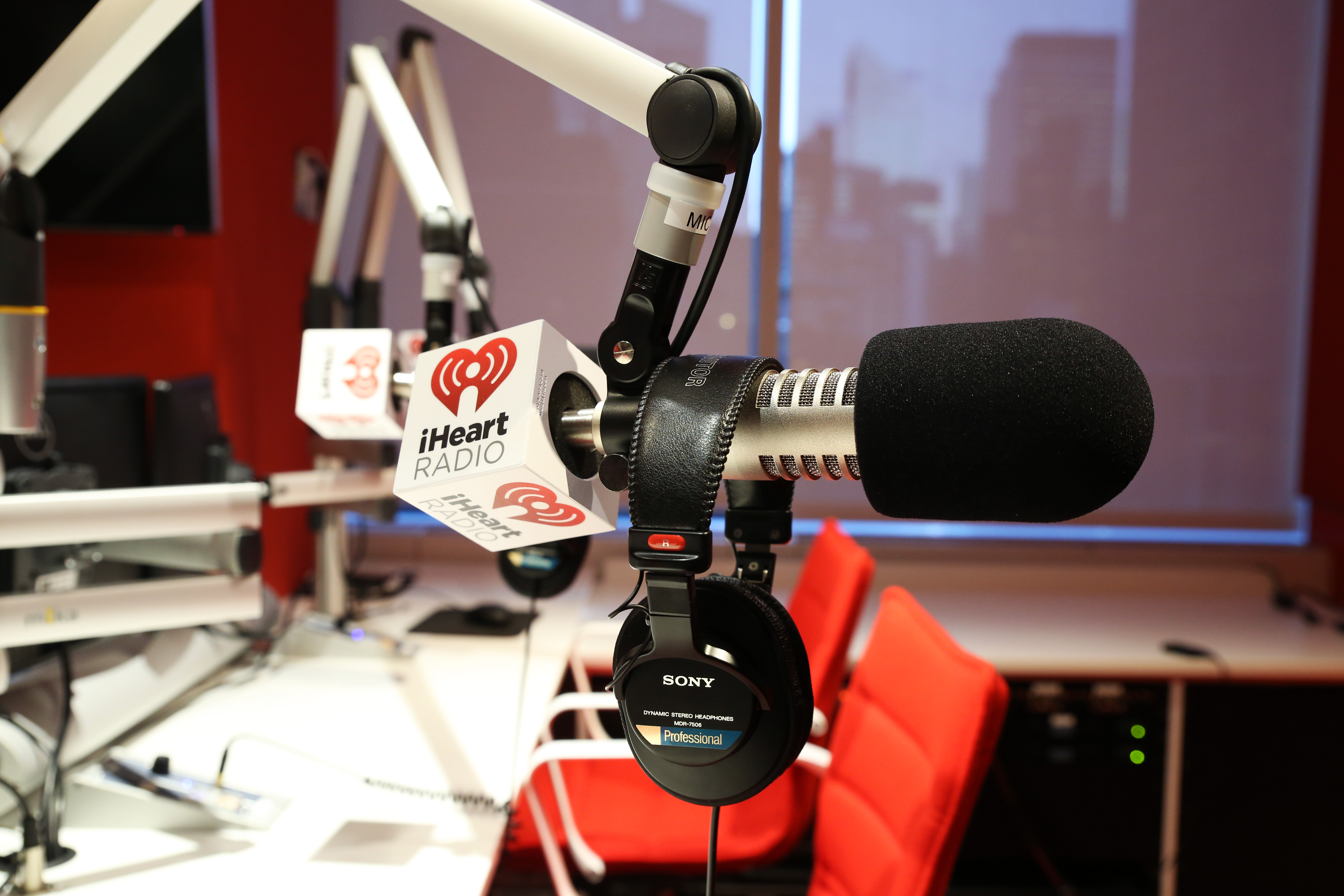
iHeartMedia

If one company is uniquely positioned to offer exclusive shows without a paid subscription tier, it’s iHeartMedia (which acquired the Stuff Media podcast network in September). In addition to its iHeartRadio streaming service, it can syndicate shows across its radio stations which reach 250 million Americans per month. That could generate more ad revenue than from a show existing solely across podcast apps and give it a bigger fan base to benefit touring and other revenue streams.

Looking at how exclusivity could impact consumers’ experience, it’s notable that people are typically on the hunt for just one podcast to listen to in a given session. With lengths typically 25-60 minutes, this is most similar to picking out a TV episode. Music services need full libraries of the world’s songs because people listen to a wide range of 3-4 minute songs in the same sitting and organize them into custom playlists of every imaginable combination. Having music divided between separate streaming platforms would be disruptive to the core experience of a music listening session. Switching apps to listen to a different podcast might not be any more inconvenient than doing so for TV shows on different streaming services.

Podcasting should embrace “listener revenue”

Direct “listener revenue” from paid subscription tiers enable a whole swath of niche content creators to make a living creating high-quality podcasts for a small, passionate audience and they enable worthwhile return-on-investment for big budget productions that audiences find deep value in. Importantly, subscription tiers across the major podcast streaming platforms would drive an industry-wide focus on shows that gain popular acclaim rather than shows that maximize initial downloads or streams (just like subscription publishing incentivizes quality over clickbait).

Breakout shows that receive pop culture buzz will be critical to any paid subscription tier in podcasting gaining traction, like the success of House of Cards and Orange is the New Black were critical to Netflix gaining respect for its Netflix Originals and differentiating from competitors. Such breakouts will likely involve a big name from Hollywood whose existing fan base drives a critical mass of initial listeners, and whose name recognition lends credibility to a potential paid tier subscriber. And it will almost certainly be a narrative format rather than another talk show.

Incumbents moving into podcasting from music streaming (or that are operating systems able to pre-install their app) have a distinct advantage here over startups dedicated to podcast streaming. Established players can expose millions of existing users to their own shows and bundle premium podcasts into existing subscription plans. Podcast streaming startups hoping to break through will need a lot of initial capital to develop their own shows and will need to seek bundling partnerships with companies that already have distribution — like mobile carriers and subscription video platforms. Luminary Media in NYC, founded by Matt Sacks of NEA, might be the first to launch with this approach: with a $40 million seed round, it’s aiming for a majority of content on its upcoming subscription streaming service to be its own originals within 3 years. Don’t be surprised if a couple other VC-backed podcast apps take this route in the year ahead as well.

It is likely we will see a combination of exclusive shows and paid subscription tiers develop on several platforms over a period of the next 18-36 months. It won’t happen overnight, but looking at the precedent set in other content formats and having spoken to two dozen senior figures in the industry during the past month, we seem to be in the early days of this shift, driven by the growth of podcasting from talk shows into a broader entertainment medium.


25 Oct 2018

Airbnb is bringing on new CTO from Google

Ahead of Airbnb’s expected initial public offering sometime within the next two years, the accommodation rental business has brought on a new chief technology officer. Aristotle Balogh, formerly Google’s VP of engineering, application storage, indexing and serving, is starting at Airbnb in mid-November.

Airbnb co-founder Nathan Blecharczyk previously served as the company’s CTO up until January 2017 when he became chief strategy officer. Since then, Airbnb VP of Engineering Michael Curtis was tasked with overseeing all technical responsibilities. Now, with Balogh, whom Curtis helped select to serve as CTO, on board, Curtis is leaving the company.

“Ari stood out as someone driven by mission and values, and as a passionate technologist,” Curtis said in a statement.
“We’ve worked together in the past and I’ve seen his leadership in action. He’ll bring great experience and perspective to Airbnb.”

Curtis has been thinking about leaving Airbnb for some time so that “he could focus on his family and other projects of interest,” Airbnb spokesperson Tim Rathschmidt told TechCrunch via email. “After discussing this change with Brian Chesky, they agreed that Mike would step down after helping the company choose his successor. ”

In Balogh’s new role at Airbnb, Balogh will report to Airbnb CEO Brian Chesky and be tasked with leading infrastructure, information security, IT, engineering for payments, trust and community support.

“I’m thrilled Ari is joining Airbnb as our CTO,” Chesky said in a statement. “He has a strong vision for keeping our community at the center of everything we do and every technical decision we make, and an incredible track record of developing leaders and nurturing an inclusive culture.”

Earlier this year, Airbnb had an executive shakeup with its Chief Financial Officer Laurence Tosi leaving the company, following some reported tension between Chesky and Tosi over the future of the company. Around the same time, Airbnb promoted Belinda Johnson, its former chief business affairs and legal officer, to the role of chief operating officer.

25 Oct 2018

Silicon Valley is waiting for the dust to settle in Saudi Arabia, but other headwinds are picking up

It’s been painful, the silence of Silicon Valley with regards to Saudi Arabia, whose shifting accounts about the murder of journalist Jamal Khashoggi have nearly veered into slapstick.

He freely walked out the Saudi consulate in Istanbul. Actually, rogue killers got to him. No, he was in a fist-fight and was subdued to death by Saudi officials. Fine. We did set out to brutally murder him, just as Turkish officials said at the outset.

It isn’t hard to understand why the story of Khashoggi’s final moments has finally come full circle. Why not just tell the truth when the world — including everyone in technology who has taken the region’s money — is too cowardly or greedy to take a stand against it?

In fairness, breaking up with Saudi Arabia, which has drenched the Bay Area in capital, is easier said than done. Forcing an investor to sell is practically impossible if it has a contractual right to be involved and isn’t interested in selling to other shareholders for a higher price. No doubt, too, many see little to gain by speaking ill of Crown Prince Mohammad bin Salman, or MBS, who is running the show and may be more menacing than they’d realized. In fact, while some in tech are using this moment to win points for not raising money from murderous regimes, nary a recipient of MBS’s capital has spoken publicly about why he or she won’t again accept funding from Saudi Arabia until MBS is removed from his powerful position. Not a single person.

From what we’re hearing, even SoftBank —  whose $93 billion Vision Fund is anchored by a $45 billion commitment from MBS — looks likely to move forward with its relationship with the desert country. Indeed, comments made last week by SoftBank’s COO Marcelo Claure, who said there was “no certainty” that SoftBank will launch another Vision Fund, were probably overblown. Many will be relieved if that second fund materializes, too. Still, if we were running a unicorn company, we wouldn’t get too comfortable.

Even assuming that the Vision Fund continues to deploy billions of dollars with the help of MBS, it will take time to get his scent off future rounds. As analyst Chris Lane of Sanford C. Bernstein & Co. told Bloomberg earlier today, likely SoftBank will have to pause three to six months before starting to again cut major deals, owing to its ties to the prince.

In the meantime, the Khashoggi ordeal looks increasingly like part of a series of shocks that are bound to have a systemic effect —  and make burn rates more important than ever to control.

Consider: While we’re busy obsessing over MBS, longer-term frictions with China — which has also soaked Silicon Valley in capital — grow more concerning by the day, from an ongoing trade war with the U.S., to allegations of intellectual property theft, to Beijing’s continued militarization of disputed islands in the South China Sea, to newer concerns over currency manipulation.

There’s also the performance of the U.S. stock market, which is reacting to these various pressures. Tech shares are pushing U.S. benchmark indexes back into positive territory today — one day after the year’s stock market gains were completely wiped out. But these zigs and zags have U.S. endowments, foundations and pension fund managers feeling nervous. More worrying, these traditional “limited partners” to venture firms are already over allocated to venture as an asset class because the cadence of fundraising has been faster than ever in recent years while exits have been comparatively slow.

“We keep stuffing the snake,” says Chris Douvos, an LP who has helped fund numerous seed-stage firms over the years, including First Round Capital. “But not as much is coming out the back end as coming in the front end. That’s left everyone with a huge bubble” with which to contend.

Douvos isn’t sure how big an impact tech’s suddenly strained relationship with Saudi Arabia could have, but he thinks — as we do — that it could be the first shoe to drop. He thinks that’s not necessarily a terrible thing, either. While a flood of capital from around the world has changed how Silicon Valley builds companies, it might be time to rethink that process anew.

“Maybe being cash-flow negative until you’re a $100 billion company isn’t sustainable. Maybe you start building toward earlier profitability,” says a hopeful Douvos. “That’s very much at odds with the traditional Silicon Valley ethos, but it starts to untangle the web of all this trapped capital.”

It would also give public shareholders an earlier crack at fast-growing companies and perhaps help Silicon Valley find its backbone.

More realistically, such headwinds may see U.S. companies that can’t stand on their own run even faster to Saudi Arabia. And what they’re likely to find is a more emboldened young prince — his terms more cutthroat.

Above: Salah Khashoggi, a son of slain journalist Jamal Khashoggi, who has been banned from leaving Saudi Arabia and who was forced on Monday to visit the royal court and accept the condolences of MBS.

25 Oct 2018

White House belatedly begins planning for 5G with memo asking for policy recommendations

The White House has issued a memorandum outlining the need for a new national wireless connectivity strategy; the document doesn’t really establish anything new, but does request lots of reports on how things are going. Strangely, what it proposes sounds a lot like what the FCC already does.

The memorandum, heralded by a separate post announcing that “America Will Win the Global Race to 5G,” is not exactly a statement of policy, though it does put a few things out there. It’s actually more of a request for information on which to base a future policy — apparently one that will win us a global race that began years ago.

In fact, the U.S. has been pursuing a broad 5G policy for quite a while now, and under President Obama we were the first country to allocate spectrum to the nascent standard. But since then progress has stalled and we have been overtaken by the likes of South Korea and Spain in policy steps like spectrum auctions.

After some talk about the “insatiable demand” for wireless spectrum and the economic importance of wireless communications, the memo gets to business. Reports are requested within 180 days from various Executive branch departments and agencies on “their anticipated future spectrum requirements,” as well as reviews of their current spectrum usage.

The Office of Science and Technology Policy is asked to report in the same time period on how emerging tech (smart homes and grids, for instance) could affect spectrum demand, and how research and development spending should be guided to improve spectrum access.

Another report from the Secretary of Commerce will explain “existing efforts and planned near- to mid-term spectrum repurposing initiatives.”

270 days from today the various entities involved here, including the National Telecommunications and Information Administration and the FCC, will deliver a “long-term National Spectrum Strategy” that hits a number of targets:

  • Increase spectrum access, security and transparency
  • Create flexible spectrum management models, including standards, incentives, and enforcement mechanisms
  • “Develop advanced technologies” to improve spectrum access and sharing
  • Improve the global competitiveness of U.S. “terrestrial and space-related industries” (which seems to encompass all of them)

It’s not exactly ambitious; the terms are vague enough that one would expect any new legislation or rules to accomplish or accommodate these things. One would hardly want a spectrum policy that decreased access and transparency. In fact, the previous administration issued spectrum memos much like these, years ago.

Meanwhile this fresh start may frustrate those in government who are already doing this work. The FCC has been pursuing 5G and new spectrum policy for years, and it’s been a particular focus of Chairman Ajit Pai. He proposed a bunch of rules months ago, and just yesterday there was a proposal to bring Wi-Fi up to a more compatible and future-proof state. It’s entirely possible that the agency may have to justify and re-propose things it’s already doing, or see those actions and rules questioned or altered by committees over the next year.

FCC Commissioner Jessica Rosenworcel was not enthusiastic about the memo.

“We are ripping up what came before and starting with a new wireless policy sometime late next year. But the world isn’t going to wait for us,” she said in a statement provided to TechCrunch. “Other nations are moving ahead with strategies they are implementing now while we’re headed to study hall — and in the interim we’re slapping big tariffs on the most essential elements of 5G networks. If you stand back and survey what is happening, you see that we’re not expediting our 5G wireless leadership, we’re making choices that slow us down.”

Whether this new effort will yield worthwhile results, we’ll know in 270 days. Until then the authorities already attempting to make the U.S. the leader in 5G will continue doing what they’re doing.

25 Oct 2018

The biggest threat to drone innovation is a group you’ve never heard of 

A little-known but highly influential group of attorneys from across the country will soon meet in Detroit and could change our skies forever. They claim their draft model legislation concerning drones will help protect privacy. However, their actions could have far-reaching effects on innovation, safety and future drone operations.

The state-appointed members of the Uniform Law Commission (ULC) aim to promote uniformity by proposing model legislation for consideration by legislatures across the country.

In Detroit, the ULC will continue work on a proposed “Tort Law Relating to Drones Act” drafted by commissioners who have no aviation or drone experience and without consulting the federal government, state legislators or the industry. Their subsequent proposal fails to recognize the federal government’s exclusive control of airspace regulation and runs counter to existing law.

The draft proposal draws an inflexible, arbitrary line 200 feet in the sky and, if enacted by the states, would establish a new aerial trespass law. It anoints private property owners as de facto air traffic controllers, giving them a right to establish no-fly zones and creating a maze of flight paths with differing rules that operators must navigate on a house-by-house basis. As the draft goes much further than any existing state or federal law, it’s likely to cause significant controversy and could create a complicated patchwork of differing state laws that erode, rather than enhance, aviation safety.

Creating roadblocks to drone use would stifle innovation, halt job creation and slow growth in this still-nascent industry. Consumer drones are one of the fastest growing products, with total sales expected to reach over $1 billion this year, according to the Consumer Technology Association. More than 110,000  commercial small drones are registered with the Federal Aviation Administration (FAA), and it expects over 450,000 commercial drones to be flying by 2022.

The ULC’s proposal could prevent businesses and public service organizations from using drones. This could limit powerline and railroad inspections, prevent insurance companies from deploying drones to assess damage or ground drone search and rescue operations after natural disasters, like hurricanes Florence and Michael.

The ULC has essentially disregarded the concerns of the U.S. Department of Transportation (DOT), the FAA and the drone industry. Its proposal incorrectly states the DOT, FAA and others are supportive despite on-the-record letters opposing these efforts. The ULC has ignored attempts to correct these mischaracterizations.

This isn’t the first time the ULC has disregarded industry views. In 2014, it attempted to jam through model legislation that would have led to automatic disclosure of digital assets after death with little regard for privacy or whether the deceased consented. States rejected the proposal and the ULC was forced to revise it to require affirmative consent in wills before assets are disclosed — as the tech industry had originally proposed.

The ULC’s lack of inclusiveness sits in stark contrast to the FAA’s collaborative process to ensure the safe integration of drones into our skies. Its UAS Integration Pilot Program currently works with state, local and tribal governments across the country to conduct research that will shape a national drone policy framework in the coming years.

The program provides a mechanism for localities to provide input to the FAA without infringing on its jurisdiction over the airspace. The recently enacted FAA Reauthorization Act also mandates a study on the roles of different levels of government in drone regulations.

The ULC shouldn’t undo the tremendous progress we have made. Instead, it should abandon its severely flawed proposal and leave airspace regulation to the FAA so the drone industry, and American aviation as a whole, can continue to safely operate in our skies.

25 Oct 2018

CBS All Access places two-season order for animated series ‘Star Trek: Lower Decks’

CBS’ streaming plans have become even more Trek-centric with the announcement of a two-season order for a half-hour animated series called “Star Trek: Lower Decks.”

Many Star Trek fans will probably recognize “Lower Decks” as the title of a popular “Next Generation” episode about four junior officers on the Enterprise, and it sounds like the new series will take that approach even further — CBS says it will “focus on the support crew serving on one of Starfleet’s least important ships.”

The network says the series was developed by “Rick and Morty” writer and executive producer Mike McMahan. As you can probably tell from tongue-in-cheek plot description, “Lower Decks” is meant be a comedy. At the same time, McMahan insisted that it will be “undeniably ‘Trek.'”

Apparently he’s a serious fan himself, having started a “Next Generation”-related Twitter account about a fictitious eighth season, then turning that account into a book.

“Mike won our hearts with his first sentence: ‘I want to do a show about the people who put the yellow cartridge in the food replicator so a banana can come out the other end,’” said executive producer Alex Kurtzman in a statement. “His cat’s name is Riker. His son’s name is Sagan. The man is committed.”

Kurtzman, who co-wrote two of the recent “Star Trek” big-screen blockbusters and co-created “Star Trek: Discovery,” has been spearheading efforts to launch several Star Trek spinoffs on the CBS All Access streaming service, including the return of Patrick Stewart as Jean-Luc Picard. (To be clear, All Access has some non-Trek shows too, including “The Good Fight” and the upcoming “Twilight Zone” reboot from Jordan Peele.)

In addition to being the first original animated series on CBS All Access, “Lower Decks” is the first production from the new CBS Eye Animation Productions. And while the announcement doesn’t include a release date for the animated series, “Star Trek: Discovery” returns for its second season on January 17.

25 Oct 2018

Fleksy’s keyboard grabs $800k+ via equity crowdfunding

The dev team that’s now engineering the Fleksy keyboard app has raised more than $800,000 via an equity crowdfunding route.

As we reported a year ago, the development of Fleksy’s keyboard has been taken over by the Barcelona-based startup behind an earlier keyboard app called ThingThing.

The team says their new funding raise — described as a pre-Series A round — will be put towards continued product development of the Fleksy keyboard, including the core AI engine used for next word and content prediction, plus additional features being requested by users — such as swipe to type. 

Support for more languages is also planned. (Fleksy’s Android and iOS apps are currently available in 45+ languages.)

Their other big push will be for growth: Scaling the user-base via a licensing route to market in which the team pitches Android OEMs on the benefits of baking Fleksy in as the default keyboard — offering a high degree of customization, alongside a feature-set that boasts not just speedy typing but apps within apps and extensions. 

The Fleksy keyboard can offer direct access to web search within the keyboard, for example, as well as access to third party apps (in an apps within apps play) — to reduce the need for full app switching.

This was the original concept behind ThingThing’s eponymous keyboard app, though the team has refocused efforts on Fleksy. And bagged their first OEMs as licensing partners.

They’ve just revealed Palm as an early partner. The veteran brand unveiled a dinky palm-sized ‘ultra-mobile’ last week. The tiny extra detail is that the device runs a custom version of the Fleksy keyboard out of the box.

With just 3.3 inches of screen to play with, the keyboard on the Palm risks being a source of stressful friction. Ergo enter Fleksy, with gesture based tricks to speed up cramped typing, plus tried and tested next-word prediction.

ThingThing CEO Olivier Plante says Palm was looking for an “out of the box optimized input method” — and more than that “high customization”.

“We’re excited to team up with ThingThing to design a custom keyboard that delivers a full keyboard typing experience for Palm’s ultra mobile form factor,” adds Dennis Miloseski, co-founder of Palm, in a statement. “Fleksy enables gestures and voice-to-text which makes typing simple and convenient for our users on the go.”

Plante says Fleksy has more OEM partnerships up its sleeve too. “We’re pending to announce new partnerships very soon and grow our user base to more than 25 million users while bringing more revenue to the medium and small OEMs desperately looking to increase their profit margins — software is the cure,” he tells TechCrunch.

ThingThing is pitching itself as a neutral player in the keyboard space, offering OEMs a highly tweakable layer where the Qwerty sits as its strategy to compete with Android’s keyboard giants: Google’s Gboard and Microsoft-owned SwiftKey. 

“We changed a lot of things in Fleksy so it feels native,” says Plante, discussing the Palm integration. “We love when the keyboard feels like the brand and with Palm it’s completely a Palm keyboard to the end-user — and with stellar performance on a small screen.”

“We’ve beaten our competitor to the punch,” he adds. 

That said, the tiny Palm (pictured in the feature image at the top of this post) is unlikely to pack much of a punch in marketshare terms. While Palm is a veteran — and, to nerds, almost cult — brand it’s not even a mobile tiddler in smartphone marketshare terms.

Palm’s cute micro phone is also an experimental attempt to create a new mobile device category — a sort of netbook-esque concept of an extra mobile that’s extra portable — which looks unlikely to be anything other than extremely niche. (Added to its petite size, the Palm is a Verizon exclusive.)

Even so ThingThing is talking bullishly of targeting 550M devices using its keyboard by 2020.

At this stage its user-base from pure downloads is also niche: Just over 1M active users. But Plante says it has already closed “several phone brands partnerships” — saying three are signed, with three more in the works — claiming this will make Fleksy the default input method in more than 20-30 million active users in the coming months. 

He doesn’t name any names but describes these other partners as “other major phone brands”.

The plan to grow Fleksy’s user-base via licensing has attracted wider investor backing now, via the equity crowdfunding route. The team had initially been targeting ($300k). In all they’ve secured $815,119 from 446 investors.

Plante says they went down the equity crowdfunding route to spread their pitch more widely, and get more ambassadors on board — as well as to demonstrate “that we’re a user-centric/people/independent company aiming big”.

“We are keen to work and fully customize the keyboard to the OEM tastes. We know this is key for them so they can better compete against the others on more than simply the hardware,” he says, making the ‘Fleksy for OEMs’ pitch. “Today, the market is saturated with yet another box, better camera and better screen…. the missing piece in Android ecosystem is software differences.”

Given how tight margins remain for Android makers it remains to be seen how many will bite. Though there’s a revenue share arrangement that sweetens the deal.

It is also certainly true that differentiation in the Android space is a big problem. That’s why Palm is trying its hand at a smaller form factor — in a leftfield attempt to stand out by going small.

The European Union’s recent antitrust ruling against Google’s Android OS has also opened up an opportunity for additional software customization, via unbundled Google apps. So there’s at least a chance for some new thinking and ideas to emerge in the regional Android smartphone space. And that could be good for Spain-based ThingThing.

Aside from the licensing fee, the team’s business model relies on generating revenue via affiliate links and its fleksyapps platform. ThingThing then shares revenue with OEM partners, so that’s another carrot for them — offering a services topper on their hardware margin.

Though that piece will need scale to really spin up. Hence ThingThing’s user target for Fleksy being so big and bold.

“We’re working with brands in order to bring them into any apps where you type, which unlocks brand new use cases and enables the user to share conveniently and the brand to drive mobile traffic to their service,” says Plante. “On this note, we monetize via affiliate/deep linking and operating a fleksyapps Store.”

ThingThing has also made privacy by design a major focus — which is a key way it’s hoping to make the keyboard app stand out against data-mining big tech rivals.

25 Oct 2018

Fleksy’s keyboard grabs $800k+ via equity crowdfunding

The dev team that’s now engineering the Fleksy keyboard app has raised more than $800,000 via an equity crowdfunding route.

As we reported a year ago, the development of Fleksy’s keyboard has been taken over by the Barcelona-based startup behind an earlier keyboard app called ThingThing.

The team says their new funding raise — described as a pre-Series A round — will be put towards continued product development of the Fleksy keyboard, including the core AI engine used for next word and content prediction, plus additional features being requested by users — such as swipe to type. 

Support for more languages is also planned. (Fleksy’s Android and iOS apps are currently available in 45+ languages.)

Their other big push will be for growth: Scaling the user-base via a licensing route to market in which the team pitches Android OEMs on the benefits of baking Fleksy in as the default keyboard — offering a high degree of customization, alongside a feature-set that boasts not just speedy typing but apps within apps and extensions. 

The Fleksy keyboard can offer direct access to web search within the keyboard, for example, as well as access to third party apps (in an apps within apps play) — to reduce the need for full app switching.

This was the original concept behind ThingThing’s eponymous keyboard app, though the team has refocused efforts on Fleksy. And bagged their first OEMs as licensing partners.

They’ve just revealed Palm as an early partner. The veteran brand unveiled a dinky palm-sized ‘ultra-mobile’ last week. The tiny extra detail is that the device runs a custom version of the Fleksy keyboard out of the box.

With just 3.3 inches of screen to play with, the keyboard on the Palm risks being a source of stressful friction. Ergo enter Fleksy, with gesture based tricks to speed up cramped typing, plus tried and tested next-word prediction.

ThingThing CEO Olivier Plante says Palm was looking for an “out of the box optimized input method” — and more than that “high customization”.

“We’re excited to team up with ThingThing to design a custom keyboard that delivers a full keyboard typing experience for Palm’s ultra mobile form factor,” adds Dennis Miloseski, co-founder of Palm, in a statement. “Fleksy enables gestures and voice-to-text which makes typing simple and convenient for our users on the go.”

Plante says Fleksy has more OEM partnerships up its sleeve too. “We’re pending to announce new partnerships very soon and grow our user base to more than 25 million users while bringing more revenue to the medium and small OEMs desperately looking to increase their profit margins — software is the cure,” he tells TechCrunch.

ThingThing is pitching itself as a neutral player in the keyboard space, offering OEMs a highly tweakable layer where the Qwerty sits as its strategy to compete with Android’s keyboard giants: Google’s Gboard and Microsoft-owned SwiftKey. 

“We changed a lot of things in Fleksy so it feels native,” says Plante, discussing the Palm integration. “We love when the keyboard feels like the brand and with Palm it’s completely a Palm keyboard to the end-user — and with stellar performance on a small screen.”

“We’ve beaten our competitor to the punch,” he adds. 

That said, the tiny Palm (pictured in the feature image at the top of this post) is unlikely to pack much of a punch in marketshare terms. While Palm is a veteran — and, to nerds, almost cult — brand it’s not even a mobile tiddler in smartphone marketshare terms.

Palm’s cute micro phone is also an experimental attempt to create a new mobile device category — a sort of netbook-esque concept of an extra mobile that’s extra portable — which looks unlikely to be anything other than extremely niche. (Added to its petite size, the Palm is a Verizon exclusive.)

Even so ThingThing is talking bullishly of targeting 550M devices using its keyboard by 2020.

At this stage its user-base from pure downloads is also niche: Just over 1M active users. But Plante says it has already closed “several phone brands partnerships” — saying three are signed, with three more in the works — claiming this will make Fleksy the default input method in more than 20-30 million active users in the coming months. 

He doesn’t name any names but describes these other partners as “other major phone brands”.

The plan to grow Fleksy’s user-base via licensing has attracted wider investor backing now, via the equity crowdfunding route. The team had initially been targeting ($300k). In all they’ve secured $815,119 from 446 investors.

Plante says they went down the equity crowdfunding route to spread their pitch more widely, and get more ambassadors on board — as well as to demonstrate “that we’re a user-centric/people/independent company aiming big”.

“We are keen to work and fully customize the keyboard to the OEM tastes. We know this is key for them so they can better compete against the others on more than simply the hardware,” he says, making the ‘Fleksy for OEMs’ pitch. “Today, the market is saturated with yet another box, better camera and better screen…. the missing piece in Android ecosystem is software differences.”

Given how tight margins remain for Android makers it remains to be seen how many will bite. Though there’s a revenue share arrangement that sweetens the deal.

It is also certainly true that differentiation in the Android space is a big problem. That’s why Palm is trying its hand at a smaller form factor — in a leftfield attempt to stand out by going small.

The European Union’s recent antitrust ruling against Google’s Android OS has also opened up an opportunity for additional software customization, via unbundled Google apps. So there’s at least a chance for some new thinking and ideas to emerge in the regional Android smartphone space. And that could be good for Spain-based ThingThing.

Aside from the licensing fee, the team’s business model relies on generating revenue via affiliate links and its fleksyapps platform. ThingThing then shares revenue with OEM partners, so that’s another carrot for them — offering a services topper on their hardware margin.

Though that piece will need scale to really spin up. Hence ThingThing’s user target for Fleksy being so big and bold.

“We’re working with brands in order to bring them into any apps where you type, which unlocks brand new use cases and enables the user to share conveniently and the brand to drive mobile traffic to their service,” says Plante. “On this note, we monetize via affiliate/deep linking and operating a fleksyapps Store.”

ThingThing has also made privacy by design a major focus — which is a key way it’s hoping to make the keyboard app stand out against data-mining big tech rivals.