Month: October 2018

24 Oct 2018

AT&T’s streaming video device is now in beta testing

AT&T has begun beta testing a streaming device that seems to be something of its own Roku competitor, according to a statement made by John Donovan, CEO of AT&T Communications, during the company’s third quarter earnings call. The device, first scooped a year ago by Variety is an Android TV-based set-top box which integrates other streaming apps and ships with a voice remote, according to an FCC filing.

While AT&T didn’t comment on Variety’s report at the time, it did later confirm the device on an earnings call earlier this year.

The box was then described as a way for customers to watch DirecTV Now or other streaming services from their home. The plan at the time was to have the device launched by the end of 2018, the company had said.

The word today is that timeframe has shifted.

Donovan said the service was in “beta testing” now, but added that AT&T planned to “roll out trials in the first half of next year.”

The thin client-based service – as this product was referred to as by the exec – would be the next step in transitioning traditional pay TV customers to the streaming service, DirecTV Now.

It could also be used to target cord cutters in search of a more traditional TV experience, by offering access to streaming TV without requiring the installation of a satellite dish.

“This will be a more measured roll out,” Donovan said, of the new thin client-based service. “Like our introduction of WatchTV, we expect this service to be EBITDA positive. And over time, it should lower our acquisition cost of our premium video service. And both of these use the common platform we introduced with DirecTV Now,” he noted.

The device’s arrival comes at a time when AT&T’s pay TV business is in decline.

The company reported a 346,000 net loss in traditional TV customers (DirecTV and AT&T Uverse) in the quarter. However, it gained 49,000 for its streaming service, DirecTV Now, which has grown to 1.86 million subscribers.

AT&T said it would also begin evaluating its channel lineups, in order to better “align content costs with the price.” That seems to mean that AT&T may also be thinking about breaking up content into even skinnier bundles – something that Hulu says it’s doing, as well.


24 Oct 2018

Oracle’s Larry Ellison keeps poking AWS because he has no choice

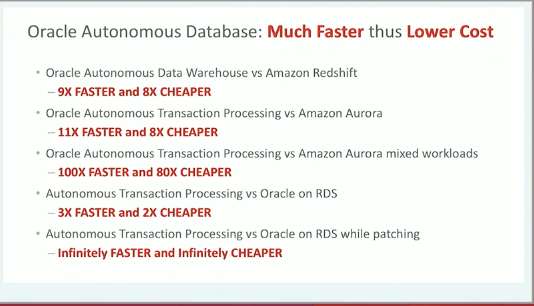
Larry Ellison gave his Oracle Openworld keynote on Monday and of course he took several shots sat AWS. In his view, his company’s cloud products were cheaper, better and faster than AWS, but then what would you expect him to say?

He rolled out a slide with all the facts and figures in case you doubted it. He wrapped it up in a neat little marketing package for the world to see. Oracle has an autonomous self-healing database. AWS? Nope. That much he’s right.

Slide: Oracle

He makes claims that his cloud products are faster and cheaper, claims that are hard to substantiate given how hard it is to nail down any vendor’s cloud prices and speeds. He says they have no disaster recovery, when they do. None of it matters.

This was about showmanship. It was about chest beating and it’s about going after the market leader because frankly, the man has little choice. By now, it’s well documented that Oracle was late to the cloud. Larry Ellison was never a fan and he made it clear over the years, but today as the world shifts to a cloud model, his company has had to move with it.

It hasn’t been an easy transition. It required substantial investment on the part of the company to build its infrastructure to support a cloud model. It took a big change in the way their sales people sell the product. The cloud is based on a subscription model, and it requires more of a partnership approach with customers. Oracle doesn’t exactly have a reputation for playing nicely.

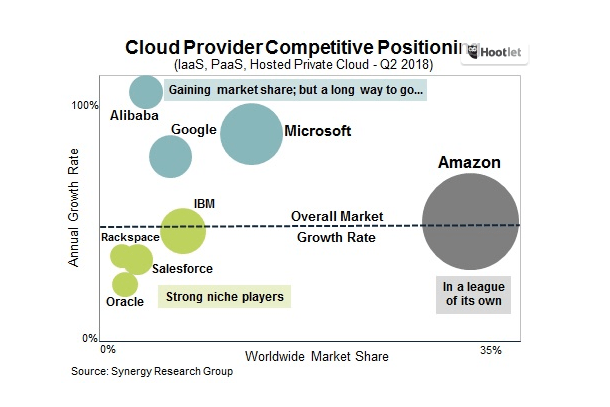
To make matters worse, Oracle’s late start puts it well behind market leader AWS. Hence, Ellison shouting from the rooftops how much better his company’s solutions are and how insecure the competitors are. Synergy Research, which follows the cloud market closely, has pegged Amazon’s cloud market share at around 35 percent. It has Oracle in the single digits in the most recent data from last summer (and the market hasn’t shifted dramatically since it came out with this data).

At the time, Synergy identified the four biggest players as Amazon, Microsoft, Google and IBM with Alibaba coming up fast. Synergy chief analyst John Dinsdale says Oracle is falling behind. “We have seen Oracle losing market share over the last few quarters in IaaS, PaaS and managed private cloud,” he said. “In a market that is growing at 50 percent per year, Microsoft, Google and Alibaba are all gaining market share, while the share of market leader AWS is holding steady,” he added.

To its credit, the company has seen some gains via its SaaS business. “As Oracle works to convert its huge on-premise software client base to SaaS, Oracle grew its share of enterprise SaaS markets in 2016 and 2017. Its market share then held steady in the first half of 2018,” Dinsdale pointed out.

Yet the company stopped breaking out its cloud revenue last June. As I wrote at the time, that isn’t usually a good sign:

That Oracle chose not to break out cloud revenue this quarter can’t be seen as a good sign. To be fair, we haven’t really seen Google break out their cloud revenue either with one exception in February. But when the guys at the top of the market shout about their growth, and the guys further down don’t, you can draw your own conclusions.

Further Oracle has been quite vocal about protesting the Pentagon’s $10 billion JEDI contract, believing that it has been written to favor Amazon over other vendors, a charge the Pentagon has denied. It hasn’t stopped Oracle from filing protests or even bringing their case directly to the president.

At least Ellison might have had some good news yesterday. CNBC reported that the big Amazon Prime outage in July might have been related to a transition away from Oracle databases that Amazon is currently undertaking.

Regardless, Oracle finds itself in an unfamiliar position. After years of domination, it is stuck behind in the pack. When you find yourself in such a position, you need to have a strong bark and Ellison is going after AWS hard. As the clear market leader, he has few other options right now.

24 Oct 2018

MySpace reborn! Facebook will let you pin song clips to your profile

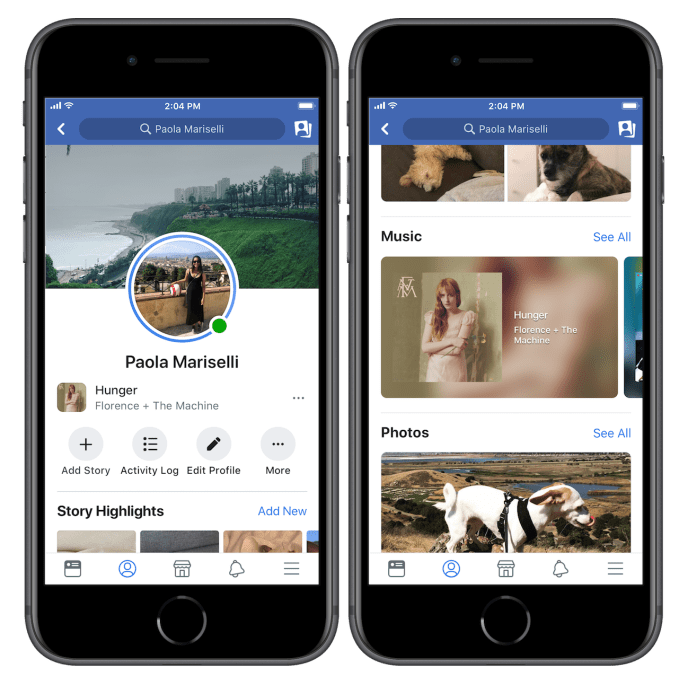
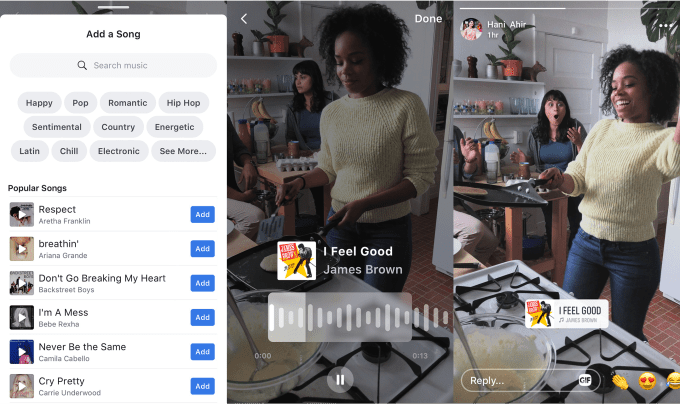
Facebook will let friends learn about you by streaming clips of your favorite songs from your profile in a throwback to MySpace Music. You’ll be able to choose tracks to add to a revamped Music section of your profile that now actually plays songs instead of just showing what artists you Like, and you can pin your favorites right to the top of your profile. The feature will launch in select countries later this year.

While friends won’t be able to listen to the whole song to see how you express yourself, they’ll get to watch an accompanying video the collages artist photos and album art, like an algorithmic music video. Facebook could eventually strike streaming partnership with companies like Spotify or Apple Music to allow full-song streaming.

The new Music section of the profile comes alongside the rollout of two previously tested features that all build off of Facebook’s recently acquired music licenses from major record labels.

Lip Sync Live

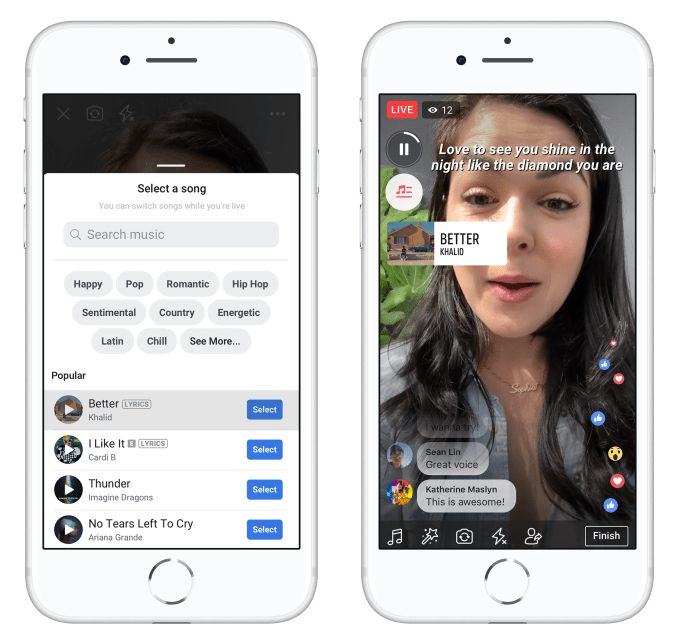
Facebook’s Musical.ly-esque Lip Sync Live feature has now rolled out to all users in many countries, and today opens to Pages to let artists perform for and connect with fans. Lip Sync Live lets you broadcast a video stream of you singing or dancing to a popular song you’ve chosen. And to make singing easier, Facebook is starting to add lyrics to Lip Sync Live starting with hits like Dua Lupa’s “New Rules,” Khalid’s “Better,” and “Girls Like You” by Maroon 5.

Facebook Music For Stories And Feed

Facebook is finally rolling out its soundtracking feature for Stories. It’s now available on iOS and Android in Australia, Belgium, Czech Republic, France, Germany, Great Britain, Ireland, Italy, Luxembourg, Mexico, New Zealand, Portugal, Spain, Sweden, Switzerland, and the United States. This lets you pick from a catalog of songs, choose the section of the track you want, and overlay it on a Story. You can also share these clips to your News Feed. Facebook began testing Music Stories over the past few months following their launch on Instagram in June.

What started as licensing deals to make sure users’ videos wouldn’t be taken down for copyright infringement if they’d added a soundtrack or overhead songs in the background has now blossomed into music features across the app. Facebook clearly sees this as a way to deepen engagement, especially with the elusive teen audience that’s been slipping away to apps like Snapchat that lack the same licenses.

Music is also such a core way that people express themselves. Celebrity dating app Raya, who’s COO Jared Morgenstern worked at Facebook for years, lets users pick soundtracks for slideshows of their photos. It’s almost surprising Facebook never acquired an audio app like Spotify in its infancy, or later Rdio or Deezer. But now through the licensing deals, it can get much of the social benefit of music without having to buy or build an entire streaming music service.

24 Oct 2018

China tariffs are taking a toll on robot vacuums

We already knew the intensifying trade war between the U.S. and China was set to have an impact on consumer electronics like Fitbit trackers and the Apple Watch. It seems that tariffs are also starting to take their toll on the world of robotic vacuums — namely iRobot.

As CNBC notes, the company’s shares took a hit today, in spite of positive earnings. That comes as iRobot noted that it’s working to address rising costs in the face of Trump administration-imposed tariffs.

The company says it’s thus far avoiding raising the price on products by simply absorbing the higher export fees. But that could well change in the future, as it continues to reassess how it will deal with such costs, going forward.

“A lot of those scenarios do assume some level of potentially passing some of the pricing on to the consumers, but we haven’t exactly settled on the final answer yet,” CEO Colin Angle said on a call following iRobot’s quarterly report. “Our expectations that we set in February would not assume that we carry the full burden of the tariff increases.”

Increasing the cost of Roomba could certainly impact sales, moving forward. The product has been a tremendous success for the company, becoming one of the world’s best selling vacuums. But iRobot is routinely knocked for pricing — its latest ‘bot, the i7+, runs $950, putting it at around the same cost as a high-end flagship smartphone. All the while, an influx of cheap competitors have undercut it on the low-end.

We’ve reached out to iRobot for comment.

24 Oct 2018

Quoth the Robo-Raven, “Recharge me!”

Researchers at the University of Maryland A. James Clark School of Engineering have been working on the so-called Robo Raven for years. The ongoing project resulted in the first flying drone with independent wing movement, a feature that made these U of M UAV’s closer to birds than ever before.

Now Lena Johnson, a Ph.D. candidate in mechanical engineering, has created the Robo Raven V, an advanced version of the flying drone.

“Robo Raven has given me an entire platform to explore how engineers can take advantage of avian flight to improve drone capabilities,” she told IEEE< ?A>. “As a Ph.D. student, my research is focused on achieving something new with this UAV platform that has already made aviation history by flying on wings that can move independently of each other.”

The new raven has two propellers for faster takeoff and has improved maneuverability thanks to better wing design. As you can see above, it flies like a big butterfly, lightly taking to the breeze with massive mylar wings. It’s a pretty – and clever – version of the typical flying drone and it will be interesting to see how far Johnson can take the technology.

24 Oct 2018

Tim Berners-Lee on the huge sociotechnical design challenge

In a speech discussing ethics and the Internet, the inventor of the World Wide Web, Sir Tim Berners-Lee, has tasked the technology industry and its coder army with paying continuous attention to the world their software is consuming as they go about connecting humanity through technology.

Coding must mean consciously grappling with ethical choices in addition to architecting systems that respect core human rights like privacy, he suggested.

“Ethics, like technology, is design,” he told delegates at the 40th International Conference of Data Protection and Privacy Commissioners (ICDPPC) which is taking place in Brussels this week.

“As we’re designing the system, we’re designing society. Ethical rules that we choose to put in that design [impact the society]… Nothing is self evident. Everything has to be put out there as something that we think we will be a good idea as a component of our society.”

If your tech philosophy is the equivalent of ‘move fast and break things’ it’s a failure of both imagination and innovation to not also keep rethinking policies and terms of service — “to a certain extent from scratch” — to account for fresh social impacts, he argued in the speech.

He pointed to how Wikipedia had to rapidly adapt its policies after putting online the power for anyone to edit its encyclopedia, noting: “They introduced a whole lot of bureaucracy around it but that actually makes it work, and it ended up be coming very functional.”

He described today’s digital platforms as “sociotechnical systems” — meaning “it’s not just about the technology when you click on the link it is about the motivation someone has to make such a great thing because then they are read and the excitement they get just knowing that other people are reading the things that they have written”.

“We must consciously decide on both of these, both the social side and the technical side,” he said. “[These platforms are] anthropogenic, made by people… Facebook and Twitter are anthropogenic. They’re made by people. They’ve coded by people. And the people who code them are constantly trying to figure out how to make them better.”

His keynote touched on the Cambridge Analytica data misuse scandal as an illustration of how sociotechnical systems are exploding simple notions of individual rights as people’s data is being cumulatively pooled and linked so that it can be repurposed and used to manipulate entire groups and even societies as a whole.

“You data is being taken and mixed with that of millions of other people, billions of other people in fact, and then used to manipulate everybody.

“Privacy is not just about not wanting your own data to be exposed — it’s not just not wanting the pictures you took of yourself to be distributed publicly. But that is important too.”

Given how the Internet’s ballooning connectivity has swept up and swept along personal data, enabling it to flow and pool far from the individuals who generated it in the first place, Berners-Lee also impressed the need for web users to have “the right to be able to share my data with whoever I want”.

And “the right to be able to get at all my data” — praising recent data download efforts from Apple, Twitter and others that let people take their information elsewhere, and lauding the companies for “recognizing that my data is mine to control”.

He also touched on his new startup: Solid, which is on a mission to push the envelope of interoperability, via decentralization, in order to transform how people control and share their own data.

“The principle of Solid is it’s a new platform in which you as a user have complete control of your data,” he explained. “It is revolutionary in the sense that it makes any app ask you where you want to put your data. So you can run your photo app or take pictures on your phone and say I want to store them on Dropbox, and I will store them on my own home computer. And it does this with a new technology which provides interoperability between any app and any store.”

Free speech and fighting censorship are other causes helped by putting people in control of their own data, he argued.

“We are not ready for people to use this at home,” he said of Solid. “We are ready for developers to join us in the quest to make new apps, and to make our service more powerful and more secure.

“The platform turns the privacy world upside down — or, I should say, it turns the privacy world right side up. You are in control of you data life… Wherever you store it you can control and get access to it.”

On the wider societal challenges, as regulators are paying increasing attention to powerful tech platforms, Berners-Lee added: “We have to get commitments from companies to make their platforms constructive and we have to get commitments from governments to look at whenever they see that a new technology allows people to be taken advantage of, allows a new form of crime to get onto it by producing new forms of the law. And to make sure that the policies that they do are thought about in respect to every new technology as they come out.

“We’ve got a lot of work to do, and a lot of discussion — across the boundaries of individuals, companies and governments. But very important work.”


24 Oct 2018

OnePlus commits to releasing a 5G phone in 2019

OnePlus has made its mark with a measured approach. The company has shied away from big, flashy features, in favor of offering well-rounded, budget devices. That’s changed a bit over the past year.

Take the upcoming 6T, which is rumored to be among the first to sport an in-screen fingerprint reader — one of the first times the technology is set to be available in the U.S. Or the fact that cofounder Carl Pei recently promised to deliver a 5G handset in 2019. Unlike other features, however, you can’t really accuse 5G of being a flash in the pan here. Though there’s plenty of ramp up time.

Sure, lots of companies have been talking around the technology, and Motorola kind of, sort of delivered something in the form of the Z3, which will offer the cellular technology in the future via Mod. But OnePlus promising to deliver a full-on 5G sporting handset puts the company ahead of the curve here.

There are still lots of questions — including how such technology will impact that the handset’s bottom line. After all, the OnePlus 6 came with a $529 starting price, which has long been a big part of the company’s growing appeal.

Meantime, it’s got a new, non-5G phone launching next week, just ahead of a big product launch for another tech company the following day.

24 Oct 2018

Facebook’s Ad Archive Report highlights top political spenders

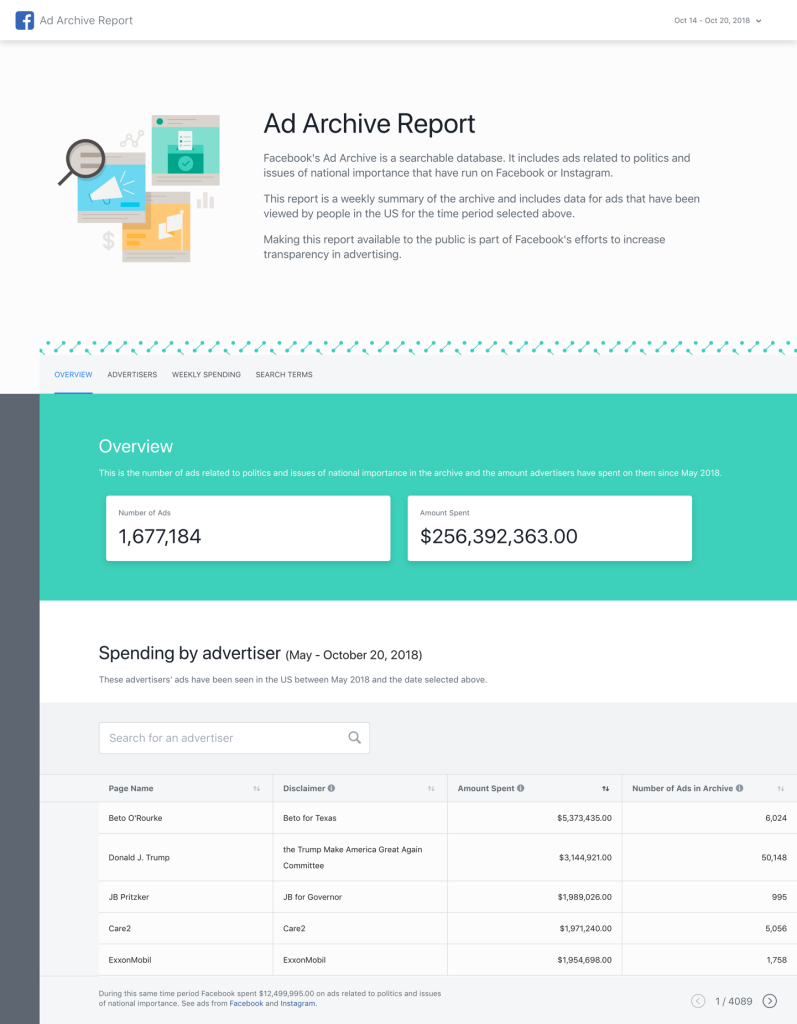
For obvious reasons, Facebook’s looking to up political advertising transparency ahead of the midterms. Back in May, the social network introduced Ad Archive, a searchable database of political ads in the U.S. It’s following up the feature with a new Ad Archive Report, a weekly snapshot of political spending.

The survey offerings a breakdown of top spenders by campaign, including the amount spent and the number of ads run. The first report for ads on Facebook and Instagram from between May and October 20, shows a total of $256 million spent across 1.6 million ads.

The number includes $12 million related to Facebook’s own election integrity and getting out the vote ads. Other than that, it probably won’t come as a surprise that Beto O’Rourke’s tooth and nail Texas fight leads the way. The Beto for Texas campaign has spent $5.3 million across just over six thousand ads in that period.

Donald Trump’s “The Trump Make America Great Again Committee” is in second place at $1.9 million, while “Donald J. Trump for President, Inc.” is in eighth place at $1.6 million. That’s just behind the $1.7 million spent on Tom Steyer’s “Need to Impeach.” Those will no doubt see a boost as we head toward 2020.

The archive houses ads reaching back to seven years. The site is also offering up an API for researchers to tap into the data.

24 Oct 2018

Hear how Threads makes fashion social at Disrupt Berlin

TechCrunch Disrupt Berlin is right around the corner, and I’m excited to announce that we invited Threads founder Sophie Hill to talk about her innovative vision of luxury shopping.

Threads is like nothing out there. It isn’t an e-commerce website with warehouses and and suppliers. It isn’t a marketplace website for second-hand luxury goods. It isn’t a marketplace website for other brands. In fact, it’s not a website at all.

The startup combines a strong editorial strategy with a distribution method that is quite novel. You get recommendations through your favorite chat app on your phone. It works on services like WeChat, WhatsApp, Snapchat, Instagram and iMessage.

On the other end of the conversation, you interact with human shopping assistants. This is what makes the experience so great. You don’t receive a newsletter, you don’t have to download an app. It integrates directly with apps that you were already using.

This way, if you feel overwhelmed and think you’re falling behind on the fashion front, Threads is much more efficient. Chances are you often browse your conversation list anyway. Accessing Threads is just a tap away.

And it’s working. The company recently raised a $20 million round and people spend $3,000 on average per shopping session. Big fashion houses, such as Dior, Fendi and Chopard started working with the startup.

By adopting a WeChat-first approach, the company managed to attract quite a few Chinese customers in particular. But Threads currently has customers in over 100 countries.

If you think you knew everything about e-commerce, come to Disrupt Berlin to listen to Hill’s novel strategy.

The conference will take place on November 29-30 and you can buy your ticket right now.

In addition to fireside chats and panels, like this one, new startups will participate in the Startup Battlefield Europe to win the highly coveted Battlefield cup.

Sophie Hill

Founder, Threads

Sophie is founder and CEO of Threads, with a mission to pioneer the best luxury shopping experience in the world. By leveraging social media and messaging platforms, Sophie has built a £multi­million global fashion tech business, and is setting the rules for a new form of consumer buying, called chat commerce. Threads joined Future Fifty in 2017 and is now in Tech Track 100 as owner of one of the UK’s fastest growing tech growth companies. In between doubling the size of the company in 2018, Sophie is also figuring out how to sell the first $1m diamond through whatsapp.

24 Oct 2018

Subscription management startup RevenueCat raises $1.5M

RevenueCat, a startup that helps developers manage their in-app subscriptions, has raised $1.5 million in new funding.

The company was part of the most recent batch at Y Combinator, and CEO Jacob Eiting said growth has been “a rocket ship” for the past few months. As of this week, RevenueCat is working with 100 live apps, and it’s crossing $1 million in tracked revenue.

The startup offers an API to address what sounds like a straightforward task, supporting in-app subscriptions in iOS and Android. As Eiting put it when I first interviewed him a few months ago, it’s “boring work” solving a “boring problem” — but that’s one of the reasons why developers don’t want to deal with it. It also means they don’t have to spend time dealing with bugs and updates on the subscription side of either platform.

And RevenueCat continues to add new features, like allowing developers to bring their revenue data into analytics and attribution services. That, in turn, makes it easier for them to see which ads are driving real revenue.

The long-term goal is to build what Eiting (who’s pictured above with his co-founder Miguel Carranza) calls a “revenue management platform.”

“Our mission as a company is to help developers make more money,” he said. “I think we do become this one-stop shop, a service that you integrate with all the payment touch points in your app to help you track your revenue and help you understand how customers are spending.”

The new funding (which is on top of the $120,000 RevenueCat received from YC) was led by Jason Lemkin of SaaStr. Eiting said it’s “an obvious fit,” since the software-as-a-service entrepreneurs who read SaaStr articles, listen to its podcasts and attend its events form “this huge community of companies that are potential customers for us.”

FundersClub, Oakhouse Partners, Buckley Endeavours, Josh Buckley and OneSignal CEO George Deglin also invested.