Month: October 2018

24 Oct 2018

Target launches free, 2-day shipping with no minimum purchase requirement

Take that, Amazon and Walmart. Target has just come out swinging with news that it’s launching free, two-day shipping on hundreds of thousands of items across its site without requiring a minimum purchase or an annual membership fee. This challenge to Amazon Prime comes at a time when Prime membership is at highest – Prime subscribers passed the 100 million milestone this April. But it also arrives at a time when Prime subscription prices are climbing and there’s an undercurrent of dissatisfaction over Prime’s 2-day deliveries that often turn into three days, four or more.

Unfortunately, however, Target’s free shipping is only a holiday perk, not a new policy. (At least, not yet.)

Target says it’s launching the free, two-day shipping on November 1, and will extend the offer throughout the holiday season, wrapping on December 22.

Before, this free shipping option was only available to Target REDcard holders, who also get an extra 5% off purchases. The offering for REDcard holders was announced in March, and required a minimum purchase of $35.

That’s the same minimum Walmart requires for its own, free, two-day shipping option launched last year. Walmart this week expanded that to its marketplace sellers, as well.

Target announced its news on Tuesday, adding that its new, two-day option exists alongside a host of ways to shop its stores.

In addition to ship-to-home delivery, it also now operates same-day delivery service Shipt, for groceries, gifts, decorations, and other household goods; Target Restock, for next-day delivery; same-day delivery from store in urban markets like Boston, Chicago, New York City, San Francisco and Washington, D.C.; online order pickup; and Drive Up, for same-day order pick up.

The latter will be available at nearly 1,000 stores by the end of the month, it says, while Shipt is now available to millions of consumers across hundreds of markets in 46 U.S. states.

Target’s agenda to make a variety of easy and affordable ways to shop its stores and site have been paying off. During its most recent earnings, the retailer reported its web sales rose 41%, aided by slashing next-day delivery fees and the bump from Amazon’s Prime Day in July – a sales holiday that now helps all retailers running competing sales.

Target’s sales growth for the quarter was the best it had seen in 13 years, the company reported at the time.


24 Oct 2018

Dash Radio raises $8.8M as it reaches 10M monthly listeners

For Dash Radio founder Scott Keeney, streaming music and radio are two very different things. On the streaming side, Apple and Spotify dominate, and “there’s not going to be room for much else.” But when it comes to radio, he argued, “It’s the wild, wild west.”

Keeney, a.k.a. DJ Skee, was already one of the biggest radio DJs when he started Dash. For him, radio is a more curated, personality-driven, “lean back” experience — so Dash Radio focuses on live shows, with a lineup of more than 400 shows across 75 stations, with big names like Snoop Dogg, Lil Wayne and Ice Cube as hosts.

The startup is announcing that it’s now reaching 10 million monthly listeners, and that it’s raised an $8.8 million seed round.

Investors include Nimble Ventures, Slow Ventures, Lazerow Ventures, Muzik, Arab Angel, G Ventures, Lindzon Capital Partners, Jason Flom, Orin Snyder and Ian Schaefer. Warner Bros. chairman and CEO Kevin Tsujihara and Alibaba’s former chairman of U.S. investments Michael Zeisser also invested and are joining the company’s board, as is Passport Capital founder John Burbank.

“I’m honored to be joining the board at Dash, and excited about the real change they’re driving across radio,” said Tsujihara in the funding announcement. “With their great leadership team, terrific original curated content and an offering unmatched in the market, Dash is positioned to disrupt analog radio and convert listeners to Dash users.”

Dash studio

Speaking of analog radio, Keeney acknowledged that there are other services (like iHeartRadio) that bring live radio broadcasts online, but he suggested that they’re coming from “legacy players” who are “all burdened by legacy infrastructure.”

Dash is able to take a different approach. For one thing, it’s cut out the long stretches of advertising — as Keeney put it, “We figured a business model that goes around these traditional insertion-based advertising models.”

That doesn’t means it’s avoiding sponsorships. In fact, it recently opened a studio in the Empire State Building (it already has a studio in Los Angeles) in partnership with Build-A-Bear, which also operates a branded kids’ station on Dash. What Dash isn’t going to do is interrupt the music and shows with ads.

Keeney also suggested that Dash might eventually introduce a paid, premium plan with features like on-demand show archives.

He made it clear that if Dash really is going to be the future of radio, it needs to allow new talent to succeed as well. That includes surfacing new artists (Keeney said Post Malone’s first radio interview was on Dash), and also new DJs. After all, Snoop Dogg is “an incredible talent,” but he’s never going to be known primarily as a Dash Radio personality.

“Now we’re starting to see people emerging, they are going to be known as somebody from Dash Radio,” Keeney said.

24 Oct 2018

Product Hunt Radio: The baby boom and the future of work and education

In this episode of Product Hunt Radio, I’m visiting TechCrunch HQ to hang out with two journalists that see more startups in a month than most people in a lifetime.

Josh Constine is the Editor-At-Large at TechCrunch where he covers social products, including Facebook, Instagram and Snapchat. Sarah Buhr is a new mother and, as she announces on the show, is taking a break from reporting at TechCrunch to raise her child. I’ve known Sarah since she joined TechCrunch in 2014 and more recently she’s focused her writing on the wild world of biotechnology. We also have one more special guest: Sarah’s beautiful six-month-old baby boy, Hayes. If you hear crying and clapping in the background, it’s him.

In this episode we talk about:

  • The baby boom in Silicon Valley, including some of the coolest tech-enabled baby products helping tired moms and dads, as well as the ways that tech company cultures have changed since their founders and employees started having children.
  • Why it might be possible to beat unhealthiness with convenience. We talk about a number of startups that are trying to get you fit by making the healthy option the easier option, similar to how Spotify beat piracy by making streaming easier than pirating.
  • The future of work and education and how it will affect the world that baby Hayes grows up in. We talk about why Sarah and her husband have been debating whether they should be saving for Hayes to go to college, how AR and VR will transform education and how automation will affect the workplace.
  • All things Facebook – whether new startups can compete with the massive social network and some quick thoughts on their first hardware product, Portal.

We of course also talk about some of their favorite products including a robot that makes burgers, a time-sucking app for meme lovers and a virtual assistant that can do things for you when you run out of time (because you were browsing memes).

Subscribe on Apple Podcasts, Google Podcasts, Spotify, Breaker, Overcast, or wherever you listen to your favorite podcasts.

24 Oct 2018

Spotify launches its playlist submission feature out of beta

Spotify is taking its playlist submission feature for all artists out of beta, starting today. The feature, which was first introduced into beta this summer, offers musicians and labels a way to reach Spotify’s playlist editors – the increasingly important tastemakers who can make or break a new track or help an emerging artist reach an expanded audience.

For years, artists and labels had been playing a game of trying to get intros to the correct playlist editor – believing that if you could just reach the right person, you could sway them to get a new song selected for playlist inclusion.

The playlist submission tool aims to give artists a different means of reaching Spotify’s editors. Through the Spotify for Artists dashboard – the place where musicians can track their plays, view analytics, see fan base demographics, and now, upload music directly – they can now also send in songs for consideration.

Spotify says that over 75,000 artists are featured on editorial playlists every week, plus another 150,000 on its flagship playlist, Discover Weekly.

The company claims that it’s not quite as simple as throwing money around in exchange for being playlisted, of course. (But that insane Drake promotion led many to wonder if that’s true.)

All the new playlist submissions aren’t just going to a black hole, it seems. The company says that since the feature became available in July, more than 67,000 artists and labels have submitted music, and over 10,000 artists have been added to playlists for the first time.

The company didn’t say how many total submissions were included, however.

It offered a few examples of how being “playlisted” impacted streams, noting for example that when Gustavo Bertoni’s song “Be Here Now” was selected to appear on the Acoustic Morning and Fresh Folk playlists, his monthly listeners jumped from 7,000 to 617,000.

Alt-rock band Yonaka saw their numbers increase from 82,000 to 290,000 when they were added to New Music Friday, and the Dutch rapper Bryan Mg went from 4,600 to 33,000 monthly listeners after ending up on the La Vida Loca playlist.

The company also said that, even when songs aren’t immediately selected for playlists, having tracks submitted through the uploading feature with all their metadata included means they’re ready for inclusion on future playlists, if that comes to pass.

The robust set of features for artists through the Spotify for Artists platform – which will soon have a cross-platform music distribution tool as well, thanks to its recent DistroKid investment – is helping to differentiate Spotify from its competitors, including Apple Music, Amazon Music, Pandora, and others.

Alongside the public availability of the playlist feature, Spotify released a couple new episodes of its original series, The Game Plan, which discusses how playlists work.


24 Oct 2018

Spatial raises $8 million to bring augmented reality to your office life

Legitimate augmented reality use cases are hard to come by. Spatial, which dubs itself as a cross-reality platform, is launching today with $8 million in seed funding from iNovia Capital, Uber co-founder and Expa founder Garret Camp, Samsung Next, Joi Ito of MIT Media Lab, Mark Pincus and Andy Hertzfeld to bring augmented reality to enterprise customers. Spatial envisions its solution replacing tools like Google Hangouts, Zoom and the numerous other virtual workplace meeting apps.

While many companies are focused on games and entertainment, Spatial is looking at how everyday people can use AR for everyday work purposes.

“We think the future of work is going to be increasingly distributed,” Spatial co-founder and CEO Anand Agarawala told TechCrunch. “When you put on Spatial, they are in the room with you. It feels like they’re all sitting at the table, and they feel like they’ve been teleported into the space with you.”

Spatial is two things. One is a remote presence that enables people to feel like they’re face-to-face with their colleagues. The other is a suite of knowledge tools and an “infinite desktop” that uses the room as your monitor.

Spatial is purely a software platform that has partnerships with Microsoft HoloLens but is hardware agnostic. Spatial also offers both web and phone apps for people who may not have access to an AR headset.

To use Spatial, you would first pop on an AR headset and scan their current environment. From there, Spatial shares that environment with anyone you’d like and enables them to join the space. When you look around the room, you’re able to see and interact with the avatars of your co-workers. But more importantly, you’re all able to interact with a shared set of documents, websites, images and whatever else you or your teammates decide to put in the shared space.

Currently, there are a handful of companies using Spatial’s technology. One of those companies is Ford’s incubator, Ford X, which is piloting the software to enable its teams working on mobility to collaborate remotely. As it stands today, Spatial can handle about 15 to 20 people at a time, but the goal is to scale up to be able to manage hundreds of people at once.

Unlike other types of collaboration software, Spatial doesn’t have a presenter mode because the company wants “social etiquette to take over” and make the experience as realistic as possible, Agarawala said.

You can check it out in action below.

24 Oct 2018

A new ‘smart firewall’ iPhone app promises to put your privacy before profits

For weeks, a small team of security researchers and developers have been putting the finishing touches on a new privacy app, which its founder says can nix some of the hidden threats that mobile users face — often without realizing.

Phones track your location, apps siphon off our data, and aggressive ads try to grab your attention. Your phone has long been a beacon of data, broadcasting to ad networks and data trackers, trying to build up profiles on you wherever you go to sell you things you’ll never want.

Will Strafach knows that all too well. A security researcher and former iPhone jailbreaker, Strafach has shifted his time digging into apps for insecure, suspicious and unethical behavior. Last year, he found AccuWeather was secretly sending precise location data without a user’s permission. And just a few months ago, he revealed a list of dozens of apps that were sneakily siphoning off their users’ tracking data to data monetization firms without their users’ explicit consent.

Now his team — including co-founder Joshua Hill and chief operating officer Chirayu Patel — will soon bake those findings into its new “smart firewall” app, which he says will filter and block traffic that invades a user’s privacy.

“We’re in a ‘wild west’ of data collection,” he said, “where data is flying out from your phone under the radar — not because people don’t care but there’s no real visibility and people don’t know it’s happening,” he told me in a call last week.

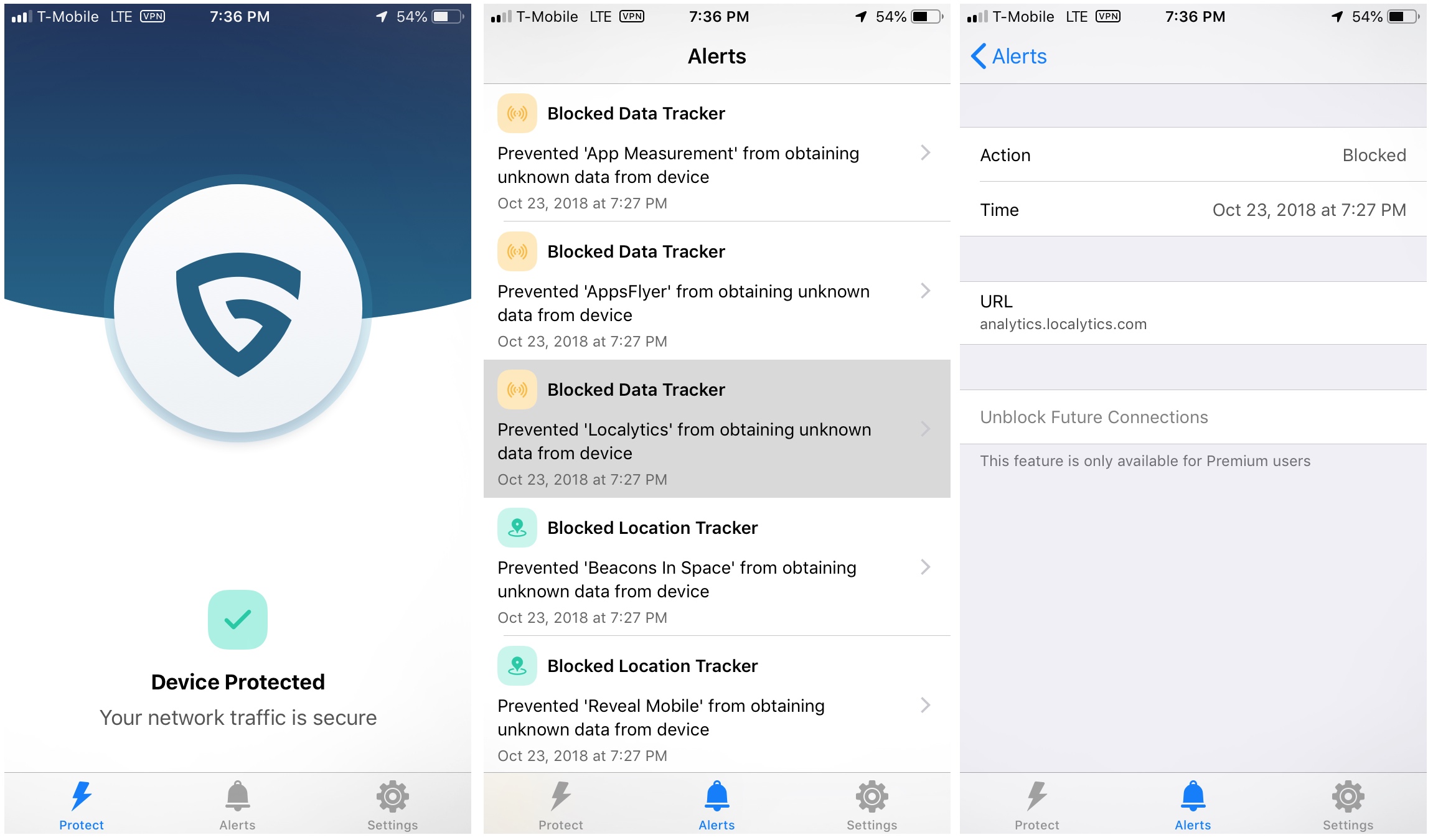
At its heart, the Guardian Mobile Firewall — currently in a closed beta — funnels all of an iPhone or iPad’s internet traffic through an encrypted virtual private network (VPN) tunnel to Guardian’s servers, outsourcing all of the filtering and enforcement to the cloud to help reduce performance issues on the device’s battery. It means the Guardian app can near-instantly spot if another app is secretly sending a device’s tracking data to a tracking firm, warning the user or giving the option to stop it in its tracks. The aim isn’t to prevent a potentially dodgy app from working properly, but to give users’ awareness and choice over what data leaves their device.

Strafach described the app as “like a junk email filter for your web traffic,” and you can see from of the app’s dedicated tabs what data gets blocked and why. A future version plans to allow users to modify or block their precise geolocation from being sent to certain servers. Strafach said the app will later tell a user how many times an app accesses device data, like their contact lists.

But unlike other ad and tracker blockers, the app doesn’t use overkill third-party lists that prevent apps from working properly. Instead, taking a tried-and-tested approach from the team’s own research. The team periodically scans a range of apps in the App Store to help identify problematic and privacy-invasive issues that are fed to the app to help improve over time. If an app is known to have security issues, the Guardian app can alert a user to the threat. The team plans to continue building machine learning models that help to identify new threats — including so-called “aggressive ads” — that hijack your mobile browser and redirect you to dodgy pages or apps.

Screenshots of the Guardian app, set to be released in December (Image: supplied)

Strafach said that the app will “err on the side of usability” by warning users first — with the option of blocking it. A planned future option will allow users to go into a higher, more restrictive privacy level — “Lockdown mode” — which will deny bad traffic by default until the user intervenes.

What sets the Guardian app from its distant competitors is its anti-data collection.

Whenever you use a VPN — to evade censorship, site blocks or surveillance — you have to put more trust in the VPN server to keep all of your internet traffic safe than your internet provider or cell carrier. Strafach said that neither he nor the team wants to know who uses the app. The less data they have, the less they know, and the safer and more private its users are.

“We don’t want to collect data that we don’t need,” said Strafach. “We consider data a liability. Our rule is to collect as little as possible. We don’t even use Google Analytics or any kind of tracking in the app — or even on our site, out of principle.”

The app works by generating a random set of VPN credentials to connect to the cloud. The connection uses IPSec (IKEv2) with a strong cipher suite, he said. In other words, the Guardian app isn’t a creepy VPN app like Facebook’s Onavo, which Apple pulled from the App Store for collecting data it shouldn’t have been. “On the server side, we’ll only see a random device identifier, because we don’t have accounts so you can’t be attributable to your traffic,” he said.

“We don’t even want to say ‘you can trust us not to do anything,’ because we don’t want to be in a position that we have to be trusted,” he said. “We really just want to run our business the old fashioned way. We want people to pay for our product and we provide them service, and we don’t want their data or send them marketing.”

“It’s a very hard line,” he said. “We would shut down before we even have to face that kind of decision. It would go against our core principles.”

I’ve been using the app for the past week. It’s surprisingly easy to use. For a semi-advanced user, it can feel unnatural to flip a virtual switch on the app’s main screen and allow it to run its course. Anyone who cares about their security and privacy are often always aware of their “opsec” — one wrong move and it can blow your anonymity shield wide open. Overall, the app works well. It’s non-intrusive, it doesn’t interfere, but with the “VPN” icon lit up at the top of the screen, there’s a constant reminder that the app is working in the background.

It’s impressive how much the team has kept privacy and anonymity so front of mind throughout the app’s design process — even down to allowing users to pay by Apple Pay and through in-app purchases so that no billing information is ever exchanged.

The app doesn’t appear to slow down the connection when browsing the web or scrolling through Twitter or Facebook, on neither LTE or a Wi-Fi network. Even streaming a medium-quality live video stream didn’t cause any issues. But it’s still early days, and even though the closed beta has a few hundred users — myself included — as with any bandwidth-intensive cloud service, the quality could fluctuate over time. Strafach said that the backend infrastructure is scalable and can plug-and-play with almost any cloud service in the case of outages.

In its pre-launch state, the company is financially healthy, scoring a round of initial seed funding to support getting the team together, the app’s launch, and maintaining its cloud infrastructure. Steve Russell, an experienced investor and board member, said he was “impressed” with the team’s vision and technology.

“Quality solutions for mobile security and privacy are desperately needed, and Guardian distinguishes itself both in its uniqueness and its effectiveness,” said Russell in an email.

He added that the team is “world class,” and has built a product that’s “sorely needed.”

Strafach said the team is running financially conservatively ahead of its public reveal, but that the startup is looking to raise a Series A to support its anticipated growth — but also the team’s research that feeds the app with new data. “There’s a lot we want to look into and we want to put out more reports on quite a few different topics,” he said.

As the team continue to find new threats, the better the app will become.

The app’s early adopter program is open, including its premium options. The app is expected to launch fully in December.

24 Oct 2018

Ex-One Medical exec launches mental health studio

Access to timely, quality mental health services can be a struggle. Octave, a mental health studio founded by Sandeep Acharya, One Medical’s former head of strategy, is launching today to help with just that.

“The mission of Octave is to create a society where people are as proactive about their mental well-being as they are about their physical well-being,” Acharya told TechCrunch.

Octave offers individual therapy, a stress management coaching program and daily, drop-in classes for people seeking mindfulness, help with insomnia and general coping skills. Drop-in classes start at $15 per class while coaching is $75 per session. Octave, however, is still quite costly for ongoing therapy ($180 a session) — and cost is often a significant barrier for people seeking mental health services.

Octave is designed to address people’s therapy needs who may not already have a relationship with a therapist.

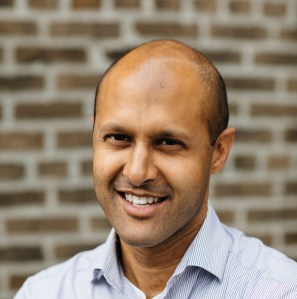
Sandeep Acharya, Octave founder and CEO

“We certainly don’t want to disrupt existing relationships,” Acharaya said. “But if you’re already in therapy, you can still take our classes or use the coaching format.”

It was during his time at One Medical when Acharya realized younger professionals were struggling from anxiety and depression, he said. But that’s not something One Medical actively addresses.

Upon signing up, Octave does an intake call within a couple of days and aims to get people seen by a therapist within a couple of weeks. Acharya says Octave is in line with market averages in New York, but that Octave hopes to help people save money by producing faster results. It’s worth noting that Octave does not take insurance, but that many insurance companies do offer reimbursement.

Octave’s first studio is located in New York City. That plan is to operate six to eight locations within the next two years. Octave has raised an undisclosed amount in a seed round from Felicis Ventures and angel investors.

24 Oct 2018

Apple patent shows new way to create 3D printed models

A patent filed by Apple Inc. shows a new method to print 3D models using triangular tessellation. The patent office approved the method, which breaks smooth surfaces into little triangles that approximate the shape of the original model, on October 23, 2018.

The unique aspect of the patent involves the infill and surface. The infill are little patterns inside an object that help it retain rigidity. Most infill is usually fairly simple and involves drawing shapes or squiggles inside an object in a uniform way to keep the shape from collapsing. This means that the entire inside of the object is uniform, leading to cracking or brittleness in the finished product. Apple’s solution would change the shape of the internal infill to differently-sized triangles, depending on the print, ensuring that there is more infill on the edges of the object. The same system is used on the surface of the print to approximate smooth surfaces.

Apple listed Michael R. Sweet, Senior Printing System Engineer at Apple Inc., Canada, as the sole inventor. Sweet has patented at least 13 other 3D printing inventions according to 3D Printing Industry.

“In one embodiment, the triangles making up the triangular tessellations are fixed-size triangles. In another embodiment, the triangles making up the triangular tessellations are dynamically sized triangles. By way of example, small triangles could be used to form an object’s edges or other regions in which strength/support is needed. Larger triangles could be used to build-up or construct areas where strength/support is not as critical,” wrote Sweet in the patent. The patent notes that this system can speed up printing considerably as the print head does not have to move back and forth and instead only moves forward to make the triangular shapes. As an example, Sweet points out that circular infill, as shown below, is inefficient.

This obviously doesn’t meet Apple is making a 3D printer. It simply means that a printing researcher at Apple is looking into the problem and has created a slightly more efficient method for designing 3D printed parts.

24 Oct 2018

Apple’s Tim Cook makes blistering attack on the “data industrial complex”

Apple’s CEO Tim Cook has joined the chorus of voices warning that data itself is being weaponized again people and societies — arguing that the trade in digital data has exploded into a “data industrial complex”.

Cook did not namecheck the adtech elephants in the room: Google, Facebook and other background data brokers that profit from privacy-hostile business models. But his target was clear.

“Our own information — from the everyday to the deeply personal — is being weaponized against us with military efficiency,” warned Cook. “These scraps of data, each one harmless enough on its own, are carefully assembled, synthesized, traded and sold.

“Taken to the extreme this process creates an enduring digital profile and lets companies know you better than you may know yourself. Your profile is a bunch of algorithms that serve up increasingly extreme content, pounding our harmless preferences into harm.”

“We shouldn’t sugarcoat the consequences. This is surveillance,” he added.

Cook was giving the keynote speech at the 40th International Conference of Data Protection and Privacy Commissioners (ICDPPC), which is being held in Brussels this year, right inside the European Parliament’s Hemicycle.

“Artificial intelligence is one area I think a lot about,” he told an audience of international data protection experts and policy wonks, which included the inventor of the World Wide Web itself, Sir Tim Berners-Lee, another keynote speaker at the event.

“At its core this technology promises to learn from people individually to benefit us all. But advancing AI by collecting huge personal profiles is laziness, not efficiency,” Cook continued.

“For artificial intelligence to be truly smart it must respect human values — including privacy. If we get this wrong, the dangers are profound. We can achieve both great artificial intelligence and great privacy standards. It is not only a possibility — it is a responsibility.”

That sense of responsibility is why Apple puts human values at the heart of its engineering, Cook said.

In the speech, which we previewed yesterday, he also laid out a positive vision for technology’s “potential for good” — when combined with “good policy and political will”.

“We should celebrate the transformative work of the European institutions tasked with the successful implementation of the GDPR. We also celebrate the new steps taken, not only here in Europe but around the world — in Singapore, Japan, Brazil, New Zealand. In many more nations regulators are asking tough questions — and crafting effective reform.

“It is time for the rest of the world, including my home country, to follow your lead.”

Cook said Apple is “in full support of a comprehensive, federal privacy law in the United States” — making the company’s clearest statement yet of support for robust domestic privacy laws, and earning himself a burst of applause from assembled delegates in the process.

Cook argued for a US privacy law to prioritize four things:

  1. data minimization — “the right to have personal data minimized”, saying companies should “challenge themselves” to de-identify customer data or not collect it in the first place
  2. transparency — “the right to knowledge”, saying users should “always know what data is being collected and what it is being collected for, saying it’s the only way to “empower users to decide what collection is legitimate and what isn’t”. “Anything less is a shame,” he added
  3. the right to access — saying companies should recognize that “data belongs to users”, and it should be made easy for users to get a copy of, correct and delete their personal data
  4. the right to security — saying “security is foundational to trust and all other privacy rights”

“We see vividly, painfully how technology can harm, rather than help,” he continued, arguing that platforms can “magnify our worst human tendencies… deepen divisions, incite violence and even undermine our shared sense or what is true or false”.

“This crisis is real. Those of us who believe in technology’s potential for good must not shrink from this moment”, he added, saying the company hopes “to work with you as partners”, and that: “Our missions are closely aligned.”

He also made a sideswipe at tech industry efforts to defang privacy laws — saying that some companies will “endorse reform in public and then resist and undermine it behind closed doors”.

“They may say to you our companies can never achieve technology’s true potential if there were strengthened privacy regulations. But this notion isn’t just wrong it is destructive — technology’s potential is and always must be rooted in the faith people have in it. In the optimism and the creativity that stirs the hearts of individuals. In its promise and capacity to make the world a better place.”

“It’s time to face facts,” Cook added. “We will never achieve technology’s true potential without the full faith and confidence of the people who use it.”

Opening the conference before the Apple CEO took to the stage, Europe’s data protection supervisor Giovanni Buttarelli argued that digitization is driving a new generational shift in the respect for privacy — saying there is an urgent need for regulators and indeed societies to agree on and establish “a sustainable ethics for a digitised society”.

“The so-called ‘privacy paradox’ is not that people have conflicting desires to hide and to expose. The paradox is that we have not yet learned how to navigate the new possibilities and vulnerabilities opened up by rapid digitization,” Buttarelli argued.

“To cultivate a sustainable digital ethics, we need to look, objectively, at how those technologies have affected people in good ways and bad; We need a critical understanding of the ethics informing decisions by companies, governments and regulators whenever they develop and deploy new technologies.”

The EU’s data protection supervisor told an audience largely made up of data protection regulators and policy wonks that laws that merely set a minimum standard are not enough, including the EU’s freshly painted GDPR.
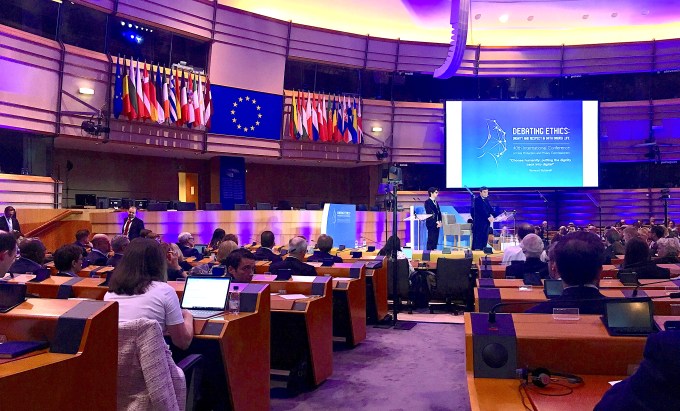
“We need to ask whether our moral compass been suspended in the drive for scale and innovation,” he said. “At this tipping point for our digital society, it is time to develop a clear and sustainable moral code.”

“We do not have a[n ethical] consensus in Europe, and we certainly do not have one at a global level. But we urgently need one,” he added.

“Not everything that is legally compliant and technically feasible is morally sustainable,” Buttarelli continued, pointing out that “privacy has too easily been reduced to a marketing slogan.

“But ethics cannot be reduced to a slogan.”

“For us as data protection authorities, I believe that ethics is among our most pressing strategic challenges,” he added.

“We have to be able to understand technology, and to articulate a coherent ethical framework. Otherwise how can we perform our mission to safeguard human rights in the digital age?”


24 Oct 2018

Mozilla is matching all donations to the Tor Project

Firefox parent Mozilla is returning to back the Tor Project, its long-time ally, after it committed to matching all donations made to fund Tor, the open source initiative to improve online privacy which has just started its annual end of year funding drive.

Tor announced Mozilla’s support today, extending the pair’s partnership which last year helped Tor raise over $400,000 from a similar campaign last year. That is a small seed round for a tech startup, but it represents an important source of income for Tor, which began soliciting ‘crowdfunded’ donations in 2015 in a bid to offset its reliance on government grants.

The company’s latest publicly available accounts cover 2015 when Tor received a record $3.3 million in donations. That’s up from $2.5 million in 2014 and it represented Tor’s highest year of income to date, but state-related grants accounted for 86 percent of the figure. That was an improvement on previous years, but Tor Research Director and President Roger Dingledine admitted that the organization has “more work to do” to change that ratio.

Tor hasn’t made its latest (2016) financials available as of yet, but the past year has seen the organization make big leaps in its product offerings, which are still best known for being used by NSA whistleblower Edward Snowden . Tor launched its first official mobile browser for Android in September and the same month it released Tor Browser 8.0, its most usable browser yet which is based on Firefox’s 2017 Quantum structure. It is also worked closely with Mozilla to bring Tor into Firefox itself as it has already done with Brave, a browser firm led by former Mozilla CEO Brendan Eich.

Beyond the browser and the Tor network itself, which is designed to minimize the potential for network surveillance, the organization also develops a range of other projects. Around two million people are estimated to use Tor, according to data from the organization.

“The Tor Project has a bold mission: to take a stand against invasive and restrictive online practices and bring privacy and freedom to internet users around the world. But we can’t do it alone,” Sarah Stevenson, who is fundraising director at the Tor Foundation, wrote in a blog post.

“Countries like Egypt and Venezuela have tightened restrictions on free expression and accessing the open web; companies like Google and Amazon are mishandling people’s data and growing the surveillance economy; and some nations are even shutting off the internet completely to quell possible dissidence,” she added.

If you feel suitably compelled, you can donate to the Tor Project’s campaign right here.