
Month: October 2018

23 Oct 2018

Surf Air opens its network of private flights in California and Texas to more passengers

Private jet subscription service Surf Air is announcing a new membership package called Surf Air Express alongside Indiegogo, which allows for members to pay a smaller subscription for individual bookings on the company’s semi-private scheduled planes.

For a mere $2500 subscribers can get access to seats on the Surf Air planes or small jets for roughly $400 to $500 per seat.

That’s a discount from the company’s $4,000 all-you-can-fly monthly subscriptions.

When it launched five years ago, the Santa Monica, Calif.-based Surf Air pitched itself as a better way to fly for customers that were frequent travelers on routes throughout California and (eventually) Texas.

But Surf Air was a luxury problem for luxury people and was charging an (apparently unsustainable) luxury price.

Now to boost demand to the merely wealthy instead of the really rich, Surf Air is now offering tickets for individual flights rather than just at the all-you-can-fly rates. Seats will be offered up to subscribers to the company’s service at a flat rate of around $400 if flyers are willing to pay the annual fee of $2500.

Meanwhile, anyone will be able to book flights through Kayak and other services at what Surf Air chief executive Sudhin Shahani calls market rates (which can range anywhere from $600 to $1000).

Subscribers are also going to be eligible for other perks including no change or cancellation fees, access to member events, discounts at premium hotels and access to flights for special events, like music festivals games and conferences.

“Five years ago we cracked the code and changed aviation by offering a small group of monthly subscribers “all you can fly” memberships with a premium flight experiences to eliminate the hassles associated with commercial air travel,” said Shahani, in a statement. “Through Surf Air Express we’re continuing to upgrade the travel experience by opening up the Surf Air network to a completely new market of travelers who’ve long needed a more convenient and fun way to fly. It’s our vision that one day we’ll expand Surf Air to be accessible, with our flight operators, across the online travel booking websites and in every region around the globe where short-haul travel is broken, while still maintaining the quality and value of our membership-first business model.”

Surf Air has raised $92 million to date, according to CrunchBase from investors including Jared Leto, Sway Ventures, Mucker Capital and ff Venture Capital.
23 Oct 2018

Apple’s CEO Tim Cook to flag trust and humanity in major privacy speech

Apple CEO Tim Cook is expected to endorse the idea of a “comprehensive federal privacy law” for the U.S. in a keynote speech tomorrow.

He will also back Europe’s approach to data protection and privacy — recently cemented in place via the General Data Protection Regulation (GDPR) — essentially saying technology does not have to be creepy to be innovative. Nor should the tech itself be a cause of harm.

Cook will be addressing the 40th International Conference of Data Protection and Privacy Commissioners (ICDPPC), which is being held in Brussels this year to coincide with the introduction of GDPR.

Europe’s updated privacy framework came into timely force, this May, weeks after the Cambridge Analytica data misuse scandal had erupted into a major global scandal — further raising the profile of data protection as a consumer need, and convincing governments to prioritize an oft overlooked area.

By contrast US lawmakers have found themselves on the back foot, increasingly viewed as laggards on the issue vs Europe.

California also recently passed a state-wide data protection law. So federal regulators now have clear impetus to draw up domestic privacy rules. Though it remains to be seen whether they will stand up to platform power at home and hold their own on the world stage. Or merely close down the risk of a state-by-state data protection patchwork springing up to create new compliance headaches for business.

Silicon Valley’s response to the prospect of an overarching US privacy law has been predictably disingenuous — with attempts to reframe the issue under broadbrush, malleable concepts like ‘control’ or ‘accountability’; and lobbying efforts aimed at steering regulators away from drafting rules anywhere near as robust as GDPR.

The usual soundbites are being trotted out about the need to ‘protect innovation‘ (aka the data-fuelled business models such companies use as revenue engines).

Cook’s intervention is a reminder that not every tech giant is hostile to privacy. And privacy does not have to be systematically violated for value to be derived from data.

For example, Apple has invested in pro-privacy technologies that enable it to leverage data-based insights while protecting individual privacy, such as its use of differential privacy to pull aggregate patterns of behaviour across its user-base; rather than pursuing a per-person profiling approach, as adtech giants Google and Facebook do, riding roughshod over individual privacy in the process.

In his speech to the audience of international privacy commissioners, Cook is expected to thank global regulators for the work they do, and reiterate that Apple views privacy as a “fundamental human right” — a position which aligns the company with the EU’s ethics-based perspective on big data.

He will also compliment GDPR, specifically — dubbing it an example of how “good policy and political will can come together to protect the rights of us all” — and focus on ethical underpinnings, saying that at Apple “we are optimistic about technology’s awesome potential for good. But we know that it won’t happen on its own. Every day, we work to infuse the devices we make with the humanity that makes us.”

In another remark, Cook will say: “We will never achieve technology’s true potential without the full faith and confidence of the people who use it” — which looks like a not-so-coded attack on big tech’s trust crisis, which continues to be fuelled by data breach after data breach, every passing week.

As we wrote previously, Apple’s signalling to US lawmakers on privacy is clear. 

In the speech, Cook will also seek to push the conversation beyond talk of compliance and defence of rights — by laying out a broad, positive vision for technology and privacy in the 21st century. 

He is expected to tell delegates “we need to keep making progress — now more than ever” on “humanity’s greatest common project”, citing challenges such as climate change, fighting disease, and education and economy inclusion.

Cook is the first tech CEO to give the keynote speech at the ICDPPC, accepting an invitation from the conference organizers to do so.

He is also perhaps the only big tech CEO who could comfortably take to such a stage in person.

Facebook CEO Mark Zuckerberg and Google’s Sundar Pichai will also be heard at the conference, but remotely, via pre-recorded video messages. The companies are sending policy staffers to answer delegates’ questions in Q&A sessions.

23 Oct 2018

Apple’s CEO Tim Cook to flag trust and humanity in major privacy speech

Apple CEO Tim Cook is expected to endorse the idea of a “comprehensive federal privacy law” for the U.S. in a keynote speech tomorrow.

He will also back Europe’s approach to data protection and privacy — recently cemented in place via the General Data Protection Regulation (GDPR) — essentially saying technology does not have to be creepy to be innovative. Nor should the tech itself be a cause of harm.

Cook will be addressing the 40th International Conference of Data Protection and Privacy Commissioners (ICDPPC), which is being held in Brussels this year to coincide with the introduction of GDPR.

Europe’s updated privacy framework came into timely force, this May, weeks after the Cambridge Analytica data misuse scandal had erupted into a major global scandal — further raising the profile of data protection as a consumer need, and convincing governments to prioritize an oft overlooked area.

By contrast US lawmakers have found themselves on the back foot, increasingly viewed as laggards on the issue vs Europe.

California also recently passed a state-wide data protection law. So federal regulators now have clear impetus to draw up domestic privacy rules. Though it remains to be seen whether they will stand up to platform power at home and hold their own on the world stage. Or merely close down the risk of a state-by-state data protection patchwork springing up to create new compliance headaches for business.

Silicon Valley’s response to the prospect of an overarching US privacy law has been predictably disingenuous — with attempts to reframe the issue under broadbrush, malleable concepts like ‘control’ or ‘accountability’; and lobbying efforts aimed at steering regulators away from drafting rules anywhere near as robust as GDPR.

The usual soundbites are being trotted out about the need to ‘protect innovation‘ (aka the data-fuelled business models such companies use as revenue engines).

Cook’s intervention is a reminder that not every tech giant is hostile to privacy. And privacy does not have to be systematically violated for value to be derived from data.

For example, Apple has invested in pro-privacy technologies that enable it to leverage data-based insights while protecting individual privacy, such as its use of differential privacy to pull aggregate patterns of behaviour across its user-base; rather than pursuing a per-person profiling approach, as adtech giants Google and Facebook do, riding roughshod over individual privacy in the process.

In his speech to the audience of international privacy commissioners, Cook is expected to thank global regulators for the work they do, and reiterate that Apple views privacy as a “fundamental human right” — a position which aligns the company with the EU’s ethics-based perspective on big data.

He will also compliment GDPR, specifically — dubbing it an example of how “good policy and political will can come together to protect the rights of us all” — and focus on ethical underpinnings, saying that at Apple “we are optimistic about technology’s awesome potential for good. But we know that it won’t happen on its own. Every day, we work to infuse the devices we make with the humanity that makes us.”

In another remark, Cook will say: “We will never achieve technology’s true potential without the full faith and confidence of the people who use it” — which looks like a not-so-coded attack on big tech’s trust crisis, which continues to be fuelled by data breach after data breach, every passing week.

As we wrote previously, Apple’s signalling to US lawmakers on privacy is clear. 

In the speech, Cook will also seek to push the conversation beyond talk of compliance and defence of rights — by laying out a broad, positive vision for technology and privacy in the 21st century. 

He is expected to tell delegates “we need to keep making progress — now more than ever” on “humanity’s greatest common project”, citing challenges such as climate change, fighting disease, and education and economy inclusion.

Cook is the first tech CEO to give the keynote speech at the ICDPPC, accepting an invitation from the conference organizers to do so.

He is also perhaps the only big tech CEO who could comfortably take to such a stage in person.

Facebook CEO Mark Zuckerberg and Google’s Sundar Pichai will also be heard at the conference, but remotely, via pre-recorded video messages. The companies are sending policy staffers to answer delegates’ questions in Q&A sessions.

23 Oct 2018

In its first cyberoperation against Russian trolls, U.S. takes a gentle approach

Russia has been blamed for shutting down power grids, hacking into critical systems, and more recently launching a massive misinformation campaign aimed at meddling with past and upcoming elections.

Now, the U.S. is striking back ahead of the midterm elections in an unconventionally gentle way.

U.S. Cyber Command, the military wing tasked with offensive cyberoperations, is directly reaching out to Russian trolls to warn the state-backed spreaders of false news that the U.S. is watching. It’s the command’s first cyberoperation since Obama-era rules governing offensive operations were relaxed, according to The New York Times which first broke the story, which now allows the U.S. government to strike back at foreign adversaries believed to be involved in conducting espionage or launching cyberattacks.

The plan involves reaching out to known Russian operatives and telling them that they know who they are and what they’re doing. The subtle message is, “we’re watching, so back off.”

Specific details of the plans aren’t known, like how the U.S. is contacting those on its watchlist — whether it’s a friendly email or sliding into their Twitter DMs. But the operation sends a strong enough message without sparking an escalation in what are already tense diplomatic relations between the U.S. and Russia.

A Cyber Command spokesperson wouldn’t comment on the operation, but noted that U.S. government leadership “has made it clear that it will not accept any foreign interference, or attempts to undermine or manipulate our elections in any way,” and this includes the government’s efforts “to protect election infrastructure and prevent malign, covert election influence operations.”

The operation, launched in the last few days, comes hot on the heels of a Justice Department “name and shame” indictment of a Russian national Elena Khusyaynova, charged Friday with interfering with the midterm elections. Khusyaynova, a St. Petersberg resident, is accused of serving as the chief accountant of “Project Lakhta,” a well-funded Russian effort — largely online — to meddle in elections by spreading misinformation and propaganda. Although there’s almost no chance that Russia would extradite Khusyaynova to face justice in the U.S., the indictment limits the ability of the accused to travel outside of Russia.

It’s not the first time U.S. Cyber Command has targeted its enemies overseas. The division launched offensive “cyber bombs” against operatives of the so-called Islamic State terrorist group in an effort to disrupt and freeze their infrastructure. The mission, however, was not seen as a success.

23 Oct 2018

Even the world’s largest crypto exchange needs help from traditional VCs

Crypto-anarchists may not like it, but money doesn’t buy everything. Sometimes, you just need the help of a traditional venture capitalist.

Binance is the fastest growing company in crypto — having risen to become the world’s largest crypto exchange based on trading volumes in under one year — but even it needs help from the old guard. Earlier today the exchange firm, which is officially headquartered in Malta, announced that it has landed an undisclosed investment from Vertex Ventures, a VC firm belonging to Singapore sovereign fund Temasek.

The deal is aimed at launching Binance’s fiat-to-crypto exchange in Singapore which is in beta right now but expected to launch fully, with regulatory compliance, before the end of this year.

VCs have long invested in crypto and crypto exchanges — $8 billion-valued Coinbase is the best example with phenomenal gains for backers — but Binance is not traditional. It is barely one year old, it operates in legal grey areas worldwide and it is seemingly not in need of money (even in this bear market) having made a $350 million profit in the last six months alone.

But this deal is about seeking legitimacy and the right partners.

Binance made its name offering fast crypto-to-crypto trades that make use of its BNB token to save on fees, but a big focus for this year is moving into fiat-based exchanges, as CEO Changpeng Zhao explained to TechCrunch in an interview last month. The company is aiming to open three crypto exchanges this year, with plans to raise the number to 10 next year. Aside from Singapore, it has announced a joint venture in Lichtenstein and gone public with plans to offer fiat in Malta, where it has been courted by the island nation’s pro-crypto administration.

The move in Singapore is particularly telling since it shows that, despite early rhetoric that crypto (and ICOs) would ‘rid’ the tech industry of venture capitals. Traditional money and networks are very much required if ambitious companies are to fulfill their promise, as I explained recently when I argued that professional investors now dominate ICOs. The writing has been on the wall with crypto companies using money to make startup investments and grow their own ecosystems — Binance is the most aggressive with a fund that’s said to be $1 billion and an ambitious accelerator program — and so these businesses themselves also need the connections that professional VCs can bring.

(The deal is also a blow to Vertex rival Sequoia, which ended up taking Binance to court over the breakdown of a proposed investment deal last year.)

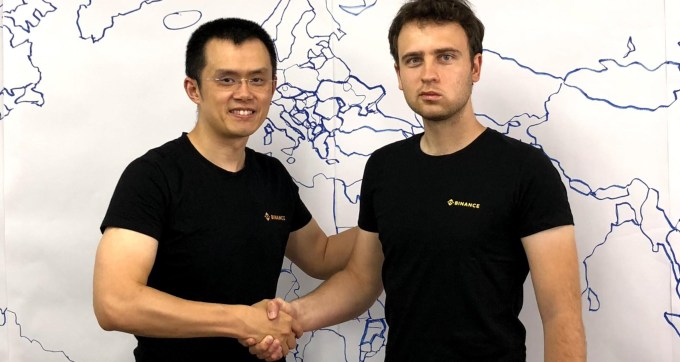
(Left to right) Binance CEO Changpeng Zhao pictured announcing Binance’s acquisition of Trust Wallet with its founder Viktor Radchenko

Wei Zhou — the Binance executive leading the firm’s Singapore business — told TechCrunch that the deal is very much about opening doors.

“This partnership is not about capital but about finding a partner for Binance’s fiat exchange expansions. This partnership signifies the long-term commitment Binance has to build out the ecosystem in the [Southeast Asia] region,” Zhou said.

Vertex certainly brings a network and know-how. The firm was founded in 1988, it has five funds worldwide and offices in Southeast Asia, Silicon Valley, China, India, Israel, and Taiwan.

The firm’s current $210 million fund is the largest in Southeast Asia, and this deal is a joint one between Vertex China and its Southeast Asia/India sibling.

More importantly, as a fund under the Temasek banner — Singapore’s sovereign wealth fund — the deal gives Binance a very good seat at the table for working with authorities. The company has already shown its keenness in Singapore by taking slow steps and working with authorities to roll out its fiat exchange in Singapore slowly — small and slow rollouts are a departure from Binance’s usual ‘move fast and break things’ approach to business — so pairing up with Vertex mirrors that.

Zhao, the Binance CEO, has artfully dodged many questions about his company’s past — such as why it left Hong Kong, the reasons it declined to become regulated in Japan, why it runs to governments like Malta and Bermuda, and whether it has violated U.S. securities laws — but the newest, and perhaps best, response is to work with the establishment in recognized markets where it can be fully legally compliant.

Note: The author owns a small amount of cryptocurrency. Enough to gain an understanding, not enough to change a life

23 Oct 2018

Even the world’s largest crypto exchange needs help from traditional VCs

Crypto-anarchists may not like it, but money doesn’t buy everything. Sometimes, you just need the help of a traditional venture capitalist.

Binance is the fastest growing company in crypto — having risen to become the world’s largest crypto exchange based on trading volumes in under one year — but even it needs help from the old guard. Earlier today the exchange firm, which is officially headquartered in Malta, announced that it has landed an undisclosed investment from Vertex Ventures, a VC firm belonging to Singapore sovereign fund Temasek.

The deal is aimed at launching Binance’s fiat-to-crypto exchange in Singapore which is in beta right now but expected to launch fully, with regulatory compliance, before the end of this year.

VCs have long invested in crypto and crypto exchanges — $8 billion-valued Coinbase is the best example with phenomenal gains for backers — but Binance is not traditional. It is barely one year old, it operates in legal grey areas worldwide and it is seemingly not in need of money (even in this bear market) having made a $350 million profit in the last six months alone.

But this deal is about seeking legitimacy and the right partners.

Binance made its name offering fast crypto-to-crypto trades that make use of its BNB token to save on fees, but a big focus for this year is moving into fiat-based exchanges, as CEO Changpeng Zhao explained to TechCrunch in an interview last month. The company is aiming to open three crypto exchanges this year, with plans to raise the number to 10 next year. Aside from Singapore, it has announced a joint venture in Lichtenstein and gone public with plans to offer fiat in Malta, where it has been courted by the island nation’s pro-crypto administration.

The move in Singapore is particularly telling since it shows that, despite early rhetoric that crypto (and ICOs) would ‘rid’ the tech industry of venture capitals. Traditional money and networks are very much required if ambitious companies are to fulfill their promise, as I explained recently when I argued that professional investors now dominate ICOs. The writing has been on the wall with crypto companies using money to make startup investments and grow their own ecosystems — Binance is the most aggressive with a fund that’s said to be $1 billion and an ambitious accelerator program — and so these businesses themselves also need the connections that professional VCs can bring.

(The deal is also a blow to Vertex rival Sequoia, which ended up taking Binance to court over the breakdown of a proposed investment deal last year.)

(Left to right) Binance CEO Changpeng Zhao pictured announcing Binance’s acquisition of Trust Wallet with its founder Viktor Radchenko

Wei Zhou — the Binance executive leading the firm’s Singapore business — told TechCrunch that the deal is very much about opening doors.

“This partnership is not about capital but about finding a partner for Binance’s fiat exchange expansions. This partnership signifies the long-term commitment Binance has to build out the ecosystem in the [Southeast Asia] region,” Zhou said.

Vertex certainly brings a network and know-how. The firm was founded in 1988, it has five funds worldwide and offices in Southeast Asia, Silicon Valley, China, India, Israel, and Taiwan.

The firm’s current $210 million fund is the largest in Southeast Asia, and this deal is a joint one between Vertex China and its Southeast Asia/India sibling.

More importantly, as a fund under the Temasek banner — Singapore’s sovereign wealth fund — the deal gives Binance a very good seat at the table for working with authorities. The company has already shown its keenness in Singapore by taking slow steps and working with authorities to roll out its fiat exchange in Singapore slowly — small and slow rollouts are a departure from Binance’s usual ‘move fast and break things’ approach to business — so pairing up with Vertex mirrors that.

Zhao, the Binance CEO, has artfully dodged many questions about his company’s past — such as why it left Hong Kong, the reasons it declined to become regulated in Japan, why it runs to governments like Malta and Bermuda, and whether it has violated U.S. securities laws — but the newest, and perhaps best, response is to work with the establishment in recognized markets where it can be fully legally compliant.

Note: The author owns a small amount of cryptocurrency. Enough to gain an understanding, not enough to change a life

23 Oct 2018

Ex-Windows EVP Terry Myerson joins Madrona Venture and The Carlyle Group

More than half a year after splitting from a long time role at Microsoft, former Windows and Device EVP Terry Myerson is finally ready to talk about his future. In a blog post this morning, the executive discussed what he’s been up to for the past several months (running, learning the piano, strengthening personal relationships, and all that good stuff) and highlighted two new roles.

The 21-year Microsoft vet will be joining Madrona Venture Group as a Venture Partner. The Seattle-based firm has been having a good run of late. As we noted back in May, four of its portfolio companies — Smartsheet, Apptio, Redfin and Impinj —have managed to IPO in the last two years.

Myerson notes that Madrona Managing Director Soma Somasegar was among the first to reach out after his exit from Microsoft.

“Madrona’s core idea is that if you are going to really partner with a company from day one, especially during the very earliest phases of a company’s growth, that is best done locally so that you can support the new team,” Myerson writes. “This resonated with me as true – and being the leading Pacific Northwest VC, with the biggest fund to invest here, and the best track record from Amazon, to four IPOs in the past two years – this started to sound like a great team to be a part of. I really liked the focus on the Pacific Northwest and innovation.”

Along with that role, Myerson has announced that he’ll also be joining private equity firm The Carlyle Group as Operating Executive. “Whereas my role at Madrona challenges me to consider how to leverage the latest technical innovations,” Myerson says, “my role at Carlyle will challenge me to deliver software at scale in many diverse organizations. I couldn’t be more excited to work with the leadership teams of great Madrona and Carlyle companies to grow their businesses.”

Myerson clearly still has a soft spot for his old team, as well, quoting former boss Satya Nadella and noting that the whole letter was written on the new Surface Pro 6 (as a LinkedIn post, no less). Old habits, as they say, die hard.

23 Oct 2018

Ex-Windows EVP Terry Myerson joins Madrona Venture and The Carlyle Group

More than half a year after splitting from a long time role at Microsoft, former Windows and Device EVP Terry Myerson is finally ready to talk about his future. In a blog post this morning, the executive discussed what he’s been up to for the past several months (running, learning the piano, strengthening personal relationships, and all that good stuff) and highlighted two new roles.

The 21-year Microsoft vet will be joining Madrona Venture Group as a Venture Partner. The Seattle-based firm has been having a good run of late. As we noted back in May, four of its portfolio companies — Smartsheet, Apptio, Redfin and Impinj —have managed to IPO in the last two years.

Myerson notes that Madrona Managing Director Soma Somasegar was among the first to reach out after his exit from Microsoft.

“Madrona’s core idea is that if you are going to really partner with a company from day one, especially during the very earliest phases of a company’s growth, that is best done locally so that you can support the new team,” Myerson writes. “This resonated with me as true – and being the leading Pacific Northwest VC, with the biggest fund to invest here, and the best track record from Amazon, to four IPOs in the past two years – this started to sound like a great team to be a part of. I really liked the focus on the Pacific Northwest and innovation.”

Along with that role, Myerson has announced that he’ll also be joining private equity firm The Carlyle Group as Operating Executive. “Whereas my role at Madrona challenges me to consider how to leverage the latest technical innovations,” Myerson says, “my role at Carlyle will challenge me to deliver software at scale in many diverse organizations. I couldn’t be more excited to work with the leadership teams of great Madrona and Carlyle companies to grow their businesses.”

Myerson clearly still has a soft spot for his old team, as well, quoting former boss Satya Nadella and noting that the whole letter was written on the new Surface Pro 6 (as a LinkedIn post, no less). Old habits, as they say, die hard.

23 Oct 2018

Uber Eats is expanding to cover 70 percent of U.S. population by end of year

Uber is continuing to expand its on-demand food delivery service, Eats. By the end of this year, Uber plans to cover more than 70 percent of the U.S. Today, Uber covers more than 50 percent of the U.S. population. Uber Eats competitor Postmates, on the other hand, recently said it covers 60 percent of U.S. households.

Even in places where Uber does not operate its traditional ride-hailing business or places where it has merely a small presence, Uber has been able to “successfully introduce the Uber brand to the marketplace through Eats,” Uber Head of US Cities for Uber Eats Ana Mahony told TechCrunch.

Uber’s calling it successful in part because 40 percent of its new Eats users are new to Uber. One of the benefits to operating Eats, Mahony said, is that there are different regulatory requirements.

When you compare the Eats growth data to that of the first three years of UberX gross bookings, “Eats is growing just as fast if not faster,” Mahony said.

To continue fueling growth, Uber is also launching a new self sign-up process for restaurants. The idea is for it to be easier and faster to become an Uber Eats partner.

“Uber is really evolving into a platform brand where we are moving very many different types of goods and services and people from point A to point B,” Mahony said.

Over the weekend, the WSJ reported Uber has plans to use drones to deliver food by 2021. That report was based on a since-deleted job posting looking for an executive for UberExpress, a drone delivery service within UberEats. However, Mahony and I had our conversation before the drone news.

23 Oct 2018

Uber Eats is expanding to cover 70 percent of U.S. population by end of year

Uber is continuing to expand its on-demand food delivery service, Eats. By the end of this year, Uber plans to cover more than 70 percent of the U.S. Today, Uber covers more than 50 percent of the U.S. population. Uber Eats competitor Postmates, on the other hand, recently said it covers 60 percent of U.S. households.

Even in places where Uber does not operate its traditional ride-hailing business or places where it has merely a small presence, Uber has been able to “successfully introduce the Uber brand to the marketplace through Eats,” Uber Head of US Cities for Uber Eats Ana Mahony told TechCrunch.

Uber’s calling it successful in part because 40 percent of its new Eats users are new to Uber. One of the benefits to operating Eats, Mahony said, is that there are different regulatory requirements.

When you compare the Eats growth data to that of the first three years of UberX gross bookings, “Eats is growing just as fast if not faster,” Mahony said.

To continue fueling growth, Uber is also launching a new self sign-up process for restaurants. The idea is for it to be easier and faster to become an Uber Eats partner.

“Uber is really evolving into a platform brand where we are moving very many different types of goods and services and people from point A to point B,” Mahony said.

Over the weekend, the WSJ reported Uber has plans to use drones to deliver food by 2021. That report was based on a since-deleted job posting looking for an executive for UberExpress, a drone delivery service within UberEats. However, Mahony and I had our conversation before the drone news.