
Month: October 2018

23 Oct 2018

Bright Machines lands $179M to bring smarter robotics to manufacturing

Robotics has had a role in manufacturing since the 1970s, but even today they are aren’t often driven by the latest software. Bright Machines, a San Francisco startup wants to change that and it got a whopping $179 million Series A today to get this thing going. While it was at it, it also officially launched the company.

The startup wants to bring a software-driven approach to robotics, one that would let you take dumb robotics and program it in a more automated fashion to perform a set of tasks, taking advantage of artificial intelligence and machine learning in ways that they say most manufacturing companies simply aren’t equipped to handle right now.

This is clearly not your typical Series A and Bright Machines does not appear to be a typical Series A company, feeling its way trying to get a product to market. Perhaps that’s because the company began life as incubated project inside Flex, a customized manufacturing company. It was then spun out as a startup called AutoLab AI and changed the name to Bright Machines today for the big company unveiling.

It already boast over 300 employees and brought in CEO, Armar Hanspal, who was most recently co-CEO at Autodesk to run the show. Former Autodesk CEO Carl Bass is a board member. Other board members include Mike McNamara, CEO of Flex and Steve Luszo, CEO of Seagate. Eclipse led the round.

What is attracting all of this money and talent to such a young company? Bright Machines is trying to solve a hard and expensive manufacturing problem. “We’re putting together the people, the tech stack and funding and other resources to go really go tackle this big under-served environment by bringing more automation and software to the factory floor,” CEO Hanspal told TechCrunch.

While he acknowledges we have seen a move toward automating the factor floor for decades, they are attacking an area that up until now has been underserved by robotics because the technology simply wasn’t ready to handle it. “What we’re doing that’s different is going from dumb, blind and costly robots to ones that are sensor rich, have computer vision, machine learning and are adaptable,” he said.

What’s more, they are bringing a subscription model to this approach, allowing customers to set up custom manufacturing lines on the fly with what they claim is much lower cost and fuss they faced with more traditional approaches. 

They are taking on this sum of money so early because they believe it is a huge market and if they can attract the right talent, they can bring a substantive change to manufacturing that is lacking today. Time will tell if the bet pays off.
23 Oct 2018

Bright Machines lands $179M to bring smarter robotics to manufacturing

Robotics has had a role in manufacturing since the 1970s, but even today they are aren’t often driven by the latest software. Bright Machines, a San Francisco startup wants to change that and it got a whopping $179 million Series A today to get this thing going. While it was at it, it also officially launched the company.

The startup wants to bring a software-driven approach to robotics, one that would let you take dumb robotics and program it in a more automated fashion to perform a set of tasks, taking advantage of artificial intelligence and machine learning in ways that they say most manufacturing companies simply aren’t equipped to handle right now.

This is clearly not your typical Series A and Bright Machines does not appear to be a typical Series A company, feeling its way trying to get a product to market. Perhaps that’s because the company began life as incubated project inside Flex, a customized manufacturing company. It was then spun out as a startup called AutoLab AI and changed the name to Bright Machines today for the big company unveiling.

It already boast over 300 employees and brought in CEO, Armar Hanspal, who was most recently co-CEO at Autodesk to run the show. Former Autodesk CEO Carl Bass is a board member. Other board members include Mike McNamara, CEO of Flex and Steve Luszo, CEO of Seagate. Eclipse led the round.

What is attracting all of this money and talent to such a young company? Bright Machines is trying to solve a hard and expensive manufacturing problem. “We’re putting together the people, the tech stack and funding and other resources to go really go tackle this big under-served environment by bringing more automation and software to the factory floor,” CEO Hanspal told TechCrunch.

While he acknowledges we have seen a move toward automating the factor floor for decades, they are attacking an area that up until now has been underserved by robotics because the technology simply wasn’t ready to handle it. “What we’re doing that’s different is going from dumb, blind and costly robots to ones that are sensor rich, have computer vision, machine learning and are adaptable,” he said.

What’s more, they are bringing a subscription model to this approach, allowing customers to set up custom manufacturing lines on the fly with what they claim is much lower cost and fuss they faced with more traditional approaches. 

They are taking on this sum of money so early because they believe it is a huge market and if they can attract the right talent, they can bring a substantive change to manufacturing that is lacking today. Time will tell if the bet pays off.
23 Oct 2018

A Washington ISP exposed the ‘keys to the kingdom’ after leaving a server unsecured

A Washington state internet provider left an unprotected server online without a password, exposing network schematics, passwords and other sensitive files for at least six months.

Worse, it took the company a week to shut off the leak, despite several phone calls and emails warning of the exposure.

The little-known internet provider, PocketiNet, may not be widely known outside the west coast but it’s a local powerhouse — providing high speed internet access to thousands of homes, local multi-national corporations, hospitals and a regional airport across the state. But the company put its customers and its network at risk after it left open an Amazon S3 storage bucket — an all too common cause of data exposures — containing tens of gigabytes of files.

Chris Vickery, director of cyber risk research at security firm UpGuard, found the data and shared his findings with TechCrunch. He described the cache the “keys to the kingdom.”

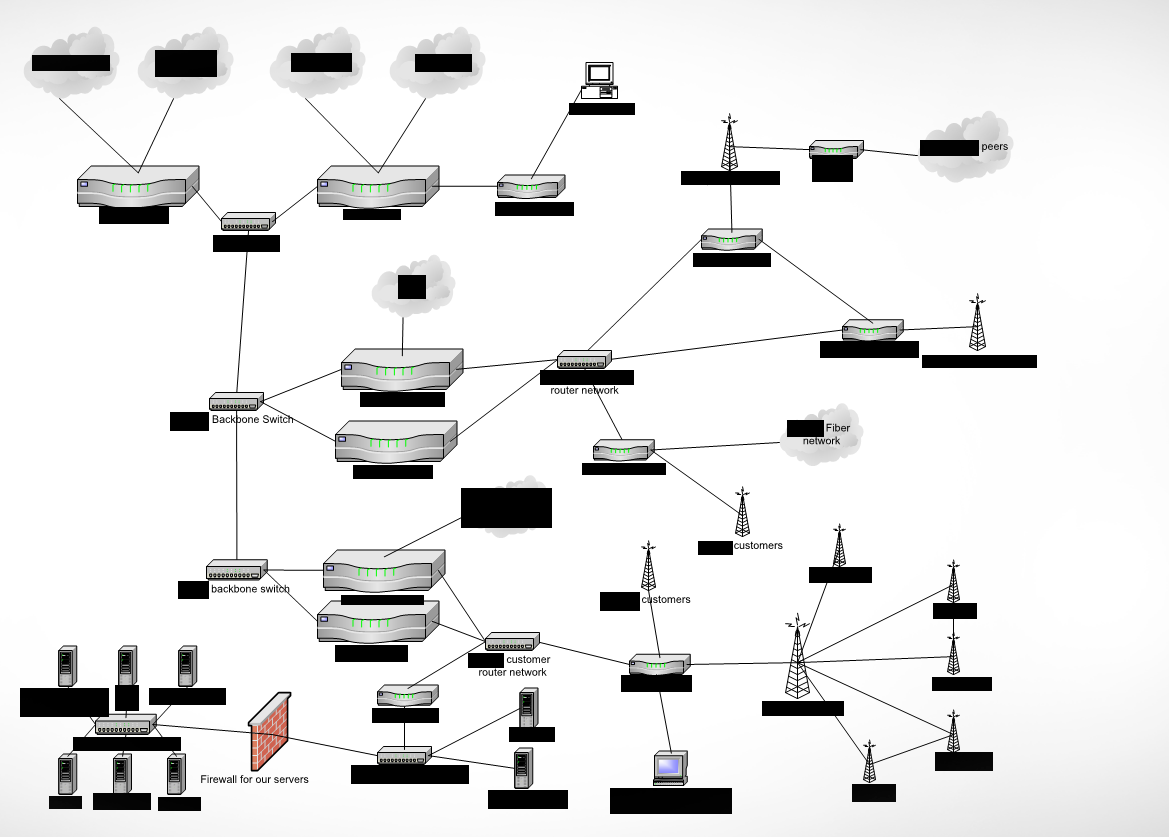
Among the files, the bucket contained detailed diagrams of the company’s network setup, router configurations, and details and locations of customers’ equipment.

Vickery also found spreadsheets and plaintext password files belonging to employees and network devices — like firewalls, switches and wireless points — that he said could have given a hacker “everything they need to disrupt, exploit, or otherwise modify network operations.”

A redacted network schematic from the exposed Amazon S3 bucket (Image: supplied)

Although there wasn’t any customer data stored in the bucket, one file revealed PocketiNet’s “priority” customers, including the nearby Lourdes Medical Center in Pasco, the Toyota Center arena in Kennewick, and a little-known Lockheed Martin facility in Richand. The company provides service to dozens of hotspots around the region, including at the the Tri-City Airport in Pasco. It also provides hotspots and backend network infrastructure to Walla Walla Regional Airport.

As soon as Vickery found the data on October 11, he contacted the company the same day. But the company took its time to close the bucket.

In a phone call on Saturday, PocketiNet’s chief technology officer Steve Hoffman told TechCrunch that the bucket had been open for “six months” and that following an unrelated power outage on the network, securing the bucket “can wait another day.” That’s contrary to his an email the day before, claiming that the bucket had been secured “days ago,” which it wasn’t.

A day later, Vickery confirmed that the bucket was secured.

We reached out to the company again for comment. Chief executive Todd Brandenberg did not respond, but Hoffman reaffirmed that the company “fixed the problem as soon as we could.”

Vickery said the data should not have been public and could have put the company’s network at risk of exploitation or compromise. But while so many companies today are looking for foreign threats and complex adversaries, some might want to look a little closer to home.

23 Oct 2018

A Washington ISP exposed the ‘keys to the kingdom’ after leaving a server unsecured

A Washington state internet provider left an unprotected server online without a password, exposing network schematics, passwords and other sensitive files for at least six months.

Worse, it took the company a week to shut off the leak, despite several phone calls and emails warning of the exposure.

The little-known internet provider, PocketiNet, may not be widely known outside the west coast but it’s a local powerhouse — providing high speed internet access to thousands of homes, local multi-national corporations, hospitals and a regional airport across the state. But the company put its customers and its network at risk after it left open an Amazon S3 storage bucket — an all too common cause of data exposures — containing tens of gigabytes of files.

Chris Vickery, director of cyber risk research at security firm UpGuard, found the data and shared his findings with TechCrunch. He described the cache the “keys to the kingdom.”

Among the files, the bucket contained detailed diagrams of the company’s network setup, router configurations, and details and locations of customers’ equipment.

Vickery also found spreadsheets and plaintext password files belonging to employees and network devices — like firewalls, switches and wireless points — that he said could have given a hacker “everything they need to disrupt, exploit, or otherwise modify network operations.”

A redacted network schematic from the exposed Amazon S3 bucket (Image: supplied)

Although there wasn’t any customer data stored in the bucket, one file revealed PocketiNet’s “priority” customers, including the nearby Lourdes Medical Center in Pasco, the Toyota Center arena in Kennewick, and a little-known Lockheed Martin facility in Richand. The company provides service to dozens of hotspots around the region, including at the the Tri-City Airport in Pasco. It also provides hotspots and backend network infrastructure to Walla Walla Regional Airport.

As soon as Vickery found the data on October 11, he contacted the company the same day. But the company took its time to close the bucket.

In a phone call on Saturday, PocketiNet’s chief technology officer Steve Hoffman told TechCrunch that the bucket had been open for “six months” and that following an unrelated power outage on the network, securing the bucket “can wait another day.” That’s contrary to his an email the day before, claiming that the bucket had been secured “days ago,” which it wasn’t.

A day later, Vickery confirmed that the bucket was secured.

We reached out to the company again for comment. Chief executive Todd Brandenberg did not respond, but Hoffman reaffirmed that the company “fixed the problem as soon as we could.”

Vickery said the data should not have been public and could have put the company’s network at risk of exploitation or compromise. But while so many companies today are looking for foreign threats and complex adversaries, some might want to look a little closer to home.

23 Oct 2018

Amazon Business Prime adds same-day and 1-day shipping, among other benefits

Amazon’s version of Prime aimed at business users is gaining a handful of new perks, the retailer announced this morning. Unlike the consumer version of Prime, the new benefits aren’t focused around entertainment – like access to streaming music or movies, for example – but are instead meant to help business customers gain better insight and control over their Amazon spending.

Business customers in the U.S. also today gain access to free same-day and one-day shipping on over a million items on orders over $35 in more than 8,000 cities and towns.

Plus, they can opt for Consolidated Shipping on bulk orders to receive fewer shipments, if they choose.

Also included in the new set of benefits is a feature called “Spend Visibility,” which provides visualizations powered by AWS QuickSight of the company spend in graphics designed to be pasted into corporate PowerPoints. Amazon says its goal is to help businesses free up the time it takes them to analyze their data in order to identify spending trends.

Another new benefit is “Guided Buying,” which allows the Amazon Business account admins to identify certain suppliers and products as “preferred” while restricting others, so those buying under the business account makes the company-approved choices when shopping for supplies and other business needs. This can also help companies reduce spend, improve compliance with corporate policies, and consolidate their suppliers, Amazon notes.

Starting today, Prime Business members can choose to now request Extended Terms for Pay by Invoice, when they qualify, opting for 45 or 60 days for better cash flow management, too.

In addition to the new Prime benefits, Amazon and American Express launched a new Amazon Business American Express Card which offers U.S. customers 5% back or 90-Day terms on eligible purchases at Amazon.com, Amazon Business, Amazon Web Services, and Whole Foods Market.

Amazon first launched Business Prime last year, as a way to compete with traditional office suppliers like Staples, Office Depot, as well as big box retailers like Walmart and Costco. The service extends Prime’s free, two-day shipping to businesses, and it integrates with dozens of purchasing systems, workflows, reporting and analytics systems, purchasing cards and more.

The program’s cost is based on the number of users. There’s now a new tier for smaller businesses, starting at $179 per year – not much more than a typical Amazon Prime membership.

The pricing tiers are as follows: $179 per year for up to 3 users; $499 per year for up to 10 users; $1,299 per year for up to 100 users; and $10,099 per year for over 100 users.

Since its launch, Amazon says it has signed up “millions” of business customers and “hundreds of thousands” of business sellers to the program.

In the U.S., Amazon Business now serves nearly 80% of the 100 largest enrollment education organizations, 55 of the Fortune 100 companies, more than half of the 100 biggest hospital systems, and more than 40% of the most populous local governments. (You’ll note that those numbers have been massaged a bit to make the percentages appear larger, and Amazon isn’t saying how many actual subscriptions it has sold, or what subscription tiers are involved.)

That said, it’s still taking a notable chunk of the market for a year-old service – one that probably makes rival retailers nervous as Amazon aims for their market.

Amazon says the new benefits (except for the Amex card and same-day/1-day shipping which are U.S.-only) are rolling out to Amazon Business Prime in the U.S., Germany and Japan, starting today.


23 Oct 2018

Amazon Business Prime adds same-day and 1-day shipping, among other benefits

Amazon’s version of Prime aimed at business users is gaining a handful of new perks, the retailer announced this morning. Unlike the consumer version of Prime, the new benefits aren’t focused around entertainment – like access to streaming music or movies, for example – but are instead meant to help business customers gain better insight and control over their Amazon spending.

Business customers in the U.S. also today gain access to free same-day and one-day shipping on over a million items on orders over $35 in more than 8,000 cities and towns.

Plus, they can opt for Consolidated Shipping on bulk orders to receive fewer shipments, if they choose.

Also included in the new set of benefits is a feature called “Spend Visibility,” which provides visualizations powered by AWS QuickSight of the company spend in graphics designed to be pasted into corporate PowerPoints. Amazon says its goal is to help businesses free up the time it takes them to analyze their data in order to identify spending trends.

Another new benefit is “Guided Buying,” which allows the Amazon Business account admins to identify certain suppliers and products as “preferred” while restricting others, so those buying under the business account makes the company-approved choices when shopping for supplies and other business needs. This can also help companies reduce spend, improve compliance with corporate policies, and consolidate their suppliers, Amazon notes.

Starting today, Prime Business members can choose to now request Extended Terms for Pay by Invoice, when they qualify, opting for 45 or 60 days for better cash flow management, too.

In addition to the new Prime benefits, Amazon and American Express launched a new Amazon Business American Express Card which offers U.S. customers 5% back or 90-Day terms on eligible purchases at Amazon.com, Amazon Business, Amazon Web Services, and Whole Foods Market.

Amazon first launched Business Prime last year, as a way to compete with traditional office suppliers like Staples, Office Depot, as well as big box retailers like Walmart and Costco. The service extends Prime’s free, two-day shipping to businesses, and it integrates with dozens of purchasing systems, workflows, reporting and analytics systems, purchasing cards and more.

The program’s cost is based on the number of users. There’s now a new tier for smaller businesses, starting at $179 per year – not much more than a typical Amazon Prime membership.

The pricing tiers are as follows: $179 per year for up to 3 users; $499 per year for up to 10 users; $1,299 per year for up to 100 users; and $10,099 per year for over 100 users.

Since its launch, Amazon says it has signed up “millions” of business customers and “hundreds of thousands” of business sellers to the program.

In the U.S., Amazon Business now serves nearly 80% of the 100 largest enrollment education organizations, 55 of the Fortune 100 companies, more than half of the 100 biggest hospital systems, and more than 40% of the most populous local governments. (You’ll note that those numbers have been massaged a bit to make the percentages appear larger, and Amazon isn’t saying how many actual subscriptions it has sold, or what subscription tiers are involved.)

That said, it’s still taking a notable chunk of the market for a year-old service – one that probably makes rival retailers nervous as Amazon aims for their market.

Amazon says the new benefits (except for the Amex card and same-day/1-day shipping which are U.S.-only) are rolling out to Amazon Business Prime in the U.S., Germany and Japan, starting today.


23 Oct 2018

MoviePass parent company to spin off MoviePass

Helios and Matheson Analytics (HMNY) will spin off MoviePass and all movie-related activities into a separate public company. HMNY is an analytics company after all, and MoviePass has been a pretty bad investment for the company’s bottom line.

When HMNY acquired MoviePass last year, the company didn’t really care about creating a subscription service for movie theaters. HMNY wanted to attract enough subscribers to generate more data about the movie industry. This data could then be leveraged for targeted advertising.

But MoviePass has had so many financial issues that it’s hard to believe it’s still around. HMNY filed an S-3 to sell up to $1.2 billion in debt and equity. It doesn’t mean HMNY raised $1.2 billion for MoviePass, but it has the opportunity to do so.

$1.2 billion isn’t a big deal for the biggest tech companies. But HMNY has a market capitalization of $37.2 million as of yesterday’s closing price.

“Since we acquired control of MoviePass in December 2017, HMNY largely has become synonymous with MoviePass in the public’s eye, leading us to believe that our shareholders and the market perception of HMNY might benefit from separating our movie-related assets from the rest of our company,” the company said in a press release.

And sure enough, HMNY shares soared minutes after the announcement went live. Shares are currently trading at $0.024, up 42 percent compared to yesterday’s closing price of $0.0169.

The new MoviePass Entertainment Holdings company will be the parent company of the MoviePass subscription service, HMNY’s movie production company MoviePass Films, MoviePass Ventures and Moviefone, which HMNY acquired from TechCrunch’s parent company Oath. HMNY will then focus on RedZone.

You know what happens when you ask a kid to clean their room. They take the piles of toys on the ground and put everything under the bed. At least, all the mess is in the same spot now, away from the rest of the room. This is exactly what’s happening with MoviePass.

23 Oct 2018

MoviePass parent company to spin off MoviePass

Helios and Matheson Analytics (HMNY) will spin off MoviePass and all movie-related activities into a separate public company. HMNY is an analytics company after all, and MoviePass has been a pretty bad investment for the company’s bottom line.

When HMNY acquired MoviePass last year, the company didn’t really care about creating a subscription service for movie theaters. HMNY wanted to attract enough subscribers to generate more data about the movie industry. This data could then be leveraged for targeted advertising.

But MoviePass has had so many financial issues that it’s hard to believe it’s still around. HMNY filed an S-3 to sell up to $1.2 billion in debt and equity. It doesn’t mean HMNY raised $1.2 billion for MoviePass, but it has the opportunity to do so.

$1.2 billion isn’t a big deal for the biggest tech companies. But HMNY has a market capitalization of $37.2 million as of yesterday’s closing price.

“Since we acquired control of MoviePass in December 2017, HMNY largely has become synonymous with MoviePass in the public’s eye, leading us to believe that our shareholders and the market perception of HMNY might benefit from separating our movie-related assets from the rest of our company,” the company said in a press release.

And sure enough, HMNY shares soared minutes after the announcement went live. Shares are currently trading at $0.024, up 42 percent compared to yesterday’s closing price of $0.0169.

The new MoviePass Entertainment Holdings company will be the parent company of the MoviePass subscription service, HMNY’s movie production company MoviePass Films, MoviePass Ventures and Moviefone, which HMNY acquired from TechCrunch’s parent company Oath. HMNY will then focus on RedZone.

You know what happens when you ask a kid to clean their room. They take the piles of toys on the ground and put everything under the bed. At least, all the mess is in the same spot now, away from the rest of the room. This is exactly what’s happening with MoviePass.

23 Oct 2018

Predictive sales tool People.ai racks up $30M Series B led by Andreessen Horowitz

Dirty data means bad business. Yet sales operations are still largely based on incomplete, manually entered activity logging done by sales reps. Anyone who’s worked in a sales role can attest to the wasted hours of task logging that managers require as part of their oversight. But what if a company could automatically track the steps employees took to land a deal, freeing up reps’ schedules to do their actual jobs? People.ai has raised $30 million to try to achieve just that.

People.ai, a startup that tracks every communication touchpoint between sales teams and customers, wants to solve this problem. Now, the company (and the youngest Y Combinator graduate to make the accelerator’s list of its most successful startups) has attracted the attention of Andreessen Horowitz, scoring a fresh $30 million to move forward on this mission. Also participating in the round were Series A investors Lightspeed Venture Partners, GGV Capital and Y Combinator. In addition to the investment, Andreessen Horowitz general partner Peter Levine is joining People.ai’s board.

The startup, founded by Oleg Rogynskyy, previously raised $7 million. It started out as a software meant to give sales managers a predictive playbook for the best way to close a deal, but investors have a master plan for the long term.

While this kind of live data mapping tech resembles an acquisition target for Microsoft or Salesforce, it’s no secret that Andreessen likes to build massive software franchises like Skype, Airbnb and GitHub. As we enter Q4 of 2018, early stage SaaS investment is stabilizing and public cloud stocks are soaring. Salesforce continues to pump more money into the AI sales concept, paving the way for startups like People.ai to thrive. But when it comes to exit strategy, selling to a large enterprise player is not the goal.

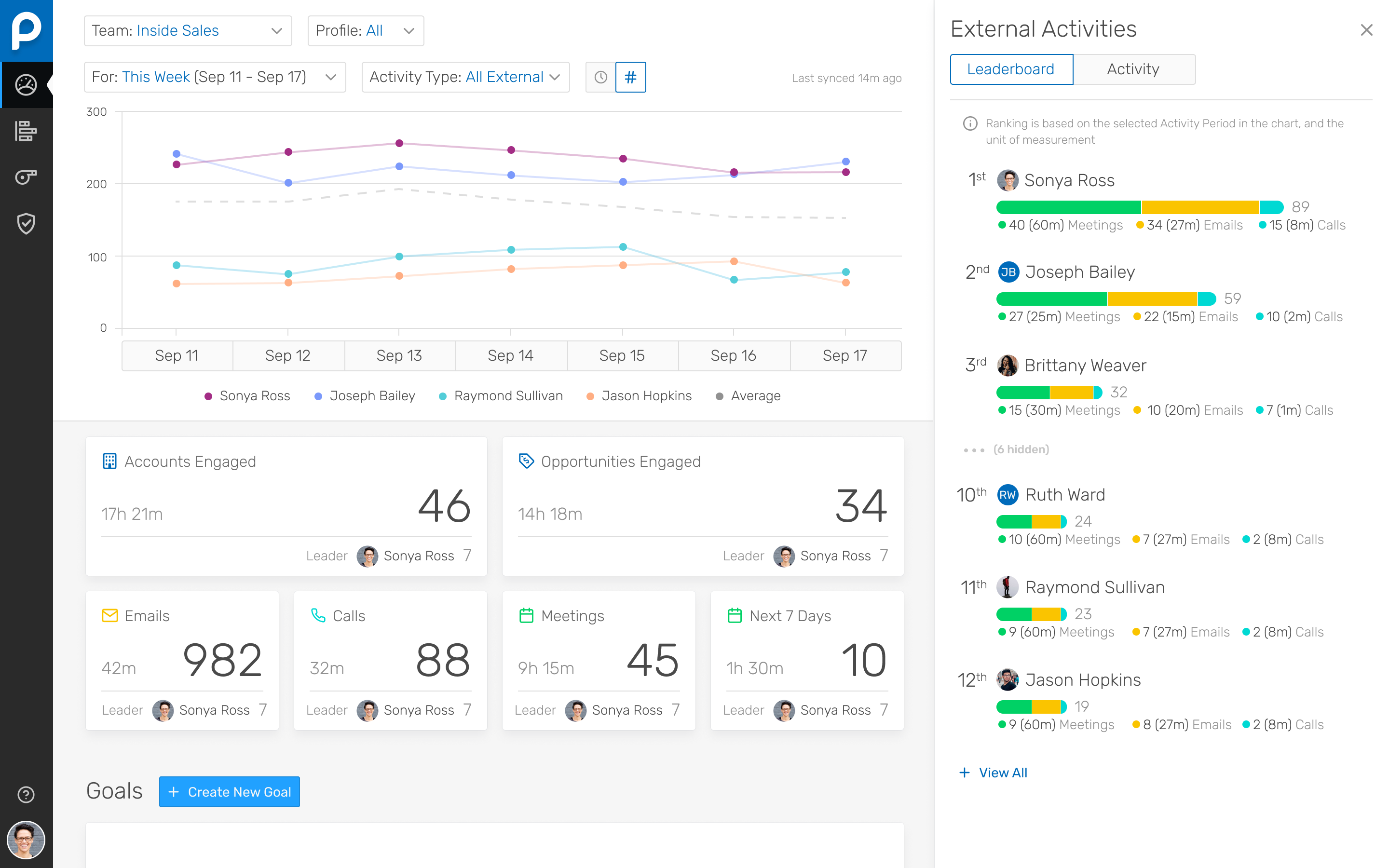
An example People.ai dashboard

While Rogynskyy tells me he’d eventually like to take the company public, People.ai first needs to solidify itself as an AI solution for enterprises. To do so, the founder says they will use about half of the Series B investment to fund commercial expansion and customer acquisition (something the Andreessen network will undoubtedly catalyze) and the other half to fuel data science and engineering advancements within the business. The San Francisco-based company has also opened up offices in Boston and Los Angeles, and is considering building out an engineering-focused team in Canada.

People.ai works with companies like Lyft, Palo Alto Networks and New Relic to help sales and customer support teams improve performance. But how exactly does it operate? The company built a machine learning technology meant to perfectly populate CRM records of salespeople’s processes as they work to close deals. The tech scans email, phone calls and calendar meetings to reveal how much time top performers are spending at each phase of a deal, and where struggling reps may be deviating from typically successful methods. Are salespeople too zoned in on one phase of a deal? Not spending enough time talking to product managers, executives or other decision makers? Are they focusing on the right leads to begin with? Those are the questions People.ai’s algorithms seek to answer.

“We’ve expanded so that we don’t solely work with salespeople. We now work with everyone who touches the customer interactions, including marketing, inside sales engineers, customer success and sales support services. People.ai not only captures the activity of salespeople, but now gives teams a 360 degree view of everything that is happening with a customer across an entire team,” explains Rogynskyy.

As data cleans up, a bigger question for managers unfolds. While companies shouldn’t fly blind with years of incomplete CRM records, automative software like this removes the human element from business. If managers have the insights to reward individuals purely based on data rather than immeasurable qualitative soft skills or personal style, a product like this could internally redefine an organizations’ best practices.

Investors view People.ai as a foundational company in the next generation of SaaS that could provide greater efficiency within existing workforces. There are ways for best practices to be culled from these communications and distributed across an organization, and Andreessen thinks People.ai has the head start. “Every organization in an enterprise is collecting data through email and manual entry right now, that we believe can unlock tremendous efficiency and optimization not only in sales but across HR, services, marketing and finance using the exact same algorithms that People.ai is applying to sales,” says Levine.

23 Oct 2018

Predictive sales tool People.ai racks up $30M Series B led by Andreessen Horowitz

Dirty data means bad business. Yet sales operations are still largely based on incomplete, manually entered activity logging done by sales reps. Anyone who’s worked in a sales role can attest to the wasted hours of task logging that managers require as part of their oversight. But what if a company could automatically track the steps employees took to land a deal, freeing up reps’ schedules to do their actual jobs? People.ai has raised $30 million to try to achieve just that.

People.ai, a startup that tracks every communication touchpoint between sales teams and customers, wants to solve this problem. Now, the company (and the youngest Y Combinator graduate to make the accelerator’s list of its most successful startups) has attracted the attention of Andreessen Horowitz, scoring a fresh $30 million to move forward on this mission. Also participating in the round were Series A investors Lightspeed Venture Partners, GGV Capital and Y Combinator. In addition to the investment, Andreessen Horowitz general partner Peter Levine is joining People.ai’s board.

The startup, founded by Oleg Rogynskyy, previously raised $7 million. It started out as a software meant to give sales managers a predictive playbook for the best way to close a deal, but investors have a master plan for the long term.

While this kind of live data mapping tech resembles an acquisition target for Microsoft or Salesforce, it’s no secret that Andreessen likes to build massive software franchises like Skype, Airbnb and GitHub. As we enter Q4 of 2018, early stage SaaS investment is stabilizing and public cloud stocks are soaring. Salesforce continues to pump more money into the AI sales concept, paving the way for startups like People.ai to thrive. But when it comes to exit strategy, selling to a large enterprise player is not the goal.

An example People.ai dashboard

While Rogynskyy tells me he’d eventually like to take the company public, People.ai first needs to solidify itself as an AI solution for enterprises. To do so, the founder says they will use about half of the Series B investment to fund commercial expansion and customer acquisition (something the Andreessen network will undoubtedly catalyze) and the other half to fuel data science and engineering advancements within the business. The San Francisco-based company has also opened up offices in Boston and Los Angeles, and is considering building out an engineering-focused team in Canada.

People.ai works with companies like Lyft, Palo Alto Networks and New Relic to help sales and customer support teams improve performance. But how exactly does it operate? The company built a machine learning technology meant to perfectly populate CRM records of salespeople’s processes as they work to close deals. The tech scans email, phone calls and calendar meetings to reveal how much time top performers are spending at each phase of a deal, and where struggling reps may be deviating from typically successful methods. Are salespeople too zoned in on one phase of a deal? Not spending enough time talking to product managers, executives or other decision makers? Are they focusing on the right leads to begin with? Those are the questions People.ai’s algorithms seek to answer.

“We’ve expanded so that we don’t solely work with salespeople. We now work with everyone who touches the customer interactions, including marketing, inside sales engineers, customer success and sales support services. People.ai not only captures the activity of salespeople, but now gives teams a 360 degree view of everything that is happening with a customer across an entire team,” explains Rogynskyy.

As data cleans up, a bigger question for managers unfolds. While companies shouldn’t fly blind with years of incomplete CRM records, automative software like this removes the human element from business. If managers have the insights to reward individuals purely based on data rather than immeasurable qualitative soft skills or personal style, a product like this could internally redefine an organizations’ best practices.

Investors view People.ai as a foundational company in the next generation of SaaS that could provide greater efficiency within existing workforces. There are ways for best practices to be culled from these communications and distributed across an organization, and Andreessen thinks People.ai has the head start. “Every organization in an enterprise is collecting data through email and manual entry right now, that we believe can unlock tremendous efficiency and optimization not only in sales but across HR, services, marketing and finance using the exact same algorithms that People.ai is applying to sales,” says Levine.