Month: October 2018

17 Oct 2018

Hulu adds a dark mode on the web

Rejoice, dark mode fans. Hulu is joining YouTube and YouTube TV as the streaming video service to embrace a dark theme – something that gives video sites a more cinematic look and feel (as Netflix already knows). The company says it will begin to roll out its new “Night Mode” starting today to all users of Hulu on the web.

The theme, which can be enabled in the settings, can also help reduce eye strain and glare in low light, Hulu notes. That’s useful for those who are watching on laptops, while curled up on the sofa or bed – as many web users are today.

While Hulu has timed the launch to coincide with its offering of creepy “Huluween” content, it says the feature is a permanent addition. However, it wouldn’t yet confirm if the dark mode will expand to other Hulu platforms. Instead, the company says it will listen to user feedback to find out if that’s something people want on their other devices, like phones and tablets.

This the first time Hulu has offered a dark theme of any sort, it notes.

Dark themes have become increasingly popular with a subset of users, especially as people spend more time on their devices, reading, interacting with, and streaming content. A number of big-name apps now offer dark themes, including YouTube, Twitter, Reddit, Telegram, Instapaper, Pocket, Feedly, Medium, Wikipedia, IMDb, Apple Books, Kindle, and many others.

The feature will be live on Hulu’s site at 9:30 AM PT.

17 Oct 2018

The new normal

When we first started writing about startups at TechCrunch the idea of a startup – a small business with global ambitions – was a pipe dream. How could a side hustle like Twitter turn into a mouthpiece for heroes and villains? How could a video uploading service like YouTube destroy the media industry? How could a blog – a blog written by a perpetually exhausted ex-lawyer from his bedroom – upturn and change the entire process of building, growing, and selling ideas?

But it happened. In a few years – between 2005 and 2010 – the world changed. TechCrunch became aspirational reading. Millions of would-be entrepreneurs sat in their cubicles scrolling down the river, wondering when it would be their turn to hold a comically large check from a VC in a fleece vest. I distinctly remember talking to two Dutch startuppers in 2007. They told me about a good idea they had based on scientific work they had done. They asked, quite simply, if they should quit their jobs. Three years before the question would have been ludicrous. Give up a cushy job in academia for a long shot? Absolutely not.

But on that afternoon, two years into the startup revolution when getting funding was as easy as getting a post on TechCrunch, the long shot was the better bet.

Now we’re facing a new normal and many of the advances wrought in those years are being reversed. In 2014, risk aversion and VC bag-holding behavior slowed angel and seed investment and startup growth beyond the behemoth b2b solution stalled. Further, an insipid culture of the Creamery, conferences, “passion,” and Allbirds. As I traveled the world I noticed that every city – from St. Louis to Skopje – went through the motions of post TechCrunch-style entrepreneurship. Every city had its own conferences replete with mason jars of wheatgrass smoothie and cuddle rooms where co-founders could emotion-hack their feelings. Members of the speaker circuit told one of two stories – “You can do it!” or “You’re doing it wrong!” – and pitch-offs and hackathons sprung up like kudzu across the globe.

But the amount of VC cash available to support these dreamers is shrinking. It is easy to enter into the entrepreneurial lifestyle but it is far harder to build an entrepreneurial life. One friend quit his job four years ago and is now cashing out IRAs. Other folks I know are taking a break from startups and are nestling into the warm confines of a desk job. The bloom is off the rose.

At the same time I’ve been watching the ICO – or now Security Token Offering – markets explode. In a few short years a massive wealth redistribution has made a few bold folks very rich and their startups are becoming funds in themselves. Thanks to the egalitarian nature of crypto you can take money from a fifteen year old in Zagreb and a mafia bookkeeper in Moscow as easily as you could get it on Sand Hill Road in 2006. Arguably this new market is full of risks and investors have little recourse if their investors move to the coast of Spain and disappear but it is the new normal, the new startup methodology. And as much as VCs like to crow that they add value, they don’t. Money adds value and money comes from the ICO market.

I’ve been working hard to understand the companies inside this market and I’ve found it very difficult. First, if you’re an ICO-funded or blockchain-based startup, visit this form and tell me about yourself. I’ll be writing up a few of you over the next few months. Second, I’d like to offer a bit of advice from a being birthed in the transparency-induced fires of 2005.

First, as I’ve written before, your ICO press relations are awful. I’ll reiterate what I wrote a few months ago:

Here’s the bad news: your PR person sucks. Every single PR person I’ve spoken to is awful at crypto. There are a number of companies out there and I won’t single anyone out but if you have any questions email me at john@biggs.cc and I’ll name names. Let me tell you: every single PR person I deal with, including internal communications managers, is awful. This isn’t always their fault because the space is so new but then again many of them are incompetent.

It is, thankfully, getting better. An ICO is essentially a crowd sale. Getting people to pay attention to crowd sales has always been nearly impossible. Kickstarter projects only started getting taken seriously after a mass of them succeeded in shipping and, as of this writing, very few ICOs have produced much of anything. The story, then, isn’t that you’re doing an ICO. The story is that a group of smart people are getting together to solve a big, hairy problem. That they raised $80 million from a bunch of nerds and gangsters is secondary or tertiary to the story unless, of course, the founders are found in a cage in a basement in Stockholm for not delivering on time.

Second, communication is key. I’ve reached out to a number of top 100 ICOs and they’re more secretive than a frat after a hazing accident. The thinking is that they’ve made their money and anything they say will affect the price because Reddit will say something bad about the coin. It is time to break this sad circle and decide that, once and for all, price should be more resistant to rumor and innuendo.

Both of these aspects of the ICO industry have been solved before. Startups once had awful PR and the only way Michael Arrington was able to get news was to talk to folks who passed on a deal and had an axe to grind. This sort of reporting is useful in the early years of an industry and will begin entering the mainstream as angry investors and ex-employees spill the dirt. But now startup PR is an accepted part of the business cycle. You can read about new fundings in the Wall Street Journal. Eventually the WSJ will cover ICOs the way they cover IPOs and then blockchain companies will really have to step up their game.

Second, communicating with the world is far more important than any ICOed founder thinks. Shareholder relations is an established industry and token holder relations will soon follow. But at this point the extent of token communications comes from a single person in a Telegram room whose job it is to delete trolls. Almost all the sites I visited had one email address – support@dingocoin.io, for example – that went to a Zendesk installation that, in turn, sent emails into a black hole. If a potential retail angel investor can’t contact you, they can’t trust you.

The idea that a small group of smart people can create something amazing with funding that seems to come out the ether is wildly compelling. It is the dawn of a new era in funding and it should give every single fund pause. Many of them are on the bandwagon, dutifully meeting founders who spout absolute gibberish. Because no one understood startups in 2005, everything was a potential winner. Because no one understands crypto today, everything is a potential winner. It is in every entrepreneur’s best interest to close that amazing new self-help book, “Zero to One Hard Thing About Corporate Startup Building Handbook” while sipping bone broth and get some real work done. It’s the only way we’ll all move forward, and it’s about time we started the trip.


17 Oct 2018

Apple overhauls its privacy pages, and now lets U.S. customers download their own data

Apple has refreshed and expanded its privacy website, a month after its most recent iPhone and Mac launches.

You’re not going to see much change from previous years — the privacy pages still state the same commitments that Apple’s long held, like that privacy is a “fundamental human right” and that your information is largely on your iPhones, iPads and Macs. And, now with a bevy of new security and privacy features in iOS 12 and macOS Mojave, the pages are updated to include new information about end-to-end encrypted group FaceTime video calls and improvements to intelligence tracking protections — and, how it uses differential privacy to understand which are the most popular features so it can improve, without being able to identify individual users.

One key addition this time around: Apple is expanding its data portal to allow U.S. customers to get a copy of the data that the company stores on them.

It’s the same portal that EU customers have been able to use since May, when the new EU-wide data protection rules — known as General Data Protection Regulation, or GDPR — went into effect. That mandated companies operating in Europe to allow customers to obtain a copy of their own data.

Apple’s making good on its promise earlier this year that it would expand the feature to U.S. customers. Customers in Canada, Australia and New Zealand can also request their data.

But because the company doesn’t store that much data on you in the first place — don’t expect too much back. When I asked Apple for my own data, the company turned over only a few megabytes of spreadsheets, including my order and purchase histories, and marketing information. Any other data that Apple stores is either encrypted — so it can’t turn over — or was only held for a short amount of time and was deleted.

That’s a drop in the ocean compared to data hungry services like Facebook and Google, which compiled an archive of my data ranging from a few hundred megabytes to over a couple of gigabytes of data.

Apple refreshes its privacy pages once a year, usually a month or so after its product launches. It first launched its dedicated privacy pages in 2014, but aggressively began pushing back against claims revealed after the NSA surveillance scandal. A year later, the company blew up the traditional privacy policy in 2015 by going more full-disclosure than any other tech giant at the time.

Since then, its pages have expanded and continued to transparently lay out how the company encrypts user data on its devices, so not even the company can read it — and, when data is uploaded, how it’s securely processed and stored.

17 Oct 2018

Hulu’s Live TV service may add ‘skinnier’ bundles of news, sports and entertainment programming

Hulu is planning to change up its live TV service by dropping channels from its core offering to instead create smaller “bundles” of sports, news, and entertainment programming, according to an interview with Hulu CEO Randy Freer in The Information. The changes, which would make Hulu more of a direct competitor to skinny bundle providers like Dish’s Sling TV, could help to reduce costs for consumers and Hulu alike, and free up funds for increased investments in original programming.

The company today offers a $40 per month bundle of over 50 channels, but is considering breaking that up into separate packages, Freer said. For example: a sports bundle, news bundle or an entertainment bundle with premium channels like HBO, Starz and Showtime.

In addition to plans to increase its original content spend, in the wake of successes like “The Handmaid’s Tale” and “Castle Rock,” Hulu also said it wants to become an aggregator of other streaming services.

That means it could sell others’ streaming offerings on top of its own bundles and live TV service – a move that would pit Hulu against Amazon’s Prime Video Channels, or Walmart’s upcoming efforts with Vudu.

However, this strategy could also be useful if content owners begin pulling content out of Hulu and into their own streaming services – Hulu could become the wholesaler for those services, in exchange for a percentage of the revenue.

Hulu’s live TV service today has over a million subscribers, while its on-demand service has 20+ million. The company’s ability to offer both under one roof, allows it to benefit when doing deals, the report noted.

While live streaming services tend to lose money – The Information says YouTube TV loses $9 per subscriber per month, for example – Hulu is able to offset its costs by negotiating better rates on on-demand deals when making its live streaming deals. It also sells ads against its programming, which earned it over a billion in ad revenue in 2017 – a figure that’s expected to grow this year.


17 Oct 2018

Twitter opens archive of 4,500 accounts related to Russia and Iran’s political propaganda

After getting hauled into Washington to be grilled over how its social media platform was exploited to influence public opinion around elections and politics in the US and elsewhere, Twitter vowed that it would be more open with its data, in an attempt to do better in the future — the idea partly being that others can provide more insight into what nefarious groups did on Twitter, and partly people will not mistrust Twitter in its own intentions to keep this off its platform. Now it’s coming good on some of that.

Today, Twitter released a set of data files detailing Tweets and other actions taken by more then 4,500 accounts on the site linked to state-backed information operations, specifically: 3,841 accounts associated with Russia’s Internet Research Agency and 770 other accounts “potentially originating in Iran.”

While Twitter had revealed the account numbers previously, this is the first time that it’s unveiling actual Tweets and more from the data trove behind them. The files total more than 360 gigabytes and include more than 10 million Tweets; more than 2 million images, GIFs, videos, and Periscope broadcasts; and a list of datapoints detailing more about those accounts and their Tweets — how many followers and who they followed; the geolocation of their Tweets; polls that were run and more.

The trove goes back as far as these accounts do. In some cases, certain accounts go back as far as 2009, Twitter said. That in itself is very interesting: it could be a measure of how nefarious people were hijacking dormant accounts, or a measure of the long game that the most malicious groups play.

These files are for those who want to take a peek into just what groups like Russia’s Internet Agency and people out of Iran got up to on Twitter, but especially for those who might be able to map out and make better sense of the data than Twitter has done up to now.

“It is clear that information operations and coordinated inauthentic behavior will not cease,” write Vijaya Gadde and Yoel Roth, respectively Twitter’s legal, policy and trust and safety lead, and and head of site integrity. “These types of tactics have been around for far longer than Twitter has existed — they will adapt and change as the geopolitical terrain evolves worldwide and as new technologies emerge. For our part, we are committed to understanding how bad-faith actors use our services. We will continue to proactively combat nefarious attempts to undermine the integrity of Twitter, while partnering with civil society, government, our industry peers, and researchers to improve our collective understanding of coordinated attempts to interfere in the public conversation.”

Twitter notes that the data does not include deleted Tweets prior to suspension, although it also said that these would account for less than 1 percent of overall activity.

Going forward, Twitter said that it plans to release similar datasets as and when it identifies them, “in a timely fashion after we complete our investigations,” and also may release incremental datasets if they appear to be significant and materially impacting.

In cases where accounts have less than 5,000 followers, Twitter said that it has hashed identifying fields like user ID and screen name in the public files linked today. “While we’ve taken every possible precaution to ensure there are no false positives in these datasets, we’ve hashed these fields to reduce the potential negative impact on real or compromised accounts — while still enabling longitudinal research, network analysis, and assessment of the underlying content created by these accounts.”

To that end, it’s also including a form for people to fill out if they feel they’ve been included in error.

17 Oct 2018

Product Hunt Radio: Gen Z, what ‘the kids these days’ are using, and the future of social apps

In this episode of Product Hunt Radio, I’m recording from my home in San Francisco to talk to two young entrepreneurs.

Tiffany Zhong interned at Product Hunt while she was still in high school. After she finished school, she worked in venture capital before starting Zebra Intelligence, a startup helping brands and old people like myself better understand Gen Z. She’s also an investor with her fund, Pineapple Capital.

Drake Rehfeld is CEO of Splish, a Y Combinator-backed company that’s building social apps to make the internet more fun. He formerly worked at Snap, where he was one of the youngest hires, as well as at Team 10. Drake’s been a tech entrepreneur since high school, when he created a product for school events that made real money.

In this episode we talk about:

  • “What the kids are using these days” and all things Generation Z, including what they’re looking for in products and some of the common misconceptions about this younger demographic.
  • The projects that Tiffany, Drake and I started while still in high school, including the story of OperationLaugh.com, a site I created with the goal of earning $100,000 that netted $70 before I shut it down. (Tiffany and Drake had more success with their high school ventures.)
  • “Digital influencers” on Instagram, what Gen Z thinks of them, and why you would start your own. Also — why any of this has anything to do with fake plants.
  • The phenomenon of a “finsta,” the ways that “the kids these days” are reshaping how identity works on the web and some of the experimental social apps that don’t have any of the typical social features like comments, followers or likes.

We of course also talk about some of their favorite products, including the HQ Trivia of music, a tool for creating your very own “digital influencer” and an anonymous app that (surprisingly) brings positive vibes.

We’ll be back next week, so be sure to subscribe on Apple Podcasts, Google Podcasts, Spotify, Breaker, Overcast or wherever you listen to your favorite podcasts.

17 Oct 2018

Roku to resume sales in Mexico, following court ruling

Last year, Roku lost a legal battle in Mexico over piracy which resulted in a ban on sales of its devices in the country. Now, that ban has been lifted, the company says, following a favorable ruling from the 11th Collegiate Court in Mexico City. This will allow Roku to resume sales of its devices in Mexico in the coming weeks.

The issue first arose when Cablevision, the cable TV operator owned by Mexican media giant Televisa, took Roku to court alleging that Roku devices were being hacked to allow users to watch pirated channels.

The problem was that Roku’s platform – unlike, say, the more locked-down Apple TV – supports something called “private channels.” This feature was originally intended as a way for developers to test their channels before making them publicly available on Roku’s Channel Store. But many began to use private channels to stream illegal content, like cable TV programming, for example.

Roku was effectively benefiting from these channels and their popularity, while also able to turn a blind eye to the piracy problem. The channels, after all, were private – and what they did was seemingly not Roku’s concern or its business. Until, of course, it was.

The same issue also plagues Amazon Fire TV and Fire TV Stick devices today. Entire businesses have sprung up around selling “hacked” Fire Sticks, as consumers like to call them. These are devices that have been preloaded with software that allows users to stream illegal content, including TV shows and movies – even those still in theaters.

After its ban in Mexico, Roku began to take the piracy problem more seriously. It began cracking down on private channels, loading up warnings on screen that channels have to abide by Roku’s terms and distribute legal content. Some channels decided to exit Roku on their own, and others were booted by the device maker in the days that followed, including popular sources for pirated or illegally streamed content like XTV, USTVNOWChannel Pear, and others.

Roku had argued at the time of the original ruling that it was not enabling the distribution of pirated content on its platform, and was, in fact, taking channels down when found. It said it planned to fight the ruling.

With its victory now in hand, Roku says devices will soon return to stores in Mexico.

“Streaming is the future of TV. It offers a great opportunity for consumers in Mexico by providing more entertainment choices, the ability to watch TV on their schedules and more value for money,” said Roku CMO Matthew Anderson, in a statement. “We are grateful for our customers in Mexico who, despite the sales ban, continued to stream more and more hours; and for our retail partners and content providers who supported us throughout this past year. We look forward to launching the latest Roku devices in Mexico soon and giving customers an even richer streaming experience,” he added.

“Today’s decision is an important victory for Roku and its Mexican distributor, Latamel Distribuidora, S. de R.L. de C.V. and Mexican retailers in the legal battle against an improper ban on sales of its popular streaming players in Mexico,” Roku General Counsel Stephen Kay also noted. “We are pleased with the Collegiate Court’s decision and look forward to continuing to build Roku’s TV streaming business in Mexico,” he said.

Roku’s stock jumped several percentage points in late trading after its announcement Tuesday, and continued to climb in premarket trading as well.

17 Oct 2018

Epsagon emerges from stealth with serverless monitoring tool

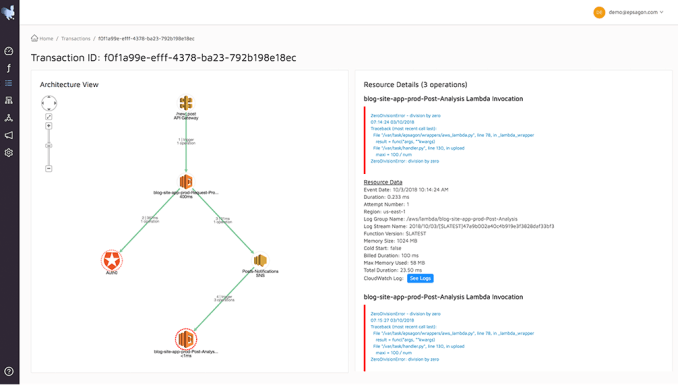
Epsagon, an Israeli startup, launched today with a new serverless tool that helps customers monitor infrastructure, even when they don’t know where or what that is.

That’s the nature of serverless of course. It involves ephemeral resources. Developers build a series of event triggers and the cloud vendor spins up the necessary resources as needed. The beauty of that approach is programmers just codes without worrying about infrastructure, but the downside is that operations doesn’t have any way of controlling or understanding that infrastructure.

Epsagon is trying to solve that problem by giving visibility into serverless architecture. “What the company does, essentially is distributed tracing, observability and cost monitoring for serverless. We’ve been laying low for awhile, and now is actually the official launch of the company,” CEO and co-founder Nitzan Shapira told TechCrunch.

With serverless you can’t use an agent because you don’t know where to put it. There is no fixed server to attach it to. This makes using traditional logging tools inappropriate. Epsagon gets around this problem with an agentless approach using libraries. Shapria says the company will be open sourcing these libraries to make them more attractive to developers.

For starters, the company is supporting AWS Lambda, but plans to expand to other cloud platforms next year. First you sign up for Epsagon, enter your AWS credentials and it immediately begins providing some information about performance in the Epsagon dashboard. But Shapira says the real value comes from the libraries. “We have this library that is essentially the instrumentation, which acts in the same way an agent does,” he explained.

Screenshot: Epsagon

The product does more than simply provide traditional monitoring data though. It also allows customers to understand what they are spending. With serverless, the cloud company provides you resources as required, which is convenient, but could also spiral out of control quickly from a cost perspective. Epsagon lets you see exactly what you’re paying.

The company is still playing with pricing, but they are using a self-service approach for starters. You go and sign up on their website and there are a variety of pricing options starting with a free tier. All of the tiers have a free two-week trial.

Epsagon, which is based in Tel Aviv, currently has 11 employees. They are in the process of opening a US office where they will establish sales, marketing and support operations. They raised $4 million led by Lightspeed Venture Partners in January.

17 Oct 2018

Azimo launches business money transfer service

Hot on the heels of raising $20 million in Series C funding led by Japan’s Rakuten Capital, London-based money transfer service Azimo is launching a new service aimed at small and medium-sized businesses.

Dubbed “Azimo Business,” it lets SMEs across the U.K. and Europe send payments to an impressive 189 countries — including many emerging markets, which is Azimo’s traditional focus — and at a price the company claims undercuts banks by 50 percent or more.

The idea isn’t just to beat the banks on fees (which is often not hard to do) but also through better technology, delivering faster transfers and a smoother UX via the Azimo mobile apps and web versions.

In a brief call, Azimo co-founder and CEO Michael Kent told me that a fully fledged business version of Azimo was something that many of the company’s existing customers had been asking for as they wanted to expand their use of the money transfer service to the small businesses they operate, not just for sending money to family and friends in their original home country.

He also (rightly) noted that immigrants are much more likely to start their own business compared to native nationals, and that these micro and small businesses are often international in nature, such as importing or exporting specialist goods. This requires a significant amount of money transfer and exchange for things like paying suppliers and paying local salaries.

To that end, even though Azimo Business runs on the same rails as Azimo’s existing consumer service, Kent explained that there are additional regulatory requirements around anti-money laundering. This sees business users having to pass KYC and KYB checks, with Azimo ultimately needing to satisfy the regulator that it knows the beneficial owner of a business sending money.

However, the Azimo founder says that required building technology and processes to scale those checks but in a way that doesn’t expose Azimo to regulatory risk or creates too many false positives that would decline customers unnecessarily.

Meanwhile (and proof that there was pent-up demand), while running in beta, Azimo Business customers on average sent six times more money than Azimo’s consumer customers. The most popular sending countries were the U.K., Germany, the Netherlands, Spain and France. The most popular receiving countries were Poland, China, Singapore, Pakistan, Hong-Kong, and South Africa

17 Oct 2018

Skydio’s autonomous drone lands in Apple retail stores, now supports Watch controls

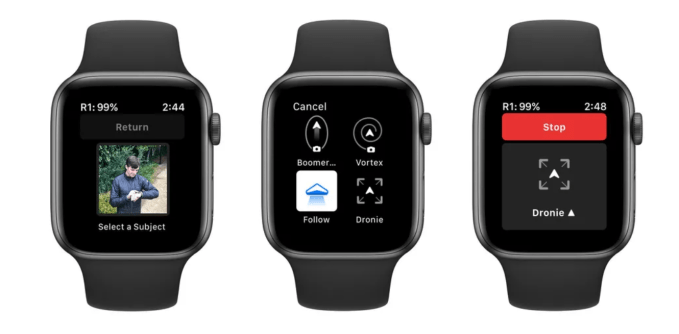
With a few taps, you can now direct Skydio‘s $1,999 autonomous drone from your Apple Watch allowing you to fulfill the geeky dream you never knew you had, directing an expensive autonomous drone with your little wrist computer.

The very cool R1 self-flying drone will also be going up for sale in US Apple Stores, a big win for the young drone startup which has only been taking orders via its own website. Apple doesn’t have a very robust selection of drones either, with most of their selection coming from drone giant DJI, putting Skydio in some pretty elite company.

Now, let’s get back to the real question here. Why on earth would you need to control a drone from your Apple Watch? Well, it’s certainly a valid question. The Apple Watch launched with a ton of third-party apps and one-by-one they kind of seemed to drop off as developers — and Apple — learned that the device is generally at its best when it’s part of a passive experience.

Skydio sort of bills the R1 as a drone built for the GoPro crowd, delivering a very unique type of footage but ultimately one that can be self-controlled. Navigating the Skydio app on your phone always takes you out of action for a bit and makes it so that you staring at your phone is always the first part of every cinematic shot. With Apple Watch support, some use cases make a lot more sense than others. People who use the drone to video themselves while biking will probably find this particularly useful, as the controls are all of a sudden in a much more accessible place on your wrist. Otherwise, the Watch support makes the very niche problem of controlling a drone in the most low-key way possible just a little bit easier.

The Watch app has a very straight-forward UI and really gives you a lot of control over the drone. You can cycle through the list of skills, tapping modes like Lead, Follow and Orbit and putting the drone to work, but you can also interestingly identify people in the R1’s feed for it to follow as well. It all works surprisingly well on the Watch, and feels like an unusually powerful set of features for the device.

For the Skydio user, the Watch is now in your control repertoire. It’s certainly not going to be the most logical piloting mechanism at all times, but if you’ve been looking for more effortless ways to direct the R1, you have some new options.