Year: 2018

20 Nov 2018

On Black Friday, you’ll be able to watch the entire ‘Lego Movie’ in a YouTube ad

On Black Friday, YouTube says it’s teaming up with Warner Bros. Pictures to allow viewers to watch “The Lego Movie” for free as part of a promotion for the upcoming sequel.

YouTube recently (and quietly) began making certain movies like “Rocky,” “The Terminator” and “Legally Blonde” available for free, with advertising. This campaign is an interesting twist on that model, where the movie viewing experience isn’t just subsidized by ads — it is, in fact, part of the ad.

So if you search for “Brick Friday” or “LEGO Movie 2” on YouTube, you’ll see a promoted video from Warner Bros. with the new trailer for “The Lego Movie 2: The Second Part.” If you click on the video, you’ll also have the option to watch “The Lego Movie” in its entirety, ad-free (as the movie itself is the ad).

YouTube says the promotion will only last for 24 hours, on Black Friday — or, if you insist, Brick Friday — itself. As of midnight Pacific time on November 24, the movie will no longer be available for free. (You can still rent it on YouTube for $3.99.)

If, for some reason, you haven’t seen “The Lego Movie” yet, just a reminder: It’s really good.

As for “The Lego Movie 2,” it’s scheduled to open on February 8 next year. “Lego Movie” directors Phil Lord and Chris Miller didn’t direct it (they were busy with other projects), but they’ve returned as co-writers and co-producers.

20 Nov 2018

Cloud communications platform Agora closes $70M Series C to create new developer tools

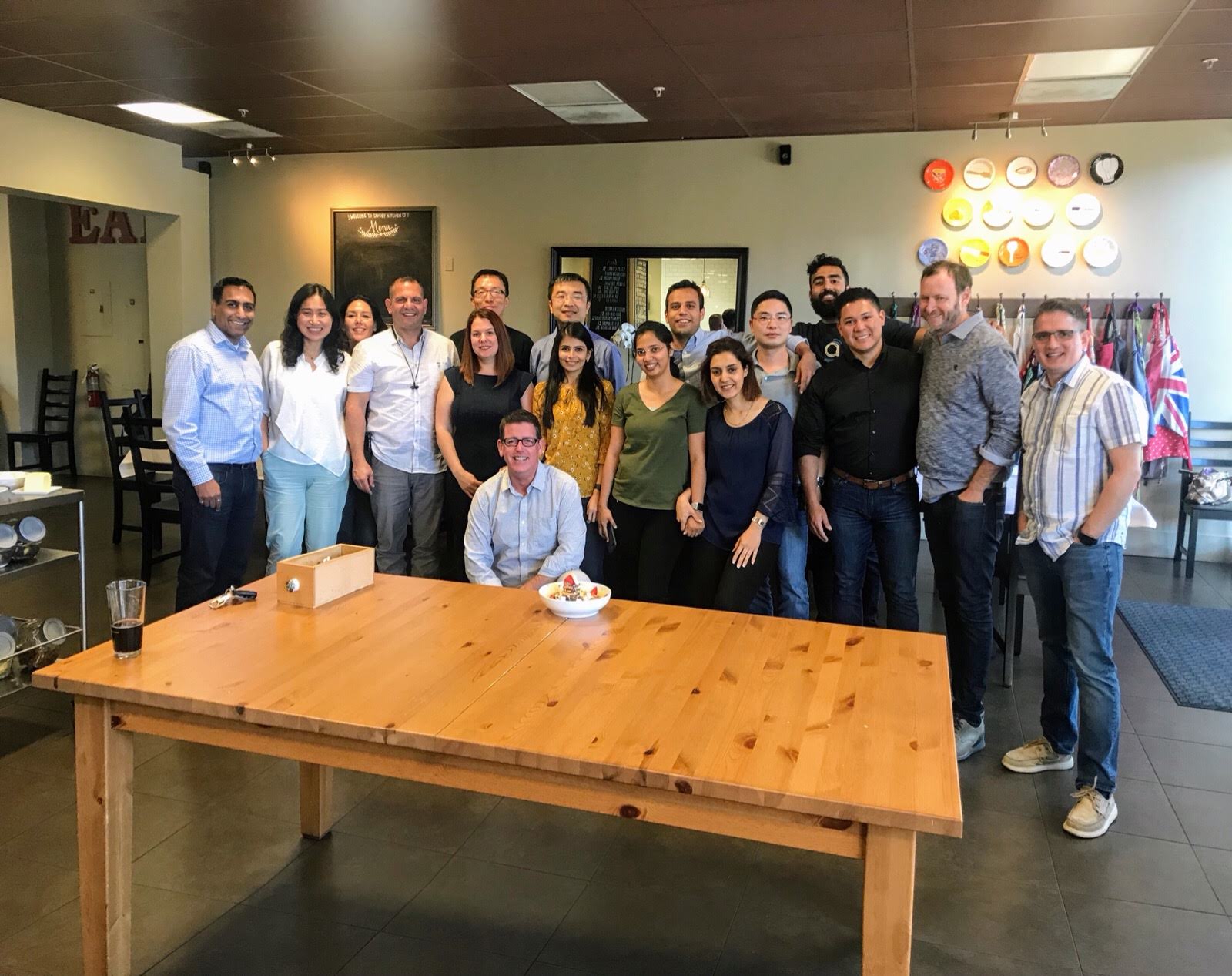
Part of Agora’s team. The cloud communications startup has offices in Santa Clara and Shanghai.

Agora, a developer of cloud communication APIs, will create products for new markets and verticals after raising a $70 million Series C led by Coatue Management. Existing investors SIG, Morningside Capital and Shunwei Capital also returned for the round, which brings Agora’s total funding so far to $125 million.

The startup’s APIs are used by customers, including The Meet Group, Xiaomi, Hike Messenger and Momo, to insert voice, video and group calling or broadcasting features into their apps. Agora claims it recently surpassed two billion installations of its SDKs and routes through its 200 distributed data centers around the world an average of 10 billion minutes of live communications each month.

The company is raising capital at a relatively fast pace to support its growth goals. Agora’s last funding announcement was made five months ago, when Agora said it had added a $30 million extension to its Series B, bringing that round to a total of $50 million.

The company was started in 2014 by CEO Tony Zhao, who was a founding engineer at online communication platform WebEx, acquired by Cisco in 2007, and former CTO of Chinese live-streaming video platform YY. Headquartered in Santa Clara, Calif., with offices in Shanghai, Agora is a relatively new entrant to a market that includes competitors like Twilio and Tokbox.

Agora’s core product is an SDK that enables developers to insert into their apps voice, video and group calling, as well as interactive broadcasting features, but it also recently added SDKs designed specifically for game developers and Facebook’s React Native framework.

20 Nov 2018

Uber aims to offer more wheelchair-accessible rides with shorter wait times

Uber has long received flack for its lack of widely available wheelchair accessible rides. Today, Uber is taking steps to ensure riders who rely on wheelchairs can get rides when they need them, and without having to wait more than 15 minutes. That’s thanks to a partnership with MV Transportation, a paratransit service provider that operates across 30 states and Canada.

Through the partnership, Uber will able to add hundreds of wheelchair-accessible vehicles (WAVs) to its platform across six markets. In New York City, Boston, Philadelphia, Washington, D.C., Chicago and Toronto, Uber riders can expect wait times of 15 minutes or less on average. Over the next year, the plan is to get average wait times in San Francisco and Los Angeles down to 15 minutes. Uber says rides in those eight cities account for half of all Uber trips in North America.

Since Uber doesn’t own any of the vehicles, the company has historically been dependent upon everyday people — many of whom do not have wheelchair-accessible vehicles.

“I think the reality is most folks who use folding wheelchairs have a good experience but our model doesn’t work for people who use powered wheelchairs,” Uber Head of Global Policy for Accessibility and Underserved Communities Malcom Glenn told TechCrunch.

So over the last couple of years, Uber has explored a variety of models, Glenn said.

“The model we think is going to be able to get a large supply of WAVs on the platform is through commercial relationships — working with transportation providers who already have access to a large supply of wheelchair-accessible vehicles,” Glenn said.

All of the rides offered via this partnership are operated in vehicles owned by MV and operated by their trained drivers. The cost for WAV riders via the MV partnership will be the same as the cost of UberX, Glenn said. But given the cost of buying, maintaining and modifying wheelchair-accessible vehicles, Uber is investing heavily in making sure MV can offer Uber riders what they’re looking for.

“We’re making a pretty significant investment in making sure there’s reliability, “Glenn said. “Uber invests heavily in MV to make sure we’re getting the reliability all parties want.

He added, “It’s a quite sizeable investment that we’re making but we think it’s the right thing to do in the long term.”

Uber first launched a service geared toward people with disabilities in 2014, with the launch of Uber Access. Through Uber Access, passengers can request UberASSIST and UberWAV, which is geared toward people with wheelchairs. Though, Uber Access is not available in all of Uber’s markets and is dependent upon Uber’s ability to partner with commercial providers.

This partnership, for example, does not cover Jackson, Miss., where Uber faced a lawsuit last year over its lack of wheelchair-accessible rides.

“I think we chose the cities we chose for a couple of reasons,” Glenn said. “They’re among the largest cities in which we operate. When we launch in places with large operations, we cover more people. In terms of the specifics of where we’ll go and when, I think we’re committed to getting to as many places as is reasonable to be able to get the wait times we think people should be able to expect. We want to figure out how we can make sure the service works in as best a way as possible.”

Last year, Uber was sued many times over its lack of wheelchair-accessible rides. But Uber competitor Lyft has faced similar legal challenges. Earlier this year, Disability Rights Advocates filed a class-action lawsuit against Lyft alleging the ride-hailing company discriminates against people who use wheelchairs in the San Francisco Bay Area.

In addition to working with MV, Uber has additional accessibility partnerships in place. Uber, for example, also works with the Massachusetts Bay Transportation Authority to operate a paratransit pilot.

“We’re committed to making accessibility a meaningful part of what we do, and we’re proud to be doing our part to enable improved access to transportation for people with disabilities,” Uber CEO Dara Khosrowshahi wrote in a blog post. “We know there is still a long way to go—and that we’re at the beginning, not the end, of this journey.”

20 Nov 2018

With investors knocking, PlayVS opens the door to a $30M Series B

PlayVS, the company bringing esports infrastructure to high schools across the country, has today announced the close of a $30.5 million Series B financing. The round was led by Elysian Park Ventures, the investment arm of the L.A. Dodgers, with participation from five existing investors including New Enterprise Associates, Science Inc., Crosscut Ventures, Coatue Management and WndrCo.

New investors also joined in on the round, including Adidas (the company’s first esports investment), Samsung NEXT, Plexo Capital, as well as angel investors such as Sean “Diddy” Combs, David Drummond, DST Global partner Rahul Mehta, Michael Dubin and others.

It’s certainly worth noting that PlayVS raised a $15 million Series A just six short months ago. Founder and CEO Delane Parnell explained that this Series B was an opportunistic raise, as the company received a lot of inbound from investors to get a slice of the next round.

“This gives us much more stability and runway so that we can hire more senior employees and leadership,” said Parnell. “It also gives us a bit of a war chest to let the team go out and work their strategies.”

Alongside the raise, PlayVS also announced new game partnerships, bringing Rocket League and SMITE into the company’s portfolio. Rocket League and SMITE join League of Legends, which was added to the platform two months ago.

PlayVS launched early this year with a relatively novel approach to the esports world. Instead of focusing on the current esports space, PlayVS realized that there was a huge opportunity to bring infrastructure to the esports landscape in high school. As more and more esports careers are created through investment by colleges (via scholarships) and esports orgs, PlayVS gives students a place to show off their skills and get in front of recruiters.

The first step in the process was establishing a partnership between PlayVS and the NHFS, which is essentially the NCAA of high school sports. Through that partnership, PlayVS handles team schedules, district league schedules, coaching clinics, referees, and sets up an in-person live spectator event for the State Championship at the end of the year.

Right now, the company is in the midst of its Season Zero, testing out the platform with a small number of states — Connecticut, Georgia, Kentucky, Massachusetts, and Rhode Island — in preparation for the official Inaugural Season, which will begin in 2019. Today, PlayVS is adding Alabama (AHSAA), Mississippi (MISSHSAA), and parts of Texas (TCSAAL) to the program.

But the growth of the company is largely dependent on states and school districts, which is why PlayVS is announcing the launch of Club Leagues. Club Leagues is identical to the PlayVS sports league product, except there is no State Championship at the end. Still, students who do not yet have access to the official PlayVS sports league can create teams, join up, and play matches.

Eventually, Parnell says, the company will phase out Club Leagues as soon as official sport leagues are available to those players.

20 Nov 2018

Korean e-commerce firm Coupang raises $2 billion from SoftBank’s Vision Fund

Just days after a CIA report concluded that Saudi Crown Prince Mohammed bin Salman ordered the murder of journalist Jamal Khashoggi, SoftBank’s Vision Fund — the gargantuan investment vehicle anchored by a $45 billion investment from Saudi Arabia’s PIF sovereign fund — is back in check-writing action.

Coupang, Korea’s largest e-commerce firm, revealed today that it has raised $2 billion from the Vision Fund. The investment comes weeks after SoftBank’s stake in Coupang was transferred over the Vision Fund, as the firm has done with a number of its investment.

No valuation was announced, but a source close to the deal told TechCrunch that it values Coupang at $9 billion post-money. This deal, which we understand is entirely new stock with no secondary sales, takes Coupang to $3.4 billion raised to date. Its last round was a $1 billion investment from SoftBank in 2015.

The deal is a massive validation for Coupang, which becomes the first Korean company to form a part of the Vision Fund, which SoftBank Chairman Masayoshi Son has championed as a network of global winners, but the link to the Khashoggi threatens to sour the achievement.

Prince Mohammed bin Salman is widely accused of ordering the killing of Washington Post reporter Khashoggi, an outspoken critic of the Saudi regime. A Saudi-led investigation exonerated the prince’s role, however the CIA report released over the last week places the blame fairly squarely on his shoulders — while others in the Saudi royal family are reportedly plotting to replace the prince as the next in line to the throne.

Son himself condemned the killing as an “act against humanity” but, in a recent analyst presentation, he added that SoftBank has a “responsibility” to Saudi Arabia to deploy the capital and continue the Vision Fund.

The PIF’s role in Vision Fund — it is the largest single investor — has threatened to taint its efforts, with voices in Silicon Valley suggesting that many founders would prefer to take money from less-tainted sources. However, SoftBank has announced a number of deals in recent weeks — including a $375 million investment in robotic food-prep startup Zume and $1.1 billion deal with glass maker View — which contradicts that. Son himself said he hadn’t heard of any cases of startups refusing an investment from the Vision Fund, but he did admit that there “may be some impact” in the future.

Those investments haven’t stopped Coupang from taking an investment from the Vision Fund, and announcing it publicly, too.

“The Vision Fund is a visionary fund [and] we’re proud to be selected to work in partnership with it,” Coupang CEO Bom Kim told TechCrunch in an interview.

Kim said he doesn’t expect a backlash from the investment, claiming that the tension around Khashoggi’s death “doesn’t represent us and doesn’t represent these companies.”

Taking a vast amount of money from a fund whose mainer backer is a country that (reportedly) murdered a journalist who dared criticize the regime isn’t a good look. But ultimately, it remains to be seen how that will shake out. As the world’s waits on a fuller investigation from the CIA and responses from the Saudi royal family and SoftBank’s Son, the incident certainly does have the potential to weigh on Coupang’s positive news.
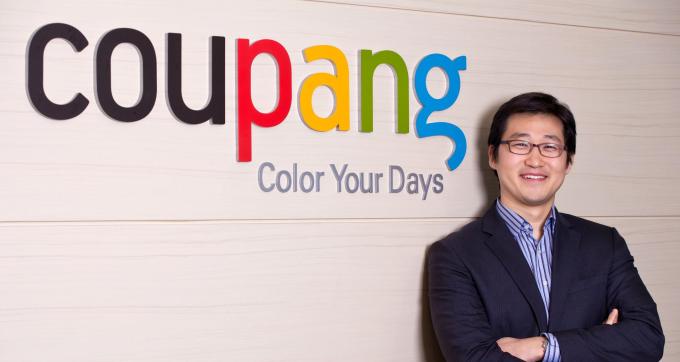
Coupang CEO Bom Kim started the company in 2010, now it is valued at $10 billion. [Image via Coupang]

Operating relatively under the global radar, Coupang has become Korea’s largest e-commerce player and it is actively looking to expand into other areas.

Founded in 2010, Kim claimed the company is “approaching” $5 billion in revenue for 2018 with 70 percent annual growth. One in every two adults in Korea have the Coupang app on their phone, the company claims. The company operates only in Korea, but it does have engineering outposts in Beijing, LA, Seattle, Shanghai, Silicon Valley and Seoul.

That impressive revenue number has increased 14x since 2014 which Kim accounts to a moment of clarity which saw the company’s focused redirected.

“We had plans to go public and had gotten pretty far along in the process but we realized that wouldn’t fulfill of our vision,” Kim explained. “Instead, we saw an opportunity to make a long-term series of investments that would mean multi-year investment in tech platforms and infrastructure.”

That meant developing its own network of trucks and drivers, integrating technology at every level and making other changes to build the infrastructure and capacity to deliver items quickly to customers across Korea.

That’s helped Coupang roll out services like same-day delivery, overnight delivery and more. Coupang also has its own RocketPay payment service.

Kim explained that, for example, if a parent realized the night before school that their child needed a new rain jacket, they could receive it via Coupang before 7 am the next day if they ordered it before midnight. The overnight delivery service also includes fresh produce and “millions” of other items, he said. For that to happen, Coupang developed a cold chain logistics network in just one month.

Coupang said “millions” of customers use its service at least 50 times a year, i.e. on a weekly basis. Yes, it is a vague number and we don’t know what proportion of the overall customer base that represents, but it is an impressive snapshot nonetheless.

Kim revealed Coupang has “a lot of different plans” to spend this capital, although he declined to go into specific detail.

He didn’t rule out adjacent services like media — Amazon is, of course, a major name in video and music streaming — and he revealed that Coupang “intends to have a broad reach in more markets than just Korea” although, again, there’s no information on what countries and when.

The plan to go public is also likely to be revived, with the U.S. a more likely destination than a domestic IPO, although Kim said that there is “no specific timetable” for when that might happen.


20 Nov 2018

Eventbrite adds two more women to its C-suite

Shortly after raising $230 million in a September NYSE initial public offering, ticketing company Eventbrite is expanding its C-suite with two new hires.

Deborah Sharkey and Crystal Valentine have joined as chief commercial officer and chief data strategy officer, respectively. The additions make Eventbrite’s executive team 50 percent women.

Located in San Francisco, Eventbrite was founded in 2006 by chief executive officer Julia Hartz . The company, one of few startup unicorns to debut on the public markets with a female co-founder and CEO, provides a ticketing and event platform that helps people find and attend events.

“The makeup of our board and executive team is the outcome of carefully and thoughtfully cultivating the right group of people based on values, experience and expertise,” Hartz told TechCrunch via e-mail.

Sharkey previously led product, marketing, operations and engineering teams as chief operating officer at DogVacay, a Rover-owned pet services company. Before that, Sharkey spent over a decade at eBay, leading efforts including the expansion of eBay Australia. At Eventbrite, she’ll be focused on the company’s expansion into new markets.

Valentine, for her part, most recently served as the vice president of technology strategy at enterprise company MapR Technologies.

Eventbrite’s shares sank north of 8 percent after hours when the company failed to meet analyst expectations in its third-quarter earnings report last week. It did, however, surpass revenue expectations with $73.6 million, a 45.1 percent increase year-over-year. Paid tickets grew by 32.2 percent 23.9 million and net revenue per ticket increased 9.7 percent to $3.08 per ticket.

“We’re focused on the massive opportunity in front of us — empowering creators of all types of live experiences around the world to bring people together around shared passions, artistry and causes” Hartz said. “People are craving ways to get out from behind their screens and connect in real life now more than ever, and as we look ahead to 2019, having the right team in place will position us to continue enabling this growing experience economy on a global scale.”

20 Nov 2018

Argent, a smart crypto wallet app with a banking look, raises $4M from Euro VCs

One of the biggest problems for the mainstream adoption of crypto is the need for memorizing seed phrases, the inability to get your cryptocurrency back if something goes wrong, the list goes on. Until major issue like this are solved, crypto is going to remain a pretty elite game.

Argent is a project which recently won the prestigious inaugural user experience prize at Devcon4 by addressing many of these issues.

It’s a crypto wallet that lets you also port your ID around (much like a Google or Facebook Login) and solves the UX problem through clever smart contract architecture.. So you have a good old-fashioned and familiar Web 2.0 / centralized experience in a decentralized environment.

Argent has now raised a $4 million seed round from some of Europe’s leading investors, including Index Ventures, Creandum, firstminute, Hummingbird and Atomico Partner Mattias Ljungman.

As a native app on the Apple App and Google Play Stores, describes itself as the first smart wallet. The presentation and security is that of a modern banking apps, but Argent doesn’t hold or access a user’s funds. The smart wallet also provides access to decentralized applications, with the user staying in control of their data, identity and assets.

Argent CEO and co-founder, Itamar Lesuisse, commented: “The web is dominated by monopolies and middlemen. Cambridge Analytica and Equifax highlighted the damage this was doing to people. The emerging decentralized web offers a better way – with people controlling their data, assets, and identity. But it is still way too hard for most people to use, so adoption is slow. We founded Argent to fix this”.

Dr. Julien Niset, Chief Science Officer and co-founder, Argent, says, “The challenge we set ourselves was to offer the usability and security of great banking apps, but without the bank. We wanted the user, not us, to be in control. We’ve achieved this by building Argent on smart contracts, code embedded in the blockchain that cannot be tampered with. Our smart contracts let users, for the first time, recover their wallets without a paper backup, set daily transaction limits and block fraudulent transactions. This makes Argent safer and easier to use than other wallets”.

Consumers can use the smart wallet to access decentralized applications and no technical knowledge is required. To generate more adoption, Argent plans to make a developer kit available to third parties. It already has an integrated exchange and Argent says it is currently exploring more partnerships in finance, as well as gaming.

Two of Argent’s co-founders, Itamar Lesuisse (ex-Amazon, Visa and BCG) and Gerald Goldstein (PhD, nuclear physics), previously founded Peak, the world’s largest brain training app (50m downloads), and an Apple and Android App of the Year. The third co-founder, Julien Niset, has a PhD in quantum information, founded a quantum security startup and successfully sold the IP to the world’s leading quantum security company.

Bjarke Staun-Olsen, Creandum, says, “Having backed Itamar and Gerald’s previous startup, Peak, which successfully exited in 2016, we knew how strong their ability to execute in consumer mobile was. And as they were combining with Julien’s expertise in cryptography, we knew this was the right team to drive consumer adoption at scale”.

Ari Helgason, Index Ventures, says, “Argent has developed a critical piece of infrastructure that paves the way for mainstream adoption of blockchain applications. The team’s technology breakthrough allows users to overcome the tradeoff between security and ease of use that has characterized wallets until now.”

20 Nov 2018

Last Chance to get a table in Startup Alley at Disrupt Berlin

Going once, going twice for tables in Startup Alley! Disrupt Berlin is less than two weeks away, and registration is about to close for startups looking to showcase their product or company to thousands of people on the Disrupt floor. According to Crunchbase, startups that exhibited in Startup Alley at Disrupt Berlin 2017 raised more than $42 million in seed and Series A funding post-Disrupt.

For €895 + VAT, you’ll get one full day to exhibit in Startup Alley, two full conference Founder passes to Disrupt Berlin, admission to our After Party, and all women will get to attend the Women of Disrupt Lunch. Ready to join us? You can secure your exhibit spot here — last year we sold out of tables, so get yours before it’s gone.

Remember, being a part of Startup Alley means you’ll also get access to CrunchMatch, Disrupt’s startup and investor matching program. It’s designed to make it easy for startups to meet investors based on a curated analysis of which startups fit with a given investor’s profile.

Also, Startup Alley companies have the opportunity to be selected as a “Wild Card” and participate in the famous Startup Battlefield competition. The TechCrunch editors will pick one company out of Startup Alley to be part of this opportunity. At Disrupt NY 2017, RecordGram went from Startup Alley to the Battlefield stage and ended up winning the Startup Battlefield competition — and took home $50,000!

Over the course of the two-day conference, you’ll make tons of connections with other tech enthusiasts, and listen to panels covering topics ranging from artificial intelligence and machine learning to hardware — and more.

So, if your company is less than two years old and has less than $2.5 million of funding, Startup Alley is the place for you. Secure your table here!

20 Nov 2018

HyperSurfaces turns any surface into a user interface using vibration sensors and AI

Imagine any surface, such as a wooden table, car door or glass wall, could be turned into a user interface without the need for physical buttons or a touch screen. That’s the ambition of HyperSurfaces, the London startup originally behind the Mogees line of music devices and software, which today is unveiling what it claims is a major breakthrough in UI technology.

Dubbed “HyperSurfaces,” the new technology, for which the company has four related patents pending, combines vibration sensors and the latest developments in machine learning/AI to transform any object of any material, shape and size into an intelligent object able to recognise physical interactions.

Equally important is that once trained for a particular object, the HyperSurfaces neural network-trained algorithms are able to run on dedicated microchips that don’t require connection to the cloud for processing. This means that gestures can be instantly recognised and in turn trigger specific commands entirely locally and at much lower cost.

The idea, co-founder and CEO Bruno Zamborlin tells me, is to merge “the physical and the data worlds” in a more seamless way than has been previously possible, ridding us of unnecessary keyboards, buttons and touch screens.

“The HyperSurfaces algorithms belong to the current state of the art in deep learning research,” he explains. “On top of this, the computational power of microchips literally exploded over the last years allowing for machine learning algorithms to run locally in real-time whilst achieving a bill of material of just a few dollars. These applications are possible now and were not possible 3 or 5 years ago”.

Zamborlin says it is difficult to imagine what the applications of HyperSurfaces technology might end up being, in a similar way as it was difficult to imagine all of the applications a mobile phone could enable ten years ago. The most immediate ideas include the possibility of creating technological objects made of materials that until now haven’t been associated with technology at all, such as wood, glass, and different kinds of metal etc.

“Imagine a new wave of 3D wooden IoT devices,” he says, only half jokingly.

This could result in a wooden kitchen table becoming the controller for your living room smart lights and smart thermostat. Or perhaps your home’s floor becomes an advanced security system able to accurately distinguish the steps of a thief from those of your cat. HyperSurfaces has also already seen a lot of interest from car manufacturers.

“Other initial applications will probably include accommodating the desire of car manufactures to eliminate buttons and switches from their car doors and cockpits creating a brand new experience for the user,” adds Zamborlin. “We are used to flat plastic surfaces, but this won’t be a requirement anymore”.

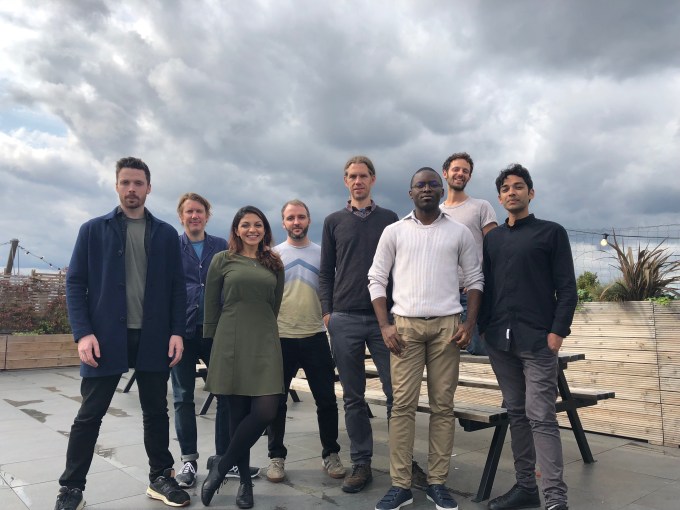
HyperSurfaces team

To get this far — the video demos are very impressive and can’t help but fire your imagination — HyperSurfaces (then called Mogees) raised $1.1 million in seed funding about a year ago and has been head down ever since. This included Zamborlin recruiting a team of top AI scientists and completely re-focusing on research and development. “They are all from Goldsmiths [University of London], like myself, where we specialise in the niche of AI for real-time interaction,” he says.

20 Nov 2018

‘Cloud canteen’ startup Feedr raises £1.5M to provide office workers with a healthier lunch

Feedr, a food tech startup that delivers healthy and personalised meals to office workers as an alternative to companies setting up their own canteens, has picked up just over £1.5 million in pre-Series A funding.

The round is led by London early-stage venture capital firm Episode 1. Also participating is Brent Hoberman’s Founders Factory, and angel investors Errol Damelin (Wonga founder and renowned fintech investor), Richard Glynn (former Ladbrokes CEO and Founder of Alinsky Partners), and David Pritchard (founder of OpenTable Europe).

Launched in 2016 by Riya Grover and Lyz Swanton, Feedr describes itself as an “intelligent lunch platform” or “cloud canteen”. The startup essentially operates a two-sided marketplace that connects healthy food suppliers with office workers at companies, in addition to arranging delivery.

To do this, Feedr publishes a “unique rotating menu” every day and asks workers to choose what they want to eat by 10.30am. It then pools those orders and sends them to the food suppliers it works with, who are mostly artisan and independent food producers, ready for delivery at lunch time.

The technology behind Feedr handles logistics planning, in terms of predicting and helping to manage demand for each meal on offer from specific suppliers. There is also a large emphasis on personalised recommendations based on the preferences of individual customers and their order history.

Food suppliers include Deliciously Ella, Farmstand, We Grill, Potage, and Maple & Fitz. Feedr works with a number of sub-contracted platforms to do the deliveries.

In a call, Feedr CEO Riya Grover told me the food tech startup has thus far mainly employed a B2B2C strategy by working directly with companies who want to offer their own “cloud canteen” as a perk provided to employees and as part of an employee wellness strategy. This sees each company that signs up with Feedr subsidise the cost of items on the menu so that workers can have a fresh healthy lunch daily for under £5, or cover the cost entirely.

To date, Feedr has fed employees at over 400 companies including AirBnB, Etsy, DHL, and PwC.

Grover also talked up Feedr’s tech that she says enables “dynamic menu building,” something she likened to a Netflix for food. When an employee selects a meal, Feedr feeds back these choices to its algorithm to create a more data-informed menu going forward. In other words, menu choices become more personalised the more employees use Feedr.

More broadly, Grover says Feedr is aiming to cater to three trends: on-demand food delivery, as pioneered by the likes of Deliveroo and Uber Eats; employee wellbeing as part of a company’s recruitment, retention and broader HR strategy; and the way consumers are becoming more accustomed to greater choice and healthier options.

Meanwhile, I’m told the funding round will be used by Feedr to invest in its technology to improve the online user experience, expand the choice of healthy meals and build out the machine learning that powers personalization. The company also plans to increase its sales force and expand outside of London.

Adds Damien Lane, Partner at Episode 1 Ventures: “Feedr’s strong brand values address the rise of the conscious consumer with a greater awareness of ingredient quality, artisanal producers, food provenance and the impact of food consumption on health. The team brings incredible execution skills with a passion for shaping healthier futures”.