Year: 2018

19 Nov 2018

GM’s self-driving unit Cruise is expanding to Seattle

Cruise, the self-driving company acquired by GM in 2016, is expanding to Seattle as it seeks out more engineering talent to develop its technology.

The company doesn’t have any plans right now to test its autonomous vehicles in the city. Instead, GM Cruise plans to set up offices in Seattle to attract and hire between 100 to 200 engineers by the end of 2019.

“To continue growing a team that is diverse and rich in talent, we feel that it’s important to explore talent pools outside of the Bay Area, and Seattle’s vibrant tech community and proximity to our headquarters in San Francisco make it a logical choice,” CEO Kyle Vogt said in an emailed statement.

GM Cruise hasn’t chosen an office location yet. The company it’s considering a number of locations in the Seattle area. There are no plans to house autonomous test vehicles at the Seattle location.

The hunt for qualified people with backgrounds in software engineering, robotics and AI has heated up as companies race develop and deploy autonomous vehicles. Founders from several self-driving car startups have regaled TechCrunch with stories of generous, even outrageous, compensation packages and poaching as they fight over a small pool of talent.

For instance, there are more than 60 companies that have permits from the California Department of Motor Vehicles to test autonomous vehicles in the state.

GM Cruise has one of the most aggressive timelines among companies hoping to deploy a commercial self-driving vehicle service. The company has said it plans to launch a commercial autonomous ride-hailing service in 2019.

GM Cruise has the funds needed to pump up its workforce. The company received a giant $2.25 billion investment by SoftBank’s vision fund in May. More recently, Honda commited $2.75 billion as part of an exclusive agreement with GM and Cruise to develop and produce a new kind of autonomous vehicle.

As part of that agreement, Honda will invest $2 billion into the effort over the next 12 years. Honda also is making an immediate and direct equity investment of $750 million into Cruise, which pushes the company’s valuation up to $14.6 billion. Honda’s investment gives the automaker a 5.7 percent stake in Cruise.

19 Nov 2018

Now eight parliaments are demanding Zuckerberg answers for Facebook scandals

Facebook’s founder is facing pressure to accept an invite from eight international parliaments, with lawmakers wanting to question him about negative impacts his social network is having on democratic processes globally.

Last week Facebook declined a invitation from five of these parliaments.

The elected representatives of Facebook users want Mark Zuckerberg to answer questions in the wake of a string of data misuse and security scandals attached to his platform. The international parliaments have joined forces — forming a grand committee — to amp up the pressure on Facebook.

The UK-led grand committee said it would meet later this month, representing the interests of some 170 million Facebook users across Argentina, Australia, Canada, Ireland and the UK. But Facebook snubbed that invite.

Today the request has been reissued with an additional three parliaments on board — Brazil, Latvia and Singapore.

In their latest invite letter they also make it clear that Facebook’s founder does not have to attend the hearing in person — which was the excuse the company used to decline the last request for Zuckerberg. (Which was just the latest in a long string of ‘nos’ Facebook’s founder has given the committee.)

“We note that while your letter states that you are ‘not able to be in London’ on 27th, it does not rule out giving evidence per se. Would you be amenable to giving evidence via video link instead?” the grand committee writes now.

We’ve asked Facebook whether Zuckerberg will be able to make time in his schedule to provide evidence remotely — and will update this report with any response. (A company spokesman suggested to us that it’s unlikely to do so.)

Of course Zuckerberg is very busy these days — given the fresh scandals slamming Facebook’s exec team. His political plate is truly heaped.

Last week a New York Times report painted an ugly and chaotic picture of Facebook’s leaders’ response to the political disinformation crisis — which included engaging an external public relations firm which used smear tactics against opponents. (Facebook has since severed ties with the firm.)

The grand committee references this controversy in its latest invitation letter, writing: “We believe that there are important issues to be discussed, and that you are the appropriate person to answer them. Yesterday’s New York Times article raises further questions about how recent data breaches were allegedly dealt with within Facebook.”

The UK’s DCMS committee, which has been spearheading efforts to hold Zuckerberg to account, has spent the best part of this year asking wide-ranging questions about the impact of online disinformation on democratic processes. But it has become increasingly damning in its criticism of Facebook — accusing the company of evasion, equivocation and worse as the months have gone on.

In a preliminary report this summer it also called on the government to act urgently, recommending a levy on social media and stronger laws to prevent social media tools being used to undermine democratic processes.

Although the UK government chose not to leap into action. But even there Facebook’s platform is implicated because Brexit — which was itself sold to voters via the medium of unregulated social media ads (with the Electoral Commission finding earlier this year that the official Vote Leave campaign used Facebook’s funnel to bypass electoral law) — is rather monopolizing ministerial attention these days…

One of the questions committee members are keen to get an answer to from Facebook is who at the company knew in the earliest incidence about the Cambridge Analytica data misuse scandal. In short they want to know where the buck stops. Who should be held accountable — for both the massive data breach and Facebook’s internal handling of it.

And it is very close to getting an answer to that after the UK’s data protection watchdog, the ICO, gave evidence earlier this month — saying it had obtained the distribution list for emails Facebook sent internally about the breach, saying it would pass the list on to the committee.

A spokeswoman for the DCMS committee told us it has yet to receive this information from the ICO.

An ICO spokesperson told us it will not be publishing the list — adding: “At this stage I’m not sure when it will be sent to the committee.”

19 Nov 2018

Airbnb is using what3words to list stays with Mongolian nomads

Putting a new spin on the term ‘digital nomad’, UK addressing platform what3words has partnered with Airbnb to list stays with Mongolian nomads.

The startup’s simplified addressing system is being applied to help adventurous travellers ‘home share’ with Dukha reindeer herders at their mountain camp where there aren’t any street names to anchor a trip. 

The partnership is slated as supporting sustainable tourism by helping the tribe tap into a new revenue stream to support its traditional way of life.

Earlier this year, Airbnb signed a Memorandum of Understanding with the Ministry of Environment and Tourism of Mongolia to use home sharing as a route for economic empowerment and community development. “The MOU will see both parties provide hospitality training for current hosts, as well as potential hosts in rural and remote areas, to encourage the adoption of new digital technology for tourism,” they note in a press release today.

The Airbnb listing with the Dukha reindeer herders offers the chance to stay in a teepee in the Taiga forest in Northern Mongolia, with guests getting “two wooden beds, sleeping bags and an open-fire stove for heating and cooking, as well as full access to the reindeer tribe’s backyard”.

So definitely not the usual Airbnb fare.

what3word comes into play as a neat tool because guests are asked to meet the nomadic tribe at a previously communicated 3 word address at the edge of the forest.

what3word’s platform chunks the world into 57 trillion 3-by-3 meter squares — each of which has been assigned three words to act as its easier to share pinpoint. Using unique combinations of words for geolocation reduces the risk of confusing two similar sounding street names, for example, and means a location can easily be shared verbally or read at a glance. 

After meeting their hosts at the forest edge, guests ascend with them to the mountain to the camp — located at ///evaluate.video.nails — either on reindeer or by horse.

what3words addressing platform used to pinpoint a nomadic tribe’s Airbnb listing in Mongolia

Travellers can then expect to be “immersed in the day-to-day life of the tribe, from herding and milking reindeer to cooking traditional Mongolian dishes and making handicrafts”, they add.

The tribe uses a co-host in an urban location to manage the process of updating their Airbnb listing with a new 3 word address, as needed (i.e. when they shift the location of their camp).

Commenting on the partnership in a statement, Cameron Sinclair, social innovation lead at Airbnb, said:  “Airbnb is excited to partner with what3words and the Ministry of Environment and Tourism of Mongolia to drive sustainable tourism and economic empowerment, while promoting the unique hospitality and culture so intrinsic to the country.

“In Mongolia, a lack of traditional street addressing and nomadic way of life have prevented locals from welcoming Airbnb guests into their homes. Our partnership delivers an innovative way to provide hosts with an accurate and reliable address while constantly on the move, and creates new livelihood opportunities for nomadic and rural communities in Mongolia and around the world.”

A spokeswoman for what3words confirmed the partnership is limited to Mongolia for now — but added it’s “exploring next steps with Airbnb” in the hopes of expanding the collaboration.

There’s no financial component to the arrangement as yet because what3words is free for individuals to use (so in this case the Dukha reindeer herders). 

But the startup does sell b2b licenses for other products, including its API and SDKs — offering optional extras like very large-scale batch conversion of 3 word addresses to GPS coordinates or vice versa.

So if Airbnb sees enough value in ramping up offers of alternative tourist experiences on its platform — and in what3words’ 3 word address system as the easiest way to grease and thus scale that pipe — it could end up sending something more than a bit of publicity the startup’s way.

That’s clearly what3words’ hope.

“what3words is incredibly useful for guests trying to find their Airbnb — be it in the centre of Madrid, or the on the Mongolian Steppe,” the spokeswoman told us. “We’re already seeing many hosts provide guests with their 3 word address, and we’d love to make the process as seamless as possible.”

One growth headwind for Airbnb’s business could work in what3words’ favor because the home-sharing platform may well need to invest in finding innovative and sustainable routes to grow its business, given a growing backlash against overtourism in popular destination cities that have been saddled with the real-world impacts of homes being repurposed as de facto hotels (and travel generally being more affordable).

In recent years residents in cities where Airbnb is popular have been vocal in complaining that such platforms bring problems — from antisocial impacts such as noise and drunken partying to more structural issues as they contribute to driving up rents by removing housing stock, with the risk of undermining local communities if residents get priced out.

And a growing number of cities have responded to these concerns by tightening regulations on home-sharing — throwing up blockers and sometimes hard caps on Airbnb’s growth.

A requirement that hosts register with the city in San Francisco so it can enforce vacation-rental laws to prevent homes being repurposed as year-round tourist lets led to a dramatic decline in Airbnb listings at the start of this year, for example.

But it looks to be the opposite story in Mongolia where politicians are focused on development and keen to attract outside investment. And where tourists are — at least for now — welcome visitors.

19 Nov 2018

Carbo brings its light and peppy electric bike to the U.S.

The Carbo is a new electric bike that weighs a mere 27 pounds and can pep up your morning commute. Created by the Montreal-based team that successfully shipped the Veco, this crowdfunded electric bike can collapse for travel and can go 40 miles with pedal assist and 28 miles on full automatic.

Early birds can get the single gear bike for $1,199 or upgrade to a seven gear bike for $100 more. The tema has already hit their $50,000 and they will ship in April 2019.

I saw an early version of the Carbo and was impressed. Although it looked thin and flimsy – the entire frame looks like you can bend it on a bad curb – it was very resilient and withstood my urban abuse. There are multiple modes including Sport which takes you almost immediately up to about 20 miles an hour with pedal assist, a great feeling. The battery is hidden inside the seat post and can be swapped out.

The bike seems like a good last-mile solution. Since you can collapse it almost completely it works as a portable mode of transport similar to a scooter but far more effective. As a fan of electric bikes, this thing really hits the sweet spot between price, portability, and power.

While the price is a little high, it’s on par with other pedal assist bikes and it should be considered legal in the United States when it ships because it does not have a full throttle system. Ultimately, however, this thing is about convenience and portability versus true power so it’s worth looking into if you want a boost to work or school.

19 Nov 2018

Pandora Premium arrives on Echo and other Alexa devices

Pandora Premium is finally available on Echo devices. The streaming music company this morning announced its top-level paid subscription tier will launch across Alexa-powered devices, including the Amazon Echo, Echo Dot, and Echo Show, as well as on all third-party Alexa devices that support Pandora.

The company’s free, ad-supported music service has been available on Echo devices for some time, while its Premium tier recently made its way over to Google Assistant-powered devices, like the Google Home. However, Premium has not yet been an option on Echo until today.

Once enabled, Pandora Premium users will be able to play favorite songs, albums and playlists using Alexa voice commands, as well as browse and play Pandora’s curated featured playlists, Pandora says.

The newer, personalized soundtracks that Pandora rolled out to its Premium users won’t be available at launch, however. But the company says they’ll be “coming soon.”

The service will also support Pandora’s AutoPlay feature, which continues playing music without interruption, even when a song, album or playlist is over.

To use Pandora on Alexa devices, you can say things like “Alexa, play Pandora,” or “Alexa,” followed by the name of a song, album, or even a genre.

The service can also be set as the default – something that’s possible with the free tier, as well.


19 Nov 2018

Snap launches a certification program for AR shops to craft branded lenses

Snap has announced a partner program intended to make it easer for brands to get on board with — and pay for — its augmented reality ‘lenses’ by helping advertisers find certified AR shops to craft the digital product placements on their behalf.

The move follows the visual messaging platform opening up lenses, almost a year ago, to outside developers — with the launch of a Lens Studio AR developer tool.

Snap’s lenses use a combination of AR and hyper personalization as their selling strategy — by superimposing branded content directly onto users’ faces and/or around their person. This means the advert becomes all but inescapable (at least to the user’s friends) as branded stuff gets mapped onto and/or injected into their personal content where it can piggyback on social sharing to shoot for viral spread.

At launch, Snap says the global Lens Creative Partner Program has more than 30 certified ‘creators’ listed — with the largest number located in the US, followed by the UK, then Canada and Australia. (A similar number of partner shops are also badged as global.)

Snap says additional regions are being launched in a few weeks, and it says it’s expecting to onboard 100+ creators over the next few months.

Snap Lens Creative Partners program AR shop, Social Snack, with content created for Hasbro

“Today we are announcing the launch of a Lens Creative Partners program specific to building AR Lenses for brands. This group of certified creators spans large agencies and expert individuals who have been building engaging and immersive AR Lenses for Snap,” it writes in a blog post announcing the program.

“To be certified, creators had to be experienced in developing quality AR and complete a rigorous course about the development process, creative best practices, ad policies and buy models of sponsored AR Lenses on Snapchat.”

It’s not as instantly arresting as cat lenses but Snap’s push to expand advertiser interest in paying for the chance to virtually adorn users with branded content — by making it easier to find a tried and tested AR shop to do the work — will probably result in Mr Tibbles wearing a lot more virtual merch on his head in future.

So expect plenty more feline indignity in future.

Snap says that more than one in three of its 186 million daily active users play with AR lenses on the app each day, averaging three minutes each — adding up to a collective 500 years of daily AR play time.

Just think how much quality cat petting time people are missing out on.

19 Nov 2018

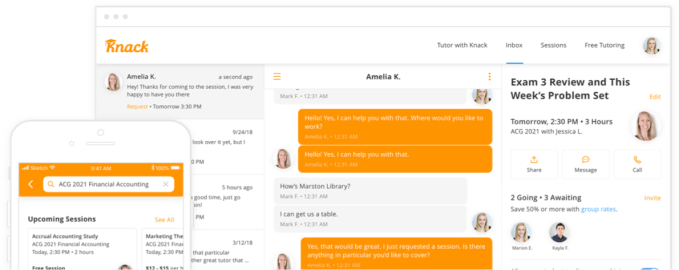
Peer tutoring platform Knack raises $1.5M from Charles Hudson, Jeff Vinik

Knack, a peer tutoring platform aimed at college students, is taking a different approach than some online tutoring marketplaces have in the past. As a result, the Florida-based startup has raised a $1.5 million seed round co-led by Charles Hudson’s Precursor Ventures and Tampa Bay Lighting owner and Fenway Sports Group Partner, Jeff Vinik.

Other investors in the round included Bisk Ventures, the corporate venture-arm of Bisk Education; Arizona State University Enterprise Partners; Doug Feirstein, founder of Hired, uSell, and Liveops; former State of Florida CFO Alex Sink; Tom DiBenedetto of Fenway Sports Group; PAR Inc.; and Elysium Venture Capital.

While many tutoring marketplaces have focused on only connecting students with others who could help them with their studies, Knack has been instead also focusing on adding institutional partners as its customers.

Today, it works with over 50 colleges across the U.S., like seed investor ASU, who are licensing Knack to modernize their student support services and increase access to supplemental help for students.

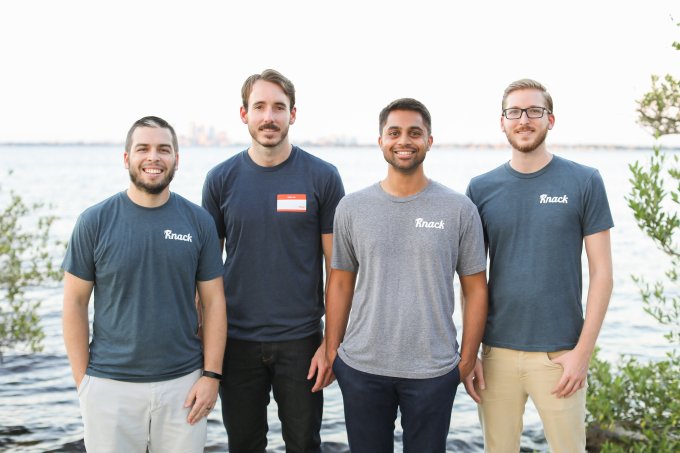
“Although most universities already have on-campus tutoring centers,” explains company co-founder and CEO Samyr Qureshi, “Knack partners with institutions as a technology-enabled supplemental solution, filling in the gaps by increasing course and topical coverage for nuanced courses that campus learning centers may not be able to cover due to budgetary and resource constraints,” he says.


In addition, Knack is also now working with corporate employer sponsors like PwC and ConnectWise who want to engage with high potential students from Knack’s  campus networks.

“We’re focusing on the full life cycle of learning from: ‘I need some help on Knack’ to ‘I can offer help through Knack’ to ‘my skills built and showcased through Knack helped me land a job,'” notes Qureshi.

The CEO says he was inspired to work in the edtech space because, as a first-generation immigrant, education has been at the forefront of his life. His mother brought Qureshi and his sister over to the U.S. to allow them to pursue college degrees.

During his own time in school, Qureshi both sought tutoring and tutored himself, which led him to believe that one of the best ways to learn was from a peer.

In 2016, the startup applied to the University of Florida’s Business Plan Competition and took home the first place, winning a $25,000 cash prize. That opened the door to venture capital, and its first pre-seed round of funding.

While institutions and businesses are the focus in terms of monetization, Knack still caters directly to students today. Those who need help with their coursework can use Knack to book tutoring, and those who want to offer their skills can create a tutoring profile with basic info like their bio, courses, rates and availability.

The platform then handles all the logistics, including searching, matching, scheduling, tracking, billing and rating and reviewing.

Knack takes a 20 percent service fee on this tier of its service. University partners are on SaaS-based annual platform, and Employer partners are charged a sponsorship amount depending on their targeting criteria.

The team of eight is based in Tampa, Florida and plans to use the seed funding for sales and marketing, as well as making some key engineering hires, the CEO says.

19 Nov 2018

Genies brings lifelike avatars to other apps with $10M from celebrities

Genies is emerging as the top competitor to Snapchat’s wildly popular Bitmoji as Facebook, Apple, and Google have been slow to get serious about personalized avatars. Over one million people have customized dozens of traits to build a realistic digital lookalike of themselves from over a million possible permutations.

When Genies launched a year ago after raising $15 million in stealth, it misstepped by trying to show people’s Genies interpreting a few weekly news stories and seasonal moments. Now the startup has figured out users want more control, so it’s shifting its iOS and Android apps to let you chat through your avatar, who acts out keywords and sentiments in reaction to what you type, which you can then share elsewhere. And Genies is launching a software developer kit that charges other apps apps to let you create avatars and use them for chat, stickers, games, animations, and augmented reality.

Genies’ SDK puts its avatars in other apps

To power these new strategies and usher in what CEO Akash Nigam calls “the next wave of communication through avatars where people feel comfortable expressing themselves”, Genies has raised $10 million more. The party round comes from a wide range of investors from institutional firms like NEA and Tull Co; angels like Tinder’s Sean Rad, Raya’s Jared Morgenstern, and speaker Tony Robbins, athletes like Carmelo Anthony, Kyrie Irving, and Richard Sherman; and musicians including A$AP Rocky, Offset from Migos, The Chainsmokers, and 50 Cent. Some like Offset have even used their Genie to stand in for them brand sponsorships so their avatar poses for photos instead of them.

“We’ve transitioned from being an app to an avatar services company” Nigam tells me. The son of WebMD’s co-founder, Nigam build a string of failed apps before meeting his Genies co-founders through University Of Michigan hackathons. Watching Snapchat-owned Bitmoji stay glued atop the app download charts inspired them to see more opportunity in the avatar space.

Genies in-app chat

The revamped Genies app lets you chat with up to six friends through your avatar. As you type, Genies detects actions, places, things, and emotions, and offers you corresponding animations your avatar acts out with a tap. Given people already have plenty of place to chat, it might be tough to get people to move real conversations inside Genies for more than a quick hit of novelty. But that functionality is also coming to Facebook Messenger, WhatsApp, and iMessage’s keyboards where the expressive animations could naturally augment your threads.

With the Genies SDK, the startup is ready to challenge Snapchat’s new Snap Kit that lets apps build Bitmoji into their keyboards. But for $100,000 to $1 million in licensing fees, Genies allows apps to develop much deeper avatar features. Beyond creating keyboard stickers, games can plaster your Genies’ face over your character’s head, and utilities apps can have your Genie act out the weather or celebrate transactions. And since Genies is still taking off, partners can create experiences that feel fresh rather than just a repurposing of Bitmoji’s already-established cartoony avatars. Genies has also launched its first official brand deal, where Gucci has created a wheel in the Genies creator so you can deck out your mini-you with luxury clothing.

The Avatar Wars (from left): Facebook Avatars, Google Gboard Mini Stickers, Apple Memoji

Despite Bitmoji’s years of success, it’s yet to have a scaled competitor. TechCrunch broke the news that Facebook is working on a “Facebook Avatars” feature but seven months later it’s still not publicly testing and the prototype looks childish. Google’s Gboard just added the ability to create avatars based on a selfie, but they’re bland, low on detail, and far from fun looking. And Apple’s latest mobile operating system lets you create a Memoji, though they too look generic like actual emoji rather than something instantly identifiable as you. By designing avatars that not only look like you but like a cooler version of you, Genies could capture the hearts and faces of millions of teens and the influencers they follow.

19 Nov 2018

Wonolo, a staffing platform for blue-collar and labor contractors ‘left behind by Silicon Valley’, raises $32M

A recent survey found that around 20 percent of all jobs in the US are held by contractors — people who take on work based on a particular project or fixed-term period, not as full-time, permanent employees. We’ve definitely seen that trend play out in Silicon Valley, both among the knowledge workers building tech products, and among the on-demand startups that rely on contractors to transport goods and people, clean homes and more. But it is also happening elsewhere.

Today, a startup called Wonolo, which has built a platform for workers to connect with businesses that need to staff up quickly specifically in labor-based roles in areas like retail, manufacturing and shipping — or, as it describes itself “other industries left behind by Silicon Valley’s future of work technologies” — has raised $32 million to meet the blue-collar demand.

The company says it now has 300,000 users registered on its platform, and it connects would-be workers with companies that include Coca-Cola, Papa Johns, and Uniqlo. Employees can post jobs “in seconds” with jobs filled “in minutes”, with payment processed after a job is complete (pricing is not disclosed). Wonolo also vets workers before onboarding them to the platform.

The Series C round was led by Bain Capital, with participation from DAG Ventures, Sequoia Capital, Base10, AMN Healthcare, and Cendana. Because VCs appear to be flush with money at the moment — Bain, for example, closed a $1 billion fund just last week — they are pumping a lot of it into the startups that look the most promising. Wonolo last raised money only seven months ago — a more modest $13 million led by Sequoia.

This latest round, the company said, will be used to expand its own staff (not clear if these will be contracted or salaried staff), as well as continue to expand its business.

The timing is important here. As of this week, we are now officially in the holiday period, which typically sees a seasonal bump in business that leads to the need for more temporary workers.

Companies hiring contractors might have in the past turned to staffing agencies to help fill that need — one kind of competitor for Wonolo.

These days, the rise of tech and an increasing prevalence of the contractor model has brought in a second track of competition — from Silicon Valley. Shiftgig is another startup that has created an efficient platform for would-be contractors to post their availability, and would-be employers to snap them up. (As a point of comparison, Shiftgig had some 15,000 workers and 1,500 companies/employers registered on its platform as of its last funding.) Uber has been trialling Uber Works for service contractors (wait staff, security, and so on). There is Flexy in the UK. And I wouldn’t be surprised at all if we see Amazon eventually turning its own temporary and contract staffing efforts into a wider business, given the pattern it has taken so many other products that it built first for its own internal use.

In that wider context, it’s not clear what Wonolo’s valuation is at the moment, but according to PitchBook the company had a modest post-money valuation of just under $48 million in April of this year. That would put Wonolo, at a conservative number, at just $80 million, but I’m guessing that the calibre of the backers, the rapidity of the funding rounds, and the size of the business speaks to that figure being higher. (Wonolo has now raised $60 million in total.)

Contract employment becoming more common comes with a number of tradeoffs. For the increased flexibility, and potentially strong income because you are filling an urgent need, you will often get less benefits with these roles, and far less job security. On the other hand, contract roles can become a very useful stopgap or top-up for people who either are between permanent roles, or simply want to take on more hours to bump their income (hopefully not at the expense of their health or home life).

“When we founded Wonolo in 2014, we had a two-part goal of solving the underemployment epidemic for Americans while simultaneously eliminating the temporary staffing shortage large brands face,” said Yong Kim, CEO and co-founder at Wonolo, in a statement. “Over the past four years, we have scaled our business model and built a thriving marketplace that connects hundreds of thousands of underemployed workers with the jobs they need. Bain Capital Ventures is providing us with the opportunity to put Wonolo’s technology into the hands of major Fortune 500 companies to help upend traditional staffing models.”

Wonolo cites stats from the Bureau of Labor Statistics that found that “the number of open positions in the United States exceeded the number of job seekers for the first time on record.” Specifically, five million Americans were found to be “underemployed,” where they were working less than 30 hours per week. A marketplace like Wonolo’s potentially helps those people top up their hours elsewhere.

“Wonolo is reinventing the way people find hourly work. Their technology platform creates more flexibility for underemployed workers and fills hiring needs for understaffed companies insanely fast and at a disruptively lower cost,” said Jamison Hill, senior principal at Bain Capital Ventures, in a statement. “We are excited to support the Wonolo team in pursuing their grand mission of bringing flexible and fulfilling work to everyone.” Hill is joining Wonolo’s board with this round.

Interestingly, while it seems that contract employment is a model that is here to stay, Wonolo appears to be focused also on giving people the experience and connections to eventually try to catapult themselves into more full-time positions.

“We thought we could address [the idea of being able to deal with unpredictability] better than temp staffing, and we realized the antidote was flexibility on the worker side,” co-founder AJ Brustein told us in April of this year. “We could match them with these jobs that would unpredictably pop up. When we dug into it, we realized flexibility was something that was just completely lacking for workers. We took a very different approach to the way that people will often recruit talent for staffing agencies or their own employees. We are looking at character traits.”


19 Nov 2018

Lidar startup AEye raises $40M Series B led by the Taiwanese government’s investment firm

Lidar technology developer AEye will scale its operations globally through manufacturing partnerships after raising a $40 million Series B. The round was led by Taiwania Capital, the investment firm created and backed by Taiwan’s National Development Council, and included returning investors Kleiner Perkins, Intel Capital, Airbus Ventures, and Tychee Partners.

This brings the California-based startup’s total funding so far to about $61 million. In a press statement, founder and CEO Luis Dussan said Taiwania’s investment is a strategic one and will give AEye more access to manufacturing, logistics, and tech resources in Asia. AEye also plans to launch a new product at CES in January.

In a press statement, Taiwania Capital’s managing partner Huang Lee said “We see AEye as the foremost innovator in this space, whose systems deliver highly precise, actionable information at speeds and distances never seen in commercially available lidar sensors. We look forward to working closely with AEye’s team to explore and pursue growth opportunities in this burgeoning space.”

The point cloud created by AEye’s iDAR

Along with its funding, AEye also claimed it has set a new record for the distance from which a lidar system is able to detect and track a moving object. (Lidar stands for “light detection and ranging” and is used to create “point clouds,” or three-dimensional maps made of coordinates from laser pulses. Lidar has many applications, but a lot of attention is being paid to how it is used by autonomous vehicles and drones).

In tests monitored and validated by VSI Labs, a research company that focuses on autonomous vehicle technology, AEye said that its iDAR sensor, which was launched earlier this year and combines a solid-state lidar and high-resolution camera in one device, was able to detect and track a moving truck from one kilometer away. AEye claims that this is four to five times the distance other current lidar systems can detect and is possible because iDAR is better able to mimic the way human brains process visual information. In a press statement, AEye chief of staff Blair LaCorte said the company believes iDAR can potentially track moving objects, including trucks and drones, from five kilometers to 10 kilometers away.