Year: 2018

16 Nov 2018

Kairos founder countersues his own company for $10 million

The turmoil continues at facial recognition startup Kairos . Last night, Kairos founder Brian Brackeen filed a counter lawsuit against Kairos and its interim CEO Melissa Doval that seeks $10 million in damages.

Kairos is a facial recognition startup that has become well-known for its stance to never sell to law enforcement. At Disrupt SF 2018, Brackeen showed his technology and spoke on a panel about the hazards of facial recognition and algorithmic bias.

This countersuit comes after Kairos terminated Brackeen from his role as chief executive officer, citing Brackeen misled shareholders and potential investors, misappropriated corporate funds, did not report to the board of directors and created a divisive atmosphere. Kairos followed that up with a lawsuit, alleging theft and breach of fiduciary duties — among other things.

In a countersuit, Brackeen now “seeks to hold Kairos and Doval accountable for intentionally destroying his reputation and livelihood through fraudulent conduct, the publication of malicious falsehoods, and the commission of illegal corporate acts.” The suit also alleges Kairos refused to pay him the compensation to which he was entitled.

In one example, Brackeen alleges Kairos, under the leadership of board chairperson Stephen O’Hara, did not pay him a salary for 34 weeks in order for Kairos to have a better cash flow.

“We’ve come to expect this behavior on his behalf,” Doval said in an email to TechCrunch. “We stand firmly with our original complaint and the courts will rule in our favor once they are presented with the evidence for the case. Our fiduciary duty is to our stakeholders, and we remain dedicated to doing right by them.”

The lawsuit alleges O’Hara also did not share Brackeen’s commitment to ensuring Kairos’ technology did not contribute to racial bias and other social injustices. It also alleges O’Hara pressured Brackeen to retract his promise to never sell the technology to law enforcement. That clash, the lawsuit alleges, resulted in O’Hara seeking to push Brackeen out of the company. O’Hara, in an email to TechCrunch, denies those claims.

“Of note, as far as I know as chairman of the board, we are not trying to sell this to law enforcement and have no plans to do so until such time we can insure [sic] any biases of facial recognition are solved and all privacy issues addressed,” O’Hara wrote. “Frankly, we are focused on much more attractive opportunities now.”

Cash-strapped

In the coming weeks, Kairos will hold a meeting of the shareholders, where Brackeen hopes they will vote to remove the board and reinstate him as CEO. That meeting was supposed to happen last week, but has since been rescheduled. Brackeen says he’s currently trying to get enough shareholders on his side to force a vote. In the last week, however, the company presented an offering to shareholders that was fully subscribed.

“Meanwhile, thanks to a vote of support from all classes of shareholders this past week, Kairos under Melissa Doval is focused on building its business behind its new on-premise product,” O’Hara wrote. In a follow-up email, O’Hara said, “Shareholders voted to approve the Rights offering which was fully subscribed, and included ratification of the Board and Ms. Doval.”

That offering valued the company at $1.5 million — a significant drop from Kairos’ previous $120 million valuation. That means shareholders were able to purchase 43,366,780 shares at a price of just $0.01153 per share.

“Though the emergency nature of this offering and the Company’s precarious financial position have led the Company to offer common stock in this offering at a price well below that received in prior fundraising transactions, the structure of the offering as a rights offering to all existing investors in the Company will allow the Company to raise needed capital without subjecting participating investors to dilution of their ownership stakes in the Company,” the memo, obtained by TechCrunch, states.

One of the conditions of that offering is to reconstitute the Kairos board of directors as a three-person board that consists of O’Hara, Kairos Director Mike Gardner and Doval.

The point of this offering is to raise $500,019 in “emergency capital” to be able to pay its employees and continue operating into 2019. As O’Hara noted, the offering was fully subscribed.

Thanks to this current legal situation, which Brackeen refers to as a “cram down,” his ownership in the company has decreased by 90 percent, which “shows a disrespect for founders.”

Kairos is pretty cash-strapped right now. Even with the emergency capital in place, Kairos is only set up to be able to operate through Q1 2019, “by the end of which management believes that revenue growth through sales either will enable the Company to become financially self-sustaining or will place the Company on a more sound financial footing that allows it to conduct further capital-raising,” the memo states.

Meanwhile, however, Brackeen says he has been able to raise $3.5 million in venture funding, and is targeting a total of $5 million. This funding, he hopes, will be successful in convincing shareholders to vote to replace the board. Brackeen raised this funding from Beyond Capital Markets, an impact investment fund.

But convincing them to invest given the current state of Kairos was quite the feat, Brackeen said.

“It’s like riding a bike backwards with one arm — and blind,” he told me.

The lesson for founders, Brackeen told me, is “when you’re taking those first investments and you’re really excited, you need to have callouts for the founder versus the current CEO.”

He added that “angel groups shouldn’t have that kind of power too late in a company’s lifecycle.” Additionally, once founders are starting to raise a Series A, “you need to make sure your lawyers are not meeting them halfway on docs and not necessarily playing nice.”

16 Nov 2018

Pitching a $99 tax advisory service for the masses, Visor has raised $9 million

The only sure things in this life, according to Ben Franklin, are death and taxes. And a new startup called Visor has just raised $9 million in financing to make one of them as painless as possible.

Unlike Nectome, Visor won’t kill anyone, but it may ring the death knell for the high-end tax advisors that most Americans can’t even access to get help filing and paying their taxes. It’s like having a personalized accountant for the cost of a high-end do-it-yourself tax-prep service.

The $9 million Visor raised came from the venture capital firm Defy, with participation from Unusual Ventures, SVB Capital and existing investors like Obvious Ventures, Fika Ventures and Boxgroup, which had put a previous $6.5 million into the company. 

The idea for the company had been percolating for co-founder and chief executive Gernot Zacke since he settled in the U.S. 

Growing up in Sweden, Zacke was exposed to a much different process for paying taxes. “The experience of filing taxes in Sweden is that you receive a message from the government that stated how much you made and how much you were withholding. That’s it,” said Zacke. “Taxes should be as easy as ordering a cab.”

That’s the service that Visor aims to provide.

“If you think about the market there are two ways to get your taxes done. There’s the DIY space and then there are other online services but it requires the tax payer to fill out the forms and it leaves the tax payer with a little bit of anxiety,” said Zacke. “We’re delivering the CPA experience through the convenience of a web app and a mobile app.”

On average, Americans spend about 13 hours each year dealing with taxes, and the average American doesn’t have the benefits of a professional advisor who can help optimize the process. That’s what Visor wants to provide.

“You provide the same amount of information you provide to a CPA or TurboTax… we make sure that that information is filed securely on AWS and shared between the docs and the backend,” said Zacke. 

The target customers for Zacke’s services are folks who have had a change to their tax situation — whether moving, buying a home or any other life event; or folks who have had a CPA and don’t want to pay the higher fees, he said.

Visor currently has an operations team of around 34 people split between San Francisco and Atlanta.

For Zacke, the pain point he’s solving with the Visor service is very real. A former employee of the European investment firm Atomico, Zacke bounced between the U.S. and Europe — eventually running U.S. investments for the firm before leaving to launch Visor.

Other co-founders and senior executives hail from the tax advisory world, and from employee benefits outsourcing services company Zenefits, along with former Venmo and Square developers.

“Taxpayers spend $20 billion a year to get their taxes prepared and are stuck between spending hours filling out DIY tax software and hiring an expensive CPA,” said Zacke, in a statement. “

16 Nov 2018

The Criterion Collection is launching its own streaming service

When WarnerMedia announced last month that it would be shutting down its streaming service FilmStruck, the team at the Criterion Collection said it would be looking for a new digital home. Today, Criterion announced that it will be building that home itself — namely, launching a streaming service called The Criterion Channel.

The company remains best known for its beautifully restored and packaged DVDs and Blu Rays of classic art house films, but it’s also moved into streaming, first by offering selections from its film library on Hulu, and then by creating its own channel within the larger FilmStruck service.

In a blog post, Criterion described The Criterion Channel as “picking up where the old service left off, programming director spotlights and actor retrospectives featuring major Hollywood and international classics and hard-to-find discoveries from around the world, complete with special features like commentaries, behind-the-scenes footage, and original documentaries.”

The plan is to launch in the spring of 2019, at a price of $10.99 per month or $100 per year. However, Criterion is already looking for “charter subscribers” to sign up now — in exchange for supporting Criterion (and presumably offsetting the technical costs), those subscribers will get a discounted rate and other perks.

“We need everyone who was a FilmStruck subscriber or who’s been tweeting and signing petitions and writing letters to come out and to sign up for the new service,” the company says.

As for FilmStruck, a number of high-profile filmmakers have reportedly reached out to Warner Bros executives in the hopes of saving the service. It sounds, however, like WarnerMedia already has plans for a more comprehensive service that will encompass aspects of FilmStruck — in fact, Criterion says its library will also be available on the WarnerMedia service when it launches.

16 Nov 2018

Tesla has opened up Model 3 orders to customers in China

Tesla is now taking orders for the Model 3 from customers in China, according to its website.

Reuters was the first to report that Tesla is taking orders in China.

Tesla won’t confirm or comment on the information published on its own China-focused website. Tesla CEO Elon Musk did say in a tweet Thursday that some deliveries to customers in China will probably begin in March, but “April is more certain.”

Customers must place a deposit of 8,000 yuan, or about $1,153, to begin their booking, according to materials on Tesla’s China website. They are eventually invited to configure the car to their liking (items such as paint color and other features). Once they complete the car purchase agreement, the remaining amount is due. 

It appears, based on the FAQs section, that Tesla will make most of the options (including the Performance variant) that are available in the U.S. accessible to Chinese customers, as well. It’s unclear if the cheaper mid-range version of the Model 3 will be sold in China.

Tesla has had mixed success in China, home of the world’s largest EV market. When Tesla first began delivering Model S vehicles to China in 2014, the company went on a hiring spree and eventually amassed a staff of 600 people. Tesla opened stores and service centers and erected fast-charging stations known as superchargers.

Tesla sold an estimated 3,500 cars in 2014, below its sales goal and behind electric and plug-in hybrid vehicles produced by Chinese rivals BYD and BAIC. Those sales continued to lag in the beginning of 2015. Tesla pulled off a turnaround in China by 2016, tripling its sales over the previous year, and extended gains into 2017.

Now, it’s facing new headwinds thanks to pressure from new tariffs.

Last month, Tesla announced plans to speed up construction of a factory in Shanghai as tariffs, shipping costs and missed incentives continue to drive up the price of the company’s electric vehicles and dampen demand.

Trade tensions between the U.S. and China have led to 40 percent tariffs on Tesla vehicles compared to 15 percent duties placed on imported autos from other countries. The tariffs, combined with the cost of shipping its vehicles via ocean carrier and the lack of access to cash incentives that are available to locally produced electric vehicles, has put the company at a disadvantage, the company warned at the time.

As a result, Tesla said it’s now operating at a 55 percent to 60 percent cost disadvantage compared to the exact same car locally produced in China.

16 Nov 2018

Tesla has opened up Model 3 orders to customers in China

Tesla is now taking orders for the Model 3 from customers in China, according to its website.

Reuters was the first to report that Tesla is taking orders in China.

Tesla won’t confirm or comment on the information published on its own China-focused website. Tesla CEO Elon Musk did say in a tweet Thursday that some deliveries to customers in China will probably begin in March, but “April is more certain.”

Customers must place a deposit of 8,000 yuan, or about $1,153, to begin their booking, according to materials on Tesla’s China website. They are eventually invited to configure the car to their liking (items such as paint color and other features). Once they complete the car purchase agreement, the remaining amount is due. 

It appears, based on the FAQs section, that Tesla will make most of the options (including the Performance variant) that are available in the U.S. accessible to Chinese customers, as well. It’s unclear if the cheaper mid-range version of the Model 3 will be sold in China.

Tesla has had mixed success in China, home of the world’s largest EV market. When Tesla first began delivering Model S vehicles to China in 2014, the company went on a hiring spree and eventually amassed a staff of 600 people. Tesla opened stores and service centers and erected fast-charging stations known as superchargers.

Tesla sold an estimated 3,500 cars in 2014, below its sales goal and behind electric and plug-in hybrid vehicles produced by Chinese rivals BYD and BAIC. Those sales continued to lag in the beginning of 2015. Tesla pulled off a turnaround in China by 2016, tripling its sales over the previous year, and extended gains into 2017.

Now, it’s facing new headwinds thanks to pressure from new tariffs.

Last month, Tesla announced plans to speed up construction of a factory in Shanghai as tariffs, shipping costs and missed incentives continue to drive up the price of the company’s electric vehicles and dampen demand.

Trade tensions between the U.S. and China have led to 40 percent tariffs on Tesla vehicles compared to 15 percent duties placed on imported autos from other countries. The tariffs, combined with the cost of shipping its vehicles via ocean carrier and the lack of access to cash incentives that are available to locally produced electric vehicles, has put the company at a disadvantage, the company warned at the time.

As a result, Tesla said it’s now operating at a 55 percent to 60 percent cost disadvantage compared to the exact same car locally produced in China.

16 Nov 2018

Gift Guide: The best gear for that friend who wants to start a podcast

Welcome to TechCrunch’s 2018 Holiday Gift Guide! Need more gift ideas? Check out our Gift Guide Hub.

“How do I start a podcast?”

As the producer of the TechCrunch podcast Equity, I get this question all the time. Fortunately, it’s easier than ever to get your voice out there, even on a shoestring budget.

As interest skyrockets, the barrier to entry is getting lower, with more microphones, gadgets and services hitting the market all the time. But unless you have an audio engineering degree, it can all be a bit overwhelming.

I’ve spent a lot of time researching, testing and breaking podcasting gear so you don’t have to. We all have that friend who always talks about starting their very own podcast. Want to help them (or you) get the ball rolling this holiday season? Here’s where I’d start.


Microphones

Never let the gear get in the way of getting your voice heard. First you’ll need a microphone. For better or worse, there are microphones in everything these days — and some of them are actually pretty decent. If all you have is your phone, your phone is all you need. Get that voice memo application out and hit record.

While the built-in microphone will do in a pinch, a few bucks can go a long way to improve the sound quality that you can capture with your phone. Pop on this Rode VideoMic Me ($50 on Amazon) and the audio captured by your phone will be greatly improved (pro tip: you’ll need a dongle if your phone, like many these days, doesn’t have a headphone jack.)

If you want those sexy ASMR sounds, though, you will have to invest in a bigger microphone.

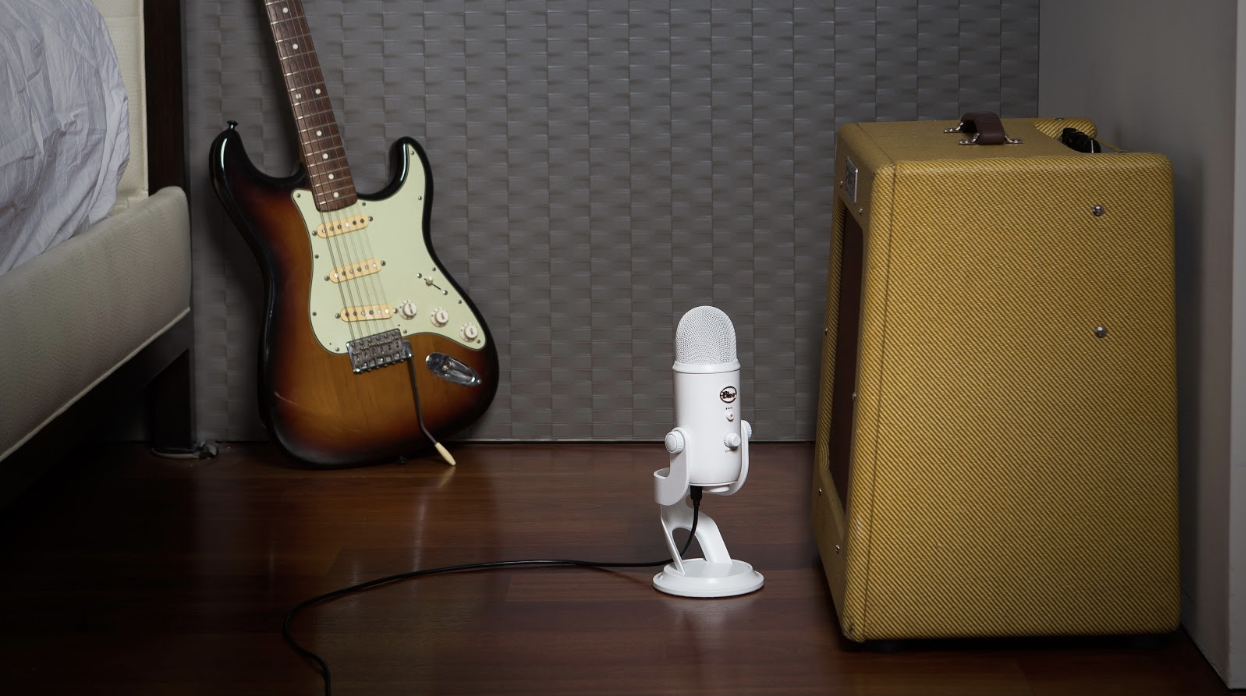
In the mid-level range, the microphone I most often recommend is the Blue Yeti Pro ($250 on Amazon). It’s simple and sounds great, and is the closest thing to a plug-and-play solution that I have found. It supports both USB and XLR, which makes it way more flexible (and makes it play friendly with audio interfaces, which I’ll talk about next). Blue Mics also sells a cheaper alternative with the non-pro Yeti ($130 on Amazon), the downside being that there’s no XLR support there.

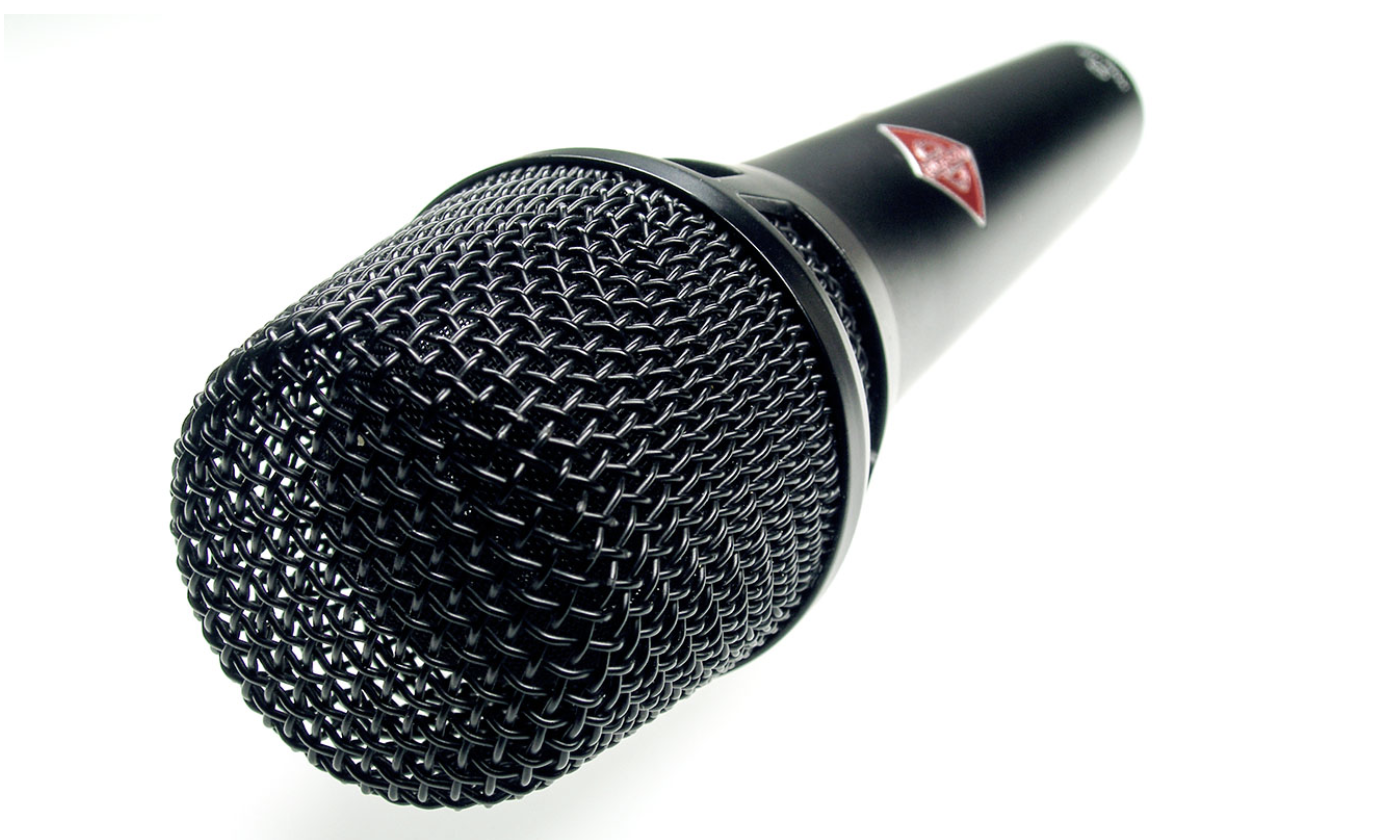
If you are looking for something on the higher end, here at TC we run our podcasts off of four Neumann KMS 105 Handheld Condenser Microphones ($699 on Amazon). They sound amazing — but if you’re just getting started, it’s almost certainly not a big enough improvement from the Yeti to justify the price.


Audio interfaces

Macs are unable to run two of the same USB mics at the same time. When you need more than one mic at one time, you’ll need an interface that lets you funnel and control multiple mics into one computer. This is one of the places where that aforementioned XLR support on the Yeti Pro comes in handy.

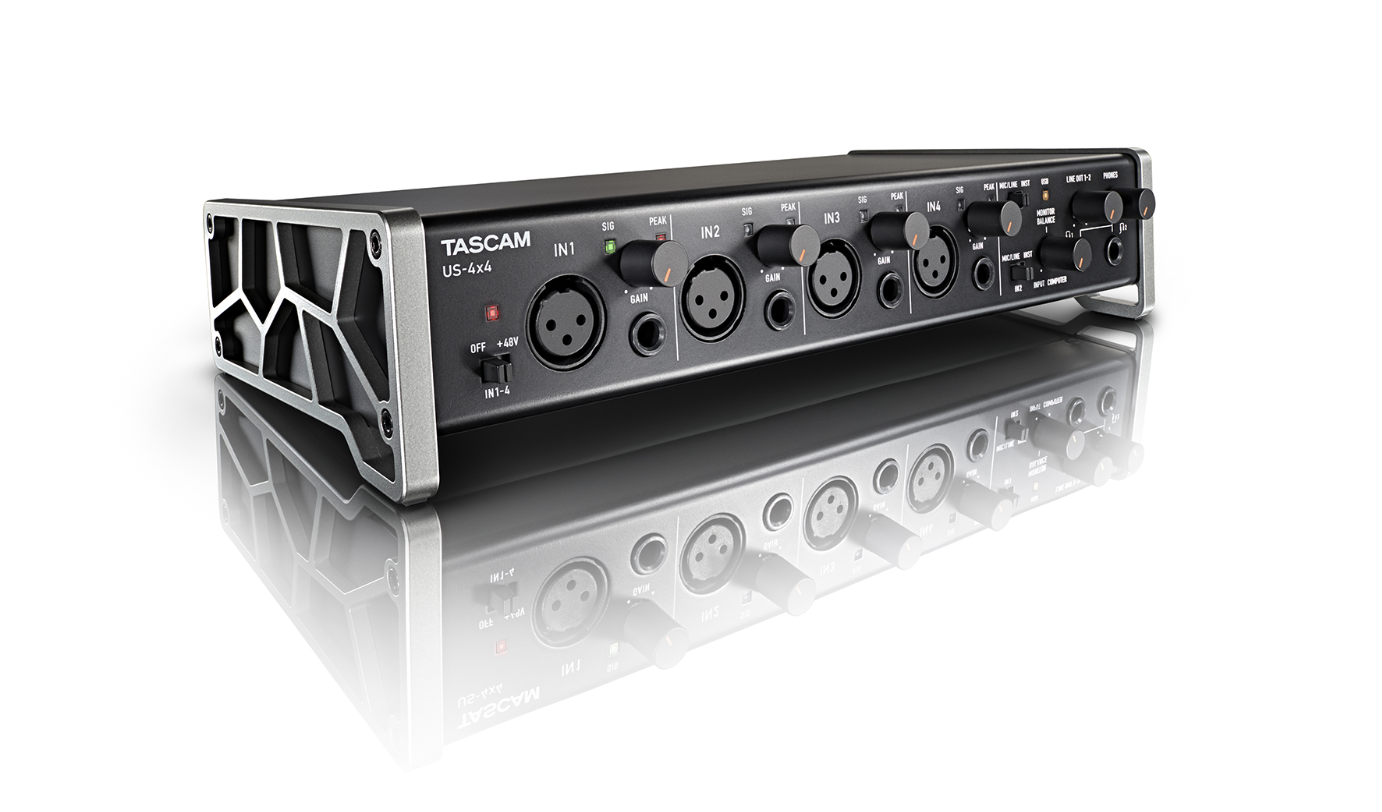
We use the Tascam US-4×4 4-Channel USB Audio Interface ($200 on Amazon). It’s simple and does its job well, handling up to four mics at once. Tascam also sells a two-mic version ($150 on Amazon) if you don’t need as many mics simultaneously — but at only $50 cheaper, you might want to spend the cash now for the sake of future flexibility.


Handheld devices

You can’t always be in the studio, but podcasting on-the-go can be a pain in the ass. Imagine having to lug around a bunch of mics and interfaces and tangled-up wires just to shoot an episode from the road.

One solution to this problem is to use a smaller recording device. Again, here, your phone works. But when I need higher fidelity when recording remotely, I tap one of the portable recorders put out by Zoom.

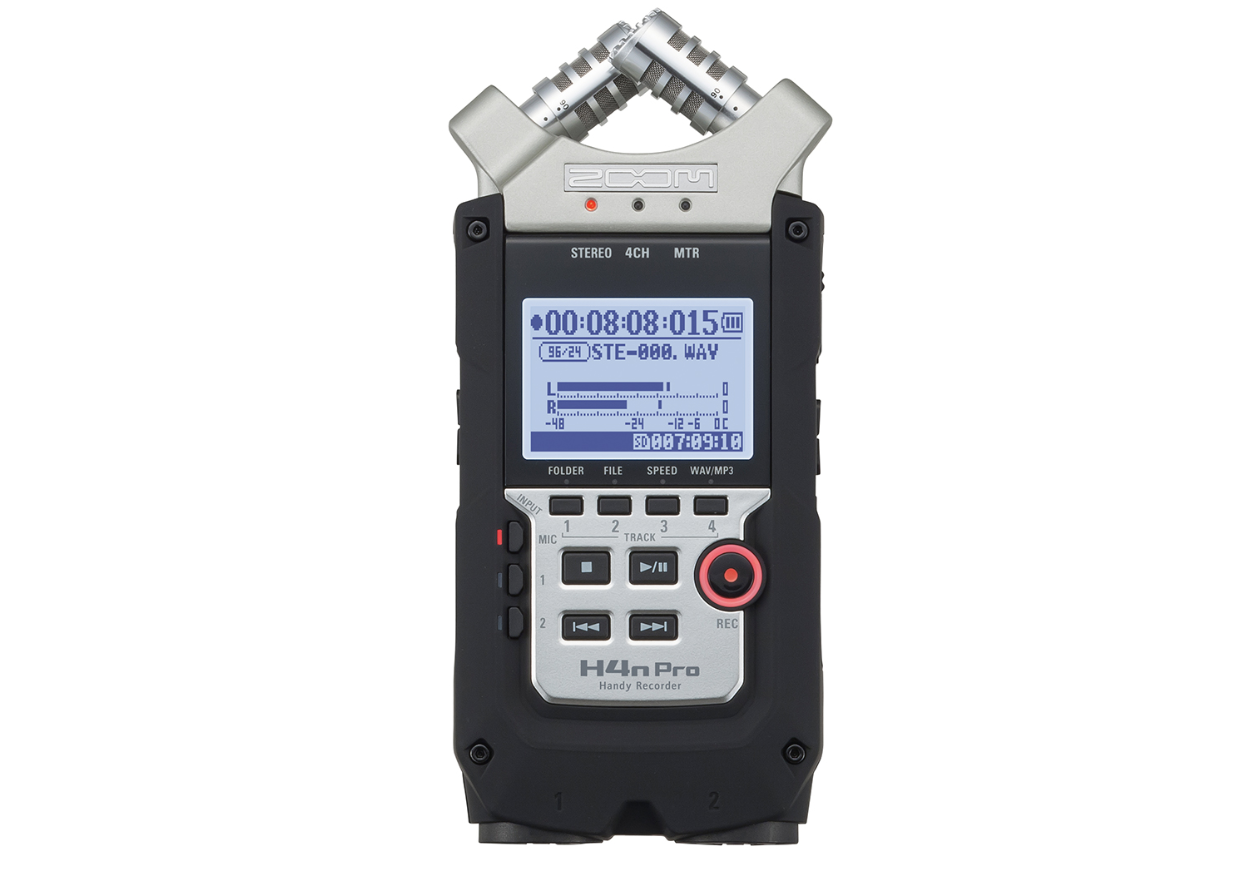
My go-to is the Zoom H4N ($220 on Amazon). This thing is an audio beast with the ability to capture stereo audio with the built-in microphones on the top in addition to being able to connect two external mics. I see a ton of reporters running around with this recorder.

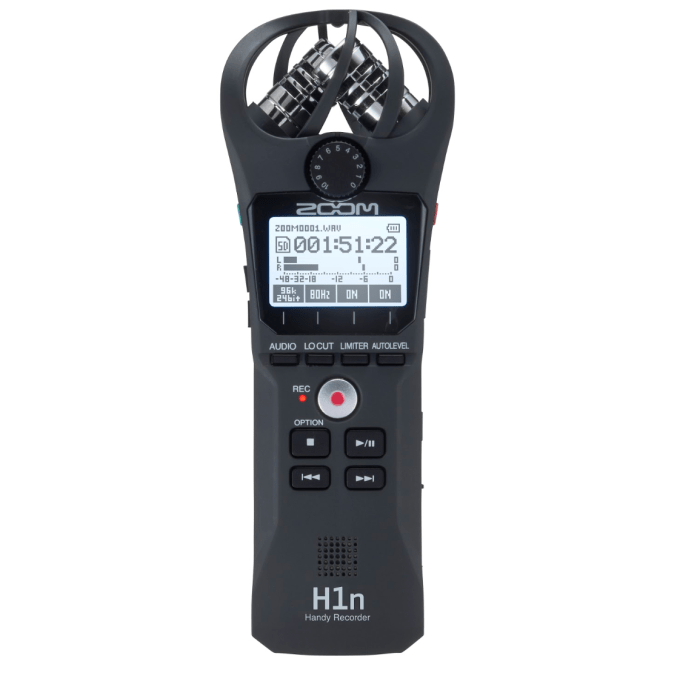
Smaller and less robust than the H4N, but still able to capture that crisp juicy audio, is the Zoom H1N ($120 on Amazon). It doesn’t have the ability to connect external mics and can’t act as an audio interface like the more capable H4N — but for getting audio on the fly, this small package is what you are looking for.


Remote recording software

In addition to hardware, any fledgling podcaster will need some software to get the job done. A common situation that many podcasters come across is how to record an interview or conversation with multiple people when all of those people are in different locations.

Zencastr is essentially a conference call service that has a bunch of extra features specifically designed for podcasters. It records your audio and the audio of your guest locally. That greatly improves the audio quality of your guest, making sure their side of the conversation doesn’t sound like a Skype call. They have a free option (two guests, 8 hours of recording per month) to get you started, but $20 a month bumps you up to unlimited guests and unlimited recordings.

Another neat feature Zencastr offers is automatic post-production; just select the tracks from your recording session and in a few minutes Zencastr spits out a track that has perfectly leveled sound. Zencastr also allows you to input your intro music, sound effects or anything else you’ve got pre-recorded to cut down on the things you need to add in post-production. Zencastr is the only service out there that I have found that incorporates all these essentials — it’s not perfect, but it’s the best thing I’ve seen out there.

If you didn’t want to spend the money on a subscription service, you can always patchwork it together with Skype, the ECAMM recorder plug-in, Soundflower and Linein. To explain how to rig all of these together would require a separate post that I hope to never write, but Googling those keywords should get you started.


Editing software

Unless you’re a one-take wonder, you’re going to need to get yourself some editing software. You might get away with posting raw audio at first, but eventually you’ll want to edit out those umms and uhhs and trim out any random background noise.

These editing programs can get complicated and expensive, and it’s easy to find yourself in the editing deep end. My suggestion? Start with the free stuff.

The first podcasts I ever edited were done on GarageBand. It was free and simple enough for me to learn quickly, with the catch that it’s Mac/iOS only. Another option for simple/free is Audacity. Unlike GarageBand, it’s available on Windows/Linux — and it does a lot more than you might expect from the price tag.

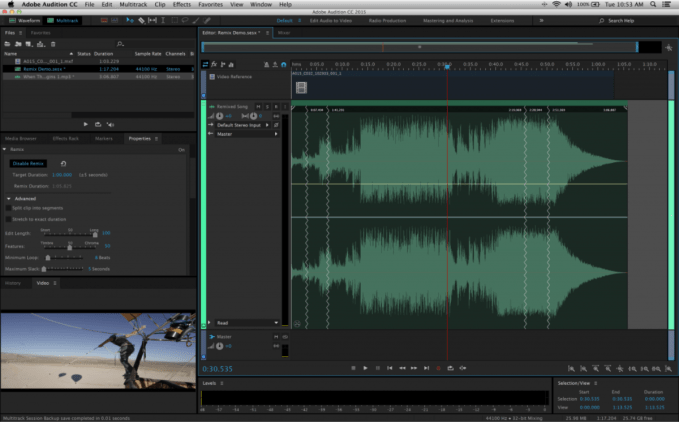
Once you reach the point where you find yourself needing to spend money, you have all sorts of options to pick from. Ask five editors what to use and each will give you a different answer. Most will just recommend the program that they learned on. The big three are Audition by Adobe, Pro Tools by Avid and Logic Pro X by Apple. The first two have free trials, so start there and figure out what you like best.

Hosting

Where is your podcast going to live?

Before it can make it onto iTunes, your podcast needs to be hosted somewhere. There are many ways to do this from building your pod a website on services like Squarespace or Wix. Another option is to use to use the music / audio sharing service SoundCloud.

My favorite option for hosting is a service called Simplecast. Simplecast makes uploading and distributing your podcast… well, simple. For about 10 bucks a month Simplecast will host as many episodes as you can make, provides you with an RSS feed to submit to iTunes and provides you with nifty perks like embeddable players for social media.

But by far one of the best features of Simplecast is their analytics. They provide you with how many downloads each episode gets, where those downloads are coming from and what service your audience is listening on (whether it be Pocketcast, Apple’s podcasting app or the embedded player you just tweeted out).

I hope that helps you on your podcasting journey. Now get out there and start making content!

TechCrunch Gift Guide 2018 banner


16 Nov 2018

Gift Guide: The best gear for that friend who wants to start a podcast

Welcome to TechCrunch’s 2018 Holiday Gift Guide! Need more gift ideas? Check out our Gift Guide Hub.

“How do I start a podcast?”

As the producer of the TechCrunch podcast Equity, I get this question all the time. Fortunately, it’s easier than ever to get your voice out there, even on a shoestring budget.

As interest skyrockets, the barrier to entry is getting lower, with more microphones, gadgets and services hitting the market all the time. But unless you have an audio engineering degree, it can all be a bit overwhelming.

I’ve spent a lot of time researching, testing and breaking podcasting gear so you don’t have to. We all have that friend who always talks about starting their very own podcast. Want to help them (or you) get the ball rolling this holiday season? Here’s where I’d start.


Microphones

Never let the gear get in the way of getting your voice heard. First you’ll need a microphone. For better or worse, there are microphones in everything these days — and some of them are actually pretty decent. If all you have is your phone, your phone is all you need. Get that voice memo application out and hit record.

While the built-in microphone will do in a pinch, a few bucks can go a long way to improve the sound quality that you can capture with your phone. Pop on this Rode VideoMic Me ($50 on Amazon) and the audio captured by your phone will be greatly improved (pro tip: you’ll need a dongle if your phone, like many these days, doesn’t have a headphone jack.)

If you want those sexy ASMR sounds, though, you will have to invest in a bigger microphone.

In the mid-level range, the microphone I most often recommend is the Blue Yeti Pro ($250 on Amazon). It’s simple and sounds great, and is the closest thing to a plug-and-play solution that I have found. It supports both USB and XLR, which makes it way more flexible (and makes it play friendly with audio interfaces, which I’ll talk about next). Blue Mics also sells a cheaper alternative with the non-pro Yeti ($130 on Amazon), the downside being that there’s no XLR support there.

If you are looking for something on the higher end, here at TC we run our podcasts off of four Neumann KMS 105 Handheld Condenser Microphones ($699 on Amazon). They sound amazing — but if you’re just getting started, it’s almost certainly not a big enough improvement from the Yeti to justify the price.


Audio interfaces

Macs are unable to run two of the same USB mics at the same time. When you need more than one mic at one time, you’ll need an interface that lets you funnel and control multiple mics into one computer. This is one of the places where that aforementioned XLR support on the Yeti Pro comes in handy.

We use the Tascam US-4×4 4-Channel USB Audio Interface ($200 on Amazon). It’s simple and does its job well, handling up to four mics at once. Tascam also sells a two-mic version ($150 on Amazon) if you don’t need as many mics simultaneously — but at only $50 cheaper, you might want to spend the cash now for the sake of future flexibility.


Handheld devices

You can’t always be in the studio, but podcasting on-the-go can be a pain in the ass. Imagine having to lug around a bunch of mics and interfaces and tangled-up wires just to shoot an episode from the road.

One solution to this problem is to use a smaller recording device. Again, here, your phone works. But when I need higher fidelity when recording remotely, I tap one of the portable recorders put out by Zoom.

My go-to is the Zoom H4N ($220 on Amazon). This thing is an audio beast with the ability to capture stereo audio with the built-in microphones on the top in addition to being able to connect two external mics. I see a ton of reporters running around with this recorder.

Smaller and less robust than the H4N, but still able to capture that crisp juicy audio, is the Zoom H1N ($120 on Amazon). It doesn’t have the ability to connect external mics and can’t act as an audio interface like the more capable H4N — but for getting audio on the fly, this small package is what you are looking for.


Remote recording software

In addition to hardware, any fledgling podcaster will need some software to get the job done. A common situation that many podcasters come across is how to record an interview or conversation with multiple people when all of those people are in different locations.

Zencastr is essentially a conference call service that has a bunch of extra features specifically designed for podcasters. It records your audio and the audio of your guest locally. That greatly improves the audio quality of your guest, making sure their side of the conversation doesn’t sound like a Skype call. They have a free option (two guests, 8 hours of recording per month) to get you started, but $20 a month bumps you up to unlimited guests and unlimited recordings.

Another neat feature Zencastr offers is automatic post-production; just select the tracks from your recording session and in a few minutes Zencastr spits out a track that has perfectly leveled sound. Zencastr also allows you to input your intro music, sound effects or anything else you’ve got pre-recorded to cut down on the things you need to add in post-production. Zencastr is the only service out there that I have found that incorporates all these essentials — it’s not perfect, but it’s the best thing I’ve seen out there.

If you didn’t want to spend the money on a subscription service, you can always patchwork it together with Skype, the ECAMM recorder plug-in, Soundflower and Linein. To explain how to rig all of these together would require a separate post that I hope to never write, but Googling those keywords should get you started.


Editing software

Unless you’re a one-take wonder, you’re going to need to get yourself some editing software. You might get away with posting raw audio at first, but eventually you’ll want to edit out those umms and uhhs and trim out any random background noise.

These editing programs can get complicated and expensive, and it’s easy to find yourself in the editing deep end. My suggestion? Start with the free stuff.

The first podcasts I ever edited were done on GarageBand. It was free and simple enough for me to learn quickly, with the catch that it’s Mac/iOS only. Another option for simple/free is Audacity. Unlike GarageBand, it’s available on Windows/Linux — and it does a lot more than you might expect from the price tag.

Once you reach the point where you find yourself needing to spend money, you have all sorts of options to pick from. Ask five editors what to use and each will give you a different answer. Most will just recommend the program that they learned on. The big three are Audition by Adobe, Pro Tools by Avid and Logic Pro X by Apple. The first two have free trials, so start there and figure out what you like best.

Hosting

Where is your podcast going to live?

Before it can make it onto iTunes, your podcast needs to be hosted somewhere. There are many ways to do this from building your pod a website on services like Squarespace or Wix. Another option is to use to use the music / audio sharing service SoundCloud.

My favorite option for hosting is a service called Simplecast. Simplecast makes uploading and distributing your podcast… well, simple. For about 10 bucks a month Simplecast will host as many episodes as you can make, provides you with an RSS feed to submit to iTunes and provides you with nifty perks like embeddable players for social media.

But by far one of the best features of Simplecast is their analytics. They provide you with how many downloads each episode gets, where those downloads are coming from and what service your audience is listening on (whether it be Pocketcast, Apple’s podcasting app or the embedded player you just tweeted out).

I hope that helps you on your podcasting journey. Now get out there and start making content!

TechCrunch Gift Guide 2018 banner


16 Nov 2018

Stoop aims to improve your news diet with an easy way to find and read newsletters

Stoop is looking to provide readers with what CEO Tim Raybould described as “a healthier information diet.”

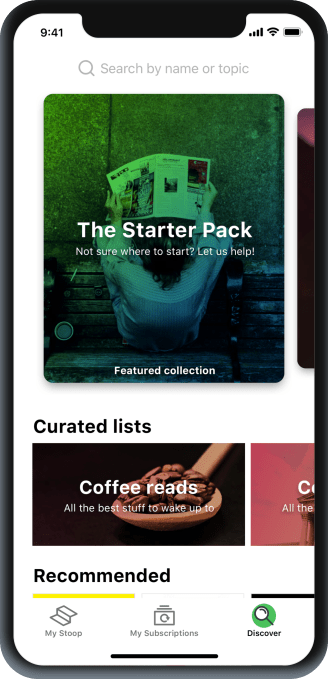
To do that, it’s launched an iOS and Android app where you can browse through different newsletters based on category, and when you find one you like, it will direct you to the standard subscription page. If you provide your Stoop email address, you’ll then be able to read all your favorite newsletters in the app.

“The easiest way to describe it is: It’s like a podcast app but for newsletters,” Raybould said. “It’s a big directory of newsletters, and then there’s the side where you can consume them.”

Why newsletters? Well, he argued that they’re one of the key ways for publishers to develop a direct relationship with their audience. Podcasts are another, but he said newsletters are “an order of magnitude more important” because you can convey more information with the written word and there are lower production costs.

That direct relationship is obviously an important one for publishers, particularly as Facebook’s shifting priorities have made it clear that publications need to “establish the right relationship to readers, as opposed to renting someone else’s audience.” But Raybould said it’s better for readers too, because you’ll be spending your time on journalism that’s designed to provide value to the reader, not just attracting clicks: “You will find you use the newsfeed less and consume more of your content directly from the source.”

“Most content [currently] is distributed through a third party and that software is choosing what to surface next not based on the quality of the content, but based on what’s going to keep people scrolling,” he added. “Trusting an algorithm with what you’re going to read next is like trusting a nutritionist who’s incentivized based on how many chips you eat.”

Stoop Discover

So Raybould is a fan of newsletters, but he said the current system is pretty cumbersome. There’s no one place where you can find new newsletters to read, and you may also hesitate to subscribe to another one because it “crowds out your personal inbox.” So Stoop is designed to reduce the friction, making it easy to subscribe to and read as many newsletters as your heart desires.

Raybould said the team has already curated a directory of around 650 newsletters (including TechCrunch’s own Daily Crunch) and the list continues to grow. Additional features include a “shuffle” option to discover new newsletters, plus the ability to share a newsletter with other Stoop users, or to forward it to your personal address where they can be sent along to whoever you like.

The Stoop app is free, with Raybould hoping to eventually add a premium plan for features like full newsletter archives. He’s also hoping to collaborate with publishers — initially, most publishers will probably treat Stoop readers as just another set of subscribers, but Raybould said they could get access to additional analytics and also make subscriptions easier by integrating with the app’s instant subscribe option.

And the company’s ambitions even go beyond newsletters. Raybould said Stoop is the first consumer product from a team with a larger mission to help publishers. They’re also working on OpenBundle, an initiative around bundled news subscriptions with a planned launch in 2019 or 2020.

“The overaching thing that is the same is the OpenBundle thesis and the Stoop thesis,” he said. “Getting publishers back in the role of delivering content directly to the audience is the antidote to the newsfeed.”

16 Nov 2018

Cryptocurrency chill causes mining speculator Nvidia’s stock to plunge

The cryptocurrency market is an exciting one, but it’s also unpredictable — and when things go south, they take related businesses with them. Nvidia, a hardware giant that has been riding the cryptocurrency wave, saw its stock price take a double-digit hit as it reported vanishing demand for GPUs specializing in crypto-mining.

It’s been a wild year in the GPU market at there were points when ordinary gamers, who have relied on Nvidia for years for the powerful cards used to play the latest games, found inventory scarce for the company’s latest generation of hardware.

The cards had been, and continued to be for some time, bought up by cryptocurrency mining operations all striving to get a leg up on one another. Consumer-grade GPUs are excellent candidates for putting together low-cost, high-performance clusters that excel in solving the type of problems posed in the likes of Bitcoin mining. The cards were essentially paying for themselves due to the profitability of participating in the lucrative markets.

But the those markets, which have been booming for much of the year, have cooled — not to say crashed — and consequently demand for GPUs has cooled as well, as Nvidia’s earnings statements show.

If Nvidia had seen the cryptocurrency boom for what it was at the time — an important but misleading flare in value — it likely would not have produced the estimated $57 million in excess inventory aimed at the miner market. Mid-range gaming GPU sales declined as well, though this seems to have been part of a larger trend.

It will take a couple quarters to get through all that inventory, during which time of course it will have to be steeply discounted, since miners and gamers understand implicitly that improved versions are just around the corner and are unlikely to pay full price for hardware approaching even a minor degree of obsolescence. The misstep caused Nvidia’s price to drop more than 19 percent Thursday, and it has not rallied today.

“This is surely a setback and I wish we had seen it earlier,” said CEO Jensen Huang on a press call following the announcement of the results.

Cryptocurrency markets may never return to the feverish state of competition they existed in for much of 2018. An explosion of “alt coins” and Initial Coin Offerings baffled casual investors in the ecosystem, and scams were (and are) rife. This led to an overall skepticism in the systems as a class, and even sophisticated and proven ones like Ethereum have suffered major devaluation.

There’s no doubt that blockchain and token economies will be a major part of the financial future (among other things) but the feeding frenzy of 2018 seemed unsustainable from the start. Already many cryptocurrency systems are moving away from the arms race of “proof of work” to the more equitable “proof of stake.” That change alone could decimate computing requirements if adopted at large (although established systems like Bitcoin are too far along to change, outside ill-advised forks like Bitcoin Cash).

Don’t bother shedding a tear for Nvidia, though. The company is rolling high and the GPU market is strong. But it seems that it too, alongside millions of others, has suffered the consequences of speculating on cryptocurrency.

16 Nov 2018

Reading List: Podcasting

I argued in my recent post What’s Next for Podcasting? that we’re at a pivot point where podcasting is becoming a mainstream content format for all types of shows and creators as Hollywood enters the fray. There’s a surge of interest by both creatives and businesspeople in podcasts right now, so I’ve compiled a reading guide to help newcomers get up to speed on the state of the podcasting market.

Follow these links for thoughtful analysis by operators, investors, and journalists in the space and let me know (@epeckham / email) what other posts I should add to the list.

[We are experimenting with new content formats at TechCrunch. This reading list is one of those experiments. Provide feedback directly to the author, Eric Peckham, our columnist focused on the intersection of media, technology, and finance.]

I. Background: The Rise of Podcasting

Timeline of Podcasting | October 2015 | Vanessa Quirk created an interactive timeline to highlight the development of the podcast as a new content medium (on behalf of the Tow Center for Digital Journalism at Columbia University).

Audible Revolution | February 2004 | Ben Hammersley wrote about the rise of this new “online radio” format back in 2004 for The Guardian, featuring early efforts by then-startup Audible to focus on it instead of audiobooks.

The Future of Podcasting: A History Lesson | July 2017 | Justine Moore and Olivia Moore from VC firm CRV outlined the rise of podcasting up to 2017 as part of a 5-part series on the format. From the initial development of RSS feeds and coining of the term to initial hype, a lull for many years, and then a resurgence in 2014 as Apple launched its Podcasts app and the premiere of the hit podcast Serial.

II. Background: Data on the Current Market

The Future of Podcasting: Where Are We Now? | July 2017 | Justine and Olivia Moore highlighted data on the state of podcasting in summer 2017, looking at consumer awareness of the format and demographics. They also note barriers to growth.

The Podcast Consumer 2018 | April 2018 | Edison Research’s widely-cited annual report on who is listening to podcasts and how. They also create the more broadly focused annual report The Infinite Dial (in US, Canada, and Australia versions) that puts podcasting in the context of music streaming, radio, voice interfaces, and general consumer audio trends.

There is additional country-specific research out there for Canada (Canadian Podcast Listener), the UK (Ofcom Communications Market Report), Germany (Bitkom), and Sweden (EGTA). James Cridland, editor of podnews.net made a 15-minute presentation comparing podcasting internationally as well.

Full Year 2017 Podcast Ad Revenue Study | June 2018 | The Interactive Advertising Bureau (IAB) and PricewaterhouseCoopers (PwC) released this report on the size of the US podcast advertising market. These are the stats most news articles and industry experts refer to as the “market size” of podcasting but they are only the podcast advertising market. The overwhelming majority of revenue in podcasting is certainly understood to come from ads, but there are also many podcasts collecting Patreon donations, selling merchandise, generating touring income, and–in a few cases–getting royalties from books/films/shows based on their podcast or charging paid subscriptions.

Mind the Gap: Part One | August 2018 | Alex Taussig, a partner at Lightspeed, outlines the growth trajectories of both podcasting and voice interfaces (like Alexa) to highlight how monetization of new technologies or mediums typically lag consumer adoption.

III. Key Players: The Key Companies and Shows

One-Sentence Reviews of the Entire Podcast Listening Landscape | May 2017 | Erik Jones wrote short descriptions of the numerous podcast streaming apps out there in spring 2017. Even more have launched since but it’s a helpful guide for becoming aware of many of the players in the space.

Podcast Industry Audience Rankings | updated monthly | PodTrac ranks the 20 most listened to podcast shows and the 10 most listened to podcast publishers.

Podcast charts | updated hourly | Podcast analytics company Chartable has charts for the most downloaded/streamed podcasts for four top podcast players: Apple, Spotify Stitcher, and Breaker. Charts are global and by country.

What’s really the top podcast hosting service? | August 2018 | Podcast analytics company Chartable shared data on the market share among podcasting’s feed generators, feed redirection services, and media hosting services.

How People Listen to Podcasts | November 2018 | New podcast creation app Anchor shared their September 2018 data on podcasts that were distributed via Anchor, framing Apple Podcasts continued domination of market share but the rapid rise of Spotify as the clear second-place.

IV. Business Model

MailKimp, SchmailChimp: Podcast Ads are Rambling and Unpredictable. So Why Do Sponsors Love Them? | December 2014 | Alison Griswold chronicles how the intimacy of host-read ads on podcasts appeals to advertisers, even if it means the host doesn’t stick to an exact script.

Guide to Podcasting | December 2015 | Vanessa Quirk of the Tow Center for Digital Journalism published a report on the history, market, and business models of podcasting, including case studies on the implementation of different business models.

The Future of Podcasting: How Do Podcasts Make Money? | August 2017 | Justine and Olivia Moore evaluate how podcasters make money, mainly focusing on ads/sponsorships (which are mostly direct response) and early efforts at paid subscriptions.

FOMO in China is a $7B Industry | September 2018 | Marketplace China correspondent Jennifer Pak wrote about (and recorded a podcast episode discussing) China’s $7.3 billion market for paid podcasts. Unlike in the US, it is the norm to pay for podcast content in China. This the inverse of other content formats where paid subscriptions are common in the US but not the norm in China.

What’s Next for Podcasting? Subscriptions and Exclusives | October 2018 | Eric Peckham framed the current state of the podcast business, the opportunity for a much greater diversity of show formats, and the rapidly growing interest by music streaming services and major Hollywood players. I argue that podcasting is in the early days of shifting from a model of free, ad-supported content available on every media player toward a model more like that of streaming TV, with paid subscriptions and exclusive shows.

‘A pain in the ass for users’: Subscription publishers wrestle with delivering exclusive audio | May 2018 | Max Willens at Digiday chronicled the frustration of media companies who have tried offering podcasts exclusively to paying subscribers, given the lack of technology infrastructure for doing so.

Why podcasting companies are getting more into scripted shows | September 2018 | Max Willens at Digiday notes a feeding frenzy of popular podcasts getting optioned for films, TV shows, and books and the growing focus on producing narrative-style podcasts. He points out that the current advertising model for podcasting makes generating a worthwhile ROI on high-quality narrative shows tougher.

V. Other arguments and predictions

Where Does Podcasting Go Next? A Manifesto for Growth | August 2018 | Tom Webster, the SVP at Edison Research who co-authors the annual Infinite Dial report on the podcasting market, notes that podcasting’s growth has been slow-and-steady, not an explosion, and emphasizes the challenges podcasting still facing in mainstream consumer adoption. He argues in favor of more entertainment podcasts that reflect what’s popular on TV and argues in favor of dropping the term “subscribing to a podcast” because it causes many people to misunderstand that they have to pay for podcasts.

IAB’s Podcast Measurement Guidelines | December 2017 | The Interactive Advertising Bureau (IAB) is the leading trade organization in the US for advertising and advertising-reliant publishing companies. In 2016, it released its first technical guidelines on how to measure podcast performance in order to create an industry standard and reduce double-counting. It updated them in 2017.

To Make Real Money, The Podcast Industry Needs to Stop Calling Them Podcasts | March 2016 | Venture capitalist Hunter Walk argued that podcasting needs to generate “listener revenue” in order to scale as an industry–not just rely on brand sponsorships–and needs to abandon the term “podcast” to do so because people firmly associate podcasts with free content.

Can Podcasts Rescue Spotify’s Business Model? | November 2018 | Tim Ingham argued in Rolling Stone that the fundamentals of Spotify’s business model prevent it becoming a profitable company (unless it can somehow cut out the record labels), and that’s why Spotify’s executives have decided to make such an aggressive push into podcasting over 2018.

State of Podcasts 2018 | July 2018 | Building off their 2017 assessment, Justine Moore and Olivia Moore a CRV outlined the pain points the podcast industry in still changes, the biggest changes under way, and where they see opportunity for entrepreneurs.

VI. News Sources

Nieman Lab – a popular news and analysis site run by the Nieman Foundation for Journalism at Harvard University, focused on the news publishing industry but also tracking the development of podcasting.

Podnews.net – a daily newsletter and site by James Cridland, a British radio/audio industry expert in Australia.

Hot Pod – a subscription news site covering the podcast industry, run by Nick Quah. It has a free weekly newsletter for non-subscribers as well.

Hearing Voices – a weekly newsletter by betaworks ventures partner Matt Hartman on audio/voice interfaces and startup opportunities.

TechCrunch: try the podcast, podcasts, and podcasting tags for archives.