Year: 2018

14 Nov 2018

Airbnb hosts offer free housing to evacuees displaced by California wildfires

With California’s recent cluster of devastating wildfires destroying homes and claiming lives, Airbnb is offering some shelter to displaced residents in its home state. This week, the company added free housing listings to serve evacuees affected by the Hill and Woolsey Fires outside Los Angeles and the Camp Fire in northern California.

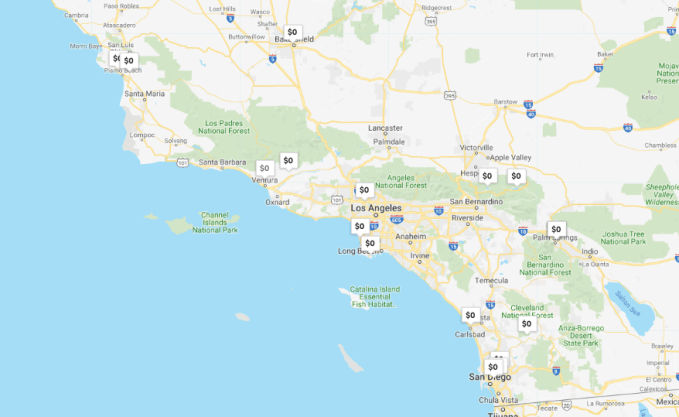
The free Airbnb housing is currently available through November 29, 2018 for both displaced residents and relief workers helping out with recovery. The Camp Fire area shows as many as 700 participating homes in the area and the Hill and Woolsey fire areas show more than 1,400.

Airbnb disaster housing

Airbnb disaster housing

The California fires aren’t the first disaster relief housing that Airbnb has coordinated. The company has a disaster relief hub where it surfaces current disasters in which people might be in need of housing. Right now, Airbnb is also coordinating free housing through hosts near Marseille after a building collapsed in the French city earlier this month. Two months ago, Airbnb encouraged hosts to sign up to offer their homes as residents evacuated before Hurricane Florence.

To sign up as an emergency housing host in one of those areas, you can follow the instructions behind the button to “sign up your home” after clicking through to your area from Airbnb’s main emergency housing portal.

14 Nov 2018

RFID stickers could signal contaminated food

If a food item isn’t safe to eat, it’s best to find that out before someone eats it. But manual testing of every jar and bottle isn’t possible, even when a threat, like the recent baby food scare, is known. MIT researchers have found a way to check many items instantly, non-invasively, and from a distance — using the RFID tags many products already have.

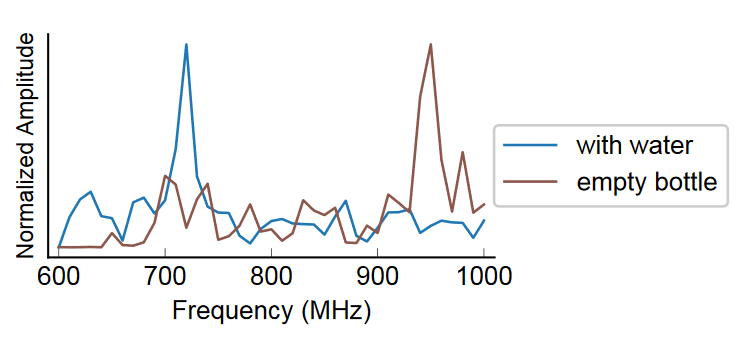
RFID, or radio frequency identification, uses a tiny antenna embedded in a sticker or label that’s activated and powered by radio waves at a very specific frequency. When a transceiver sends out a 950Mhz signal, the RFID tag wakes up and re-transmits a slightly different signal identifying itself. Products that announce themselves? Convenient for doing inventory!

What the researchers found was that this return signal, outside the actual information-bearing part, can be affected by the actual contents of the product, since the radio waves have to pass through them. Consequently, a jar full of pasta sauce and one full of olives would produce different signal profiles — as would an untouched jar of baby food compared with one contaminated with melamine.

“It’s almost as if we have transformed cheap RFIDs into tiny radio frequency spectroscopes,” said Fadel Adib, co-author of the paper describing the new system, in an MIT news release.

The problem is that these differences can be very minor and it’s not like they’ve been documented anywhere — this is the first time anyone’s tried this. So naturally, the team turned to machine learning. They trained up a model that can tell with confidence what a signal profile corresponds to, with the minor variations that come from, say, slight differences in orientation or glass width.

Right now the system, which they call RFIQ, can tell the difference between pure and melamine-contaminuted baby formula, and between various adulterations of pure ethyl alcohol. That’s pretty much everything my shopping list so I’m set, but obviously the team would like to have it apply to many more products. Now that the method has been shown to work, that’s the plan.

The task will only get harder, as things like environmental variables (shelves) and other wireless interference add to the problem. But machine learning algorithms are good at plucking signal out of the noise, so with luck the technique will work without too much trouble.

You can read the full paper documenting the RFIQ system here (PDF).

14 Nov 2018

The Correspondent launches campaign to bring its ad-free journalism to the U.S.

De Correspondent, a Dutch news organization aiming to “unbreak the news,” is planning to launch in the United States next year as The Correspondent. To fund its efforts, it’s hoping to raise $2.5 million from future readers.

Co-founder and CEO Ernst Pfauth (a former tech journalist who previously served as editor in chief at The Next Web) said this campaign is meant to test the waters of whether U.S. readers are interested in The Correspondent’s journalism. If it raises the money, it will launch in the U.S. next spring. If it doesn’t, it will reconsider those plans.

“We want there to be a critical mass that supports this,” Pfauth said. “We don’t want to launch, then see if enough people are interested.”

What the company has developed in the Netherlands, and what it’s hoping to replicate in the U.S., is a news organization with a direct connection to readers. For one thing, that means foregoing any ad revenue and relying entirely on readers for support. (Hence the crowdfunding campaign, where you can sign up by paying any amount you want.) It has a paywall, but any member can circumvent it and promote stories they think are important by sharing the individual links.

For another, it means treating readers as a key source for stories. In Pfauth’s view, by signing up as a “founding member,” you’re not so simply paying for a subscription, “You’re joining a cause. You not just giving us your money — though the money is essential — but you’re sharing your knowledge and spreading articles.”

The Correspondent

If that sounds a bit touchy-feely, here’s a concrete example: Last year, the organization broke the news that a videotape and related documents showed that Shell had detailed knowledge about the dangers of climate change as far back as 1991. And apparently it obtained the crucial material from a reader.

Pfauth said that in most cases, reporters at The Correspondent will share their story ideas with members as soon they start working on it, which allows readers to share their perspectives as the story develops. That can mean talking to doctors about hospital bureaucracy, or interviewing refugees about their experiences. It also means that The Correspondent encourages its journalists to spend 30 to 50 percent of their time going through the comments section (which it calls the “contributions” section), where only members can post.

Pfauth argued that all of this is crucial for breaking out of the limited perspective of so many news stories, where journalists “only talk to people who get paid to talk to the press.” That description struck close to home — I’m someone who spends a lot of their time dealing with PR pros who, yes, get paid to talk to me, or to entrepreneurs who are trying to convince me to write about their companies.

So how do you get people to share their perspective in a less self-interested (or, in the case of comments, less rant-y) way? Pfauth pointed to tactics like making sure to verify the identity of sources and asking “really specific questions.” But he also said, “Most people are idealistic about the thing they really care about. They want the information to be good.”

“You are going to find examples of other newspapers who have done things like this, but it’s always incidental, it’s not routine,” he added. “In our organization, we have this systematic approach to every story that we cover.”

This strategy makes it harder to quickly cover breaking news, but in fact, Pfauth said that’s quite intentional.

“We tell our correspondents, please ignore the news — the news is about incidents,” he said. “Focus on the topics in your beat that are really changing our society.”

As part of this campaign, The Correspondent has also enlisted a number of high-profile “ambassadors” who support its mission. Those ambassadors include FiveThirtyEight’s Nate Silver, Wikimedia’s Jimmy Wales, director Judd Apatow, journalist, musician Roseanne Cash, journalist and investor Om Malik and others.

14 Nov 2018

Facebook Messenger starts rolling out Unsend. Here’s how it works

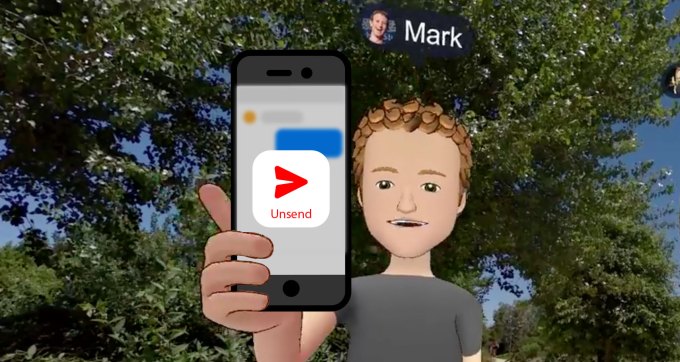
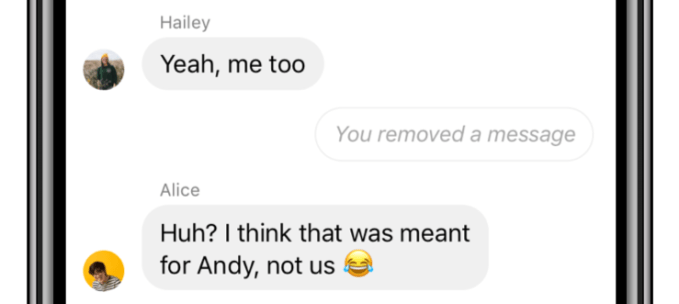
Facebook secretly retracted messages sent by CEO Mark Zuckerberg, TechCrunch reported seven months ago. Now for the first time, Facebook Messenger users will get the power to unsend too so they can remove their sent messages from the recipient’s inbox. Messages can only be unsent for the first ten minutes after they’re delivered so that you can correct a mistake or remove something you accidentally pushed, but you won’t be able to edit ancient history. Using the “Remove For Everyone” button also leaves a “tombstone” indicating a message was retracted. And to prevent bullies from using the feature to cover their tracks, Facebook will retain unsent messages for a short period of time so if they’re reported, it can review them for policy violations.

The Remove feature rolls out in Poland, Bolivia, Colombia, and Lithuania today on Messenger for iOS and Android. A Facebook spokesperson tells me the plan is to roll it out globally as soon as possible, though that may be influenced by the holiday App Store update cut off. In the meantime, it’s also working on more unsend features, potentially including the ability to preemptively set an expiration date for specific messages or entire threads.

“The pros are that user want to be in control . . . and if you make a mistake you can correct it. There are a lot of legitimate use cases out there that we wanted to enable” Facebook’s head of Messenger Stan Chudnovsky tells me in an exclusive interview. But conversely, he says  ”we need to make sure we don’t open up any new venues for bullying. We need to make sure people aren’t sending you bad messages and then removing them because if you report them and the messages aren’t there we can’t do anything.”

Zuckerberg did it. Soon you can too

Facebook first informed TechCrunch it would build an unsend feature back in April after I reported that six sources told me some of Mark Zuckerberg’s Facebook messages had been silently removed from the inboxes of recipients, including non-employees with no tombstone left in their place. We saw that as a violation of user trust and an abuse of the company’s power, given the public had no way to unsend their own messages.

Facebook claimed this was to protect the privacy of its executives and the company’s trade secrets, telling me that “After Sony Pictures’ emails were hacked in 2014 we made a number changes to protect our executives’ communications. These included limiting the retention period for Mark’s messages in Messenger.” But it seems likely that Facebook also wanted to avoid another embarrassing situation like when Zuckerberg’s old instant messages from 2004 leaked. One damning exchange saw Zuckerberg tell a friend “if you ever need info about anyone at harvard . . . just ask . . . i have over 4000 emails, pictures, addresses, sns.” “what!? how’d you manage that one?”  the friend replied. “People just submitted it . .  i don’t know why . . . they ‘trust me’ . . . dumb fucks” Zuckerberg replied.

The company told me it was actually already working on an Unsend button for everyone, and wouldn’t delete any more executives’ messages until it launched. Chudnovsky tells me he felt like “I wish we launched this sooner” when the news broke. But then six months went by without progress or comment from Facebook before TechCrunch broke the news that tipster Jane Manchun Wong had spotted Facebook prototyping the Remove feature. Then a week ago, Facebook Messenger’s App Store release notes accidentally mentioned that a ten-minute Unsend button was coming soon.

So why the seven month wait? Especially given Instagram already allows users to unsend messages no matter how old? “The reason why it took so long is because on the server side, it’s actually much harder. All the message are stored on the server, and that goes into the core transportation layer of our how our messaging system was built” Chudnovsky explains. “It was hard to do given how we were architected, but we were always worried about the integrity concerns it would open up.” Now the company is confident it’s surmounted the engineering challenge to ensure an Unsent message reliably disappears from the recipient.

“The question becomes ‘who owns that message?’ Before that message is delivered to your Messenger app, it belongs to me. But when it actually arrives, it probably belongs to both of us” Chudnovsky pontificates.

How Facebook Messenger’s “Remove For Everyone” Button Works

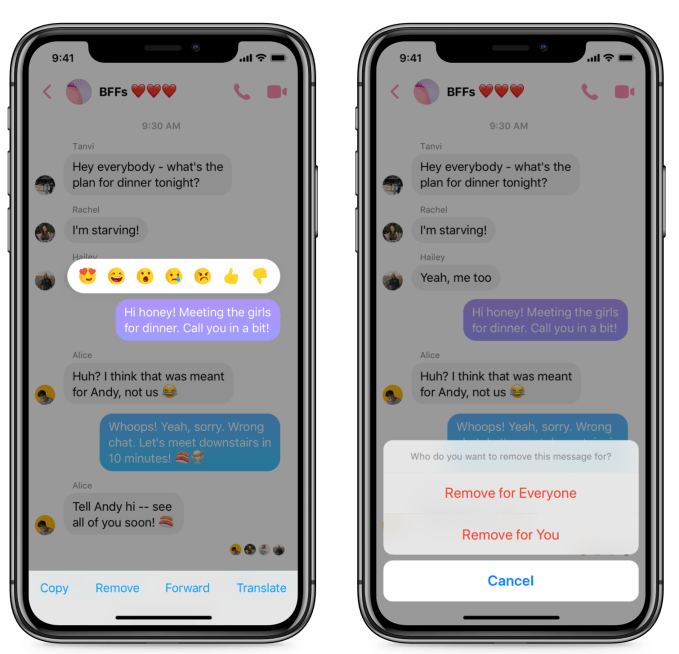
Facebook settled on the ability to let you remove any kind of message — including text, group chats, photos, videos, links, and more — within ten minutes of sending. You can still delete any message on just your side of the conversation, but only messages you sent can be removed from their recipients. You can’t delete from someone else what they sent you, the feature’s PR manager Kat Chui tells me. And Facebook will keep a private copy of the message for a short while after it’s deleted to make sure it can review if it’s reported for harassment.

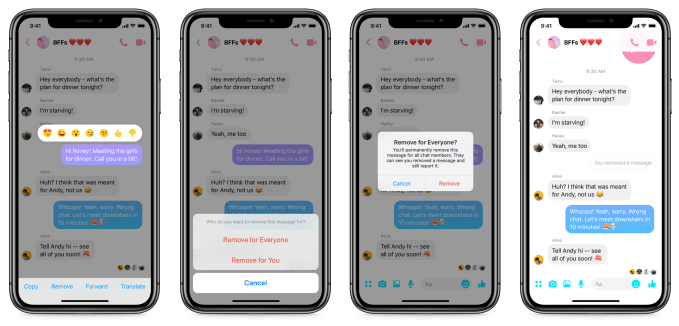
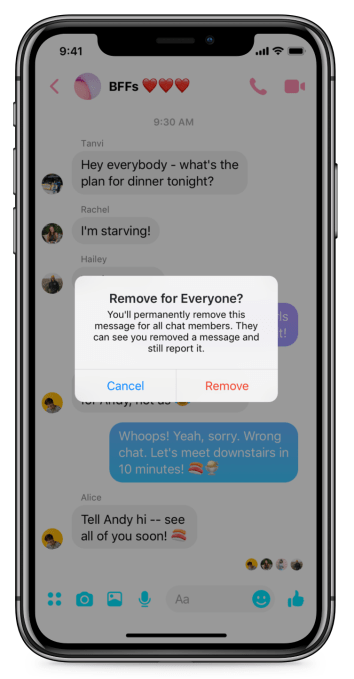
To use the unsend feature, tap and hold on a message you sent, then select ‘Remove’. You’ll get options to “Remove for Everyone” which will retract the message, or “Remove for you” which replaces the old delete option and leaves the message in the recipient’s inbox. You’ll get a warning that explains “You’ll permanently remove this message for all chat members. They can see that you removed a message and still report it.” If you confirm the removal, a line of text noting “you [or the sender’s name] removed a message” (known as a tombstone) will appear in the thread where the message was. If you want to report a removed message for abuse or another issue, you’ll tap the person’s name, scroll to “Something’s Wrong” and select the proper category such as harassment or that they were pretending to be someone else.

Why the ten minute limit specifically? “We looked at how the existing delete functionality works. It turns out that when people are deleting messages because it’s a mistake or they sent something they didn’t want to send, it’s under a minute. We decided to extend it to ten, but decided we didn’t need to do more” Chudnovsky reveals.

He says he’s not sure if Facebook’s security team will now resume removing executive messages. However, he stresses that the Unsend button Facebook is launching “is definitely not the same feature” as what was used on Zuckerberg’s messages. If Facebook wanted to truly respect its users, it would at least insert the tombstone when it erases old messages from executives.

Messenger is also building more unsend functionality. Taking a cue from encrypted messaging app Signal’s customizable per thread expiration date feature, Chudnovsky tells me “hypothetically, if I want all the messages to be deleted after 6 months, they get purged. This is something that can be set up on a per thread level” though Facebook is still tinkering with the details. Another option would be for Facebook to extend the per message expiration date option from its encrypted Secret messages feature to all chats.

“It’s one of those things that feels very simple on the surface. And it would be very easy if the servers were built one way or another from the very beginning” Chudnovsky concludes. “But it’s one of those things philosophically and technologically that once you get to the scale of 1.3 billion people using it, changing from one model to another is way more complicated.” Hopefully in the future, Facebook won’t give its executives extrajudicial ways to manipulate communications…or at least not until it’s sorted out the consequences of giving the public the same power.

14 Nov 2018

Government denies Oracle’s protest of $10B Pentagon JEDI cloud RFP

When Oracle filed a protest in August with the Government Accountability Office (GAO) that the Pentagon’s $10 billion JEDI RFP process was unfair, it probably had little chance of succeeding. Today, the GAO turned away the protest.

The JEDI contract has been set up as a winner-take-all affair. With $10 billion on the table, there has been much teeth-gnashing and complaining that the deck has been stacked to favor one vendor, Amazon. The Pentagon has firmly denied this, but it hasn’t stopped Oracle and IBM from complaining loudly from the get-go that there were problems with the way the RFP was set up.

At least with the Oracle complaint, the GAO put that idea firmly to rest today. For starters, the GAO made it clear that the winner-take-all approach was just fine, stating “…the Defense Department’s decision to pursue a single-award approach to obtain these cloud services is consistent with applicable statutes (and regulations) because the agency reasonably determined that a single-award approach is in the government’s best interests for various reasons, including national security concerns, as the statute allows.”

The statement went on to say that the GAO didn’t find that the Pentagon favored any vendor during the RFP period. “GAO’s decision also concludes that the Defense Department provided reasonable support for all of the solicitation provisions that Oracle contended exceeded the agency’s needs.” Finally, the GAO found no evidence of conflict of interest on the DOD’s part as Oracle had suggested.

Oracle has been unhappy since the start of this process, going so far as having co-CEO Safra Catz steer her complaints directly to the president in a meeting last April long before the RFP period had even opened.

As I wrote in an article in September, Oracle was not the only vendor to believe that Amazon was the favorite:

The belief amongst the various other players, is that Amazon is in the driver’s seat for this bid, possibly because they delivered a $600 million cloud contract for the government in 2013, standing up a private cloud for the CIA. It was a big deal back in the day on a couple of levels. First of all, it was the first large-scale example of an intelligence agency using a public cloud provider. And of course the amount of money was pretty impressive for the time, not $10 billion impressive, but a nice contract.

Regardless, the RFP submission period ended last month. The Pentagon is expected to choose the vendor in April 2019, Oracle’s protest notwithstanding.

14 Nov 2018

With ‘Rivals Week,’ Tinder tests an expansion of its well-performing Tinder U

Starting this weekend, Tinder will allow college students on its Tinder U service to match with others outside their own university for the first time. The dating app is positioning this market test of a potential Tinder U expansion as the  “Rivals Week” – a way to match users with those who attend a rival university for a limited period of time.

Tinder U’s Rivalry Week starts November 17 in the U.S. for students attending 4-year, degree-granting colleges and universities. It ends November 24, Tinder says.

Tinder U itself is still a relatively new feature, having only launched a few months ago as a way to attract more younger users to its service and re-engaged lapsed users.

College students can choose to opt into Tinder U by signing up with their “.edu” email address. Once enrolled, the users can switch over to Tinder U using a toggle switch at the top of the app.

Until now, however, Tinder U limited users to matching only with those who attend their same school.

That changes with “Rivals Week,” as Tinder will now let students match with others at nearby schools – or even cross-country – just so long as those schools are considered a “rival.”

Tinder is not, of course, calling out the move as anything more than just a bit of fun. But the week-long event could return valuable data to the dating app maker, in terms of consumer demand for a Tinder U product that was less restrictive in terms of its catalog of potential matches.

The launch also notably fits in with Tinder’s new strategy to position itself as a dating app for younger users who are less interested in settling down into long-term relationships. The company is investing in a marketing campaign across the U.S. where it promotes the “single lifestyle” Tinder offers.

Essentially, the company is embracing Tinder’s reputation as the “hook-up app,” but in a way that brands short-term dating – if you can call it that – as a more positive thing.

Tinder is able to do this because its parent company, Match Group, now owns a majority stake in Hinge. It says it simultaneously plans to invest in growing that app’s user base along with its reputation for serious relationships.

Meanwhile, Tinder sees Tinder U as a possible growth engine for the young adult-oriented service.

“We created Tinder U to both attract new college students to the Tinder experience and re-engage students who have been part of the Tinder community in the past. Ultimately, we see it as a way to deliver more value to the college user by providing more relevant recommendations, which helps to increase engagement,” said Match Group CEO Mandy Ginsberg. “We’ve seen strong early traction with Tinder U, both in terms of driving higher swipe rates and higher retention,” she noted.

The Tinder U product is live in over 1,200 colleges across the U.S.


14 Nov 2018

Uber continues to lose money as it scales scooters, bikes and other newer businesses

Uber, which is expected to go public sometime next year, just released its Q3 2018 financial results. Uber’s net losses increased 32 percent quarter over quarter to $939 million on a pro forma basis, though Uber expected these losses as it continues to invest in future growth areas.

On an earnings before interest, taxes, depreciation and amortization basis (EBIDTA), Uber’s losses were $527 million, up about 21 percent quarter over quarter. And as Uber prepares to go public, the company has started presenting the income statements with stock-based compensation.

Ten years from now, Uber CEO Dara Khosrowshahi envisions its core ride-hailing business accounting for less than 50 percent of Uber’s overall business, Khosrowshahi told me at TechCrunch Disrupt SF 2018. That means Uber expects businesses like Eats, scooters, bikes and freight to contribute to be more of Uber’s business, which requires Uber to invest heavily in those businesses.

Revenue for Q3 was up five percent quarter over quarter at $2.95 billion and up 38 percent year over year. Meanwhile, gross bookings were up six percent quarter over quarter and 34 percent year over year at $12.7 billion.

Uber, for the first time, has also broken out Eats specific gross bookings, which the company says accounted for $2.1 billion of overall gross bookings and is growing over 150 percent year over year. Last month, Uber announced its intention to expand Eats to cover 70 percent of the U.S. population by the end of this year.

Other key stats for Uber’s Q3 2018:

  • Adjusted EBITDA margin: 4.1 percent of gross bookings (In Q3 2017, that was 6.4 percent)
  • Gross cash: $6.55 billion, not including the $500 million from Toyota or the $2 billion from debt offering

This is Uber’s first quarterly earnings report under CFO Nelson Chai. Uber, which had been without a CFO for more than three years, brought on Chai just three months ago.

“We had another strong quarter for a business of our size and global scope,” Uber Chief Financial Officer Nelson Chai said in a statement. “As we look ahead to an IPO and beyond, we are investing in future growth across our platform, including in food, freight, electric bikes and scooters, and high-potential markets in India and the Middle East where we continue to solidify our leadership position.”

14 Nov 2018

Gift Guide: 10 suitcase-friendly gifts for frequent flyers

Welcome to TechCrunch’s 2018 Holiday Gift Guide! Need more gift ideas? Check out our Gift Guide Hub.

I’ve been traveling a lot this year — more than any year in the past. It’s been both a blessing and a curse, so thanks, TechCrunch, for that. Honestly, I should probably be packing for Asia instead of writing this, but I’m looking out for you instead.

Rather than writing the standard Travel Guide or Holiday Gift Guide, we’ve opted to combine them into one. Because if there’s one key to making the most out of your time on the road, it’s efficiency. Technology can play an important role in helping streamline the packing process and generally making the most out of your trip.

Of course, as with everything, too much tech can also be a bad thing. I know I’ve found myself packing too many gadgets or jamming a messy rat king of cables in my carry-on, making a mess of things in the process.

What follows is a collection of gadgets, accessories and other products designed to remove some of the biggest pain points from travel and help you make the most of your trip, whether overnight or longer.

Amazon Kindle Oasis
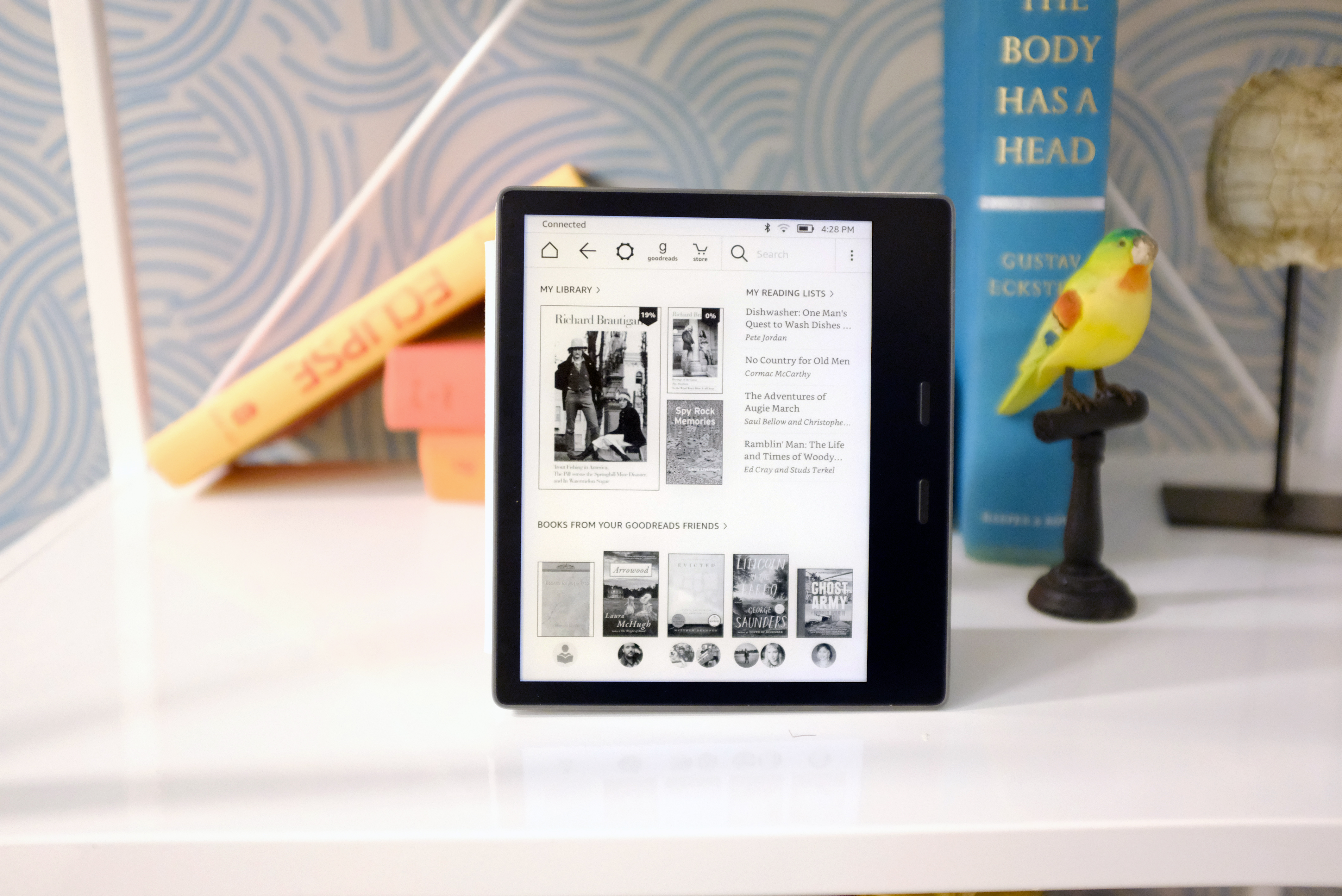
Okay, maybe including a Kindle on here is a bit of a cheat, but very few devices have improved my travel life like an e-reader — and the Oasis is currently the nicest one you can get. It wasn’t all that long ago I used to jam several paperbacks into my carry-on. I do miss the tactility of real books from time to time, but when it comes to traveling, nothing beats the ability to jam thousands of books into a seat-back pocket.

Price: $249-$279
Available from: Amazon


Anker 40W 4-Port USB Wall Charger
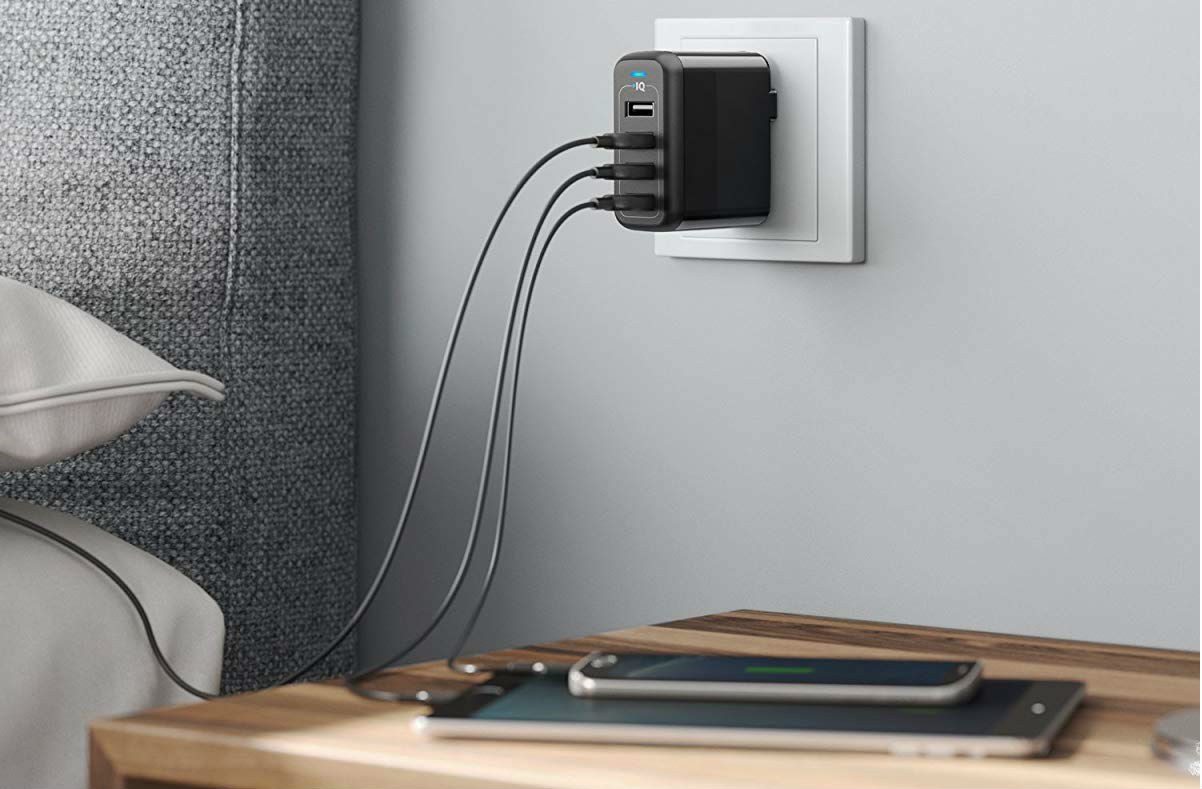
A lot of modern hotels are getting better about USB ports. I recently found myself staying at one in LA where every single link had a place for me to charge my iPhone. But it’s still a crapshoot — especially when traveling to a strange city — and hey, if you can avoid plugging your personal devices into a strange port, all the better.

I started traveling with my own combo mini power strip/USB hub years ago, but Anker’s 40W 4-Port USB Wall Charger is a much more compact solution, bringing four USB ports directly to the wall. Best of all, like all of Anker’s products, it’s dirt cheap.

Price: $26
Available from: Amazon


BUBM Cable Bag
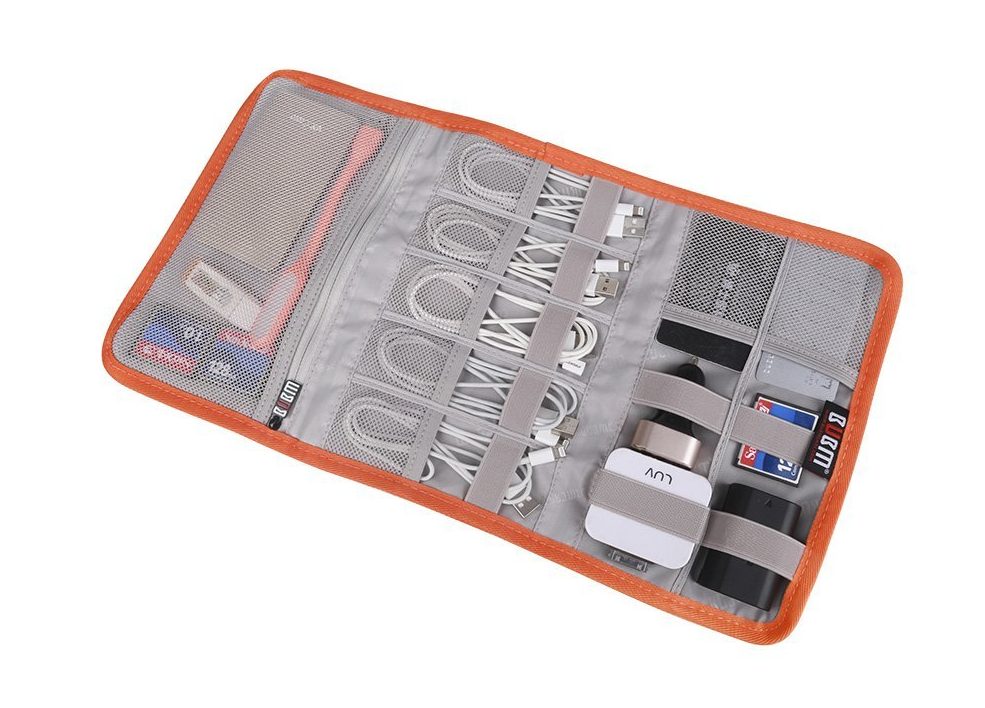
I’ve tried a LOT of cable organizers in my many years of gadget blogging. It’s the only thing that keeps my travel bag from turning into the Indiana Jones snake pit. At the end of the day, all of them ultimately suffer the same compromise: you can either have a lot of compartments for your various tech doodads or you can free up more space in your bag.

Ultimately, I tend to side with the latter. Especially when it comes to carry-ons, anything you can do to free up space is a net positive. Lately, I’ve been digging this one from BUBM. It looks snazzy and the fold-over design helps free up precious bag real estate.

Price: $12
Available from: Amazon


Calm subscription

This one is admittedly an odd choice. Sure there are plenty of travel-specific apps out there, but when it comes to helping tamp down the stress associated with travel, the Calm app is a good place to start. This is coming from a very anxious flyer, mind you. It’s not a fear of flying — that part’s fine. It’s everything else. From the getting to the airport to the endless lines to the $3 airport water to the occasional middle seat.

I’m also, not coincidentally, an anxious meditator. I’ve tried a LOT of different apps to pursue mindfulness on my smartphone, and Calm is far and away the one I like best. The guided meditation sessions are terrific and ditto for the more freeform ones. It’s also a great way to get your bearings after waking up in a hotel room in some unknown city.

A year’s subscription runs $60, which is a small price to pay for peace of mind.

Price: $60
Available from: Calm


Harman Kardon Traveler speaker

This one admittedly feels like more of a luxury than many of the others, but don’t underestimate how much a small Bluetooth speaker can improve hotel time. The vast majority of laptops have pretty terrible built-in speakers, and even middling Bluetooth speakers are a major improvement.

Harman Kardon’s Traveler fits the bill and won’t add much size or weight to a carry-on. It also has a built-in mic for teleconference — a definite bonus for work trips — and doubles as a power bank for charging up devices. The 2,500mAh battery isn’t much, but on the road, every little bit of juice counts.

Price: $150
Available from: Harman Kardon


HyperDrive USB-C Hub Attach
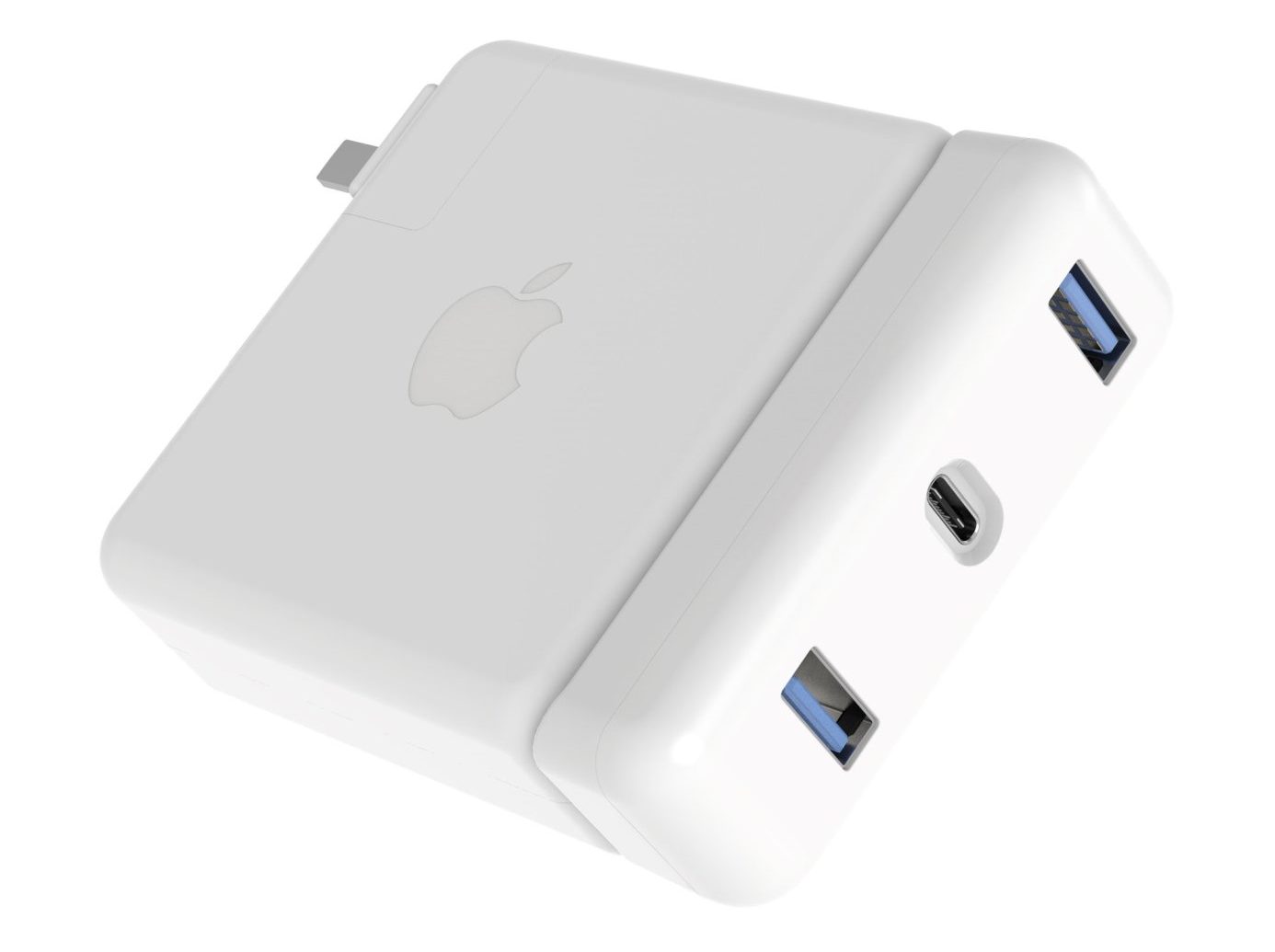
I travel with a LOT of gadgets. It’s kind of my job. As such, you’re no doubt catching onto the fact that lack of charging ports is a consistent theme in all of this. HyperDrive USB-C Hub Attach is a clever take on Twelve South’s iconic PlugBug that brings USB ports directly to the MacBook’s charging brick. Here, however, you’ve got the decided bonus of a third active USB-C port for data transfer. At $50 for the larger version, it’s also priced to match TwelveSouth’s offering.
Price: $50
Available from: HYPER


Luna Display
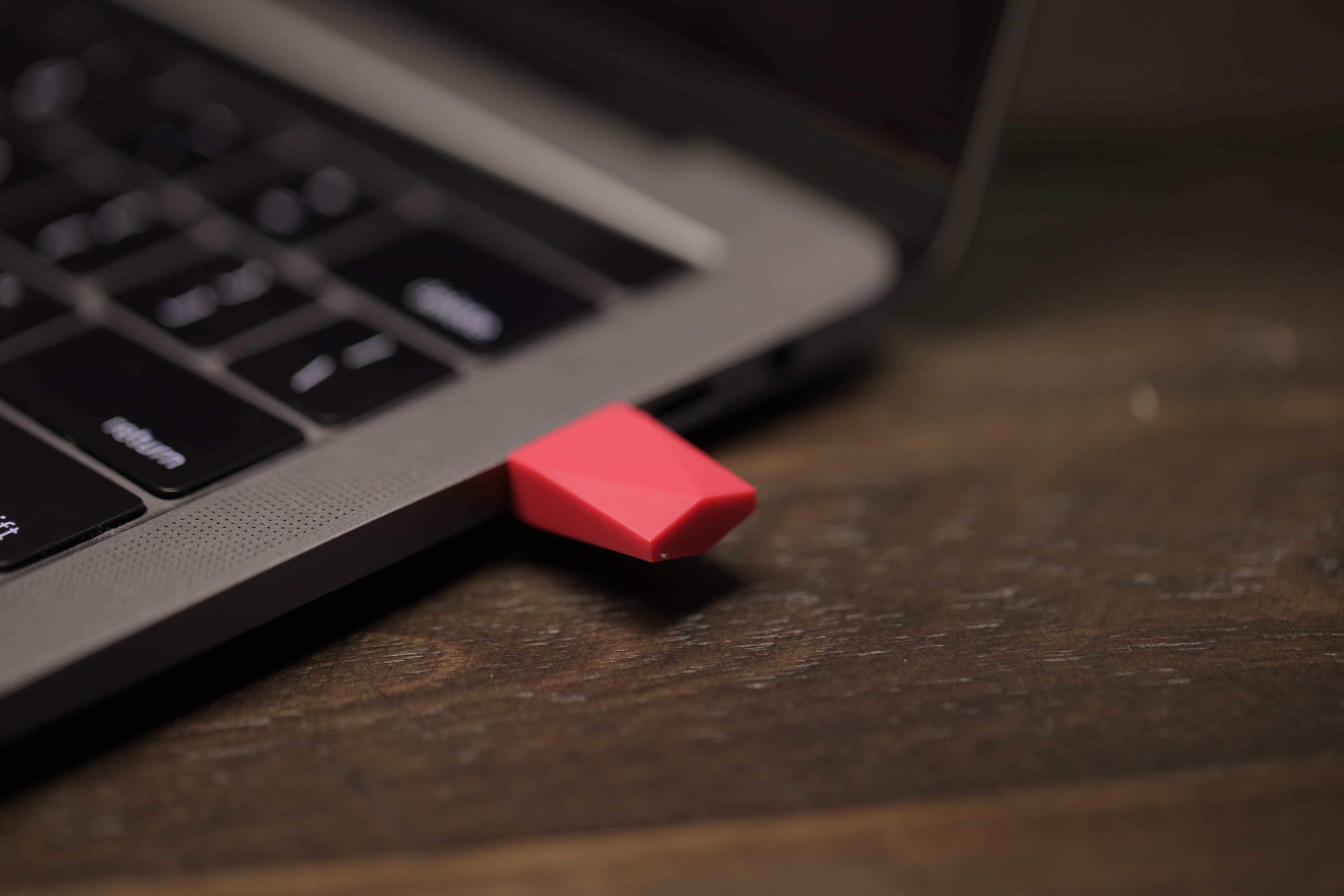
As I noted in my write up last month, the Luna Display isn’t for everyone, but those who need it will find it to be a downright lifesaver. Once this thumbnail-sized $80 device plugs into a MacBook, it connects to a nearby iPad over Wi-Fi, converting the tablet into a second screen.

I’ve been using the hell out of it every time I’ve found myself working from the road or at home. I’ve become entirely dependent on my monitor at work, and now find myself being the guy with both a laptop and tablet out on the table at the coffee shop. Totally worth it for the ability to monitor my RSS feeds while working on a story.

Price: $80
Available from: Luna


RAVPower Wireless Portable Charger
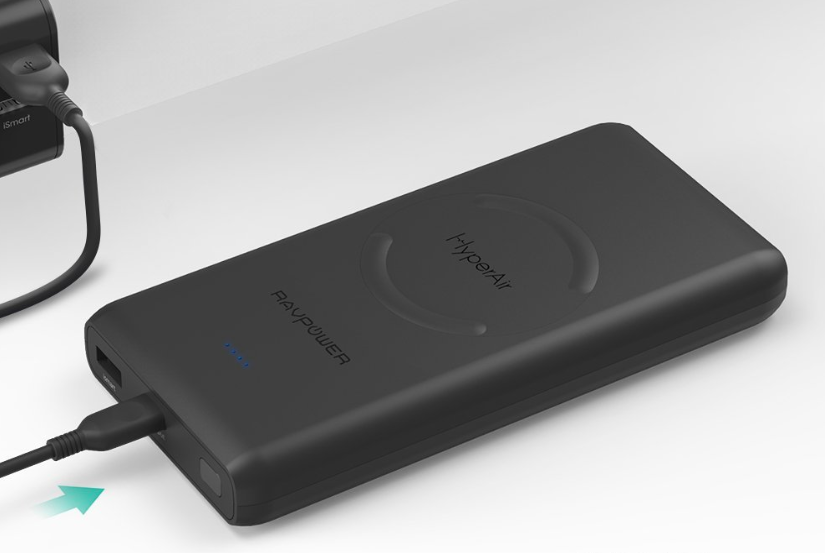
Powerbanks are a dime a dozen these days, but RavPower is making some of the cleverest ones out there. It’s tough to narrow them all down, but this one lands on my list for its inclusion of a Qi charging pad that lets users wirelessly charge compatible handsets on top of the brick.

Keep in mind, some airlines and airports are limiting the size of batteries that can be stowed in a bag, so if the person you’re buying for is a frequent visitor to, say, China, double-check the limits — though this 10400mAh battery should be fine in most cases.

Price: $50
Available from: Amazon


Timbuk2 Never Check Expandable Backpack
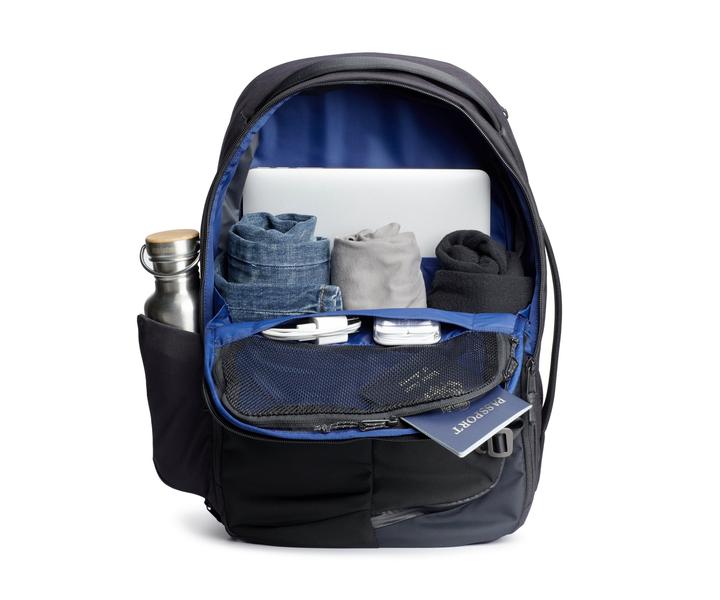
I always thought I’d outgrow backpacks, but aside from a brief flirtation with the messenger bag in the aughts, I’m rarely seen without one. Of course, no two are the same, and if there’s a frequent traveler in your life, a solid backpack makes all the difference in the world.

Timbuk2 makes some truly terrific bags, and the Never Check certainly fits the bill. It has a spacious interior for clothes, shoes and anything else needed for an overnight trip, while maintaining a small enough footprint to be stashed in an overhead bin or under the seat in front of you.

Price: $200
Available from: Timbuk2


Twelve South AirFly
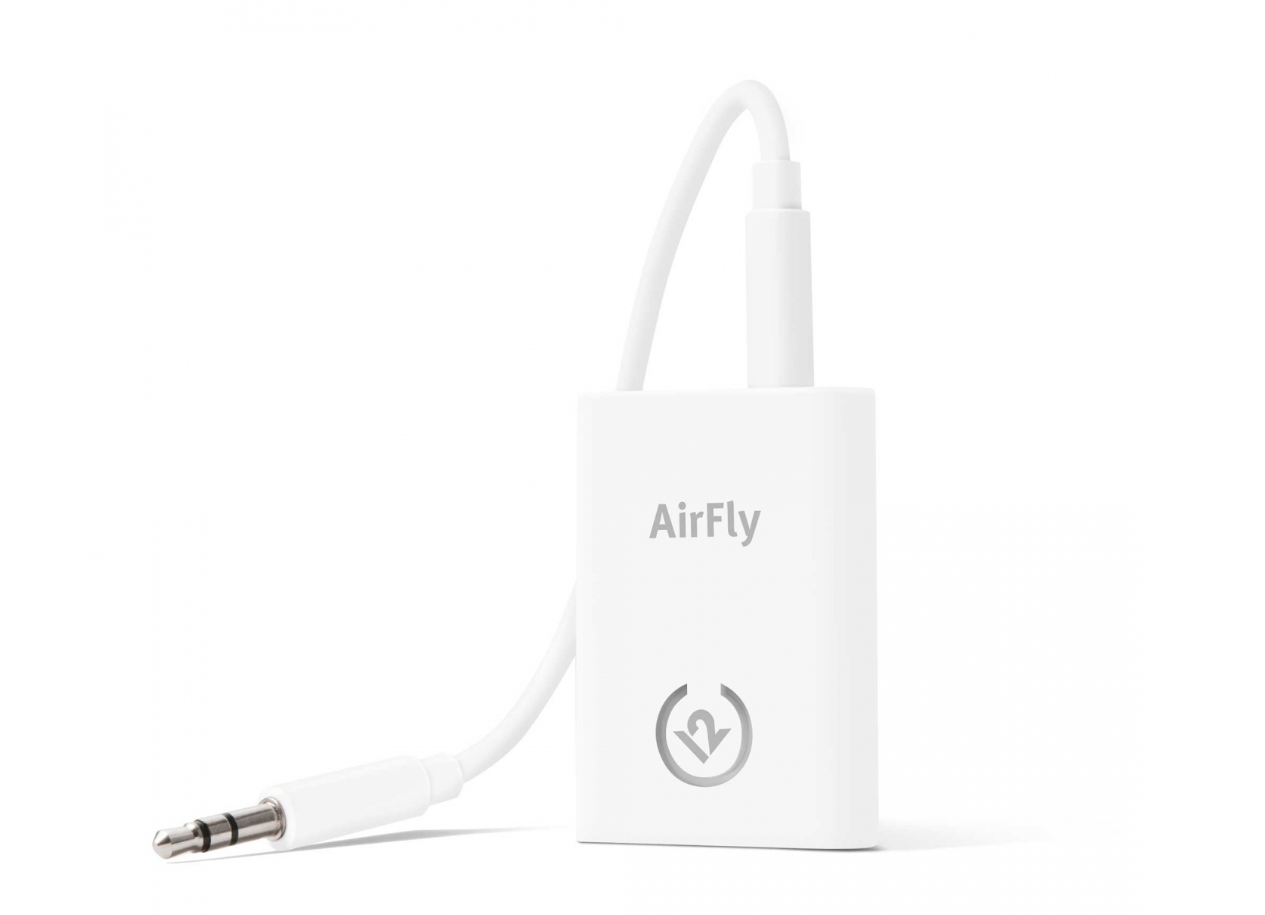
This is one of those travel concerns that doesn’t really dawn on you until you’re face to face with it. Love your Bluetooth earbuds? Great. But good luck listening to the movie on your flight. Twelve South, in all of its infinite wisdom, has designed a small wireless transmitter that plugs into headphone jacks, so you can use your go-to headphones with the seat-back entertainment system. Turns out it also comes in handy for the TVs at the hotel gym.

The biggest downside here is pricing — $30 doesn’t seem like much, but you can grab a pair of wired headphones for pretty cheap these days.

Price: $30
Available from: Amazon

TechCrunch Gift Guide 2018 banner


14 Nov 2018

iBanFirst raises $17 million to help companies move money around the world

French startup iBanFirst is raising another $17 million (€15 million) from Serena Capital and Breega Capital, with existing investor Xavier Niel putting in more money, as well.

iBanFirst solves a very specific problem. If you operate a company that works with suppliers all over the world, chances are you waste a ton of money exchanging and sending money. iBanFirst wants to make currency conversion as easy as transferring money from your savings account to your current account.

You first send money from your corporate bank account to your iBanFirst account. You can then convert and hold money in 28 currencies. iBanFirst shows you the interbank exchange rate and how many fees you’ll pay. But you’ll likely pay way less than using your traditional bank account.

With 100 employees and 2,000 clients, iBanFirst now focuses on clients who transfer at least €100,000 per year. “We’ve already done a €50 million transfer,” iBanFirst founder and CEO Pierre-Antoine Dusoulier told me.

After that, you can send money to a client, a supplier, a partner, etc. It’ll look like a local transfer and you’ll save money on fees.

Many companies already do that. But iBanFirst goes one step further by giving you banking information for each currency. If you’re an iBanFirst customer, you can share a Turkish IBAN, an American account number or Chinese banking details. It’s easier to get paid from all your clients.

With your French IBAN, the startup is doing something special. “We realized that some IBANs had a letter here and there,” Dusoulier said. “We called SWIFT, and they told us that we could put whatever we wanted for 10 characters.”

iBanFirst took advantage of that to create a sort of domain names for IBANs. If you want, you can put your company name in your banking information.

The company wants to add more currencies and more features. Thanks to the upcoming European regulation, you could imagine connecting to your regular corporate account from the iBanFirst interface to initiate a transfer. That would be much more straightforward than transferring money to iBanFirst before using it.

14 Nov 2018

No display for your Mac Mini? No problem.

Astropad’s Luna Display isn’t just for your MacBook. It turns out that you can take advantage of that tiny little red dongle to turn your iPad into your one and only Mac Mini display.

The Luna Display was designed to extend your laptop display. Many desktop users who travel tend to feel limited with a 13-inch or 15-inch display. That’s why the Luna Display turns any iPad into a second monitor. It works wirelessly and pretty well.

But the team behind the device tried a fun experiment. Many Mac Mini users tend to use the Mac Mini as a headless server. It sits below your TV, near your router or in a closet. In that case, there’s no display connected to your Mac Mini.

You can control it using screen sharing or a VNC client. And, of course, you can also enable SSH access to control it using the command line or even an SSH app on your phone.

But it also works as expected with the Luna Display. After plugging the dongle into a Thunderbolt 3 port, you can launch the Luna app on your iPad and see what’s happening on your Mac. If your Mac Mini is connected to a Bluetooth keyboard and mouse, you’ll see your actions on the screen.

And because Luna’s dongle works over Wi-Fi, you can even control your Mac Mini from your couch. It’ll feel like you’re running macOS on an iPad. The Luna adapter was first released on Kickstarter and is now available for $80.

This isn’t the ideal setup if you plan to use your Mac Mini for multiple hours per day. But if you just need to quickly fix something, that could be enough.