Year: 2018

13 Nov 2018

Why the future of Chinese e-commerce is in its rural areas

China announced a mere 6.7 percent economic growth in July 2018, the lowest growth rate since 2016. Despite a slowdown in overall economic growth, Chinese e-commerce has only increased, accounting for 40 percent of all worldwide e-commerce today, compared to a mere 20 percent of the global retail market just three years ago.

The fast-paced growth of the e-commerce sector in China can be seen through rapidly expanding companies such as Pinduoduo, which went through a $1.5 billion U.S. IPO in mid-July. However, why has e-commerce continued to grow despite an overall economic slowdown in conjunction with urban market saturation? The answer to this question lies in China’s rural areas, with its untouched older demographic, potential for infrastructure development and government-backed initiatives.

An untouched older demographic primed for growth

The older demographic of China’s population, typically living in the Western rural areas of China, presents immense growth potential for e-commerce retailers, with the 60+ demographic numbering 241 million, representing nearly 20 percent of China’s total population.

With comparatively newer exposure to technology compared to younger urbanites, this older generation presents an untouched income stream for e-commerce. Chinese retailers have only recently begun to recognize this fact to shape their marketing initiatives accordingly, with companies such as Alibaba introducing this year a Taobao shopping app specifically designed to cater to those 50 and older.

In fact, a huge catalyst for Pinduoduo’s success is its popularity with users in this demographic, playing on social factors to promote use by older customers. However, additional user education and more elder-specific initiatives must be introduced to fully tap into this older demographic.

Infrastructure development for e-commerce

Lack of technological development in rural Chinese areas is another reason why e-commerce has not yet reached its full potential. Rural Western-based users make up a meager 27 percent of all internet users in China, with the vast majority of infrastructure developments being focused on China’s Eastern seaboard.

China’s e-commerce companies have begun to recognize the rural sector as having the largest potential for prosperity.

Lack of cellular infrastructure development runs in parallel with a similarly dismal rural logistics network, making it difficult to order and deliver e-commerce goods in the region. To counter this problem, JD.com received approval earlier this year from China’s Civil Aviation Administration to test a drone delivery network in the northwest Shaanxi province, with an aim to build more than 10,000 drone airports in the future, with a specific 185 being dedicated to deliver goods in the mountainous Sichuan region.

These developments are indicative of e-commerce companies recognizing the deficiencies in connecting rural consumers to the ability to purchase goods online, with potential for growth being huge in the next coming years.

Governmental backing and countryside rejuvenation

The Chinese government is also encouraging growth in the countryside, with this growth providing the opportunity for e-commerce to flourish accordingly.

The National Strategic Plan for Rural Vitalization from 2018 to 2022 aims to boost rural incomes and living standards, closing a widening wealth gap and boosting a slowing economy. Other government initiatives subsidize rural manufacturingrural drone development and much more. With this government backing, some in China are moving back to the countryside, with these initiatives developing jobs that re-attract former rural-to-urban migrants.

These returning migrants help spread the influence of e-commerce in rural areas through their familiarity with such platforms from their time in Chinese cities, thus increasing demand in these regions. Government initiatives to increase wealth in rural areas, whether through job creation or through regulated programmed development, help to grow e-commerce in China’s countryside by providing rural households with increased disposable income.

Simply put, rural China has not yet experienced the growth of e-commerce that has become so familiar to many urban Chinese. China’s e-commerce companies have begun to recognize the rural sector as having the largest potential for prosperity, with an older and newly online population, desperately needed infrastructure and logistical development, as well as with government-backing.

China’s rural areas present huge growth potential for e-commerce in the near-future, and represent one of the last untapped market areas for Chinese companies.
13 Nov 2018

Metacert’ Cryptonite can catch phishing links in your email

Metacert, founded by Paul Walsh, originally began as a way to watch chat rooms for fake Ethereum scams. Walsh, who was an early experimenter in cryptocurrencies, grew frustrated when he saw hackers dumping fake links into chat rooms, resulting in users regularly losing cash to scammers.

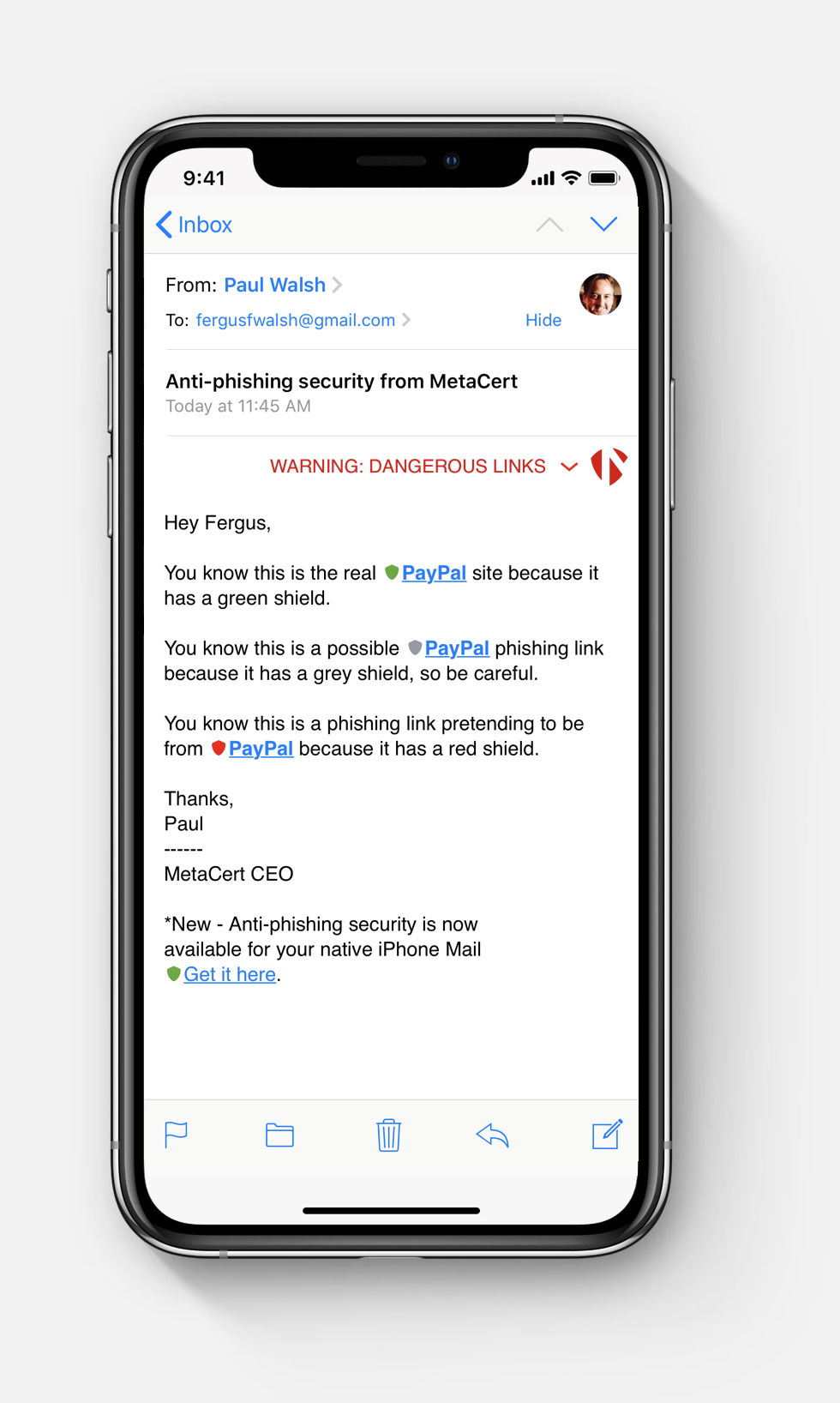
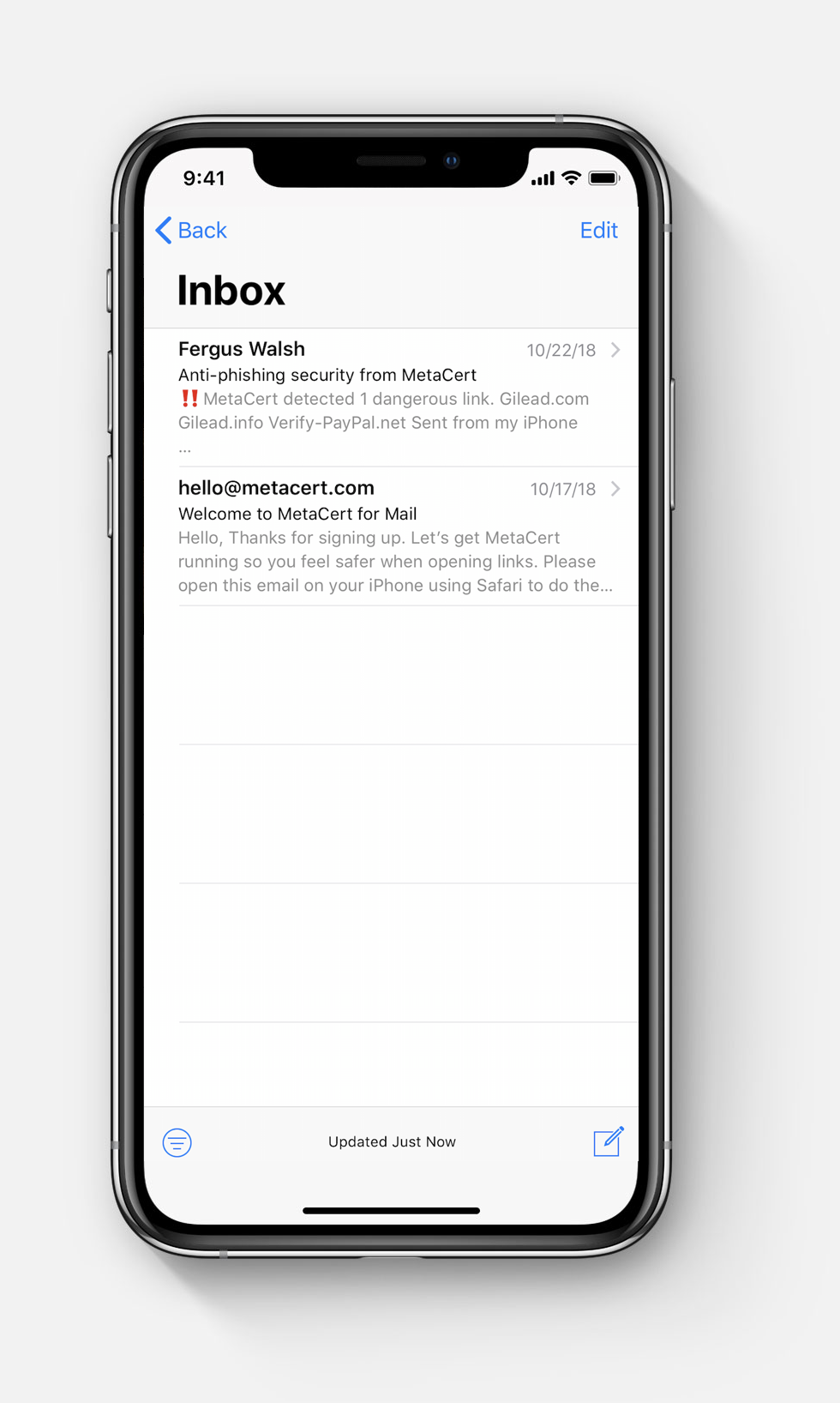
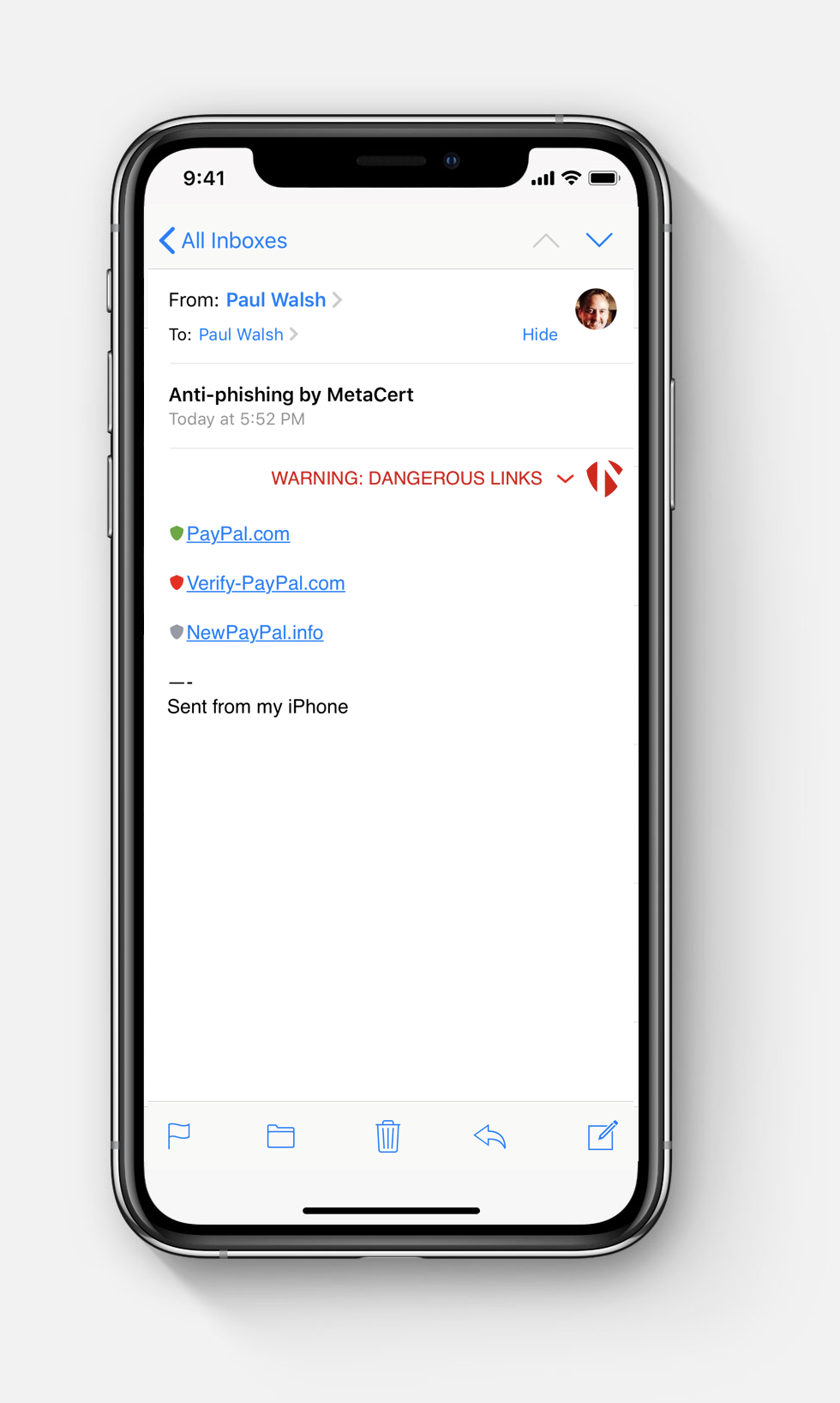
Now Walsh has expanded his software to email. A new product built for email will show little green or red shields next to links, confirming that a link is what it appears to be. A fake link would appear red while a real PayPal link, say, would appear green. The plugin works with Apple’s Mail app on the iPhone and is called Cryptonite.

“The system utilizes the MetaCert Protocol infrastructure/registry,” said Walsh. “It contains 10 billion classified URLs. This is at the core of all of MetaCert’s products and services. It’s a single API that’s used to protect over 1 million crypto people on Telegram via a security bot and it’s the same API that powers the integration that turned off phishing for the crypto world in 2017. Even when links are shortened? MetaCert unfurls them until it finds the real destination site, and then checks the Protocol to see if it’s verified, unknown or classified as phishing. It does all this in less that 300ms.”

Walsh is also working on a system to scan for Fake News in the wild using a similar technology to his anti-phishing solution. The company is raising currently and is working on a utility token.

Walsh sees his first customers as enterprise and expects IT shops to implement the software to show employees which links are allowed, i.e. company or partner links, and which ones are bad.

“It’s likely we will approach this top down and bottom up, which is unusual for enterprise security solutions. But ours is an enterprise service that anyone can install on their phone in less than a minute,” he said. “SMEs isn’t typically a target market for email security companies but we believe we can address this massive market with a solution that’s not scary to setup and expensive to support. More research is required though, to see if our hypothesis is right.”

“With MetaCert’s security, training is reduced to a single sentence ‘if it doesn’t have a green shield, assume it’s not safe,” said Walsh.

13 Nov 2018

Senators urge FTC to look into shady ad practices in apps for kids

For us jaded adults, the long-running trend towards making apps and games free to download but stuffing them with paid options is just an annoyance or perhaps a logical progression of the business model. But kids haven’t developed our cynicism and wariness of manipulation — and they’re getting targeted nevertheless. Several Senators have asked the FTC to look into the ugly practice of monetizing kids’ apps.

“We write regarding the manipulative marketing practices by apps designed for children,” write Senators Ed Markey (D-MA), Tom Udall (D-NM), and Richard Blumenthal (D-CT) in their letter (PDF). “Children should be able to entertain themselves and play without being bombarded by promotional messages, which young people may not be able to accurately assess and identify as marketing.”

The letter comes in the wake of a study released last month that found that some 9 out of 10 apps and games aimed at kids contained advertising. Educational, free, paid, didn’t matter — ads in some form or another were everywhere.

This should surprise exactly no one; It isn’t exactly a new problem. For one thing, we’ve been hearing about kids buying in-game currencies like crystals and Smurfberries for years — so often that app store providers have had to take serious action against it.

For another, kids today (like kids of yesterday) are already swimming in advertising and to some it may seem strange to single out a smartphone game when YouTube, traditional TV, and other forms of media are rife with marketing laser-focused on the valuable minor market.

But of course just because we’ve encountered it before doesn’t mean we’ve solved it. And what the Senators are saying is that especially in the case of kids’ apps, these practices we have in many ways gotten used to may qualify as “unfair and deceptive” under the FTC’s definitions, and as such warrant investigation:

The report includes evidence of children’s games disguising advertisements and making advertisements integral to games themselves; games using characters to coerce children into making in-app purchases; children’s apps being marketed as ‘free,’ when those apps actually require additional spending in order to play; and children’s apps marketing themselves as educational, when they are in fact saturated with advertising.

Any action by the FTC, should it opt to look into this, would take quite a while to come to fruition. However, a public letter such as this is no doubt intended as a warning in itself to those employing shady tactics. Perhaps they’ll heed it before the FTC forces them to.

13 Nov 2018

Lime is debuting its line of shareable vehicles in Seattle this week

Lime, the well-funded startup known for its fleet of brightly colored dockless bicycles and electric scooters, has a new way for its customers to get around: cars.

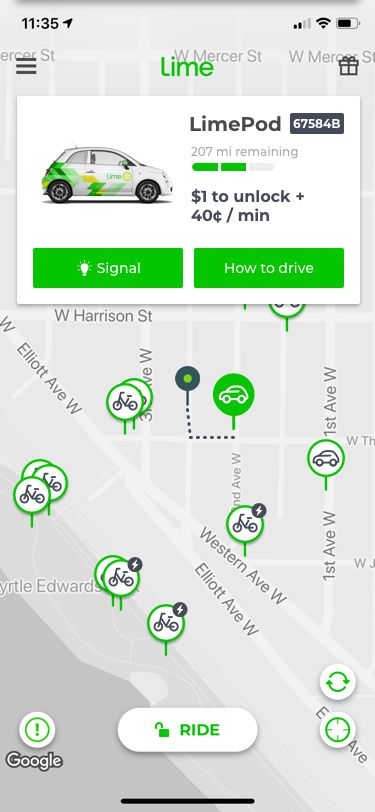
Beginning this week, Lime users in Seattle will be able to reserve a “LimePod,” a Lime-branded 2018 Fiat 500, within the Lime mobile app. There will be 50 cars available to start as part of the company’s initial rollout. Lime plans to increase that number at the end of the month.

“LimePods, Lime’s car-sharing product line, a convenient, affordable, weather-resistant mobility solution for communities,” a spokesperson for Lime said in a statement provided to TechCrunch. “The ease of use of finding, unlocking, and paying for cars will be consistent with how riders use Lime scooters and e-bikes today.”

Lime will roll out 50 “LimePods” in Seattle this week.

Rides in the LimePod will cost $1 to unlock the car and 40 cents per minute of use. The company plans to unleash additional shareable cars in California early next year. Its scooters and e-bikes, for reference, are $1 to unlock and 15 cents per minute and regular pedal bikes are $1 to unlock and 5 cents per minute.

Founded in 2017 by Berkeley graduates Toby Sun and Brad Bao, the startup has raised a total of $467 million to date from GV, Andreessen Horowitz, IVP, Section 32, GGV Capital and more. Reports indicate that Lime is on the fundraising circuit now, targeting a $3 billion valuation, or nearly 3x its latest valuation.

LimePods will be available to order in the Lime mobile app.

The company is expanding rapidly, most recently releasing a fleet of e-scooters and bikes in Australia, as well as making notable hires on what seems like a weekly basis. In the last month, Lime has tapped Joe Kraus, a general partner at Alphabet’s venture arm GV and an existing member of the startup’s board of directors, as its first chief operating officer. Before that, it brought on Uber’s former chief business officer David Richter as its first-ever chief business officer and interim chief financial officer.

In July, the company hired Peter Dempster from ReachNow to lead the LimePod initiative out of Seattle.

13 Nov 2018

Juul Labs reveals its plan to combat underage vape use

Juul will be removing non-tobacco flavored pods from all stores, including convenience stores and vape shops, according to a new plan the company released today.

This comes exactly 60 days after the FDA demanded a more comprehensive plan from big e-cig makers to deal with the growing problem of underage use of these products.

Juul’s plan is slightly more aggressive than the plan reportedly outlined by the FDA, which demands that all non-tobacco flavored products be removed from convenience stores but allows them to remain on sale at specialty stores like vape shops.

Juul currently sells eight different flavors of pods. Pods that don’t come in existing tobacco flavors — Virginia Tobacco, Classic Tobacco, Mint and Menthol — will be removed from all stores effective immediately. In other words, the only place to buy Creme, Fruit, Cucumber and Mango (Juul’s most popular flavor) is on the Juul website.

There, the company verifies that customers are 21+ by either cross-referencing information, such as DOB and the last four digits of a Social Security number, with publicly available data, or asking users to upload a scan of their driver’s license.

Once the FDA has evaluated the situation, Juul will reconsider putting flavors on sale at shops under the condition that those shops follow Juul’s new 21+ restricted distribution policy. That policy includes investing in technology that designates flavored Juul pods as restricted within their inventory system. Once restricted, clerks must scan IDs to both ensure the purchaser is over 21 and log that purchase into the system to track bulk purchases.

For now, however, non-tobacco flavored Juul pods will only be available on the Juul website.

The more than 90,000 retail stores carrying tobacco-flavored Juul pods and devices will soon be subject to heightened scrutiny, according to Juul’s plan. The company is increasing its secret shopper program from 500 visits/month to roughly 2,000/month, as well as imposing financial consequences on those retailers that are caught by the FDA selling to minors or allowing bulk sales.

But offline purchases are just one part of the underage use problem. Minors have also had the ability to purchase Juul devices and pods on third-party e-commerce sites like eBay, Alibaba and Amazon, with more than 23,000 listings of Juul products or counterfeits already taken down by Juul and regulators. Juul will continue to work with these retailers to take down the listings.

Finally, Juul Labs is rethinking its social media policy. The company plans to take down its Instagram and Facebook channels entirely, and limit its Twitter channel to non-promotional information like news and customer service updates. Juul’s YouTube channel will also remain up, but will only feature testimonial videos from real-life former smokers. Both YouTube and Twitter will require users to be 21+ before engaging with the channel.

Critics have pointed to a 2015 campaign from Juul that featured models between the ages of 24 and 37 as one of the contributing factors for the rise in underage use of Juul products. This criticism has caused Juul to rethink the way it handles social media in general.

Last year, the company switched its policy to only use models over the age of 35 on social media, and in June, Juul went a step further, allowing only former smokers over the age of 28 to be featured on its social media channels.

One of the most interesting pieces of this ongoing debate is the FDA’s moratorium on new products. Essentially, any device that wasn’t already on the market as of August 2016 must go through the entire regulatory process for FDA approval. But because Electronic Nicotine Delivery Systems are a new product category, the fine print of the regulatory process for these devices is still being ironed out.

Despite the moratorium, Juul Labs has still continued working on a next-generation Juul that would include Bluetooth connectivity. The company has plans to release the new product in markets outside of the U.S., but also plans to work alongside the FDA to find a regulatory pathway to selling the device within the States.

Why does this matter? For one, a Bluetooth-enabled Juul could become a strong technical barrier to underage use of the product. Once the Juul is paired with a smartphone, it could geofence schools and other areas where kids congregate to be a no-vape zone. It could even force age verification through the phone so that the Juul only works when the right TouchID profile has activated the device via iPhone. Provided, of course, that Juul finds a way to make that connection and the protections tamper-proof.

Juul’s co-founder and chief product officer spoke a little bit about the next-gen device at Disrupt SF this year, outlining the ways it could help users ween themselves off nicotine. But clearly there is the potential for technology to also solve the problem of underage use. Unfortunately, it’s a problem that needs an immediate resolution, and regulatory approval of a new device is anything but immediate.

13 Nov 2018

DeepMind hands off role as health app provider to parent Google

DeepMind’s recent foray into providing software as a service to U.K. hospitals has reached the end of its run.

The Google -owned AI division has just announced it will be stepping back from providing a clinical alerts and task management healthcare app to focus on research — handing off the team doing the day to day delivery of the Streams to its parent, Google. 

Announcing the move in a blog post entitled “Scaling Streams with Google,” DeepMind’s co-founders write: “Our vision is for Streams to now become an AI-powered assistant for nurses and doctors everywhere — combining the best algorithms with intuitive design, all backed up by rigorous evidence. The team working within Google, alongside brilliant colleagues from across the organisation, will help make this vision a reality.”

DeepMind’s 2015 plunge into the health apps space always looked like a curious departure for an AI specialist because — despite the above quote — the Streams app does not use any AI.

Rather, it uses a National Health Service algorithm. The design of the app was also outsourced to a U.K.-based app studio.

Yet DeepMind began its foray into health with grand ambitions about applying AI to patient data, quietly inking an expansive data-sharing arrangement plus memorandum of understanding with an NHS Trust to get access to millions of patients’ full (and fully identifiable) medical records, as we reported at the time.

It also made a 2015 ethics application with the NHS’ Health Research Authority to apply AI to the patient data. Though it later said it quickly realized that clinicians’ “most urgent problems” were rather more fundamental than a pressing need to rush into experiments with AI. (And DeepMind has always maintained that the patient data it obtained under its arrangement with the Royal Free NHS Trust, with whom the Streams app was co-developed, was never used for AI.)

The Streams project ran into major controversy in May 2016 when fuller details emerged about the scope and terms of the data-sharing underpinning the app — and questions started being asked about data governance due process, legal bases for data-sharing and Google’s role and potential interest in people’s medical records.

After a year, the initial data-sharing arrangement between DeepMind and the Royal Free was scraped and replaced with a tighter contract.

Then last year the U.K.’s data protection watchdog ruled the first arrangement had breached U.K. law — with the information commissioner saying patients “would not have reasonably expected” their sensitive medical records to be used for developing an app.

Although by then the Streams app had already been deployed into Royal Free hospitals. And DeepMind had inked a few more deals with NHS Trusts to use the app.

It also emerged that DeepMind was providing Streams to Trusts essentially free of charge for the first five years. And a panel of external reviewers engaged by DeepMind with the aim of boosting trust warned in their annual review earlier this year of the risk of it “exert[ing] excessive monopoly power” as a result of a data access and streaming infrastructure that it bundles with the Streams app.

The whole episode opened a Pandora’s box of data governance, privacy and trust issues — which DeepMind now appears to be dumping directly onto Google, which will now be fully in the frame as the health app provider (and patient data handler) behind Streams.

“The Streams team will remain in London, under the leadership of former NHS surgeon and researcher Dr Dominic King,” write the DeepMind co-founders now. “We’re fully committed to all our NHS partners, and to delivering on our current projects and more. We’ll be working closely with them as we plan for the team’s transition, and information governance and safety remain our top priorities. Patient data remains under our partners’ strict control, and all decisions about its use will continue to lie with them.”

They add that DeepMind’s role from here on in will be focused on research, rather than software as a service, saying: “As a research organisation, DeepMind will continue to work on fundamental health research with partners in academia, the NHS and beyond. When we have promising results that could have impact at scale, we’ll work closely with the Streams and translational research teams at Google on how to implement research ideas into clinical settings.”

So provision of any health AIs that DeepMind develops in the future will be left to Google to deploy and scale. (And on the scale front Google might be feeling buoyed by the U.K.’s new minister for health being very pro-app.)

As will the task of winning patient trust — which may well prove the biggest challenge here.

The trust issue was also flagged by DeepMind’s independent reviewers last year, when they wrote in their annual report: “As far as we can ascertain, DMH [DeepMind Health] does not share its data with Google, yet the public perception that this might be the case, now or in the future, will be difficult to overcome and has the potential to delay or undermine work that could be of great potential benefit to patients.”

It’s not clear whether Google will engage a panel of independent reviewers to oversee its provision of Streams going forward, as DeepMind had. We’ve asked the company to confirm its intention vis-à-vis oversight.

13 Nov 2018

Tesla, GM and Nissan are all part of a new coalition aiming to extend the EV tax credit

Tesla, GM and Nissan are among a group of 15 companies that launched a new coalition aimed at reforming the electric vehicle tax credit.

The group, called EV Drive Coalition, brings together a mix of automakers, industry giant ABB, climate change and energy lobbying organizations and EV infrastructure companies, including ChargePoint.

The coalition, which officially launched Tuesday, wants to pass legislation that would tweak the federal electric vehicle tax credit to “ensure that it works better for more consumers for a longer time frame and spurs increased growth of the U.S. EV market.”

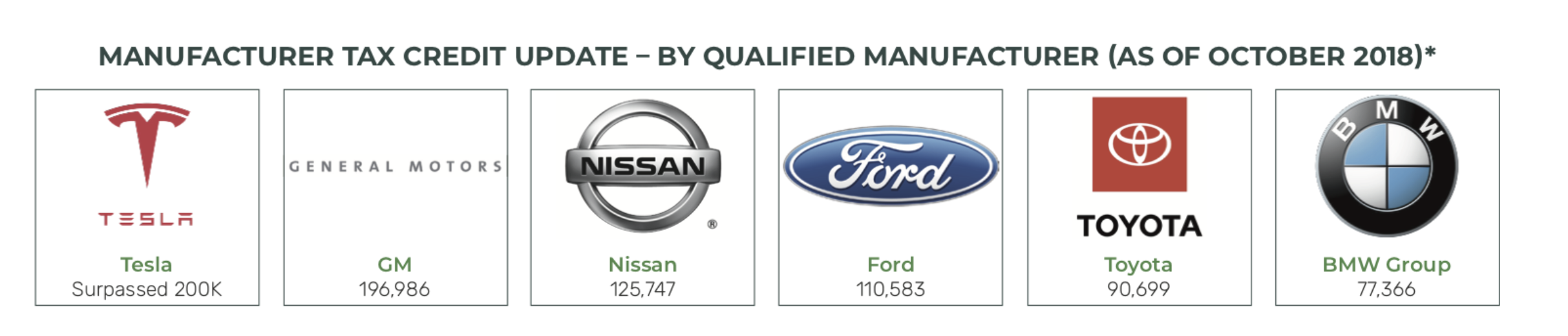
The federal electric vehicle tax credit gives consumers a $7,500 credit when they buy an all-electric vehicle. The incentive has been credited with spurring adoption of EVs. However, once an automaker has sold 200,000 electric vehicles, the credit begins to wind down.

Tesla is already in this position and GM is closing in. Earlier this year, the electric automaker delivered its 200,000th electric vehicle. The achievement activated a countdown for the $7,500 federal tax credit offered to consumers who buy new electric vehicles. Under these rules, Tesla customers must take delivery of their new Model S, Model X or Model 3 by December 31 to get the full credit.

Tesla vehicles delivered between January 1 and June 30, 2019, will get a reduced $3,750 federal tax credit. After that, the credit drops to $1,875 before ending altogether. As of October, GM has sold nearly 197,000 electric vehicles.
Tesla GM electric vehicle tax credit

The EV Drive Coalition wants to lift the current cap on the number of consumers who can take advantage of the credit through each manufacturer.

“Arbitrary constraints with the federal credit limit consumer options and make it harder for consumers to purchase the cars they want,” Joel Levin, executive director of Plug In America said in a statement. “Lifting the cap would create a more level playing field for all manufacturers, giving consumers the freedom to decide which car they want in a free and fair market. Increased competition spurs more American innovation and technology.”

The coalition says it supports the eventual phase-out of the credit once the EV industry has had additional time to mature and grow.

13 Nov 2018

Facebook takes on LinkedIn as a career portal with e-learning, expanded mentorship and jobs features

Over the last year or so, Facebook has slowly been encroaching on LinkedIn’s territory as the go-to platform for people who want to leverage their networks of contacts to expand their career prospects with the launch of a way for people to connect with each other in mentoring relationships, and to look for jobs. Now, with one million jobs now secured through the social network, Facebook today took the next step in that strategy: it has launched a new education portal, Learn with Facebook; and it is expanding features for two services it had already launched that are adjacent to that, Mentorships and Jobs.

Mentorships will now be opened up for users to make their own matches; and those posting Jobs will now be able to post them in Groups whee they are members.

Together, today’s news is a strong signal of how Facebook is continuing to work on ways of diversifying its platform and the reasons that people come to use it. Last quarter, the company saw its user growth globally to creep to below two percent globally, stagnate in the US/Canada, and decline in Europe, as the company continues to roil from bad press over the social network’s role in helping to sway elections, disseminate ‘fake news’, and in sharing user data either through breaches or the general course of business.

In that context, building new applications and services that create new reasons for engagement and using the platform makes some sense.

All the same, these are still baby steps for the social network.

[gallery ids="1746082,1746083,1746084"]

Learn with Facebook will kick off with just 13 “modules”, each lasting under 10 minutes and largely geared at the kind of professional development that would be useful for someone who uses Facebook for work, or might start using Facebook to find a job. They are introductory sessions around topics like discovering social media marketing, digital storytelling, and how to boost your resume and ace your interview.

Fatima Saliu, head of policy marketing at Facebook, says that the aim is to get the ball rolling but that the ambitions of how Facebook hopes to develop the product longer-term are more ambitious.

“This is the foundation and the beginning,” she said, noting that Facebook is creating partnerships with third parties for those who might want to continue learning more skills, for example working with Goodwill Industries International to promote the new learning portal, and a number of partnerships with community colleges that it has forged in the last several months. (13 of these have been announced so far.) All of this is part of the company’s bigger mission to train 1 million people and small businesses in the US in digital skills by 2020.

Longer term, she said, “We do intend to build out the content to make sure we are evolving with market economy and job skills.” That will include potentially making acquisitions of other e-learning sites, she noted, as well as forging partnerships to bring in more content. As a point of reference, LinkedIn last week said it has around 13,000 courses on its site now — largely by way of its acquisition of Lynda.com — and it has partnered with several third parties to start integrating their content into the platform. Facebook for now charges nothing, while LinkedIn has an extensive premium paid model for its services.

Mentorships, which officially launched three months ago, are getting a smaller expansion: previously Group administrators had to get involved in first activating the option for mentorships in their Groups, and then to actively match mentors and mentees to each other. Now, that step can be taken by the interested parties.

Sean O’Reilly, the engineering manager at Facebook who has built the mentorship feature, said that the reason for the change was admins were finding it too much of a burden to get involved in the mentorship. “The biggest feedback we’ve had is that it’s a lot of work for admins especially in professional development, since most have full-time jobs themselves.”

So now, those who opt to look for a mentor, or offer themselves up as a mentor, will be able to streamline their choices based on their parameters of interest, and Facebook will give those users lists from which to choose. For now, this won’t be suggested automatically, but given the algorithms that Facebook has built for social interactions, I wouldn’t be surprised if that was a future step.

More interestingly, for now as with the e-learning, mentorships will continue to be a free service, although as Facebook continues to bring in more verticals that it targets — from giving advice about life, to giving advice about careers, to perhaps giving paid advice — this, too, might be something that it will revisit. There are, after all, life coaches who offer advice for a fee already, and they already market themselves on Facebook so it would make sense for Facebook to at some point start to facilitate that transaction itself.

In the meantime, any professional offerings will continue to remain in the domain of Jobs on the site. These, too, are getting an update today, where Facebook will now allow people to post jobs in Groups — not just on the Jobs page or in their newsfeeds. For now, these will only go in Groups where people are already members, although over time, it’s likely that this too will start to get opened up and paired to wherever that job might be most relevant. Today, you can already start to see job suggestions alongside the Learn with Facebook content, the company said.

13 Nov 2018

Canonical’s Mark Shuttleworth says he has no plans to sell anytime soon

After IBM announced its plans to acquire Red Hat for $34 billion, pundits quickly started speculating about when Red Hat competitors like Suse and Canonical would sell, as well. Canonical founder Mark Shuttleworth, though, doesn’t seem to have any interest in selling — at least for the time being.

“I value my independence,” he told me during a brief chat on the outskirts of the OpenStack Summit in Berlin today. In part, that’s because he simply doesn’t personally need the money but also because he’d like to see through to the end his vision for Canonical and Ubuntu .

When he sold Thawte Consulting to Verisign for $575 million in 1999, people asked him if he was about to go on a lifelong vacation. And while he used some of that money to become the second space tourist (and fund his philanthropic foundation), he clearly has no interest in that.

Still, he allowed for one circumstance that would get him to sell: if it allowed him to accelerate his vision for Canonical.

But everything has a price, and while Shuttleworth may not need the money, a sale would surely represent a worthwhile monetary reward for many a Canonical employee.

It’s no secret that Shuttleworth would rather like to see Canonical to IPO, though. Earlier this year, he told me that this is still in the works, but it needs to hit the right numbers to get that. The company’s recent moves to re-focus on the enterprise, which included shutting down a number of projects like the Ubuntu Phone and Unity desktop that weren’t directly focused on that, seems to be paying off, so an IPO remains a viable option.

We’ll have a more formal sit-down interview with Shuttleworth later this week, so keep your eyes open for that.

13 Nov 2018

Zendesk shifts to platform play with Zendesk Sunshine launch

Zendesk has always been strongly focused on customer service in the cloud. They began to look at this more broadly in September when they purchased Base to move into sales automation and CRM. Today, the company announced Zendesk Sunshine, a new platform for creating customer-focused applications on top of Zendesk’s toolset.

All of this appears to be with an eye toward shifting Zendesk from its core customer service mission to a broader customer management business. Mikkel Svane, founder and CEO at Zendesk, says Sunshine is about moving his company toward a platform play, something that many cloud companies have aspired to. “Sunshine is a platform for building your own apps, and also for managing and storing and connecting all your customer data,” Svane told TechCrunch.

For starters, Zendesk is partnering with AWS to act as the infrastructure services backend for the applications built on the Sunshine platform. “You can build apps on top of Sunshine, typically customer experience or customer relationship apps, and it’s built natively on AWS, so that you have access to all the AWS services. And of course, all of the applications rely on the Sunshine platform for information sharing, etc,” he explained.

He says they deliberately chose the public cloud because they believe that is where developers want to operate today. “We believe that businesses and developers should take advantage of the public cloud paradigms and use frameworks such as Sunshine to build these applications,” he said.

Svane says for starters, this approach is aimed at helping Zendesk customers build applications to take advantage of the data they are collecting inside of Zendesk as a natural byproduct of doing work with the service, but over time independent developers could begin working on the platform too.

He sees today’s announcement as a first step toward expanding the company’s set of products and services, and it’s something they plan to build on in the coming years. “You’re going to see a lot more on our roadmap over the next couple of years to truly embrace our platform mission and our ultimate goal is to be a ubiquitous CRM platform where anyone who wants to can build any kind of customer-facing application, and really benefit from the public cloud and from the Sunshine framework and have data flow seamlessly between services, vendors and applications,” he said.

We saw customer experience take center stage this week when SAP bought Qualtrics for $8 billion. Understanding the customer has clearly become increasingly important and Zendesk has access to a lot of customer data, which developers can take advantage of to build customized customer-centric applications. The only thing that’s truly surprising about this announcement is that Zendesk didn’t make a platform play sooner.

But perhaps as a more mature vendor, and with Base in the fold, they feel they are more prepared to make this type of move now than they were in the past. Whatever the reason, every enterprise cloud company worth its salt has tried to be a developer platform, and with today’s announcement, it’s Zendesk’s turn.