Year: 2018

11 Nov 2018

Nested, the online estate agent that makes home sellers ‘chain-free’, raises further £120M

Nested, the London-based “data-driven” estate agency that provides a cash advance to help you buy a new home before you’ve sold your old one, has raised a further £120 million in funding. The new round is a mixture of equity and debt: £20 million and £100 million, respectively. Leading the equity round is Northzone, and Balderton Capital, while the debt finance comes from an unnamed institutional investor.

It is noteworthy that Balderton has only just invested in Nested several rounds into the company’s existence, considering that the London-based venture capital firm typically invests earlier at Series A. Balderton is also a backer of GoCardless, the payments company previously co-founded by Nested founder Matt Robinson. That said, Balderton General Partner Tim Bunting did invest in Nested in a personal capacity very early on.

Launched in late 2016, Nested competes with high-end estate agents by providing all of the services needed to sell your house, but with a key difference. In addition to handling valuation, marketing and sales, the startup will loan you up to 95 per cent of the market value of your property as a cash advance, that way you’re able to purchase a new home prior to your old one selling. Before Brexit and the uncertainty it has caused with regards to London house prices, that figure was up to 97 percent of the market value of the property, and I understand Nested hopes to return to that percentage once things settle down.

More broadly, the idea behind Nested is to eliminate much of the stress and uncertainty of selling and buying a home, including what your final budget will be, and also ensure that you’re never caught up in the dreaded property ‘chain’ and miss out on your desired home, or are kept in limbo indefinitely waiting for your property to sell. By becoming a cash buyer, it also puts you in the strongest possible position to negotiate on your onward purchase. Robinson says this typically sees savings of 2-4 percent.

In return, Nested charges a fee from 2-4 per cent (plus VAT) depending on how soon you want to receive the advance, and takes a loss if it fails to sell the property for an amount above its initial advance. The idea is to incentivise the startup to always try to get you the genuine market price or more.

TechCrunch’s Steve O’Hear giving Nested’s Matt Robinson (pictured right) a hard time at Startup Grind London earlier this year.

Asked how well that is working out so far, Robinson tells me historical valuation accuracy is on average within 1.5 percent of what the company predicted. Better still, Nested is running at 100 percent accuracy for 2018 and is confident enough to make this data public.

“The traditional agents don’t even track it and the online players do their best to obscure the fact that they sell only roughly 4/10th of properties they take on i.e. most customers pay them £1,000 up-front to not sell their house and are left out-of-pocket!” says the Nested founder.

To date, Nested has helped over 400 home-owners, and, aside from increasing volume, including helping property owners outside of London, the company says it plans to further expand its product offering. The bulk of these new products will continue to target sellers to “radically improve the selling experience”. However, I understand that since sellers are buyers, too, future services could also include using Nested’s data, tech and expertise to help with the buying process as well.

Adds Robinson in a statement: “We’re excited to receive the backing from some of Europe’s top VCs who share our vision for fixing the age-old problem of buying and selling homes. We are building an incredible team to offer an unassailable service with the most progressive technology in the property industry. This investment will allow us to continue solving the problems that prevent people from moving home with ease”.

11 Nov 2018

Xbox One will work with keyboard and mouse as of November 14th, starting with Fortnite

We knew the Xbox One was set to get keyboard and mouse support eventually, but now we know exactly when: November 14th.

Don’t expect all Xbox One games to play friendly with the new keyboard/mouse functionality right out of the gate. It’s up to individual developers to figure out if/how it works with their games and patch things up accordingly, so only a handful will support it at first.

But one of the first titles picking up support is a big one: Fortnite, the free-to-play third person shooter that has taken over the world, will roll out support with an update later this week. As will Warframe, the free-to-play coop shooter.

Bomber Crew, Strange Brigade, Warhammer: Vermintide 2, War Thunder, X-Morph: Defense, and Deep Rock Galactic will get support later in November, while Children of Morta, Vigor, Warface, Wargroove, DayZ, Minion Masters, and Moonlighter have pledged to add support at some less specific point down the road.

10 Nov 2018

The top 10 cities for $100M VC rounds in 2018 so far

Crunchbase News recently profiled a selection of U.S. companies’ largest VC raised in 2018, and no surprise here: the 10 largest rounds all topped out well north of $100 million.

A major driver of global venture dollar growth is the relatively recent phenomenon of companies raising $100 million or more in a single venture round. We’ve called these nine and 10-figure deals, which shine brightly in the media and are hefty enough to bend the curve of VC fund sizes upwards, “supergiants” after their stellar counterparts.

And like stars, venture-backed companies tend to originate and co-exist in clusters, while the physical space between these groups is largely empty.

We noticed that many of the companies behind these supergiant rounds are headquartered in just a few metro areas around the United States. In this case, it’s mostly just the SF Bay Area, plus others scattered between Boston, Los Angeles, San Diego and one (Magic Leap) in the unfortunately named Plantation, Florida.

The San Francisco Bay Area is perhaps one of the best-known tech and startup hubs in the world. Places like Boston, NYC and Los Angeles, among others, are perhaps just as well-known. But how do these cities stack up as clusters for companies raising supergiant rounds?

Superclusters

That question got us wondering how these locales rank against other major metropolitan areas throughout the world. In the chart below, we’ve plotted the count of supergiant venture rounds1 topping out at $100 million or more through November 5. These numbers are based off of reported data in Crunchbase, exclude private equity rounds and do not account for deals that may have already been closed but haven’t been publicly announced yet.

Although U.S.-based companies have raised more supergiant rounds (168 year to date) than their Chinese counterparts (160 year to date), Chinese companies raise much bigger rounds, even at this supergiant size class.

How much more? U.S. companies have raised $38.4 billion, year to date, in nine and 10-figure venture rounds alone. Chinese companies have raised $69 billion across their 160 supergiant deals, which includes the largest-ever VC deal: a $14 billion Series C round raised by Ant Financial.

2018 in perspective

2018 is already a record year for venture funding worldwide. With more than $275 billion in projected total venture dollar volume so far, 2018’s year-to-date numbers have already eclipsed 2017’s full-year figures (a projected $220 billion, roughly) by more than $55 billion.2

And there’s still about eight weeks left to go before it’s New Year’s Eve.

  1. We use the same classification rules for what is and is not a “venture” round as we’ve used in our quarterly reports. Check out the methodology section of our most recent global VC report, from Q3 2018, to learn more about how Crunchbase News categorizes rounds.
  2. We’re referring to the same type of projected data we use in the quarterly reports. Check out the methodology section of our most recent global VC report, from Q3 2018, to learn more about how Crunchbase News uses projected and reported data.
10 Nov 2018

Growing pains at venture-backed Moogsoft lead to layoffs

Eight months after bringing in a $40 million Series D, Moogsoft‘s co-founder and chief executive officer Phil Tee confirmed to TechCrunch that the IT incident management startup had shed 18 percent of its workforce, or just over 30 employees.

The layoffs took place at the end of October; shortly after, Moogsoft announced two executive hires. Among the additions was Amer Deeba, who recently resigned from Qualys after the U.S. Securities and Exchange Commission charged him with insider trading.

Founded in 2012, San Francisco-based Moogsoft provides artificial intelligence for IT operations (AIOps) to help teams work more efficiently and avoid outages. The startup has raised $90 million in equity funding to date, garnering a $220 million valuation with its latest round, according to PitchBook. It’s backed by Goldman Sachs, Wing Venture Capital, Redpoint Ventures, Dell’s corporate venture capital arm, Singtel Innov8, Northgate Capital and others. Wing VC founder and long-time Accel managing partner Peter Wagner and Redpoint partner John Walecka are among the investors currently sitting on Moogsoft’s board of directors.

Tee, the founder of two public companies (Micromuse and Riversoft) admitted the layoffs affected several teams across the company. The cuts, however, are not a sign of a struggling business, he said, but rather a right of passage for a startup seeking venture scale.

“We are a classic VC-backed startup that has sort of grown up,” Tee told TechCrunch earlier today. “In pretty much every successful company, there is a point in time where there’s an adjustment in strategy … Unfortunately, when you do that, it becomes a question of do we have the right people?”

Moogsoft doubled revenue last year and added 50 Fortune 200 companies as customers, according to a statement announcing its latest capital infusion. Tee said he’s “extremely chipper” about the road ahead and the company’s recent C-suite hires.

Moogsoft’s newest hires, CFO Raman Kapur (left) and COO Amer Deeba (right).

Moogsoft announced its latest executive hires on November 2, only one week after completing the round of layoffs, a common strategy for companies looking to cast a shadow on less-than-stellar news, like major staff cuts. Those hires include former Splunk vice president of finance Raman Kapur as Moogsoft’s first-ever chief financial officer and Amer Deeba, a long-time Qualys executive, as its chief operating officer.

Deeba spent the last 17 years at Qualys, a publicly traded provider of cloud-based security and compliance solutions. In August, he resigned amid allegations of insider trading. The SEC announced its charges against Deeba on August 30, claiming he had notified his two brothers of Qualys’ missed revenue targets before the company publicly announced its financial results in the spring of 2015.

“Deeba informed his two brothers about the miss and contacted his brothers’ brokerage firm to coordinate the sale of all of his brothers’ Qualys stock,” the SEC wrote in a statement. “When Qualys publicly announced its financial results, it reported that it had missed its previously-announced first-quarter revenue guidance and that it was revising its full-year 2015 revenue guidance downward. On the same day, Deeba sent a message to one of his brothers saying, ‘We announced the bad news today.’ The next day, Qualys’s stock price dropped 25%. Although Deeba made no profits from his conduct, Deeba’s brothers collectively avoided losses of $581,170 by selling their Qualys stock.”

Under the terms of Deeba’s settlement, he is ineligible to serve as an officer or director of any SEC-reporting company for two years and has been ordered to pay a $581,170 penalty.

Tee, for his part, said there was never any admission of guilt from Deeba and that he’s already had a positive impact on Moogsoft.

“[Deeba] is a tremendously impressive individual and he has the full confidence of myself and the board,” Tee said.


10 Nov 2018

Can the startup building a Fortnite for VR become the Fortnite of VR?

Virtual reality hasn’t proven itself to be the lucrative escape of the every-man, but the medium has done a fairly good job enticing the gaming community and keeping that niche (mostly) happy. While a couple of big titles have gotten some halfway-decent ports to VR, for the most part VR users are confined to whatever indies can build or whatever Oculus can fund.

BigBox VR has been trying to capture attention in the space by not building solo adventures that lead users to find themselves, but instead by trying to match VR’s physicality and immersion with social gameplay that leads users to gain greater appreciation for the medium’s scale.

The company just closed a $5 million funding round led by Shasta Ventures with participation from GSR Ventures and Pioneer Square Labs Ventures. As part of the round, Shasta partner Jacob Mullins will be getting a seat on the board.

Venture cash for VR content hasn’t exactly been free-flowing in 2018, more so for startups that aren’t caught up in building out a “platform play.” Co-founders Chia Chin Lee and Gabe Brown are more interested in just building out titles and hopefully creating one so successful that they don’t have to stop evolving it. The team at BigBox VR got its start with a cartoonish shooter title called Smashbox Arena; the small team has been really interested in finding what VR enables when it comes to competitive online play.

The BigBox VR team

Funding rounds aren’t often about the achievements of the past; however, the company is currently going full-steam ahead with its next ambitious title, a battle royale title called “POPULATION: ONE.”

I had a chance to suit up in VR and dive-in with Jacob and the founding team. I got my ass kicked a couple times, but then they let me win at some point, which I admit I was pretty okay with.

To say the game shares some similarities with Fortnite is an understatement. Not only is it a battle royale title with a shrinking environment, but certain mechanics like gliding in at the beginning to scrounge for weapons and even Fortnite’s building feature are central to the gameplay. That being said, battle royale titles have exploded in the wake of PUBG and they seem to all share a lot among each other. For BigBox, VR is the distinguishing feature, with motion controls and the general feeling that everything is life-sized and in your control.

To be honest, a lot of it really does work. Every surface in the game is climbable (by physically grabbing surfaces with the controllers and then doing the arm-work to scale) but more central movements like turning and moving are left to buttons, a technique that ultimately isn’t for the faint of stomach but is a lot more fluid than teleporting around. There are certainly mechanics which could have felt smoother, but this is a private beta game with a lot of room to finesse.

One of the really powerful things about the game was what happened after I was repeatedly sniped and killed off early on in the first couple rounds. The spectator mode is great and it’s interesting how much the precise controls of VR lend to allowing you to get more actively enveloped in matches that you aren’t even competing in. There are companies in the VR space working exclusively on this, but for a gaming audience obsessed with streamers, adapting traditional games with a VR spectating workflow or doing so natively seems like a huge opportunity.

Battle royale games remain white-hot, and VR game studios have been trying to find the right way to get a slice of the pie. Perhaps the key is knowing where to innovate while also realizing that the multi-platform grandiose of Fortnite has yet to find its way to VR, so maybe finding a title that scratches that itch is the best place to start.

09 Nov 2018

Gift Guide: The best security and privacy tech to keep your friends safe

Libertarian on lockdown? Privacy minded or paranoid?

Security is more front of mind today than ever befroe. If it’s not a company vacuuming up your data or nation states trying to hack your email, it’s your own “opsec” that needs a refresh.

For this holiday season, we have over a dozen gift ideas — from practical gadgets that will make it harder for spies to listen in, and data-saving tips that will keep your information safe — without breaking the bank.

A password manager subscription

Where are you going to store all those passphrases? A password manager, of course! Although most password managers are free, many come with premium features that let you securely synchronize your passwords across your many devices. Our favorite password manager is 1Password — which offers gift certificates. But, everyone will have their preference, and there are plenty of password managers out there to choose from.

Price: from $4.99/month
Available from: 1Password | LastPass | Dashlane


Yubikey

You might be done with beefing up your passwords, but now you need to lock down your accounts to the max. Done right, two-factor authentication is a major barrier for hackers to beat. The strongest protection comes in form of a Yubikey, a physical, NFC-enabled USB stick that tells Google, Facebook, Twitter and any other supported service that it’s you and nobody else. Yuibikeys are the gold standard of two-factor keys.

Price: from $45.00
Available from: Yubikey



A burner phone

Ever needed to make a one-time phone call to a source, an ally — or even an enemy — without being easily tracked? A burner phone is your friend. Though they’re not perfect, burner phones make it more difficult for the powers that be to track you from place to place, or identify you in a vast sea of metadata and call records. Finding a good burner phone also isn’t easy — it depends on the kinds of threats that you face. A cheap, available phone like the ZTE Z233 is available at many department stores and inner-city pharmacies. You should pay in cash to avoid any financial paper trail. Just, don’t get too attached; the point of a burner phone is that you ditch it after its one and only use. You could always use an app like Burner that generates a temporary phone number number, if you don’t want to shell out money.

Price: around $19.99
Available from: Target | Sears


Counter-surveillance infrared eyewear

Nothing beats surveillance cameras like invisible infrared light — and clothing and accessory makers know that more than anyone. Pick up a pair of infrared-emitting spectacles that mask your face in CCTV-heavy cities. You can also buy “stealthwear” clothing that can help you blend into a crowd by deflecting heat.

Price: $95.00 — $125.00
Available from: Reflectacles


Privacy screens

These thin, sticky screens don’t look like much, but they are vital in preventing visual hacking efforts — that’s when someone looks over your shoulder and spies on your private information. Privacy screens block anyone looking at your display from outside your 60-degree viewing angle, so anyone sat next to you will see nothing but a darkened screen.

Price: $18.83 — $42.85
Available from: Amazon (phone) | Amazon (laptop)


An encrypted USB storage drive

Encrypted removable storage is hard to come by. Nobody should rely entire on hardware-based encryption because many drives use proprietary cryptography that are full of bugs. One encryption-supported flash drive stands above the rest — an IronKey D300. The key uses signed firmware to prevent tampering, enforces strong passwords and comes in several storages sizes.

Price: $65.00 — $86.20
Available from: Kingston | Amazon


Passphrase dice

Coming up with passwords that are easy to remember is difficult. The better way is to use a longer and more memorable passphrase instead. It’s as easy as rolling a handful of dice and using wordlists! You can pick up a five-pack of dice to generate random passphrases for just a few bucks. Or, if you want mail-order dice-generated passphrases, you can always rely on teenage security prodigy Mira Modi to generate them for you for a small fee.

Price: $8.00 — $15.00
Available from: EFF | Diceware


Chromebook

Chromebooks are lightweight and practical, yet range from low-end disposable (almost burner) devices to the high-end and powerful. These Chrome OS-powered behemoths are highly secure — and capable — even if they’re the underdog in the operating system space. With the right tools and guides, Chromebooks can be considerably locked down and a determined defender against even the most powerful adversary. There is an entire spectrum of devices to choose from — including entry-level laptops, mid-range devices and high-end performance giants — a Chromebook for every need, with uncompromising security.

Price: $179 — $499 — $999
Available from: Google


A webcam cover

Almost everyone knows that hackers can target your webcam and remotely spy on you. So get a webcam cover! There are so many to choose from, you can be as inventive as you want — from sliding covers and customizable covers — even boutique homemade webcam covers from Etsy. Or, if you’re on a budget, you can never go wrong with a good old fashioned Post-it note.

Price: from $4.99
Available from: Amazon | Etsy
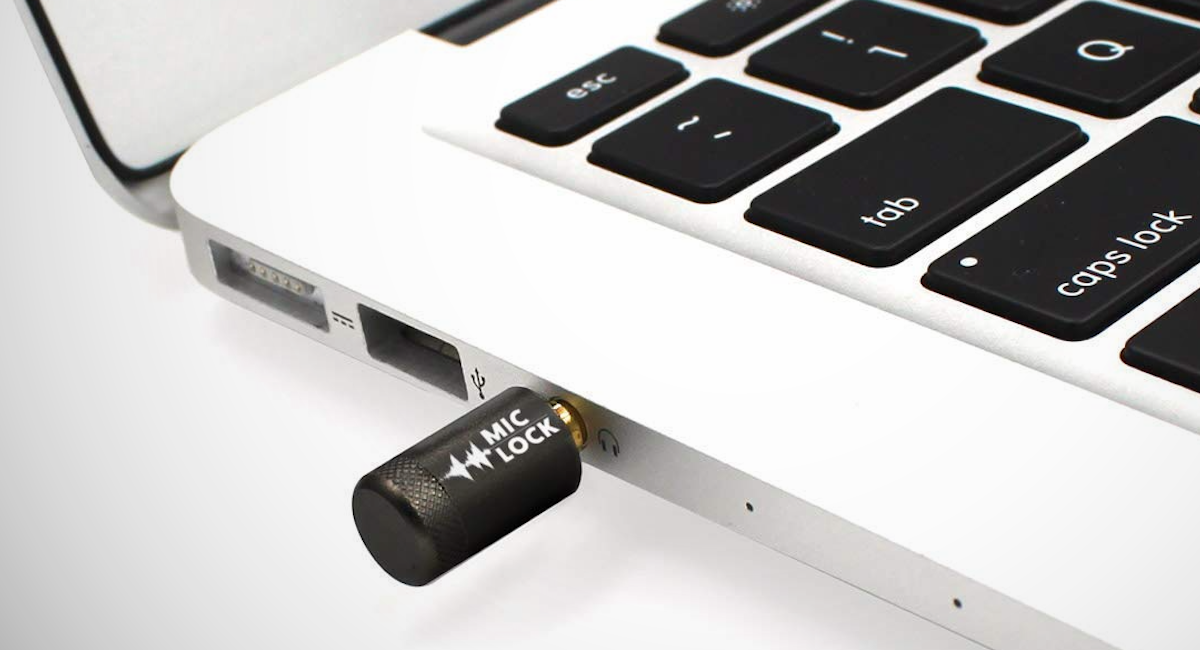

A microphone blocker

Don’t forget about your microphone! Microphone blockers work on most devices with a 3.5mm headphone jack by tricking a laptop or a phone into thinking that an external microphone is installed. Instead, the blocker picks up nothing more than sweet, sweet silence. Most microphone blockers will fit on a keyring and can be taken on the go, but anyone wanting to use a blocker on a newer iPhone or iPad will need a headphone adapter.

Price: $5.99 — $15.99
Available from: Amazon | StackSocial


A USB condom

You might think this is a joke, but USB condoms are real! These pocket-sized plugs are great for isolating your devices from alien or untrusted ports, allowing users to power up without transmitting (or receiving) malicious data. Most are USB-A, so any USB-C powered devices — like MacBooks and newer iPads — will also need an adapter.

Price: $11.99
Available from: Amazon


Raspberry Pi mini-computer

These mini-computers might not seem like much, but the Raspberry Pi revolution has taken the developer and hobbyist world by storm. They are ideal for beginners for learning basic coding, they’re highly adaptable and expandable, allowing even the more advanced users to build fully-fledged systems — from lightweight gaming machines to media centers, and security systems to virtual private network routers. and more! Nothing speaks to the security-minded geek than an open source platform to play with.

Price: from $35.00
Available from: Raspberry Pi



An RFID blocking wallet

RFID hacking is where someone swipes your personal data or information from an NFC-enabled credit card and makes fraudulent purchases. RFID attacks aren’t a widespread issue but the threat from card skimming exists. The EFF has a decent RFID blocking wallet for a low price, while other, more upscale wallets cost far more.

Price: from $22.00 — 72.00
Available from: EFF | Ridge Wallet
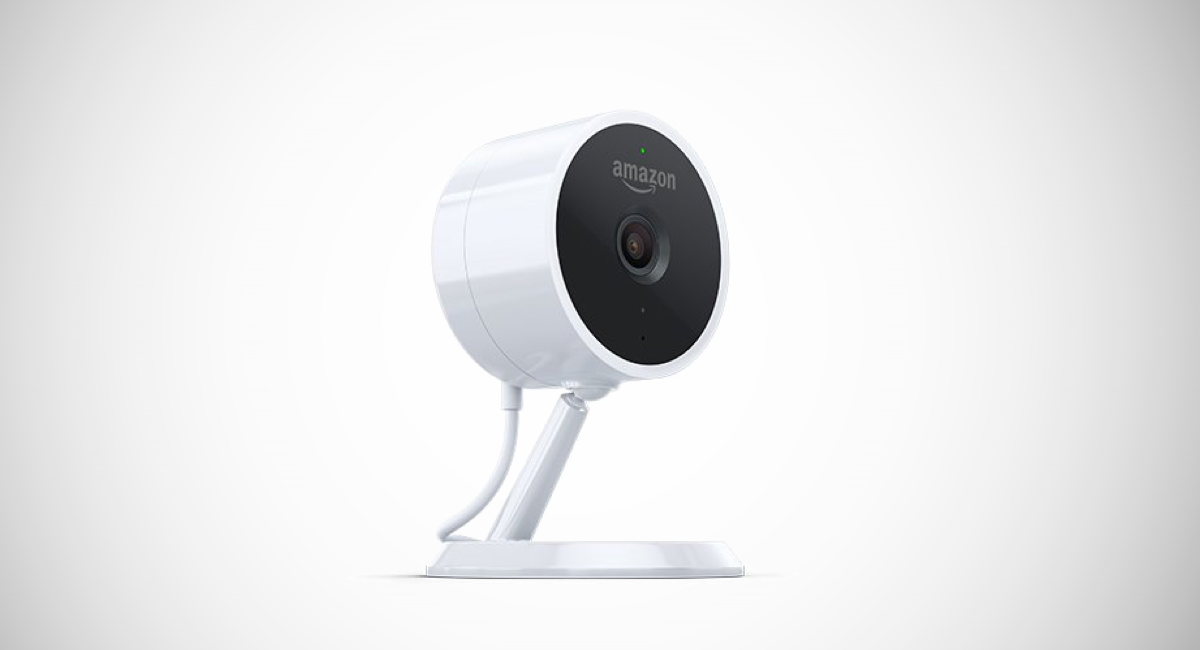

Amazon Cloud Cam

You might think, why would I need a wireless camera if I’m trying to prevent surveillance? You’d be surprised at how useful a camera can be. Take Amazon’s Cloud Cam — it’s the most secure internet-connected camera available for its price. Think of it as your eyes and ears when you’re away from home — keeping your house and your things safe. Or, even take it with you, and use in your hotel room to prevent “evil maid” attacks. The camera works in the dark, can be easily hooked up to a Wi-Fi network, and its feed is remotely accessible using your Amazon account — which, like other camera makers, can be secured with two-factor authentication. You could even put your Yubikey to good use!

Price: $119.99
Available from: Amazon


pfSense router

You might not have heard of a pfSense router before, but these security gateways are ideal for protecting your Internet of Things applications. Many IoT devices are insecure or buggy, and can lead to a wider compromise of your home or corporate network. A pfSense router helps segment network traffic to isolate your potentially buggy devices from your production devices. pfSense routers are easy to set up and manage — so you’ll never really have to think about it again.

Price: $249.99
Available from: Netgate


A lock-pick training kit

For the fidgety types: a lock-pick training kit is a great gift for anyone who wants to learn the fundamentals of lock picking. Transparent padlocks work best, as you can easily understand how the innards work — and how to defeat them. There are many available, but you shouldn’t break the bank on a basic kit — especially for beginners.

Price: $30.00 — $59.95
Available from: Cool Material | Amazon


09 Nov 2018

Mary Meeker is said to be raising up to $1.25 billion for her new growth fund

Mary Meeker, who revealed in September plans to leave Kleiner Perkins after an eight-year run with the venture firm, is reportedly looking to raise up to $1.25 billion for her debut fund. So says Business Insider, citing multiple sources.

We’ve reached out to Meeker for more information.

As Meeker told Recode a couple of months ago, she is forming her own late-stage investing firm with three of her KP colleagues, including Mood Rowghani, who joined the firm as a general partner in 2014; Noah Knauf, who joined the firm as a general partner in 2016; and Juliet de Baubigny, a senior partner who joined Kleiner Perkins nearly 18 years ago.

Their departures come as Kleiner Perkins was weighing whether or not to raise another growth fund, according to Recode’s report. It suggested that over time, a cultural misfit between Kleiner’s early and later-stage groups became more pronounced — though the final decision to split off happened abruptly.

In the short term at least, the move seems a blow for Kleiner, which has brought on star investors to help lead its early-stage practice — Mamoon Hamid, formerly of Social Capital, and Ilya Fushman, formerly of Index Ventures — but which suddenly has no women in its senior ranks.

Months before Meeker disclosed that she was leaving with de Baubigny, another longtime general partner, Beth Seidenberg, was learned to be co-founding her own venture outfit. Seidenberg has since closed her debut fund.

More newly, as we reported a couple of weeks ago, Lynne Chou-O’Keefe, who has spent the last five-plus years investing in healthcare on behalf of the firm, is raising her own debut fund. According to an SEC filing, the firm is called Define Ventures, and it has already locked down $50 million in capital commitments from a handful of investors.

Not every venture firm has senior women at the top of the org chart, but for Kleiner, the male-heavy line-up is a bit more glaring, given that it was sued in 2012 for gender discrimination by former partner Ellen Pao.

Pao famously lost her case against the firm in 2015, but the drawn-out episode kept a harsh spotlight on Kleiner Perkins for several years, during which questions about succession and equality were frequently raised by outsiders, and numerous of its partners left. Among these is Aileen Lee, who formed Cowboy Ventures; Matt Murphy, who joined Menlo Ventures; Trae Vassallo, who formed Defy Partners; Chi-Hua Chien, who formed Goodwater Capital; and Ben Kortlang, Brook Porter, Daniel Oros and David Mount, who formed the venture firm G2VP.

Meeker — who before joining Kleiner had risen through the ranks of Morgan Stanley over 19 years, becoming the head of its global technology research practice — supported the firm throughout Pao’s trial, testifying that she had not experienced discrimination at Kleiner.

At the time, she called the firm the “best place to be a woman in the business.”

Meeker appeared to have an especially close relationship with Kleiner Perkins’s most famous investor, John Doerr, who recruited her personally and who stepped down from his day-to-day management of the firm in 2016.

If Meeker and company succeed in reaching, or surpassing, a target of $1.25 billion for their new effort — and in the current environment, it’s easy to imagine they will — their firm will immediately be among the biggest women-led investment firms in terms of assets under management.

The amount wouldn’t be materially different for Meeker’s team, however. Kleiner raised its last growth fund in 2016, closing on $1 billion. Meeker, Rowghani, Knauf and Ted Schlein, who has been a managing partner at Kleiner for decades, had been overseeing that vehicle together.

Kleiner had also raised its seventh and most recent early-stage fund in 2016, closing it with $400 million in capital commitments.

09 Nov 2018

Limiting social media use reduced loneliness and depression in new experiment

The idea that social media can be harmful to our mental and emotional well-being is not a new one, but little has been done by researchers to directly measure the effect; surveys and correlative studies are at best suggestive. A new experimental study out of Penn State, however, directly links more social media use to worse emotional states, and less use to better.

To be clear on the terminology here, a simple survey might ask people to self-report that using Instagram makes them feel bad. A correlative study would, for example, find that people who report more social media use are more likely to also experience depression. An experimental study compares the results from an experimental group with their behavior systematically modified, and a control group that’s allowed to do whatever they want.

This study, led by Melissa Hunt at Penn State’s psychology department, is the latter — which despite intense interest in this field and phenomenon is quite rare. The researchers only identified two other experimental studies, both of which only addressed Facebook use.

143 students from the school were monitored for three weeks after being assigned to either limit their social media use to about ten minutes per app (Facebook, Snapchat, and Instagram) per day or continue using it as they normally would. They were monitored for a baseline before the experimental period and assessed weekly on a variety of standard tests for depression, social support, and so on. Social media usage was monitored via the iOS battery use screen, which shows app use.

The results are clear. As the paper, published in the latest Journal of Social and Clinical Psychology, puts it:

The limited use group showed significant reductions in loneliness and depression over three weeks compared to the control group. Both groups showed significant decreases in anxiety and fear of missing out over baseline, suggesting a benefit of increased self-monitoring.

Our findings strongly suggest that limiting social media use to approximately 30 minutes per day may lead to significant improvement in well-being.

It’s not the final word in this, however. Some scores did not see improvement, such as self-esteem and social support. And later follow-ups to see if feelings reverted or habit changes were less than temporary were limited because most of the subjects couldn’t be compelled to return. (Psychology, often summarized as “the study of undergraduates,” relies on student volunteers who have no reason to take part except for course credit, and once that’s given, they’re out.)

That said, it’s a straightforward causal link between limiting social media use and improving some aspects of emotional and social health. The exact nature of the link, however, is something at which Hunt could only speculate:

Some of the existing literature on social media suggests there’s an enormous amount of social comparison that happens. When you look at other people’s lives, particularly on Instagram, it’s easy to conclude that everyone else’s life is cooler or better than yours.

When you’re not busy getting sucked into clickbait social media, you’re actually spending more time on things that are more likely to make you feel better about your life.

The researchers acknowledge the limited nature of their study and suggest numerous directions for colleagues in the field to take it from here. A more diverse population, for instance, or including more social media platforms. Longer experimental times and comprehensive follow-ups well after the experiment would help as well.

The 30 minute limit was chosen as a conveniently measurable one but the team does not intend to say that it is by any means the “correct” amount. Perhaps half or twice as much time would yield similar or even better results, they suggest: “It may be that there is an optimal level of use (similar to a dose response curve) that could be determined.”

Until then, we can use common sense, Hunt suggested: “In general, I would say, put your phone down and be with the people in your life.”

09 Nov 2018

Why you’re about to see a lot of drifting Tesla Model 3 videos

Tesla Model 3 owners who opted for the Performance variant now have a reason to go to the track. Or, if history is a guide, they’ll skip the track and try the newly released Track Mode software feature in a parking lot or winding road.

Track Mode — to be clear — is designed for, and should only be used on closed autocross circuits and racetracks. Here’s why.

The software feature taps into the dual electric motors to squeeze even more performance out of the vehicle. But in a new way. Until now, Tesla has used the power produced by its dual motors and torque (the rotational force of an engine or, in this case, motor) to create a super-fast-accelerating vehicle. Now it’s using that same motor power and torque to turn the Model 3 into a cornering (and drifting) dynamo.

As Tesla explains in a blog post (and shows in the video below), the company replaced the stability control system with its own in-house Vehicle Dynamics Controller, “software developed specifically for Tesla vehicles that acts both as a stability control system and also as a performance enhancement on the track.”

This Vehicle Dynamics Controller allows for more rotation if needed. If the rotation is insufficient, the system commands a rear-biased torque. When rotation is excessive, it commands a front-biased torque. Track Mode also improves cornering by applying brake and motor torque at the same time to produce an increase in tractive force while cornering.

What all this means is that the system is designed to send all the power to the rear wheels while the driver is cornering, which pushes the tail out. If the rotation becomes excessive, the power is sent to the front wheels, pulling the vehicle up and out of the turn.

When enabled, Track Mode also increases regenerative braking. This gives the braking system a break (ahem) and sends more energy back into the battery. It also gives drivers more control with a single pedal (the accelerator). Meaning, the driver can simply lift a foot off the accelerator to get the braking they’re looking for as they approach a corner.

Track Mode also anticipates the strain on the powertrain, so it drops the temperatures of the battery and the drive units in preparation for the track and continues to cool them down between drive sessions.

What’s even more interesting is how Tesla fine-tuned the feature. Motor Trend’s Randy Probst ended up working with Tesla engineers during a track session at Willows Springs’ Street circuit to get Track Mode performing as it should. The result was a 1:21:49 lap time, beating the recently tested Alfa Romeo Giulia Quadrifoglio and matching the 2016 Porsche Cayman GT4.

09 Nov 2018

Facebook launches Lasso, its music and video TikTok clone

Done cloning Snapchat, Facebook is now chasing Chinese short-form video sensation TikTok with the launch of its knock-off Lasso. Available now for iOS and Android, Lasso is Facebook’s answer to the zany mobile lipsyncing playground that’s gained ground with young users, both in China and in the West.

The release confirms TechCrunch’s scoop from last month that the company was building an app called Lasso to let people share short videos with soundtracks. With TikTok looking like the next big thing, it’s not surprising to see Facebook playing chase, much like it did, successfully, when Snapchat posed an existential threat.

A Facebook spokesperson confirmed that the launch of Lasso on iOS and Android is in the U.S. only for now, telling us “Lasso is a new standalone app for short-form, entertaining videos — from comedy to beauty to fitness and more. We’re excited about the potential here, and we’ll be gathering feedback from people and creators.” While Lasso was released under the Facebook umbrella, the company launched it informally and with relatively little fanfare via a tweet from a product manager on the team.

Lasso lets you shoot up to 15-second long videos (no uploads allowed) and overlay popular songs. The app centers around an algorithmic feed of recommended videos, but also lets you tap through hashtags or a Browse page of themed collections.

Lasso, Facebook's TikTok clone

Lasso app

The original slate of videos seeded by Lasso’s beta users look pretty good, making use of the millions of songs in its soundtrack catalog. There are no augmented reality effects or crazy filters like you’ll find in TikTok, but users are already taking advantage of the slo-mo and fast-forward recording features to make fun clips. Overall the app feels well constructed, and has that colorful and playful teen vibe.

Surprisingly, Facebook is releasing Lasso under its own name rather than trying to obscure the connection to its social network that younger users have largely abandoned. You can log in with Facebook or Instagram to get instant personalization, with the option to syndicate your Lassos to Facebook Stories with that option for Instagram is coming soon. Notably, all content and profiles on Lasso are public, which could cause some concern about older users leering at dancing teens.

Musical.ly had its own big problems with inappropriate underage content. Its leaderboard of top videos often included scantly clad pre-teens dancing to racy pop songs, seemingly flaunting the U.S. COPPA child protection laws. Lasso includes a report button, but it’s unclear where Facebook will draw the line on what’s allowed.

The big question is whether Lasso is too late. Musical.ly rose to over 200 million registered users before being acquired by Chinese tech giant ByteDance and rolled into its similar app TikTok. That app has been on an epic rise over the past few months, turning into a global phenomenon that surpassed Facebook, Instagram, Snapchat, and YouTube in downloads during October.

While Instagram and Facebook were massively successful at cloning Snapchat’s Stories, they had the advantage of building the feature into their already-popular apps. Lasso will have to start from scratch as a standalone app, and Facebook’s previous teen-focused standalones like Slingshot and Poke failed spectacularly with the same strategy. Facebook will have to hope its initial cadre of content creators will prove so compelling as to convince people to download a whole new app, which could be an uphill battle — even for Facebook.