Year: 2018

09 Nov 2018

PayPal shuts down accounts for Proud Boys and founder McInnes as well as antifa groups

PayPal has shut down several accounts, including those for far-right group the Proud Boys and their founder, Gavin McInnes, for the promotion of “hate, violence, or other forms of intolerance.” Several anti-fascist groups were also banned as part of the same wave of policy enforcement.

PayPal confirmed the bans to TechCrunch, which were first reported by BuzzFeed News. The Proud Boys are a right-wing organization that has until recently managed to avoid being labeled a hate group. However the group’s increasing prominence, involvement in violent altercations, and clear ties to white nationalism have earned it that dubious designation on a growing number of venues.

The organization was banned last week from Facebook, on which its many chapters relied for recruitment and propagandizing purposes.

As Gab, Hatreon, Infowars and others have found, it can be quite difficult for sites, companies, or organizations that align themselves with hate and intolerance to use popular services online. Although some decry this as censorship or some other infringement of free speech, the terms of service are generally quite clear: groups employing or endorsing hate or violence are simply not welcome on these private platforms.

PayPal explained its actions in the following statement:

Striking the necessary balance between upholding free expression and open dialogue and protecting principles of tolerance, diversity and respect for all people is a challenge that many companies are grappling with today. We work hard to achieve the right balance and to ensure that our decisions are values-driven and not political. We carefully review accounts and take action as appropriate. We do not allow PayPal services to be used to promote hate, violence, or other forms of intolerance that is discriminatory.

In addition to the Proud Boys and McInnes (and, yesterday, UK nationalist Tommy Robinson), PayPal banned a number of anti-fascist, or antifa, groups in Atlanta, Sacramento, and other cities. These are generally considered far-left, and although some antifa are known for violent protest or stoking conflict with police during demonstrations, it’s far from a core principle, if such a loosely organized group can even be said to have one.

This doesn’t prevent these groups from doing what they do, of course. But it can make it difficult to support themselves financially, and exclusion from platforms like Facebook complicates communication and organization.

09 Nov 2018

Pure Bit, a South Korean exchange, pulls a $2.8 million exit scam

Another day, another exit scam. This time it comes to us from South Korea where an exchange, Pure Bit, has completely shut down after raising $2.8 million in Ethereum from investors.

The exchange, which promised to deliver something call Pure Coin, was live yesterday and today is completely shut down after posting “Sorry” and “Thanks” to their communications channels.

According to a Reddit thread, the team was anonymous and that the process of building and pumping exchange tokens is a “popular trend in Korea.”

“They have gotten rid of every evidence,” wrote one reader. “Website hosted by fake name / out of Korea host / messenger / contacts were all fake too. Now their only hope is to keep on track with that ether and hope for the best.”

There is no proof yet that the team has pulled a full exit scam – there are examples of founders pretending to scam their investors to “teach them a lesson” – but given the abrupt movement of 13,000 ETH out of the collection wallet we can assume that the story ends here.

Even their chat room, hosted on their own site, is shut down.

It should be noted that South Korea has banned ICOs, giving scammers the perfect cover for absolute anonymity.

09 Nov 2018

Listen to the music of a Martian sunrise

Two researchers, Dr. Domenico Vicinanza of Anglia Ruskin University and Dr. Genevieve Williams, have “sonified” a video of the 5,000th Martian sunrise captured by the Mars rover, Opportunity. The music is a representation of the experience of seeing the sun rise over the red dunes as light pierces the planet’s atmosphere.

It’s beautiful.

From the release:

Researchers created the piece of music by scanning a picture from left to right, pixel by pixel, and looking at brightness and colour information and combining them with terrain elevation. They used algorithms to assign each element a specific pitch and melody.

The quiet, slow harmonies are a consequence of the dark background and the brighter, higher pitched sounds towards the middle of the piece are created by the sonification of the bright sun disk.

Given that you are literally watching the sun rise over the sands of Mars thanks to the efforts of a little multi-wheeled robot and you can now hear the musical equivalent of this amazing breakthrough, it’s pretty hard to feel that humanity is heading toward a dark place. The next breakthrough, I suspect, will happen when we’re able to send human orchestra up there to recreate it with real instruments.

09 Nov 2018

Rocket Lab’s big ‘It’s Business Time’ launch targets this weekend for takeoff

Upstart launch provider Rocket Lab aims to finally launch its first fully commercial payload to orbit this weekend after months of delays. The small Electron rocket will take six satellites from four companies to orbit as early as tomorrow evening Pacific time — Sunday afternoon at the company’s launch site in New Zealand.

“It’s Business Time,” as this launch is called, in honor of being the first to carry a full load of paying customers, was originally scheduled for this last spring, but small technical glitches have repeatedly delayed operations. Things are looking good for the 11th, though, and the window lasts until the 19th in case there’s inclement weather.

The rocket will be carrying two satellites for Spire’s earth-monitoring constellation, two for Fleet’s space-based smart devices grid, one for GeoOptics, and one for the city of Irvine’s CubeSat STEM program.

This last item is of particular interest; the satellite was built by high school students from the Irvine area. Can’t say I ever had a school project quite that cool. The smallsat will be sending various measurements and observations back to the students from low earth orbit.

Not only that, but IRVINE01 is also the first satellite that will have Accion Systems’ electrospray thrust modules, tiny modular things that are highly efficient and perfect for small craft. I’ve had the pleasure of talking to Accion founder (and designer of the thruster) Natalya Bailey and I’m sure she’s excited to see her creation taking flight.

It’s a big first for lots of people and a successful launch would help propel Rocket Lab towards its goal of super-frequent small payload deliveries like this one.

Keep an eye on Rocket Lab’s Twitter account for updates such as an adjusted launch time. I’ll update this post when the live stream is up!

09 Nov 2018

Hackers stole income, immigration and tax data in Healthcare.gov breach, government confirms

Hackers siphoned off thousands of Healthcare.gov applications by breaking into the accounts of brokers and agents tasked with helping customers sign up for healthcare plans.

The Centers for Medicare and Medicaid Services (CMS) said in a post buried on its website that found that the hackers obtained “inappropriate access” to a number of broker and agent accounts, which “engaged in excessive searching” of the government’s healthcare marketplace systems.

CMS didn’t say how the attackers gained access to the accounts, but said it shut off the affected accounts “immediately.”

In a letter sent to affected customers this week (and buried on the Healthcare.gov website), CMS disclosed that sensitive personal data — including partial Social Security numbers, immigration status and some tax information — may have been taken.

According to the letter, the data included:

  • Name, date of birth, address, sex, and the last four digits of the Social Security number (SSN), if SSN was provided on the application;
  • Other information provided on the application, including expected income, tax filing status, family relationships, whether the applicant is a citizen or an immigrant, immigration document types and numbers, employer name, whether the applicant was pregnant, and whether the applicant already had health insurance;
  • Information provided by other federal agencies and data sources to confirm the information provided on the application, and whether the Marketplace asked the applicant for documents or explanations;
  • The results of the application, including whether the applicant was eligible to enroll in a qualified health plan (QHP), and if eligible, the tax credit amount; and
  • If the applicant enrolled, the name of the insurance plan, the premium, and dates of coverage.

But the government said that no bank account information — including credit card numbers, or diagnostic and treatment information was taken.

“Breaches that include personally identifiable information are always dangerous because they can lead to identity theft,” Andrew Blaich, Head of Device Intelligence at Lookout. “Not only can the attacker steal the identity of anyone in the breach, but they can also use this information to appear credible when crafting mobile spear-phishing messages against their targets.”

“This is especially true if the data that was leaked is accurate, as health information, family relationships and insurance information can make it extremely easy for an attacker to steal the identity of anyone affected by the breach,” he said.

President Obama’s healthcare law, the Affordable Care Act — known as “Obamacare” — allows Americans to obtain health insurance if they are not already covered. In order to sign up for healthcare plans, customers have to submit sensitive data. Some 11.8 million people signed up for coverage for 2018.

CMS previously said that the breach affected 75,000 individuals, but a person familiar with the investigation said that the number is expected to change. The stolen files also included data on children.

A spokesperson said CMS is expected to give an update early next week at the latest.

Healthcare.gov’s enrollment period is set to close on December 15.

09 Nov 2018

Amazon expands its assortment of Apple inventory, including the latest devices

Amazon has signed a new deal with Apple that will allow the retailer to increase the selection of Apple products on its site, according to a report from CNET, which Amazon also confirmed. The deal will give Apple-authorized resellers the ability to sell a wide range of devices on Amazon — including Apple’s recently launched iPad Pro, iPhone XS and XR, and Apple Watch Series 4, in addition to Beats headphones.

Previously, these products were only available through Amazon’s third-party marketplace sellers at various price points, or not available at all, CNET noted.

Amazon confirmed the deal to TechCrunch in a statement.

“Amazon is constantly working to enhance the customer experience, and one of the ways we do this is by increasing selection of the products we know customers want,” an Amazon spokesperson said. “We look forward to expanding our assortment of Apple and Beats products globally.”

Apple, so far, has not responded to a request for comment.

CNET said the deal will impact the U.S., U.K., France, Germany, Italy, Spain, Japan and India.

The deal will also see Amazon removing the listings of Apple products from independent sellers, the report said.

The expansion is not surprising. Apple already allows Amazon to sell some of its devices, including MacBook laptops and Beats headphones.

The companies had been fierce rivals for years, but have been working together more amicably in recent months.

Before, the two had a number of issues between them. Notably, Amazon had stopped allowing the sale of Apple TV on its site, in order to promote its competing product, Fire TV. But Apple CEO Tim Cook announced at WWDC 2017 that Apple and Amazon had come to an agreement, which would also allow Amazon’s Prime Video app to arrive on Apple TV.

The Apple TV also later returned to Amazon. This year, Amazon launched a version of its FreeTime Unlimited service for Apple’s iOS devices, as well.

However, there is one notable exception to the new agreement: Amazon won’t sell Apple’s HomePod.

The HomePod competes with Amazon’s Echo smart speakers, which is a growing opportunity in terms of Amazon’s entry into voice computing and virtual assistants. The retailer also doesn’t sell Google Home speakers at this time.

09 Nov 2018

Sony’s PlayStation Classic uses an open-source emulator to play its games

The worm has turned, it seems. Emulators, which let people run old console games on their computers, were once the scourge of the gaming industry. Now Sony is using one of the very pieces of software the industry decried as the basis for its PlayStation Classic retro console.

In the licenses list for the console can be found PCSX ReArmed, as Kotaku noticed in its review yesterday. That’s the ARM port of PCSX Reloaded, itself an offshoot of the original PCSX emulator, which ceased development in 2003.

Don’t worry, it’s not a crime or anything: Sony is well within its rights to do this. It’s just ironic, and indicative the hard work emulator developers have done for over two decades, that a tool most famously (though by no means exclusively) used for piracy is being deployed officially like this. PCSX and its derivatives are open source under GPL.

It’s a huge vindication of these rogue developers, as you might call them, whose software based on reverse-engineering the proprietary systems of major companies has grown to be not just useful but the best option for running these old games — as chosen by Sony itself! Gaming historian Frank Cifaldi has an interesting thread about why this is so mind-blowing for some of us.

It also makes sense to a certain extent: Sony would have had to dedicate a non-trivial amount of resources to building an emulator from scratch, or (even more complex) rebuilding the PlayStation hardware in some fashion. Why not use a high-quality, open-source emulator with years of active development and testing?

Not every company has made that same choice, though: Nintendo, for its NES and SNES Classic mini-consoles, developed its own emulators, as did before for Virtual Console (and indeed inside Animal Crossing on GameCube). But even then those devices run on a custom Linux build, which of course uses a similar open source license. So one way or the other the gaming world is finding itself in bed with the open source community.

It’s true that the emulators themselves were never really illegal — unless they used some proprietary code or something. It was always the ROMs themselves, copies of games, that companies fought hardest against. But emulators have always lived in a sort of grey area even if few actions were taken against them. The last few years have seen a resurgence in interest for retro games and a willingness to pay for them, but if emulators hadn’t been letting us do that for free for decades, there’s a good chance that many of these games would have been forgotten.

09 Nov 2018

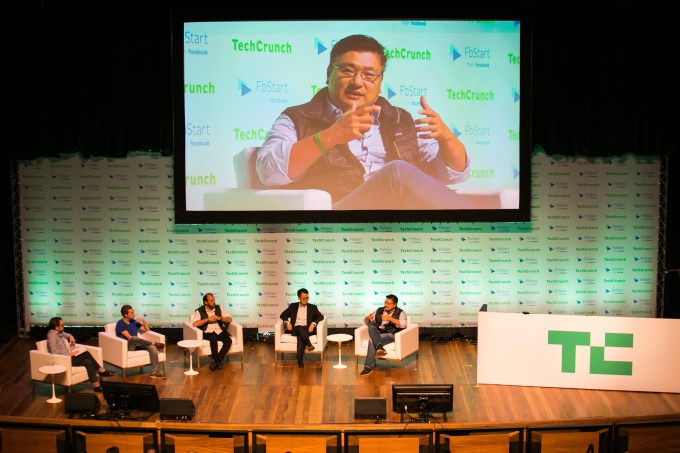
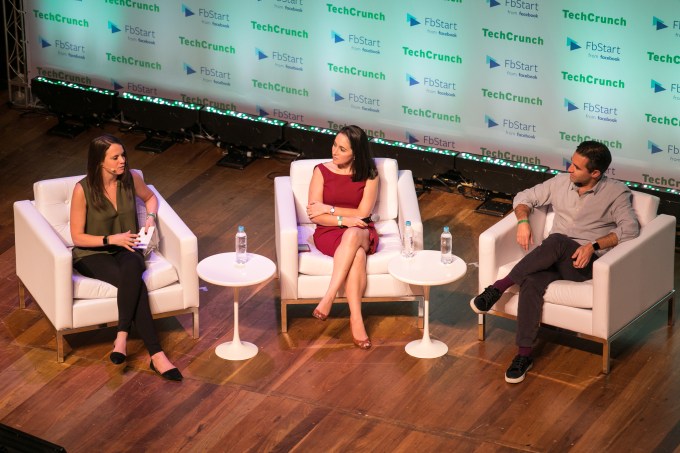
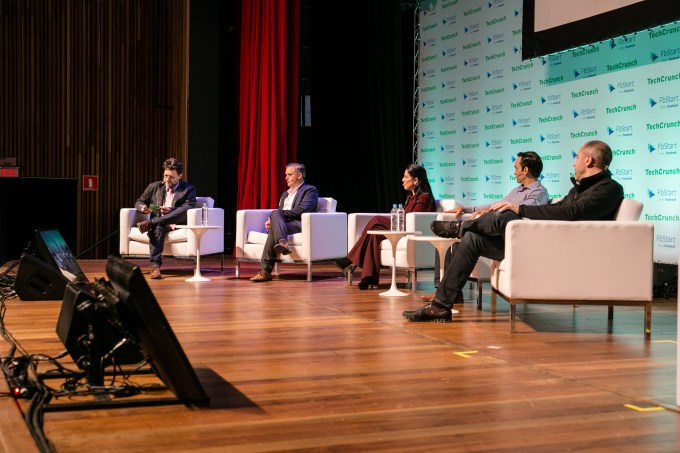
Everything you missed from the Startup Battlefield Latin America

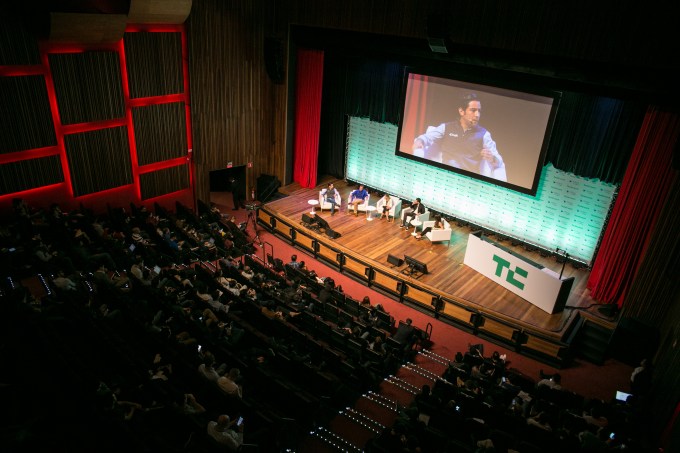
The tech scene in São Paulo is an absolute delight, and we’re honored to have seen such an amazing turnout at the Startup Battlefield Latin America.

In case you missed it, we’ve put together a little recap of the event below.

Editor’s Note: We will embed videos from the event as soon as they’re available.

A China Twist to Brazil’s Mobility Revolution

Featuring Ariel Lambrecht (Yellow), Eduardo Musa (Yellow), Tony Qiu (Didi Chuxing), Hans Tung (GGV)

Mobility is a massive challenge for megacities around the world, including Sao Paulo. The first panel of the event featured notable founders and investors attempting to solve this problem in Brazil and throughout Latin America.

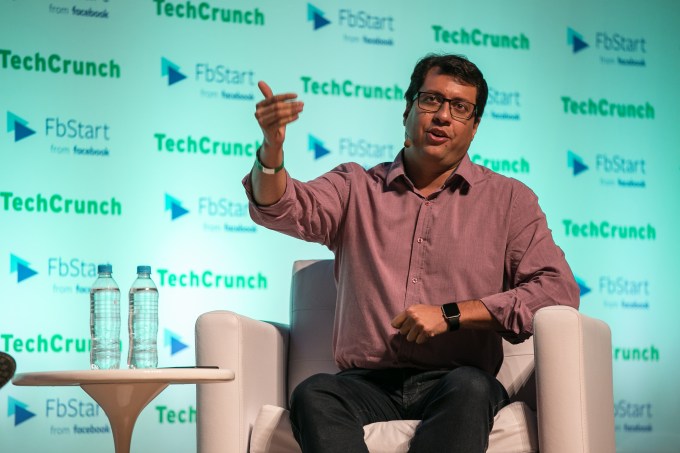
Eduardo Musa is the cofounder and CEO of Yellow and was joined on stage by his cofounder Ariel Lambrecht. Lambrecht also founded the mobility company 99, which is the only startup worth more than 1 billion USD in Brazil. Didi Chuxing recently invested and purchased 99, and current CEO and former investor Tony Qiu sat on the panel as well. Lastly, Hans Tung, managing partner at the Silicon Valley firm GGV and lead investor on 99’s latest round, joined the group. The panel was moderated by TechCrunch’s Managing Editor, Matt Burns.

Both Musa and Qiu acknowledged the crisis facing the Brazilian market and noted parallels with the Chinese market. Both markets have megacities with a diverse population, and there are countless opportunities for startups to address.

Throughout the panel, it was noted that Brazilian startups face several obstacles including finding enough talent and investment. The panelists agreed that often companies in Brazil are looking to Silicon Valley for both. For hiring, they said, there are not enough engineers locally, and to obtain funding, it’s best to show growth to local investors and the look tow Silicon Valley for additional investors.

Fireside Chat

Featuring Cristina Junquiera (Nubank) and David Velez (Nubank)

Any kind of partnership with a global internet giant is a big win for a startup. Nubank co-founders David Velez and Cristina Junquiera took the stage at Startup Battlefield Latin America to discuss Tencent’s $180M investment into their Sao Paulo-based digital banking company. Nubank is has raised over $700M from hard hitting investors like DST and Sequoia, valuing the company at over $4B, so it’s not about the money. While the invest to buy strategy is common for Chinese internet giants, Velez says that isn’t the goal for Nubank.

The founders are focused on the 20 million customers who have already applied for their credit card, and building culture from the ground up. There’s a lot wrong with Brazilian banks, and Nubank is taking a customer-focused approach to provide its digital banking service for Brazil’s huge population. When you’re one of the most successful companies in a region, you feel a responsibility to give back to the ecosystem. The best way to do that, say Velez and Junquiera, is to set an example of success.

Venture Investing In Latin America Today

Featuring Eric Acher (Monashees), Veronica Allende Serra (Innova Capital Consultoria Ltda), Hernan Kazah (Kaszek), Fernando Lelo de Larrea (ALLVP)

Latin American startup companies have hit an inflection point. No longer an afterthought for global investment firms the region is on pace to surpass $1 billion in committed capital for the second year in a row.

Driving that growth, according to investors Eric Acher, the co-founder of Monashees; Veronica Allende Serra, the founder of Innova Capital; Hernan Kazah of Kaszek Ventures and Fernando Lelo de Larrea of ALL VP; is a rash of exits like the public offering for the payment technology provider Stone and the sale of ride-hailing company, 99, to the Chinese global giant mobility company, DiDi.

Yet, as the market grows, entrepreneurs need to consider the partners they’re bringing on board as the aim for international growth. And while Brazil leads the pack in terms of committed capital — grabbing 73% of the total money invested in the region in the first half of the year — Argentina, Colombia, Mexico, Peru and Chile are all emerging as important capital markets in their own right.

20 Years Ahead of the Curve

Featuring Fabricio Bloisi (Movile)

For Fabricio Bloisi, the journey to building a multi-billion dollar company in Movile wasn’t always easy. Building a business requires making tough decisions along the way and a commitment to constantly churning through ideas.

Over the first ten years of its existence, Movile struggled as a smaller content provider. It was once the company agreed to consolidate and control more of the market that it began to grow, Bloisi said.

Now, businesses like iFood, which brought in over $100 million in revenue in the month of October alone, and new payment businesses like Zoop and its delivery and logistics companies, are contributing to a powerhouse that Bloisi thinks could be a $10 billion company in a few years.

Bloisi believes in the region, and the promise it holds for local and international investors to build more multi-billion dollar businesses. The future belongs to the entrepreneurs in the audience, Bloisi said. And if they can make the tough decisions (and get the right investment partners) they could find themselves on the TechCrunch stage.

New Wave Latin Founders

Ana Lu McLaren (Enjoie), David Arana (Konfio), Sebastian Mejia (Rappi), Juan Pablo Bruzzo

A vast majority of startup and investment activity across Latin America is coming out of Brazil. But that doesn’t mean entrepreneurship doesn’t thrive in other parts of the region. Rappi co-founder Sebastian Mejia, Konfio’s David Arana, Moni’s Juan Pablo Bruzzo and Ana McLaren from Enjoie discussed the challenges of launching and scaling an early stage tech company in this new wave founder discussion. Volatile economies, scarce technical talent, and undercapitalized markets aren’t so much challenges, but opportunities for these founders.

Logistics, fintech and ecommerce sectors are getting shaken up by these founders, and the foreign investment dollars are following. Rappi just raised a $200M round to grow its last-mile delivery service, but threats from foreign powerhouses like Uber threaten to eclipse market share. The landscape is more competitive than ever for founders, so expect to see big moves happening from startups launching out of the region.

09 Nov 2018

Utah man pleads guilty to causing 2013 gaming service outages

A Utah man has pleaded guilty to computer hacking charges, after admitting to knocking several gaming services offline five years ago.

Austin Thompson, 23, launched several denial-of-service attacks against EA’s Origin, Sony Playstation and Valve’s Steam gaming services during the December holiday season in 2013.

At the time, those denial-of-service attacks made it near-impossible for some gamers to play — many of which had bought new consoles or games in the run-up to Christmas, including League of Legends and Dota 2, because they required access to the network.

Specifics of Thompson’s plea deal were not publicly available at the time of writing, but prosecutors said Thompson — aged 18 at the time of the attacks — flooded the gaming giants’ networks “with enough internet traffic to take them offline.”

Thompson would take to his Twitter account, @DerpTrolling, to announce his targets ahead of time, and posted screenshots of downed services in the aftermath of his attacks. Thompson’s attacks caused upwards of $95,000 in damages, prosecutors said.

“The attacks took down game servers and related computers around the world, often for hours at a time,” said Adam Braverman, district attorney for Southern California, in a statement.

“Denial-of-service attacks cost businesses millions of dollars annually,” said Braverman. “We are committed to finding and prosecuting those who disrupt businesses, often for nothing more than ego.”

Thompson faces up to ten years in prison, is set to be scheduled to be sentenced in March.

09 Nov 2018

Rakuten has SoftBank in its sights

This week, I’ve tried to do something new at TechCrunch with this experimental column — getting obsessed about a topic broadly in tech and writing a continuous stream of thoughts and analysis about it.

With my research consultant and contributor Arman Tabatabai, we’ve covered two topics: Form Ds, the filing that startups usually submit to the SEC after a venture round closes (although increasingly do not), and SoftBank, which faces all kinds of strategic pressure due to its debt binging. If you missed the other episodes, here are links to the editions from Monday, Tuesday, Wednesday, and Thursday.

We are experimenting with new content forms at TechCrunch. This is a rough draft of something new – provide your feedback directly to the authors: Danny at danny@techcrunch.com or Arman at Arman.Tabatabai@techcrunch.com if you like or hate something here.

Today, one final round of thoughts on SoftBank and Rakuten (heavily written by Arman) and a lengthy list of articles for your weekend reading.

The Rakuten factor complicates SoftBank’s strategy
BEHROUZ MEHRI/AFP/Getty Images

Understanding SoftBank’s competitive strategy requires a bit of a deep dive into Japanese ecommence giant Rakuten.

Rakuten has been struggling to compete with Amazon and others like SoftBank’s Yahoo! Japan. So at the end of 2017, Rakuten announced it would be entering the telco space, hoping that operating its own network could generate user growth through better incentives around mobile shopping, streaming and payments.

Today, Japan’s telco space is a relatively cozy oligopoly dominated by NTT DoCoMo, au-KDDI and SoftBank. A major reason why Rakuten feels it can succeed where others have failed to break in is because it has the government on its side.

Rakuten’s plan to offer prices at least 30% lower than incumbent rates has led to favorable treatment from prime minister Shinzo Abe’s government, which has been looking for ways to stimulate market competition to force the country’s high phone prices lower.

Though a new entrant hasn’t been approved to enter the telco market since eAccess in 2007, Rakuten has already gotten the thumbs up to start operations in 2019. The government also instituted regulations that would make the new kid in town more competitive, such as banning telcos from limiting device portability.

Rakuten’s partnerships with key utilities and infrastructure players will also allow it to build out its network quickly, including one with Japan’s second largest mobile service provider, KDDI.

Just last week, Rakuten and KDDI announced an agreement where Rakuten will help KDDI utilize its payment and logistics infrastructure as KDDI turns its head towards e-commerce and payments, while KDDI will give Rakuten access to its network and nationwide roaming services, allowing Rakuten to provide nationwide service as its builds out its own infrastructure.

The agreement with KDDI is especially scary for SoftBank, the country’s third biggest telco and one of Rakuten’s e-commerce competitors, and whose customers seem most vulnerable to churn. The partnership also makes it seem even more likely that SoftBank’s competitors are looking to push it out of the market or turn its upcoming mobile segments IPO into a dud.

While Rakuten’s head-first dive into the market won’t ease investors into an IPO, it’s important we note that Rakuten is targeting a much smaller market share than the incumbents, targeting 10 million subscribers by 2028, a number lower than the company’s original 15 million subs goal and significantly lower than the 76 million, 52 million and 40 million subscribers NTT, KDDI and SoftBank hold currently. And even with its agreements, Rakuten faces a serious and expensive uphill battle in building out its network infrastructure quickly enough to compete.

Ultimately, Rakuten’s telco initiative is a splash, but one that seems like it will merely make its competitors wet and not drown them. For SoftBank, it is an annoying distraction on its telco IPO roadshow, but a distraction that is easily explained to potential investors.

SoftBank growth over the past two decades

Rajeev Misra. Photo by Drew Angerer/Getty Images

Changing gears from Rakuten, emails from readers this week asked us to look deeper into SoftBank’s performance over the last two decades. As we did so, it became clear that SoftBank has had a long history of price competitions and new entrants across its businesses, and it has proven its ability to operate and consistently grow earnings.

Since 2000, SoftBank has grown earnings at a ~30% CAGR and experienced revenue growth in all but one year. When eAccess did enter the telco market and picked up four million subscribers, SoftBank bought it and integrated it into its own system.

As we discussed earlier this week, despite having always held on to a clunky amount of debt, SoftBank has managed to deliver consistent growth by making sure its revenue and operating growth outpaced the upticks in its debt and interest expense.

A great example of this came after SoftBank’s acquisition of Vodafone in 2006, when it saw a huge spike in its interest expense, but also in its operating income.

Over the following five years, SoftBank managed to reduce its interest expense at an annual rate of 12% while growing its operating income at 16%. And regardless of its debt balances, SoftBank has always seemingly been able to secure funding one way or another, as shown by its ability to raise $90+ billion for the Vision Fund in less than a year from when plans for the fund were first reported.

The Vision Fund itself started as a way for SoftBank to continue to invest while its balance sheet was tight due to nearly back-to-back massive acquisitions of Sprint and Arm. Just look at how Rajeev Misra, who oversees the Vision Fund, discussed its creation in an interview with The Economic Times:

We had just bought ARM in June for $32 billion and Masa felt we are on the cusp of a technology revolution over the next 5-10 years with machine learning, AI, robotics and the impact of that in disrupting every industry – from healthcare to financial services to manufacturing.

We felt the world was going through a new industrial revolution. We were constrained financially given that we just did a $32-billion acquisition.

SoftBank, historically over the last 20 years, has invested from its own balance sheet. So, we had two options.

Either monetise some of the gains we made in Alibaba which we decided has a lot more upside… Alibaba has more than doubled in the last 12 months. So we decided to keep it which turned out to be good decision. The second option was to go out and raise money and co-invest with others. We prepared a presentation, went out, and by god’s grace we raised the fund.

Even before the Vision Fund, SoftBank has always had a strategy to make big bets in industries of the future. And while many have failed, the several that have paid off, like its $20 million investment in Alibaba, had massive cash outs that have driven consistent earnings growth for decades. SoftBank seems to be banking its future on the same strategy and frankly, it’s unclear how much they even care about how competitive their telco is, as shown by this exchange in the same interview with Misra:

Question: What about sectors like telecom?

Misra: Let the dust settle.

What’s next

Our obsession with SoftBank this week is probably going to subside, and we are in the market for our next deep dive topic in tech and finance. Have ideas? Drop us a line at danny@techcrunch.com and arman.tabatabai@techcrunch.com

Thoughts on Articles (i.e. Weekend Reading)

Photo by Darren Johnson / EyeEm via Getty Images

The CIA’s communications suffered a catastrophic compromise. It started in Iran. — This is a great follow-up from Yahoo News’ Zach Dorfman and Jenna McLaughlin on one of the most important espionage stories this past decade. The CIA, using an internet-based communications system to connect with spies and sources in the field, failed to keep the security of the system intact, leading to the dismantling of its Iranian, Chinese, and potentially other espionage rings. This article advances the story as we know it from the New York Times’ original piece, and Foreign Policy’s excellent follow up also written by Zach Dorfman. Definitely worth a read from a security/technical audience. (3,200 words)

The $6 Trillion Barrier Holding Electric Cars Back – Don’t read — the answer is infrastructure. (1,000 words, but should be one)

The Rodney Brooks Rules for Predicting a Technology’s Commercial Success – a good reminder that some technologies are much closer to reality than others, and that the key difference between them is our collective experience handling the technology. Rodney Brooks is the right person to cover this subject, although one can’t help but feel that every example is Musk-inspired. (2,800 words)

Uber’s economics team is its secret weapon by Alison Griswold & Soon there may be more economists at tech companies than in policy schools by Roberta Holland, both in Quartz — Griswold does a great job giving an overview of how Uber is using economists not just to improve its product for end users, but also to shape the discussion of public policy around the company. Clearly, Uber is not alone; as Holland notes in her piece, academic economists are very popular in Silicon Valley right now, with salaries that can match the top machine learning experts. (2,750 words and 1,200 words, respectively)

The future’s so bright, I gotta wear blinders – a short piece by Nicholas Carr fighting back against the notion that computing is still “at the beginning.” Many of our devices and pieces of software are already decades old — if they haven’t had an effect on human behavior or productivity, when are they going to? A useful antidote to some ideas we hear from the Valley every single day. (900 words)

The future of photography is code – Yes, yes, I am very late to this – blame Pocket disease. TechCrunch’s own Devin Coldewey writes a candid essay on the transition from improving photography through hardware like lenses to improving photos through computation. The future is looking very bright for beautiful photos, indeed. (2,400 words)

Freedom on the Net 2018 | Freedom House – and if you are looking for some depressing news, Freedom House’s report (which I am also a bit late to) is dreary. China is now increasingly the source of authoritarian internet control technology, and countries across the world are backtracking on internet freedom (including the U.S.) Sobering, but with so much riding on the openness of the internet, we all need to pay attention and build the kind of future for this technology that we want. (32 page PDF with exec summary)

Reading docket

What we are reading (or at least, trying to read)

Articles

Books