Year: 2018

09 Nov 2018

Disney to invest in more original content for Hulu, expand service internationally

In addition to plans to launch its own Netflix rival, Disney+, next year, the company says it also plans to increase investment in its other streaming service, Hulu. Thanks its buyout of 21st Century Fox, Disney now own 60 percent of the TV streaming service, which it gives it “considerable say” in how Hulu is run, noted Disney chairman-CEO Bob Iger on this week’s earnings call with investors. He said the plan now is to invest in more original content for Hulu and expand the service internationally.

Disney would also be open to acquiring more of a stake in Hulu, the CEO later said.

Disney sees the value in both Hulu’s IP and talent, particularly on the television and movies side, Iger told investors. And it plans to use the television production capabilities of the now combined company to “fuel Hulu with a lot more original programming,” he added. This, Disney believes, will help make Hulu more competitive in the marketplace.

“Given the success of Hulu so far in terms of subscriber growth and the relative brand strength and other things too like demographics, we think there’s an opportunity to increase investment in Hulu notably on the programming side,” Iger said.

Currently, Hulu has had only a handful of breakout original hits – most notably, the timely dystopian spectacle that was  “The Handmaid’s Tale.” But its originals output has paled in comparison with Netflix, which projected it would spend $8 billion on content this year, with plans to increase that in 2019. Hulu has spent considerably less – around $2.5 billion, per analyst estimates.

With Fox, however, Disney gains access to the Fox studio and FX, and more, which will help it fuel Hulu with more original content. Iger declined to say if that content would be exclusive to Hulu in the future, but did confirm the studios are part of Disney’s plans for Hulu.

Iger also spoke of other changes ahead for Hulu, including possible adjustments to Hulu’s pricing, and its plan to bring Hulu to more international markets.

“After the deal closes and after we have the 60 percent ownership, we’ll meet with the Hulu management team and the board, and discuss what the opportunities are in terms of both global growth and investing more in content. But that’s something that we have to do after the deal closes,” Iger added.

The acquisition is expected to close in 2019.

In a follow-up interview with CNBC, Iger also said that Disney would be interested in acquiring more shares of Hulu, if the opportunity arose.

“It is premature really except to say that if Comcast is interested in divesting, or if Time Warner or AT&T Time Warner is interested in divesting, we certainly would be interested in buying their stake. But with 60%, which is what we will own, we’ll have enough control to manage Hulu in a way that is consistent with – the strategy of the company is deploying,” he said.

09 Nov 2018

This magician brings some serious tricks to the iPad Pro

TechCrunch editor Matthew Panzarino’s more conventional iPad Pro review is a must-read if you’re thinking of forking out for the device — tricks not included.

09 Nov 2018

LinkedIn Learning now includes 3rd party content and Q&A interactive features

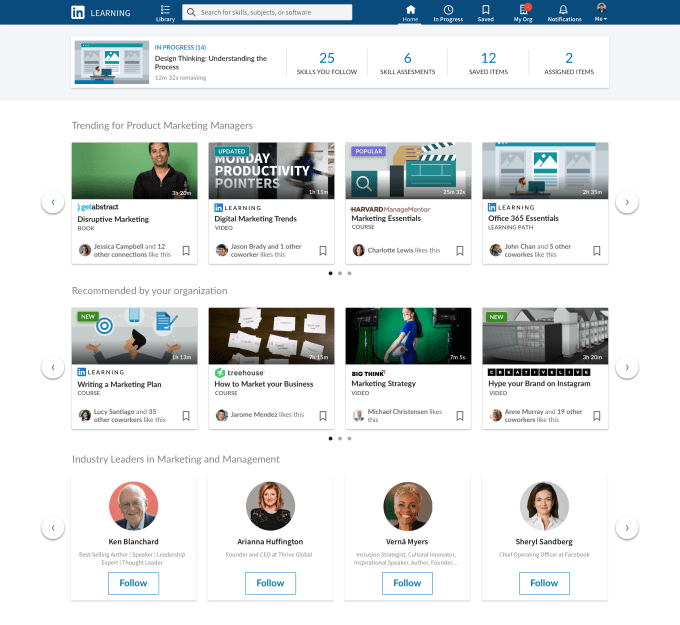
LinkedIn, the Microsoft-owned social network for the working world with some 580 million users, took a big step into professional development and education when it acquired Lynda.com for $1.5 billion and used it as the anchor for LinkedIn Learning. Now, with 13,000 courses on the platform, LinkedIn is announcing two new developments to get more people using the service. It will now offer videos, tutorials and courses from third parties such as Treehouse and the publishing division of Harvard Business School. And in a social twist, people who use LinkedIn learning — the students and teachers — will now be able to ask and answer questions around LinkedIn Learning sessions, as well as follow instructors on LinkedIn, and see others’ feedback on courses.

Unlimited access to LinkedIn Learning comes when a person pays for LinkedIn’s Premium Career tier which costs around $30/month, or when a company takes an enterprise team subscription for the Learning service. Today, LinkedIn tells me that it has around 11,000 enterprise customers, and it doesn’t break out how much traffic is has overall on LinkedIn, but says that there has been a 64 percent growth in paid learners since the start of 2017 — number that it’s clearly looking to boost with these new features.

James Raybould, the director of product for LinkedIn Learning, said that the third-party expansion will come slowly at first with a handful of partners getting access to integrate with LinkedIn Learning. Over time, this could expand to be a public API for anyone to integrate content, he added, but for now LinkedIn is doing the curating.

Notably, he also said that LinkedIn itself is not planning on curtailing the amount of content it will continue to produce for Learning: it’s currently adding on average more than 70 new courses each week on average, he said.

The content in this first wave of third-party providers feels like a natural extension of the Influencer-based content that LinkedIn has been running in its main newsfeed: it runs the gamut from actual courses to learn new skills in specific disciplines, to the more nebulous area of professional development.

The first group includes Harvard ManageMentor (leadership development courses from Harvard Business School’s publishing arm); getAbstract (a Blinkist-style service that provides 10,000+ non-fiction book summaries plus TED talks); Big Think: 500 short-form videos on topics of the day (these are not so much ‘courses’ as they are ‘life lessons’ — subjects include organising activism and an explainer on how to end bi-partisan politics); Treehouse with courses on coding and product design skills; and Creative Live with courses and tutorials for professionals in the creative industries to improve their skills and business acumen.

The fact that LinkedIn is adding in more learning material that’s a natural extension of the kind of content it already offers to users in their timelines is not the only parallel between main LinkedIn and LinkedIn Learning. Raybould said that to help users discover content that might be most interesting to them, it uses data about what users browse and click on in the regular site.

“We have rich information about the network, including on engagement,” he said, and that helps LinkedIn’s algorithms suggest what to populate in individual learning libraries.

This is also, presumably, one of the reasons why third parties will want to integrate: to get new audiences that are more targeted to the kind of content they are producing:

“At Harvard Business Publishing, we work to create the world best learning experiences to help organizations discover new ways to solve their most pressing leadership development challenges,” said Rich Gravelin, Director, Partnerships and Alliances, at Harvard Business Publishing, in a statement. “As an inaugural partner in the LinkedIn Learning Content Partner Program, we are bringing rich leadership development content to professionals across the globe, helping them navigate today’s complex business landscape. Thanks to the robust platform that LinkedIn Learning has built, we’re able to meet learners where they are and provide them with the unique and personalized learning experiences they need to succeed in their organizations.”

The social features also follow this model. Last year, LinkedIn rolled out a mentorship product across selected markets to pair users with people who can give them steers on their career development. That product set out a precedent for how LinkedIn might use its wider social network and communication features to engage users in different ways, in the name of professional development.

The new addition of Q&A features follows on from that, giving those taking courses or watching videos a way of interacting and following up with those who are doing the teaching. Adding that in could see more engagement across the whole of the Learning product.

It’s a surprise, in a way, that it’s taken this long for LinkedIn to add an interactive Q&A feature in, considering that direct messaging and users interacting with each other has been a cornerstone of the product. On the other hand, it will be interesting to see if it proves to be a compelling enough feature to bring in more users to LinkedIn, luring them away from Udemy’s and Skillsofts of the world.


09 Nov 2018

Single’s Day: China’s $25 billion shopping festival explained

This Sunday is November 11, an auspicious date within the Chinese tech community because it marks Single’s Day, the world’s largest online shopping day. This year is particularly poignant since it will be the tenth edition of the annual event — also known as Double Eleven — since it was created by Alibaba, the Chinese e-commerce giant.

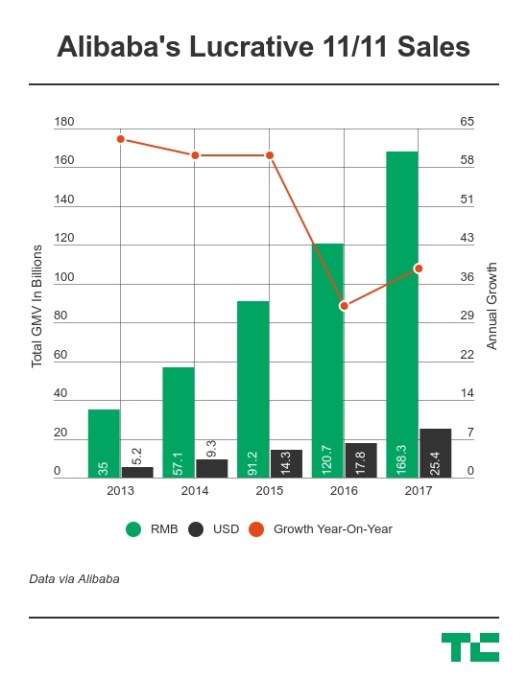
Single’s Day is huge business today. Alibaba sold more than $25 billion in goods last year as 11.11 moved outside of China into other regions within Asia and beyond. The company has consistently grown its sales tally year-on-year, so it’s fair to expect $35 billion or more in trading to take place this Sunday even though there are doubts over China economy and an ongoing trade war with the U.S.

We’ve dug into the phenomenon so that, this year, you’re well prepared on what to expect.

What is it?

The event is akin to Black Friday and Cyber Monday in the U.S. but it is 2.5 times larger than both of those dates put together. Alibaba discounts a range of products across its online sales platforms which include its Taobao marketplace, Tmall store for brands, AliExpress international services and — more recently — its global businesses. Those include Lazada in Southeast Asia and India’s Paytm, which counts Alibaba and Ant Financial as major investors.

The sale covers obvious goods like smartphones, TVs and other big ticket consumer items but also fashion, clothing, furniture, health products and more. The less expected items that sell well include cleaning products, toilet paper and daily perishables. There’s also a strong demand for cars among other things.

In total, Alibaba saw 1.48 billion transactions worldwide last year with a peak of 325,000 orders per second. Its Alipay payment service clocked 1.5 billion payment transactions with total orders reaching 812 million. All the while, a dominant 90 percent of sales came from mobile devices — that’s well ahead of the U.S. which saw 37 percent during Black Friday and 33 percent on Cyber Monday.

Alibaba’s 11.11 sales passed a record $25 billion in 2017 (Image via Alibaba)

Alibaba is also pushing the festival into offline retail which is in line with its own business, which has expanded into physical stores through its own Hema brand and partnerships with major retailers in China, such as tech giant Suning and hypermarket operator Sun Art.

It was renamed to “11.11 Global Shopping Festival” in 2015 to reflect Alibaba’s efforts to grown the sales outside of its core market in China, and last year it claimed to have attracted over 60,000 international brands with customers located across more than 225 countries.

In the beginning

November 11 wasn’t always synonymous with buying discounted products online. The date first came to prominence in China during the 1990s when it was said to have been promoted as a bachelor celebration day because the date represents four ‘singles.’ It later took on new meaning as a day to celebrate relationships — it is a hugely popular date for marriages — and find potential partners.

The e-commerce component arrived in 2009 when an executive named Daniel Zhang used the date to promote Tmall, Alibaba’s virtual mall for brands, with just 27 merchants participating. Zhang, then in charge of the Tmall business, is now the CEO of Alibaba itself and he will become the firm’s Chairman when Jack Ma — Alibaba’s figurehead for many years — finally steps down from the business next year.

Back in 2009, Alibaba grossed around $7 million on its inaugural Single’s Day. Speaking to CNN this week, Zhang said he “had never expected” that the promotion would become such a huge phenomenon for both Alibaba and the wider e-commerce industry.

Alibaba CEO Daniel Zhang started the Single’s Day shopping festival in 2009 when he was in charge of the company’s Tmall business (Image via Vivek Prakash/Bloomberg via Getty Images)

Beyond Alibaba

As Singles’ Day blossomed into a national celebration, other e-commerce players such as JD.com and Pinduoduo have also joined in to capitalize on a month of robust consumer spending. JD.com, for instance, saw a 21.1 percent uptick in active users for its mobile app on November 11 last year, according to market research firm QuestMobile.

The event’s warm reception has also inspired competing festivals throughout the year. In 2010, JD.com, which ranked behind Alibaba in terms of transaction volume, runs its Single’s Day festival over a 12-day period and it started its own mid-year shopping event that falls on June 18. Suning, a major Chinese appliance retailer, has turned its August 18 anniversary into a sales event.

None of the latecomers have managed to match the scale of Singles’ Day, however, and Alibaba continues to extend the boundary for the world’s largest shopping event.

An 11.11 advertisement in New York (Image via Alibaba)

Not just numbers

Singles’ Day continues to grow bigger each year, but sales have slowed. Year-over-year growth in gross merchandise volume slid from just under 65 percent in 2014 to around 40 percent in 2017.

But Jack Ma has always been keen to downplay the importance of these numbers. In 2013, he told Chinese media on the eve of November 11 that he wasn’t going after sales figures. He has reiterated a similar message in the succeeding years.

Rather than scale, Ma said he looks for “steady” growth. That’s because the shopping spree demands an overarching infrastructure to power functions such as logistics and payments.

Ma’s words are in line with the company’s ongoing quest for potential partners to power its retail ecosystem. Last year, Alibaba poured $717 million into Huitongda, which runs an infrastructure for online retailers to sell to rural customers — who also participate in Singles Day.

Similarly, Alibaba’s financial affiliate Ant Financial has banked a number of payment solutions companies worldwide to support the e-commerce company’s global reach, while the firm’s cloud computing division handles the demands of selling $25 billion in goods each year. Then there’s logistics platform Cainiao Network which helps handle the 812 million orders that were placed in China last year.

Single’s Day has also seen Alibaba adopt tech technology on a wide scale. Last year, it ventured into AR — Maybelline let customers try its lipstick virtually — Nike is among the brands to have used gamification to attract customers and Alibaba’s own Tmall service adopted ‘virtual fitting rooms’ to help sell clothes.

Offline sales

Alibaba Chairman Ma has also projected what would become a norm for Singles’ Day today. “We want all e-commerce companies to get involved, and all brick and mortar malls to be part of it,” he said.

In 2016, Ma coined the term “new retail” to describe a future of seamless integration between online and offline retail sales. Last year marked the dawn of the shopping festival’s offline push. This year, 200,00 brick-and-mortar stores have signed up for Singles Day to make discounts available to Alibaba customers. A user can, for instance, gets offline deals when she uses Alibaba’s Alipay e-wallet to pay at a mall. Alibaba also uses Alipay to give away cash prizes through red wallet competitions.

Alibaba said last year that New Retail “showed promise” during 11.11, but it declined to provide figures. This year, given Alibaba’s physical retail advancement — it now operates over 30 stores and includes facial recognition-based payment — the offline component will be more important than ever. Beyond Hema and InTime physical shopping, that also includes Ele.me — and Starbucks deliveries — and the rest of its local services delivery platform.

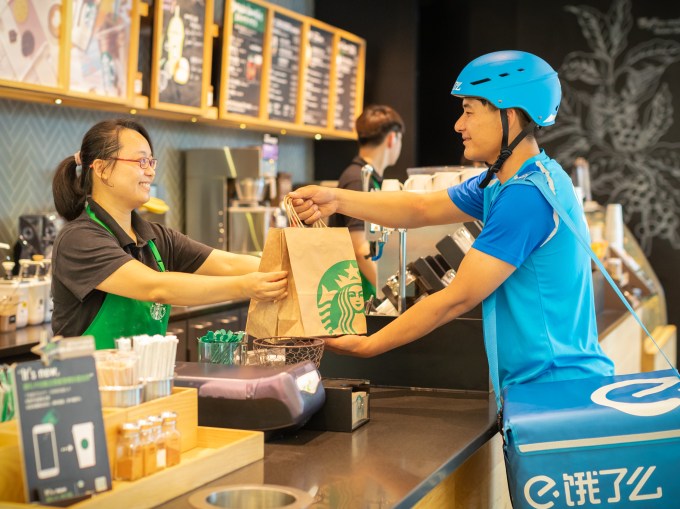
Alibaba’s 11.11 deals will now include Starbucks coffee, which can be ordered exclusively via its Ele.me delivery service thanks to a partnership with the U.S. coffee chain (Image via Alibaba)

Expectations for 2018

The forecast for this year’s Single’s Day 2018 is challenging since it comes against the backdrop of China’s economic struggles and the U.S-Sino trade war which has seen billions in goods tariffed. However, the majority of Alibaba’s sales continue to be in China, both on 11.11 and the rest of the year, so despite its progress on international growth the actions of the U.S. government are unlikely to be felt.

Nonetheless, some key factors:

  • Slowing growth: Alibaba’s quarterly revenue continues to grow healthily (40 percent plus) but the rate itself is slowing, the same applies to 11.11
  • Offline: Alibaba is making a concerted offline retail push to offset e-commerce saturation with more deals for those who shop in person
  • Services: Its on-demand services and delivery platform — reportedly valued at $30 billion — will play a more prominent role in China by offering 11.11 deals
  • Payments: Alipay is expanding 11.11 deals by offering discounts for shoppers paying through the app online or offline
  • More global: Alibaba’s international footprint continues to grow and it is pushing 11.11 harder in Southeast Asia, where it has established links with China-based sellers, while it now has dedicated ventures in Russia and Pakistan/South Asia to work with

Either way, Alibaba puts on a real spectacle for the world during 11.11.

First up there’s a star-studded entertainment show that takes place on the eve of the festival and then you can expect constant updates from Alibaba’s Twitter account during the 24-hour period itself. We’ll also be following the latest developments for you right here on Techcrunch.com so stay tuned for more.

This year’s 11.11 event is Alibaba’s tenth and the final one before Jack Ma’s retirement from the company (Image via VCG/Getty Images)

09 Nov 2018

Burgerbot startup Creator hires inventor of Boston Dynamics’ Big Dog

Disney Imagineering animatronics wizard Dr. Martin Buehler is a legend in the robotics world. His work leading development of the galloping Big Dog quadruped at Boston Dynamics both inspired and terrified a new generation of makers. But after playing in the worlds of fantasy and science fiction that consumers can’t buy, Buehler has been poached to work on something much more tangible. In fact, it’s edible. He’s joining burger-making robot startup Creator as VP of engineering.

“It was a great experience working on experimental validation [at Boston Dynamics]” Buehler tells me, “But one of the things I really value at Creator is the immediacy of real impact to real people. With burgers being such a big segment of the food market, we have the potential to touch millions of people.” Creator opened its first restaurant to the public in September, selling San Franciscans gourmet hamburgers at a surprisingly low $6 price tag by replacing a kitchen full of cooks with a massive, transparent robot.

Formerly known as Momentum Machines, Creator has raised over $24 million according to SEC filings. It hopes to make fast-food healthier, tastier, and cheaper by saving money on labor to replace preserved ingredients with premium, freshly cut beef, cheese, and veggies. Patrons can choose from several burger styles, and then get to watch their bun sliced and toasted as a conveyor belt slides it beneath dispensers for other fixins. Instead of cooking, the restaurant staff serves a concierge to customers while keeping the robot stocked.

Buehler also helped develop the world’s most popular robot: the Roomba. Now with his help, Creator could make the robot more efficient, flexible enough to handle more custom orders, and more delightful to watch…and Instagram. The whole restaurant industry is trying to become more shareable on social media with kitschy decor and plating. But the robot gives Creator natural virality by making the cooking process itself entertainment — like some futuristic Benihana.

Creator’s new VP of Engineering Dr. Martin Buehler

“At Disney I was in charge of robotics at Imagineering. We used advanced robotics and AI to bring walking and talking Disney characters to life so our guests who meet the characters on the silver screen first can meet and interact with them physically in the parks. What I really learned was to position technology as second fiddle to the guest experience” he tells me.

Buehler calls Creator “a stunning symphony of motion —  the visual experience supports the central culinary experience. The downfall of a lot of robotics companies is that they fall in love with the technology and they lose track of what it takes to deliver value to the customer.” Creator’s approach is working so far. The company claims to be hitting its revenue targets and have a higher net promoter score than fast-food favorite Chick-Fil-A.

But the success of the company will depend on its ability to scale. Creator co-founder and CEO Alex Vardakostas reveals that “the next announcement is going to be more burger stores.” That means the Creator contraption can’t be a one-off art piece. “Right now the task at hand is to make the current robot scalalable — make it cost less and more reliable — so we can provide robots to many more restaurants” Buehler says. He’ll have help from fellow teammates who hail from Apple, Tesla, and NASA.

The concern, though, is that Creator could be the tip of the spear of automation decimating employment as food service workers are replaced by bots. Vardakostas grew up flipping burgers himself at his parents’ restaurant, and he believes machines can take care of the dirty and dangerous work that perhaps humans shouldn’t be doing in the first place. The company already pays its service workers $16 and hour, and offers ‘five percent time’ where they can take time to read or learn about the culinary arts. Eventually it hopes to retrain former fast-food cooks in robot maintenance to offer them a path get paid more.

“The basic mission of the founders is to build a company culture focused on learning and personal development. I like the aspect of the service of giving back” Buehler says. “All the team members get coaching to help them grow, not just technically but personally.”

In its pleasant restaurant, seemingly happy workers and its flashy robot team up to make some remarkably delicious burgers. With Buehler’s help, Creator could expand beyond the seemingly fictional world of Silicon Valley and pull people who care about food quality and flare away from McDonalds.

09 Nov 2018

Sneaker marketplace GOAT announces an AR-centric Black Friday giveaway

Black Friday giveaways have become a tradition for online sneaker marketplace GOAT. Today it’s announcing the details of this year’s campaign, which will be its first to incorporate augmented reality.

Director of Communications Liz Goodno described this as “the largest digital sneaker event of the year.” The company says it will be offering more than 1,000 prizes, including sneakers like the Air Jordan 1 Retro High OG Shattered Backboard, KAWSx Air Jordan 4 Retro Black, Pharrell x BBC x NMD Human Race Trail Heart/Mind, plus curated sneaker packs and up to $10,000 in GOAT credit.

You can enter the drawing anytime between now and 11:59pm Pacific on Thursday, November 22, with the winners notified at noon on Black Friday.

All participants will receive 100 tickets, but you can earn bonus tickets by visiting locations on an interactive GOAT map, which will highlight spots around the world that are tied to all-time great athletes and to sneaker history. Those locations really are global, and they include “Sneaker Street” in Hong Kong, San Francisco’s Moscone Center (where the iPhone debuted) and the location of Muhammad Ali’s historic victory over George Foreman in the Democratic Republic of Congo.

Also on the list are the New York and Los Angeles locations of Flight Club, the famous sneaker retailer that GOAT merged with earlier this year. And you can earn even more tickets by sharing augmented reality graphics that superimpose a “Greatest of All Time” message, or a newspaper highlighting sneaker history, on real-world imagery.

GOAT

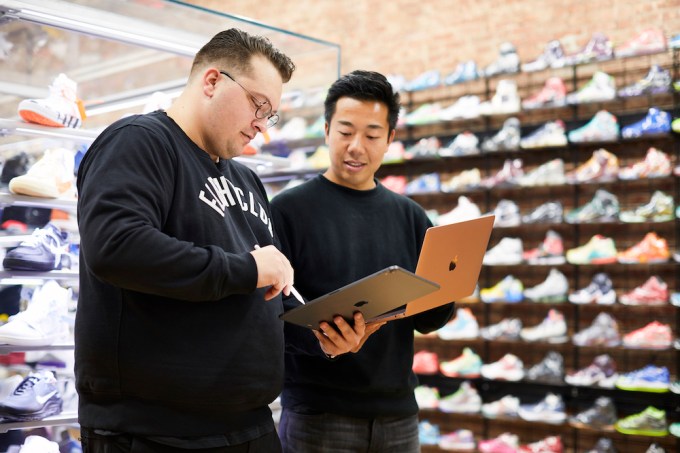
IT Manager Clint Arndt, CEO Eddy Lu

GOAT showed off the AR capabilities at an event with Apple last week at Flight Club New York. The AR elements were built using Apple’s ARKit, and it sounds like the startup plans to do more with the technology in the future.

“We’ve always wanted to incorporate augmented reality technology,” Goodno said, but the challenge, until ARKit, was integrating the technology into the GOAT app. “As a sneaker marketplace there are so many use cases for AR.” (Nike has also been using AR to connect with sneakerheads through its SNKRS app.)

At the event, co-founder and CEO Eddy Lu also talked about the company’s plans beyond AR, saying that “next year, international is a huge thing for us” — which means it’ll be doing more to localize its apps. In addition, it’s getting ready to open its next Flight Club store, this time in Miami.

09 Nov 2018

SoftBank’s debt, Ford buys Spin, and Chinese coffee is huge money

Hello and welcome back to Equity, TechCrunch’s venture capital-focused podcast, where we unpack the numbers behind the headlines.

This week was a blast. Connie and I were in the studio with our guest, True Ventures’s Tony Conrad, while Danny repped the other side of the country, dialing in from New York.

It was another week shaped by news from Asia. Once we had sorted the sartorially expedient, we first turned to the world of SoftBank, this time taking a close look at its debt load. While SoftBank is currently famous for its investments through its Vision Fund, the company is picking up some notable, debt-powered investments into its vehicle that could add to its risk profile.

After all, who doesn’t want more risk as 2018 comes to a close?

Moving on, Ford is doubling-down on its wager that mobility means more than cars, this time picking up Spin for some sum of money between $40 and $100 million, with most figures coming in a bit light from the nine-figure range.

We care as it’s a fresh turn in the scooter skirmish, not to mention the greater micromobility wars. Bird and Lime have a new competitor that has, possibly, super-deep pockets.

Next, we took a peek at Luckin Coffe’s meteoric rise. This is where our guest selection really showed off; Conrad is a former investor in Blue Bottle, making him a functional caffeine expert. We dug through margins, growth, and why venture players are interested in Luckin at all.

And finally, a look at how recently-public companies are selling more shares after their initial debut. So, when it comes to money on the table, don’t fret it too much.

Equity drops every Friday at 6:00 am PT, so subscribe to us on Apple PodcastsOvercast, Pocket Casts, Downcast and all the casts.

09 Nov 2018

New UnitedMasters deal will enable its artists get play across NBA properties

UnitedMasters came out of stealth about a year ago with a plan to help artists have a more direct relationship with their customers and fans and, more importantly, retain more control over their actual recordings. With $70MM from Alphabet, A16z, Floodgate and 20th Century Fox — as well as founder Steve Stoute, the former President of Interscope Records, the promises are big but the team seems up to the task.

Now, they’re ready to announce their first big partnership: The NBA.

With this launch, UnitedMasters artists will be able to have their music played across all of their properties around the world including digital properties like NBA.com and its apps.

“We’ve seen that there are a lot of synergies between the music industry, sports leagues, and individual personalities across athletes and musicians,” says Steve Stoute, founder and CEO of UnitedMasters . “The overlap between UnitedMasters artists, their fans and the NBA’s following provides a mutually beneficial opportunity to tap into an artist pool that is also a target consumer for the NBA.”

The NBA’s social community is huge, and the audience has an outsized tendency to be engaged with the music, style and culture that surrounds its fans and superstar players.

“The real value is the artist and who they are – they’re NBA fans, they’re fans of the product they’re soundtracking. You can go from watching the game to soundtracking its highlights,” says Stoute. “This is truly democratizing and removes any barrier from getting your music heard. You can watch something through the NBA, be inspired, create music and then upload it to UnitedMasters for the chance to be heard by 1.5 billion people.”

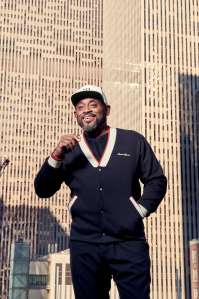
UnitedMasters founder Steve Stoute

The UnitedMasters hook is that it’s a record label that makes money on royalties and distribution, while allowing artists to retain the rights to their master product. Stoute was motivated by the fact that the creators and culture makers that have been driving the conversation, preferences and consumption habits of their fans have been unable to have a direct relationship with those most highly engaged consumers. Instead, they’re disintermediated by licensing and endorsement deals, middle men that control how their product can be used and by whom, and restrictive deals.

Outside of amazing, but rare, successes like famously independent Chance the Rapper, or online sensations that build up their own merch and marketing arms, it’s difficult for most artists to see a pathway from screening their own tees in their basement to partnering with big brands without having to make all of the same concessions along the way that have been in place for years.

Simply put, the people most responsible for shaping what people feel, how they dress, how they dance and yes, what they buy, have been largely unable to craft a direct person-to-person relationship with those people.

“We have a longstanding relationship with Steve Stoute and saw a unique opportunity with UnitedMasters to enhance the experience for NBA fans on our social and digital media, while providing a global digital stage for up-and-coming artists. This partnership will create a direct line between new artists and the NBA,” said Jeff Marsilio, SVP New Media at the NBA about what they get out of the deal.

“The breakthrough in this structure is that it’s a unique example of a brand or league providing a global distribution platform for artists — something UnitedMasters and the NBA are singularly positioned to do. The artists will have the opportunity to have their music heard on a global digital stage, while our fans will now have a new way to discover music while they enjoy NBA highlights on our social and digital media. It’s a win-win for everyone involved.”

The NBA partnership will allow artists to have their music heard by a much bigger audience, but it will also allow for UnitedMasters to use its creative agency Translation to market themselves, their merchandise and tickets to their shows directly.

And, perhaps most valuably, the artists also get data about all of these endpoints. Analytics, taken for granted by indie creators across platforms like YouTube, Soundcloud and more, are often either invisible or very strictly guarded and doled out once an artist makes a deal with a label, who treats those insights as proprietary. Access to data and help to understand what that data means and how to leverage it to connect customers, companies and money making opportunities to artists is a key premise of Translation and UnitedMasters.

“Starting on November 8, artists can sign up on UnitedMasters to create a profile, upload music and videos to the platform for distribution to major DSPs (e.g. Spotify, Apple), and opt-in for consideration to be featured in NBA content. In the future, artists will opt into other brand partnerships separately,” says Stoute.

The partnership is the first big test of the UnitedMasters premise. The firm will analyze the data coming from artists and fans to help figure out which tracks are best to insert into the stream of content going to the NBA. It will also measure how being featured on NBA properties reflects in artist performance like pure traffic to the artist’s music and other media, as well as providing analysis of the before and after effects on a larger scale. Basically, using data to tell exactly how beneficial the integration is for individual artists, and trying to maximize the match between artists and their most engaged fans.

“These data-driven insights and performance analysis will help UnitedMasters and artists understand what other partnerships could be a good fit for them to opt-in for in the future so they can build momentum with audiences where they have demonstrated success, continue to reach new fans and gain exposure in new markets,” says Stoute.

Kanye comes for a visit on launch week

If every artist is able to get a deeper, more personal understanding of what exact audiences most love their music, follow what they do and buy into what they’re selling, they can maximize their profits without having to sell the farm to get a small slice of that bigger pie.

If the proposition of simply being able to understand their audiences via data sounds somewhat basic, it’s probably because we’ve all been spoiled by how central data is to many platforms for music, social media and videos. Imagine if you could publish on YouTube but only see pure views, never where those views came from in the world, what the customers who love you are interested in or who they are at all. It handicaps your ability to market anything to those people or to build a relationship with them by understanding what they like, what regional or demographic trends you should be capitalizing on to make sure you’re maximizing your profit.

From the start, the transition to streaming and digital distribution for music has been handicapped by the efforts of the traditional machinery to maintain its grip on the path from artists to fans. There have been some attempts to loosen that grip over the years, and some that are confusingly un-seized, like the potential for Apple Music to be a true platform for artists that want a relatively direct commercial relationship with their fans.

UnitedMasters has some definite potential, and it’s about time someone tried something new here. The NBA partnership is a very savvy start to building up a surface area for its artists to market directly, we’ll see what they do next.

09 Nov 2018

Children are being “datafied” before we’ve understood the risks, report warns

A report by England’s children’s commissioner has raised concerns about how kids’ data is being collected and shared across the board, in both the private and public sectors.

In the report, entitled Who knows what about me?, Anne Longfield urges society to “stop and think” about what big data means for children’s lives.

Big data practices could result in a data-disadvantaged generation whose life chances are shaped by their childhood data footprint, her report warns.

The long term impacts of profiling minors when these children become adults is simply not known, she writes.

“Children are being “datafied” – not just via social media, but in many aspects of their lives,” says Longfield.

“For children growing up today, and the generations that follow them, the impact of profiling will be even greater – simply because there is more data available about them.”

By the time a child is 13 their parents will have posted an average of 1,300 photos and videos of them on social media, according to the report. After which this data mountain “explodes” as children themselves start engaging on the platforms — posting to social media 26 times per day, on average, and amassing a total of nearly 70,000 posts by age 18.

“We need to stop and think about what this means for children’s lives now and how it may impact on their future lives as adults,” warns Longfield. “We simply do not know what the consequences of all this information about our children will be. In the light of this uncertainty, should we be happy to continue forever collecting and sharing children’s data?

“Children and parents need to be much more aware of what they share and consider the consequences. Companies that make apps, toys and other products used by children need to stop filling them with trackers, and put their terms and conditions in language that children understand. And crucially, the Government needs to monitor the situation and refine data protection legislation if needed, so that children are genuinely protected – especially as technology develops,” she adds.

The report looks at what types of data is being collected on kids; where and by whom; and how it might be used in the short and long term — both for the benefit of children but also considering potential risks.

On the benefits side, the report cites a variety of still fairly experimental ideas that might make positive use of children’s data — such as for targeted inspections of services for kids to focus on areas where data suggests there are problems; NLP technology to speed up analysis of large data-sets (such as the NSPCC’s national case review repository) to find common themes and understand “how to prevent harm and promote positive outcomes”; predictive analytics using data from children and adults to more cost-effectively flag “potential child safeguarding risks to social workers”; and digitizing children’s Personal Child Health Record to make the current paper-based record more widely accessible to professionals working with children.

But while Longfield describes the increasing availability of data as offering “enormous advantages”, she is also very clear on major risks unfolding — be it to safety and well-being; child development and social dynamics; identity theft and fraud; and the longer term impact on children’s opportunity and life chances.

“In effect [children] are the “canary in the coal mine for wider society, encountering the risks before many adults become aware of them or are able to develop strategies to mitigate them,” she warns. “It is crucial that we are mindful of the risks and mitigate them.”

Transparency is lacking

One clear takeaway from the report is there is still a lack of transparency about how children’s data is being collected and processed — which in itself acts as a barrier to better understanding the risks.

“If we better understood what happens to children’s data after it is given – who collects it, who it is shared with and how it is aggregated – then we would have a better understanding of what the likely implications might be in the future, but this transparency is lacking,” Longfield writes — noting that this is true despite ‘transparency’ being the first key principle set out in the EU’s tough new privacy framework, GDPR.

The updated data protection framework did beef up protections for children’s personal data in Europe — introducing a new provision setting a 16-year-old age limit on kids’ ability to consent to their data being processed when it came into force on May 25, for example. (Although EU Member States can choose to write a lower age limit into their laws, with a hard cap set at 13.)

And mainstream social media apps, such as Facebook and Snapchat, responded by tweaking their T&Cs and/or products in the region. (Although some of the parental consent systems that were introduced to claim compliance with GDPR appear trivially easy for kids to bypass, as we’ve pointed out before.)

But, as Longfield points out, Article 5 of the GDPR states that data must be “processed lawfully, fairly and in a transparent manner in relation to individuals”.

Yet when it comes to children’s data the children’s commissioner says transparency is simply not there.

She also sees limitations with GDPR, from a children’s data protection perspective — pointing out that, for example, it does not prohibit the profiling of children entirely (stating only that it “should not be the norm”).

While another provision, Article 22 — which states that children have the right not to be subject to decisions based solely on automated processing (including profiling) if they have legal or similarly significant effects on them — also appears to be circumventable.

“They do not apply to decision-making where humans play some role, however minimal that role is,” she warns, which suggests another workaround for companies to exploit children’s data.

“Determining whether an automated decision-making process will have “similarly significant effects” is difficult to gauge given that we do not yet understand the full implications of these processes – and perhaps even more difficult to judge in the case of children,” Longfield also argues.

“There is still much uncertainty around how Article 22 will work in respect of children,” she adds. “The key area of concern will be in respect of any limitations in relation to advertising products and services and associated data protection practices.”

Recommendations

The report makes a series of recommendations for policymakers, with Longfield calling for schools to “teach children about how their data is collected and used, and what they can do to take control of their data footprints”.

She also presses the government to consider introducing an obligation on platforms that use “automated decision-making to be more transparent about the algorithms they use and the data fed into these algorithms” — where data collected from under 18s is used.

Which would essentially place additional requirements on all mainstream social media platforms to be far less opaque about the AI machinery they use to shape and distribute content on their platforms at vast scale. Given that few — if any — could claim not to have no under 18s using their platforms.

She also argues that companies targeting products at children have far more explaining to do, writing: 

Companies producing apps, toys and other products aimed at children should be more transparent about any trackers capturing information about children. In particular where a toy collects any video or audio generated by a child this should be made explicit in a prominent part of the packaging or its accompanying information. It should be clearly stated if any video or audio content is stored on the toy or elsewhere and whether or not it is transmitted over the internet. If it is transmitted, parents should also be told whether or not it will be encrypted during transmission or when stored, who might analyse or process it and for what purposes. Parents should ask if information is not given or unclear.

Another recommendation for companies is that terms and conditions should be written in a language children can understand.

(Albeit, as it stands, tech industry T&Cs can be hard enough for adults to scratch the surface of — let alone have enough hours in the day to actually read.)
Photo: SementsovaLesia/iStock

A recent U.S. study of kids apps, covered by BuzzFeed News, highlighted that mobile games aimed at kids can be highly manipulative, describing instances of apps making their cartoon characters cry if a child does not click on an in-app purchase, for example.

A key and contrasting problem with data processing is that it’s so murky; applied in the background so any harms are far less immediately visible because only the data processor truly knows what’s being done with people’s — and indeed children’s — information.

Yet concerns about exploitation of personal data are stepping up across the board. And essentially touch all sectors and segments of society now, even as risks where kids are concerned may look the most stark.

This summer the UK’s privacy watchdog called for an ethical pause on the use by political campaigns of online ad targeting tools, for example, citing a range of concerns that data practices have got ahead of what the public knows and would accept.

It also called for the government to come up with a Code of Practice for digital campaigning to ensure that long-standing democratic norms are not being undermined.

So the children’s commissioner’s appeal for a collective ‘stop and think’ where the use of data is concerned is just one of a growing number of raised voices policymakers are hearing.

One thing is clear: Calls to quantify what big data means for society — to ensure powerful data-mining technologies are being applied in ways that are ethical and fair for everyone — aren’t going anywhere.

09 Nov 2018

David Attenborough to voice Netflix’s nature conservation series, Our Planet

Netflix has persuaded everyone’s favorite naturalist, David Attenborough, to voice its forthcoming original nature documentary series, Our Planet, which is slated to put conservation squarely in the frame, not just offer glorious animal eye-candy.

It’s a timely moment to focus on conservation with climate change posing existential threats to global biodiversity — unless humans act to limit temperature rises.

Since the 1970s Attenborough has voiced and fronted myriad major BBC nature documentaries, including the recent critically acclaimed Blue Planet series.

Some of his output has been available to stream on Netflix. But now the on-demand video platform has signed the 92-year-old to voice an eight-part original nature series it’s been creating in collaboration with Silverback Films — whose director, Alastair Fothergill, was the creator of both Blue Planet and the also critically acclaimed Planet Earth documentary series — and conservation charity WWF .

Our Planet is due to premiere on Netflix on April 5 next year and is slated to showcase the planet’s “most precious species and fragile habitats”, making use of “the latest in 4k camera technology”.

Netflix said yesterday it is “delighted” that Attenborough will voice the series which will be made simultaneously available to its subscriber base, spanning more than 190 countries.

Filming for the series has been taking place in 50 countries across all continents of the world, with 600+ crew members capturing more than 3.5k filming days to bring the project together.

Speaking at WWF’s State of the Planet Address event in London yesterday, Attenborough said: “Our Planet will take viewers on a spectacular journey of discovery showcasing the beauty and fragility of our natural world. Today we have become the greatest threat to the health of our home but there’s still time for us to address the challenges we’ve created, if we act now. We need the world to pay attention. Our Planet brings together some of the world’s best filmmakers and conservationists and I’m delighted to help bring this important story to millions of people worldwide.“

“We hope it will inspire and delight hundreds of millions of people across the world so they can understand our planet, and the environmental threat it faces, as never before,” added Fothergill in another supporting statement. “By launching on Netflix at the same time all over the world, this series will enable people to connect to and understand the shared responsibility we all have. We are genuinely all in this together.”

Netflix’s says the partnership with WWF means the series will be part of a wider global project that’s intended to promote conservation awareness, including via online resources and educational programmes for schools.