Year: 2018

09 Nov 2018

Win a shot to compete in Startup Battlefield at Disrupt Berlin 2018

Still crying in your Red Bull because you missed the deadline to compete in Startup Battlefield at Disrupt Berlin 2018? Don’t despair. You have one more chance to step onto the Main Stage and go head-to-head against some of the best pre-series A startups across Europe.

How? Grab an exhibitor’s table in Startup Alley. Every exhibitor has a chance of being selected as a Wild Card winner. Who does the selecting, you ask? Our crack TechCrunch editorial team designates the Wild Card from among the hundreds of early-stage Startups in Startup Alley, and that one amazing exhibitor will compete for $50,000 cash, the Disrupt Cup and potentially life-changing investor and media attention.

No one says this will be a walk in the park, but the opportunity is very real. Just last year at Disrupt NY 2017, RecordGram decided to exhibit in Startup Alley. They were chosen as a Wild Card company and wound up winning the Startup Battlefield competition. What have you got to lose?

Whether or not you win the Wild Card, Startup Alley is a landscape full of opportunity. More than 2,500 attendees pass through the Alley, and it’s the perfect place to find your future customers, investors, partners, advisors, employees, marketers, media coverage — holy cats — the list is endless. You’ll find the names of companies exhibiting in Startup Alley here.

Here’s what two founders told us about their experience as Startup Alley exhibitors.

“We met so many people, I still can’t get over it. We got to demo our technology in front of hundreds of people. I’d say it was one of the coolest things we’ve ever done.” — Caleb John, CEO of Cedar Robotics.

“Startup Alley was full of all the people you could possibly hope to meet at a tech conference. They spanned diverse backgrounds and industries. We talked to people looking for partnerships, investments, new ideas, and collaboration.” — Vlad Larin, co-founder of Zeroqode.

And you’ll have access to CrunchMatch, our free business match-making service that makes networking easier than ever. Plus, you’ll enjoy a terrific lineup of speakers, panels, Q&A Sessions and workshops. Check the full agenda here.

Disrupt Berlin 2018 takes place on 29-30 November. We believe in second chances and wildcards. Sign up for an exhibitor’s table today, show the startup world exactly what makes your company Wild Card-worthy and take another swing at Startup Battlefield. We’ll look for you in Startup Alley!

09 Nov 2018

Xiaomi is opening a retail store in London as it extends its Europe push

Xiaomi’s expansion into Europe continues at speed after the Chinese smartphone maker announced plans to open its first retail store in London.

The company is best known for developing quality Android phones at affordable prices and already it has launched devices in Spain, Italy and France. Now, that foray has touched the UK where Xiaomi launched its Mi 8 Pro device at an event yesterday and revealed that it will open a store at the Westfield mall in London on November 18.

That outlet will become Xiaomi’s first authorized Mi Store. Styled on Apple’s iconic stores, the Mi store will showcase a range of products, not all of which are available in the UK.

Still, Xiaomi has shown a taste of what it plans to offer in the UK by introducing a number of products alongside the Mi 8 Pro this week. Those include its budget tier Redmi 6A phone and, in its accessories range, the Xiaomi Band 3 fitness device and the £399 Mi Electric Scooter. The company said there are more to come.

That product selection will be available via Xiaomi’s own Mi.com store and a range of other outlets, including Amazon, Carphone Warehouse and Three, which will have exclusive distribution of Xiaomi’s smartphones among UK telecom operators.

Xiaomi hasn’t branched out into the U.S. — it does sell a number of accessories — but the European launches mark a new phase of its international expansion to take it beyond Asia. While Xiaomi does claim to be present in “more than 70 countries and regions around the world,” it has recorded most of its success in China, India and pockets of Asia.

CEO Lei Jun has, however, spoken publicly of his goal to sell Xiaomi phones in the U.S by “early 2019” at the latest.

Still, even with its focus somewhat limited, Xiaomi claims it has shipped a record 100 million devices in 2018 to date. The firm also posted a $2.1 billion profit in its first quarter as a public company following its Hong Kong IPO. However, the IPO underwhelmed with Xiaomi going public at $50 billion, half of its reported target, while its shares have been valued at below their IPO price since the middle of September.

09 Nov 2018

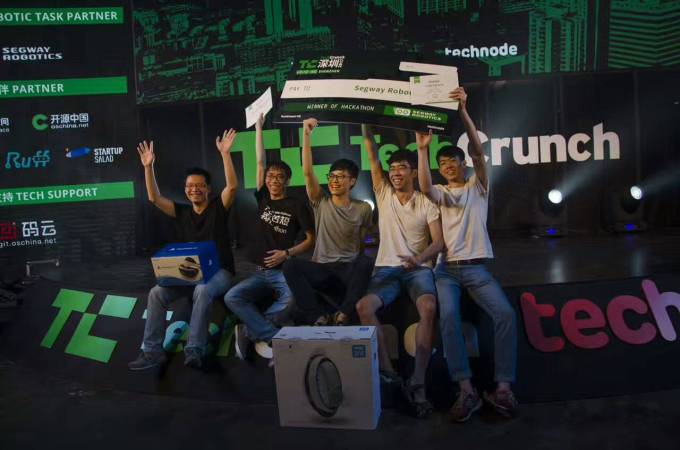
Calling all hackers! Join us for TechCrunch China’s Shenzhen Hackathon on Nov 17

Attention coders, designers and all other builders: the TechCrunch China Hackathon is returning to Shenzhen, the city known as the hardware capital of the world, this month and we want you to take part!

So if your inner being is to code, design, build and hack cool things; if you want to have fun with others like you over a weekend; if you love to use your superpower to win cash and prizes; and if you need an excuse to kickstart that side-project project you’ve been thinking about for weeks… then come on over!

Arranged as a pre-cursor to our TechCrunch China Shenzhen event this month, the hackathon takes place on November 17. There’s really is no better place to build your next app, product or hack.

Like the traditional TC Hackathon, participating in the Shenzhen Hackathon is entirely free. All you need to do is register, which you can do right here.

The plan is simple: after 24 hours of building, hackers present their projects to their peers and a panel of judges who decide on the winners.

The top teams win the grand prize and there are other special awards on offer, including the Most Innovative Product, the Most Valuable Product, and the Most Completed Product awards.

In addition, this year, we’re giving you more. Every hacker who successfully submits their project will receive a two-day pass to the TechCrunch Shenzhen 2018 event — valued 1299 RMB or $188 — in addition to a certificate of honor and a souvenir t-shirt.

Every successful hackathon entrant will receive tickets to the TechCrunch China event in Shenzhen, which runs November 19-20

There will also be a bunch of blockchain challenges from our sponsor Ontology and other partners. With blockchain’s versatile applications and usability across a range of industries, the blockchain challenges bring together different knowledge bases and backgrounds, from gaming to supply chain software, medical software and voting applications.

The TechCrunch Shenzhen Hackathon takes place at the Shenzhen Bay Inno Mall 深圳湾创新广场 from November 17-18. Get your tickets here — you can visit this link for more information.

09 Nov 2018

Walmart is building an AI lab inside one of its store

Walmart has just announced its plans to launch what it’s calling an Intelligent Retail Lab inside one of its stores in Levittown, New York.

The idea is to test both associate and customer experiences. For example, Walmart wants to use artificial intelligence to better identify when items are running low on stock so that it can proactively replenish the stock. Lead by an internal team called Kepler, Walmart also envisions using the technology to identify spills, better understand when shopping carts are running low near the entrance and identify when items are on the wrong shelf.

Tech publications, including this one, had previously reported that Project Kepler would entail cashierlesss stores. Instead, Walmart says Kepler is the name of the team building the AI lab inside the working Walmart store in Levittown.

Walmart has not yet launched the IRL, but it’s already begun installing hardware, software and the other necessary equipment to thoroughly test the technology. The IRL team is housed within Walmart’s startup incubator Store No. 8.

Through Walmart’s warehouse club, Sam’s Club, the retailer is testing new concepts like mobile checkout, a camera system for inventory management, electronic shelf labels and other technologies.

With Kepler, the plan is to test a wide range of capabilities inside a real grocery store, rather than a warehouse club store.

09 Nov 2018

All I want for Christmas are these kitschy VC trading cards

Just kidding. Please don’t buy me these collectible trading cards featuring Silicon Valley venture capitalists for Christmas. But if you are in the market for a gift for a VC — or aspiring VC — they’d probably appreciate a set.

[gallery ids="1744120,1744121,1744122"]

Yes, they really exist! TouchBase is selling a line of the VC trading cards, featuring Y Combinator co-founder Paul Graham, Andreessen Horowitz co-founder Marc Andreessen, Kleiner Perkins partner Mary Meeker and Benchmark general partner Bill Gurley.

Someone may want to tell TouchBase that Meeker is leaving Kleiner to start her own fund.

A pack of five cards will cost you $60. Each pack, the company writes, comes with a mix of late-stage VCs, angel and seed investors, as well as an advisor or two.

TouchBase doesn’t say who else is featured on the cards, so you’ll have to buy a pack, or two, or three to find out.

The cards begin shipping this month.

08 Nov 2018

SpaceX’s Starlink aims to put over a thousand of its communications satellites in super-low orbit

SpaceX’s planned communication satellite constellation, known as Starlink, will now be targeting a much lower orbit than originally planned, at least for over a thousand of the satellites, the company revealed in an FCC filing. The move should help mitigate orbital debris and provide better signal for the company’s terrestrial users as well.

Starlink plans to put 1,584 satellites — about a third of the 4,409 the company aims to launch — in an orbit just 550 kilometers about the surface of the Earth. For comparison, many communications satellites are in orbits over twice as high, and geosynchronous orbits are more than 20 times further out (around 36,000 miles).

At that distance orbits decay quickly, falling into the atmosphere and burning up after a handful of years. But SpaceX isn’t daunted; in fact, it writes in its application, lower orbits offer “several attractive features both during nominal operation and in the unlikely event something goes wrong.”

In the first place, orbital debris problems are naturally mitigated by the fact that anything in that low orbit will fall to Earth quickly instead of cluttering up the orbit. Second, it should shorten the amount of time it takes to send and receive a signal from the satellites — ping time could be as low as 15 milliseconds, the company estimated. 500 fewer kilometers means there will be less spreading for beam-based communications, as well.

The satellites will have to do more work to stay at their optimal altitude, since atmospheric drag will be higher, and each one will be able to see and serve less of the planet. But with thousands working together, that should be manageable.

The decision was informed by experimental data from the “Tintin” test satellites the company launched earlier this year. “SpaceX has learned to mitigate the disadvantages of operating at a lower altitude and still reap the well-know and significant benefits discussed above,” it wrote.

This change could lead to competitive advantages when satellite communications are more widely used, but it will also likely lead to a more intensive upkeep operation as Starlink birds keep dropping out of the air. Fortunately a third benefit of the lower orbit is that it’s easier to reach, though probably not so much easier that the company breaks even.

Starlink is aiming for the first real launches of its systems early next year, though that timeline may be a little too ambitious. But SpaceX can do ambitious.

08 Nov 2018

Google walkout organizers aren’t satisfied with CEO’s response

Organizers of the massive walkouts at Google last week are — rightfully so — not letting up on their demands. Earlier this morning, Google CEO Sundar Pichai responded to some of their demands, outlining how Google is getting rid of forced arbitration for sexual harassment and sexual assault claims, offering more transparency around those investigations and more.

While Google did make some changes, the company did not address all of the organizers’ demands. For example, Google failed to elevate its chief diversity officer to report directly to Pichai and also ignored the organizers’ request to add an employee representative to the board of directors.

In the Medium post today, the organizers commended Google’s process while also noting how Pichai’s response did not address many of the core demands. In the post, they write:

However, the response ignored several of the core demands — like elevating the diversity officer and employee representation on the board — and troublingly erased those focused on racism, discrimination, and the structural inequity built into the modern day Jim Crow class system that separates ‘full time’ employees from contract workers. Contract workers make up more than half of Google’s workforce, and perform essential roles across the company, but receive few of the benefits associated with tech company employment. They are also largely people of color, immigrants, and people from working class backgrounds.

“The process by which we build a truly equitable culture must center the voices of black women, immigrants, and people of color — those who too often pay the most in the face of these intersecting problems,” Google employee and walkout organizer Demma Rodriguez said in the Medium post. “We are committed to making this happen, because true equity depends on it.”

The worldwide walkout of 20,000 Google employees and contractors came in response to a damning New York Times report regarding Google’s handling of sexual harassment investigations. Moving forward, the organizers say they will not let up on the demands “most urgent for women of color: an employee representative on the board, elevating the chief diversity officer, greater transparency on and an end to opportunity inequity at Google and beyond” and looks “forward to meeting with Google leadership in working to meet all of our demands.”

I’ve reached out to Google and will update this story if I hear back.

08 Nov 2018

Three challenges facing blockchain technology

Nearly five years ago, Overstock.com became the first major retailer to accept bitcoin as a form of payment. It now accepts many top cryptocurrencies. As a member of the senior executive team and board of directors at Overstock.com, I had a front-row seat to those decisions.

It didn’t take long for the Overstock team to realize that bitcoin’s underlying blockchain technology held great promise beyond cryptocurrencies. We also knew that for blockchain technology to reach its full potential, the startup companies advancing its use would need both financial and human capital support.

Overstock set up a venture capital blockchain incubator, Medici Ventures, to do just that.

We believe blockchain technology will eventually impact many industries. We are already involved in promising developments in areas like capital markets, money transmission and banking, voting, supply chain, property and self-sovereign identity. But there is still a long way to go before blockchain technology can realize its true potential.

Here are the three most important challenges facing more widespread adoption of blockchain technology right now.

Finding good enterprise-level blockchain software developers

The world has become so reliant on computers, to the point where virtually every company now has need for software development. In this environment, where demand grows exponentially, good software development talent is hard to find. Game-changing talent is rarer still.

Because blockchain is a new field of technology, there are fewer talented enterprise-level software developers who understand it well. Those who do can practically write their own tickets. While this is an enviable position for them, it limits many companies from developing engaging and transformative blockchain-based applications.

Let’s remember that we are in the early days of blockchain.

At Medici Ventures, we provide regular internal training to help our software developers climb this important learning curve. In this training — which we do in educational presentations which sometimes include accelerated coursework — our teams often present discoveries made when developing on one project, with the hope that the solutions may benefit those working on other projects. This approach lets us cross-pollinate our industries and our disciplines, so creative development and innovation become rising tides rather than isolated spikes.

The time spent learning is well worth it; it is why many of our portfolio companies rely not just on our venture capital, but also our human capital. Until there is a regular pipeline of well-qualified blockchain developers, the shortage of great talent will continue to be a struggle for the advancement of the technology.

Avoiding the temptation of regulation

Like many of their voting constituents, Congress and state legislatures are just becoming aware of blockchain. In some ways, this is good news: Political engagement will increase awareness and interest for utilizing blockchain technology and help drive adoption of these new ideas. Unfortunately, it also brings the temptation of regulation to an emerging market.

I get concerned when regulators and legislators get a whiff of any kind of technological development because they are tempted to regulate it. When U.S. Securities and Exchange Commission (SEC) chair Jay Clayton stated that he considered all initial coin offerings (ICOs) to be securities rather than commodities, and therefore subject to his organization’s regulation, Clayton brought an ICO boom to a screeching halt. While Chairman Clayton and others at the SEC have subsequently modified that stance, this regulatory tendency to fear what is new is dangerous.

The interconnectedness of the world means its adoption will probably take root and bloom quickly.

Technology — and the advancement of blockchain — should not be regulated. In the 1990s, when the internet’s potential was becoming evident, legislators opted not to regulate it. That bipartisan decision led to the open-market creation of the much-lauded “information superhighway” and the power of the internet today.

Certainly, there will be use cases that may require regulation as blockchain applications develop and proliferate. But the growth of blockchain technology will be best nurtured when it is free and unfettered from regulation.

Reaching critical mass

Cryptocurrencies and digital wallets built on blockchain are great uses of the technology. In order for cryptocurrencies to proliferate in use and stabilize in price, and for digital wallets to get widespread adoption, consumers need to spend cryptocurrencies more and merchants need to accept them. A great example of this working the right way is Colu, an exciting new company I recently saw in action when I was in Tel Aviv, Israel. Colu is a digital wallet that uses blockchain technology to create local currencies. People simply download the app, add money and shop locally. The app highlights local establishments and makes shopping convenient. And it is dazzling people in Tel Aviv!

The same can be said of other blockchain-based applications like secure remote digital voting. West Virginia recently became the first state to allow overseas citizens to vote remotely using a blockchain-driven app. The West Virginia program was tested in the May primary and was used in this November’s general election.

We’ll know blockchain technology has become mainstream when we are no longer talking about it.

Some critics have been quick to disparage real efforts to create digital voting with strictly theoretical worries. In reality, the rollout in West Virginia is a very focused solution to a specific issue: low overseas voter participation. The current system is broken. A blockchain-driven digital voting app is a clear solution. Anyone but critics of progress should eagerly support West Virginia’s efforts until there is an actual reason to worry.

Once any blockchain application is embraced in sufficient numbers by both the using and accepting sides, the impressive software will become an invaluable and ubiquitous tool. More widespread adoption of blockchain’s most beneficial use cases will trigger network effects that will multiply the benefits.

Let’s remember that we are in the early days of blockchain. Many industry observers seem to be in a rush to declare blockchain a mainstream technology. As enthusiastic as I am in my support of blockchain, I would not yet call it mainstream. The interconnectedness of the world means its adoption will probably take root and bloom quickly. We’ll know blockchain technology has become mainstream when we are no longer talking about it, but we are simply using it in everyday ways.

I am thrilled to see digital purchases made and remote votes cast in elections with this game-changing technology. As developers, investors and companies continue to focus on using and advancing blockchain, we will see that finding good enterprise-level blockchain software developers, letting blockchain grow free from unnecessary regulation and achieving critical mass use are the next important steps in the growth and adoption of this world-changing technology.


08 Nov 2018

Roku expands its free streaming channel with entertainment and live sports

Roku’s ad-supported free streaming channel is expanding. No, not to more platforms – it already did that. But rather, it’s expanding its content lineup. While before the channel offered free-to-stream movies and news, it will now feature live and linear sports and entertainment content, the company says.

As of earlier this year, The Roku Channel added live news from ABC News, Cheddar, Newsmax, Newsy, People TV, Yahoo, and most recently, The Young Turks, from the TYT Network.

It will now add entertainment content from partners including TMZ, AFV, FailArmy, People Are Awesome, Pet Collective and more. As with the channel’s other offerings, none of these streams will require a subscription.

Meanwhile, the channel will also begin to stream live sporting events from the Adventure Sports Network, COMBT GO, EDGEsport, Stadium, and Wham Network, among others.

The additions come on the heels of Roku’s Q3 earnings, which saw the company beat Wall St. expectations on hardware, but saw platform revenue falling short – causing the stock to drop.

The company has been trying to move beyond being only a hardware device maker selling TVs and streaming players, to grow its platform business and advertising revenues. A key part of that strategy is The Roku Channel, which opens up Roku’s platform to a wider audience, and allows the company to sell ads against content.

The plan may work in the long-run, but it’s taking time to ramp up, it seems.

However, Roku did report a growing user base with 23.8 million active users, streaming 6.2 billion hours in the quarter. That was ahead of expectations of 23.1 million users and 5.8 billion hours.

08 Nov 2018

Disney’s new streaming service will be called Disney+

We knew Disney was building its own on-demand streaming service, à la Netflix or HBO GO, but we didn’t know the name.

Now we do. Disney’s new streaming service will be called Disney+.

While there’s been a few rumored names (it was misreported, at one point, to be “Disney Play”), word of this name comes straight from the Mouse House:

Disney+ will launch in “late” 2019 — which makes sense, as that’s right around the time Disney’s remaining contractual ties with Netflix come to an end.

Disney also dropped news about two new series:

  • An as-of-yet unnamed live action Star Wars series about Rogue One’s Cassian Andor, with Diego Luna returning for the role. It is set to take place prior to Rogue One. This, of course, is in addition to The Mandalorian, the series Jon Favreau is making for the service.
  • An unnamed live-action Marvel universe series focusing on Loki. Tom Hiddleston will return to the role.