Year: 2018

07 Nov 2018

Grab pulls in $250M from Hyundai as ongoing round reaches $2.7B

Grab, the Singapore startup that bought Uber’s Southeast Asia business earlier this year, continues to announce strategic investors for its ongoing Series H funding round. The latest edition revealed today is Korean automotive firm Hyundai, which is investing $250 million.

Hyundai first invested in Grab in January, and it joins recently announced investors Microsoft (undisclosed) and Booking Holdings ($200 million) in the round, which is aimed at reaching at least $3 billion before the end of this year. Grab first announced a $1 billion investment from Toyota in June and that was doubled to $2 billion when a range of institutional backers joined. Those include OppenheimerFunds, Ping An Capital, Mirae Asset-Naver Asia Growth Fund, Lightspeed Venture Partners and Macquarie Capital, and today Grab disclosed two others: Goldman Sachs Investment Partners and Citi Ventures.

In total, these additions take that Series H round to $2.7 billion so far, Grab said. That means that Grab, which is valued at over $11 billion, has now raised more than $6 billion from investors including SoftBank and China’s Didi. That’s a figure that extends its record for a startup in Southeast Asia. Grab claims 125 million downloads across its eight markets in Southeast Asia and over 2.5 billion rides completed to date, up from two billion in July.

Like Toyota, Microsoft and travel giant Booking — which was formerly known as Priceline — Hyundai’s involvement includes a fairly hefty strategic portion: electric vehicles.

Grab said that it will work with the Korea firm introduce a series of EV pilots in Southeast Asia that’ll feature Hyundai and Hyundai-owned Kia vehicles. The companies began working on the rollout of Hyundai’s IONIQ vehicle in Singapore earlier this year and now they will add Kia EVs and explore opportunities beyond Singapore.

(Right to left) Euisun Chung, Executive Vice Chairman of Hyundai Motor Group, and Anthony Tan, Grab CEO, mark the new $250 million investment deal [Image via Bloomberg New Economy Forum]

Grab has an EV fleet in Singapore — size undisclosed — and it is working with Singapore Power to roll out a network of charging hubs and packages for Grab EV drivers as it expands that EV presence in the country. But this Hyundai partnership would represent its first EV foray into other markets in Southeast Asia, which has a cumulative population of more than 600 million consumers, although it didn’t name which markets or give a timeframe.

As in Singapore, Grab said its EV strategy will include engaging governments and “infrastructure players” to set up the right conditions for EVs, such as charging networks, maintenance packages for drivers and general research into how EVs perform in more humid environments.

Beyond the EV plans, Grab’s Series H is being put aside for a number of ventures which include its push to become an all-in-one ‘super app’ that goes beyond transportation to cover food deliveries, services on-demand, payments and fintech services, and more. There’s also likely an allocation for competition because, although Grab consumed Uber’s local business in the region, Indonesia-based rival Go-Jek is expanding in the region.

Go-Jek, which is aiming to raise $2 billion in its latest funding round according to sources, has entered Vietnam, is in the process of launching in Thailand and has just begun recruiting drivers for a Singapore rollout. That means Grab needs to keep a substantial amount of powder dry in case of the (likely) event that its battle with Go-Jek descends into a discount war, as was often the case during its rivalry with Uber.

That explains why it is raising an enormous $3 billion round despite having already removed Uber from the region via the buyout deal, which saw the U.S. ride-hailing giant take a 27.5 percent stake in Grab.

That deal, by the way, didn’t really go as planned. Not only was Grab over ambitious on the logistics, including plans to consume most of Uber’s 500 staff, but it misread the public reaction and incurred the wrath of regulators. Singapore’s consumer watchdog hit Uber and Grab with a total of $9.5 million in fines for the “anti-competitive” merger, while the pair got a lighter reprimand in the Philippines.

06 Nov 2018

Tinder now has 4.1M paying users, expects $800M in revenue this year

Facebook Dating is no challenger to Tinder-owner Match Group (NASDAQ: MTCH), which posted third-quarter earnings per share of 44 cents on Tuesday.

The company, which owns several brands of internet dating services, including Tinder, Hinge, Ok Cupid and PlentyOfFish, surpassed analyst’s forecasted revenue of $437 million, reporting Q3 revenue of $444 million, a 29 percent increase year-over-year.

Match says it expects to bring in a total of $1.72 billion in annual revenue.

Despite positive earnings, the company’s 4Q outlook failed to satisfy Wall Street. Match said it expects between $440 and $450 million in revenue in Q4, falling short of the $454.5 million analyst estimate. Shares of Match sank 10 percent in after-hours trading as a result.

Year-to-date, Match’s stock is up roughly 60 percent.

Tinder, the location-based mobile dating application, continues to be Match’s growth engine, responsible for roughly half its paid users and half its projected annual revenue. Match’s total number of paid subscribers came in at 8.1 million, up from 7.7 million in Q2 and a 23 percent increase YoY. Much of that growth comes from Tinder Gold, Tinder’s premium subscription tier that lets users see who’s already liked them without doing any swiping. Overall Tinder’s paying user base is up to 4.1 million from 3.8 million the previous quarter.

Tinder is expected to bring in $800 million in revenue in 2018.

Hinge, another app-based dating service acquired by Match in June, is on its way up. Match says it’s seen a 5x increase in downloads since it first invested.

Match also announced that it would, for the first time, issue a special cash dividend of $2.00 per share on Match Group common stock and Class B common stock, to be paid out on Dec. 19.

Match continues to be on the prowl for strategic M&A opportunities, said its chief executive officer Mandy Ginsberg in a statement

“[We] have the financial flexibility to acquire companies when we find innovative products with long-term potential,” she said.

The company has reportedly attempted to acquire Tinder-competitor Bumble on more than one occasion, though the nasty legal battle playing out between the dating powerhouses makes that combination unlikely. Most recently, Bumble said it was dropping its $400 million lawsuit against Match, which had claimed Match fraudulently obtained trade secrets during acquisition talks. Bumble may refile that suit at the state level.

Dallas-based Match is owned by IAC, which will itself report earnings tomorrow after the closing bell.

06 Nov 2018

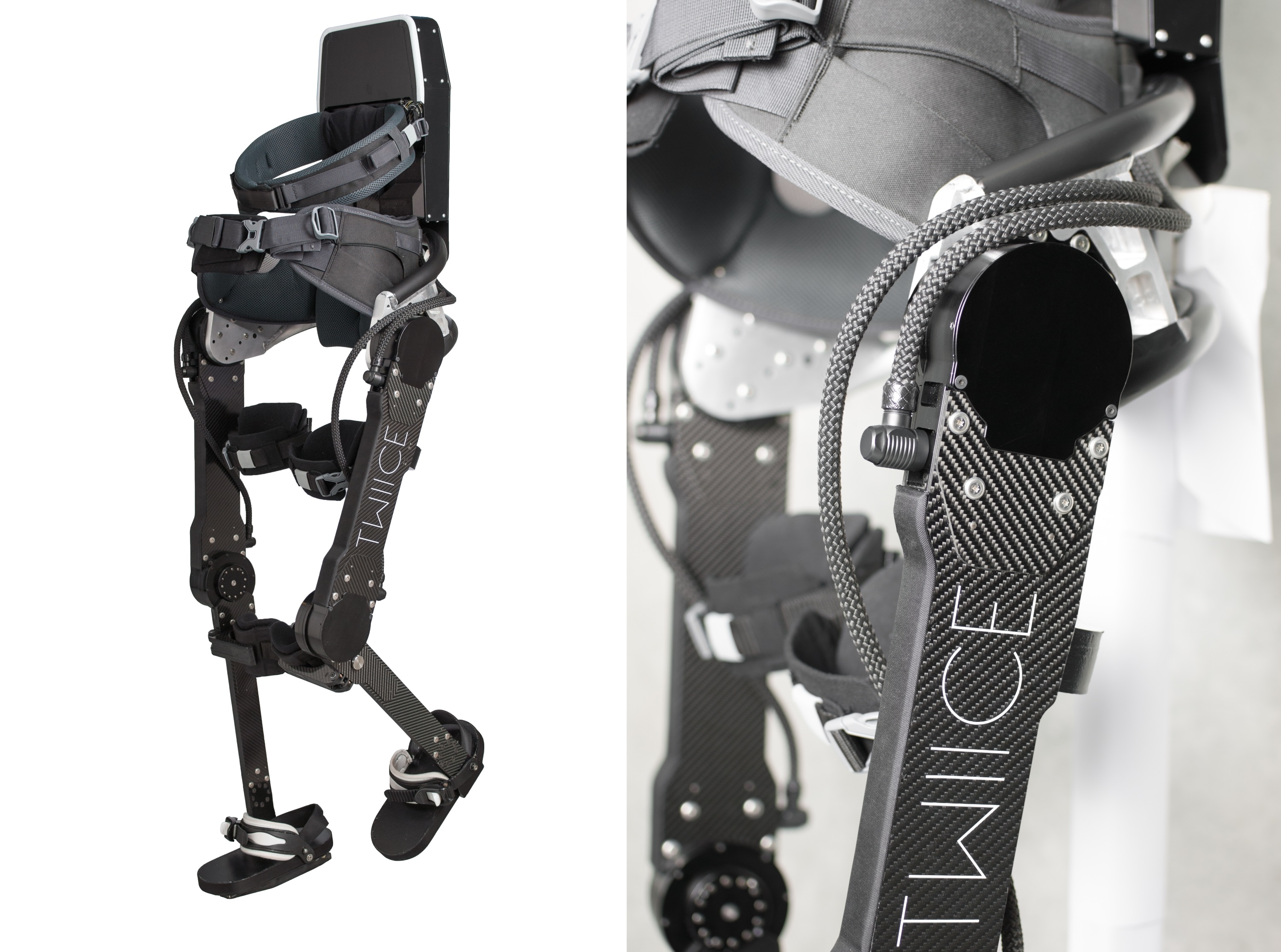
TWIICE One Exoskeleton furthers the promise of robotic mobility aids

Few things in the world of technology can really ever be said to be “done,” and certainly exoskeletons are not among their number. They exist, but they are all works in progress, expensive, heavy, and limited. So it’s great to see this team working continuously on their TWIICE robotic wearable, improving it immensely with the guidance of motivated users.

TWIICE made its debut in 2016, and like all exoskeletons it was more promise made than promise kept. It’s a lower-half exoskeleton that supports and moves the legs of someone with limited mobility, while they support themselves on crutches. It’s far from ideal, and the rigidity and weight of systems like this make them too risky to deploy at scale for now.

But two years of refinement have made a world of difference. The exoskeleton weighs the same (which doesn’t matter since it carries its own weight), but supports heavier users while imparting more force with its motors, which have been integrated into the body itself to make it far less bulky.

Perhaps most importantly, however, the whole apparatus can now be donned and activated by the user all by herself, as Swiss former acrobat and now handcycling champion Silke Pan demonstrated in a video. She levers herself from her wheelchair into the sitting exoskeleton, attaches the fasteners on her legs and trunk, then activates the device and stands right up.

She then proceeds to climb more stairs than I’d rather attempt. She is an athlete, after all.

That kind of independence is often crucially important for the physically disabled for a multitude of reasons, and clearly achieving the capability has been a focus for the TWIICE team.

Although the exoskeleton has been worked on as a research project within the Ecole Polytechnique Federale de Lausanne (EPFL), the plan is to spin off a startup to commercialize the tech as it approaches viability. The more they make and the more people use these devices — despite their limitations — the better future versions will be.

06 Nov 2018

Three ways to avoid bias in machine learning

At this moment in history it’s impossible not to see the problems that arise from human bias. Now magnify that by compute and you start to get a sense for just how dangerous human bias via machine learning can be. The damage can be twofold:

  • Influence. If the AI said so it must be true… people trust outputs of AI, so if human bias is missed in the training it could compound the problem by infecting more people;
  • Automation. Sometimes AI models are plugged into a programmatic function, which could lead to the automation of bias. 

But there is potentially a silver machine-learned lining. Because AI can help expose truth inside messy data sets, it’s possible for algorithms to help us better understand bias we haven’t already isolated, and spot ethically questionable ripples in human data so we can check ourselves. Exposing human data to algorithms exposes bias, and if we are considering the outputs rationally, we can use machine learning’s aptitude for spotting anomalies.

But the machines can’t do it on their own. Even unsupervised learning is semi-supervised, as it requires data scientists to choose the training data that goes into the models. If a human is the chooser, bias can be present. How the heck do we tackle such a bias beast? We will attempt to pick it apart.

The landscape of ethical concerns with AI

Bad examples abound. Consider the finding from Carnegie Mellon that showed that women were shown significantly fewer online ads for high-paying jobs than men were. Or recall the sad case of Tay, Microsoft’s teen slang Twitter bot that had to be taken down after producing racist posts.

In the near future, such mistakes could result in hefty fines or compliance investigation, a conversation that’s already occurring in the U.K. parliament. All mathematicians and machine learning engineers should consider bias to some degree, but that degree varies from instance to instance. A small company with limited resources will often be forgiven for accidental bias as long as the algorithmic vulnerability is fixed quickly; a Fortune 500 company, which presumably has the resources to ensure an unbiased algorithm, will be held to a tighter standard.

Of course, an algorithm that recommends novelty T-shirts does not need nearly as much oversight as an algorithm that decides what dose of radiation to give to a cancer patient. It’s these high-stakes decisions that will become the most pronounced when legal liability enters the discussion.

It’s important for builders and business leaders to establish a process for monitoring the ethical behavior of their AI systems.

Three keys to managing bias when building AI

There are signs of existing self-correction in the AI industry: Researchers are looking at ways to reduce bias and strengthen ethics in rule-based artificial systems by taking human biases into account, for example.

These are good practices to follow; it’s important to be thinking proactively about ethics regardless of the regulatory environment. Let’s take a look at several points to keep in mind as you work on your AI.

1. Choose the right learning model for the problem.

There’s a reason all AI models are unique: Each problem requires a different solution and provides varying data resources. There’s no single model to follow that will avoid bias, but there are parameters that can inform your team as it’s building.

For example, supervised and unsupervised learning models have their respective pros and cons. Unsupervised models that cluster or do dimensional reduction can learn bias from their data set. If belonging to group A highly correlates to behavior B, the model can mix up the two. And while supervised models allow for more control over bias in data selection, that control can introduce human bias into the process.

It’s better to find and fix vulnerabilities now than to have regulators find them later on.

Non-bias through ignorance — excluding sensitive information from the model — may seem like a workable solution, but it still has vulnerabilities. In college admissions, sorting applicants by ACT scores is standard, but taking their ZIP code into account might seem discriminatory. But because test scores might be affected by the preparatory resources in a given area, including the ZIP code in the model could actually decrease bias.

You have to require your data scientists to identify the best model for a given situation. Sit down and talk them through the different strategies they can take when building a model. Troubleshoot ideas before committing to them. It’s better to find and fix vulnerabilities now — even if it means taking longer — than to have regulators find them later on.

2. Choose a representative training data set.

Your data scientists may do much of the leg work, but it’s up to everyone participating in an AI project to actively guard against bias in data selection. There’s a fine line you have to walk. Making sure the training data is diverse and includes different groups is essential, but segmentation in the model can be problematic unless the real data is similarly segmented.

It’s inadvisable — both computationally and in terms of public relations — to have different models for different groups. When there is insufficient data for one group, you could possibly use weighting to increase its importance in training, but this should be done with extreme caution. It can lead to unexpected new biases.

For example, if you have only 40 people from Cincinnati in a data set and you try to force the model to consider their trends, you might need to use a large weight multiplier. Your model would then have a higher risk of picking up on random noise as trends — you could end up with results like “people named Brian have criminal histories.” This is why you need to be careful with weights, especially large ones.

3. Monitor performance using real data.

No company is knowingly creating biased AI, of course — all these discriminatory models probably worked as expected in controlled environments. Unfortunately, regulators (and the public) don’t typically take best intentions into account when assigning liability for ethical violations. That’s why you should be simulating real-world applications as much as possible when building algorithms.

It’s unwise, for example, to use test groups on algorithms already in production. Instead, run your statistical methods against real data whenever possible. Ask the data team to check simple test questions like “Do tall people default on AI-approved loans more than short people?” If they do, determine why.

When you’re examining data, you could be looking for two types of equality: equality of outcome and equality of opportunity. If you’re working on AI for approving loans, result equality would mean that people from all cities get loans at the same rates; opportunity equality would mean that people who would have returned the loan if given the chance are given the same rates regardless of city. Without the latter, the former could still hide if one city has a culture that makes defaulting on loans common.

Result equality is easier to prove, but it also means you’ll knowingly accept potentially skewed data. While it’s harder to prove opportunity equality, it is at least valid morally. It’s often practically impossible to ensure both types of equality, but oversight and real-world testing of your models should give you the best shot.

Eventually, these ethical AI principles will be enforced by legal penalties. If New York City’s early attempts at regulating algorithms are any indication, those laws will likely involve government access to the development process, as well as stringent monitoring of the real-world consequences of AI. The good news is that by using proper modeling principles, bias can be greatly reduced or eliminated, and those working on AI can help expose accepted biases, create a more ethical understanding of tricky problems and stay on the right side of the law — whatever it ends up being.

06 Nov 2018

Jaquet Droz’s “Sports Watch” is a high-end, heavy-duty chrono

Watchmaker Jaquet Droz makes luxury watches that cost more than some San Francisco apartments. Now, however, they’ve decided to go “downmarket” with their Sports Watch chronograph, a handmade watch that is designed for both work and play.

The watch is a standard chronograph with big date, a complication that displays the date as two digits instead of on a rotating dial. The resulting piece looks like a haute couture Speedmaster and should cost around $15,000, an acceptable sum for a manufacture watch with Droz’s provenance given that other Droz watches can run into the $100,000s, a price that might be less appetizing to the illiquid entrepreneur.

More from the release:

True to watchmaking tradition, the hour markers are 18-carat white gold appliques. Wide Roman numerals indicate 3, 6, 9 and 12 o’clock. At 12 o’clock, Jaquet Droz features a big date, a complication traditional in fine watchmaking but rarely associated with a chronograph. Although more complex to produce than a simple date aperture, the large date offers superior readability. Again, to provide optimal readability, the latest versions of the SW Chrono feature a 45 mm dial, and a rail track over the motion work in fine watchmaking tradition.

The strap is made of “rolled-edge hand-made dark-blue fabric,” a unique addition to the luxury watch world that has thus far used rubber or metal for bands. It is water resistant to 50 meters, if you think you’re going to get wet with this thing on your wrist, and it should be on sale before the end of the year.

[gallery ids="1742843,1742840,1742841,1742842"]
06 Nov 2018

The ultimate guide to gifting STEM toys: tons of ideas for little builders

The holiday season is here again, touting all sorts of kids’ toys that pledge to pack ‘STEM smarts’ in the box, not just the usual battery-based fun.

Educational playthings are nothing new, of course. But, in recent years, long time toymakers and a flurry of new market entrants have piggybacked on the popularity of smartphones and apps, building connected toys for even very young kids that seek to tap into a wider ‘learn to code’ movement which itself feeds off worries about the future employability of those lacking techie skills.

Whether the lofty educational claims being made for some of these STEM gizmos stands the test of time remains to be seen. Much of this sums to clever branding. Though there’s no doubt a lot of care and attention has gone into building this category out, you’ll also find equally eye-catching price-tags.

Whatever STEM toy you buy there’s a high chance it won’t survive the fickle attention spans of kids at rest and play. (Even as your children’s appetite to be schooled while having fun might dash your ‘engineer in training’ expectations.) Tearing impressionable eyeballs away from YouTube or mobile games might be your main parental challenge — and whether kids really need to start ‘learning to code’ aged just 4 or 5 seems questionable.

Buyers with high ‘outcome’ hopes for STEM toys should certainly go in with their eyes, rather than their wallets, wide open. The ‘STEM premium’ can be steep indeed, even as the capabilities and educational potential of the playthings themselves varies considerably.

At the cheaper end of the price spectrum, a ‘developmental toy’ might not really be so very different from a more basic or traditional building block type toy used in concert with a kid’s own imagination, for example.

While, at the premium end, there are a few devices in the market that are essentially fully fledged computers — but with a child-friendly layer applied to hand-hold and gamify STEM learning. An alternative investment in your child’s future might be to commit to advancing their learning opportunities yourself, using whatever computing devices you already have at home. (There are plenty of standalone apps offering guided coding lessons, for example. And tons and tons of open source resources.)

For a little DIY STEM learning inspiration read this wonderful childhood memoir by TechCrunch’s very own John Biggs — a self-confessed STEM toy sceptic.

It’s also worth noting that some startups in this still youthful category have already pivoted more toward selling wares direct to schools — aiming to plug learning gadgets into formal curricula, rather than risking the toys falling out of favor at home. Which does lend weight to the idea that standalone ‘play to learn’ toys don’t necessarily live up to the hype. And are getting tossed under the sofa after a few days’ use.

We certainly don’t suggest there are any shortcuts to turn kids into coders in the gift ideas presented here. It’s through proper guidance — plus the power of their imagination — that the vast majority of children learn. And of course kids are individuals, with their own ideas about what they want to do and become.

The increasingly commercialized rush towards STEM toys, with hundreds of millions of investor dollars being poured into the category, might also be a cause for parental caution. There’s a risk of barriers being thrown up to more freeform learning — if companies start pushing harder to hold onto kids’ attention in a more and more competitive market. Barriers that could end up dampening creative thinking.

At the same time (adult) consumers are becoming concerned about how much time they spend online and on screens. So pushing kids to get plugged in from a very early age might not feel like the right thing to do. Your parental priorities might be more focused on making sure they develop into well rounded human beings — by playing with other kids and/or non-digital toys that help them get to know and understand the world around them, and encourage using more of their own imagination.

But for those fixed on buying into the STEM toy craze this holiday season, we’ve compiled a list of some of the main players, presented in alphabetical order, rounding up a selection of what they’re offering for 2018, hitting a variety of price-points, product types and age ranges, to present a market overview — and with the hope that a well chosen gift might at least spark a few bright ideas…


Adafruit Kits
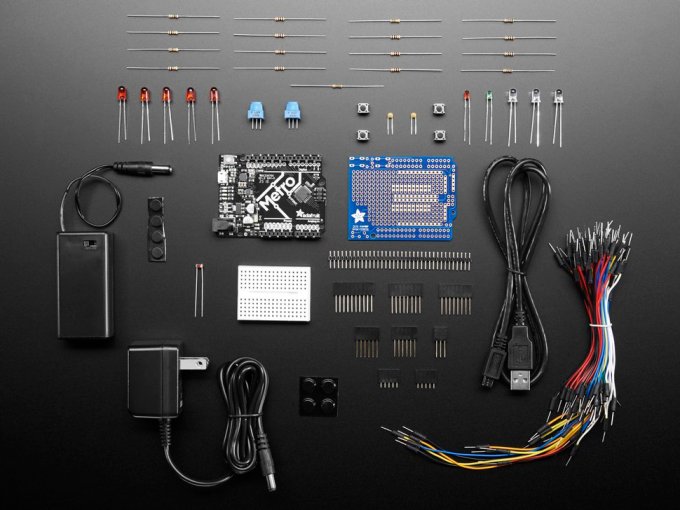
Product: Metro 328 Starter Pack 
Price: $45
Description: Not a typical STEM toy but a starter kit from maker-focused and electronics hobbyist brand Adafruit. The kit is intended to get the user learning about electronics and Arduino microcontrollers to set them on a path to being a maker. Adafruit says the kit is designed for “everyone, even people with little or no electronics and programming experience”. Though parental supervision is a must unless you’re buying for a teenager or mature older child. Computer access is also required for programming the Arduino.

Be sure to check out Adafruit’s Young Engineers Category for a wider range of hardware hacking gift ideas too, from $10 for a Bare Conductive Paint Pen, to $25 for the Drawdio fun pack, to $35 for this Konstruktor DIY Film Camera Kit or $75 for the Snap Circuits Green kit — where budding makers can learn about renewable energy sources by building a range of solar and kinetic energy powered projects. Adafruit also sells a selection of STEM focused children’s books too, such as Python for Kids ($35)
Age: Teenagers, or younger children with parental supervision


[inline-ads]


Anki

Product: Cozmo
Price: $180
Description: The animation loving Anki team added a learn-to-code layer to their cute, desktop-mapping bot last year — called Cozmo Code Lab, which was delivered via free update — so the cartoonesque, programmable truck is not new on the scene for 2018 but has been gaining fresh powers over the years.

This year the company has turned its attention to adults, launching a new but almost identical-looking assistant-style bot, called Vector, that’s not really aimed at kids. That more pricey ($250) robot is slated to be getting access to its code lab in future, so it should have some DIY programming potential too.
Age: 8+


Dash Robotics

Product: Kamigami Jurassic World Robot
Price: ~$60
Description: Hobbyist robotics startup Dash Robotics has been collaborating with toymaker Mattel on the Kamigami line of biologically inspired robots for over a year now. The USB-charged bots arrive at kids’ homes in build-it-yourself form before coming to programmable, biomimetic life via the use of a simple, icon-based coding interface in the companion app.

The latest addition to the range is dinosaur bot series Jurassic World, currently comprised of a pair of pretty similar looking raptor dinosaurs, each with light up eyes and appropriate sound effects. Using the app kids can complete challenges to unlock new abilities and sounds. And if you have more than one dinosaur in the same house they can react to each other to make things even more lively.
Age: 8+


Kano

Product: Harry Potter Coding Kit
Price: $100
Description: British learn-to-code startup Kano has expanded its line this year with a co-branded, build-it-yourself wand linked to the fictional Harry Potter wizard series. The motion-sensitive e-product features a gyroscope, accelerometer, magnetometer and Bluetooth wireless so kids can use it to interact with coding content on-screen. The company offers 70-plus challenges for children to play wizard with, using wand gestures to manipulate digital content. Like many STEM toys it requires a tablet or desktop computer to work its digital magic (iOS and Android tablets are supported, as well as desktop PCs including Kano’s Computer Kit Touch, below)
Age: 6+
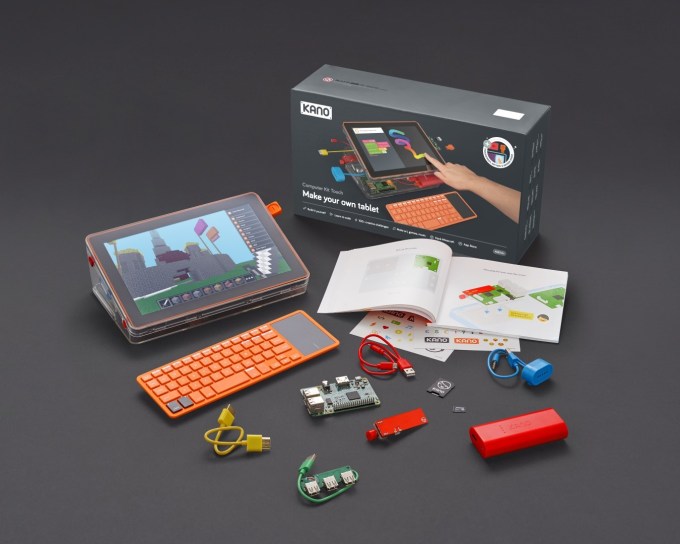
Product: Computer Kit Touch
Price: $280
Description: The latest version of Kano’s build-it-yourself Pi-powered kids’ computer. This year’s computer kit includes the familiar bright orange physical keyboard but now paired with a touchscreen. Kano reckons touch is a natural aid to the drag-and-drop, block-based learn-to-code systems it’s putting under kids’ fingertips here. Although its KanoOS Pi skin does support text-based coding too, and can run a wide range of other apps and programs — making this STEM device a fully fledged computer in its own right
Age: 6-13


Lego
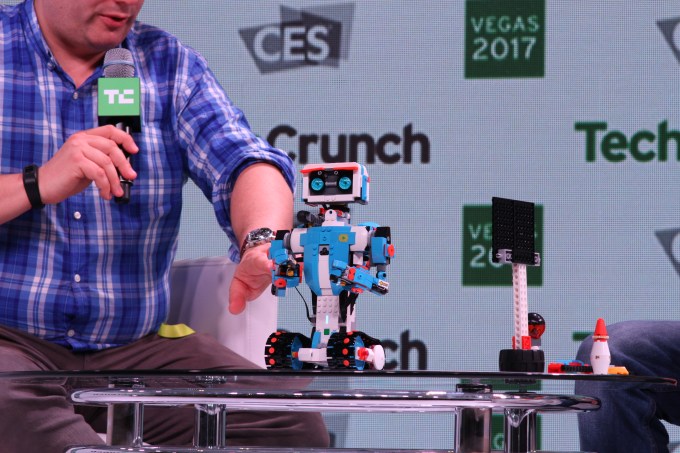
Product: Boost Creative Toolbox
Price: $160
Description: Boost is Lego’s relatively recent foray into offering a simpler robotics and programming system aimed at younger kids vs its more sophisticated and expensive veteran Mindstorms creator platform (for 10+ year olds). The Boost Creative Toolbox is an entry point to Lego + robotics, letting kids build a range of different brick-based bots — all of which can be controlled and programmed via the companion app which offers an icon-based coding system.

Boost components can also be combined with other Lego kits to bring other not-electronic kits to life — such as its Stormbringer Ninjago Dragon kit (sold separately for $40). Ninjago + Boost means = a dragon that can walk and turn its head as if it’s about to breathe fire
Age: 7-12


littleBits
Product: Avengers Hero Inventor Kit
Price: $150
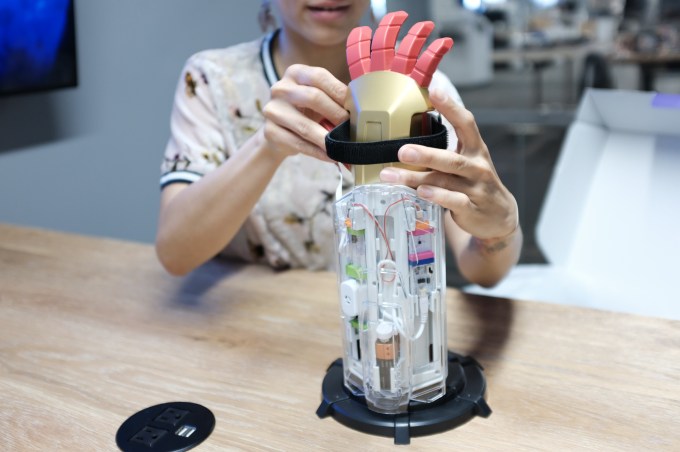
Description: This Disney co-branded wearable in kit form from the hardware hackers over at littleBits lets superhero-inspired kids snap together all sorts of electronic and plastic bits to make their own gauntlet from the Avengers movie franchise. The gizmo features an LED matrix panel, based on Tony Stark’s palm Repulsor Beam, they can control via companion app. There are 18 in-app activities for them to explore, assuming kids don’t just use amuse themselves acting out their Marvel superhero fantasies
Age: 8+

It’s worth noting that littleBits has lots more to offer — so if bringing yet more Disney-branded merch into your home really isn’t your thing, check out its wide range of DIY electronics kits, which cater to various price points, such as this Crawly Creature Kit ($40) or an Electronic Music Inventor Kit ($100), and much more… No major movie franchises necessary


Makeblock
Product: Codey Rocky
Price: $100
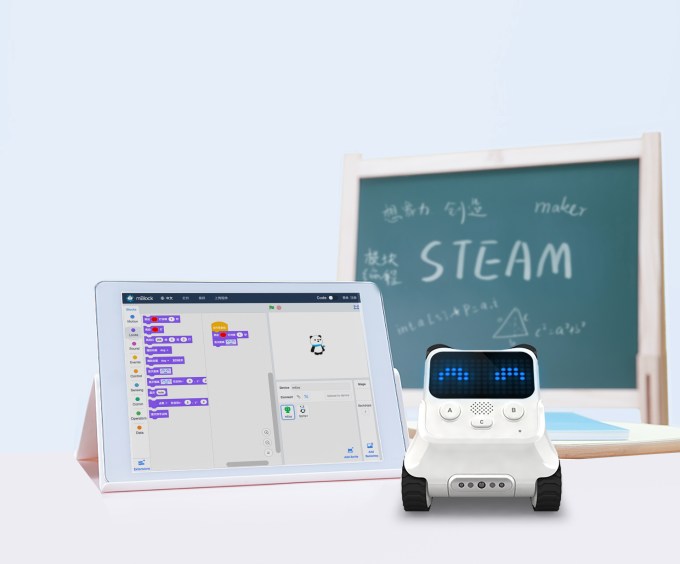
Description: Shenzhen-based STEM kit maker Makeblock crowdfunded this emotive, programmable bot geared towards younger kids on Kickstarter. There’s no assembly required, though the bot itself can transform into a wearable or handheld device for game playing, as Codey (the head) detaches from Rocky (the wheeled body).

Despite the young target age, the toy is packed with sophisticated tech — making use of deep learning algorithms, for example. While the company’s visual programming system, mBlock, also supports Python text coding, and allows kids to code bot movements and visual effects on the display, tapping into the 10 programmable modules on this sensor-heavy bot. Makeblock says kids can program Codey to create dot matrix animations, design games and even build AI and IoT applications, thanks to baked in support for voice, image and even face recognition… The bot has also been designed to be compatible with Lego bricks so kids can design and build physical add-ons too
Age: 6+

Product: Airblock
Price: $100
Description: Another programmable gizmo from Makeblock’s range. Airblock is a modular and programmable drone/hovercraft so this is a STEM device that can fly. Magnetic connectors are used for easy assembly of the soft foam pieces. Several different assembly configurations are possible. The companion app’s block-based coding interface is used for programming and controlling your Airblock creations
Age: 8+


Ozobot

Product: Evo
Price: $100
Description: This programmable robot has a twist as it can be controlled without a child always having to be stuck to a screen. The Evo’s sensing system can detect and respond to marks made by marker pens and stickers in the accompanying Experience Pack — so this is coding via paper plus visual cues.

There is also a digital, block-based coding interface for controlling Evo, called OzoBlockly (based on Google’s Blockly system). This has a five-level coding system to support a range of ages, from pre-readers (using just icon-based blocks), up to a ‘Master mode’ which Ozobot says includes extensive low-level control and advanced programming features
Age: 9+


Pi-top

Product: Modular Laptop
Price: $320 (with a Raspberry Pi 3 Model B+), $285 without
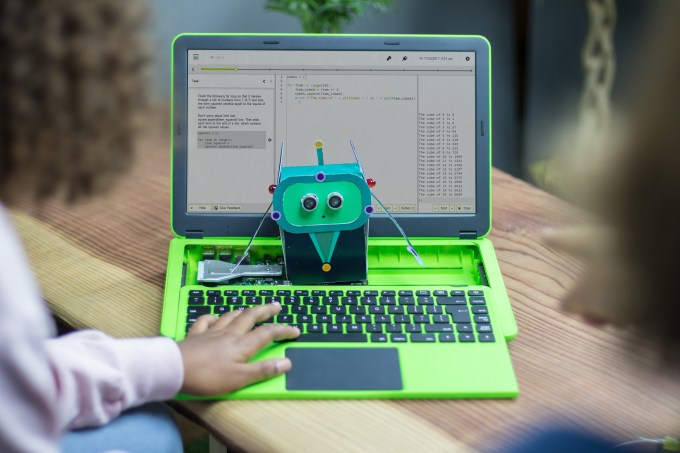
Description: This snazzy 14-inch modular laptop, powered by Raspberry Pi, has a special focus on teaching coding and electronics. Slide the laptop’s keyboard forward and it reveals a built in rail for hardware hacking. Guided projects designed for kids include building a music maker and a smart robot. The laptop runs pi-top’s learn-to-code oriented OS — which supports block-based coding programs like Scratch and kid-friendly wares like Minecraft Pi edition, as well as its homebrew CEEDUniverse: A Civilization style game that bakes in visual programming puzzles to teach basic coding concepts. The pi-top also comes with a full software suite of more standard computing apps (including apps from Google and Microsoft). So this is no simple toy. Not a new model for this year — but still a compelling STEM machine
Age: 8+


Robo Wunderkind


Product: Starter Kit
Price: $200 
Description: Programmable robotics blocks for even very young inventors. The blocks snap together and are color-coded based on function so as to minimize instruction for the target age group. Kids can program their creations to do stuff like drive, play music, detect obstacles and more via a drag-and-drop coding interface in the companion Robo Code app. Another app — Robo Live — lets them control what they’ve built in real time. The physical blocks can also support Lego-based add-ons for more imaginative designs
Age: 5+


Root Robotics
Product: Root
Price: $200
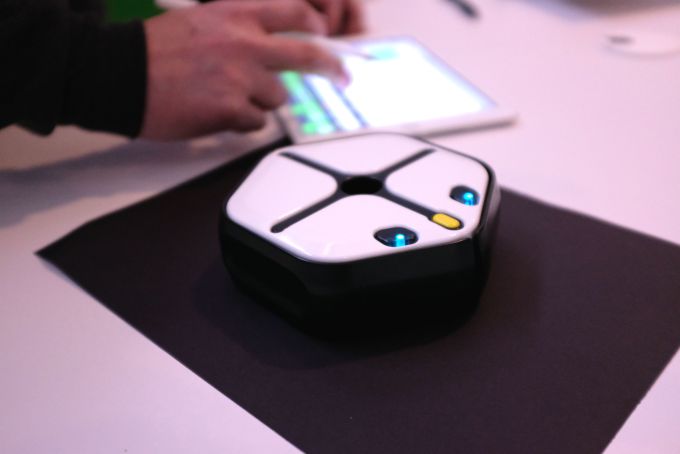
Description: A robot that can sense and draw, thanks to a variety of on board sensors, battery-powered kinetic energy and its central feature: A built-in pen holder. Root uses spirographs as the medium for teaching STEM as kids get to code what the bot draws. They can also create musical compositions with a scan and play mode that turns Root into a music maker. The companion app offers three levels of coding interfaces to support different learning abilities and ages. At the top end it supports programming in Swift (with Python and JavaScript slated as coming soon). An optional subscription service offers access to additional learning materials and projects to expand Root’s educational value
Age: 4+


Sphero
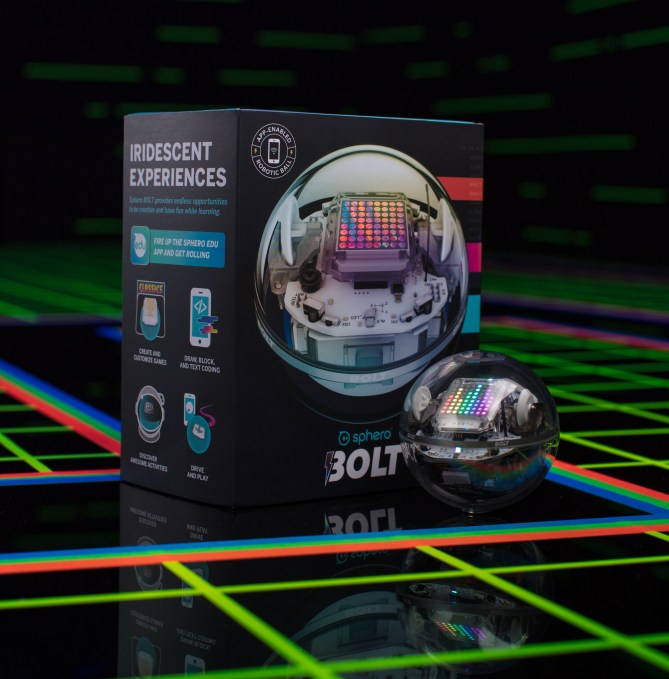

Product: Bolt
Price: $150
Description: The app-enabled robot ball maker’s latest STEM gizmo. It’s still a transparent sphere but now has an 8×8 LED matrix lodged inside to expand the programmable elements. This colorful matrix can be programmed to display words, show data in real-time and offer game design opportunities. Bolt also includes an ambient light sensor, and speed and direction sensors, giving it an additional power up over earlier models. The Sphero Edu companion app supports drawing, Scratch-style block-based and JavaScript text programming options to suit different ages
Age: 8+


Tech Will Save Us
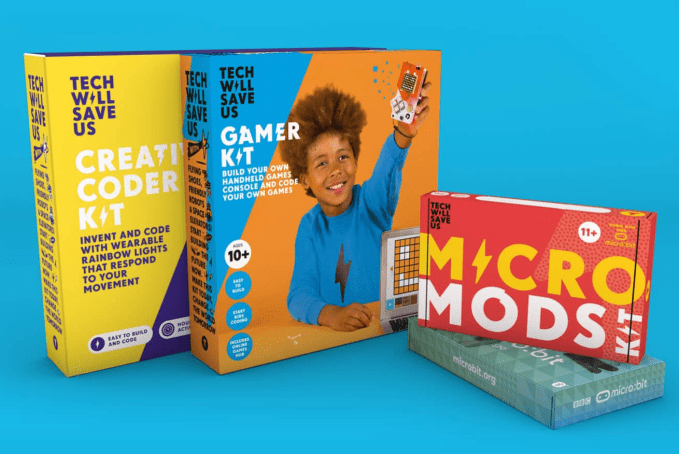
Product: Range of coding, electronics and craft kits
Price: From ~$30 up to $150
Description: A delightful range of electronic toys and coding kits, hitting various age and price-points, and often making use of traditional craft materials (which of course kids love). Examples include a solar powered moisture sensor kit ($40) to alert when a pot plant needs water; electronic dough ($35); a micro:bot add-on kit ($35) that makes use of the BBC micro:bit device (sold separately); and the creative coder kit ($70), which pairs block-based coding with a wearable that lets kids see their code in action (and reacting to their actions)
Age: 4+, 8+, 11+ depending on kit


UBTech Robotics

Product: JIMU Robot BuilderBots Series: Overdrive Kit
Price: $120
Description: More snap-together, codable robot trucks that kids get to build and control. These can be programmed either via posing and recording, or using Ubtech’s drag-and-drop, block-based Blockly coding program. The Shenzhen-based company, which has been in the STEM game for several years, offers a range of other kits in the same Jimu kit series — such as this similarly priced UnicornBot and its classic MeeBot Kit, which can be expanded via the newer Animal Add-on Kit
Age: 8+


Wonder Workshop
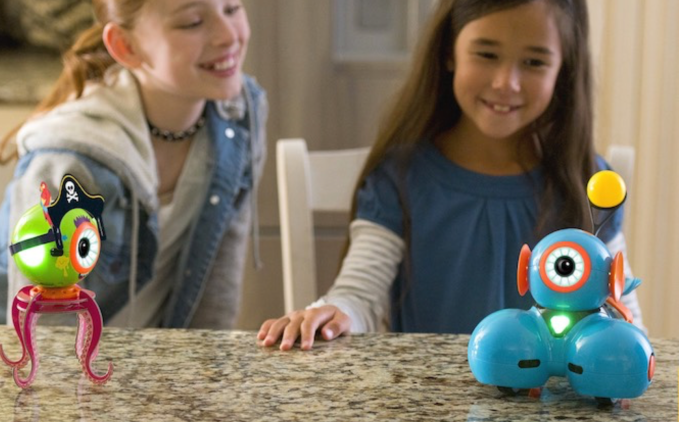
Product: Dot Creativity Kit 
Price: $80
Description: San Francisco-based Wonder Workshop offers a kid-friendly blend of controllable robotics and DIY craft-style projects in this entry-level Dot Creativity Kit. Younger kids can play around and personalize the talkative connected device. But the startup sells a trio of chatty robots all aimed at encouraging children to get into coding. Next in line there’s Dash ($150), also for 6+ year olds. Then Cue ($200) for 11+. The startup also has a growing range of accessories to expand the bots’ (programmable) functionality — such as this Sketch Kit ($40) which adds a few arty smarts to Dash or Cue.

With Dot, younger kids play around using a suite of creative apps to control and customize their robot and tap more deeply into its capabilities, with the apps supporting a range of projects and puzzles designed to both entertain them and introduce basic coding concepts
Age: 6+


06 Nov 2018

Watch biotech startups pitch at IndieBio’s demo day today

IndieBio, the biotech startup accelerator that’s produced heaps of notable companies (including several that have graced the Startup Battlefield), is holding its twice-annual demo day today at 3PM Pacific Time. An even dozen young companies will be pitching their work, from AI-informed research to artificial meat, and you can watch them present live right here.

The IndieBio program is a four-month one that takes companies at the seed stage, often researchers straight out of graduate programs or university research groups, and gets them into shape for a proper Silicon Valley debut. Right now the companies get $250K in funding to take part, as well as plenty of resources, which parent VC firm SOSV can surely afford these days, what with raising $150 million last year.

Off the top of my head I remember two companies that competed at Disrupt SF 2016, Amaryllis Nucleics and mFluiDx, both very technical and highly talented teams. I’m always rooting for these kinds of wet lab companies, and it sounds like the current batch has plenty.

Watch the live pitches starting at 3PM below, and consult the list below the video for a summary of the companies presenting. We’ll be watching too!

New Age Meats: Pig farms are hell on earth. New Age Meats is a “cell-based meat company” that’s looking to replace animal-based pork sausage with a cleaner, more ethical grown alternative that goes just as well with pancakes.

NovoNutrients: Another non-traditional protein source, NovoNutrients uses industrial CO2 emissions to produce high-protein bacteria, which are harvested and sold as sustainable feed stock for aquaculture animals like fish.

BioRosa: An early detection method for autism spectrum disorders using blood tests that could shift diagnosis time to well before the current four years of age to potentially before the child is born.

Chronus Health: Hospitals need to do blood tests constantly, but often have to send samples to a central lab, which can take hours or days. Chronus has made a portable device they claim can provide complete blood count and metabolic panel tests essentially in real time.

Clinicai: Colorectal cancer, like other cancers, is best treated when detected early — and collecting and analyzing stool samples is a big part of that. These guys made a (prototype) device that attaches to ordinary toilets and non-invasively does what it needs to do, which could help people worldwide get proactive diagnosis and care.

Convalesce: Parkinson’s is a stubborn and tragic disease, but Convalesce is working on a treatment method involving injecting stem cells directly into areas affected by neurodegeneration.

Oralta: You can floss, brush, and rinse, but bad news bacteria are still going to take up residence in your mouth. Oralta hopes to combat them with good bacteria, reinforced by probiotic supplements. Fight fire with fire!

Ember: If someone is having a heart attack and it’ll take the EMTs 5 minutes to arrive, but your neighbor is a nurse trained in CPR, wouldn’t it be nice if they could stop by and help? That’s the idea with Ember, which hopes to improve outcomes by connecting patients with health professionals nearby.

Filtricine: The cancer treatment method being pursued by this company, instead of adding something lethal to cancer cells into the bloodstream, subtracts what they need to live while leaving normal cells unharmed. It could combine effectiveness with a blessed lack of side effects to become another tool in oncologists’ arsenals.

Serenity Bioworks: Gene therapy is another important therapeutic tool for a variety of problems, but some viral delivery methods can be fought by the body as if it’s fighting infection. Serenity is working on a system that suppresses that immune response and allows the friendly virus to deliver its payload.

Quartolio: So much scientific literature is published every year that there’s no way doctors and researchers can keep up. Quartolio aims to apply national language processing to journal articles to find connections and research opportunities that might otherwise have gone unnoticed.

Stämm: Bioreactors are used in practically every branch of biotech, whether for testing or drug manufacturing. Stämm is advancing the art with a modular, scalable microfluidic platform with highly tunable physical and chemical parameters.

06 Nov 2018

Original Content podcast: We’re left a little cold by Netflix’s new ‘Chilling Adventures of Sabrina’

It seemed like the ingredients were there for “The Chilling Adventures of Sabrina” to win us over.

After all, at least one of the hosts of the Original Content podcast is a fan of “Riverdale,” and this comes from the same creative team, with a similar approach — instead of a noir version of Archie, it’s a show that takes the “witch” side of Sabrina the Teenage Witch a little more seriously, with genuine spookiness and scares.

We didn’t hate the show, but we didn’t love it either — too many of the characters felt flat, there were some annoying visual tics and it’s just not as much fun as “Riverdale.” Our guest host Jon Shieber probably liked it the most, finding rich thematic material (and surprising parallels with “The Haunting of Hill House”) hidden beneath the monsters, the mythology and the teen angst.

We also offer some tentative thoughts on the controversy over how the show treats its characters of color, and we recap recent streaming and entertainment headlines, including Netflix’s new theatrical release strategy, the latest streaming growth numbers and details about “Game of Thrones” season eight.

You can listen in the player below, subscribe using Apple Podcasts or find us in your podcast player of choice. If you like the show, please let us know by leaving a review on Apple. You also can send us feedback directly. (Or suggest shows and movies for us to review!)

06 Nov 2018

How to stream U.S. elections coverage if you don’t have TV

You don’t need a TV to tune in to live coverage of the U.S. elections results today – and you don’t have to have Hulu or another live TV streaming service, either. Today, YouTube announced a list of news organizations that will be broadcasting live elections coverage on its site today – helpful for those who don’t have another way to watch at home, or need to tune in while on the go. There’s also live coverage available on other sites, including Facebook, Twitch, Twitter and elsewhere.

As more people cut the cord with traditional pay TV, YouTube’s reach has been growing when it comes to distributing the news. That’s apparent in the list of available news media organizations that have decided to broadcast live to YouTube tonight.

For comparison’s sake, YouTube in 2016 reported viewers had spent over 20 million hours watching and rewatching the presidential debates on the site ahead of the U.S. elections. It then pointed viewers to live coverage from a handful of outlets like NBC, PBS, Bloomberg and Telemundo, as well as MTV, the online news show The Young Turks, and an election special from Complex News.

This time around, all the major broadcast networks are participating on YouTube’s platform.

The company says viewers can tune in to watch live election results throughout the evening on the following channels:

Several outlets are choosing to broadcast on Facebook, too, including ABC News Live, CBS News, and PBS News Hour.

The Washington Post will broadcast on Twitch.

On Twitter, ABC, PBS, and Univision will live stream election coverage, says Poynter.

Snapchat will feature Washington Post in the Snapchat Discover section, NBC’s “Stay Tuned” news stories (these are on IG, too), and will offer live Election Day coverage itself starting at 6 PM ET, hosted by “Good Luck America’s” Peter Hamby.

In addition to YouTube, CBS will live stream coverage on its free streaming news service, CBSN, which is also available through its streaming service, CBS All Access.

And ABC is covering all the bases, with commercial-free streams from ABC News Live across Apple TV, Amazon Fire TV, Roku, Apple News and its own site, as well as on YouTube, Facebook and Twitter.

Yahoo News (disclosure: also owned by Verizon, TechCrunch’s parent) will live stream on Yahoo.com, AOL.com, HuffPost and Tumblr.

Apple News will have an elections hub, including live streams.

Poynter’s handy resource also includes other places to get the news directly from media companies’ own websites and elsewhere, including The New York Times, CNN, Fox News, FiveThirtyEight, Telemundo, Newsy, and more.

more 2018 US Midterm Election coverage

06 Nov 2018

TransferWise partners with Dutch challenger bank Bunq

TransferWise, the European fintech unicorn that enables low-cost international money transfer, has always had ambitions of being a platform in the truest sense. In addition to its direct-to-consumer app, the company offers an API for integration with other fintechs and banks, although it is fair to say that third-party integrations of this kind have been quite slow to come by. With that said, the number of third-party integrations appears to be picking up pace.

The latest bank to offer TransferWise functionality is Dutch challenger Bunq, which is enabling customers to make “fast, low-cost international payments” powered by TransferWise. Similar to other third-party integrations, the TransferWise feature sits within Bunq’s own app, giving users the “real exchange rate”, in addition to a small, transparent fee. At launch, 15 currencies are supported, and over the coming weeks more currencies will be added.

Back in June when TransferWise unveiled its partnership with fast-growing U.K. challenger bank Monzo, I asked co-founder and CEO Kristo Käärmann how different the conversation is with the challenger banks compared to longer established incumbents who historically have made a lot of revenue from foreign exchange fees. Perhaps being diplomatic, he argued that those conversations are quite similar, and usually centres on the fact that customers are already using TransferWise and that if a bank wants to put those customers first it makes sense to offer TransferWise functionality within its own app.

“When we announced the large French bank [BPCE Groupe], which is clearly an incumbent — a massive incumbent — they were thinking about their customer,” he told me at the time. “That maybe does feel a little bit rare for banks to think this way, but they figured that ‘if we are going to do this, then why don’t we do it properly’. They were actually fully driven by their users and thinking about how to get the best user experience”.

Cue a statement from Bunq founder and CEO Ali Nikna: “Our mission is to free our users from borders and barriers in traditional banking, such as hidden fees. We think TransferWise is a valuable addition to solidify that mission. This is the next big step in bringing freedom to the traditional banking industry”.

Meanwhile, the Bunq tie-in is TransferWise’s fifth bank partnership. In addition to Monzo, and upcoming integration with France’s BPCE, the international money transfer service has partnered with Germany’s N26, and Estonia’s LHV. However, a previously announced partnership with the U.K.’s Starling Bank never materialised and has since been disbanded.