Year: 2018

06 Nov 2018

We’re two days away from Startup Battlefield Latin America 2018

Just 48 short hours to go until we kick off Startup Battlefield Latin America 2018. This is the first time we’re bringing our premier startup pitch competition to the region — home to an impressive range of early-stage tech startups — and we can’t wait to share the day with you!

Don’t miss your chance to watch the best early-stage startup founders in Latin America launch their companies to the world — and the next level. Oh, and receive serious investor interest and media exposure, too. It all goes down on 8 November at the Tomie Ohtake Institute in São Paulo, Brazil. Tickets are free, but seating is limited, so apply for a free spectator pass. We’ll select people in the Latin American startup scene on a first-come-first-served basis.

What can you expect from this day-long event? An exhilarating pitch competition for starters. Here’s how the Battlefield format works. Up to 15 pre-Series A startups — chosen by our highly discerning TechCrunch editors — compete in three preliminary rounds. Each team has just six minutes to wow the judges with their pitch and live demo. After each pitch, those judges put each team through an intense six-minute Q&A.

Only five teams move to the final round, pitch to a new set of judges and endure another round of tough questioning. We’ve recruited expert investors, technologists and entrepreneurs to judge the proceedings.

From the final five, one exceptional startup will be named Latin America’s first Startup Battlefield champion. The winning founders receive a $25,000 non-equity cash prize and a trip for two to the next Disrupt, where they can exhibit free of charge in the Startup Alley — and possibly qualify to participate in the Startup Battlefield at Disrupt.

In a classic, but-wait-there’s-more moment, we also have an outstanding slate of speakers who will discuss topics integral to Latin America. Here are a few examples — and be sure to check out the day’s full agenda:

  • Keynote: Konstantinos Papamiltiadis (Facebook) discusses the company’s developer ecosystem
  • 20 Years Ahead of the Curve: Fabricio Bloisi (Movile) talks about the company’s journey from SMS and ringtones in 1998 to digital businesses on mobile platforms
  • A China Twist to Brazil’s Mobility Revolution: Ariel Lambrecht (Yellow), Eduardo Musa (Yellow), Tony Qiu(Didi Chuxing) and Hans Tung (GGV Capital) examine what may unfold in Brazil as a result of China’s mobility revolution

Startup Battlefield Latin America 2018 takes place in just two days on 8 November at the Tomie Ohtake Institute in São Paulo, Brazil. Apply here for a free spectator pass, and join us for an action-packed day focused on the best technology startups in Latin America.

06 Nov 2018

Dropbox introduces Extensions for deeper integration with third-party tools

Dropbox has had APIs for years that enable companies to tap into content stored in their repositories, and they have had partnerships with large vendors like Adobe, Google, Autodesk and Microsoft. Today, the company announced Dropbox Extensions to enhance the ability to build workflows and integrations with third party partners.

Quentin Clark, SVP of engineering, product and design at Dropbox says they have long recognized the need to take the content stored in their repositories and provide ways to integrate it with other tools people are using. “We are on this journey to help this broader ecosystem get the most value possible. Extensions is another way to remove friction and allow better engagement,” Clark said.

He said that while APIs could pick up content, do something with and put it into Dropbox, Extensions allows users to take action directly in Dropbox. This is part of a broader trend we are seeing in enterprise tools to keep the user where they are without forcing them to explicitly open another app to complete a task.

It also introduces a level of automation to certain processes that was missing. As an example, in a Dropbox Extensions integration with eSignature services Adobe Sign, DocuSign or HelloSign, you could have a contract stored in Dropbox, send it to various parties for signature and the signed document gets returned to Dropbox automatically once all of the signatures have been collected. What’s more, the person who initiated the process gets a notification that the process is complete.

The integrations with today’s release include the ability to edit video in Vimeo, edit images in Pixlr, edit PDFs in Nitro, airSlate and Smallpdf and send faxes with HelloFax (for people who still fax stuff). Clark says these initial integrations were not random. They were chosen because they were hearing from customers that these were tools they wanted to see deeper integration with Dropbox.

Clark says the partnership team at Dropbox will continue to look for other uses for Extensions, but that it takes a concerted effort on the part of the engineering team to build in meaningful integrations. “We prioritize based on common users,” he said.

While they are announcing Extensions today, it will be generally available later this month on November 27th. It’s worth noting that it will be available to all users, not just Dropbox’s business customers. Clark says they decided to expose it to everyone to show how to make broader use of Dropbox content beyond pure storage. The company hopes that in doing so, it could drive more users to the business products as they see the value of this integrated approach.

06 Nov 2018

Facebook must change and policymakers must act on data, warns UK watchdog

The UK’s data watchdog has warned that Facebook must overhaul its privacy-hostile business model or risk burning user trust for good.

Comments she made today have also raised questions over the legality of so-called lookalike audiences to target political ads at users of its platform.

Information commissioner Elizabeth Denham was giving evidence to the Digital, Culture, Media and Sport committee in the UK parliament this morning. She’s just published her latest report to parliament, on the ICO’s (still ongoing) investigation into the murky world of data use and misuse in political campaigns.

Since May 2017 the watchdog has been pulling on myriad threads attached to the Cambridge Analytica Facebook data misuse scandal — to, in the regulator’s words, “follow the data” across an entire ecosystem of players; from social media firms to data brokers to political parties, and indeed beyond to other still unknown actors with an interest in also getting their hands on people’s data.

Denham readily admitted to the committee today that the sprawling piece of work had opened a major can of worms.

“I think we were astounded by the amount of data that’s held by all of these agencies — not just social media companies but data companies like Cambridge Analytica; political parties the extent of their data; the practices of data brokers,” she said.

“We also looked at universities, and the data practices in the Psychometric Centre, for example, at Cambridge University — and again I think universities have more to do to control data between academic researchers and the same individuals that are then running commercial companies.

“There’s a lot of switching of hats across this whole ecosystem — that I think there needs to be clarity on who’s the data controller and limits on how data can be shared. And that’s a theme that runs through our whole report.”

“The major concern that I have in this investigation is the very disturbing disregard that many of these organizations across the entire ecosystem have for personal privacy of UK citizens and voters. So if you look across the whole system that’s really what this report is all about — and we have to improve these practices for the future,” she added. “We really need to tighten up controls across the entire ecosystem because it matters to our democratic processes.”

Asked whether she would personally trust her data to Facebook, Denham told the committee: “Facebook has a long way to go to change practices to the point where people have deep trust in the platform. So I understand social media sites and platforms and the way we live our lives online now is here to stay but Facebook needs to change, significantly change their business model and their practices to maintain trust.”

“I understand that platforms will continue to play a really important role in people’s lives but they need to take much greater responsibility,” she added when pressed to confirm that she wouldn’t trust Facebook.

A code of practice for lookalike audiences

In another key portion of the session Denham confirmed that inferred data is personal data under the law.(Although of course Facebook has a different legal interpretation of this point.)

Inferred data refers to inferences made about individuals based on data-mining their wider online activity — such as identifying a person’s (non-stated) political views by examining which Facebook Pages they’ve liked. Facebook offers advertisers an interests-based tool to do this — by creating so-called lookalike audiences comprises of users with similar interests.

But if the information commissioner’s view of data protection law is correct, it implies that use of such tools to infer political views of individuals could be in breach of European privacy law. Unless explicit consent is gained beforehand for people’s personal data to be used for that purpose.

“What’s happened here is the model that’s familiar to people in the commercial sector — or behavioural targeting — has been transferred, I think transformed, into the political arena,” said Denham. “And that’s why I called for an ethical pause so that we can get this right.

“I don’t think that we want to use the same model that sells us holidays and shoes and cars to engage with people and voters. I think that people expect more than that. This is a time for a pause, to look at codes, to look at the practices of social media companies, to take action where they’ve broken the law.”

She told MPs that the use of lookalike audience should be included in a Code of Practice which she has previously called for vis-a-vis political campaigns’ use of data tools.

Social media platforms should also disclose the use of lookalike audiences for targeting political ads at users, she said today — a data-point that Facebook has nonetheless omitted to include in its newly launched political ad disclosure system.

“The use of lookalike audiences should be made transparent to the individuals,” she argued. “They need to know that a political party or an MP is making use of lookalike audiences, so I think the lack of transparency is problematic.”

Asked whether the use of Facebook lookalike audiences to target political ads at people who have chosen not to publicly disclose their political views is legal under current EU data protection laws, she declined to make an instant assessment — but told the committee: “We have to look at it in detail under the GDPR but I’m suggesting the public is uncomfortable with lookalike audiences and it needs to be transparent.”

We’ve reached out to Facebook for comment.

Links to known cyber security breaches

The ICO’s latest report to parliament and today’s evidence session also lit up a few new nuggets of intel on the Cambridge Analytica saga, including the fact that some of the misused Facebook data — which had found its way to Cambridge University’s Psychometric Centre — was not only accessed by IP addresses that resolve to Russia but some IP addresses have been linked to other known cyber security breaches.

“That’s what we understand,” Denham’s deputy, James Dipple-Johnstone told the committee. “We don’t know who is behind those IP addresses but what we understand is that some of those appear on lists of concern to cyber security professionals by virtue of other types of cyber incidents.”

“We’re still examining exactly what data that was, how secure it was and how anonymized,” he added saying “it’s part of an active line of enquiry”.

The ICO has also passed the information on “to the relevant authorities”, he added.

The regulator also revealed that it now knows exactly who at Facebook was aware of the Cambridge Analytica breach at the earliest instance — saying it has internal emails related to it issue which have “quite a large distribution list”. Although it’s still not been made public whether or not Mark Zuckerberg name is on that list.

Facebook’s CTO previously told the committee the person with ultimate responsibility where data misuse is concerned is Zuckerberg — a point the Facebook founder has also made personally (just never to this committee).

When pressed if Zuckerberg was on the distribution list for the breach emails, Denham declined to confirm so today, saying “we just don’t want to get it wrong”.

The ICO said it would pass the list to the committee in due course.

Which means it shouldn’t be too long before we know exactly who at Facebook was responsible for not disclosing the Cambridge Analytica breach to relevant regulators (and indeed parliamentarians) sooner.

The committee is pressing in this because Facebook gave earlier evidence to its online disinformation enquiry yet omitted to mention the Cambridge Analytica breach entirely. (Hence its accusation that senior management at Facebook deliberately withheld pertinent information.)

Denham agreed it would have been best practice for Facebook to notify relevant regulators at the time it became aware of the data misuse — even without the GDPR’s new legal requirement being in force then.

She also agreed with the committee that it would be a good idea for Zuckerberg to personally testify to the UK parliament.

Last week the committee issued yet another summons for the Facebook founder — this time jointly with a Canadian committee which has also been investigating the same knotted web of social media data misuse.

Though Facebook has yet to confirm whether or not Zuckerberg will make himself available this time.

How to regulate Internet harms?

This summer the ICO announced it would be issuing Facebook with the maximum penalty possible under the country’s old data protection regime for the Cambridge Analytica data breach.

At the same time Denham also called for an ethical pause on the use of social media microtargeting of political ads, saying there was an urgent need for “greater and genuine transparency” about the use of such technologies and techniques to ensure “people have control over their own data and that the law is upheld”.

She reiterated that call for an ethical pause today.

She also said the fine the ICO handed Facebook last month for the Cambridge Analytica breach would have been “significantly larger” under the rebooted privacy regime ushered in by the pan-EU GDPR framework this May — adding that it would be interesting to see how Facebook responds to the fine (i.e. whether it pays up or tries to appeal).

“We have evidence… that Cambridge Analytica may have partially deleted some of the data but even as recently as 2018, Spring, some of the data was still there at Cambridge Analytica,” she told the committee. “So the follow up was less than robust. And that’s one of the reasons that we fined Facebook £500,000.”

Data deletion assurances that Facebook had sought from various entities after the data misuse scandal blew up don’t appear to be worth the paper they’re written on — with the ICO also noting that some of these confirmations had not even been signed.

Dipple-Johnstone also said it believes that a number of additional individuals and academic institutions received “parts” of the Cambridge Analytica Facebook data-set — i.e. additional to the multiple known entities in the saga so far (such as GSR’s Aleksandr Kogan, and CA whistleblower Chris Wylie).

“We’re examining exactly what data has gone where,” he said, saying it’s looking into “about half a dozen” entities — but declining to name names while its enquiry remains ongoing.

Asked for her views on how social media should be regulated by policymakers to rein in data abuses and misuses, Denham suggested a system-based approach that looks at effectiveness and outcomes — saying it boils down to accountability.

“What is needed for tech companies — they’re already subject to data protection law but when it comes to the broader set of Internet harms that your committee is speaking about — misinformation, disinformation, harm to children in their development, all of these kinds of harms — I think what’s needed is an accountability approach where parliament sets the objectives and the outcomes that are needed for the tech companies to follow; that a Code of Practice is developed by a regulator; backstopped by a regulator,” she suggested.

“What I think’s really important is the regulators looking at the effectiveness of systems like takedown processes; recognizing bots and fake accounts and disinformation — rather than the regulator taking individual complaints. So I think it needs to be a system approach.”

“I think the time for self regulation is over. I think that ship has sailed,” she also told the committee.

On the regulatory powers front, Denham was generally upbeat about the potential of the new GDPR framework to curb bad data practices — pointing out that not only does it allow for supersized fines but companies can be ordered to stop processing data, which she suggested is an even more potent tool to control rogue data-miners.

She also said suggested another new power — to go in and inspect companies and conduct data audits — will help it get results.

But she said the ICO may need to ask parliament for another tool to be able to carry out effective data investigations. “One of the areas that we may be coming back to talk to parliament, to talk to government about is the ability to compel individuals to be interviewed,” she said, adding: “We have been frustrated by that aspect of our investigation.”

Both the former CEO of Cambridge Analytica, Alexander Nix, and Kogan, the academic who built the quiz app used to extract Facebook user data so it could be processed for political ad targeting purposes, had refused to appear for an interview with it under caution, she said today.

On the wider challenge of regulating a full range of “Internet harms” — spanning the spread of misinformation, disinformation and also offensive user-generated content — Denham suggested a hybrid regulatory model might ultimately be needed to tackle this, suggesting the ICO and communications regular Ofcom might work together.

“It’s a very complex area. No country has tackled this yet,” she conceded, noting the controversy around Germany’s social media take down law, and adding: “It’s very challenging for policymakers… Balancing privacy rights with freedom of speech, freedom of expression. These are really difficult areas.”

Asked what her full ‘can of worms’ investigation has highlighted for her, Denham summed it up as: “A disturbing amount of disrespect for personal data of voters and prospective voters.”

“The main purpose of this [investigation] is to pull back the curtain and show the public what’s happening with their personal data,” she added. “The politicians, the policymakers need to think about this too — stronger rules and stronger laws.”

One committee member suggestively floated the idea of social media platforms being required to have an ICO officer inside their organizations — to grease their compliance with the law.

Smiling, Denham responded that it would probably make for an uncomfortable prospect on both sides.


06 Nov 2018

Google’s Doodle commands you to Go Vote

I know, you’re cool. You don’t do anything the corporate overlords command. But maybe, just this once, make an exception. Today’s Google Doodle mixes up the ole’ rainbow color logo with a very simple message: Go Vote.

I mean, you were going to do it anyway, right? “Most important midterm election during our lifetimes” or whatever and all that good stuff.

Clicking on the Doodle, which is available both at Google.com and as a new Chrome tab, brings up the results for the query, “Where do I vote #ElectionDay.” From there you enter your address to find your hashtag polling place.

Also, Taylor H. also put together a handy list of resources to find out more before heading to your local polling place. And if you’ve already voted, congratulations, you’ve participating in the fundamental underpinnings of the democratic process. Give yourself a pat on the back.

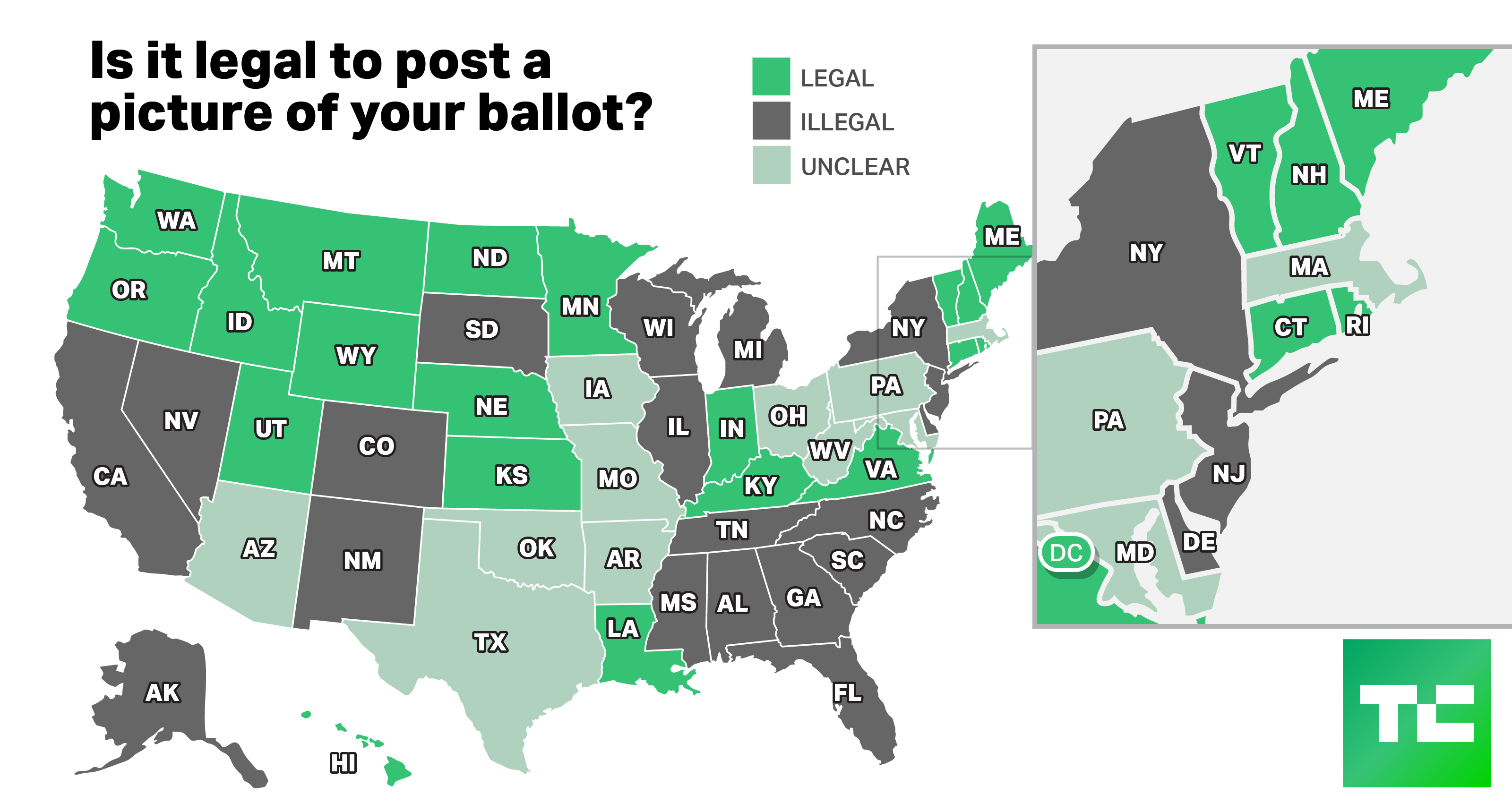
Here’s a map detailing whether or not you can tweet out that ballot:


06 Nov 2018

SoftBank’s debt obsession

We are experimenting with new content forms at TechCrunch. This is a rough draft of something new. Provide your feedback directly to the authors: Danny at danny@techcrunch.com or Arman at Arman.Tabatabai@techcrunch.com if you like or hate something here.

Today, we are focused on SoftBank .

The Wall Street Journal and others reported that Masayoshi Son, the founder and CEO of SoftBank, will take into account the killing of Saudi Arabian journalist Jamal Khashoggi when considering whether to receive additional investment from Saudi Arabia in future Vision Funds. Saudi Arabia is the largest investor in the current Vision Fund, having pledged $45 billion of the $98 billion fund.

The political risk surrounding the Kingdom made us curious: why the obsession with Saudi money, beyond the obvious that they write monster checks?

The answer turns out that it’s not just that the country can write large checks, it is that they are willing to write large checks to one of the most heavily levered companies in the world. SoftBank — including its Vision Fund — has engorged itself on massive levels of debt in order to increase returns — often at the expense of operational stability.

First, take the Vision Fund. According to PitchBook, most of the fund is underwritten by SoftBank itself ($28 billion), Saudi Arabia ($45 billion) and Abu Dhabi ($15 billion). But, the fund has also been on a huge debt binge in order to juice returns. As reported by Mayumi Negishi and Phred Dvorak at the WSJ:

Around 60% of the money promised to the Vision Fund by investors other than SoftBank takes the form of debtlike securities that earn a 7% fixed return annually. That is an unusual structure for a fund that backs young, unprofitable companies, where it is unclear when—or if—investors will make money.

On top of that, the Vision Fund and its affiliate have been borrowing money: They had around ¥636 billion ($5.6 billion) in debt as of the end of September, up 28% in the past six months, according to SoftBank filings. That money has partly been going to pay the returns promised the funds’ investors, the filings say.

And SoftBank is planning to have the Vision Fund borrow an additional $9 billion or so to boost the fund’s returns further and make more investments, Mr. Son told The Wall Street Journal after the press conference.

That’s $14.6 billion in debt for a $98 billion fund.

That’s not insane by any measure, even if the use of debt is relatively unusual for venture firms (unlike in private equity, where debt is very standard). The Vision Fund invests at a much later stage than most startup investors, and its term sheets — from what I hear — are heavily-laden with economic terms that give SoftBank huge downside protection. It’s hard to believe that the GPs could invest $98 billion, and not find at least $14.6 billion in returns to cover their debt repayments.

Here is the thing though: SoftBank is the second largest LP in the SoftBank Vision Fund, and that contribution itself is also funded by a balance sheet that is staggering in its debt load.

Image: Koki Nagahama/Getty Images

Earlier this week, SoftBank announced profit levels that blew analyst estimates out of the water, reporting a profit of $6.2 billion in the company’s second quarter. The stock rose despite broad unease from investors around the company’s deep ties to Saudi Arabia and the continuing political fallout of that situation.

The bigger number though is sitting on the liabilities side of the company’s balance sheet. As of the end of September, SoftBank had around 18 trillion yen, or about $158.8 billion of current and non-current interest-bearing debt. That’s more than six times the amount the company earns on an operating basis, and just slightly less than the public debt held by Pakistan.

And though SoftBank’s sky-high debt balance tends to be a secondary focus in the company’s media coverage, it’s a figure that SoftBank’s top brass is well aware of, and quite comfortable with. When discussing the company’s financial strategy, Softbank CFO Yoshimitsu Goto stated that the company is in the early stages of a transition from a telco holding company to an investment company, and as a result is “likely to be perceived as a corporate group with significant debt and interest payment burden” with what is “generally considered a high level of debt.”

The hope for the company is that as investors recognize it as an investment business, the way SoftBank’s creditworthiness will be evaluated will change and it should be able to operate with more flexibility around leverage levels as Bloomberg’s Shuli Ren outlined in a feature on the company earlier this year:

For acquisitive globetrotters, being labeled an investment firm means having a lot more room to issue debt. In January, Fosun was upgraded one level by Moody’s, which didn’t seem at all concerned by the Shanghai-based company’s debt pile. It noted only that Fosun had no liquidity issues considering it held 61 billion yuan ($9.6 billion) of cash and marketable securities against 35 billion yuan of short-term liabilities.

As SoftBank becomes an investment company, leverage is no longer an appropriate measure, CFO Yoshimitsu Goto was cited as saying in a cover story in the Nikkei Asian Review last weekend. SoftBank’s Vision Fund and Delta Fund mean the firm can use debt without damaging its balance sheet, he said. In effect, SoftBank has already started to resemble the likes of HNA, using complex instruments and margin loans backed by its shares in Alibaba Group Holding Ltd. to finance more startup acquisitions.”

But the lack of an “investment company” label has never stopped SoftBank from pursuing aggressive expansion with a highly-levered balance sheet in the past. SoftBank has in fact had a deep history of operating at debt levels well above industry averages, dating back to the mid-1990s following the company’s 1994 IPO.

At the end of 1998, SoftBank had around $5 billion in debt on its balance sheet and was using three times as much debt to finance its operations vs equity. The company continued to use debt as a means of financing an ambitious M&A strategy that included the $20 billion acquisition of American telco Sprint in 2012-13, which led to the downgrade of SoftBank’s credit ratings to junk by both Moody’s and S&P, where they’ve remained since.

Photo by Jin Lee/Bloomberg via Getty Images

Junk rated credit still didn’t stop SoftBank, with the company spending around $32 billion to buy U.K. chip designer ARM Holdings in 2016. At the end of that year, SoftBank had a debt balance of around $125 billion.

Then in early 2017, SoftBank announced plans for its Vision Fund, which would effectively allow the company to continue making sizable investments despite having an overstretched balanced sheet. According to the Financial Times:

A person involved with the fund’s creation says the structure was designed to address the challenges of placing major bets on technology start-ups. While traditional private equity funds often borrow against their purchases to boost their firepower, Mr Son would likely struggle to raise leverage against companies that have little to no cash flow.

The creation of the Vision Fund led S&P to revise the credit rating outlook for SoftBank from stable to negative. And as the Vision Fund has lined up commitments to borrow another $9 billion, some lenders have started to view SoftBank’s strategy with more caution, such as Bank of America who decided not to provide $1 billion in the financing arrangement two weeks ago due to concerns that the lending terms were too risky.

Again, SoftBank’s reliance on debt isn’t new, with some Japanese investors and bondholders even applying a “Masayoshi Son discount” to the company’s securities. And SoftBank has proven its ability to operate, and operate well, under such conditions, surviving and growing substantially over the past two decades amidst several market turnovers and crises.

Nonetheless, when a company is operating with such high leverage, risks are amplified and even modest bumps in micro and macro conditions can have serious implications for investors, startups and the broader investment ecosystem.

What’s next

  • Probably going to look at SoftBank some more. Have thoughts? Reach out to us directly.
  • We are still spending more time on Chinese biotech investments in the United States (Arman wrote a deep dive on this).
  • We are exploring the changing culture of Form D filings (startups seem to be increasingly foregoing disclosures of Form Ds on the advice of their lawyers).
  • India tax reform and how startups have taken advantage of it.

Reading docket

Danny had 8 hours of meetings yesterday and read about one page of any of this, despite his best intentions.

06 Nov 2018

Lydia launches mobile phone insurance

French startup Lydia is launching an insurance product for your mobile phone. For €4.29 per month ($4.89), you can insure your phone from the Lydia app.

Lydia is one of the most popular peer-to-peer payment apps in Europe with 1.5 million users. Think about it as a sort of Venmo or Square Cash for Europe. More recently, the company started offering more options to manage your money with a premium subscription and additional features.

While Lydia doesn’t want to replace your bank and insurance company, the company is offering an insurance product for the first time. Lydia is partnering with its investor CNP Assurances — having an insurance company as an investor has a few advantages.

So here’s what you get. You’re instantly covered against cracked screens, liquid damage and accidental damage. There’s no excess but you’re limited to one claim per year. Phones now cost a small fortune, but you’re limited to €500 ($570) per claim.

Optionally, you can subscribe to a better insurance product for €9.99 per month ($11.39). In addition to phone insurance, your laptop, tablet, Nintendo Switch, Kindle, camera and other electronics are covered. You can make two claims per year and you can get back up to €500 for your phone and €1,800 for other devices. More importantly, you’re also covered against theft.

Many phone carriers sell mobile phone insurance. But they usually cost more than that. In most cases, you also need to subscribe for at least one year. In Lydia’s case, you can cancel your subscription whenever you want in the app.

If that product sounds familiar, it’s because Revolut offers a similar feature with some drawbacks. You can subscribe to mobile phone insurance from Revolut’s mobile app.

Pricing isn’t as straightforward with Revolut as Premium subscribers get a discount. For an iPhone X, the insurance product costs as much as €9.58 per month ($10.92) without a Revolut Premium account, or as little as €6.67 per month ($7.60) if you pay upfront and you have a Revolut Premium account.

It’s a 12-month contract with a €125 excess and no theft protection. You also need to start insuring your phone quickly after buying (within six months) otherwise you aren’t covered. Revolut works with Allianz and Simplesurance for this insurance product.

Lydia may have borrowed the idea from Revolut, but I’m not sure why you’d choose Revolut’s insurance product over Lydia’s product.

It’s interesting to see that fintech companies are creating alternative revenue streams with insurance products. Subscribing to an insurance product is quick and painless as they already manage your money and have your card on file.

06 Nov 2018

The Blockchain wallet plans a £125M air-drop of Stellar crypto to drive mainstream adoption

Blockchain, one of the world’s biggest crypto wallets, plans to give away a vast amout of cryptocurrency in a bold move to scale the adoption of crypto to a more mainstream audience.
Blockchain and the Stellar Development Foundation (stellar.org) will distribute $125m worth of Stellar lumens [XLM] to Blockchain’s users. Blockchain is claiming this is the largest airdrop in the history of crypto, and potentially the largest consumer giveaway ever, and to most outside observers, it looks that way.
Critics of the move will, however, may lay the charge that’s it’s a cynical move akin to cheap marketing techniques. Whatever the case, most people would probably say they’d have quite liked someone to ‘give them a bitcoin’ a few years ago… It remains to be seen, however, what effect it will actually have in the ground in regards to crypto adoption.
Accessible to anyone with a Blockchain Wallet, Blockchain says that the first batch of recipients will receive their lumens, Stellar’s native digital currency this week – for free. The Stellar network has gained a reputation for scalability, with its lumen token enabling competitively quick, low-cost worldwide transactions. It has it’s critics however, and not every crypto fan out there will be impressed.
In a statement Peter Smith, CEO at Blockchain, said: “At Blockchain, we’re committed to putting our users first. Providing exclusive access to the next generation of cryptoassets allows new and existing users alike to test, try, trade, and transact with new, trusted cryptoassets in a safe and easy way. We’re empowering our users with private keys, which allow them to go beyond just storing their crypto to actually using them. In turn, we can help build a bigger and more engaged crypto community, and drive network effects that make the ecosystem more useful and valuable for the many rather than the few.”
Stellar is Blockchain’s first airdrop partner following the launch of the company’s Airdrops Guiding Principles framework in October 2018.
Jed McCaleb, co-founder of Stellar Development Foundation, said, “We believe that airdrops are central to creating a more inclusive digital economy. Giving away lumens [XLM] for free is an invitation to communities to design the services they need. Our hope is to eventually have global citizens own and use lumens, in both developing and developed economies. By working with Blockchain to increase the availability and active use of lumens on the network, leveraging their almost 30m wallets, we will increase the network’s utility by many orders of magnitude.”
As part of the airdrop, Blockchain is also partnering with a number of organizations to further the adoption of lumens, including charity: water, Stanford d.school, code.org, Network for Good, and IBM, who share the company’s vision for using this transformational technology to build a better future. Blockchain plans on revealing specific details of each initiative in the coming weeks.
Carissa Carter, Director of Teaching and Learning at Stanford d.school, said, “The strength of any network is derived from innovation. We are excited to join Blockchain on this airdrop to empower some of the most brilliant and creative minds to start experimenting and building on Stellar’s network.”

06 Nov 2018

Sinemia adds a weekday-only movie plan

As we head into the holiday movie-going season, the theater ticket subscription wars (or what’s left of them) are set to heat up once again. Sinemia, which has recently emerged as the top contender to the eternally flailing MoviePass, is adding a new tier that focuses entirely on weekday movie-goers.

In an interesting addition to the company’s already numerous offerings, which entirely excludes the most popular moviegoing nights of Friday through Sunday. It’s probably a pretty tempting proposition for those who are already inclined to do whatever it takes to avoid lines in the first place. 

The new offerings start at $4 a month for a single ticket, all the way up to $24 for one ticket for every Monday, Tuesday, Wednesday and Thursday, for the truly obsessed. The prices are up to 20-percent cheaper than the company’s other plans. There are a few caveats here and there, however, including different rules for 3D, 4D and IMAX films. I’ll let you crawl through all of those yourself on Sinemia’s site.

The news comes as AMC announces that it has raised the price for its own in-theater competing offering. And then, of course, there’s whatever the hell is currently going on with MoviePass.

06 Nov 2018

Facebook still isn’t taking Myanmar seriously

Facebook picked election evening in the U.S. to release a major report on its role in Myanmar, where it is widely accused of failing to prevent its social network from being used to incite genocide.

The situation is arguably more severe that alleged Russia-backed attempts to meddle with the 2016 U.S. election — people have died in Myanmar as Facebook has been used to spread hate speech against its minority Muslim population for years. Yet, Facebook pushed out this independent investigation — available in full here — just hours before the mid-terms, timing that could see its findings buried as the U.S. political news cycle takes over.

It shouldn’t. There are some serious issues here that need exploring, and not just in the context of Myanmar.

UN Fact-Finding Mission previously concluded that social media has played a “determining role” in the crisis, with Facebook the chief actor, but there are concerns to answer for in other emerging markets where, like Myanmar, it has happily siphoned advertising money and basked in user growth without taking full responsibility for its position as the dominant internet platform.

In Myanmar’s case, Facebook admitted its failings in a blog post that announced the results of the BSR report into “a human rights impact assessment” of Facebook’s presence in Myanmar, where it is used by nearly 20 million people.

“The report concludes that, prior to this year, we weren’t doing enough to help prevent our platform from being used to foment division and incite offline violence. We agree that we can and should do more,” Facebook wrote.

That’s a positive if not obvious start but Facebook has been criticized for failing to fully invest in change in Myanmar.

Young men browse their Facebook wall on their smartphones as they sit in a street in Yangon on August 20, 2015. Facebook remains the dominant social network for US Internet users, while Twitter has failed to keep apace with rivals like Instagram and Pinterest, a study showed. AFP PHOTO / Nicolas ASFOURI (Photo credit should read NICOLAS ASFOURI/AFP/Getty Images)

Still no local office

The company confirmed to TechCrunch it doesn’t plan to open a local office, an obvious step that would show it is treating Myanmar seriously.

It believes a local presence would put its staff at risk. The BSR report itself concludes that there would be “both advantages and disadvantages” to a Facebook presence in Myanmar since “the existence of local Facebook staff may increase government leverage over content restrictions and data requests by allowing them to threaten seizure of Facebook’s IT equipment or data or place Facebook staff at safety risk.”

Facebook has been ok taking that risk in a market like Thailand — where it has sat back and watched users routinely jailed for Facebook activity — while its service has been weaponized by controversial Philippines’ President Duterte, and it has come under pressure in Indonesia to censor content and pay taxes, to name but three examples.

“How many companies have 20 million users in one country but don’t have a single employee, it’s absurd.” Jes Petersen — CEO of accelerator firm Phandeeyar, which is part of a civic advisory group to Facebook in Myanmar — told TechCrunch. “An office would go a long way to building relationships with stakeholders.”

Instead, Facebook is building a remote team for Myanmar — with five open vacancies on its careers page.

“Earlier this year, we established a dedicated team across product, engineering, and policy to work on issues specific to Myanmar, and said that we plan to grow our team of native Myanmar language speakers reviewing content to at least 100 by the end of 2018,” it said in its blog post.

However, that push has yet to kick in, according to the report, which pulled two notable quotes from Myanmar-based “stakeholders” interviewed as part of the research. One noted that Facebook’s Myanmar-focused content checkers “need to live and breathe Myanmar and build relationships with a wide range of organizations across Myanmar, not just the usual suspects.”

While another remarked that “at times it feels as if Facebook has outsourced the job to us, but we simply don’t have the resources to do it. We have a strong desire to be collaborative, but not to be relied upon.”

With both complaints, it is hard to see how a remote staff base can adequately address those concerns.

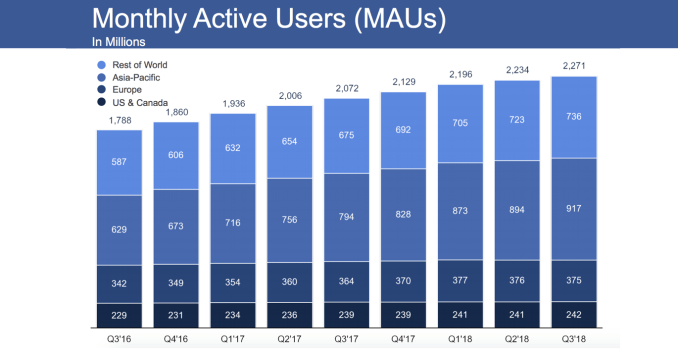
Asia Pacific has become a key growth market for Facebook as user numbers have stalled in the U.S. and Europe

Taking action

Without committing to an office, Facebook has taken significant steps to set an example. It banned 20 individuals and organizations — including armed forces chief Senior General Min Aung Hlaing and military-owned TV network Myawady — in August after finding evidence that they “committed or enabled serious human rights abuses in the country. Then in October, it booted 13 Pages and 10 accounts — with a cumulative following over one million — after a New York Times investigation found they had pedaled government propaganda.

The social network also claims that it is seeing positive change with its efforts to root out content. During Q2, it said it “proactively identified” 63 percent of content that was removed for hate speech in Myanmar, up from 52 percent and 13 percent in the previous quarters.

Petersen, however, suggested that Facebook has been selective with the information that it has shared. He said the Myanmar-based group is still waiting on a request for further clarification on a wider selection figures, while Facebook has been less communicative with the group in recent months.

Facebook credits both its hiring of staff and investment in technology for the progress on content, however it remains unclear how those two factors break down. For one thing, the company has been guilty of over-emphasizing the role its AI-based tech plays in Myanmar.

A previous claim from CEO Mark Zuckerberg that its “systems” prevent hate speech from being sent was roundly rejected by the Phandeeyar-backed group which helped Facebook to identify hate speech on Facebook and Messenger. In response to a public apology from Zuckerberg, the group expressed its frustration that Facebook does “nowhere near enough to ensure that Myanmar users are provided with the same standards of care as users in the U.S. or Europe.”

One area of tech where Facebook is hoping to make a tangible impact is the adoption of Unicode, which is yet to happen widely in the country. More than 90 percent of phones in Myanmar use Zawgyi, but Facebook is dropping support for the standard with the goal of making its safety, reporting and other resources readable — and therefore usable — to all users. It is also improving font converters for those stuck on Zawgyi, it said.

In addition, Facebook said it is working on a digital literacy pilot with Myanmar Book Aid Preservation Foundation and it has partnered with “independent publishers in Myanmar to help build capacity and resources in their online newsrooms.”

Myanmar’s next election is scheduled for 2020 so the company really does need to get its house in order. Petersen, the Phandeeyar CEO, is concerned at what may happen if progress isn’t made.

“The report does include some good recommendations but this is what everyone told them three years ago. Also, it doesn’t touch on the fact that there’s been a systematic failure on the part of Facebook to address those issues, and that hasn’t changed,” he said. “It establishes an assumption that they’ve engaged with Myanmar strongly before, but they haven’t. Only in the most cursory way.

“There’s an absence of real action from Facebook so far and a risk they’ll continue to not really care at all — and what will happen if they continue to not care?”

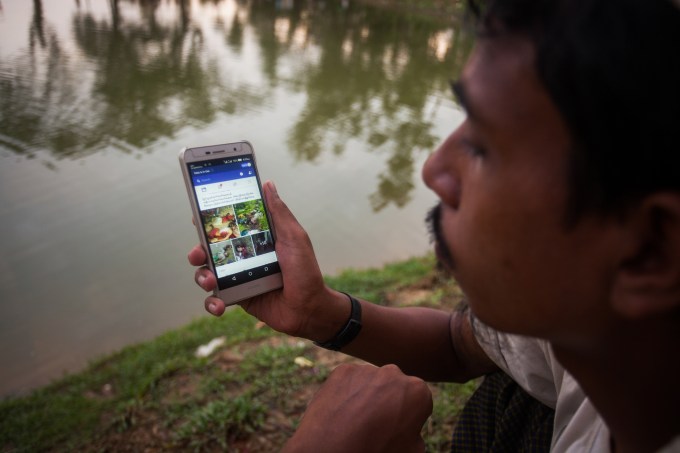
A Rohingya ethnic minority man looking facebook at his cell phone at a temporary makeshift camp after crossing over from Myanmar into the Bangladesh side of the border, near Cox’s Bazar’s Palangkhali, Friday, Sept. 8, 2017. Tens of thousands more people have crossed by boat and on foot into Bangladesh in the last two weeks as they flee violence in western Myanmar. (Photo by Ahmed Salahuddin/NurPhoto via Getty Images)

Great responsibility

In particular, Petersen and the only members of the Myanmar-based civic group want the company to look at more localized development features for Facebook products. In the same way that every part of the social network is optimized for engagement and user interaction, so they hope it could tweak its service with the ultimate goal of improving the way it is used in Myanmar.

While Petersen’s ask is likely to fall on deaf ears, the fact remains that Facebook’s failure to be locally aware — both in terms of a team presence and localized product tweaks — are weaknesses that have caused it issues across a number of emerging markets.

Whether that be deaths following fake news on WhatsApp in India, hate speech in Sri Lanka, or the issues in Myanmar, it is high time that Facebook took responsibility and developed a truly local strategy rather than generic policies designed in Menlo Park for global usage.

Zuckerberg said earlier this year that “it would be near-sighted to focus on short-term revenue over people.” Even in a ‘poor’ last quarter, Facebook recorded a $5 billion profit and a logical extension of Zuckerberg’s ‘people-first’ thesis would be a genuine investment in markets where its presence is controversial.

Until we see that happen, Facebook isn’t fully committed to living up to its responsibility.

06 Nov 2018

RapidSOS, an emergency response data provider, raises $30M as it grows from 10K users to 250M

Every day, there are around 650,000 emergency service callouts via 911 for medical, police and fire assistance in the US; and by their nature these are some of the most urgent communications that we will ever make.

But ironically in the age of smartphones, connected things and the internet, these 911 calls are also some of the most antiquated — with a typical emergency response centre still relying on the humans making the calls to tell them the most basic of information about their predicaments before anything can be actioned.

Now a new generation of startups has been emerging to tackle that gap to make emergency responses more accurate and faster; and one of them today is announcing a significant round of funding on the back of very strong growth. RapidSOS, a New York-based startup that helps increase the funnel of information that is transmitted to emergency services alongside a call for help, has raised another $30 million in funding — money that it’s going to use to continue enhancing its product, and also to start pushing into more international markets.

The opportunity internationally is greater than the US alone: while the US sees 240 million calls per year to 911, globally the figure is 2 billion.

The funding — which comes only about six months after its last round of $16 million — is being led by Playground Global, the VC firm and “startup studio” co-founded by Android co-creator Andy Rubin. Others in the round include a mix of previous and new investors (and a lot of illustrious names): Highland Capital Partners, M12 (Microsoft’s Venture Fund), Two Sigma Ventures, Forte Ventures, The Westly Group, CSAA IG, three former FCC Chairmen and Ralph de la Vega, the former AT&T Vice Chairman and CEO of AT&T Business Solutions and International. It brings the total raised by the startup to $65 million.

Michael Martin, CEO and co-founder of RapidSOS, said the startup is not disclosing its valuation, but he did point me to the company’s stunning growth over the last year:

“We went from 10,000 users to 250 million,” he said, pointing to the number of agencies and other partners the startup is integrating with to provide more detailed information across the emergency services ecosystem.

Partners on the two sides of RapidSOS’s marketplace include on one side Apple, Google, Uber, car companies and others making connected devices and apps — which integrate RapidSOS’s technology to provide 911 response centres with more data such as a user’s location and diagnostic details that can help determine what kind of response is needed, where to go, and so on. And on the other you have the emergency services that need that information to do their work and provide assistance.

RapidSOS offers a few different products to the market. Its most popular, the RapidSOS NG911 Clearinghouse, works either with a response centre’s existing software, or by way of a web application. This product now covers some 180 million people in the US, the company says.

The RapidSOS API, meanwhile, is used by a number of device makers and apps to be able to channel that information into the RapidSOS system, so that when a response centre is using RapidSOS and a caller is using a device or app with the API integrated with it, that information gets conveyed.

The startup also offers a rescue and recovery app called Haven, and found its profile getting a huge boost after Haven went viral in the wake of a succession of natural disasters in the US.

Martin — who co-founded the company with now-CTO Nicholas Horelik (respectively Harvard and MIT grads) after Martin said he was mugged in New York City — said that he sees a big opportunity for RapidSOS, and indeed emergency services in general, once we start to join up the dots better between the trove of data that we can now pick up with connected objects, and conveying what’s important in that trove in order to make emergency calls more effective.

“Most emergency communication today uses infrastructure established between the 1960s and the 1980s, and it means that if you need 911 but can’t have a conversation you are in trouble. 911 doesn’t even know your name when you call,” he said in an interview. “But there is all this rich information today, and so our job is to help make that available when you really need it.”

(I should note he spoke to me while driving on a freeway, but he noted that the car he was in was part of a RapidSOS pilot, and so if he did have an accident, at least the responders would be more aware of what happened… Not a huge comfort but interesting.)

When you consider the number of connected wearables, connected cars and other inanimate objects that are now becoming “smart” through internet-based, wireless controls, sensors and operating systems, you can see the strong potential of harnessing that for this particular use case.

RapidSOS is not the only company that’s addressing this gap in the market. Carbyne out of Israel raised a growth round earlier this year led by Founders Fund in its first investment in an Israeli startup, also to build systems to provide more data for emergency services responders.

(I should also point out that Carbyne was also borne out of the CEO getting mugged: necessity really does become the mother of invention.)

“We are completely different from Carbyne,” Martin said of the other startup. “They are trying to provide more modern software to the industry” — where companies like Motorola have long dominated — “and it’s great to see new innovation on that front. But when we looked at industry, we found the challenge was not software but the data that was being provided. There is a lot of information out there, but no data flow, which is limited by the typical emergency response system to 512 bytes of data.”

He says that RapidSOS, in that regard, works with multiple vendors, including Carbyne, to transmit that data.

And it’s that platform-agnostic approach that interestingly caught the eye of Playground.

“RapidSOS is on the forefront of emergency technology, working with companies like Apple, Google, Uber, and Microsoft to transform emergency communication,” said Bruce Leak, co-founder of Playground Global, in a statement. “We see endless opportunities for connected device data to enhance emergency response and are eager to work with RapidSOS to expand their life-saving platform.”