Year: 2018

06 Nov 2018

Precision farming startup Taranis gets $20M Series B for its crop monitoring tech

Taranis, an ag-tech startup that uses aerial scouting and deep learning to identify potential crop issues, announced today that it has raised a $20 million Series B led by Viola Ventures. Existing investors Nutrien (one of the world’s largest fertilizer producers), Wilbur-Ellis venture capital arm Cavallo Ventures, and Sumitomo Corporation Europe also participated.

Tel Aviv-based Taranis says its aerial imaging technology, carried on high-speed drones or manned aircraft, is currently used by farms in Argentina, Brazil, Russia, Ukraine, and the United States. It plans to expand into more countries with this round of funding, including Australia.

Founded in 2015 by Ofir Schlam, Asaf Horvitz, Eli Bukchin, and Ayal Karmi to increase food production, Taranis’ software targets commodity crops like corn, cotton, wheat, soybean, sugarcane, and potatoes. It identifies potential crop issues, including insect damage, nutrient deficiencies, and diseases, and provide farmers with magnified, high-resolution images that are detailed enough to (for example) let them see what bugs are eating their plants.

In a press statement, Viola Ventures partner Zvika Orron said “After analyzing the digital farming industry, we proudly chose Taranis to be our first investment in this space. Taranis has all the necessary ingredients to become the leader in farm digitalization: a comprehensive precision agriculture solution, leading industry partners to scale and penetrate the market and a passionate team making it all happen.”

Traditional crop monitoring is labor-intensive and not always accurate, even with the use of sensors to track soil quality, fertilizer levels, insects, and other issues. Other venture capital-backed startups using computer vision and AI-based technology to make the process more efficient (a growing field referred to as “precision farming”) include Prospera, which is also based in Tel Aviv, Arable, and Ceres Imaging.

Agricultural giants have also started shopping for precision farming startups. For example, over the past twelve months, Deere agreed to buy Blue River, and Brazilian startup Strider was purchased by Syngenta.

06 Nov 2018

Engineer.ai raises $29.5M Series A for its AI+Humans software building platform

SF-based Engineer.ai launched in an invite-only manner two and a half years ago, bootstrapped by its founders. Its platform combines AI with crowdsourced teams of designers and developers to build bespoke digital products at – they say – twice the speed and less than a third of the cost of traditional software development.

Today it’s announced at Web Summit that its raised one of Europe’s largest Series A investments at $29.5 million, led by Lakestar and Jungle Ventures with participation from Softbank’s DeepCore. The round is among Europe’s largest A-rounds to date.

Engineer.ai’s “Builder” product breaks projects into small ‘building blocks’ of re-usable features that are customized by human engineers all over the world, making the process cheaper than the average process.

Sachin Dev Duggal, founder, said in a statement: “We created Engineer.ai so that everyone can build an idea without learning to code. This investment round validates our approach of making bespoke software effortless. The capital comes at a time of rapid growth and will propel the platform into the mainstream, allowing Builder to open the door for entire categories of companies that could not consider it before.”

Dev Duggal added: “At a certain level we compete with Gigster albeit we have really taken a very different approach (assembly line and buying excess capacity from over 100 Dev shops in 10 timezones) whereas they are a modern day consulting shop. This means we have massive scale with access to 32,000 devs and designers, we have over 500 building blocks that save our customers paying for features (code and designs) that we have already done. The dev shops thus also don’t compete with us as we buy capacity from them and will soon be offering them a way to partner on goto market.”

Amit Anand, Co-Founder & Managing Partner at Jungle Ventures said: “We’re believers in Engineer.ai’s total ecosystem; making Bespoke Software like the iPhone with aftercare and a marketplace for all recurring services.”

Launched in June 2018, Engineer.ai has been used to create products like BBC, DiditFor, Manscore, and ZikTruck.

06 Nov 2018

Africa Roundup: Local VC funds surge, Naspers ramps up and fintech diversifies

Africa’s VC landscape is becoming more African with an increasing number of investment funds headquartered on the continent and run by locals, according to Crunchbase data summarized in this TechCrunch feature.

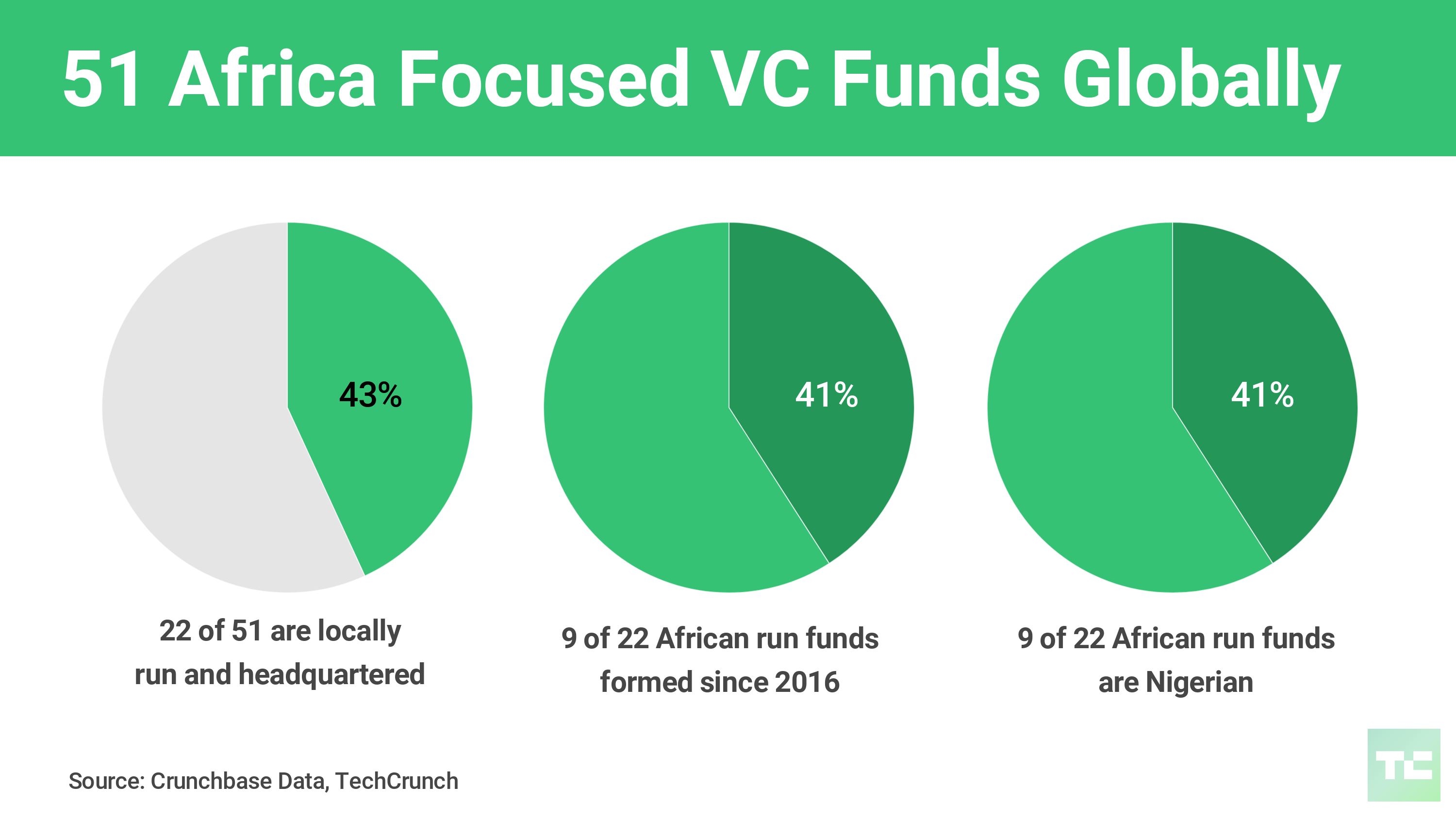
Drawing on its database and primary source research, Crunchbase identified 51 “viable” Africa-focused VC funds globally—defining viable as formally established entities with 7-10 investments or more in African startups, from seed to series stage.

Of the 51 funds investing in African startups, 22 (or 43 percent) were headquartered in Africa and managed by Africans.

Of the 22 African managed and located funds, 9 (or 41 percent) were formed since 2016 and 9 are Nigerian.

Four of the 9 Nigeria located funds were formed within the last year: Microtraction, Neon Ventures, Beta.Ventures, and CcHub’s Growth Capital fund.

The Nigerian funds with the most investments were EchoVC (20) and Ventures Platform (27).

Notably active funds in the group of 51 included Singularity Investments (18 African startup investments) Ghana’s Golden Palm Investments (17) and Musha Ventures (36).

The Crunchbase study also tracked more Africans in top positions at outside funds and  the rise of homegrown corporate venture arms.

One of those entities with a corporate venture arm, Naspers, announced a massive $100 million fund named Naspers Foundry to support South African tech startups. This is part of a $300 million (1.4 billion Rand) commitment by the South African media and investment company to support South Africa’s tech sector overall. Naspers Foundry will launch in 2019.

The initiatives lend more weight to Naspers’ venture activities in Africa as the company has received greater attention for investments off the continent (namely Europe, India and China), as covered in this TechCrunch story.

“Naspers Foundry will help talented and ambitious South African technology entrepreneurs to develop and grow their businesses,” said a company release.

“Technology innovation is transforming the world,” said Naspers chief executive Bob van Dijk. “The Naspers Foundry aims to both encourage and back South African entrepreneurs to create businesses which ensure South Africa benefits from this technology innovation.”

After the $100 million earmarked for the Foundry, Naspers will invest ≈ $200 million over the next three years to “the development of its existing technology businesses, including OLX,  Takealot, and Mr D Food…” according to a release.

In context, the scale of this announcement is fairly massive for Africa. According to recently summarized Crunchbase data, the $100 million Naspers Foundry commitment dwarfs any known African corporate venture activity by roughly 95x.

The $300 million commitment to South Africa’s tech ecosystem signals a strong commitment by Naspers to its home market. Naspers wasn’t ready to comment on if or when it could extend this commitment outside of South Africa (TechCrunch did inquire).

If Naspers does increase its startup and ecosystem funding to wider Africa— given its size compared to others—that would be a primo development for the continent’s tech sector.

If mobile money was the first phase in the development of digital finance in Africa, the next phase is non-payment financial apps in agtech, insurance, mobile-lending, and investech, according to a report by Village Capital covered here at TechCrunch.

In “Beyond Payments: The Next Generation of Fintech Startups in Sub-Saharan Africa,” the venture capital firm and their reporting partner, PayPal, identify 12 companies it determined were “building solutions in fintech subsectors outside of payments.”

Village Capital’s work gives a snapshot of these four sub-sectors — agricultural finance, insurtech, alternative credit scoring and savings and wealth — including players, opportunities and challenges, recent raises and early-stage startups to watch.

The report highlights recent raises by savings startup PiggybankNG and Nigerian agtech firm FarmCrowdy. Village Capital sees the biggest opportunities for insurtech startups in five countries: South Africa, Morocco, Egypt, Kenya and Nigeria.

In alternative credit scoring and lending it sees blockchain as a driver of innovation in reducing “both transaction costs and intermediation costs, helping entrepreneurs bypass expensive verification systems and third parties.”

The Founders Factory expanded its corporate-backed accelerator to Africa, opening an office in Johannesburg with the support of some global and local partners.

This is Founders Factory’s first international expansion and the goal is “to scale 100 startups across Sub-Saharan Africa in five years,” according the accelerator’s communications head, Amy Grimshaw.

Founders Fund co-founder Roo Rogers will lead the new Africa office. Standard Bank is the first backer, investing “several million funds over five years,” according to Grimshaw.

The Johannesburg accelerator will grow existing businesses through a bespoke six-month program, while an incubator will build completely new businesses focused on addressing key issues on the continent.

Founder Funds will hire over 40 full-time specialists locally, covering all aspects needed to scale its startups including product development, UX/UI, engineering, investment, business development and, growth marketing. This TechCrunch feature has more from Founders Fund management on the outlook for the new South Africa accelerator.

More Africa Related Stories @TechCrunch

How a Ugandan prince and a crypto startup are planning an African revolution

Marieme Diop and Shikoh Gitau to speak at Startup Battlefield Africa

Flutterwave and Ventures Platform CEOs will join us at Startup Battlefield Africa

African Tech Around the Net

A lot is happening at Flutterwave right now—[E departs] 

Amazon Web Services to open data centres in Cape Town in 2020

Vodacom Business expands its fixed connectivity network in Africa

SA’s Sun Exchange raises $500k from Alphabit

IBM, AfriLabs partner to expand digital skills across 123 hubs in 34 countries

Victor Asemota to lead VC firm Alta Global Ventures’s business in Africa

Bank, local hub launch $1-million fund for Somali startups

06 Nov 2018

Lizzie Chapman to talk about building a fintech startup in India at Disrupt Berlin

Fintech startups are growing rapidly in Europe. But it doesn’t mean that the fintech revolution is limited to Europe. That’s why I’m glad to announce that Lizzie Chapman from ZestMoney is coming to TechCrunch Disrupt Berlin to talk about her unique Indian startup.

ZestMoney wants to make it easier to lend money to buy goods online. In the U.S., the vast majority of people have a credit card and a credit score. But India is a different market, and ZestMoney is trying to replace the credit card altogether.

When you shop on an e-commerce website in India, such as Amazon or Flipkart, you can get a voucher on ZestMoney’s website to check out on those websites. You’ll then pay back this voucher with monthly installments. In some cases, interests are refunded as cashback.

You don’t need to get a credit card to open a ZestMoney account. After opening an account, your EMI credit limit is shared across all ZestMoney partners.

Some websites feature a deeper integration with ZestMoney. For instance, on Xiaomi’s website, you can pay your phone in multiple installments using Mi Finance. Behind the scene, ZestMoney powers this service.

This is an interesting time for ZestMoney as the company is facing increased competition. Amazon just launched EMI options for Amazon Pay in India. You can now take a loan directly on Amazon’s checkout page.

Chapman is also an interesting British entrepreneur. As TechCrunch’s Jon Russell wrote, she moved to India in 2011 to work for payday loan startup Wonga’s Indian division. Years later, even though Wonga didn’t work out, she’s still betting on India.

If you want to hear Chapman tell you more about what she’s been working on, you should come to Disrupt Berlin. The conference will take place on November 29-30 and you can buy your ticket right now.

In addition to fireside chats and panels, like this one, new startups will participate in the Startup Battlefield Europe to win the highly coveted Battlefield cup.

Lizzie Chapman

CEO & Co-founder, ZestMoney

Lizzie Chapman is the co-founder and CEO of ZestMoney, FinTech startup of 2017. Zestmoney is India's largest digital lending platform that introduced the concept of cardless EMI to make life more affordable in India.

Lizzie is a leading figure in the digital lending landscape of India since 2011 when she moved from UK to spearhead the India operations for digital lender Wonga.com. In 2013, she joined Development Bank of Singapore to help launch ‘digibank’ – mobile-only virtual bank of India. Her passion about the potential of technology to disrupt the delivery of financial services prompted Lizzie and her co-founders to start ZestMoney. She was selected as FinTech Woman of 2017.

A CFA Charterholder and BSc from Edinburgh University, Lizzie started her career at Goldman Sachs in equity research and asset management. She then became an investor for The Wellcome Trust, one of the world’s largest endowments, focused on financial services and Indian investments. She is an Investment Committee member of the early stage fund India Quotient and sits on the board of IndiaMart – India's leading SME marketplace and classified site.

Other than working extensively on understanding Indian consumer behavior and building superior credit products, Lizzie is a mother and a marathon runner. She was one of three runners from India to complete the 42.2 kms Antarctic Ice Marathon in 2011.

06 Nov 2018

MacBook Air review

For three years, the MacBook Air was conspicuously absent. The ultraportable never left Apple’s site, of course, but we finished keynote after keynote wondering why Apple continued to neglect one of its most popular products, all while overhauling the rest of the MacBook line.

At an event last month in Brooklyn, however, Apple finally acquiesced, delivering the largest single update since the product was introduced ten and a half years prior. In an event stuffed to the gills with an enthusiastic audience, the Air got what was easily the biggest applause break — more than the iPad Pro and certainly more than the Mac Mini.

The fan base was clearly ready for a new Air.

Getting the Air right is a tricky proposition. Not only is it the slimmest model in the line, it’s also the cheapest, a combination that’s made it a popular selection for frequent travelers and those just looking for the least expensive route into the MacOS ecosystem. Every hardware addition to the line comes with a potential price increase — something we saw play out with the evolution of the Mini, which jumped from $499 to $799, removing some of the device’s entry-level appeal.
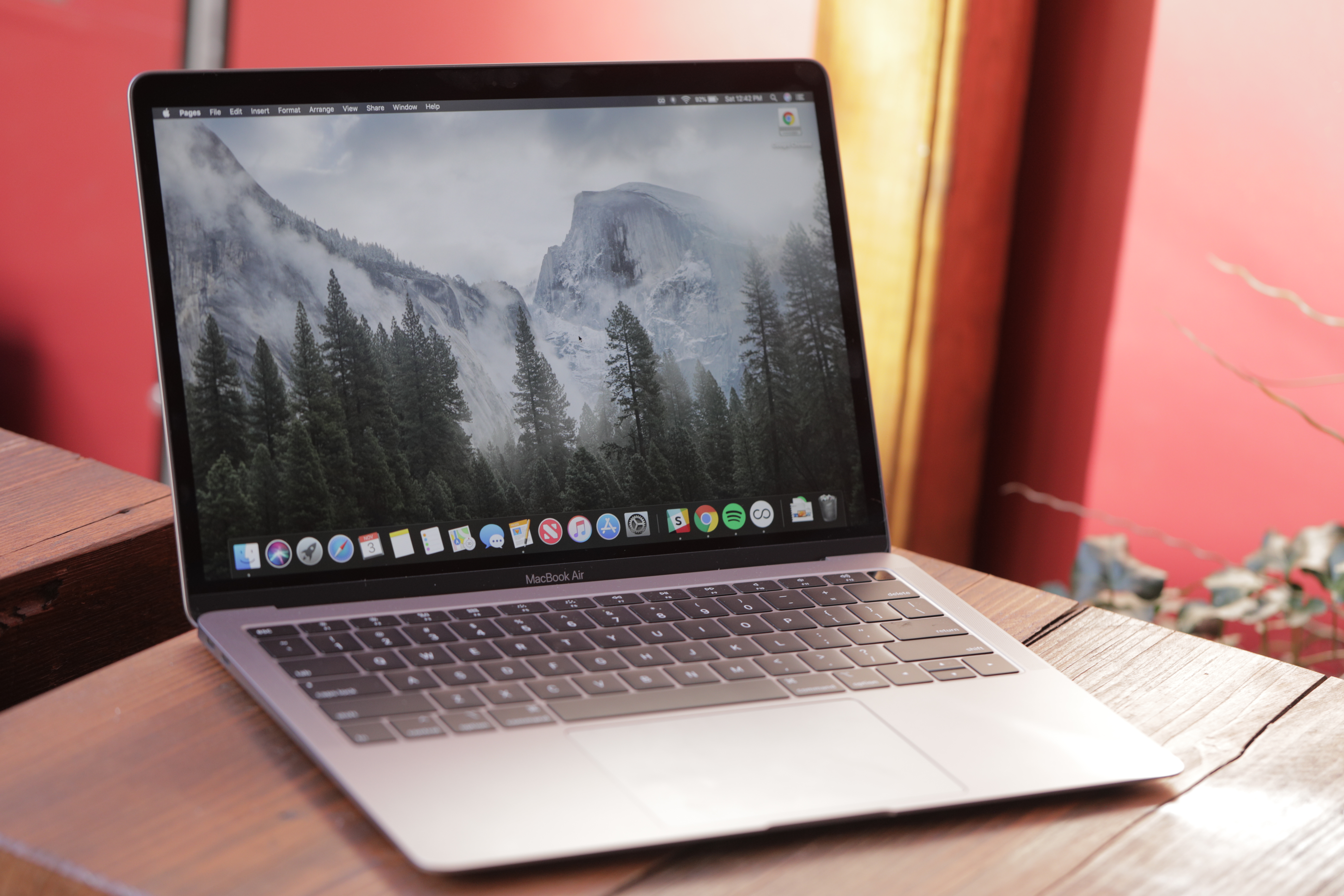
The Air has also seen a price increase, though Apple was able to rein things in a bit more here, in terms of both overall and relative price. At $1,199, the low-end version of the laptop remains the least pricey entry point into the Mac ecosystem (excluding the older Air, which is still available for $999).

This latest update finds the Air finally assuming its place in the current MacBook line, whose current iteration began life with a major overhaul in 2015. Becoming part of the club means an aesthetic upgrade, a move to USB-C, souped up internals and, of course, the long-awaited addition of a Retina Display.

The device arrives amid a shift for the company, as it once again embraces creative professionals with both MacOS devices and iOS through the addition of the iPad Pro. The latter continues to blur the line between Apple’s operating systems, with computation power rivaling — and in some cases outperforming — some of its MacOS models.

Currently, the Air sits between the iPad Pro and low-end MacBook — though given the $100 price difference between it and the former, I don’t know that anyone would be entirely shocked to see Apple quietly sunset the baseline product in favor of the reborn Air. There simply aren’t enough compelling reasons to keep that model around in its current configuration, especially given the Air’s enduring popularity.
Certain sacrifices were made in favor of keeping the Air’s price down — most notably the Touch Bar. There was some speculation that Apple’s decision to drop the technology on this device was some clear sign that the company was moving away from the touchscreen-adjacent tech, but the reason is likely far more simple: Adding it would have further driven up the entry-level price — and eclipsed the MacBook in the process.

Instead, the company did something even better, breaking out Touch ID from the bar. After a couple of years with a Touch Bar on both my work and personal machines, the fingerprint scanner remains the one feature (outside of the standard function keys like volume) that I use on a daily basis. In the long run, the company may have done the Touch Bar a bit of a disservice by consciously uncoupling Touch ID, but for the Air, it was the ideal decision, bringing its most useful feature without driving up the price in the process.

The keyboard is the same found on the most recent MacBook Pros, as well. That, along with other shifts, is bound to be polarizing among longtime Air users. I will say this, however, if you haven’t tried a MacBook keyboard since the infamous butterfly switch overhaul of 2015, visit your local Apple store to give them another shot. It’s true that they’re still a fair bit shallower than the previous model, but things have been improved in the past three years, courtesy of two major updates.
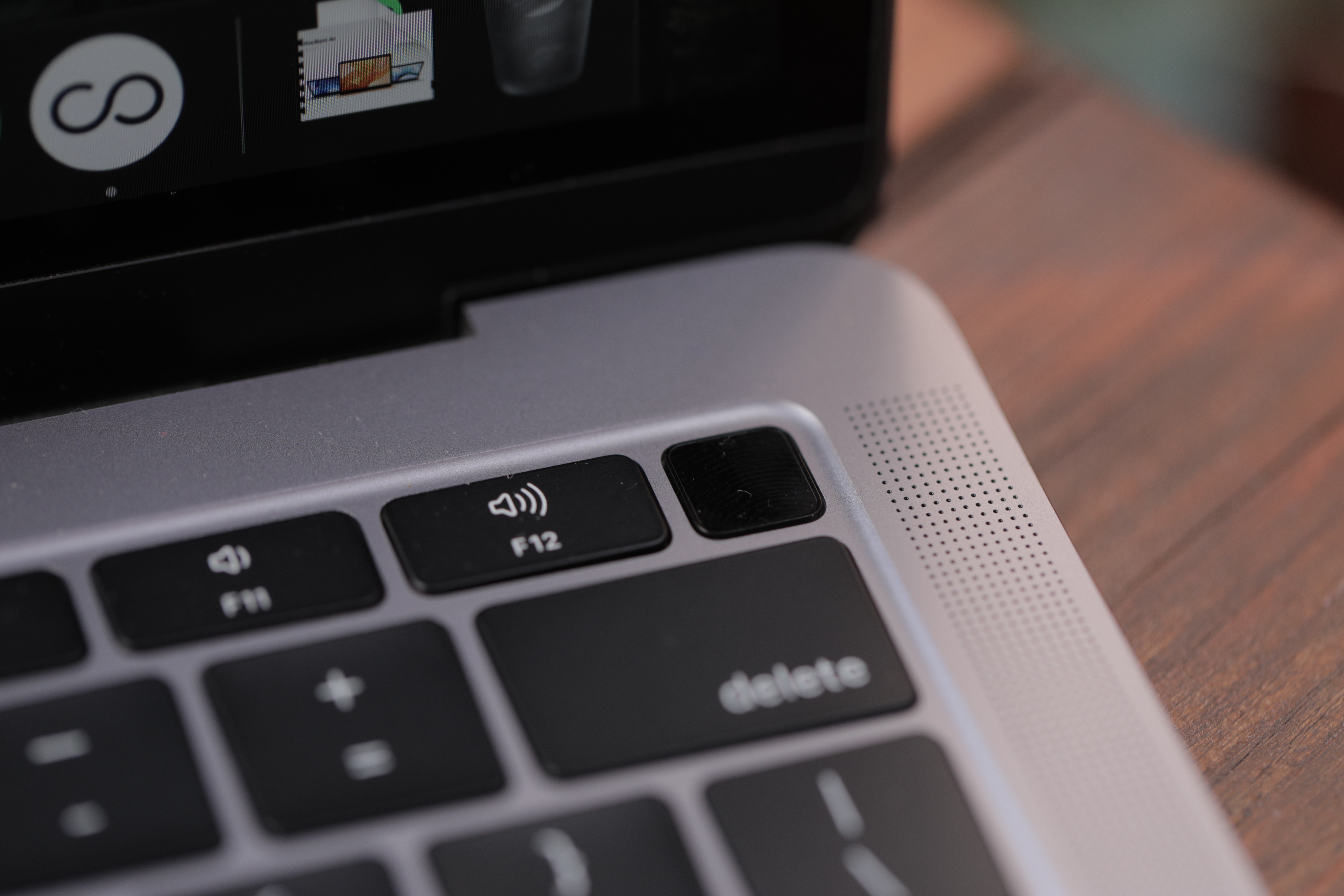
This latest generation is quieter, has a better feel and has the added benefit of a new rubberized bladder, which should protect from spills, along with particulate matter, which has become a bane of everyone with an earlier model’s existence. Seriously, I once found myself roaming around Seattle desperately trying to find a can of compressed air before an Amazon event.

Those who’ve been holding out to upgrade from an earlier Air model will likely have a bit of an adjustment period, but it’s a much easier transition that it was on those initial 2015 MacBooks. The track pad, too, is now in line with its MacBook brethren. It’s 20 percent larger than the previous Air and utilizes Force Touch for a more uniform response across the surface, welcome changes the both of them.

The new Air’s internals are, naturally, an upgrade across the board over the 2015 model, but it’s more of a mixed bag when compared to the MacBook. In fact, the concurrent existence of the two products is likely to cause confusion among buyers — and understandably so. If you’ve been having trouble deciding between MacBooks, Apple’s made that task even more complex.

RAM is the same on both systems at either 8 or 16GB. No surprise there — that’s pretty consistent across the entire MacBook line. The base-level storage configuration, on the other hand, starts lower but goes higher than the MacBook, with an entry of 128GB (to the MacBook’s 256), all the way up to 1.5TB. Of course, storage upgrades are always costly, and if you max this one out, it’s going to run you another $1,000.

Given that it’s a newer model, the process is an upgrade over the pricier MacBook on the baseline, from a 1.2GHz dual-core Intel Core i3 to a 1.6GHz dual-core Intel Core i5 processor. That said, there’s only one configuration here, at present, so if you want more power, seriously consider upgrading to the Pro. Our model, the Core i5 coupled with 8GB (standard on everything but storage) scored a 4,297 and 7,723 on Geekbench’s single and multi-core tests, respectively.
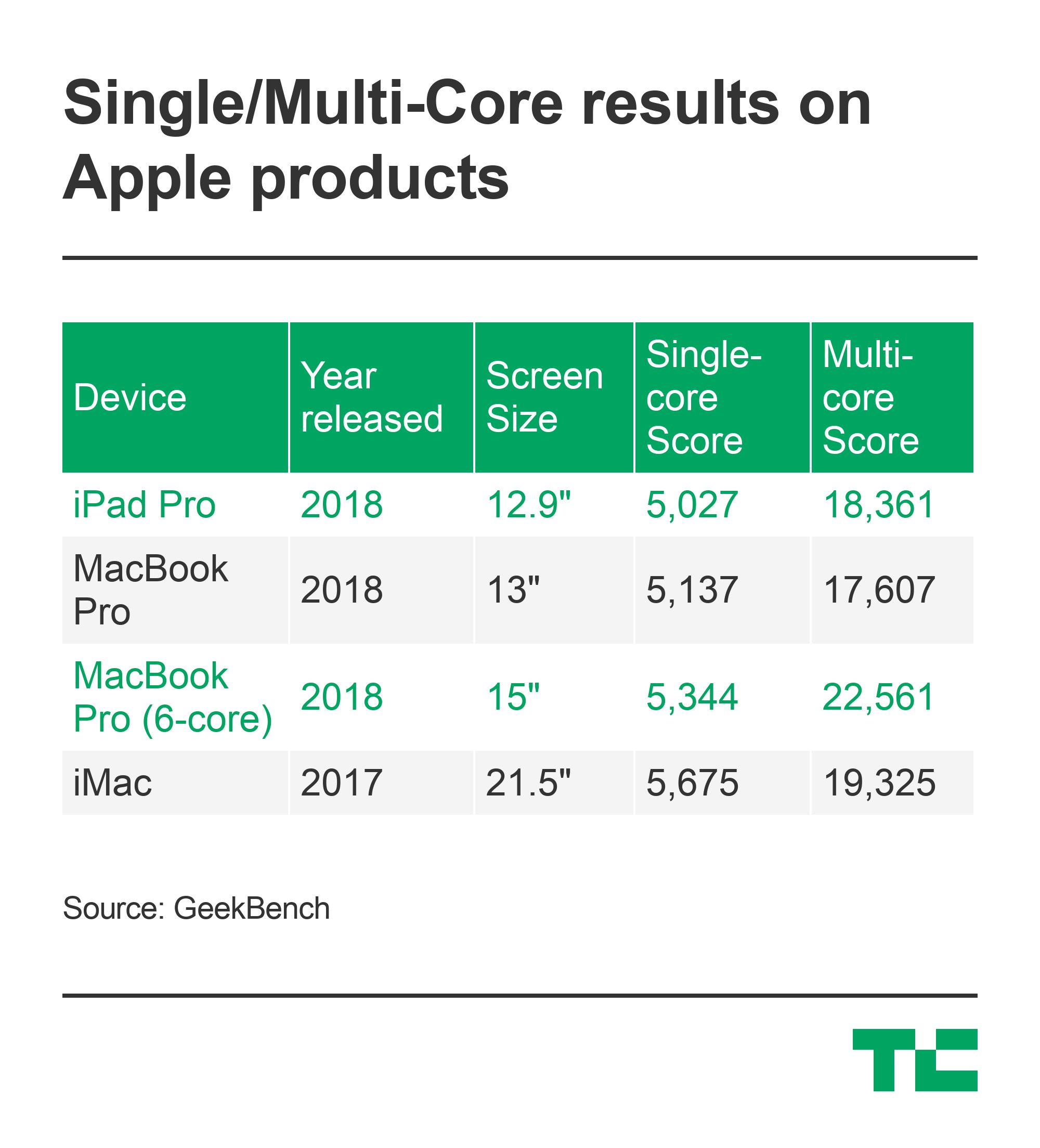
A quick glance at the above graphic really highlights the gulf between the Air and Pro, though the new chips do mark an upgrade over the 2017 MacBook’s single- and multi-core scores of 3,527 and 6,654. The new silicon is plenty zippy for most users’ daily tasks, but if you need more out of your system — be it for gaming or resource-intensive tasks like video edit — it’s worth the jump to the Pro.

Battery, meanwhile, is a pretty sizable bump over the MacBook, owing to the larger footprint on the Air’s 13.3-inch frame (versus the 12-inch MacBook), with a stated “up to 12 hours” on a charge to the MacBook’s 10. I found that to be pretty on the money, in my own testing. I was able to stream video for just a hair under 12 hours — plenty enough to get you through most flights.
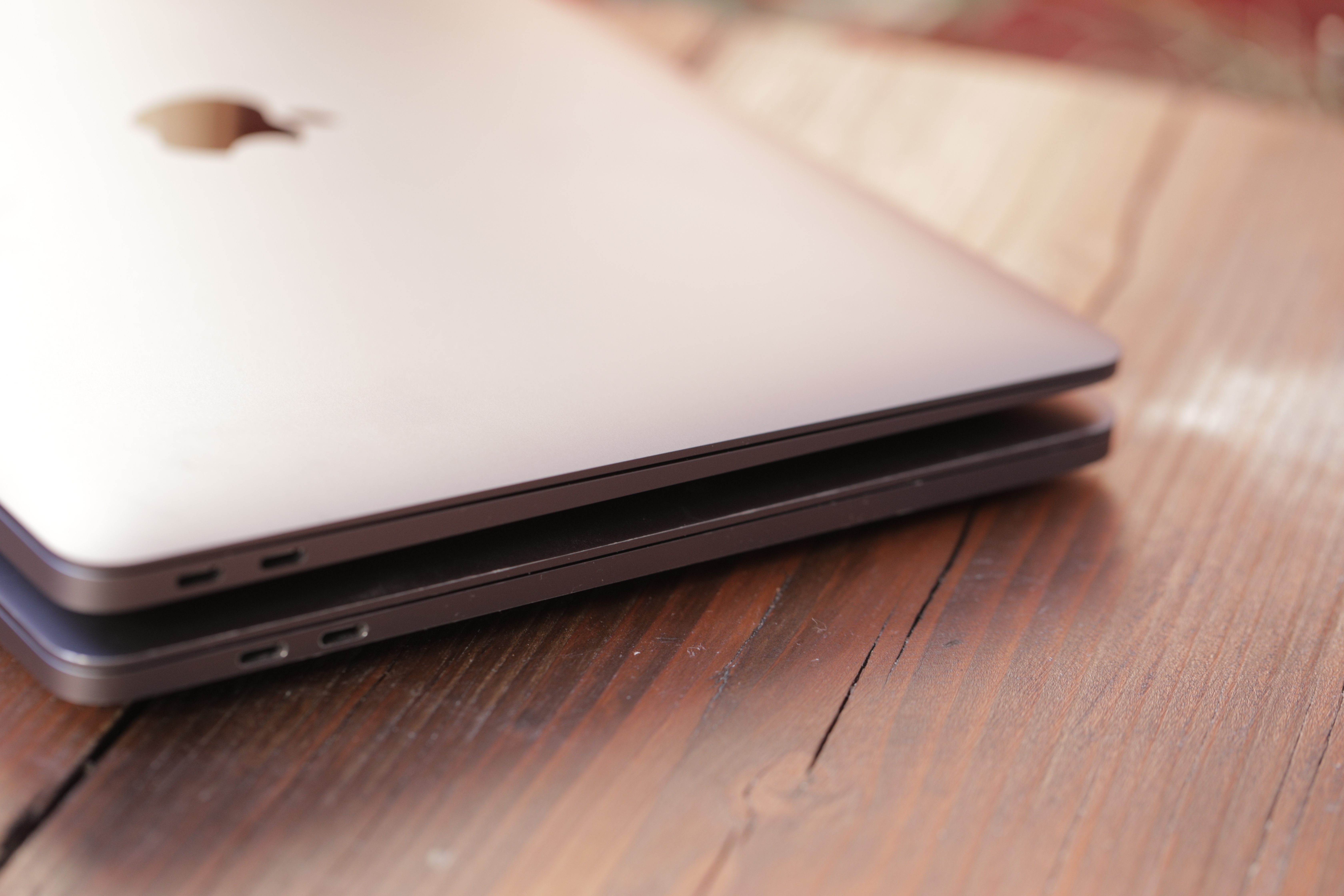
Of course, the larger screen and battery also mean a heftier laptop. The Air’s 2.75 pounds is around 3/4 of a pound more than the MacBook. In spite of retaining the iconic beveled design, it’s also a bit thicker than the 12-inch model. That said, the company’s managed to both shrink the footprint and reduce the weight from the older Air, which weighed in at 2.96 pounds.

The display is, as advertised, a massive upgrade over the last model. If you’ve spent any time with a Retina display, you know the deal. It’s big and bright, with a nice color balance. In terms of sheer numbers, we’re talking about a bump from 1440 x 900 to 2560 x 1600 pixels. That amounts to 227 PPI, compared to the old model’s 128. It’s an immediately apparent upgrade — there’s a reason so many Air owners have been holding out for the addition. The multimedia experience is rounded out by upgraded speakers that are capable of getting LOUD, in spite of taking up very little real estate on either side of the keyboard.

The design language was overdue for an update, and now the system looks nearly identical to the 13-inch Pro at first glance, aside from the familiar tapered design. And, of course, you can pick it up in Gold, keeping with Apple’s theme of more colorful options on lower-cost devices like the iPhone XR.

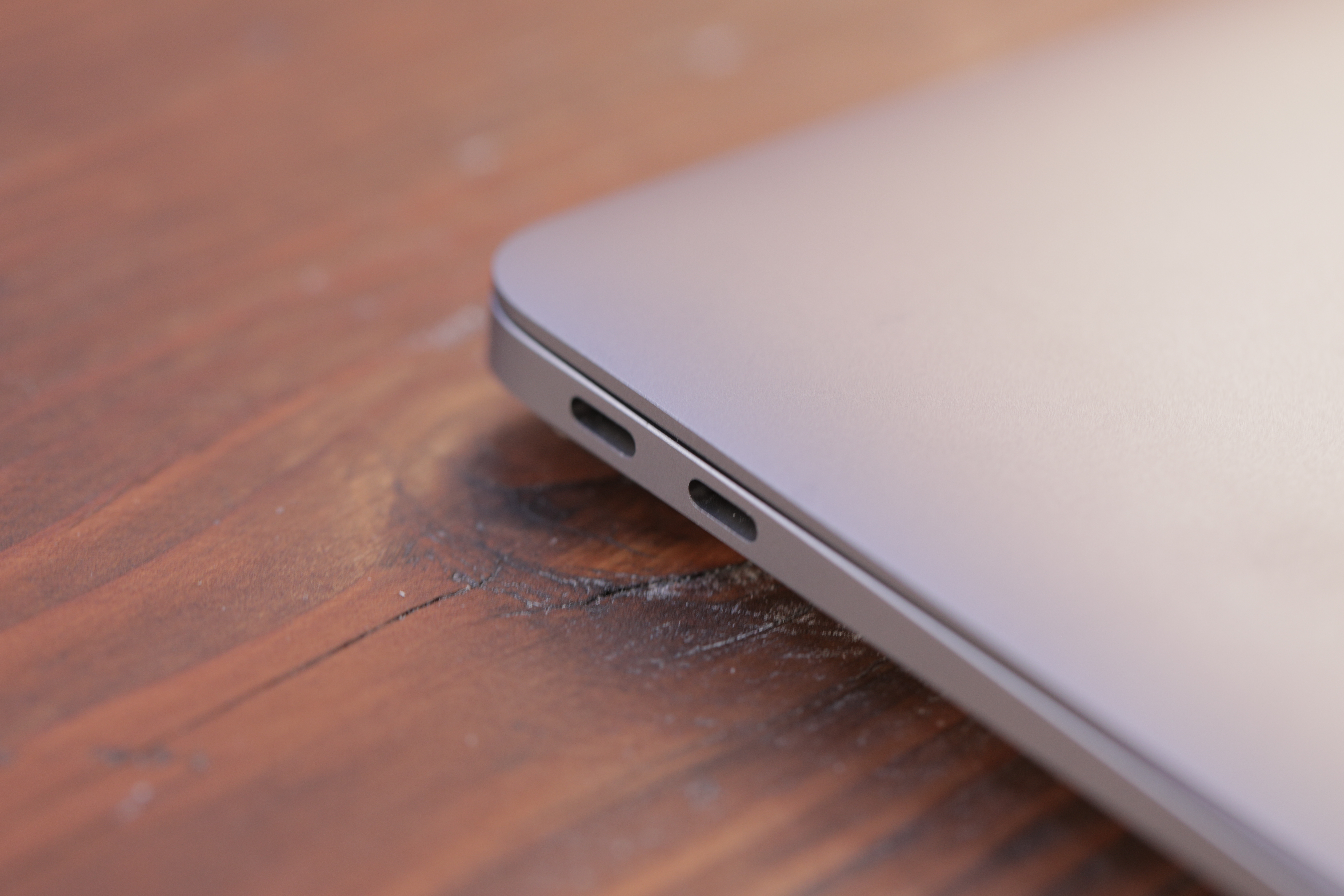
The most polarizing aspect on the frame is no doubt the continued shift to all Thunderbolt 3 (USB-C). No surprise there, of course. Get ready to lead the #donglelife until time comes to upgrade all of your accessories. The two USB-C ports are located on the same side, which means a bit more maneuvering when charging — though the new ports are much more diverse than the old power model. It’s the same set up you’ll find on the MacBook. Upgrade to the Pro, meanwhile, and you’ll get twice the number.

There’s no doubt the new Air marks a sizable update. It’s pricier, too, though Apple’s kept things more in check here than with the Mac Mini. With all of its upgrades and lower price point to boot, the Air is the clear pick over the 12-inch MacBook in practically every way.

As a matter of fact, barring some major future upgrade, the 12-inch likely isn’t long for this world. And that’s perfectly fine. The new Air is very clearly the better buy.


06 Nov 2018

Mac Mini review

At last month’s Apple event, the Mac Mini was greeted like a returning hero. Maybe it was the over the top space advert or the fact that the company had packed the seats of the Brooklyn opera house full of local employees.

Most likely, however, it had at least a little to do with the return of an Apple line that had seemingly been forgotten. Like the MacBook Air, the plucky little desktop had been ostensibly abandoned. In the four years since its last meaningful update, the Mini had been encased in amber, seemingly a relic of Apple’s past.

The phrase in science is “Lazarus taxon,” the return of a grouping that had seemingly been lost to history. Granted, Apple continued to stock the Mini, but in the rapidly evolving world of computer components, a four-year system might as well be an artifact from some long-forgotten ancient civilization.

Among other things, that gap gives us a good occasion to reconsider the Mac Mini’s place in the Apple ecosystem and the computing world at large. Apple clearly has. In fact, the whole of the company’s desktop line has clearly gotten a rethink over the course of the last year, including the addition of the iMac Pro, and the still MIA Mac Pro.

The Mini has long been Apple’s entry-level desktop. The $499 price tag on the 2014 model certainly highlighted this fact. With a $300 price bump, the latest version still represents the lowest cost path into the world of desktop Macs, but arguably removes “entry” from the equation.

The price jump, naturally, comes with a notable spec increase, one that puts the diminutive desktop in line with a desktop ecosystem that finds Apple catering once again to its core competency of creative pros. Along with the built-in components, which bring benchmark performance levels up to somewhere around that of the last (and admittedly also overdue for an overhaul) Mac Pro, the company’s also added more user upgradability — never a given for an Apple product.

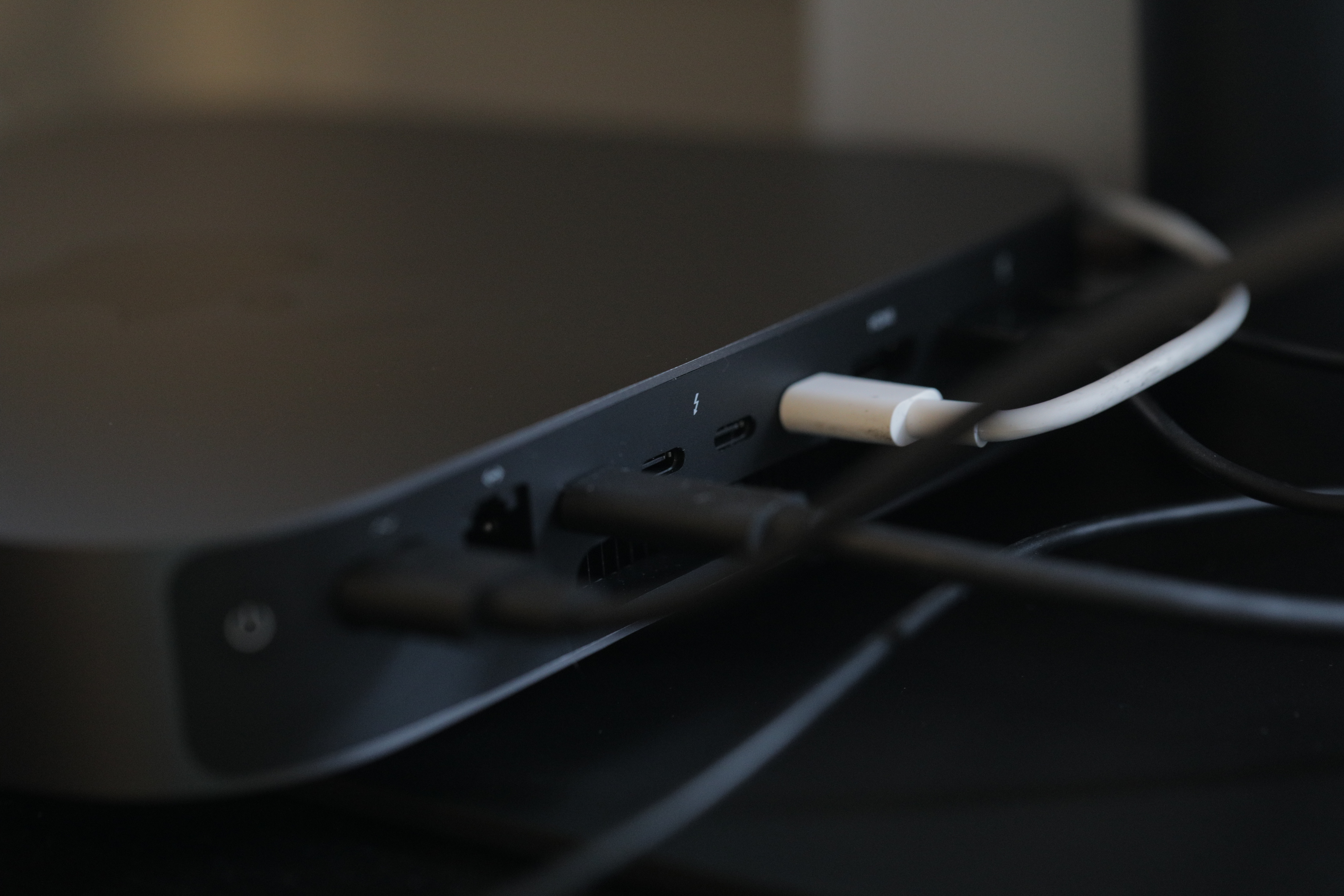
Also notable here are the crazy number of ports available on the rear of the device. There are two full USB 3 ports here, which is good news as far as backward compatibility with older accessories. Admittedly, I utilized both immediately to hardwire a keyboard and trackpad — pretty important, so far as most desktop computing is concerned. Of course, you can also go the wireless route or invest in the inevitable adapter.

HDMI 2.0 is present here, as well, along with a headphone jack — that once-ubiquitous port, which is hanging on for dear life on the Mac line. Fingers crossed that sticks around for good. The ability to plug in wired headphones is just too important for those creative audio pros who rely on Apple desktops and laptops to go away soon. Though, naturally, stranger things have happened.

The biggest turn on the I/O side of things, however, is the inclusion of an impressive four Thunderbolt 3 ports. That’s the same number found on the iMac Pro and twice as many as you get on the 2017 standard iMac. It opens things up to a lot more computing versatility. As far as my own desk is concerned, I welcome the ability to power the LG 4K monitor Apple sent along for testing purposes.

Lord knows the last thing I need is another thing to plug into my already overworked power strip. I would include a photo here were it not already a source of great shame. There’s enough power to support two 4K displays or one 5K. If you’re feeling crazy, you can also plug in a third 4K screen via the HDMI port. For now, however, I’m using the additional ports to charge up devices.

The internal graphics have been overhauled, with the Intel UHD Graphics 630 promising a bump of up to 60 percent over the last gen. Though the Cinebench score of ~530cb puts it roughly in line with the latest iMac (not Pro).

This is another place you’re going to want to potentially turn to those Thunderbolt ports, by hooking up an external GPU or two. In fact, it wasn’t mentioned onstage, but hardware partner Blackmagic launched a second Apple-focused eGPU the same day as the event, this time with a much-improved Radeon RX Vega 56 card (and a price increase to match).

That’s a nice step toward the company’s growing ambition to become a more serious gaming platform. But more to the point with a system like this, it’s an important upgrade for users performing more graphic resource-intensive tasks like photo and video editing. Apple’s also be pushing to be a content creation platform for even heavier lifts like VR production. Even with the external GPU, however, those users are going to want to consider an Apple product with “Pro” in the title, coupled with one of the aforementioned external GPUs.

Our unit came loaded with 8GB — the entry-level configuration, not to mention the same (albeit faster) amount offered on the 2014 model. You can, however, octuple that (for a price) either at checkout, or later, by cracking it open and replacing it yourself. The storage (which is entirely solid state now), isn’t user replaceable, but can be bumped up to 2TB on the site.

Priced as configured, our unit runs $799, making it the entry-level version. That’s a quad-core 3.6GHz Intel Core i3, 8GB of RAM  and 128GB of storage. Performance-wise, I got a 4685 single-core and 13952 multi-core on Geekbench. That’s a marked improvement over the 2014 version, naturally, but can’t touch, say the high-end 2018 MacBook Pro. You’re going to want to bump it up to the Core i7 version to hit those numbers. That one starts at $1,099. And fair warning, when speced all the way out, the system will end up running you $4,199, which is getting into iMac Pro territory.

Of course, even the lowest-speced version should be plenty fine for most tasks. I’ve shifted my standard tech blogger work flow over the machine for the last couple of days and am perfectly happy with the results. On the other hand, if your workload requires anything processor or graphics intensive, you’re going to want to pimp this thing out — or seriously consider picking up a desktop with the word “Pro” in the name.

For the budget-strapped, it’s also easy to flinch at the $300 price increase on the base-level. While it’s true that the components are pricier this time, it’s hard to shake the feeling that the company has priced out the true entry-level user this time out, in favor of offering a product that’s more of a gateway into the Pro ecosystem.

It’s a tough line to walk, serving both low-end desktop users and those who need some serious processing power — it’s why, among other things, there are so many different MacBook models. The Mini, on the other hand, is admittedly more of a niche device than an Apple laptop, regardless.

But Mini has carved an interesting niche for itself. This latest version is clearly inspired by the life the product has found outside of simply being a desktop. Apple was quick to make reference to its use in IT. The product’s small, flat design has made it an interesting candidate for a server. It’s probably a bit pricey to, say, run your entire data center on these, but if it can be done, someone has definitely done it.

That unexpected use case is a big part of the reason the company stuck to the same dimensions this time out — a number of third parties already produce accessories built to those specifics, so why not make it as easy as possible to swap out for a new unit? The footprint also means the computer is easily stackable, for workloads that require the output of multiple machines at once. 

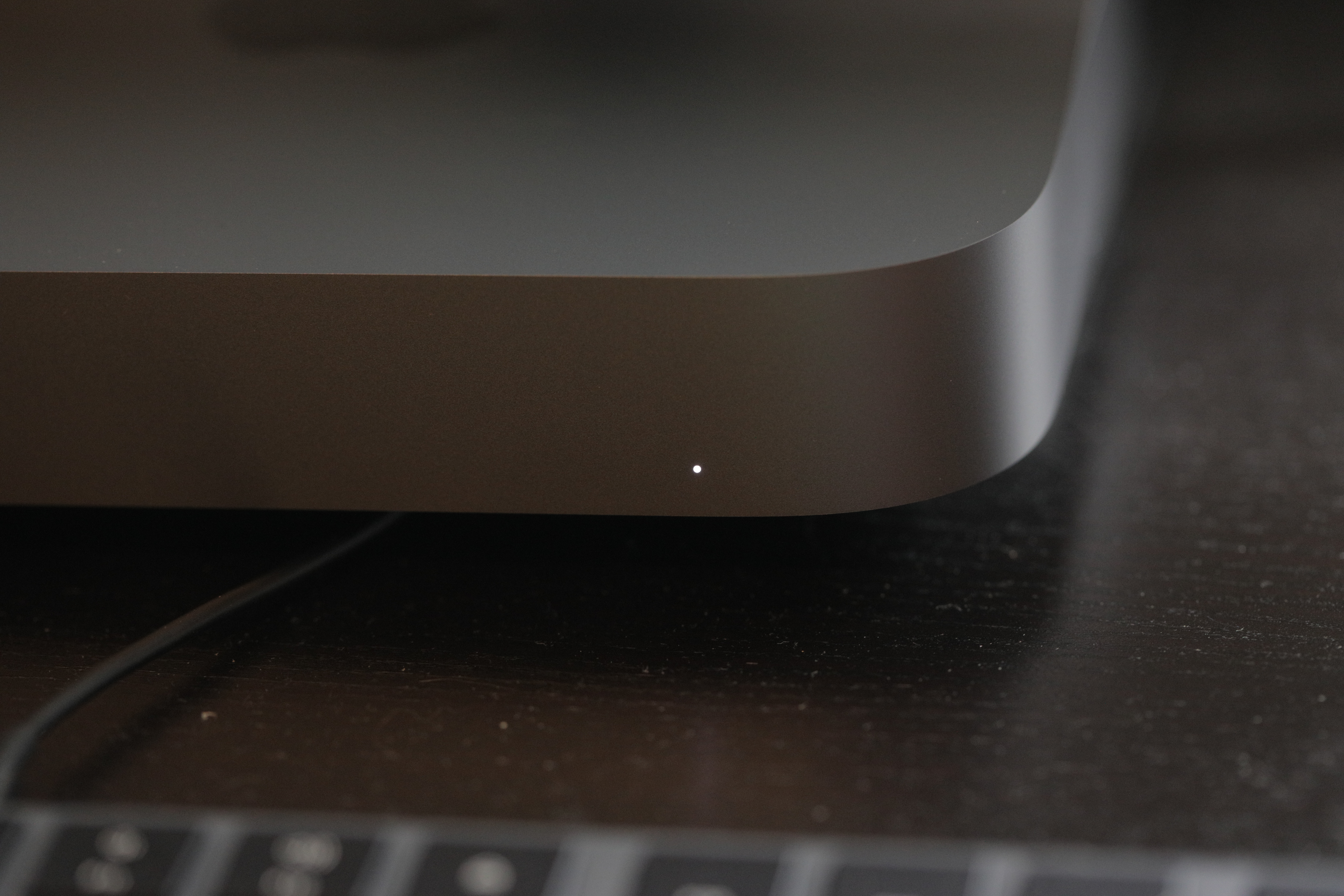
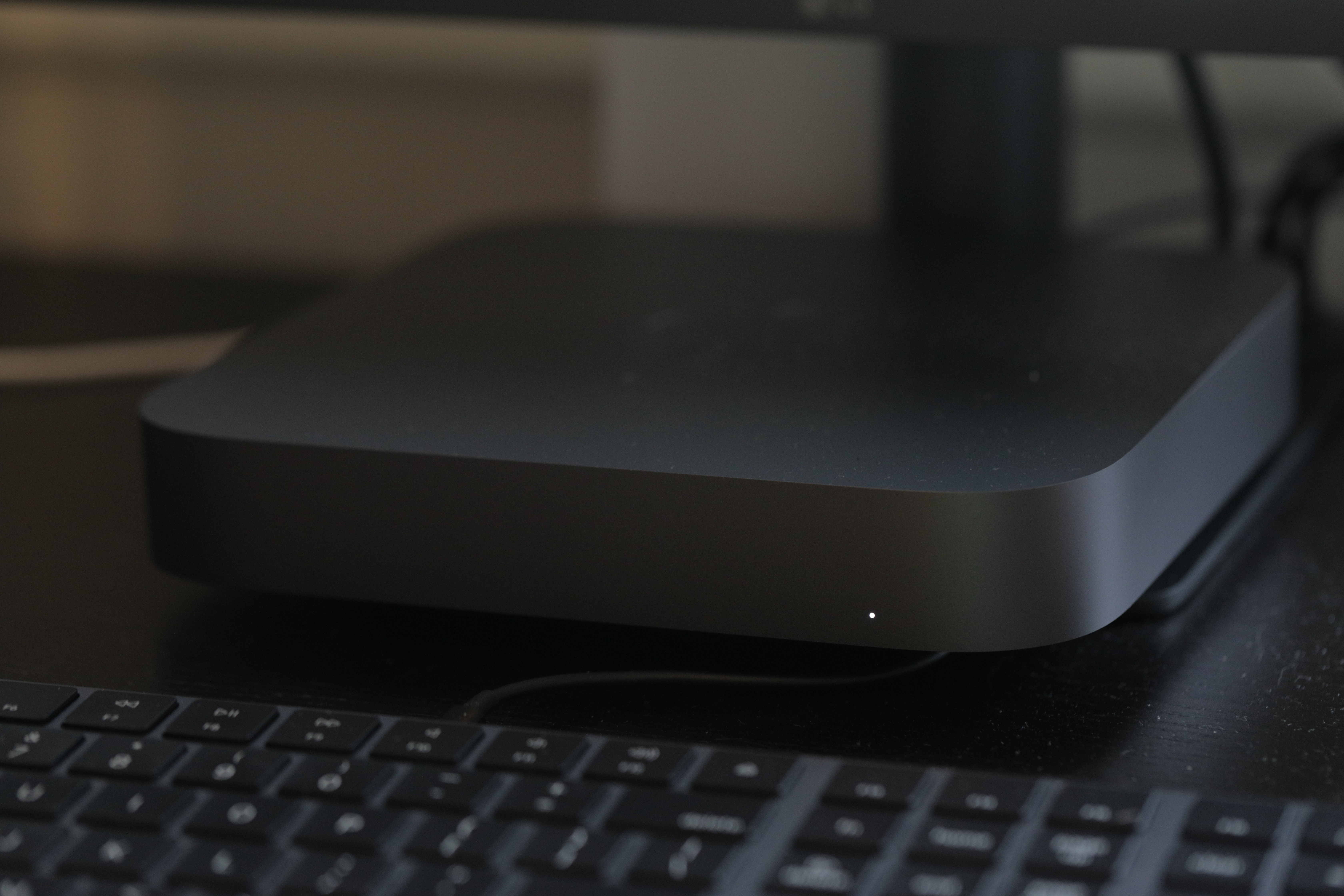
That said, it’s a really nice size for an unobtrusive addition to a desktop. As I type this, the Mini is nestled snuggling below the monitor, just in front of the keyboard. The switch to a space-gray metal both matches the aesthetic of the rest of the Mac line (not to mention the new iPad Pro) and also fits in well on my black desk.

The Mac Mini is undoubtedly a powerful upgrade over its predecessor and an interesting glimpse into the future of the Mac ecosystem. Along with the product’s pro ambitions, however, comes a significantly higher price tag, starting at $799. The Mini is still the best-priced gateway into a desktop Mac ecosystem, but the definition of entry-level has clearly shifted for Apple since the last ‘go round.

06 Nov 2018

Study of political junk on Facebook raises fresh questions about its metrics

A midterms election study of political disinformation being fenced by Facebook’s platform supports the company’s assertion that a clutch of mostly right-leaning and politically fringe Pages it removed in October for sharing “inauthentic activity” were pulled for gaming its engagement metrics.

Though it remains unclear why it took Facebook so long to act against such prolific fakers — which the research suggests had been doping their metrics unchallenged on Facebook for up to five years.

The three-month research project carried out by Jonathan Albright of the Tow Center for Digital Journalism has largely focused on domestic political disinformation.

In a third and final blog detailing his findings he says some of the removed Pages had put up Facebook interaction numbers in the billions, and many of their videos consistently showed engagement in the tens of millions.

“I found that at least three of the Pages — removed less than a month ago — reported near-astronomical engagement numbers over the past five years,” he writes. “These are the kind of numbers that would be difficult to justify in almost any scenario — even in the case of a very large and sustained advertising spend on Facebook.”

One of the Pages with suspiciously high engagement flagged by Albright is a Page called Right Wing News.

“Less than a month before the 2018 midterm elections, when the Page was removed, Right Wing News had reported more engagement on Facebook over the past five years than the New York Times, The Washington Post, and Breitbart…combined,” he writes.

He also flags two other Pages that were removed by Facebook which had suspiciously high video views, called Silence is Consent and Daily Vine.

We’ve reached out to Facebook for a response.

The company is currently facing legal action from an unrelated group of advertisers who allege that Facebook knowingly misreported video metrics, inflating views for more than a year, and accusing the company of ad fraud. Facebook disputes the advertisers’ allegations.

In his blog, Albright also details how Facebook has seemingly failed to properly enforce a ban on conspiracy theorist and hate speech purveyor Alex Jones, whose personal Facebook Page and disinformation outlet, InfoWars, it pulled from its platform in August — writing: “Jones’ show and much of the removed InfoWars news content appears to have moved swiftly back onto the Facebook platform.”

How has Jones circumvented the ban on his main pages? By creating lots of similarly branded alternative Pages…

Albright writes that Facebook’s algorithms pushed Jones’ livestream show into search results when he was looking for Soros conspiracies: “And what did I get? The live high-definition stream of Jones’ show on Facebook — broadcast on one of the many InfoWars-branded Pages that is inconspicuously named “News Wars.”

According to his analysis, Jones’ InfoWars broadcasts appears to be almost back to where they were — in terms of views/engagement — before the Facebook ‘ban’ took down his two largest pages. Albright describes the “censorship” case as “a gross enforcement failure by Facebook”.

“Granular enforcement isn’t just reactive takedowns; it’s about proactive measures. This involves considering the factors — even the simple guerrilla marketing tactics — that play into how things like banned InfoWars live streams get further propagated,” he writes, summing up his findings.

“From what I’ve seen in this extensive look into Facebook’s platform, especially in regards to the company’s capacity to deal with the misuse of its platform as shown in the cases above — exactly two years after the end of the last election — I will argue that common sense approaches to platform integrity and manipulation still appear to be less of a priority for Facebook that automated detection and removal publicity.”

“The infinite gray area of information-sharing poses the real challenge: it’s the slippery soft conspiracy questions, the repetition of messages seen on shocking memes and statements like the “Soros Beto” caption [cited in the post], and the emotional clickbait that’s regularly shown in Jones’ InfoWars video cover stills. Without granular enforcement, the non-foreign bad actors will only get better, and refine their tactics to increase Americans’ exposure to [hyperpartisan junk news],” he adds.

“Information integrity is more than the scrutiny of provable statements or the linking of some data to shared content with an “i.” Transparency involves more than verifying one Page manager, putting it alongside a date and voluntary disclosure for a paid political campaign, and adding to an political “ad archive.”

Albright has posted additional findings from his three month trawl through the Facebook fake-o-sphere this week — including raising concerns about political Pages running ads targeting the US midterms which have changed moderator structure and included foreign-based administrators, as well as finding some running political ads that lacked a ‘Paid for’ disclosure label.

He also identifies a shift of tactics about political disinformation operators to sharing content in closed Facebook Groups where it’s less visible to outsiders trying to track junk news — yet can still be shared across Facebook’s platform to skew voters’ opinions.

06 Nov 2018

VMware acquires Heptio, the startup founded by 2 co-founders of Kubernetes

During its big customer event in Europe, VMware announced another acquisition to step up its game in helping enterprises build and run containerised, Kubernetes-based architectures: it has acquired Heptio, a startup out of Seattle that was co-founded by Joe Beda and Craig McLuckie, who were two of the three people who co-created Kubernetes back at Google in 2014 (it has since been open sourced).

Beta and McLuckie and their team will all be joining VMware in the transaction.

Terms of the deal are not being disclosed — VMware said in a release that they are not material to the company — but as a point of reference, when Heptio last raised money — a $25 million Series B in 2017, with investors including Lightspeed, Accel and Madrona — it was valued at $117 million post-money, according to data from PitchBook.

Given the pedigree of Heptio’s founders, this is a signal of the big bet that VMware is taking on Kubernetes, and the belief that it will become an increasing cornerstone in how enterprises run their businesses. The larger company already works with 500,000+ customers globally, and 75,000 partners. It’s not clear how many customers Heptio worked with but they included large, tech-forward businesses like Yahoo Japan.

It’s also another endorsement of the ongoing rise of open source and its role in cloud architectures, a paradigm that got its biggest boost at the end of October with IBM’s acquisition of RedHat, one of the biggest tech acquisitions of all time at $34 billion.

Heptio provides professional services for enterprises that are adopting or already use Kubernetes, providing training, support and building open-source projects for managing specific aspects of Kubernetes and related container clusters, and this deal is about VMware expanding the business funnel and margins for Kubernetes within it its wider cloud, on-premise and hybrid storage and computing services with that expertise.

“Kubernetes is emerging as an open framework for multi-cloud infrastructure that enables enterprise organizations to run modern applications,” said Paul Fazzone, senior vice president and general manager, Cloud Native Apps Business Unit, VMware, in a statement. “Heptio products and services will reinforce and extend VMware’s efforts with PKS to establish Kubernetes as the de facto standard for infrastructure across clouds upon closing. We are thrilled that the Heptio team led by Craig and Joe will be joining VMware to help us guide customers as they move to a multi-cloud world.”

VMware and its Pivotal business already offer Kubernetes-related services by way of PKS, which lets organizations run cloud-agnostic apps. Heptio will become a part of that wider portfolio.

“The team at Heptio has been focused on Kubernetes, creating products that make it easier to manage multiple clusters across multiple clouds,” said Craig McLuckie, CEO and co-founder of Heptio. “And now we will be tapping into VMware’s cloud native resources and proven ability to execute, amplifying our impact. VMware’s interest in Heptio is a recognition that there is so much innovation happening in open source. We are jointly committed to contribute even more to the community—resources, ideas and support.”

VMware has made some 33 acquisitions overall, according to Crunchbase, but this appears to have been the first specifically to boost its position in Kubernetes.

The deal is expected to close by fiscal Q4 2019, VMware said.

06 Nov 2018

Aiden.ai raises a $1.6M seed round for its AI marketing analyst

Aiden.ai, a London based AI analytics startup, has raised a $1.6M seed round to develop its “AI-powered marketing analyst” which, they claim, is like having an extra person on the marketing team for mobile apps. The round has been led by Partech. Other investors include Sophia Bendz, who previously led marketing at Spotify and Nicolas Pinto, founder of Perceptio, acquired by Apple.

This last round brings Aiden.ai’s total funding to $2.3m, after an initial pre-seed round of $750,000 in March 2017.

Aiden.ai is also coming out the gate with its full product. Designed for mobile app marketers, Aiden says it uses machine reading to analyze large sets of paid advertising data, and proactively make changes to improve ROI.

Instead of using manual dashboards for data, the idea is to provide a simplified experience to help marketers manage their multichannel paid acquisition campaigns and make the most of their investments.

Marie Outtier, CEO, said: “Today’s performance marketers are bogged down with data coming from multiple sources.” She said this is “a new generation of software, one that listens, learns and acts.”

Reza Malekzadeh, partner at Partech said: “We believe Aiden.ai is building an innovative solution for marketers at precisely the time it is needed most. Marie and PJ’s vision for the future of data and analytics harnesses the recent advances in the fields of machine learning and natural language processing to create a tool that is set to change the way marketers do their job.”

The company was co-founded by Outtier who has a background in mobile marketing and technology and PJ Camillieri (CTO) who previously spent 10 years at Apple working on Natural Language Processing and virtual assistants.

06 Nov 2018

Venture capital and the blockchain will be the talk at Startup Battlefield Africa

TechCrunch Startup Battlefield returns to Africa next month, and we have an agenda chock-full of interesting panels and our premier startup competition.

Joining us in Lagos, Nigeria on December 11 for a couple of those aforementioned panels will be Chris Folayan, the founder and CEO of Mall for Africa; Nichole Yembra, chief financial, risk and investment officer for Venture Garden Group (VGG) and a managing partner at GreenHouse Capital; and Olaoluwa Samuel-Biyi, partner at Hacked Capital.


Chris Folayan, who is originally from Nigeria, graduated from California State University, San Jose, and founded and sold several companies globally. He also established new companies in Africa, the U.S., the Middle East and Asia. Mall for Africa is a global economy e-commerce infrastructure company enabling Africans to purchase items directly from international online retailers in the U.S. and Europe, as well as local online retailers in Africa.

At VGG, Nichole Yembra is responsible for investor relations and the financial strategy of the seven technology companies under its umbrella as they serve public and private clients across the aviation, power, education, financial services, and social investment sectors. Through GreenHouse Capital, Nichole takes on fintech-enabled portfolio companies looking to transform the education, renewable energy, big data and fintech ecosystems.

Nichole Yembra

The portfolio companies’ products have connected over 3,000 students to tutors, revolutionized off-grid solar solutions and increased banking services of Nigeria’s nearly 84.6 million unbanked population. In addition to this work, Nichole is committed to making gender diversity a priority within the fintech space in Nigeria and enhancing opportunities for women in leadership.

Olaoluwa Samuel-Biyi

Olaoluwa Samuel-Biyi is a co-founder of SureGifts, a Nigeria-based gift card retailer and technology provider. Olaoluwa joined the founding team of Jumia in 2012 to work on business intelligence and commercial planning, before leaving to build SureGifts. He also consults on investment and financial strategy for Venture Garden Group. He studied Accounting and Finance at the University of the West Indies, Barbados.

And of course, the main event will be Startup Battlefield. Fifteen companies will compete in front of a live audience and top judges for a shot at US$25,000 USD in no-equity cash plus a trip for two to compete in Startup Battlefield at TechCrunch’s flagship event, Disrupt in 2019 (assuming the company still qualifies to compete at this time).

Startup Battlefield Africa is right around the corner and you can get your tickets here.