
Year: 2018

05 Nov 2018

Bonobos and Nike get their own branded shops on Walmart’s Jet.com

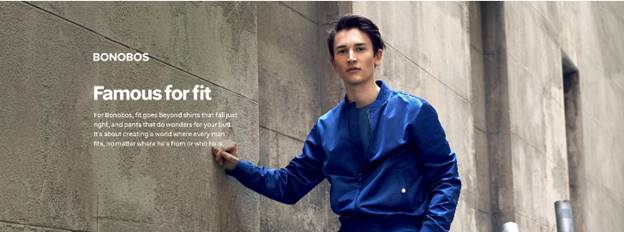
Last year, Walmart acquired menswear site Bonobos for $310 million in cash. Now the retailer is adding the brand to a Walmart-owned website. A few days ago, Walmart opened up an online shop for Bonobos on its Jet.com website, newly focused on serving urban shoppers, along with a dedicated shop for Nike apparel, footwear and accessories.

The Nike shop is a part of the company’s strategic partnership with the brand, announced in September, and provides Nike with its own fully branded experience on the site. In addition to the Nike items for running, training, and sportswear, Jet will also become an authorized sellers of select Nike and Converse products as a result of the deal.

Meanwhile, the Bonobos shop features fall apparel and other classics, including things like stretch-washed chinos, brushed button downs, bomber jackets and Italian topcoats, the company says. These, too, will live in their own full-branded experience on Jet.com, and be available for two-day delivery across the U.S. and free returns.

This is the first time, post-acquisition, that Bonobos has been offered on a Walmart-owned third-party website, the company told TechCrunch.

Walmart has been busy establishing itself as a home to brands with their own dedicated followings, and an often a millennial customer base. In October, it bought women’s plus-size clothing brand ELOQUII, in a $100 million deal.

The brand joined many others now under Walmart’s roof, including also Modcloth, Moosejaw, ShoeBuy, and Hayneedle, in addition to Bonobos.

Walmart, so far, had simply allowed the brands to continue to operate their own sites – but that changed in August when Moosejaw became the first of the acquisitions to open a digital storefront on Walmart.com. In that case, the new shop featured a curated selection of the brand’s outdoor gear – best sellers that appealed to Walmart’s mainstream customers.

The retailer is now doing the same with Bonobos.

The Jet.com storefront doesn’t include everything the brands sell, but rather a “curated assortment.”

For example, the Bonobos Jet.com store has just five jackets for sale today – but the Bonobos website features dozens in its Outerwear section. In addition to an expanded range of apparel, the brand’s own site also offers accessories like ties, socks, belts, shoes, wallets and more.
Walmart brought Bonobos to Jet.com instead of Walmart.com because of the overlap in customer demographics – Jet.com is meant to appeal more to the young, urban shopper.

It relaunched its site in September with localized versions for various U.S. cities, and same-day grocery delivery, starting in New York. It also just added Blue Apron’s meal kits to its site – making Jet.com the company’s first e-tailer partner.

In addition to Jet.com’s focus on urban customers, fashion itself has become a key battleground between Walmart and Amazon, with each courting brands for partnerships and acquisitions.

In recent months, Walmart.com has become home to fashion brands’ own storefronts, having added Lord & Taylor to its site, for example. Amazon, meanwhile, has established partnerships of its own, including the recent addition of J.Crew, along with others like Chico’s FAS, Calvin Klein and Nike. However, its Stitch Fix try-before-you-buy service, Prime Wardrobe, focuses on its own in-house labels, which Amazon is rolling out at scale.

“Customers value trust more than ever and it’s important for retailers to have a clear point of view on what they stand for and who they choose to partner with. As we continue implementing our new strategy focused on the city consumer, we’re delighted to welcome Nike and Bonobos to Jet.com,” said Simon Belsham, President, Jet.com, in a statement.  “Like Jet, both brands understand the importance of providing a great experience that customers can trust. Having a direct relationship with them both means we can offer a fully branded experience and a unique assortment of the brands’ leading pieces, which is important as we head into the holiday season,” he added.
05 Nov 2018

Amazon opens yet another retail store, this time in Berkeley, CA

Halloween’s over, that means retail is in full holiday mode. For Amazon, that also means a couple of new shipping offers and, apparently, the launch of a bunch of new brick and mortar locations. In September, the online giant opened a 4-Star Store in New York City, following it up with a Denver location last week.

The Verge notes that Amazon’s opening yet another location for its new retail strategy, this time in the East Bay. The Berkeley location follows the same model as its predecessors, only stocking products that have managed to score four stars or higher on the site. Naturally, that list also includes a bunch of Amazon’s own products, including Echo speakers and Fire tablets.

If nothing else, it’s an opportunity to actually experience some of those products in person — a phenomenon that’s become rarer and rarer in the age of online commerce. The retail stores also afford the company the ability to blur the line between online and in-person sales.

The Four-Star locations are a small part of the company’s fast growing store strategy. The model also includes a number of Amazon Go cashier-less grocery stores (including a recent addition in nearby San Francisco) and, of course, the company’s purchase of Whole Foods last year.

05 Nov 2018

Bloqboard lets you lend others your hard-earned crypto

Vitaly Bahachuk wants you to share your crypto. His company lets you lend cryptocurrency peer-to-peer via smart contract, ensuring you can send your buds some red hot Ether and, in theory, they have to pay you back. Further, it allows for some other clever tricks to be played with ERC20 tokens including performing some of the techniques used by equity traders.

Co-founded by Alex Bazhanau and Bahachuk, Bloqboard is live now and the lending system is powered by decentralized lending protocols. They’ve recently raised $1.2 million from Polychain Capital to set up shop after a summer of building use cases for the lending space.

“Bloqboard has quietly launched last month in beta testing to a limited number of users with limited functionality. Approximately $150,000 in loans have been borrowed via Bloqboard. Bloqboard has not undertaken any marketing activities yet and continues its beta testing,” said Bahachuk.

The real goal is short selling, allowing users to borrow tokens, sell high, and then repurchase them when the price falls. Only three exchanges allow this functionality right now.

Coinbase provided reliable access to trade cryptocurrency and created a brand,” said Bahachuk. “We aim to create a brand in all things token lending. With much talk about tokenization of real assets, we believe that some real world assets will become tokenized. Tokenized assets work well as a stable collateral, so businesses and institutions can borrow stable coins against such assets.”

The app is out of beta and ready for business. Now all you have to do is buy some sweet tokens.

05 Nov 2018

Spotify plans to buy back up to $1 billion in stock

In a move aimed at boosting its falling stock price, Spotify this morning announced it would buy back up to $1.0 billion worth of stock – up to 10 million in ordinary shares. The repurchase program was authorized by the company’s general meeting of shareholders and approved by the Board of Directors. The program will expire on April 21, 2021, Spotify says.

The decision to buy back stock comes at a time when Spotify is reporting modest growth for its streaming business, but is struggling in public markets as investors have become skeptical as to whether or not the company will be able to sustain that growth long-term and become profitable.

It’s also been impacted by the larger declines impacting tech stocks, which in October saw their worst month since the 2008 recession.

In the last quarter, Spotify reported revenues up 31 percent year over year, and an operating loss of €6 million -a 92 percent improvement on a year ago. Its monthly active users were also at 191 million, which was up 28 percent over last year.

But the company faces heavy competition these days – especially in the key U.S. market from Apple Music, as well as from underdog Amazon Music, which is leveraging Amazon’s base of Prime subscribers to grow. It also has a new challenge in light of the Sirius XM / Pandora deal.

The larger part of Spotify’s business is free users – 109 million monthly actives on the ad-supported tier. But its programmatic ad platform is currently only live in the U.S., U.K., Canada and Australia. That leaves Spotify room to grow ad revenues in the months ahead.

“The repurchase program will be executed consistent with the company’s capital allocation strategy of prioritizing investment to grow the business over the long-term,” Spotify said in a statement. It said the program could be “suspended or discontinued at any time at the company’s discretion.”


05 Nov 2018

7-Eleven is bringing cashier-less payments to its stores

Since Amazon opened its first cashier-less Amazon Go store in late 2016, other retailers have been forced to grapple with how they’ll compete with the convenience store of the future.

Amazon has since opened several additional Amazon Go locations, including in Seattle and San Francisco, and last week, Sam’s Club said it would open a “Sam’s Club Now” store in Dallas, Texas. Now, one of the oldest international chains is announcing a similar new system of cashier-less payments.

7-Eleven is piloting a new mobile check-out process called Scan & Pay. 7-Eleven shoppers can track their items by scanning a product’s QR code with their phone and pay using the 7-Eleven rewards mobile app. The company, which operates more than 65,000 stores in 17 countries, is currently piloting Scan & Pay in 14 Dallas stores. It plans to expand the service to additional cities in 2019.

Customers can pay using Apple Pay, Google Pay or a traditional debit or credit card. The only products banned from cashier-less check-out are hot foods, lottery tickets, alcohol and tobacco.

“For us, it was important to figure out how to continue to drive convenience in the digital age,” said Gurmeet Singh, 7-Eleven’s chief digital officer and chief information officer. “We are ready to adapt to the changing consumer patterns and changing demands of the consumer.”

Headquartered in Dallas, 7-Eleven says 50 percent of the U.S. population lives within one mile of one of its stores.

Like other big brick-and-mortar retailers, it’s doing its best to keep up with tech’s big advancements. Earlier this year, the company partnered with the ‘Deadpool’ series to present an augmented reality experience in its stores, among other experiments.

05 Nov 2018

Yub nub! Students dress a bipedal robot up like an AT-ST

Students at Oregon State University dressed up their bipedal robot, Cassie, in a delightful AT-ST costume. This robot, which everyone said looked like one of the Empire’s two-legged walkers, anyway, can now zap both Rebels and Ewoks in a deadly battle to take control of the forest city of Corvallis.

The robot, as you can see, can change its center of gravity for better stability and, because it doesn’t have a torso or arms, can balance in multiple difficult environments. It can also now fire lasers at primitive man-bears stuck in the Stone Age.

The Dynamic Robotics Lab at Oregon State University built the original robot and now Agility Robotics is mass-producing the bipedal machines, presumably for for Grand Moff Tarkin. You can see Cassie without her costume here, but I think the Star Wars version is far superior.

05 Nov 2018

Pinterest taps former Athleta exec as first CMO

Andréa Mallard, the former chief marketing officer of the Gap -owned line of athleisure clothing Athleta, has joined Pinterest as its first-ever CMO.

Overseeing Pinterest’s global marketing and creative teams, Mallard will report to the visual search company’s chief operating officer Francoise Brougher, who joined in February from payments company Square. Mallard previously spent four years as CMO of digital health company Omada Health and eight years with IDEO, where she led the company’s global brand strategy practice.

Pinterest has finally finished staffing its c-suite as it gears up for a potential 2019 initial public offering. In late 2016, the company hired former Twitter executive Todd Morgenfeld as its first chief financial officer. Earlier this year, the former Google computer vision research lead Chuck Rosenberg joined Pinterest as its head of computer vision.

Founded in 2010, San Francisco-based Pinterest is led by co-founder and chief executive officer Ben Silbermann . The company has secured more than $1 billion in venture capital funding, most recently raising $150 million at a $12.3 billion valuation.

Two hundred and fifty million people are using the platform every month, up from 200 million last September, according to numbers the company shared in September.

05 Nov 2018

Reverso launches synonyms app and service

Language learning company Reverso is launching a new product on the web and mobile. Reverso Synonyms is a thesaurus service that lets you learn new words and improve your vocabulary.

You may have found this feature in the main Reverso translation app already. If you translate a word or a group of words, there’s a tiny “S” button in the corner. It lets you access related words directly from the translation app.

But this was just a soft rollout as the company is now expanding this feature into a full-fledged service. Reverso Synonyms works with a dozen languages, including English, French, Spanish…

It’s a pretty straightforward product. You can type a word and get a bunch of synonyms. You get examples and you can load the word definition for more details. You can also tap on any word to double check the meaning.

But the service goes beyond that by offering slang translations and giving you analogies for words with multiple meanings. It also works with expressions of multiple words (“beside the point”). There will be a premium subscription with additional features.

Even more interesting than the product itself, Reverso came up with an interesting way to build a huge database in no time. Given that the company has been working for years on translation dictionaries, the company tapped this data to create a basic version of this new product.

There are 2 billion bilingual dictionary entries in Reverso Context. If two words have the same translation in multiple languages, chances are that they mean the same thing. Of course, this data has been adjusted since then with a refined algorithm and some human curation.

While Google Translate is still quite dominant in the dictionary space, Reverso manages to attract tens of millions of users every month, generating 450 million page views on the web alone. It’s an interesting startup story in a monopolistic space. While translation dictionaries will probably remain Reverso’s main product, it’s good to see some new features.

05 Nov 2018

China’s frenzy over League of Legends championship sheds light on esports growth

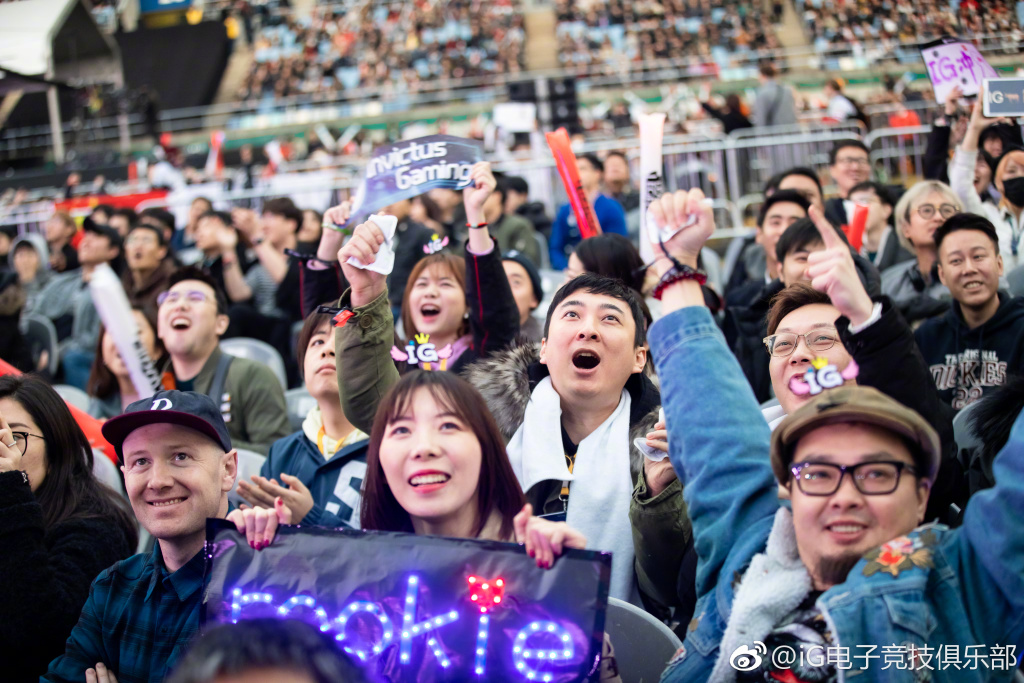
When China’s Invictus Gaming defeated European squad Fnatic in the League of Legends 2018 finals this past Saturday, China’s social media platforms became awash in ecstasy and pride.

“It’s like winning an Olympic gold, a teenage dream come true,” writes one thirty-something audience of the competition on his WeChat feed.

Many others share that sentiment. So far, the hashtag #IG冠军, which means “IG the champion,” has generated over one million threads on Weibo, China’s equivalent of Twitter with over four million monthly active users. This is a critical moment for China’s first-generation of players who grew up under parents and teachers who too easily dismissed all kinds of video games.

IG’s victory marks the first time a Chinese team has won the world championship for LoL – fondly called so by fans – the world’s most played PC game according to research firm Newzoo. The role-playing and monster-slaying title is run by Riot Games Inc, a Los Angeles-headquartered studio that WeChat operator Tencent fully bought out in 2015.

It wasn’t just gamers and the youth cheering for IG. Chinese mainstream media also rushed to congratulate. An op-ed from the communist party paper Guangming Daily called IG’s victory “an alternative path to the national sports dream.”

China has a history of obsessing over sports, evident in its generous spending on the Summer Olympics back in 2008 and the upcoming 2022 Winter Olympics. Now esports – or competitive video gaming – as an officially recognized sporting event, is gaining ground among policymakers.

Esports in China has grown from a 53.2 billion yuan ($7.72 billion) industry in 2016 into one that’s estimated to earmark 88.7 billion yuan ($12.87 billion) in revenue in 2018, according to research firm Gamma Data. Local officials across the country want a share of the booming market. In some cases, the governments have shelled out billions of yuan to turn their no-name towns into “esports hub” that would house competitions and gaming companies in hope of stimulating local economies.

lLeague of legends china ig

Private companies have joined in the game, too. Tencent, China’s largest gaming company by revenue, has invested in NYSE-listed Huya and Douyu, two of China’s leading esports livestreaming services. IG itself is an esports organization that Wang Sicong, son of China’s once richest man Wang Jianlin, founded in 2011 and catapulted to today’s stardom.

But China’s relationship with video games overall has always been murky. While the government is rooting for professional gaming, it’s tightening control over leisure ones, condemning game publishers like Tencent for “poisoning” juveniles with blockbuster titles.

“The Chinese government treats esports and leisure games very differently,” a staff in the esports division of a major global gaming studio who asks to remain anonymous told TechCrunch. “I don’t think IG’s victory will cause big changes to the government’s attitude.”

Tencent, which earns two-thirds of its revenue from online gaming, lost $17.5 billion in market valuation when China’s state newspaper slashed its popular Honor of Kings, widely regarded a mobile copycat of LoL. This year, a hiatus in game license approvals again puts pressure on Tencent stock prices and profitability.

For esports and League of Legends alone, however, IG’s glory could mean a brighter future.

“At least now we will see League of Legends’ popularity continue into a couple more years. Esports’ development may also benefit from the event,” suggests the gaming company staff.

05 Nov 2018

China’s frenzy over League of Legends championship sheds light on esports growth

When China’s Invictus Gaming defeated European squad Fnatic in the League of Legends 2018 finals this past Saturday, China’s social media platforms became awash in ecstasy and pride.

“It’s like winning an Olympic gold, a teenage dream come true,” writes one thirty-something audience of the competition on his WeChat feed.

Many others share that sentiment. So far, the hashtag #IG冠军, which means “IG the champion,” has generated over one million threads on Weibo, China’s equivalent of Twitter with over four million monthly active users. This is a critical moment for China’s first-generation of players who grew up under parents and teachers who too easily dismissed all kinds of video games.

IG’s victory marks the first time a Chinese team has won the world championship for LoL – fondly called so by fans – the world’s most played PC game according to research firm Newzoo. The role-playing and monster-slaying title is run by Riot Games Inc, a Los Angeles-headquartered studio that WeChat operator Tencent fully bought out in 2015.

It wasn’t just gamers and the youth cheering for IG. Chinese mainstream media also rushed to congratulate. An op-ed from the communist party paper Guangming Daily called IG’s victory “an alternative path to the national sports dream.”

China has a history of obsessing over sports, evident in its generous spending on the Summer Olympics back in 2008 and the upcoming 2022 Winter Olympics. Now esports – or competitive video gaming – as an officially recognized sporting event, is gaining ground among policymakers.

Esports in China has grown from a 53.2 billion yuan ($7.72 billion) industry in 2016 into one that’s estimated to earmark 88.7 billion yuan ($12.87 billion) in revenue in 2018, according to research firm Gamma Data. Local officials across the country want a share of the booming market. In some cases, the governments have shelled out billions of yuan to turn their no-name towns into “esports hub” that would house competitions and gaming companies in hope of stimulating local economies.

lLeague of legends china ig

Private companies have joined in the game, too. Tencent, China’s largest gaming company by revenue, has invested in NYSE-listed Huya and Douyu, two of China’s leading esports livestreaming services. IG itself is an esports organization that Wang Sicong, son of China’s once richest man Wang Jianlin, founded in 2011 and catapulted to today’s stardom.

But China’s relationship with video games overall has always been murky. While the government is rooting for professional gaming, it’s tightening control over leisure ones, condemning game publishers like Tencent for “poisoning” juveniles with blockbuster titles.

“The Chinese government treats esports and leisure games very differently,” a staff in the esports division of a major global gaming studio who asks to remain anonymous told TechCrunch. “I don’t think IG’s victory will cause big changes to the government’s attitude.”

Tencent, which earns two-thirds of its revenue from online gaming, lost $17.5 billion in market valuation when China’s state newspaper slashed its popular Honor of Kings, widely regarded a mobile copycat of LoL. This year, a hiatus in game license approvals again puts pressure on Tencent stock prices and profitability.

For esports and League of Legends alone, however, IG’s glory could mean a brighter future.

“At least now we will see League of Legends’ popularity continue into a couple more years. Esports’ development may also benefit from the event,” suggests the gaming company staff.