Year: 2018

02 Nov 2018

Palm phone review: an idea whose time may never come

For such a tiny device, Palm’s got a heavy lift. On the face of it, the self-titled first product from the new startup with a familiar name isn’t too radical a departure from the smartphone set. In fact, the device resembles nothing more than a diminutive iPhone, right down to the camera placement on the rear.

But the new Palm wants you to rethink your relationship with your devices. When the product was first pitched to me, a few days before I finally saw it in person, a PR rep told me the device was something new. It wasn’t a smartphone, exactly, and not quite a wearable. It was, rather, something in-between.

Last year, IDC noted that phablets (screen sizes between 5.5 and seven inches) are set to overtake smaller smartphones by next year. The march toward ever-increasing screen size shows no sign of abating. But for all of the upside of more display real estate, the human body has yet to adapt to carrying around a 6+ inch device all day, every day.

The answer to this problem — like the answer to all tech problems — is, naturally, more technology.
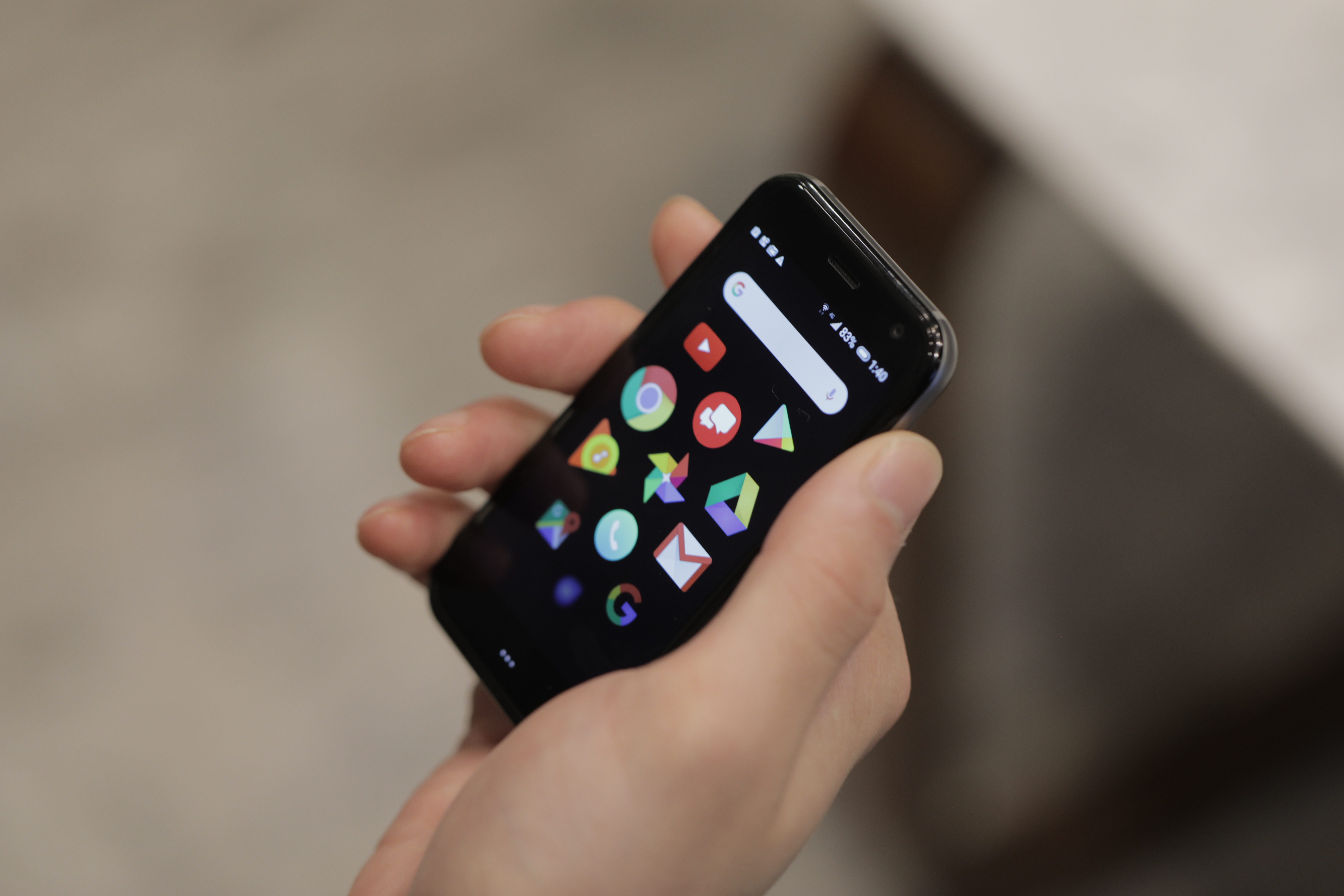
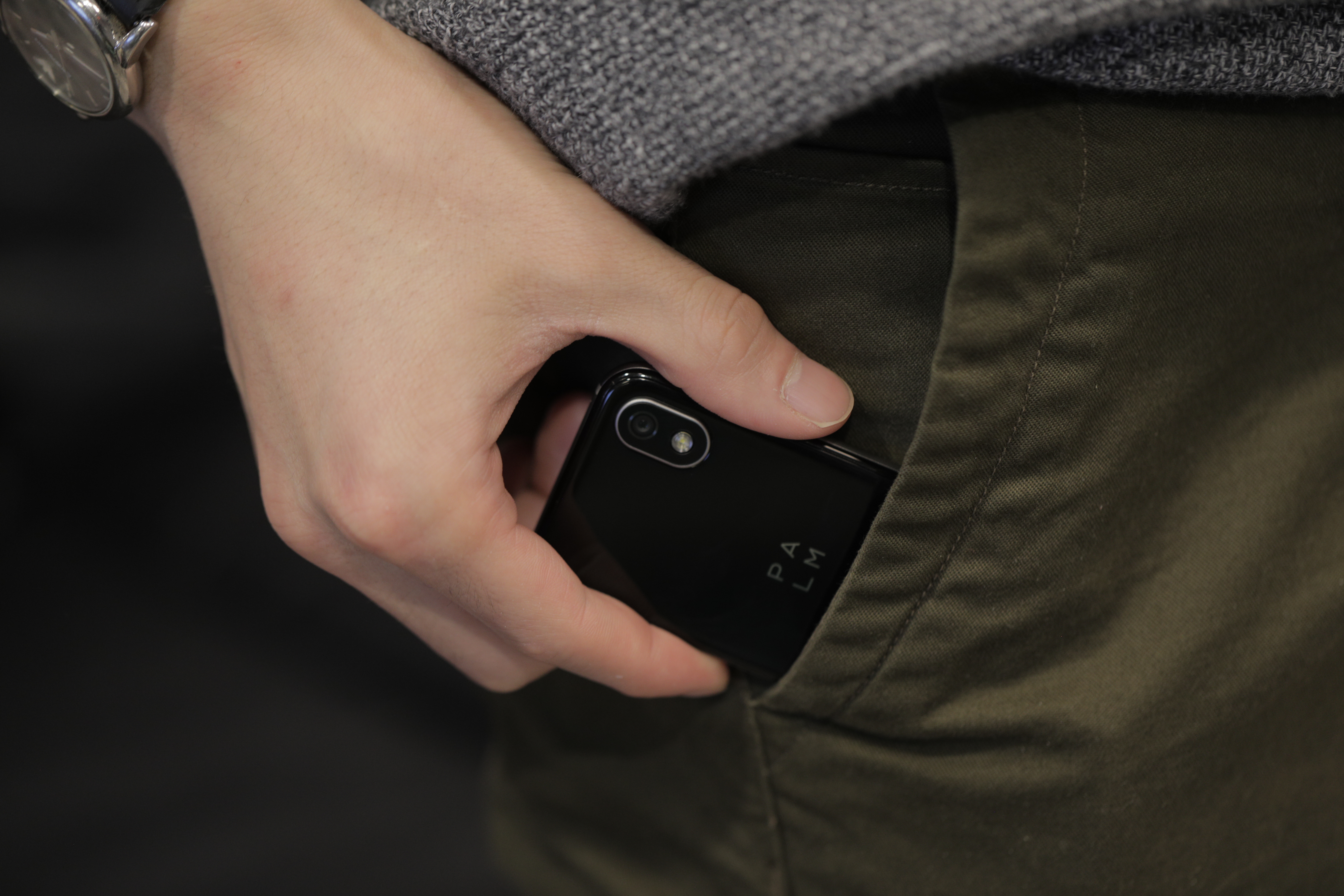
Palm was created to be your phone away from phone. It’s the 3.3-inch device you carry around when you don’t have space for a phone that’s double the size — be it the gym or a trip to the corner store. It’s a device that slips snuggly into the change pocket of your jeans or straps comfortably to your arm when going for a run.

It brings more standard smartphone functionality to the table than a smartwatch, with a screen size that’s roughly double that of the largest Apple Watch. It’s a product for those who can’t quite be away from their smartphone for long enough to justify the cost of an LTE watch.

That’s already a pretty small sliver of the gadget-buying public. Add to that the $349 price tag, and Verizon exclusivity, and you’ve painted yourself into a fairly small niche here. Palm told me in a briefing that it has pretty modest expectations for this first generation, given how perfectly the stars have to align to make someone the ideal consumer. I do appreciate the candor, but wonder how sustainable such goals will ultimately be in the long run.

I’ve been carrying Palm around for a few days now, and reactions tend to follow a similar arc. It generally plays out something like this:

  1. Hey, what’s that?
  2. Oh, that’s adorable.
  3. So, what’s the point?

It’s true, of course, that smartwatches got tripped up in that third bit for quite a while, especially before the Apple Watch came to market. But Palm, on top of its other concerns, now has a reasonably bullish smartwatch market with which to contend. The company has to eke out its market share in that roughly 3.4-inch crack of sunlight that sits between smartphones and smartwatches.
Palm started with this market in mind, an idea it took to TCL. The Chinese electronics giant was the one that first suggested licensing the Palm name. Unlike its deal with BlackBerry, however, TCL operates only as a manufacturing partner. The heavy lifting for hardware and UI design is being done in-house — and that’s a good thing. The Palm team employs a team of people whose resumes include companies like Frog Design, Google and Samsung. On a whole, the product has good product design.
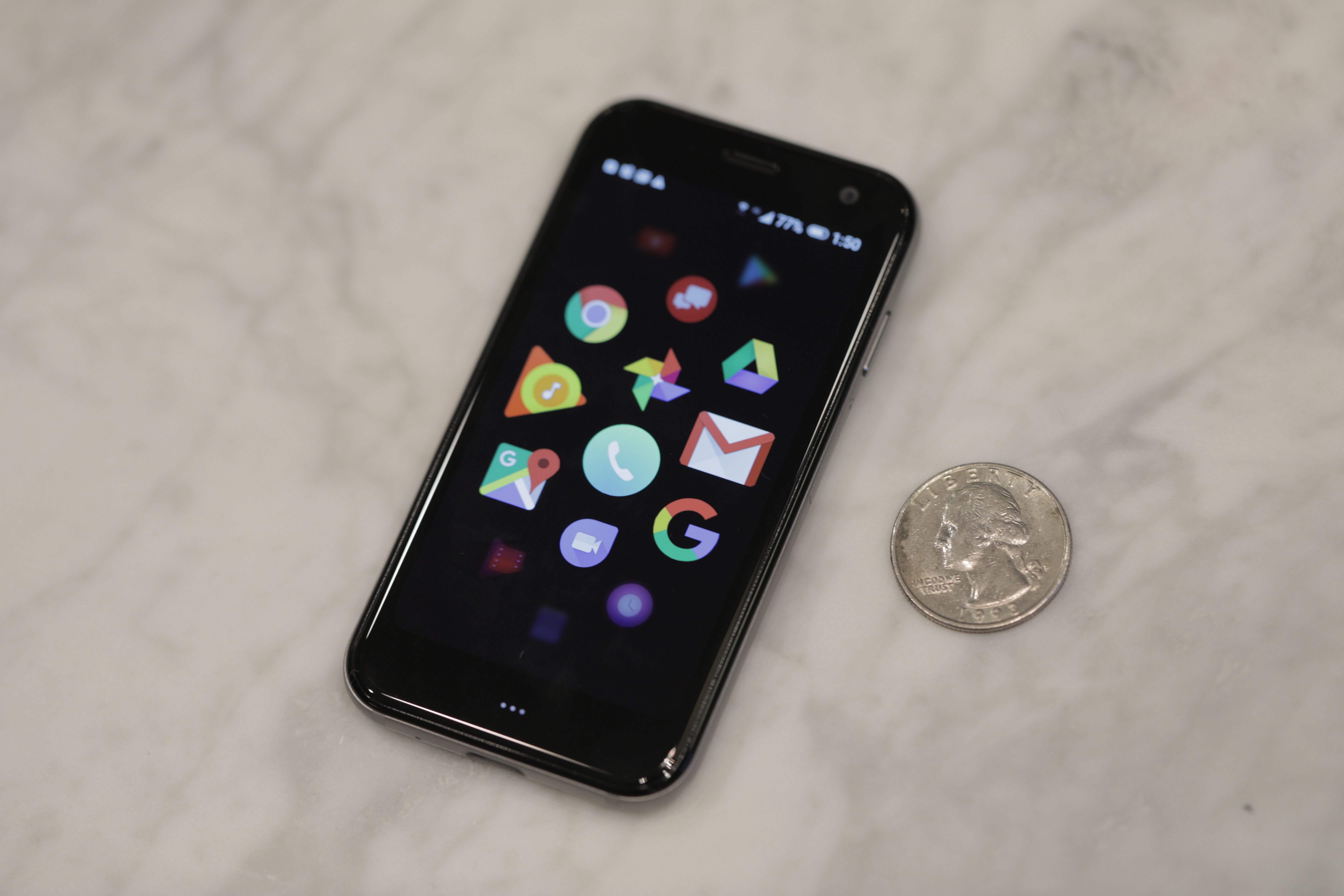
The hardware is solid, and you can’t really argue with product design that’s essentially a shrunk-down iPhone. At 3.3 inches, the screen is a hair smaller than the first iPhone’s 3.5. Of course, smartphone design and component manufacturing have come a long way in the intervening decade. The current screen-to-body ratio means a device that can, as advertised, fit pretty comfortably in the palm of most hands.

Of course, the small body is going to come with certain sacrifices. We’ve already come to accept many of these on our smartwatches, though based on application and form factor, we generally have entirely different expectations with regards to what the product can and can’t do.

The Palm, on the other hand, is simply a small phone. And yet, there are things you either can’t do — or simply wouldn’t want to — with the product. Among the more surprising omissions here is the inclusion of one physical button (power). Palm has made the most of this by including shortcuts — you can tap twice to trigger the camera, for example. But the absence of a volume rocker is pretty glaring. When I needed to adjust it, I found myself clicking through several screens, into the settings. So much for convenience.

The display itself is 720p, which is going to be a tough transition, if you use a flagship device as your daily driver. The colors also look washed out when placed up against a pricier device. I wouldn’t recommend consuming much media beyond the occasional quick YouTube video.

Aside from the tiny screen, attempting to listen to music or talk on the phone will make you hyper conscious of the limitations of an 800mAh battery. On my first day with the device, I unplugged it at 7AM. By noon, it was dead, in spite of some fairly light usage.

I thought I would be able to eke out a little more time, but while scrolling through some news stories just before 12PM, the battery suddenly dropped from 10 percent to three and then down to one before shutting off. The upside of a small battery, however, is that the thing charges up pretty quickly. Using a standard USB charger, I was able to get the battery from 0 to 100 in around an hour.

Palm, of course, will tell you that the device is not intended to be a daily driver. Fair enough. And the company has included some “battery-saving tips.”
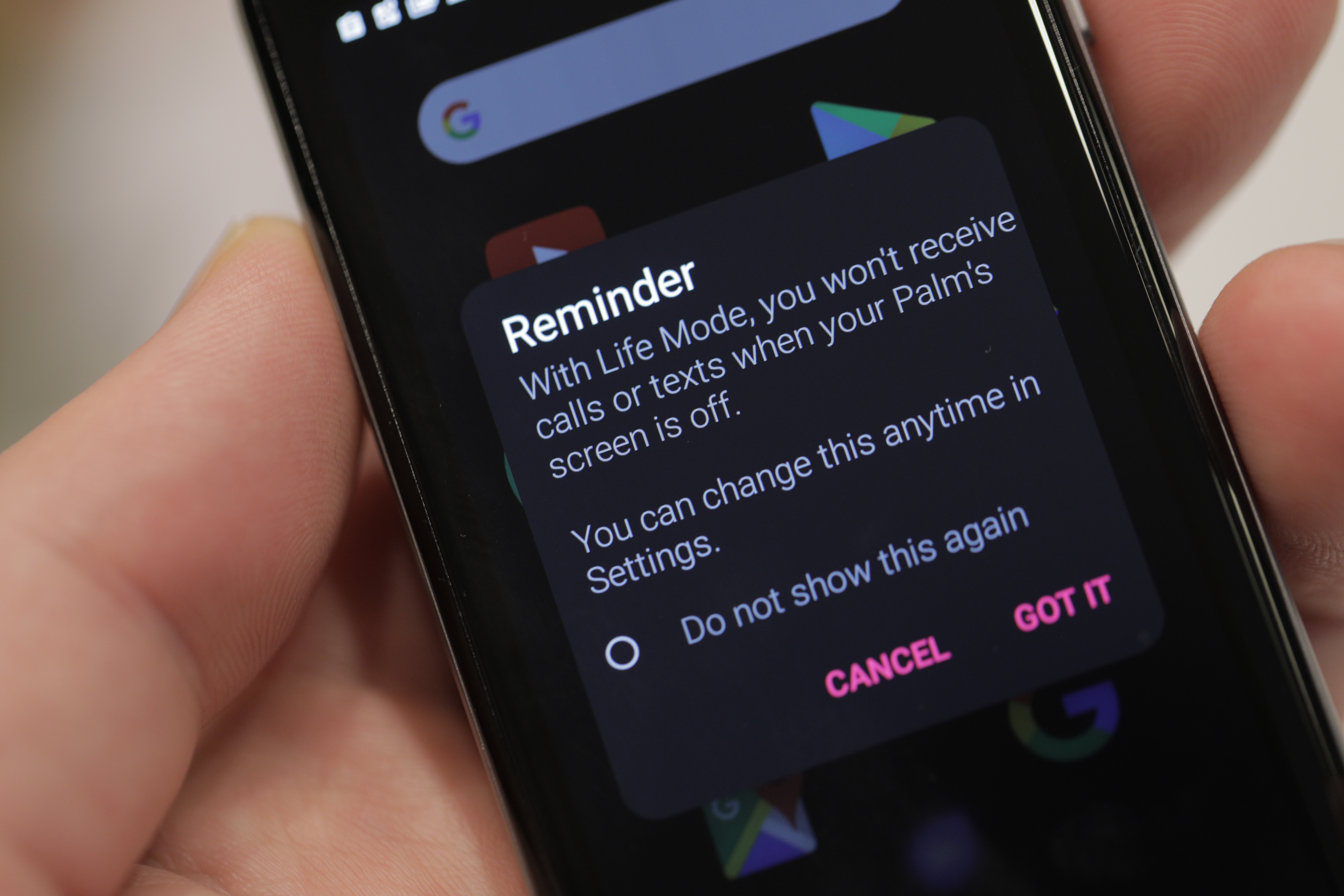
  1. You can go to Settings > Users & accounts > Turn off “Automatically sync data.” This will prevent background syncing of apps, so they only refresh when you open them. Major battery benefit.
  2. Use Life Mode. It’s great. If you are really anticipating calls or texts, use the Life Mode timer to temporarily suspend Life Mode.
  3. Use battery saver in the quick-settings menu.
  4. Disable apps you do not use in Settings > Apps.
  5. Minimize notifications.
  6. Disable vibrations.
  7. Charge it while you use your big phone.

Helpful, perhaps, but not exactly the kind of inclusion that confirms the “all-day battery life” suggested in the press material. Tellingly, the phone suggests turning on “Life Mode” by default during set up. Ticking that box “helps you live in the moment and minimize digital distraction,” which is marketing speak for turning off notifications — something that have become a core piece of functionality for many smartwatch wearers.

[Left: Palm, Right: iPhone XS]

The camera, meanwhile, while resembling the layout of the XS, is a single 12-megapixel lens, with the second spot housing the flash. It’ll work in a pinch, but you’re going to want your main phone for most photos, particularly in low light.

The virtual home button also does a lot of heavy lifting. Tap the three white dots once, and you’ll go back a screen. Double tap and you go home. Hold it down and the task switcher pops up, showing you a carousel of all of the apps you have open. Swiping up from the lock screen, meanwhile, will pop up the Gesture Pad.
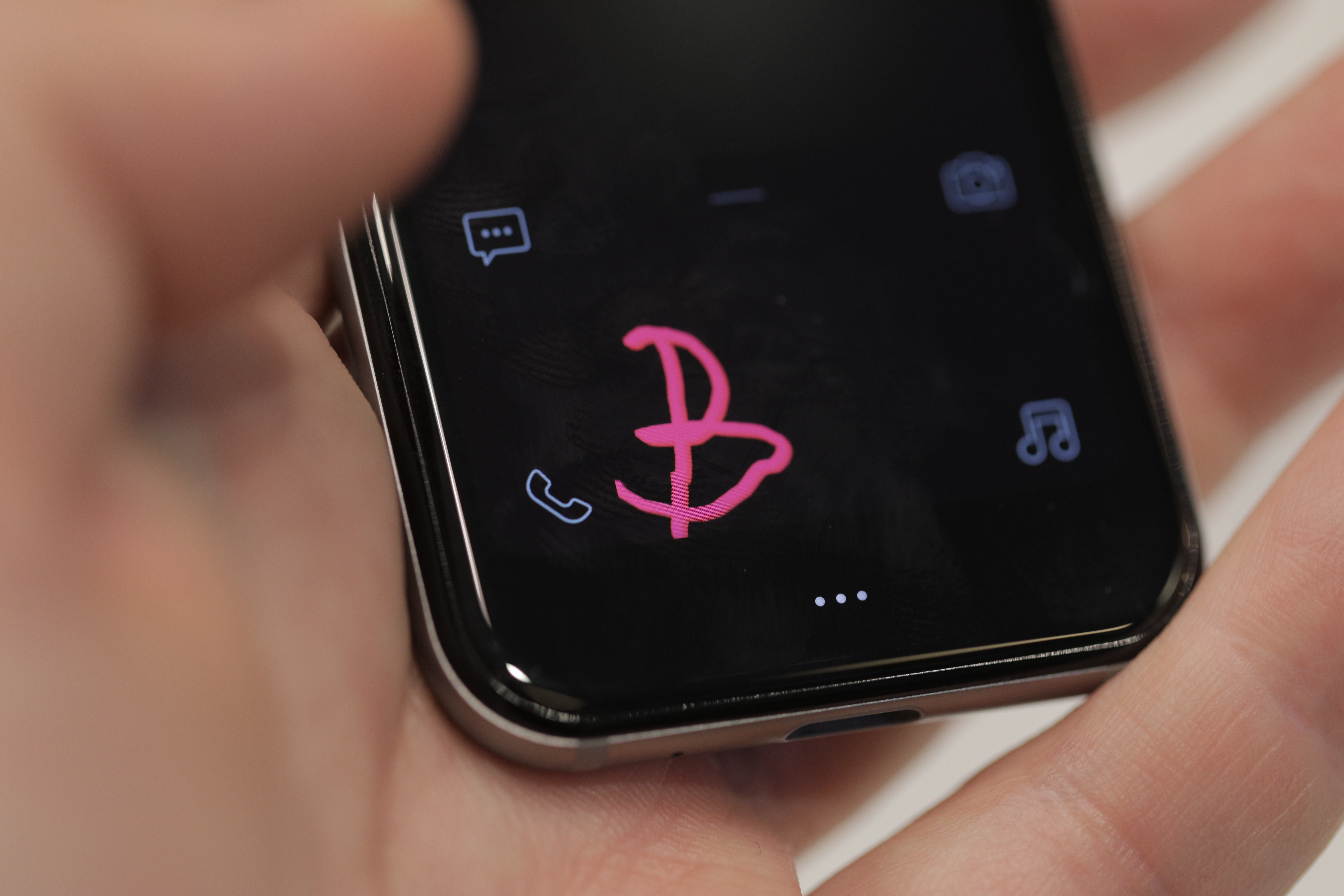
One of the more innovative software elements, the feature harkens back to the old PDA days. Use you finger to scribble a quick “S” and it will pop up Settings, Slack, Spotify and Sound. It’s a quick workaround that makes the most of limited screen real estate.

In fact, that’s the through line behind all of the design choices made to the UI here. Rather than stock Android, Palm does away with the desktop, instead defaulting to an App view. The design splits the difference between the Android app tray and the UI found on wearables like the Apple Watch.

It’s essentially a scrollable list of large icons that dynamically prioritize themselves based on use. You can also manually drag and drop them to your heart’s desire. This being a Verizon exclusive, there are a couple of pieces of VZW bloatware at the bottom, and it seems you can’t manually delete them, which harkens back to the bad old days of carrier partnerships.

A lot of these choices can ultimately be written off as missteps for a first-gen device. Certainly early adopters have come to anticipate questionable decisions from a new hardware startup. The hardware build is solid, and Palm’s made a lot of clever UI decisions to get around the limitations of a small screen.

The concept is compelling, perhaps, if viewed more as a modular display than a small phone, and some of the accessories play into that idea. Ultimately, however, the device never truly answers the question of why it needs to exist, or how it will fit into users’ lives outside of a few minutes during the day.

And while $349 is a fraction of the price of a flagship device from Apple or Samsung, Palm is asking users to spend that in addition to their regular phone (plus an added $10 a month to their Verizon bill). Justifying all of that is a big ask from a little phone.

Of course, I’m open to the possibility that maybe the new Palm simply isn’t for me. I’ll leave you with Lucy to mull over that possibility. She’s all ears:

02 Nov 2018

Announcing the companies in Startup Alley at Disrupt Berlin 2018

It won’t be long now before thousands of startup fans  — the TechCrunch crew included — head to Germany for Disrupt Berlin 2018, which takes place on 29-30 November. We’re so excited we need to let off a bit of steam, so we’re thrilled to announce the full line up of companies that will exhibit in Startup Alley.

That’s where you’ll find literally hundreds of innovative startups from across Europe and around the world showcasing the very best and latest in tech products, platforms and services. We’re not kidding about the international aspect of Startup Alley. Be sure to check out the different country pavilions featuring delegations that include international startup groups, government innovation centers, incubators and accelerators.

And whatever you do in the Alley, make sure you check out our TC Top Picks. We called for applications and vetted each one thoroughly to find up to five of the most exceptional startups in these tech categories: AI/Machine Learning, Blockchain, CRM/Enterprise, E-commerce, Education, Fintech, Healthtech/Biotech, Hardware, Robotics, IoT, Mobility and Gaming.

You can plan your networking strategy by reading the full list of TC Top Pick winners, but in the meantime, here are a few of the outstanding startups that earned our TC Top Picks designation.

  • Evarvest: This fintech startup lets you invest globally, like a local. It’s a modern way to invest in the brands you know, love and trust.
  • Wolf3d: This gaming startup lets you use your smartphone to create 3D avatars for VR/AR communication and games.
  • Moggie: This hardware startup offers a cat care system — in the form of a smart collar — that improves the cat ownership experience.
  • DiaMonTech: This healthtech startup’s working on a non-invasive medical device to measure blood sugar levels.

That’s just a taste of what you’ll find in Startup Alley. It’s world-class networking and a veritable breeding ground for opportunity. And here’s more good news. We’re making it easier than ever for you to connect with other Disrupt attendees. Take advantage of CrunchMatch, our free business match-making service.

All registered attendees will receive an email explaining how to access the platform and fill out a profile with your role and the type of connections you want to make. CrunchMatch makes suggested connections and then — subject to your approval — handles all the scheduling details.

Without further ado, here’s the list of Startup Alley exhibitors. Let the networking begin!

Startup Alley Exhibitor Directory

There’s so much to experience at Disrupt Berlin 2018, including an amazing line up of Main Stage speakers, the legendary Startup Battlefield and the opportunity for deeper conversations in the Q&A Sessions. Tickets are still available at the Early Bird rate for a few more hours. Go buy your pass today, and join us on 29-30 November!

02 Nov 2018

Hong Kong says it may regulate crypto exchanges

Hong Kong may become the next country to regulate crypto exchanges after its securities regulator announced that it is exploring ways to apply quality control and protect consumers from the volatility and uncertainties of digital currencies.

The Securities and Futures Commission (SFC) said it is “setting out a conceptual framework” that could be used to regulate crypto exchanges since they currently operate outside of current regulation, which is focused on traditional investment.

“Some of the world’s largest virtual asset trading platforms have been seen operating in Hong Kong but they fall outside the regulatory remit of the SFC and any other regulators. Owing to the serious investor protection issues identified and having regard to international developments, the SFC considers it necessary to explore in earnest whether and if so, how it could regulate virtual asset trading platforms under its existing powers,” the SFC wrote.

The commission has said it intends to work with the industry itself to define what regulation should look like.

The SFC did hedge its move, however, by saying that there is no guarantee that it will introduce licenses at the end of its research period. In particular, it voiced concern as to whether exchanges “would satisfy the expected anti-money laundering standards, given that anonymity is the core feature of blockchain.”

There’s also no immediate sign that Hong Kong will be requiring exchanges to be licensed.

“Those exchanges that want to be regulated by us will be set apart from those that don’t,” SFC CEO Ashley Alder told a conference according to a report from Reuters.

Japan is best known in crypto circles for its introduction of exchange licensing. Some in the industry have criticized the Japanese regulations as being too tight. Those voices include Binance, the world’s largest trading of cryptocurrencies, which abandoned plans to seek regulation in Japan because it placed limits on which tokens can be offered to users, its CEO Changpeng Zhao previously told TechCrunch.

Note: The author owns a small amount of cryptocurrency. Enough to gain an understanding, not enough to change a life.

02 Nov 2018

Korean lending startup PeopleFund raises $11M led by chat app Kakao’s payment unit

South Korean peer-to-peer lending startup PeopleFund is in the money itself after it raised an $11 million Series B funding round that was led by Kakao Pay, the fintech division of Kakao, Korea’s top messaging firm. The deal comes as the country’s P2P marketplace continues to grow with a competitive field of players.

A newer arrival on the scene, PeopleFund was founded in 2015 as a marketplace that connects borrowers and investors to connect to enable lending. While that peer-to-peer model is often closely associated with loans to consumers, they are just one segment of the company’s target market, founder and CEO Joey Kim explained to TechCrunch. Consumer and personal loans represent around one-quarter, with 17 percent for SMEs and the remainder on mortgage and property, which include real estate construction developers.

However, PeopleFund is likely going after more adoption among consumers and you’d imagine that is a major reason why Kakao Pay led this investment.

The business — which is backed by Chinese internet giant Alibaba’s fintech division — handles Kakao’s payment business while it has also forayed into financial products such as loans. With 43 million users — or 85 percent of the population — Kakao is Korea’s dominant chat platform by some margin, which gives Kakao Pay a running startup into payments and fintech services.

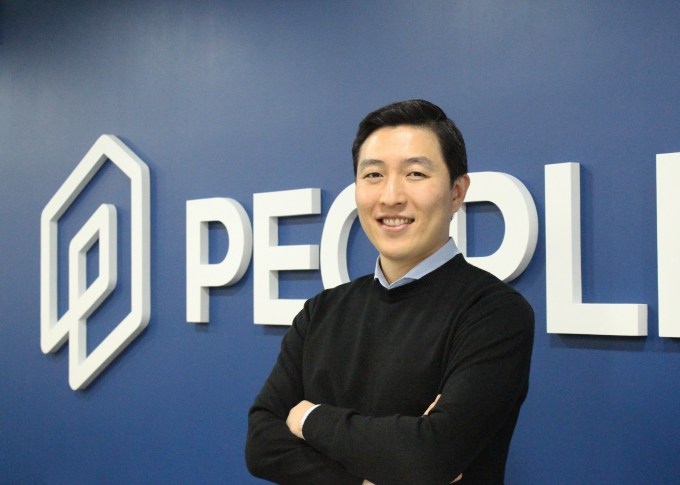
PeopleFund CEO and founder Joey Kim is currently serving as president of the Korean Fintech Industry Association

Even with its colossal footprint, Kakao Pay needs all the help it can get since Korea’s digital loan system is exploding.

The P2P market is estimated to have paid out $4 billion over the past four years, with estimates cited by PeopleFund forecasting that figure could jump to $10 billion by the end of next year as annual loan volumes rise to $3 billion. As with most fast-growing industries, there have been scandals — the CEO of Roof Funding was arrested this year on suspicion of fraud — and the government has stepped in to regulate, although the future looks bright.

PeopleFund and rival Tera Funding have both reached $300 million in loans to date, ahead of other rivals including Lendit and 8percent and Toss — which counts PayPal and Sequoia China among its investors. Like Kakao Pay, Toss plans to add loans and investment products into its popular payment service, which is processing $1.4 billion in transactions per month as of June this year.

Tera raised over $9 million in a January investment round, but it has been operating longer than PeopleFund. That means that the latter is Korea’s fastest growing digital loan platform, and Kim shared that 2017 saw 823 percent annual growth while the company reached a record monthly high of around $31 million in September. In another record high, September saw 69 percent of loans provided by institutional investors, as opposed to individuals. That’s important because institutions are a strong validation of the business and the P2P industry and, with more funds available, they can help scale the loan book faster than individuals.

But Kim and his team aren’t sitting around and, beyond the potential to collaborate with Kakao Pay, the new round will be used for product developing and hiring. Kim said the company plans to raise its current headcount of 90 staff with a focus on R&D hires, whilst also further developing its credit rating model and risk pricing for loans and mortgages.

PeopleFund previously raised $5.7M in June 2017, and it counts 500 Startups, Wooshin Venture Investment Corp., D3 Jubilee, and DAYLI Financial Group among its investors.

02 Nov 2018

Today’s the last day for early-bird tickets to Disrupt Berlin 2018

“I can’t wait to pay up to €500 more than necessary to go to Disrupt Berlin 2018” — said no one EVER. Heed our call: the early-bird ticket price ends today, 2 November. Miss that deadline, and you’ll be one sad startupper. While Europe’s top startup conference delivers amazing ROI at full price, why pay more? Buy your ticket today and save some serious Euros.

We have two outstanding days of startup action and adventure waiting for you in Berlin on 29-30 November. Our slate of Main Stage speakers and panels will inform and inspire. You’ll hear some of the top tech, startup and investor minds — along with notable up-and-coming leaders — discuss their personal journeys, share their perspectives on the most pressing industry issues and their take on what the future holds.

Case in point: Valentin Stalf co-founder and CEO of N26 — one of Europe’s most promising startups — will talk about how he built a bank from the ground up and how he plans to take the company (and its more than 1.5 million clients) to the next level. And that’s just one prime example of our programming. Check out the full Disrupt Berlin 2018 agenda.

Networking, connection, collaboration and inspiration play a huge role in the Disrupt experience, and you’ll find all of that and more in Startup Alley, our expo floor. More than 400 early-stage startups will showcase the very best technology products, platforms, services and talent. It’s a chance to find new partners, customers, investors, employees… the list goes on. The conversations and connections that take place on the show floor can be life-changing.

While you’re there, be sure to check out the more than 40 startups that earned the coveted TechCrunch Top Picks designation. These exceptional startups span a range of tech categories, including AI/Machine Learning, Blockchain, CRM/Enterprise, E-commerce, Education, Fintech, Healthtech/Biotech, Hardware, Robotics, IoT, Mobility and Gaming.

Here are just three of the TC Top Picks you’ll find in Startup Alley.

  • Seez: Automates the car-searching process by searching all car websites, negotiates price down using AI and estimates fair market value.
  • fraudDB: A B2B fraud database that helps businesses prevent fraud.
  • TestCard Diagnostics: The innovative medtech behind the “urine test-in-a-postcard” concept. Its accompanying mobile app provides an immediate result.

There’s so much more, including Startup Battlefield — the world’s best pitch competition — Q&A Sessions and, of course, the legendary TechCrunch after party.

Disrupt Berlin 2018 takes place on 29-30 November. Today, 2 November, is absolutely your last chance to save up to €500. Whether you want to save money for your bottom line — or for beer and brats — take action and buy your ticket today. We can’t wait to see you in Berlin!

01 Nov 2018

Edo raises $12M to measure TV ad effectiveness

Edo, an ad analytics startup founded by Daniel Nadler and actor Edward Norton, announced today that it has raised $12 million in Series A funding.

Nadler and Norton have both had startup success before — Nadler co-founded and led Kensho, which S&P Global acquired for $550 million. Norton invested in Kensho and co-founded CrowdRise, which was acquired by GoFundMe.

Even so, ad analytics might seem like an arcane industry for an actor/filmmaker to want to tackle. However, Norton said he was actually the one to convince Nadler that it was worth starting the company, and he argued that this is an important topic to both of them as creators. (Nadler’s a poet.)

“Movie studios and publishers, they take risks on talent, on creative people like us,” Norton said. “We want them to do well … The better they do with the dollars they spend, the less risk adverse they become.”

Nadler and Norton recruited Kevin Krim, the former head of digital at CNBC, to serve as Edo’s CEO.

Krim explained that while linear TV advertising still accounts for the majority of ad budgets, the effectiveness of those ads is still measured using old-fashioned “survey-based methodologies.” There are other measurement companies looking online, Norton said they’re focused on social media sentiment and other “weak proxies” for consumer behavior.

Edo screenshot

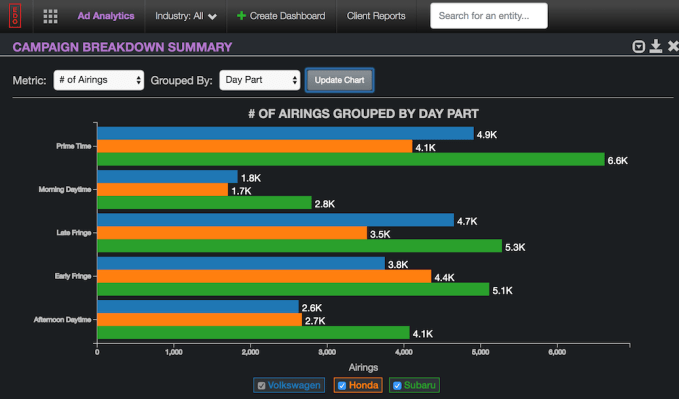
In contrast, Edo pulls data from sources like search engines and content sites where people are doing research before making a purchase. By applying data science, Krim said, “We basically can measure the change in consumer engagement, the behaviors that are indicative of intent. We can measure the change in consumer behavior for every ad.”

In fact, Edo says that since its founding in 2015, it has created a database of 47 million ad airings, so advertisers can see not just their own ad performance, but also that of their competitors. This allows advertisers to adjust their campaigns based on consumer engagement — Krim said that in some cases, advertisers will receive the overnight data and then adjust their ad rotation for that very night.

As for the Series A, it was led by Breyer Capital. (Jim Breyer has backed everything from Facebook to Etsy to Marvel.) Vista Equity co-founders Robert Smith and Brian Sheth participated in the round, as did WGI Group.

“For more than a decade I’ve watched the data science talent arbitrage transform industries from finance to defense, from transportation to commerce,” Breyer said in the funding announcement. “We needed someone to bring these capabilities to bear on the systemic inefficiencies and methodological shortcomings of measurement and analytics in media and advertising.”

On the customer side, Edo is already working with ESPN, Turner, NBCUniversal, Warner Bros. I wondered whether some of the TV networks might have been worried about what Edo would reveal about their ads, but Norton said the opposite was true.

“I don’t sense that they in any way have trepidation that we’re going to pull their pants down — quite the opposite,” he said. “They are absolutely thrilled with our ability to help burnish and validate their assertions about the strength of what they’re offering.”

01 Nov 2018

Reef-rejuvenating LarvalBot spreads coral babies by the millions

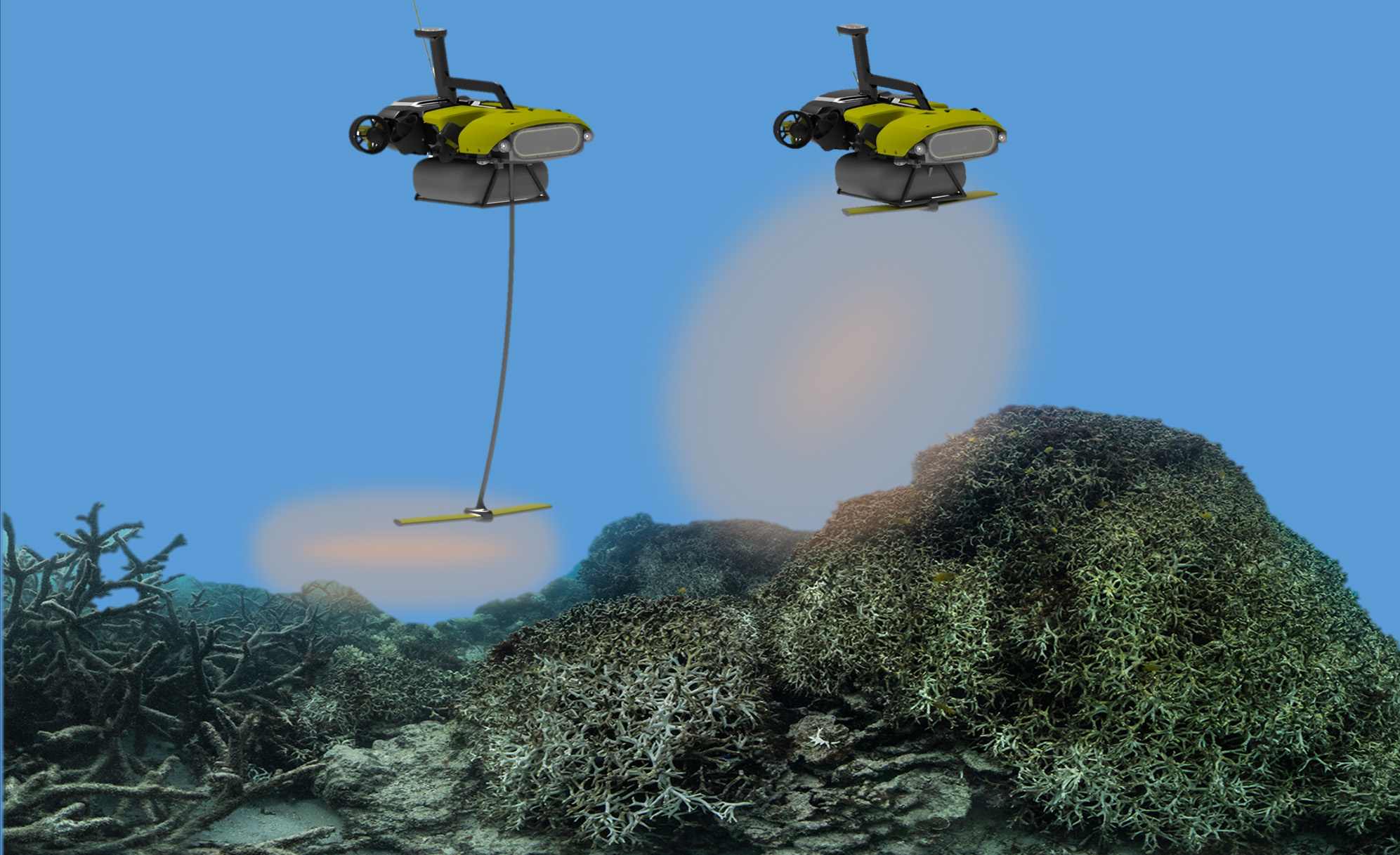
The continuing die-off of the world’s coral reefs is a depressing reminder of the reality of climate change, but it’s also something we can actively push back on. Conservationists have a new tool to do so with LarvalBot, an underwater robot platform that may greatly accelerate efforts to re-seed old corals with healthy new polyps.

The robot has a history going back to 2015, when a prototype known as COTSbot was introduced, capable of autonomously finding and destroying the destructive crown of thorns starfish (hence the name). It has since been upgraded and revised by the team at the Queensland University of Technology, and in its hunter-killer form is known as the RangerBot.

But the same systems that let it safely navigate and monitor corals for invasive fauna also make it capable of helping these vanishing ecosystems more directly.

Great Barrier Reef coral spawn yearly in a mass event that sees the waters off north Queensland filled with eggs and sperm. Researchers at Southern Cross University have been studying how to reap this harvest and sow a new generation of corals. They collect the eggs and sperm and sequester them in floating enclosures, where they are given a week or so to develop into viable coral babies (not my term, but I like it). These coral babies are then transplanted carefully to endangered reefs.

LarvalBot comes into play in that last step.

“We aim to have two or three robots ready for the November spawn. One will carry about 200,000 larvae and the other about 1.2 million,” explained QUT’s Matthew Dunbabin in a news release. “During operation, the robots will follow preselected paths at constant altitude across the reef and a person monitoring will trigger the release of the larvae to maximise the efficiency of the dispersal.”

It’s something a diver would normally have to do, so the robot acts as a force multiplier — one that doesn’t require food or oxygen, as well. A few of these could do the work of dozens of rangers or volunteers.

“The surviving corals will start to grow and bud and form new colonies which will grow large enough after about three years to become sexually reproductive and complete the life cycle,” said Southern Cross’s Peter Harrison, who has been developing the larval restoration technique.

It’s not a quick fix by any means, but this artificial spreading of corals could vastly improve the chances of a given reef or area surviving the next few years and eventually becoming self-sufficient again.

01 Nov 2018

Apple will stop sharing numbers on how many devices it’s selling

Apple shared its latest quarterly earnings report today, but during its call with investors the company’s CFO Luca Maestri also delivered an unexpected announcement: it won’t be sharing unit sales of its iPhone, iPad or Mac anymore.

This gives analysts (and the public) one less item to determine the health of the company, but according to Apple’s leadership, devices sold aren’t a very good indication of the company’s financial health anymore because the company is selling devices at so many price points.

“Our product ranges for all the major product categories have become wider over time and therefore a unit of sale is less relevant for us at this point compared to the past because we’ve got these much wider sales prices dispersion,” Maestri said in the call. “So unit of sale per se becomes less relevant”

The move perhaps reflects just how much Apple’s pricing has stretched towards the high-end in the past year.

The iPhone XS Max starts at $1,099, the Apple Watch Series 4 starts at $399, the new iPad Pro starts at $799 and the new MacBook Air starts at $1,199. The company is keeping prices pretty consistent on the low-end for iPhone and iPad as it continues to sell older units, that isn’t as true of Mac which has seen a fairly uniform price bump in the most recent generations of devices (with a $4,999 iMac Pro rounding out the high-end).

Unit sales tell a small part of the story. While Apple shipping 46.89 million iPhones this quarter represented flat unit growth, the company’s iPhone revenues jumped 29 percent. That’s because the average sale price of the iPhone went from $793 versus $618 a year ago.

Maestri noted in the call that some of the company’s biggest competitors in smartphone and tablet sales (Google, Samsung) do not break out unit sales in their quarterly earnings reports either. Nevertheless, more data on a company’s performance is better for analysts, so the lack of transparency from Apple here leaves some room for speculation on why they’re making this change now.

01 Nov 2018

Elon Musk says soon Teslas will come when you call them

Tesla CEO Elon Musk promised in a series of tweets that an advanced version of its auto-parking technology Summon that will let owners remotely control their car through their phones will be ready in six weeks. Or even follow you like a pet.

The Summon parking feature is available in Tesla vehicles with the advanced driver assistance system known as Autopilot or the upgraded version called “enhanced Autopilot.”

In a separate set of tweets that appear to be unrelated from the upgrade coming next month, Musk said by next year Summon should be able to drive a Tesla around a parking lot, find an empty spot and read signs to confirms it’s valid and park.

Summon is an auto-parking technology that lets Tesla owners park or retrieve their vehicles by using the Tesla mobile app or keyfob. The company introduced Summon way back in January 2016 in its 7.1 software update for its hardware 1-equipped vehicles. At the time, the capability was rather limited, essentially allowing owners to owner prompt a parked Tesla to roll out of a garage or parking space. An owner standing outside of the vehicle could also  hit a button and have roll into the parking spot.

It certainly wasn’t capable of autonomously driving through a parking garage until it found an empty space.

In October 2016, Tesla began producing hardware 2 vehicles equipped with a more robust suite of sensors, radar, and cameras that Musk said would deliver new levels of capability and eventually drive autonomously. Summon was just one feature that would become more capable as a result.

That goal has taken much longer than expected as the company has worked for years to develop its own vision system that relies on image processing via an onboard neural net for object identification and avoidance.

01 Nov 2018

GoPro shares are tanking after disastrous Q3

GoPro stock is currently down 15% in after-hours trading and is falling after reporting its third quarter earnings. The company saw revenues dive 13%.3 percent.

Overall GoPro reported a net loss of $27.1 million, or 19 cents per share, in the quarter that ended on Sept. 30. Is compared with a profit of $14.7 million, or 10 cents per share, from the previous year. Likewise, GoPro saw revenue fell to $285.9 million from $329.8 million, down 13% year-over-year and up 1% sequentially. Cash and investments totaled $148 million at the end of Q3 2018.

Earlier in the day, the company’s stock was up 9.3% on the day. It was rebounding nicely after ending last week down but all the gains could be lost if it opens tomorrow at today’s after-hours level.

The third quarter noted some successes though. The new Hero7 Black saw the company’s best first-month sales of any unit today. Likewise, GoPro’s spherical camera, the Fusion, holds 47% dollar share of its niche market. The company’s products are gaining popularity in oversea markets, too. In Europe, Japan and Korea, the company increased its unit and dollar marketshare substantially. In the US, GoPro still holds a massive chunk of the dollar and unit share of, 96% and 87%, respectively. And for the 19th straight quarter, GoPro is the number one selling camera by unit volume in North America.

The company is also still growing its social channels, reaching a 21-month high in September.

GoPro recently revamped its camera line up in time for the holiday quarter. Yet GoPro is still struggling, at least seemingly, at convincing owners to buy another unit. While GoPro annually releases the latest and greatest action camera, most owners I’ve talked to are satisfied with the capabilities of the GoPro they purchased previously.