Year: 2018

31 Oct 2018

Apple pulls WatchOS 4.1 update after it bricked some Apple Watches

PSA: If you’re an Apple Watch owner who is having trouble finding the shiny new WatchOS 4.1 update that Apple just shipped, it isn’t quite ready yet.

Apple initially shipped the update on Tuesday alongside iOS 12.1, but it quickly pulled it hours later following reports that it bricked some Series 4 watches. A number of customers affected took to Reddit and Twitter to warn of the issues, which were first reported by 9to5Mac and caused some watches to be stuck on the loading screen.

The update is no longer available, but Apple told those who did download it and now have bricked a watch that it is working on a fix that’ll ship as soon as possible.

“Due to a small number of Apple Watch customers experiencing an issue while installing watchOS 5.1 today, we’ve pulled back the software update as a precaution,” it said in a statement. “Any customers impacted should contact AppleCare, but no action is required if the update installed successfully. We are working on a fix for an upcoming software update.”

The Watch drama comes less than 24 hours after Apple unveiled a new and larger version of the iPad Pro and a revamped MacBook Air model at an event in New York. Other goodies revealed included a new Mac Mini, a magnetic Apple Pencil and an expansion to its ‘Today at Apple’ program. Next up is the company’s earnings on Thursday, although affected Watch owners will hope that the patched WatchOS update arrives sooner.

31 Oct 2018

Chat app Line’s games business raises $110M for growth opportunities

Messaging app firm Line has given up majority control of its Line Games business and raised outside financing as it seeks to expand its collection of games titles and look at global expansion options.

The Line Games business was formed earlier this year when Line merged its existing gaming division from NextFloor, the Korea-based game publisher that it acquired in 2017. Now the business has taken on capital from Anchor Equity Partners, which has provided 125 billion KRW ($110 million) in financing via its Lungo Entertainment entity, according to a disclosure from Line.

A Line spokesperson clarified that the deal will see Anchor acquire 144,743 shares to take a 27.55 percent stake in Line Games. It looks like those are from existing investors since Line Corp confirmed that its own shareholding will be reduced from 57.6 percent to a minority 41.73 percent stake.

Korea-based Anchor is best known for a number of deals in its homeland including investments in e-commerce giant Ticket Monster, Korean chat giant Kakao’s Podotree content business and fashion retail group E-Land.

Line operates its eponymous chat app which is the most popular messaging platform in Japan, Thailand and Taiwan, and also significantly used in Indonesia, but gaming is a major source of income. This year to date, Line has made 28.5 billion JPY ($250 million) from its content division, which is primarily virtual goods and in-app purchases from its social games. That division accounts for 19 percent of Line’s total revenue, and it is a figure that is only better by its advertising unit, which has grossed 79.3 billion JPY, or $700 million, in 2018 to date.

The games business is currently focused on Japan, Korea, Thailand and Taiwan, but it said that the new capital will go towards finding new IP for future titles and identifying games with global potential. It is also open to more strategic deals to broaden its focus.

While Line has always been big on games, Line Games isn’t just building for its own service. The company said earlier this year that it plans to focus on non-mobile platforms, which will include the Nintendo Switch among others consoles.

That comes from the addition of NextFloor, which is best known for titles like Dragon Flight and Destiny Child. Dragon Flight has racked up 14 million users since its 2012 launch, at its peak it saw $1 million in daily revenue. Destiny Child, a newer release in 2016, topped the charts in Korea and has been popular in Japan, North America and beyond.

Line went public in 2016 via a dual U.S.-Japan IPO that raised over $1 billion.

31 Oct 2018

Three days left to save big on Disrupt Berlin 2018 tickets

The early-bird clock is winding down, and you have just three days left to save up to €500 on passes to Disrupt Berlin 2018. You’d be cuckoo to miss this deal (pun intended). The early-bird price flies away on 2 November, and your savings fly with it. Don’t miss out on the best possible price. Buy your ticket today.

Disrupt Berlin 2018, which takes place on 29-30 November, provides incredible opportunities, and one of them is the chance to hear some of the most brilliant minds in the startup, technology and investment worlds speaking on our Main Stage. We keep expanding our roster of outstanding speakers and presentations, and you can keep tabs on updates on the full Disrupt Berlin agenda. Here’s a quick sample of what we have in store for you:

  • When is e-commerce not exactly e-commerce? When it’s Threads, a unique luxury fashion shopping experience driven by chat apps and actual human shopping assistants. We’re thrilled that founder Sophie Hill, who recently closed a $20 million round of funding, will join us in Berlin to talk about her innovative vision of luxury shopping.
  • Babbel is a European success story and the top-grossing language learning app in the world. Sit in with Julie Hansen and Markus Witte to hear how the company plans to take on its next challenge, the United States.
  • The auto industry’s in overdrive, and everyone’s working on the car of the future — that perfect combination of automation, connectivity, electric motors and mobility services. Join Laurin Hahn (Sono Motors) and Ole Harms (MOIA) to hear their perspective on who has the edge — startups or car giants in the process of reinventing themselves?

These great Main Stage talks often lead to even more questions, and that’s why we created Q&A Sessions. These smaller, more intimate, 45-minute moderated discussions give attendees the opportunity to ask follow-up questions and go deeper on crucial technologies and emerging trends.

Of course, Disrupt offers more than the chance to listen and learn. Network with more than 400 early-stage startups in Startup Alley, and don’t forget to use CrunchMatch — our free business match-making service. It makes connecting with the right people fast and efficient.

Take in the adrenaline ride that is Startup Battlefield. Watch as exceptional startups launch their companies to the world and compete for $50,000 cash, the coveted Disrupt cup and investor love.

Disrupt Berlin 2018 takes place on 29-30 November, and we hope you’ll join us at the best possible price. You have until 2 November to save up to €500 and be an early bird, not a cuckoo bird. Go buy your ticket and come to Berlin!

31 Oct 2018

Three days left to save big on Disrupt Berlin 2018 tickets

The early-bird clock is winding down, and you have just three days left to save up to €500 on passes to Disrupt Berlin 2018. You’d be cuckoo to miss this deal (pun intended). The early-bird price flies away on 2 November, and your savings fly with it. Don’t miss out on the best possible price. Buy your ticket today.

Disrupt Berlin 2018, which takes place on 29-30 November, provides incredible opportunities, and one of them is the chance to hear some of the most brilliant minds in the startup, technology and investment worlds speaking on our Main Stage. We keep expanding our roster of outstanding speakers and presentations, and you can keep tabs on updates on the full Disrupt Berlin agenda. Here’s a quick sample of what we have in store for you:

  • When is e-commerce not exactly e-commerce? When it’s Threads, a unique luxury fashion shopping experience driven by chat apps and actual human shopping assistants. We’re thrilled that founder Sophie Hill, who recently closed a $20 million round of funding, will join us in Berlin to talk about her innovative vision of luxury shopping.
  • Babbel is a European success story and the top-grossing language learning app in the world. Sit in with Julie Hansen and Markus Witte to hear how the company plans to take on its next challenge, the United States.
  • The auto industry’s in overdrive, and everyone’s working on the car of the future — that perfect combination of automation, connectivity, electric motors and mobility services. Join Laurin Hahn (Sono Motors) and Ole Harms (MOIA) to hear their perspective on who has the edge — startups or car giants in the process of reinventing themselves?

These great Main Stage talks often lead to even more questions, and that’s why we created Q&A Sessions. These smaller, more intimate, 45-minute moderated discussions give attendees the opportunity to ask follow-up questions and go deeper on crucial technologies and emerging trends.

Of course, Disrupt offers more than the chance to listen and learn. Network with more than 400 early-stage startups in Startup Alley, and don’t forget to use CrunchMatch — our free business match-making service. It makes connecting with the right people fast and efficient.

Take in the adrenaline ride that is Startup Battlefield. Watch as exceptional startups launch their companies to the world and compete for $50,000 cash, the coveted Disrupt cup and investor love.

Disrupt Berlin 2018 takes place on 29-30 November, and we hope you’ll join us at the best possible price. You have until 2 November to save up to €500 and be an early bird, not a cuckoo bird. Go buy your ticket and come to Berlin!

31 Oct 2018

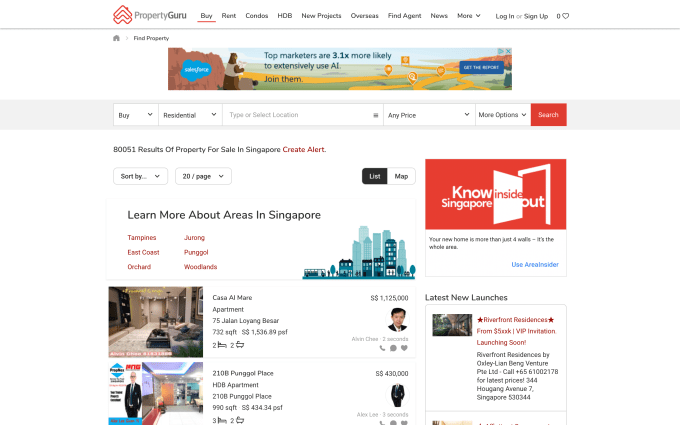
KKR’s latest Southeast Asia bet is a $144M investment in PropertyGuru

Global investment giant KKR is warming up to Southeast Asia after it made a third high-profile investment. The firm — which has nearly $150 billion in assets under management — has cut a SG$200 million (US$144 million) check for PropertyGuru, the region’s largest property listings group.

Founded in 2006, PropertyGuru operates rental and sale listing sites in Singapore, Malaysia, Indonesia and Thailand. Prior to today’s deal (its Series D), its most recent investment came in 2015, when it raised SG$175 million from backers including TPG and Australia’s Square Peg. This new financing takes it to SG$440 million (or around $320 million) thus far. You’d imagine that the deal values PropertyGuru at/above $1 billion — the much-vaunted unicorn milestone — but the company has declined to reveal its valuation at this point.

It isn’t talking about its valuation, but PropertyGuru CEO Hari V. Krishnan did say in a statement, however, that the company is profitable, cash flow positive and seeing revenue grow at 25 percent per year. The firm claims to have a dominant 55 percent market share in the countries it operates in and it is actively working to expand that reach in Southeast Asia, a region of over 600 million consumers which has more internet users than the population of the U.S.

Indeed, in tandem with the funding news, PropertyGuru said it has completed the buyout of Vietnam-based property portal Batdongsan.com.vn, which it claims is the country’s largest property portal with over four million unique visitors per month. The site will join PropertyGuru’s collection of business through the deal, which is undisclosed and follows a strategic investment back in 2016.

Singapore is one of five markets in Southeast Asia where PropertyGuru operates

For KKR, this investment in the latest in a series of early bets that the firm has made on digital startups in Southeast Asia. The firm has put money into Indonesian ride-sharing giant Go-Jek, which is backed by the likes of Tencent and Google and now said to be worth $9 billion, and Philippines-based fintech venture Voyager, which is also backed by Tencent following a recent $175 million deal. It also invested in Thailand-based e-commerce enabler aCommerce via its Emerald Media fund last year.

In a statement, KKR’s head of Southeast Asia, Ashish Shastry, paid tribute to PropertyGuru which he said has “clearly established itself as the Southeast Asian champion in the online property space.”

PropertyGuru is not alone in digitizing real estate, and its rivals in Southeast Asia include iProperty, a business that’s listed on the ASX in Australia and Singapore-based startup 99.co — which counts Facebook co-founder Eduardo Saverin among its backers and had a litigation battle with PropertyGuru. There, of course, plenty of single-market businesses that operate across various Southeast Asian countries.

31 Oct 2018

Brex has partnered with WeWork, AWS and more for its new rewards program

Brex, the corporate card built for startups, unveiled its new rewards program today.

The billion-dollar company, which announced its $125 million Series C three weeks ago, has partnered with Amazon Web Services, WeWork, Instacart, Google Ads, SendGrid, Salesforce Essentials, Twilio, Zendesk, Caviar, HubSpot, Orrick, Snap, Clerky and DoorDash to give entrepreneurs the ability to accrue and spend points on services and products they use regularly.

Brex is lead by a pair of 22-year-old serial entrepreneurs who are well aware of the costs associated with building a startup. They’ve been carefully crafting Brex’s list of partners over the last year and say their cardholders will earn roughly 20 percent more rewards on Brex than from any competitor program.

“We didn’t want it to be something that everyone else was doing so we thought, what’s different about startups compared to traditional small businesses?” Brex co-founder and chief executive officer Henrique Dubugras told TechCrunch. “The biggest difference is where they spend money. Most credit card reward systems are designed for personal spend but startups spend a lot more on business.”

Companies that use Brex exclusively will receive 7x points on rideshare, 3x on restaurants, 3x on travel, 2x on recurring software and 1x on all other expenses with no cap on points earned. Brex carriers still using other corporate cards will receive just 1x points on all expenses.

Most corporate cards offer similar benefits for travel and restaurant expenses, but Brex is in a league of its own with the rideshare benefits its offering and especially with the recurring software (SalesForce, HubSpot, etc.) benefits.

San Francisco-based Brex has raised about $200 million to date from investors including Greenoaks Capital, DST Global and IVP.  At the time of its fundraise, the company told TechCrunch it planned to use its latest capital infusion to build out its rewards program, hire engineers and figure out how to grow the business’s client base beyond only tech startups.

“This is going to allow us to compete even more with Amex, Chase and the big banks,” Dubugras said.

31 Oct 2018

Brex has partnered with WeWork, AWS and more for its new rewards program

Brex, the corporate card built for startups, unveiled its new rewards program today.

The billion-dollar company, which announced its $125 million Series C three weeks ago, has partnered with Amazon Web Services, WeWork, Instacart, Google Ads, SendGrid, Salesforce Essentials, Twilio, Zendesk, Caviar, HubSpot, Orrick, Snap, Clerky and DoorDash to give entrepreneurs the ability to accrue and spend points on services and products they use regularly.

Brex is lead by a pair of 22-year-old serial entrepreneurs who are well aware of the costs associated with building a startup. They’ve been carefully crafting Brex’s list of partners over the last year and say their cardholders will earn roughly 20 percent more rewards on Brex than from any competitor program.

“We didn’t want it to be something that everyone else was doing so we thought, what’s different about startups compared to traditional small businesses?” Brex co-founder and chief executive officer Henrique Dubugras told TechCrunch. “The biggest difference is where they spend money. Most credit card reward systems are designed for personal spend but startups spend a lot more on business.”

Companies that use Brex exclusively will receive 7x points on rideshare, 3x on restaurants, 3x on travel, 2x on recurring software and 1x on all other expenses with no cap on points earned. Brex carriers still using other corporate cards will receive just 1x points on all expenses.

Most corporate cards offer similar benefits for travel and restaurant expenses, but Brex is in a league of its own with the rideshare benefits its offering and especially with the recurring software (SalesForce, HubSpot, etc.) benefits.

San Francisco-based Brex has raised about $200 million to date from investors including Greenoaks Capital, DST Global and IVP.  At the time of its fundraise, the company told TechCrunch it planned to use its latest capital infusion to build out its rewards program, hire engineers and figure out how to grow the business’s client base beyond only tech startups.

“This is going to allow us to compete even more with Amex, Chase and the big banks,” Dubugras said.

31 Oct 2018

The Tissot Seastar 1000 is a low-cost and high-quality Swiss diver

In the pantheon of watches there are a few that stand out. Looking for your first automatic watch? Pick up a Seiko Orange Monster. Looking for a piece with a little history? The Omega Speedmaster is your man. Looking for an entry-level Swiss diver that won’t break the bank? Tissot’s Seastar has always had you covered.

The latest version of the Seastar is an interesting catch. A few years ago – circa 2010 – the pieces were all black with bold hands and a more staid case style. Now Tissot, a Swatch Group brand, has turned the Seastar into a chunkier diver with massive bar hands and case that looks like a steel sandwich.

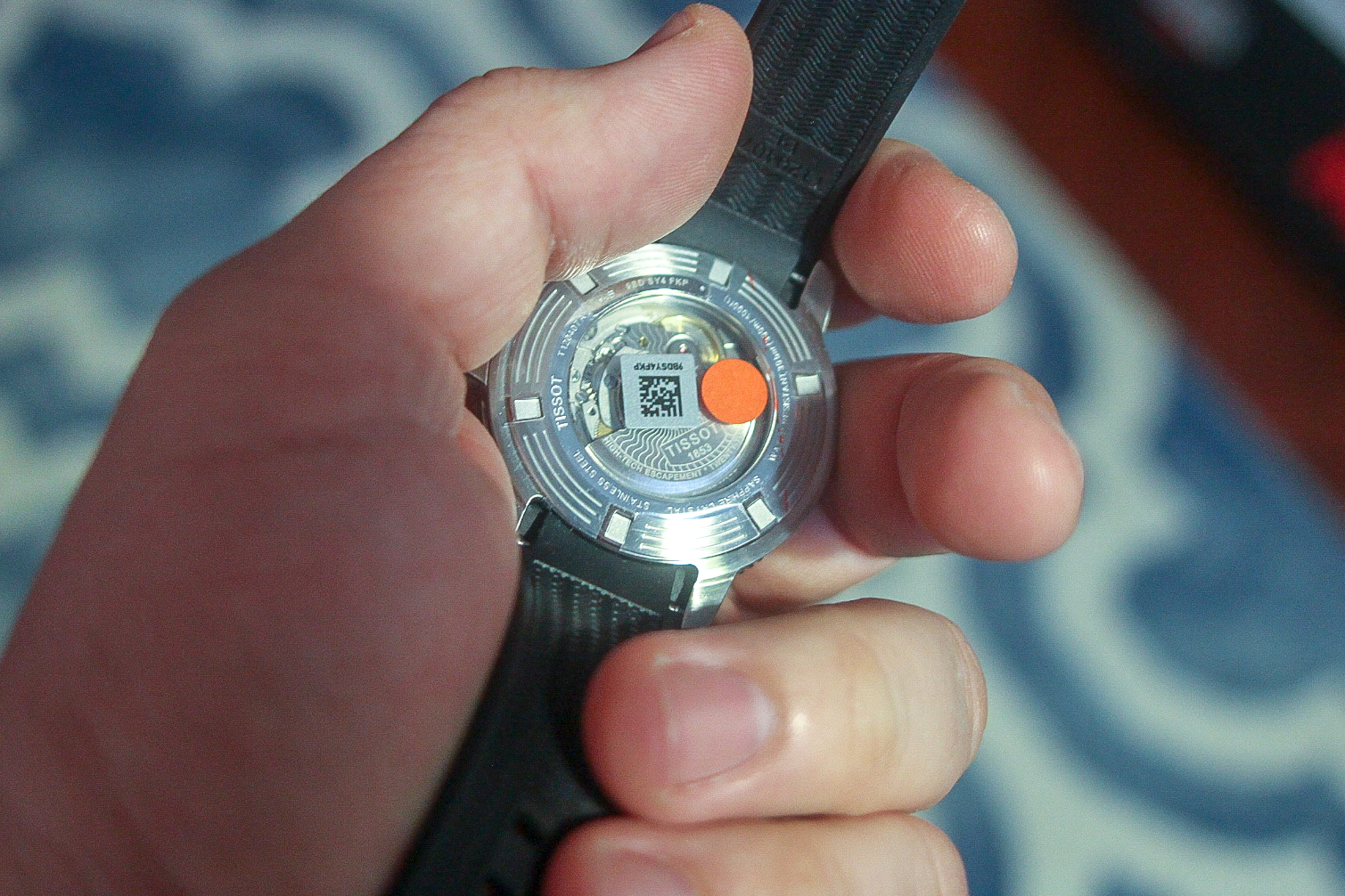
The $695 Seastar 1000 contains a Powermatic 80/ETA C07.111 movement with an eighty hour power reserve which means the watch contains a massive mainspring that keeps things going for most of three days without winding. The Seastar is also water resistant to 1000 feet thanks to a huge screw down crown and thick casing. The new model has an exhibition back where you can see the rotor spinning over and balance wheel. The watch also has a ceramic bezel, a fairly top-of-the-line feature in an entry level watch.

Tissot has a long and interesting history. Best known for their high-tech T-Touch watches which had touchable crystals, allowing you to activate a compass, barometer, or altimeter with a single tap, the mechanical pieces have always seemed like an afterthought. The company also produces the classic Tissot Le Locle as well as a chronograph that I absolutely loved, the T-Navigator, but that has been discontinued. The Seastar, then, is one of the few mechanical pieces they sell and at sub-$1,000 prices you’re basically getting a Swiss watch with solid power reserve and great looks.

Watch folks I’ve talked to over the past few months see a distinct upturn in the Swiss watch market. Their belief that the Apple Watch is driving sales of mechanical watches seems to be coming true, even if it means cheaper fashion watches are being decimated. Tissot sits in that sweet spot between luxury and fashion, a spot that also contains Tag Heuer and Longines. Ultimately this is an entry level watch for the beginning collector but it’s a beautiful and beefy piece and worth a look.

[gallery ids="1739155,1739160"]
31 Oct 2018

The Tissot Seastar 1000 is a low-cost and high-quality Swiss diver

In the pantheon of watches there are a few that stand out. Looking for your first automatic watch? Pick up a Seiko Orange Monster. Looking for a piece with a little history? The Omega Speedmaster is your man. Looking for an entry-level Swiss diver that won’t break the bank? Tissot’s Seastar has always had you covered.

The latest version of the Seastar is an interesting catch. A few years ago – circa 2010 – the pieces were all black with bold hands and a more staid case style. Now Tissot, a Swatch Group brand, has turned the Seastar into a chunkier diver with massive bar hands and case that looks like a steel sandwich.

The $695 Seastar 1000 contains a Powermatic 80/ETA C07.111 movement with an eighty hour power reserve which means the watch contains a massive mainspring that keeps things going for most of three days without winding. The Seastar is also water resistant to 1000 feet thanks to a huge screw down crown and thick casing. The new model has an exhibition back where you can see the rotor spinning over and balance wheel. The watch also has a ceramic bezel, a fairly top-of-the-line feature in an entry level watch.

Tissot has a long and interesting history. Best known for their high-tech T-Touch watches which had touchable crystals, allowing you to activate a compass, barometer, or altimeter with a single tap, the mechanical pieces have always seemed like an afterthought. The company also produces the classic Tissot Le Locle as well as a chronograph that I absolutely loved, the T-Navigator, but that has been discontinued. The Seastar, then, is one of the few mechanical pieces they sell and at sub-$1,000 prices you’re basically getting a Swiss watch with solid power reserve and great looks.

Watch folks I’ve talked to over the past few months see a distinct upturn in the Swiss watch market. Their belief that the Apple Watch is driving sales of mechanical watches seems to be coming true, even if it means cheaper fashion watches are being decimated. Tissot sits in that sweet spot between luxury and fashion, a spot that also contains Tag Heuer and Longines. Ultimately this is an entry level watch for the beginning collector but it’s a beautiful and beefy piece and worth a look.

[gallery ids="1739155,1739160"]
31 Oct 2018

As stock rises on a slim earnings beat, eBay tells analysts to focus on payments and ads

Despite increasing competition from traditional retailers like Walmart and Target, which have invested heavily in e-commerce, and the whupping it’s routinely taking from Amazon among pure e-commerce companies, eBay the 20-year-old lumbering Pez dispenser of an e-tailer, keeps plugging along.

Now, as it manages to eke out another earnings win by matching analysts’ expectations, the company is telling the bankers that watch it to look to advertising and payments for its future growth.

The company met analysts’ estimates of revenue totaling $2.65 billion, up from $2.41 billion in the year-ago period. That amounts to adjusted earnings of 56 cents per share, up from 48 cents per share in the year-ago period and beating analyst estimates of 54 cents per share. Profits for the company hit $720 million for the quarter.

The news sent shares up over 4 percent in trading after the market closed on Tuesday.

But more interesting than the the tepid results was its outlook for the future. Right now, eBay is at a crossroads as it tries to get a new group of users to forget about its past as a marketplace for used goods and resellers — and as a more pure e-commerce company.

“This quarter we continued to make foundational investments to improve the long-term competitiveness of our marketplace while setting the stage for significant growth opportunities,” said CEO Devin Wenig in a statement. “We will continue to innovate the customer experience while executing our growth initiatives in Payments and Advertising to position eBay for future success.”

The fact is, eBay is growing. It saw the number of active buyers across the platform increase by 4 percent, and has 177 million global active buyers. While that number is dwarfed by Amazon’s over 300 million global buyers (as of 2017), it’s one of the largest retailers in the U.S. The company’s StubHub business saw revenues of $291 million, up 7 percent from the year-ago period and sales of $1.2 billion. Its classified payments also grew.

As eBay looks ahead, payments and advertising are going to receive a bulk of the company’s internal investment dollars as it tries to complete the rollout of a new payment experience in the wake of its divorce from PayPal and its embrace of Adyen, Apple Pay, and the technology-based financial services company, Square.

The company has already processed $38 million in payments and through the partnership with Apple Pay has grown that payment method to 12 percent on the platform. Advertising on eBay has seen 400,000 sellers promote over 160 million listings.

“We continue to grow the inventory on the marketplace,” Schenkel. “Just recently we rolled out a direct from brand and direct from authorized resellers… Brands want choice and they want to sell on a marketplace with 177 million users that doesn’t compete with them.”

The company will also continue to have an aggressive investment and mergers and acquisitions strategy, the executives said. Especially since the company found its earnings buoyed by the $1 billion it brought in from the sale of its stake in Flipkart, href="https://techcrunch.com/2018/05/09/walmart-confirms-16b-flipkart-investment-giving-it-77-in-indias-e-commerce-leader/"> when it was bought by Walmart for $16 billion.

What’s somewhat interesting is that there are new companies in the retail space that are making a mint doing things that eBay once dominated. Vinted and DePop are both used-clothing e-tailers that have enviable cache and significant revenues, while LetGo and OfferUp are also raiding used goods to turn trash into treasure.

A quick trip to eBay’s homepage shows that the company has all but consigned its collectible past to the trash heap. Given the death and dissolution of so many of its peers from the first generation of internet giants, it’s worth keeping an eye on eBay if only to see how the 20-something company approaches middle age as an independent entity.

“We have a unique situation. [The] eBay brand is very well recognized and not as well understood. We’re seeing this; that new buyers are responding really well to the changes that we made in the last few years and we need more of them and part of that is messaging our brand,” said Wenig on the earnings call with investment analysts.