Year: 2018

31 Oct 2018

Facebook bans the Proud Boys, cutting the group off from its main recruitment platform

Facebook is moving to ban the Proud Boys, a far-right men’s organization with ties to white supremacist groups. Business Insider first reported the decision. Facebook confirmed the decision to ban the Proud Boys from Facebook and Instagram to TechCrunch, indicating that the group (and presumably its leader Gavin McInnes) now meet the company’s definition of a hate organization or figure.

Facebook provided the following statement:

“Our team continues to study trends in organized hate and hate speech and works with partners to better understand hate organizations as they evolve. We ban these organizations and individuals from our platforms and also remove all praise and support when we become aware of it. We will continue to review content, Pages, and people that violate our policies, take action against hate speech and hate organizations to help keep our community safe.”

Even compared to other groups on the far right with online origins, the Proud Boys maximize their impact through social networking. The organization, founded by provocateur and Vice founder McInnes, relies on Facebook as its primary recruitment tool. As we reported in August, the Proud Boys operate a surprisingly sophisticated network for getting new members into the fold via many local and regional Facebook groups. All of it relies on Facebook — the Proud Boys homepage even links out to the web of Facebook groups to guide potential recruits toward next steps.

At the time of writing, Facebook’s ban appeared to affect some Proud Boys groups and not others. The profile of Proud Boys founder McInnes appears to still be functional. Facebook’s decision to act against the organization is likely tied to the recent arrest of five Proud Boys members in New York City on charges including assault, criminal possession of a weapon and gang assault.

31 Oct 2018

Siri Shortcuts app gets updated with weather, alarms, timers and more

Alongside today’s announcements of new iPads and Mac, Apple also rolled out an updated version of its Siri Shortcuts app. The app, first introduced at WWDC, arrived with iOS 12 as a way to unlock Siri’s potential by allowing users to create their own custom voice commands and workflows. Now, it can do a few new things, too – including setting alarms and timers, getting the latest weather, and more.

The weather actions should be especially useful for those who have created custom morning routines with Siri Shortcuts, as you’ll now be able to use the latest weather in your shortcuts with the new “Get Current Weather” and “Get Weather Forecast” actions. Being able to ask for this sort of information is already among the top use cases for voice assistants, like Alexa and Google Assistant, so it makes sense to offer these sorts of commands to Siri Shortcuts users, as well.

With these options, you can now ask for current conditions, forecasts (hourly, daily or 10 days out), or for any specific condition – like the humidity, chance of rain, air quality, and more.

Also helpful are the new “Create Alarm,” “Toggle Alarm,” and “Start Timer” actions, which addressed another notable hole in the Shortcuts app at launch. Many people were confused about how to use alarms within the app because these actions weren’t available, and the request often came up on Apple’s own support site, too. The new release, Siri Shortcuts 2.1, addresses this problem.

Other new actions include the ability to convert between a variety of units from the “Measurement” and “Convert Measurement” actions, and the ability to get the most recent set of imported photos from the Photos app using the “Get Last Import” action.

The app also fixes a problem with using Siri Shortcuts with HomePod. It will now automatically play back media from the HomePod over AirPlay, when you run the shortcut from HomePod via Siri – which just makes more sense.

Siri Shortcuts version 2.1 is the first major update following the app’s release with iOS 12. However, the app today still largely appeals to iOS power users – those who were already comfortable using its predecessor, Workflow, and who understand how to build routines.

More mainstream users are likely being exposed to Siri’s expanded powers through their favorite apps. With iOS 12, a number of top developers updated their apps with “Add to Siri” buttons that point out special tasks their apps can perform by way of voice. Early adopters on this front included Pandora, The Weather Channel, Sky Guide, Citymapper, Google News, TripIt, Trello, Monster, and others.

The updated version of Siri Shortcuts is available for download from the App Store.

31 Oct 2018

Monzo, the U.K. challenger bank, raises £85M Series E at a £1B pre-money valuation

Monzo, the U.K. challenger bank that now boasts more than a million customers, has raised £85 million in Series E funding. The round is led by U.S. venture capital firm General Catalyst, and Accel. Existing backers Passion Capital, Goodwater, Thrive Capital, Orange Digital Ventures, and Stripe also participated.

The latest funding was at a pre-money valuation of £1 billion (~$1.27b), meaning that Monzo is now a bonafide member of the U.K. fintech unicorn club, joining recent entrant Revolut.

Meanwhile, the bank upstart is also planning to launch a large crowdfunding round later this year. Like a lot of other fintechs — and before it was fashionable — Monzo has historically opened up its fundraising to its passionate community and other armchair investors.

In a brief call earlier today with Monzo co-founder and CEO Tom Blomfield, he told me the new funding will be primarily used for increasing headcount to further develop the Monzo product line and to cover other operational costs now that the challenger bank has reached “contribution margin positive”.

In other words, on average each customer is generating more revenue than the cost of servicing their current account, which is undoubtedly evidence of how much progress Monzo has made over the last year. This includes bringing down costs, such as weaning customers off costly debit card “top ups” and imposing a cap on fee-free foreign ATM withdrawals — as well as starting to generate meaningful revenue.

On where that revenue is now coming from, Blomfield cited lending in the form of Monzo’s overdraft product, interest it earns on deposits (currently Monzo doesn’t share that interest with customers, even if it is very small in percentage terms), and interchange fees (the money Monzo makes any time you spend on your Monzo debit card).

Another revenue stream is the nascent Monzo marketplace, which he says will be the next focus going forward now that the Monzo current account, with the omission of savings accounts and cash deposits, is basically “done“.

That’s noteworthy given that Monzo embraced developers extremely early on in its existence, holding four very popular hackathons and conducting a few early partnership pilots, but has since mostly stalled on the roll out of marketplace banking and other partnership integrations, sometimes to the frustration of the wider U.K. fintech ecosystem and developers. The exception being the recent integration with TransferWise for sending money abroad.

Blomfield doesn’t dispute this framing but says it wasn’t that Monzo changed course on offering an open API or working on deeper integrations that will put partner products inside of the Monzo banking app, but that gaining a banking license and building out all of the features of the current account had to be the short-term priority. Now that heavy lifting is complete and armed with new operational capital, it is marketplace game on.

To that end, the Monzo CEO says headcount over the next year could double again, from around 450 now to 900. And in terms of customer growth, extrapolating stats from a recent Nationwide annual report (PDF link), the challenger bank says it now accounts for 15 percent of all new bank accounts opened each month in the U.K. It also says it has 800,000 monthly active users.

Account switching — that is customers ditching their existing bank — still makes up the bulk of customer acquisition, even if Monzo recently began targeting 16-18 year olds who would be opening their first ever bank account. Another key metric: the number of customers who deposit their salary each month with Monzo is now at around 26 percent, although I’m told that this isn’t as important for Monzo as it might be for traditional banks and isn’t the main correlation with engagement or those accessing a Monzo overdraft.

Asked what Monzo’s biggest challenge will be over the next year, its CEO doesn’t mince his words: “Increasing revenue,” he says. This means ensuring that its lending models are correct (ie avoiding too many defaults as it scales) and steadfastly growing the marketplace and third-party product partnerships that will bring in additional revenue.

I was also intrigued to see a U.S. venture capital firm once again back the U.K. challenger bank — many of its existing backers have a U.S. bent and Blomfield has made no secret of his ambitions to expand across the pond at some stage. In an email exchange a few hours before publication, General Catalyst’s Adam Valkin (who was previously at Accel in London where he invested in GoCardless, which Blomfield also co-founded), gave me the following statement:

We’re investing in Tom and his team because they are delivering a high-quality banking experience for consumers at scale that is sorely missing from the market. Today’s incumbent UK banks represent billions of market cap but suffer from low NPS scores, reflecting their inability to meet their customers’ needs. Monzo, in contrast, explicitly builds product and banking features in a community-driven approach based on customers’ feedback and requests. This has driven very high organic growth, strong retention and engagement, and unprecedented customer love for and trust in Monzo. Beyond this, Tom and the Monzo team have improved upon the traditional business model of banking, removing the traditional offline retail-based banking model in favor of a highly scalable and lower cost mobile-only experience. All of this creates the potential for Monzo to become a leading U.K. bank, launch a successful financial marketplace, and eventually expand internationally.

30 Oct 2018

Alphabet exec Richard DeVaul is reportedly out after sexual harassment story

As Axios first reported, Richard DeVaul, a director at the entity formerly known as Google X, has left the company. An incident involving DeVaul behaving inappropriately toward a Google interviewee was cited in a New York Times report centered on the sexual misconduct of Andy Rubin last week. Google confirmed that DeVaul had resigned and will not receive an exit package.

The story recounts a 2013 incident during which DeVaul brought up his own polyamory in an interview with Star Simpson, a female hardware engineer. DeVaul reportedly invited Simpson to Burning Man. When she attended, DeVaul asked her to remove her shirt so that he could give her a massage. Simpson was not hired at Google.

Google has faced wide criticism of its decision to give Rubin a $90 million exit package in spite of an investigation finding the claims against him credible. Axios reports that DeVaul did not receive an exit package, consistent with Sundar Pichai’s recent claim that the company had fired 48 individuals for sexual harassment in the last two years without providing exit packages.

Earlier in 2018, DeVaul authored a Medium post introspecting on his experience awakening to his own latent racism and misogyny.

“We can be better people and make a more just society when we recognize this and are committed to the long-term solutions of continued personal introspection, thoughtful critique of systematic bias, and working to create new and better systems,” DeVaul wrote. “I’m committed to working on this, and I hope you will join me.”

30 Oct 2018

The Biggening

Everything is already big.

The iPhone SE died. The iPad Mini was last upgraded in 2015. The 11-inch MacBook Air died years ago. The smaller Series 4 Apple Watch has a bigger display than the larger Series 3 Apple Watch.

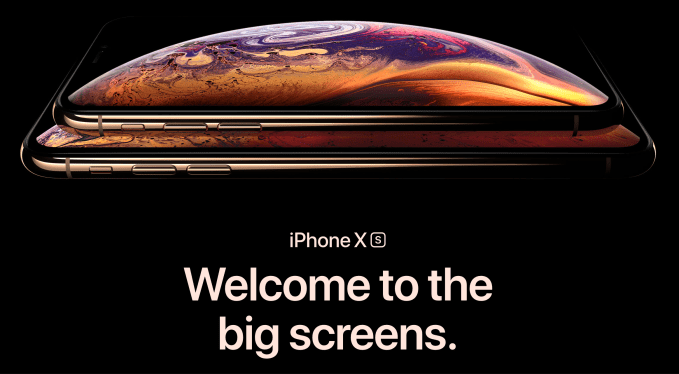
Apple’s smallest devices are slowly getting bigger and the company’s events don’t suggest those ambitions are going to stop. While the release of the truly monstrous 6.5” iPhone XS Max last month embodies this trend in the most readily apparent way, the way Apple has emphasized external displays on its new iPad Pro and its MacBook Pro line are perhaps more telling of the company’s future ambitions, a world where displays are boundless.

If you’re thinking that Apple can only make displays so much bigger while reducing the sizes of the device, there’s a lot further they can take this.

Apple’s wants bigger displays.

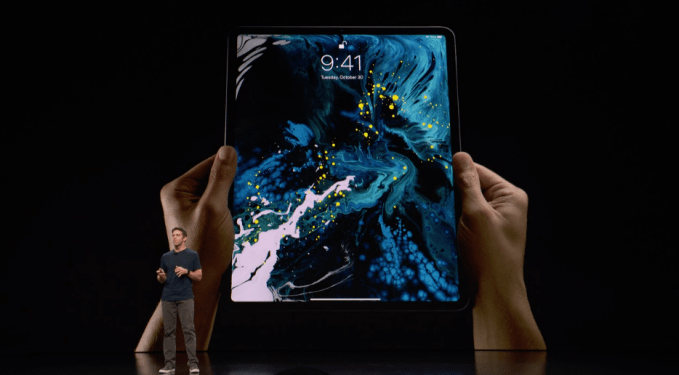
The old iPad Pro was perhaps too big; it’s massive form factor was great for creative tasks but it was one of the most niche devices Apple had released in recent years. The company’s new 12.9” iPad Pro reaches for the edges more but shrinks its overall footprint in the process, turning the somewhat novelty device into what I imagine will be a much more palatable mainstream product. The smaller Pro jumped from 10.5” to 11” while maintaining an overall size similar to its predecessor.

Apple.com

Much in the way that the iPhone 6S Plus was the “big” phone when it came out with a 5.5″ display, and consumers buying it were making that choice for themselves, Apple is shaping the new-normal. The 5.8″ iPhone XS and 6.5″ iPhone XS Max show that. With the new Apple Watch Series 4, Apple made the decision to make the devices bigger, bumping the 38mm and 42mm watches up to 40mm and 44mm sizes. The upgrade signified that Apple felt that even its biggest tiny display was still too small.

One of the other big changes on the new iPad Pros was the use of USB-C and a big reason Apple was fine ditching its proprietary port is that it really wanted to enable the device to drive 5K external displays. Apple wants the device to be at the heart of creatives’ workflows but it still sees its display size as a limiting factor.

Today we also saw Apple make a number of big improvements to the 13.3” MacBook Air that seem to overshadow the 12” MacBook in major ways, throwing into question whether the 12″ device is too small a form factor for Apple to continue supporting. And while the company no longer sells a 17-inch MacBook Pro, their latest 15-inch MacBook Pro was built to power up to four 4K displays so that should tell you quite a bit about where the company is moving.

All of this is to say that Apple wants to fill your visual world. When Apple starts working towards something across its entire product line, individual updates almost start to feel like inevitabilities, not choices. But in pushing towards larger displays and more external display support, Apple is very much deciding that its devices should take up more of your perspective.

But handheld devices can only get so large. You may one-day cram an iPhone with an 8″ display into your pocket, but you’ll never get an iPad Pro in there. Samsung is building folding phones to cheat this concept in the short term, but Apple seems to be working on small screens closer to your eyes as the solution.

The company has been reportedly building VR devices and working on AR display tech to create long-rumored devices that could fill broader sections of our field-of-view.

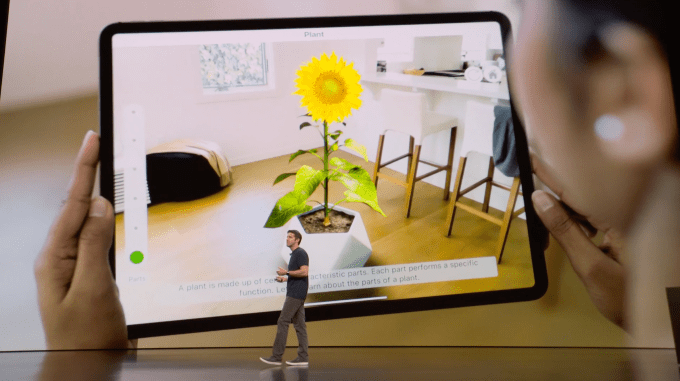
Apple’s vision for augmented reality have hardly been secret. Their wonky prototype ARKit demos play out on the same keynote stages as major hardware releases.

But how Apple decides to interface an eventual headworn AR product with the rest of its lineup will be incredibly important for the company. Much in the way that products like AirPlay or external displays give the content you’ve created or discovered a place to be seen in a more immersive way, digital AR screens could also give a bigger home for the intimate interactions users still host on mobile devices.

Today, Apple tellingly called the iPad Pro the “world’s best device for AR” in their event keynote, signifying that the best augmented reality is the biggest window into that world. As Apple crafts “edge-to-edge” devices that allow us to peer deeper into their digital services, the question, perhaps, isn’t how much bigger those physical screens will become but how long it will be until AR displays are trimming down the bezels of our unadulterated view.

30 Oct 2018

Twitter’s U.S. midterms hub is a hot mess

Today, Jack Dorsey tweeted a link to his company’s latest gesture toward ongoing political relevance, a U.S. midterms news center collecting “the latest news and top commentary” on the country’s extraordinarily consequential upcoming election. If curated and filtered properly, that could be useful! Imagine. Unfortunately, rife with fake news, the tool is just another of Twitter’s small yet increasingly consequential disasters.

Beyond a promotional tweet from Dorsey, Twitter’s new offering is kind of buried — probably for the best. On desktop it’s a not particularly useful mash of national news reporters, local candidates and assorted unverifiable partisans. As Buzzfeed news details, the tool is swimming with conspiracy theories, including ones involving the migrant caravan. According to his social media posts, the Pittsburgh shooter was at least partially motivated by similar conspiracies, so this is not a good look to say the least.

Why launch a tool like this before performing the most basic cursory scan for the kind of low-quality sources that already have your company in hot water? Why have your chief executive promote it? Why why why

A few hours after Dorsey’s tweet, likely after the prominent callout, the main feed looked a bit tamer than it did at first glance. Subpages for local races appear mostly populated by candidates themselves, while the national feed looks more like an algorithmically generated echo chamber version of my regular Twitter feed, with inexplicably generous helpings of MSNBC pundits and more lefty activists.

For Twitter users already immersed in conspiracies, particularly those that incubate so successfully on the far right, does this feed offer yet another echo chamber disguised as a neutral news source? In spite of its sometimes dubiously left-leanings, my feed is still peppered with tweets from undercover video provocateur James O’Keefe — not exactly a high quality source.

In May, Twitter announced that political candidates would get a special badge, making them stand out from other users and potential imposters. That was useful! Anything that helps Twitter function as a fast news source with light context is a positive step, but unfortunately we haven’t seen a whole lot in this direction.

Social media companies need to stop launching additional amplification tools into the ominous void. No social tech company has yet exhibited a meaningful understanding of the systemic shifts that need to happen — possibly product-rending shifts — to dissuade bad actors and straight up disinformation from spreading like a back-to-school virus. 

Unfortunately, a week before the U.S. midterm elections, Twitter looks as disinterested as ever in the social disease wreaking havoc on its platform, even as users suffer its real-life consequences. Even more unfortunate for any members of its still dedicated, weary userbase, Twitter’s latest wholly avoidable minor catastrophe comes as a surprise to no one.

30 Oct 2018

Zuckerberg says the future is sharing via 100B messages & 1B Stories/day

The News Feed won’t sustain Facebook forever, and that’s scaring investors. Today on Facebook’s earnings call, Mark Zuckerberg stressed that sharing is shifting to private chat, where people send 100 billion messages per day on Facebook’s family of apps, and Stories, where he says people share 1 billion of these slideshows per day (though it’s unclear if that includes third-party apps like Snapchat).

But that means Facebook will have to realign its business towards these mediums where monetization is more complex and it has less experience. The result of Zuckerberg’s comments was a reversal of Facebook’s initial 2 percent share price gain after earnings were announced that dragged it down to a 3.5 percent loss. That was only reversed when Zuckerberg said Facebook would reduce limits on video advertising, pushing shares up 3 percent in after-hours trading.

Facebook’s year-over-year revenue growth has already slowed from 59 percent in Q3 2016, to 49 percent a year ago, to 33 percent now as Zuckerberg admits it’s hitting saturation in developed markets, plus it’s running out of News Feed space. Now it will both have to deal with the sharing medium shift, and that the new users it’s adding in the Asia-Pacific and Rest Of World regions earn it 10X less than users in North America.

Battling iMessage

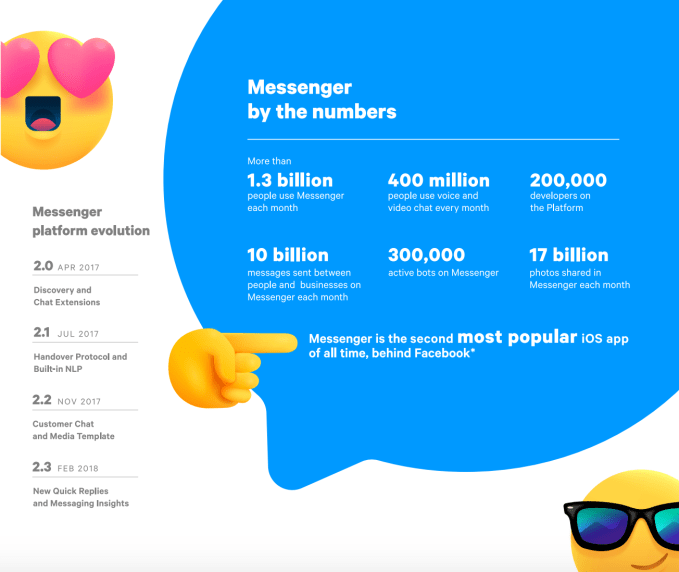
In messaging, Zuckerberg says “People share more photos, videos, and links on WhatsApp and Messenger than they do on social networks.” He sees Facebook’s position as strong, saying “We’re leading in most countries”, though that’s mostly in the developing world Android market where people choose their own default messaging app. “Our biggest competitor by far is iMessage. In important countries like the US where the iPhone is strong, Apple bundles iMesssage as the default texting app, and it’s still ahead” Zuckerberg notes.

The “bundled” language harkens back to to antitrust lawsuits against Microsoft for bundling computers with Internet Explorer. With Apple CEO Tim Cook constantly harping on the poor privacy practices of ad-supported companies like Facebook, Zuckerberg might be gunning to draw regulator attention to iMessage.

Facebook is starting to more aggressively monetize Messenger through inbox ads, and its now selling enterprise tools to brands on both Facebook and WhatsApp that let them pay to ping users. But Facebook risks its chat apps seeming annoying or intrusive if it packs in too many ads or allows too much Message spam. Users could stray to status quos like iMessage and Android Messages if it puts monetization above the user experience.

Dominating Snapchat

On Stories, Zuckerberg says Facebook is doing even better. Over 1 billion people use its Stories features across Facebook, Messenger, Instagram, and WhatsApp each day, compared to 186 million daily users on Stories inventor Snapchat as a whole. Stories are where the majority of Facebook sharing growth is happening, and Facebook Stories are gaining momentum after a slow and buggy start. That’s why Zuckerberg never mentioned Snapchat, and instead talk about YouTube as its primary competitor in video.

The problem is that creating attractive video ads, especially vertical full-screen ones for Stories, is beyond the capability of the long-tail on small businesses that have fueled Facebook’s News Feed ad revenue. Users often rapidly skip through Stories ads, and Facebook currently doesn’t offer unskippable ones like Snapchat. Many people don’t think to tap or swipe up to visit a link from a Story, or simply don’t want to lose their place in ways that didn’t happen on desktop or even mobile feed ads.

Chasing YouTube

Beyond Stories, Facebook salvaged its after-hours share price by discussing how it plans to show more video, and therefore more of its lucrative video ads. Back in January, Facebook admitted its Q4 user count had declined and revenue might stumble in part because it had decided to show people fewer viral videos that they watch passively. This came as part of its drive for Time Well Spent. But now, Zuckerberg says that Facebook has cracked the code for how to make passive video consumption a positive experience, so Facebook will lift some limits:

People really want to watch a lot of video. To a large degree we’ve had to rate limit its growth, and we need to do the things so we can stop limiting it. The things that have caused us to limit it are on the one hand, when we see passive consumption of video displacing social interactions . . . We needed to figure out a way that video can grow but people can also keep on interacting and doing what they tell us that they uniquely want from Facebook. And now I think we’re starting to work through what the formula is going to be so we can take some of those rate limits off and let video grow at the rate that it wants to. I feel that that’s a very exciting opportunity ahead.”

Across Facebook’s other products, Zuckerberg noted that 800 million people now use Marketplace, its Jobs feature have helped people find 1 million jobs, and its birthday fundraisers have raised $300 million alone this year. But it will be teaching advertisers how to effectively create sponsored messages and Stories ads that will define whether Facebook’s revenue keeps growing.

30 Oct 2018

NASA’s prolific planet-hunter Kepler has finally earned its retirement

After nine years of service, half a million stars surveyed, and thousands of planets discovered around those stars, NASA’s astonishingly successful Kepler space telescope is finally taking a well-earned rest. Out of fuel but in a safe orbit, the spacecraft will drift through the solar system looking at nothing in particular as its immense trove of data continues to drive discoveries here on Earth.

Kepler launched in 2009 after, as is so often the case, decades of preparation, studies, and delays. Its mission, slated to last three and a half years, was to stare unblinkingly at one small patch of sky, watching each star for the minute changes that could indicate a planet briefly blocking its light.

The mission was successful beyond all expectations, and once the telescope was operational the data began producing exoplanets not by the dozen but by the thousand. And some came closer to an Earth analogue than astronomers had dared hope — suggesting rocky planets about our size aren’t all that rare. (Good news if we need to relocate.)

Kepler’s “first light” image showing its original field of view.

In 2014 the original mission was complete but Kepler was still going strong, largely due to robust construction and frugal fuel use. A second mission, dubbed K2, was approved, different from the first: instead of looking at a single patch for years, Kepler would shift its view to a new location every three months. Naturally the number of stars catalogued and observed skyrocketed.

Not all was well aboard, though: The craft lost one of its four reaction wheels, used to reorientate the craft against the pull of the sun and other forces, though fortunately it was designed to function without all of them. It was only the later failure of another wheel that essentially put a hard time limit on K2.

Without a reaction wheel to change its direction along all three axes, Kepler would have to burn precious fuel every time it needed to change its view or spin around to send data home.

Fuel or no fuel, Kepler was still churning out the data. Scientists verified and announced the existence of more than 1,200 more exoplanets in one go, while AI tools like Google’s were working to find others hidden in the noisy data.

But the end has come at last, and Kepler used the last of its reserves to maneuver into position to relay its final batch of data through the Deep Space Network. This, like the rest, will soon be available to citizen scientists and research organizations as well as NASA’s own teams.

As for the exoplanet hunt, that’s been taken up by the Transiting Exoplanet Survey Satellite, or TESS, launched earlier this year and now in operation. There’s every reason to think it’ll be as productive and inspiring as its predecessor and perhaps more so.

“When we started conceiving this mission 35 years ago we didn’t know of a single planet outside our solar system,” said Kepler’s founding principal investigator, William Borucki, since retired. “Now that we know planets are everywhere, Kepler has set us on a new course that’s full of promise for future generations to explore our galaxy.”

Having delivered its last package, Kepler has completed its final duty and now enters a rather pleasant retirement. Unlike Cassini, which ended up a new crater on Saturn’s surface (a sudden but glorious end), Kepler will simply fall into an Earth-like orbit some distance behind its home planet, likely to remain stable (barring the extraordinarily unlikely possibility of a cosmic debris strike) for many years to come.

We won’t hear from Kepler, and Kepler won’t hear from us. But it’s nice to think it’ll still be looking.

30 Oct 2018

The hybrid cloud market just got a heck of a lot more compelling

Let’s start with a basic premise that the vast majority of the world’s workloads remain in private data centers. Cloud infrastructure vendors are working hard to shift those workloads, but technology always moves a lot slower than we think. That is the lens through which many cloud companies operate.

The idea that you operate both on prem and in the cloud with multiple vendors is the whole idea behind the notion of the hybrid cloud. It’s where companies like Microsoft, IBM, Dell and Oracle are placing their bets. These died-in-the-wool enterprise companies see their large customers making a slower slog to the cloud than you would imagine, and they want to provide them with the tools and technologies to manage across both worlds, while helping them shift when they are ready.

Cloud-native computing developed in part to provide a single management fabric across on prem and cloud, freeing IT from having two sets of tools and trying somehow to bridge the gap between the two worlds.

What every cloud vendor wants

Red Hat — you know, that company that was sold to IBM for $34 billion this week — has operated in this world. While most people think of the company as the one responsible for bringing Linux to the enterprise, over the last several years, it has been helping customers manage this transition and build applications that could live partly on prem and partly in the cloud.

As an example, it has built OpenShift, its version of Kubernetes. As CEO Jim Whitehurst told me last year, “Our hottest product is OpenShift. People talk about containers and they forget it’s a feature of Linux,” he said. That is an operating system that Red Hat knows a thing or two about.

With Red Hat in the fold, IBM can contend that being open source; they can build modern applications on top of open source tools and run them on IBM’s cloud or any of their competitors, a real hybrid approach.

Microsoft has a huge advantage here, of course, because it has a massive presence in the enterprise already. Many companies out there could be described as Microsoft shops, and for those companies moving from on prem Microsoft to cloud Microsoft represents a less daunting challenge than starting from scratch.

Oracle brings similar value with its core database products. Companies using Oracle databases — just about everyone — might find it easier to move that valuable data to Oracle’s cloud, although the numbers don’t suggest that’s necessarily happening (and Oracle has stopped breaking out its cloud revenue).

Dell, which spent $67 billion for EMC, making the Red Hat purchase pale by comparison, has been trying to pull together a hybrid solution by combining VMware, Pivotal and Dell/EMC hardware.

Cloud vendors reporting

You could argue that hybrid is a temporary state, that at some point, the vast majority of workloads will eventually be running in the cloud and the hybrid business as we know it today will continually shrink over time. We are certainly seeing cloud infrastructure revenue skyrocketing with no signs of slowing down as more workloads move to the cloud.

In their latest earnings reports, those who break out such things, the successful ones, reported growth in their cloud business. It’s important to note that these companies define cloud revenue in different ways, but you can see the trend is definitely up:

  • AWS reported revenue of $6.7 billion in revenue for the quarter, up from $4.58 billion the previous year.
  • Microsoft Intelligent Cloud, which incorporates things like Azure and server products and enterprise services, was at $8.6 billion, up from $6.9 billion.
  • IBM Technology Services and Cloud Platforms, which includes infrastructure services, technical support services and integration software reported revenue of $8.6 billion, up from $8.5 billion the previous year.
  • Others like Oracle and Google didn’t break out their cloud revenue.

Show me the money

All of this is to say, there is a lot of money on the table here and companies are moving more workloads at an increasingly rapid pace.  You might also have noticed that IBM’s growth is flat compared to the others. Yesterday in a call with analysts and press, IBM CEO Ginni Rometty projected that revenue for the hybrid cloud (however you define that) could reach $1 trillion by 2020. Whether that number is exaggerated or not, there is clearly a significant amount of business here, and IBM might see it as a way out of its revenue problems, especially if they can leverage consulting/services along with it.

There is probably so much business that there is room for more than one winner, but if you asked before Sunday if IBM had a shot in this mix against its formidable competitors, especially those born in the cloud like AWS and Google, most probably wouldn’t have given them much chance.

When Red Hat eventually joins forces with IBM, it at least gives their sales teams a compelling argument, one that could get them into the conversation — and that is probably why they were willing to spend so much money to get it. It puts them back in the game, and after years of struggling, that is something. And in the process, it has stirred up the hybrid cloud market in a way we didn’t see coming last week before this deal.


30 Oct 2018

Waymo, take the wheel: Self-driving cars go fully driverless on California roads

Self-driving startup Waymo, a Google spin-off owned by parent company Alphabet, has been granted the first permit in California to begin driverless testing on public roads. Yes, that means self-driving cars without a human behind the wheel will be cruising around California, beginning with a limited geographic area in Silicon Valley.

The company’s autonomous vehicles are a common sight on public roads in and around Google’s headquarters in Mountain View, California. The startup, which began as a moonshot project under X, has been testing on public roads for years now. But this permit, issued by the California Department of Motor Vehicles, allows Waymo to test these self-driving cars without a human test driver behind the wheel.

New California DMV regulations that took effect in April allow companies to apply for fully driverless testing within carefully defined limits. Waymo is the first to get approval. At least one other company is waiting in the wings.

Where you’ll find them

Waymo said its driverless test cars will initially hit the streets near its Silicon Valley headquarters, including parts of Mountain View, Sunnyvale, Los Altos, Los Altos Hills and Palo Alto. See the map below for the initial driverless launch.

waymo driverless map

Perhaps anticipating wariness from the public, Waymo emphasized that it knows this area “well.”

“Mountain View is home to more than a dozen autonomous vehicle companies, and has supported safe testing for years,” the company said in its announcement.

Waymo will eventually expand its driverless testing territory. Before it moves into a new area, Waymo said it will notify the new communities where this expansion will occur, and submit a request to the DMV.

Members of the public won’t be invited into these driverless cars just yet. However, Waymo is working toward that goal. The first driverless rides will be for Waymo employees. Waymo said it will eventually “create opportunities for members of the public to experience this technology,” similar to its early ride program in Arizona.

What Waymo is allowed to do

The driverless permit allows Waymo to test its driverless vehicles during the day and night on city streets, rural roads and highways with posted speed limits of up to 65 miles per hour. Waymo is also allowed to test in fog and light rain, conditions that the company said its vehicles can handle.

If one of its driverless vehicles encounters a situation it doesn’t understand it will come to “safe stop,” Waymo said, adding that it has well-established protocols that include contacting fleet and rider support.

The company announced earlier this month that its autonomous vehicles have driven 10 million miles on public roads in the United States since it began working on self-driving technology in 2009.

California is not the first state to test true driverless vehicles on public roads. Arizona gets that distinction. Waymo began testing self-driving Chrysler Pacifica Minivans in Phoenix suburbs, notably Chandler, in 2016. The company launched an early rider program in April 2017. Later that year, Waymo removed employees and passengers from its test fleet, sending empty self-driving minivans onto the streets of greater Phoenix.

By May of this year, Waymo began allowing some early riders in Phoenix to hail a self-driving minivan without a human test driver behind the wheel.