Year: 2018

30 Oct 2018

Google’s Gboard now lets you create a set of emoji that look like you

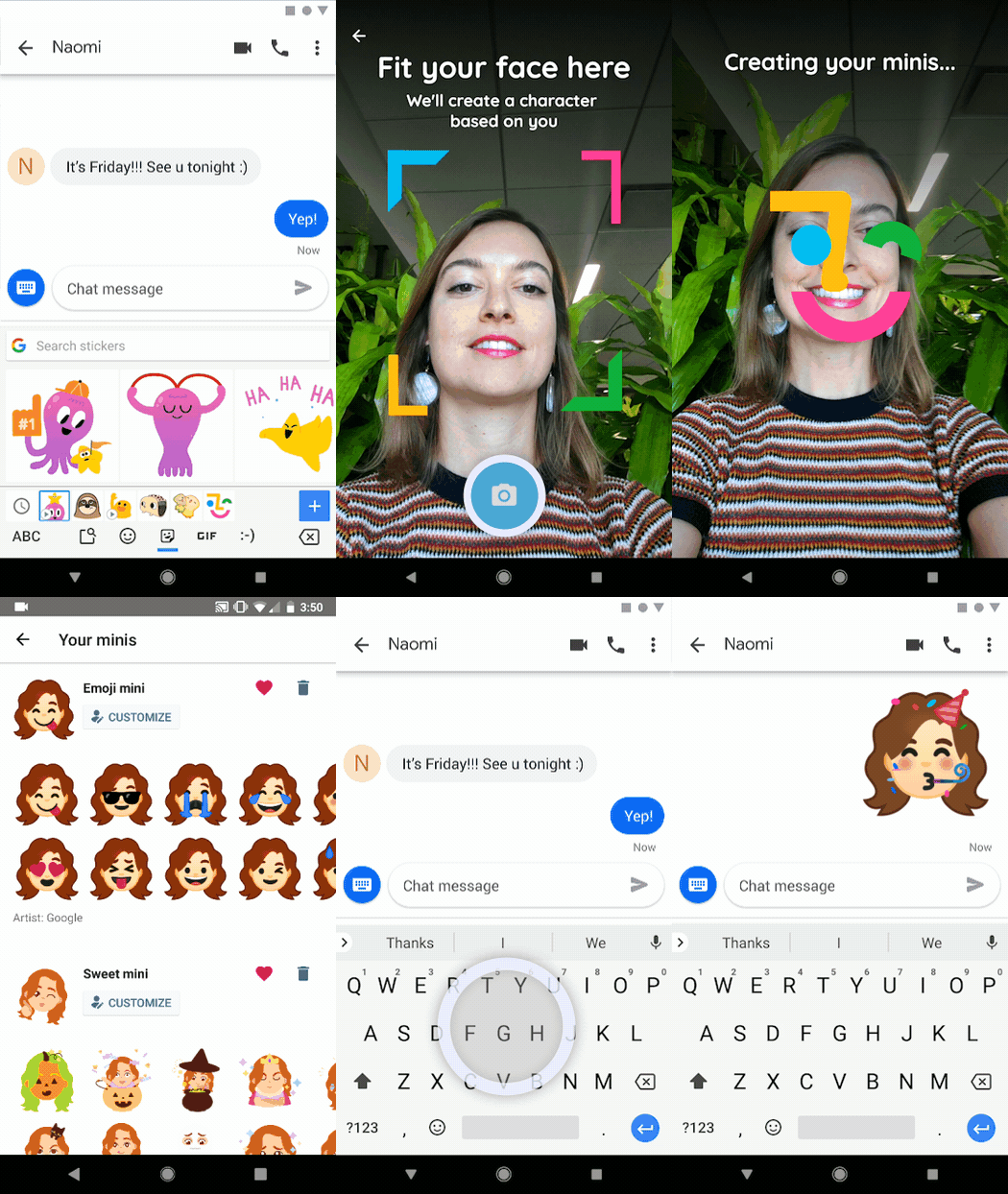
Last summer, Google introduced its own take on Bitmoji with the launch of “Mini” stickers in its keyboard app, Gboard, which leverage machine learning to create illustrated stickers based on your selfie. Today, Google is expanding the Mini Stickers with the launch of what it calls “Emoji Minis” – meaning, emoji-sized stickers that look like you.

Similar to the initial launch of Mini stickers, the new emoji are also created using machine learning techniques, Google says.

The company said the idea is to give people a way to use emoji they feel better represent who they really are.

“Emoji Minis are designed for those who may have stared into the eyes of emoji and not seen yourself staring back,” explained Google, in a blog post. “These sticker versions of the emoji you use every day are customizable so you can make them look just like you.”

That means your emoji can have differently colored hair – like green or blue or gray, for example – or piercings. It can be wearing a hat, head covering, or glasses.

Google says it uses neural networks to suggest skin tones, hairstyles, and accessories that you can then fine tune. You can choose a color for your hair, facial hair, or select different types of head covering and eyewear. You can also add freckles or wrinkles, if you want.

The result is a not just a single emoji, but a selection of options. For example, you can use your custom emoji as a zombie, mage, heart eyes, crying eyes, shruggie, and all the others.

This the third style of Mini stickers, first introduced last year. Already, these stickers come in two other styles – a more expressive “bold” and a nicer “sweet.”

While it may seem like a minor thing, creative emoji – and specifically, personalized emoji – can be a big draw for messaging apps. Apple advertises its clever Animoji and personalized Memoji as flagship features of its newer Face ID-powered phones. Snapchat bought Bitmoji (Bitstrips) to give its users access to more tools for creative expression. Samsung lets you make your own AR emoji that look like you. And people celebrated when the Unicode Consortium diversified to include more skin tones, and added, at long last, redheads.

Gboard, whose app has been downloaded over a billion times on Google Play, has a similar draw, thanks to its selfie-based stickers.

The company says the new Emoji Minis are available in all Gboard languages and countries, on both iOS and Android, starting today.

30 Oct 2018

Waze’s new audio player supports Pandora, Stitcher and more

Drivers can now listen to their favorite tunes without having to leave the Waze navigation app.

This week, Waze added an audio player to its crowdsourced navigation app that aims to deliver music, podcasts and other content from seven major platforms, including Pandora, Deezer, iHeartRadio, NPR, Scribd, Stitcher and TuneIn. These partners have integrated their audio experience into Waze by using a new suite of developer tools, called the Waze Audio Kit.

A beta version of its Android and iOS apps that include the embedded audio player, called Waze Audio Player, was released this week to members of Waze’s beta community. Waze Audio Player will begin rolling out to all Waze users in the coming weeks, the company said.

The decision to bring audio into the popular navigation app was inspired by the positive feedback the company received after its first audio integration with Spotify that launched in March 2017, Waze said.

Here’s how it will work. Once users open Waze, the app will detect any of the supported music apps installed on their smartphones. Users can tap the music note icon to select their audio app within Waze. To switch from one audio app to another — say from NPR to iHeartRadio — users tap the music note icon again and then hit “change app.”

Users will be able to control whichever content they’re listening to using forward, backward and pause icons. They’ll also be able to save content to a library.

30 Oct 2018

Waze’s new audio player supports Pandora, Stitcher and more

Drivers can now listen to their favorite tunes without having to leave the Waze navigation app.

This week, Waze added an audio player to its crowdsourced navigation app that aims to deliver music, podcasts and other content from seven major platforms, including Pandora, Deezer, iHeartRadio, NPR, Scribd, Stitcher and TuneIn. These partners have integrated their audio experience into Waze by using a new suite of developer tools, called the Waze Audio Kit.

A beta version of its Android and iOS apps that include the embedded audio player, called Waze Audio Player, was released this week to members of Waze’s beta community. Waze Audio Player will begin rolling out to all Waze users in the coming weeks, the company said.

The decision to bring audio into the popular navigation app was inspired by the positive feedback the company received after its first audio integration with Spotify that launched in March 2017, Waze said.

Here’s how it will work. Once users open Waze, the app will detect any of the supported music apps installed on their smartphones. Users can tap the music note icon to select their audio app within Waze. To switch from one audio app to another — say from NPR to iHeartRadio — users tap the music note icon again and then hit “change app.”

Users will be able to control whichever content they’re listening to using forward, backward and pause icons. They’ll also be able to save content to a library.

30 Oct 2018

True Ventures has two new funds totaling $635 million to plug into a wide range of startups

True Ventures never seems to be short on exits. Most recently, the 13-year-old venture firm saw early checks to Ring, Blue Bottle Coffee, Duo Security and Evident.io pay off via exits to Amazon, Nestle, Cisco, and Palo Alto Networks, respectively. Collectively, it should be mentioned, these acquirers shelled out about $4 billion for the startups.

Then again, True, which has offices in Palo Alto and San Francisco, has been on a bit of a roll for years. Others of its bets include the 3D printing company Makerbot, acquired for $604 million in 2013; ad tech company Brightroll, sold to Yahoo in late 2014 for $640 million in cash; cybersecurity company Caspida, acquired for $190 million by Splunk in the summer of 2015; and wearable device maker Fitbit, which went public in June 2015 and that’s currently valued at roughly $1 billion but whose market cap hovered around $7 billion in the months following its IPO. At the time, True owned 22 percent of the company.

Little wonder investors keep giving True more capital to invest. Indeed, just two years after the firm closed its fifth flagship fund with $310 million, it’s today announcing it has closed its sixth flagship fund with $350 million, along with its third “select” fund, which True will use to provide follow-on funding to the breakout companies in its portfolio. That new vehicle just closed with $285 million. (True closed its second “select” fund last year with $112 million in capital commitments.)

Last week, we caught up with firm cofounders Jon Callaghan and Phil Black to talk about True, which has long managed to secure ownership of up to 25 percent of the companies it backs with fairly small first checks of between $1 million and $3 million. We wanted to know whether and how shifts in the market have impacted its strategy.

Black, for his part, said that not much had changed, that the firm has always invested in founders, versus sectors, which explains bets like WeFarm, a digital farmer-to-farmer social network that enables far-flung individuals to share ideas and that currently operates in Kenya and Uganda.

Other bets that underscore the range of companies that True has backed include the molecular products company Zymergen, which received one of its first checks from True in 2013 and has gone on to raise $175 million altogether; the hair care company Madison Reed (it has now raised roughly $70 million); the Finnish global satellite monitoring company ICEYE ($54 million and counting); and more newly, Whole Biome, a company that’s using gut bacteria to help with drug discovery and whose pills Black says he has been happily taking — joking that, so far at least, “they have not killed me.”

Callaghan meanwhile says that even with the firm’s fifth fund, it was typically able to invest between $2 million and $2.5 million for between 20 and 25 percent of the companies it funds, largely by partnering early with founding teams that are trying to take a big swing at a particular market. It was, for example, among the first institutional investors in Blue Bottle Coffee, investing in 2012 when the company was already a decade old and it was far from clear that its appeal would extend beyond Bay Area hipsters.

Another bet that looks very smart in retrospect but struck plenty of other investors as odd early on is Peloton, the connected fitness company that blends stationary bikes and streaming live video classes. The company, which has raised nearly $1 billion at this point and is valued at $4 billion, reportedly had to piece together checks from more than 200 angel investors to get off the ground.

True co-led the company’s $30 million Series C round with Tiger Global Management back in 2015. Thanks to its select funds, it also committed the first $20 million to Peloton’s Series F round, which closed with a whopping $550 million back in August. (Callaghan says True can “comfortably” invest up to $50 million in a single company, thanks to its later-stage vehicles.)

A large part of True’s success centers on its relentlessly positive messaging, which is that it supports founders through thick and thin — a claim it can support in many cases. When a financing round for the connected doorbell company Ring fell apart shortly before its acquisition by Amazon, True stepped in and re-invested in the company.

The firm has also long connected its founders in a kind of social network that many will say that they’ve found highly useful over the years — so much so that some founders have now turned to True Ventures for their second and even third startups.

And True connects recent graduates who it helps place into tech jobs through a program that it calls True University. Over the last decade, says Callaghan, True has recruited 130 students who wouldn’t necessarily find an easy pathway to Silicon Valley, paying for them to intern at True’s portfolio companies with the hope that they might stick around the industry. (Perhaps invariably, a “bunch” have gone on to start their own companies, says Callaghan, though True has only invested directly in a couple of these.)

Not last, True, like certain other Bay Area venture firms, has a new, if inadvertent advantage over some of its competitors: it has never raise money from a sovereign wealth fund — for largely economic reasons.

“Unless you count institutions and family offices in the U.K., we haven’t taken money from foreign sources,” says Black, explaining that: “As the years have passed, we’ve been approached by lots of newer groups to the category, including big hedge funds, but we’ve never done any weird, special deals. A lot of sovereigns expect you to give them special terms, and we don’t do that.”

Callaghan says the composition of True’s LPs also matter to the firm on an intellectual level. He points to Legacy Ventures in Palo Alto, which has backed True Ventures for years, as well as Andreessen Horowitz, Accel, Index Ventures, and others. Legacy is a fund of funds that channels investment profits into causes and charities championed by the firms producing the profits, and “when you look at the foundations and groups they are looking to help, it’s really impressive,” says Callaghan. “It’s pretty great to think that a big win in Silicon Valley could have an impact on influencing poverty in Africa.”


30 Oct 2018

Up close and hands on with the new MacBook Air

Why, it seems like only yesterday that Steve Jobs first pulled the MacBook Air from a manilla envelope for the world to see. It wasn’t, of course — that was 10 years ago this January. In that past decade, the ultraportable laptop has become a massive hit for the company, helping to redefine the notebook space.

But the world moves on, of course. In fact, that was kind of a theme at today’s big event in Brooklyn — bringing some overdue updates to some of the company’s most iconic lines. Heck, even the Mac Mini got some love on stage today. But no Apple product deserved a makeover more than the MacBook.

The big change to the product is the most obvious — and far and away the most requested. Apple FINALLY brought a retina display to the device. That puts the new 13-inch screen at 2560 x 1600 — and it looks great. The bump up will be like night and day for long time Air users who are finally ready to upgrade.

Of course, the update also means a bit of a price bump from $999 to $1,999, which is one of many things that will further blur the line between the redesigned Air and the entry level MacBook.

As it happens, the new Air also looks an awful lot like the rest of the MacBook line. No surprise there, of course. Today’s announcements kept with a theme of aesthetic consistency, with even the iPad Pro and Mac Mini joining in on the space gray aluminum club.

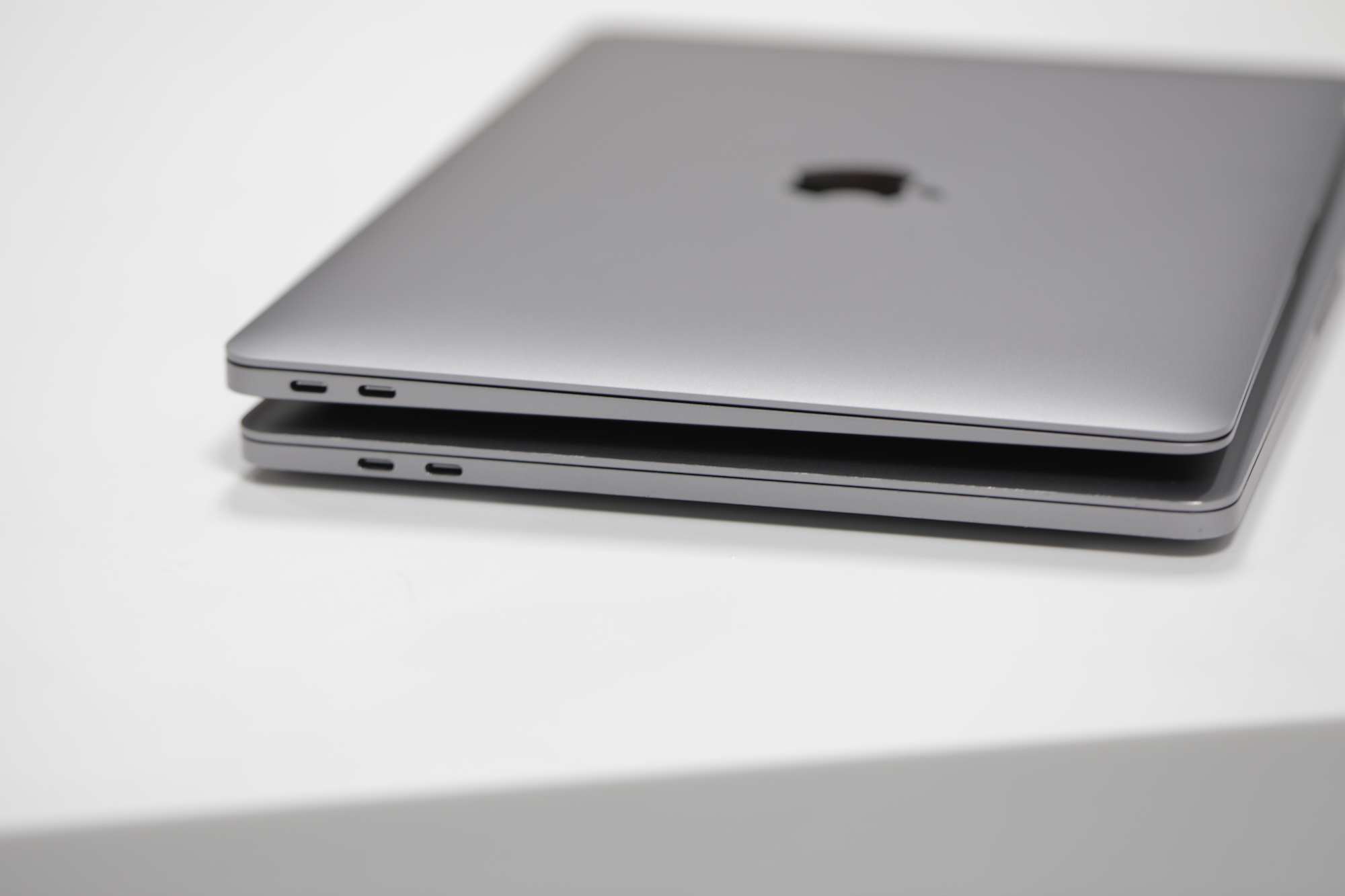
In fact, at first glance, it’s harder to distinguish the laptops, as evidenced by the above picture. That’s the new Air (top) with my 13-inch MacBook Pro (bottom). A closer look, however, reveals the same beveled design that defines previous generations of Airs.

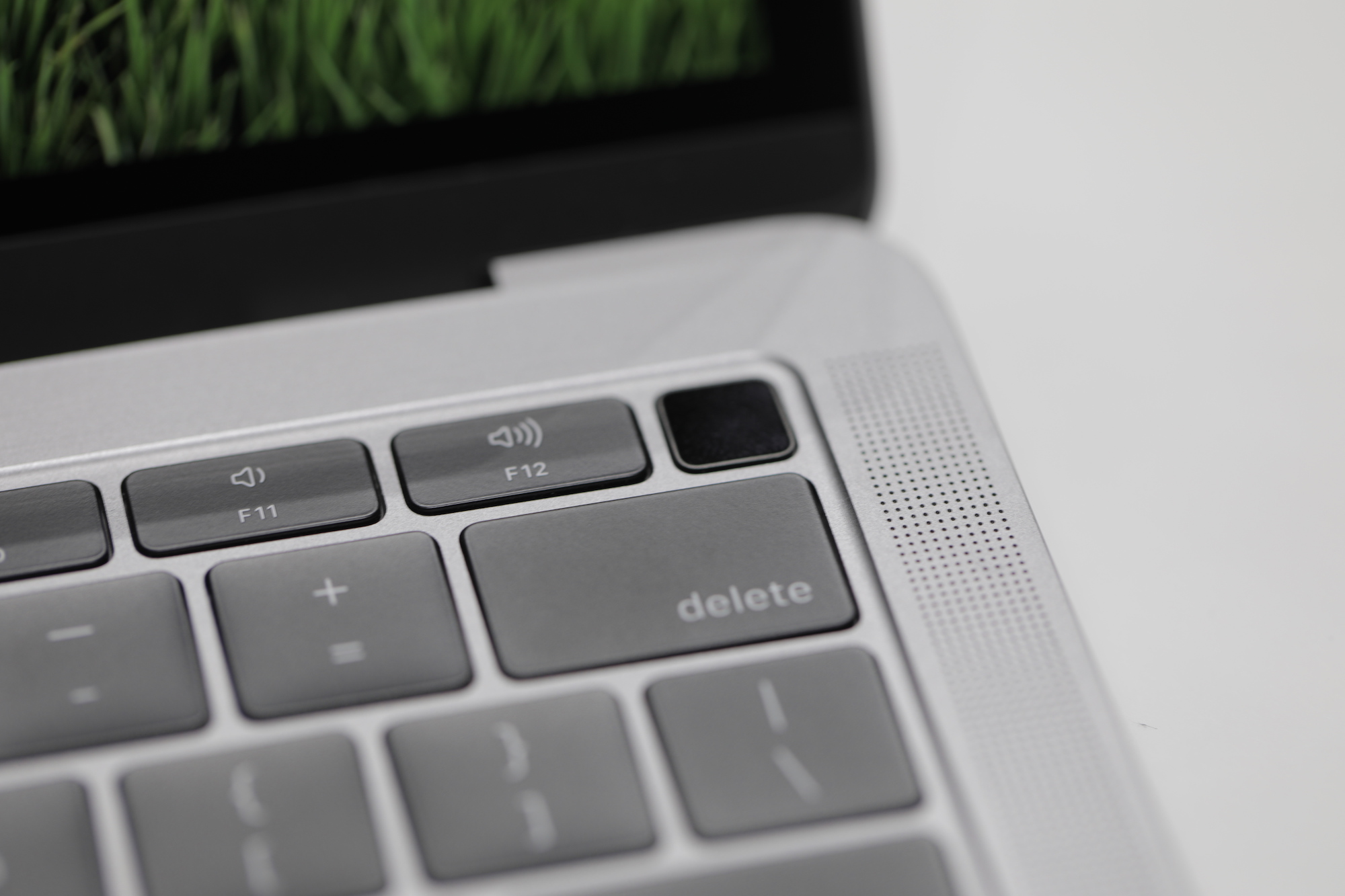
The keyboards are new, which is kind of a mixed back. Apple has certainly improved upon things on that front over three generations, including the most recent version, which are quieter, courtesy of a kind of rubber bladder that also doubles as protection against spills. Touch ID is now present up top — a great addition — though Apple opted not to include the Touch Bar.

That could be for any number of reasons. There’s some speculation that the company will ultimately move away from the feature, but more likely, it was simply a cost cutting measure. After all, price has long been one of the Air’s selling point. The trackpad, too has been made much larger, in keeping with the rest of the line.

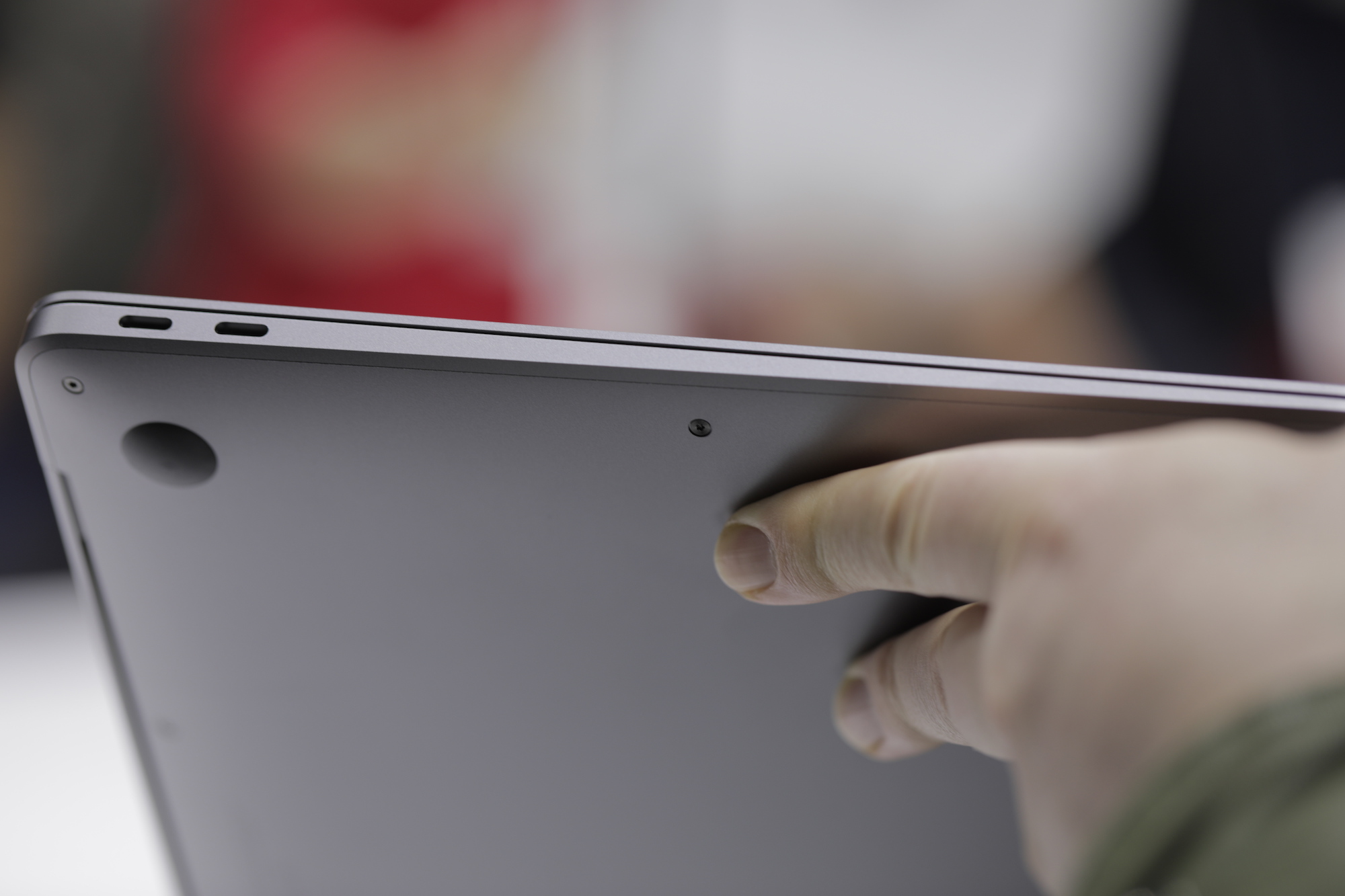
There are two USB-C ports on the left side. I know I’ll personally miss the end of the SD card reader, but we all saw things moving in this direction. The headphone jack, thankfully, is still on-board.

All in all, a solid and long awaited update to Apple’s best loved laptop. It’s nice to see the company keeping the model around, rather than simply doing away with it in favor of the low end MacBook.

Apple Fall Event 2018

30 Oct 2018

Emotional wellness startup Aura raises $2.7 million from Cowboy Ventures and Reach Capital

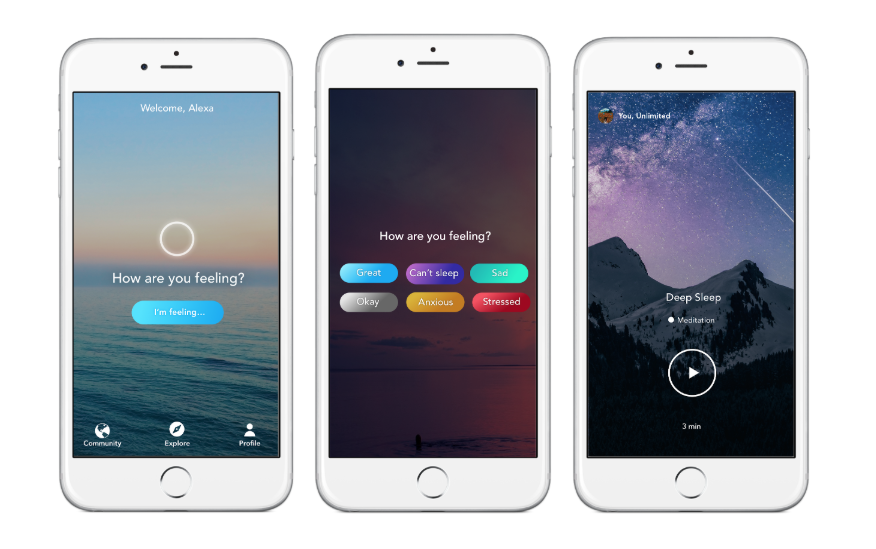
Aura, an app for emotional well-being, has raised a $2.7 million seed round co-led by Cowboy Ventures and Reach Capital, with participation from others.

When Aura first launched a couple of years ago, it’s bread and butter was short, three-to-seven-minute meditations based on your current mood — be that stressed, anxious, happy or sad. Since then, co-founders Steve and Daniel Lee say the company has grown to a few million users.

“We’ve since grown to become everyone’s emotional wellness assistant,” Steve told me. “We ask how people are feeling right now and then offer content to help them feel better.”

Aura works with therapists, coaches and meditation teachers to offer a variety of content to help people get the type of help they’re looking for. In addition to meditation, Aura offers life coaching, music and inspirational stories.

Premium users, who pay $60 per year, have unlimited access to content while free users are limited to three minutes of wellness content once every two hours. Aura is not currently sharing how many paid customers it has.

“At Reach, we often ask how we can empower people to achieve at their fullest potential,” said Reach Capital Partner Wayee Chu said in a statement. “We are thrilled to be supporting two founders who are not only deeply driven by their own personal narrative in living with a family member with a mental illness, but who have committed themselves in building a world-class technology and tool to empower others in building a regular mental health and wellness practice.”

With the funding in tow, Aura has plans to expand its base of content creators and grow its team — which currently consists just of the Lee brothers. Down the road, Aura envisions integrating the app with wearable devices and their respective sensors to detect mood automatically. That way, Aura would be able to serve up what you need before you know you need it. The company also plans to become more than just a content platform by building additional tools on top of the core service.

30 Oct 2018

Apple’s new T2 security chip will prevent hackers from eavesdropping on your microphone

Apple’s newest MacBooks include a new feature that makes it virtually impossible for hackers or spies to eavesdrop on your microphone.

Buried in Apple’s latest range of MacBooks — including the MacBook Pro out earlier this year and the just-announced MacBook Air — is the new T2 security chip, which helps protect the device’s encryption keys, storage, fingerprint data and secure boot features.

Little was known about the chip until today. According to its newest published security guide, the chip comes with a hardware microphone disconnect feature that physically cuts the device’s microphone from the rest of the hardware whenever the lid is closed.

“This disconnect is implemented in hardware alone, and therefore prevents any software, even with root or kernel privileges in macOS, and even the software on the T2 chip, from engaging the microphone when the lid is closed,” said the support guide.

The camera isn’t disconnected, however, because its “field of view is completely obstructed with the lid closed.”

Apple said the new feature adds a “never before seen” level of security for its Macs, without being quite so blunt as to say: Macs get malware too.

The emerging threat of hackers tapping into webcams became a reality years ago when remote administration tools (“RATs”) were used by snoopers to remotely spy on their targets using their in-built laptop camera. That in part led to the emergence of users putting sticky-notes over their webcam lens. It was thought that because Apple’s webcams have a hardware-connected light, making it near-impossible to activate the webcam without a user’s knowledge, Macs were largely immune from webcam snooping attacks. But last year, security researcher Patrick Wardle uncovered the Fruitfly malware that busted this myth wide open.

The paranoia is real. British intelligence agency GCHQ spent years tapping into webcams as part of its “Optic Nerve” program. Even Facebook chief executive Mark Zuckerberg reportedly tapes over his webcam — and his MacBook’s microphone — even though experts say that tape wouldn’t do much to prevent an audio eavesdropper.

Although there are tools like Oversight, an app that Wardle built, that alert a user when their webcam or microphone are activated, there’s little to prevent a sophisticated malware from silently using a MacBook’s microphone to listen to its surroundings.

But cutting off the microphone from a MacBook’s hardware when the lid is shut will make it far more difficult for dormant devices to spy on their owners.

Apple Fall Event 2018

30 Oct 2018

Up close and hands-on with the new iPad Pro

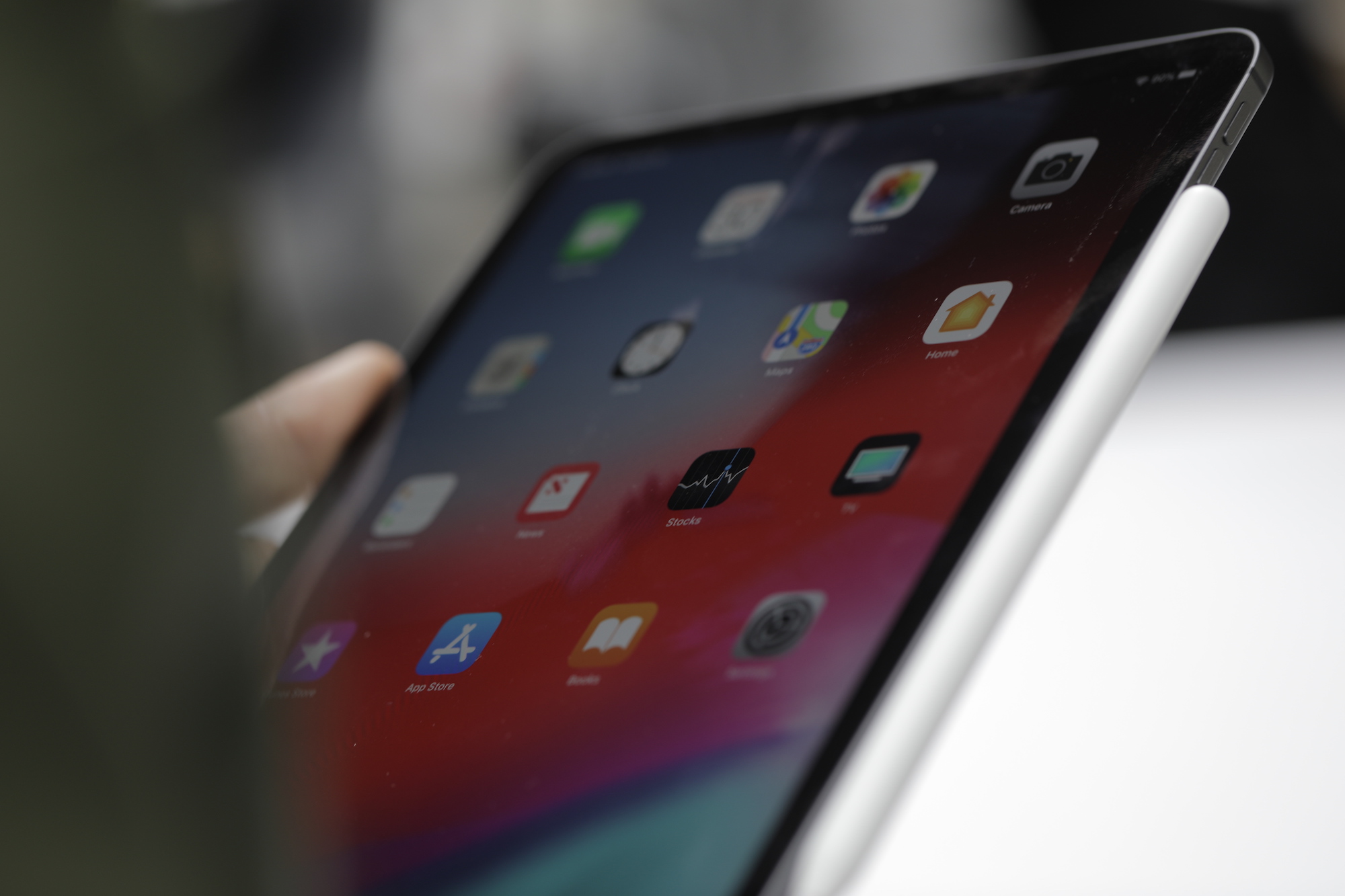
The new Pro marks what is arguably the single largest design change to the iPad line in its eight and a half year existence. In fact, the new slate is almost unrecognizable as an iPad from the front, on.

That’s probably a good thing, of course. The tablet-defining line was long overdue do for a rethink. After nearly a decade in existence, it’s time to shake off the cobwebs. And naturally, most of the design upgrades on the new product will ultimately filter down to the rest of the line.

As a starting point, however, Apple took a good, long look at the iPhone for a few insights into to how remove some of that unsightly bezel. Not altogether, of course — after all, the user needs somewhere to put their hands.

Anyone who’s ever held the iPhone X in their hands can tell you that your fingers and the edges of your hands still have the tendency to accidentally come into contact with the screen, which is a perfectly fine way to mess yourself up, mid-game. As such, there’s still the remnants of black bezel around the edges here.

The loss of the home button feels like a big deal, from a legacy standpoint, at least. The iPad marks the last stand for the familiar design flourish. As someone who’s been carrying around an iPhone XS for some weeks, however, I can attest to the fact that you won’t ultimately miss it.

The key is getting used to the new interactions in iOS, swiping down from the bottom to close an app, for example. The iPad, however, marks the intersection between the iPhone and Mac experience, so there are a lot more options here for interaction, including, notably, the menu bar borrow from MacOS. The much larger screen real estate, meanwhile (11 and 12.9 inches), means gestures don’t have to do nearly as much heavy lifting as with the iPhone.

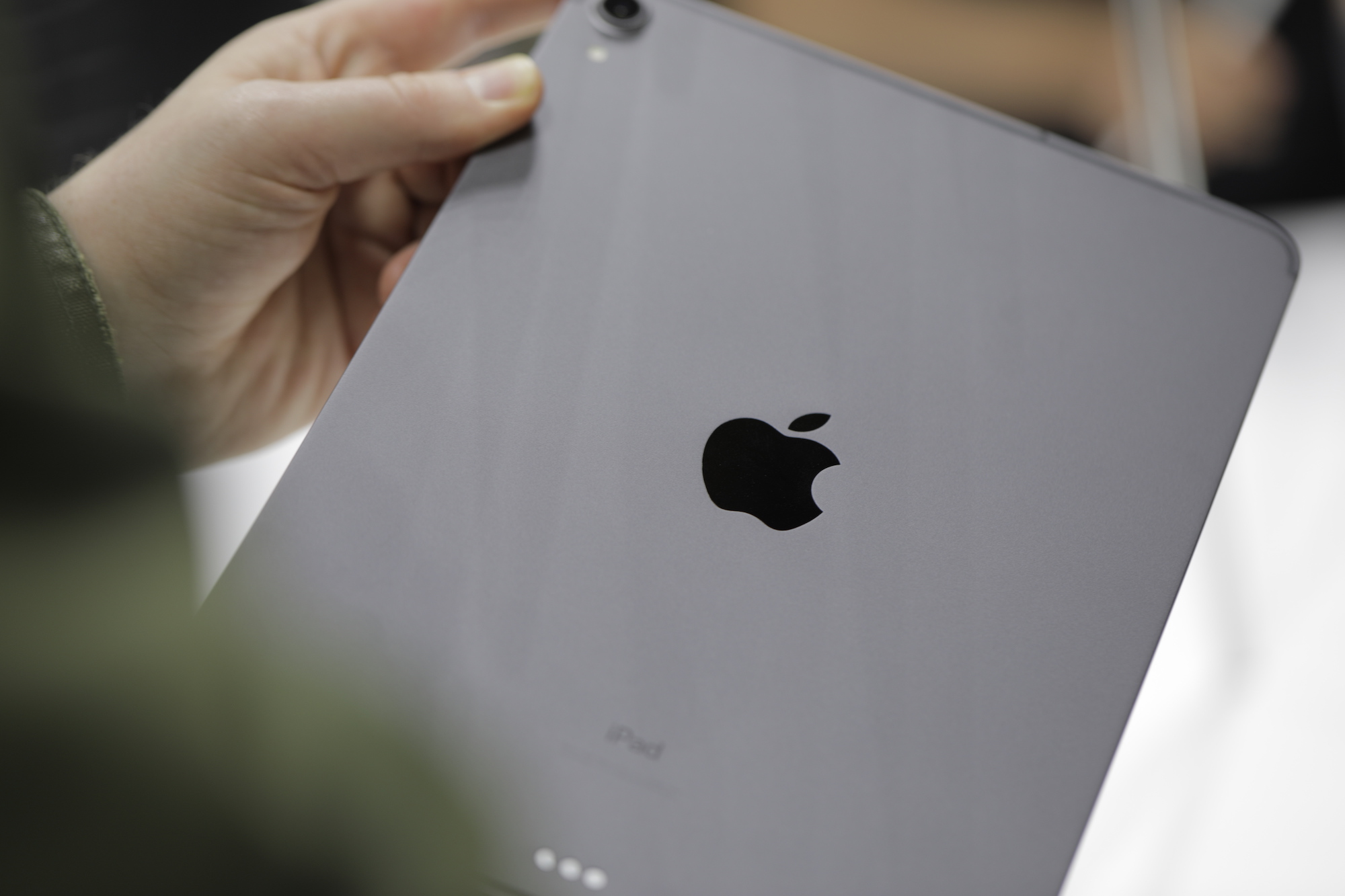
The device is certainly thing, as advertised, leaving the edges — while rounded — feeling a bit sharper than on their predecessor. The rear of the device, with its brushed, space gray aluminum, meanwhile, brings nothing to mind more than the latest MacBooks, marking an interesting sort of aesthetic consistency that we really haven’t seen at this level between iOS and MacOS devices.

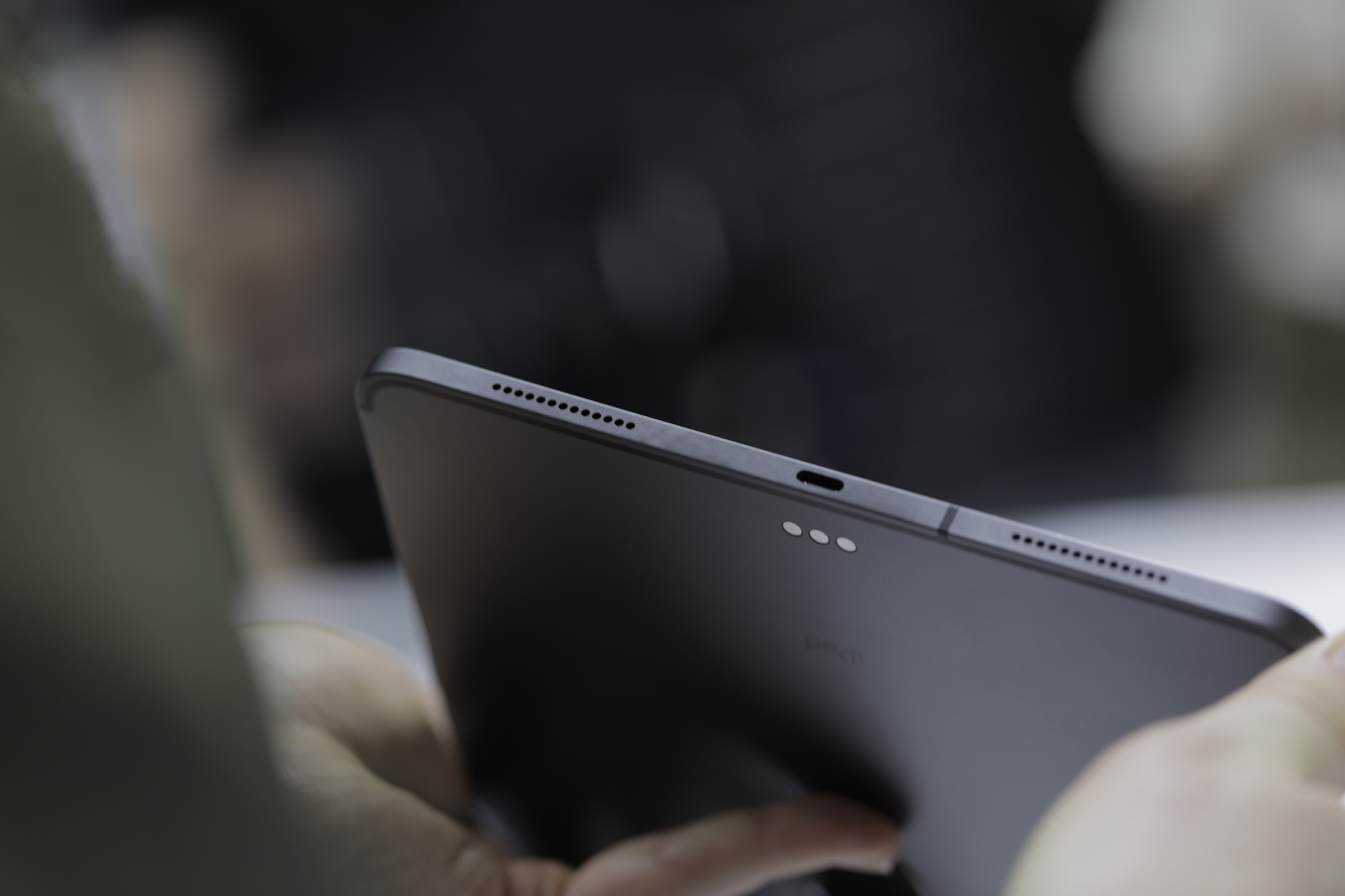
You’ll find the camera at the top of the device — the thinner design does mean it juts out a bit here, so as ever, you’ll probably want to nab a case to keep that bit safe. Along the bottom are a trio of magnetic connectors for the optional keyboard case, which will also help orient the device when it’s time to put it back.

Along the bottom edge, you’ll find the USB-C port. Far and away the most surprising change here, as Apple abandons its long standing proprietary connector in favor of something far more universe — and, as it happens, something that sends power both ways, making it possible to charge your phone and smaller devices with the iPad itself.

Something Apple didn’t mention during its keynote, however, is the sad, inevitable end of the headphone jack. RIP, little buddy.

On the top edge is a small gray patch. That’s where the new Apple Pencil connects magnetically on its single flat edge (which has the added bonus of making sure it doesn’t roll away when it’s on a table). Apple’s added a nice touch to iOS here, which pops up a charging status for the pencil when it’s connected to the top of the device.

Apple Fall Event 2018

30 Oct 2018

A fully loaded iPad Pro will cost you $2,227

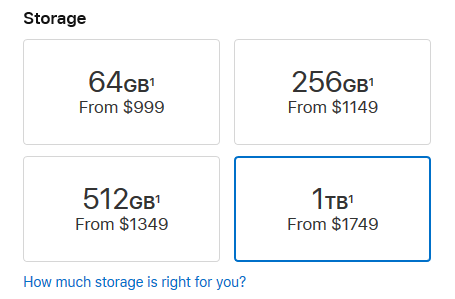
This is a public service announcement. The latest and greatest iPad, namely the 12.9-inch iPad Pro, will cost you $2,227 to buy in its best configuration and with the basic accessories that make it worth having in the first place. Plus tax, of course. I’m not making a value judgment here, just stating the facts. Tablets are getting pretty damn expensive.

To be clear, here’s what you’d be getting for that price.

  • iPad Pro base cost $999
  • Upgrade from 64GB to 1TB storage: $750 (!)
  • Cellular chip: $150
  • New Apple Pencil: $129
  • Smart Keyboard Folio: $199

Tax varies. Shipping’s free, at least.

To me the cost of the base device is actually not bad, though I wouldn’t buy it. It really does look like a fine device, if you can get over the curved screen edges and minuscule bezels that will probably make you drop it. I can really see how the 12.9-inch iPad Pro could be a great tool for some artists, assuming they’re already successful enough to afford it. Good stylus surfaces are expensive and the iPad has proven itself to be at the very least competitive.

The storage is, as always, the eye-wateringly expensive upgrade that doesn’t really jive with the cost of the actual components. Good flash storage isn’t super cheap, but it isn’t $750 a terabyte. A good M.2 drive of that capacity and speed is perhaps $150, and that’s including the interface and so on. Apple charging an arm and a leg for upgraded storage is nothing new, but they somehow manage to make it just as shocking every time.

The cellular is another upsell that probably isn’t worth it, considering it also incurs a monthly cost. If it was a low-speed Amazon-style free service, I’d do it in a heartbeat to keep my notes and saved articles up to date. But it’s going to run you $150 up front and probably almost that every year as an added device to your plan. (Could be a nice option to have if you travel a lot, though.)

The accessories are expensive but that new stylus and its snap-on charging (hardly an Apple innovation but nice to have) sure do look nice. You’ll need a keyboard if you’re going to do anything but sketch and read comics on this thing.

Tablet computer or computer tablet?

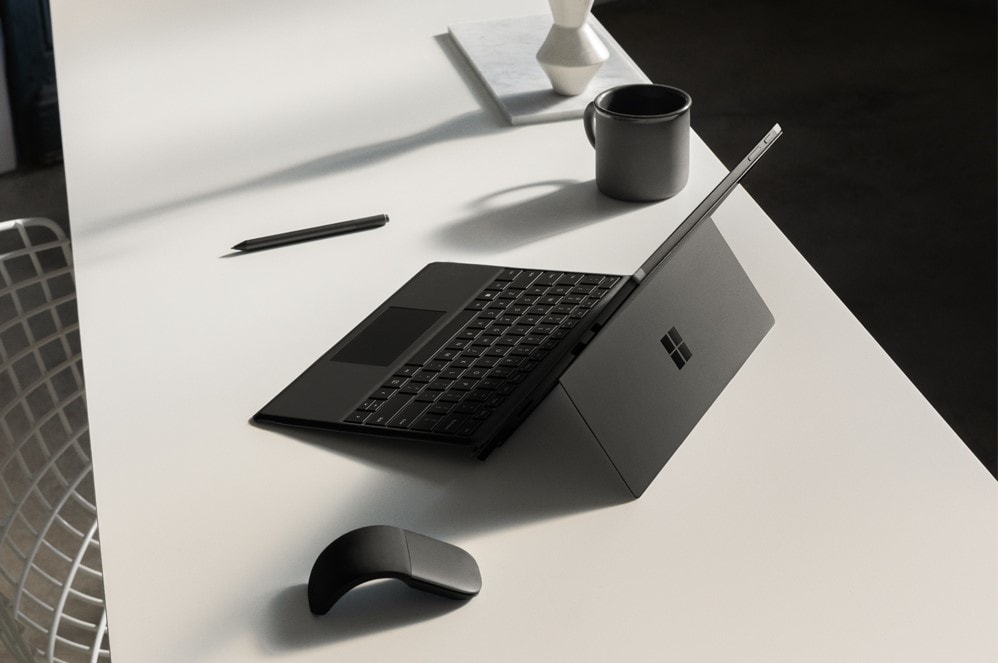
And adding the keyboard is really where you start to blur the line between tablet and “real” computer. Of course the Microsoft Surface, bless its heart and its tiny sales numbers (unflatteringly called out by Apple on stage), is the one that has made strides here over the last few years and Apple is merely drafting it. That’s fine — it’s been the other way around plenty of times.

But the difference when you start looking at the apps and features is pretty serious. The iPad Pro is certainly the most productive and professional tablet out there, but as soon as you add a keyboard and sit it down on your lap, it starts competing with laptops. And the Surface lineup, while it may lack some of the polish of the iPad, is arguably more powerful both in specs (hard to compare Intel’s chips to Apple’s directly in this case) and certainly in software capability.

I suppose that last point is arguable as well but let’s try to be honest with ourselves. A Windows computer can do more than an iPad.

Microsoft’s device, after all, is a full-blown computer that acts like a tablet when you want it to, not vice versa. That’s important. If I was going to spend $2,000 on a daily driver (though honestly, there’s no need to), I sure as hell wouldn’t pick the one with all kinds of weird, half-formed multitasking gestures, semi-functional cross-app compatibility, and app features and selection highly curated and restricted by the people who own the store. And this is coming from someone who likes Macs and iPads!

For the same price as the iPad Pro discussed above, you could get a Surface Pro 6 with 16 gigs of RAM (Apple doesn’t specify how much the iPad Pro has, and if it doesn’t crow about it, that usually means it’s nothing to crow about), a better processor (Intel Core i7, same generation), and… well, if you want that terabyte of storage you’re still going to pay through the nose. Maxing it out (including accessories) costs you a couple hundred more than the best iPad you can get, but I think you’d be getting much more value for your dollar.

Plus the Surface has a headphone jack.

That said, there’s no reason to go all-out on either of these things. That’s the real trap that both companies want you to fall into. Save money and buy last year’s model or the year before, save yourself a thousand bucks, and take a vacation instead. You deserve it.

Apple Fall Event 2018

30 Oct 2018

Cockroach Labs launches CockroachDB as managed service

Cockroach Lab’s open source SQL database, CockroachDB, has been making inroads since it launched last year, but as any open source technology matures, in order to move deeper into markets it has to move beyond technical early adopters to a more generalized audience. To help achieve that, the company announced a new CockroachDB managed service today.

The service has been designed to be cloud-agnostic, and for starters it’s going to be available on Amazon Web Services and Google Cloud Platform. Cockroach, which launched in 2015, has always positioned itself as modern cloud alternative to the likes of Oracle or even Amazon’s Aurora database.

As company co-founder and CEO Spencer Kimball told me in an interview in May, those companies involve too much vendor lock-in for his taste. His company launched as open alternative to all of that. “You can migrate a Cockroach cluster from one cloud to another with no down time,” Kimball told TechCrunch in May.

He believes having that kind of flexibility is a huge advantage over what other vendors are offering, and today’s announcement carries that a step further. Instead of doing all the heavy lifting of setting up and managing a database and the related infrastructure, Cockroach is now offering CockroachDB as a service to handle all of that for you.

Kimball certainly recognizes that by offering his company’s product in this format, it will help grow his market. “We’ve been seeing significant migration activity away from Oracle, AWS Aurora, and Cassandra, and we’re now able to get our customers to market faster with Managed CockroachDB,” Kimball said in a statement.

The database itself offers the advantage of being ultra-resilient, meaning it stays up and running under most circumstances and that’s a huge value proposition for any database product. It achieves up time through replication, so if one version of itself goes down, the next can take over.

As an open source tool, it has been making money up until now by offering an enterprise version, which includes backup, support and other premium pieces. With today’s announcement, the company can get a more direct revenue stream from customers subscribing to the database service.

A year ago, the company announced version 1.0 of CockroachDB and $27 million in Series B financing, which was led by Redpoint with participation from Benchmark, GV, Index Ventures and FirstMark. They’ve obviously been putting that money to good use developing this new managed service.