Year: 2018

30 Oct 2018

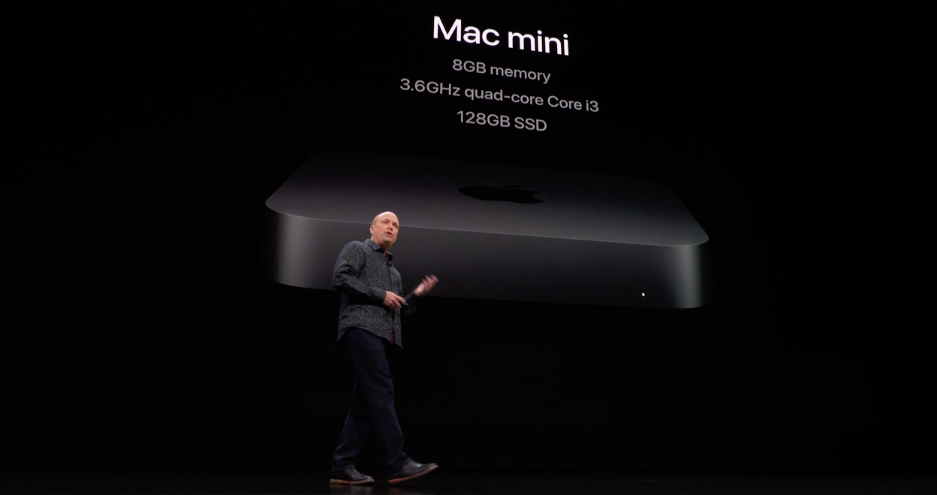
The new Mac Mini is up to five times faster and starts at $799

Now that the Air’s got shiny new update, it’s time for the other major neglected entry in the Mac line. As Tim Cook noted on stage, the company’s got another “small” addition to the line. The pint sized desktop is getting it’s “biggest updated, ever, according to the company.

The footprint is the same familiar squircle design that’s defined the line since the begin, but now with the space gray finish found on the rest of the line.

The biggest changes, however, are on the inside. The new device features the latest generation six core processor, up to 64GB of RAM and up to 2TB of solid state storage. On the back of the device, you’ll find four Thunderbolt 3, an HDMI and USB-A ports. Like the new Air, the updated Mini is made from 100 percent recycled aluminum.

As is fitting with the theme of the event, the company is positioning the product toward creative pros. Apple’s clearly hoping to blur the lines between consumer and professional, by souping up its lower end devices. That said, the Mini is still priced like an entry level device. The low-end version features 8GB of RAM and starts at $799. Pre-orders for the diminutive desktop starts today, and it starts shipping on November 7.

Apple Fall Event 2018

30 Oct 2018

Long-awaited brand-new MacBook Air finally gets retina display and Touch ID

MacBook Air fans aren’t hard to find. Although I admit to being a bit skeptical at its introduction, the laptop grew from an underpowered runt to an underappreciated workhorse over the years. But the design has hardly changed in the decade (!) since it came out — at least until today’s Apple event, when the company took the wraps off a totally redesigned Air with a retina display and Touch ID — and a new $1,199 price.

“When Steve pulled that MacBook Air out of that envelope, it was clear things would never be the same,” recalled CEO Tim Cook in his introduction. “MacBook Air truly embraced the notion that less indeed could be more. And it redefined the modern notebook in the process. MacBook Air has become the most beloved notebook ever. it’s time for a new MacBook Air, one that takes the MacBook Air experience even further in the areas that are most important to our customers.” (Yes, he said the product name five times in a row like that.)

The new Air is clearly meant for budget buyers who have been put off by the 12″ MacBook, which although popular, isn’t without its flaws, and it ain’t cheap, either. For anyone looking to spend less than a grand on a new Mac notebook, the Air is their best (and practically only) bet.

Although the old Air was updated as late as last year with new specs, the display has always been an obvious deficiency. 1440×900 was nothing to crow about even in 2008, let alone nearly a decade later. That’s been fixed with a new high-resolution 13.30-inch screen: inches and 2560×1600. (And “48 percent more color,” whatever that means.)

Of course the guts to support that display, and the tasks you’ll be doing on it, needed a serious bump too. So the new Air has an 8th-generation Intel processor, presumably with integrated graphics. It’s probably enough to play Fortnite, which is all that matters.

As for the design, it really is hard to improve on the original; its knifelike profile was nothing short of astonishing at its debut, and it’s stayed more or less the same since, with a solid keyboard and (regrettably) a rather prominent bezel. The bezel is gone, at least, replaced with a thinner black one. There goes the signature Air look, but you won’t see anyone crying about that.
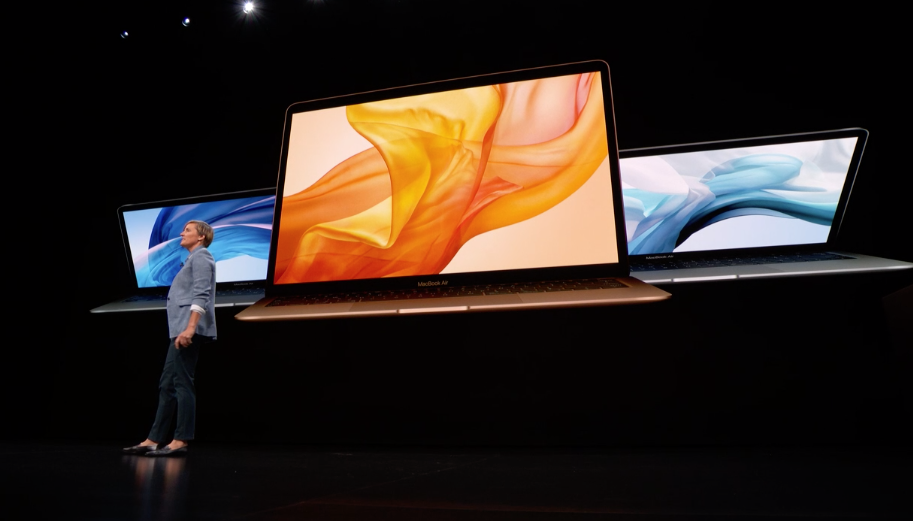
At least it’s still aluminum, and all recycled aluminum now too, Apple explained with pride. Helps make it more sustainable.

The trackpad is the new force touch version, meaning no actual movement when you click, which is a mixed blessing. It’s quite a bit larger, at least, while the laptop itself is a bit smaller and lighter.

The addition of Touch ID and the secure enclave that runs it is welcome, of course, and it’s doubtful many will miss the Touch Bar, which so far hasn’t demonstrated any serious utility outside a few specialty apps and workflows. You have the F-keys instead, which is a good choice.

Unfortunately, Apple has also decided to change the keyboard. While the old Air used a tried and true scissor switch, and my 2012 model still types like a dream, the new model uses the much-criticized “butterfly switch” mechanism. This keyboard has proven to be one of Apple’s worst engineering mistakes in years, with many complaining of noise, key failures, and discomfort. Air lovers may find this extremely disappointing.

The MBA’s variety of ports, including USB-A and an SD card reader, are of course gone, replaced by Thunderbolt 3. It’s still a little sad to lose those legacy ports, which are still incredibly useful.

I’ll be holding onto my late-model MacBook Air, myself, but I understand the draw of this new one. It starts at $1,199 — apparently they couldn’t quite hit that $999 sweet spot — and should be available next week.

more iPhone Event 2018 coverage

30 Oct 2018

There are now 100 million Macs in use

During its press event in Brooklyn, Apple CEO Tim Cook shared some numbers on the Mac in particular. The active install base of all Macs is currently 100 million.

“People love the Mac and they use it to create all kinds of amazing things every day,” Cook said.

Obviously this number is much smaller than the iPhone install base, but it’s also a smaller market overall. More important than the number of active Macs, Apple is still converting a lot of new users to the Mac.

51 percent of Mac customers are new users overall. And in China in particular, 76 percent of buyers are buying a Mac for the first time.

Cook didn’t say how many Mac people are buying a Windows computer because Apple has been really slow when it comes to Mac updates. Maybe it’ll change today.

“Of course, one of the drivers for Mac’s high customer satisfaction is macOS,” Cook said before recapping some of the new features in macOS Mojave. PC makers have stepped up their game. It’s clear that macOS remains the best thing in the Mac.

Apple Fall Event 2018

30 Oct 2018

Ian Small, former head of TokBox, takes over as Evernote CEO from Chris O’Neill

Former TokBox head Ian Small is replacing Chris O’Neill as CEO of Evernote, the note-taking and productivity app company said this morning. In a blog post, Small said that the leadership change was announced to employees this morning by Evernote’s board. “We are all hugely appreciative of the energy and dedication Chris has shown over the last three years, and in particular for putting Evernote on solid financial footing so we can continue to build for the future,” he wrote.

Small added, “When Stepan Pachikov founded Evernote, he had a vision for how technology could augment memory and how an app could change the way we relate to information at home and at work. Evernote has been more successful at making progress towards Stepan’s dreams than he could have imagined, but Stepan and I both think that there is more to explore and more to invent.”

O”Neill had been Evernote’s CEO since 2015, when he took over the position from co-founder Phil Libin. Small previously served as CEO of TokBox, which operates the OpenTok video calling platform, from 2009 to 2014, and then as its chairman from 2014 to July of this year.

O’Neill’s departure as CEO is the latest significant leadership shift for Evernote, which has withstood several key executive departures over the last few months. In early September, we reported that the company had lost several senior executives, including CTO Anirban Kundu, CFO Vincent Toolan, CPO Erik Wrobel, and head of HR Michelle Wagner, as it sought funding in a potential down-round from the unicorn valuation it hit in 2012. According to TechCrunch’s sources, Evernote had struggled to grow its base of paid users and active users, as well as enterprise clients, for the last six years.

Then a few weeks later, Evernote announced that had to lay off 54 people, or about 15 percent of its workforce. O’Neill wrote a blog post about the company’s future growth strategy, including streamlining specific functions like sales so it could focus on product development and engineering.

30 Oct 2018

Lime hires its first chief business officer amid push into car-sharing

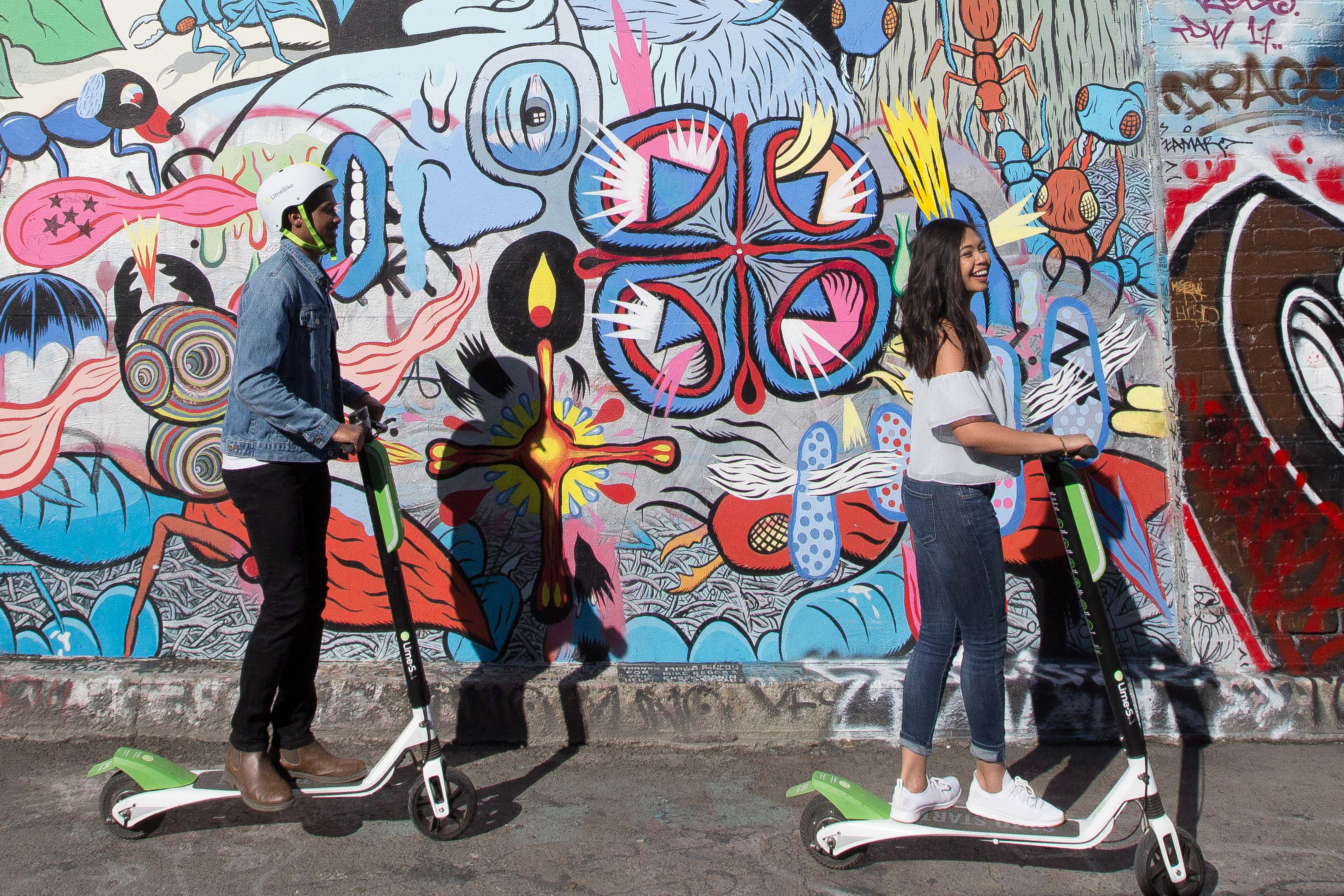
After four months “on the beach,” per his LinkedIn profile, Uber’s former global head of business and corporate development has a new gig. Lime has hired David Richter (pictured) as its first-ever chief business officer and interim chief financial officer.

Based in San Francisco, Richter will be overseeing the bike- and e-scooter-sharing startup’s business operations. Richter spent more than four years at Uber leading the ride-hailing giant’s global business development, corporate development, experiential marketing, autonomous vehicle alliances and brand relevance teams. He left in May after expressing frustrations with a series of departures in his group, according to The Information.

“As Lime continues to grow, David will bring in unparalleled expertise, particularly in the realm of business development and corporate partnerships, as well as in managing our overall business strategy and deal flow,” Lime co-founder and chief executive officer Toby Sun said in a statement. “His leadership experience, coupled with his keen understanding of the fast-moving shared mobility industry will be a huge advantage to our company as we continue to expand our global footprint.”

Lime is said to be completing the fundraising circuit right now, asking investors for a valuation north of $3 billion. The company, which entered the unicorn club in June, has raised a total of $467 million to date from GV, Andreessen Horowitz, IVP, Section 32, GGV Capital and more.

The company is using the buckets of capital to expand beyond bikes and scooters. Last Monday, rumors emerged that it was planning a brick-and-mortar push. The company confirmed that it would indeed build scooter “lifestyle stores” in major U.S. and international markets, starting with Santa Monica, Calif.

The next day on stage at the JD Power Automotive Roundtable, Lime announced its official foray into car-sharing. The company has since applied for a car-sharing permit in Seattle and plans to rent out small electric vehicles, which it’s calling “transit pods,” by the end of the year.

According to Axios, Lime plans to spend $50 million on the pods, which will cost $1 for consumers to start, plus an additional 40 cents per minute.

“You can expect electric vehicles to be an additional micro-mobility option for Lime riders to choose from within the Lime app soon,” a spokesperson for Lime said in a statement provided to TechCrunch. “More details on timing, specs of the vehicle, locations for the first rollout, etc. will be announced in the coming weeks.”

Lime launched in 2017 and has since recorded 11.5 million scooter and bike rides.

30 Oct 2018

Social commerce startup Goxip lands $1.4M investment to add flexible payments

Social e-commerce startup Goxip raised $5 million in January, and now the Hong Kong-based business has brought in more cash with a strategic $1.4 million investment from financial services company Convoy. Existing backers including Chinese photo app company Meitu also took part.

Convoy offers a range of services that include asset management, insurance and other investment options. Hong Kong’s largest financial advisory with over 100,000 customers, Convoy isn’t in great shape now. It has been in crisis over legal action and a corruption investigation that is centered around a former company director.

The company’s shares remain suspended on the Hong Kong Stock Exchange although it recently made appointments aimed at modernizing its business and this deal is likely another part of that strategy. Convoy’s portfolio of strategic investments includes Nutmeg in the UK and Ireland’s Currencyfair, which bought up Convoy’s payments arm.

Goxip said it will use the capital and the new relationship with Convoy to offer more installment-based financing options on its service, which is akin to a ‘shoppable Instagram’ that has a focus on high-end fashion.

The company already counts major retailers like Net-a-Porter, Harrods, and ASOS and brands that include like Nike, Alexander McQueen and Topshop. To date, Goxip has helped customers find outfits and buy them but now, with Convoy, it wants to offer payment plans using a virtual credit card, Goxip co-founder and CEO Juliette Gimenez told TechCrunch.

With 600,000 monthly users and average orders of $300, Goxip is getting close to breaking even, Gimenez said, but she is hopeful that offering staggered payment options over varying periods such as 6-12 months will serve Goxip well as it expands in Southeast Asia where typical consumers spend less. That’ll happen soon after the company opened an office in Bangkok ahead of an imminent launch in Thailand, its second expansion after Malaysia.

Goxip has just opened an office in Bangkok ahead of an upcoming launch in Thailand

Beyond geographical additions, Goxip has also branched out into influencer marking this year with its soon-to-launch RewardSnap service. Similar to Rewardstyle in the U.S, it will enable internet influencers — and particularly those on Instagram — to partner with brands and make money through referrals to their audience. Gimenez said that 150 influencers have signed up, including Elly Lam who has 14 million followers across all platforms.

Instagram is beefing up its commerce focus — with the addition of a shopping tab and new management at the wheel — but Gimenez said she isn’t phased. She points to the fact that Facebook, which owns Instagram, hasn’t been able to make e-commerce work in Asia, while the simplicity of Rewardsnap and its connection to the Goxip service, makes it highly defensible even as Instagram ups its shopping game.

29 Oct 2018

Google AI listens to 15 years of sea-bottom recordings for hidden whale songs

Google and a group of game cetologists have undertaken an AI-based investigation of years of undersea recordings, hoping to create a machine learning model that can spot humpback whale calls. It’s part of the company’s new “AI for social good” program that’s rather obviously positioned to counter the narrative that AI is mostly used for facial recognition and ad targeting.

Whales travel quite a bit as they search for better feeding grounds, warmer waters and social gatherings. But naturally these movements can be rather difficult to track. Fortunately, whales call to each other and sing in individually identifiable ways, and these songs can travel great distances underwater.

So with a worldwide network of listening devices planted on the ocean floor, you can track whale movements — if you want to listen to years of background noise and pick out the calls manually, that is. And that’s how we’ve done it for quite a while, though computers have helped lighten the load. Google’s team, in partnership with NOAA, decided this was a good match for the talents of machine learning systems.

These AI (we employ the term loosely here) models are great at skimming through tons of noisy data for particular patterns, which is why they’re applied to voluminous data like that from radio telescopes and CCTV cameras.

In this case the data was years of recordings from a dozen hydrophones stationed all over the Pacific. This data set has already largely been investigated, but Google’s researchers wanted to see if an AI agent could do the painstaking and time-consuming work of doing a first pass on it and marking periods of interesting sound with a species name — in this case humpbacks, but it could just as easily be a different whale or something else altogether.

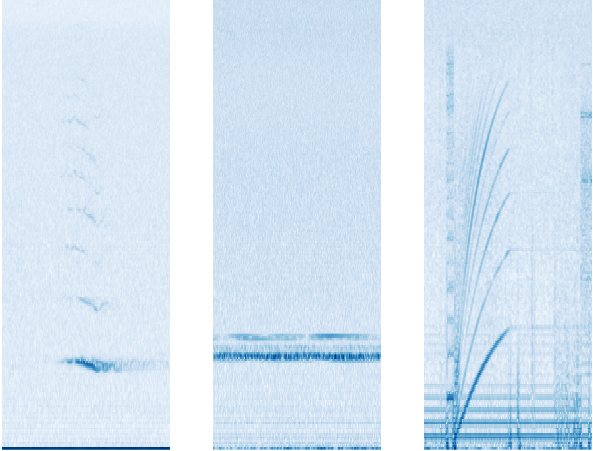
Spectrograms of whale song, left, an unknown “narrow-band” noise, center, and the recorder’s own hard disk drive, right.

Interestingly, but not surprisingly in retrospect, the audio wasn’t analyzed as such — instead, the audio was turned into images it could look for patterns in. These spectrograms are a record of the strength of sound in a range of frequencies over time, and can be used for all kinds of interesting things. It so happens that they’re also well studied by machine learning and computer vision researchers, who have developed various means of analyzing them efficiently.

The machine learning model was provided with examples of humpback whale calls and learned how to identify them with reasonable accuracy in a set of sample data. Various experiments were conducted to suss out what settings were optimal — for instance, what length of clip was easy to process and not overlong, or what frequencies could be safely ignored.

The final effort divided the years of data into 75-second clips, and the model was able to determine, with 90 percent accuracy, whether a clip contained a “humpback unit,” or relevant whale sound. That’s not a small amount of error, of course, but if you trust the machine a bit you stand to save quite a bit of time — or your lab assistant’s time, anyway.

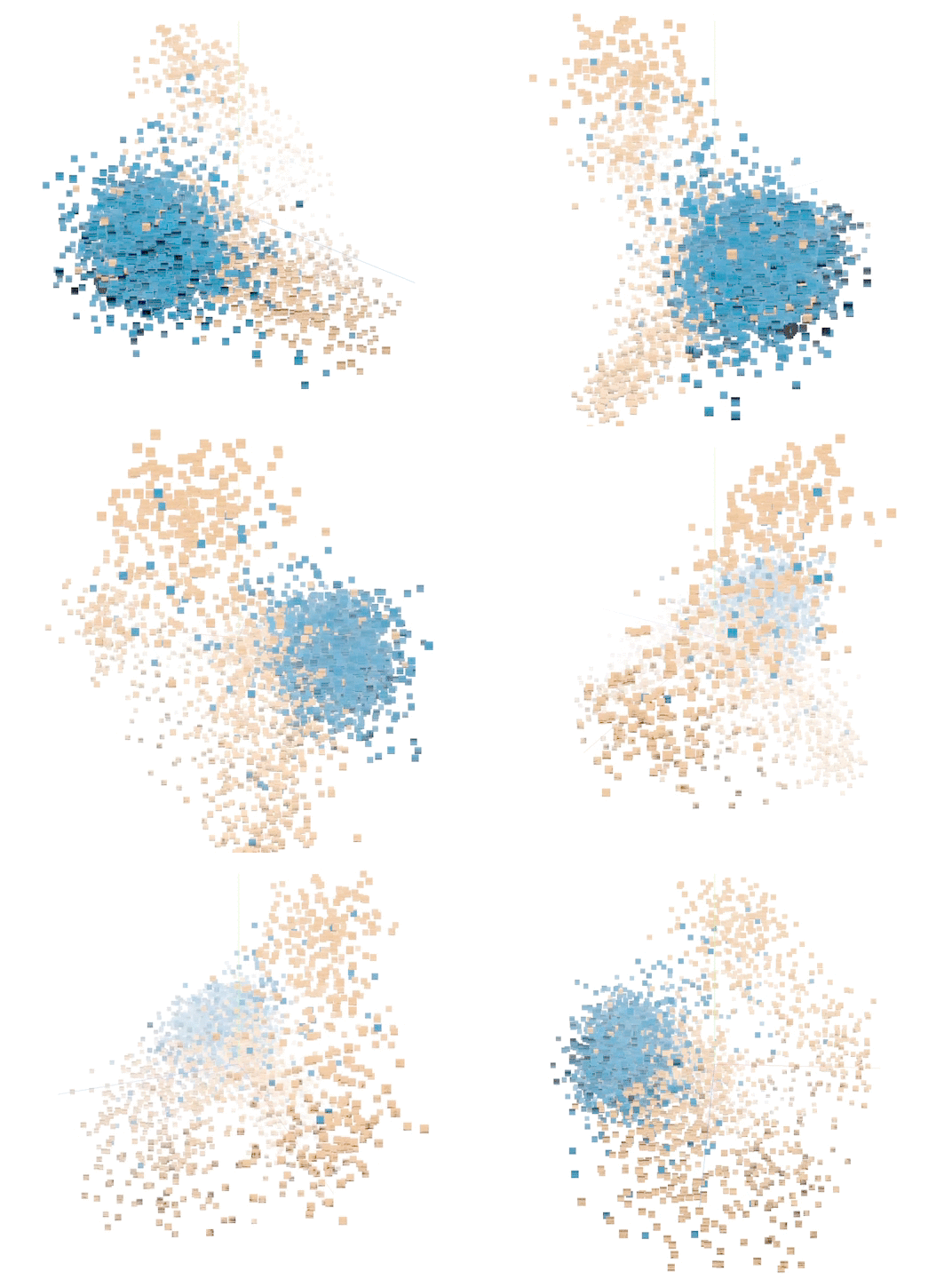
A second effort relied on what’s called unsupervised learning, where the system sort of set its own rules about what constituted similarity between whale sounds and non-whale sounds, creating a plot that researchers could sort through and find relevant groups.

Visualization of how the unsupervised model classified various sounds. The blue ones represent humpback calls.

It makes for more interesting visualizations but it is rather harder to explain, and at any rate doesn’t seem to have resulted in as useful a set of classifications as the more traditional method.

As with similar applications of machine learning in various scholarly fields, this isn’t going to replace careful observation and documentation but rather augment them. Taking some of the grunt work out of science lets researchers focus on their specialties rather than get bogged down in repetitive stats and hours-long data analysis sessions.

29 Oct 2018

iHeartRadio is coming to Mexico

iHeartMedia announced today that its streaming radio app iHeartRadio is coming to Mexico. In fact, a beta version of the app is already live, with plans for an official launch on November 3.

As part of this launch, the company is partnering with Mexican broadcaster Grupo ACIR, which owns the Amor, Mix and La Comadre radio brands. iHeartRadio México will include all 56 Grupo ACIR and 850 iHeartMedia broadcast radio stations.

The app will also offer digital-only stations from both companies, as well as English- and Spanish-language podcasts. (iHeartMedia is getting more serious about podcasts, as indicated by its recent acquisition of the parent company behind HowStuffWorks.)

The launch is timed to coincide with iHeartRadio Fiesta Latina in Miami, and the broadcasters are promoting the partnership with a contest for one Grupo ACIR listener to win a VIP trip to the event.

“This partnership will allow us to better connect with our audience by delivering an incredible free music listening experience and providing amazing technology to our users and partners,” said Grupo ACIR CEO Antonio Ibarra in the announcement.

At launch, the app won’t include some of iHeartRadio’s other features, like on-demand music streaming. Chief Product Officer Chris Williams said this follows the roadmap that the company used when launching in markets like Australia, Canada and New Zealand — it starts out with live radio and podcasts, because negotiating for international streaming rights takes time.

“It’s faster for me to develop and release the app, get it out there and get adoption, establish what we are and who we are,” Williams said. “Then we can get the rights and add the functionality.”

29 Oct 2018

Another Kleiner investor has just raised her own fund

She may not have the name recognition of former colleague Beth Seidenberg, but Lynn Chou O’Keefe, who has spent the last five-plus years investing in healthcare on behalf of the venture firm Kleiner Perkins, is raising her own debut fund.

According to a newly processed SEC filing, the firm is called Define Ventures, and it has already locked down $50 million in capital commitments from a handful of investors. (The filing says it is targeting $65 million.)

Chou O’Keefe had joined Kleiner Perkins in 2013 as a partner in its small life sciences group, to focus on digital health and connected devices.

Before becoming a VC, she spent six years with Abbott Vascular, a division of the health care giant Abbott, first as a global product manager and later as a global marketing director. She also logged a couple of years with Guidant (which is part of Boston Scientific and Abbott Labs) and before that, worked in venture with Apax Partners.

Chou O’Keefe’s fund comes on the heels of that of Seidenberg, who joined Kleiner Perkins back in 2005 and left earlier this year in order to cofound her own, L.A.-based venture firm, Westlake Village BioPartners. Seidenberg’s firm has since closed its debut fund with $320 million in capital commitments.

Define Ventures looks a part of a continuing trend of Kleiner investors creating their own firms, in fact. Earlier investing partners Aileen Lee and Trae Vassallo have gone on to create Cowboy Ventures and Defy Ventures, respectively.

Other former Kleiner Perkins investors to helm their own funds include Chi-Hua Chien, who today runs the consumer-tech focused venture firm Goodwater Capital; Brook Porter, David Mount, Benjamin Kortlang and Daniel Oros, who together worked on Kleiner’s Green Growth Fund and have since launched a firm called G2VP that’s focused on cloud computing, machine learning, computer vision and mobility; and star venture investor Mary Meeker, who announced last month that she, too,  is leaving Kleiner Perkins, along with her team (Mood Rowghani, Noah Knauf and Juliet De Baubigny) to create a new fund that will officially launch early next year.

Very notably, in a Bloomberg piece about Meeker’s departure, Chou O’Keefe was named as the Kleiner Perkins’s last remaining female investor. Following what we expect will be an attenuated transition out of the firm (these things always take time), that no longer looks to be the case.

We’ve reached out to Chou O’Keefe and hope to have more for you shortly.

29 Oct 2018

YC-backed Observant uses the iPhone’s infrared depth sensors to analyze user emotions

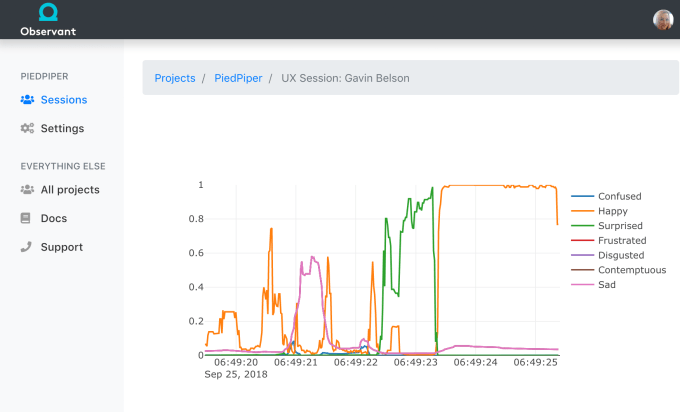
Observant has found a new way to use the fancy infrared depth sensors included on the iPhone X, XS and XR: analyzing people’s facial expression in order to understand how they’re responding to a product or a piece of content.

Observant was part of the winter batch of startups at accelerator Y Combinator, but was still in stealth mode on Demo Day. It was created by the same company behind bug-reporting product Buglife, and CEO Dave Schukin said his team created it because they wanted to find better ways to capture user reactions.

We’ve written about other startups that try to do something similar using webcams and eye tracking, but Schukin (who co-founded the company with CTO Daniel DeCovnick) argued that those approaches are less accurate than Observant’s — in particular, he argued that they don’t capture subtler “microexpressions,” and they don’t do as well in low-light settings.

In contrast, he said the infrared depth sensors can map your face in high levels of detail regardless of lighting, and Observant has also created deep learning technology to translate the facial data into emotions in real time.

Observant has created an SDK that can be installed in any iOS app, and it can provide either a full, real-time stream of emotional analysis, or individual snapshots of user responses tied to specific in-app events. The product is currently invite-only, but Schukin said it’s already live in some retail and e-commerce apps, and it’s also being used in focus group testing.

Observant

Of course, the idea of your iPhone capturing all your facial expressions might sound a little creepy, so he emphasized that as Observant brings on new customers, it’s working with them to ensure that when the data is collected, “users are crystal clear how it’s being used.” Plus, all the analysis actually happens on the users’ device, so no facial footage or biometric data gets uploaded.

Eventually, Schukin suggested that the technology could be applied more broadly, whether that’s by helping companies provide better recommendations, introduce more “emotional intelligence” to their chatbots or even detect sleepy driving.

As for whether Observant can achieve those goals when it’s only working on three phones, Schukin said, “When we started working on this almost a year go, the iPhone X was the only iPhone [with these depth sensors]. Our thinking at the time was, we know how Apple works, we know how this technology propagates over time, so we’re going to place a bet that eventually these depth sensors will be on every iPhone and every iPad, and they’ll be emulated and replicated on Android.”

So while it’s too early to say whether Observant’s bet will pay off, Schukin pointed to the fact that these sensors have expanded from one to three iPhone models as a sign that things are moving in the right direction.