Year: 2018

29 Oct 2018

The corpse of Kodak coughs up another odd partnership

Kodak isn’t feeling very well. The company, which sold off most of its legacy assets in the last decade, is licensing its name to partners who build products like digital cameras and, most comically, a cryptocurrency. In that deal, Wenn Digital bought the rights to the Kodak name for an estimated $1.5 million, a move that they hoped would immediately lend gravitas to the crypto offering.

Reader, it didn’t. After multiple stories regarding the future of the coin it still has not hit the ICO stage. Now Kodak is talking about another partnership, this time with a Tennessee-based video and film digitization company.

The new product is essentially a rebranding of LegacyBox, a photo digitization company that has gone through multiple iterations after a raft of bad press.

“The Kodak Digitizing Box is a brand licensed product from AMB Media, the creators of Legacy Box. So yes, we’ve licensed the brand to them for this offering,” said Kodak spokesperson Nicholas Rangel. Not much has changed between Kodak’s offering and LegacyBox. The LegacyBox site is almost identical to the Kodak site and very similar to another AMB media product, Southtree.

The product itself is a fairly standard photo digitization service, although Southtree does have a number of complaints, including a very troubling case of missing mementos. The entry-level product is a box into which you can stuff hundreds of photos and videos and have them digitized for a fee.

Ultimately it’s been interesting to see Kodak sell itself off in this way. Like Polaroid before it, the company is now a shell of its former self and this is encouraging parasitical partners to cash in on its brand. Given that Kodak is still a household name for many, it’s no wonder a smaller company like AMB wants hitch itself to that star.

29 Oct 2018

Europe’s most popular ride-hailing service is launching e-scooters

Mytaxi, the Daimler-owned Uber competitor, announced today it would launch an electric scooter pilot in Southern Europe later this year, with a full international roll-out planned for 2019.

Daimler initially took a 15 percent stake in Hamburg-based mytaxi in 2012, adding the company to its portfolio of ridesharing businesses that also includes Chauffeur PrivéCareem, Flinc, car2go and Hailo, which merged with mytaxi in 2016.

The company has yet to unveil its scooters’ brand name, but says it will use the Segway ES4 Sharing Scooter.

“The E-scooter market is highly dynamic and the interest from users is booming in a lot of international cities,” mytaxi chief executive officer Eckart Diepenhorst said in a statement. “We see a significant growth potential for mytaxi here and a perfect complement to our existing taxi business as E-scooters are mostly used for short tours of around one to two kilometers. Although ride lengths strongly vary between taxi and scooter business, we think about potential combinations of both areas.”

Mytaxi was founded in 2009 and says it has since transported 10 million passengers via 100,000 registered drivers. Before Daimler acquired the remaining stake in the startup in 2014, mytaxi had raised some $13 million from Deutsche Telekom Capital Partners, T-Venture, Deutsche Telekom Capital Partners, car2go and others.

Lime and Bird, a pair of well-funded e-scooter startups, have emerged as the front-runners of the already over-crowded e-scooter market. Still, it seems all ride-hailing and bike-sharing businesses are going to try their hand at scooters.

Taxify, another European Uber competitor, is one of the most recent companies to announce plans to release scooters in Europe.

29 Oct 2018

Civil servant who watched porn at work blamed for infecting a US government network with malware

A U.S. government network was infected with malware thanks to one employee’s “extensive history” of watching porn on his work computer, investigators have found.

The audit, carried out by the U.S. Department of the Interior’s inspector general, found that a U.S. Geological Survey (USGS) network at the EROS Center, a satellite imaging facility in South Dakota, was infected after an unnamed employee visited thousands of porn pages that contained malware, which downloaded to his laptop and “exploited the USGS’ network.” Investigators found that many of the porn images were “subsequently saved to an unauthorized USB device and personal Android cell phone,” which was connected to the employee’s government-issued computer.

Investigators found that his Android cell phone “was also infected with malware.”

The findings were made public in a report earlier this month but buried on the U.S. government’s oversight website and went largely unreported.

It’s bad enough in this day and age that a government watchdog has to remind civil servants to not watch porn at work — let alone on their work laptop. The inspector general didn’t say what the employee’s fate was, but ripped into the Department of the Interior’s policies for letting him get that far in the first place.

“We identified two vulnerabilities in the USGS’ IT security posture: web-site access and open USB ports,” the report said.

There is a (slightly) bright side. The EROS Center, which monitors and archives images of the planet’s land surface, doesn’t operate any classified networks, a spokesperson for Interior’s inspector general told TechCrunch in an email, ruling out any significant harm to national security. But the spokesperson wouldn’t say what kind of malware used — only that, “the malware helps enable data exfiltration and is also associated with ransomware attacks.”

Investigators recommended that USGS enforce a “strong blacklist policy” of known unauthorized websites and “regularly monitor employee web usage history.”

The report also said the agency should lock down its USB drive policy, restricting employees from using removable media on government devices, but it’s not known if the recommendations have yet gone into place. USGS did not return a request for comment.

29 Oct 2018

iOS 12.1 arrives tomorrow with Group FaceTime and camera improvements

Looks like Apple’s not saving all of its news for the big event in Brooklyn tomorrow. The company just revealed that the latest version of iOS is arriving tomorrow in time for the iPad reveal.

The biggest addition here is the long-awaited arrival of Group FaceTime, something the company’s been talking up since WWDC. The update to the video chat app lets up to 32 people participate at once.

The system now autodetects speakers, prioritizing them at the top of the list. Everyone drops down to the bottom, though, like other similar chat protocols, you can tap a user to bring them to the front. Group FaceTime is encrypted and can be launched directly from the Messages app.

As noted recently, the new version of the operating system will fix the selfie-softening issues found on the iPhone XS. Referred to as “beauty gate” due to similarities with makeup filters applied by companies like Samsung, Apple denied that this was an intentional feature.

Instead, the company blamed the issue on a bug that lead to shakier/blurrier photos. Along with that fix, 12.1 brings the ability to adjust the Portrait mode depth of field in real time to adjust background blur. The ability to add Dual SIM functionality to the iPhone XS and XR is here, as well. 

Oh, and there are, naturally, a bunch of new emojis here  — 70 in all — including the addition of red hair, gray hair, curly hair and bald heads. There also are a bunch of new animals, sports images and foodstuffs. 

29 Oct 2018

At long last, pet portraits with background blur are possible on the iPhone XR

The new iPhones have some great new photography features, but the XR lacks a couple, for instance portrait mode for non-people subjects, owing to its sadly having only the one camera. So last year! Fortunately third party camera app Halide is here to help you get that professional-looking bokeh in your doggo shots.

There’s more to this than simply the lack of a second camera. As you know, since you read my article, the future of photography is code — and the present too, really. What’s great about this is that features that might otherwise rely on specific hardware, a chip or sensor, can often be added in software. Not always, but sometimes.

In the case of the iPhone XR, the lack of a second camera means depth data is very limited, meaning the slack has to be taken up with code. The problem was that Apple’s machine learning systems on there are only trained to recognize and create high quality depth maps of people. Not dogs, cats, plants, or toy robots.

People would be frustrated if the artificial background blur inexplicably got way worse when it was pointed at something that wasn’t a person, so the effect just doesn’t trigger unless someone’s in the shot.

The Halide team, not bound by Apple’s qualms, added the capability back in by essentially taking the raw depth data produced by the XR’s “focus pixels,” and applying their own processing and blur effect to make sure it doesn’t do weird things. It works on anything that can realistically be separated from the background — pets, toy robots, etc — because it isn’t a system specific to human faces.

As they write in a blog post explaining some of this at length, the effect isn’t perfect and because of how depth data is sent from the camera to the OS, you can’t preview the function. But it’s better than nothing at all, and maybe people on Instagram will think you shelled out for the XS instead of the XR (though you probably made the right choice).

The update (1.11) is awaiting Apple approval and should be available soon. If you don’t already own Halide, it costs $6. Small price to pay for a velvety background blur in your chinchilla pics.

29 Oct 2018

Google employees will walk out on Thursday to protest company’s handling of sexual misconduct

Days after a New York Times investigation revealed Google gave Android creator Andy Rubin a $90 million exit package despite multiple relationships with other Google staffers and accusations of sexual misconduct, some 200 employees at the search giant are planning a walkout, per BuzzFeed News.

We’ve reached out to Google for comment.

The walkout, or “women’s walk,” as it’s been referred to in internal company forums, is planned for Thursday.

Following the NYT report, Google chief executive officer Sundar Pichai and its vice president of people operations Eileen Naughton co-signed a company memo admitting that 48 people had been terminated at the company for sexual harassment in the past two years, 13 of which held a senior management position or higher. None of them, according to the memo, received an exit package.

“Today’s story in the New York Times was difficult to read,” they wrote. “We are dead serious about making sure we provide a safe and inclusive workplace. We want to assure you that we review every single complaint about sexual harassment or inappropriate conduct, we investigate and we take action.”

Rubin left Google in 2014 after an internal investigation found accusations of sexual misconduct against him to be credible. The details of his exit, however, were never disclosed. It wasn’t until The Information published its own bombshell report on Rubin’s wrongdoings last fall that details of his history of sexual harassment began to emerge. In the wake of The Information’s story, Rubin took a leave of absence from Essential to “deal with personal matters.”

After leaving Google, Rubin went on to found Essential Products, a smartphone company that raised heaps of venture capital funding only to cancel development of its next phone, lay off 30 percent of its staff and reportedly put itself up for sale.

In a tweet last week, Rubin claimed NYT’s story contained “numerous inaccuracies.”

“Specifically, I never coerced a woman to have sex in a hotel room. These false allegations are part of a smear campaign to disparage me during a divorce and custody battle. Also, I am deeply troubled that anonymous Google executives are commenting about my personnel file and misrepresenting the facts,” he wrote.

29 Oct 2018

Department of Justice launches a new hate crime resource portal

Following an alarming week of domestic terrorism, the U.S. Department of Justice has consolidated resources and reporting tools for hate crimes into a single online hub.

According to a DOJ press release, the new portal is meant to “provide a centralized portal for the Department’s hate crimes resources for law enforcement, media, researchers, victims, advocacy groups, and other related organizations and individuals.” The new website can be found at https://www.justice.gov/hatecrimes.

Deputy Attorney General Rod Rosenstein announced the website on Monday at a D.C. law enforcement event focused on hate crime prevention. Rosenstein also announced $840,000 in grant money from the National Institute of Justice (NIJ) to study how hate crime data is collected.

The site collects resources including research reports, statistics, legal guides and training materials from the DOJ’s work investigating and prosecuting hate crimes. The site offers recent example federal hate crime cases, including instances of violence targeting individuals for their race, religion, national origin, gender identity, disability and sexual orientation. Another section of the site centralizes reporting tools for anyone looking to report a suspected hate crime to the federal government.

For anyone critical of the Trump administration’s role in sowing political rancor, the site will come as little solace. The portal does collect some useful resources, but if anything it’s yet another curious act of cognitive dissonance, this time from a DOJ intent on looking serious toward hate-motivated violence, even as it strips protections from vulnerable groups often targeted by violence — most notably transgender Americans, in recent days.

“In mourning the victims today, we also rededicate ourselves to our commitment to preventing hate crimes,” Rosenstein said of the announcement, acknowledging that many hate crimes continue to go unreported.

29 Oct 2018

Failed drone startup Airware auctions assets, Delair buys teammates

Airware desperately sought cash for 18 months before running out of money and shutting down last month, leaving about 120 employees without jobs after the startup had burned $118 million in funding. Bandaid strategic investments from construction company Caterpillar and others kept Airware alive as it looked for a $15 million round, according to a former employee.

A late pivot from hardware to drone software sales through Caterpillar’s dealers went sour, as Airware lacked the features found in competitors and suffered from slow engineering cycles. “So Caterpillar told them, ‘We’re not going to fund you any more. We’re pulling our money.’ So Airware didn’t make payroll,” the source says. The sudden shutdown of one of the most-funded drone startups sent a shock wave through the industry.

Luckily, at least part of Airware’s team is being rescued from the wreckage. French drone services company Delair is buying Airware’s Redbird analytics software and IP, plus the 26 employees who ran it. Airware had acquired Redbird and its 38-member team in 2016 to integrate its analytics that derived business metrics from 2D maps and 3D models of work sites based on imagery shot by drones.

Now the Redbird team will do that for Delair, bringing along its relationships with 30 drone dealers and 200 customers to try to make sense of aerial imagery from construction sites, mines, energy infrastructure and more. “We managed to keep that business alive with Delair,” says Redbird CEO Emmanuel de Maistre. “Customers wanted us to keep this going. They were very worried to not have a solution anymore.” He says that Airware still isn’t formally in bankruptcy or administration, and that as it’s been “actively reaching out to players in the market, to sell the assets . . . Interest from software companies and hardware companies was quite high.”

Founded in 2011, Delair now has 180 employees selling its UX11 mapping drone, data processing software and enterprise integration services to get businesses properly equipped with unmanned aerial vehicles. Delair had previously raised $28.5 million, and last month added a strategic Series B of undisclosed size from Intel — also an Airware investor. Delair co-founder Benjamin Benharrosh tells me that while his company started in hardware and bought Trimble’s UAV business Gatewing in 2016, “lots of the growth now is dedicated to the software,” so the Redbird buy makes sense.

Meanwhile, Airware’s hardware assets are going to auction on Wednesday. Heritage Global Partners will be selling dozens of DJI drones plus networking equipment and computers. Terms of the Delair deal weren’t disclosed, but the money from that sale and the auction could help Airware pay off any outstanding debts or commitments. However, Airware’s A-List investors, including Y Combinator, Google’s GV, Andreessen Horowitz, First Round, Shasta, Felicis, Kleiner Perkins and Intel, aren’t likely to recoup much of their capital. We’ve reached out to Airware, its founding CEO Jonathan Downey and its final CEO Yvonne Wassenaar for comment and will update if we hear back.

Founded in 2011, Airware tried to build a drone operating system before moving to sell drone hardware to commercial enterprises. But the rapid ascent of Chinese drone maker DJI pushed Airware to pivot out of hardware sales and toward drone data collection and analysis services. But a source says that since the startup entered this market late after the hardware boondoggle, “Airware’s technology was pretty far behind. They didn’t have a lot of the feature set a lot of others in the space did, like Propeller, 3DR and DroneDeploy.” Airware lacked seamless data uploads and quick processing times.

“What happened in the company wasn’t so much that the management team didn’t manage it correctly. The sales team just couldn’t sell a product that didn’t work as easily as it needed to compared to other products in the market,” our source says. They noted that Wassenaar, who’d replaced Downey as CEO in June 2017, had done a good job and been dedicated to fundraising to save the company since she joined. “Ultimately it was a matter of bad timing, and they didn’t have the engineering to overcome bad timing,” our source says. “The issue Airware had was a lack of funding. They ran out of runway,” confirms Redbird’s de Maistre.

Airware’s story should serve as a warning to startups raising at high-flying valuations. If a pivot doesn’t go smoothly or new competitors emerge, investors may disappear rather than back a down-round that might save the company but leave it in a downward spiral. Once a startup loses momentum, even having top investors and a ripe potential market can’t always stop it from disappearing into the sunset.

29 Oct 2018

Privacy group calls on US government to adopt universal AI guidelines to protect safety, security and civil liberties

After months of work, a set of guidelines designed to protect humanity from a range of threats posed by artificial intelligence have been proposed.

Now, a privacy group wants the U.S. government to adopt them too.

The set of 12 universal guidelines revealed at a meeting in Brussels last week are designed to “inform and improve the design and use of AI” by maximizing the benefits while reducing the risks. AI has been for years a blanket term for machine-based decision making, but as the technology gets better and is more widely adopted, the results of AI-based outcomes are having a greater effect on human lives — from gaining credit, employment, and even to criminal sentencing.

But often those decisions are made with proprietary and closed-off algorithms, making it near-impossible to know if the decisions are fair or justified.

These guidelines, according to the Electronic Privacy Information Center (EPIC), are designed to be baked in to AI to ensure the protection of human rights. That includes a right to know the factors, logic and the techniques used to the outcome of a decision; a fairness obligation that removes discriminatory decision making; and an obligation to secure systems against cybersecurity threats. The principles also include a prohibition on unitary scoring — to prevent governments from using AI to score their citizens and residents — a subtle jab at China’s controversial social credit system.

Now, EPIC wants to bring those principles stateside, where many of the next-generation AI technologies are under development.

In a letter to the National Science Foundation, EPIC called on the little-known government agency to adopt the universal guidelines, months after it opened its doors to proposals on a national AI policy.

“By investing in AI systems that strive to meet the [universal] principles, NSF can promote the development of systems that are accurate, transparent, and accountable from the outset,” wrote Marc Rotenberg, EPIC’s president and executive director. “Ethically developed, implemented, and maintained AI systems can and should cost more than systems that are not, and therefore merit investment and research.”

EPIC said that the 12 principles fit neatly within the seven strategies already set out by the U.S. so far — making the case for their adoption easier.

More than 200 experts and 50 organizations have signed on to the guidelines — including the Federal of American Scientists and the Government Accountability Project.

With the government’s request for information now closed, it’s likely to be many more weeks — if not months — before the government decides what its next steps will be — if any. It’s not so much up to the NSF to decide, but likely the White House’s Office of Science and Technology Policy.

A White House spokesperson did not respond to a request for comment.

You can read the full set of guidelines below:

  • Right to Transparency. All individuals have the right to know the basis of an AI decision that concerns them. This includes access to the factors, the logic, and techniques that produced the outcome.

  • Right to Human Determination. All individuals have the right to a final determination made by a person.

  • Identification Obligation. The institution responsible for an AI system must be made known to the public.

  • Fairness Obligation. Institutions must ensure that AI systems do not reflect unfair bias or make impermissible discriminatory decisions.

  • Assessment and Accountability Obligation. An AI system should be deployed only after an adequate evaluation of its purpose and objectives, its benefits, as well as its risks. Institutions must be responsible for decisions made by an AI system.

  • Accuracy, Reliability, and Validity Obligations. Institutions must ensure the accuracy, reliability, and validity of decisions.

  • Data Quality Obligation. Institutions must establish data provenance, and assure quality and relevance for the data input into algorithms.

  • Public Safety Obligation. Institutions must assess the public safety risks that arise from the deployment of AI systems that direct or control physical devices, and implement safety controls.

  • Cybersecurity Obligation. Institutions must secure AI systems against cybersecurity threats.

  • Prohibition on Secret Profiling. No institution shall establish or maintain a secret profiling system.

  • Prohibition on Unitary Scoring. No national government shall establish or maintain a general-purpose score on its citizens or residents.

  • Termination Obligation. An institution that has established an AI system has an affirmative obligation to terminate the system if human control of the system is no longer possible.

29 Oct 2018

A digital revolution is reshaping Democratic campaigns

Two weeks before the 2016 election, Bloomberg’s Joshua Green and Sasha Issenberg published a story about Trump’s brash, self-aggrandizing digital team. Democrats treated the story as evidence of the Trump campaign’s utter cluelessness, until he won.

For months after, coverage of the Trump’s tech and digital strategy dominated headlines. Those stories had consequences: Facebook locked down its user data; Cambridge Analytica folded; and a wave of startups, including my own, emerged to help progressives mobilize online.

A change is coming to the Democratic Party, and for some campaigns, it’s already here. I’ve seen it firsthand. As part of my job I’ve personally visited dozens of the most competitive and best-staffed races in the country, giving me a unique perspective on the state of the party. With a few notable exceptions, like Obama’s campaigns, Democratic campaigns have treated digital media exclusively as a way to acquire new emails for fundraising lists and to advertise in the same way they do on TV. Digital media has been detached from the practice of ‘organizing’ (i.e., direct voter contact). A handful of innovative House, Senate, and governor’s campaigns are changing this.

These campaigns treat digital not just as a place to spam eyeballs, but as a space for organizing. The rest of the party would benefit from following their lead. In your own life, is it more meaningful to get a fundraising email and see an ad on Facebook, or to have a real conversation with someone you know?

These campaigns have made that switch by taking responsibility for engaging voters and volunteers online away from an isolated “digital” department and putting it at the core of their Field team’s strategy.

The Field team on a campaign is responsible for recruiting volunteers to knock doors and call you during dinner. Field organizers are the underpaid, overworked foot soldiers of Democratic organizing. By giving them license to engage online, and the tools to do so effectively, successful Democratic campaigns are meeting their constituents where they are today: on their smartphones via text and social media.
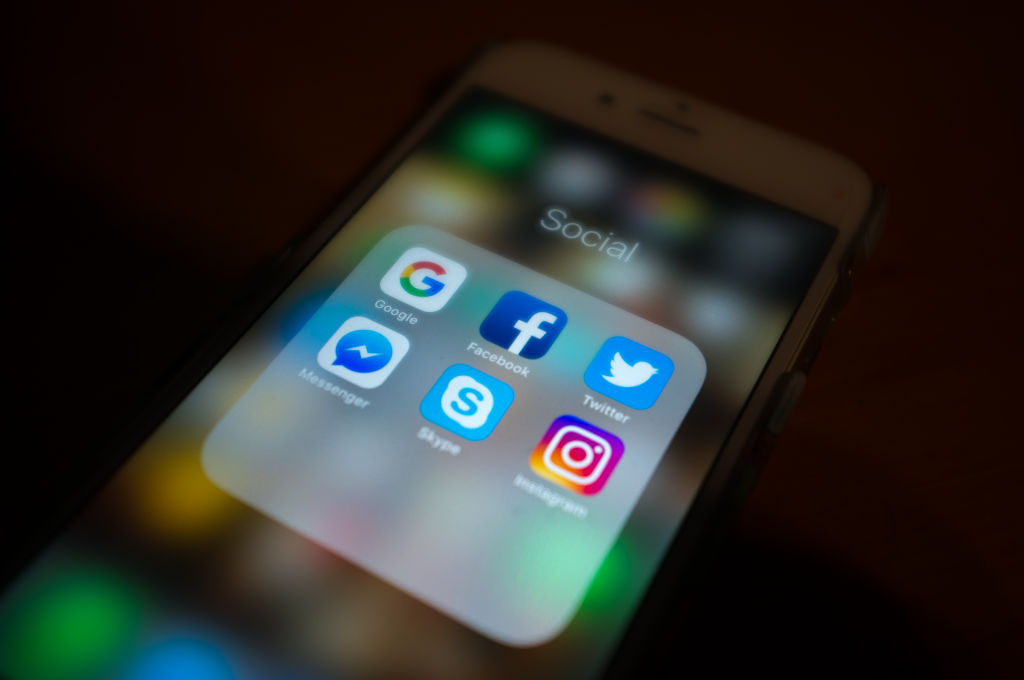
(Photo by Alberto Pezzali/NurPhoto via Getty Images)

One of the most remarkable examples of this model is the Casten for Congress operation, in Illinois’s 6th District. When I stopped by the office, I saw the campaign stream a Sean Casten speech through Facebook Live to his supporters. The campaign’s field team had brought together hundreds of supporters to mingle at thirty different “house parties” around the district, and everyone tuned into the live video. Their digital team worked hand-in-hand with field organizers to develop a livestream designed to motivate volunteers to sign up for more canvassing shifts.

It worked unambiguously. I watched supporters go from diffident to bold, excited to feel part of something bigger than themselves. This single event, a hybrid of the digital and physical, brought volunteers together from across the district, and motivated them to sign up for thousands of additional canvassing shifts.

Digital isn’t just a powerful way to supercharge traditional organizing by driving more canvassing or phone banking shifts. It also helps campaigns harness the power of relational organizing. ‘Relational organizing,’ or the practice of asking volunteers to speak specifically to voters they know, is the most effective type of voter contact we know of for reaching critical Democratic constituencies, like young people, communities of color, and working class people.

In California’s 49th District, the Field team supporting Mike Levin for Congress in CA-49 is running a fast-growing and successful relational organizing program through digital channels. They’re using a new tool designed to scale up relational contact, prompting their volunteers  to contact friends almost exclusively through Facebook Messenger and text messages. They’re being asked to recruit their friends to volunteer, and to verify their friends have a plan to vote.

Digital is also powerful for expanding volunteer communities and reducing attrition, when combined with a focus on “community organizing” strategies. These include sharing stories (“I’m here because I care about X, why are you here?”), explaining why certain tasks are important to the campaign (“Cold calls suck, but they’re important because…”), and deliberately introducing volunteers to one another based on mutual interests.
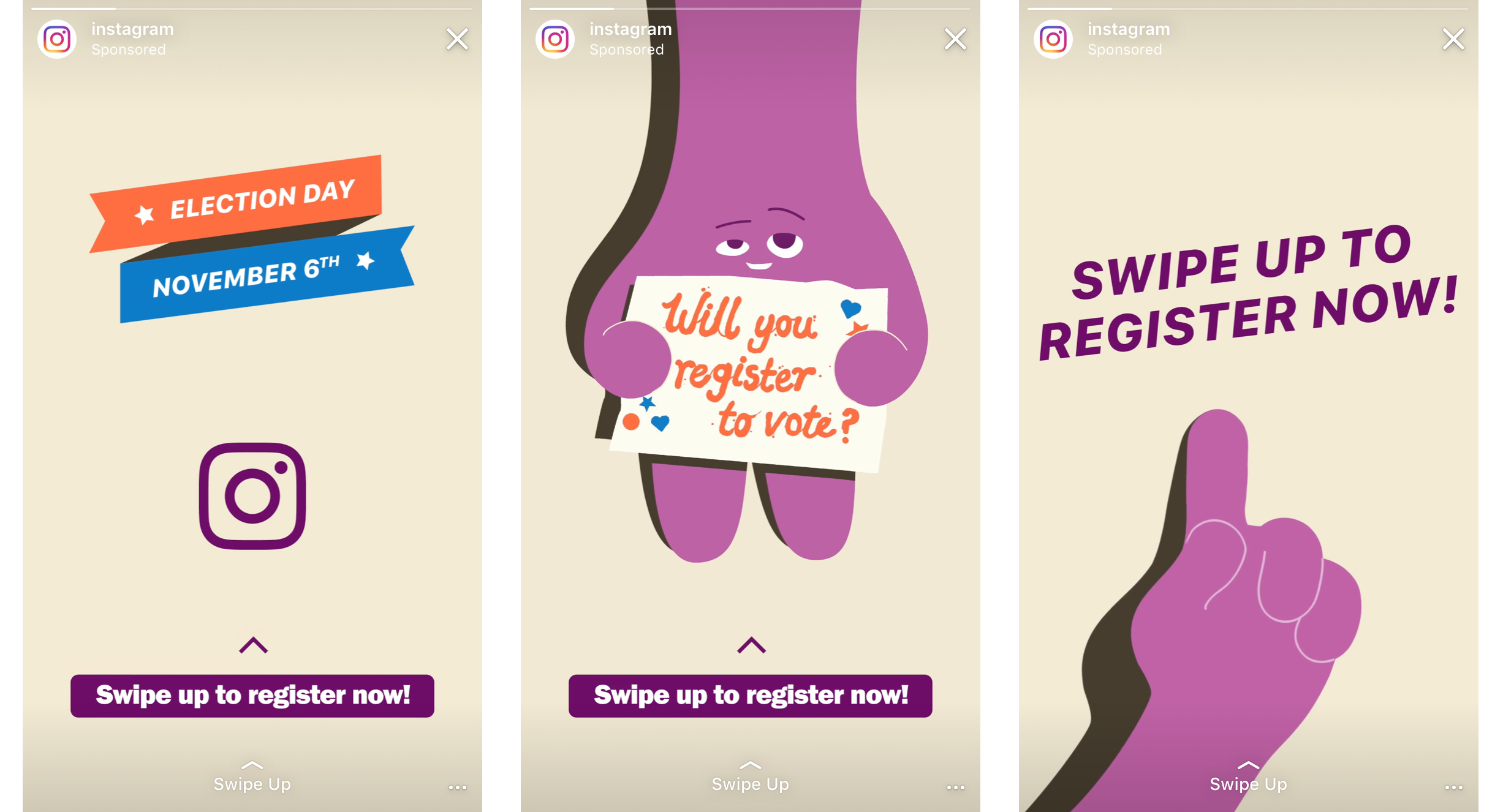
Several sophisticated statewide and House campaigns are running very effective Facebook Groups or Slack channels based on these principles. Each platform provides unique opportunities, as well as challenges for Field staff.

Slack is extremely useful for coordinating already-committed volunteers. Slack’s higher barrier to entry – volunteers must download Slack and get an invitation to join from an administrator – means fewer intergroup problems and less moderation. However, unlike with Facebook Groups, individual volunteers are not empowered to recruit their friends to the campaigns. Because Facebook Groups are a now-highly privileged piece of the Facebook Feed, activity inside of a campaign’s Facebook Group is effectively mainlined into volunteer brains. This stimulates growth of the group. For many new volunteers, being added to a Facebook Group by a motivated friend is their first step into a campaign’s Field operation.

Not all campaigns have shifted their thinking from “digital equals ads and fundraising spam” approach. But the campaigns that encourage their field organizers to adopt digital media as a way to harness political energy, engage volunteers, and contact voters are thriving. Their work this cycle will lay the foundation for the 2020 presidential primaries, for which these innovative staffers will be coveted.