
Year: 2018

29 Oct 2018

Google looks to AI interactions and cats to power its latest AR feature

Of all the features and hardware that dropped at Google’s event earlier this month, one that felt particularly glossed over was Playground, the new augmented reality mode that’s arrived on the Pixel 3 camera. For a company that has been investing in phone-based AR for quite a while, it launched rather quietly and in a fairly hidden spot amongst other photo modes in the Pixel 3 camera app.

I got to venture over to the company’s offices to take a closer look at the cute little stickers and 3D character “Playmojis” and hear how Google is aiming to ensure that the AR world has a deeper understanding of your environment than just its geometry.

Google has long flirted with letting users capture moments that bring virtual characters into their daily life. Since the days of Project Tango, Google has been working to create characters that can live in the virtual space at appropriate scale, responding to boundaries of the room and different lighting conditions. With this release, the company challenged themselves on interactivity, trying to get the 3D characters to not only react to what was happening with other Playground objects in the space, but with elements of the real world, as well, so when you smile, the virtual character posed behind you can toss up a grin as well.

“We thought, let’s think deeper into it and start making these stickers smarter and see if we can actually use AR and machine learning to help users be more creative,” Joe Bose, a product manager at Google working on AR, told TechCrunch.

Interactivity is ultimately what makes Playground different from the one-off AR sticker packs Google has dropped with past partnerships with Star Wars or Stranger Things. Playground also showcases a wider swath of Google’s AR efforts than just placing objects into environments. There’s some clear work being done by the live image recognition engine that powers Google Lens, bringing about a cool feature that suggests stickers and playmojis for you to drop into the world. If your camera is focused on a sunny meadow, Playground suggests some more nature-centric AR stickers; when a dog jumped into view while I was demoing, some pooch recommendations popped up.

For now there’s a hefty amount of stickers and some Marvel superheroes and dogs. As part of National Cat Day today, Google is bringing some AR kitties into the action, I’m told, which by all accounts should more than ensure the feature’s success — or at least boost sharability — among lovers of cats real and virtual.

For now Playground is just available on the Pixel 3, but the team is looking to bring the feature to past Pixel phones in the near future.

In the end, Playground is a hilarious amount of sophisticated tech just to add some added pizzazz to your photos, but that’s augmented reality tech in a snapshot. The bullish folks may say it represents a new computing platform, but in 2018 it’s ensuring that your cat has a virtual pal in your photos and videos.
29 Oct 2018

Say ‘Hi’ to Nybble, an open-source robotic kitten

If you’ve ever wanted to own your own open-source cat, this cute Indiegogo project might be for you. The project, based on something called the Open Cat, is a laser-cut cat that walks and “learns” and can even connect to a Raspberry Pi. Out of the box a complex motion controller allows the kitten to perform lifelike behaviors like balancing, walking and nuzzling.

“Nybble’s motion is driven by an Arduino compatible micro-controller. It stores instinctive ‘muscle memory’ to move around,” wrote its creator, Rongzhong Li. “An optional AI chip, such as Raspberry Pi can be mounted on top of Nybble’s back, to help Nybble with perception and decision. You can program in your favorite language, and direct Nybble walk around simply by sending short commands, such as ‘walk’ or ‘turn left.'”

The cat is surprisingly cute and the life-like movements make it look far more sophisticated than your average toy. You can get a single Nybble for $200 and the team aims to ship in April 2019. You also can just build your own cat for free if you have access to a laser cutter and a few other tools, but the kit itself includes a motion board and complete instructions, which makes the case for paying for a new Nybble pretty compelling. I, for one, welcome our robotic feline overlords.

29 Oct 2018

Say ‘Hi’ to Nybble, an open-source robotic kitten

If you’ve ever wanted to own your own open-source cat, this cute Indiegogo project might be for you. The project, based on something called the Open Cat, is a laser-cut cat that walks and “learns” and can even connect to a Raspberry Pi. Out of the box a complex motion controller allows the kitten to perform lifelike behaviors like balancing, walking and nuzzling.

“Nybble’s motion is driven by an Arduino compatible micro-controller. It stores instinctive ‘muscle memory’ to move around,” wrote its creator, Rongzhong Li. “An optional AI chip, such as Raspberry Pi can be mounted on top of Nybble’s back, to help Nybble with perception and decision. You can program in your favorite language, and direct Nybble walk around simply by sending short commands, such as ‘walk’ or ‘turn left.'”

The cat is surprisingly cute and the life-like movements make it look far more sophisticated than your average toy. You can get a single Nybble for $200 and the team aims to ship in April 2019. You also can just build your own cat for free if you have access to a laser cutter and a few other tools, but the kit itself includes a motion board and complete instructions, which makes the case for paying for a new Nybble pretty compelling. I, for one, welcome our robotic feline overlords.

29 Oct 2018

What the newly revised copyright law lets (and doesn’t let) you do with your gadgets

You think you own your phone, but you don’t. Copyright law prohibits you from modifying its software in certain ways, opening you up to a voided warranty, cancelled service or even a lawsuit — but that’s slowly changing as the government acknowledges the need (and arguably right) to repair our own devices. A favorable decision from the Copyright Office gives you considerably more freedom with your gadgets, but it’s far from an ideal solution.

As a brief bit of background, the law that prevents you from, say, installing third-party software on your car or sideloading apps onto your Amazon Echo is Section 1201 of the Digital Millennium Copyright Act. It’s meant to make it illegal to circumvent digital copyright protections on software and media, but it’s been used for much more than that.

Companies started stashing all kinds of things behind digital locks and therefore controlling the only means that consumers had to repair or modify them. Digital rights advocates such as Kyle Wiens at iFixit have been pushing back against this practice for years — and recently have made some headway.

Every three years a board of Copyright Office wonks convenes and codifies exemptions to Section 1201: devices or situations that the board is convinced justifiably shouldn’t be covered by the law. What if, for instance, hospitals couldn’t reboot or patch critical medical hardware because the company was unresponsive? Exemptions are added based on merit, but aren’t permanent and must be renewed (and likely re-argued) regularly.

2015’s exemptions were nice, but 2018’s are choice. Here are some things you can do now that you couldn’t last week:

  • Unlock new phones. Believe it or not this was not allowed. Used phones, sure. But new-in-box phones could still sport software locking it to, say, Verizon (our parent company’s parent company, which likely is not happy with this decision) even though its hardware would let it work on AT&T. Now you should be able to unlock at will.
  • Jailbreak Amazon Echoes, Google Homes and Apple HomePods. This class of “voice assistant devices” wasn’t really a thing in 2015, but sure is now. Doubtless there are plenty of people who would love to poke around inside an old Echo and load it up with open-source software — and now they can do so in compliance with the law.
  • Repair smart home components and devices. Ever wonder what happens to a smart home device when its maker goes out of business or you stop paying for their subscription service? It turns into a smart paperweight. But now you should be able to get root access and fix or reactivate devices (like smart bulbs or security cameras) that have been abandoned or bricked.
  • Access and modify land vehicle software. Previously cars (and infamously, tractors) were protected by a thick moat of DRM that prevented users and even repair shops from getting at their digital guts. Not a good thing when cars are basically rolling computers. The law now exempts reading and modifying this software for the purposes of repair — you just can’t tweak it in any way that impairs its roadworthiness.
  • Hire someone to do those repairs for you. Many of these exemptions are restricted to the owner of the device or vehicle, reasonably enough. But not everyone is clued in on this stuff, so it’s important to make sure it’s also legal for consumers to delegate that right to a third party.

These new freedoms will hopefully result in a more flourishing used-device market and allow phones, cars and smart home devices to live longer and happier lives. But don’t forget that these exemptions must be refreshed in three years. Fortunately that gives advocates an opportunity to expand the list as well, as they did here.

That’s good, because there are still plenty of things to add; for instance game consoles, which didn’t make the list. Perhaps the board thought the risk of piracy was too high. Boats and planes are still protected the way cars once were, which is perhaps understandable.

Strangely, the tools you would require to do most of these things — bootloaders, jailbreaking kits and so on — are still illegal to distribute. It’s weird, but not the first time for this sort of paradox — marijuana, for instance, is still in many places legal to own and use but illegal to sell or grow.

This all goes to show that there is much room for improvement, and not just in a series of temporary exemptions. The law itself must be modified permanently to ensure that we actually own the things we own. That’s going to take a lot of time and work, but from this and previous victories it’s clear that the stars are aligning.

29 Oct 2018

What the newly revised copyright law lets (and doesn’t let) you do with your gadgets

You think you own your phone, but you don’t. Copyright law prohibits you from modifying its software in certain ways, opening you up to a voided warranty, cancelled service or even a lawsuit — but that’s slowly changing as the government acknowledges the need (and arguably right) to repair our own devices. A favorable decision from the Copyright Office gives you considerably more freedom with your gadgets, but it’s far from an ideal solution.

As a brief bit of background, the law that prevents you from, say, installing third-party software on your car or sideloading apps onto your Amazon Echo is Section 1201 of the Digital Millennium Copyright Act. It’s meant to make it illegal to circumvent digital copyright protections on software and media, but it’s been used for much more than that.

Companies started stashing all kinds of things behind digital locks and therefore controlling the only means that consumers had to repair or modify them. Digital rights advocates such as Kyle Wiens at iFixit have been pushing back against this practice for years — and recently have made some headway.

Every three years a board of Copyright Office wonks convenes and codifies exemptions to Section 1201: devices or situations that the board is convinced justifiably shouldn’t be covered by the law. What if, for instance, hospitals couldn’t reboot or patch critical medical hardware because the company was unresponsive? Exemptions are added based on merit, but aren’t permanent and must be renewed (and likely re-argued) regularly.

2015’s exemptions were nice, but 2018’s are choice. Here are some things you can do now that you couldn’t last week:

  • Unlock new phones. Believe it or not this was not allowed. Used phones, sure. But new-in-box phones could still sport software locking it to, say, Verizon (our parent company’s parent company, which likely is not happy with this decision) even though its hardware would let it work on AT&T. Now you should be able to unlock at will.
  • Jailbreak Amazon Echoes, Google Homes and Apple HomePods. This class of “voice assistant devices” wasn’t really a thing in 2015, but sure is now. Doubtless there are plenty of people who would love to poke around inside an old Echo and load it up with open-source software — and now they can do so in compliance with the law.
  • Repair smart home components and devices. Ever wonder what happens to a smart home device when its maker goes out of business or you stop paying for their subscription service? It turns into a smart paperweight. But now you should be able to get root access and fix or reactivate devices (like smart bulbs or security cameras) that have been abandoned or bricked.
  • Access and modify land vehicle software. Previously cars (and infamously, tractors) were protected by a thick moat of DRM that prevented users and even repair shops from getting at their digital guts. Not a good thing when cars are basically rolling computers. The law now exempts reading and modifying this software for the purposes of repair — you just can’t tweak it in any way that impairs its roadworthiness.
  • Hire someone to do those repairs for you. Many of these exemptions are restricted to the owner of the device or vehicle, reasonably enough. But not everyone is clued in on this stuff, so it’s important to make sure it’s also legal for consumers to delegate that right to a third party.

These new freedoms will hopefully result in a more flourishing used-device market and allow phones, cars and smart home devices to live longer and happier lives. But don’t forget that these exemptions must be refreshed in three years. Fortunately that gives advocates an opportunity to expand the list as well, as they did here.

That’s good, because there are still plenty of things to add; for instance game consoles, which didn’t make the list. Perhaps the board thought the risk of piracy was too high. Boats and planes are still protected the way cars once were, which is perhaps understandable.

Strangely, the tools you would require to do most of these things — bootloaders, jailbreaking kits and so on — are still illegal to distribute. It’s weird, but not the first time for this sort of paradox — marijuana, for instance, is still in many places legal to own and use but illegal to sell or grow.

This all goes to show that there is much room for improvement, and not just in a series of temporary exemptions. The law itself must be modified permanently to ensure that we actually own the things we own. That’s going to take a lot of time and work, but from this and previous victories it’s clear that the stars are aligning.

29 Oct 2018

Eaze co-founder Keith McCarty raises $5M for his new B2B cannabis startup

Keith McCarty couldn’t stay out of the booming weed business for long.

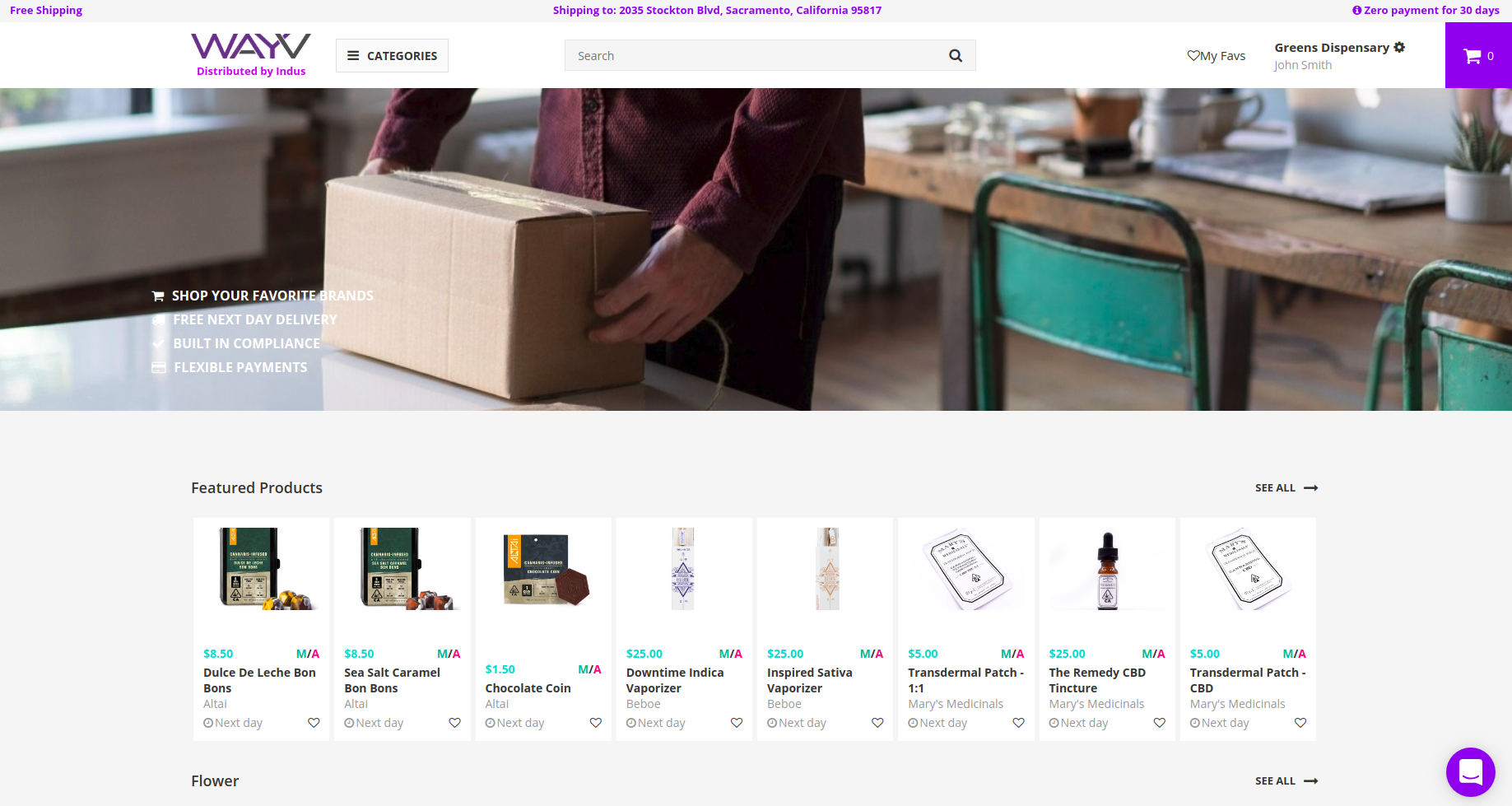
The co-founder and former chief executive officer of the well-funded marijuana delivery startup Eaze has launched WAYV, a B2B cannabis logistics and compliance platform that delivers inventory to cannabis retailers. Today, the company is announcing its first round of funding, a $5 million seed round led by David Sacks at Craft Ventures. The round represents the former PayPal executive’s first investment in the cannabis technology sector.

Other investors in the round declined to be named.

McCarty and Sacks previously worked together at Yammer, a private social networking tool used by businesses created by Sacks in 2008. The company sold to Microsoft in 2012 for $1.2 billion, giving McCarty and several others enough cash to experiment. For McCarty, that meant exploring the hazy and uncharted territory that was marijuana delivery.

McCarty, however, mysteriously left Eaze right as the company gained significant traction. Neither the company nor McCarty ever explained the shake-up; McCarty was quickly replaced by another former Yammer employee, Jim Patterson, the founder and former CEO of Zinc. In a conversation with TechCrunch, McCarty didn’t clarify the nature of his exit.

He did say that the idea for WAYV came from observing the difficulties of cannabis supply chain logistics during his time at Eaze .

Headquartered in Los Angeles, WAYV connects licensed cannabis companies to licensed brands and provides next-day delivery of cannabis products — it’s essentially Eaze for the cannabis enterprise not the average cannabis consumer. The startup was founded last year and has so far delivered to retailers in California only.

As a second-time cannabis founder, McCarty said building WAYV has been a lot different than launching Eaze, which was one of the first big-name marijuana tech companies.

“Back in 2014, [Eaze was] one of the first to raise venture capital, it was kind of unheard of,” McCarty told TechCrunch. “Now, the majority of Americans favor legalization. For medical, it’s 90 percent and for adult recreational, it’s more than 60 percent. As we Americans continue to favor legalization and that stigma is removed, not just medical but also adult use, it’s going to draw attention and also investment.”

Venture capital investment in cannabis startups has continued to climb, most notably after the state of California voted to legalize recreational marijuana use in 2016. According to Crunchbase, $700 million has been funneled into the space since 2014.

“The industry is moving at such a fast cadence, it’s really exciting to be a part of,” McCarty added.

29 Oct 2018

Eaze co-founder Keith McCarty raises $5M for his new B2B cannabis startup

Keith McCarty couldn’t stay out of the booming weed business for long.

The co-founder and former chief executive officer of the well-funded marijuana delivery startup Eaze has launched WAYV, a B2B cannabis logistics and compliance platform that delivers inventory to cannabis retailers. Today, the company is announcing its first round of funding, a $5 million seed round led by David Sacks at Craft Ventures. The round represents the former PayPal executive’s first investment in the cannabis technology sector.

Other investors in the round declined to be named.

McCarty and Sacks previously worked together at Yammer, a private social networking tool used by businesses created by Sacks in 2008. The company sold to Microsoft in 2012 for $1.2 billion, giving McCarty and several others enough cash to experiment. For McCarty, that meant exploring the hazy and uncharted territory that was marijuana delivery.

McCarty, however, mysteriously left Eaze right as the company gained significant traction. Neither the company nor McCarty ever explained the shake-up; McCarty was quickly replaced by another former Yammer employee, Jim Patterson, the founder and former CEO of Zinc. In a conversation with TechCrunch, McCarty didn’t clarify the nature of his exit.

He did say that the idea for WAYV came from observing the difficulties of cannabis supply chain logistics during his time at Eaze .

Headquartered in Los Angeles, WAYV connects licensed cannabis companies to licensed brands and provides next-day delivery of cannabis products — it’s essentially Eaze for the cannabis enterprise not the average cannabis consumer. The startup was founded last year and has so far delivered to retailers in California only.

As a second-time cannabis founder, McCarty said building WAYV has been a lot different than launching Eaze, which was one of the first big-name marijuana tech companies.

“Back in 2014, [Eaze was] one of the first to raise venture capital, it was kind of unheard of,” McCarty told TechCrunch. “Now, the majority of Americans favor legalization. For medical, it’s 90 percent and for adult recreational, it’s more than 60 percent. As we Americans continue to favor legalization and that stigma is removed, not just medical but also adult use, it’s going to draw attention and also investment.”

Venture capital investment in cannabis startups has continued to climb, most notably after the state of California voted to legalize recreational marijuana use in 2016. According to Crunchbase, $700 million has been funneled into the space since 2014.

“The industry is moving at such a fast cadence, it’s really exciting to be a part of,” McCarty added.

29 Oct 2018

Signal rolls out a new privacy feature making it tougher to know a sender’s identity

Signal, regarded as the gold standard of end-to-end encrypted messaging apps, is rolling out a new feature that will further protect the identities of message senders.

“While the service always needs to know where a message should be delivered, ideally it shouldn’t need to know who the sender is,” Signal revealed in a blog post Monday.

Dubbed “sealed sender,” the messaging app will soon hide a sender’s information inside the envelope of an encrypted message. The sender’s “from” information will be removed from outside the message’s envelope and will instead be replaced with a short-term certificate — containing the sender’s phone number, public identity key and an expiry time — which can be used to prove a sender’s identity. The whole envelope is encrypted again. Once it’s delivered, the recipient’s device will validate that certificate and decrypts the message as it normally would — without exposing the sender’s identity at any point.

Sounds fancy, but in reality nothing changes at the surface level — the app will send your messages securely over an end-to-end encrypted connection. But behind the scenes at the service level, the new hand-off mechanism makes the service more resistant to metadata.

The new feature will be enabled by default when it rolls out in a future stable release.

Since its inception, Signal hasn’t collected or stored data. By engineering the service so that it can deliver messages while cutting itself out of the loop, the app maker can’t turn over data to governments when they come knocking with a warrant. That point was proven two years ago when the FBI demanded that Signal turn over all the data it had on one particular user.

Signal responded with all the data it had — a timestamp of when the account was created and its last connection date. The information was effectively useless to prosecutors.

“These protocol changes are an incremental step, and we are continuing to work on improvements to Signal’s metadata resistance,” the blog post said. “In particular, additional resistance to traffic correlation via timing attacks and IP addresses are areas of ongoing development.”

In other words, your data was never stored — but now it can’t be.

The new feature will be enabled by default in a future version of Signal. It’s heading into beta in the next few days.

29 Oct 2018

Signal rolls out a new privacy feature making it tougher to know a sender’s identity

Signal, regarded as the gold standard of end-to-end encrypted messaging apps, is rolling out a new feature that will further protect the identities of message senders.

“While the service always needs to know where a message should be delivered, ideally it shouldn’t need to know who the sender is,” Signal revealed in a blog post Monday.

Dubbed “sealed sender,” the messaging app will soon hide a sender’s information inside the envelope of an encrypted message. The sender’s “from” information will be removed from outside the message’s envelope and will instead be replaced with a short-term certificate — containing the sender’s phone number, public identity key and an expiry time — which can be used to prove a sender’s identity. The whole envelope is encrypted again. Once it’s delivered, the recipient’s device will validate that certificate and decrypts the message as it normally would — without exposing the sender’s identity at any point.

Sounds fancy, but in reality nothing changes at the surface level — the app will send your messages securely over an end-to-end encrypted connection. But behind the scenes at the service level, the new hand-off mechanism makes the service more resistant to metadata.

The new feature will be enabled by default when it rolls out in a future stable release.

Since its inception, Signal hasn’t collected or stored data. By engineering the service so that it can deliver messages while cutting itself out of the loop, the app maker can’t turn over data to governments when they come knocking with a warrant. That point was proven two years ago when the FBI demanded that Signal turn over all the data it had on one particular user.

Signal responded with all the data it had — a timestamp of when the account was created and its last connection date. The information was effectively useless to prosecutors.

“These protocol changes are an incremental step, and we are continuing to work on improvements to Signal’s metadata resistance,” the blog post said. “In particular, additional resistance to traffic correlation via timing attacks and IP addresses are areas of ongoing development.”

In other words, your data was never stored — but now it can’t be.

The new feature will be enabled by default in a future version of Signal. It’s heading into beta in the next few days.

29 Oct 2018

Naspers announces $300 million initiative to support startups and tech in South Africa

Naspers announced a $100 million Naspers Foundry fund to support South African tech startups. This is part of a $300 million (1.4 billion rand) commitment by the South African media and investment company to support South Africa’s tech sector overall. Naspers Foundry will launch in 2019.

The initiatives lend more weight to Naspers’ venture activities in Africa as the company has received greater attention for investments off the continent (namely Europe, India and China).

“Naspers Foundry will help talented and ambitious South African technology entrepreneurs to develop and grow their businesses,” said a company release.

“Technology innovation is transforming the world,” said Naspers chief executive Bob van Dijk. “The Naspers Foundry aims to both encourage and back South African entrepreneurs to create businesses which ensure South Africa benefits from this technology innovation.”

After the $100 million earmarked for the Foundry, Naspers will invest ≈ $200 million over the next three years to “the development of its existing technology businesses, including OLX, Takealot, and Mr D Food…” according to a release.

In context, the scale of this announcement is fairly massive for Africa. According to Crunchbase data recently summarized in this TechCrunch feature, the $100 million Naspers Foundry commitment dwarfs any known African corporate venture activity by roughly 95x, when compared to Safaricom’s Spark Venture Fund, Interswitch’s E-Growth Fund, and Standard Bank’s several million dollar commitment to Founder Factory.

Naspers is one of the largest companies in the world—85th by its $108 billion market cap, just after Nike—and one of the world’s largest tech investors.

Aside from operating notable internet, video, and entertainment platforms, the company has made significant investments in the Europe, India, Asia, and South America. In 2018 Naspers invested $775 million in Germany’s Delivery Hero, $124 million in Brazilian e-commerce company Movile, and added $100 million to its funding to Indian food delivery site Swiggy.

Naspers was also an early investor in Chinese tech group Tencent, selling $10 billion in shares this year after a $32 million investment in 2001.

The South African media group has invested less in (and been less successful) in Africa, though that comparison comes largely by contrast to Naspers’ robust global activities.

One of Naspers early Africa investments, Nigerian e-commerce startup Konga, was sold in a distressed acquisition earlier this year.

The company recently added to around $70 million to its commitment to South African e-commerce site Takealot. And in perhaps a preview the company was shifting some focus back to Africa, Naspers made one of the largest acquisitions in Africa this September, buying South Africa’s Webuycars for $94 million.

The $300 million commitment to South Africa’s tech ecosystem signals a strong commitment by Naspers to its home market. Naspers wasn’t ready to comment on if or when it could extend this commitment outside of South Africa (TechCrunch did inquire).

If Naspers does increase its startup and ecosystem funding to wider Africa— given its size compared to others—that would be a primo development for the continent’s tech sector.