Year: 2018

27 Oct 2018

Should cash-strapped Snapchat sell out? To Netflix?

Snapchat needs a sugar daddy. Its cash reserves dwindling from giant quarterly losses. Poor morale from a battered share price and cost-cutting measures sap momentum. And intense competition from Facebook is preventing rapid growth. With just $1.4 billion in assets remaining at the end of a brutal Q3 2018 and analysts estimating it will lose $1.5 billion in 2019 alone, Snapchat could run out of money well before it’s projected to break even in 2020 or 2021.

So what are Snap’s options?

A long and lonely road

Snap’s big hope is to show a business turnaround story like Twitter, which saw its stock jump 14 percent this week despite losing monthly active users by deepening daily user engagement and producing profits. But without some change that massively increases daily time spent while reducing costs, it could take years for Snap to reach profitability. The company has already laid off 120 employees in March, or 7 percent of its workforce. And 40 percent of the remaining 3,000 employees plan to leave — up 11 percentage points from Q1 2018 according to internal survey data attained by Cheddar’s Alex Heath.

Snapchat is relying on the Project Mushroom engineering overhaul of its Android app to speed up performance, and thereby accelerate user growth and retention. Snap neglected the developing world’s Android market for years as it focused on iPhone-toting US teens. Given Snapchat is all about quick videos, slow load times made it nearly unusable, especially in markets with slower network connections and older phones.

Looking at the competitive landscape, WhatsApp’s Snapchat Stories clone Status has grown to 450 million daily users while Instagram Stories has reached 400 million dailies — much of that coming in the developing world, thereby blocking Snap’s growth abroad as I predicted when Insta Stories launched. Snap actually lost 3 million daily users in Q2 2018. Snap Map hasn’t become ubiquitous, Snap’s Original Shows still aren’t premium enough to drag in tons of new users, Discover is a clickbait-overloaded mess, and Instagram has already copied the best parts of its ephemeral messaging.

SAN FRANCISCO, CA – SEPTEMBER 09: Evan Spiegel of Snapchat attends TechCruch Disrupt SF 2013 at San Francisco Design Center on September 9, 2013 in San Francisco, California. (Photo by Steve Jennings/Getty Images for TechCrunch)

As BTIG’s Rich Greenfield points out, CEO Evan Spiegel claims Snapchat is the fastest way to communicate, but it’s not for text messaging, and the default that chats disappear makes it unreliable of utilitarian chat. And if WhatsApp were to add an ephemeral messaging feature of its own, growth for Snapchat could get even tougher. Snap will have to hope it can hold on to its existing users and squeeze more cash out of them to keep reducing losses.

All those product missteps and and market neglect have metastasized into a serious growth problem for Snapchat. It lost another 2 million users this quarter, and expects to sink further in Q4. Even with the Android rebuild, Spiegel’s assurances for renewed user growth in 2019 seem spurious. That means it’s highly unlikely that Snapchat will achieve Speigel’s goal of hitting profitability in 2019. It needs either an investor or acquirer to come to its aid.

A bailout check

Snap could sell more equity to raise money. $500 million to $1 billion would probably give it the runway necessary to get into the black. But from where? With all the scrutiny on Saudi Arabia, Snap might avoid taking money from the kingdom. Saudi’s Prince Al-Waleed Talal already invested $250 million to buy 2.5 percent of Snap on the open market.

Snap’s best bet might be to take more money from Chinese internet giant Tencent. The massive corporation already spent around $2 billion to buy a 12 percent stake in Snap from the open market. The WeChat owner has plenty of synergies with Snapchat, especially since it runs a massive gaming business and Snap is planning to launch a third-party developer gaming platform.

Tencent could still be a potential acquirer for Snap, but given President Trump’s trade war with China, he might push regulators to block a sale. The state of American social networks like Twitter and Facebook that are under siege by foreign election interference, trolls, and hackers might make the US government understandably concerned about a Chinese giant owning one of the top teen apps.

Regardless of who would invest, they’d likely demand real voting rights — something Snap has denied investors through a governance structure. Spiegel and his co-founder Bobby Murphy both get 10 votes per share. That’s estimated to amount to 89 percent of the voting rights. Shares issued in the IPO came with zero voting rights.

Evan Spiegel and Bobby Murphy, developers of Snapchat (Photo by J. Emilio Flores/Corbis via Getty Images)

But that surely wouldn’t sit well with any investor willing to pour hundreds of millions of dollars into the beleaguered company. Spiegel has taken responsibility for pushing the disastrous redesign early this year that coincided with a significant drop in its download rank. It also inspired a tweet from mega-celebrity Kylie Jenner bashing the app that shaved $1.3 billion off the company’s market cap.

Between the redesign flop, stagnant product innovation, and Spiegel laughing off Facebook’s competition only to be crushed by it, the CEO no longer has the sterling reputation that allowed him to secure total voting control for the co-founders. That means investors will want assurance that if they inject a ton of cash, they’ll have some recourse if Spiegel mismanages it. He may need to swallow his pride, issue voting shares, and commit to milestones he’s required to hit to retain his role as chief executive.

A Soft Landing Somewhere Else

Snap could alternatively surrender as an independent company and be acquired by a deep-pocketed tech giant. Without having to worry about finances or short-term goals, Snap could invest in improving its features and app performance for the long-term. Social networks are tough to kill entirely, so despite competition, Snap could become lucrative if aided through this rough spot.

Combine that with the $637 million bonus Spiegel got for taking Snap public, and he has little financial incentive or shareholder pressure compelling him to sell. Even if the company was bleeding out much worse than it is already, Spiegel could ride it into the ground.

Again, the biggest barrier to this path is Spiegel. Combine totalitarian voting control with the $637 million bonus Spiegel got for taking Snap public, and he has little financial incentive or shareholder pressure compelling him to sell. Even if the company was bleeding out much worse than it is already, Spiegel could ride it into the ground. The only way to get a deal done might be to make Spiegel perceive it as a win.

Selling to Disney could be spun as a such. It hasn’t really figured out mobile amidst distraction from super heroes and Star Wars. Its core tween audience are addicted to YouTube and Snap even if they shouldn’t be on them. They’re both LA companies. And Disney already ponied up $350 million to buy kids desktop social networking game Club Penguin. Becoming head of mobile or something like that for the most iconic entertainment company ever could a vaulted-enough position to entice Spiegel. I could see him being a Disney CEO candidate one day.

What about walking in the footsteps of Steve Jobs? Apple isn’t social. It failed so badly with efforts like its Ping music listeners network that it’s basically abdicated the whole market. iMessage and its cutesy Animoji are its only stakes. Meanwhile, it’s getting tougher and tougher to differentiate with mobile hardware. Each new iPhone seems closer to the last. Apple has resorted to questionable decisions like ditching the oft-missed headphone jack and reliable TouchID to keep the industrial design in flux.

Increasingly, Apple must rely on its iOS software to compete for customers with Android headsets. But you know who’s great at making interesting software? Snapchat. You know who has a great relationship with the next generation of phone owners? Snapchat. And do you know whose CEO could probably smile earnestly beside Tim Cook announcing a brighter future for social media unlocked by two privacy-focused companies joining forces? Snapchat. Plus, think of all the fun Snapple jokes?

There’s a chance to take revenge on Facebook if Snapchat wanted to team up with Mark Zuckerberg’s old arch nemesis Google . After Zuck declared “Carthage must be destroyed”, Google+ flopped and its messaging apps became a fragmented mess. Alphabet has since leaned away from social networking. Of course it still has the juggernaut that is YouTube — a perennial teen favorite alongside Snapchat and Instagram. And it’s got the perfect complement to Snap’s ephemerality in the form of Google Photos, the best-in-class permanent photo archiving tool. With the consume side of Google+ shutting down after accidentally exposing user data, Google still lacks a traditional social network where being a friend comes before being a fan.

What Google does have is a reputation for delivering the future. From Waymo’s self-driving cars to Calico’s plan to make you live forever, Google is an inventive place where big ideas come to fruition. Spiegel could frame Google as aligned with its philosophy of creating new ways to organize and consume information that adapt to human behavior. He surely wouldn’t mind being lumped in with Internet visionaries like Larry Page and Sergei Brin. Google’s Android expertise could reinvigorate Snap in emerging markets. And together they could take a stronger swing at Facebook.

But there are problems with all of these options. Buying Snap would be a massive bet for Disney, and Snap’s lingering bad rap as a sexting app might dissuade Mickey Mouse’s overlords. Apple rarely buys such late-stage public companies. CEO Tim Cook has been able to take the moral high ground because Apple makes its money from hardware rather than off of  personal info through ad targeting. If Apple owned Snap, it’d be in the data exploitation business just like everyone else.

And Google’s existing dominance in software might draw the attention of regulators. The prevailing sentiment is that it was a massive mistake to let Facebook acquire Instagram and WhatsApp, as it centralized power and created a social empire. With Google already owning YouTube, the government might see problems with it buying one of the other most popular teen apps.

That’s why I think Netflix could be a great acquirer for Snap. They’re both video entertainment companies at the vanguard of cultural relevance, yet have no overlap in products. Netflix already showed its appreciation for Snapchat’s innovation by adopting a Stories-like vertical video clip format for discovering and previewing what you could watch. The two could partner to promote Netflix Originals and subscriptions inside of Snapchat. Netflix could teach Snap how to win at exclusive content while gaining a place to distribute video that’s under 20 minutes long.

With a $130 billion market cap, Netflix could certainly afford it. Though since Netflix already has $6 billion in debt from financing Originals, it would have to either sell more debt or issue Netflix shares to Snapchat’s owners. But given Netflix’s high-flying performance, massive market share, and cultural primacy, the big question is whether Snap would drag it down.

So how much would it potentially cost? Snap’s market cap is hovering around $8.8 billion with a $6.28 share price. That’s around its all-time low and just over a quarter of its IPO pop share price high. Acquiring Snap would surely require paying a premium above the market cap. Remember, Google already reportedly offered to acquire Snap for $30 billion prior to its final funding round and IPO. But that was before Snap’s growth rate sunk and it started losing the Stories War to Facebook. A much smaller offer could look a lot prettier now.

Social networks are hard to kill. If Snap can cut costs, fix its product, improve revenue per users, and score some outside investment, it could survive and slowly climb. If Twitter is any indication, aging social networks can reflower into lucrative businesses given enough time and product care. But if Snapchat wants to play in the big leagues and continue having a major influence on the mobile future, it may have to snap out of the idea that it can win on its own.

27 Oct 2018

Here are 25 of the most innovative new projects using tech to help refugees and NGOs

From humble beginnings as a simple Facebook group I posted in September 2015, Techfugees has come a long way. It was conceived as a vehicle to enthuse technologists about the plight of refugees by waking them up to the idea that their innovation, startup mentality and design-led thinking could potentially bring new, scalable new solutions to the plight of displaced people. Today, Techfugees is an international non-profit with its own CEO, Joséphine Goube and a team based between London and Paris. Not bad for a handful of posts on social media…

What’s fascinating about the project as it’s developed is that, at the time, it was considered quite radical, perhaps even odd, to bring tech people into the equation. But simply watching the footage of refugees clutching smartphones as they fled war-torn regions and natural disasters made the tech world realize it can be part of the solution to many of the seemingly intractable problems refugees face.

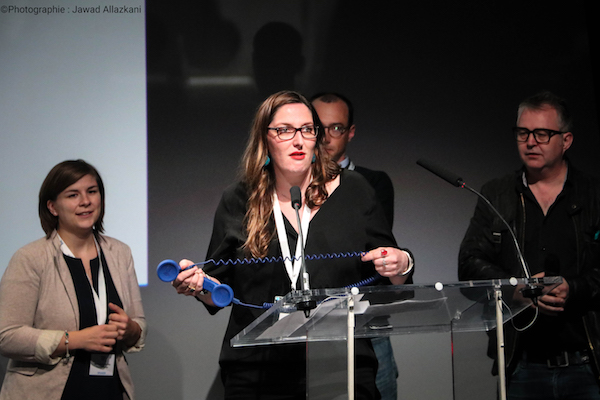
Techfugees has grown into a community of around 18,000 innovators all over the world, supporting by way of their own projects or companies, via social media and taking part in hundreds of dedicated events around the world. This includes more than 30 hackathons and an annual Global Summit, the second of which happened over the last two days in Paris. The Summit had over 500 participants, such as social entrepreneurs, engineers, designers, humanitarians, policymakers, researchers or impact investors, a large number of whom who have a refugee background. Speakers discussed and debate the different uses of technology for displaced people during the time of migration until arrival to their new host societies.

The impact of climate change will cause the migration of 143 million people by 2050

This year’s program looked at four main topics: Access to Rights and Information; Data Ethics; Social Inclusion; and Climate Migration. The last issue is now of even greater urgency in 2018. According to a study by the World Bank published earlier this year, the impact of climate change will cause the migration of 143 million people by 2050, bringing with it looming humanitarian challenges.

Just like at your typical tech startup conference, Techfugees has a similar programme: The Techfugees Global Challenges Competition. This showcases projects responding to the needs of displaced populations and building technological products or services for them, based on Techfugees’ 8 guiding principles and addressing one of Techfugees’ five focus area: access to rights and information, health, education, employment and social inclusion. The applications went through an international Jury of experts who selected the 25 finalists from hundreds of applications, from 52 countries across the world, which pitched their project in front of an international Jury and Summit attendees.

The 5 winners (described in their own words) were:

Integreat (Germany)

“Integreat is an information app and website tailored to the specific needs of both newcomers as the users of the app and municipal administrations as the content providers. It’s a mobile guide for newcomers. Multilingual. Offline. Free. Can we provide the people arriving in our city with all relevant information in their native language as quickly as possible? Even without internet access and without confusing red tape? The result is an app called Integreat which passes on all relevant information in multiple languages to the newcomers. It is a holistic service ecosystem for cities, districts and organizations for the integration of people with a flight or migration background.”

Shifra
Australia / USA
“Shifra is not only a life-saving mHealth intervention, it is also a research project which aims to explore the social, cultural and geographic barriers to quality healthcare access many refugees experience, as cited by the refugees themselves. The Shifra web app is designed to improve access to quality sexual and reproductive health care. It provides local, evidence-based health information in multiple languages for communities with varying levels of language and health literacy. Shifra also directs users to trusted clinics where they can access respectful and safe care. We work with local health networks to improve their existing services based on the self-identified health needs found in Shifra’s anonymous user trend data.”

Antura and the Letters
(Syria, Lebanon, Jordan, Turkey, Iraq and Egypt)
“Antura and the Letters is an engaging mobile game that helps Syrian children learn how to read in Arabic and improve their psychosocial well-being. Considering that most refugees have old smartphones and connectivity is always a challenge for them, the game runs on old devices (from 2010/2011), it’s very small to download (less than 80Mb on Android) and it does not require internet connection. Antura and the Letters is completely free and open source… and it has been designed in order to be easily adaptable to other languages! That’s exactly what we want to do next with the goal to reach and help as many children as possible around the world.”

TaQadam
(Lebanon)
“In the era of machine learning and artificial intelligence, the data workers and annotators are the new programmers. From robots, drones, self-driving cars or e-commerce, the markets need for vision technology for artificial intelligence is extraordinary. One of the major building blocks of such AI-powered recognition systems is image annotation delivered with a human input – data training. Today’s data is driving tomorrow’s AI products. To be competitive in AI, innovation depends on having data-edge often more than a technology-edge, but 80% of data engineers’ time is spent on sourcing and preparing quality image data for AI models. TaQadam optimizes image annotation for data-driven companies with visual AI and delivers on-demand, vertical-specific, high-quality image annotation. With an API and a cloud architecture, we ensure a simple and secure way to build image data set with a high accuracy and precision, while simplifying the process of sourcing human insights from dedicated and trained teams of TaQadam. TaQadam is a unique service on the market that brings a specialized on use case teams that are building AI together with the client. With gamification and mobile accessible work on TaQadam Android App, we transform the experience of annotation to fit the younger generations. We create work of the future: accessible, flexible, allowing fluidity, community building and fun.”

Refugees Are
(Worldwide)
“Refugees Are map the public opinion around refugees in the news by:
1- Extracting daily news related to refugees from GDELT (open source news dataset)
2- Extracting location from the article
3- Applying sentiment analysis to classify it as positive, negative or neutral article
4- Extracting topics related to refugees using LSA (Latent Semantic Analysis)
5- Extracting most common words occurring with refugees
6- Visualizing it in an easy way for the public to understand
7- Let the public help identify negative news around refugees”


And finally The Mohajer App won a special jury prize for its outstanding work assisting Afghan refugees in Iran in incredibly difficult circumstances:

The Mohajer App
Android / IOS
Iran, US, Canada and UK
“The Mohajer App was created with the support of Afghan communities inside Iran to address their needs. The app was completed with a group of paid and voluntary refugee-rights attorneys, advocates and technologists. Mohajer has two features: – The “Get Informed” section provides information for users concerning Iran’s immigration policy, the rights of Afghans in Iran, and resources that are available for concerns such as health, education, combatting from discrimination and more; the list continues to expand as users share their needs. The section also provides a list of support groups that our team has verified directly. The “Submit Report” feature enables users to share their everyday experiences as Afghans in Iran and support the larger community in addressing challenges by sharing information on events and experiences. The information on the app is also accessible offline, so as to support those without regular internet access.”

Here’s a run down of the rest of the 25 that pitched, in their own words:

Challenge #1 – Access to rights & information

TikkTalk (Norway)
“Tikk Talk is an open marketplace for interpretation services for everyone who is in need for interpretation assistance. So far the platform handles 80% of all assignments automatically, limiting the overhead costs which traditional agencies have. The platform also gives all parties full transparency which empowers them to make better decisions. Because of the tech, interpreters are in the forefront deciding on their wage and which assignments they would like to take. Before, Helse Førde (Hospital partner) switched to TikkTalk they only received 24% qualified interpreters now they receive 99% qualified interpreters.”

Refugee Info Bus
(United Kingdom, France, Greece)

“Refugee Info Bus’s mission is simple. Operating at the frontlines of Europe’s ongoing refugee crisis, we provide good quality multilingual legal information and free Wifi to refugees on the move in, or having just arrived, in Northern France and in Greece. Our first Refugee Info Bus began life as an old horsebox, purchased, stripped-out, cleaned-up, and converted into a mobile office and Wi-Fi hotspot for refugees and asylum seekers living in northern France. Within a year, we facilitated over 91,000 Wi-Fi logins and delivered more than 1,000 workshops to 50,000+ individuals on the UK and French asylum systems.”

Refugee.Info
(Greece, Bulgaria, Hungary, Serbia

“In mid-2016, Refugee.Info pivoted to focus on social media to better serve the needs and preferences of users, which had drastically changed after borders closed in Europe in March of that year. Refugee.info hired local journalists to obtain and verify news and other up-to-date information about the context, as well as content professionals to optimize the information for social media, applying private sector content marketing principles to increase ROI. Now, refugees in Greece, Italy and the Balkans can message the page and receive a quick answer from a moderator who will work with the journalists and lawyers to provide accurate information, often sourced from their website or blog.”

Challenge #2 – Health

Connect 2 Drs
Mexico
The platform of Connect2Drs was initially built to strive the private sector as a target market, and it still is. However, with the injustice and lack of a good health insurance for mexicans – deported or refugees – people with disabilities and people who need medical attention at home with palliatives became their main goal.

Doctor-X
Jordan
“Doctor-X is a multi-language medical history mobile application and website with, for each refugee, a private account that the doctor can update when he does an operation on the refugee, in the language the doctor speaks. The program will make it available in 5 languages in case the refugee goes to a new country and needs medical help.”

Iryo
Jordan
“Until now, medical workers in camps used Excel spreadsheets to make notes about patients. On top of that, medical workforce turnover is high, bringing additional confusion and inconsistency to Excel records. Iryo enables accurate medical history recording. Because data storage is decentralized with a copy on a local server, a second one on the patients mobile phone and a third one in the Iryo cloud, even if a patient arrives at a new refugee camp where the Iryo system is already in place, the doctor there will be able to access the patient’s record.”

MedShr
UK/Worldwide
“MedShr has been developed to enable doctors and healthcare professionals to share and discuss clinical cases for peer-to-peer learning and medical education. It is a private, professional, verified network for clinical case discussion between medical professionals. No patient information is visible, all cases are anonymous and members can use the mobile app to get consent from patients to share images. Beyond that, all images and media are securely cloud stored with no images stored on the user’s device. Importantly, MedShr members are also able determine who can see and discuss their cases.”

Challenge #3 – Education

edSeed
(United States, Gaza, Lebanon)
“Edseed is about narrating stories of youth and bringing them closer to donors in the USA; participating in networking; and building a network for higher education of refugees to address policy issues, mentor students.”

Paper Airplanes
(United States / Turkey, Lebanon, Jordan, KSA, Egypt, Iraq, Palestine)
“Paper Airplanes (PA) is a nonprofit that uses video conferencing technology to provide free, peer-to-peer language and professional skills instruction to young adults and teens affected by conflict in the Middle East and North Africa. PA works to support these individuals to pursue their educational and employment goals and ultimately rebuild their lives. PA teaches English and Turkish to youth and adults, journalism to citizen journalists, and beginners’ coding skills to women. By using virtual communication technology to provide live instruction, PA is able to reach internally displaced and refugee youth as well as underserved populations who may be otherwise difficult to reach, including those inside Syria (approximately 50% of our students), young women and girls, and individuals in rural areas across the MENA region. Additionally, PA supplies computer tablets for select Youth Exchange Program participant recipients and scholarships to defray the cost of the IELTS and TOEFL exams for qualified PA graduates.”

Power.Coders
(Switzerland)
“Powercoders’ solution is to offer intensive computer programming classes to refugees over a three month period and then place them in an IT internship. As a result of the comprehensive training and subsequent placement, within a little less than a year our refugee graduates are exponentially better positioned to find and keep an IT job in Switzerland, and many do just that. The program is fully customized to address the challenges and issues that refugees may face when trying to integrate professionally and the courses enjoy an almost 100% internship placement success rate and subsequent 80% integration rate.”

RefgueeEd.Hub
(Greece)
RefugeeEd.Hub is an open source online database that promotes promising practice in refugee education globally. RefugeeEd.Hub aims to raise the quality of education for refugees and displaced people by generating knowledge and fostering collaboration among global and local stakeholders working to provide education to refugees. RefugeeEd.Hub will support education innovators, multilateral institutions, global development actors, education funders and government and policymakers to inform practice on the ground.

Challenge #4 – Employment
Bitae Technologies
(United States, Jordan)

“Bitae Technologies aims to help global, mobile talent, like refugees and migrants, carry their skills and experience with them in a secure, verified digital CV, addressing the lack of access to formal education and employment faced by refugees and other vulnerable populations. Bitae transforms non-formal learning and achievements into opportunities for refugees. We provide a platform to track, store and verify refugees’ non-formal learning and skills, creating a “digital backpack” of classes, workshops, internships and skills that together, can help a refugee move forward with education and employment. Bitae leverages mobile and blockchain technology to ensure that governments, international organizations, NGOs, educational institutions and employers are able to document non-formal learning and skills in the most inclusive, secure and transparent way. The Digital Backpack focuses on four key functions: creating badges and verifying skills, requesting and sending references, skills matching and skills assessment. Using existing tools, the platform makes it possible to create blockchain-backed credential badges that can be stored and shared.”

Human in the loop
Bulgaria – 2017
“Human in the Loop is a social enterprise which employs and trains refugees to provide image annotation services to computer vision companies. It is a niche market that currently requires manual human input in order to train ML models to recognize images in a way that a human would, and Human in the Loop is part of a growing community of “impact sourcing” enterprises that is dedicated to providing employment to vulnerable groups in this sector. The opportunity they are seizing is that image annotation is a very accessible type of labor that does not require previous education or professional skills, but which can open the door to more advanced tech jobs and freelancing skills, which are especially useful for migrants. In this way, they are empowering refugees to earn a living in a dignified way and gain skills, and they are turning them in “digital nomads” who are able to make use of the opportunities that remote digital work provides to people who are on the move. Human in the Loop works as an outsourcing business with B2B sales. Their clients are companies from the computer vision, self-driving cars, drones, and satellite imager industry, which are training machine learning models.”

Rafiqi
(United Kingdom, Germany, Jordan)
“Rafiqi is a matching tool that leverages artificial intelligence to connect refugees in real-time and in a customized way to the opportunities that are the most suitable to his/her profile and that would lead to lifelong employment. Currently, there is no single platform where resettled refugees can access and filter the wide range of opportunities available to them, including jobs, trainings, mentorships and degrees, and where any organization (company/NGO/university) can seamlessly access and filter refugee talent. Refugees lack of knowledge of opportunities and of the right opportunities is resulting in them being unemployed or being overqualified for what they are actually doing. Despite the existence of some refugee to jobs matching programs supported by governments and NGOs in countries like Germany and the Netherlands, these matchings remain largely manual and limited in terms of intelligence. These matching efforts cannot scale well given the high number of refugees and the diversity of their profiles, as well as the diversity of opportunities available to them.”

Transformify Rebuild Lives Program
(Worldwide / EU, Iraq)
“The Rebuild Lives Program by Transformify exists to provide access to jobs and secure payment to displaced people as well as access to targeted eLearning to improve their skills by using recruitment CRM leveraging HR-tech, fintech and AI to connect refugees with employers and provide access to secure payment even if the refugees have no permanent address or a bank account.”

Challenge #5 – Social inclusion

PLACE
(France, Germany, United Kingdom)
“PLACE runs Innovation Labs for migrants and refugees in Europe. These labs transform the people from migrants and refugees into Innovators – creators of solutions for European societies. The labs are 1 to 3-day immersive experiences that apply design thinking methodology to enable Innovators to identify problems, understand their users, develop solutions and then rapidly test and prototype these solutions with a diverse community of local stakeholders. Beyond the Labs, the Innovators have the opportunity to develop their projects through the network of the PLACE collective – actors in the private, public and civil society that see the value of diversity in migrant-led innovation and who want to be a part of it. In addition to innovative solutions, the labs also produce a new leadership model for Europe. Innovators who demonstrate motivation and willingness to take on a role as a leader in migrant-led innovation are trained to be PLACE Catalysts. The Catalysts are trained in interculturality, sourcing, public speaking, networking and lab facilitation. They are then given the opportunity to apply these learnings as facilitators in Labs throughout Europe.”

Register of Pledges
(Ireland)
“The Register of Pledges project workstream are: Humanitarian Database of Pledges (Accommodation, Goods and Services) administered by Red Cross with back-office capabilities for pledge management and workflow and reporting capabilities; Open-source version of the technology is available on Github, a humanitarian data capture system with APIs and a translation interface; Evolve and open-source our Case Management System, to optimize Service User outcomes.”

SchoolX
(UK/Turkey)
“SchoolX envision a shared economy model with volunteer teachers which include university students, educated refugees, retired teachers and other local volunteers, who will teach refugee students. Due to the challenge of limited access to education that these displaced people face, our solution is to recruit teachers within the refugee community and local community, and connect them with refugee students who are eager to learn. The talents of these teachers are then harnessed to deliver rigorous and certified education to the students. Through this, volunteers, including refugee teachers, will also receive an allowance for their efforts as well. The solution, in a form of an online platform, will provide training packages that involve not only fundamental tenets of teaching, but also pedagogical and psycho-social training for the volunteers to prepare them to approach refugee children in the most appropriate and empowering manner, The online platform will also serve as a database which will be utilized to match teachers and students based on their needs, skills, availability, and geographical proximity in order to arrange flexible, face-to-face lessons.”

SPEAK
(Portugal, Spain, Italy, Germany)
SPEAK is a crowdsourced language and culture exchange network, based on an Online2Offline model. All processes are managed online, through a platform developed in-house, while the learning and sharing experience happens offline, allowing participants to establish a close relationship with one another. This model ensures a greater efficiency and minimization of fixed costs, allowing SPEAK to be sustainable at scale while charging only a symbolic fee for its program. SPEAK empowers its participants by expanding their language and cultural skills, all the while becoming part of mutual support networks. Through a language and culture exchange, SPEAK connects migrants, refugees and locals living in the same city. In creating bridges between migrants and locals, members often help each other with job offers or renting their first house in a new city thanks to the power of SPEAK communities. These networks are home to a multicultural community, based on equality and where cultural heritage is validated. In other words, SPEAK’s networks nurture unity in diversity.
SPEAK’s volunteer Buddy system empowers anyone with the willingness to share their language and culture, allowing for an “everyone a changemaker” attitude, which encourages an even greater participation in local public life. he sustainability of the initiative relies on the community and willingness to promote SPEAK’s values of an integrated and inclusive society.”

27 Oct 2018

Tesla is rolling out its Navigate on Autopilot feature

Some Tesla owners in North America will wake up to a new driver assistance feature that had been delayed for testing, according to a tweet sent Friday evening by CEO Elon Musk.

“Tesla Autopilot Drive on Navigation going to wide release in North America tonight,” Musk tweeted. Tesla Autopilot Drive on Navigation is described by the company as its most advanced driver assistance feature to date. The feature, which is typically referred to as Navigate on Autopilot or just Navigate, was held back earlier this month when the automaker released the latest version of its in-car software, 9.0.

A blog posted by Tesla later in the evening said the feature would begin to roll out this week to U.S. customers who have purchased enhanced Autopilot or full self-driving capability. Tesla has offered enhanced Autopilot and FSD capability as upgrades that cost, $5,000 and $3,000, respectively.

Tesla’s vehicles are not self-driving. Autopilot is an advanced driver assistance system. But back in October 2016, when Tesla started producing Hardware 2 vehicles equipped with a more robust suite of sensors, it also started taking money from customers for FSD, which would become available if and when the technical challenges were conquered and regulatory approvals were met. Tesla removed the option to upgrade to FSD from its website, although Musk has said customers can still request it.

Autopilot on Navigate is considered a step towards that still on-met full self-driving promise; albeit it’s a small one.

Tesla’s 9.0 software, which was released in early October, delivered a host of improvements, including a new dash cam feature (for cars built after August 2017), improved navigation and even Atari games that can be played when parked. But Navigate was held back. It was later introduced as a beta feature to some customers in the U.S.

Navigate is an active guidance feature of the company’s Enhanced Autopilot system that is supposed to guide a car from a highway on-ramp to off-ramp, including navigating interchanges and making lane changes. Once the driver enters a destination into the navigation, they can enable “Navigate on Autopilot” for that trip.

Tesla has placed some limitations on Navigate. For now, the feature makes a lane change suggestion that requires the driver to confirm by tapping the turn signal before it will proceed.

Future versions of Navigate on Autopilot will allow customers to waive the confirmation requirement if they choose to, according to a blog posted by Tesla late Friday evening.

In Musk’s view, the feature will require confirmation until safety “looks good after 10M miles of driving, or so.”

Navigate on Autopilot will make suggestions for two different kinds of lane changes: route-based lane changes that allow the driver to stick with the navigation route, and speed-based lane changes, which are designed to keep the vehicle moving as close to the driver’s set speed as possible.

The speed-based lane changes have four settings, including disabled, mild, average, or Mad Max. This will suggest transitions into other lanes that are moving faster if, for example, the driver approaches a slow-moving car or truck ahead. The “mild” setting suggests lane changes when the driver is traveling significantly slower than the set speed. Mad Max will suggest lane changes when traveling just below the driver’s set speed.

27 Oct 2018

Texas has a long history of problems with Hart eSlate voting machines

During early voting in some Texas counties, a handful of voters reported seeing their straight-ticket votes changed to endorse the opposing party. Others reported that an issue with the voting machines appeared to remove any selection for U.S. Senate altogether.

The Texas Secretary of State’s office told TechCrunch that it has received “15-20 calls” from voters this week who reported being affected by the issue. All of those individuals caught the mistake and were able to correct their ballots before casting them, though that does not account for unreported instances in which voters did not notice the changed votes. In Texas, the Secretary of State serves as the chief elections officer.

The issue is specific to Hart eSlates, electronic voting systems created by major voting machine vendor Hart Intercivic. The Secretary of State’s office maintains that this issue is “not due to a malfunction with the machine” but rather is a result of user error. Across Texas, 82 counties use Hart eSlate machines though only Harris, Travis, McLennan, Montgomery, Tarrant and Fort Bend counties have reported issues.

In 2008, the Texas Democratic Party sued then-Secretary of State Roger Williams over a similar straight-ticket voting error affecting the same Hart eSlate machine. The U.S. 5th Circuit Court upheld the Secretary of State’s decision to deploy eSlates, striking down the case.

“I adamantly believe there is evidence that some votes in Texas have not been counted because of defective electronic voting machines, undermining the accuracy and fairness of our elections,” Texas Democratic Party Chair Boyd Richie said of the 2008 decision at the time.

The current Secretary of State maintains that there are safeguards in place to address concerns, urging voters to review their ballot before it is cast.

“The Hart eSlate machines are not malfunctioning, the problems being reported are a result of user error – usually voters hitting a button or using the selection wheel before the screen is finished rendering,” said Sam Taylor, Texas Secretary of State Communications Director.

Taylor added that the Secretary of State’s office has given instructions to election administrators to address the issue with signage, trained election officials on these issues and required county officials to maintain “a meticulous log of any malfunctioning machines, and remove any machines that are malfunctioning.”

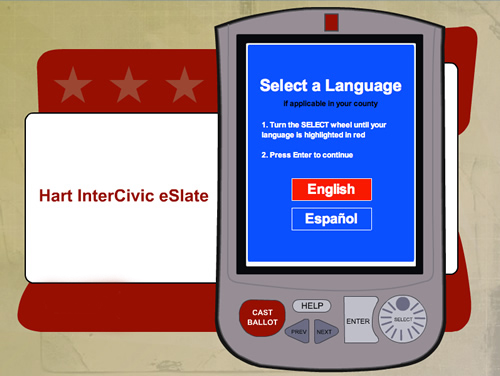
The eSlate is a direct recording electronic (DRE) voting machine that employs a selection wheel and five buttons in lieu of a touchscreen.

Image via votetexas.gov

In a 2017 paper, two researchers at Rice University examined the usability of Hart’s eSlate devices, which have been touted for their ease of use by the manufacturer and counties that have adopted them. The research cites a 2008 study of 1500 voters that saw the Hart eSlate rank the lowest for ease of use out of six commonly used electronic voting systems.

“There is evidence, both anecdotal and experimental, suggesting that the eSlate is not particularly usable,” the paper’s authors wrote. “Counties are already spending a great deal of money on the eSlate and using the systems in elections despite potential usability issues that could lead to longer voter times… and mistakes made by voters while making selections on ballots.”

In 2008, a whistleblower at Hart Intercivic filed a lawsuit (William R. Singer v. Hart InterCivic) accusing the company of “false statements… regarding the accuracy, testing, reliability, and security of its voting system, in an effort to secure federal monies.” The lawsuit dissolved after a Supreme Court decision that hobbled cases brought forth by whistleblowers.

Keith Ingram, director of the Texas Secretary of State’s Elections Division, issued a full advisory on the eSlate error:

“We have heard from a number of people voting on Hart eSlate machines that when they voted straight ticket, it appeared to them that the machine had changed one or more of their selections to a candidate from a different party. This can be caused by the voter taking keyboard actions before a page has fully appeared on the eSlate, thereby de-selecting the pre-filled selection of that party’s candidate.

“Specifically, the Hart eSlate system uses a keyboard with an “Enter” button and a selection wheel button. The “Enter” button on a Hart eSlate selects a voter’s choice. The selection wheel button on a Hart eSlate allows the voter to move up and down the ballot. It is important when voting on a Hart eSlate machine for the voter to use one button or the other and not both simultaneously, and for the voter to not hit the “Enter” button or use the selection wheel button until a page is fully rendered.”

When TechCrunch asked about the Secretary of State’s plans to address the known Hart eSlate issue, whether by replacing affected systems or through a firmware update, the office directed us to speak with Hart Intercivic, the machine’s manufacturer. “The eSlate simply records the voter’s inputs; it does not, and cannot, ‘flip’ or ‘switch’ votes,” the company told the Dallas Morning News in an email. Hart Intercivic did not respond to our request for comment.

“All machines must be certified by the US Election Assistance Commission and then our office before being put to use in Elections,” Taylor said. “It’s a very widespread misconception that our office has the ability to simply ‘update’ the machines.”

According to the Waco Tribune, McLennan County Elections Administrator Kathy Van Wolfe said that while she has received calls in the past elections regarding the same issue she has not had any yet this year.

27 Oct 2018

Waymo is testing what it should charge for its robotaxi service

Self-driving startup Waymo, a Google spinoff owned by parent company Alphabet, has started to test pricing models for rides in its autonomous vehicles in Phoenix, the latest indication that the company is preparing to launch a commercial robotaxi service.

Waymo has not launched a wide-scale commercial robotaxi service in Phoenix — or anywhere — just yet. But it is getting closer.

Waymo’s early rider program, designed to give a vetted group of real people the ability to use an app to hail a self-driving vehicle, has been expanded, Alphabet CFO Ruth Porat explained Thursday during the company’s quarterly earnings call. Waymo started testing pricing models within its app during the third quarter, Porat said.

The early rider program had 400 participants the last time Waymo shared figures on the program. A Waymo spokesperson declined to elaborate on how much it had grown.

“As part of our early rider program, we have recently begun testing pricing models within our app,” a Waymo spokesperson said in an emailed statement. “Pricing is currently experimental and intended solely to solicit feedback from early riders and does not reflect the various pricing models under consideration for a public service.”

Waymo has been inching towards a commercial service in Phoenix since it began testing in the suburbs like Chandler in 2016. It started in earnest in April 2017, when Waymo launched the early rider program was launched in April 2017. Later that year, Waymo removed employees and passengers from its test fleet, sending empty self-driving minivans onto the streets of greater Phoenix.

By May of this year, Waymo began allowing some early riders to hail a self-driving minivan without a human test driver behind the wheel. More recently, the company launched a public transit program in Phoenix focused on delivering people to bus stops and train and light-rail stations.

Testing continues in other cities as well, including Mountain View, California and Austin. The company announced earlier this month that its autonomous vehicles have driven 10 million miles on public roads in the United States.

26 Oct 2018

Twitter suspends accounts linked to mail bomb suspect

At least two Twitter accounts linked to the man suspected of sending explosive devices to more than a dozen prominent Democrats were suspended on Friday afternoon.

Cesar Sayoc Jr., 56, was apprehended by federal law enforcement officers in Florida on Friday morning. “Though we’re still analyzing the devices in our Laboratory, these are not hoax devices,” FBI Director Christopher Wray said during a press briefing.

Facebook moved fairly quickly to suspend Sayoc’s account on the platform, though two Twitter accounts that appeared to belong to Sayoc remained online and accessible until around 2:30 p.m. Pacific. Both accounts featured numerous tweets, many of which contained far right political conspiracy theories, graphic images and specific threats.

TechCrunch was able to review the accounts extensively before they were removed. Both known accounts, @hardrockintlet and @hardrock2016, contained many tweets that appeared to threaten violence against perceived political enemies, including Keith Ellison and Joe Biden, an intended recipient of an explosive device.

In one case, those threats had been previously reported to Twitter. Democratic commentator Rochelle Ritchie tweeted that she reported a tweet from @hardrock2016 following her appearance on Fox News. According to a screenshot, Twitter received the report and on October 11 responded that it found “no violation of the Twitter rules against abusive behavior.”

The tweet stated “We will see u 4 sure. Hug your loved ones real close every time you leave home” accompanied by a photo of Ritchie, a screenshot of a news story about a body found in the everglades and the tarot card representing death.

Between the two accounts linked to Sayoc, many of the threats were depicted with graphic images in sequence. In one tweet on September 18 to former Vice President Joe Biden, the account tweeted images of an air boat, a symbol depicting an hourglass with a scythe and graphic images of a decapitated goat.

Threatening messages that emerge out of a sequence of images would likely be more difficult for machine learning moderation tools to parse, though any human content moderator would have no trouble extracting their meaning. In most cases the threatening images were paired with a verbal threat. At least one archive of a Twitter account linked to Sayoc remains online.

In a statement to TechCrunch, Twitter stated only that “This is an ongoing law enforcement investigation. We do not have a comment.” The company indicated that the accounts were suspended for violating Twitter’s rules though did not specify which.

26 Oct 2018

Expedia acquires Pillow and ApartmentJet to conquer the short-term rental market

To keep up with the rising demand for short-term rentals in U.S. cities and compete with the home-sharing giant Airbnb, travel booking site Expedia has picked up a pair of venture-backed hospitality startups, Pillow and ApartmentJet.

Employees of both companies will join Expedia . The company declined to disclose the financial terms of the deals.

“Acquiring Pillow and ApartmentJet will help unlock urban growth opportunities that, over time, will contribute to HomeAway’s ability to add an even broader selection of accommodations to its marketplace and marketplaces across Expedia Group brands, ensuring travelers always find the perfect place to stay,” the company explained in a statement.

Expedia paid $3.9 billion for HomeAway and its portfolio of travel brands in 2015. The deal was its first major move in the alternative accommodations space, as well as the beginning of a series of efforts to outdo VC darling Airbnb. Its latest targets provide software tools for property managers to easily manage short-term rentals on Airbnb competitors like HomeAway and VRBO.

Located in San Francisco, Pillow helps residents list their apartments as short-term rentals without violating their leases. It’s raised a total of $16.5 million in VC backing since 2013, including a $13.5 million round last year led by Mayfield, with participation from Sterling.VC, Peak Capital Partners, Expansion VC, Chris Anderson, Gary Vaynerchuk, Dennis Phelps and Veritas Investments.

ApartmentJet helps property owners earn money off vacancies. Founded in 2016, the Chicago-headquartered startup had raised a reported $1.2 million in capital from Network Ventures and BlueTree.

Bellevue-based Expedia Group owns several travel brands, including HomeAway, VRBO, Travelocity, trivago, Orbitz and Hotels.com. The company is both an active investor in and acquirer of startups.

Expedia’s shares rose 9.4 percent Thursday after its third-quarter earnings beat analyst expectations. The company posted $3.28 billion in revenue, a notable increase from last year’s $2.97 billion.

26 Oct 2018

Expedia acquires Pillow and ApartmentJet to conquer the short-term rental market

To keep up with the rising demand for short-term rentals in U.S. cities and compete with the home-sharing giant Airbnb, travel booking site Expedia has picked up a pair of venture-backed hospitality startups, Pillow and ApartmentJet.

Employees of both companies will join Expedia . The company declined to disclose the financial terms of the deals.

“Acquiring Pillow and ApartmentJet will help unlock urban growth opportunities that, over time, will contribute to HomeAway’s ability to add an even broader selection of accommodations to its marketplace and marketplaces across Expedia Group brands, ensuring travelers always find the perfect place to stay,” the company explained in a statement.

Expedia paid $3.9 billion for HomeAway and its portfolio of travel brands in 2015. The deal was its first major move in the alternative accommodations space, as well as the beginning of a series of efforts to outdo VC darling Airbnb. Its latest targets provide software tools for property managers to easily manage short-term rentals on Airbnb competitors like HomeAway and VRBO.

Located in San Francisco, Pillow helps residents list their apartments as short-term rentals without violating their leases. It’s raised a total of $16.5 million in VC backing since 2013, including a $13.5 million round last year led by Mayfield, with participation from Sterling.VC, Peak Capital Partners, Expansion VC, Chris Anderson, Gary Vaynerchuk, Dennis Phelps and Veritas Investments.

ApartmentJet helps property owners earn money off vacancies. Founded in 2016, the Chicago-headquartered startup had raised a reported $1.2 million in capital from Network Ventures and BlueTree.

Bellevue-based Expedia Group owns several travel brands, including HomeAway, VRBO, Travelocity, trivago, Orbitz and Hotels.com. The company is both an active investor in and acquirer of startups.

Expedia’s shares rose 9.4 percent Thursday after its third-quarter earnings beat analyst expectations. The company posted $3.28 billion in revenue, a notable increase from last year’s $2.97 billion.

26 Oct 2018

Eerie AI-generated portrait fetches $432,500 at auction

The question of whether a machine can create art, or anything at all, is at the heart of many a philosophical debate and has been for decades. But whether it’s worth something on the market? That point has been settled definitively today as a portrait-like image issuing from an AI sold for nearly half a million dollars at auction.

“Edmond de Belamy,” whom you see above, such as he is, is one of several members of a fictitious family created by a “generative adversarial network,” in turn created by French AI engineers and artists Obvious.

GANs comprise two parts, for which terminology differs but Obvious calls the “generator” and the “discriminator.” Both visual recognition models are given a set of data to ingest, in this case 15,000 portraits from the last 600 years or so. Based on this data, the generator attempts to create new portraits, and the discriminator tries to identify those portraits as either authentic or artificial. The less sure the discriminator is that an image is artificial, the closer it tends to be to the authentic portraits.

The Belamy family is the result of this process playing out many times, producing the strange, distorted faces that have a dreamlike, and also nightmarish, quality to them.

They’re also unmistakably computer-generated. The patriarch and Count of the family, for instance, though the colors and gross figure are interesting and in broad strokes painterly, the pattern of stippling (or whatever you want to tall it) is a telltale mark of a computer attempting to create consistent texture. His wife, the Countess, has a psychedelic oil-slick quality to her hair and dress that’s quite unnatural, and what appears to be craquelure on closer inspection is revealed to be an intricate warping structure reminiscent of Photoshop effects.

“It is an attribute of the model that there is distortion,” explained Hugo Caselles-Dupré, from Obvious, to Christies. “The Discriminator is looking for the features of the image — a face, shoulders — and for now it is more easily fooled than a human eye.”

Obviously it doesn’t quite match the old masters. But as you can see from the variety evinced by the Belamy clan, the system has a remarkable range and one can intuitively grasp the type of painting this is — perhaps each even reminds you of a real one.

The full Edmond.

Certainly someone thought that Edmond at least was worth having; Obvious estimated that the painting (though surely a print) would fetch perhaps €10,000 on the block. Imagine the group’s surprise when the bidding escalated to $432,500 — obviously $500 too much for one of the bidders. The new owner remains anonymous, though we may learn more later. For all we know it is Obvious itself (unlikely) or some art holdings company speculating that this early AI piece may become an historic one.

As for the signature, a rather tongue-in-cheek solution was lit on by the team: At the bottom right of Edmond’s canvas is part of the algorithm that created him (though far from all the code required to do so).

The work page is a bit more specific: “generative Adversarial Network print, on canvas, 2018, signed with GAN model loss function in ink by the publisher, from a series of eleven unique images, published by Obvious Art, Paris, with original gilded wood frame.”

We’re no closer to getting at the heart of art, deciding whether these generated constructs count as art, and if so, by whom, but it’s interesting nevertheless. Even if these aren’t exactly the kind of thing you’d want to hang on your wall. That’s true of most art anyway.

26 Oct 2018

Meet Shuttle, the company that’s building a booking agent for spaceflight

Avery Haskell says he first knew he wanted to be an astronaut ever since he was a boy growing up in Houston near NASA’s Johnson Space Center.

The 24 year-old Stanford graduate who counts Stephen Hawking and Carl Sagan as his heroes, grew up in an entrepreneurial family. In the early days of the Internet his mother, an accountant in the oil and gas industry, and father, an information technology technician for a railroad, had launched their own startup called “Neighbornet” — an early version of Zillow (which never got off the ground).

Haskell, himself has bounced around the startup industry with forays into launching a crowdfunding startup, and stints at a few mobile technology companies, before landing on his current venture, Shuttle.

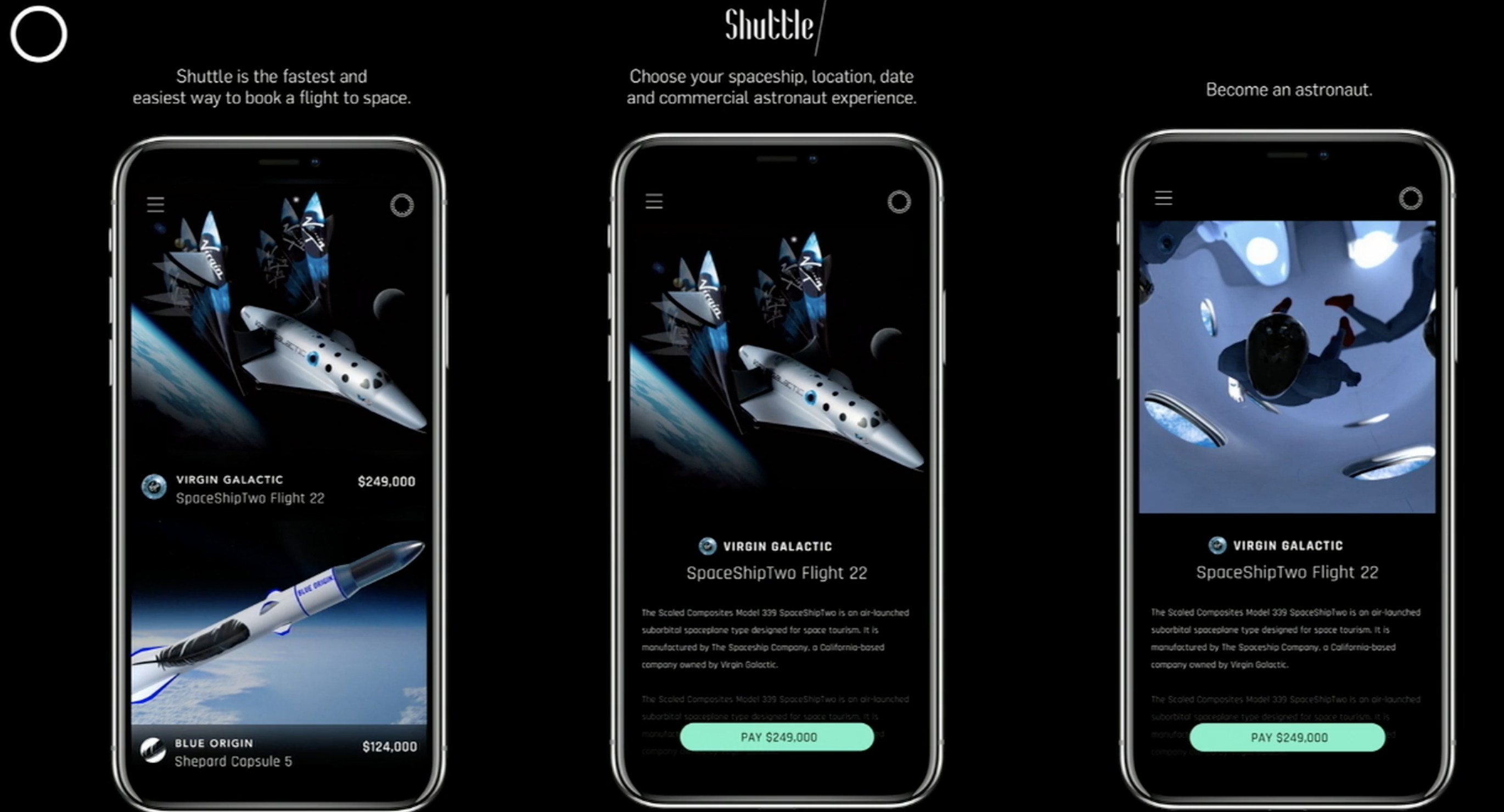
Launched earlier this year out of the Alchemist Accelerator and co-founded with cybersecurity expert and Wickr co-founder, Nico Sell, Shuttle is aiming to be the web and mobile-based booking agent for spaceflight.

“Space is my first love,” said Haskell, who helped found the Stanford Space Initiative at his alma mater. “I’ve always wanted to be an astronaut and help more people become astronauts. I thought it would  be cool to get more people to go to space and get more people interested in space travel.”

Haskell met Sell at the Alchemist Accelerator where she first worked as a mentor to the young entrepreneur. But she quickly became enamored with the idea of working at the edge of a new kind of frontier market. The day that Sell agreed to be the chair of Shuttle was the day Elon Musk’s SpaceX landed two booster rockets back on earth nearly simultaneously.

“I’m following Elon into space,” said Sell. “When I first started working with Avery I had asked ‘Are we really ready for that now?’ And after working with him I’m convinced that we are.”

Purchasing tickets on a flight listed on Shuttle isn’t the same as buying a plane ticket on Kayak, primarily because the price points are higher to the point of near-absurdity if you’re not a member of the super rich.

Offerings will range from trips on Virgin Galactic trips that will cost upwards of $250,000 in the near term to low-end packages that will include a zero-gravity flight aboard a tricked out Boeing 747 for the low-low price of just under $5,000 per-seat.

The company is actually taking orders for its first zero gravity flight, which it expects to launch from San Francisco in March 2019. That’ll give roughly 34 people the opportunity to experience weightlessness for around 8 minutes.

“Our mission is to open space up to everyone,” says Haskell. “We want to get more people to space so that the price goes down and so that more people can see earth from space and become private astronauts.”

Eventually, as more space tourism offerings become available, the company expects to sell additional packages. “There’s a luxury space hotel that’s being built right now,” says Sell. “It’s a million dollars a night and a 12 night minimum and every 90 minutes you see a sunset and a sunrise. Pretty soon there’s going to be a moon walk and a space walk that are available too.”

Shuttle is hoping to be the hub that aggregates all of these offers into a single one-stop shopping and media experience for consumers interested in seeking out existing planets and boldly going where only few men (and women) have gone before. And the company will offer virtual space tours and tickets to launches for the plebes who can’t afford an actual ride.

Initially, expect the ultra-rich or the ultra-subsidized to be the only folks that will be able to take these trips. Sell sees a lot of opportunities in corporate packages for business customers — likening it to a trip to Kelly Slater’s Surf Ranch for an executive retreat.

Sell believes that there will be upwards of 100,000 people in the next ten years who’ll be willing to plunk down the $50,000 to $250,000 that it will cost to go space.

Already, the company has $1.66 million in bookings off of 8 customers on four Virgin Galactic flights and four Zero Gravity Charters with commission rates of 5% to 10% on flights that average $250,000 per ticket.

As for what comes next, Haskell has some speculations. “We will probably be able to build a base on the moon very soon.. By 2030 that’s a possibility. Within my lifetime it will be pretty common for people to travel to and from other planets in space,” he said. 

For him, the importance of Shuttle is getting Earth’s human residents to realize the fragility of our existence on the tiny blue ball we all share. Haskell said his favorite quote from Carl Sagan was “We are a way for the cosmos to know itself.” And if that’s true, Haskell believes that the experience of traveling through the cosmos may be a way for humans to come to a better understanding of themselves as well.