Year: 2018

25 Oct 2018

White House belatedly begins planning for 5G with memo asking for policy recommendations

The White House has issued a memorandum outlining the need for a new national wireless connectivity strategy; the document doesn’t really establish anything new, but does request lots of reports on how things are going. Strangely, what it proposes sounds a lot like what the FCC already does.

The memorandum, heralded by a separate post announcing that “America Will Win the Global Race to 5G,” is not exactly a statement of policy, though it does put a few things out there. It’s actually more of a request for information on which to base a future policy — apparently one that will win us a global race that began years ago.

In fact, the U.S. has been pursuing a broad 5G policy for quite a while now, and under President Obama we were the first country to allocate spectrum to the nascent standard. But since then progress has stalled and we have been overtaken by the likes of South Korea and Spain in policy steps like spectrum auctions.

After some talk about the “insatiable demand” for wireless spectrum and the economic importance of wireless communications, the memo gets to business. Reports are requested within 180 days from various Executive branch departments and agencies on “their anticipated future spectrum requirements,” as well as reviews of their current spectrum usage.

The Office of Science and Technology Policy is asked to report in the same time period on how emerging tech (smart homes and grids, for instance) could affect spectrum demand, and how research and development spending should be guided to improve spectrum access.

Another report from the Secretary of Commerce will explain “existing efforts and planned near- to mid-term spectrum repurposing initiatives.”

270 days from today the various entities involved here, including the National Telecommunications and Information Administration and the FCC, will deliver a “long-term National Spectrum Strategy” that hits a number of targets:

  • Increase spectrum access, security and transparency
  • Create flexible spectrum management models, including standards, incentives, and enforcement mechanisms
  • “Develop advanced technologies” to improve spectrum access and sharing
  • Improve the global competitiveness of U.S. “terrestrial and space-related industries” (which seems to encompass all of them)

It’s not exactly ambitious; the terms are vague enough that one would expect any new legislation or rules to accomplish or accommodate these things. One would hardly want a spectrum policy that decreased access and transparency. In fact, the previous administration issued spectrum memos much like these, years ago.

Meanwhile this fresh start may frustrate those in government who are already doing this work. The FCC has been pursuing 5G and new spectrum policy for years, and it’s been a particular focus of Chairman Ajit Pai. He proposed a bunch of rules months ago, and just yesterday there was a proposal to bring Wi-Fi up to a more compatible and future-proof state. It’s entirely possible that the agency may have to justify and re-propose things it’s already doing, or see those actions and rules questioned or altered by committees over the next year.

FCC Commissioner Jessica Rosenworcel was not enthusiastic about the memo.

“We are ripping up what came before and starting with a new wireless policy sometime late next year. But the world isn’t going to wait for us,” she said in a statement provided to TechCrunch. “Other nations are moving ahead with strategies they are implementing now while we’re headed to study hall — and in the interim we’re slapping big tariffs on the most essential elements of 5G networks. If you stand back and survey what is happening, you see that we’re not expediting our 5G wireless leadership, we’re making choices that slow us down.”

Whether this new effort will yield worthwhile results, we’ll know in 270 days. Until then the authorities already attempting to make the U.S. the leader in 5G will continue doing what they’re doing.

25 Oct 2018

The biggest threat to drone innovation is a group you’ve never heard of 

A little-known but highly influential group of attorneys from across the country will soon meet in Detroit and could change our skies forever. They claim their draft model legislation concerning drones will help protect privacy. However, their actions could have far-reaching effects on innovation, safety and future drone operations.

The state-appointed members of the Uniform Law Commission (ULC) aim to promote uniformity by proposing model legislation for consideration by legislatures across the country.

In Detroit, the ULC will continue work on a proposed “Tort Law Relating to Drones Act” drafted by commissioners who have no aviation or drone experience and without consulting the federal government, state legislators or the industry. Their subsequent proposal fails to recognize the federal government’s exclusive control of airspace regulation and runs counter to existing law.

The draft proposal draws an inflexible, arbitrary line 200 feet in the sky and, if enacted by the states, would establish a new aerial trespass law. It anoints private property owners as de facto air traffic controllers, giving them a right to establish no-fly zones and creating a maze of flight paths with differing rules that operators must navigate on a house-by-house basis. As the draft goes much further than any existing state or federal law, it’s likely to cause significant controversy and could create a complicated patchwork of differing state laws that erode, rather than enhance, aviation safety.

Creating roadblocks to drone use would stifle innovation, halt job creation and slow growth in this still-nascent industry. Consumer drones are one of the fastest growing products, with total sales expected to reach over $1 billion this year, according to the Consumer Technology Association. More than 110,000  commercial small drones are registered with the Federal Aviation Administration (FAA), and it expects over 450,000 commercial drones to be flying by 2022.

The ULC’s proposal could prevent businesses and public service organizations from using drones. This could limit powerline and railroad inspections, prevent insurance companies from deploying drones to assess damage or ground drone search and rescue operations after natural disasters, like hurricanes Florence and Michael.

The ULC has essentially disregarded the concerns of the U.S. Department of Transportation (DOT), the FAA and the drone industry. Its proposal incorrectly states the DOT, FAA and others are supportive despite on-the-record letters opposing these efforts. The ULC has ignored attempts to correct these mischaracterizations.

This isn’t the first time the ULC has disregarded industry views. In 2014, it attempted to jam through model legislation that would have led to automatic disclosure of digital assets after death with little regard for privacy or whether the deceased consented. States rejected the proposal and the ULC was forced to revise it to require affirmative consent in wills before assets are disclosed — as the tech industry had originally proposed.

The ULC’s lack of inclusiveness sits in stark contrast to the FAA’s collaborative process to ensure the safe integration of drones into our skies. Its UAS Integration Pilot Program currently works with state, local and tribal governments across the country to conduct research that will shape a national drone policy framework in the coming years.

The program provides a mechanism for localities to provide input to the FAA without infringing on its jurisdiction over the airspace. The recently enacted FAA Reauthorization Act also mandates a study on the roles of different levels of government in drone regulations.

The ULC shouldn’t undo the tremendous progress we have made. Instead, it should abandon its severely flawed proposal and leave airspace regulation to the FAA so the drone industry, and American aviation as a whole, can continue to safely operate in our skies.

25 Oct 2018

CBS All Access places two-season order for animated series ‘Star Trek: Lower Decks’

CBS’ streaming plans have become even more Trek-centric with the announcement of a two-season order for a half-hour animated series called “Star Trek: Lower Decks.”

Many Star Trek fans will probably recognize “Lower Decks” as the title of a popular “Next Generation” episode about four junior officers on the Enterprise, and it sounds like the new series will take that approach even further — CBS says it will “focus on the support crew serving on one of Starfleet’s least important ships.”

The network says the series was developed by “Rick and Morty” writer and executive producer Mike McMahan. As you can probably tell from tongue-in-cheek plot description, “Lower Decks” is meant be a comedy. At the same time, McMahan insisted that it will be “undeniably ‘Trek.'”

Apparently he’s a serious fan himself, having started a “Next Generation”-related Twitter account about a fictitious eighth season, then turning that account into a book.

“Mike won our hearts with his first sentence: ‘I want to do a show about the people who put the yellow cartridge in the food replicator so a banana can come out the other end,’” said executive producer Alex Kurtzman in a statement. “His cat’s name is Riker. His son’s name is Sagan. The man is committed.”

Kurtzman, who co-wrote two of the recent “Star Trek” big-screen blockbusters and co-created “Star Trek: Discovery,” has been spearheading efforts to launch several Star Trek spinoffs on the CBS All Access streaming service, including the return of Patrick Stewart as Jean-Luc Picard. (To be clear, All Access has some non-Trek shows too, including “The Good Fight” and the upcoming “Twilight Zone” reboot from Jordan Peele.)

In addition to being the first original animated series on CBS All Access, “Lower Decks” is the first production from the new CBS Eye Animation Productions. And while the announcement doesn’t include a release date for the animated series, “Star Trek: Discovery” returns for its second season on January 17.

25 Oct 2018

Fleksy’s keyboard grabs $800k+ via equity crowdfunding

The dev team that’s now engineering the Fleksy keyboard app has raised more than $800,000 via an equity crowdfunding route.

As we reported a year ago, the development of Fleksy’s keyboard has been taken over by the Barcelona-based startup behind an earlier keyboard app called ThingThing.

The team says their new funding raise — described as a pre-Series A round — will be put towards continued product development of the Fleksy keyboard, including the core AI engine used for next word and content prediction, plus additional features being requested by users — such as swipe to type. 

Support for more languages is also planned. (Fleksy’s Android and iOS apps are currently available in 45+ languages.)

Their other big push will be for growth: Scaling the user-base via a licensing route to market in which the team pitches Android OEMs on the benefits of baking Fleksy in as the default keyboard — offering a high degree of customization, alongside a feature-set that boasts not just speedy typing but apps within apps and extensions. 

The Fleksy keyboard can offer direct access to web search within the keyboard, for example, as well as access to third party apps (in an apps within apps play) — to reduce the need for full app switching.

This was the original concept behind ThingThing’s eponymous keyboard app, though the team has refocused efforts on Fleksy. And bagged their first OEMs as licensing partners.

They’ve just revealed Palm as an early partner. The veteran brand unveiled a dinky palm-sized ‘ultra-mobile’ last week. The tiny extra detail is that the device runs a custom version of the Fleksy keyboard out of the box.

With just 3.3 inches of screen to play with, the keyboard on the Palm risks being a source of stressful friction. Ergo enter Fleksy, with gesture based tricks to speed up cramped typing, plus tried and tested next-word prediction.

ThingThing CEO Olivier Plante says Palm was looking for an “out of the box optimized input method” — and more than that “high customization”.

“We’re excited to team up with ThingThing to design a custom keyboard that delivers a full keyboard typing experience for Palm’s ultra mobile form factor,” adds Dennis Miloseski, co-founder of Palm, in a statement. “Fleksy enables gestures and voice-to-text which makes typing simple and convenient for our users on the go.”

Plante says Fleksy has more OEM partnerships up its sleeve too. “We’re pending to announce new partnerships very soon and grow our user base to more than 25 million users while bringing more revenue to the medium and small OEMs desperately looking to increase their profit margins — software is the cure,” he tells TechCrunch.

ThingThing is pitching itself as a neutral player in the keyboard space, offering OEMs a highly tweakable layer where the Qwerty sits as its strategy to compete with Android’s keyboard giants: Google’s Gboard and Microsoft-owned SwiftKey. 

“We changed a lot of things in Fleksy so it feels native,” says Plante, discussing the Palm integration. “We love when the keyboard feels like the brand and with Palm it’s completely a Palm keyboard to the end-user — and with stellar performance on a small screen.”

“We’ve beaten our competitor to the punch,” he adds. 

That said, the tiny Palm (pictured in the feature image at the top of this post) is unlikely to pack much of a punch in marketshare terms. While Palm is a veteran — and, to nerds, almost cult — brand it’s not even a mobile tiddler in smartphone marketshare terms.

Palm’s cute micro phone is also an experimental attempt to create a new mobile device category — a sort of netbook-esque concept of an extra mobile that’s extra portable — which looks unlikely to be anything other than extremely niche. (Added to its petite size, the Palm is a Verizon exclusive.)

Even so ThingThing is talking bullishly of targeting 550M devices using its keyboard by 2020.

At this stage its user-base from pure downloads is also niche: Just over 1M active users. But Plante says it has already closed “several phone brands partnerships” — saying three are signed, with three more in the works — claiming this will make Fleksy the default input method in more than 20-30 million active users in the coming months. 

He doesn’t name any names but describes these other partners as “other major phone brands”.

The plan to grow Fleksy’s user-base via licensing has attracted wider investor backing now, via the equity crowdfunding route. The team had initially been targeting ($300k). In all they’ve secured $815,119 from 446 investors.

Plante says they went down the equity crowdfunding route to spread their pitch more widely, and get more ambassadors on board — as well as to demonstrate “that we’re a user-centric/people/independent company aiming big”.

“We are keen to work and fully customize the keyboard to the OEM tastes. We know this is key for them so they can better compete against the others on more than simply the hardware,” he says, making the ‘Fleksy for OEMs’ pitch. “Today, the market is saturated with yet another box, better camera and better screen…. the missing piece in Android ecosystem is software differences.”

Given how tight margins remain for Android makers it remains to be seen how many will bite. Though there’s a revenue share arrangement that sweetens the deal.

It is also certainly true that differentiation in the Android space is a big problem. That’s why Palm is trying its hand at a smaller form factor — in a leftfield attempt to stand out by going small.

The European Union’s recent antitrust ruling against Google’s Android OS has also opened up an opportunity for additional software customization, via unbundled Google apps. So there’s at least a chance for some new thinking and ideas to emerge in the regional Android smartphone space. And that could be good for Spain-based ThingThing.

Aside from the licensing fee, the team’s business model relies on generating revenue via affiliate links and its fleksyapps platform. ThingThing then shares revenue with OEM partners, so that’s another carrot for them — offering a services topper on their hardware margin.

Though that piece will need scale to really spin up. Hence ThingThing’s user target for Fleksy being so big and bold.

“We’re working with brands in order to bring them into any apps where you type, which unlocks brand new use cases and enables the user to share conveniently and the brand to drive mobile traffic to their service,” says Plante. “On this note, we monetize via affiliate/deep linking and operating a fleksyapps Store.”

ThingThing has also made privacy by design a major focus — which is a key way it’s hoping to make the keyboard app stand out against data-mining big tech rivals.

25 Oct 2018

Fleksy’s keyboard grabs $800k+ via equity crowdfunding

The dev team that’s now engineering the Fleksy keyboard app has raised more than $800,000 via an equity crowdfunding route.

As we reported a year ago, the development of Fleksy’s keyboard has been taken over by the Barcelona-based startup behind an earlier keyboard app called ThingThing.

The team says their new funding raise — described as a pre-Series A round — will be put towards continued product development of the Fleksy keyboard, including the core AI engine used for next word and content prediction, plus additional features being requested by users — such as swipe to type. 

Support for more languages is also planned. (Fleksy’s Android and iOS apps are currently available in 45+ languages.)

Their other big push will be for growth: Scaling the user-base via a licensing route to market in which the team pitches Android OEMs on the benefits of baking Fleksy in as the default keyboard — offering a high degree of customization, alongside a feature-set that boasts not just speedy typing but apps within apps and extensions. 

The Fleksy keyboard can offer direct access to web search within the keyboard, for example, as well as access to third party apps (in an apps within apps play) — to reduce the need for full app switching.

This was the original concept behind ThingThing’s eponymous keyboard app, though the team has refocused efforts on Fleksy. And bagged their first OEMs as licensing partners.

They’ve just revealed Palm as an early partner. The veteran brand unveiled a dinky palm-sized ‘ultra-mobile’ last week. The tiny extra detail is that the device runs a custom version of the Fleksy keyboard out of the box.

With just 3.3 inches of screen to play with, the keyboard on the Palm risks being a source of stressful friction. Ergo enter Fleksy, with gesture based tricks to speed up cramped typing, plus tried and tested next-word prediction.

ThingThing CEO Olivier Plante says Palm was looking for an “out of the box optimized input method” — and more than that “high customization”.

“We’re excited to team up with ThingThing to design a custom keyboard that delivers a full keyboard typing experience for Palm’s ultra mobile form factor,” adds Dennis Miloseski, co-founder of Palm, in a statement. “Fleksy enables gestures and voice-to-text which makes typing simple and convenient for our users on the go.”

Plante says Fleksy has more OEM partnerships up its sleeve too. “We’re pending to announce new partnerships very soon and grow our user base to more than 25 million users while bringing more revenue to the medium and small OEMs desperately looking to increase their profit margins — software is the cure,” he tells TechCrunch.

ThingThing is pitching itself as a neutral player in the keyboard space, offering OEMs a highly tweakable layer where the Qwerty sits as its strategy to compete with Android’s keyboard giants: Google’s Gboard and Microsoft-owned SwiftKey. 

“We changed a lot of things in Fleksy so it feels native,” says Plante, discussing the Palm integration. “We love when the keyboard feels like the brand and with Palm it’s completely a Palm keyboard to the end-user — and with stellar performance on a small screen.”

“We’ve beaten our competitor to the punch,” he adds. 

That said, the tiny Palm (pictured in the feature image at the top of this post) is unlikely to pack much of a punch in marketshare terms. While Palm is a veteran — and, to nerds, almost cult — brand it’s not even a mobile tiddler in smartphone marketshare terms.

Palm’s cute micro phone is also an experimental attempt to create a new mobile device category — a sort of netbook-esque concept of an extra mobile that’s extra portable — which looks unlikely to be anything other than extremely niche. (Added to its petite size, the Palm is a Verizon exclusive.)

Even so ThingThing is talking bullishly of targeting 550M devices using its keyboard by 2020.

At this stage its user-base from pure downloads is also niche: Just over 1M active users. But Plante says it has already closed “several phone brands partnerships” — saying three are signed, with three more in the works — claiming this will make Fleksy the default input method in more than 20-30 million active users in the coming months. 

He doesn’t name any names but describes these other partners as “other major phone brands”.

The plan to grow Fleksy’s user-base via licensing has attracted wider investor backing now, via the equity crowdfunding route. The team had initially been targeting ($300k). In all they’ve secured $815,119 from 446 investors.

Plante says they went down the equity crowdfunding route to spread their pitch more widely, and get more ambassadors on board — as well as to demonstrate “that we’re a user-centric/people/independent company aiming big”.

“We are keen to work and fully customize the keyboard to the OEM tastes. We know this is key for them so they can better compete against the others on more than simply the hardware,” he says, making the ‘Fleksy for OEMs’ pitch. “Today, the market is saturated with yet another box, better camera and better screen…. the missing piece in Android ecosystem is software differences.”

Given how tight margins remain for Android makers it remains to be seen how many will bite. Though there’s a revenue share arrangement that sweetens the deal.

It is also certainly true that differentiation in the Android space is a big problem. That’s why Palm is trying its hand at a smaller form factor — in a leftfield attempt to stand out by going small.

The European Union’s recent antitrust ruling against Google’s Android OS has also opened up an opportunity for additional software customization, via unbundled Google apps. So there’s at least a chance for some new thinking and ideas to emerge in the regional Android smartphone space. And that could be good for Spain-based ThingThing.

Aside from the licensing fee, the team’s business model relies on generating revenue via affiliate links and its fleksyapps platform. ThingThing then shares revenue with OEM partners, so that’s another carrot for them — offering a services topper on their hardware margin.

Though that piece will need scale to really spin up. Hence ThingThing’s user target for Fleksy being so big and bold.

“We’re working with brands in order to bring them into any apps where you type, which unlocks brand new use cases and enables the user to share conveniently and the brand to drive mobile traffic to their service,” says Plante. “On this note, we monetize via affiliate/deep linking and operating a fleksyapps Store.”

ThingThing has also made privacy by design a major focus — which is a key way it’s hoping to make the keyboard app stand out against data-mining big tech rivals.

25 Oct 2018

Bessemer Venture Partners has a brand new $1.85B fund

It was once unusual for venture capital funds to cross the billion-dollar threshold. Now, multiple billion-dollar fund announcements in the same week is nothing to gawk at.

Bessemer Venture Partners, an investment firm founded more than 100 years ago, is the latest to complete the fundraising circuit. The firm has brought in $1.85 billion for its tenth flagship VC fund, its fourth consecutive billion-dollar fund, according to PitchBook.

Earlier reports indicated the firm had set a $1.6 billion target for the vehicle. At the time, TechCrunch surmised that if the firm indeed raised $1.6 billion — the size of its last two funds — it would be bucking VCs’ new favorite trend of raising their largest funds to date in defense of SoftBank’s $93 billion Vision Fund. Well, this is certainly Bessemer’s largest fund to date, but the firm says their approach is unchanged.

“It’s no secret that many in the Valley are raising larger—and larger—funds, and others are raising multiple new funds across different stages or geographies,” the firm wrote in an announcement today. “As we planned BVP X, we naturally asked if we should do the same. But as we thought through how we can be the best partner to visionary entrepreneurs, we felt the right decision was to stay true to an approach that has seen 122 companies go public and helped many other entrepreneurs lay strong foundations to create revolutions of their own. At $1.85 billion, BVP X is slightly larger than our earlier funds but still allowing us to focus on what we’re passionate about making early-stage investments and sticking with companies and their leaders at every stage of their growth.”

With offices in Boston, New York, San Francisco, India and Israel, the Redwood City-based firm backs global startups at the seed, Series A and Series B stages. It’s known for its investments in Shopify, LinkedIn, Blue Apron and several others, with a current portfolio that includes Pinterest, Zoosk, Ola, Betterment, Rocket Lab, Toast, PagerDuty, ServiceTitan and Fiverr.

This is the fourth massive fundraise for a VC fund in the last week. Josh Kushner’s Thrive Capital announced the close of $1 billion in new capital for its sixth flagship venture fund on Tuesday in what was similarly the firm’s largest raise to date. On Monday, Tiger Global garnered $3.75 billion for its latest fund — the second largest venture fund of 2018 — after actively marketing it for just six weeks. And only days before that, GGV Capital raised $1.9 billion across three funds for U.S. and China-based companies.

Sequoia’s mammoth $8 billion fund, which closed this summer, remains the largest fund of the year. Other new and notable buckets of capital include YF Capital’s $2.5 billion fund, Tunlan Investment’s Xiong’An $1.6 billion Global Blockchain Innovation Fund, General Catalyst’s $1.375 billion fund and Lightspeed Venture Partners $1.8 billion fundraise for two new funds.

25 Oct 2018

Bessemer Venture Partners has a brand new $1.85B fund

It was once unusual for venture capital funds to cross the billion-dollar threshold. Now, multiple billion-dollar fund announcements in the same week is nothing to gawk at.

Bessemer Venture Partners, an investment firm founded more than 100 years ago, is the latest to complete the fundraising circuit. The firm has brought in $1.85 billion for its tenth flagship VC fund, its fourth consecutive billion-dollar fund, according to PitchBook.

Earlier reports indicated the firm had set a $1.6 billion target for the vehicle. At the time, TechCrunch surmised that if the firm indeed raised $1.6 billion — the size of its last two funds — it would be bucking VCs’ new favorite trend of raising their largest funds to date in defense of SoftBank’s $93 billion Vision Fund. Well, this is certainly Bessemer’s largest fund to date, but the firm says their approach is unchanged.

“It’s no secret that many in the Valley are raising larger—and larger—funds, and others are raising multiple new funds across different stages or geographies,” the firm wrote in an announcement today. “As we planned BVP X, we naturally asked if we should do the same. But as we thought through how we can be the best partner to visionary entrepreneurs, we felt the right decision was to stay true to an approach that has seen 122 companies go public and helped many other entrepreneurs lay strong foundations to create revolutions of their own. At $1.85 billion, BVP X is slightly larger than our earlier funds but still allowing us to focus on what we’re passionate about making early-stage investments and sticking with companies and their leaders at every stage of their growth.”

With offices in Boston, New York, San Francisco, India and Israel, the Redwood City-based firm backs global startups at the seed, Series A and Series B stages. It’s known for its investments in Shopify, LinkedIn, Blue Apron and several others, with a current portfolio that includes Pinterest, Zoosk, Ola, Betterment, Rocket Lab, Toast, PagerDuty, ServiceTitan and Fiverr.

This is the fourth massive fundraise for a VC fund in the last week. Josh Kushner’s Thrive Capital announced the close of $1 billion in new capital for its sixth flagship venture fund on Tuesday in what was similarly the firm’s largest raise to date. On Monday, Tiger Global garnered $3.75 billion for its latest fund — the second largest venture fund of 2018 — after actively marketing it for just six weeks. And only days before that, GGV Capital raised $1.9 billion across three funds for U.S. and China-based companies.

Sequoia’s mammoth $8 billion fund, which closed this summer, remains the largest fund of the year. Other new and notable buckets of capital include YF Capital’s $2.5 billion fund, Tunlan Investment’s Xiong’An $1.6 billion Global Blockchain Innovation Fund, General Catalyst’s $1.375 billion fund and Lightspeed Venture Partners $1.8 billion fundraise for two new funds.

25 Oct 2018

Dropbox expands Paper into planning tool with timelines

Dropbox has been building out Paper, its document-driven collaboration tool since it was first announced in 2015, slowly but surely layering on more functionality. Today, it added a timeline feature, pushing beyond collaboration into a light-weight project planning tool.

Dropbox has been hearing that customers really need a way to plan with Paper that was lacking. “That pain—the pain of coordinating all those moving pieces—is one we’re taking on today with our new timelines feature in Dropbox Paper,” the company wrote in a blog post announcing the new feature.

As you would expect with such a tool, it enables you to build a timeline with milestones, but being built into Paper, you can assign team members to each milestone and add notes with additional information including links to related documents.

You can also embed a To-do lists for the person assigned to a task right in the timeline to help them complete the given task, giving a single point of access for all the people assigned to a project

Gif: Dropbox

“Features like to-dos, @mentions, and due dates give team members easy ways to coordinate projects with each other. Timelines take these capabilities one step further, letting any team member create a clean visual representation of what’s happening when—and who’s responsible,” Dropbox wrote in the blog post announcement.

Dropbox has recognized it cannot live as simply a content storage tool. It needs to expand beyond that into collaboration and coordination around that content, and that’s what Dropbox Paper has been about. By adding timelines, the company is looking to expand that capability even further.

Alan Lepofsky, who covers the “future of work” for Constellation Research sees Paper as part of the changing face of collaboration tools. “I refer to the new breed of content creation tools as digital canvases. These apps simplify the user experience of integrating content from multiple sources. They are evolving the word-processor paradigm,” Lepofsky told TechCrunch.

It’s probably not going to replace a project manager’s full-blown planning tools any time soon, but it at least the potential to be a useful adjunct for the Paper arsenal to allow customers to continue to find ways to extract value from the content they store in Dropbox.

25 Oct 2018

Dropbox expands Paper into planning tool with timelines

Dropbox has been building out Paper, its document-driven collaboration tool since it was first announced in 2015, slowly but surely layering on more functionality. Today, it added a timeline feature, pushing beyond collaboration into a light-weight project planning tool.

Dropbox has been hearing that customers really need a way to plan with Paper that was lacking. “That pain—the pain of coordinating all those moving pieces—is one we’re taking on today with our new timelines feature in Dropbox Paper,” the company wrote in a blog post announcing the new feature.

As you would expect with such a tool, it enables you to build a timeline with milestones, but being built into Paper, you can assign team members to each milestone and add notes with additional information including links to related documents.

You can also embed a To-do lists for the person assigned to a task right in the timeline to help them complete the given task, giving a single point of access for all the people assigned to a project

Gif: Dropbox

“Features like to-dos, @mentions, and due dates give team members easy ways to coordinate projects with each other. Timelines take these capabilities one step further, letting any team member create a clean visual representation of what’s happening when—and who’s responsible,” Dropbox wrote in the blog post announcement.

Dropbox has recognized it cannot live as simply a content storage tool. It needs to expand beyond that into collaboration and coordination around that content, and that’s what Dropbox Paper has been about. By adding timelines, the company is looking to expand that capability even further.

Alan Lepofsky, who covers the “future of work” for Constellation Research sees Paper as part of the changing face of collaboration tools. “I refer to the new breed of content creation tools as digital canvases. These apps simplify the user experience of integrating content from multiple sources. They are evolving the word-processor paradigm,” Lepofsky told TechCrunch.

It’s probably not going to replace a project manager’s full-blown planning tools any time soon, but it at least the potential to be a useful adjunct for the Paper arsenal to allow customers to continue to find ways to extract value from the content they store in Dropbox.

25 Oct 2018

Daily Crunch: Tesla is profitable again

The Daily Crunch is TechCrunch’s roundup of our biggest and most important stories. If you’d like to get this delivered to your inbox every day at around 9am Pacific, you can subscribe here:

1. Tesla earns its first profit in two years

Tesla reported a profit in the third quarter, reversing seven consecutive quarters of losses. This is only the third time in the company’s history that it has achieved this milestone.

The turnaround was driven by sales of the Model 3. The company said customers are trading up their relatively cheaper vehicles to buy a Model 3, even though there is not yet a leasing option and the starting price was $49,000.

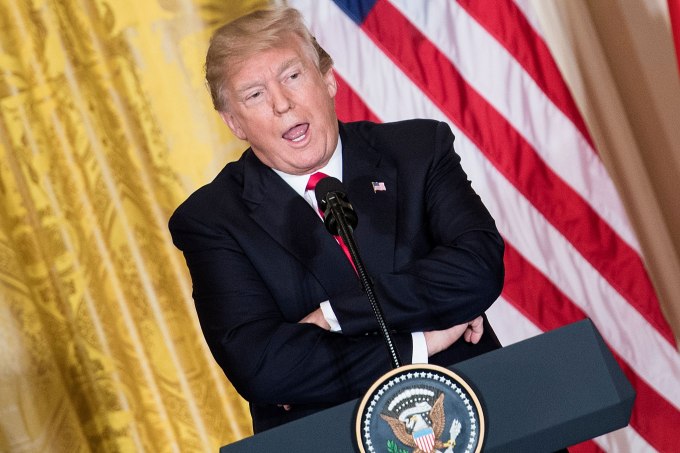
2. Trump has two ‘secure’ iPhones, but the Chinese are still listening

A new report by The New York Times puts a spotlight on the president’s array of devices and how he uses them. However, both Trump and a spokesperson for China’s foreign ministry have denied the story.

(BRENDAN SMIALOWSKI/AFP/Getty Images)

3. Red Dead Redemption 2 sets the bar high for the next generation of open world games

Tomorrow, Red Dead Redemption 2 goes live after months of breathless speculation. And according to Devin Coldewey and Jordan Crook, it’s as good as you’ve been hoping.

4. Facebook is building Lasso, a video music app to steal TikTok’s teens

Facebook is building a standalone product where users can record and share videos of themselves lip syncing or dancing to popular songs, according to information from current and former employees.

5. One-year-old Ribbon raises $225m to remove the biggest stress of home buying

The startup wants to replace the incredible stress of securing a mortgage during the home-buying process with a Ribbon Offer: If a buyer can’t secure a mortgage in time for close, Ribbon will pay for the house itself and give the buyer extra time to get financing.

6. Twitter beats Wall St Q3 estimates with $758M in revenue

Twitter reported a 29 percent increase in ad revenue to $650 million, and the company says total ad engagements increased 50 percent year over year. However, user growth didn’t quite match expectations.

7. Confirmed: ShopRunner acquires Spring, raises $40M

ShopRunner is announcing its first infusion of venture funding under CEO Sam Yagan, plus an acquisition of the shopping app Spring. Sources also say it’s readying a major overhaul of its mobile app.