Year: 2018

25 Oct 2018

Trump has two ‘secure’ iPhones, but the Chinese are still listening

President Trump has three iPhones — two of them are “secure” and his third is a regular personal device. But whenever the commander-in-chief takes a call, his adversaries are said to be listening.

That’s according to a new report by The New York Times, which put a spotlight on the president’s array of devices — and how he uses them.

Trump reluctantly gave up his old and outdated Android-powered Samsung Galaxy phone when he took office in 2016 and was transitioned to Apple devices. iPhones have historically been seen as more secure than their Android counterparts. Although one of his devices is a regular iPhone that he can use to store his contacts, the two other iPhones for official business have been modified and locked down by the National Security Agency to prevent eavesdropping.

Except — even when you’re in the White House, you can’t escape the aging, ailing and insecure cell network that blankets the capital and the vast majority of the U.S.

A crucial cell network system that helps broker and pass information between networks — known as Signaling System No. 7 (or just SS7) — have made it easier in recent years for hackers to intercept phone calls and text messages. SS7 is the protocol that cell networks use to establish and route calls and texts, but SS7 so broken that codes used for two-factor authentication have been intercepted and used to break into and drain bank accounts.

Those largely unfixed flaws make it far easier for governments — and anyone else — to tap into calls as they’re being made. That includes China, Russia — and any reasonably knowledgable attacker with the resources to pull off a successful intercept.

Trump’s reliance on three iPhones may seem cumbersome, but it’s a step up from what his predecessor got.

President Obama once likened his government-issued iPhone — given to him during his second term — to a “play phone [that] your 3-year-old has.” It was modified so that it could receive email but couldn’t make calls, and didn’t have a camera or microphone that foreign adversaries could use to glean any knowledge that the president was working on. He wasn’t even allowed to text — not necessarily for technical reasons, but to comply with the Presidential Records Act, which requires high-ranking government officials to store their official communications.

As much as Trump has been given more leniency than Obama, the president is still supposed to receive new, clean devices every month to cut off any hidden persistent malware that could be lurking within. But that policy isn’t enforced as closely as it should be, the report says, because of the inconvenience of having to manually port over the old data to the new phone without accidentally transferring any lingering malware — if any.

Although flaws in SS7 remain an issue for the average person, they’re apparently no match for the president’s own terrible “opsec” — or operational security, an awareness of the threats that he faces and the effort to mitigate them. Even if the Chinese or the Russians aren’t listening to his calls, they could always try their luck by hanging around one of his golf courses — where the president sent staff into a scramble after losing one of his phones in a golf cart.

And this is someone we trust with the nuclear codes.

24 Oct 2018

Original Content podcast: Netflix’s ‘Hold the Dark’ is beautiful, but utterly mystifying

“Hold the Dark” tells the story of Russell Core (played by Jeffrey Wright), a wolf expert who arrives in the Alaskan village of Keelut to investigate the disappearance of a young boy.

At least, that’s how the Netflix Original movie begins. On this week’s episode of the Original Content podcast, your regular hosts are joined by Devin Coldewey to try to untangle what actually happens in the movie.

Without spoiling anything, it’s probably safe to say that “Hold the Dark” goes in some surprising directions — it starts weird and gets weirder (and much more violent), as you can see from our iMessage correspondence below.

anthony jordan texting

There’s a talented team at work here — the movie was directed by Jeremy Saulnier (“Green Room”), and in addition to Wright, it stars Alexander Skarsgard, James Badge Dale and Riley Keogh. There’s no denying that it’s a gorgeous film, filled with stunning images of the Alaskan wilderness. In the end, though, we weren’t convinced that the wolf-y symbolism and copious bloodshed added up to much of a story.

Also, instead of recapping the latest streaming headlines like the usual, Jordan takes a few minutes at the start of the episode to express her admiration for “I Love You, America,” the Sarah Silverman-hosted talk show that recently began its second season on Hulu.

You can listen in the player below, subscribe using Apple Podcasts or find us in your podcast player of choice. If you like the show, please let us know by leaving a review on Apple. You also can send us feedback directly. (Or suggest shows and movies for us to review!)

24 Oct 2018

Red Dead Redemption 2 will let you use your tablet as a map, no pausing required

The bigger these massive GTA-style sandbox games get, the harder it becomes to remember where the hell everything is. Even with Spider-Man, a game set in a loose recreation of a city I’ve been to a bunch of times, I found myself pausing to see the map and reorient myself every other mission.

Rockstar doesn’t want you having to pause Red Dead Redemption 2, its massively awaited title that’ll finally land later this week. Hell, they’re happy to let you turn the on-screen map and HUD off entirely, if you think it’s killing the immersion.

That’s why the company just announced the aptly named “Red Dead Redemption 2 Companion App”. Download the app to your iOS or Android device, link up your PS4/Xbox, and your smartphone/tablet becomes your map. It’ll let you view your current in-game position, swipe/zoom around to see what’s nearby, and set waypoints that’ll show up back in the game to lead the way.

Now, RDR2 isn’t the first game to chart out the companion app territory. EA released companion apps for a few recent titles (Mirrors Edge, FIFA, etc), and Bethesda built a super in-depth Pip-Boy companion app back in 2015 for Fallout 4. Rockstar itself was tinkering with companion apps with Grand Theft Auto 5 way back in 2013. But as an obsessive map checker, I’m loving this one all the same.

In addition to the map, the RDR companion app will also show you your character’s running stats and vitals, and let you view his in-game journal to recap the story so far. The app will ship on October 26th, the same day the game itself goes live.

24 Oct 2018

Facebook launches Candidate Info where politicians pitch on camera

Facebook wants to make YouTube-style monologue videos the new way for politicians to talk straight with their constituency. Today, Facebook launches Candidate Info, featuring thousands of direct-to-camera vertical videos where federal, state, and local candidates introduce themselves and explain their top policy priority, qualifications, and biggest goal if they win office. Congress members including Elizabeth Warren (D – MA Senate), Scott Walker (R – WI Governor), and Beto O’Rourke (D – TX Senate) have already posted, and Facebook expects more candidates to jump in shortly.

These videos will soon be available as part of an Election 2018 bookmark in the Facebook mobile app’s navigation drawer. And starting next week, the clips will begin appearing to potential constituents in the News Feed.

Facebook tells me these videos will make it easier for people to learn about and compare different candidates. The effort extends the Town Hall feature Facebook launched in 2017 that offers a personalized directory of candidates they could vote for. Candidate Info will similarly only show videos from politicians running in elections relevant to a given user, so if you’re in California you won’t see videos from the Texas senate race between O’Rourke and Ted Cruz. But you can still find their videos on their Facebook Pages.

With the mid-terms fast approaching, Facebook is trying to do everything it can to protect against election interference by foreign and domestic attackers, offer transparency about who bought campaign adsconnect users to candidates, and encourage people to register and vote. With fake news that spread through the social network thought to have influenced the 2016 election, and illgotten Facebook user data from Cambridge Analytica applied to Donald Trump’s campaign ad targeting, Facebook is hoping to avoid similar problematic narratives this time around.

You can see some examples of Candidate Info videos below from O’Rourke and Wisconsin Governor Scott Walker.

24 Oct 2018

Disrupt Berlin 2018 early-bird prices extended

It’s possible that St. Expeditus, the patron saint of procrastinators, has taken a shine to time-stressed startuppers. Call it whatever you like — divine intervention, planetary alignment or darned good luck — we’re extending the deadline for early-bird tickets to Disrupt Berlin 2018. That means you have 10 days until the 2 November deadline to save up to €500. Expedite your decision-making and buy your ticket today.

Why wouldn’t you join thousands of your peers and colleagues for two full days devoted to all things startup? Disrupt Berlin draws an international audience — literally thousands of attendees from more than 50 countries, including all the European Union members, Turkey, Russia, Egypt, India, China, South Korea and the list goes on. It’s an opportunity to see some of the best technology the world has to offer — and connect with the people behind it.

Take Startup Alley for example. More than 400 pre-Series A startups will populate our expo floor and showcase some pretty spectacular tech products, platforms, services and talent. It’s where innovation, collaboration and opportunity meet.

And you won’t want to miss our curated cohort of startups that earned the coveted TC Top Pick designation. More than 40 exceptional startups span these tech categories: AI/Machine Learning, Blockchain, CRM/Enterprise, E-commerce, Education, Fintech, Healthtech/Biotech, Hardware, Robotics, IoT, Mobility and Gaming. Here are just a few:

  • Gravete: The world’s first AI-enabled classified ads aggregator.
  • Brickblock: A platform to seamlessly and transparently connect cryptocurrencies with real-world assets.
  • Communiti: LinkedIn for Slack teams. Search users with certain skills such as iOS Developer or UX Designer. Post a job listing to collaborate.

Here’s the complete list of TC Top Picks at Disrupt Berlin 2018.

Disrupt Berlin 2018 offers an opportunity at every turn. Learn from our roster of outstanding speakers — leading founders, investors and technologists sharing their knowledge, perspective and advice. Take advantage of our Q&A Sessions to go deep on crucial tech topics with experts in a smaller, more intimate setting. Experience the thrill of Startup Battlefield, our epic pitch competition, as founders from 15 startups compete for the heralded Disrupt Cup, $50,000 cash and potentially life-changing media and investor love. Oh, and do not miss our kick-ass After Party. Want more specifics? Read the agenda.

Disrupt Berlin 2018 takes place on 29-30 November. You have a little over an extra week to save up to €500. Don’t disappoint St. Expeditus — buy your pass before the 2 November deadline.

24 Oct 2018

Facebook confirms it’s building augmented reality glasses

“Yeah! Well of course we’re working on it” Facebook’s head of augmented reality Ficus Kirkpatrick told me when I asked him if Facebook was building an AR glasses at TechCrunch’s AR/VR event in LA. “We are building hardware products. We’re going forward on this . . . We want to see those glasses come into reality, and I think we want to play our part in helping to bring them there.”

This is the clearest confirmation we’ve received yet from Facebook about its plans for AR glasses. The product could be Facebook’s opportunity to own a mainstream computing device on which its software could run after a decade of being beholden to smartphones built, controlled, and taxed by Apple and Google.

This month Facebook launched its first self-branded gadget out of its Building 8 lab, the Portal smart display, and now it’s revving up hardware efforts. For AR, Kirkpatrick told me “We have no product to announce right now. But we have a lot of very talented people doing really, really compelling cutting-edge research that we hope plays a part in the future of headsets.”

There’s a war brewing here. AR startups like Magic Leap and Thalmic Labs are starting to release their first headsets and glasses. Microsoft is considered a leader thanks to its early Hololens product, while Google Glass is still being developed for the enterprise. And Apple has acquired AR hardware developers like Akonia Holographics and Vrvana to accelerate development of its own headsets.

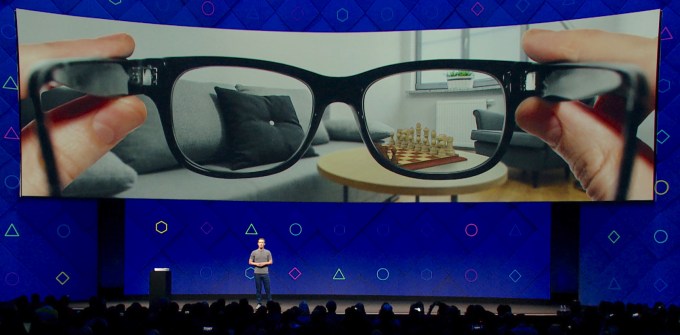
Mark Zuckerberg said AR glasses were 5 to 7 years away at F8 2017

Technological progress and competition seems to have sped up Facebook’s timetable. Back in April 2017, CEO Mark Zuckerberg said “We all know where we want this to get eventually, we want glasses”, but explained that “we do not have the science or technology today to build the AR glasses that we want. We may in five years, or seven years”. He explained that “We can’t build the AR product that we want today, so building VR is the path to getting to those AR glasses.” The company’s Oculus division had talked extensively about the potential of AR glasses, yet similarly characterized them as far off.

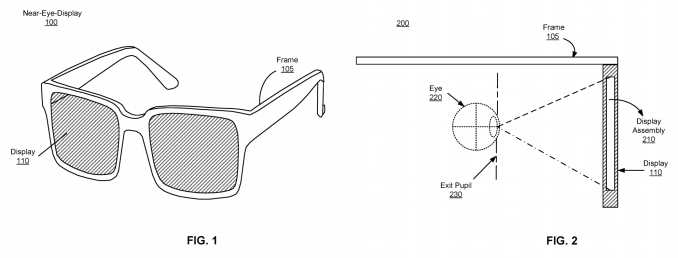
But a few months later, a Facebook patent application for AR glasses was spotted by Business Insider that detailed using “waveguide display with two-dimensional scanner” to project media onto the lenses. Cheddar’s Alex Heath reports that Facebook is working on Project Sequoia that uses projectors to display AR experiences on top of physical objects like a chess board on a table or a person’s likeness on something for teleconferencing. These indicate Facebook was moving past AR research.

Facebook AR glasses patent application

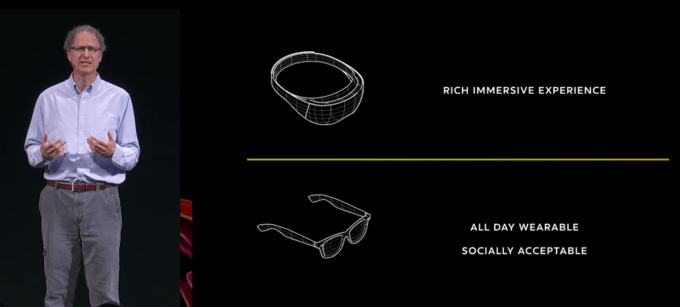
Last month, The Information spotted four Facebook job listings seeking engineers with experience building custom AR computer chips to join the Facebook Reality Lab (formerly known as Oculus research). And a week later, Oculus’ Chief Scientist Michael Abrash briefly mentioned amidst a half hour technical keynote at company’s VR conference that “No off the shelf display technology is good enough for AR, so we had no choice but to develop a new display system. And that system also has the potential to bring VR to a different level.”

But Kirkpatrick clarified that he sees Facebook’s AR efforts not just as a mixed reality feature of VR headsets. “I don’t think we converge to one single device . . . I don’t think we’re going to end up in a Ready Player One future where everyone is just hanging out in VR all the time” he tells me. “I think we’re still going to have the lives that we have today where you stay at home and you have maybe an escapist, immersive experience or you use VR to transport yourself somewhere else. But I think those things like the people you connect with, the things you’re doing, the state of your apps and everything needs to be carried and portable on-the-go with you as well, and I think that’s going to look more like how we think about AR.”

Oculus Chief Scientist Michael Abrash makes predictions about the future of AR and VR at the Oculus Connect 5 conference

Oculus virtual reality headsets and Facebook augmented reality glasses could share an underlying software layer, though, which might speed up engineering efforts while making the interface more familiar for users. “I think that all this stuff will converge in some way maybe at the software level” Kirkpatrick said.

The problem for Facebook AR is that it may run into the same privacy concerns that people had about putting a Portal camera inside their homes. While VR headsets generate a fictional world, AR must collect data about your real-world surroundings. That could raise fears about Facebook surveiling not just our homes but everything we do, and using that data to power ad targeting and content recommendations. This brand tax haunts Facebook’s every move.

Startups with a cleaner slate like Magic Leap and giants with a better track record on privacy like Apple could have an easier time getting users to put a camera on their heads. Facebook would likely need a best-in-class gadget that does much that others can’t in order to convince people it deserves to augment their reality.

You can watch our full interview with Facebook’s director of camera and head of augmented reality engineering Ficus Kirkpatrick from our TechCrunch Sessions — AR/VR event in LA:

24 Oct 2018

Tesla earns its first profit in two years

Tesla reported a profit in the third quarter, reversing seven consecutive quarters of losses and only the third time in its history that it has achieved this milestone. The third quarter earnings, which were reported after the market closed Wednesday, rocketed shares up nearly 12% to above $320.

Tesla reported a profit of $312 million attributed to common shareholders in the three months that ended on Sept. 30, compared with a $619 million loss in the same period last year.

Tesla has had just two profitable quarters in its history, the last of which was reported in 2016. The turnaround at the company were driven by sales of the Model 3, the electric vehicle that the company and its CEO Elon Musk has placed a considerable bet on.

When adjusted for one-time items, Tesla earned $516 million, or $2.90 per share, compared with a loss of $488 million, or $2.92 a share (loss), in the same period last year.

Tesla’s third-quarter earnings showed the company has a free cash flow of about $881 million compared with a negative free cash flow of $1.416 billion in the same period last year. Free cash flow is the amount of cash a company makes after accounting for capital expenditures.

The company total cash increased by $731 million to end the third quarter with $3 billion.

Tesla reported sales of $6.8 billion in the third quarter, more than doubling its revenues of $2.98 billion in the same quarter last year, driven by Model 3 deliveries. Tesla reported sales of $4 billion in the second quarter of this year.

Tesla’s automotive gross margin increased to 25.8% under generally accepted accounting principles. The company’s GAAP automotive gross margin was 18.3% in the same period last year.

Tesla reported October 2 that it delivered 83,500 electric vehicles in the third quarter, more than double from the previous period as the company steered by Elon Musk  pulled out all the stops to get its newest sedan, the Model 3, to customers.

The company delivered 55,840 Model 3 sedans, up from 18,440 in the previous quarter, which was within its own guidance. The company’s delivery numbers fell just short of the 56,000 deliveries expected by a consensus of analysts surveyed by FactSet.

24 Oct 2018

Voting is a social experience

If your Instagram followers aren’t aware that you’ve voted, did you really even vote?

In 2018, the act of voting is great social media fodder. People want their friends to know they’ve registered to vote, or that they’ve just mailed in their absentee ballot or even that they’ve bought some sort of “look, I voted” t-shirt. These announcements are being shared across social platforms like it’s a required part of the voting process.

Whether or not those people only voted for the likes doesn’t really matter, the important thing is that they voted. Social media, because of the unprecedented access it grants people to the lives of their peers and influencers, is an effective strategy of pushing eligible voters to the polls. Why? Because people care about their friends and often even more about what their friends think of them. No one wants to be that friend that didn’t vote.

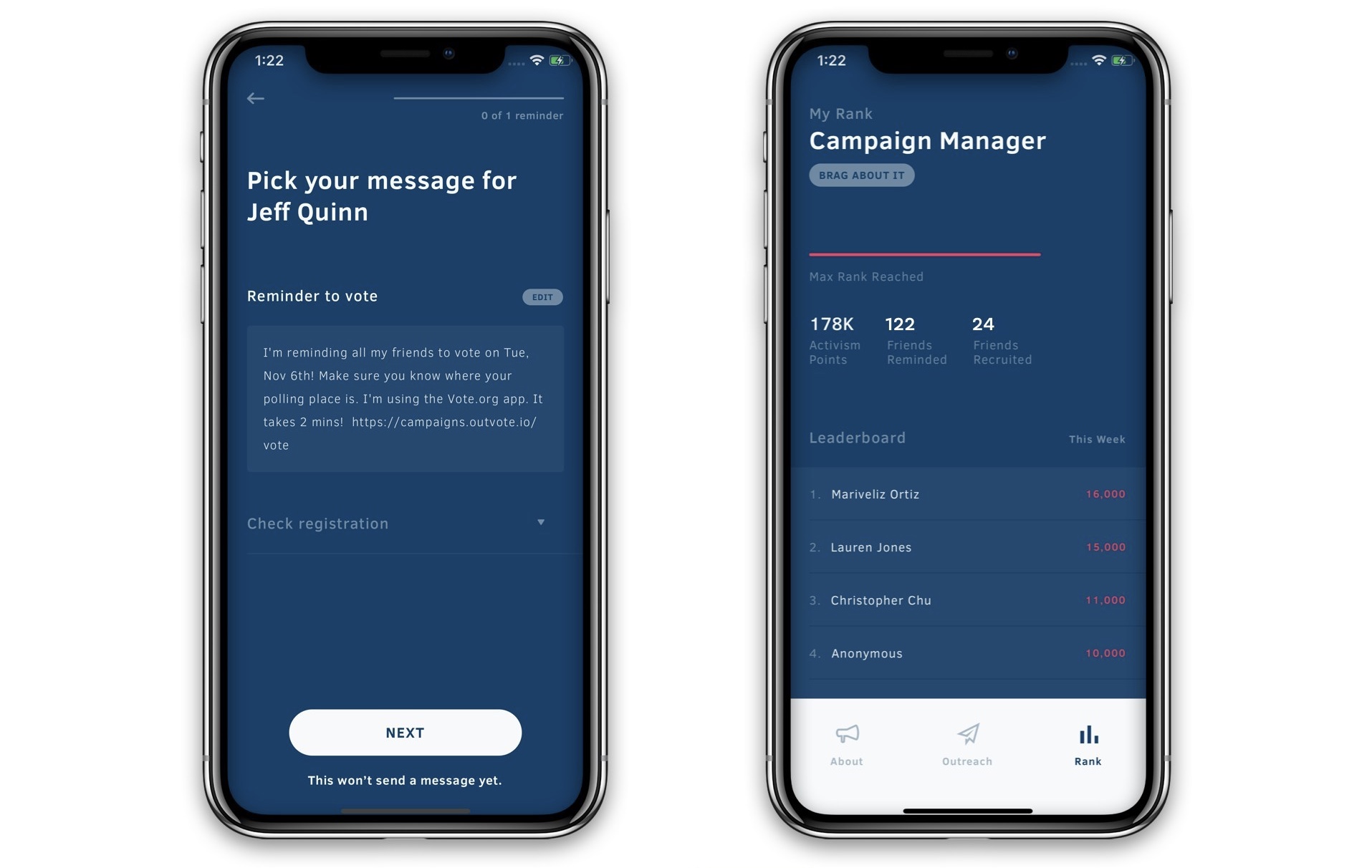
Vote.org and Outvote, a texting app for political campaigns, have taken note. The nonprofit platform for voter registration, information and advocacy has teamed up with the Y Combinator graduate to launch a new nonpartisan social media app that syncs with a user’s address book to help them quickly and efficiently remind their friends to check their registration status, find their polling place location and vote.

According to Outvote’s research, one text message from a known contact made people 10 percent more likely to vote versus 8 percent from a typical conversation with a political canvasser. Using the app, you can essentially perform 2 hours of canvassing in 5 minutes, from the comfort of your own bed.

“This November, reminding your friends is your new civic duty,” Outvote co-founder Naseem Makiya said in a statement. 

Outvote’s flagship app is tailored for Democrats and is meant to inspire and personalize grassroots-style campaigning. Using that app, you can send messages to your friends using Facebook Messenger, too, though the app doesn’t sync with any contacts outside of your phone’s address book.

In addition to YC backing, Outvote has raised $300,000 in seed funding. The startup was founded by Makiya, formerly of startups Moovweb and DataCamp, as well as Nadeem Mazen, the former chief executive officer of a creative agency called Nimblebot.

Axios reported earlier today that while TV and email campaigns are still used by political campaigns, text messaging has proven to be a whole lot more successful. Per Opn Sesame, 90 percent of text messages are read within 5 minutes: “That intimate delivery, and the ability to target and personalize messages, is what makes them so effective for campaigns — but also annoying for many voters who didn’t sign up for them,” Axios’ Kim Hart wrote.

Social media companies, other avenues for targeted and personalized messaging, have stepped up their voter education efforts ahead of the midterm elections.

Snap announced yesterday that after adding a vote button to its app, more than 400,000 of its users registered to vote via TurboVote. Meanwhile, Facebook and Twitter have added small reminders to their feeds, as have Reddit, Tinder, Bumble, Lyft and several other big tech companies.

Instagram, for its part, has Taylor Swift. Her recent social media campaign, beginning with a post earlier this month prodding her fans to vote, caused a big spike in voter registrations. According to Vote.org, 65,000 people registered to vote in the 24-hour period that followed her first-ever politically fueled gram.

Since then, Swift has been sharing on her Instagram story images of her fans who voted. It’s her reward to those who followed her advice to express their political opinions.

So vote, and you may be featured on a pop star’s Instagram. That’s 2018 for you.

24 Oct 2018

Alexa for Business opens up to third-party device makers

Last year, Amazon announced a new initiative, Alexa for Business, designed to introduce its voice assistant technology and Echo devices into a corporate setting. Today, it’s giving the platform a big upgrade by opening it up to device makers who are building their own solutions that have Alexa built-in.

The change came about based on feedback from the existing organizations where Alexa for Business is today being used, Amazon says. The company claims thousands of businesses have added an Amazon Echo alongside their existing office equipment since the program’s debut last year, including companies like Express Trucking, Fender and Propel Insurance, for example.

But it heard from businesses that they want to have Alexa built in to existing devices, to minimize the amount of technology they need to manage and monitor.

The update will allow device makers building with the Alexa Voice Service (AVS) SDK can now create products that can be registered with Alexa for Business, and managed as shared devices across the organization.

The device management capabilities include the ability to configure things like the room designation, location and monitor the device’s health, as well as manage which public and private skills are assigned to the shared devices.

A part of Alexa for Business is the ability for organizations to create their own internal – and practical – skills for a business setting, like voice search for employee directories, Salesforce data, or company calendar information.

Amazon also recently launched its own feature for Alexa for Business users that offers the ability for staff to book conference rooms.

Amazon says it’s already working with several brands on integrating Alexa into their own devices including Plantronics, iHome, and BlackBerry. And it’s working with solution providers like Linkplay and Extron, it says. (Citrix has also begun to integrate with the ‘for Business’ platform.)

“We’ve been using Alexa for Business since its launch by pairing Echo devices with existing Polycom equipment,” noted Laura Marx, VP of Alliance Marketing at Plantronics, in a statement about its plans to make equipment that works with Alexa. “Integrating those experiences directly into products like Polycom Trio will take our customer experience to the next level of convenience and ease of use,” she said.

Plantronics provided an early look at the Alexa experience earlier this year, and iHome has an existing device with Alexa built-in – the iAVS16. However, it has not yet announced which product will be offered through Alexa for Business.

It’s still too soon to see how well any of Amazon’s business initiatives with Alexa pay off – after all, Echo devices today are often used for consumer-orientated purposes like playing music, getting news and information, setting kitchen timers, and making shopping lists. But if Amazon is able to penetrate businesses with Echo speakers and other Alexa-powered business equipment, it could make inroads into a profitable voice market, beyond the smart home.

But not everyone believes Alexa in the workplace is a good idea. Hackers envision how the devices could be used for corporate espionage and hacks, and warn that companies with trade secrets shouldn’t have listening devices set around their offices.

Amazon, however, is plodding ahead. It has even integrated with Microsoft’s Cortana so Alexa can gain access to Cortana’s knowledge of productivity features like calendar management, day at a glance, and customer email.

The Alexa for Business capabilities are provided as an extension to the AVS Device SDK, starting with version 1.10, available to download from Github.


24 Oct 2018

Mobvoi launches new $200 smartwatch and $130 AirPods alternative

Chinese AI company Mobvoi has consistently been one of the best also-rans in the smartwatch game, which remains dominated by Apple. Today, it launched a sequel to its 2016 TicWatch, which was a viral hit raising over $2 million on Kickstarter, and it unveiled a cheaper take on Apple’s AirPods.

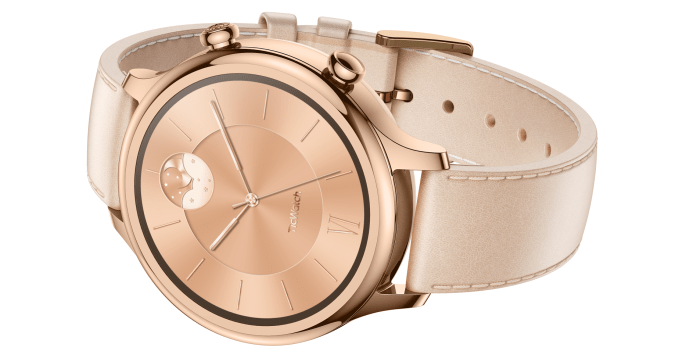
The new TicWatch C2 was outed at a London event and is priced at $199.99. Unlike its predecessor, it has shifted from Mobvoi’s own OS to Google’s Wear OS. That isn’t a huge surprise, though, since Mobvoi’s newer budget watches and ‘pro’ watch have both already made that jump.

The C2 — which stands for classic 2 — packs NFC, Bluetooth, NFC and a voice assistant. It comes in black, platinum and rose gold. The latter color option — shown below — is thinner so presumably it is designed for female wrists.

However, there’s a compromise since the watch isn’t shipping with Qualcomm’s newest Snapdragon Wear 3100 chip. Mobvoi has instead picked the older 2100 processor. That might explain the price, but it will mean that newer Android Wear watches shipping in the company months have better performance, particularly around battery life. As it stands, the TicWatch C2 claims a day-two life but the processor should be a consideration for would-be buyers.

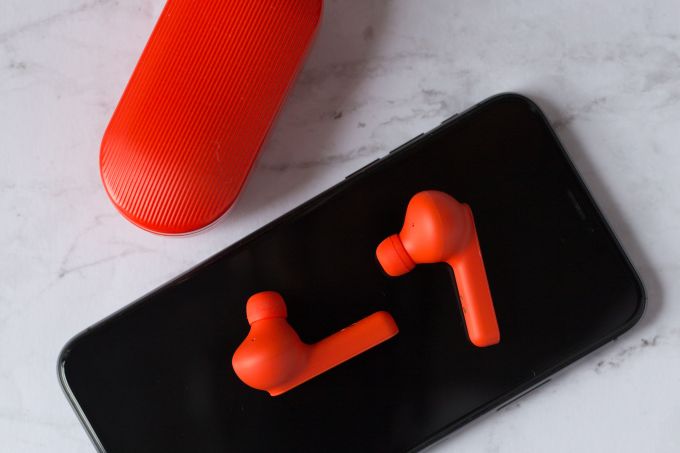
Mobvoi also outed TicPods Free, its take on Apple’s wireless AirPods. They are priced at $129.99 and available in red, white and blue.

The earbuds already raised over $2.8 million from Indiegogo — Mobvoi typically uses crowdfunding to gather feedback and assess customer interest — and early reviews have been positive.

They work on Android and iOS and include support for Alex and Google Assistant. They also include gesture-based controls beyond the Apple-style taps for skipping music, etc. Battery life without the case, which doubles as a charger, is estimated at 18 hours, or four hours of listening time.

The TicPods are available to buy online now. The TicWatch C2 is up for pre-sale ahead of a “wide” launch that’s planned for December 6.

Mobvoi specializes in AI and it includes Google among its investors. It also has a joint venture with VW that is focused on bringing Ai into the automotive industry. In China it is best known for AI services but globally, in the consumer space, it also offers a Google Assistant speaker called TicHome Mini.