Year: 2018

24 Oct 2018

A new ‘smart firewall’ iPhone app promises to put your privacy before profits

For weeks, a small team of security researchers and developers have been putting the finishing touches on a new privacy app, which its founder says can nix some of the hidden threats that mobile users face — often without realizing.

Phones track your location, apps siphon off our data, and aggressive ads try to grab your attention. Your phone has long been a beacon of data, broadcasting to ad networks and data trackers, trying to build up profiles on you wherever you go to sell you things you’ll never want.

Will Strafach knows that all too well. A security researcher and former iPhone jailbreaker, Strafach has shifted his time digging into apps for insecure, suspicious and unethical behavior. Last year, he found AccuWeather was secretly sending precise location data without a user’s permission. And just a few months ago, he revealed a list of dozens of apps that were sneakily siphoning off their users’ tracking data to data monetization firms without their users’ explicit consent.

Now his team — including co-founder Joshua Hill and chief operating officer Chirayu Patel — will soon bake those findings into its new “smart firewall” app, which he says will filter and block traffic that invades a user’s privacy.

“We’re in a ‘wild west’ of data collection,” he said, “where data is flying out from your phone under the radar — not because people don’t care but there’s no real visibility and people don’t know it’s happening,” he told me in a call last week.

At its heart, the Guardian Mobile Firewall — currently in a closed beta — funnels all of an iPhone or iPad’s internet traffic through an encrypted virtual private network (VPN) tunnel to Guardian’s servers, outsourcing all of the filtering and enforcement to the cloud to help reduce performance issues on the device’s battery. It means the Guardian app can near-instantly spot if another app is secretly sending a device’s tracking data to a tracking firm, warning the user or giving the option to stop it in its tracks. The aim isn’t to prevent a potentially dodgy app from working properly, but to give users’ awareness and choice over what data leaves their device.

Strafach described the app as “like a junk email filter for your web traffic,” and you can see from of the app’s dedicated tabs what data gets blocked and why. A future version plans to allow users to modify or block their precise geolocation from being sent to certain servers. Strafach said the app will later tell a user how many times an app accesses device data, like their contact lists.

But unlike other ad and tracker blockers, the app doesn’t use overkill third-party lists that prevent apps from working properly. Instead, taking a tried-and-tested approach from the team’s own research. The team periodically scans a range of apps in the App Store to help identify problematic and privacy-invasive issues that are fed to the app to help improve over time. If an app is known to have security issues, the Guardian app can alert a user to the threat. The team plans to continue building machine learning models that help to identify new threats — including so-called “aggressive ads” — that hijack your mobile browser and redirect you to dodgy pages or apps.
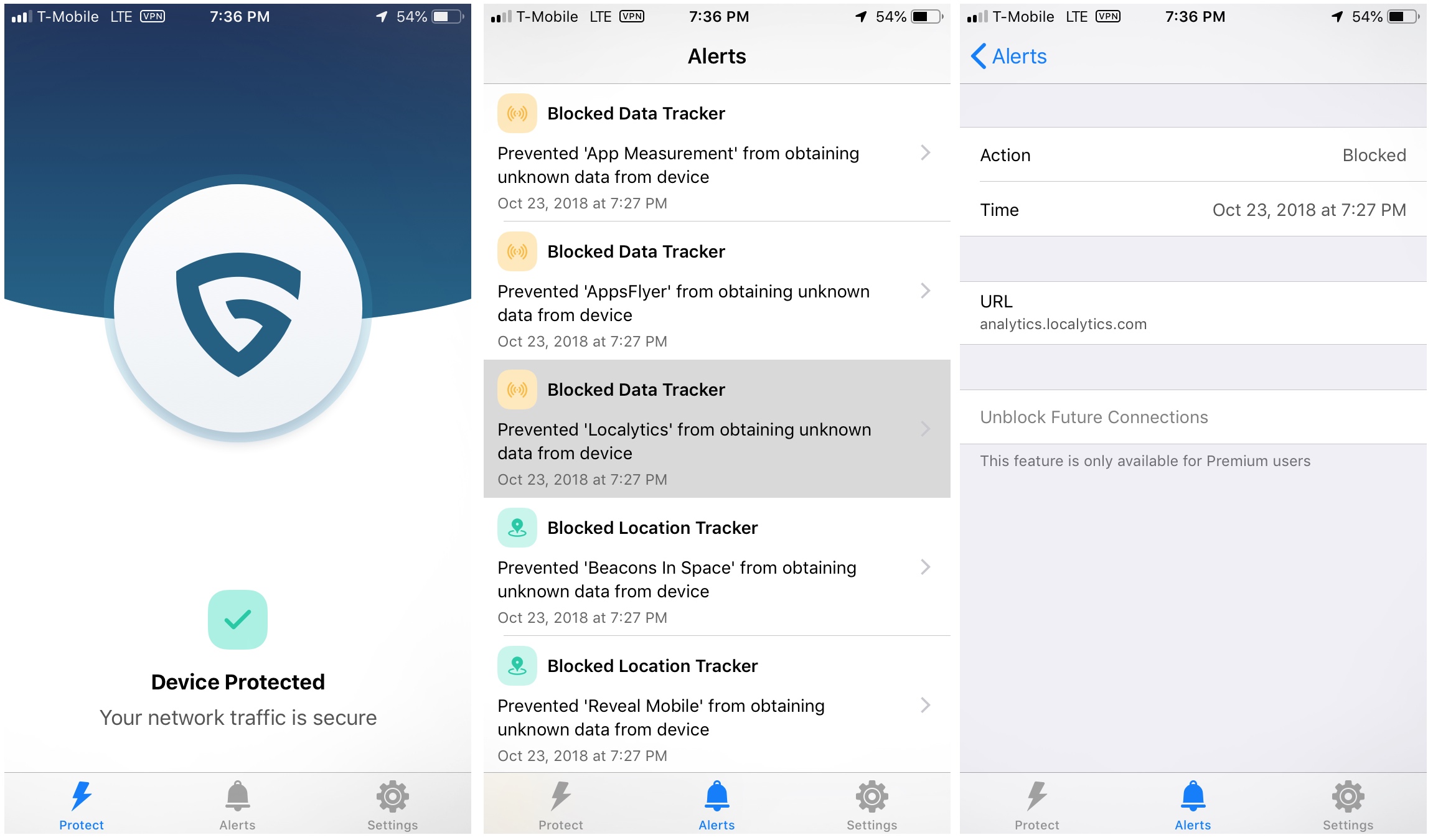
Screenshots of the Guardian app, set to be released in December (Image: supplied)

Strafach said that the app will “err on the side of usability” by warning users first — with the option of blocking it. A planned future option will allow users to go into a higher, more restrictive privacy level — “Lockdown mode” — which will deny bad traffic by default until the user intervenes.

What sets the Guardian app from its distant competitors is its anti-data collection.

Whenever you use a VPN — to evade censorship, site blocks or surveillance — you have to put more trust in the VPN server to keep all of your internet traffic safe than your internet provider or cell carrier. Strafach said that neither he nor the team wants to know who uses the app. The less data they have, the less they know, and the safer and more private its users are.

“We don’t want to collect data that we don’t need,” said Strafach. “We consider data a liability. Our rule is to collect as little as possible. We don’t even use Google Analytics or any kind of tracking in the app — or even on our site, out of principle.”

The app works by generating a random set of VPN credentials to connect to the cloud. The connection uses IPSec (IKEv2) with a strong cipher suite, he said. In other words, the Guardian app isn’t a creepy VPN app like Facebook’s Onavo, which Apple pulled from the App Store for collecting data it shouldn’t have been. “On the server side, we’ll only see a random device identifier, because we don’t have accounts so you can’t be attributable to your traffic,” he said.

“We don’t even want to say ‘you can trust us not to do anything,’ because we don’t want to be in a position that we have to be trusted,” he said. “We really just want to run our business the old fashioned way. We want people to pay for our product and we provide them service, and we don’t want their data or send them marketing.”

“It’s a very hard line,” he said. “We would shut down before we even have to face that kind of decision. It would go against our core principles.”

I’ve been using the app for the past week. It’s surprisingly easy to use. For a semi-advanced user, it can feel unnatural to flip a virtual switch on the app’s main screen and allow it to run its course. Anyone who cares about their security and privacy are often always aware of their “opsec” — one wrong move and it can blow your anonymity shield wide open. Overall, the app works well. It’s non-intrusive, it doesn’t interfere, but with the “VPN” icon lit up at the top of the screen, there’s a constant reminder that the app is working in the background.

It’s impressive how much the team has kept privacy and anonymity so front of mind throughout the app’s design process — even down to allowing users to pay by Apple Pay and through in-app purchases so that no billing information is ever exchanged.

The app doesn’t appear to slow down the connection when browsing the web or scrolling through Twitter or Facebook, on neither LTE or a Wi-Fi network. Even streaming a medium-quality live video stream didn’t cause any issues. But it’s still early days, and even though the closed beta has a few hundred users — myself included — as with any bandwidth-intensive cloud service, the quality could fluctuate over time. Strafach said that the backend infrastructure is scalable and can plug-and-play with almost any cloud service in the case of outages.

In its pre-launch state, the company is financially healthy, scoring a round of initial seed funding to support getting the team together, the app’s launch, and maintaining its cloud infrastructure. Steve Russell, an experienced investor and board member, said he was “impressed” with the team’s vision and technology.

“Quality solutions for mobile security and privacy are desperately needed, and Guardian distinguishes itself both in its uniqueness and its effectiveness,” said Russell in an email.

He added that the team is “world class,” and has built a product that’s “sorely needed.”

Strafach said the team is running financially conservatively ahead of its public reveal, but that the startup is looking to raise a Series A to support its anticipated growth — but also the team’s research that feeds the app with new data. “There’s a lot we want to look into and we want to put out more reports on quite a few different topics,” he said.

As the team continue to find new threats, the better the app will become.

The app’s early adopter program is open, including its premium options. The app is expected to launch fully in December.
24 Oct 2018

Ex-One Medical exec launches mental health studio

Access to timely, quality mental health services can be a struggle. Octave, a mental health studio founded by Sandeep Acharya, One Medical’s former head of strategy, is launching today to help with just that.

“The mission of Octave is to create a society where people are as proactive about their mental well-being as they are about their physical well-being,” Acharya told TechCrunch.

Octave offers individual therapy, a stress management coaching program and daily, drop-in classes for people seeking mindfulness, help with insomnia and general coping skills. Drop-in classes start at $15 per class while coaching is $75 per session. Octave, however, is still quite costly for ongoing therapy ($180 a session) — and cost is often a significant barrier for people seeking mental health services.

Octave is designed to address people’s therapy needs who may not already have a relationship with a therapist.

Sandeep Acharya, Octave founder and CEO

“We certainly don’t want to disrupt existing relationships,” Acharaya said. “But if you’re already in therapy, you can still take our classes or use the coaching format.”

It was during his time at One Medical when Acharya realized younger professionals were struggling from anxiety and depression, he said. But that’s not something One Medical actively addresses.

Upon signing up, Octave does an intake call within a couple of days and aims to get people seen by a therapist within a couple of weeks. Acharya says Octave is in line with market averages in New York, but that Octave hopes to help people save money by producing faster results. It’s worth noting that Octave does not take insurance, but that many insurance companies do offer reimbursement.

Octave’s first studio is located in New York City. That plan is to operate six to eight locations within the next two years. Octave has raised an undisclosed amount in a seed round from Felicis Ventures and angel investors.

24 Oct 2018

Apple patent shows new way to create 3D printed models

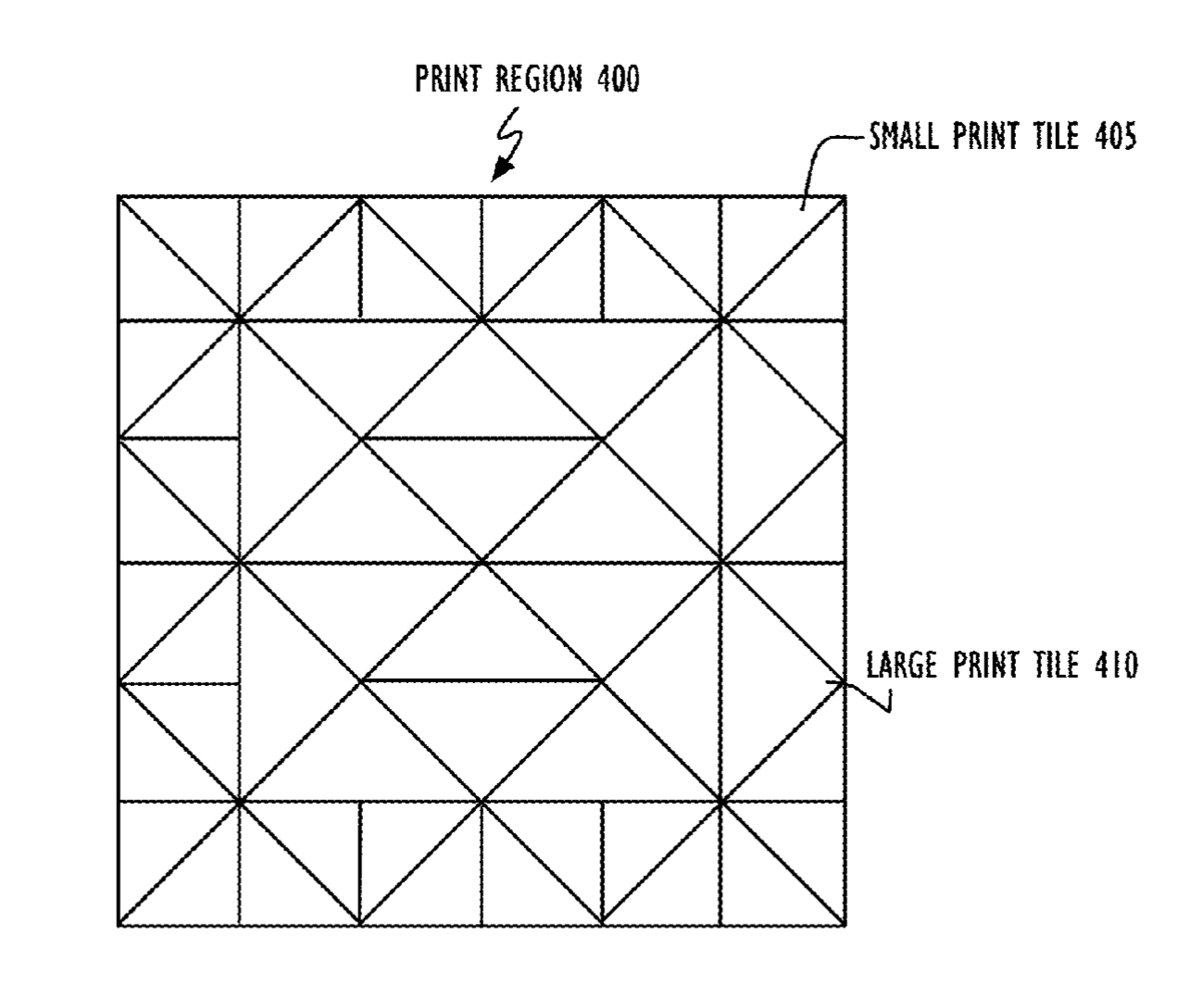
A patent filed by Apple Inc. shows a new method to print 3D models using triangular tessellation. The patent office approved the method, which breaks smooth surfaces into little triangles that approximate the shape of the original model, on October 23, 2018.

The unique aspect of the patent involves the infill and surface. The infill are little patterns inside an object that help it retain rigidity. Most infill is usually fairly simple and involves drawing shapes or squiggles inside an object in a uniform way to keep the shape from collapsing. This means that the entire inside of the object is uniform, leading to cracking or brittleness in the finished product. Apple’s solution would change the shape of the internal infill to differently-sized triangles, depending on the print, ensuring that there is more infill on the edges of the object. The same system is used on the surface of the print to approximate smooth surfaces.

Apple listed Michael R. Sweet, Senior Printing System Engineer at Apple Inc., Canada, as the sole inventor. Sweet has patented at least 13 other 3D printing inventions according to 3D Printing Industry.

“In one embodiment, the triangles making up the triangular tessellations are fixed-size triangles. In another embodiment, the triangles making up the triangular tessellations are dynamically sized triangles. By way of example, small triangles could be used to form an object’s edges or other regions in which strength/support is needed. Larger triangles could be used to build-up or construct areas where strength/support is not as critical,” wrote Sweet in the patent. The patent notes that this system can speed up printing considerably as the print head does not have to move back and forth and instead only moves forward to make the triangular shapes. As an example, Sweet points out that circular infill, as shown below, is inefficient.

This obviously doesn’t meet Apple is making a 3D printer. It simply means that a printing researcher at Apple is looking into the problem and has created a slightly more efficient method for designing 3D printed parts.

24 Oct 2018

Apple’s Tim Cook makes blistering attack on the “data industrial complex”

Apple’s CEO Tim Cook has joined the chorus of voices warning that data itself is being weaponized again people and societies — arguing that the trade in digital data has exploded into a “data industrial complex”.

Cook did not namecheck the adtech elephants in the room: Google, Facebook and other background data brokers that profit from privacy-hostile business models. But his target was clear.

“Our own information — from the everyday to the deeply personal — is being weaponized against us with military efficiency,” warned Cook. “These scraps of data, each one harmless enough on its own, are carefully assembled, synthesized, traded and sold.

“Taken to the extreme this process creates an enduring digital profile and lets companies know you better than you may know yourself. Your profile is a bunch of algorithms that serve up increasingly extreme content, pounding our harmless preferences into harm.”

“We shouldn’t sugarcoat the consequences. This is surveillance,” he added.

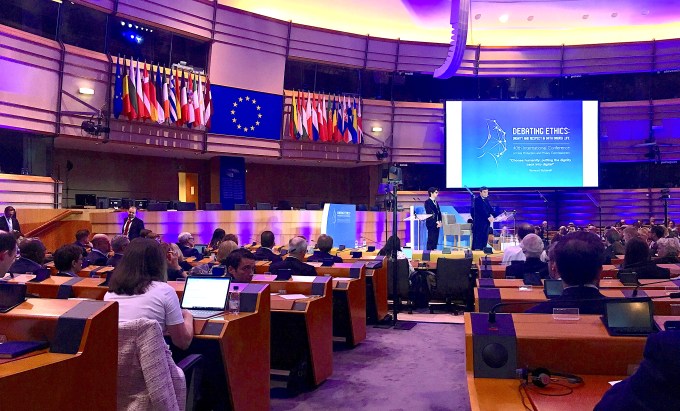
Cook was giving the keynote speech at the 40th International Conference of Data Protection and Privacy Commissioners (ICDPPC), which is being held in Brussels this year, right inside the European Parliament’s Hemicycle.

“Artificial intelligence is one area I think a lot about,” he told an audience of international data protection experts and policy wonks, which included the inventor of the World Wide Web itself, Sir Tim Berners-Lee, another keynote speaker at the event.

“At its core this technology promises to learn from people individually to benefit us all. But advancing AI by collecting huge personal profiles is laziness, not efficiency,” Cook continued.

“For artificial intelligence to be truly smart it must respect human values — including privacy. If we get this wrong, the dangers are profound. We can achieve both great artificial intelligence and great privacy standards. It is not only a possibility — it is a responsibility.”

That sense of responsibility is why Apple puts human values at the heart of its engineering, Cook said.

In the speech, which we previewed yesterday, he also laid out a positive vision for technology’s “potential for good” — when combined with “good policy and political will”.

“We should celebrate the transformative work of the European institutions tasked with the successful implementation of the GDPR. We also celebrate the new steps taken, not only here in Europe but around the world — in Singapore, Japan, Brazil, New Zealand. In many more nations regulators are asking tough questions — and crafting effective reform.

“It is time for the rest of the world, including my home country, to follow your lead.”

Cook said Apple is “in full support of a comprehensive, federal privacy law in the United States” — making the company’s clearest statement yet of support for robust domestic privacy laws, and earning himself a burst of applause from assembled delegates in the process.

Cook argued for a US privacy law to prioritize four things:

  1. data minimization — “the right to have personal data minimized”, saying companies should “challenge themselves” to de-identify customer data or not collect it in the first place
  2. transparency — “the right to knowledge”, saying users should “always know what data is being collected and what it is being collected for, saying it’s the only way to “empower users to decide what collection is legitimate and what isn’t”. “Anything less is a shame,” he added
  3. the right to access — saying companies should recognize that “data belongs to users”, and it should be made easy for users to get a copy of, correct and delete their personal data
  4. the right to security — saying “security is foundational to trust and all other privacy rights”

“We see vividly, painfully how technology can harm, rather than help,” he continued, arguing that platforms can “magnify our worst human tendencies… deepen divisions, incite violence and even undermine our shared sense or what is true or false”.

“This crisis is real. Those of us who believe in technology’s potential for good must not shrink from this moment”, he added, saying the company hopes “to work with you as partners”, and that: “Our missions are closely aligned.”

He also made a sideswipe at tech industry efforts to defang privacy laws — saying that some companies will “endorse reform in public and then resist and undermine it behind closed doors”.

“They may say to you our companies can never achieve technology’s true potential if there were strengthened privacy regulations. But this notion isn’t just wrong it is destructive — technology’s potential is and always must be rooted in the faith people have in it. In the optimism and the creativity that stirs the hearts of individuals. In its promise and capacity to make the world a better place.”

“It’s time to face facts,” Cook added. “We will never achieve technology’s true potential without the full faith and confidence of the people who use it.”

Opening the conference before the Apple CEO took to the stage, Europe’s data protection supervisor Giovanni Buttarelli argued that digitization is driving a new generational shift in the respect for privacy — saying there is an urgent need for regulators and indeed societies to agree on and establish “a sustainable ethics for a digitised society”.

“The so-called ‘privacy paradox’ is not that people have conflicting desires to hide and to expose. The paradox is that we have not yet learned how to navigate the new possibilities and vulnerabilities opened up by rapid digitization,” Buttarelli argued.

“To cultivate a sustainable digital ethics, we need to look, objectively, at how those technologies have affected people in good ways and bad; We need a critical understanding of the ethics informing decisions by companies, governments and regulators whenever they develop and deploy new technologies.”

The EU’s data protection supervisor told an audience largely made up of data protection regulators and policy wonks that laws that merely set a minimum standard are not enough, including the EU’s freshly painted GDPR.

“We need to ask whether our moral compass been suspended in the drive for scale and innovation,” he said. “At this tipping point for our digital society, it is time to develop a clear and sustainable moral code.”

“We do not have a[n ethical] consensus in Europe, and we certainly do not have one at a global level. But we urgently need one,” he added.

“Not everything that is legally compliant and technically feasible is morally sustainable,” Buttarelli continued, pointing out that “privacy has too easily been reduced to a marketing slogan.

“But ethics cannot be reduced to a slogan.”

“For us as data protection authorities, I believe that ethics is among our most pressing strategic challenges,” he added.

“We have to be able to understand technology, and to articulate a coherent ethical framework. Otherwise how can we perform our mission to safeguard human rights in the digital age?”

24 Oct 2018

Mozilla is matching all donations to the Tor Project

Firefox parent Mozilla is returning to back the Tor Project, its long-time ally, after it committed to matching all donations made to fund Tor, the open source initiative to improve online privacy which has just started its annual end of year funding drive.

Tor announced Mozilla’s support today, extending the pair’s partnership which last year helped Tor raise over $400,000 from a similar campaign last year. That is a small seed round for a tech startup, but it represents an important source of income for Tor, which began soliciting ‘crowdfunded’ donations in 2015 in a bid to offset its reliance on government grants.

The company’s latest publicly available accounts cover 2015 when Tor received a record $3.3 million in donations. That’s up from $2.5 million in 2014 and it represented Tor’s highest year of income to date, but state-related grants accounted for 86 percent of the figure. That was an improvement on previous years, but Tor Research Director and President Roger Dingledine admitted that the organization has “more work to do” to change that ratio.

Tor hasn’t made its latest (2016) financials available as of yet, but the past year has seen the organization make big leaps in its product offerings, which are still best known for being used by NSA whistleblower Edward Snowden . Tor launched its first official mobile browser for Android in September and the same month it released Tor Browser 8.0, its most usable browser yet which is based on Firefox’s 2017 Quantum structure. It is also worked closely with Mozilla to bring Tor into Firefox itself as it has already done with Brave, a browser firm led by former Mozilla CEO Brendan Eich.

Beyond the browser and the Tor network itself, which is designed to minimize the potential for network surveillance, the organization also develops a range of other projects. Around two million people are estimated to use Tor, according to data from the organization.

“The Tor Project has a bold mission: to take a stand against invasive and restrictive online practices and bring privacy and freedom to internet users around the world. But we can’t do it alone,” Sarah Stevenson, who is fundraising director at the Tor Foundation, wrote in a blog post.

“Countries like Egypt and Venezuela have tightened restrictions on free expression and accessing the open web; companies like Google and Amazon are mishandling people’s data and growing the surveillance economy; and some nations are even shutting off the internet completely to quell possible dissidence,” she added.

If you feel suitably compelled, you can donate to the Tor Project’s campaign right here.

24 Oct 2018

Early-bird pricing ends today for Disrupt Berlin 2018 tickets

Heiliger Strohsack — holy smokes! Today’s the last day you can score early-bird pricing on tickets to Disrupt Berlin 2018. If you want to save up to €500 to attend the best tech startup conference in Europe — and why wouldn’t you — you’d better grab your wallet and buy your pass right now.

The benefits of attending a Disrupt event are undeniable and doing it at the best possible price just makes sound business sense. Here are just a few reasons why early-stage startup founders jump at the chance to attend Disrupt:

  • “Attending Disrupt and exhibiting in Startup Alley is the best training ground for early-stage startup founders. You’re in the thick of the action and learning as you go. It’s a tremendous opportunity to grow.” — David Hall, co-founder and president of Park & Diamond.
  • “We got fantastic coverage in Engadget, which was really valuable. Coverage is the lifeblood of a startup. Cash at the beginning of the startup journey is difficult to come by, and an article from a credible organization can help push things in the right direction.” — Luke Heron, co-founder and CEO and of TestCard.
  • “It was a great networking opportunity. Everyone was there to help and support each other and look for mutually beneficial ways to collaborate. It was refreshing, and you just don’t experience that every day.” — Vlad Larin, co-founder of Zeroqode.
  • “Disrupt helps you connect more with the startup community in very tangible ways. You can meet investors and bigger players in your industry to see if there’s an opportunity to work together. TechCrunch Disrupt is unique in how it brings everyone — all the industry touch points — together under one roof. It’s incredibly valuable.” — Sage Wohns, co-founder of Agolo.

Disrupt Berlin 2018 drives opportunity at every turn — from networking in Startup Alley and learning from Main Stage speakers to competing in Startup Battlefield to having deep conversations on crucial topics at the Q&A Sessions. The possibilities for collaboration, inspiration, growth and innovation are limitless.

You know what does have a limit? Our early-bird pricing. TechCrunch Disrupt Berlin 2018 takes place on 29-30 November, and today’s your last chance to go at the lowest possible price. Heiliger Strohsack! Don’t wait another minute — buy your tickets right now and save up to €500.

24 Oct 2018

Marieme Diop and Shikoh Gitau to speak at Startup Battlefield Africa

Startup Battlefield Africa is set for December 11 in Lagos and investor Marieme Diop and ICT expert Shikoh Gitau will be there to lend their perspective and expertise. The Lagos TechCrunch event is a return to Africa for the Startup Battlefield series after its debut on the continent in Nairobi, Kenya.

Shikoh Gitau

Diop — who is a VC investor in early-stage African startups at Orange Digital Ventures — will speak on venture capital in Africa. And Gitau, who is head of product at Safaricom’s Alpha incubator, joins TechCrunch to discuss talent, innovation, and repatriate entrepreneurs in Africa’s expanding startup landscape.

Alpha opened in 2017 and Gitau led a Pan-African and global search for candidates to form its team. The incubator was established to innovate new products and apps for Safaricom: Kenya’s largest telecom, globally recognized for its M-Pesa mobile money product with 27 million customers.

In April this year, Gitau and her colleagues rolled out Alpha’s first product, called Bonga, to leverage M-Pesa’s extensive financial web as a social and e-commerce network.

Marieme Diop will share insights with the Startup Battlefield crowd on Africa’s VC market. Under her tutelage, Orange Digital Ventures (ODV) participated in a $16 million round for South African fintech startup Yoco and the $8.6 million round to Africa’s Talking—a Pan-African business enterprise software startup.

Marieme Diop

Formed in 2017 as the venture arm of French telco Orange, ODV is a €150 fund with €50 allocated for Africa, according to Diop. It has made 17 investments globally, with 2 in Africa. These follow pre-fund Orange investments in startups Jumia (Africa’s first unicorn), Afrimarket, and Afrostream.

Orange has €40 left for African startup investments, according to Diop. “Our target is to make 4 African investments each year,” she told TechCrunch.

Diop will join Startup Battlefield Africa to discuss investment at a time when VC rounds and funds on the continent are surging. A recent Crunchbase survey found 51 viable Africa-focused VC funds globally, with 22 (or 43 percent) located on the continent. Of those 22, nearly half (41 percent) were formed since 2016, with 9 in Nigeria.

TechCrunch’s Startup Battlefield Africa in Lagos will be a day-long affair and include a competition with pitches from Africa’s top early-stage startups. TechCrunch will also offer panel discussions to explore the continent’s rapidly growing tech ecosystem, including venture capital. You don’t want to miss out. Buy your tickets here.

24 Oct 2018

Hong Kong’s Neat raises $3M to offer easy banking for startups and SMEs

Neat, a Hong Kong-based startup that gives startups and SMEs access to credit cards and banking services has pulled in $3 million in fresh funding.

The new round is led by China-based VC Linear Capital with participation from Hong Kong’s Sagamore investments and existing backers Dymon Asia Ventures and Portag3 Ventures . Neat previously landed a $2 million seed round earlier this year.

In a nutshell, the company offers quick access to prepaid Mastercard-based cards and basic banking services. Cards are charged at around $7.50 per month, with varying prices on incoming, outgoing and international payments. There is also a consumer option, which is much like European startups Monzo, Starling and Revolut, but Neat is more focused on business users.

We profiled the company in August and since then U.S-based Brex — a two-year-old startup that offers similar services — has gone on to reach a billion-dollar valuation. That shows that there’s plenty of validity in the model… at least in the eyes of the investors who write those all-important checks.

Neat is in a much earlier stage of development and it is serving a more fragmented market in Asia via Hong Kong. When we talked to CEO David Rosa earlier this year, he said that “a large portion” of its customers were either based in Hong Kong or associated with the market, but Neat does offer services globally with a focus on Asia. In particular, the company has introduced international payments — which allow users to pay out overseas without incurring exorbitant fees — while Rosa said it is working on other multi-currency solutions and integrations with third-party services such as accountancy and more.

Neat already claims to have customers in 100 countries, but with Linear Capital’s backing, it is aiming to zone in on Chinese businesses that are looking for banking options in Hong Kong. Given the considerable control on moving capital out of Mainland China, Neat may be an easy option for Chinese startups that are looking to go global but don’t want the hassle of dealing with traditional banks to set up their Hong Kong entity. But of course, there is plenty of incumbent competition.

24 Oct 2018

Yahoo agrees $50M settlement package for users hit by massive security breach

One of the largest consumer internet hacks has bred one of the largest class action settlements after Yahoo agreed to pay $50 million to victims of a security breach that’s said to have affected up to 200 million U.S. consumers and some three billion email accounts worldwide.

In what appears to be the closing move to the two-year-old lawsuit, Yahoo — which is now part of Verizon’s Oath business [which is the parent company of TechCrunch] — has proposed to pay $50 million in compensation to an estimated 200 million users in the U.S. and Israel, according to a court filing.

In addition, the company will cover up to $35 million on lawyer fees related to the case and provide affected users in the U.S. with credit monitoring services for two years via AllClear, a package that would retail for around $350. There are also compensation options for small business and individuals to claim back costs for losses associated with the hacks. That could include identity theft, delayed tax refunds and any other issues related to data lost at the hands of the breaches. Finally, those who paid for premium Yahoo email services are eligible for a 25 percent refund.

The deal is subject to final approval from U.S. District Judge Lucy Koh of the Northern District of California at a hearing slated for November 29.

Since Yahoo is now part of Oath, the costs will be split 50-50 between Oath and Altaba, the holding company that owns what is left of Yahoo following the acquisition. Altaba last month revealed it had agreed to pay $47 million to settle three legal cases related to the landmark security breach.

Yahoo estimates that three billion accounts were impacted by a series of breaches that began in 2013. The intrusion is believed to have been state-sponsored attack by Russia, although no strong evidence has been provided to support that claim.

The incident wasn’t reported publicly until 2016, just months after Verizon announced that it would acquire Yahoo’s core business in a $4.8 billion deal.

At the time, Yahoo estimated that the incident had affected “at least” 500 million users but it later emerged that data on all of Yahoo’s three billion users had been swiped. A second attack a year later stole information that included email and passwords belonging to 500 million Yahoo account holders. Unsurprisingly, the huge attacks saw Verizon negotiate a $350 million discount on the deal.

24 Oct 2018

Naya Health, once a promising breast pump startup, now leaving customers in the dark

With their loud noises and hard plastic flanges, breast pumps are the bane of many a new mother’s existence. Founded in 2013, Naya Health is one of the most notable tech startups working on a better pump. But the company’s support site is now shutdown and it’s stopped updating its social media accounts. In a report today, CNBC spoke to several customers who said their pumps, which cost $1,000 and aren’t covered by insurance, had stopped working, and Naya Health had not provided them with adequate support or replacement parts.

Several users have also complained on Naya Health’s Facebook page about non-delivery of pumps they ordered months ago. A Kickstarter campaign created for Naya Health’s smart baby bottle, which raised more than $100,000, is also filled with complaints about orders not being fulfilled (the last response from co-founder and CEO Janica Alvarez was posted six months ago).

Naya Health’s Facebook and Instagram accounts haven’t been updated since summer, even though users are still posting complaints, while its Twitter account has been set to protected mode. An email sent to Alvarez, who co-founded the company with her husband Jeffery Alvarez, Naya Health’s CTO, received an auto-reply. TechCrunch has also contacted Naya Health investors Tandem Capital and Bojiang Capital, the co-leads of its seed round, for comment. The company has raised $4.6 million in angel and seed funding, according to Crunchbase.

While the Naya Health breast pump’s price tag is significantly more than most competing devices, customers were willing to give it a chance because of its unique flange design, which used silicone and water instead of plastic cups to recreate a nursing baby’s mouth.