Year: 2018

23 Oct 2018

Coinbase lets you buy and sell USDC stablecoin

A few weeks after Circle announced the launch of USD Coin (or USDC for short), Coinbase also announced that customers can now buy, sell, send and receive USDC on Coinbase. A USDC is a token that is worth exactly 1 USD. Its value is going to stay stable against USD — hence the name stablecoin for this type of coins.

Unlike traditional cryptocurrencies, you can be sure that the value of your USDC wallet isn’t going to fluctuate like crazy. It opens up new possibilities and use cases.

While Coinbase lets you hold USD in your Coinbase account, this isn’t safe. If somebody hacks into your account, you could end up with an empty wallet. That’s why you should always try to control the keys of your wallet and transfer your coins to a safer wallet, such as a Ledger wallet or at least a software solution like MyEtherWallet.

But if you want to short cryptocurrencies without sending your USD back to your bank account, you can now convert your tokens to USDC. This way, it’ll be easier to buy cryptocurrencies again in the future. And maybe you can avoid paying taxes by hiding your tokens from taxation authorities…

USDC also works just like a regular token. You just need a wallet address to send some USDC. USDC is an ERC-20 token, which means that it leverages the Ethereum blockchain and ecosystem.

But stablecoins need to be regulated more tightly. Circle, Coinbase and a bunch of other companies have created the CENTRE consortium to define the policies around stablecoins. For instance, if you want to handle stablecoins on your exchange, you need to send regular audited reports that prove that you have as many USD sitting on a bank account as issued tokens.

With both Coinbase and Circle on board, it’s clear that USDC is off to a good start. Now let’s see if there’s enough interest to create other stablecoins based on EUR, CNY and other fiat currencies.

23 Oct 2018

Sources: Balderton Capital gearing up to invest in Swedish e-scooter startup VOI

We already knew that the electronic scooter space in Europe was heating up, with Berlin’s Tier announcing today it has raised €25 million in a round led by Northzone, and rumours circulating that Delivery Hero founder Lukasz Gadowski has ventured into the space — all within the context of U.S. companies Bird and Lime recently expanding to Europe. However, now it seems that Balderton Capital could be about to make its move by investing in Sweden’s VOI Technology, another e-scooter rental play with pan-European ambitions.

According to multiple sources, the London-based venture capital firm is gearing up to lead a round in Stockholm-based VOI. Two sources say the amount being invested is $15 million at a pre-money valuation of between $35-40 million, while another source said it could be as much as $25 million. Separately, I’m hearing that with multiple term sheets on the table and the pace at which the company is growing, VOI is actually considering increasing the round to $50 million.

Other VC firms thought to be participating are Berlin’s Project A, and Netherland-based Prime Ventures.

To date, VOI has raised around just shy of $3 million in seed funding from Vostok New Ventures.

I contacted Balderton Capital earlier today, but haven’t heard back. A spokesperson for Project also declined to comment. Neither Prime Ventures or VOI could be reached at the time of publication.

What is particularly noteworthy about Balderton’s entrance into the e-scooter market is that three of the other “big four” London VC firms have already made U.S. investments in the space. Index and Accel have backed Bird, and Atomico has backed Lime.

As I noted in my earlier Tier funding story — which marked the biggest financial backing for a European company in the space to date — this isn’t stopping a number of European investors getting busy trying to create the “Bird or Lime of Europe,” even if it is far from clear that Bird or Lime won’t take that title for themselves (which is obviously the bet being made by Index, Accel and Atomico). The general sentiment of European VCs steadfastly trying to nurture a European born competitor is that they don’t want to see the e-scooter rental market be rolled over by the U.S. in the same way that Uber rode in and knocked out many local players.

With that said, the worse case scenario in the eyes of many of those same VCs (and those VCs standing on the sidelines not participating) is that Bird or Lime will eventually acquire the most promising European e-scooter company or companies. In other words, the downside is mitigated somewhat, failing an outright home run.

Meanwhile, Tier, VOI and Gadowski’s Go Flash aren’t the only European born e-scooter startups with pan-European ambitions. There’s also Coup, an e-scooter subsidiary owned by Bosch and backed by BCG Digital Ventures that operates in Berlin, Paris and Madrid. And just two month’s ago Taxify announced its intention to do e-scooter rentals under the brand Bolt, first launched in Paris but also planning to be pan-European, including Germany.

Not that everyone is convinced. Two early-stage European VCs I spoke to today said they hated the space. “I just don’t understand, isn’t it going to be a massive bloodbath?” said one of the VCs, before questioning the total number of rides we could see in Europe annually. “I just don’t see how Europe is going to produce multiple multibillion dollar businesses in this space. I think the market size caps it”.

23 Oct 2018

YouTube’s beta program will test stability, not new features

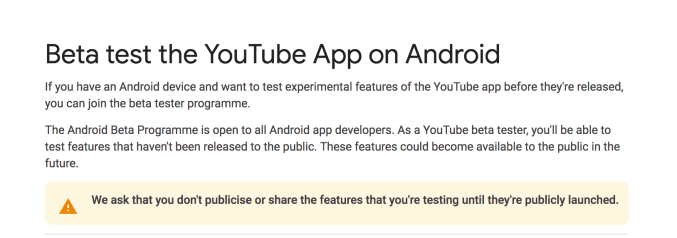
Google sometimes experiments with new features in beta versions of its various Android applications on Google Play. However, the recently spotted YouTube beta program will not, unfortunately, be a testbed for upcoming additions to the video-sharing service. Instead, Google says it only plans to test the stability of the YouTube app at this time, not features.

The company quietly rolled out a YouTube beta program last week on Google Play, where it was soon spotted by the folks at Android Police.

Originally, the belief was that Google would use this new beta to try out features it was planning to bring to the YouTube app – in fact, that’s what Google’s own help documentation about the beta said!

Not only that, but the documentation urged testers not to share information about the features they see in the app until they’re publicly launched.

That all sounds pretty exciting, right? (At least for us early adopters who love to get mess around with the latest new thing before anyone else.)

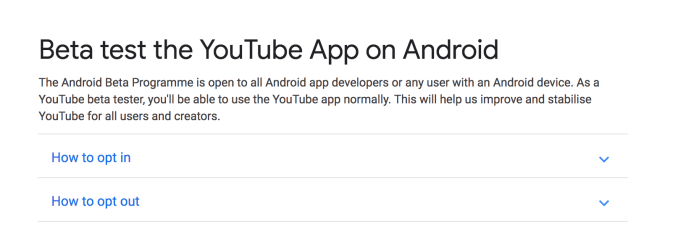
But after asking Google for more information on the program, the company updated its help documentation to remove the wording about “experimental features.” It now says testers will only help YouTube to stabilize its app.

We also understand, too, that YouTube has always run a beta program, the only change is that, as of last week, it become more broadly accessible.

Users can now join the program to help YouTube test stability of the app and can then opt out at any time they choose. At this point, however, Google doesn’t plan on trying out new features in the beta build. That could, of course, change at any time in the future. So if you really want to be the first to know, you may want to join the beta program just in case.

But YouTube for a long time now has been testing its new additions by way of server-side testing. It even decided this year to be more public about those tests – disclosing its experiments by way of its @TeamYouTube handle and the Creator Insider channel.

For example, this is where the company first announced its test of a new Explore tab on iPhone a few months ago, and more recently said it would try different ways of inserting ads into videos, to see if users prefer fewer interruptions even if it meant multiple ads per interruption.

YouTube beta program members may or may not be opted into those same experiments, as they roll out. It will depend on if they’re in the testing bucket that’s targeted at that time.

23 Oct 2018

Motorola is partnering with iFixit to sell official DIY phone repair kits

Repairing a phone is harder than it needs to be. With phone manufacturers spending the last decade chasing device slimness and building devices meant to last however long a phone contract lasts, user repairability just doesn’t seem to be something they care much about. Need a repair part? Good luck on eBay, friendo!

In what might, maybe, hopefully be a sign of that tide changing, Motorola is now selling official repair kits in a partnership with iFixit .

You probably know iFixit as the folks that somehow manage to rip apart nearly every new popular device within hours of its release. Their deep gadget teardowns show you how the clocks tick and the silicon hamster wheels turn, allowing a peek inside while your own hard-earned gear stays in one happily functioning piece.

But they also sell a bunch of bits and bobs for when things stop working. They source tons of individual parts for repairing all sorts of devices, from aging iPods to console controllers. And now, for a handful of Motorola phones, they’re doing it with Motorola’s blessing.

They’ve just started shipping a handful of pre-assembled repair kits with replacement parts sourced straight from Motorola. At this point they’ve got kits for eight different phones (Moto Z, Moto X, Droid Turbo 2, Moto Z Play, Moto G5, Z Force, X Pure and G4 Plus). They’re focusing on the two biggest, most frequently replaced components — the battery and the screen — and each kit contains everything you need to get the phone apart, patched up and put back together. The battery replacement kits cost around $40, while the screen kits cost around $100-$200.

Will other manufacturers follow suit? It’s hard to say. But I’d sure hope so. With each subsequent generation of smartphone getting less and less enticing (“The camera is slightly better! The screen is… brighter? Harder? Faster? Stronger?”), it’d be great to see more of them embrace repair.

(Image source: iFixit’s Moto Z repair guide)

23 Oct 2018

Messenger redesigns to clean up Facebook’s mess

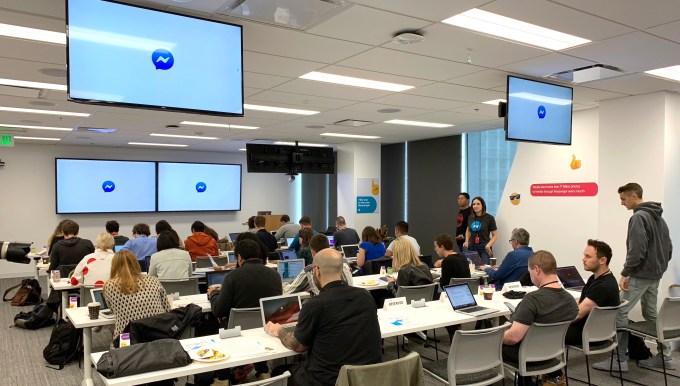
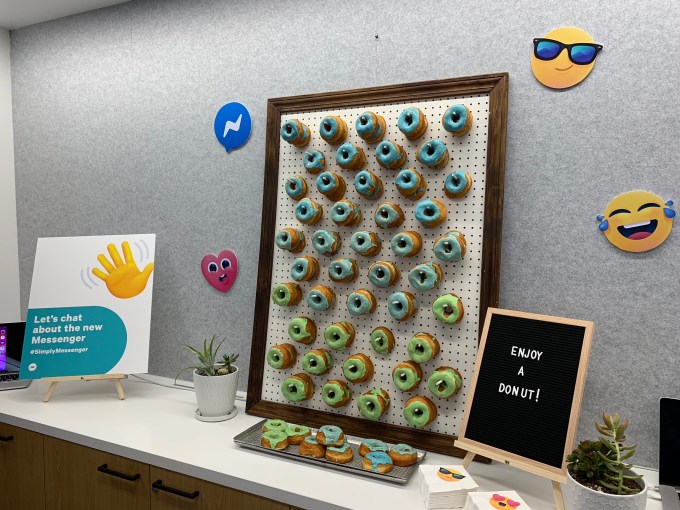
If Facebook Messenger’s redesign succeeds, you won’t really notice it even happened. I hardly did over the past week of testing. There’s just a subtle sense that the claustrophobia has lifted. Perhaps that’s why Facebook decided to throw a big breakfast press event with 30 reporters today at its new downtown San Francisco office, complete with an Instagram-worthy donut wall. Even though the changes are minimal — fewer tabs, color gradients thread backgrounds, and a rounder logo — Facebook was eager to trigger an unequivocally positive news cycle.

Old Messenger vs New Messenger

In the seven years since Facebook acquired group chat app Beluga and turned it into Messenger, it’s done nothing but cram in more features. With five navigation bar options, nine total tabs, Stories, games, and businesses, Messenger’s real purpose — chatting with your friends — started to feel buried. “You build a feature, and then you build another feature, and they are piling up” says Facebook’s head of Messenger Stan Chudnovsky. “We either continue to pile on, or we build a foundation that will allow us to build simplicity and powerful features on top of something new that goes back to its roots.”

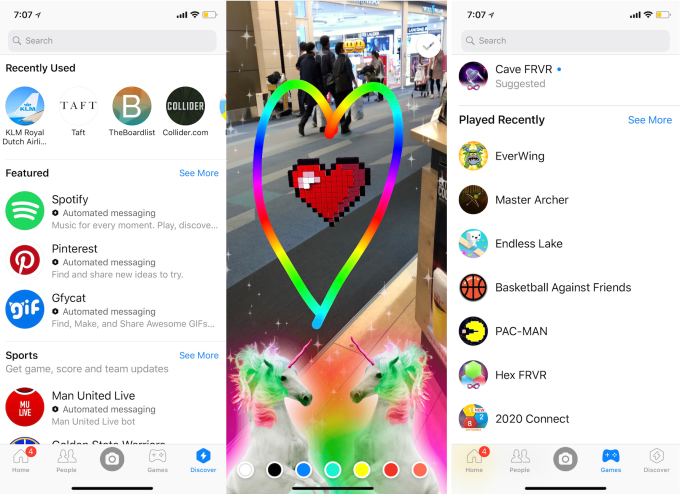
The old, overloaded Messenger

But suddenly uprooting the old design with a massive overhaul wasn’t an option. “It’s impossible to launch something for 1.3 billion people that will not piss people off” Chudnovsky told me. “It takes so much time to test things out and make sure you’re not doing something that will prevent people from doing things that are really, really important to them. At the end of the day, no one really likes change. People generally want things the way they are.”

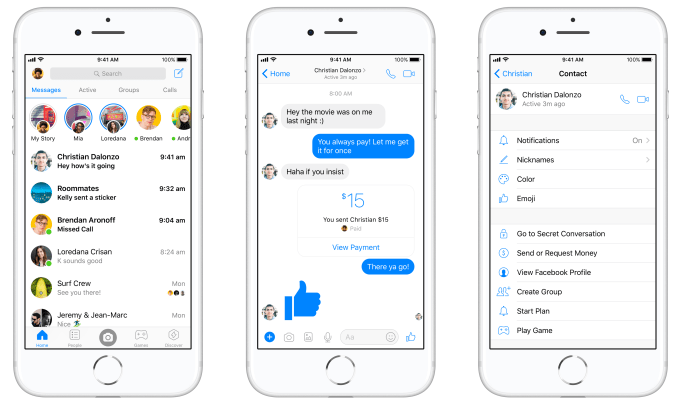
So starting today, Messenger is globally rolling out an understated redesign globally over the next few weeks. It’s got a simpler interface with a lot more white space, a little less redundancy, and a casual vibe. Here’s a comparison of the app before and after.

Old Messenger: 

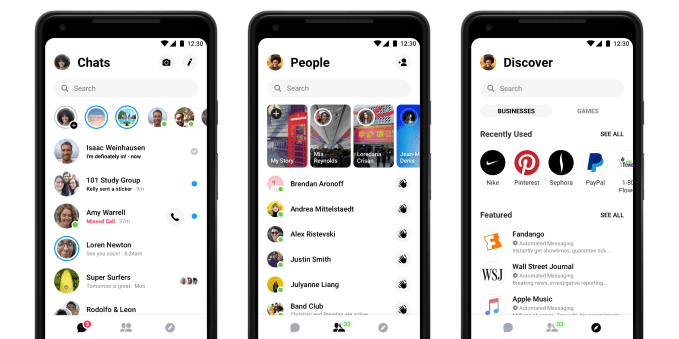
Previously, there were five main navigation buttons along the bottom of the app. Between the actually useful Chats section that’d been invaded by Stories and the chaotic People section, there were tabs for calls, group chats, active friends, . Between then  a camera button that aggressively beckoned you to post Stories, a dedicated Games tab, and a Discover tab for finding businesses and utility app.

New Messenger:

In Messenger v4, now there are just three navigation buttons. The camera button has been moved up next to the chat composer inside the Chat section above Stories, People now contains the Active list as well as all Stories by friends, and Discover combines games and businesses. The fact that Stories is in both the Chats and People section make it seem that the company wants a lot more than the existing 300 million users across Facebook and Messenger opening its Snapchat copycat.

While there 10 billion conversations with businesses and 1.7 billion games sessions happen on Messenger each month, and both hold opportunities for monetization, they’re not the app’s purpose so they got merged. And though 400 million people — nearly a third of all Messenger users — make a video or audio call each month, those typically start from a button inside chat threads so Facebook nixed the Calls tab entirely.

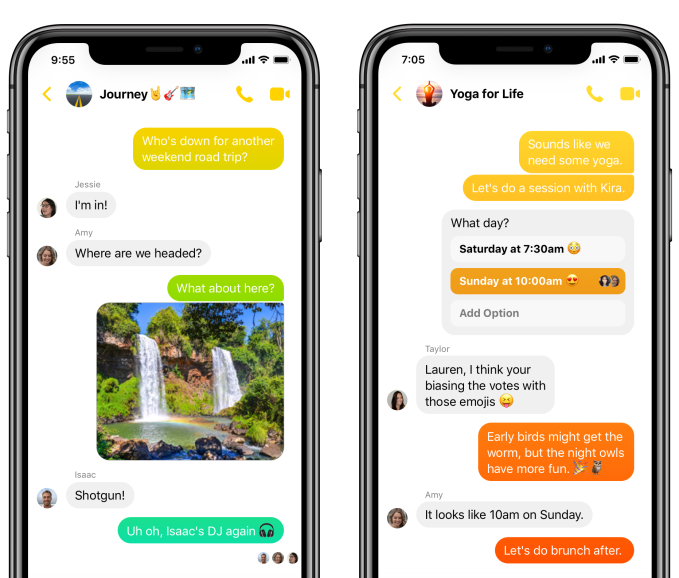
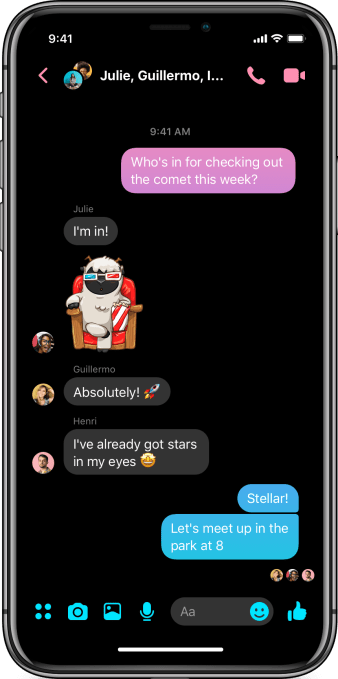
All the old features are still available, just not quite as prominent as before. The one new feature is several color gradients you can use to customize specific chat threads. If you rapidly scroll through the messages, you’ll see the bubble background colors fade through the gradient.  And one much-requested feature still on the way is Dark Mode, which Facebook says will launch in the next several weeks to reduce glare and make night-time usage easier on the eyes.

Finally, Messenger has a softer new logo. The sharp edges have been rounded off the quote bubble and lightning insignia. It seems designed to better compete with Snapchat and remind users that Messenger is fun and friendly as well as fast.

Inside The Messenger War Room

With the company’s downward scandal spiral of breaches, election interference, and fake news-inspired violence, it’s not just Messenger that’s a mess. It’s all of Facebook, both literally and metaphorically. Cleaning up, fighting back —  those are the messages the company wants to drive home.

Facebook scored a win on this front last week by getting dozens of journalists (myself included) to breathlessly cover its election “war room”, until everyone realized they’d played themselves for page views. Today’s Messenger event felt a little like deja-vu as Facebook drilled the word “simple” into our heads. Chudnovsky even acknowledged that Facebook had already milked the redesign for a press hit back in May. “We previewed this at F8 but that was when the work was just beginning.”

Hopefully, this will be the start of a company wide interface cleanup. Facebook’s main app is full of cruft, especially with products like Facebook Watched stuffed in the nav bar despite lukewarm user interest. Messenger did a good job of ceasing to shoehorn the camera and games into our chat behavior, though Stories still appear twice in the app even if some wish they disappeared permanently. The world would benefit from a Facebook more concerned with what users want than what it wants to show them.

With the news going live just an hour after the event ended, many reporters stayed, writing their posts about Facebook while still inside Facebook. Chudnovsky admitted that beyond educating users via the press, the event was designed to celebrate the team that had labored over each pixel. “You can imagine at a company like ours, how many conversations you have to have about changing the logo.”

23 Oct 2018

Messenger redesigns to clean up Facebook’s mess

If Facebook Messenger’s redesign succeeds, you won’t really notice it even happened. I hardly did over the past week of testing. There’s just a subtle sense that the claustrophobia has lifted. Perhaps that’s why Facebook decided to throw a big breakfast press event with 30 reporters today at its new downtown San Francisco office, complete with an Instagram-worthy donut wall. Even though the changes are minimal — fewer tabs, color gradients thread backgrounds, and a rounder logo — Facebook was eager to trigger an unequivocally positive news cycle.

Old Messenger vs New Messenger

In the seven years since Facebook acquired group chat app Beluga and turned it into Messenger, it’s done nothing but cram in more features. With five navigation bar options, nine total tabs, Stories, games, and businesses, Messenger’s real purpose — chatting with your friends — started to feel buried. “You build a feature, and then you build another feature, and they are piling up” says Facebook’s head of Messenger Stan Chudnovsky. “We either continue to pile on, or we build a foundation that will allow us to build simplicity and powerful features on top of something new that goes back to its roots.”

The old, overloaded Messenger

But suddenly uprooting the old design with a massive overhaul wasn’t an option. “It’s impossible to launch something for 1.3 billion people that will not piss people off” Chudnovsky told me. “It takes so much time to test things out and make sure you’re not doing something that will prevent people from doing things that are really, really important to them. At the end of the day, no one really likes change. People generally want things the way they are.”

So starting today, Messenger is globally rolling out an understated redesign globally over the next few weeks. It’s got a simpler interface with a lot more white space, a little less redundancy, and a casual vibe. Here’s a comparison of the app before and after.

Old Messenger: 

Previously, there were five main navigation buttons along the bottom of the app. Between the actually useful Chats section that’d been invaded by Stories and the chaotic People section, there were tabs for calls, group chats, active friends, . Between then  a camera button that aggressively beckoned you to post Stories, a dedicated Games tab, and a Discover tab for finding businesses and utility app.

New Messenger:

In Messenger v4, now there are just three navigation buttons. The camera button has been moved up next to the chat composer inside the Chat section above Stories, People now contains the Active list as well as all Stories by friends, and Discover combines games and businesses. The fact that Stories is in both the Chats and People section make it seem that the company wants a lot more than the existing 300 million users across Facebook and Messenger opening its Snapchat copycat.

While there 10 billion conversations with businesses and 1.7 billion games sessions happen on Messenger each month, and both hold opportunities for monetization, they’re not the app’s purpose so they got merged. And though 400 million people — nearly a third of all Messenger users — make a video or audio call each month, those typically start from a button inside chat threads so Facebook nixed the Calls tab entirely.

All the old features are still available, just not quite as prominent as before. The one new feature is several color gradients you can use to customize specific chat threads. If you rapidly scroll through the messages, you’ll see the bubble background colors fade through the gradient.  And one much-requested feature still on the way is Dark Mode, which Facebook says will launch in the next several weeks to reduce glare and make night-time usage easier on the eyes.

Finally, Messenger has a softer new logo. The sharp edges have been rounded off the quote bubble and lightning insignia. It seems designed to better compete with Snapchat and remind users that Messenger is fun and friendly as well as fast.

Inside The Messenger War Room

With the company’s downward scandal spiral of breaches, election interference, and fake news-inspired violence, it’s not just Messenger that’s a mess. It’s all of Facebook, both literally and metaphorically. Cleaning up, fighting back —  those are the messages the company wants to drive home.

Facebook scored a win on this front last week by getting dozens of journalists (myself included) to breathlessly cover its election “war room”, until everyone realized they’d played themselves for page views. Today’s Messenger event felt a little like deja-vu as Facebook drilled the word “simple” into our heads. Chudnovsky even acknowledged that Facebook had already milked the redesign for a press hit back in May. “We previewed this at F8 but that was when the work was just beginning.”

Hopefully, this will be the start of a company wide interface cleanup. Facebook’s main app is full of cruft, especially with products like Facebook Watched stuffed in the nav bar despite lukewarm user interest. Messenger did a good job of ceasing to shoehorn the camera and games into our chat behavior, though Stories still appear twice in the app even if some wish they disappeared permanently. The world would benefit from a Facebook more concerned with what users want than what it wants to show them.

With the news going live just an hour after the event ended, many reporters stayed, writing their posts about Facebook while still inside Facebook. Chudnovsky admitted that beyond educating users via the press, the event was designed to celebrate the team that had labored over each pixel. “You can imagine at a company like ours, how many conversations you have to have about changing the logo.”

23 Oct 2018

Apple’s next iOS update will fix accidental selfie softening

Last month, the internet was a buzz with reports that Apple was sweetening up selfies on the iPhone XS and XS Max. The shots appeared to have an effect applied, in a manner similar to “beauty” filters offered on competing handsets. Apple denied it was intentionally touching photos, but not before it earned the predictable name, “Beautygate.”

Turns out it wasn’t just your imagination. The shots were getting softer, as a result of a software bug, according to the company. As The Verge reports, however, Apple will be fixing things with the upcoming iOS 12.1 update. Apple has since confirmed the fix with TechCrunch, noting that it’s also available in the current beta.

The long and short of what’s happening is this: the HDR processing has been defaulting to a longer shutter speed. That coupled with a loss of front-facing OIS leads to shakier images and blurrier photos. In other words, your phone wasn’t making you prettier, so much as a bit more blurry.

Honestly though, sometimes we’ll take what we can get.

The beta of the update is available now and should be rolling out to everyone else soon.

23 Oct 2018

Apple’s next iOS update will fix accidental selfie softening

Last month, the internet was a buzz with reports that Apple was sweetening up selfies on the iPhone XS and XS Max. The shots appeared to have an effect applied, in a manner similar to “beauty” filters offered on competing handsets. Apple denied it was intentionally touching photos, but not before it earned the predictable name, “Beautygate.”

Turns out it wasn’t just your imagination. The shots were getting softer, as a result of a software bug, according to the company. As The Verge reports, however, Apple will be fixing things with the upcoming iOS 12.1 update. Apple has since confirmed the fix with TechCrunch, noting that it’s also available in the current beta.

The long and short of what’s happening is this: the HDR processing has been defaulting to a longer shutter speed. That coupled with a loss of front-facing OIS leads to shakier images and blurrier photos. In other words, your phone wasn’t making you prettier, so much as a bit more blurry.

Honestly though, sometimes we’ll take what we can get.

The beta of the update is available now and should be rolling out to everyone else soon.

23 Oct 2018

Envoy raises $43 million to digitize your office

The office might not seem like an area in desperate need of disruption, but Envoy — a Silicon Valley company used to sign in over 100,000 visitors at offices across the world each day; and a TechCrunch SF office neighbor!has raised $43 million to do just that.

The company started life five years digitizing the sign-in book with a simple iPad-based approach, and it has moved on to office deliveries with an automated system that simply involves scanning a barcode. In both cases, alerts are routed directly to the person collecting the goods or visitor using an app.

The concept is simple: no more pen and paper, no calls or prompts, everything goes digital.

The result is an easier life for office workers and more efficiency for front desk staff, who have more time for important items. A basic version of Envoy is available for free, but the feature-rich options include two-tiered plans ($99/$249 per month) and bespoke packages for more advanced integrations.

This new Series B capital takes Envoy to $59.5 million raised to date. The round was led by Menlo Ventures with participation from existing backers Initialized Capital and Andreessen Horowitz. Envoy’s previous round was a $15 million Series A in 2015, and its seed investors include Marc Benioff as well as Initialized Capital partners Gary Tan and Alexis Ohanian.

Envoy has certainly expanded since that first $1.5 million seed deal. CEO and founder Larry Gadea, who spent four years at Google after joining at 19 and later worked for Twitter, told TechCrunch in an interview that its customer base spans 72 countries. Over 32 million visitors have been signed in to date and Gadea is particularly proud that 80 percent of its 10,000 daily companies — which includes well-known names like Yelp, Mailchimp and Rakuten — are based outside of Silicon Valley. That, he rightly asserts, is evidence that the issue isn’t just a Silicon Valley/first world problem like so many ideas spun out of The Valley can be.

“The growth has been absolutely nuts. It’s a very viral product… people see it, use it and then take it back to their company,” Gadea, who joined Google from high school in Canada, explained. “The majority of our deals happening through inbound.”

Child prodigy Larry Gadea was plucked from high school in Canada by Google after the company discovered a plug-in he had developed for its desktop search service

Organic growth is a good start, but $43 million is a lot of money and it’ll be used to go push things further still and expand the Envoy team which is currently at around 100 people. You can expect more new office digitizations from the company since its ultimate goal is to make the entire office smarter. That could include products like meeting room booking and other small pieces which, when put together, Gadea hopes will allow workers to concentrate on their work not unnecessary admin. Just as Envoy has done with front desk staff.

“We’re known for the front desk and sign-in but where I think it’s really interesting, and where our future is, is that the rest of the office is just so broken,” he explained. “There’s so much low-hanging fruit we can go after.”

Gadea explained a little more in an Envoy blog post announcing the new round:

Though we’ve helped modernize over 10,000 lobbies with automated iPad-based sign-in, and started bringing some order to the chaos of the mailroom, the rest of the workplace remains largely untouched: people are losing their keys/badges (and being locked out of their office!), meeting rooms are reserved but are unoccupied, lights/heating are left on after-hours, there’s all sorts of out-of-place things that nobody’s reporting, etc. Where are the products to fix all those things? And to unify them all together.

The ultimate vision is a kind of ‘office OS’ platform that other companies can build off. Gadea compares the potential impact to what Nest has done to the home with its smart products, which started with the thermostat.

Gadea is still working on a name for the platform, and he isn’t saying exactly what features it might include. Certainly, now that there’s an additional $43 million in the kitty, expectations for what might (first) appear to be a modest proposal for the front desk have been raised.

23 Oct 2018

TC Sessions AR/VR surveys an industry in transition

Industry vets and students alike crammed into UCLA’s historic Royce Hall last week for TC Sessions AR/VR, our one day event on the fast-moving (and hype-plagued) industry and the people in it. Disney, Snap, Oculus and more stopped by to chat and show off their latest; if you didn’t happen to be in LA that day, read on and find out what we learned — and follow the links to watch the interviews and panels yourself.
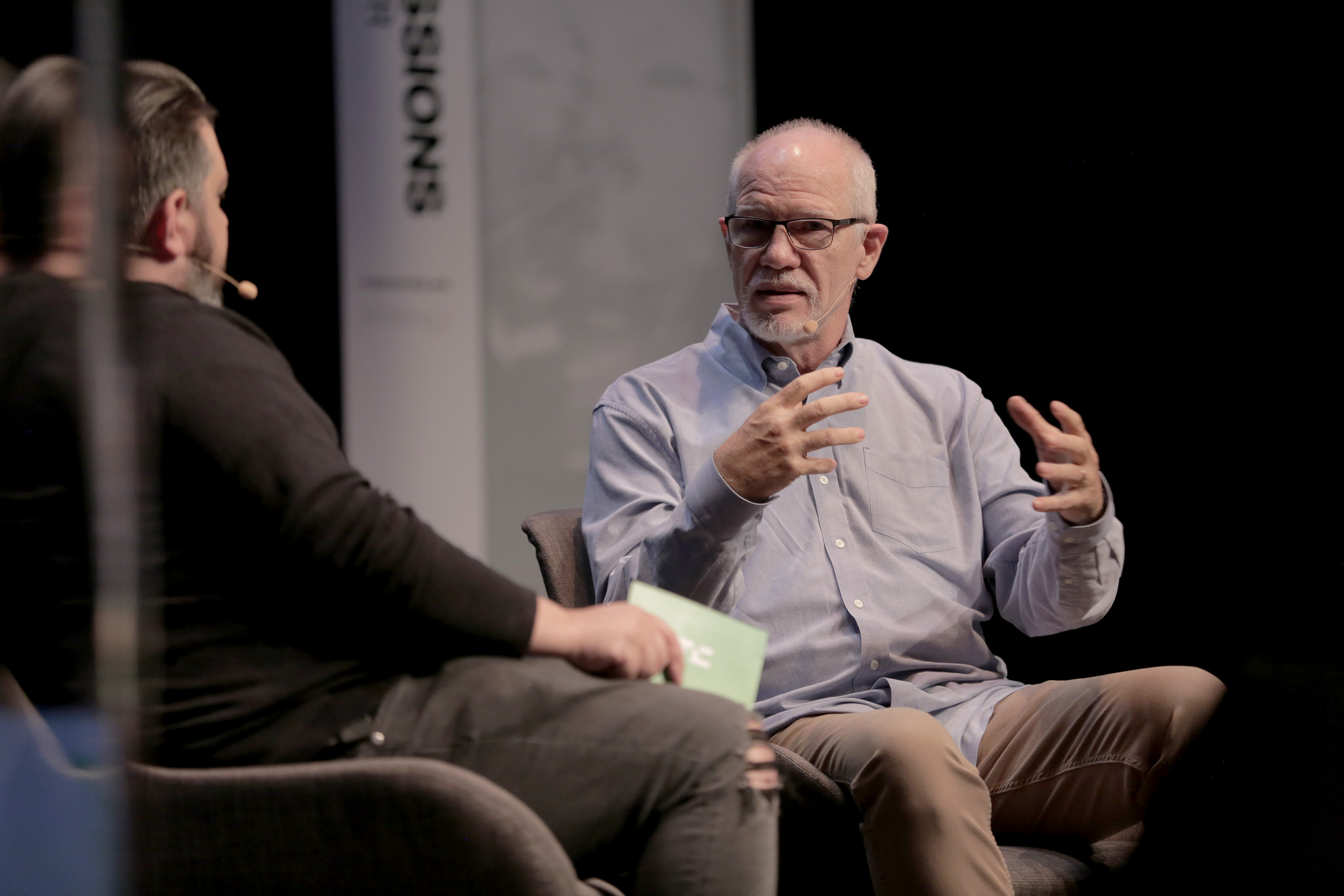
To kick off the day we had John Snoddy from Walt Disney Imagineering. As you can imagine this is a company deeply invested in “experiences.” But he warned that VR and AR storytelling isn’t ready for prime time: “I don’t feel like we’re there yet. We know it’s extraordinary, we know it’s really interesting, but it’s not yet speaking to us deeply the way it will.”

Next came Snap’s Eitan Pilipski. Snapchat wants to leave augmented reality creativity up to the creators rather than prescribing what they should build. AR headsets people want to wear in real life might take years to arrive, but nevertheless Snap confirmed that it’s prototyping new AI-powered face filters and VR experiences in the meantime.

I was on stage next with a collection of startups which, while very different from each other, collectively embody a willingness to pursue alternative display methods — holography and projection — as businesses. Ashley Crowder from VNTANA and Shawn Frayne from Looking Glass explained how they essentially built the technology they saw demand for: holographic display tech that makes 3D visualization simple and real. And Lightform’s Brett Jones talked about embracing and extending the real world and creating shared experiences rather than isolated ones.
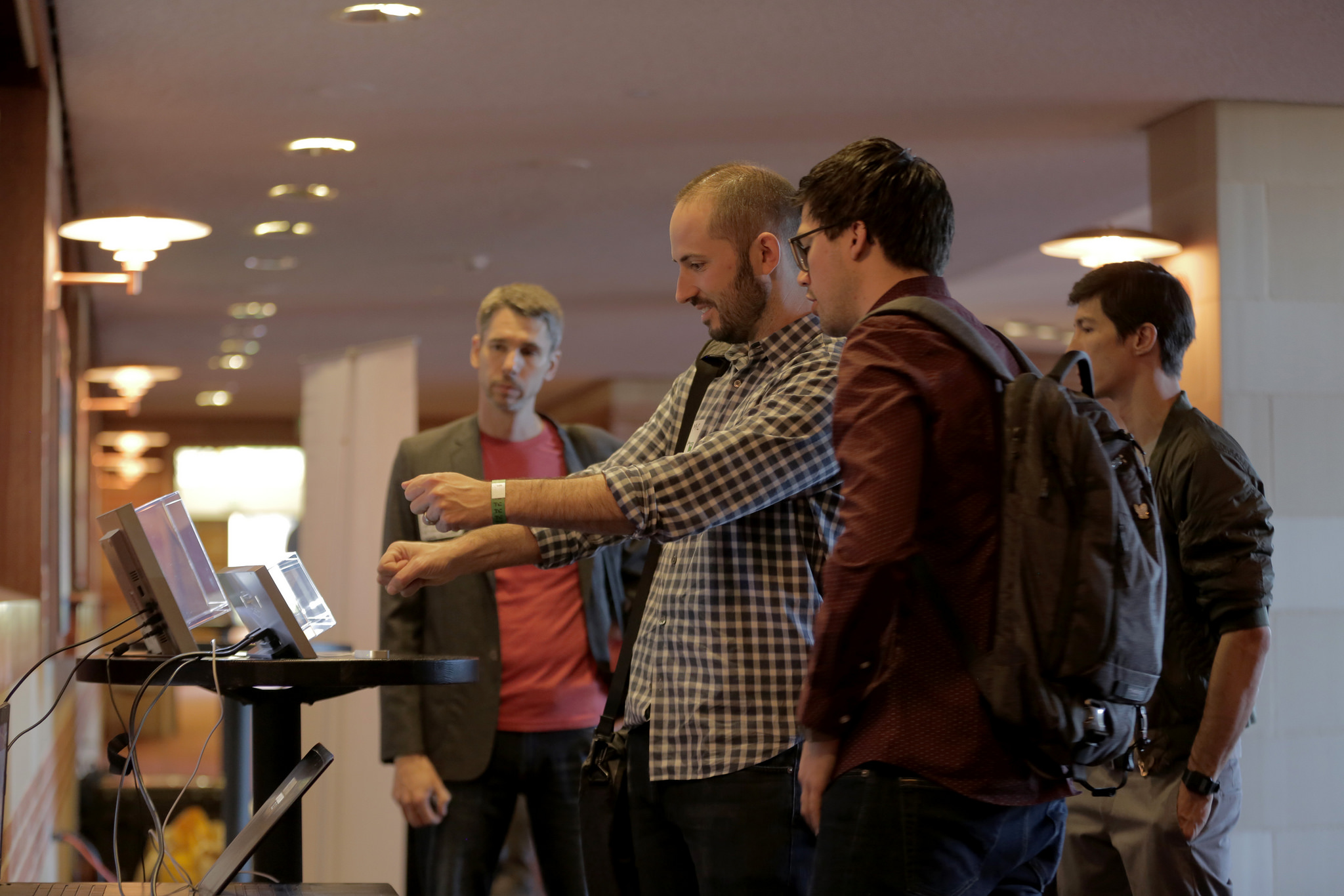
Frayne’s holographic desktop display was there in the lobby, I should add, and very impressive it was. People were crowding three or four deep to try to understand how the giant block of acrylic could hold 3D characters and landscapes.

Maureen Fan from Baobob Studios touched on the importance of conserving cash for entertainment-focused virtual reality companies. Previewing her new film, Crow, Fan noted that new modes of storytelling need to be explored for the medium, such as the creative merging of gaming and cinematic experiences.

Up next was a large panel of investors: Niko Bonatsos (General Catalyst), Jacob Mullins (Shasta Ventures), Catherine Ulrich (FirstMark Capital), and Stephanie Zhan (Sequoia). The consensus of this lively discussion was that (as Fan noted earlier) this is a time for startups to go lean. Competition has been thinned out by companies burning VC cash and a bootstrapped, efficient company stands out from the crowd.

Oculus is getting serious about non-gaming experiences in virtual reality. In our chat with Oculus Executive Producer Yelena Rachitsky, we heard more details about how the company is looking to new hardware to deepen the interactions users can have in VR and that new hardware like the Oculus Quest will allow users to go far beyond the capabilities of 360-degree VR video.

Of course if Oculus is around, its parent company can’t be far away. Facebook’s Ficus Kirkpatrick believes it must build exemplary ‘lighthouse’ AR experiences to guide independent developers towards use cases they could enhance. Beyond creative expression, AR is progressing slowly since no one wants to hold a phone in the air for too long. But that’s also why Facebook is already investing in efforts to build its own AR headset.

Matt Miesnieks, from 6d.ai, announced the opening of his company’s augmented reality development platform to the public and made a case of the creation of an open mapping platform and toolkit for opening augmented reality to collaborative experiences and the masses.

Augmented reality headsets like Magic Leap and Hololens tend to hog the spotlight, but phones are where most people will have their first taste. Parham Aarabi (Modiface), Kirin Sinha (Illumix) and Allison Wood (Camera IQ) agreed that mainstreaming the tech is about three to five years away, with a successful standalone device like a headset somewhere beyond that. They also agreed that while there are countless tech demos and novelties, there’s still no killer app for AR.

Derek Belch (STRIVR), Clorama Dorvilias (DebiasVR), and Morgan Mercer (Vantage Point) took on the potential of VR in commercial and industrial applications. They concluded that making consumer technology enterprise grade remains one of the most significant adoption to virtual reality applications in business. (Companies like StarVR are specifically targeting businesses, but it remains to be seen whether that play will succeed.)

With Facebook running the VR show, how are small VR startups making a dent in social? The CEOs of TheWaveVR, Mindshow and SVRF all say that part of the key is finding the best ways for users to interact and making experiences that bring people together in different ways.

After a break, we were treated to a live demo of the VR versus boxing game Creed: Rise to Glory, by developer Survios co-founders Alex Silkin and James Iliff. They then joined me for a discussion of the difficulties and possibilities of social and multiplayer VR, both in how they can create intimate experiences and how developers can inoculate against isolation or abuse in the player base.

Early stage investments are key to the success of any emerging industry and the VR space is seeing a slowdown in that area. Peter Rojas of Betaworks and Greg Castle from Anorak offered more details on their investment strategies and how they see success in the AR space coming along as the tech industry’s biggest companies continue to pump money into the technologies.
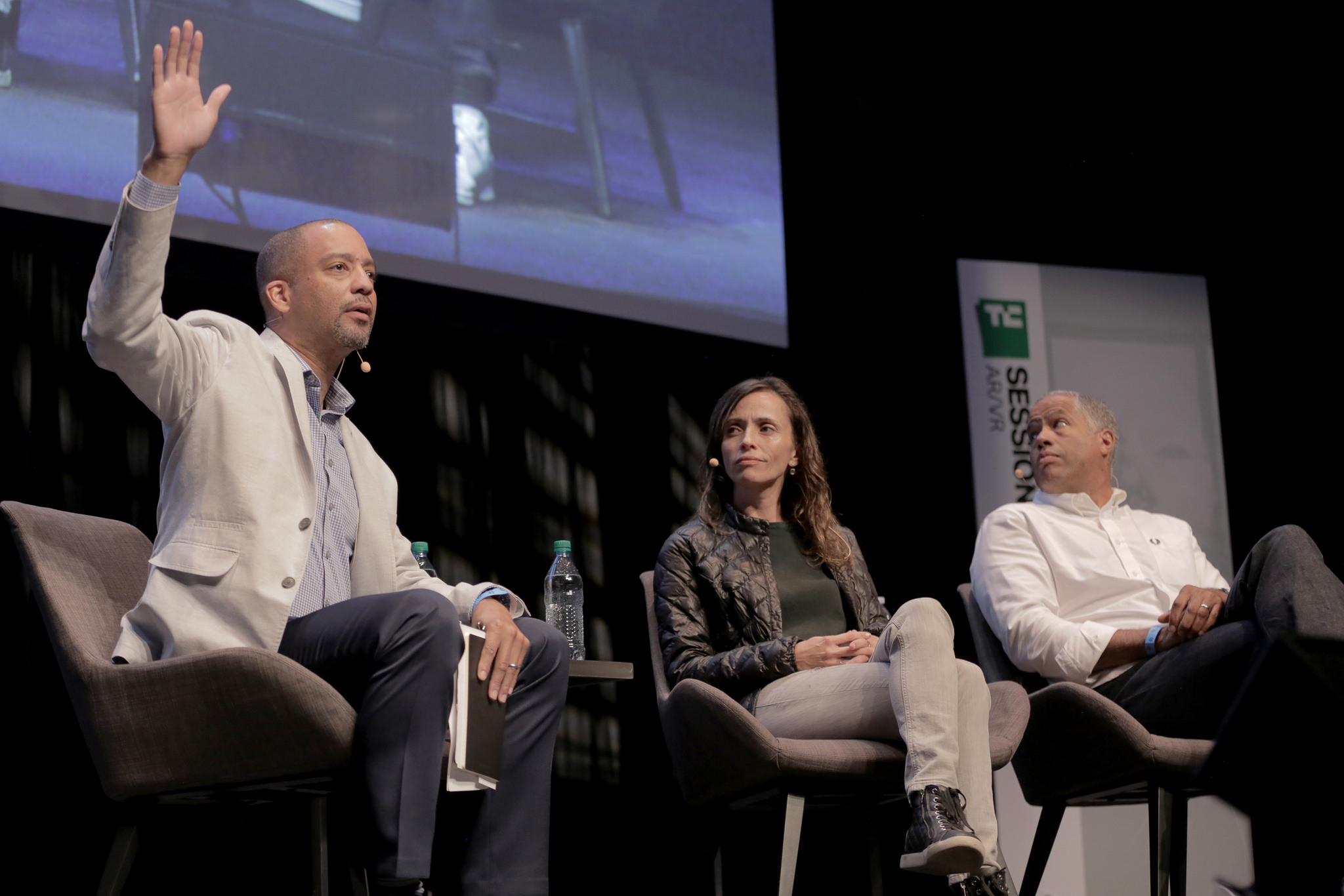
UCLA contributed a moderator with Anderson’s Jay Tucker, who talked with Mariana Acuna (Opaque Studios) and Guy Primus (Virtual Reality Company) about how storytelling in VR may be in very early days, but that this period of exploration and experimentation is something to be encouraged and experienced. Movies didn’t begin with Netflix and Marvel — they started with picture palaces and one-reel silent shorts. VR is following the same path.

And what would an AR/VR conference be without the creators of the most popular AR game ever created? Niantic already has some big plans as it expands its success beyond Pokémon GO. The company which is deep in development of Harry Potter: Wizards Unite is building out a developer platform based on their cutting edge AR technologies. In our chat, AR research head Ross Finman talks about privacy in the upcoming AR age and just how much of a challenger Apple is to them in the space.

That wrapped the show; you can see more images (perhaps of yourself) at our Flickr page. Thanks to our sponsors, our generous hosts at UCLA, the motivated and interesting speakers, and most of all the attendees. See you again soon!