
Year: 2018

23 Oct 2018

Even the world’s largest crypto exchange needs help from traditional VCs

Crypto-anarchists may not like it, but money doesn’t buy everything. Sometimes, you just need the help of a traditional venture capitalist.

Binance is the fastest growing company in crypto — having risen to become the world’s largest crypto exchange based on trading volumes in under one year — but even it needs help from the old guard. Earlier today the exchange firm, which is officially headquartered in Malta, announced that it has landed an undisclosed investment from Vertex Ventures, a VC firm belonging to Singapore sovereign fund Temasek.

The deal is aimed at launching Binance’s fiat-to-crypto exchange in Singapore which is in beta right now but expected to launch fully, with regulatory compliance, before the end of this year.

VCs have long invested in crypto and crypto exchanges — $8 billion-valued Coinbase is the best example with phenomenal gains for backers — but Binance is not traditional. It is barely one year old, it operates in legal grey areas worldwide and it is seemingly not in need of money (even in this bear market) having made a $350 million profit in the last six months alone.

But this deal is about seeking legitimacy and the right partners.

Binance made its name offering fast crypto-to-crypto trades that make use of its BNB token to save on fees, but a big focus for this year is moving into fiat-based exchanges, as CEO Changpeng Zhao explained to TechCrunch in an interview last month. The company is aiming to open three crypto exchanges this year, with plans to raise the number to 10 next year. Aside from Singapore, it has announced a joint venture in Lichtenstein and gone public with plans to offer fiat in Malta, where it has been courted by the island nation’s pro-crypto administration.

The move in Singapore is particularly telling since it shows that, despite early rhetoric that crypto (and ICOs) would ‘rid’ the tech industry of venture capitals. Traditional money and networks are very much required if ambitious companies are to fulfill their promise, as I explained recently when I argued that professional investors now dominate ICOs. The writing has been on the wall with crypto companies using money to make startup investments and grow their own ecosystems — Binance is the most aggressive with a fund that’s said to be $1 billion and an ambitious accelerator program — and so these businesses themselves also need the connections that professional VCs can bring.

(The deal is also a blow to Vertex rival Sequoia, which ended up taking Binance to court over the breakdown of a proposed investment deal last year.)
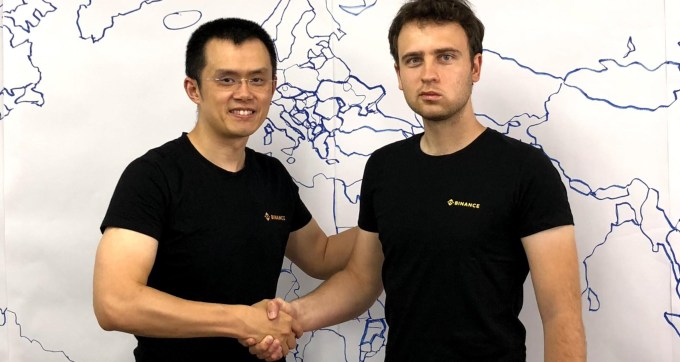
(Left to right) Binance CEO Changpeng Zhao pictured announcing Binance’s acquisition of Trust Wallet with its founder Viktor Radchenko

Wei Zhou — the Binance executive leading the firm’s Singapore business — told TechCrunch that the deal is very much about opening doors.

“This partnership is not about capital but about finding a partner for Binance’s fiat exchange expansions. This partnership signifies the long-term commitment Binance has to build out the ecosystem in the [Southeast Asia] region,” Zhou said.

Vertex certainly brings a network and know-how. The firm was founded in 1988, it has five funds worldwide and offices in Southeast Asia, Silicon Valley, China, India, Israel, and Taiwan.

The firm’s current $210 million fund is the largest in Southeast Asia, and this deal is a joint one between Vertex China and its Southeast Asia/India sibling.

More importantly, as a fund under the Temasek banner — Singapore’s sovereign wealth fund — the deal gives Binance a very good seat at the table for working with authorities. The company has already shown its keenness in Singapore by taking slow steps and working with authorities to roll out its fiat exchange in Singapore slowly — small and slow rollouts are a departure from Binance’s usual ‘move fast and break things’ approach to business — so pairing up with Vertex mirrors that.

Zhao, the Binance CEO, has artfully dodged many questions about his company’s past — such as why it left Hong Kong, the reasons it declined to become regulated in Japan, why it runs to governments like Malta and Bermuda, and whether it has violated U.S. securities laws — but the newest, and perhaps best, response is to work with the establishment in recognized markets where it can be fully legally compliant.

Note: The author owns a small amount of cryptocurrency. Enough to gain an understanding, not enough to change a life
23 Oct 2018

Ex-Windows EVP Terry Myerson joins Madrona Venture and The Carlyle Group

More than half a year after splitting from a long time role at Microsoft, former Windows and Device EVP Terry Myerson is finally ready to talk about his future. In a blog post this morning, the executive discussed what he’s been up to for the past several months (running, learning the piano, strengthening personal relationships, and all that good stuff) and highlighted two new roles.

The 21-year Microsoft vet will be joining Madrona Venture Group as a Venture Partner. The Seattle-based firm has been having a good run of late. As we noted back in May, four of its portfolio companies — Smartsheet, Apptio, Redfin and Impinj —have managed to IPO in the last two years.

Myerson notes that Madrona Managing Director Soma Somasegar was among the first to reach out after his exit from Microsoft.

“Madrona’s core idea is that if you are going to really partner with a company from day one, especially during the very earliest phases of a company’s growth, that is best done locally so that you can support the new team,” Myerson writes. “This resonated with me as true – and being the leading Pacific Northwest VC, with the biggest fund to invest here, and the best track record from Amazon, to four IPOs in the past two years – this started to sound like a great team to be a part of. I really liked the focus on the Pacific Northwest and innovation.”

Along with that role, Myerson has announced that he’ll also be joining private equity firm The Carlyle Group as Operating Executive. “Whereas my role at Madrona challenges me to consider how to leverage the latest technical innovations,” Myerson says, “my role at Carlyle will challenge me to deliver software at scale in many diverse organizations. I couldn’t be more excited to work with the leadership teams of great Madrona and Carlyle companies to grow their businesses.”

Myerson clearly still has a soft spot for his old team, as well, quoting former boss Satya Nadella and noting that the whole letter was written on the new Surface Pro 6 (as a LinkedIn post, no less). Old habits, as they say, die hard.

23 Oct 2018

Ex-Windows EVP Terry Myerson joins Madrona Venture and The Carlyle Group

More than half a year after splitting from a long time role at Microsoft, former Windows and Device EVP Terry Myerson is finally ready to talk about his future. In a blog post this morning, the executive discussed what he’s been up to for the past several months (running, learning the piano, strengthening personal relationships, and all that good stuff) and highlighted two new roles.

The 21-year Microsoft vet will be joining Madrona Venture Group as a Venture Partner. The Seattle-based firm has been having a good run of late. As we noted back in May, four of its portfolio companies — Smartsheet, Apptio, Redfin and Impinj —have managed to IPO in the last two years.

Myerson notes that Madrona Managing Director Soma Somasegar was among the first to reach out after his exit from Microsoft.

“Madrona’s core idea is that if you are going to really partner with a company from day one, especially during the very earliest phases of a company’s growth, that is best done locally so that you can support the new team,” Myerson writes. “This resonated with me as true – and being the leading Pacific Northwest VC, with the biggest fund to invest here, and the best track record from Amazon, to four IPOs in the past two years – this started to sound like a great team to be a part of. I really liked the focus on the Pacific Northwest and innovation.”

Along with that role, Myerson has announced that he’ll also be joining private equity firm The Carlyle Group as Operating Executive. “Whereas my role at Madrona challenges me to consider how to leverage the latest technical innovations,” Myerson says, “my role at Carlyle will challenge me to deliver software at scale in many diverse organizations. I couldn’t be more excited to work with the leadership teams of great Madrona and Carlyle companies to grow their businesses.”

Myerson clearly still has a soft spot for his old team, as well, quoting former boss Satya Nadella and noting that the whole letter was written on the new Surface Pro 6 (as a LinkedIn post, no less). Old habits, as they say, die hard.

23 Oct 2018

Uber Eats is expanding to cover 70 percent of U.S. population by end of year

Uber is continuing to expand its on-demand food delivery service, Eats. By the end of this year, Uber plans to cover more than 70 percent of the U.S. Today, Uber covers more than 50 percent of the U.S. population. Uber Eats competitor Postmates, on the other hand, recently said it covers 60 percent of U.S. households.

Even in places where Uber does not operate its traditional ride-hailing business or places where it has merely a small presence, Uber has been able to “successfully introduce the Uber brand to the marketplace through Eats,” Uber Head of US Cities for Uber Eats Ana Mahony told TechCrunch.

Uber’s calling it successful in part because 40 percent of its new Eats users are new to Uber. One of the benefits to operating Eats, Mahony said, is that there are different regulatory requirements.

When you compare the Eats growth data to that of the first three years of UberX gross bookings, “Eats is growing just as fast if not faster,” Mahony said.

To continue fueling growth, Uber is also launching a new self sign-up process for restaurants. The idea is for it to be easier and faster to become an Uber Eats partner.

“Uber is really evolving into a platform brand where we are moving very many different types of goods and services and people from point A to point B,” Mahony said.

Over the weekend, the WSJ reported Uber has plans to use drones to deliver food by 2021. That report was based on a since-deleted job posting looking for an executive for UberExpress, a drone delivery service within UberEats. However, Mahony and I had our conversation before the drone news.

23 Oct 2018

Uber Eats is expanding to cover 70 percent of U.S. population by end of year

Uber is continuing to expand its on-demand food delivery service, Eats. By the end of this year, Uber plans to cover more than 70 percent of the U.S. Today, Uber covers more than 50 percent of the U.S. population. Uber Eats competitor Postmates, on the other hand, recently said it covers 60 percent of U.S. households.

Even in places where Uber does not operate its traditional ride-hailing business or places where it has merely a small presence, Uber has been able to “successfully introduce the Uber brand to the marketplace through Eats,” Uber Head of US Cities for Uber Eats Ana Mahony told TechCrunch.

Uber’s calling it successful in part because 40 percent of its new Eats users are new to Uber. One of the benefits to operating Eats, Mahony said, is that there are different regulatory requirements.

When you compare the Eats growth data to that of the first three years of UberX gross bookings, “Eats is growing just as fast if not faster,” Mahony said.

To continue fueling growth, Uber is also launching a new self sign-up process for restaurants. The idea is for it to be easier and faster to become an Uber Eats partner.

“Uber is really evolving into a platform brand where we are moving very many different types of goods and services and people from point A to point B,” Mahony said.

Over the weekend, the WSJ reported Uber has plans to use drones to deliver food by 2021. That report was based on a since-deleted job posting looking for an executive for UberExpress, a drone delivery service within UberEats. However, Mahony and I had our conversation before the drone news.

23 Oct 2018

Bright Machines lands $179M to bring smarter robotics to manufacturing

Robotics has had a role in manufacturing since the 1970s, but even today they are aren’t often driven by the latest software. Bright Machines, a San Francisco startup wants to change that and it got a whopping $179 million Series A today to get this thing going. While it was at it, it also officially launched the company.

The startup wants to bring a software-driven approach to robotics, one that would let you take dumb robotics and program it in a more automated fashion to perform a set of tasks, taking advantage of artificial intelligence and machine learning in ways that they say most manufacturing companies simply aren’t equipped to handle right now.

This is clearly not your typical Series A and Bright Machines does not appear to be a typical Series A company, feeling its way trying to get a product to market. Perhaps that’s because the company began life as incubated project inside Flex, a customized manufacturing company. It was then spun out as a startup called AutoLab AI and changed the name to Bright Machines today for the big company unveiling.

It already boast over 300 employees and brought in CEO, Armar Hanspal, who was most recently co-CEO at Autodesk to run the show. Former Autodesk CEO Carl Bass is a board member. Other board members include Mike McNamara, CEO of Flex and Steve Luszo, CEO of Seagate. Eclipse led the round.

What is attracting all of this money and talent to such a young company? Bright Machines is trying to solve a hard and expensive manufacturing problem. “We’re putting together the people, the tech stack and funding and other resources to go really go tackle this big under-served environment by bringing more automation and software to the factory floor,” CEO Hanspal told TechCrunch.

While he acknowledges we have seen a move toward automating the factor floor for decades, they are attacking an area that up until now has been underserved by robotics because the technology simply wasn’t ready to handle it. “What we’re doing that’s different is going from dumb, blind and costly robots to ones that are sensor rich, have computer vision, machine learning and are adaptable,” he said.

What’s more, they are bringing a subscription model to this approach, allowing customers to set up custom manufacturing lines on the fly with what they claim is much lower cost and fuss they faced with more traditional approaches. 

They are taking on this sum of money so early because they believe it is a huge market and if they can attract the right talent, they can bring a substantive change to manufacturing that is lacking today. Time will tell if the bet pays off.

23 Oct 2018

Bright Machines lands $179M to bring smarter robotics to manufacturing

Robotics has had a role in manufacturing since the 1970s, but even today they are aren’t often driven by the latest software. Bright Machines, a San Francisco startup wants to change that and it got a whopping $179 million Series A today to get this thing going. While it was at it, it also officially launched the company.

The startup wants to bring a software-driven approach to robotics, one that would let you take dumb robotics and program it in a more automated fashion to perform a set of tasks, taking advantage of artificial intelligence and machine learning in ways that they say most manufacturing companies simply aren’t equipped to handle right now.

This is clearly not your typical Series A and Bright Machines does not appear to be a typical Series A company, feeling its way trying to get a product to market. Perhaps that’s because the company began life as incubated project inside Flex, a customized manufacturing company. It was then spun out as a startup called AutoLab AI and changed the name to Bright Machines today for the big company unveiling.

It already boast over 300 employees and brought in CEO, Armar Hanspal, who was most recently co-CEO at Autodesk to run the show. Former Autodesk CEO Carl Bass is a board member. Other board members include Mike McNamara, CEO of Flex and Steve Luszo, CEO of Seagate. Eclipse led the round.

What is attracting all of this money and talent to such a young company? Bright Machines is trying to solve a hard and expensive manufacturing problem. “We’re putting together the people, the tech stack and funding and other resources to go really go tackle this big under-served environment by bringing more automation and software to the factory floor,” CEO Hanspal told TechCrunch.

While he acknowledges we have seen a move toward automating the factor floor for decades, they are attacking an area that up until now has been underserved by robotics because the technology simply wasn’t ready to handle it. “What we’re doing that’s different is going from dumb, blind and costly robots to ones that are sensor rich, have computer vision, machine learning and are adaptable,” he said.

What’s more, they are bringing a subscription model to this approach, allowing customers to set up custom manufacturing lines on the fly with what they claim is much lower cost and fuss they faced with more traditional approaches. 

They are taking on this sum of money so early because they believe it is a huge market and if they can attract the right talent, they can bring a substantive change to manufacturing that is lacking today. Time will tell if the bet pays off.

23 Oct 2018

A Washington ISP exposed the ‘keys to the kingdom’ after leaving a server unsecured

A Washington state internet provider left an unprotected server online without a password, exposing network schematics, passwords and other sensitive files for at least six months.

Worse, it took the company a week to shut off the leak, despite several phone calls and emails warning of the exposure.

The little-known internet provider, PocketiNet, may not be widely known outside the west coast but it’s a local powerhouse — providing high speed internet access to thousands of homes, local multi-national corporations, hospitals and a regional airport across the state. But the company put its customers and its network at risk after it left open an Amazon S3 storage bucket — an all too common cause of data exposures — containing tens of gigabytes of files.

Chris Vickery, director of cyber risk research at security firm UpGuard, found the data and shared his findings with TechCrunch. He described the cache the “keys to the kingdom.”

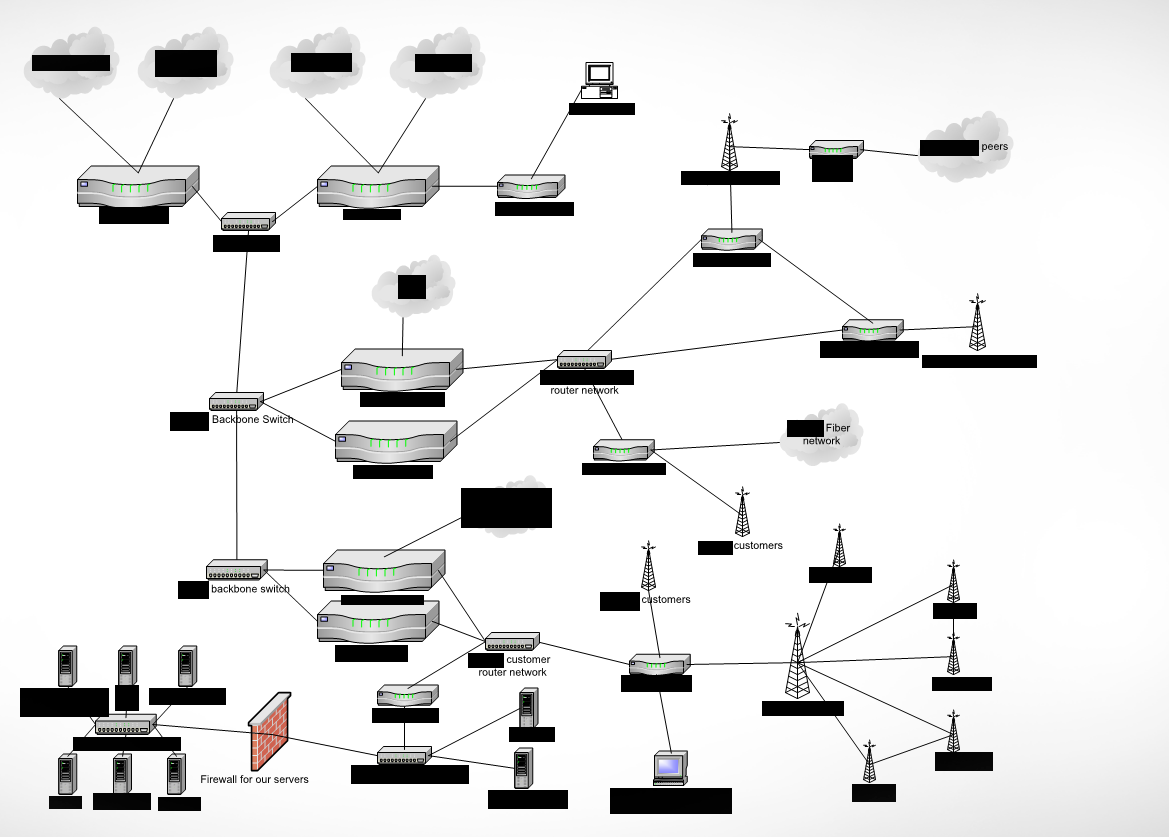
Among the files, the bucket contained detailed diagrams of the company’s network setup, router configurations, and details and locations of customers’ equipment.

Vickery also found spreadsheets and plaintext password files belonging to employees and network devices — like firewalls, switches and wireless points — that he said could have given a hacker “everything they need to disrupt, exploit, or otherwise modify network operations.”

A redacted network schematic from the exposed Amazon S3 bucket (Image: supplied)

Although there wasn’t any customer data stored in the bucket, one file revealed PocketiNet’s “priority” customers, including the nearby Lourdes Medical Center in Pasco, the Toyota Center arena in Kennewick, and a little-known Lockheed Martin facility in Richand. The company provides service to dozens of hotspots around the region, including at the the Tri-City Airport in Pasco. It also provides hotspots and backend network infrastructure to Walla Walla Regional Airport.

As soon as Vickery found the data on October 11, he contacted the company the same day. But the company took its time to close the bucket.

In a phone call on Saturday, PocketiNet’s chief technology officer Steve Hoffman told TechCrunch that the bucket had been open for “six months” and that following an unrelated power outage on the network, securing the bucket “can wait another day.” That’s contrary to his an email the day before, claiming that the bucket had been secured “days ago,” which it wasn’t.

A day later, Vickery confirmed that the bucket was secured.

We reached out to the company again for comment. Chief executive Todd Brandenberg did not respond, but Hoffman reaffirmed that the company “fixed the problem as soon as we could.”

Vickery said the data should not have been public and could have put the company’s network at risk of exploitation or compromise. But while so many companies today are looking for foreign threats and complex adversaries, some might want to look a little closer to home.

23 Oct 2018

A Washington ISP exposed the ‘keys to the kingdom’ after leaving a server unsecured

A Washington state internet provider left an unprotected server online without a password, exposing network schematics, passwords and other sensitive files for at least six months.

Worse, it took the company a week to shut off the leak, despite several phone calls and emails warning of the exposure.

The little-known internet provider, PocketiNet, may not be widely known outside the west coast but it’s a local powerhouse — providing high speed internet access to thousands of homes, local multi-national corporations, hospitals and a regional airport across the state. But the company put its customers and its network at risk after it left open an Amazon S3 storage bucket — an all too common cause of data exposures — containing tens of gigabytes of files.

Chris Vickery, director of cyber risk research at security firm UpGuard, found the data and shared his findings with TechCrunch. He described the cache the “keys to the kingdom.”

Among the files, the bucket contained detailed diagrams of the company’s network setup, router configurations, and details and locations of customers’ equipment.

Vickery also found spreadsheets and plaintext password files belonging to employees and network devices — like firewalls, switches and wireless points — that he said could have given a hacker “everything they need to disrupt, exploit, or otherwise modify network operations.”

A redacted network schematic from the exposed Amazon S3 bucket (Image: supplied)

Although there wasn’t any customer data stored in the bucket, one file revealed PocketiNet’s “priority” customers, including the nearby Lourdes Medical Center in Pasco, the Toyota Center arena in Kennewick, and a little-known Lockheed Martin facility in Richand. The company provides service to dozens of hotspots around the region, including at the the Tri-City Airport in Pasco. It also provides hotspots and backend network infrastructure to Walla Walla Regional Airport.

As soon as Vickery found the data on October 11, he contacted the company the same day. But the company took its time to close the bucket.

In a phone call on Saturday, PocketiNet’s chief technology officer Steve Hoffman told TechCrunch that the bucket had been open for “six months” and that following an unrelated power outage on the network, securing the bucket “can wait another day.” That’s contrary to his an email the day before, claiming that the bucket had been secured “days ago,” which it wasn’t.

A day later, Vickery confirmed that the bucket was secured.

We reached out to the company again for comment. Chief executive Todd Brandenberg did not respond, but Hoffman reaffirmed that the company “fixed the problem as soon as we could.”

Vickery said the data should not have been public and could have put the company’s network at risk of exploitation or compromise. But while so many companies today are looking for foreign threats and complex adversaries, some might want to look a little closer to home.

23 Oct 2018

Amazon Business Prime adds same-day and 1-day shipping, among other benefits

Amazon’s version of Prime aimed at business users is gaining a handful of new perks, the retailer announced this morning. Unlike the consumer version of Prime, the new benefits aren’t focused around entertainment – like access to streaming music or movies, for example – but are instead meant to help business customers gain better insight and control over their Amazon spending.

Business customers in the U.S. also today gain access to free same-day and one-day shipping on over a million items on orders over $35 in more than 8,000 cities and towns.

Plus, they can opt for Consolidated Shipping on bulk orders to receive fewer shipments, if they choose.

Also included in the new set of benefits is a feature called “Spend Visibility,” which provides visualizations powered by AWS QuickSight of the company spend in graphics designed to be pasted into corporate PowerPoints. Amazon says its goal is to help businesses free up the time it takes them to analyze their data in order to identify spending trends.

Another new benefit is “Guided Buying,” which allows the Amazon Business account admins to identify certain suppliers and products as “preferred” while restricting others, so those buying under the business account makes the company-approved choices when shopping for supplies and other business needs. This can also help companies reduce spend, improve compliance with corporate policies, and consolidate their suppliers, Amazon notes.

Starting today, Prime Business members can choose to now request Extended Terms for Pay by Invoice, when they qualify, opting for 45 or 60 days for better cash flow management, too.

In addition to the new Prime benefits, Amazon and American Express launched a new Amazon Business American Express Card which offers U.S. customers 5% back or 90-Day terms on eligible purchases at Amazon.com, Amazon Business, Amazon Web Services, and Whole Foods Market.

Amazon first launched Business Prime last year, as a way to compete with traditional office suppliers like Staples, Office Depot, as well as big box retailers like Walmart and Costco. The service extends Prime’s free, two-day shipping to businesses, and it integrates with dozens of purchasing systems, workflows, reporting and analytics systems, purchasing cards and more.

The program’s cost is based on the number of users. There’s now a new tier for smaller businesses, starting at $179 per year – not much more than a typical Amazon Prime membership.

The pricing tiers are as follows: $179 per year for up to 3 users; $499 per year for up to 10 users; $1,299 per year for up to 100 users; and $10,099 per year for over 100 users.

Since its launch, Amazon says it has signed up “millions” of business customers and “hundreds of thousands” of business sellers to the program.

In the U.S., Amazon Business now serves nearly 80% of the 100 largest enrollment education organizations, 55 of the Fortune 100 companies, more than half of the 100 biggest hospital systems, and more than 40% of the most populous local governments. (You’ll note that those numbers have been massaged a bit to make the percentages appear larger, and Amazon isn’t saying how many actual subscriptions it has sold, or what subscription tiers are involved.)

That said, it’s still taking a notable chunk of the market for a year-old service – one that probably makes rival retailers nervous as Amazon aims for their market.

Amazon says the new benefits (except for the Amex card and same-day/1-day shipping which are U.S.-only) are rolling out to Amazon Business Prime in the U.S., Germany and Japan, starting today.