Year: 2018

23 Oct 2018

SoftBank CEO pulls out of speaking at Saudi investment conference

SoftBank Group has become the latest high profile technology business to drop out of an investment conference in Saudi Arabia following the snowballing global outcry over the killing of journalist, Jamal Khashoggi.

The Wall Street Journal reports the last minute cancelation by CEO Masayoshi Son of a speaking engagement at the Future Investment Initiative conference which opens in Riyadh today, and runs for three days.

We’ve reached out to SoftBank for comment.

When asked last week about its presence at the conference the company had said it was “watching developments” to “see where this goes”.

Last week Saudi authorities finally admitted Khashoggi had died inside their consulate in Istanbul — although their explanation for exactly how he died continues to face global scepticism. At the same time, explicit leaks from Turkish authorities have suggested the killing was both premeditated and truly horrific.

Son has a close relationship with the Saudi crown prince, Mohammed bin Salman, attracting billions of dollars of investment from the kingdom into his massive SoftBank Vision Fund, which raised $93M at its first close a year ago.

Since then it has talked bullishly about raising multiple $100BN funds. But in the face of a still spiralling geopolitical outcry over the journalist’s slaying, SoftBank now appears to be playing down the prospect of imminent sequels.

A spokesperson told CNN on Friday: “Vision Fund 2 is just a concept at the moment. Timing, scale and details are not decided and [have] not been disclosed.”

Son bowing out of the Riyadh conference lends further weight to the idea the group is now cooling on Saudi money. And without the kingdom’s billions to pump into future Vision Funds, SoftBank’s vision of multiple ‘mega-funds’ looks far more conceptual than imminently possible.

A raft of other business and political leaders have also pulled out of attending the Future Investment Initiative conference as concern over Khashoggi’s fate has ramped up, including the CEO of Uber — whose ride-hailing business has also been pumped up with billions of dollars of kingdom investment in recent years; both directly and indirectly via SoftBank’s Vision Fund.

It remains to be seen how that relationship will now play out.

As we wrote last week, the fallout from Khashoggi’s slaying is being widely felt — and showing no signs of fading away, as investors might have hoped.

The website of the Saudi’s future investment conference was also temporarily defaced by hackers yesterday.

23 Oct 2018

HTC opens up early access to its blockchain phone

After months of talk, HTC’s blockchain phone is finally arriving — albeit in limited quantities. The hardware maker announced today at a crypto conference in Berlin that it’s opening up access to an early version the Exodus 1 handset to “cryptographers and developers from all over the world” through its official site.

Of course, “early version” implies that we’re not dealing with anything final here. Add to that the fact that the phone isn’t expected to actually ship until December, and the thing doesn’t really feel all that much more real than it did a few months back. Still, if you believe in the tech — or at least find yourself morbidly curious about it — you can pick one up using either Bitcoin or Ethereum, naturally.

Images of the phone are still renders, but the device appears to share a lot of design language in common with HTC’s most recent flagship, the U12 — down to the translucent glass backing. That’s a good thing, honestly. Too often these kinds of novelty devices are produced by companies too focused on a single underlying technology to get the rest of the phone right. Here, at least, you know you’ll be getting a solid, working handset as the foundation.

The phone itself runs Android. From the sound of it, much of the underlying tech is about keeping the phone secure, being used to store things like keys to cryptocurrencies and, moving forward, all of the phone’s data. There’s also an interesting built in function for accessing lost data in a decentralized way.

HTC has developed a unique Social Key Recovery mechanism in case your phone is lost or stolen, or you forget your keys. It is an easy and secure way to recover keys lost in the hardware. It also ensures that HTC does not hold your keys in a central location at any point – you maintain full custody at all times. HTC allows you to pick a few trustworthy contacts, and each one of those must download a key management app. Your seed then gets split using a secret sharing algorithm and is sent to the trusted contacts. Should the need arise, you can successfully regain access to your funds.

For now, HTC is using this program to pilot the tech here — taking feedback from a small core of users. Though it’s tough to imagine this becoming much more of a mainstream device for a company struggling to stand out in the smartphone space.

23 Oct 2018

Only 24 hours left to buy early-bird tickets to Disrupt Berlin 2018

A huge shout-out to all the early-stage startup procrastinators out there. Our 24-hour clock is in play, and that means you need to act quickly if you want to save up to €500 on tickets to Disrupt Berlin 2018. And by quickly we mean by tomorrow, 24 October. That’s when the early-bird price flies the coop, and what budget-conscious start-upper wants to pay more? Don’t get stuck with a bigger bill. Buy your early-bird ticket today.

Disrupt Berlin 2018 offers world-class networking and opportunity. You’ll find more than 400 early-stage startups — including our exceptional cohort of TC Top Picks — exhibiting in Startup Alley. It’s a place to connect with your peers, share ideas and find potential partners, customers and funding — the list goes on.

Networking at Disrupt will be easier than ever this year because we’re making CrunchMatch — our free business match-making service that connects investors and founders who want to discuss funding — available to all conference attendees. Whether you’re looking for partners, a developer, marketing help or a new job, CrunchMatch will help you find and connect with the right people.

Nothing beats the sheer, raw energy and excitement of Startup Battlefield, our premier pitch competition. You won’t want to miss 15 of the hottest early-stage startups competing for the coveted Disrupt Cup, $50,000 in non-equity cash and invaluable, often life-changing, exposure to media and investors.

The founders of each team have been honing their pitches with coaching from experienced TechCrunch editors, and they’ll be ready to give it their all on the Disrupt Main Stage. Be there to watch — and cheer them on — as they launch their startups to the world.

There’s so much more to experience at Disrupt Berlin 2018: Q&A Sessions, a speaker roster filled with industry leaders and luminaries, workshops and the world’s best After Party. Check out the agenda here.

Here’s the bottom line. TechCrunch Disrupt Berlin 2018 takes place on 29-30 November, and you can save up to €500 — but only if you buy your tickets before the 24 October deadline. We can’t wait to see you in Berlin!

23 Oct 2018

Here are where the first Amazon Go stores in San Francisco will be located

Amazon is getting ready to introduce some more of its futuristic convenience stores where buyers can skip the line.

San Francisco may be the center of techie desires and culture but all of Amazon’s five existing Go locations have been elsewhere. Today, the company is announcing some new locations for upcoming stores, including one that will be opening in San Francisco today.

The company’s location on California & Battery street will be opening its doors for the first time at 7AM this morning, with quick bites, some grocery items and meal kits available for shoppers interested in buying things without going through a checkout line.

In addition to the Amazon Go store opening later this morning, the company has also announced that they’ll be opening a 1,750 square foot location in San Francisco at Post & Kearny street this winter.

Outside of SF, the company confirmed a 2,000 square foot location coming to Chicago’s Illinois Center at 111 E Wacker Drive in 2019.

Amazon seems to be focusing its first SF openings in the Financial District here where there’s often a lot more foot traffic around lunchtime than in more startup office-heavy areas around SoMa where a lot of employees seem to stick around for catered lunches.

I’m sure I’ll be grabbing a bite to eat at the California & Battery location sometime this week to see if everything works as advertised, but here’s a look at our experience with the futuristic convenience store when its first location opened earlier this year:

23 Oct 2018

Tier, the Berlin-based scooter rental startup, raises €25M as European e-scooter market heats up

Tier, one of a number of electric scooter rental startups based in Berlin, has raised a chunky €25 million in Series A funding. Leading the round is VC fund Northzone, with participation from existing investors Speedinvest, and Point Nine.

The investment marks the biggest financial backing for a European company in the space, and, according to my sources, signals the beginning of a pending VC war to create the “Bird or Lime of Europe”.

Go Flash (or perhaps just “Flash”), founded by Delivery Hero and Team Europe founder Lukasz Gadowski, is also thought to be out raising a war chest from VCs across Europe. I understand the yet-to-launch startup is already backed by Gadowski’s own cash and €2 million from the mobility arm of Target global.

There’s also Coup, an e-scooter subsidiary owned by Bosch and backed by BCG Digital Ventures that operates in Berlin, Paris and Madrid. And just two month’s ago Taxify announced its intention to do e-scooter rentals under the brand Bolt, first launched in Paris but also planning to be pan-European, including Germany. To name just a few.

Meanwhile, Bird and Lime have made tentative launches in Europe. The U.S. e-scooter services are both available in Paris, with other European cities expected soon.

More on Northzone-backed Tier

Founded by “serial entrepreneurs” Lawrence Leuschner (CEO), Julian Blessin (CPO), and Matthias Laug (CTO), provides electric scooters that can be
rented on demand to travel the “last mile” in cities. To use the Tier service, riders download the app, locate one of the available e-scooters using the map, pay a fixed fee of €1 to unlock, followed by a fee of €0.15 per minute to ride.

The startup pitches its mobility offering as an “independent, fun and conscious way of urban commuting,” as says that what sets Tier apart from competitors is the way it plans to work closely with local governments and town halls to help create a sustainable experience. “The goal is to change the current status quo of polluted cities, smog and ineffective, inconvenient and overpriced transportation modes together!” says the company.

Its first active city is Vienna, which launched just last week. However, the plan is to use the new Series A funding to roll out the Tier service to additional European cities, and to further scale the team.

Cue a statement from Paul Murphy, Partner at Northzone: “European cities are uniquely placed to benefit from access to low-carbon, accessible and convenient transport, thanks to their high population density and political commitment to lower carbon emissions. It takes a strong team to navigate a complex landscape. Tier is the frontrunner in Europe, and we have been incredibly impressed with what the team has achieved to date. We think they can become a category winner in a space”.

Fun fact: Tier’s Blessin was instrumental in setting up e-scooter rival Coup as the company’s “Venture Build” & Head of Growth.

More on Lukasz Gadowski’s Go Flash

Although not yet official — Gadowski’s LinkedIn profile simply lists his latest job title as CEO at “TBA MOBILITY SERVICE” — Go Flash is one of Berlin’s worst kept secrets. The new venture was briefly mentioned by local German blog Gruenderzene, whilst I’ve heard a few more details from my own sources in the German city and from a number of VCs across Europe.

One rumour in circulation is that Gadowski is in the midst of raising a “mega round” from multiple European VCs, with the aim of creating both a war chest to fend off Bird and Lime, but also to launch a pan-European e-scooter service that hits the road motoring via a roll up of other nascent e-scooter startups across the region.

The figure being touted is between $100 million and $200 million, with one source telling me it is still very early days, while another says the deal is practically done. I’ve also heard that Go Flash is already in talks with an e-scooter startup in Sweden (while Delivery Hero garnered much of its growth via acquisition).

As one person familiar with Gadowski’s previous modus operandi put it: “He’s good at fundraising. $100 million wouldn’t be hard for Lukasz to raise. He raised over a $1 billion in equity for Delivery Hero and made a lot of people money”. In other words, we might expect to see some investors previously associated with Delivery Hero take part.

More intriguingly, one source, albeit based on limited information, said that if the mega round is true it will be fascinating to witness a number of top European VCs “colluding” in a bid to keep Silicon Valley at bay. The general sentiment is that they don’t want the potentially lucrative e-scooter space, which appears to have very promising unit economics, to be rolled over by a U.S. company in the same way that Uber swept into Europe and overtook much of the local competition.

23 Oct 2018

Local venture capital fund formation is on the rise in Africa, led by Nigeria

Africa’s VC landscape is becoming more African with an increasing number of investment funds headquartered on the continent and run by locals, according to data from Crunchbase.

The study also tracked the emergence of homegrown corporate venture arms and more Africans in top positions at outside funds. These results derived from a year-long project to boost Crunchbase’s Africa data capture and increase awareness of its platform across the continent’s tech ecosystem.

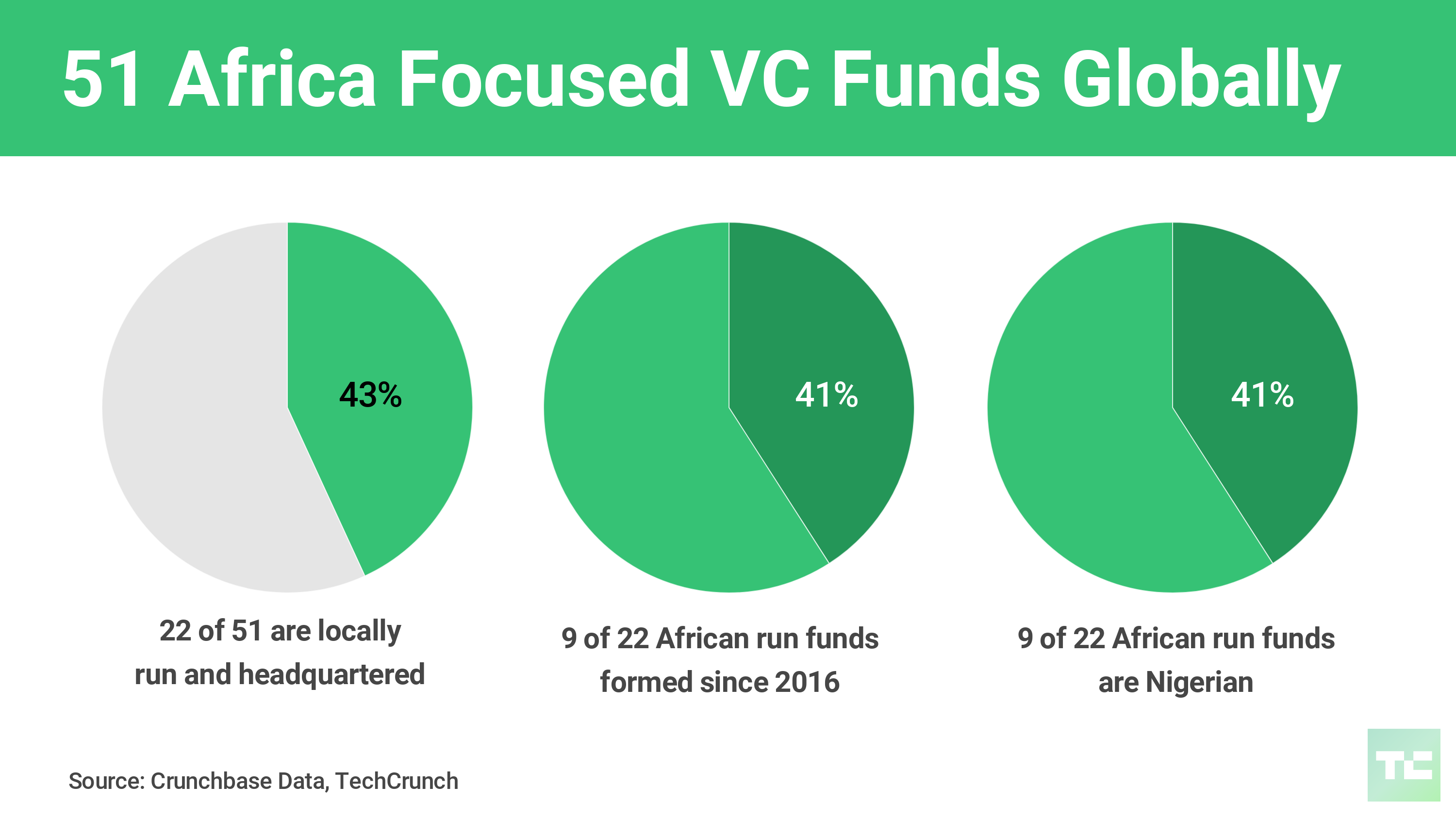
Drawing on its database and primary source research, Crunchbase identified 51 “viable” Africa-focused VC funds globally—defining viable as formally established entities with 7-10 investments or more in African startups, from seed to series stage.

Those who made the list with 7 investments indicated they would reach 10 by early 2019.  

Of the 51 funds investing in African startups, 22 (or 43 percent) were headquartered in Africa and managed by Africans.

Of the 22 African managed and located funds, 9 (or 41 percent) were formed since 2016 and 9 are Nigerian.

Four of the 9 Nigeria located funds were formed within the last year: Microtraction, Neon Ventures, Beta Ventures, and CcHub’s Growth Capital fund.

The research prioritized organizational viability and number of investments over fund and round size. Therefore, the range in typical investment values across the group was wide, with some offering $25K seed investments, and others doing $1 to $10 million rounds at the series A and B stage.

In the group of 51 total funds, TPG’s Growth Fund led the largest round on the continent in 2018 (so far):  $47.5 million to Kenyan fintech startup Cellulant.

This has only been topped by the $52 million round to South Africa’s Jumo, but that was led by Goldman Sachs—which (by the information we have) hasn’t invested significantly in African startups, aside from Jumia.   

The Nigerian funds with the most investments were EchoVC (20) and Ventures Platform (23).

Notably active funds in the group of 51 included Singularity Investments (18 African startup investments) Ghana’s Golden Palm Investments (17) and Musha Ventures (36).

At least one corporate venture arm—Safaricom’s Spark Venture Fund—made Crunchbase’s list of 51. The research also tracked a rise in corporate venture funding and acquisition activity. MTN has invested in African startups and Standard Bank added $1 million to Founders Factory’s new African accelerator. Fintech firm Interswitch has been in the acquisition market and established its E-growth Fund to invest in startups.

Cellulant CEO Ken Njoroge indicated recently his company will likely go acquisition shopping for local startups in the near future.

During the course of Crunchbase’s research sources speaking on background flagged the pending launch of three new African corporate venture arms within the next 12 to 16 months.

In addition to tracking more funds on the continent, another emerging trend point was Africans in senior positions at those located elsewhere—including the three that raised the most capital over the last 24 months.

Former Nigerian ICT minister Omobola Johnson is a senior partner at TLcom Capital’s $40 million fund. Yemi Lalude is Managing Partner of TPG Growth’s Africa fund, which announced $2 billion in its coffers last year. And at French firm Partech—which raised $70 million for its Africa fund—Tidjane Deme is General Partner.

Crunchbase’s overall findings come as a several recent articles (and a heap of Twitter debate) have expressed concern about possible outsized influence of external actors in Africa’s tech ecosystem — primarily East Africa — and bias among VC investors toward non-African founders.

More accurate data on Sub-Saharan Africa’s VC could help better inform these discussions.

Pinning down solid stats on the region’s nascent startup scene is a budding exercise. The core growth in Sub-Saharan Africa’s tech sector has occurred over the last 5-7 years so there’s less accompanying infrastructure—i.e., analyst reporting, long-term databases, and robust media coverage—than other markets

Some VC firms have taken stabs at quantifying the value of VC investment over select timeframes. In 2017, Village Capital did a report tracking fintech funding in East Africa.

The last two years, Partech and media firm Disrupt Africa have done reports on Africa’s annual VC values. Their diverging numbers demonstrate the continued challenges to producing confident stats. Partech’s study tallied 2017 funding to African startups at $560 million, while Disrupt Africa came up with $195 million for the same year.

For its part, Crunchbase aims to create as accurate a VC representation for Africa as it does for other global markets. In addition to tracking stats on African funds, the platform has extended its  Venture Program—which allows partners to directly update their Crunchbase data and investments.

To date, Crunchbase has added 33 African focused Venture Program partners including Greenhouse Capital, TLcom Capital, Draper Darkflow, Silvertree Internet Holdings, Naspers, Orange Digital Ventures, and Accion Venture Lab.

23 Oct 2018

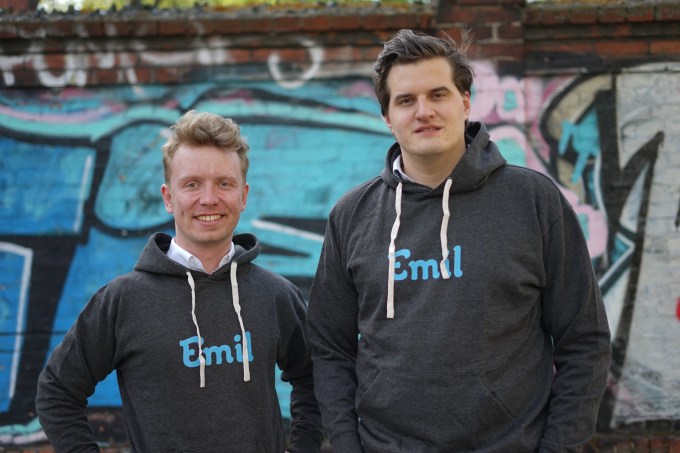
Berlin’s Emil launches pay-per-mile car insurance

Emil, a new startup from the founders of Movinga, has launched what it claims is Germany’s first pay-per-mile car insurance that measures miles in real-time. Aimed at drivers who do less than 6,200 miles per year on average (or roughly 120 miles per week) — which we’re told accounts for 49 percent of German drivers — mileage is tracked via the Emil app and the supplied dongle that plugs into your car’s diagnostics port.

“With Emil we are building a 21st century mobility insurer,” co-founder Bastian Knutzen tells me. “We believe that insurance products that are offered today can be improved on different dimensions and want to change that by offering flexible and fair products tailored around customer needs. We have started with the German car insurance market where traditionally low mileage drivers have subsidised the higher accident risk of high-mileage drivers which has led to an unfair insurance premium distribution”.

Digging a little more into the technology and model behind Emil, Knutzen explained that the Emil stick is an IoT device with an integrated SIM card that plugs into a vehicle’s OBD-II diagnostics port, from where mileage data is sent to the startup’s servers.

“Customers only pay a low monthly base fee and cents per mile when they actually drive,” he says, meaning that low-mileage drivers can make significant savings on their insurance premiums.

In addition, the Emil mobile app gives your car other ‘smart’ features, such as tracking the vehicle’s location, an overview of all trips (“driver’s logbook”), and remote diagnostics.

The insurance policy itself was developed in cooperation with General Reinsurance AG (a Berkshire Hathaway Company) and the German insurer Gothaer Allgemeine Versicherung.

“In general, we target consumers who want an intuitive, convenient and transparent insurance,” adds Knutzen. “Our customers use their smartphones and other gadgets for payment, banking, shopping, etc., but can’t for insurance. We try to meet that type of expectation for insurance products as well.

More broadly, Emil is tapping into current trends such as growing environmental awareness, urbanisation and car-sharing. “We have decided to offer an insurance which rewards people for not using their cars as our first product. There is a significant price advantage for customers driving less than 6,200 miles annually, which covers around half of German car drivers,” Knutzen says.

Meanwhile, I’m told that Emil’s only funding to date is a “seven-digit” seed round from multiple family offices and business angels with ties to the technology, automotive and insurance industry. They include Johannes Reck (co-founder of GetYourGuide), Lucas von Cranach (co-founder of Onefootball), Roland Grenke (co-founder of Dubsmash), Philip Petrescu (co-founder of Lendico), Verena Pausder (co-founder of Fox & Sheep), Arndt Ellinghorst (German automotive expert), and Oliver Mickler (co-founder Tillhub, co-founder MyDriver and the first angel backer of Movinga).

23 Oct 2018

Fake news ‘threat to democracy’ report gets back-burner response from UK gov’t

The UK government has rejected a parliamentary committee’s call for a levy on social media firms to fund digital literacy lessons to combat the impact of disinformation online.

The recommendation of a levy on social media platforms was made by the Digital, Culture, Media and Sport committee three months ago, in a preliminary report following a multi-month investigation into the impact of so-called ‘fake news’ on democratic processes.

Though it has suggested the terms ‘misinformation’ and ‘disinformation’ be used instead, to better pin down exact types of problematic inauthentic content — and on that at least the government agrees. But just not on very much else. At least not yet.

Among around 50 policy suggestions in the interim report — which the committee put out quickly exactly to call for “urgent action” to ‘defend democracy’ — it urged the government to put forward proposals for an education levy on social media.

But in its response, released by the committee today, the government writes that it is “continuing to build the evidence base on a social media levy to inform our approach in this area”.

“We are aware that companies and charities are undertaking a wide range of work to tackle online harms and would want to ensure we do not negatively impact existing work,” it adds, suggesting it’s most keen not to be accused of making a tricky problem worse.

Earlier this year the government did announce plans to set up a dedicated national security unit to combat state-led disinformation campaigns, with the unit expected to monitor social media platforms to support faster debunking of online fakes — by being able to react more quickly to co-ordinated interference efforts by foreign states.

But going a step further and requiring social media platforms themselves to pay a levy to fund domestic education programs — to arm citizens with critical thinking capabilities so people can more intelligently parse content being algorithmically pushed at them — is not, apparently, forming part of government’s current thinking.

Though it is not taking the idea of some form of future social media tax off the table entirely, as it continues seeking ways to make big tech pay a fairer share of earnings into the public purse, also noting in its response: “We will be considering any levy in the context of existing work being led by HM Treasury in relation to corporate tax and the digital economy.”

As a whole, the government’s response to the DCMS committee’s laundry list of policy recommendations around the democratic risks of online disinformation can be summed up in a word as ‘cautious’ — with only three of the report’s forty-two recommendations being accepted outright, as the committee tells it, and four fully rejected.

Most of the rest are being filed under ‘come back later — we’re still looking into it’.

So if you take the view that ‘fake news’ online has already had a tangible and worrying impact on democratic debate the government’s response will come across as underwhelming and lacking in critical urgency. (Though it’s hardly alone on that front.)

The committee has reacted with disappointment — with chair Damian Collins dubbing the government response “disappointing and a missed opportunity”, and also accusing ministers of hiding behind ‘ongoing investigations’ to avoid commenting on the committee’s call that the UK’s National Crime Agency urgently carry out its own investigation into “allegations involving a number of companies”.

Earlier this month Collins also called for the Met Police to explain why they had not opened an investigation into Brexit-related campaign spending breaches.

It has also this month emerged that the force will not examine claims of Russian meddling in the referendum.

Meanwhile the political circus and business uncertainty triggered by the Brexit vote goes on.

Holding pattern

The bulk of the government’s response to the DCMS interim report entails flagging a number of existing and/or ongoing consultations and reviews — such as the ‘Protecting the Debate: Intimidating, Influence and Information‘ consultation, which it launched this summer.

But by saying it’s continuing to gather evidence on a number of fronts the government is also saying it does not feel it’s necessary to rush through any regulatory responses to technology-accelerated, socially divisive/politically sensitive viral nonsense — claiming also that it hasn’t seen any evidence that malicious misinformation has been able to skew genuine democratic debate on the domestic front.

It’ll be music to Facebook’s ears given the awkward scrutiny the company has faced from lawmakers at home and, indeed, elsewhere in Europe — in the wake of a major data misuse scandal with a deeply political angle.

The government also points multiple times to a forthcoming oversight body which is in the process of being established — aka the Centre for Data Ethics and Innovation — saying it expects this to grapple with a number of the issues of concern raised by the committee, such as ad transparency and targeting; and to work towards agreeing best practices in areas such as “targeting, fairness, transparency and liability around the use of algorithms and data-driven technologies”.

Identifying “potential new regulations” is another stated role for the future body. Though given it’s not yet actively grappling with any of these issues the UK’s democratically concerned citizens are simply being told to wait.

“The government recognises that as technological advancements are made, and the use of data and AI becomes more complex, our existing governance frameworks may need to be strengthened and updated. That is why we are setting up the Centre,” the government writes, still apparently questioning whether legislative updates are needed — this in a response to the committee’s call, informed by its close questioning of tech firms and data experts, for an oversight body to be able to audit “non-financial” aspects of technology companies (including security mechanism and algorithms) to “ensure they are operating responsibly”.

“As set out in the recent consultation on the Centre, we expect it to look closely at issues around the use of algorithms, such as fairness, transparency, and targeting,” the government continues, noting that details of the body’s initial work program will be published in the fall — when it says it will also put out its response to the aforementioned consultation.

It does not specify when the ethics body will be in any kind of position to hit this shifty ground running. So again there’s zero sense the government intends to act at a pace commensurate with the fast-changing technologies in question.

Then, where the committee’s recommendations touch on the work of existing UK oversight bodies, such as Competition and Markets Authority, the ICO data watchdog, the Electoral Commission and the National Crime Agency, the government dodges specific concerns by suggesting it’s not appropriate for it to comment “on independent bodies or ongoing investigations”.

Also notable: It continues to reject entirely the idea that Russian-backed disinformation campaigns have had any impact on domestic democratic processes at all — despite public remarks by prime minister Theresa May  last year generally attacking Putin for weaponizing disinformation for election interference purposes.

Instead it writes:

We want to reiterate, however, that the Government has not seen evidence of successful use of disinformation by foreign actors, including Russia, to influence UK democratic processes. But we are not being complacent and the Government is actively engaging with partners to develop robust policies to tackle this issue.

Its response on this point also makes no reference of the extensive use of social media platforms to run political ads targeting the 2016 Brexit referendum.

Nor does it make any note of the historic lack of transparency of such ad platforms. Which means that it’s simply not possible to determine where all the ad money came from to fund digital campaigning on domestic issues — with Facebook only just launching a public repository of who is paying for political ads and badging them as such in the UK, for example.

The elephant in the room is of course that ‘lack of evidence’ is not necessarily evidence of a lack of success, especially when it’s so hard to extract data from opaque adtech platforms in the first place.

Moreover, just this week fresh concerns have been raised about how platforms like Facebook are still enabling dark ads to target political messages at citizens — without it being transparently clear who is actually behind and paying for such campaigns…

In turn triggering calls from opposition MPs for updates to UK election law…

Yet the government, busily embroiled as it still is with trying to deliver some kind of Brexit outcome, is seemingly unconcerned by all this unregulated, background ongoing political advertising.

It also directly brushes off the committee’s call for it to state how many investigations are currently being carried out into Russian interference in UK politics, saying only that it has taken steps to ensure there is a “coordinated structure across all relevant UK authorities to defend against hostile foreign interference in British politics, whether from Russia or any other State”, before reiterating: “There has, however, been no evidence to date of any successful foreign interference.”

This summer the Electoral Commission found that the official Vote Leave campaign in the UK’s in/out EU referendum had broken campaign spending rules — with social media platforms being repurposed as the unregulated playing field where election law could be diddled at such scale. That much is clear.

The DCMS committee had backed the Commission’s call for digital imprint requirements for electronic campaigns to level the playing field between digital and print ads.

However the government has failed to back even that pretty uncontroversial call, merely pointing again to a public consultation (which ends today) on proposed changes to electoral law. So it’s yet more wait and see.

The committee is also disappointed about the lack of government response to its call for the Commission to establish a code for advertising through social media during election periods; and its recommendation that “Facebook and other platforms take responsibility for the way their platforms are used” — noting also the government made “no response to Facebook’s failure to respond adequately to the Committee’s inquiry and Mark Zuckerberg’s reluctance to appear as a witness“. (A reluctance that really enraged the committee.)

In a statement on the government’s response, committee chair Damian Collins writes: “The government’s response to our interim report on disinformation and ‘fake news’ is disappointing and a missed opportunity. It uses other ongoing investigations to further delay desperately needed announcements on the ongoing issues of harmful and misleading content being spread through social media.

“We need to see a more coordinated approach across government to combat campaigns of disinformation being organised by Russian agencies seeking to disrupt and undermine our democracy. The government’s response gives us no real indication of what action is being taken on this important issue.”

Collins finds one slender crumb of comfort, though, that the government might have some appetite to rule big tech.

After the committee had called for government to “demonstrate how seriously it takes Facebook’s apparent collusion in spreading disinformation in Burma, at the earliest opportunity”, the government writes that it: “has made it clear to Facebook, and other social media companies, that they must do more to remove illegal and harmful content”; and noting also that its forthcoming Online Harms White Paper will include “a range of policies to tackle harmful content”.

“We welcome though the strong words from the Government in its demand for action by Facebook to tackle the hate speech that has contributed to the ethnic cleansing of the Rohingya in Burma,” notes Collins, adding: “We will be looking for the government to make progress on these and other areas in response to our final report which will be published in December.

“We will also be raising these issues with the Secretary of State for DCMS, Jeremy Wright, when he gives evidence to the Committee on Wednesday this week.”

(Wright being the new minister in charge of the UK’s digital brief, after Matt Hancock moved over to health.)

We’ve reached out to Facebook for comment on the government’s call for a more robust approach to illegal hate speech.

Last week the company announced it had hired former UK deputy prime minister, Nick Clegg, to be its new head of global policy and comms — apparently signalling a willingness to pay a bit more attention to European regulators.


23 Oct 2018

Walmart’s marketplace items get free 2-day shipping, in-store returns

With Fulfillment by Amazon, marketplace sellers can make their products eligible for Amazon Prime’s 2-day shipping. Today, Walmart is catching up on this front. The retailer today announced it’s expanding its 2-day shipping to the millions of products offered by its own marketplace sellers. This expansion will roll out in the months ahead, alongside a process for simpler returns on marketplace purchases.

Walmart first launched free, 2-day shipping across millions of products back in January 2017, for orders that were over $35. The move was meant to challenge Amazon Prime, as all it required was a minimum purchase – not an annual membership fee.

Now, that same shipping option will be made available across Walmart’s marketplace, too.

The company says it will initially work with its hundreds of “high-performing” sellers to introduce free, two-day shipping across their eligible items in the U.S. This is being announced today, but will roll out more broadly in the coming months, Walmart notes.

The company tells us it’s implementing 2-day shipping in a number of ways.

It’s enabling it for sellers with their own internal capabilities and it’s introducing the ability to implement geographical settings so two-day shipping is available for specific areas based on the location of an individual seller’s fulfillment network, it says.

Plus, Walmart is working with third-party providers to help fulfill the items, such as Deliverr.

In addition to two-day shipping, Walmart is simplifying returns for items bought through its online marketplace by offering an easier way to manage online returns. Customers will now be able to log into their Walmart.com account and print out a return label to ship items directly back to sellers.

But shipping isn’t always the easiest way to manage returns. That’s where the retailer’s brick-and-mortar stores will come in. Starting in mid-November, customers will be able to return their eligible marketplace purchases in Walmart stores at the Services desk.

Previously, Walmart’s own items could be returned in store, but not those bought from third-party sellers.

Walmart says that 140 million customers shop its stores weekly, and 90% of Americans today live within 10 miles of one of its locations.

With this change, Walmart will facilitate the return of marketplace items by shipping items back to sellers on the customer’s behalf. The customer will then receive a refund from the seller.

This service will be available at all of Walmart’s 4,700 stores, the retailer notes.


23 Oct 2018

Oracle acquires DataFox, a developer of ‘predictive intelligence as a service’ across millions of company records

Oracle today announced that it has made another acquisition, this time to enhance both the kind of data that it can provide to its business customers, and its artificial intelligence capabilities: it is buying DataFox, a startup that has amassed a huge company database — currently covering 2.8 million public and private businesses, adding 1.2 million each year — and uses AI to analyse that to make larger business predictions. The business intelligence resulting from that service can in turn be used for a range of CRM-related services: prioritising sales accounts, finding leads, and so on.

“The combination of Oracle and DataFox will enhance Oracle Cloud Applications with an extensive set of AI-derived company-level data and signals, enabling customers to reach even better decisions and business outcomes,” noted Steve Miranda, EVP of applications development at Oracle, in a note to DataFox customers announcing the deal. He said that DataFox will sit among Oracle’s existing portfolio of business planning services like ERP, CX, HCM and SCM. “Together, Oracle and DataFox will enrich cloud applications with AI-driven company-level data, powering recommendations to elevate business performance across the enterprise.”

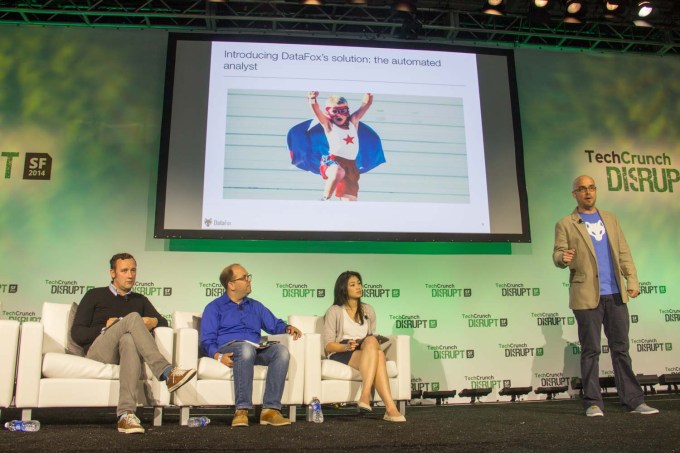
Terms of the deal do not appear to have been disclosed but we are trying to find out. DataFox — which launched in 2014 as a contender in the TC Battlefield at Disrupt — had raised just under $19 million and was last valued at $33 million back in January 2017, according to PitchBook. Investors in the company included Slack, GV, Howard Linzon, and strategic investor Goldman Sachs among others.

Oracle said that it is not committing to a specific product roadmap for DataFox longer term, but for now it will be keeping the product going as is for those who are already customers. The startup counted Goldman Sachs, Bain & Company and Twilio among those using its services. 

The deal is interesting for a couple of reasons. First, it shows that larger platform providers are on the hunt for more AI-driven tools to provide an increasingly sophisticated level of service to customers. Second, in this case, it’s a sign of how content remains a compelling proposition, when it is presented and able to be manipulated for specific ends. Many customer databases can get old and out of date, so the idea of constantly trawling information sources in order to create the most accurate record of businesses possible is a very compelling idea to anyone who has faced the alternative, and that goes even more so in sales environments when people are trying to look their sharpest.

It also shows that, although both companies have evolved quite a lot, and there are many other alternatives on the market, Oracle remains in hot competition with Salesforce for customers and are hoping to woo and keep more of them with the better, integrated innovations. That also points to Oracle potentially cross and up-selling people who come to them by way of DataFox, which is an SaaS that pitches itself very much as something anyone can subscribe to online.