Year: 2018

18 Oct 2018

Amazon says it will add 1,000 more employees in the UK, bringing the total to 28,500, bucking the Brexit chill

A lot of uncertainty hangs over the UK as continues its slow march out of the European Union, but today one of the world’s biggest companies announced plans to expand its presence in the country. Amazon today said it would add another 1,000 workers in the UK, including establishing its first corporate and R&D office in Manchester.

Amazon said it also plans to add more people to its R&D bases in Edinburgh and Cambridge — respectively known for developing search technology as well as the AI technology that powers Alexa, among other things. The company says it currently has 27,500 “roles” in the UK.

The government is positioning Amazon’s news as a win at a time when many have been criticising how it has been handling Brexit negotiations. “Ensuring that the world’s best and brightest companies continue to invest and innovate in the UK is at the heart of our Global Britain agenda,” said Secretary of State for International Trade, Liam Fox, in a statement. “Amazon’s decision to create hundreds of highly-skilled jobs in Manchester, Edinburgh and Cambridge is an enormous vote of confidence in the UK and a signal to the world that the UK is very much open for business.”

The news was announced today as the company presented an “Innovation Day” to journalists, showcasing some of the different areas that are the focus of its R&D hubs in Austria, France, Germany, Ireland, Italy, Luxembourg, Netherlands, Poland, Romania, Spain and the UK. I was at the event, and while I wouldn’t say that the day was strong on news announcements around that work, it’s instructive to consider what Amazon chose to show (and perhaps not show, too).

For example, in one demo the company showed off today, a new computer vision-based system Amazon is building in Berlin will allow robots to identify what produce is ripe or rotten, so that automatic pickers can select more robust fruit and vegetables to pack off to consumers; and identify what needs to be discarded. This underscores the company’s ambitions in the business of fresh food sales and delivery. Earlier this summer there were reports that Amazon was interested in bidding for a number of large retail locations that were due to be shut down by Homebase, a DIY chain, so that it could set up more delivery (or perhaps even retail) spots across key UK cities. However, so far nothing has materialised.

A walk through some of the company’s transportation work, meanwhile, focused more incremental developments rather than fundamental shifts for the company. The focus in the presentation was not on drones (which Amazon has also been building in Europe), nor on autonomous cars (which Amazon is also working on) but on its real-time street navigation services, and other tools to help delivery people make more accurate parcel drops.

While Amazon is continuing to add employees in the UK, it has also had its share of employment controversies. Warehouse workers regularly strike during the company’s busiest sales periods, to protest working conditions. And earlier this month, Reuters reported that the company had built an AI prototype to assist with finding and screening suitable candidates to help make its hiring spree more efficient. But the project had to be scrapped after it was found to be biased against women (highlighting some of the problems with “training” in machine learning). 

The company is also among the tech giants that might finally be held to task over taxes, although the issue has become very long in the tooth over the years that it has not been resolved. In the latest development, the EU commissioner who oversees taxes said that he was working to a deal that could be finalised before the end of this year, which could bring in about €5 billion in tax revenues from companies like Amazon, Google and Facebook, based on their “digital” presence rather than physical presence — the loophole that has kept American internet companies from paying large taxes on their profits up to now. However, if a deal isn’t reached soon, it could be pushed back by a year, since Brexit is expected to sidetrack everything in 2019.
 

18 Oct 2018

Disruptive technology and organized religion

More or less since Nietzsche declared God “dead” nearly 140 years ago, popular wisdom has held that science and religion are irreparably misaligned. However, at a recent conference hosted by the Vatican, I learned that even in the era of artificial intelligence and gene splicing, religious institutions and leaders still have much to contribute to society as both moral compass and source of meaning.

In April this year, the Vatican launched Unite to Cure: A Global Health Care Initiative at the Fourth International Vatican Conference. This international event gathered some of the world’s leading scientists, physicians and ethicists — along with leaders of faith, government officials, businesspeople and philanthropists. The goal was to engage about the cultural, religious and societal implications of breakthrough technologies that improve human health, prevent disease and protect the environment. I had the privilege of participating as a board member of the XPRIZE Foundation.

We are living at a phenomenal point in human history. It’s a moment when our machines are flirting with godlike powers. AI and ever-accelerating innovations in medical technology are enabling humans to live longer than ever. Yet with increased machine capabilities and human longevity come heavy questions of morality and spirituality.

When bodies live longer, so do the souls inside of them. What are the spiritual implications for people who are given an additional 30 or even 50 years of life? Is enhanced longevity meddling with creation, or a complement to it?

As technology disrupts the way we relate to the few remaining physical and spiritual mysteries of humanity, it also disrupts the way we embrace religion.

It is here, at this nexus of technology and spirituality, that the Vatican wisely decided to bring together thinkers from both science and faith.

It was humbling to sit inside the tiny and unconventional country that we call Vatican City, surrounded by the world’s leading scientists, ethicists, venture capitalists and faith leaders. We talked about regenerative medicine, aging reversal, gene editing and cell therapy. We discussed how humanity is shifting from medicine that repairs and remediates toward a system that overtly changes our physical composition. We discussed the incredible augmentations available to the disabled — for example 3D-printed prosthetic limbs. How long before the able-bodied begin to exploit these enhancements to augment their own competitive advantage in an increasingly crowded world? To what extent, if any, should society attempt to control this paradigm shift?

One of the more interesting discussions surrounded how to ensure that humans don’t just live longer, but also better.

What exactly does “living better” entail? Does it imply physical comfort, spiritual well-being, financial security? At this moment in history, we have more instant and unlimited information than the kings and queens of ancient Greece or the Middle Ages could have ever imagined. That technological power is allowing more and more people to become enormously wealthy, at a speed and magnitude that would have been unthinkable for anyone other than a monarch just a century ago.

But are these people living “better”?

In as much as longer-living humans use their accrued wealth to support and encourage the creation of projects as audacious and ambitious as — for example — the Coliseum, I believe the answer is yes. If longevity and riches encourage the average human being to create change on a scale that matches the enormous potential of our exponential times — all the more so.

Yet, others in the room had a different take. For many religious leaders, “better” meant a more sharply defined relationship with God. For some scientists, “better” meant a life that creates fewer emissions and embraces better and smarter technology.

It was astounding, really. In one of the most hallowed spots on earth for the Catholic Church, sharing oxygen and ideas with cardinals and future saints, stood the world’s leading researchers, scientists and corporate leaders, who hold in their hands the technology to extend human life. Together with the clergy of the world’s great monotheistic religions, we held an open dialogue about how to improve the heart and soul of human life while the technology we create continues to advance beyond our ancestors’ wildest imaginations.

As technology disrupts the way we relate to the few remaining physical and spiritual mysteries of humanity, it also disrupts the way we embrace religion. In this conference, the Vatican very correctly leveraged the opportunity for organized religions to disrupt themselves by thinking about how they can be meaningful contributors to the conversation on spiritual, physical and mental well-being in the future.

18 Oct 2018

6D.ai opens up its beta

After wrestling for more than a decade with the development of a technology that would create a three-dimensional map of the physical world, the team at 6D.ai is finally ready to open up to developers its toolkit that the company says has done exactly that.

When company chief executive Matt Miesnieks announced the launch of 6D in March, he laid out a vision for its growth that had three goals: The company would build APIs to capture the three-dimensional geometry of the world; it would apply that three-dimensional data to build semantic APIs so applications can understand the world; and it would partner and extend those APIs to create an operating system for reality.

Having achieved the first goal, the company is now working on the second.

“The whole purpose of this company wasn’t ‘Hey there’s this new technology!’ It’s what can AR do in its fully realized form and what is a native experience for AR that hadn’t worked in prior mediums and what’s stopping that stuff from being effective and how do you solve those problems,” says Miesnieks.

For Miesnieks the problems confronting augmented reality come down to creating believable visual objects that integrate seamlessly into the world. That act of creation depends on persistence, occlusion and interaction, according to Miesnieks.

Interactivity, to Miesnieks should happen seamlessly rather than requiring a multi-step process that the 6D chief executive calls “just a bridge too far.”

“What needs to happen is you say, ‘Hey join my game.’ And it just works.”

Miesnieks argues that the kind of precision that synchronization requires demands a kind of on-device localization, which is exactly what 6D has claimed it enables.

“Once you have that 3D model then the virtual content can bounce off the 3D model. You can do shadows correctly. Extend that over large areas so that it doesn’t just work in a corner of my living room, but that it can work everywhere,” Miesnieks said. “We need these models and the only way to get there is to use a depth camera or offline photogrammetry.”

6D has already done some work with bands like Massive Attack and Aphex Twin that put its technology through some early paces. And the Victoria and Albert Museum have also used the technology. Soon it will launch a game with an undisclosed Japanese game developer (which has intellectual property similar to Pokémon) and a virtual YouTube-like application with the Japanese social network, Gree.

For Miesnieks perhaps the most interesting application is with a big, undisclosed transportation company that is interested in navigation for terrestrial and other mobility.

“When we set the company up, we are pretty convicted that we want to say to the developers that this is reality. We will give you shared coordinates for multi-player,” said Miesnieks.

Underlying all of this are concerns about security related to who can see what in the space that users map. But Miesnieks said that the company had solved that problem as well.

“You can only get the data for a space if you’re physically in that space,” said Miesnieks. “I hold my phone up, it looks at your living room, based on what it sees it queries the server and if there’s a match it will serve that data up to that location.”

Based on research, the point cloud that 6D generates isn’t directly connected to the geographic structure. It’s slightly randomized so a user can’t look at the point cloud and see what is what.

“It’s unable to be reverse engineered by any known science into a human readable image,” said Miesnieks. “All the image would look like is a whole bunch of dots and blobs. That’s kind of what we’re doing so far.”

As the company builds out its three-dimensional map of the world, it’s encouraging developers to think of it as a new kind of augmented reality platform.

“Our business is web services meet Waze,” said Miesnieks.

18 Oct 2018

MoviePass is under investigation for securities fraud in New York state

More bad news for MoviePass .

At the direction of New York Attorney General Barbara Underwood, MoviePass parent company Helios and Matheson is now the subject of a fraud probe in New York state.

“We’ve launched a securities fraud investigation into ⁦@MoviePass⁩’ parent company,” Underwood confirmed in a tweet. “My office is committed to protecting New York investors and the integrity of our financial markets.”

The probe will examine whether the company misrepresented its financial situation to investors. The probe will leverage the Martin Act, a powerful New York statute that allows the Attorney General to aggressively pursue suspected instances of fraud in the state.

“We are aware of the New York Attorney General’s inquiry and are fully cooperating,” Helios and Matheson said in a statement provided to TechCrunch. “We believe our public disclosures have been complete, timely and truthful and we have not misled investors. We look forward to the opportunity to demonstrate that to the New York Attorney General.”

Underwood’s office declined to provide further details to TechCrunch, pointing us toward the CNBC report that originally reported the probe.

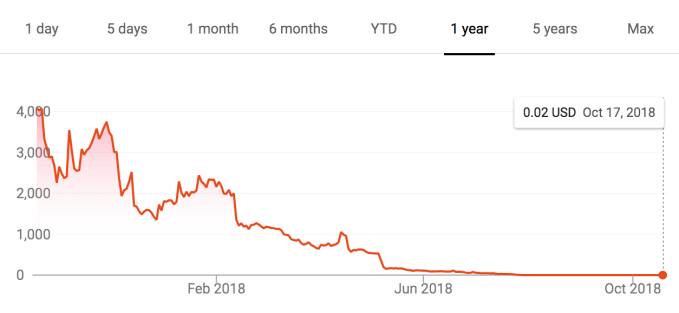
MoviePass and parent company Helios and Matheson (HMNY) has flailed wildly throughout 2018, abruptly making major changes to the movie subscription service, watching its stock prices walk off a cliff and seeking emergency infusions of cash in the process.

In Q2, Helios and Matheson posted losses of $126.6 million compared to a net loss of roughly $150 million in all of 2017. Its 2017 losses were attributed to its acquisition of a majority stake in MoviePass, but the 2018 losses are obviously a different story. Shares of Helios and Matheson were down 8.5% at the time of writing.

18 Oct 2018

Uber is developing an on-demand staffing business

Uber is reportedly developing a short-term staffing business to offer 1099 independent contractors for events and corporate functions, the Financial Times first reported. Dubbed Uber Works, the service would provide waiters, security guards and other temporary staffers to business partners, a source close to Uber told TechCrunch.

Uber has been working on the project for several months in Chicago, after first trialing the project in Los Angeles. Uber already has a vast network of drivers — all of whom have become familiarized with the process of filing taxes as an independent contractor — who may be looking for additional work. However, Uber’s current pilot program does not include active Uber drivers.

Uber Works falls under the purview of Rachel Holt, who stepped into the role of head of new modalities in June. Holt, who has been with Uber since 2011, is tasked with ramping up and onboarding new mobility services like bikes, scooters, car rentals and public transit integration.

In a job posting for a general manager to lead special projects in Chicago, Uber says, “our business is based around providing a flexible, on-demand supply for our business partners – it’s imperative that we have intuitive and responsive account management to support for our business partners in addressing their needs promptly.”

Uber declined to comment for this story. But as the company gears up for its initial public offering next year, Uber is clearly trying to diversify its business. In the last year, Uber double-downed on multi-modal transportation with the acquisition and deployment of JUMP bike-share. And in the last month, Uber deployed electric scooters in Santa Monica, Calif.

Whether this effort launches remains to be seen, but it’s certainly something Uber is exploring and positioning as a business-to-business service. In a similar vein, Uber is also working to create a pipeline to hire some of its driver partners.

18 Oct 2018

Researchers create virtual smells by electrocuting your nose

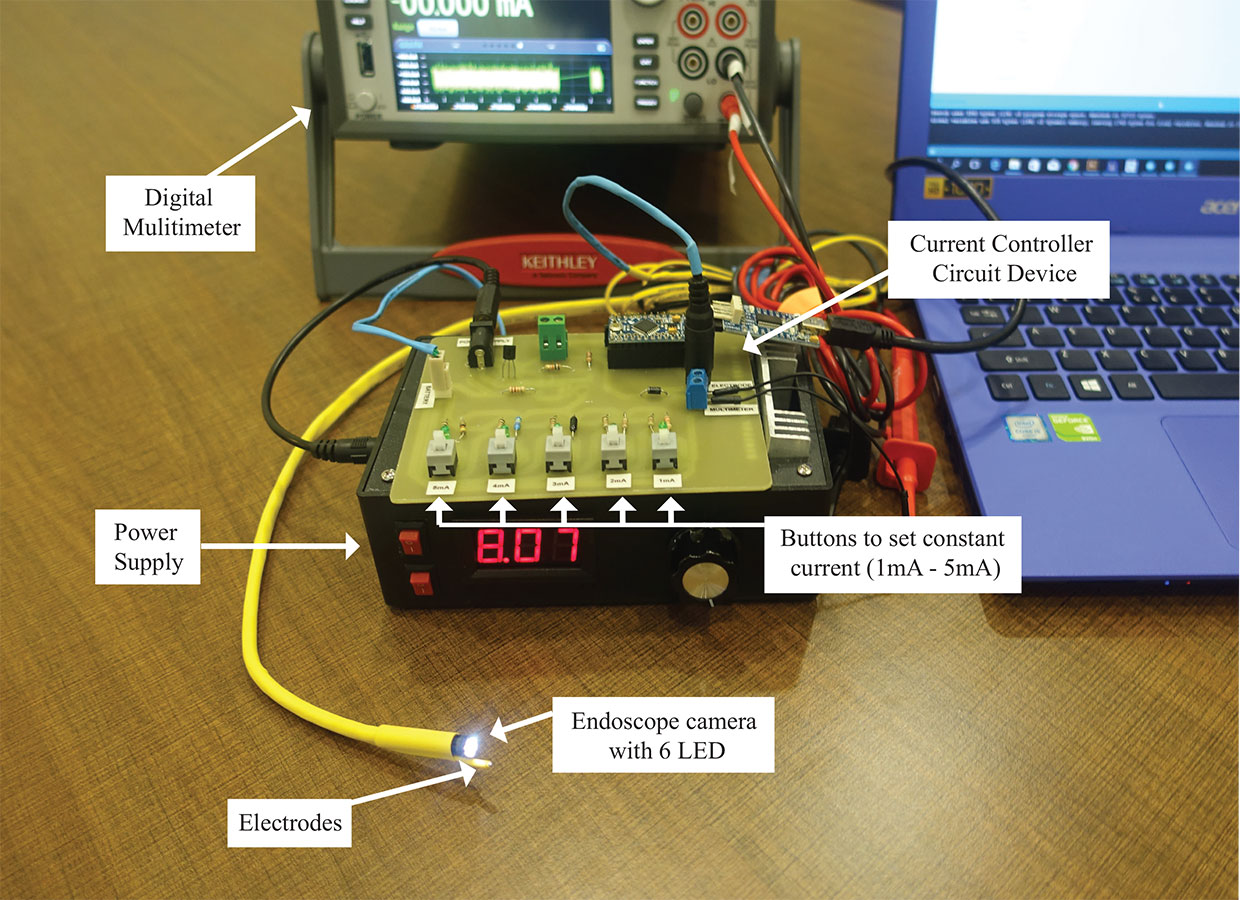
The IEEE has showcased one of the coolest research projects I’ve seen this month: virtual smells. By stimulating your olfactory nerve with a system that looks like one of those old-fashioned kids electronics kits, they’ve been able to simulate smells.

The project is pretty gross. To simulate a smell, the researchers are sticking leads far up into the nose and connecting them directly to the nerves. Senior research fellow at the Imagineering Institute in Malaysia, Kasun Karunanayaka, wanted to create a “multisensory Internet” with his Ph.D. student, Adrian Cheok. Cheok is Internet famous for sending electronic hugs to chickens and creating the first digital kisses.

The researchers brought in dozens of subjects and stuck long tubes up their noses in an effort to stimulate the olfactory bulb. By changing the intensity and frequency of the signals, they got some interesting results.

The subjects most often perceived odors they described as fragrant or chemical. Some people also reported smells that they described as fruity, sweet, toasted minty, or woody.

The biggest question, however, is whether he can find a way to produce these ghostly aromas without sticking a tube up people’s noses. The experiments were very uncomfortable for most of the volunteers, Karunanayaka admits: “A lot of people wanted to participate, but after one trial they left, because they couldn’t bear it.”

While I doubt we’ll all be wearing smell-o-vision tubes up our noses any time soon, this idea is fascinating. It could, for example, help people with paralyzed senses smell again, a proposition that definitely doesn’t stink.

18 Oct 2018

Researchers create virtual smells by electrocuting your nose

The IEEE has showcased one of the coolest research projects I’ve seen this month: virtual smells. By stimulating your olfactory nerve with a system that looks like one of those old-fashioned kids electronics kits, they’ve been able to simulate smells.

The project is pretty gross. To simulate a smell, the researchers are sticking leads far up into the nose and connecting them directly to the nerves. Senior research fellow at the Imagineering Institute in Malaysia, Kasun Karunanayaka, wanted to create a “multisensory Internet” with his Ph.D. student, Adrian Cheok. Cheok is Internet famous for sending electronic hugs to chickens and creating the first digital kisses.

The researchers brought in dozens of subjects and stuck long tubes up their noses in an effort to stimulate the olfactory bulb. By changing the intensity and frequency of the signals, they got some interesting results.

The subjects most often perceived odors they described as fragrant or chemical. Some people also reported smells that they described as fruity, sweet, toasted minty, or woody.

The biggest question, however, is whether he can find a way to produce these ghostly aromas without sticking a tube up people’s noses. The experiments were very uncomfortable for most of the volunteers, Karunanayaka admits: “A lot of people wanted to participate, but after one trial they left, because they couldn’t bear it.”

While I doubt we’ll all be wearing smell-o-vision tubes up our noses any time soon, this idea is fascinating. It could, for example, help people with paralyzed senses smell again, a proposition that definitely doesn’t stink.

18 Oct 2018

There’s now proof that quantum computers can outperform classical machines

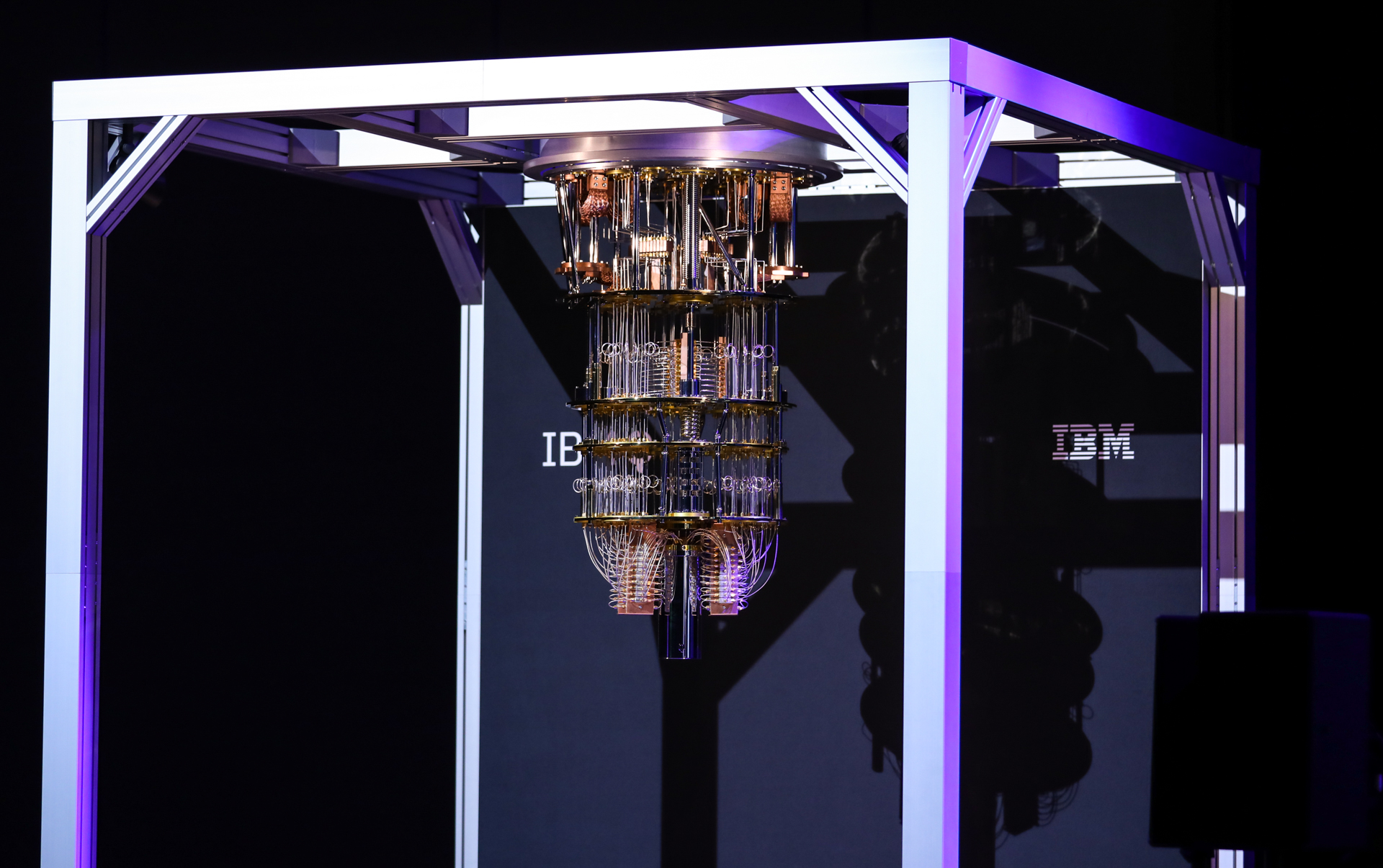
The hype around quantum computing is real. But to fully realize the promise of quantum computing, it’ll still take a few years of research and scientific breakthroughs. And indeed, it still remains to be seen if quantum computers will ever live up to the hype. Today, though, we got mathematical proof that there are really calculations that quantum computers will definitely be able to perform faster than any classical computer.

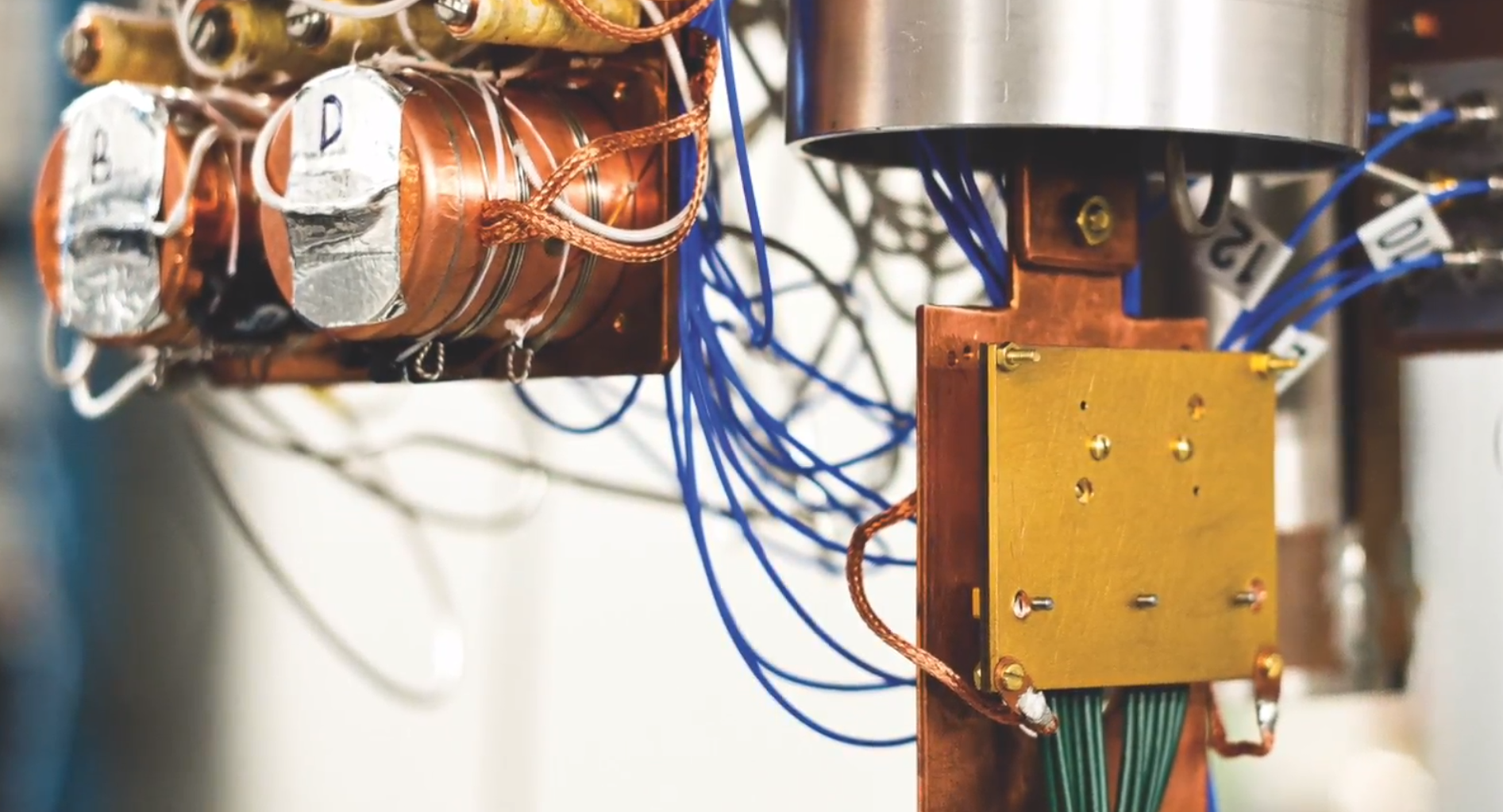
What we have today are quantum computers with a very limited number of qubits and short coherence time. Those limitations put a damper on the amount of computation you can perform on those machines, but they still allow for some practical work. Unsurprisingly, researchers are very interested in seeing what they can do with the current set of available machines. Because they have such short coherence time before the system becomes chaotic and useless for any computations, you can only perform a relatively small number of operations on them. In quantum computing speak, that’s “depth,” and today’s systems are considered shallow.

Science today published a paper (“Quantum advantage with shallow circuits”) by Sergey Bravyi of IBM Research, David Gosset of the University of Waterloo’s Institute for Quantum Computing and Robert König of the Institute for Advanced Study and Zentrum Mathematik, Technische Universität München. In this paper, the researchers prove that a quantum computer with a fixed circuit depth is able to outperform a classical computer that’s tackling the same problem because the classical computer will require the circuit depth to grow larger, while it can stay constant for the quantum computer.

There is very little that’s intuitive about quantum computing, of course, but it’s worth remembering that quantum computers are very different from classical computers.

“Quantum circuits are not just basically the same but different from classical circuits,” IBM Q Ecosystem and Strategy VP Bub Sutor told me. Classic circuits, […]they are bits, they are zeros and ones, and there’s binary logic, ANDs, ORs, NOTs and things like. The very, very basic gate sets, the types of operations you can do in quantum are different. When these qubit are actually operating, with this notion of superposition you have much, much more to operate elbow room, not just two bits. You actually have a tremendous amount of more room here.” And it’s that additional room you get, because qubits can encode any number and not just zeros and ones, that allows them to be more powerful than a classical computer in solving the specific kind of problem that the researchers tackled.

The question the researchers here asked was if constant-depth quantum circuits can solve a computational problem that constant-depth classical circuits cannot? The problem they decided to look at is a variation on the well-known Bernstein-Vazirani problem (well-known among quantum computing wonks, that is). You don’t need to jump into the details here, but the researchers show that even a shallow quantum computer can easily outperform a classical computer in solving this problem.

“We tried to understand what kinds of things we can do with a shallow quantum circuit and looked for an appropriate model for a type of computation that can be done on a near-term quantum device,” Bravyi told me. “What our result says is that there are certain computational problems for which you can solve on a quantum computer with a constant depth. So as you increase the number of input bits, the depth of the quantum algorithm that solves the problem remains constant.” A constant depth classical computer can not solve this problem, though.

Sutor was very quick to note that we shouldn’t over-hype the current state of quantum computing or this result, though. “We try to be extremely cautious and honest in terms of saying ‘this is what quantum computers can do today’ versus what classical computers will do,” he told me. “And we do this for a very specific reason in that that this is something that will play out over the next three to five years and decades — probably decades.” But what this result shows is that it’s worth exploring quantum algorithms.

As Sutor noted, “there is still this core question, which is, ‘why are you bothering?'” Today’s result should put that question to rest, but Sutor still stressed that he tries to stay grounded and never says quantum computing “will” do something until it does. “There’s a strategy through this, but there’s going to be little left turns and right turns along the way.”

18 Oct 2018

There’s now proof that quantum computers can outperform classical machines

The hype around quantum computing is real. But to fully realize the promise of quantum computing, it’ll still take a few years of research and scientific breakthroughs. And indeed, it still remains to be seen if quantum computers will ever live up to the hype. Today, though, we got mathematical proof that there are really calculations that quantum computers will definitely be able to perform faster than any classical computer.

What we have today are quantum computers with a very limited number of qubits and short coherence time. Those limitations put a damper on the amount of computation you can perform on those machines, but they still allow for some practical work. Unsurprisingly, researchers are very interested in seeing what they can do with the current set of available machines. Because they have such short coherence time before the system becomes chaotic and useless for any computations, you can only perform a relatively small number of operations on them. In quantum computing speak, that’s “depth,” and today’s systems are considered shallow.

Science today published a paper (“Quantum advantage with shallow circuits”) by Sergey Bravyi of IBM Research, David Gosset of the University of Waterloo’s Institute for Quantum Computing and Robert König of the Institute for Advanced Study and Zentrum Mathematik, Technische Universität München. In this paper, the researchers prove that a quantum computer with a fixed circuit depth is able to outperform a classical computer that’s tackling the same problem because the classical computer will require the circuit depth to grow larger, while it can stay constant for the quantum computer.

There is very little that’s intuitive about quantum computing, of course, but it’s worth remembering that quantum computers are very different from classical computers.

“Quantum circuits are not just basically the same but different from classical circuits,” IBM Q Ecosystem and Strategy VP Bub Sutor told me. Classic circuits, […]they are bits, they are zeros and ones, and there’s binary logic, ANDs, ORs, NOTs and things like. The very, very basic gate sets, the types of operations you can do in quantum are different. When these qubit are actually operating, with this notion of superposition you have much, much more to operate elbow room, not just two bits. You actually have a tremendous amount of more room here.” And it’s that additional room you get, because qubits can encode any number and not just zeros and ones, that allows them to be more powerful than a classical computer in solving the specific kind of problem that the researchers tackled.

The question the researchers here asked was if constant-depth quantum circuits can solve a computational problem that constant-depth classical circuits cannot? The problem they decided to look at is a variation on the well-known Bernstein-Vazirani problem (well-known among quantum computing wonks, that is). You don’t need to jump into the details here, but the researchers show that even a shallow quantum computer can easily outperform a classical computer in solving this problem.

“We tried to understand what kinds of things we can do with a shallow quantum circuit and looked for an appropriate model for a type of computation that can be done on a near-term quantum device,” Bravyi told me. “What our result says is that there are certain computational problems for which you can solve on a quantum computer with a constant depth. So as you increase the number of input bits, the depth of the quantum algorithm that solves the problem remains constant.” A constant depth classical computer can not solve this problem, though.

Sutor was very quick to note that we shouldn’t over-hype the current state of quantum computing or this result, though. “We try to be extremely cautious and honest in terms of saying ‘this is what quantum computers can do today’ versus what classical computers will do,” he told me. “And we do this for a very specific reason in that that this is something that will play out over the next three to five years and decades — probably decades.” But what this result shows is that it’s worth exploring quantum algorithms.

As Sutor noted, “there is still this core question, which is, ‘why are you bothering?'” Today’s result should put that question to rest, but Sutor still stressed that he tries to stay grounded and never says quantum computing “will” do something until it does. “There’s a strategy through this, but there’s going to be little left turns and right turns along the way.”

18 Oct 2018

Google Maps’ ETA sharing feature hits iOS

If you’re heading out to meet someone, there are plenty of ways to inform them of your location and estimated arrival. Chat apps like WhatsApp, Messenger, LINE, and iMessage, for example, offer location sharing functionality, while navigation apps like Waze and CityMapper and even ride-sharing apps like Uber offer live updating ETAs. Now, Google Maps’ own ETA feature is at last coming to iOS. The feature also getting a few tweaks following last year’s launch on Android, the company says.

In May 2017, Google Maps first introduced its own take on location and ETA sharing.

From a “Share Location” option in the app’s main navigation bar, you’re able to pick how long you want to share your location and choose who to share it with – the latter from a set of frequent contacts or by entering in someone’s name, number or email to pull from your address book.

Then, from the navigation screen, another option called “Share trip progress” allows users to share their live ETA with others as they start their trip.

Today, Google is bringing this ETA feature to Google Maps on iOS.

To try it out, you tap on the  ˄ button once you’ve begun navigation, then tap “Share trip progress.” This will allow you to share your live location, route and your ETA with favorite contacts, as before.

However, the feature is also being improved with today’s release to allow for sharing across third-party apps like Messenger, WhatsApp, LINE, and others. That makes it easier to include in your text message threads and group chats, which are probably already underway.

The feature works for driving, walking and cycling navigation, says Google. It’s is live now on iOS and Android.