Year: 2018

15 Oct 2018

Google Pixel 3 XL review

The smartphone arms race isn’t always pretty. The knock-down, drag-out fight between Apple and Samsung in particular has given rise to some nasty lawsuits and wincing commercials year in and out as the two companies invest millions in outdoing one another.

But Google is playing another game entirely. The company has never really been concerned with battling it out over flashy designs and specs. It’s really exactly the sort of approach you’d expect from a software-first company. I won’t go so far as to suggest that the Pixel 3 is a utilitarian phone, but it’s safe to say that the hardware exists in service of the company’s software innovations.

If it were like other companies, last week’s hardware event would have been an opportunity for Google to bask in processor speed and pixel density. Instead, it blew through such things. It was a strange spectacle to behold, really, as someone who’s been through a million of these things. The company more or less announced all of the products at once and moved onto more important topics like algorithms and machine learning.
For many intents and purposes, Google’s approach to smartphones is a breath of fresh air. From a more practical standpoint, the company’s path often means less radical hardware upgrades, year over year. If you’re wondering whether to upgrade from the the Pixel 2, the simple answer is: no, what are you, made out of money? But here’s Taylor’s slightly more nuanced approach to the question, if that’s your thing.

The fact is that Google has always been less interested than Apple or Samsung in keeping you beholden to the constant upgrade cycle. In fact, a number of the new photo features introduced this round will also be making their way onto older models, when possible. That’s not a promise all of the competition is willing to make.

The bottom line for products like the Pixel 3, Pixel Slate and Home Hub is that Google is intent on delivering the best hardware showcase for what it’s been working on over on the software side. That we happen to get one of the best Android smartphones out of the deal is a happy side effect.
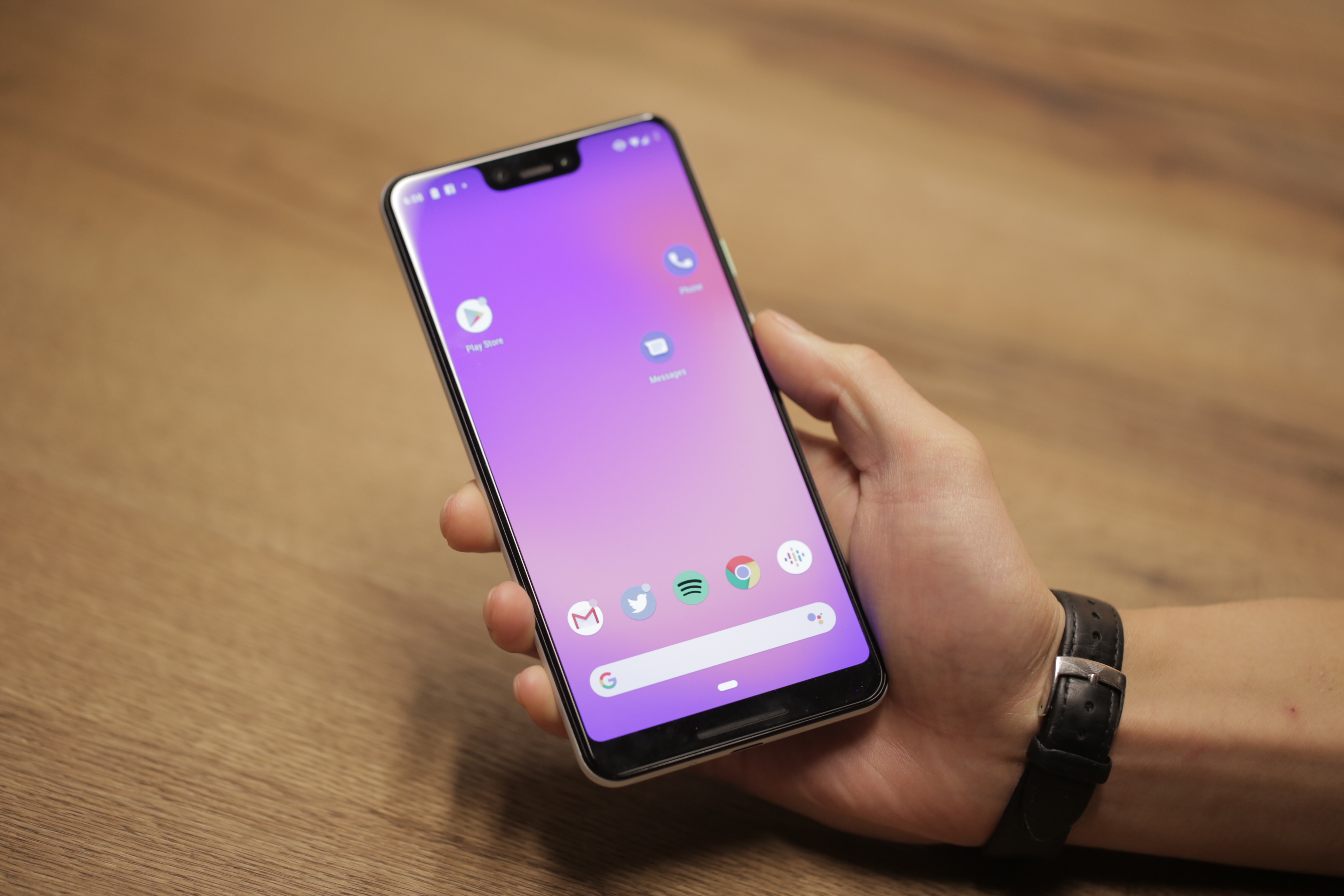
Top level, here are the key hardware changes from the last version:

  • Bigger screen: This the single largest hardware change, so to speak. The Pixel 3 bumps up from five inches to 5.5 inches, while the XL moves up in the world from six to 6.3. Both a pretty sizable upgrade, all told.
  • Dual front-facing cameras: Seemingly a bit of a head scratcher, given that the back of the device sticks to one. More on that below.
  • Wireless charging: Better late than never, right?

We walked away from the Google event with both handsets in a branded tote bag that also included the new Pixel Stand. It’s clear that the company was looking to outfit reviewers with the best experience possible. As someone who cycles through a lot of phones for work, I’ve found myself gravitating toward larger phones.
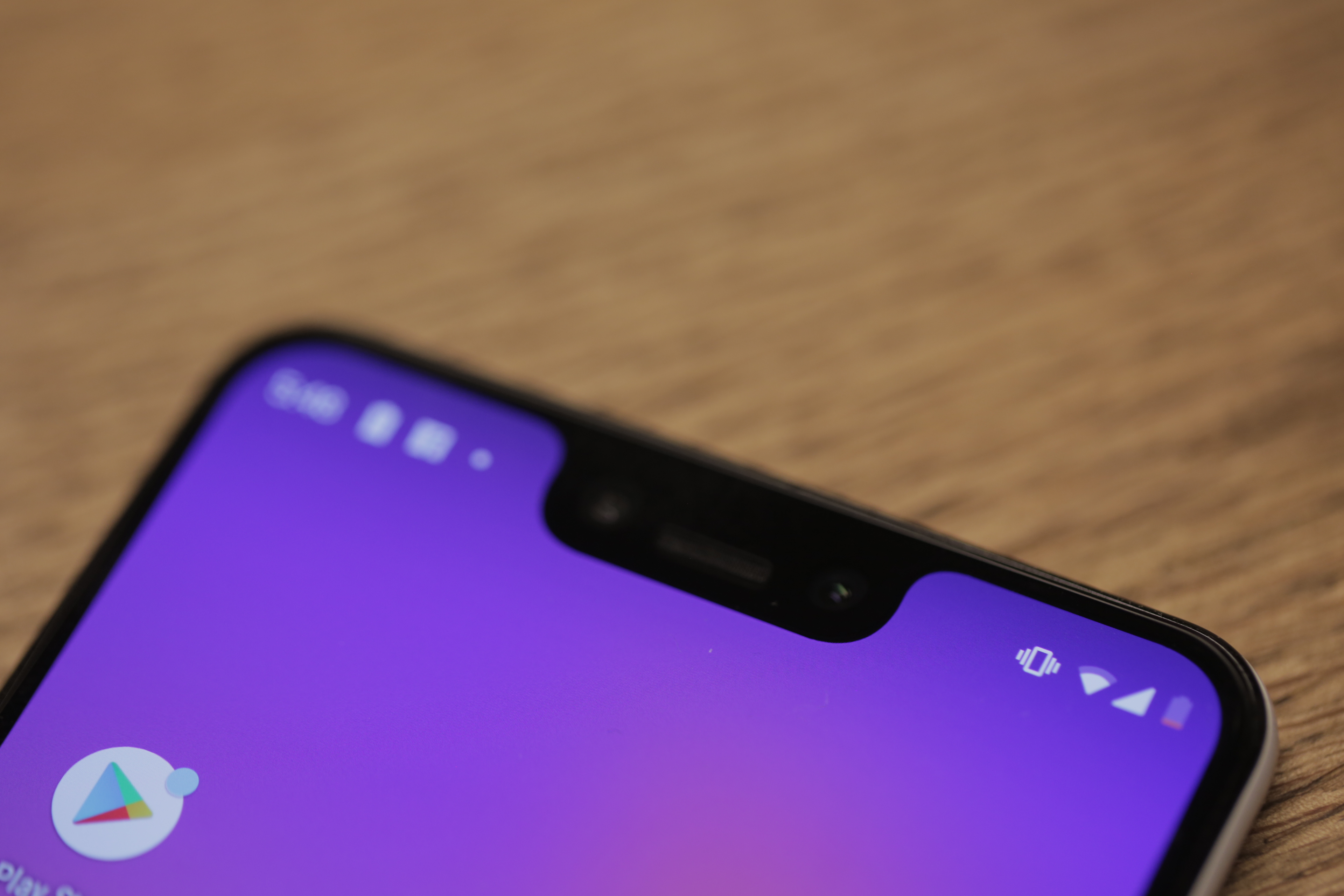
With that in mind, most of the rest of this piece pertains to my experiences with the Pixel 3 XL. That said, Anthony kindly agreed to take the Pixel 3 out on the town for a photo safari, so the imaging samples in this review are taken from both handsets. Spec-wise, the two products are quite similar, beyond the standard array of things that come with a larger phone: screen, battery, et al.

There’s a sentiment you’ll read a lot when it comes to large flagships — that the company has done a good job keeping the footprint small, in spite of the massive screen size. Indeed, a lot of progress has been made on this front in recent generations, between thinner bodies and the rapid extinction of the bezel. That said, the Pixel 3 XL is a big phone by just about any measure.

Sure, Apple came from behind, only to rocket to the top of display sizes with the 6.5-inch XS Max. But the 6.3-inch XL isn’t far behind. It’s also a few fractions of a millimeter thicker than Apple’s massive handset at 7.9mm — though it still has nothing on the Note 9’s 8.8mm. Either way, the thing isn’t for the small of hand or limited in pocket space — and one-handed use probably isn’t in the cards if you’re not a professional basketball player.

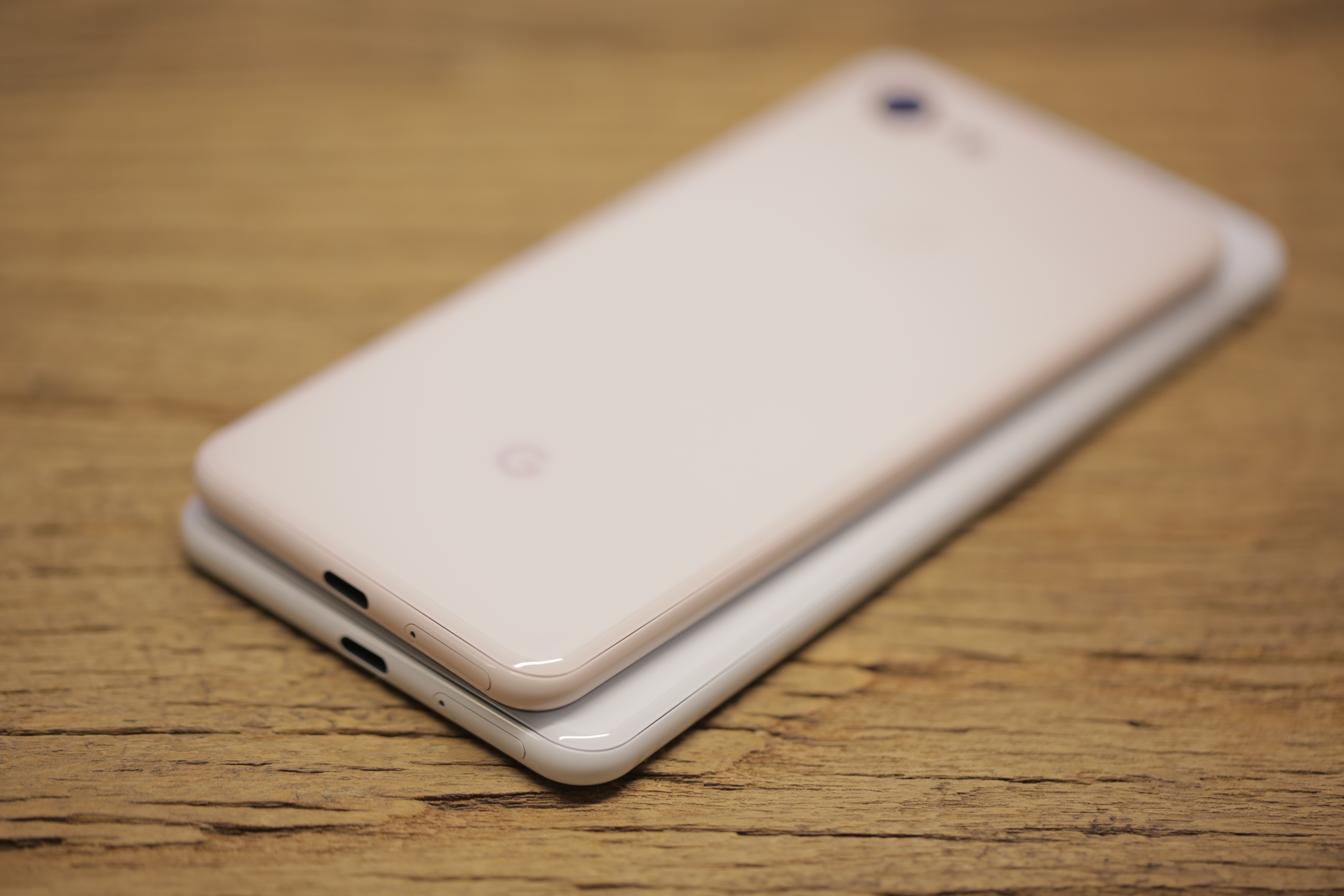
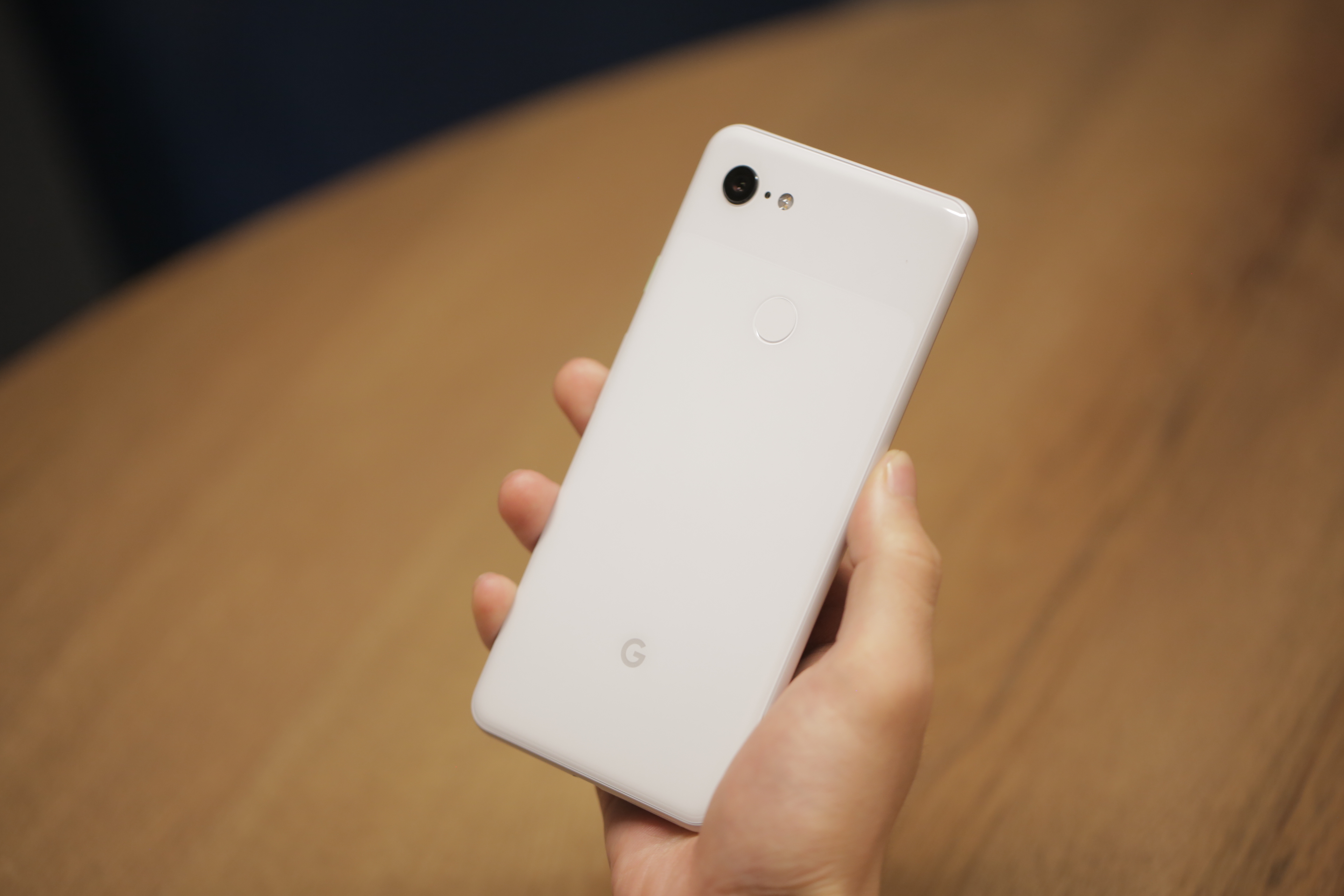
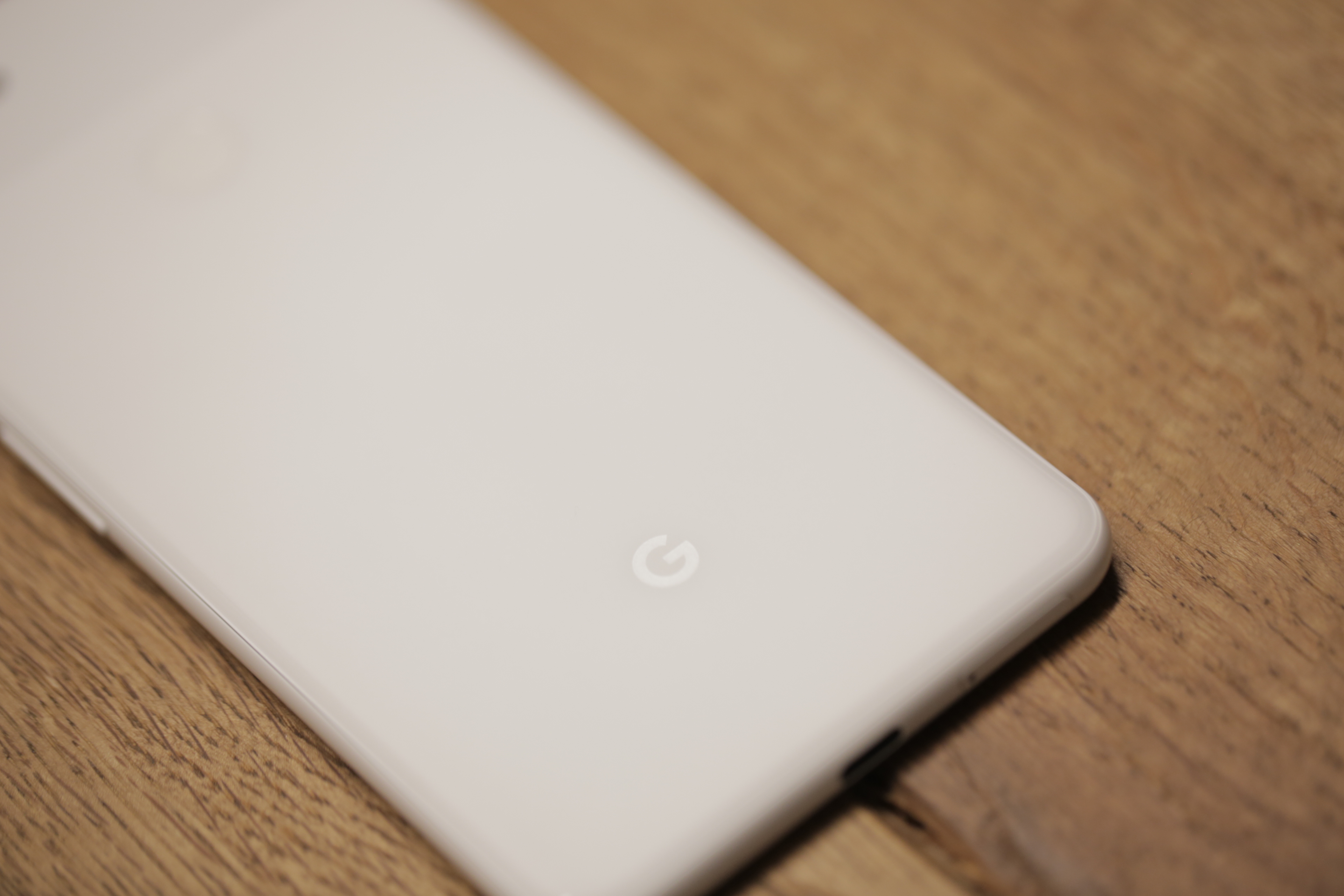
Not much has changed aesthetically changed since the 2. And, indeed, the Pixel’s design language has become iconic in its own way, from the brightly colored power button to the dual-surface rear. The plasticky version found on prior generations has been replaced with a double glass surface — shiny up top and matte on the bottom.
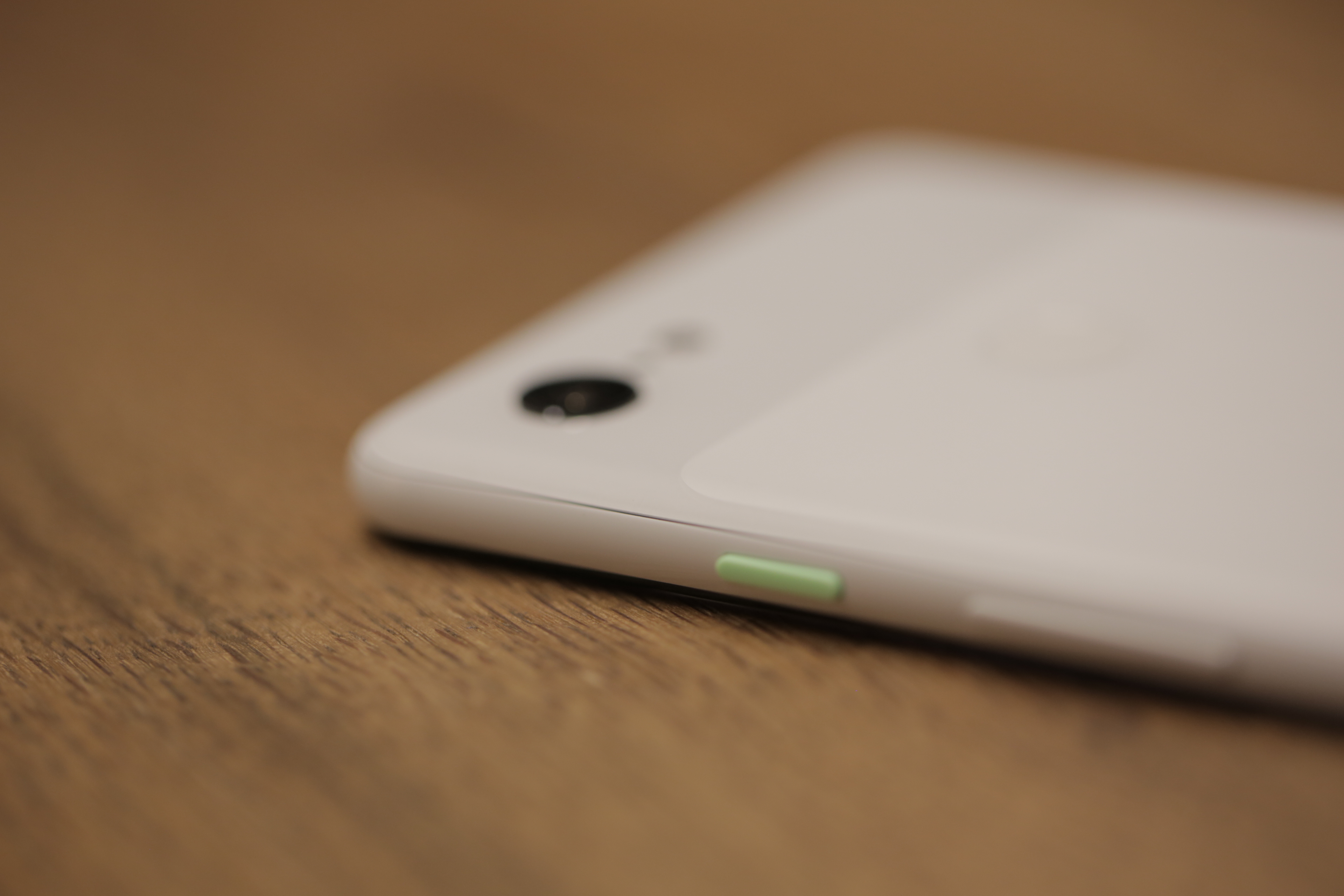
It’s a subtle contrast and should help avoid slippage for those souls brave enough to go without a case. This last bit is a very real issue I’ve run into switching between the iPhone XS and Note 9, of late. Those shiny backs will slip right out of your hand if you’re not paying attention.

Up front, you’ll find that word of the Pixel 3 XL’s notch was, in fact, not exaggerated. It’s the stuff of legend. Turns out this is because of those dual front-facing cameras. Google is really committed to helping users up their selfie game here. At least that’s the immediate impact of that decision.

Dual cameras could have other benefits down the road, including depth sensing for things like augmented reality and, perhaps, face unlock. For now, however, it means taking pictures of yourself and friends at a semi-pro level.
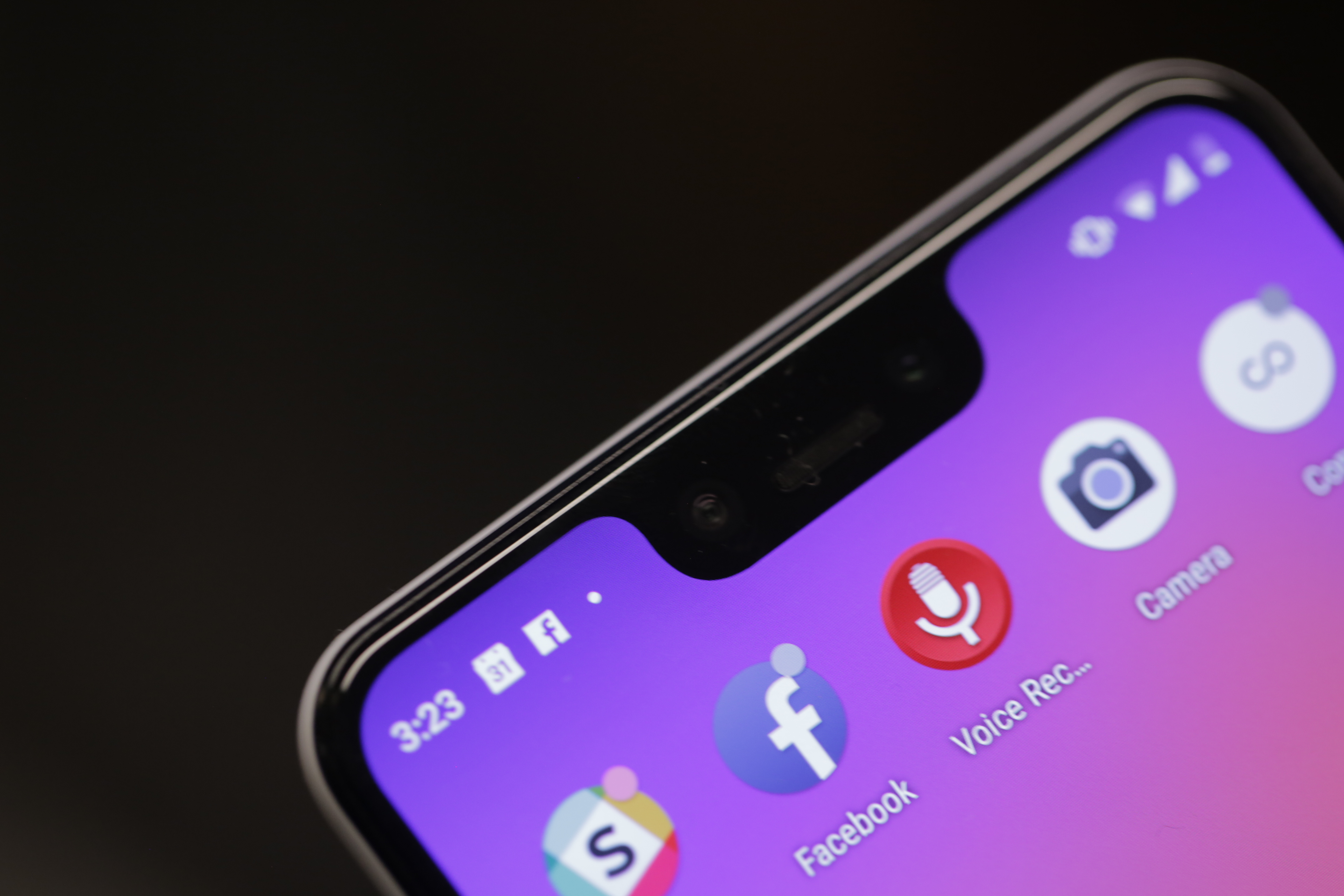
The notch, it turns out, is a key design distinction between the 3 and 3 XL. The reasoning is — as with the rest of what Google’s hardware team did here — a pragmatic one. “With the small one,” VP of Product Management Brian Rakowski told me in an interview last week, “it turns out the space is just too small when you put the wide-angle lens in. It’s a narrower phone, so you have room for an icon or two, whereas on the bigger phone everything you need for the status icons is up there, and it’s a very good use of the space.”

In spite of its software embrace with Android Pie, Google is neither definitively pro or anti-notch. The company is, simply put, notch agnostic. If, however, you have a problem with that admittedly unsightly cutout, there’s a fix for thatActive Edge is back. It’s a feature that’s grown on me a bit since HTC introduced it as Edge Sense back on the U11 in May of last year. With a pinch of the phone’s frame, you can fire up Assistant. It’s one of several ways to invoke Google’s AI, but it definitely beats Samsung’s longtime insistence on including a devoted Bixby button. And besides, Google Assistant is actually, you know, useful.

Google’s generally done a good job listening to user feedback with its software features, and nowhere is that better represented than with the Adaptive mode for its screen color profiles. Last year’s Natural mode was met with some fairly widespread negative feedback for the effect in had in “muddying” the colors — most notably the reds, which ended up somewhere between blood-red and brown.

It was one of those things the company insisted was good for you, but ultimately user irritation won the day. Adaptive splits the difference, saturating colors for things like your Gmail icon, while keeping it in check for things like skin tone. It’s a pretty happy medium, all told, but if you’re not into it, you can always adjust things in settings.
The headphone jack is, of course, still gone. Google drew a line in the sand last year, after making a show keeping it on-board with the first generation. There’s a bit of a mea culpa here, however, in the form of souped up earbuds included in-box. The headphones are very clearly inspired by last year’s Pixel Buds.

That, much like the accessories themselves, is a bit of a mixed bag. The biggest upshot here is that the things plug directly into the USB-C port at the bottom. Sure the box still includes a headphone jack to USB adapter, but including headphones with a standard jack with a phone that doesn’t natively support the tech is downright bizarre.

The looping up top is a nice way to keep the buds in your ears without those bizarrely sharp fins that so many headphone makers rely on. I took the headphones for a run this morning and they didn’t fall out once.

The headphones also offer a number of the Pixel Buds’ software features free of charge, including easy access to Google Assistant and real-time translations through the Google Translate app.

The downside, on the other hand, is a major one. Even as far as free in-box headphones go, the Pixel USB-C earbuds are uncomfortable. This, I will be the first to admit, is a wholly subjective thing and highly dependent on the size and shape of our earholes. But man, the thing hurt to put in and take out, outdoing Apple’s last generation free buds for discomfort levels.
This is a space where companies can learn a lot from Samsung. The earbuds that ship with the Galaxy S9 and Note 9 are fantastic. I’m actually using them right now, plugged into my MacBook, in spite of not having a Samsung device anywhere near my person.

That said, the on-board sound has been improved, courtesy of the addition of front-facing speakers.

Interestingly, battery capacity has been increased for the Pixel 3 (from 2,700 to 2,915mAh), but not the Pixel 3 XL — in fact, it’s actually gone down slightly (from 3,520 to 3,430). That’s no doubt part of why the company was a bit cagey about this particular spec, only really mentioning battery as it pertains to the new charging tech.

As the company told me at the event, the ultimate goal is making sure battery life either stays constant or improves, courtesy of a combination of hardware and software. Battery was a focus for Android Pie, which should help offset some of the mAh loss on the XL. In my own testing, I was able to get just over a full day with standard usage — around 27 hours, all told. Not immaculate, but not bad.
Running the battery down did, however, give me occasion to appreciate the estimates that kick in when you’re critically low on juice. Android estimates when it thinks you’ll be completely SOL, shifting expectations as you change your usage. It’s either a lifesaver or source of anxiety depending on how you absorb such information.

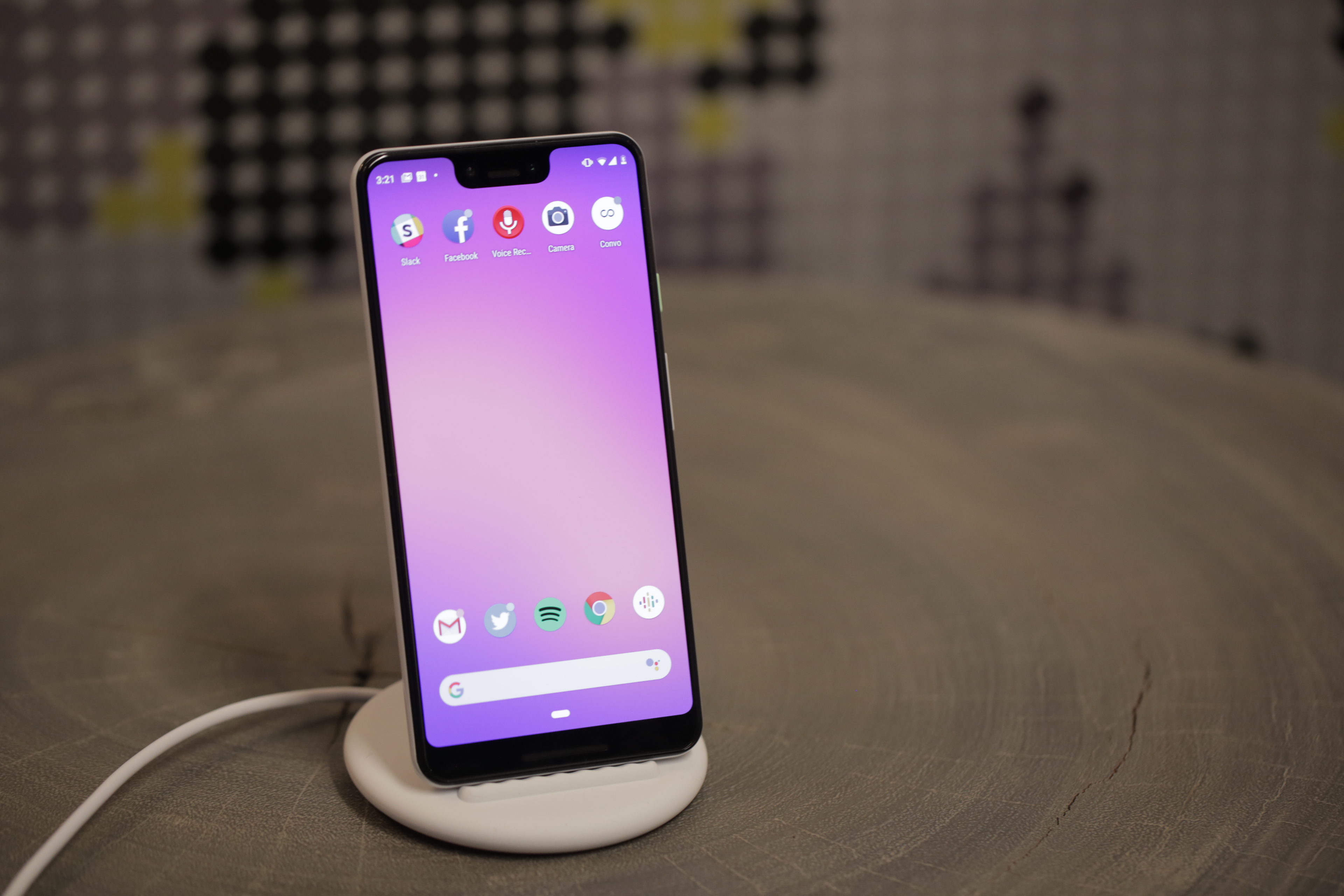
The Pixel Stand, meanwhile, is a smart little accessory. At $79, it’s one I’d consider strongly if picking up the handset. Granted, it lacks the ambition of Apple’s three-product-charging AirPower, but among its other clear advantages is the fact I’ve held it in my hand and can confirm it’s a real thing that actually exists. The accessory takes advantage of that glass back to charge wirelessly via the Qi standard.

The stand is soft and silicon and fairly minimalist, designed to go unseen when not in use. When it is, however, it transforms the Pixel into a makeshift Home Hub, serving up Google Photos and bringing a visual component to Assistant. It’s a clever take of the charging stand — and hopefully a good enough excuse to stop you from falling asleep with your phone every night.
Okay, okay — it’s time to talk about the camera. We’ve got one of our reviewers doing a really in-depth testing on the Pixel camera, which you’ll be able to read as a standalone in the near future. For now, a couple of quick things to note.

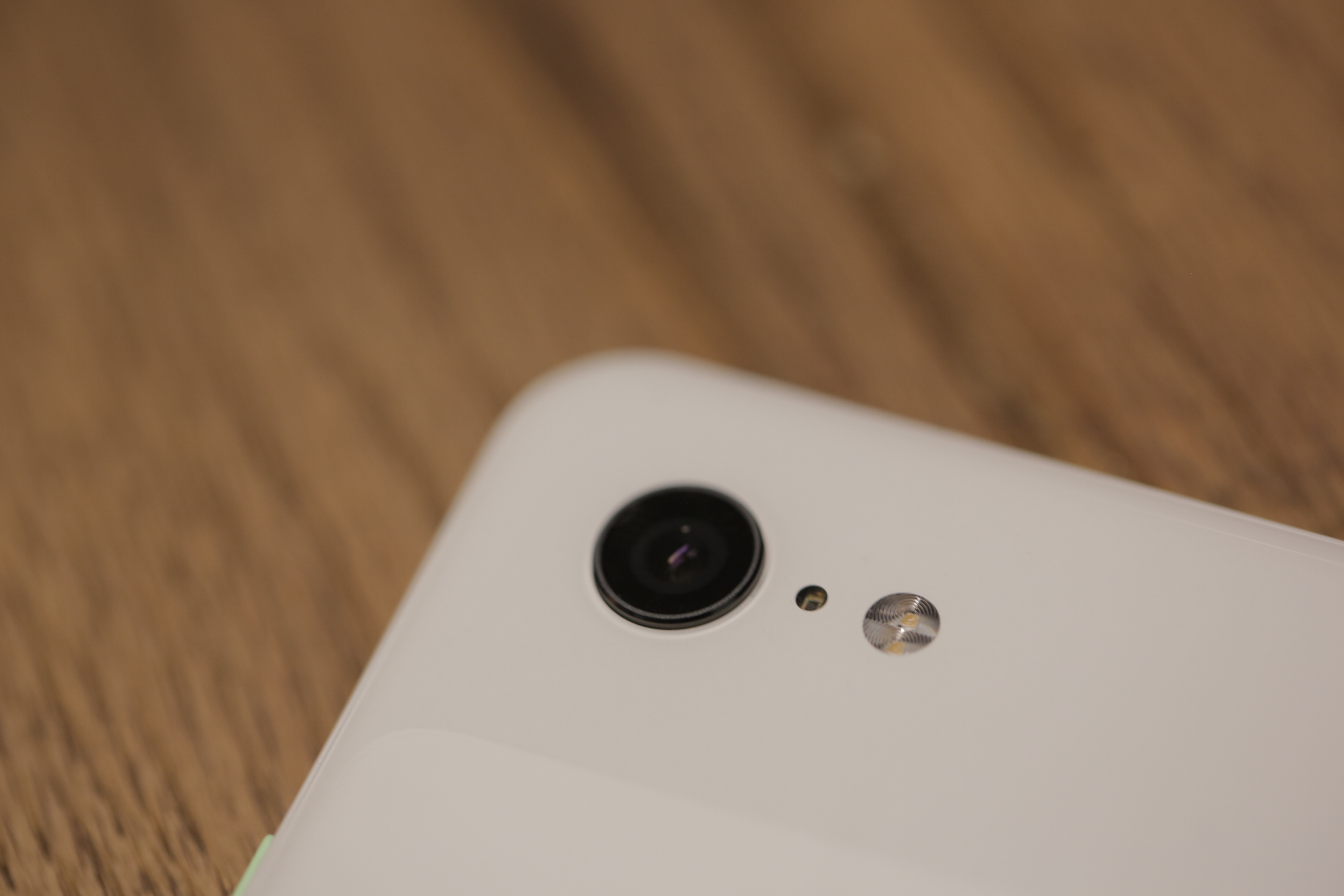
The camera situation is a bit counterintuitive. There’s a second front-facing camera, while the back of the device bucks the industry standard of moving to two — or even three — lenses.

Rakowski again, “We look at all of the different configurations we can get. If we would have added another lens, it would have given us no benefit over what we get with one really good lens.”

That means, like the latest iPhone, the upgrades here are more software than hardware. If anyone gets the benefit of the doubt on that front, it’s Google. The company’s been making great strides in imaging, courtesy of silicon and machine learning, all of which were well demonstrated on the Pixel 2.

The Pixel 3 continues that grand tradition with some really impressive strides. Best of all, unlike many of the camera software tricks introduced by competitors in recent years, many of these additions are majorly useful day to day applications.

The camera software has HDR+ on by default — a smart move on Google’s part. While many users will buy the new Pixel based on photo performance, an even larger percentage of owners are unfamiliar with photog terms like HDR. I speak from experience, having personally enabled the feature on many friends’ phones.
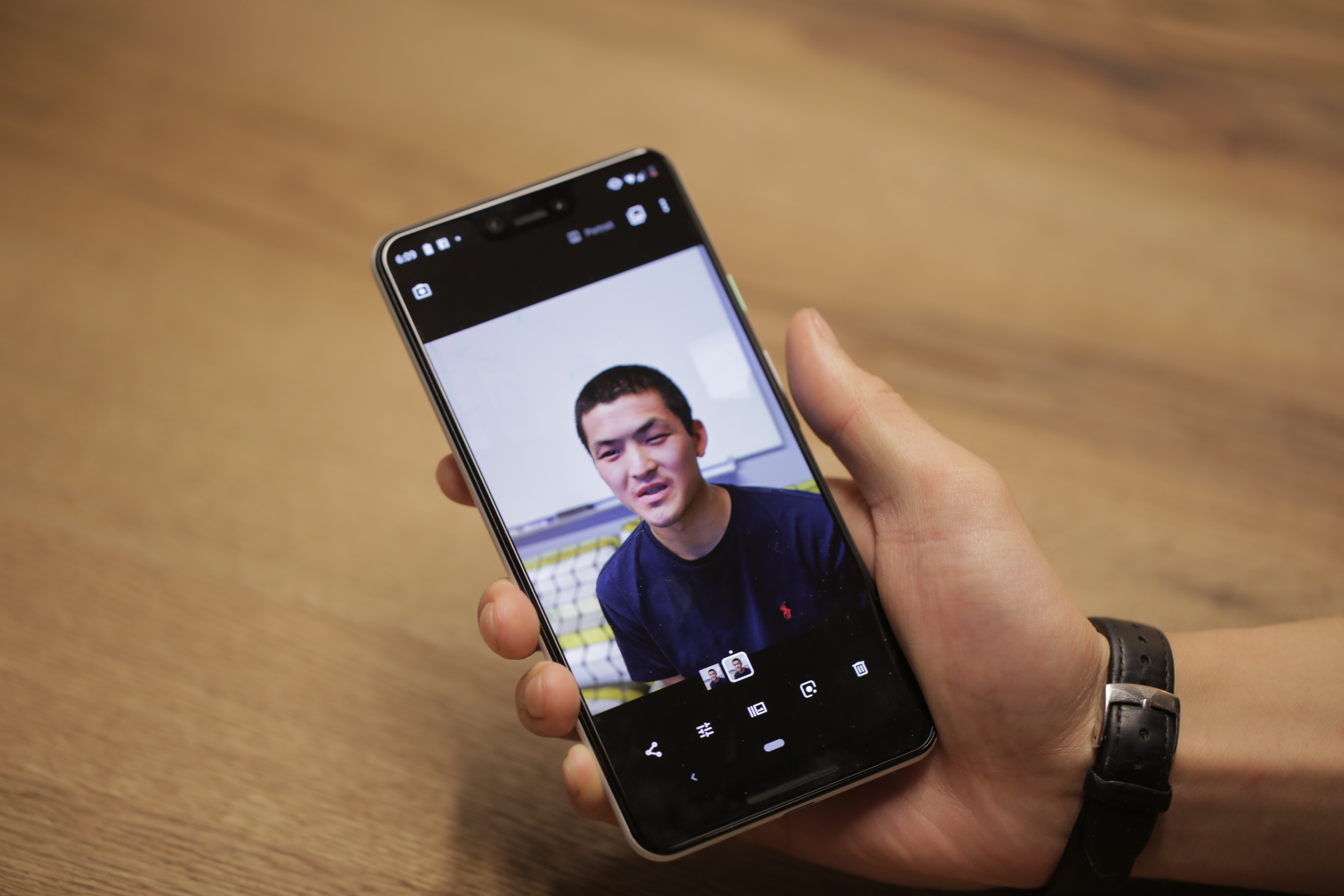
In Google’s application, the feature snaps eight frames more or less instantly, digitally stitching them together in a matter than impressively captures uneven light settings in a single frame. In fact, this kind of burst shooting is the key to many of the Pixel 3’s best features.

Take Top Shot. The feature utilizes the many frames taken when making a Motion Photo. Once the shot is taken, swipe up and you can scroll through the images on a timeline to pick the frame you want. Generally, the AI does a solid job picking the ideal image, but the ability to customize (assuming users can locate the feature) is certainly welcome.

That customization carries over into features like Portrait Mode. The Pixel has long done a solid job with the feature in spite of not having a full two cameras for depth sensing. Instead, the phone uses a dual lens to approximate a depth map. And while camera suppliers would no doubt argue the benefit of including a full second or third camera, it’s hard to quibble with the results here. Once a shot is taken, you can manually adjust the blurred-out bokeh effect behind the subject.

[Standard v Super Res Zoom]

Super Res Zoom also stitches together pieces of a photo to offer up a zoomed-in version. Here the tech actually builds upon your own shaky hands, using algorithmic tech to fill in the holes. It’s still no match for the optical zoom of telephotos like the one found on the new iPhone, but it definitely improves upon stand zoom.

[Left: iPhone XS, Right, Google Pixel 3 XL]

Night Sight, meanwhile, uses multiple shots to improve the color on low-light shots. It’s a clever workaround for a lack of dual-apertures, doing a fine job of brightening up photos. That said, there’s still noticeable noise on photos shot in dark settings. 
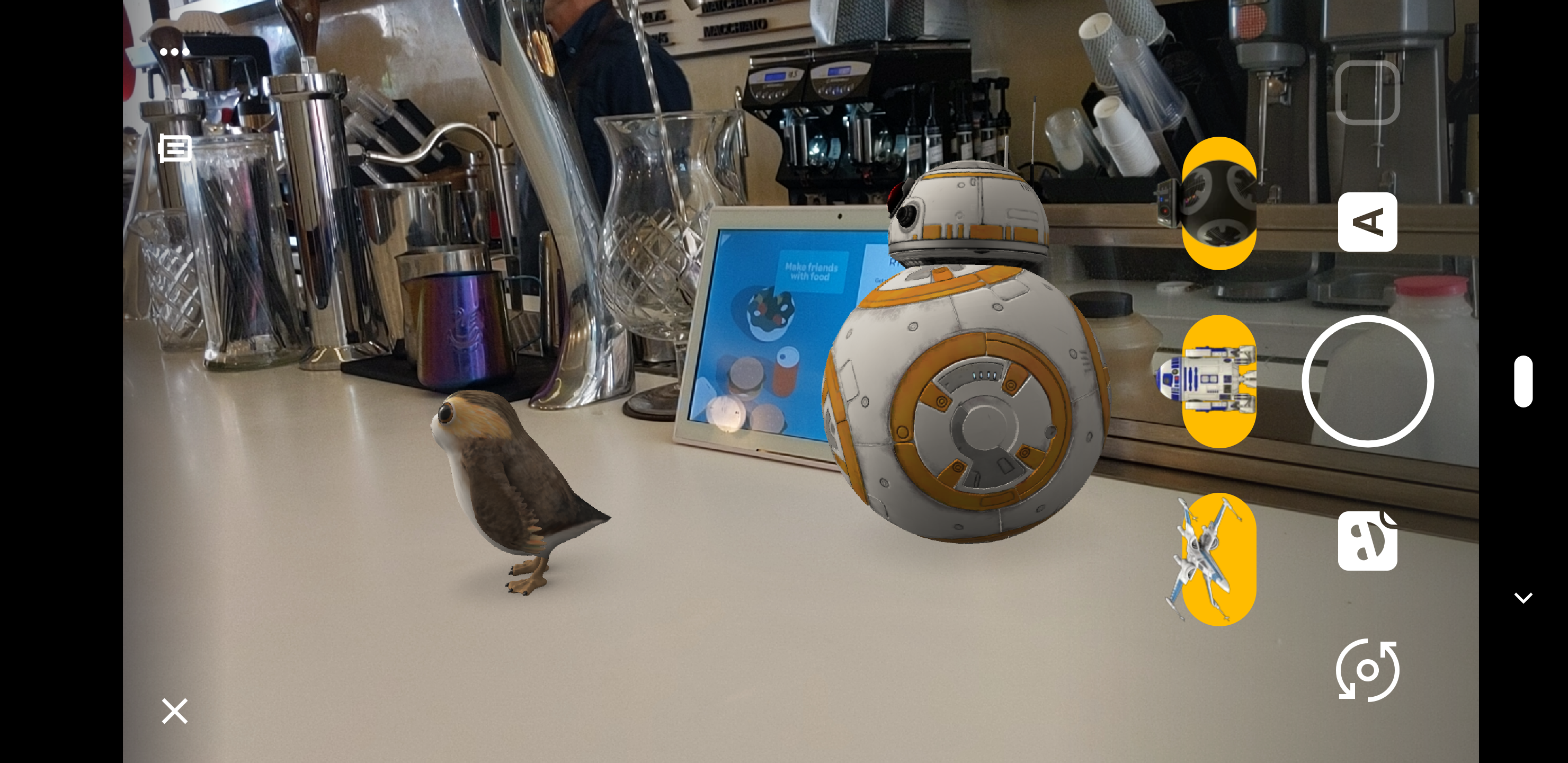
More camera features worth noting:

  • Playground is a fun one-stop shop for augmented reality stickers. There are Star Wars and Avengers in there, among others. This is Google’s fun addition to the camera software. There are no Animojis or AR Emojis here, thanks to the lack of face detection, but it’s a fun glimpse at the future of in-camera AR.
  • Lots of additional selfie options. The dual front-facing cameras means wide-angle selfies, for cramming in a larger group. The camera software, meanwhile, corrects the standard fish-eye lens distortion.
  • Photobooth mode, meanwhile, will snap a shot when you smile.
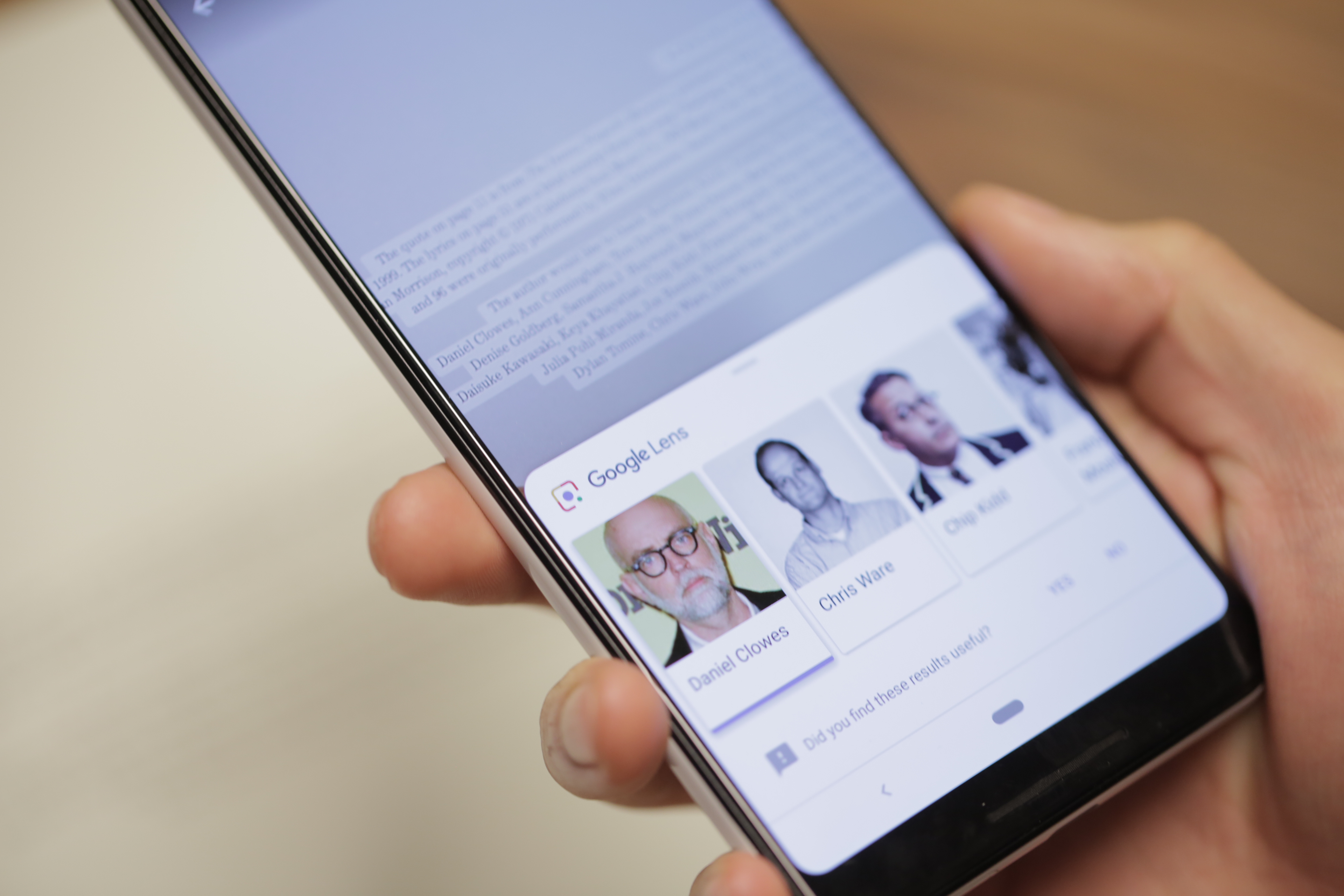
  • Lens continues to impress. Check out the above shot of the thank you page from Adrian Tomine’s Killing and Day, which pops up faces and bios for those fellow authors mentioned.
[gallery ids="1732467,1732468,1732469,1732470,1732471,1732472,1732473,1732474,1732475,1732459,1732476,1732477,1732478,1732479,1732480"]

A Google exec recently told me that price wasn’t really a factor when building hardware. In all things, however, the company is pragmatic. Google’s move away from the ongoing spec wars means the company isn’t chasing premium hardware for the sake of itself. That ultimately benefits the user from a pricing perspective.
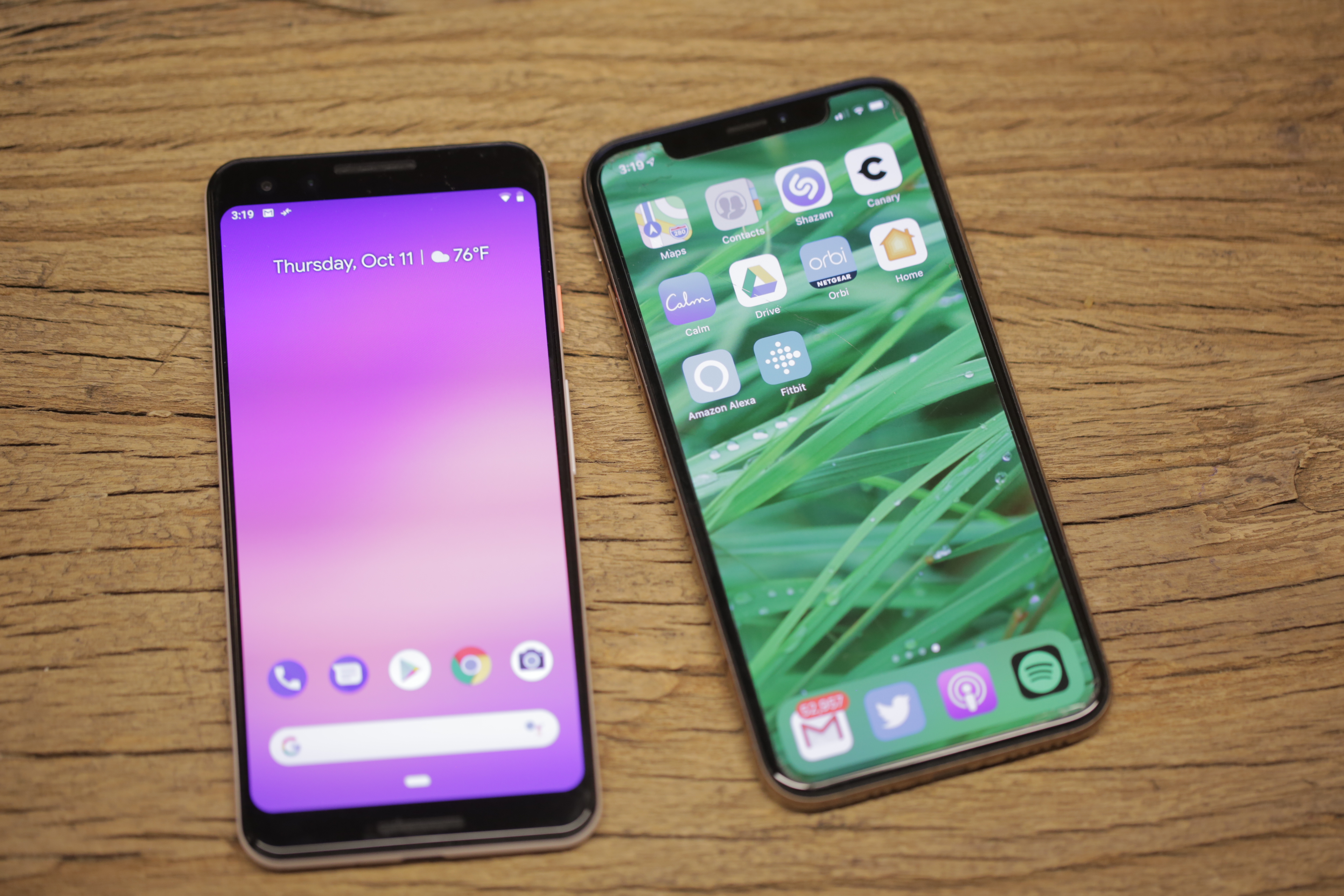
Google doesn’t lead with the fact that the Pixel 3 starts at $799, but in a world full of flagships that start at $200 more, maybe it should. Sure, it’s not exactly cheap, but these days, it feels like a downright steal for a top-tier flagship.

Like its predecessor, the Pixel 3 isn’t about flash. It is, however, another solid showcase for Google’s impressive innovations.
15 Oct 2018

FuboTV says nearly 250K subscribers have signed up for its TV streaming service

While it may not have the name recognition of some other live TV streaming services, fuboTV says it’s been growing quickly — it was “approaching” 250,000 paid subscribers in September, more than doubling the 100,000 subscribers it had a year ago.

For the entire third quarter, fuboTV says it saw a net addition of 30,000 subscribers. The company is also sharing details about its revenue, with an annualized revenue rate run rate of $102 million in September 2018, compared to $28 million September 2017. Plus, time spent per subscriber has grown 364 percent, to 51 hours.

The service first launched in 2015 as a soccer-focused streaming service, but it has expanded so that it’s not just offering live games from the NFL, MLB, NCAA, NBA and many others, but also carrying networks like AMC, CBS, NBC and FX. Co-founder and CEO David Gandler said it’s now “a sports-first cable replacement product.”

“People come in through the sports and they stay for the entertainment,” he said.

Gandler acknowledged that there’s one big, missing piece — ESPN. But he added, “As a startup, we obviously are talking to everybody … At some point in time, when it makes sense for both sides, that deal will come to fruition.”

Competing services have been making growth announcements with bigger numbers — Dish’s Sling TV and AT&T’s DirecTV now seem to be in competition for the top spot, while Hulu’s live TV service recently topped 1 million subscribers.

However, Gandler said fuboTV is doing quite well “relative to our brand penetration” — in other words, when you compare how many people have heard of Sling or DirecTV, versus how many people have heard of fuboTV, the startup’s numbers are “just remarkable.”

He also argued that fuboTV has been punching above its weight class in other ways. With a team of fewer than 150 employees, “We built a cable platform in 18 to 24 months,” he said.

It hasn’t experienced significant downtime, it recently launched a live recommendations product and this summer, it was the first live TV streaming service to launch a 4K HDR feature in a beta program that included NCAA college football, MLB playoffs and English Premier League soccer.

“We’re as a small startup, but we execute very well,” Gandler said. “The reason why, I believe, is that this is our only product. It’s not being used to sell other products. We have to be very good at what we do.”

15 Oct 2018

MIT announces new college of computing with $1 billion commitment

MIT announced today that it is massively doubling down on the future of computer science with the launch of a new college of computing. The university is committing $1 billion in resources to the new school, and the university received a $350 million donation from Stephen A. Schwarzman, who will be the naming donor. MIT said that its commitment is the largest of a university yet to the discipline.

The university is already one of the leaders in computer science, with a famed department located in the School of Engineering. The new initiative will see computer science, artificial intelligence, and data science placed in the new school, complete with a new dean and around 50 new faculty positions according to the university. In a statement, MIT said that it hoped the new home would “help position the United States to lead the world in preparing for the rapid evolution of computing and AI.”

For students, MIT is taking an even more bullish stance: that every graduate should encounter computer science and AI before graduation. The objective of the new school will be to ensure that all MIT students become familiar with the field regardless of their chosen profession. The school will be housed in a new building on MIT’s Cambridge, Massachusetts campus.

Creating a separate school for computer science will change the Institute, and will position it more similarly to its peer rival Carnegie Mellon, which has had a separate School of Computer Science for some time.

The $350 million gift from Stephen A. Schwarzman for naming rights is in line with other massive recent gifts to MIT’s close neighbor Harvard, which received $400 million from John A. Paulsen to name the School of Engineering and Applied Sciences and $350 million from Gerald Chan to name the School of Public Health.

Schwarzman, the co-founder, CEO, and chairman of alternative investment firm Blackstone, has been on a philanthropic binge recently. In addition to this MIT gift, he has donated $100 million to the main branch of the New York Public Library near Bryant Park, $150 million to Yale University, and created the Schwarzman Scholars program as a China-based competitor to the Rhodes Scholarship with a $100 million grant.

MIT said that the new college is expected to open in fall of next year, and its new building will be completed in 2022.

15 Oct 2018

Casio adds modern tech to the classic G-Shock watch

Casio released the first G-Shock watch in 1983. The original set the bar for tough watches with incredible shock resistance to protect the quartz module. It’s a classic and still available for purchase in several forms in 2018.

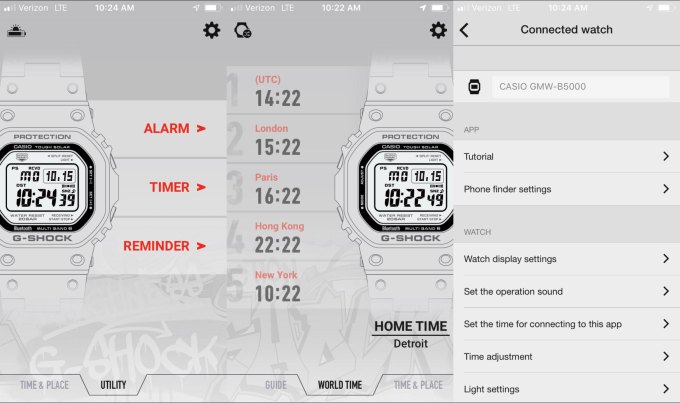
Recently, Casio released an all-metal version of the watch that features the iconic design but with modern technology like Bluetooth connectivity. This isn’t a smartwatch, but simply a watch that’s a bit smarter than most.

The Bluetooth function is simple and worth a look. It gives owners an easy way to access settings. Instead of navigating through the menus on the watch, owners can use a smartphone app to sync the watch to the phone’s time, adjust settings and set alarms and reminders. It takes just one button press on the watch and for the owner to launch the app. The watch does not have to be connected through the phone’s Bluetooth menu; the app takes care of it all.

I found the experience a refreshing update. I don’t need a smartwatch all the time but there are advantages to connecting a watch to a phone. If this is a glimpse at the future of timekeeping, I’m all in. I enjoy a complicated complication as much as the next guy, but sometimes it’s overwhelming to set the primary timezone let alone the alarm. I don’t mind when an app can do it for me.

15 Oct 2018

Zimmer and Apple launch clinical study covering up to 10K patients who get knee and hip replacements

Apple has made health — and helping people keep tabs on theirs — a cornerstone of how it is presenting the benefits of its newest Apple Watch, and today comes news of another way that this is taking shape. Zimmer Biomet, a world leader in developing the components and systems for joint replacements, says that it is working with Apple on a new clinical study focused on people who get knee and hip replacements.

The trial will come in three stages, and within two years, Zimmer projects that there to be up to 10,000 people involved, Ted Spooner, Zimmer’s vice president of connected health, said in an interview.

It will cover three aspects of patient care, he said: monitoring patients before and after operations using sensors on the Apple Watch and iPhone; providing education and information to patients to help improve their pre- and post-operation care; and providing a communications channel between doctors, caregivers and patients to ask questions, give answer and more, using Zimmer’s mymobility app.

Institutions that will be participating include University of Utah Health; Rush University Medical Center; University of Pennsylvania Health System; Emory University Orthopaedics & Spine Hospital/Emory Healthcare; Hoag Orthopedic Institute in Southern California; Newton-Wellesley Hospital, member of Partners HealthCare founded by Massachusetts General Hospital and Brigham and Women’s Hospital; Centura Health, Porter Hospital – Colorado Joint Replacement (CJR); ROC Orthopedics, affiliated with Legacy Meridian Park Medical Center; OrthoBethesda; OrthoArizona; Midwest Center for Joint Replacement; Hartzband Center for Hip & Knee Replacement; New Mexico Orthopaedic Associates; The DeClaire LaMacchia Orthopaedic Institute, affiliated with Michigan Institute for Advanced Surgery; Joint Implant Surgeons; Orthopedic and Fracture Clinic; Panorama Orthopedic and Spine Center.

The study — which for now will be US-only — comes after two years of Zimmer working with Apple behind the scenes, Spooner said, on not just making sure the parameters of what Zimmer hoped to achieve in a connected app would be possible, but also for Apple to understand what stakeholders in the health industry would want to see out of a health service built around a smartwatch and smartphone. Zimmer was a key target because today it accounts for one in every four knee replacements globally, and it has similarly strong market positions in hip, shoulder, foot, dental and spine products.

A measure of where Apple is placing the importantance of this study is who they have commenting on its launch.

“We believe one of the best ways to empower consumers is by giving them the ability to use their health and activity information to improve their own care,” said Jeff Williams, Chief Operating Officer, Apple, in a statement. “We are proud to enable knee and hip replacement patients to use their own data and share it with their doctors seamlessly, so that they can participate in their care and recovery in a way not previously possible through traditional in-person visits. This solution will connect consumers with their doctors continuously, before and after surgery.”

Hip and knee replacements are the most common “replacement” procedures that take place, accounting for one million operations each year in the US, according to Deloitte, a figure that will grow to 3.5 million by 2035 as our population grows, stays alive for longer, and includes more people who were much more active in their earlier years in a wider upswing for fitness.

You might assume that it would be an uphill challenge to sell the idea of connected health services to older people — who are the typical recipients of these operations — but Spooner said that the opposite is the case.

“It turns out that the fastest adoption group for smartphones is 55-64 right now,” he said, saying that they are currently buying smartphones and other connected devices three times as fast as the next group down. Some of that of course might be because older people have been slower to adopt, but nevertheless, he points out, the stats “are really staggering, considering that other groups are at less than a two percent compound annual growth rate.” Smart watches, he said, have a similarly high growth rate among the elderly. “When they use it, the utility they get is higher than in younger populations, and people have such sensitivity to their health as they get older, that we thought this is the right time to do what we are doing.”

The  core problems that Zimmer and Apple are hoping to address are around making sure that patients are able to be more engaged with their course of treatment, and in cases when something has not gone to plan, people are able to identify this and act on it. Part of the system will involve a larger dashboard and analytics for doctors and caregivers to help assess how people are doing in between in-person appointments.

On the patient side, they will be getting alerts leading up to their operations, suggesting activities that they should be doing to keep themselves active ahead of surgery. And doctors will be able to monitor just how well they are actually doing them, by looking at things like movement, heart rate, and specifically how much they are doing basic things like standing during the day. The same will continue after the operation. Throughout, a patient will also be able to contact their medical team if, for example, they are worried about how a scar is looking, although Spooner said that he is not sure that this has been conceived as the primary use case as much as monitoring and education.

Zimmer’s move into collaborating and working more closely with Apple comes at a time when medical companies — like those across so many other industries — are realising that they have to jump on the innovations afforded by the rise in digital services, lest they be cut out of whatever the future holds for medicine and healthcare. Spooner says that he came to Zimmer by way of RespondWell, a startup he founded focused specifically on this challenge.

“We were in the marketplace trying to understand what kind of biometric data collection was available so that we could measure patients continuously to use that data to drive more insight into conditions and how to work with caregivers,” he said. The startup was using Microsoft Connect, “|but at the same time Zimmer was having preliminary conversations with Apple. We went to Cupertino with the idea of a common vision, and that is what led to this collaboration.”


We have operations in more than 25 countries around the world and sell products in more than 100 countries. For more information, visit.

15 Oct 2018

Amazon debuts a retail site for ‘Shark Tank’ products

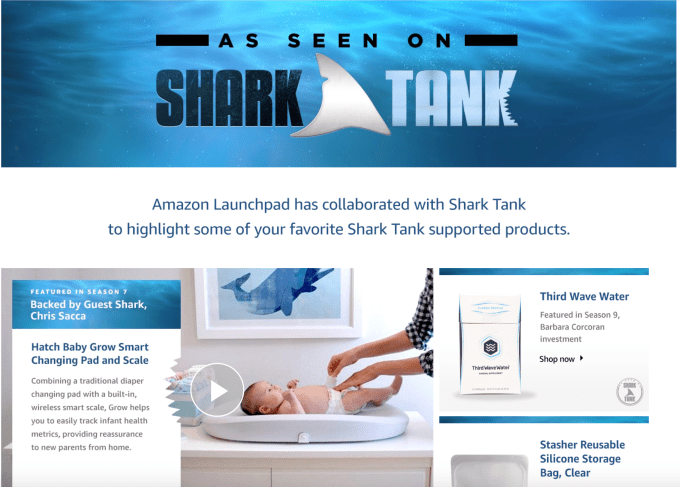
Inventor Jamie Siminoff was rejected by the sharks on ABC’s “Shark Tank” in 2013 when trying to make a deal for his video doorbell startup. This year, Amazon bought his company, Ring, for a billion dollars. Now, Amazon is looking for another way to tap into breakout products from the popular TV show – by becoming an official retailer partner for “Shark Tank.” The newly announced deal allows Amazon to showcase past and future “Shark Tank” products on its website, and come with a $15,000 Amazon Web Services (AWS) credit for each eligible “Shark Tank” entrepreneur.

The products will be available in a new Shark Tank Collection on Amazon Launchpad, its platform for hardware and physical goods startups, which first arrived in 2015. The idea is to offer a dedicated place on Amazon where consumers can shop products from up-and-coming companies, like Bluesmart’s luggage, eero’s Home Wi-Fi system, Casper mattresses, and hundreds more.

This new collection is not the first time Amazon has featured “Shark Tank” products on its site, however.

Also in 2015, Amazon launched a new online store called Amazon Exclusives, which featured a variety of new brands, including products from “Shark Tank,” like Tower Paddle Boards, for example.

At the time, the “Shark Tank” merchandise selection was limited, though.

With today’s launch, that’s changing.

Amazon says the new collection features over 70 products that successfully received funding from “Shark Tank” seasons 1 through 9, and new products from season 10 and beyond will be featured here in the future.

The products available today include things like smart changing pad and scale Hatch Baby, coffee enhancer Third Wave Water, and storage bags from Stasher, among others. You can even sort and filter products by those that were funded by two or more sharks, or those with over $250,000 in funding.

“For the first time ever, ‘Shark Tank’ has a store on Amazon.com dedicated to helping our entrepreneurs scale their businesses and highlight top products from the show,” said “Shark Tank” investor, Barbara Corcoran, in a statement. “We are excited for the Amazon Launchpad Shark Tank Collection to bring products from our entrepreneurs to retail for customers and fans of the series.”

For Amazon, the deal isn’t just a way to redirect “Shark Tank”-related shopping searches to its site, following an airing of the TV show. It also gives Amazon a first-hand way of seeing which products are becoming viable consumer hits – something that could open the door for an acquisition or further deal-making at some later point, perhaps.

Of course, that would require the TV sharks to not be quite so short-sighted – after all, they thought Ring was overvalued, and passed. (They’re not interested in companies that require too much capital, apparently.) In hindsight, it still seems like a miss on their parts. And with the start of Season 10, the sharks again passed on a product Amazon could like – Boxlock, a smart lock for securing packages left at your doorstep. After all, not everyone will want to let delivery drivers into their home.

“The Amazon Launchpad program is all about empowering creators and inventors, enabling them to reach hundreds of millions of customers,” said Jim Adkins, Vice President, Amazon. “By teaming up with ‘Shark Tank,’ we are making it fun and easy for fans of the show to discover a wide variety of unique innovations and cutting-edge products,” he said.

15 Oct 2018

Tech Will Save Us offers STEM toys you’ll actually use

I hate STEM toys. I have three kids and ultimately every “educational” toy they’ve used – from LittleBits to Nintendo Labo – has ended up in a corner somewhere, ignored for more exciting fare. This happens for a few reasons but the primary one is that the toys require too much attention and have no lasting play value.

Given this fact, I thought our species (or at least my kids) would be doomed to Idoicracy-style techno illiteracy. Luckily, a set of toys from the optimistically-named organization Tech Will Save Us, has changed my mind.

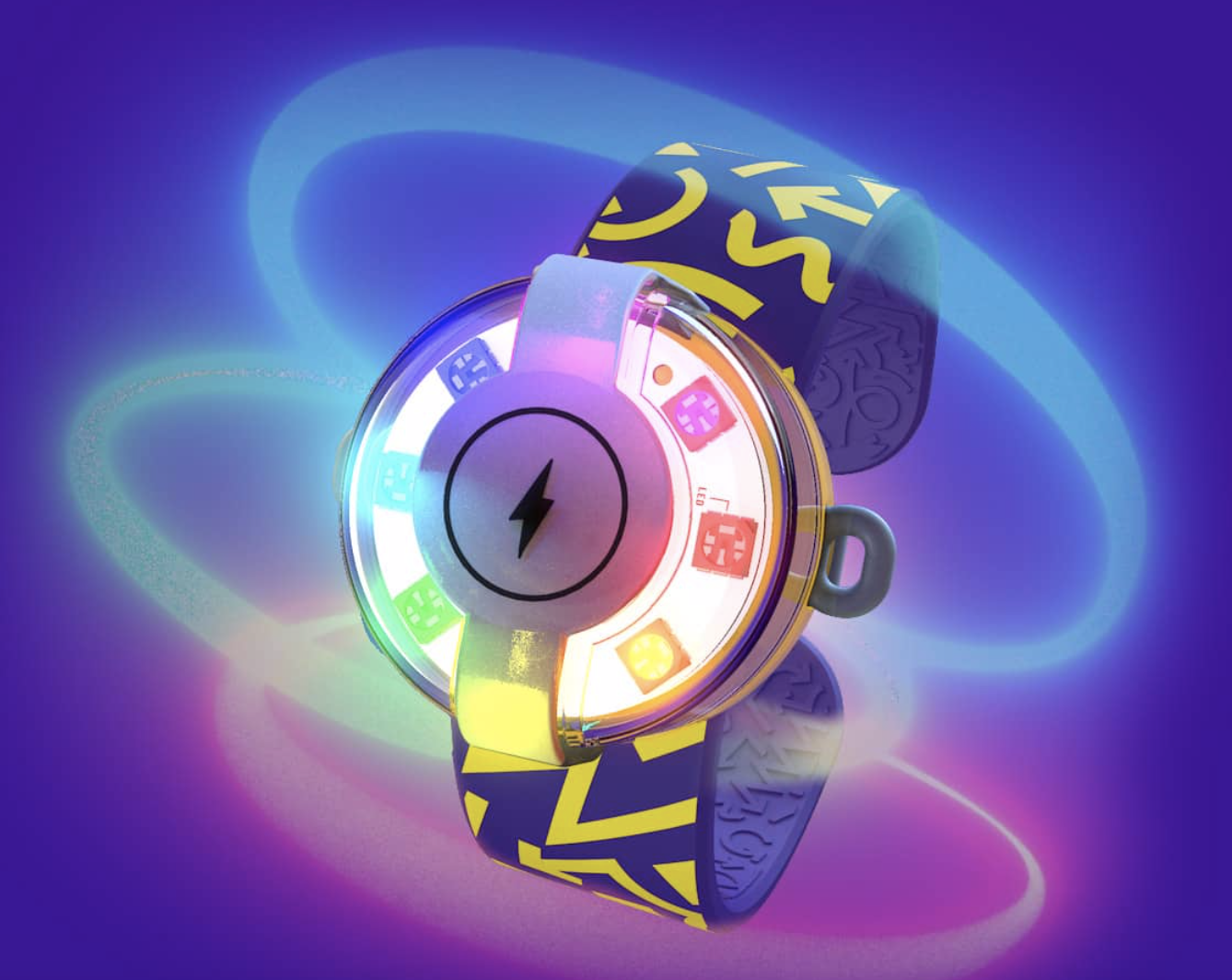
TWSU toys are nice in that they are at once rugged toys that withstand constant play and electronic devices that can be programmed by a clever eight year old. For example, the $60 Creative Coder is basically a LilyPad device with a USB interface and a block-based programming language that lets you program it. The TWSU website features a number of little programs you can upload to the board including a Pokemon sensor that starts out red and white until you shake the board, activating the sensor and causing the lights to blink. My son loved it and he slept in it, strapping the wearable to his wrist like an Apple Watch.

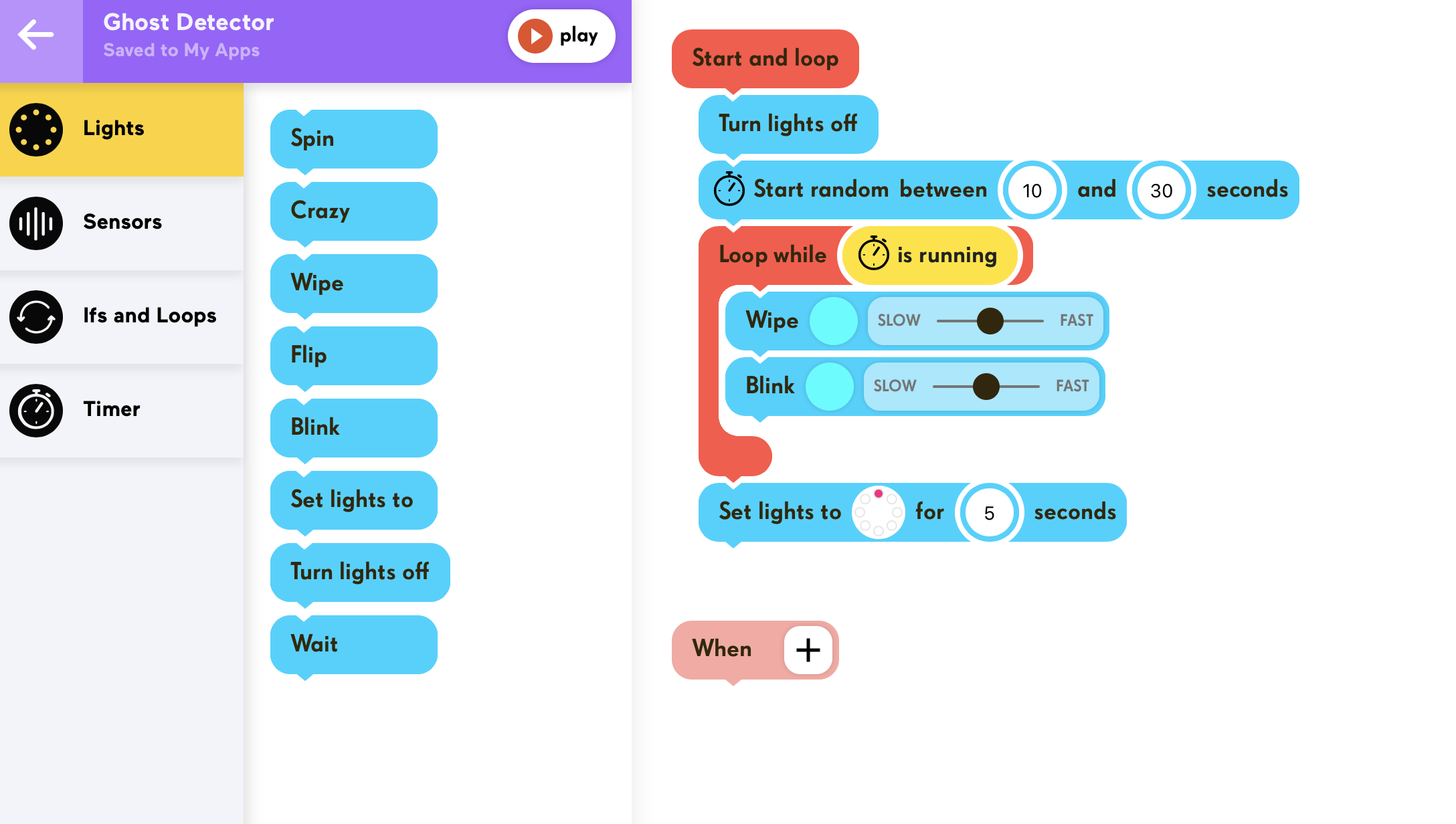
Programming the Creative Coder is very simple. It uses a Scratch -like interface to set colors and activate timers and in a few minutes I was able to make a Ghost Detector that “hunted” for ghosts and then blinked when it found one. I based the idea on an old toy I had in the 1980s called IAN that beeped when it got close to “invisible aliens.” I still remember the excitement I felt walking around in my Grandma’s basement looking for monsters. I think he felt the same excitement.

The other toys – including a simple game machine that uses an Arduino and a 9×9 LED display – were similarly interesting. The game machine, for example, included a primitive version of Flappy Bird that my son played for hours and he was excited to get the LED to spell his name on command. It did, however, require knowledge of Arduino programming which limited the usability. However, because it comes preloaded with a simple game the device felt complete right out of the box.

How are these toys different from all the other STEM junk I’ve tried? Again, they worked out of the box. The Creative Coder could double as a bike light as soon as you assembled it and it came inside of a plastic case that made it a wearable instead of a science project. The other toys were just that – toys – and the programming was an afterthought. Ultimately I’m sure this stuff will end up under the couch, dead and forgotten, but until that happens they’ve supplied a great deal of fun.

STEM toys often focus on the STEM. I suspect this is because engineers are building them and not toymakers. Further, toymakers create things like the Zoomer Playful Pup (another clever toy) and hide all of the technology deep behind layers of plastic. Finding the right balance in so-called STEM toys is incredibly difficult but its doable and, as Tech Will Save Us have proved, these toys don’t have to be too boring or too complex for the kids (and parents) who might buy them.

15 Oct 2018

Premiere Rush CC is Adobe’s new all-in-one video editing tool for desktop and mobile

Earlier this year, Adobe previewed Project Rush, a new multi-platform video editing tool. Today, at its Mac conference, the company announced that Project Rush is now Premiere Rush CC and an official part of the Creative Cloud suite.

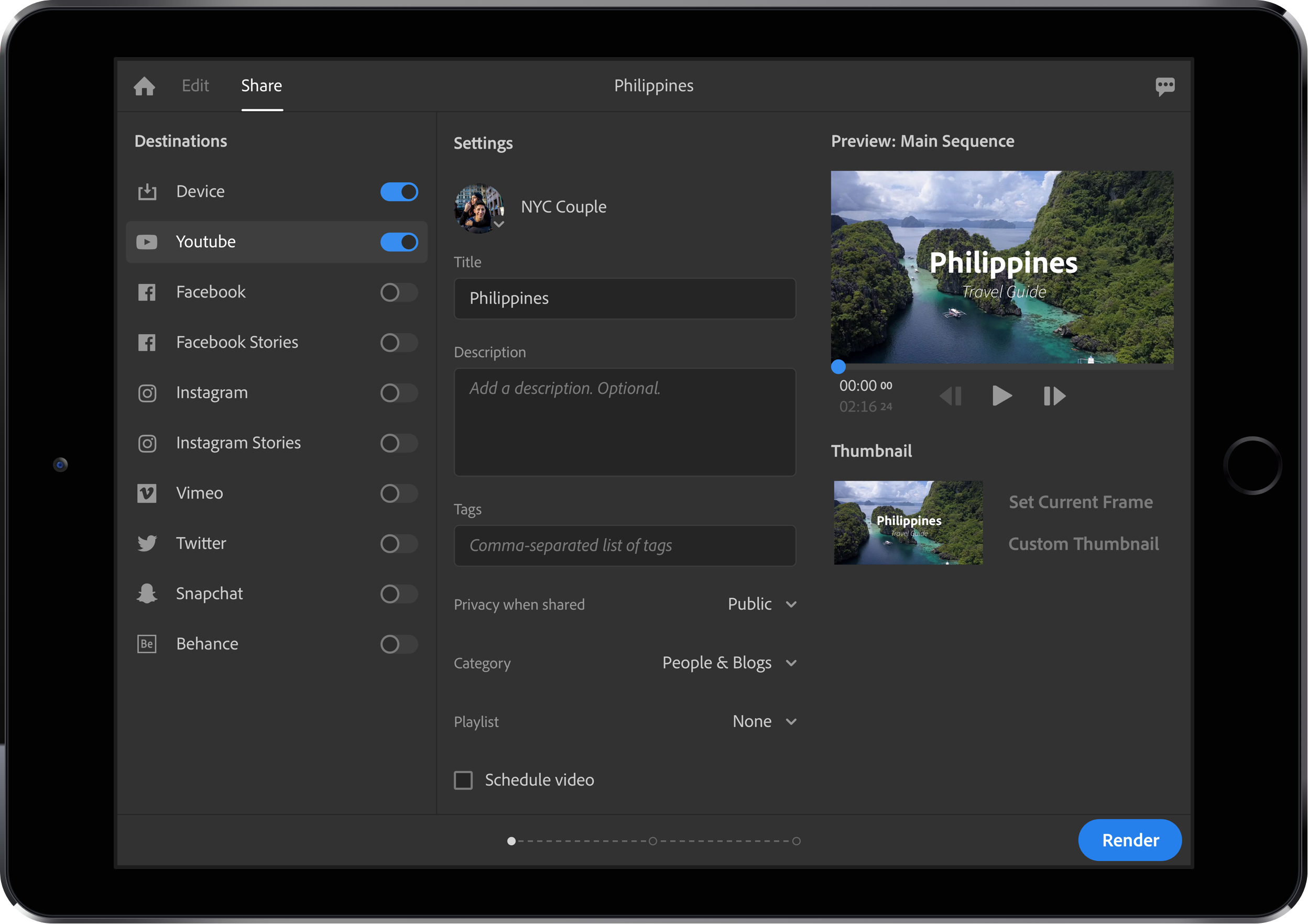
The idea behind Rush is pretty straightforward. It’s meant to provide video creators with a modern all-in-one video editing solution that allows them to quickly edit a video and publish it on platforms like YouTube and other social networks. Indeed, it’s very much meant to be the video editing tool for the YouTube generation.

Rush takes the core parts of Adobe’s suite of video and audio editing tools and combines them in a single mobile and desktop experience. That means you get a set of Motion Graphics templates, for example, that were specifically designed to give Rush users easy access to customizable titles. The color correction system is built on top of the same technology that powers the more fully featured and complicated Premiere Pro editing tool. And the audio-editing features, including one-click ducking, are powered by the same code as their counterparts in Audition.

All of those edits easily sync between platforms, giving creators the ability to start editing on their phone, for example, and then finish their work on a laptop.

The current version of Rush is pretty much what Adobe announced a few months ago, but the company also used today’s announcement to preview what’s next. Soon, you’ll also be able to edit on Android (Adobe promises a release in 2019) and get speed controls so you can speed up and slow down your videos (a feature that YouTube creators are bound to overuse), as well as the ability to more easily create different versions of your videos for multiple platforms. The team also promises to increase performance over time.

Premiere Rush is now available to all Creative Cloud All Apps, Premiere Pro CC single app and Student plan subscribers. There is also a single app plan for $9.99/month for individuals (or $19.99/month for teams). In addition, there is a free starter plan that gives users access to all the apps and features, but limits exports to three projects.

15 Oct 2018

Typekit is now Adobe Fonts and part of all Creative Cloud plans

Adobe today announced that Typekit, the company’s subscription service and marketplace for fonts that it acquired in 2011, is getting a new name. The service is now called Adobe Fonts. What’s maybe more important, though, is that Adobe Founts is now part of all Creative Cloud plans, including single-app plans the popular Photography plan. Even those who don’t pay for a Creative Cloud subscription now get access to a basic font collection, courtesy of their Adobe ID.

There’s a couple of other new features today, too. Adobe has removed all sync limits, for example, so that you can now activate whichever fonts you need and then use them everywhere. And ‘everywhere’ is an important term here, because the company has also done away with “web-only” fonts. Every font in the library is now available for usage on the web and the desktop.
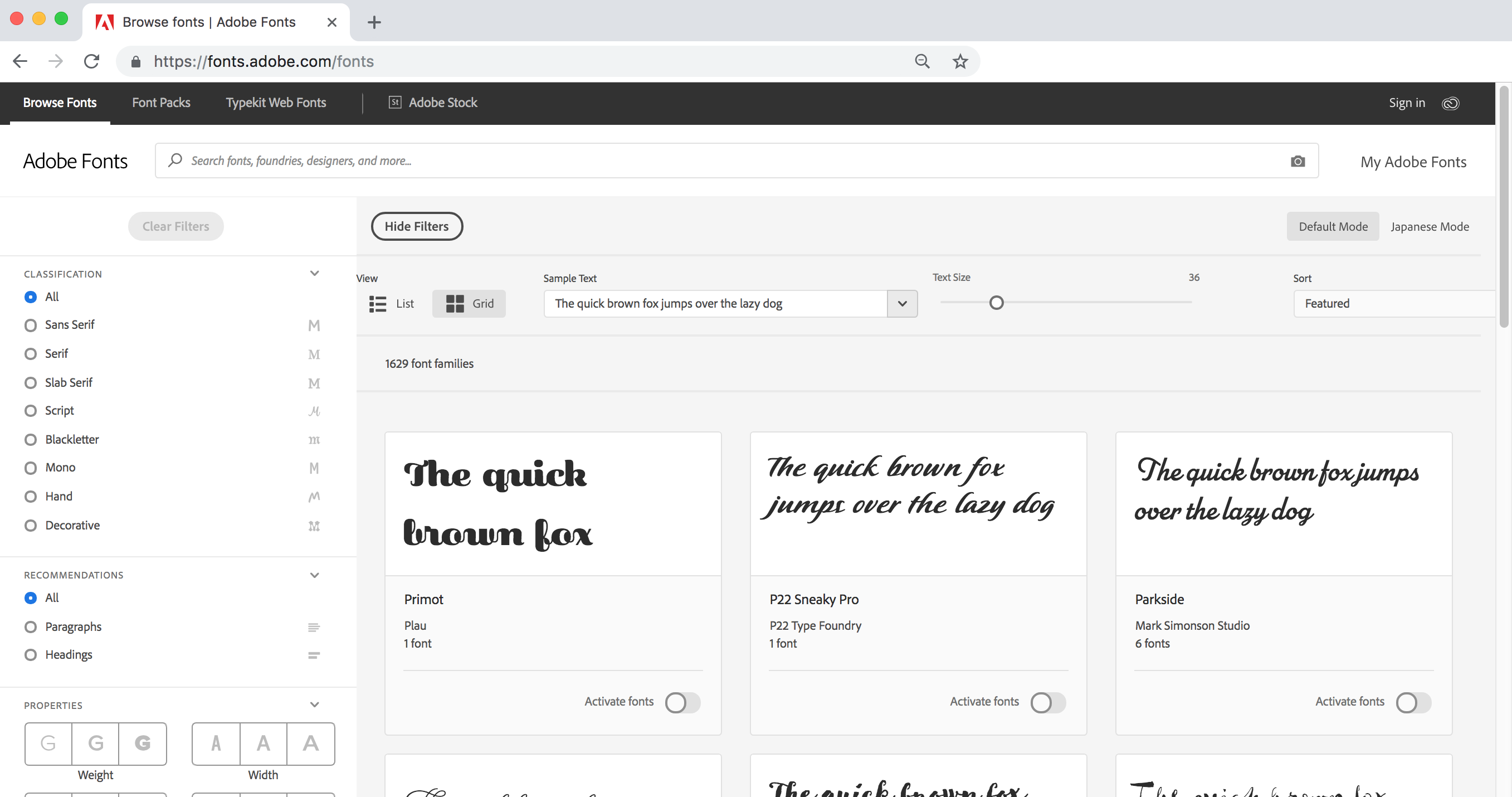

In addition to these functional updates, Adobe also today announced that it is adding 3,000 new fonts to the library (and the library itself is getting a design overhaul, too). The new fonts come from a number of sources, including the Type Network collective, which accounts for 2,500 fonts in the library, and Adobe’s own type foundry. And starting today, Adobe will launch new font packs every day for the next 30 days.

15 Oct 2018

Adobe launches new AR and drawing tools 

At its Max conference in Los Angeles, Adobe today announced a number of new products in its Creative Cloud suite. Among those is Project Aero, a new tool that allows for building new AR experiences, and Project Gemini for painting and drawing on the iPad.

The ‘Project’ moniker is Adobe’s way of signifying that these are still early-stage products and not quite ready for prime time yet. Over time, though, they typically become fully named parts of the Creative Cloud suite.

The fact that Adobe is launching a tool for building AR experience doesn’t come as a major surprise. Adobe isn’t one to stand by as hype builds around a new technology (see: Adobe’s early support for VR). Project Aero, which integrates with both Adobe Dimension and Photoshop for creating importing assets, is now in private beta, with plans for a wider release in 2019.

The other new tool is Project Gemini, which takes some of Adobe’s Photoshop technology, including its painting engine, to create a stand-alone drawing app for the iPad. The app also takes some cues from existing drawing tools from Adobe like Photoshop Sketch and Illustrator Draw. Indeed, it gets its time-lapse recording feature and support for Photoshop brushes from these — but in a new package that also includes selection and masking tools, grids, drawing guides and a mix of raster and vector drawing capabilities.

One interesting note here is that Kyle T. Webster is behind this new project. Last year, Adobe bought Webster’s Photoshop brush tools almost exactly one year ago.

“Through rigorous testing with artists of all skill levels, we reconsidered how drawing tools work. All of Project Gemini’s features are focused on accelerating drawing and painting workflows,” Adobe writes in today’s announcement. “Illustrators can expect the most natural brushes handcrafted by Kyle Webster, dynamic brushes such as watercolors and oils, new ways to select, mask, and transform, and the integration of technology by the Adobe research team.”

Gemini will support the same brushes that are available in Photoshop, as well as dynamic brushes, and feature the ability to move files between the two programs.

Like many of the projects the company announced today, Project Gemini is still in closed beta. For now, it’s also only scheduled for release on iPad, though Adobe says it’ll come to other platforms, too. I take that to mean Windows given Adobe’s and Microsoft’s close relationship and the lack of compelling Android tablets these days.